
Tier 1: Get Started Fast (0-6 months to first $1,000)
1. AI Prompt Engineer
- What it is: Crafting effective prompts for ChatGPT, Midjourney, Claude to get specific business results
- 2026 reality: Every company uses AI. Few use it well. You bridge that gap.
- Pay: $50-150/hour freelance, $80-120K full-time
- How to start: Take Google’s “Prompt Engineering” course (free). Build a portfolio of 10 before/after examples. Offer free audits to 5 businesses, then charge.
- Where to find: UpWork (search “AI consultant”), LinkedIn, Toptal
2. Short-Form Video Editor
- What it is: Editing Reels, TikToks, YouTube Shorts from long-form content
- 2026 reality: Every creator needs 20+ short videos monthly. They’d rather pay than learn CapCut.
- Pay: $30-75/hour, $2-5K/month retainers
- How to start: Edit 10 videos for free from your favorite creators (without asking). Use as portfolio. Post on Twitter/X tagging them.
- Tools needed: CapCut (free) or Adobe Premiere ($55/month). The Elgato Stream Deck ($119) isn’t required but speeds editing 40% programmable buttons for frequent actions.
3. Community Manager
- What it is: Managing Discord servers, Facebook Groups, Circle communities for brands/creators
- 2026 reality: Community is the new marketing. Companies need humans to foster engagement, not just moderate spam.
- Pay: $25-60/hour, $3-8K/month retainers
- How to start: Join 5 communities in your niche. Document what works. Offer to moderate for free for 30 days, then convert to paid.
- Where to find: Community Manager HQ job board, We Work Remotely, company career pages (Notion, Figma, Webflow all hire remote community managers)
4. Specialized Virtual Assistant
- What it is: VA work focused on high-value skills (operations, podcast production, course management) not email/scheduling
- 2026 reality: General VAs compete on price ($5-15/hour). Specialists command premium rates.
- Pay: $35-75/hour (specialized) vs. $10-20 (general)
- Specializations that pay: Podcast production, course launch management, Notion setup, systems automation
- How to start: Pick ONE skill. Take a course (Podcast Editing School, Notion Mastery). Offer 3 free setups, then charge.

Tier 2: Build Real Income (6-18 months to $5K/month)
5. UX Researcher
- What it is: Conducting user interviews, usability testing, analyzing behavior to improve digital products
- 2026 reality: Remote user research is standard. Companies need insights without expensive in-person labs.
- Pay: $60-120/hour freelance, $90-140K full-time
- How to start: Google’s UX Certificate (Coursera, $39/month). Conduct 5 free usability tests for nonprofits. Build case studies.
- Where to find: User Interviews (platform for paid studies), dscout, UserTesting (start here for experience), then direct outreach to product companies
6. Technical Writer
- What it is: Writing documentation, API guides, help centers for software companies
- 2026 reality: Developers hate writing docs. Companies pay premium for technical writers who understand code.
- Pay: $50-100/hour, $80-130K full-time
- How to start: Learn Markdown, Git basics. Rewrite bad documentation for open-source projects. Portfolio = improved docs with metrics (reduced support tickets).
- Tools:Grammarly Premium ($12/month) catches technical writing issues standard spell-check misses. Essential for client work.
7. Conversion Copywriter
- What it is: Writing sales pages, email sequences, ads that drive revenue not just “content”
- 2026 reality: AI writes mediocre blog posts. It can’t write persuasively. Copywriters who understand psychology and conversion are more valuable than ever.
- Pay: $75-250/hour, $5-20K per project
- How to start: Study Copyhackers, ConversionXL. Write 5 spec pieces (sales pages for products you love). Offer revenue-share deals initially (get paid % of sales).
- Where to find: Copyhackers job board, Problogger, direct outreach to SaaS companies
8. Remote Operations Manager
- What it is: Managing systems, processes, and remote teams for online businesses
- 2026 reality: Founders hit capacity at $1M revenue. They need operators to scale without hiring full C-suite.
- Pay: $40-80/hour, $5-12K/month retainers
- How to start: Operations roles require experience. Start as VA, prove systems thinking, level up. Certifications: Notion Certified, Asana Certified, ClickUp Verified.
- Where to find: Dynamite Jobs, Remotive, AngelList (startups hire remote ops early)
9. SEO Specialist
- What it is: Optimizing websites to rank on Google technical SEO, content strategy, link building
- 2026 reality: AI content flooded the web. Quality SEO (strategy, not just keywords) is premium.
- Pay: $50-150/hour, $3-10K/month retainers
- How to start: Build a niche site proving your skills. Document traffic growth. Offer audits ($500-1,000) before retainers.
- Tools:Ahrefs ($99/month) is industry standard for keyword research. Essential for professional work. Surfer SEO ($69/month) optimizes content using AI combines human writing with data-driven optimization.
10. Online Course Creator/Instructional Designer
- What it is: Designing and building educational courses for businesses or creators
- 2026 reality: Everyone wants courses. Few know how to structure learning effectively.
- Pay: $50-150/hour, $5-15K per course build
- How to start: Map your expertise into curriculum. Build one small course free. Use as portfolio. Offer to build for creators on revenue share.
Tier 3: Scale to Six Figures (18+ months, $10K+/month)
11. Fractional CMO/Marketing Director
- What it is: Part-time marketing leadership for multiple companies (usually 3-4 clients at 10-15 hours each)
- 2026 reality: Startups need marketing leadership. Can’t afford full-time CMO ($200K+). Hire fractional at $8-15K/month.
- Pay: $150-300/hour, $8-20K/month per client
- How to start: 5+ years marketing experience required. Build case studies of revenue growth. Network at startup events. First clients usually referrals.
12. Remote Sales Consultant
- What it is: High-ticket sales for coaches, agencies, SaaS companies closing deals via Zoom
- 2026 reality: Remote sales is standard. Top closers make more than engineers.
- Pay: $100-500/hour or 10-20% commission (can exceed $30K/month)
- How to start: Sales training (Jordan Belfort, Grant Cardone programs). Start at lower commission, prove numbers, raise rates.
13. Specialized Consultant (Niche Expert)
- What it is: Deep expertise in specific area (e-commerce operations, remote team building, AI implementation)
- 2026 reality: General consultants compete on price. Specialists command premium.
- Pay: $200-500/hour, $15-50K projects
- How to start: 10,000 hours in niche or equivalent proof. Write extensively on topic. Speaking, podcast appearances build authority.
14. Creator/Educator
- What it is: Building audience, monetizing through courses, coaching, memberships, sponsorships
- 2026 reality: Harder than ever to break through. More lucrative than ever if you do.
- Pay: Wildly variable ($0 to $5M/year). Realistic: $50-200K year 2-3.
- How to start: Pick platform (YouTube, newsletter, podcast). Publish weekly for 2 years minimum. Monetize at 1,000 true fans.
15. Remote Software Developer
- What it is: Building applications, websites, tools for companies worldwide
- 2026 reality: Still highest-paying remote skill. AI coding assistants (Copilot, Cursor) changed entry-level but increased senior demand.
- Pay: $80-200/hour freelance, $120-250K full-time
- How to start: Bootcamp (Lambda, Flatiron) or self-taught (freeCodeCamp). Build portfolio projects. GitHub is your resume.
Tier 4: Emerging High-Paying (2026)
16. AI Implementation Consultant
- What it is: Helping companies integrate AI tools into workflows (not building AI, using existing tools)
- 2026 reality: Every company wants AI. Few know where to start. You become the translator.
- Pay: $100-300/hour
- How to start: Master 5-10 AI tools relevant to specific industry. Document use cases. Offer pilot programs.
17. Remote Legal Consultant (Contract Review)
- What it is: Reviewing contracts, terms of service, compliance documents for remote companies
- 2026 reality: Remote companies need legal expertise across jurisdictions. Freelance lawyers increasingly common.
- Pay: $150-400/hour
- Requirements: Law degree, bar admission (usually), specialized in tech/remote work law
18. Data Privacy/GDPR Consultant
- What it is: Ensuring companies comply with data protection regulations
- 2026 reality: GDPR, CCPA, evolving regulations. Compliance required, expertise scarce.
- Pay: $100-250/hour
- How to start: CIPP/E certification (€1,500). Target SaaS companies handling EU data.
19. Remote Recruiter/Talent Acquisition
- What it is: Sourcing and vetting candidates for remote-first companies
- 2026 reality: Remote hiring is different. Specialized recruiters who understand async culture command premium.
- Pay: $40-100/hour or 20-30% of first-year salary per placement
- How to start: Recruiting experience required. Network in remote work communities. Specialize in one role type (engineers, marketers).
20. Financial Controller/Bookkeeper (Remote)
- What it is: Managing books, payroll, financial reporting for remote companies
- 2026 reality: Cloud accounting (QuickBooks Online, Xero) enables fully remote financial management.
- Pay: $40-80/hour, $3-8K/month retainers
- How to start: QuickBooks ProAdvisor certification. Build niche (e-commerce, agencies). QuickBooks Online ($30/month) + Bill.com ($45/month) are standard remote bookkeeping stack.
The Transition Roadmap: From Zero to Hired
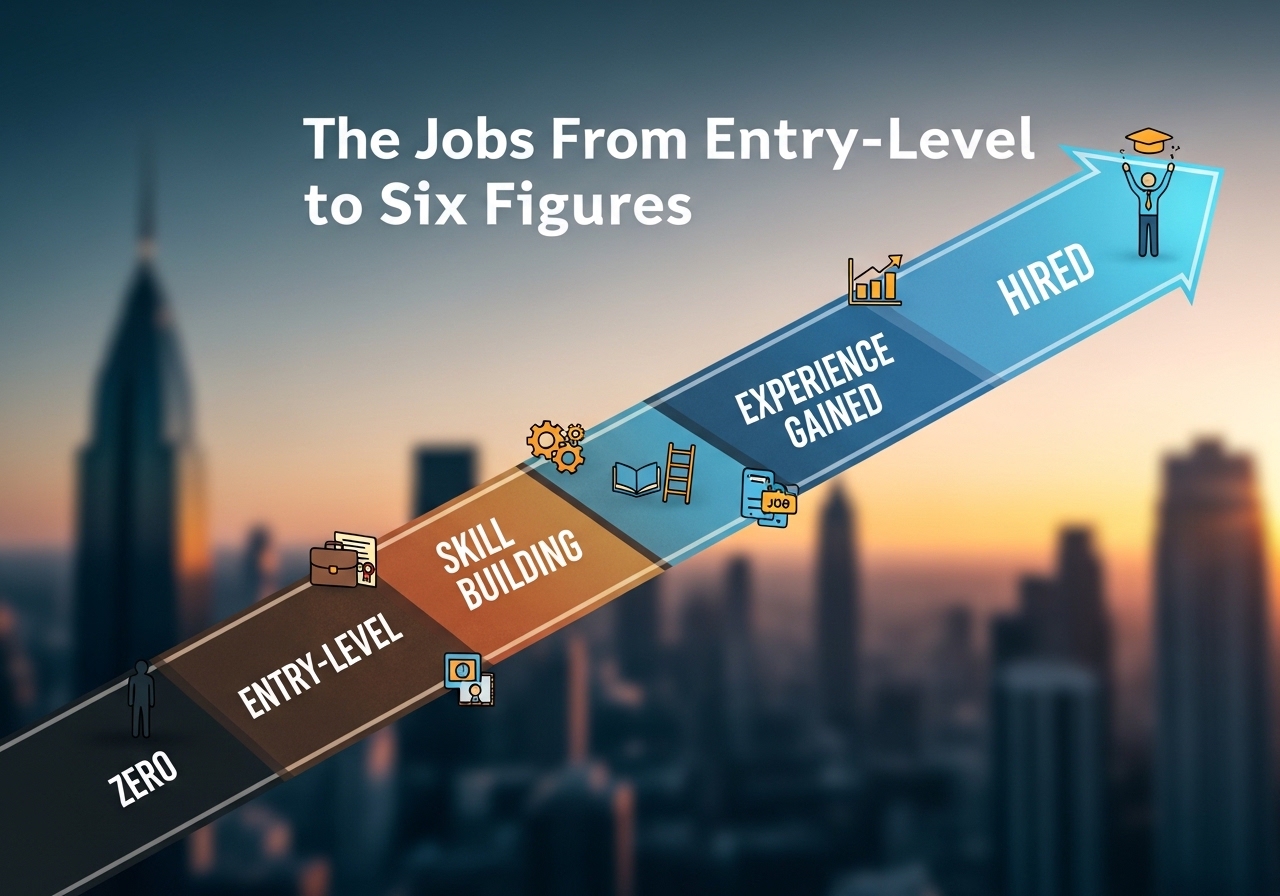
Month 1-2: Skill Selection
- Pick ONE job from list above
- Take one comprehensive course (not 12 YouTube videos)
- Build 3 portfolio pieces (even if unpaid/fake)
Month 3-4: Proof Building
- Offer free work to 5 ideal clients
- Document results meticulously
- Get testimonials (even from free clients)
Month 5-6: First Paid Work
- Set rates at market bottom (you’re proving, not earning)
- Land 2-3 clients through job boards, direct outreach, or referrals
- Focus on retention, not new acquisition
Month 7-12: Rate Optimization
- Raise rates 25% every 3 months or 3 clients
- Fire worst client each quarter (energy management)
- Build systems for efficiency
Year 2+: Specialization
- Niching down increases rates 2-3x
- Productize services (packages, not hourly)
- Build team if desired
Where to Actually Find These Jobs (2026 Edition)
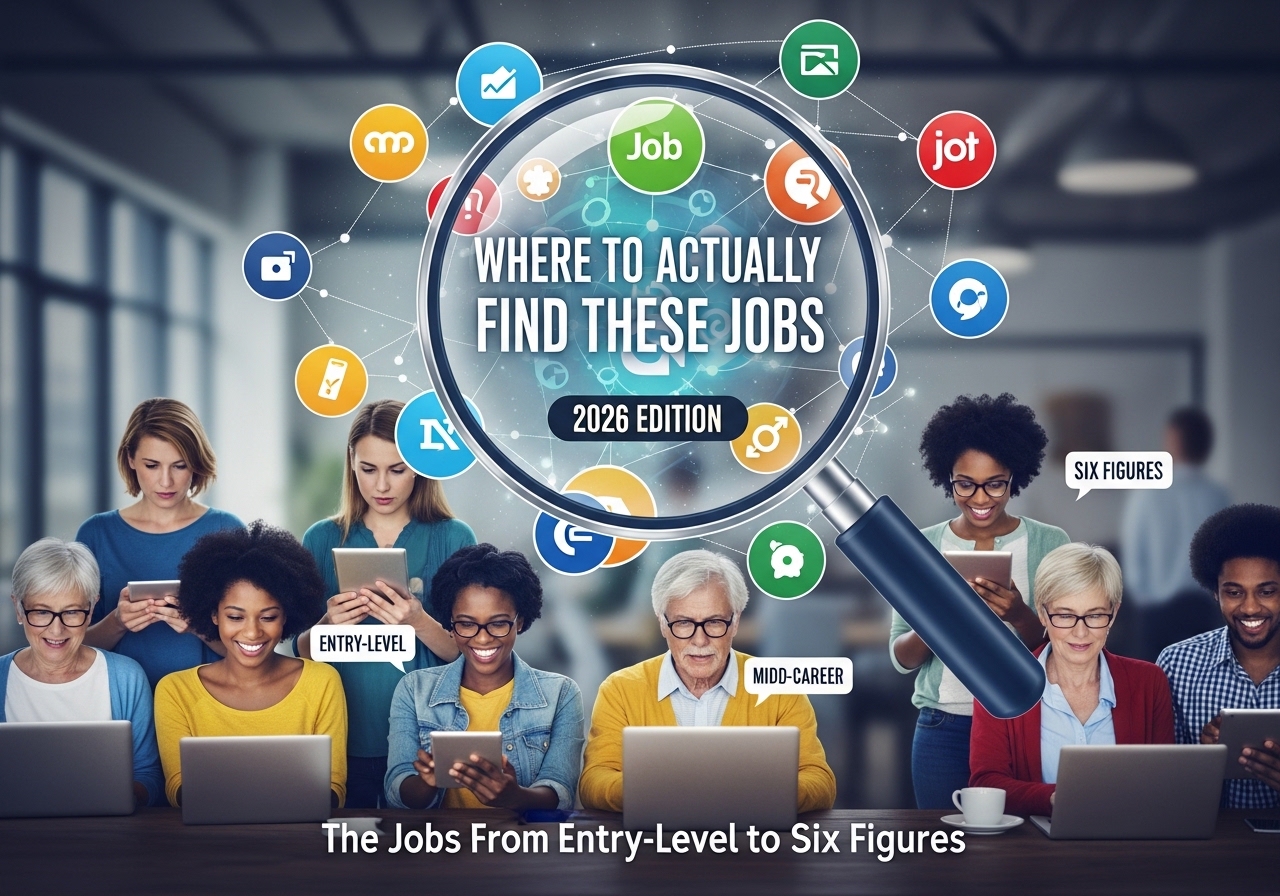
For beginners:
- UpWork: Filter by “Entry Level,” build profile, start cheap, raise rates fast
- Contra: No fees, better for creatives, growing fast
- LinkedIn: Search “remote” + job title, filter “Entry level”
For experienced:
- Toptal: Top 3% freelancers, $60-200+/hour, rigorous screening
- Gun.io: Senior developers only, $75-150/hour
- Braintrust: User-owned, lower fees, high-quality clients
For specific roles:
- We Work Remotely: $25K job posting fee = serious companies only
- Dynamite Jobs: Remote-first companies, operations/marketing focus
- AngelList: Startups, equity + cash compensation
- FlexJobs: Vetted listings, $14.95/month (worth it for serious search)
The hidden market: 80% of remote jobs aren’t posted. They’re filled through:
- Twitter/X networking (follow remote work advocates)
- Company career pages directly (Notion, Zapier, GitLab, Doist hire remote constantly)
- Referrals from existing remote workers
The Equipment Investment (What You Actually Need)
Minimum viable setup ($500):
- Reliable laptop (MacBook Air M1 or equivalent Windows)
- High-speed internet (50+ Mbps upload for video calls)
- Quiet workspace (coworking, library, or soundproofed corner)
Professional upgrade ($1,500):
- Sony WH-1000XM5 Headphones ($398): Noise cancellation essential for coworking spaces, airports, cafes. Crystal clear mic for client calls. I wear these 8 hours daily.
- Logitech Brio 4K Webcam ($169): Remote work is video-first. Built-in laptop cameras look amateur. This signals professional.
- Elgato Key Light Air ($164): Proper lighting transforms video presence. Clients judge competence partially on video quality.
Productivity stack ($50/month):
- Notion (project management)
- Loom (async video communication)
- Calendly (scheduling across time zones)
- Krisp ($12/month): AI noise cancellation for calls. Removes barking dogs, keyboard typing, cafe noise. Essential for professional calls from non-office locations.
The Scam Warning Signs
Red flags:
- Requests to pay for “training” or “certification” before hiring
- Vague job descriptions (“work from home, $500/day, no experience!”)
- Requests for bank account info before contract signed
- “Interview” via Telegram or WhatsApp only
- Pressure to start immediately without contract
Verify legitimacy:
- Check company on Glassdoor, LinkedIn
- Search “[Company] + scam”
- Real companies have real websites, not just Gmail addresses
- Never pay to work
The Tax and Legal Reality
US citizens:
- Self-employment tax (15.3%) on top of income tax
- Quarterly estimated payments required
- Deduct home office, equipment, travel (business purpose)
- QuickBooks Self-Employed ($15/month) tracks mileage, expenses, estimates quarterly taxes. Essential for avoiding IRS penalties.
International complications:
- Foreign Earned Income Exclusion ($120,000 tax-free if abroad 330+ days)
- State residency rules vary (some require you pay even if abroad)
- Some countries require local registration for stays >90 days
- Digital nomad visas (Portugal, Spain, Estonia, etc.) simplify legal status
Get professional help: Remote work taxes are complex. Budget $500-1,500 for accountant specializing in location-independent workers.
The Soft Skills That Matter More Than Technical Skills
Remote work requires:
- Async communication: Clear written updates without real-time meetings
- Time zone management: Scheduling across EST, CET, IST without burnout
- Self-motivation: No boss watching, results-only environment
- Boundary setting: Preventing work from consuming all waking hours
- Loneliness management: Building community without office forced interaction
The burnout prevention:
- Dedicated workspace (even if just a desk corner)
- Shutdown ritual (close laptop, change clothes, leave “office”)
- Social connection (coworking spaces, meetups, online communities)
- Movement breaks (remote work is sedentary—schedule walks)
The Bottom Line
Working from anywhere isn’t a fantasy. It’s a specific skill set, built deliberately, with realistic expectations about the first year.
The $847 I made in month one felt like failure compared to my previous salary. It was actually proof of concept. Three years later, I earn 4x my corporate salary with 10x the freedom.
Pick one job. Build proof. Start cheap. Raise rates. Specialize. Repeat.
The world really is your office. But you have to build the skills first.
This post contains affiliate links. If you purchase through these links, I earn a small commission at no extra cost to you. I only recommend tools I personally use to run my location-independent business.