Oahu is not just Hawaii’s most visited island; it’s one of the most diverse destinations on earth. Within a single day, you can swim in turquoise water, stand at a World War II memorial, hike a volcanic crater, and eat shave ice in a surf town. No other Hawaiian island packs this much variety into one place.
But most travel guides either give you a basic checklist of tourist spots or skip the practical details that actually make a trip work. This guide covers the iconic places and the ones most visitors miss along with honest tips on timing, crowds, and how to get the most out of every stop.
Quick Overview: Oahu by Region
Oahu has four main areas, and each feels completely different:
- Honolulu & Waikiki — Bustling, lively, great for first-timers
- South Shore & East Oahu — Best beaches, scenic drives, snorkeling
- Windward Coast — Lush, quiet, local vibe
- North Shore — Laid-back surf culture, farm stands, big waves in winter
Knowing these zones helps you plan your days without backtracking across the island.
Waikiki Beach
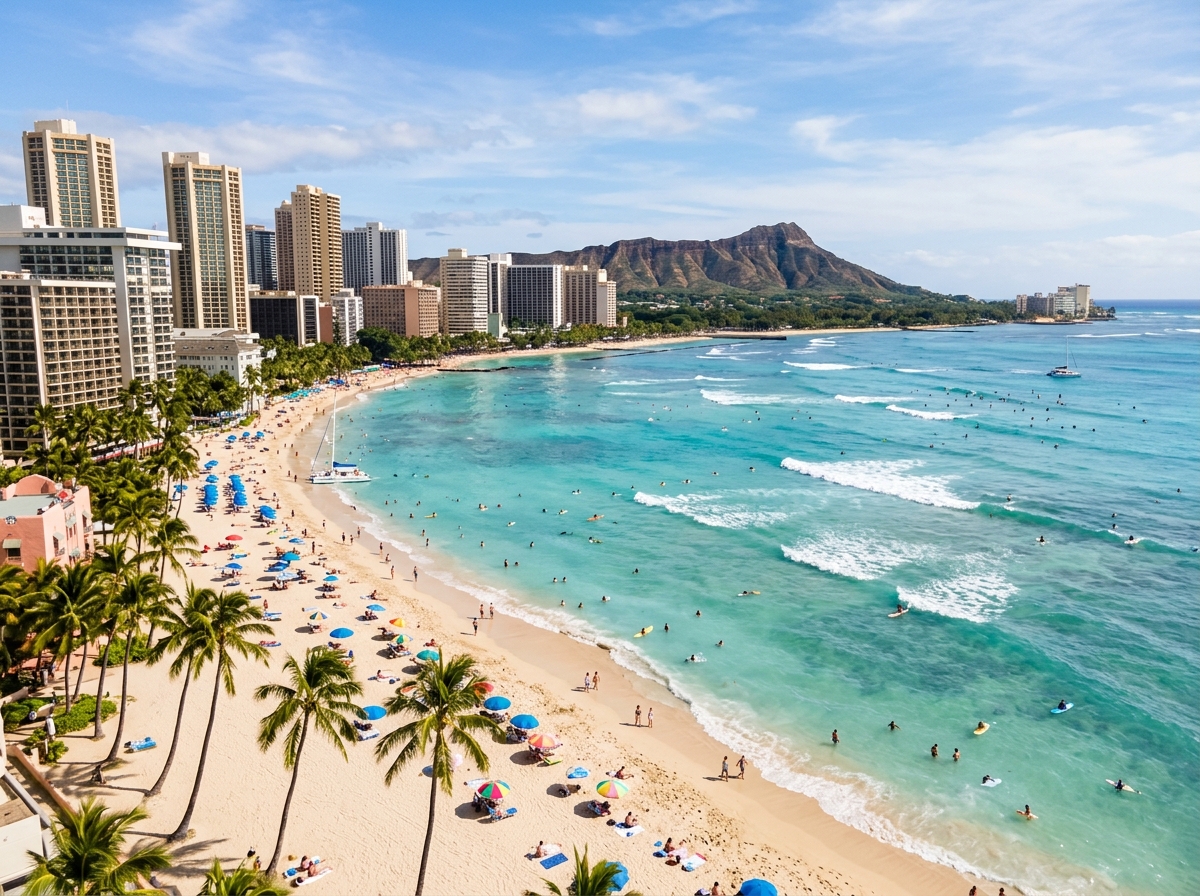
Waikiki is the first place most people picture when they think of Oahu and it earns its reputation.
The two-mile stretch of sand is perfectly maintained, easy to reach, and lined with everything you need: surf lesson spots, outrigger canoe rides, beach chairs, restaurants, and hotels at every price point. The water is calm enough for beginners and warm year-round.
Yes, it gets crowded. But early mornings are genuinely peaceful. Get there before 8 AM and you’ll have wide stretches of sand nearly to yourself.
What most guides miss: The best sunset view in Waikiki isn’t from the beach itself — it’s from the rooftop bar at the Moana Surfrider or a table at Duke’s oceanfront restaurant. Book ahead for sunset hours.
Best for: First-time visitors, families, couples, anyone who wants a classic Hawaii beach experience.
Diamond Head State Monument
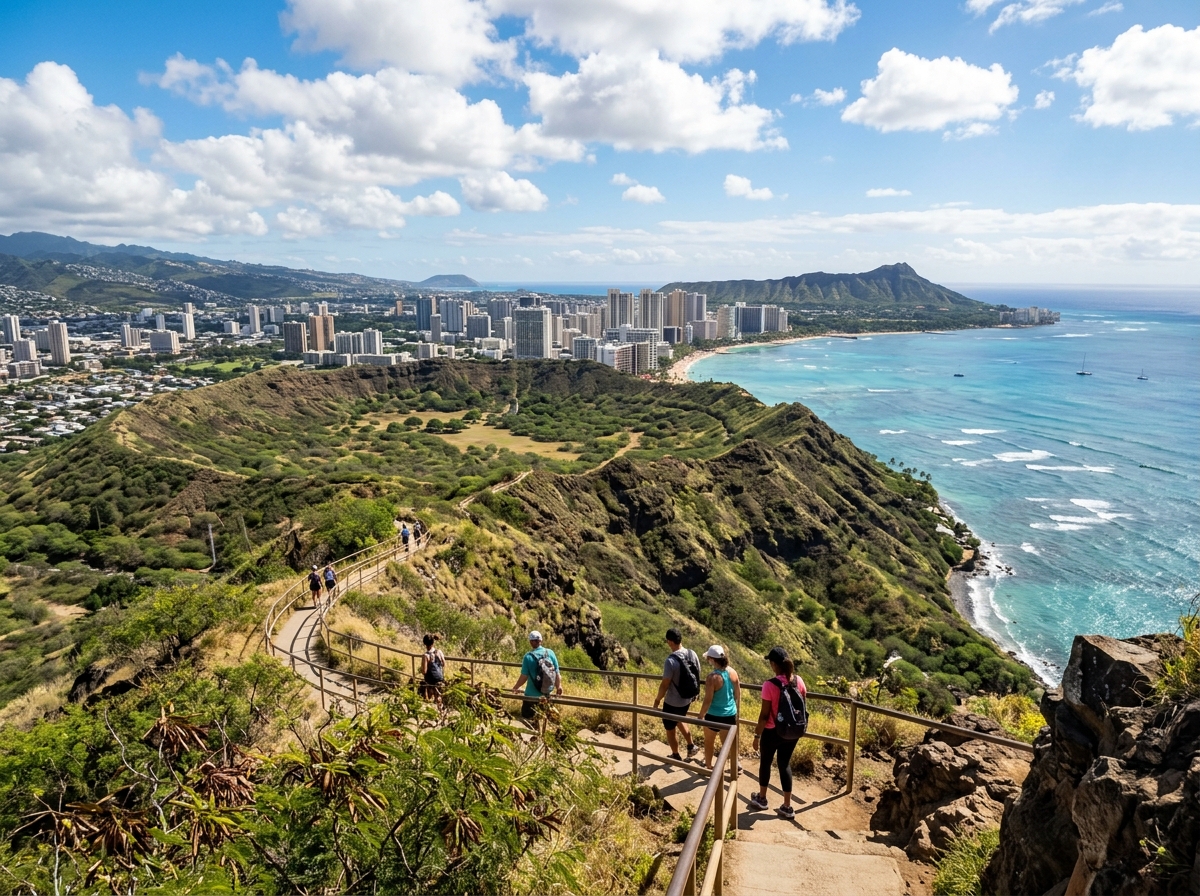
Diamond Head is a 300,000-year-old volcanic crater that sits at the eastern edge of Waikiki. The hike to the summit is one of the most rewarding short hikes in all of Hawaii.
It’s about 1.6 miles round trip with around 560 feet of elevation gain. There are tunnels, spiral staircases, and old military bunkers along the way, which makes it feel more like an adventure than a standard nature walk. The panoramic view from the top — Waikiki below, the Pacific stretching out, the Ko’olau mountains rising behind — is something you won’t forget.
Practical tips:
- Reservations are now required. Book online at gostateparks. hawaii.gov well in advance
- Go right when they open at 6 AM to beat the heat and the crowds
- Bring water — there is none available on the trail
Best for: Hikers, photography lovers, early risers.
Pearl Harbor National Memorial
Pearl Harbor is one of the most emotionally significant historical sites in the United States, and it’s handled with care and respect.
The USS Arizona Memorial, built directly over the sunken battleship, is free to visit, but timed entry passes are required and they go fast. Arrive early or book online through recreation.gov. You take a short boat ride to the memorial and stand above the ship where over 1,100 sailors remain.
Beyond the memorial, there are several other sites on the same grounds: the USS Missouri battleship (where Japan’s surrender was signed), the USS Bowfin submarine museum, and the Pacific Aviation Museum. Budget at least half a day if you plan to see more than one.
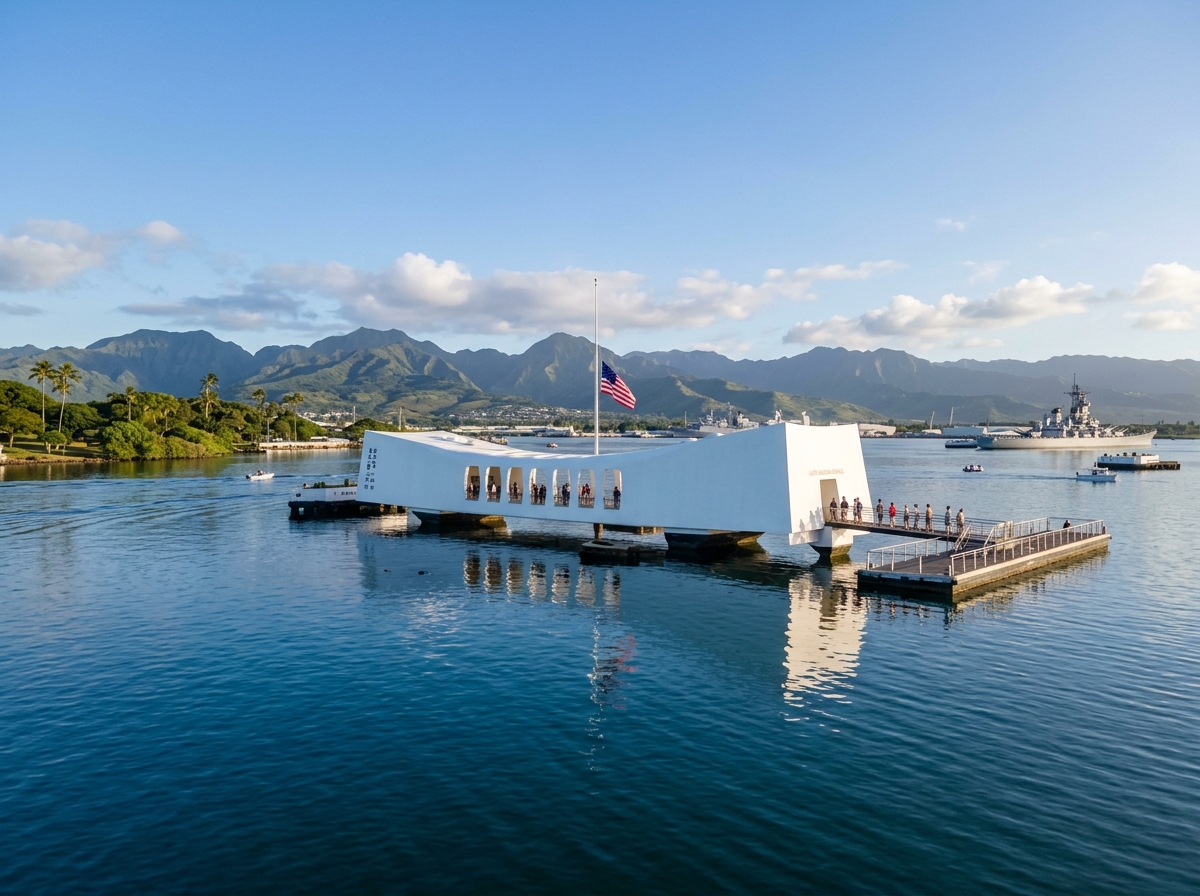
What most guides miss: The free museum at the visitor center — the one you see before boarding the boat — is genuinely excellent. Don’t rush past it to get to the memorial.
Best for: History lovers, families, anyone visiting the U.S. for the first time.
Hanauma Bay Nature Preserve
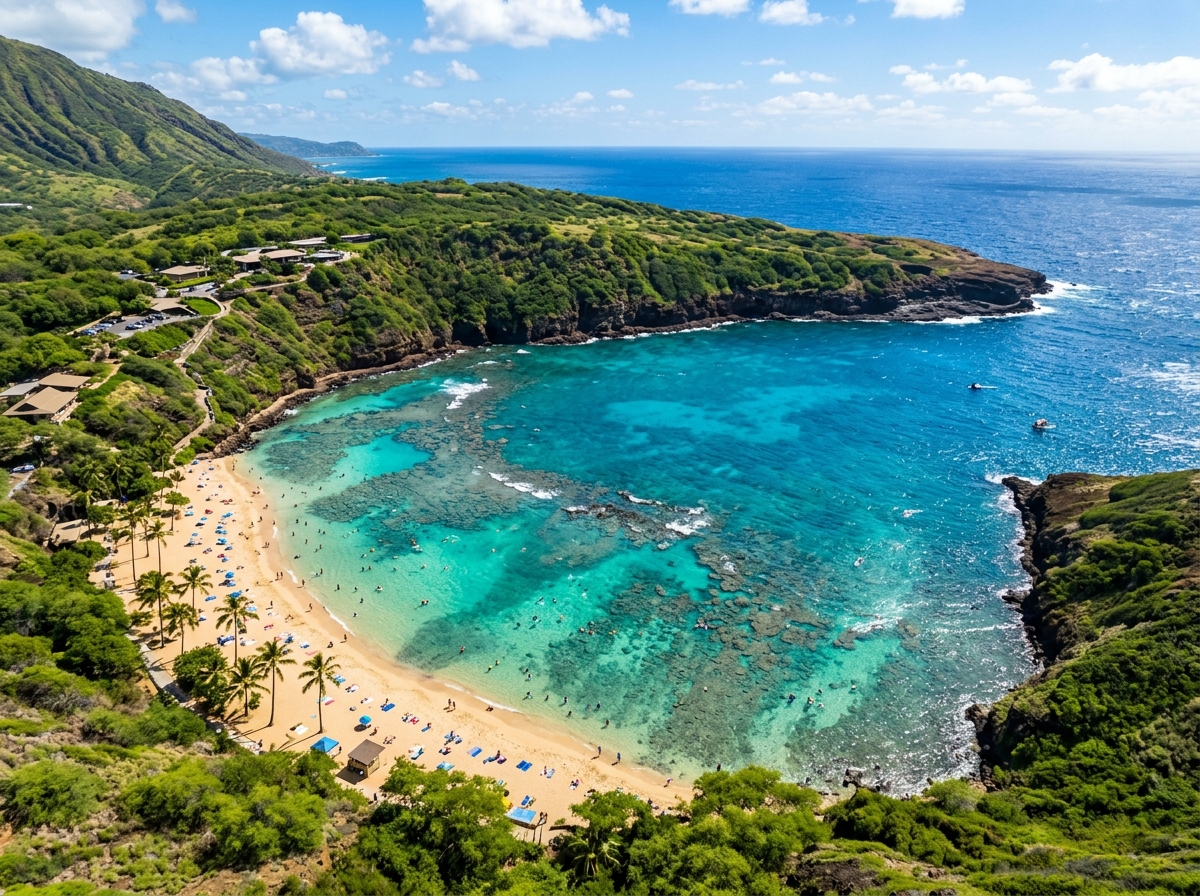
Hanauma Bay is consistently ranked one of the best snorkeling spots in the entire United States, and it’s not hard to see why. The bay is a protected marine sanctuary inside a collapsed volcanic crater. The water is clear, the reef is healthy, and the fish are so used to people that they swim right past you.
Access is limited on purpose. Only 720 people are allowed in per session to protect the ecosystem. You have to watch a short educational video before entering the water, which actually teaches you how to snorkel responsibly — and it works. The reef here is in far better shape than most snorkeling spots in Hawaii.
Practical tips:
- Reservations required and they sell out weeks in advance — book at hanaumabaystatepark.com
- The bay is closed on Tuesdays
- Bring your own gear or rent it at the entrance
- Best snorkeling is in the morning when water visibility is highest
Product recommendation: Cressi Palau Short Snorkeling Set — a highly rated, leak-resistant mask and fins combo perfect for beginners. Comfortable enough to wear for hours. [Shop on Amazon]
Best for: Snorkelers of all experience levels, families with kids, marine life enthusiasts.
North Shore
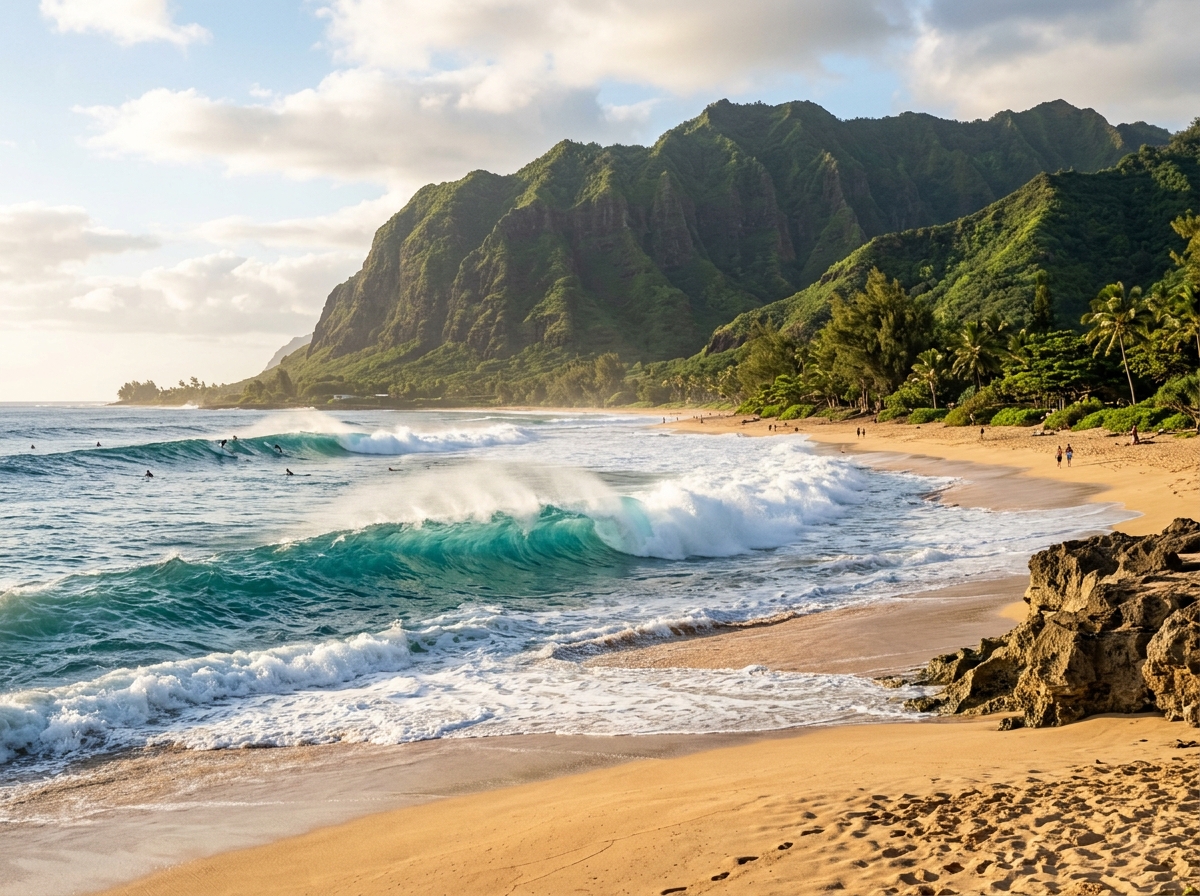
The North Shore is everything Waikiki isn’t. It’s rural, slow-moving, and genuinely beautiful. The town of Haleiwa is the heart of it — a surf town with shave ice stands, art galleries, old wooden storefronts, and the best garlic shrimp trucks in Hawaii.
In summer (April through October), the North Shore has calm, swimmable water and a laid-back atmosphere. In winter (November through February), it transforms into the big wave capital of the world. Waves at Banzai Pipeline and Waimea Bay can exceed 30 feet, and professional surf competitions draw crowds of thousands.
Don’t miss:
- Matsumoto Shave Ice — a North Shore institution since 1951. Get the macadamia nut ice cream at the bottom
- Giovanni’s Shrimp Truck — the original garlic shrimp truck. Worth the wait
- Sunset Beach — stunning at any time of year, but especially dramatic during big wave season
- Waimea Valley — a lush botanical garden with a swimmable waterfall at the end of a short walk
What most guides miss: Haleiwa is known for a lot of things, but one of the more underrated aspects is all the niche little breakfast and coffee spots scattered throughout town — try Farm to Barn or Island Vintage Coffee for a slow morning.
Best for: Surf fans, photographers, foodies, anyone wanting to escape the tourist bubble.
Kailua Beach
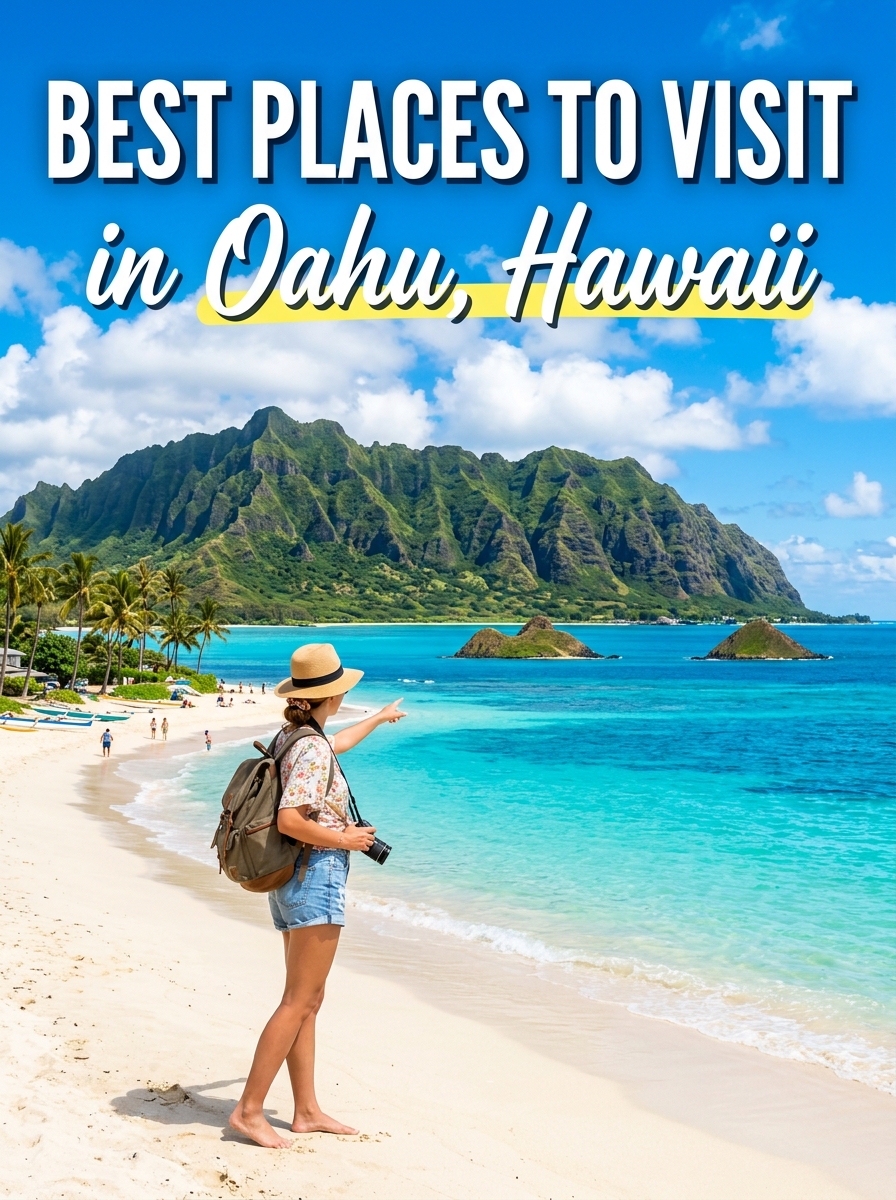
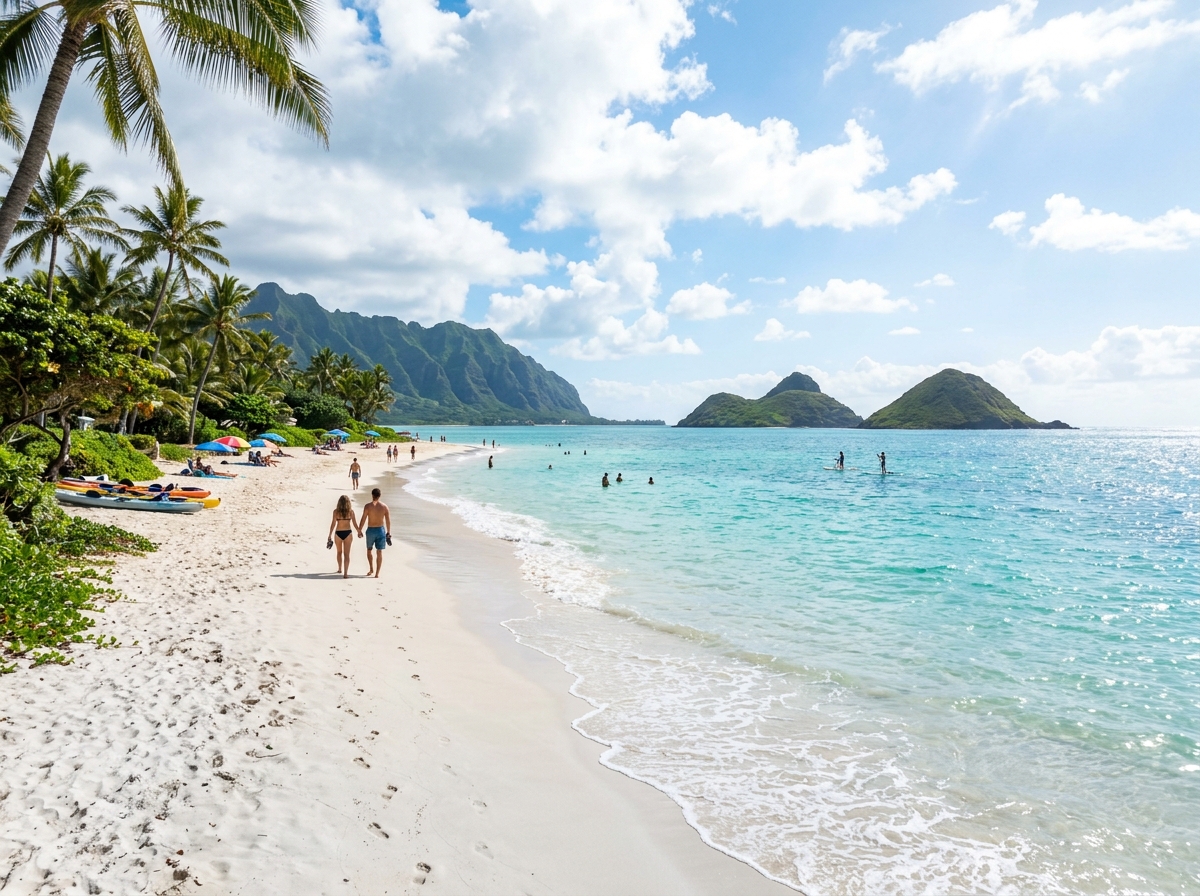
Kailua is consistently ranked among the best beaches not just in Hawaii, but in the world. The sand is powdery and white. The water is a shade of turquoise that looks edited even when it isn’t. The beach faces the Mokulua Islands, two small offshore islets you can kayak to.
It’s located on the windward side of the island, about 30 minutes from Waikiki over the Ko’olau Mountains. The drive itself through the Pali Highway — is gorgeous.
Lanikai Beach, just down the road from Kailua, is also stunning, with soft white sand and calm, clear water. It’s known for sea turtles, so keep an eye out while you’re in the water — you might get lucky and spot one swimming nearby.
Practical tips:
- Parking fills fast on weekends. Get there before 9 AM or take TheBus
- Kayak rentals are available right on the beach for the Mokulua Islands paddle
- No food vendors on the beach — bring snacks or grab something in Kailua town
Best for: Beach lovers, kayakers, families, anyone who wants Waikiki’s beauty without the crowds.
Lanikai Pillbox Hike (Maunawili Ridge Trail)
This is a short but steep hike that delivers one of the best views on the island. Two old military pill boxes (concrete bunkers) sit on a ridge above Lanikai Beach. The hike is only about 1.8 miles round trip, but it climbs quickly.
The view from the Lanikai Pillbox Hike stretches over the turquoise waters of Lanikai Beach, with the Mokulua Islands just offshore. At sunrise, the light turns everything gold and the ocean below looks almost unreal.
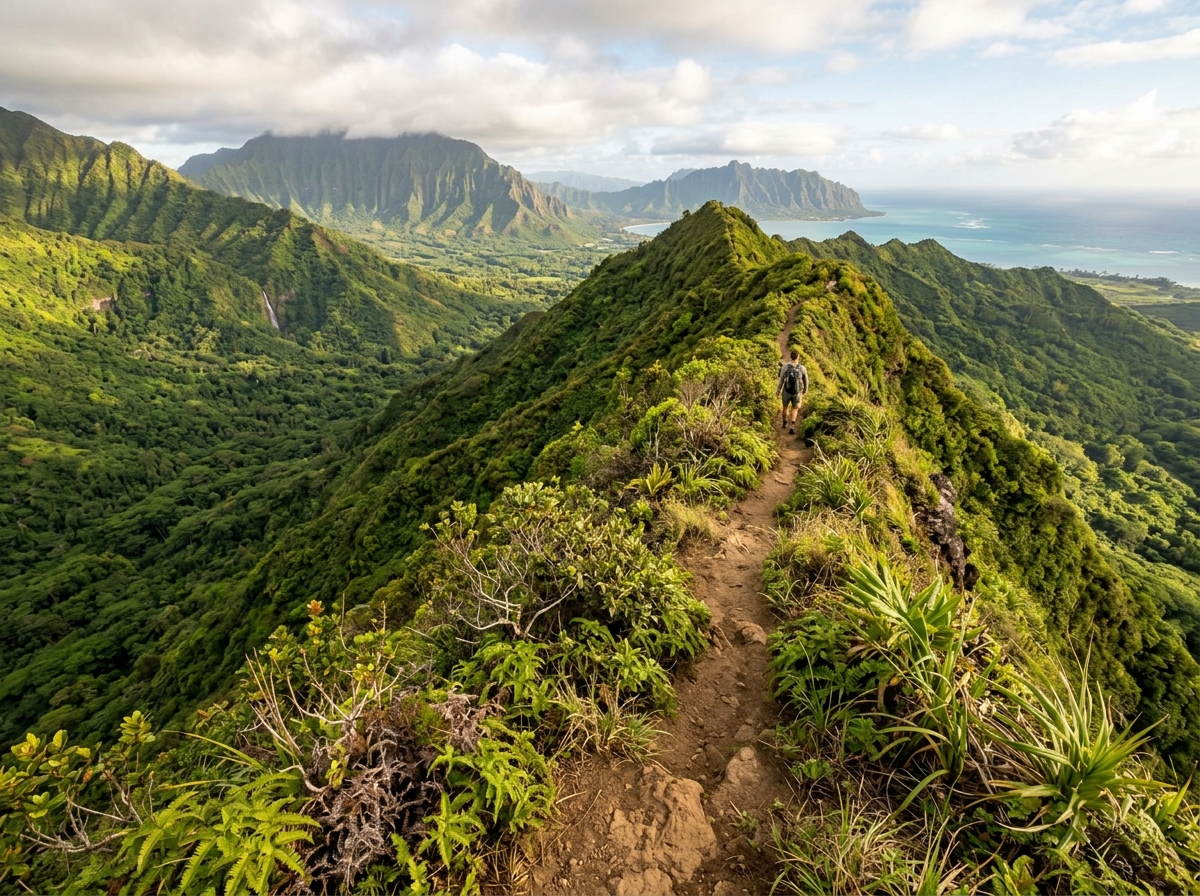
Practical tip: The trailhead is a bit tricky to find. Look for the small opening in a fence on Kaelepulu Drive in Lanikai. Street parking is limited — arrive early.
Best for: Hikers, sunrise seekers, photographers.
Pali Lookout (Nu’uanu Pali State Wayside)
Most visitors drive straight from Waikiki to the North Shore without stopping at the Pali Lookout. That’s a mistake. Sitting at 1,200 feet above sea level, the Pali Lookout offers a sweeping view of the windward coast — green cliffs, valley floor, and ocean in the distance. The wind is notoriously strong (it can knock you sideways), which makes the whole experience a little dramatic.
This is also a deeply historic site. In 1795, King Kamehameha I drove opposing warriors off this cliff during the Battle of Nu’uanu, unifying the Hawaiian Islands.
Practical tip: It’s on the H-3/61 highway between Honolulu and Kailua — easy to add as a stop between the two.
Best for: History lovers, scenic viewpoints, anyone driving the windward coast.
Polynesian Cultural Center
The Polynesian Cultural Center in Laie is the most visited paid attraction on Oahu, and it genuinely earns it. The center spans six “villages,” each representing a different Pacific island culture: Hawaii, Samoa, Tonga, Fiji, Tahiti, and Aotearoa (New Zealand).
You can watch cultural demonstrations, try traditional foods, and learn about the distinct histories, music, and arts of each culture. The evening luau and show called “Ha: Breath of Life” is theatrical and spectacular.
Practical tip: Book the full package that includes the evening show. Coming just for the daytime villages without the show misses the best part.
Best for: Families, cultural travelers, first-timers who want more than beaches.
Kualoa Ranch
Kualoa Ranch is a popular tourist destination on the windward coast where many famous movies have been filmed, including Jurassic Park. The valley — a dramatic green canyon surrounded by jagged ridgelines — is instantly recognizable to fans of Jurassic Park, Jumanji, Lost, and dozens of other productions.
Tours run throughout the day covering movie sites, horseback riding, ATV trails, and zip lines. The scenery alone is worth the trip — but the behind-the-scenes stories make it genuinely entertaining even if you’re not a film buff.
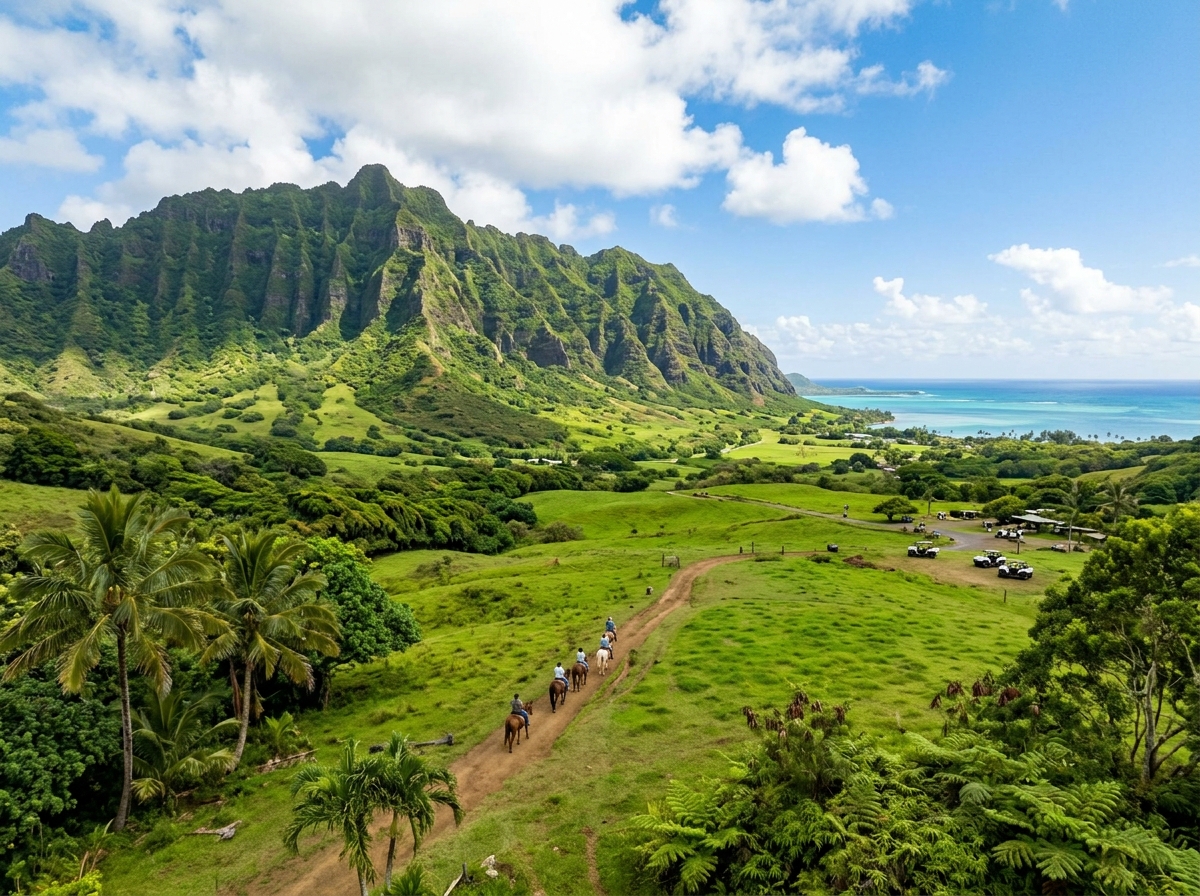
Bonus tip: Kualoa Park, across the street from Kualoa Ranch, is free to visit and features the same beautiful mountain views, plus a sandy beach with a view of Mokoliʻi (Chinaman’s Hat), a cute offshore island.
Best for: Movie fans, adventure seekers, families.
Byodo-In Temple
Tucked into the back of Valley of the Temples Memorial Park on the windward coast, Byodo-In is a full-scale replica of a 900-year-old Japanese temple. The setting is extraordinary: green cliffs rise directly behind the temple, and a koi-filled reflecting pond sits in front.
It costs just a few dollars to enter, and it’s almost always peaceful even when other Oahu spots are packed.
What most guides miss: There are peacocks that roam the grounds freely. Walk slowly and you’ll get close to them.
Best for: Photography, peaceful breaks from tourist hustle, cultural interest.
Makapu’u Lighthouse Trail
This is one of the best easy-to-moderate hikes on the island. The paved trail winds up the southeastern tip of Oahu to a working lighthouse with views of two offshore islands — Manana (Rabbit Island) and Kaohikaipu.
In winter, this is also a prime whale-watching spot. Humpback whales migrate to Hawaiian waters between December and April, and you can often spot them breaching from the trail without any equipment.
Practical tip: The trail is entirely paved and stroller-friendly. It’s about 2 miles round trip with 500 feet of gain. Bring sunscreen — there’s almost no shade.
Best for: Easy hikers, families, whale watching (winter), photography.
Hidden Gems Most Guides Skip
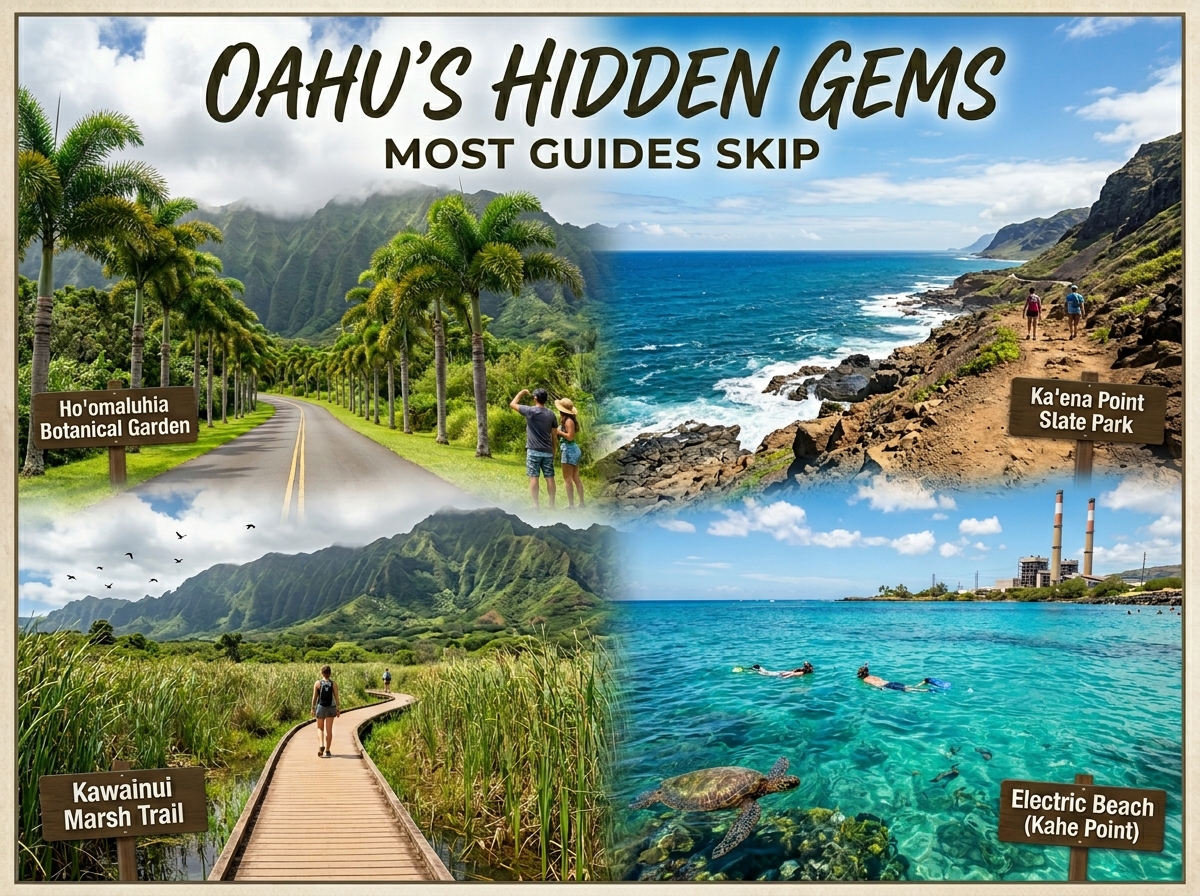
Ho’omaluhia Botanical Garden
At Ho’omaluhia Botanical Garden, you can experience the tropical beauty of Oahu — and it’s free. The 400-acre garden at the base of the Ko’olau Mountains is one of the most beautiful spots on the island. The dramatic mountain backdrop makes it a photographer’s dream, especially in the early morning when mist rolls through the valley.
Ka’ena Point State Park
Ka’ena Point State Park is a hidden gem that wraps around one of the most visually appealing corners of Oahu. The wild coastline is one of its most intriguing aspects, and the path allows you to get an up-close view of the waves crashing into the cove, where you can feel the spray off the rocks. It’s also a protected habitat for the endangered Laysan albatross — you may see nesting pairs on the point.
Kawainui Marsh Trail (Kailua)
The unassuming 1.4-mile-long trail along the edge of Kawainui Marsh Wildlife Sanctuary was one of the most-recommended local spots in Kailua. The marsh is beautiful, as is the unobstructed view of the towering lush mountains. The walk is easy, flat, and frequented by locals — yet very few tourists find this spot.
Electric Beach (Kahe Point)
Electric Beach is one of Oahu’s underrated spots for both surfing and snorkeling. Known for its warm waters (heated by a nearby power plant’s discharge pipes) and fewer crowds, this beach offers a quieter alternative to the island’s more popular breaks. Sea turtles are commonly spotted here.
Practical Tips for Visiting Oahu
Best Time to Visit
Spring break and summer draw peak crowds as kids are out of school. Travel during shoulder season — typically March to May and September to early November — for lower prices, fewer crowds, and calmer vibes.
Getting Around
Oahu has a public bus system called TheBus that covers most of the island affordably. But to reach places like the North Shore, Kailua, or Kualoa Ranch comfortably, a rental car gives you much more flexibility. Book early — rentals on Oahu sell out, especially in summer.
Saving Money
By almost every metric, Oahu is the cheapest Hawaiian island to visit. According to data from the Hawai’i Tourism Authority, hotel rooms in Oahu average about 21% less than in the state as a whole. Many of the best experiences — beaches, hiking trails, the botanical garden, Pali Lookout, and the Kualoa Park views — are completely free.
Those who venture off the beaten paths of Oahu and choose to visit during off-peak months are often rewarded with lower prices for accommodations.
What to Book in Advance
These things sell out well ahead of time — book before you arrive:
- Hanauma Bay reservations
- Diamond Head timed entry
- USS Arizona Memorial passes
- Polynesian Cultural Center evening show
- Rental car
Recommended Amazon Products for Your Oahu Trip
Mares Ergo Dry Snorkel Set — Full-face snorkel mask with a dry-top system that keeps water out completely. Ideal for Hanauma Bay and Electric Beach. [Shop on Amazon]
YETI Rambler 30 oz Travel Tumbler — Keeps water cold for hours on hot hikes like Diamond Head and Makapu’u. A must in Oahu’s heat. [Shop on Amazon]
Neutrogena Sheer Zinc Mineral Sunscreen SPF 50 — Reef-safe sunscreen that won’t harm Hanauma Bay’s coral ecosystem. Required by Hawaii state law to be reef-safe. [Shop on Amazon]
Osprey Daylite 13L Backpack — Lightweight daypack for hikes and beach days. Fits snorkel gear, a water bottle, and your essentials without being bulky. [Shop on Amazon]
GoPro HERO12 Waterproof Action Camera — Capture underwater moments at Hanauma Bay, kayaking in Kailua, or surfing on the North Shore without worrying about water damage. [Shop on Amazon]
Frequently Asked Questions
How many days do you need on Oahu?
Five to seven days gives you enough time to cover the main highlights without rushing. Three days is the bare minimum if you’re combining Oahu with another island.
Is Oahu or Maui better for first-time visitors?
Oahu is better for first-timers because it offers more variety — history, culture, beaches, hiking, food, and nightlife all in one place. Maui is better for pure beach relaxation.
What is Oahu known for?
Oahu is best known for Waikiki Beach, Pearl Harbor, Diamond Head, and the North Shore surf scene. It’s also Hawaii’s cultural and political center, home to the state capital Honolulu.
Is Oahu expensive?
It can be, but it doesn’t have to be. Many of the best beaches and hikes are free. Midscale and economy rooms in Oahu average around $151 per night — about 30% less than the same class of room across the entire state. Eating at plate lunch spots and shrimp trucks instead of hotel restaurants keeps food costs low.
When is the best time to see big waves on the North Shore?
North Shore big wave season runs from November through February. Surf competitions like the Eddie Aikau Invitational and the Vans Triple Crown typically happen in December.
Do you need a car in Oahu?
Not necessarily. TheBus can get you to Waikiki, Hanauma Bay, Diamond Head, and even the North Shore. But a rental car makes the windward coast, Kualoa, and off-the-beaten-path spots much easier to reach.
Are there free things to do in Oahu?
Yes, many of the best things are free. Waikiki Beach, Kailua Beach, Ho’omaluhia Botanical Garden, Ka’ena Point, the Kawainui Marsh Trail, Kualoa Park, and the Pali Lookout all cost nothing to visit.
Final Thoughts
Oahu rewards every kind of traveler. It has the iconic spots that belong on every Hawaii bucket list, and it has quiet corners that most visitors never find. The key is giving yourself enough time to go beyond Waikiki — even one day trip to the windward coast or the North Shore will change your whole impression of the island.
Book the things that require reservations before you arrive, leave a couple of days flexible, and resist the urge to cram everything in. The island has a way of slowing you down, and that’s the whole point.