
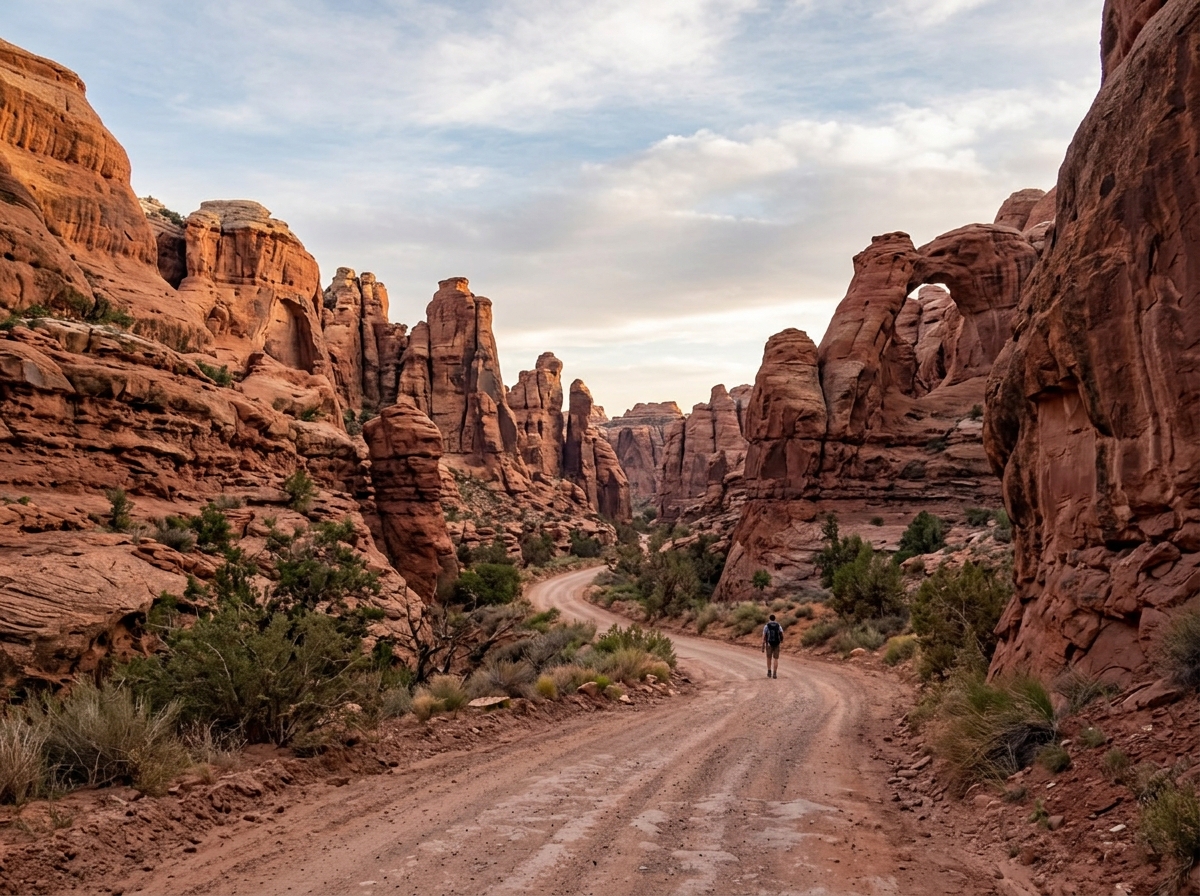
Sedona stops people in their tracks. Not metaphorically. Literally. You drive through the desert, turn a corner on Highway 179, and suddenly there are 300-million-year-old red sandstone formations rising straight out of the earth in every direction.
No photograph does it justice. The scale, the colour, and the quality of light in Sedona are things you absorb in person and carry with you for years.
But Sedona is more than a landscape. It has world-class hiking, a genuine spiritual culture that draws visitors from every continent, excellent food, a designated Dark Sky community where stargazing is taken seriously, and enough variety to fill a week or reward a long weekend.

This guide covers the best places to visit in Sedona with honest practical advice, trail details, and everything most guides leave out.
Quick Answer: Best Places to Visit in Sedona
For a first visit, hike Cathedral Rock or Devil’s Bridge, drive the Red Rock Scenic Byway, visit the Chapel of the Holy Cross, and watch a sunset from Airport Mesa. For a full Sedona experience, add Slide Rock State Park, explore Boynton Canyon, visit Tlaquepaque Arts Village, and stay late enough to see the stars.
Before You Go: Two Things Every Sedona Visitor Needs to Know
The Red Rock Pass
Almost every trailhead and scenic parking area in Sedona requires a Red Rock Pass. A daily pass costs around $5. A weekly pass is around $15. An America the Beautiful National Parks Annual Pass covers Red Rock Pass sites and is worth buying if you plan to visit more than two or three national parks or recreation areas in a year.
Buy your pass before you hike, not after. Rangers do check. You can purchase at the Red Rock Ranger District Visitor Center on Highway 179, at many trailhead kiosks, or online in advance.
The Sedona Shuttle System
Parking at Sedona’s most popular trailheads is notoriously difficult, especially on weekends and during spring and fall peak seasons. The city runs a free shuttle system called the Sedona Shuttle from several park-and-ride lots to the most popular trailheads.
For Cathedral Rock and Devil’s Bridge, the shuttle operates Thursday through Sunday and on most holidays. On Monday through Wednesday, you can park directly at the trailhead lots. Arrive early on weekdays to secure a spot.
The shuttle is free to ride. Park at the designated park-and-ride lots (North SR 179 Park and Ride is the main one) and shuttles run approximately every 20 to 30 minutes during peak hours.
Best Hikes in Sedona
Cathedral Rock
Cathedral Rock is the most photographed formation in Sedona and the most powerful vortex site in the area. The hike is short at 1.5 miles round trip, but the final section requires scrambling up bare sandstone with hand-over-hand climbing in places. Sturdy shoes with real grip are not optional.
The view from the saddle between the rock’s two main spires is extraordinary. Below you is Oak Creek and Crescent Moon Ranch. Above you is Arizona sky. Most people say this hike is the single best thing they did in Sedona.
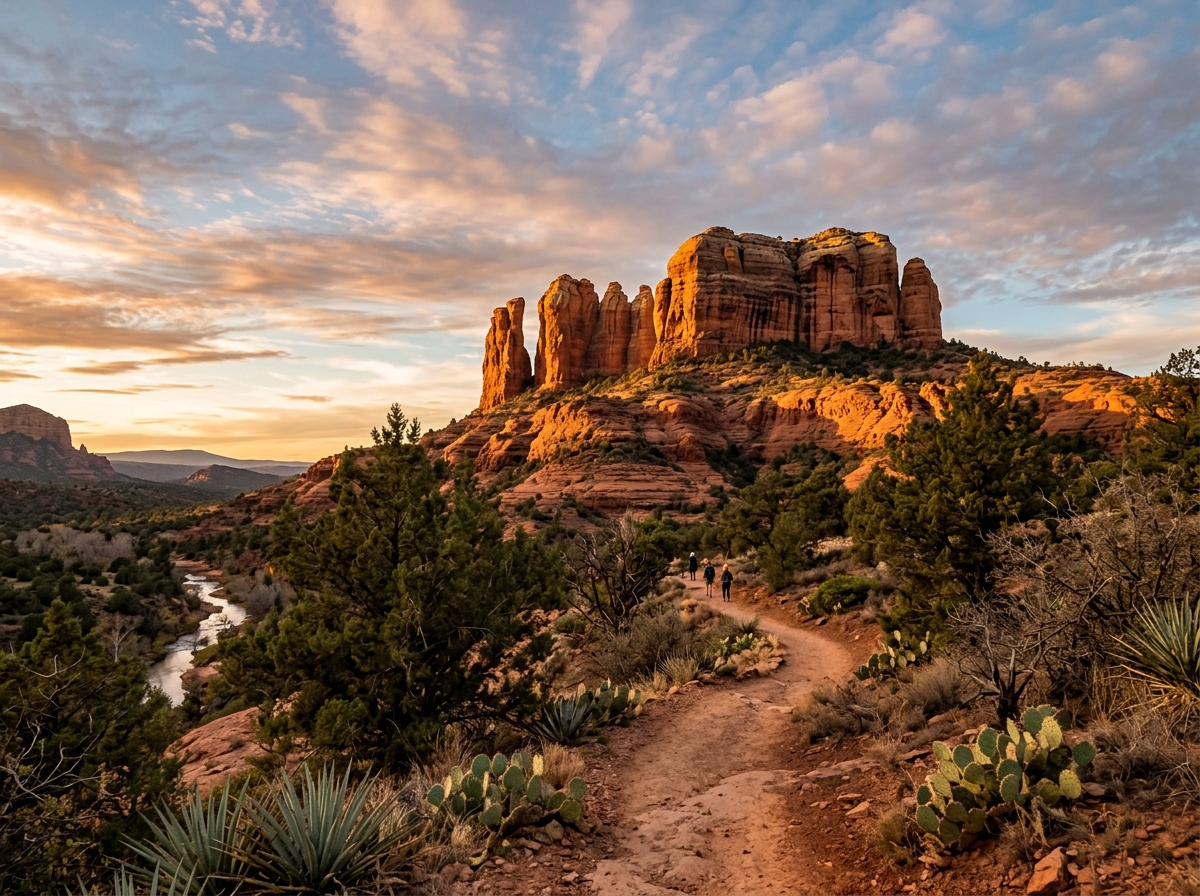
Distance: 1.5 miles round trip Difficulty: Moderate to strenuous (the scramble section) Best time: Early morning on weekdays, or sunset if you are comfortable descending in fading light Parking: Shuttle from North SR 179 Park and Ride on Thu-Sun. Back O’Beyond Road lot on Mon-Wed.
Devil’s Bridge
Devil’s Bridge is the largest natural sandstone arch in the Sedona area, and the hike to reach it is one of the most popular in Arizona. The trail winds through high desert landscape before arriving at a narrow spine of rock that you walk out onto, with a 60-foot drop on either side and a view that stretches across miles of red rock country.
The bridge itself is about 45 feet wide and solid underfoot. Most people who are not afraid of heights find it exhilarating rather than terrifying. The photo from the end of the bridge with the canyon behind you is the defining Sedona shot.
Distance: 3.9 to 4.2 miles round trip depending on the route Difficulty: Moderate Best time: Weekday mornings before 9am. This trail gets very crowded. Parking: Shuttle or Dry Creek Road trailhead lot
Bell Rock and Courthouse Butte Loop
Bell Rock is the large red dome that greets you as you enter Sedona from the south on Highway 179. Its shape is exactly as the name suggests, and it is instantly recognizable. The loop trail around Bell Rock and its larger neighbour Courthouse Butte is 4.2 miles of mostly flat terrain with extraordinary views the entire way.
This is the best hike in Sedona for families, casual walkers, and anyone who wants a long walk with spectacular scenery rather than a technical scramble. Bell Rock is also one of Sedona’s four main vortex sites.
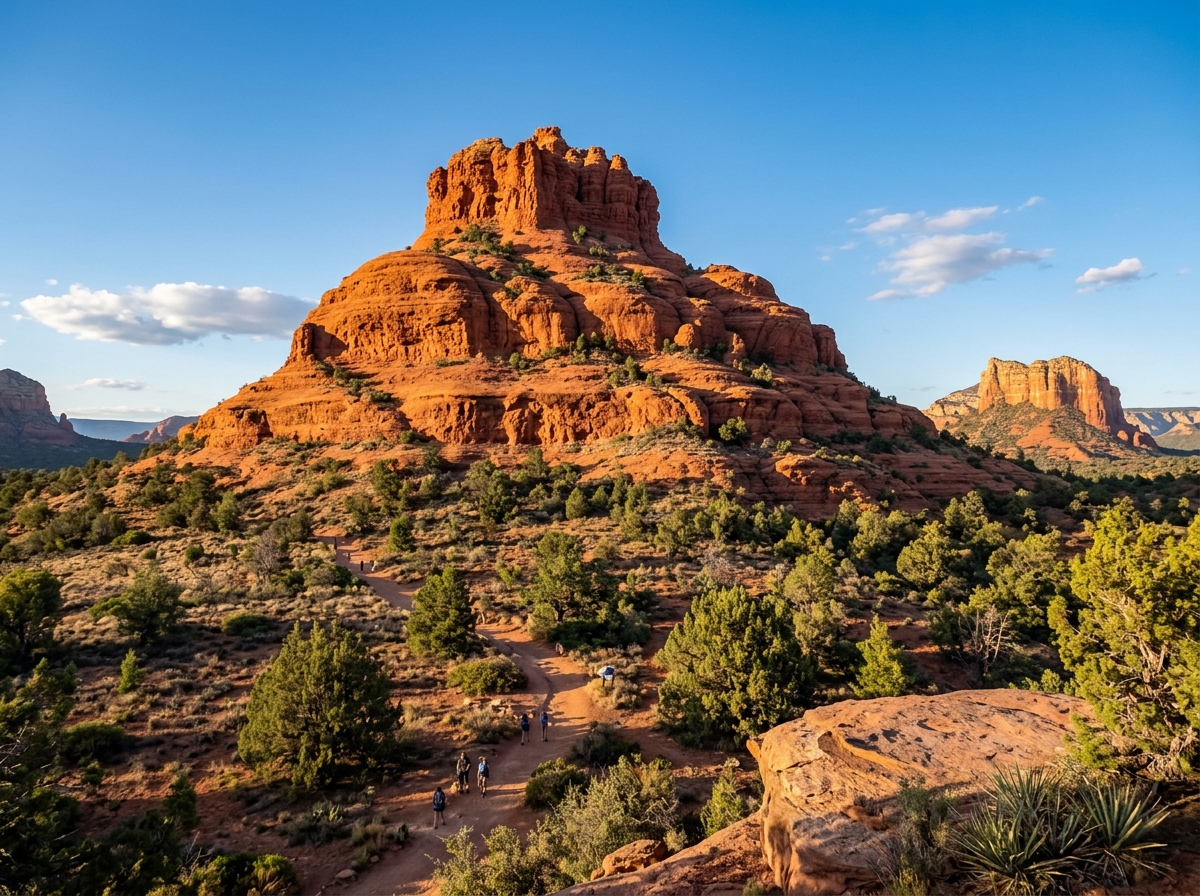
Distance: 4.2 miles loop Difficulty: Easy to moderate Best time: Flexible. This trail is accessible in the full heat of the day better than more strenuous hikes, though early morning is always best. Parking: Bell Rock Pathway Trailhead on Highway 179. Red Rock Pass required.
Boynton Canyon Trail
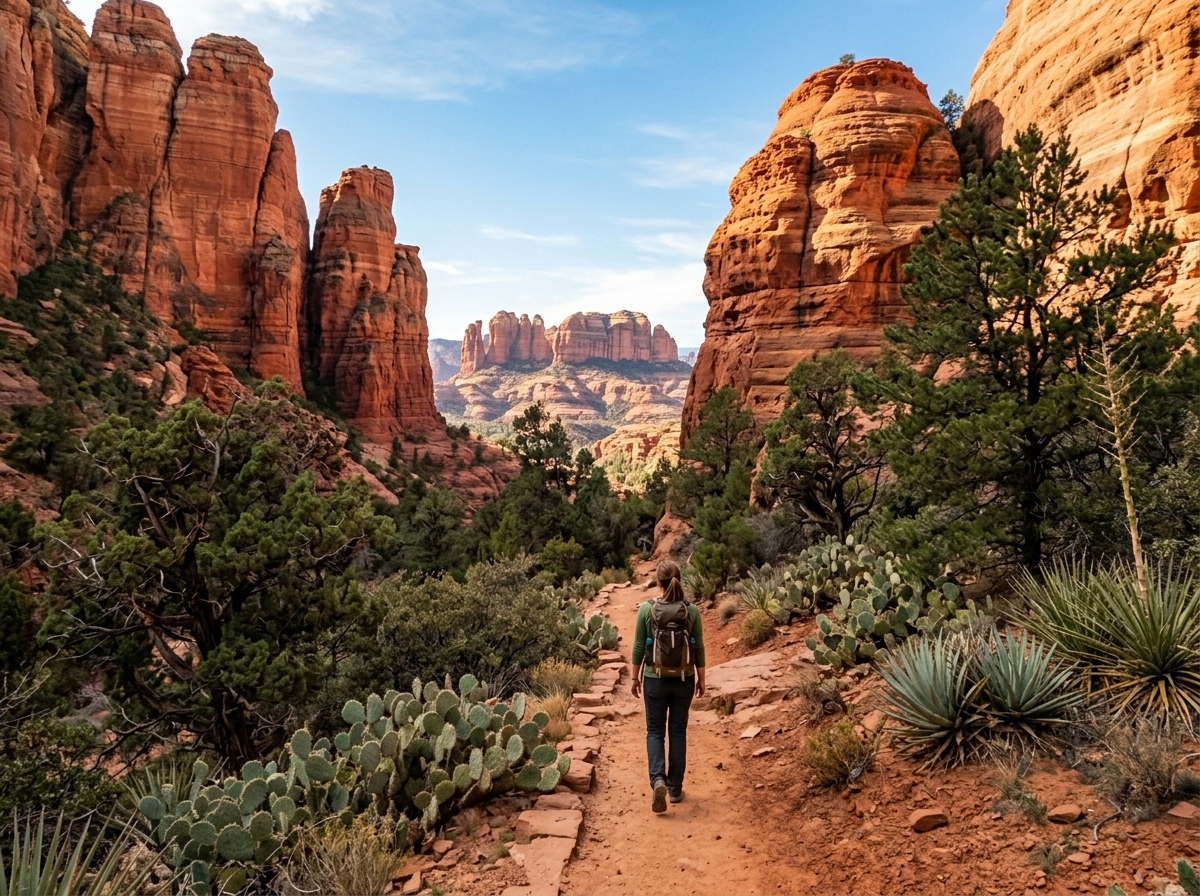
Boynton Canyon is the most complete hiking experience in Sedona. The 6.5-mile trail winds into a canyon surrounded on three sides by red rock walls, with juniper and pinyon pine forest at the base, Native American ruins visible in the canyon walls above, and the Boynton Canyon Vortex at the half-mile mark on a short side trail.
The canyon feels genuinely remote despite being a short drive from town. The Enchantment Resort sits at the canyon mouth and the contrast between the luxury resort and the wild canyon behind it is a uniquely Sedona combination.
Distance: 6.5 miles out and back Difficulty: Moderate Best time: Mornings. The canyon gets warm in the afternoon. Parking: Boynton Canyon Trailhead. Red Rock Pass required.
For any serious hiking in Sedona, hydration matters more than most visitors expect. The desert heat and elevation (Sedona sits at 4,350 feet) pull moisture out of your body faster than you feel it happening. The Hydro Flask 32oz Wide Mouth Water Bottle (available on Amazon) keeps water cold for 24 hours in desert heat and is the most recommended hiking water bottle for hot climate destinations. Bringing two or filling up before every trail is the right approach in Sedona.
Best Vortex Sites in Sedona
Sedona’s four main vortex sites are Airport Mesa, Cathedral Rock, Bell Rock, and Boynton Canyon. Vortexes are believed to be centres of concentrated earth energy, and people visit them for spiritual experience, meditation, reflection, and simple curiosity.
Whether you believe in the energy or not, these sites are genuinely beautiful and the practice of sitting quietly at one of them for 20 minutes is rewarding for any visitor. The twisted juniper trees common at vortex sites, whose trunks spiral rather than growing straight, are a striking physical feature regardless of their cause.
Airport Mesa Vortex: The easiest to access. A 0.2-mile walk from the parking lot with panoramic views of the city and surrounding formations. Best at sunset. Parking is extremely limited (10 spaces). Arrive well before sunset or park at the Airport Scenic Lookout and walk the 1.1-mile Airport View Trail down.
Cathedral Rock Vortex: Considered the most powerful of the four. Reached via the Cathedral Rock hike. The saddle between the spires is where the energy is most concentrated according to tradition.
Bell Rock Vortex: The gentlest and most accessible vortex experience. The trail around Bell Rock passes through the vortex zone. Suitable for all fitness levels.
Boynton Canyon Vortex: A short detour off the main Boynton Canyon Trail. Quieter than Cathedral Rock and Airport Mesa. The canyon setting makes it feel the most remote.
Best Scenic and Cultural Spots

Chapel of the Holy Cross
The Chapel of the Holy Cross is one of the most extraordinary pieces of architecture in the American Southwest. It was designed by sculptor Marguerite Brunswig Staude and completed in 1956, built directly into a red rock butte with a 90-foot cross rising from the rock face.
The chapel is small and simple inside, with a single row of pews and a floor-to-ceiling window behind the altar framing the red rocks and sky. It is an active Catholic chapel and completely open to visitors of any faith or no faith.
The drive up to the chapel is itself spectacular. The parking lot sits on a ledge with views across the valley. Entry is free.
Location: 780 Chapel Road, off Highway 179 Hours: Open daily 9am to 5pm, closed during masses Cost: Free
Slide Rock State Park
Slide Rock is one of the best natural swimming experiences in Arizona. Oak Creek has carved a series of smooth red rock chutes through the canyon bottom, creating natural waterslides that drop into deep cold pools.
The park sits in Oak Creek Canyon, about 7 miles north of Sedona on Highway 89A. It is extraordinarily popular in summer and has a timed-entry reservation system from late May through early September. Book your entry slot in advance through the Arizona State Parks website.
The water temperature is cold even in summer, which is exactly the point in a desert landscape. The swimming season runs approximately May through October.
Cost: $30 per vehicle for up to four people during peak season. Reservation required in summer. Best time: Weekdays in May, June, or September before the peak July-August crowds.
Red Rock Scenic Byway (Highway 179)
The 7.5-mile stretch of Highway 179 from the Village of Oak Creek to Uptown Sedona is designated a National Scenic Byway. Cathedral Rock, Bell Rock, and Courthouse Butte are all visible from the road. Multiple pullouts allow you to stop, photograph, and take in the landscape without hiking.
This drive is the best introduction to Sedona’s landscape and worth doing slowly, in both directions, at different times of day.
Crescent Moon Ranch (Red Rock Crossing)
Crescent Moon Ranch sits on the bank of Oak Creek directly below Cathedral Rock. The view from the creek looking up at the rock reflected in the water is one of the most photographed in Sedona.
The site is managed by the US Forest Service and requires a Red Rock Pass. In spring when Oak Creek is running full, the reflection is perfect. In summer the creek is lower but still beautiful. The picnic area makes it a good family stop.
Location: Off Lower Red Rock Loop Road Cost: Red Rock Pass required ($5 daily)
Tlaquepaque Arts and Shopping Village
Tlaquepaque (pronounced tla-KAY-pa-KAY) is a reproduction of a traditional Mexican village built in 1971 as a home for Sedona’s galleries and artisan shops. The architecture is genuine adobe and wrought iron, built around shaded courtyards with mature sycamore trees growing through the centre.
Unlike the tourist shops along Uptown Main Street, Tlaquepaque has a genuine artisan culture. Galleries show work by serious Southwest painters and sculptors. Ceramic, jewellery, and glasswork studios have resident artists. The quality is consistently higher than what you find anywhere else in Sedona for shopping.
It is also simply a beautiful place to walk. The Chapel of the Tlaquepaque at the village centre holds regular services and the architecture of the whole complex rewards slow exploration.
Location: 336 Highway 179, just south of the Y intersection Hours: Most galleries open 10am to 5pm daily Cost: Free to enter
Sedona Dark Sky and Stargazing
Sedona was designated an International Dark Sky Community, one of only a handful in the world. The city has strict outdoor lighting ordinances that limit light pollution. The result is a night sky of remarkable clarity.
The best stargazing spots are away from the glow of Uptown Sedona. Airport Mesa offers good elevation with minimal nearby lighting. Crescent Moon Ranch and the Boynton Canyon area are both excellent on clear nights.
The best months for stargazing in Sedona are November through February when the Milky Way core is below the horizon but the lack of atmospheric haze makes stars brilliantly clear. Summer brings the Milky Way core above the horizon in the south for the most dramatic shots but also brings more atmospheric moisture.
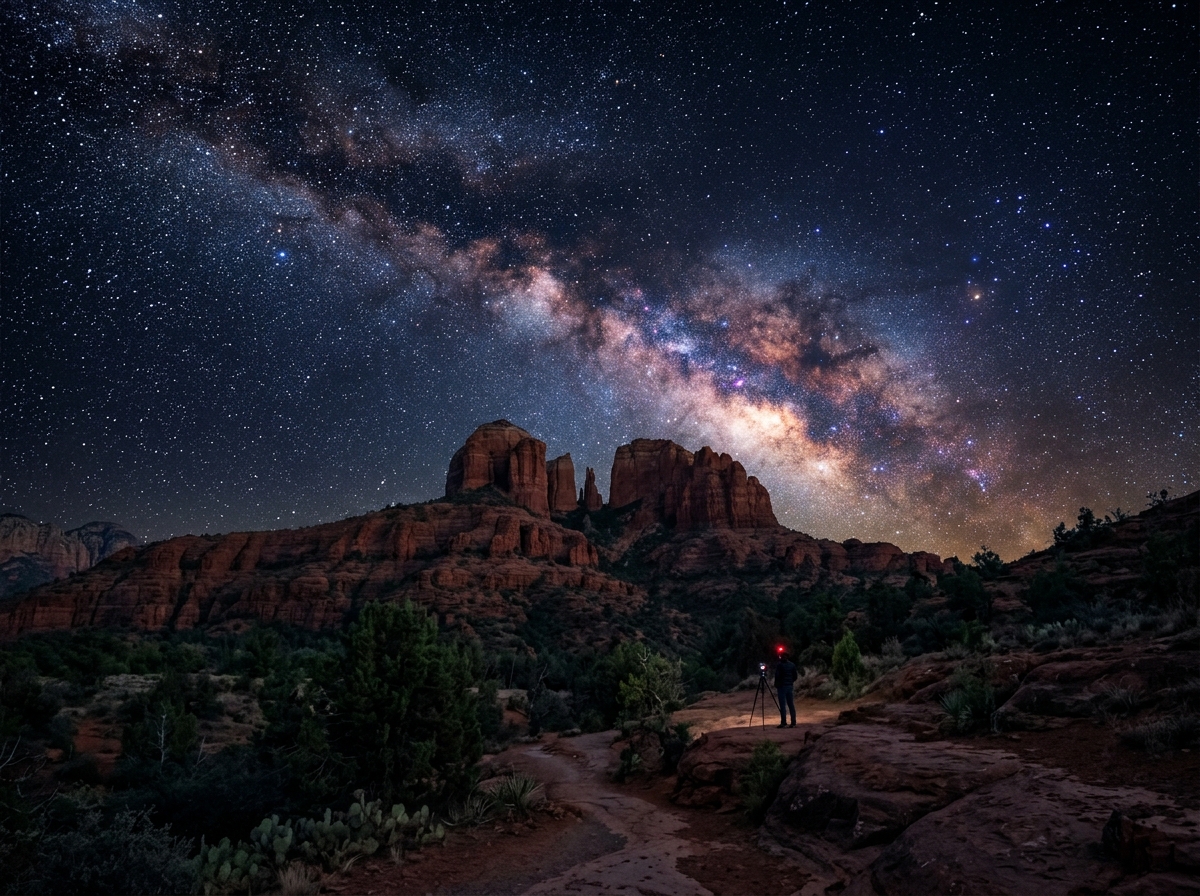
A red-light headlamp is the right tool for any stargazing walk in Sedona. Red light preserves night vision in a way white light destroys. The Black Diamond Spot 400 Headlamp (available on Amazon) has a dedicated red-light mode and 400 lumens of white light for the trail. It is the go-to choice for hikers who visit both during the day and after dark.
Best Food and Drink in Sedona
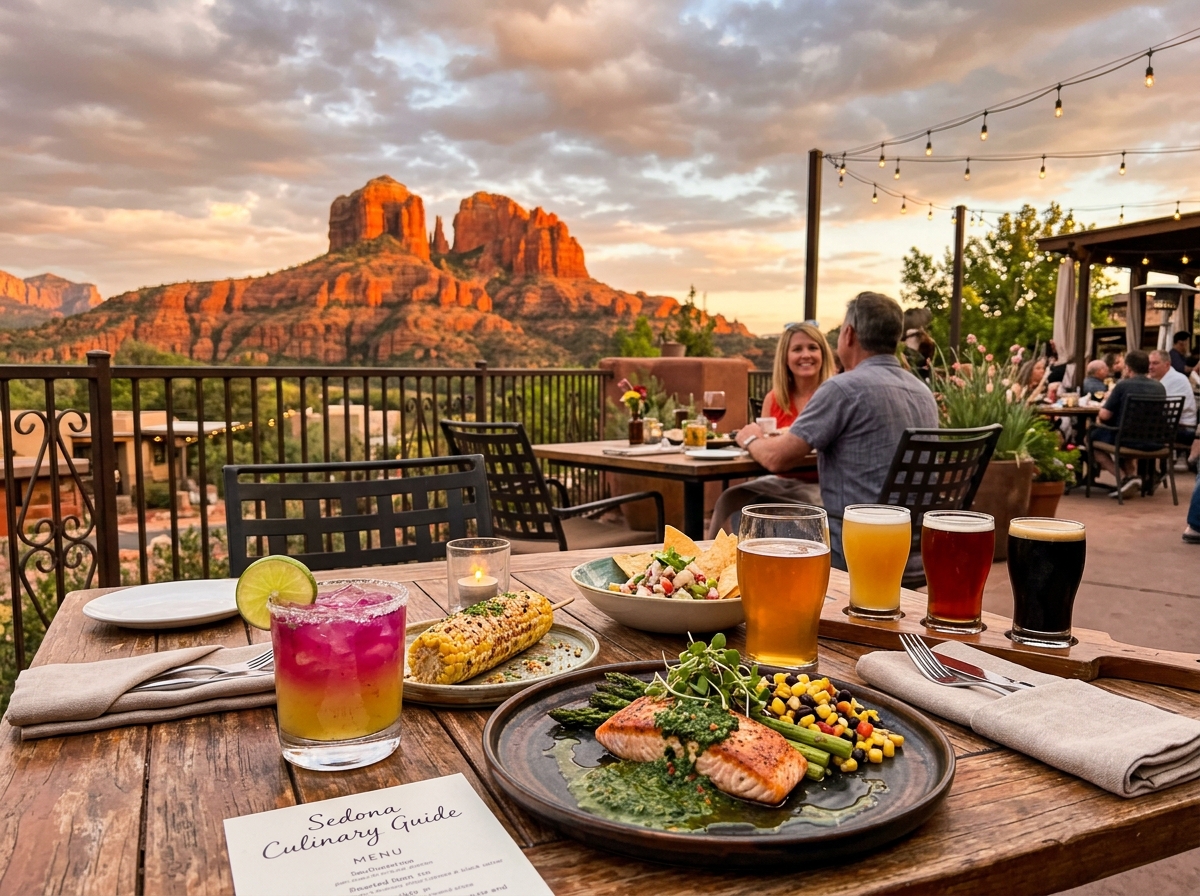
Sedona’s food scene is genuinely good and not what most people expect from a small desert town. The influence of the spiritual and wellness community means excellent vegetarian and plant-based options exist alongside traditional Southwestern cuisine.
What to order: Anything featuring prickly pear, the red-purple cactus fruit that shows up in cocktails, dressings, and desserts across the city. Green chile, Sonoran beef, and native corn preparations are all genuinely regional and worth seeking out.
Mariposa Latin Inspired Grill: The most celebrated restaurant in Sedona. Chef Lisa Dahl’s Latin-American menu uses local and seasonal ingredients. The hilltop setting gives views across the red rocks from the terrace. Book well in advance for dinner.
Elote Cafe: Consistently rated one of the best restaurants in Arizona. Focused on creative Mexican cuisine with dishes that use traditional ingredients in refined preparations. The wait can be long. Arrive early or add your name to the list and explore nearby Tlaquepaque while you wait. No reservations.
Indian Gardens Cafe and Market: A beloved local spot on Oak Creek Canyon Highway 89A. Sandwiches, fresh juices, and breakfast plates served in a genuinely beautiful creekside setting. Perfect for a refuel before or after Oak Creek Canyon exploration.
Tlaquepaque restaurants: The village has several good dining options within the courtyard setting. Casa Sedona and Oak Creek Brewery are both reliable choices within walking distance.
Coffee: Sedona has a good independent coffee culture. The Sedona Coffee Roasters and Red Rock Coffee are both worth knowing before you start a hiking day.
Best Things to Do Beyond Hiking
Pink Jeep Tours and Off-Road Adventures
Pink Jeep Tours is Sedona’s most famous tour company and has been operating since 1960. Their open-air 4WD vehicles take you into canyon country, onto mesa tops, and through terrain inaccessible on foot. The Broken Arrow Trail tour is their flagship and gives you a perspective on the rock formations that hiking trails do not.
Other operators run ATV and buggy tours if you prefer to drive yourself through the backcountry.
Book in advance: Pink Jeep Tours fill up days ahead during peak spring and fall seasons.
Hot Air Balloon Flights
Sedona’s balloon operators launch at dawn when the air is calmest. A one-hour flight over the red rock landscape costs around $200 to $250 per person and provides views that no photograph or hike can replicate. Red Rock Balloons and Northern Light Balloon Expeditions are both reputable operators.
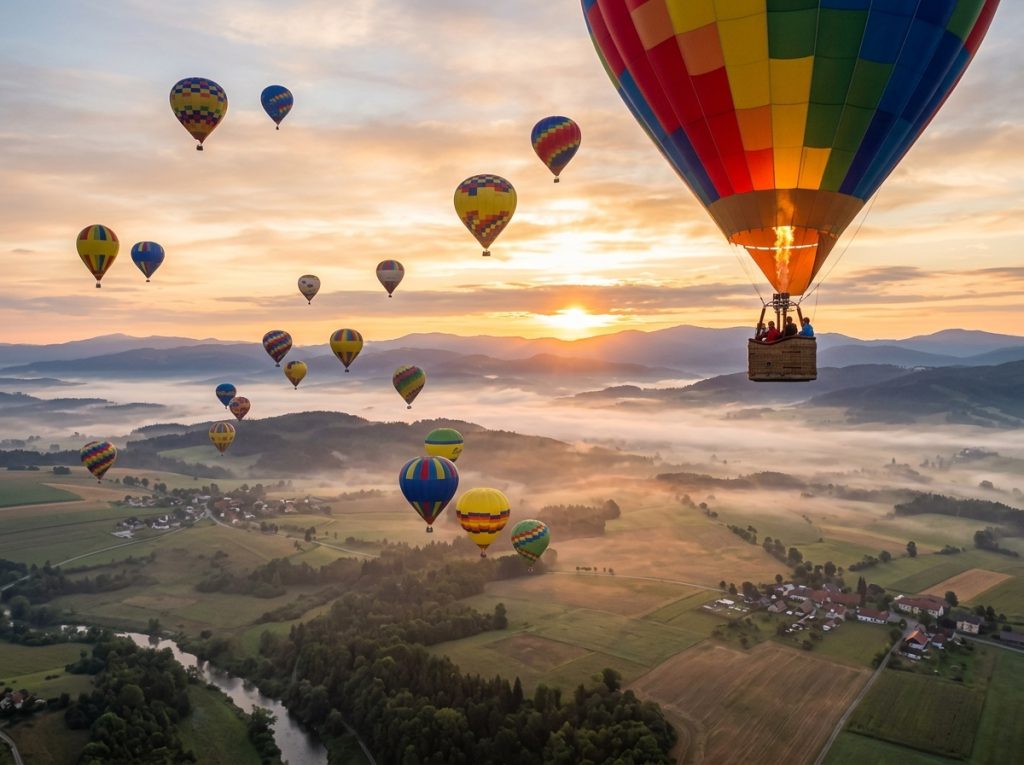
Book at least a week ahead for spring and fall visits when flights often sell out.
Spiritual Experiences and Sound Baths
Sedona’s spiritual community is genuine and established. Sound bath sessions, crystal bowl meditation, vortex guided tours, and energy healing practitioners all operate throughout the city with varying approaches. If this kind of experience interests you, Sedona delivers it in a natural setting that amplifies the practice.
If you approach it with openness rather than scepticism, even visitors who are not spiritually inclined often find something meaningful in a quiet hour at a vortex site or a guided meditation session overlooking the canyon.
Practical Tips for Visiting Sedona
When to visit: March through May and September through November are the best months. Summer brings extreme heat with temperatures regularly exceeding 100F (38C). Hiking in summer should start before 7am and finish by 10am. Winter is mild compared to much of the US but can bring cold nights and occasional snow that actually makes the red rocks extraordinary to look at.
Getting there: Sedona sits 2 hours north of Phoenix Sky Harbor Airport on a straightforward drive up Interstate 17 and then Highway 179. Flagstaff is 45 minutes north. A rental car is essential. There is no meaningful public transport connection to Sedona.
Stay in the Village of Oak Creek: The Village of Oak Creek, about 5 miles south of Uptown Sedona on Highway 179, has lower accommodation prices and is closer to Cathedral Rock, Bell Rock, and Courthouse Butte. It is quieter than Uptown and still within easy reach of everything.
Weekend vs weekday: Popular trailheads are genuinely crowded on weekends. If your schedule allows, save hikes for Tuesday, Wednesday, and Thursday. Do shopping, spas, and restaurant visits on weekends when trails are at their busiest.
Carry more water than you think you need. The combination of elevation, dry desert air, and physical activity depletes hydration faster than most people experience elsewhere. One litre per hour of hiking is a realistic target in warm weather.
For a Sedona trip involving multiple days of outdoor activity, a well-organised travel backpack that fits a day’s worth of essentials without becoming a burden is the right investment. The REI Co-op Flash 22 Pack (available on Amazon) is a 22-litre daypack that sits comfortably for all-day hikes, has a dedicated water reservoir sleeve, and packs down small enough to bring as a personal item on any flight. It is one of the most popular hiking daypacks in the US for good reason.
Best Places in Sedona by Traveller Type
Hikers and outdoor enthusiasts: Cathedral Rock, Devil’s Bridge, Boynton Canyon, Slide Rock State Park, West Fork Trail in Oak Creek Canyon.
Photography: Cathedral Rock at sunrise, Airport Mesa at sunset, Crescent Moon Ranch reflection shot, Devil’s Bridge arch, Red Rock Scenic Byway pullouts at golden hour.
Families: Bell Rock Loop (easy, safe, spectacular), Slide Rock State Park (natural swimming), Pink Jeep Tours, Tlaquepaque for browsing.
Spiritual seekers: All four vortex sites, sound bath sessions, Chapel of the Holy Cross, guided vortex tours, Boynton Canyon at dusk.
Food and culture: Elote Cafe, Mariposa, Tlaquepaque Arts Village, and Indian Gardens Cafe.
Stargazers: Airport Mesa after dark, Crescent Moon Ranch, any canyon road away from Uptown Sedona.
Quick Reference Table
| Place | Type | Cost | Book Ahead? |
|---|---|---|---|
| Cathedral Rock | Hike and vortex | Red Rock Pass $5 | No, but arrive early |
| Devil’s Bridge | Hike | Red Rock Pass $5 | No |
| Bell Rock Loop | Hike and vortex | Red Rock Pass $5 | No |
| Boynton Canyon | Hike and vortex | Red Rock Pass $5 | No |
| Chapel of the Holy Cross | Scenic and spiritual | Free | No |
| Slide Rock State Park | Swimming | $30 per vehicle | Yes, summer reservations |
| Tlaquepaque | Shopping and culture | Free to enter | No |
| Airport Mesa | Vortex and sunset | Red Rock Pass $5 | No |
| Pink Jeep Tours | Off-road tour | $120 to $170 per person | Yes, 1 week ahead |
| Hot Air Balloon | Aerial tour | $200 to $250 per person | Yes, 1 week ahead |
Frequently Asked Questions
What is Sedona Arizona known for?
Sedona is known for its red sandstone formations, spiritual vortex sites, world-class hiking, and designation as an International Dark Sky Community. It is one of the most visually striking landscapes in the American Southwest and draws visitors for outdoor adventure, spiritual experience, spa retreats, and photography.
How many days do you need in Sedona?
Three days gives you enough time for two or three hikes, a sunset, a proper meal, and some exploration. Two days is workable but rushed. Four or five days lets you go deeper, add Oak Creek Canyon and the Chapel of the Holy Cross, and still feel unhurried.
Is Sedona worth visiting?
Yes, genuinely. Very few places in the United States have Sedona’s combination of natural beauty, outdoor activity, good food, and spiritual culture. It is one of those destinations that almost universally exceeds expectations.
What is the best hike in Sedona for beginners?
Bell Rock and Courthouse Butte Loop. It is 4.2 miles of mostly flat terrain with spectacular views the entire way. Devil’s Bridge is also manageable for most beginners on the main trail, though the exposed arch section is not suitable for anyone with a serious fear of heights.
What is a Sedona vortex?
A vortex is a site believed to be a centre of concentrated earth energy. Sedona has four main vortex sites: Airport Mesa, Cathedral Rock, Bell Rock, and Boynton Canyon. Whether or not you believe in the energy, these are beautiful natural sites that reward quiet, reflective visits. The twisted juniper trees common at these locations are a genuine physical feature.
When is the best time to visit Sedona?
March through May and September through November. Spring brings wildflowers and ideal hiking temperatures. Autumn brings golden light and cool mornings. Summer is very hot and busy. Winter is mild with the possibility of snow that makes the red rock landscape extraordinary.
Do you need a car in Sedona?
Yes. A rental car is essential for visiting Sedona from Phoenix or Flagstaff. Once in Sedona, the shuttle system covers the main trailheads on weekends and holidays. For early morning weekday hikes and off-the-beaten-path sites, your own vehicle gives you the most flexibility.
Is Sedona expensive?
Mid-range accommodation runs $150 to $300 per night. Fine dining at Mariposa or Elote runs $40 to $80 per person. Hiking is very affordable with just the Red Rock Pass needed. Jeep tours and balloon flights are the main significant expenses. Overall, Sedona sits in the mid to upper range for US destination travel.
Final Thoughts
Sedona is the kind of place that recalibrates something in you.
Whether it is standing on top of Cathedral Rock with the canyon falling away in every direction, floating in a cold pool beneath Slide Rock, or sitting quietly at a vortex site at dusk watching the rock faces turn from orange to red to purple as the sun goes down, Sedona delivers experiences that do not fit neatly into any single category of travel. It is a hiking destination, a spiritual destination, a food destination, a photography destination, and a place where people come when they need to slow down and remember what they find beautiful.
Give it more days than you think you need. It earns them.