Jamaica has two versions that exist simultaneously.
There is the Jamaica of all-inclusive resorts: wristbands, unlimited buffets, beach volleyball, and a perfectly comfortable holiday that could be almost anywhere in the Caribbean. Then there is the other Jamaica, the one where you eat jerk pork from a roadside pit in Boston Bay, float down the Rio Grande on a bamboo raft, swim in a lagoon whose colour shifts from blue to green depending on the tides, and hear live reggae in a village that has been celebrating its music for 50 years.
Both are real Jamaica. This guide covers the best of both, with honest practical advice that most travel articles skip.
Quick Answer: Best Places to Visit in Jamaica
For a first visit, Montego Bay as your arrival point, Negril for the beach and sunsets, and Ocho Rios for Dunn’s River Falls and Mystic Mountain. For a more authentic experience, add Port Antonio, Boston Bay for the original jerk, and the Blue Mountains for coffee and hiking. For culture, Kingston is essential.
Montego Bay: The Gateway
Montego Bay is where most international flights arrive and where most resort infrastructure concentrates. It is a working city as well as a tourist hub, and the contrast between the resort strip and the real town is striking.
Hip Strip (Gloucester Avenue) is the main tourist boulevard with restaurants, bars, and craft markets. It is touristy and overpriced for food but genuinely lively at night. Doctor’s Cave Beach, one of the best beaches in the city, sits along the strip and requires a small entry fee for non-hotel guests.
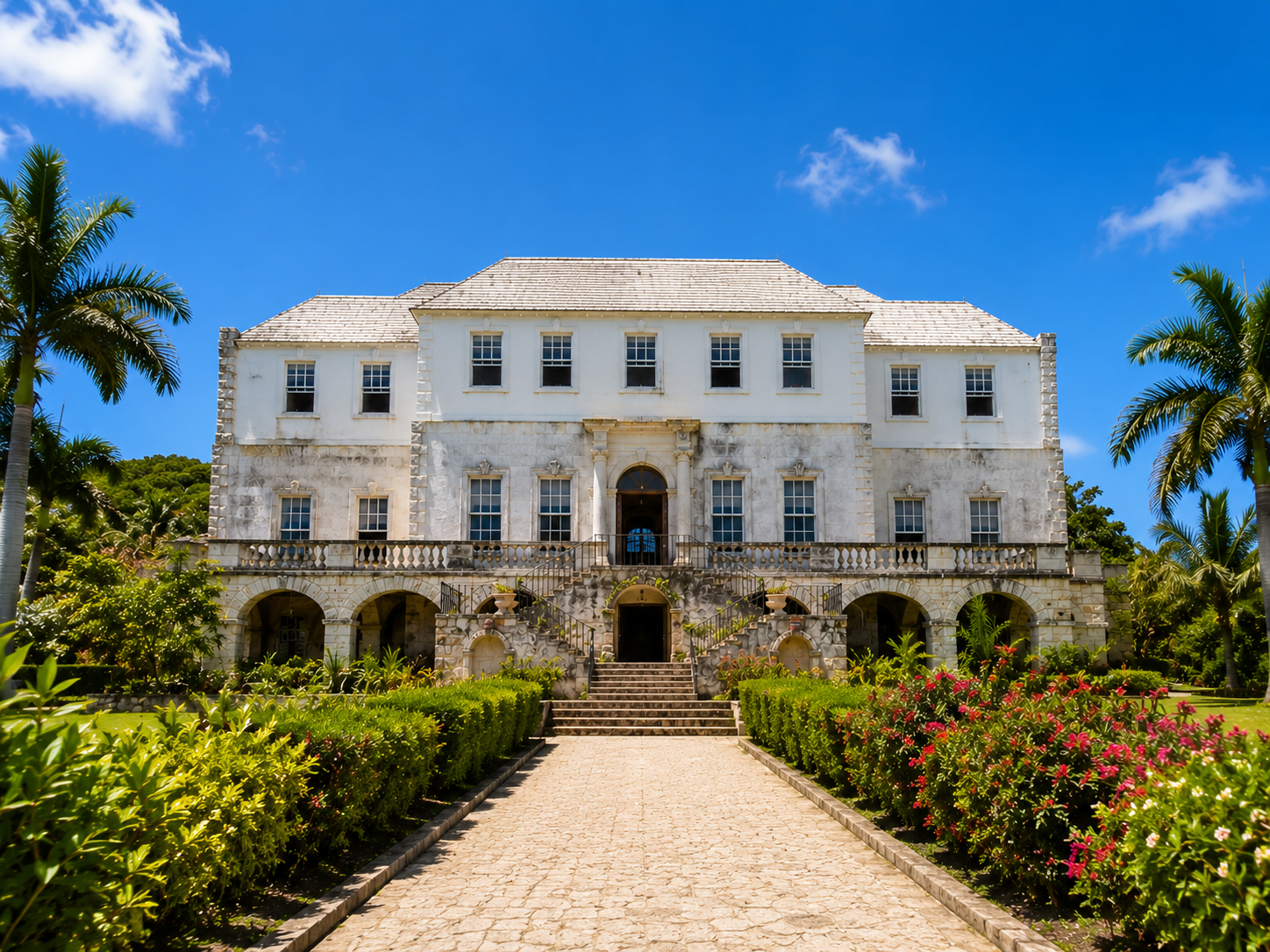
Rose Hall Great House sits a few kilometres east of town and is one of Jamaica’s most visited historic sites. The plantation house has an extraordinary and dark history, connected to the legend of Annie Palmer, the White Witch of Rose Hall. The tour is genuinely compelling whether you believe the ghost stories or not.
Falmouth is a 30-minute drive east and is the best-preserved Georgian town in the Caribbean. The streets of early 19th-century merchant buildings, built during the height of Jamaica’s sugar wealth, are extraordinary. Most visitors skip it entirely. Cruise ships dock here occasionally, which means on those days it gets briefly busy, but most of the time it is quiet and genuinely worth an afternoon.
Best for: Arrivals, resort base, nightlife, historic day trips Honest note: Montego Bay’s city centre requires normal city awareness. The resort strip and tourist areas are safe. Venture beyond with a local guide or organised tour if you are unfamiliar with the city.
Negril: The Best Sunset in the Caribbean
Negril sits at Jamaica’s western tip and has the most famous beach on the island. Seven Mile Beach is a continuous stretch of white sand and calm turquoise water, lined with hotels, beach bars, and restaurants ranging from budget guesthouses to luxury resorts.
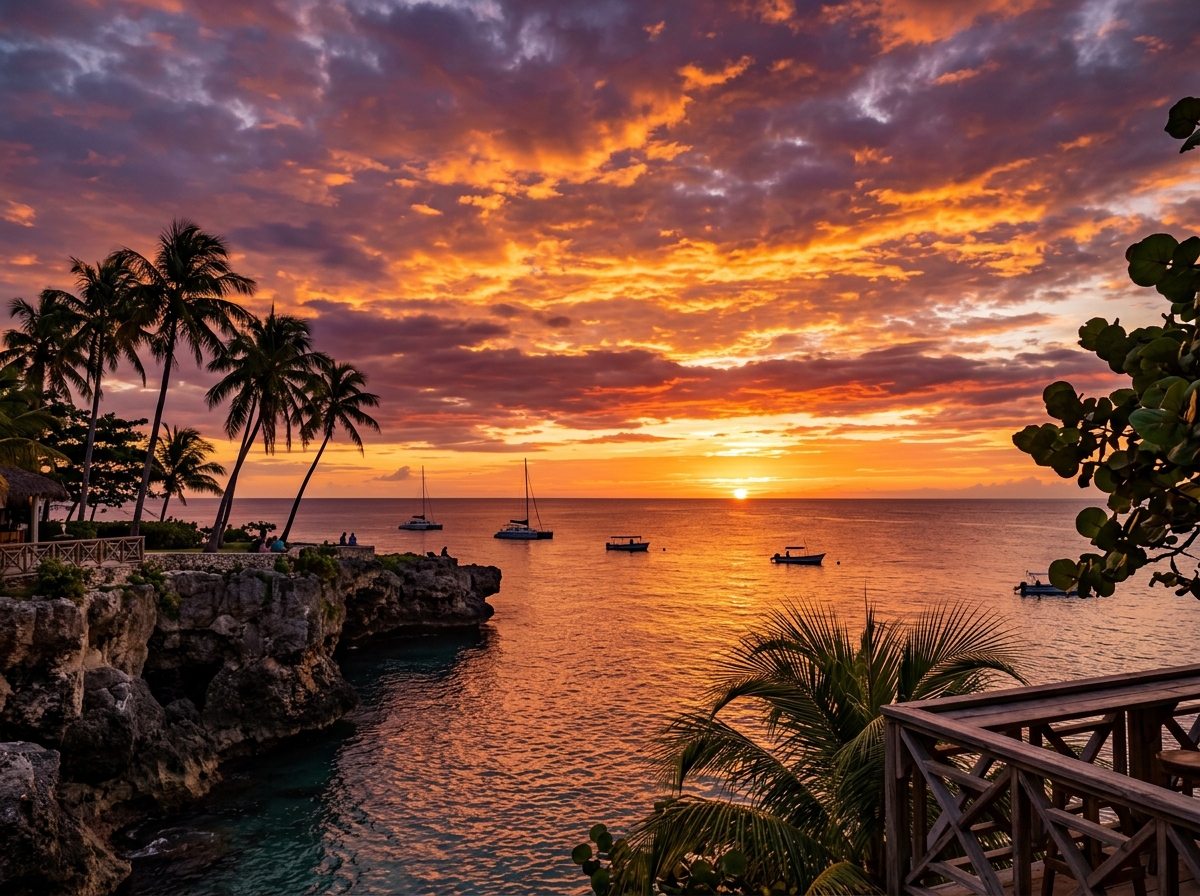
The west-facing orientation means sunset from any point on Seven Mile Beach or the cliffs is spectacular. Rick’s Cafe, built on a limestone cliff at the southern end of the beach strip, is the most famous sunset spot in Jamaica. Cliff divers launch from platforms 10 to 12 metres high while tourists watch from the terrace. It is genuinely spectacular even if it has become a tourist institution.
West End Cliffs is the quieter, more local alternative to Seven Mile Beach. The limestone cliffs south of the beach have small hotels and local restaurants with ladders and steps cut down to the water. Swimming from the cliffs is extraordinary and feels nothing like a packaged beach experience.
The Negril Great Morass is a protected wetland just inland from the beach and one of the most important bird habitats in Jamaica. Very few tourists know it exists. A guided kayak or walking tour through the morass gives you Jamaica’s ecological richness in contrast to the beach immediately beside it.
Best for: Beach holidays, sunsets, cliff swimming, couples, first-time Caribbean visitors Budget tip: Negril has excellent guesthouses and small hotels well back from the beach at a fraction of beachfront prices. Walking to the beach takes five minutes.
A high-SPF reef-safe sunscreen is essential on Jamaican beaches where the tropical sun is intense year-round. The Thinksport SPF 50 Mineral Sunscreen (available on Amazon) is reef-safe, water-resistant for 80 minutes, and free of harmful chemicals that damage coral reefs. Using reef-safe products matters particularly in Jamaica where the coral reef ecosystem is a genuine conservation priority.
Ocho Rios: Adventure and Nature
Ocho Rios is Jamaica’s busiest tourist town after Montego Bay and sits on the north coast about two hours east. Cruise ships dock regularly here, which means the town and surrounding attractions can feel extremely busy when ships are in port.
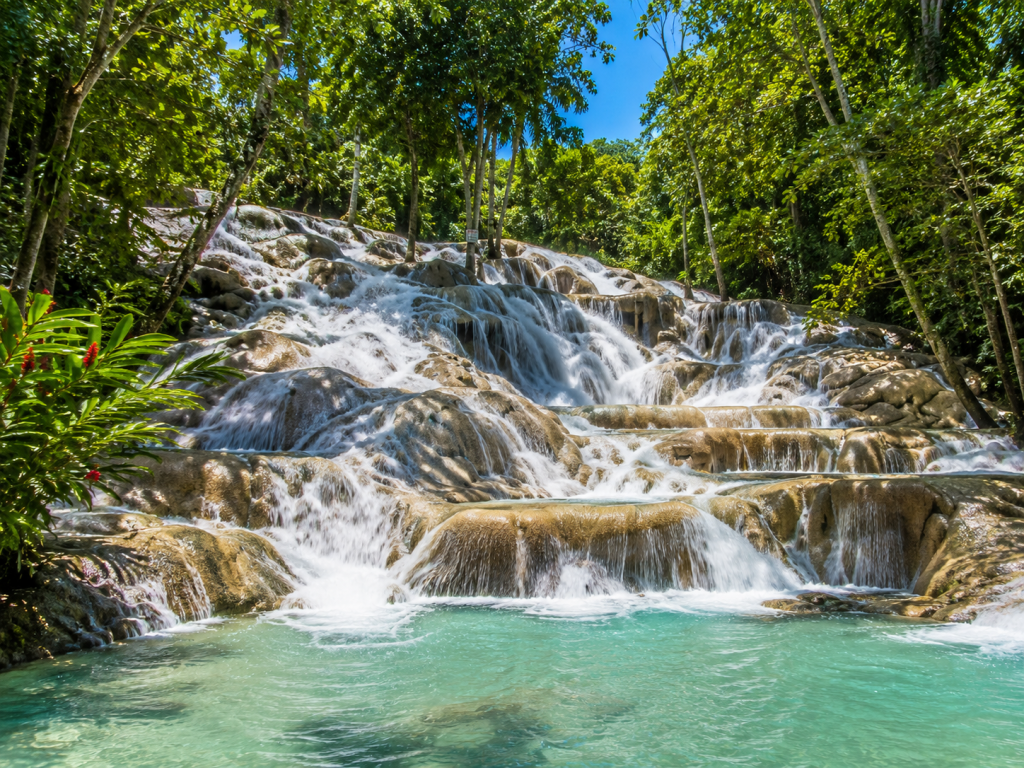
Dunn’s River Falls is Jamaica’s most visited attraction. The 180-metre waterfall cascades in natural tiers that visitors climb in a human chain, helped up by guides. It is genuinely fun, genuinely touristy, and genuinely worth doing. Go early, before 9am, to avoid the worst of the crowds. Waterproof sandals with grip are strongly recommended and available to hire on site.
Mystic Mountain is a rainforest adventure park above Ocho Rios with a sky explorer gondola, bobsled ride, and zip-line through the jungle canopy. It is well-run and gives you a perspective on the rainforest that ground-level walks cannot. Good for families.
Blue Hole (also known as Island Gully Falls or Secret Falls) is 20 minutes from Ocho Rios and is a series of pools and small waterfalls with electric-blue water set in dense jungle. Rope swings and cliff jumps make it a favourite with younger visitors. It is significantly less crowded than Dunn’s River Falls and more beautiful.
Goldeneye Estate, Oracabessa: Ian Fleming wrote all 14 James Bond novels at his estate in the small town of Oracabessa, 20 minutes east of Ocho Rios. The estate is now a boutique resort but the original Fleming Villa and its private beach cove are available to book. Even if you are not staying, the area around Oracabessa is charming and largely untouched by mass tourism.
Best for: Adventure activities, families, waterfall experiences, day trips
Port Antonio: Jamaica’s Best-Kept Secret
Port Antonio is the place that most changes visitors’ expectations of Jamaica.
It is far more relaxed and affordable than Montego Bay and Negril, with prices for guesthouses and food being a fraction of the typical resort costs. The northeast coast town is where Errol Flynn kept his yacht in the 1950s and brought Hollywood to Jamaica. Today it remains largely unchanged from that era, with Victorian gingerbread architecture, a beautiful double harbour, and no large resort hotels.
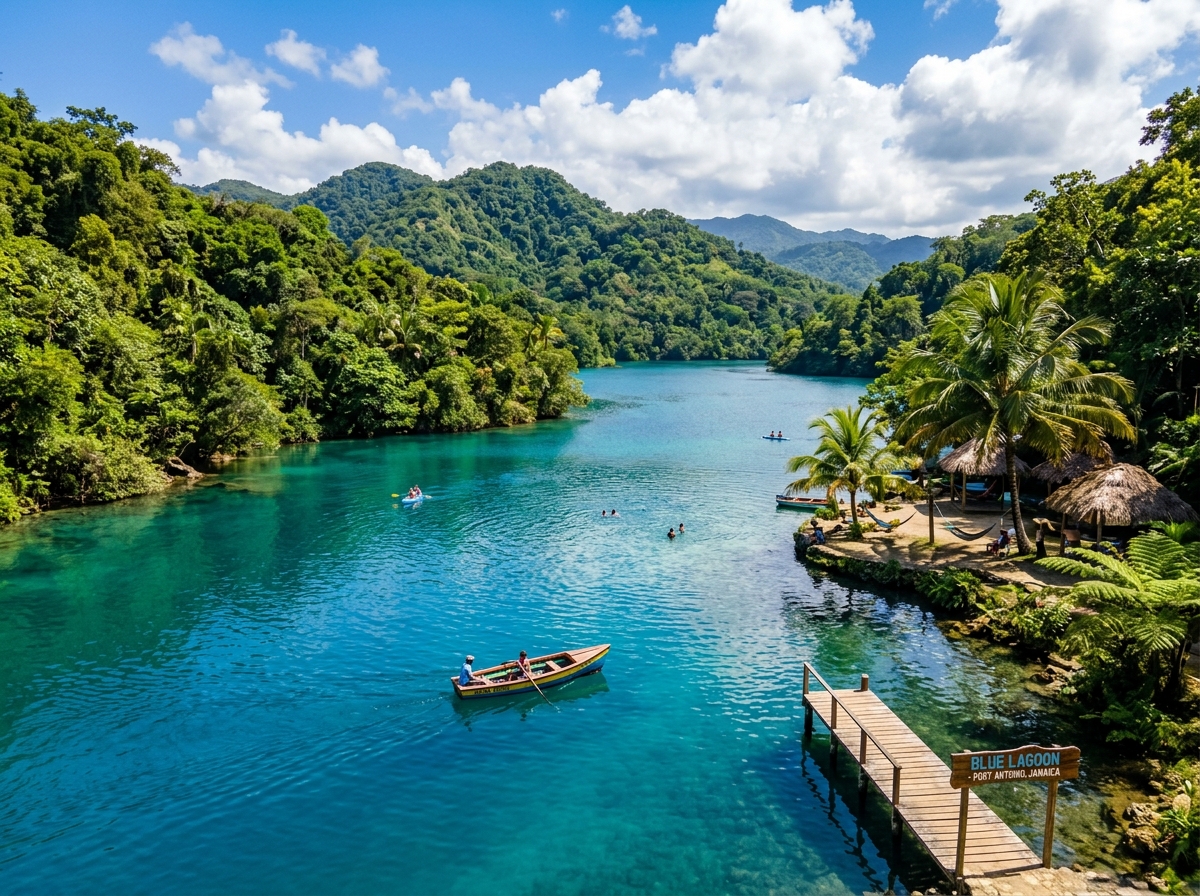
Blue Lagoon is the defining Port Antonio experience. The 55-metre-deep lagoon connects to the sea through an underwater channel, and the mix of fresh spring water and saltwater creates a colour that shifts from vivid turquoise to deep blue to green depending on the light, tide, and your angle of view. It is one of the most extraordinary natural swimming spots in the Caribbean.
Frenchman’s Cove is a private beach where a small freshwater river runs directly into the sea at the sand’s edge. The combination of warm sea water and cool fresh water in the same spot is genuinely unusual. The beach is pristine and the entry fee keeps crowds manageable.
Rio Grande Rafting: The Rio Grande bamboo rafting tradition in Port Antonio is one of Jamaica’s most iconic experiences. Two-person bamboo rafts, poled by local guides along a 14-kilometre stretch of the Rio Grande through lush valley, take about two to three hours. The guides tell stories, name plants and birds, and make the journey feel entirely unlike a tourist activity.
Reach Falls is a stunning waterfall in the John Crow Mountains about 30 minutes from Port Antonio. Though less commercialised than other Jamaican attractions, recent improvements to access roads and amenities are making Reach Falls more accessible, allowing visitors to experience its peaceful solitude with less hindrance. Natural pools at the base are ideal for swimming.
Best for: Authentic Jamaica, couples, nature lovers, photographers, travellers who want to escape the resort bubble Getting there: Port Antonio is 2.5 hours from Kingston by road or about 4 hours from Montego Bay. Renting a car gives you the most flexibility in this area.
Boston Bay: The Birthplace of Jerk
Boston Bay, a small fishing community about 11 kilometers east of Port Antonio, is the undisputed birthplace of jerk cooking. The story goes back to the Maroons, descendants of escaped enslaved people who hid in the Blue Mountains and developed the technique of slow-cooking meat over pimento wood in pit fires in the ground. The pimento (allspice) wood is central to the authentic jerk flavor and simply cannot be replicated by modern cooking methods.
The rustic roadside barbecue shacks here are the closest thing to the original pits. Local vendors serve up intensely spicy, slow-cooked jerk pork, chicken, and fish cooked the traditional way, perfectly accompanied by roasted yams, breadfruit, and festival bread (a sweet fried dumpling). This is the single most important food experience in Jamaica; it requires just a short drive from Port Antonio, costs a fraction of resort restaurant prices, and is absolutely the real thing.
Kingston: The Cultural Capital
Kingston is Jamaica’s capital and its cultural heartbeat. Most package tourists skip it entirely. That is a significant miss.
Bob Marley Museum on Hope Road is housed in the building where Marley lived and recorded from 1975 until his death in 1981. The tour includes the recording studio, his bedroom, the bullet holes from the 1976 assassination attempt, and an extraordinary film of his last concert. It is one of the most emotionally powerful music museums in the world.
Devon House is a beautifully restored 19th-century mansion built by Jamaica’s first Black millionaire, George Stiebel, in 1881. The grounds house craft shops, restaurants, and what is widely considered the best ice cream in Jamaica. I-Scream at Devon House is genuinely extraordinary, using local Jamaican flavours including rum and raisin, soursop, and Blue Mountain coffee.
The National Gallery of Jamaica holds the most comprehensive collection of Jamaican art in existence, from colonial paintings through the Intuitive Art movement to contemporary artists. Entry is inexpensive and the collection rewards more time than most visitors give it.
Trench Town Culture Yard is where Bob Marley grew up and where reggae music was effectively born. The government yard referenced in No Woman No Cry is preserved as a community museum, run by local residents who grew up in the community. It is one of the most authentic cultural experiences available in Jamaica.
Best for: Music history, culture, art, food, those who want to understand Jamaica beyond its beaches
The Blue Mountains: Coffee and Hiking
The Blue Mountains rise directly behind Kingston and contain some of the most biodiverse forest in the Caribbean. The highest peak, Blue Mountain Peak at 2,256 metres, is typically climbed as a pre-dawn hike timed to reach the summit at sunrise.
Blue Mountain coffee is among the most expensive and sought-after coffees in the world. The combination of altitude, volcanic soil, and cloud cover produces beans of exceptional mildness and complexity. Coffee plantation tours in the Mavis Bank and Section areas let you follow the bean from cherry to cup. The coffee grown here tastes completely different when drunk at the plantation where it was grown.
Hiking beyond the summit trail takes you through forests of tree ferns, mossy cloud forest, and past endemic bird species found nowhere else in the world. The Clydesdale area and Holywell National Park have excellent shorter hiking trails for those not attempting the summit.
Best for: Hikers, bird watchers, coffee enthusiasts, nature lovers Practical note: Temperatures in the Blue Mountains can drop significantly at night and at altitude. Bring a proper jacket regardless of the coastal weather.
For Blue Mountains hiking and any serious outdoor activity in Jamaica, trekking poles make elevation gain and descent significantly easier on long hikes. The Cascade Mountain Trekking Poles (available on Amazon) are a reliable lightweight option that extends from 65 to 135cm, folds for travel, and handles both the rocky switchbacks of the Blue Mountain Peak trail and wet jungle paths confidently.
Negril to the South Coast: The Road Less Travelled
Jamaica’s south coast between Negril and Kingston is the least visited part of the island and some of the most beautiful.
Black River is a market town at the mouth of the Black River, Jamaica’s longest river. Boat tours up the river take you through mangrove wetlands where American crocodiles, herons, and dozens of bird species are regularly seen. The crocodiles are real and the tour guides approach them closely. It is one of the most unusual wildlife experiences in Jamaica.
YS Falls are a series of seven cascades on the YS Estate in St. Elizabeth, widely considered more beautiful than Dunn’s River Falls and significantly less crowded. Natural pools at the base are roped for swimming. A tarzan swing and zip-line add to the experience.
Pelican Bar: Built on a sandbar a kilometre out in the Caribbean Sea, Pelican Bar is one of the most unusual bars in the world. It is a private cove and bar built on stilts in the middle of the Caribbean Sea, accessible only by boat. Fishermen will take you out by small boat from Parottee Beach near Black River for a few dollars. You sit on a wooden platform over shallow sea, drink rum, and eat fresh fish. It is completely surreal and completely Jamaican.
Best for: Off-the-beaten-path travellers, wildlife, waterfalls, extraordinary local experiences
Practical Tips for Visiting Jamaica
Driving in Jamaica: Driving is on the left. Road conditions outside major routes can be poor, with potholes, speed bumps appearing without warning, and livestock occasionally on the road. Aggressive driving by minibus operators (route taxis) is common. Renting a car gives you enormous freedom but requires confidence behind the wheel. WildJunket’s two-week drive around Jamaica is genuinely the best way to see the country if you are comfortable driving in those conditions.
Safety: Jamaica has a complicated safety reputation that does not reflect the reality for visitors who stay in tourist areas and take normal precautions. Resort areas, tourist attractions, and the places in this guide are considered safe for travellers. Kingston requires more awareness than coastal tourist areas. Use licensed taxis, do not walk alone in unfamiliar areas after dark, and follow advice from your accommodation.
Food culture: The best food in Jamaica is not in restaurants. It is at roadside cook shops, market stalls, and beachside vendors. A cook shop is a simple local restaurant serving Jamaican staples like rice and peas, stewed chicken, curried goat, ackee and saltfish (the national dish), and escovitch fish at prices that are a fraction of tourist restaurant costs. Finding the cook shop nearest to wherever you are staying is always the right move for lunch.
Route taxis and minibuses: Public transport in Jamaica is cheap and runs between all major towns. Route taxis (shared cars running fixed routes) and minibuses are how locals travel. They are inexpensive, genuinely useful for getting between towns, and give you a completely different experience from private transfers. Ask at your accommodation about the best pickup points.
Best time to visit: December through April is dry season with the most reliable weather and peak tourist prices. May through November brings occasional rain and lower prices. Hurricane season runs June to November with September and October carrying the highest risk. Jamaica’s year-round warm temperatures mean any month has something to recommend it.
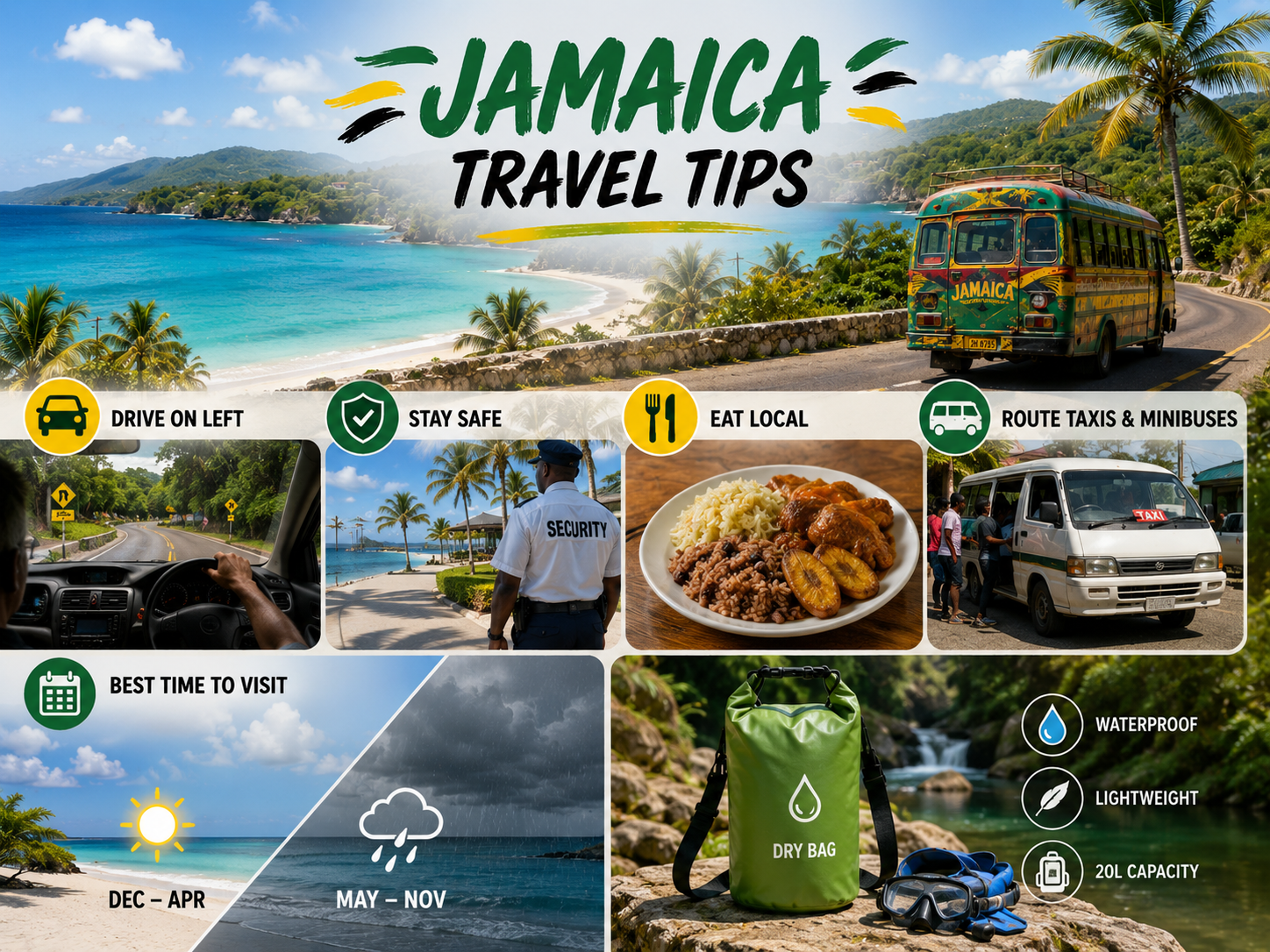
For traveling between Jamaica’s different regions with a mix of beach days and hiking, a versatile dry bag backpack that handles both scenarios keeps your belongings protected from sea spray, unexpected afternoon showers, and riverside hikes. The MARCHWAY Floating Waterproof Dry Bag 20L (available on Amazon) is lightweight, fully waterproof, and the right size for a day’s worth of essentials without the bulk of a full travel pack.
Best Places in Jamaica by Traveller Type
First-time visitors: Negril for the beach, Ocho Rios for Dunn’s River Falls, Montego Bay as arrival point. A solid 7-day introduction.
Authentic Jamaica seekers: Port Antonio, Boston Bay jerk, Rio Grande rafting, Kingston for Bob Marley Museum and Trench Town.
Food lovers: Boston Bay roadside jerk, Devon House ice cream, Kingston cook shops, Pelican Bar for fresh fish, Blue Mountain coffee plantation.
Nature and adventure: Blue Mountains hiking, YS Falls, Black River wildlife cruise, Blue Hole near Ocho Rios, Negril cliffs.
Culture and music: Kingston’s Bob Marley Museum, Trench Town Culture Yard, National Gallery, Accompong Maroon Village for Maroon cultural history, live reggae in Negril.
Budget travellers: Port Antonio guesthouses, cook shops for every meal, route taxi transport, free beaches, roadside food. Jamaica rewards independent budget travel generously.
Families: Mystic Mountain Ocho Rios, Dunn’s River Falls, Chukka adventures (zip-lining and river tubing packages), YS Falls, Seven Mile Beach.
Quick Reference Table
| Destination | Best For | Distance from MoBay | Crowd Level |
|---|---|---|---|
| Montego Bay | Arrival, resorts, nightlife | Base | High |
| Negril | Beach, sunsets, cliffs | 90 min west | High at peak |
| Ocho Rios | Waterfalls, adventure | 90 min east | Very high |
| Port Antonio | Authentic Jamaica, lagoons | 4 hrs east | Low |
| Boston Bay | Original jerk food | 30 min from Port Antonio | Low |
| Kingston | Music, culture, food | 3.5 hrs east | Moderate |
| Blue Mountains | Hiking, coffee | 1 hr from Kingston | Low |
| Black River and South Coast | Wildlife, Pelican Bar | 2 hrs south | Very low |
Frequently Asked Questions
What is Jamaica most known for?
Jamaica is known for reggae music (birthplace of Bob Marley), jerk cooking, Blue Mountain coffee, the world’s fastest sprinters, and some of the Caribbean’s most beautiful beaches. Beyond tourism, it has a rich cultural identity built around music, food, and the Rastafarian movement.
Is Jamaica safe for tourists?
Tourist areas including Negril, Ocho Rios, the Montego Bay resort strip, Port Antonio, and organised tours throughout Jamaica are considered safe for visitors. Exercise normal big-city awareness in Kingston. Use licensed taxis and follow accommodation recommendations about local conditions.
How many days do you need in Jamaica?
Seven days gives you a solid introduction covering Negril, Ocho Rios, and Montego Bay. Ten days to two weeks lets you add Port Antonio, the south coast, and Kingston. Most visitors who explore beyond the resort areas say they wished they had stayed longer.
Is it worth going beyond the all-inclusive resort in Jamaica?
Absolutely. Jamaica beyond the resort bubble is a completely different and often more rewarding experience. The food, the culture, the landscape, and the people are all more accessible and more genuine when you venture out. Renting a car or hiring a local guide opens the country significantly.
What should I eat in Jamaica?
Ackee and saltfish (national dish), jerk pork and chicken at Boston Bay, curried goat, escovitch fish, jerk corn, festival bread, roasted breadfruit, patties (savoury pastries available everywhere), Red Stripe beer, and rum punch. Devon House ice cream in Kingston is genuinely extraordinary.
What is the best beach in Jamaica?
Seven Mile Beach in Negril is the most famous and consistently beautiful. Frenchman’s Cove in Port Antonio is arguably the most stunning overall. Winnifred Beach near Port Antonio is one of the few remaining free public beaches with a genuine local atmosphere.
When is the best time to visit Jamaica?
December through April is dry season with the most reliable weather and the busiest tourist season. February is the sweet spot with good weather and slightly lower prices than January. May through November has occasional rain but lower prices and fewer crowds.
Final Thoughts
Jamaica gives back exactly as much as you are willing to put in. Stay at the all-inclusive and you will have a perfectly comfortable Caribbean holiday.
Go to Boston Bay for jerk pork cooked over pimento wood, float down the Rio Grande on a bamboo raft, swim in the Blue Lagoon at sunrise, eat ice cream at Devon House, and stand in the room where Bob Marley was shot and survived, and you will carry Jamaica with you for years.
The country is small enough to drive across in a day and varied enough to take weeks to properly explore. The people are genuinely warm. The food is extraordinary. The music is everywhere. Give it more than a wristband.