Boston does not do boring. One day you are walking the Freedom Trail under a perfect blue sky. The next day a nor’easter blows in and you are ducking into a pub for clam chowder. That is the charm of New England’s biggest city. It is unpredictable, historic, and absolutely worth getting the timing right.

This guide goes deeper than the usual “fall is pretty” advice. I will break down every season, rank the best and worst months, reveal what college schedules do to hotel prices, and show you the hidden experiences most tourists never find. Whether you want fall foliage, summer harbor cruises, or cheap winter hotel deals, you will know exactly when to book.
Why Timing Your Boston Trip Matters
Boston is compact. You can walk from the Common to the harbor in twenty minutes. But that small size means crowds pile up fast. Hotel prices swing wildly. A room that costs $120 in January can hit $400 in October. The subway, called the T, runs slower in snow. Outdoor attractions close in winter. Indoor museums get packed in summer.
Get the timing wrong and you will overpay for a cramped hotel room next to a construction zone. Get it right and you will have the Public Garden practically to yourself.
Spring in Boston: March to May
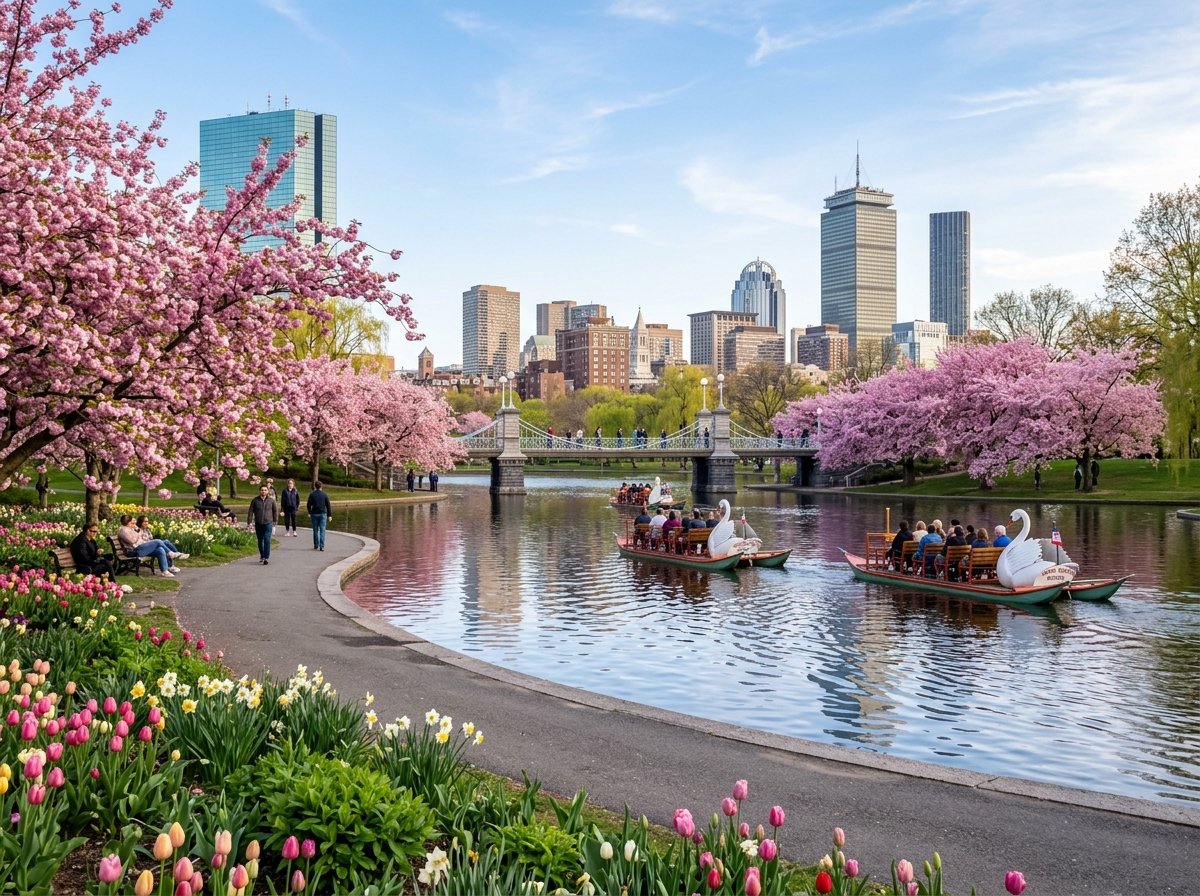
Spring in Boston is a tease. March still feels like winter. Snow can fall through early April. Then suddenly magnolias explode on Marlborough Street and the city wakes up.
What to expect: Temperatures start around 45°F in March and climb to 66°F by May. Rain is common. The Boston Marathon happens on Patriots Day, the third Monday in April, which means hotel prices spike and the city fills with runners and spectators. If you are not here for the marathon, avoid that weekend.
The good: Thin crowds before late April. Swan Boats return to the Public Garden in mid April. Fenway Park opens in early April. Daffodils and cherry trees bloom in May. Hotel rates are reasonable compared to summer.
The bad: March is still freezing. April can bring snow. The harbor wind cuts through light jackets. Outdoor dining is rare until late May.
Best for: Budget travelers who do not mind cool weather. Baseball fans. Photographers who want blooming trees without the fall leaf peeper crowds.
Hidden gem: The Arnold Arboretum in Jamaica Plain is free and stunning in late April and early May. Locals know it. Tourists skip it.
Summer in Boston: June to August
Summer is when Boston shows off. The harbor sparkles. Rooftop bars open. Concerts fill the Esplanade. But it is also when the city is most crowded and most expensive.
What to expect: June highs sit in the mid 70s°F. July and August push into the low 80s°F, though the urban heat island effect can make downtown feel hotter. Humidity rises in July and August. Thunderstorms pop up fast and pass just as quickly.
The good: Everything is open. Whale watching runs through October. The Boston Harbor Islands ferry operates daily. Outdoor festivals like Harborfest in July bring live music and fireworks. The North End Feasts celebrate Italian American heritage with street food and processions.
The bad: Hotel rates peak. Lines at the New England Aquarium and Freedom Trail sites get long. July and August humidity can make walking uncomfortable. August brings college move in days, which clog streets with moving trucks and raise prices.
Best for: Families with kids on summer break. Sports fans who want a Red Sox game at Fenway. Beach lovers who want to hit Revere Beach or take a day trip to Cape Cod.
Hidden gem: The MFA Concerts in the Courtyard happen Thursday evenings in summer. Live music, a glass of wine, and the museum’s beautiful outdoor space. Most tourists never hear about it.
Fall in Boston: September to November
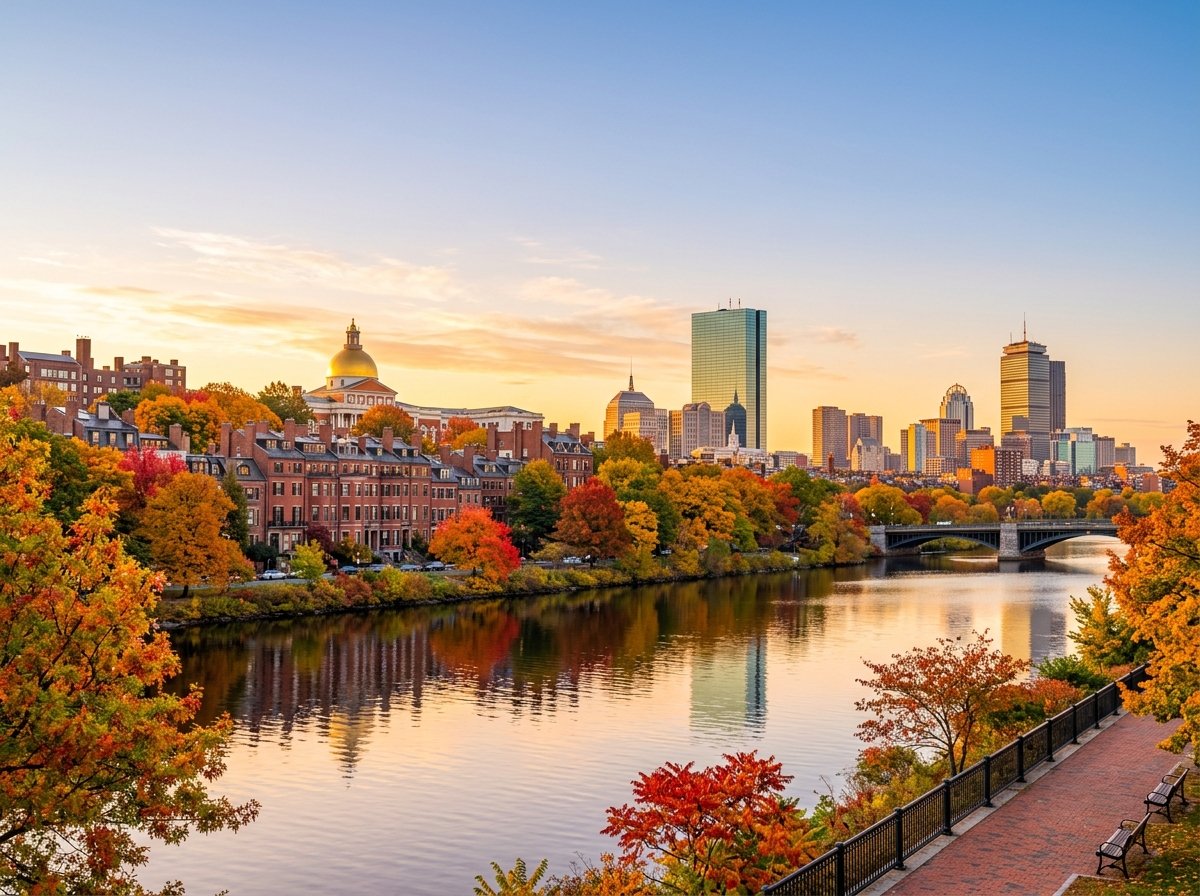
If you ask a local, most will tell you fall is the best time to visit. The humidity drops. The leaves turn. The city feels electric.
What to expect: September still has summer warmth with highs around 73°F. By October, highs drop to the mid 60s°F. November brings highs in the low 50s°F. The first snow can fall in late October or November, though it rarely sticks.
The good: The foliage peaks in mid October. The Head of the Charles Regatta, the world’s largest rowing event, takes over the Charles River on the third weekend of October. Oktoberfest celebrations pop up in Seaport and Cambridge. Chowdafest celebrates clam chowder in early October. Salem, just thirty minutes away, goes all out for Halloween with Haunted Happenings.
The bad: October is the most expensive month for hotels. Leaf peepers and marathon alumni flood the city. The first two weeks of September see college move ins, which make Back Bay and Cambridge a mess.
Best for: Couples seeking romantic walks. Photography lovers. Anyone who wants that classic New England autumn experience.
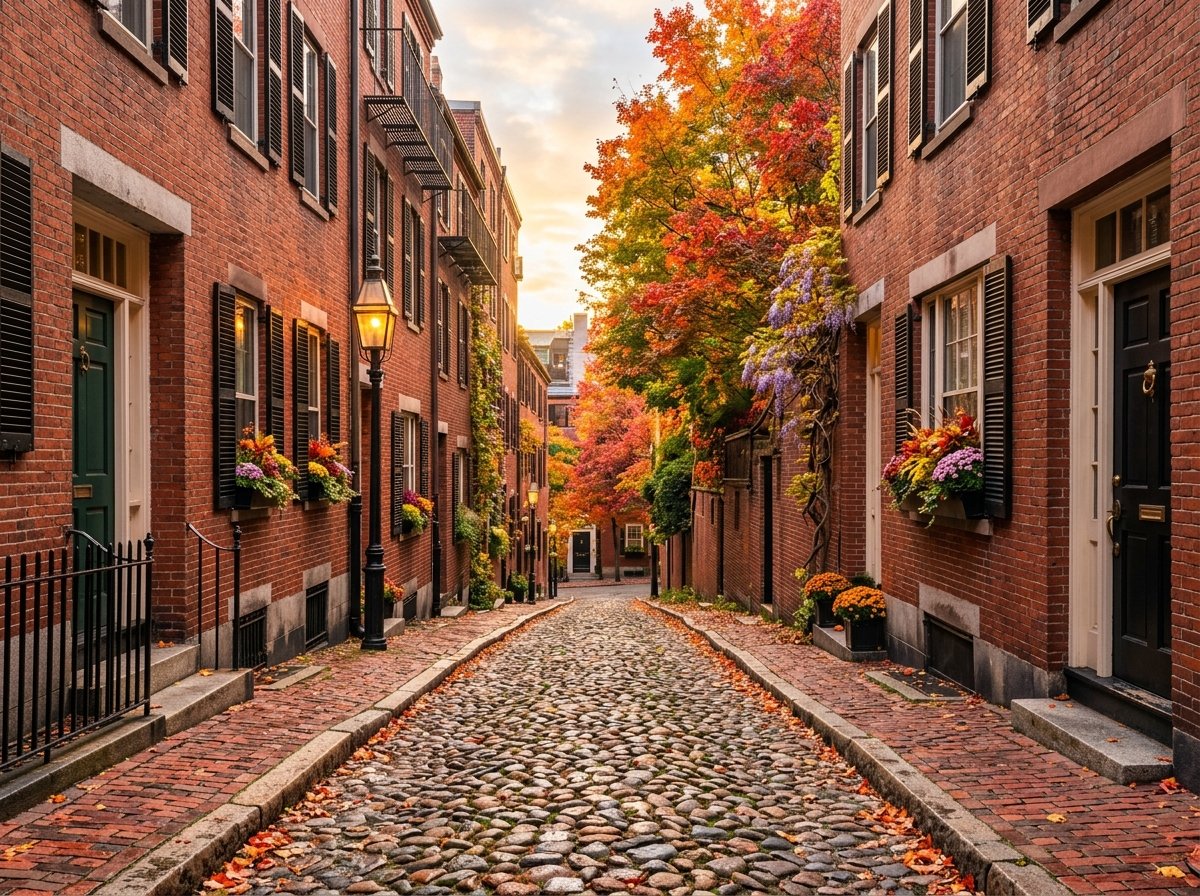
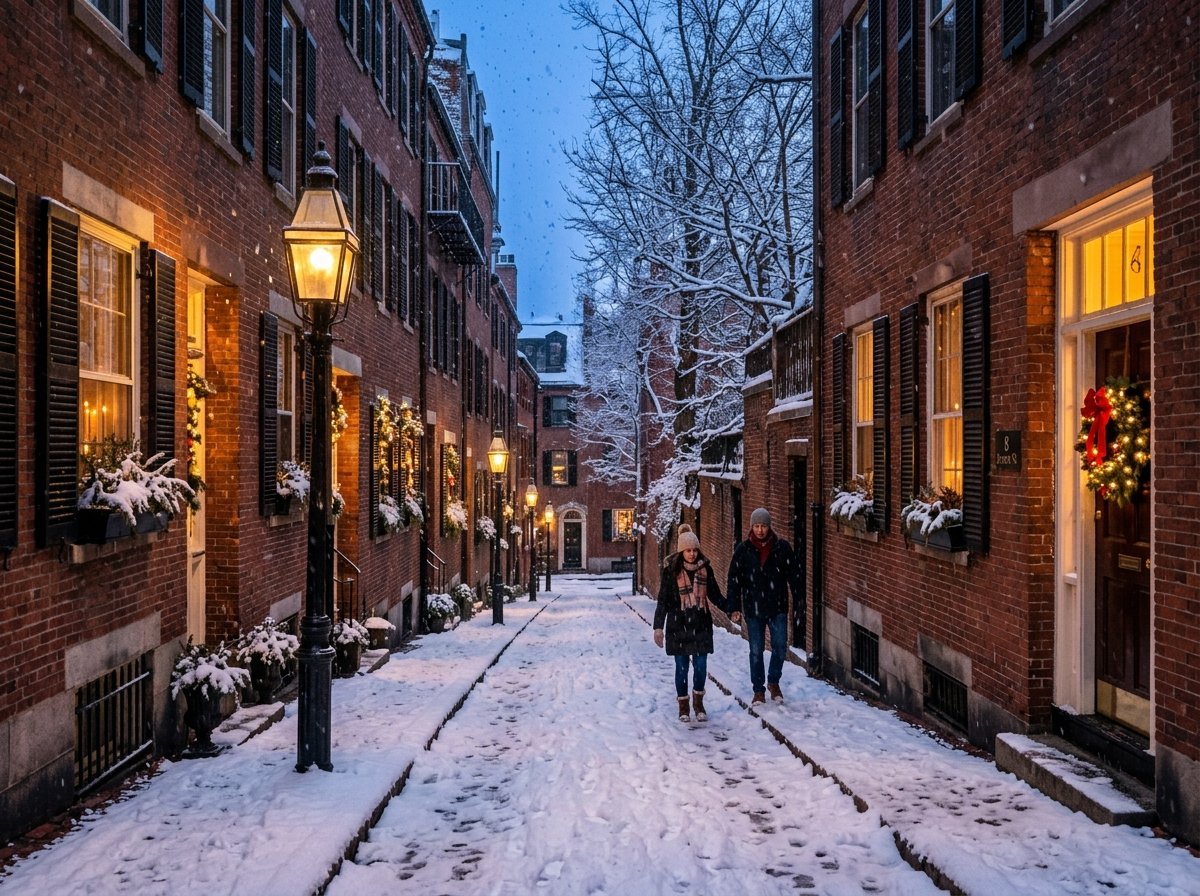
Hidden gem: Acorn Street in Beacon Hill is the most photographed street in America for a reason. But go at sunrise in mid October before the tour buses arrive. The light is golden and you will have it to yourself.
Winter in Boston: December to February
Winter separates the tourists from the travelers. It is cold. It is windy. The sun sets before 5 PM. But it is also when Boston feels most like itself.
What to expect: December highs hover between 30°F and 40°F. January and February see highs around 36°F and lows around 22°F. Wind chill makes it feel colder. Snow falls regularly, with January and February averaging 9 to 14 inches each.
The good: Hotel prices drop by 40% or more. Restaurants that are impossible to book in October now have tables open. The Boston Wine and Food Festival runs from mid January through March. Ice skating on Frog Pond in the Common is free and magical at night. The holiday lights on Commonwealth Avenue in December are worth the cold.
The bad: The T runs slower in snow. Some walking tours shut down. Outdoor attractions like the Harbor Islands ferry stop running. It gets dark early. January can feel bleak after the holidays.
Best for: Budget travelers. Museum lovers who want quiet galleries. Anyone who wants to see Boston like a local.
Hidden gem: The Mapparium at the Mary Baker Eddy Library is a three story stained glass globe you walk inside. It is indoors, heated, and fascinating. Perfect for a cold January afternoon.
The Best Months to Visit Boston: Ranked
Here is the honest ranking based on weather, crowds, prices, and overall experience.
1. Late September through mid October This is the sweet spot. The summer crowds leave after Labor Day. The students are busy with classes, not moving in. The weather is mild. The leaves start turning in late September and peak in mid October. Hotel rates are high but worth it.
2. Late May through mid June Spring flowers are out. The weather is warm but not humid. Baseball is in full swing. Hotel rates are reasonable. The city feels alive without the August crush.
3. Early to mid September Summer warmth remains but the tourist crowds thin out after Labor Day. Avoid the first week if possible because of college move ins.
4. July Great weather, great events, but high prices and thick crowds. If you book early and do not mind sharing the Freedom Trail with groups, July is fun.
5. December Holiday magic makes up for the cold. The Boston Common Christmas tree, ice skating, and cozy pubs create a atmosphere you cannot fake. Just pack warm.
6. April Unpredictable but rewarding. You might get snow. You might get 70°F and sunshine. The Marathon brings energy but also crowds and high prices that weekend.
7. August Hot, humid, and packed with families and college move ins. The least pleasant summer month.
8. November The foliage is gone. The holiday lights are not up yet. It is cold and gray. Not terrible, but not special.
9. January and February Bone chilling cold and early darkness. Great for budget deals, but you need to love museums and indoor dining.
10. March Winter refuses to leave. Snow, slush, and bare trees. The only redeeming factor is St. Patrick’s Day, when Boston throws one of the best parades in America.
What Most Travel Guides Do Not Tell You
How College Schedules Shake Up the City
Boston is a college town. Harvard, MIT, Boston University, Northeastern, and dozens more fill the city with students. Their calendar directly affects your trip.
Avoid early September. Move in days for Boston University and Northeastern happen right after Labor Day. Streets clog. Hotels near campuses spike in price. Ubers are impossible to find.
Avoid mid May. Graduation season brings thousands of families. Hotels in Cambridge and Back Bay sell out.
Spring break varies. Most Boston colleges take spring break in March. The city actually empties out, which means quieter museums and easier restaurant reservations.
Neighborhoods That Shine in Specific Seasons
Beacon Hill: Best in fall. The gas lamps, brick sidewalks, and window boxes full of mums make it the most photographed neighborhood in America.
North End: Best in late spring. Summer crowds make Hanover Street a shoulder to shoulder struggle. May gives you cannoli at Mike’s Pastry without the hour long line.
Seaport: Best in summer. The rooftop bars and harbor walks come alive. In winter, the wind off the water makes it miserable.
Cambridge: Best in fall. Harvard Yard turns golden. The bookstores and coffee shops along Mass Ave feel like a movie set.
South End: Best in spring. The brownstone-lined streets and small parks bloom with flowers. The restaurant scene here is less touristy than downtown.
Day Trips Worth Taking by Season
Spring: Concord and Lexington for Revolutionary War history. The Minute Man National Historical Park is beautiful in May.
Summer: Cape Cod beaches. The Provincetown ferry from Boston gets you there in ninety minutes. Whale watching out of Gloucester peaks in July and August.
Fall: Salem for Halloween and witch trial history. The foliage drive through the Berkshires is unbeatable in mid October.
Winter: Skiing in the White Mountains of New Hampshire, about three hours north. Or stay closer and explore the indoor markets and breweries in Portland, Maine.
What to Pack for Every Season
Boston weather changes fast. A sunny morning can turn into a rainy afternoon. Here is what to actually bring.
Spring: Layers are everything. Pack a light jacket, a sweater, t shirts, and jeans. Waterproof shoes help with slush in March and April. A light scarf blocks the harbor wind.
Summer: Breathable cotton and linen. A light jacket for evening. Comfortable walking shoes are non negotiable. Boston’s cobblestones will destroy flimsy sandals. Bring a compact umbrella. A Repel windproof travel umbrella fits in any daypack and handles the sudden gusts off the harbor better than cheap drugstore models.

Repel Windproof Travel Umbrella
Fall: A medium weight jacket. Layers you can add or remove. Comfortable boots or sneakers. A hat and gloves by late October.
Winter: A knee length down coat with a hood. Waterproof boots with thick soles. Wool socks. Touchscreen gloves so you do not freeze your fingers using your phone. Long underwear if you plan to walk outside for more than thirty minutes.
Money Saving Tips That Actually Work
Visit in January or February. Hotel rates drop by half. You can stay at four star properties in Back Bay for under $150 per night.
Book restaurants during Dine Out Boston. This happens in March and August. Fixed price menus at top restaurants let you eat well without the usual bill shock.
Use museum free days. The Museum of Fine Arts offers reduced admission after 3 PM on Wednesdays. The Boston Children’s Museum has $1 admission Sunday afternoons. The Institute of Contemporary Art is free Thursday nights.
Walk the Freedom Trail. It is free. You do not need a paid tour. Download a map or use a guidebook and go at your own pace.
Take the T. Boston’s subway system covers most tourist areas. A weekly pass costs less than two Uber rides.
Avoid Marathon weekend and Head of the Charles weekend unless you are attending. Hotel prices double and availability vanishes.
Frequently Asked Questions
What is the cheapest time to visit Boston? January and February. Hotel rates hit their lowest point. You will find deals at top properties that cost triple in October.
What is the best time to see fall foliage in Boston? Late September through mid October. Peak color usually happens around Columbus Day weekend.
When should families with kids visit Boston? Late June or early September. The weather is warm. Schools are either just out or back in session, which thins crowds slightly.
Is Boston worth visiting in winter? Yes, if you love museums, cozy restaurants, and lower prices. No, if you hate cold weather and early sunsets.
What is the worst time to visit Boston? Mid August through early September. The heat and humidity peak. College move ins clog the city. Hotel prices stay high. You get summer crowds without summer charm.
How many days do I need in Boston? Three to four days covers the main historic sites, neighborhoods, and a day trip. Five days lets you slow down and explore Cambridge and Somerville.
What should I wear to a Red Sox game? A light jacket even in summer. Fenway gets chilly after sunset. A Red Sox cap helps you blend in. Boston fans do not appreciate rival team gear.
Does it rain a lot in Boston? Rain falls year round but it is rarely a day long downpour. Quick afternoon showers are common in spring and summer. Always carry a light rain layer.
Final Thoughts
Boston rewards the prepared traveler. Fall brings colorful foliage, summer brings harbor energy, spring brings blooms and baseball, while winter offers lower prices and fewer crowds.
There is no single best time to visit Boston—only the best time for your travel style. Visit in October for beautiful weather, January for budget-friendly trips, or June for warm days and baseball.