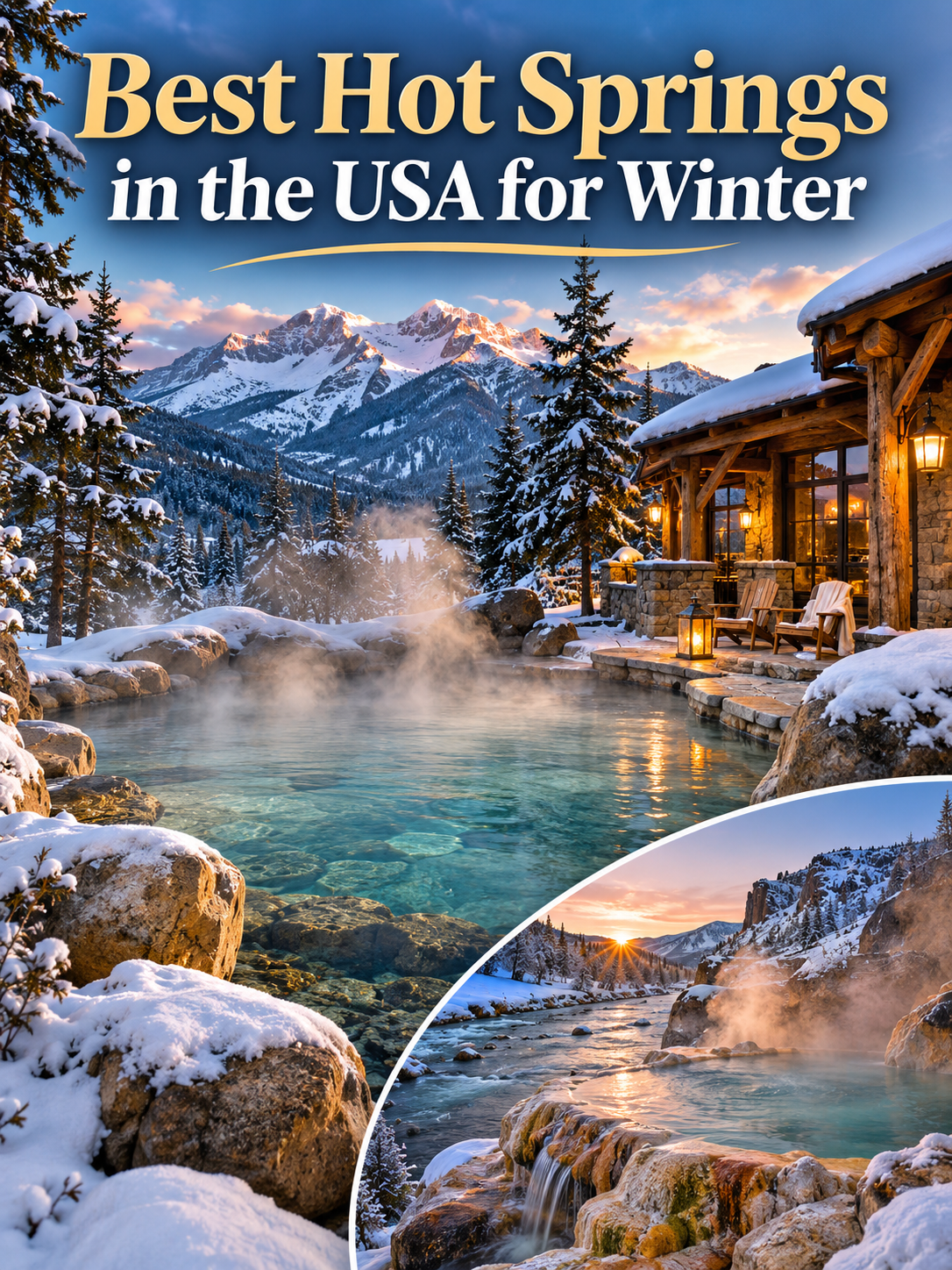
There is no better winter feeling than stepping out of cold mountain air into steaming hot water while snow falls around you. Hot springs turn a cold-weather trip into something restorative: sore ski legs loosen up, the steam fogs your glasses, and for a little while the cold is something you watch from the water instead of something you endure.
This guide covers the best hot springs in the USA for winter, chosen for warm water in real cold weather, reliable winter access, and a mix of family-friendly pools, quiet adult soaks, and one-in-a-lifetime experiences like bathing under the northern lights. Prices below are planning estimates for 2026, based on the resorts’ published rates at the time of writing. Hot spring prices change often and many places use timed-entry reservations in winter, so confirm current prices, hours, and reservation rules on each spring’s official website before you go.
Quick picks: which hot spring fits your trip?
| If you want… | Go to… |
|---|---|
| The best family hot spring | Glenwood Hot Springs, Colorado |
| The most pools in one place | Iron Mountain Hot Springs, Colorado |
| The best all-round soak | The Springs Resort, Pagosa Springs, Colorado |
| Creekside pools with mountain views | Mount Princeton Hot Springs, Colorado |
| The most rustic snow soak | Strawberry Park Hot Springs, Colorado |
| The calmest historic spa | Ojo Caliente, New Mexico |
| Soaking under the northern lights | Chena Hot Springs, Alaska |
| The best budget historic soak | Hot Springs National Park, Arkansas |
1. Glenwood Hot Springs, Colorado — best for families
Glenwood Hot Springs Resort is home to the world’s largest hot springs pool, a historic Grand Pool about 405 feet long that has been drawing visitors since 1888, plus a hotter Therapy Pool kept around 104°F. The water in the big pool runs cooler, around 90 to 93°F, which makes it comfortable for children and for long, lazy swims rather than short hot dips.
That size is exactly why it works so well for families. Kids can swim and play while adults soak, nobody has to whisper, and there is a lodge attached to the pool deck plus the historic Hotel Colorado next door, so you can go straight from the water to a warm room. Day passes run in the mid-$30s to around $40 for adults, with lower prices for children and evening discounts, and Glenwood still sells walk-up tickets at the door with no timed slots, which is rare among popular springs in winter.
Glenwood Springs is about two and a half hours from Denver on I-70, through Glenwood Canyon. Check road conditions before you commit in winter, as the canyon occasionally closes for rockfall or weather.
Estimated day visit for two adults: $70 to $90, excluding lodging and meals.
Best for: families with children, first-time soakers, and anyone who wants a big, easy, walk-up hot spring.
2. Iron Mountain Hot Springs, Colorado — best for the most pools in one place
Iron Mountain sits on the Colorado River in Glenwood Springs, a short walk from the big pool above, but it is a very different experience: 16 mineral pools stepped down a hillside, each kept between about 98 and 108°F, so you can hop from warm to hot and find the temperature that suits you. There is a family-friendly general-access area and a separate 21-and-over section with its own pools, which keeps the mood calm on the adult side.
General access runs about $43 to $75 depending on the date and pass length, with all-access adult passes higher. Booking online saves about $5 over the door price. It is the better choice if Glenwood’s big pool sounds too much like a swimming pool and you want a proper soaking experience, or if you are travelling without children and want quieter water.
Pair it with a day on the slopes: Glenwood is an easy base for Aspen, about 40 minutes away, or for a ski day at Sunlight Mountain nearby.
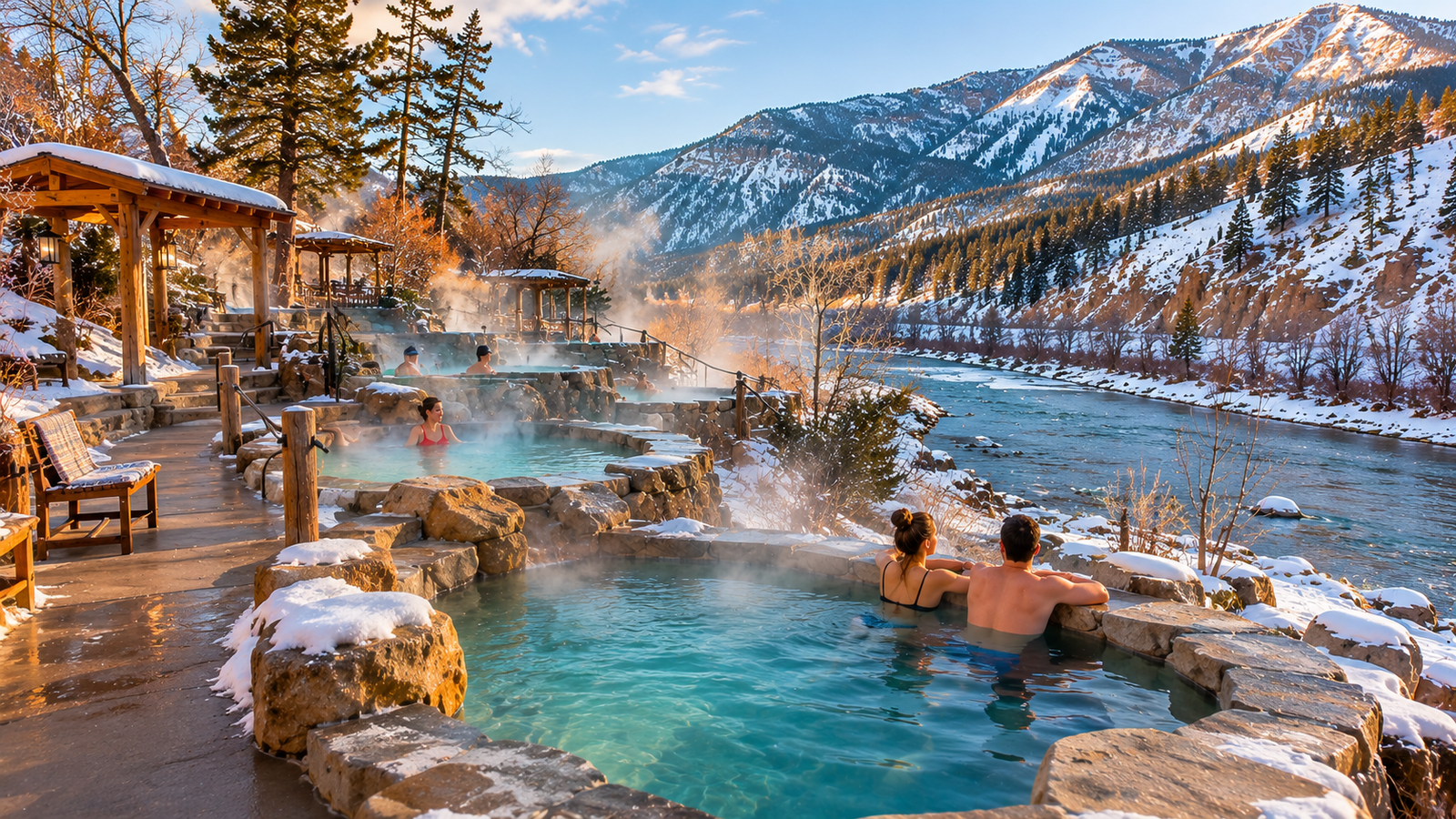
Estimated day visit for two adults: $85 to $150, excluding lodging and meals.
Best for: couples, adults travelling without children, and soakers who like to compare pool temperatures.
3. The Springs Resort, Pagosa Springs, Colorado — best all-round soak
The Springs Resort in Pagosa Springs is built around the Mother Spring, certified by Guinness World Records as the world’s deepest measured geothermal spring at more than 1,002 feet deep. Its 25 terraced pools step down a steep bank of the San Juan River in downtown Pagosa, each blended to its own temperature from about 83 to 114°F, so you can work your way from warm to very hot with the cold river running just below you.
General admission is $74 per adult and $42 for ages 3 to 12, with a Wellness Day Pass at $119 Monday to Thursday and $159 Friday to Sunday. The resort sells timed-entry day soaks online, and holiday weeks and Saturdays routinely sell out days or even weeks in advance, so book before you drive the roughly five hours from Denver. The drive crosses 10,857-foot Wolf Creek Pass, where winter traction laws activate regularly.
One important check before you go: floods on the San Juan River in late October and again on November 1 and 2, 2026, hit the riverside pools. Check the resort’s website for current closures before you book, as some pools may still be affected.
Estimated day visit for two adults: $148 to $238, excluding lodging and meals.
Best for: serious soakers who want the widest choice of pools, and a winter weekend built around the water.
4. Mount Princeton Hot Springs, Colorado — best creekside pools with mountain views
Mount Princeton Hot Springs sits in the Arkansas River Valley near Nathrop, with the 14,000-foot Mount Princeton rising right behind the pools. The historic bathhouse admission is around $40, with a discounted $20 evening entry from Monday to Wednesday, and the real draw in winter is the creekside pools: natural soaking pools built into Chalk Creek, where hot spring water mixes with cold creek water and steam rises off the surface into mountain air.
It is a resort as well as a day-use spring, with lodging, a spa, and a restaurant on site, so it works well as a quiet two-night stop between ski days in Buena Vista or Salida. The creekside pools are weather-dependent and can close when the creek runs high, so check conditions on the day.
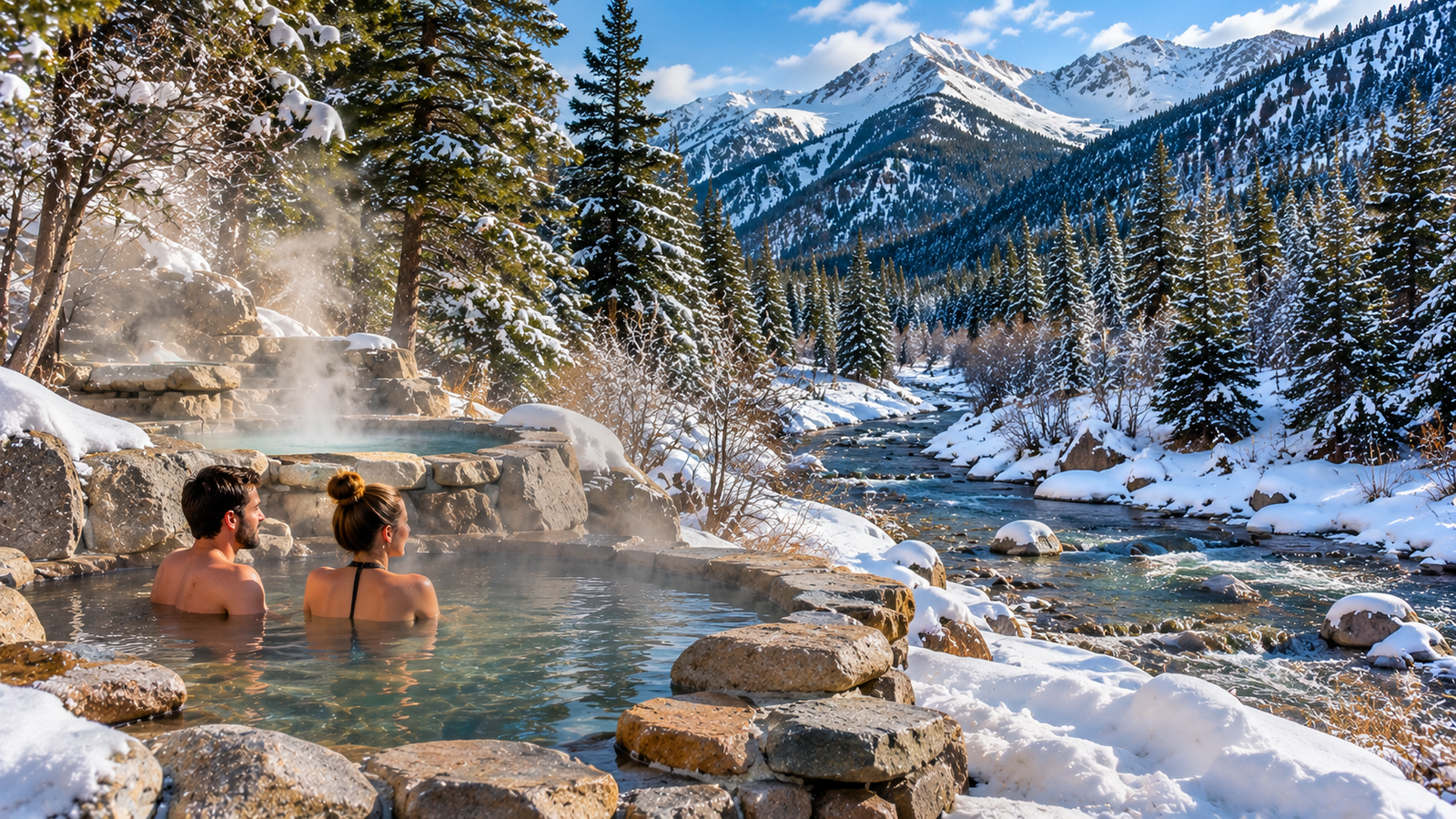
Estimated day visit for two adults: $80 to $90, excluding lodging and meals.
Best for: couples who want mountain views from the water, and a slower-paced winter stop.
5. Strawberry Park Hot Springs, Colorado — best rustic snow soak
Strawberry Park is the postcard version of a winter hot spring: a stack of natural stone pools built into a creek canyon about seven miles north of downtown Steamboat Springs, where geothermal water near 147°F is mixed with cold flow from Hot Spring Creek and settles into soaking pools around 102 to 104°F. There is no chlorine, no concrete deck, and no slides, just stone, steam, and snow.
Winter is the classic time to go, but it takes planning. The springs run on timed two-hour reservations booked online up to 30 days ahead, admission is about $20 to $30 per adult, cash only at the gate with no ATM on site, and from November 1 to May 1 a traction law requires 4WD or AWD with snow tires, or chains, on the last two unpaved miles of County Road 36. Shuttle tours from town include admission and run even when the road is closed to personal vehicles, which is the simplest option if your rental car is not winter-ready. Note that the pools are clothing-optional and 18-and-over after dark, so families should visit during the day.
Estimated day visit for two adults: $40 to $60, plus shuttle costs if you need one.
Best for: adventurous couples, skiers finishing a day at Steamboat, and the most atmospheric snow soak on this list.
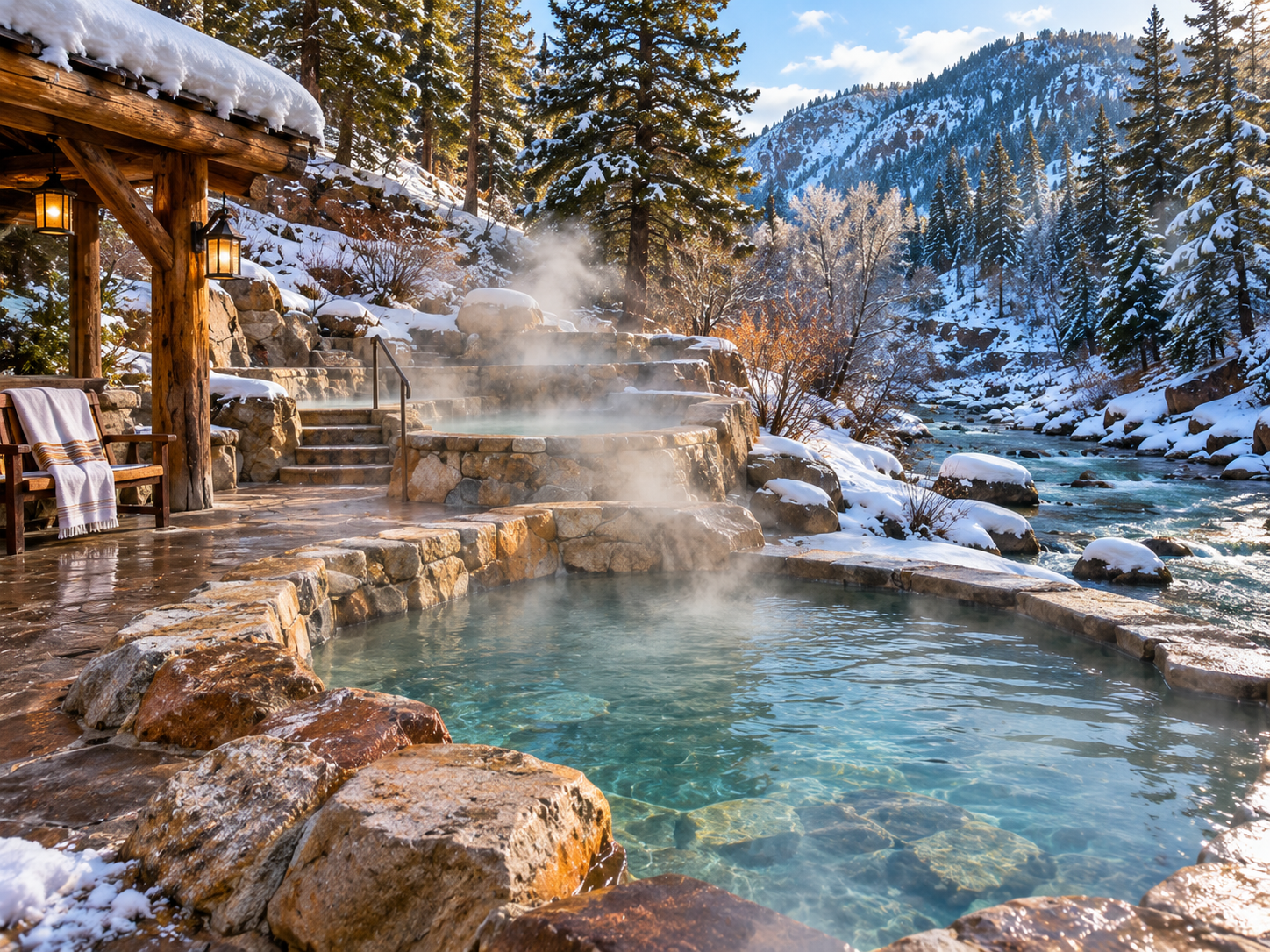
6. Ojo Caliente, New Mexico — best historic spa
Ojo Caliente Mineral Springs Resort and Spa, about 50 miles north of Santa Fe, is described by its operator as one of the oldest spa resorts in the country. The setting is high desert rather than alpine: red rock, wide sky, and pools kept between about 97 and 102°F, including a mud pool, a steam room, and a sauna.
Day soaking costs $45 Monday through Thursday and $65 Friday through Sunday, and no children under 13 are admitted, which keeps the pools quiet. Soaking hours for day guests run 10 a.m. to 10 p.m. It is the best pick on this list if you want a calm, adults-only spa day rather than a family pool, and it pairs naturally with a Santa Fe winter trip, including the city’s farolito-lit streets in December.
Estimated day visit for two adults: $90 to $130, excluding lodging and meals.
Best for: adults who want a quiet historic spa, and a Santa Fe winter trip add-on.
7. Chena Hot Springs, Alaska — best northern lights soak
Chena Hot Springs Resort sits about 60 miles northeast of Fairbanks at the end of Chena Hot Springs Road, in a dark corridor with very little light pollution. Its outdoor Rock Lake pool stays between about 90 and 110°F year-round from natural geothermal heating, and it is open 24 hours for guests, so you can soak at 2 a.m. while the aurora moves overhead. The outdoor rock pool is adults-only; children can use the indoor pool.
The resort also has the Aurora Ice Museum, a building made from more than 1,000 tons of ice and snow and kept permanently below freezing, with hand-carved sculptures and an ice bar. Aurora tours from the resort, including heated-yurt viewing at Charlie Dome, run from about $75 per person for a short session to roughly $290 for a full evening package. Guided tours from Fairbanks, including transport, the ice museum, and pool access, run about $179 to $250 per person.
The aurora is never guaranteed: it depends on solar activity, cloud cover, and darkness. Late February and March give better odds of clear skies than December and January, and you need a Kp index of 3 or higher for the lights to show overhead at Fairbanks’ latitude. Lodge rooms run about $240 to $300 a night direct, with lower rates through booking sites, and winter overnight temperatures can drop to -30°F, so pack heavy insulated layers, thermal base layers, insulated boots, and gloves.

Winter Gloves for Men and Women
Estimated evening tour for two adults from Fairbanks: $360 to $500, excluding dinner.
Best for: a bucket-list winter trip, and anyone who wants the northern lights from warm water.
8. Hot Springs National Park, Arkansas — best budget historic soak
Hot Springs National Park is unlike any other park in the system: there is no entrance fee at all, no gate, and no wilderness drive. The park is woven into downtown Hot Springs, Arkansas, and its main feature, Bathhouse Row, is a row of eight historic bathhouses along Central Avenue. Winter is the quietest season, and the bathhouses stay open year-round.
Two bathhouses still offer soaks. Quapaw Bathhouse has modern communal thermal pools at different temperatures for about $20 to $25 per person for all-day access; guests must be 14 or older, and it is closed on Tuesdays. Buckstaff Bathhouse has run continuously since 1912 and offers the traditional experience, a private tub, hot towels, and a steam cabinet, for about $35 to $45 per person walk-in, with a deluxe package including massage at about $100 to $116. The Fordyce Bathhouse Museum, the park’s visitor center, is free.
It is also the warmest and easiest winter option on this list for travellers who do not want mountain driving, snow, or high-altitude cold, with mild Arkansas winter weather and a walkable downtown of restaurants and shops around the bathhouses.
Estimated day visit for two adults: $40 to $90, excluding lodging and meals.
Best for: budget travellers, history lovers, and a warm-weather winter escape.
How to choose a winter hot spring
Before you pick a spring, ask these four questions:
- Who is coming? Glenwood Hot Springs and Hot Springs National Park are the best family options. Ojo Caliente, Iron Mountain’s adult section, and Chena’s outdoor pool are adults-only or adult-oriented, and Strawberry Park is 18-and-over after dark.
- Do you want to swim or soak? Glenwood’s Grand Pool is for swimming and playing. Iron Mountain, Pagosa, Mount Princeton, and Strawberry Park are for soaking: sitting still in hot water, moving between pools, and staying warm in the cold air.
- Can you drive there in winter? Pagosa requires crossing Wolf Creek Pass, Strawberry Park needs 4WD or a shuttle, and Chena is a 60-mile remote road from Fairbanks. Glenwood, Ojo Caliente, and Hot Springs National Park are the easiest winter drives.
- Do you need a reservation? Pagosa, Strawberry Park, and most Chena aurora tours sell out on winter weekends. Glenwood and Buckstaff still take walk-ins. Book the timed-entry springs first, then plan the rest of the trip around them.
When is the best time to visit hot springs in winter?
December through February is peak hot spring season, and the contrast between hot water and cold air is the whole point. January and February are usually the best months: the holiday crowds have gone, snow is reliable in Colorado, and the nights are long enough in Alaska for serious aurora viewing.
Christmas week, New Year’s week, and Presidents’ Day weekend are the busiest and most expensive, with timed-entry slots selling out first. If you can, go on a weekday, not a weekend, and soak in the morning or late evening, when the pools are quietest and the steam is thickest in the cold air.
What to pack for a winter hot spring trip
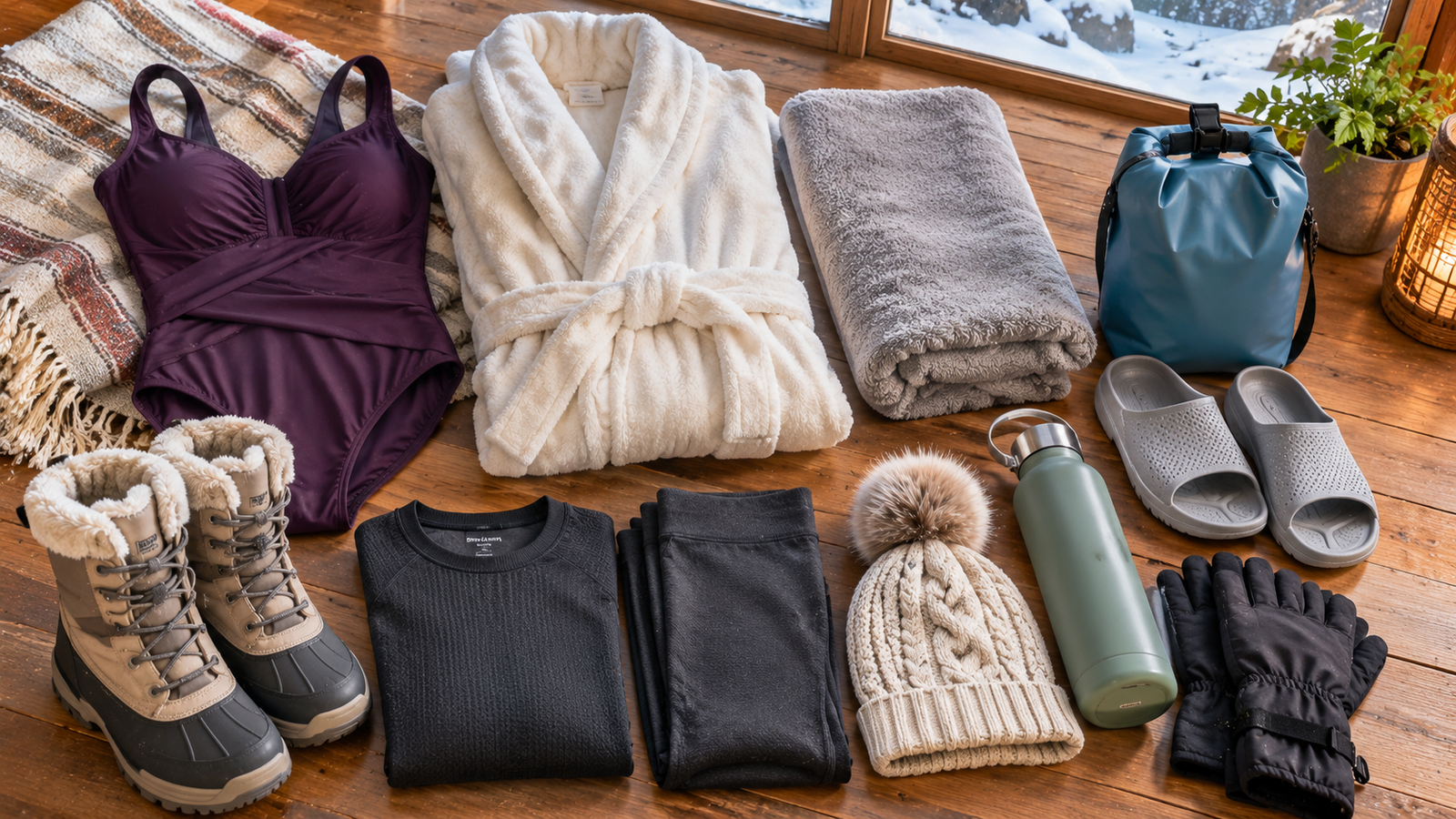
Packing for a hot spring trip in winter means dressing for two climates at once: freezing air and 100-degree water.
- Two swimsuits: one to soak in and a dry one for afterwards, so you are not putting a wet suit back on in cold air.
- A warm robe or oversized towel: the walk from the pool to the changing room is the coldest part of the visit. Flip-flops or water shoes help on icy decks.
- A waterproof bag: for your phone, dry clothes, and car keys, since everything near the pools gets damp.
- Water and snacks: hot water dehydrates you faster than you expect. Drink water before and after soaking, and eat before you get in.
- Winter driving gear: check the traction law for your destination. In Colorado, that can mean 4WD or AWD with snow tires, or chains, and a shovel and blanket in the car are sensible on mountain passes.
Tips for a safe winter soak
- Limit your time in the hottest pools. Soak for 10 to 20 minutes at a time, then cool off, drink water, and go back in. Do not fall asleep in a hot pool.
- Do not soak alone in wild or undeveloped springs. Developed resorts have staff, lifeguards, and posted temperatures. Remote natural pools can be dangerously hot, can change with the weather, and have no help nearby.
- Shower before you get in, and do not drink alcohol before or during a soak. Both are posted rules at most resorts, and both matter more in winter, when the cold hides how hot and dehydrated you are getting.
- Check conditions on the day. Creekside pools close when water levels rise, riverside pools can be affected by flooding, and mountain roads close in storms. A quick check of the resort’s website the morning you go saves a wasted drive.
- Book the popular ones early. Timed-entry springs in Colorado sell out on winter weekends. Reserve the soak first, then the hotel.
Frequently asked questions
What is the best hot spring in the USA for winter?
Glenwood Hot Springs in Colorado is the best all-round family choice, with the world’s largest hot springs pool and easy walk-up access. For the best pure soak, The Springs Resort in Pagosa Springs has 25 terraced pools fed by the world’s deepest geothermal spring. For a once-in-a-lifetime experience, Chena Hot Springs in Alaska lets you soak under the northern lights.
How much does it cost to visit a hot spring?
Day passes at developed springs generally run from about $20 to $75 per adult, with resort-style passes higher. Rustic springs like Strawberry Park are the cheapest at about $20 to $30, while Pagosa’s Wellness Day Pass runs $119 to $159. Hot Springs National Park has no entrance fee, and its bathhouse soaks run about $20 to $45.
Do I need a reservation for a hot spring in winter?
For the most popular springs, yes. Pagosa and Strawberry Park use timed-entry reservations that sell out on winter weekends, and Chena’s aurora tours have limited capacity. Glenwood Hot Springs and Buckstaff Bathhouse still accept walk-ins, but arrive early on weekends and holidays.
Can children go to hot springs?
Yes, at family-friendly springs like Glenwood Hot Springs and Hot Springs National Park. Some springs are adults-only: Ojo Caliente admits no children under 13, Chena’s outdoor Rock Lake pool is 18-and-over, and Strawberry Park is 18-and-over after dark. Check the age rules before you book.
Is it safe to soak in a hot spring when it is snowing?
Yes, at a developed resort with staff and posted temperatures. The snow is part of the experience. The risks are the cold walk to and from the water, dehydration, and staying in very hot water too long, so keep soaks short, drink water, and dry off and warm up promptly.
Final thoughts
The best winter hot spring is not the hottest or the most famous one. It is the one where the water is warm, the setting is right for the people you are with, and you can actually get there in winter without a stressful drive.
If you are travelling with children, start with Glenwood Hot Springs or Hot Springs National Park. If you want the best soak of your life, book Pagosa. If you want the most beautiful snow scene, take the shuttle to Strawberry Park. And if you want a story you will tell for years, save up for a February night at Chena, in warm water, under a green sky.
Book the timed-entry springs first, pack a dry swimsuit and a warm robe, and let the cold stay outside the water where it belongs.