Zion National Park receives around five million visitors per year. It has mandatory shuttle buses because the canyon road cannot handle private vehicles. Angels Landing now requires a permit lottery. And The Narrows closes entirely during high spring runoff.
Timing your visit to Zion is not just about weather. It is about permits, shuttle lines, flash flood risk, trail closures, and whether the experience you came for is actually available when you arrive.
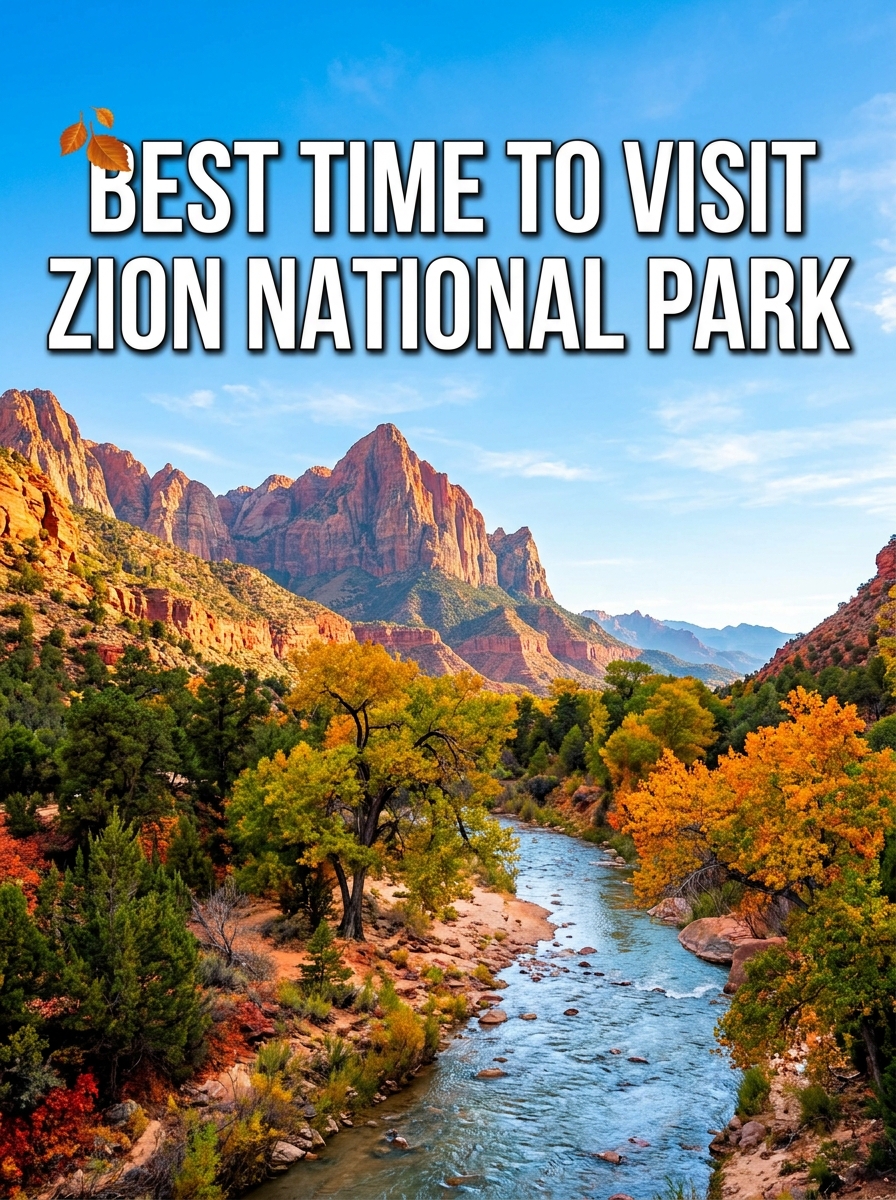
This guide covers every season honestly, with the permit details, crowd patterns, and specific trail information most articles leave out.
Quick Answer: Best Time to Visit Zion National Park
The best overall time to visit Zion is late September through October. Mild temperatures in the 70s and low 80s Fahrenheit (21 to 28 degrees Celsius), significantly lower crowds than summer, good conditions on most major trails, and cottonwood trees turning gold in the canyon.
March through May is excellent for wildflowers and waterfalls, with comfortable hiking temperatures, though The Narrows is often closed in April due to high spring runoff. November through February offers the quietest experience and best Angels Landing permit odds. Summer (June to August) is the most crowded and hottest season, with flash flood risk in July and August.
Zion by Season
Spring (March, April, May)
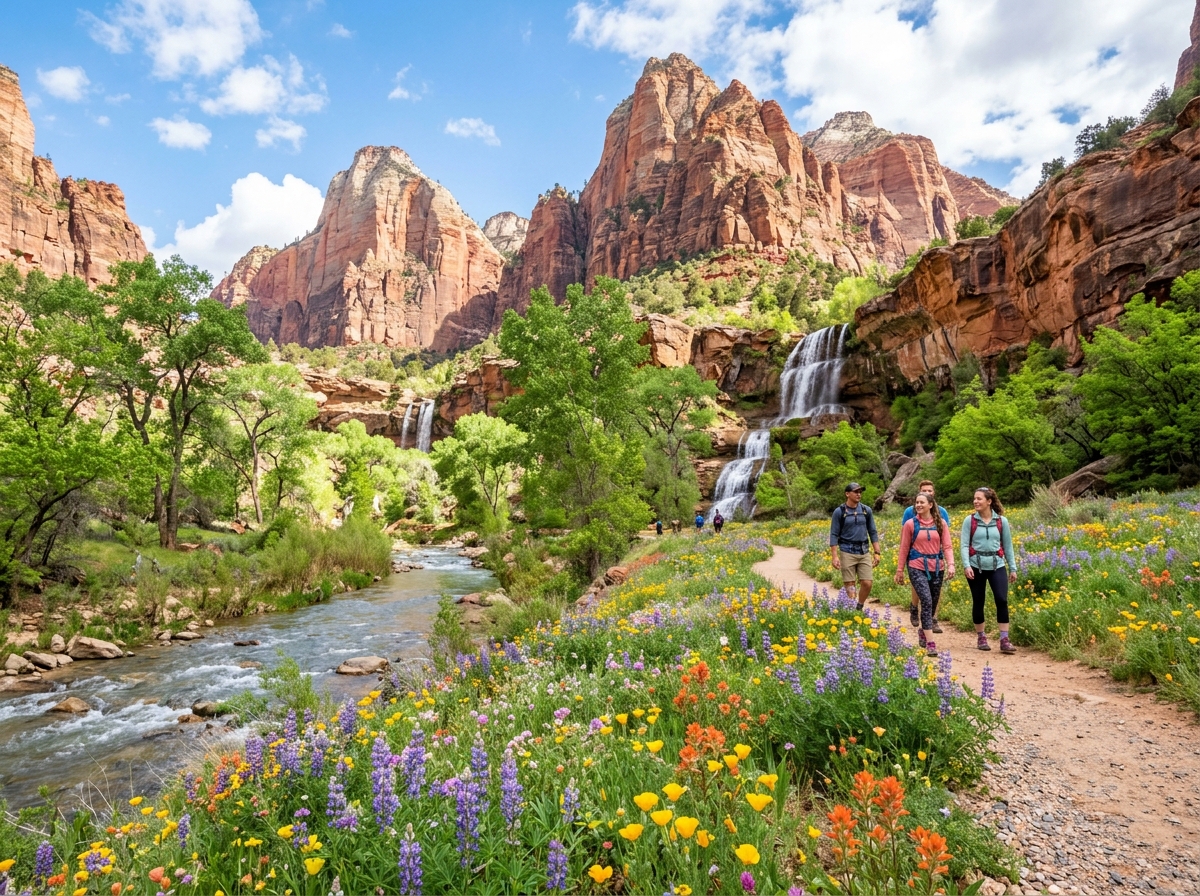
Spring in Zion is genuinely beautiful. Canyon waterfalls run at full force from snowmelt. Wildflowers bloom across the canyon floor. Daytime highs range from 66 degrees Fahrenheit in March to 86 degrees in May (19 to 30C). Mornings start cool so layering is essential.
The Narrows in spring: This is the critical gap most guides miss. The Narrows is frequently closed from late March through early May due to high snowmelt runoff. Check conditions at nps.gov/zion before any spring trip that includes this hike. Do not plan around it without checking two to three weeks out.
Crowds: March and early April are manageable. Spring break weeks spike numbers. May builds toward summer levels by Memorial Day.
Angels Landing permits: The spring lottery (March 1 to May 31) opens mid-February and closes within about two weeks. Apply at recreation.gov during that window.
Spring summary:
- Temperatures: 66 to 86F (19 to 30C) daytime, 39 to 54F (4 to 12C) overnight
- Crowds: Moderate, high during spring break weeks
- Narrows: Often closed April to early May due to runoff
- Best for: Wildflowers, waterfalls, comfortable hiking, photography
Summer (June, July, August)
Summer is the most visited and most challenging season at Zion.
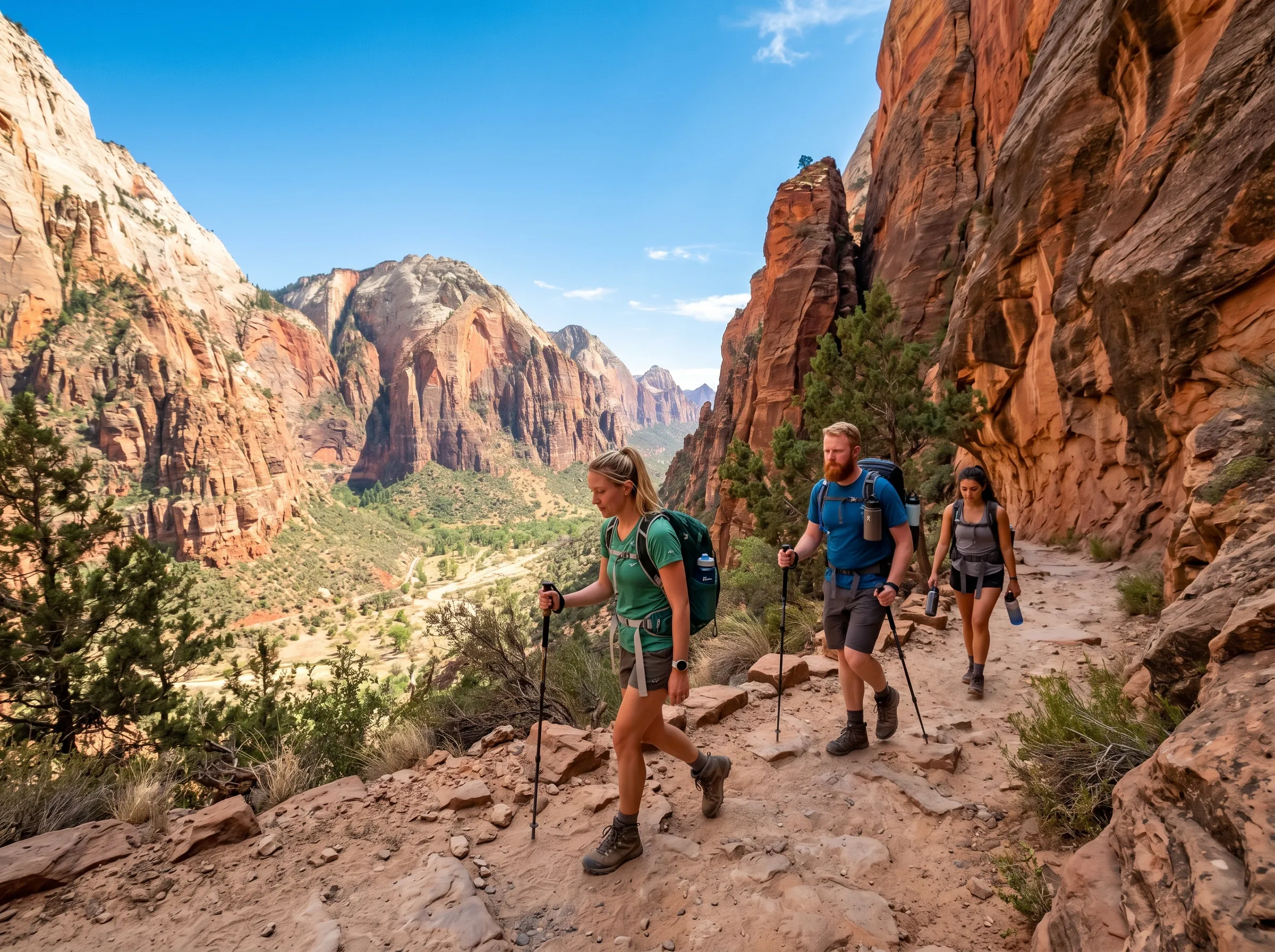
Heat: July temperatures regularly hit 100 to 104F (38 to 40C). Hiking exposed trails in midday heat is dangerous. Start before 7am and be off exposed trails by 10am. First shuttle departs around 6am. Catching it before 8am avoids the worst shuttle lines.
Monsoon season: From late July through early September, afternoon thunderstorms can send flash floods down canyons with almost no warning. Always check the NOAA flash flood forecast at weather.gov before hiking any slot canyon. Any flash flood potential means do not enter The Narrows or the Subway.
The Narrows in summer: When safe, it is the best hike in Zion for summer heat. Cold river water provides natural air conditioning. Check conditions every morning.
Angels Landing permits: Summer lottery (June 1 to August 31) opens April 1 and closes around April 20. Most competitive window of the year. If missed, try the day-before lottery at noon on recreation.gov.
Summer summary:
- Temperatures: 95 to 104F (35 to 40C) daytime, 63 to 70F (17 to 21C) overnight
- Crowds: Highest of the year
- Flash flood risk: High July through September
- Best for: The Narrows (when safe), long days, Emerald Pools, shuttle access
Autumn (September, October, November)
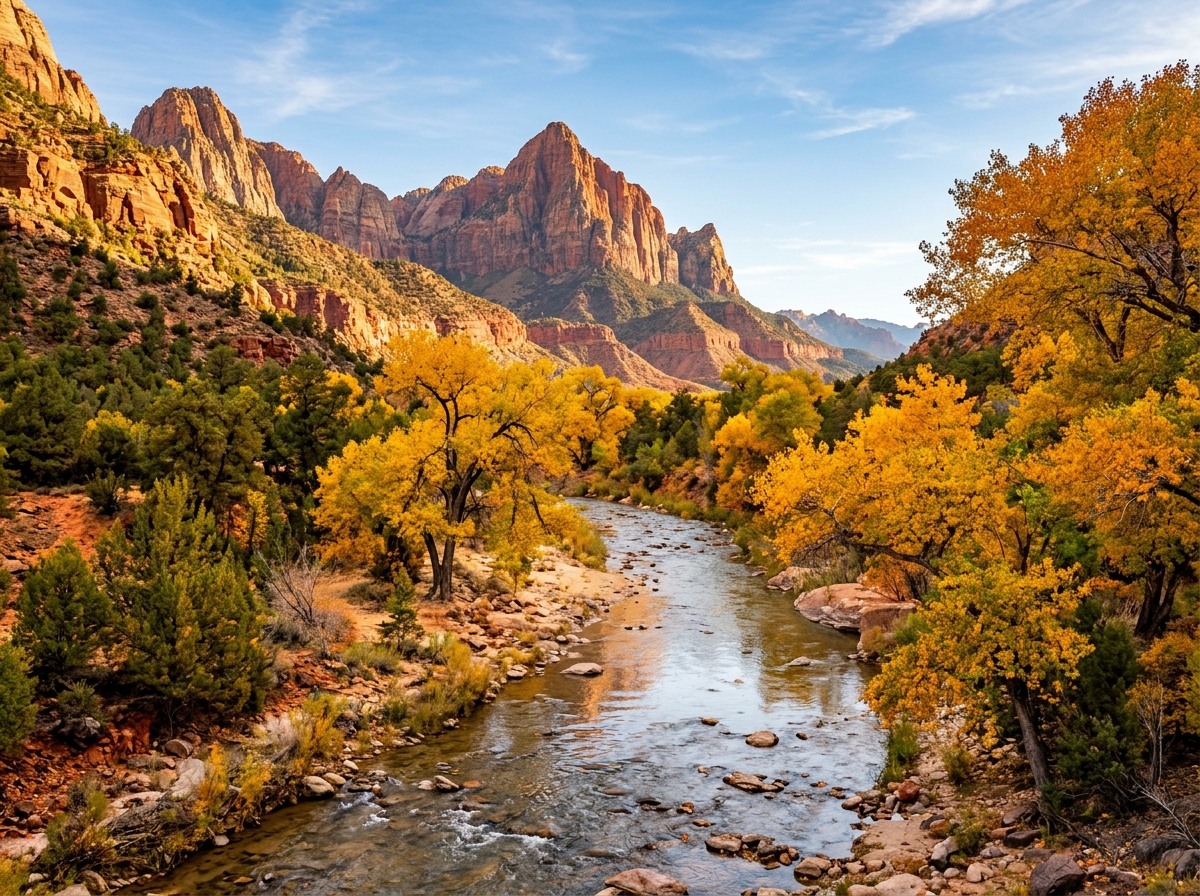
Autumn is the best season at Zion and late September through October is the best window of the year.
September starts warm at 91F (33C) but cools to a comfortable 75 to 85F (24 to 29C) by month’s end. Monsoon activity winds down. Crowds thin noticeably after Labour Day. All major trails are open with good Narrows conditions.
October is peak autumn. Temperatures in the 70s and low 80s Fahrenheit (21 to 28C). Cottonwood trees turn brilliant gold along the Virgin River, peaking in late October to early November. Midweek visits in October are genuinely excellent.
November brings cooler temperatures averaging 64F (18C). The shuttle stops running in late November and you can drive the scenic road again. Some Springdale shops reduce hours.
Autumn summary:
- Temperatures: 91F in early September cooling to 64F (33C to 18C) in November
- Crowds: Moderate in September, lower in October, low in November
- Narrows: Excellent conditions September through October
- Best for: Best overall season, cottonwood fall colour, all major trails open
Winter (December, January, February)
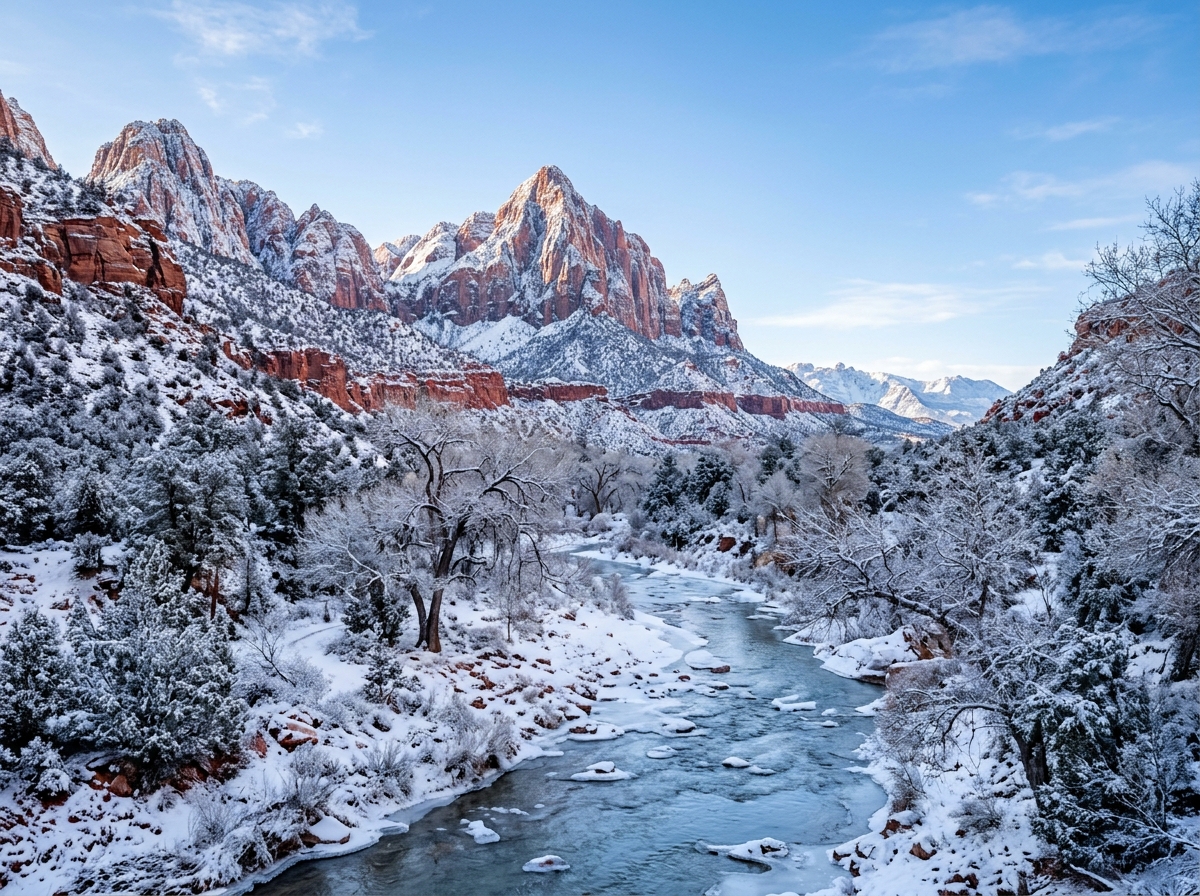
Zion in winter is the best-kept secret for prepared visitors. Daytime temperatures average 53 to 59F (12 to 15C). Nights drop below freezing. Snow occasionally transforms the canyon into something extraordinary.
Crowds are the lowest of the year. No shuttle lines. You can drive the Zion Canyon Scenic Drive in your own vehicle from late November through early March.
The Angels Landing chains section can ice over. Microspikes or YakTrax are essential after any precipitation. The Narrows requires dry suit gear in winter. The winter seasonal lottery (October 1 to October 20) has the best odds of any lottery window because fewer people apply.
Winter summary:
- Temperatures: 53 to 59F (12 to 15C) daytime, around 30F (minus 1C) overnight
- Crowds: Lowest of the year
- Best for: Quiet canyon experience, photography, winter landscapes, best permit odds
Month by Month Quick Reference
| Month | Avg High | Crowds | Narrows | Best For |
|---|---|---|---|---|
| January | 54F/12C | Very low | Cold, gear required | Quiet, permits, winter scenery |
| February | 59F/15C | Very low | Cold, gear required | Quiet, permits, low prices |
| March | 66F/19C | Moderate | Check conditions | Waterfalls, wildflowers |
| April | 75F/24C | High (spring break) | Often closed | Wildflowers, photography |
| May | 86F/30C | High | Opening up | Good hiking temps, wildflowers |
| June | 95F/35C | Very high | Excellent | Narrows, early morning hiking |
| July | 100F/38C | Very high | Flash flood risk | Narrows (morning only, check forecast) |
| August | 99F/37C | Very high | Flash flood risk | Emerald Pools, early starts |
| September | 91F/33C | Moderate-high | Excellent | Shoulder season, all trails |
| October | 79F/26C | Moderate | Excellent | Best month, fall colour |
| November | 64F/18C | Low | Cooling down | Budget, quiet, cottonwoods |
| December | 53F/12C | Very low | Cold, gear required | Winter scenery, best permit odds |
The Angels Landing Permit System Explained
Angels Landing is one of the most dramatic hikes in the United States. A narrow exposed ridge with chains for assistance and a 1,488-foot (454-metre) drop on either side leads to a summit with views down the full length of Zion Canyon.
Since April 2022, the final chains section requires a permit year-round. The permit system has two components.
Seasonal Lottery: Opens months in advance for specific date ranges. Applications are submitted on recreation.gov during the lottery window. Each lottery covers a specific season:
- Winter (December to February): Lottery opens October 1 and closes October 20
- Spring (March to May): Lottery opens in mid-February and closes within about two weeks
- Summer (June to August): Lottery opens April 1 and closes around April 20
Day-Before Lottery: A limited number of permits are released at noon each day for the following day. Better odds than many people expect. Available on recreation.gov. Requires flexible travel dates.
Key practical notes: Zion issues more than 200,000 Angels Landing permits annually. Your permit arrives as an email confirmation. Print it or take a screenshot before your hike. There is no phone service at the summit where rangers may check. The permit covers a two-hour start window, not a fixed time.
If the chains section permit is not available, the hike to Scout Lookout below the chains is still excellent and does not require a permit. The views are significant and the chain section’s exposure is visible from below.
The Narrows: Timing It Right
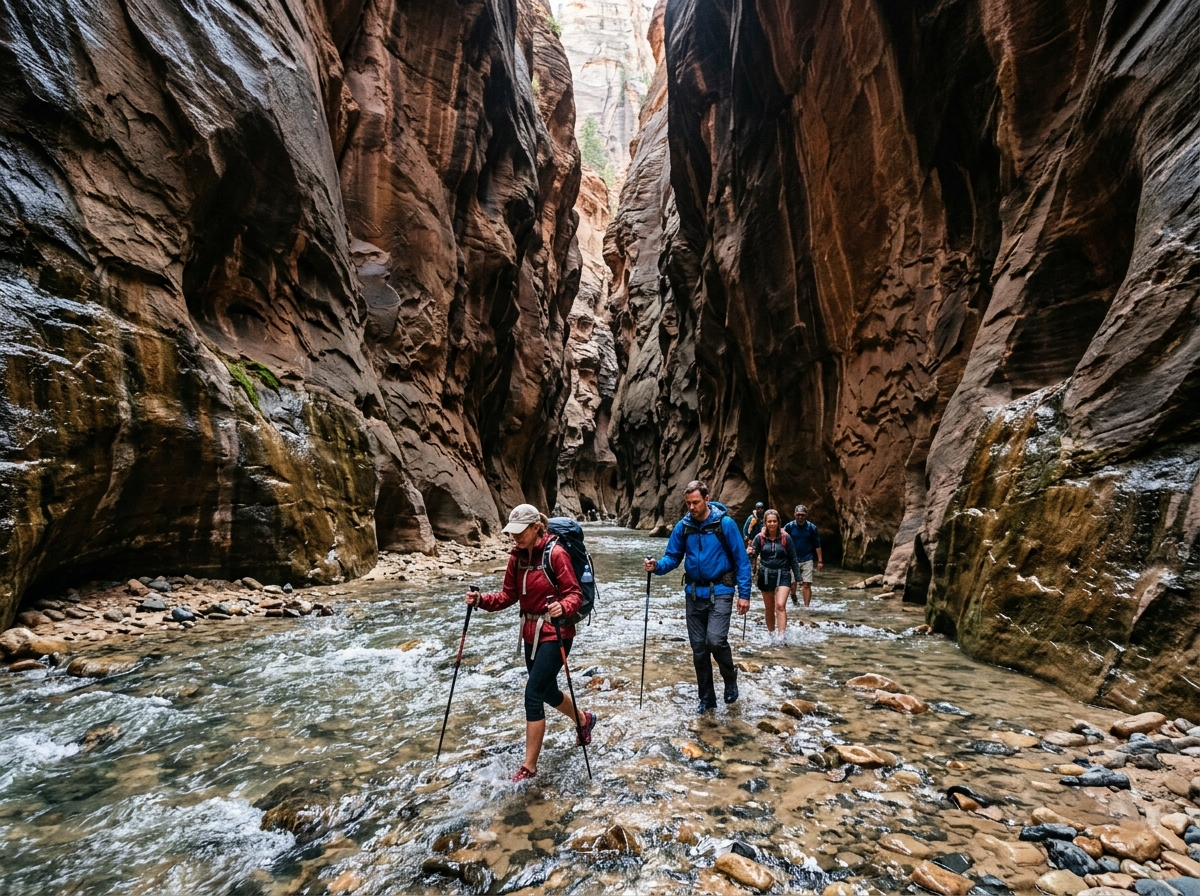
The Narrows is a bottom-up hike through the Virgin River where towering 2,000-foot (610-metre) canyon walls narrow to as little as 20 feet (6 metres). There is no trail. You walk in the river.
No permit is required for the standard bottom-up day hike. The top-down overnight or day permit hike is extremely competitive.
Best window: Mid-May through early October when water temperatures are manageable and flows have dropped from spring runoff. June through September is when most visitors hike it. September and October offer the best combination of lower water levels, warmer temperatures, and reduced flash flood risk.
When to avoid: April to early May when spring runoff makes the river dangerous. July through August during monsoon season when flash floods can arrive without warning. Always check conditions at the park website and the NOAA flash flood potential at weather.gov before any Narrows hike.
What to wear: Water shoes or canyoneering sandals are essential. Neoprene socks add warmth in cooler months. Trekking poles help significantly on the slippery river rocks. Waterproof phone case or dry bag for electronics. For spring and autumn visits when the water is cold, neoprene socks and wetsuit bottoms make a real difference.
A solid pair of water shoes specifically designed for river hiking makes The Narrows significantly safer and more enjoyable. The Keen Newport H2 Water Sandal (available on Amazon) has a closed toe, adjustable straps, and a grippy rubber sole designed for wet rock. It is one of the most popular choices among Zion Narrows hikers for good reason and works for both the river crossing and the dry trail sections.
What Most Zion Guides Do Not Tell You
The shuttle strategy matters more than most people realise. Boarding the shuttle at the Zion Canyon Visitor Centre before 8am makes an enormous difference to your day. Lines build quickly and midday waits of 30 to 45 minutes are common in summer. First shuttle runs around 6am. Being on it gives you cooler temperatures, shorter lines at trailheads, and a better overall experience.
The day-before lottery has better odds than most people expect. Many visitors assume the permit system makes Angels Landing impossible. The day-before lottery at noon on recreation.gov releases permits with reasonable success rates. If your dates are flexible, checking for day-before permits is a genuine strategy.
Kolob Canyons section is the park most visitors never visit. Zion has a separate entrance, Kolob Canyons, on Interstate 15 about 40 miles north of the main park entrance. It has shorter trails, dramatic red rock finger canyons, and almost no crowds compared to the main canyon. It is an excellent alternative on busy summer days when shuttle lines at the main entrance are long.
Non-resident fee increase from January 2026. From January 1, 2026, non-US residents pay an additional $100 fee unless they hold an annual pass. A 7-day vehicle pass for US residents costs $35. The America the Beautiful National Parks Annual Pass at $80 covers entry to all national parks and is worth buying for any trip covering more than two or three parks.
Flash flood forecasts are not optional. In monsoon season (late July through September), check the NOAA flash flood potential forecast every morning before hiking in any canyon or river. The rating system is clear. Any elevated flash flood potential means do not enter The Narrows, the Subway, or any slot canyon that day. Flash floods in Zion’s narrow canyons can be fatal with virtually no warning.
Practical Tips for Every Season
Book accommodation early for summer. Springdale, the gateway town immediately outside the park entrance, has limited accommodation that fills months ahead for July and August weekends. The park campgrounds at South and Watchman release reservations six months ahead on recreation.gov and sell out within minutes of release.
Start early regardless of season. In summer to beat the heat. In spring and autumn to beat the crowds at popular trailheads. In winter to catch the best light. The first two hours after sunrise are universally the best time to be at any Zion trailhead.
Bring more water than you think you need. The standard recommendation is one litre per hour of hiking in summer and half a litre in cooler conditions. Dehydration and heat exhaustion account for the majority of Zion rescues. Carry a 2-litre minimum for any hike longer than an hour in warm weather.
Canyon temperature swings are significant. A spring day can start at 40 degrees Fahrenheit and reach 80 by afternoon. Autumn days can drop 40 degrees between sunrise and sunset. Layering is essential in every season except peak summer.
For Zion hiking across any season, a 2-litre hydration reservoir system that fits in a daypack keeps water accessible without stopping to dig out a bottle. The CamelBak Crux 3L Reservoir (available on Amazon) is the most widely used hydration system in US national parks, fits most hiking daypacks, and the hands-free drinking tube means you sip constantly rather than waiting until thirsty. In Zion’s heat, that habit makes a measurable difference.
Check trail conditions before you go. Zion’s trail conditions page at nps.gov/zion lists current closures, high water alerts, and permit requirements. Check it two to three days before arrival and again the morning of your hike.
For Zion hiking with significant elevation gain (Angels Landing gains 1,488 feet and Observation Point gains 2,148 feet), trekking poles reduce knee stress on the descent and provide stability on the exposed sections. The Black Diamond Trail Ergo Cork Trekking Poles (available on Amazon) are lightweight, have cork grips that handle sweat well in desert heat, and are the most recommended poles for canyon country hiking among experienced Southwest visitors.
Best Time to Visit Zion by Traveller Type
First-time visitors: October for the best combination of weather, trail access, fall colour, and manageable crowds. May is a strong second choice.
Hikers doing Angels Landing: Apply for the seasonal lottery in the appropriate window. For best odds, apply for the winter lottery in October. For a specific season visit, apply during the right lottery window on recreation.gov.
The Narrows hikers: September and early October for the best water levels, temperatures, and reduced flash flood risk. Avoid April to early May and always check the flash flood forecast.
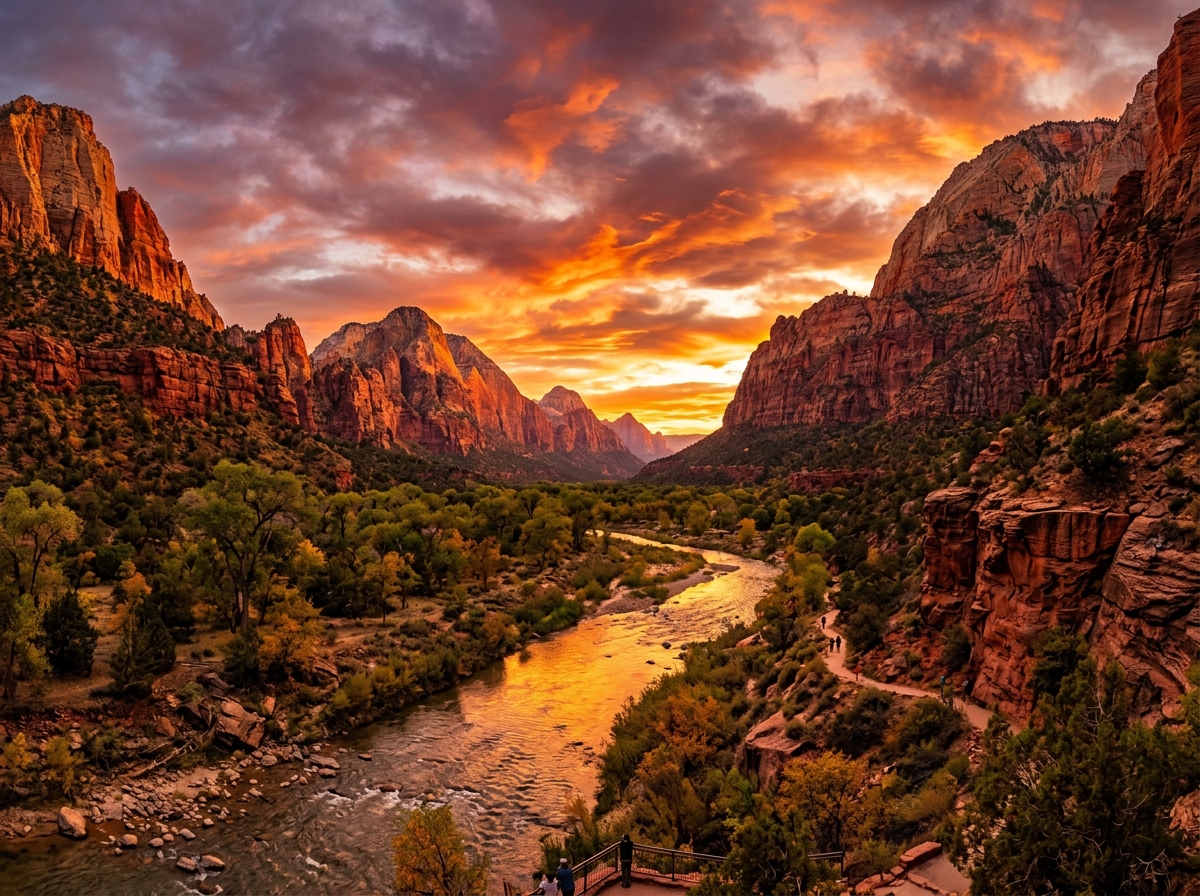
Photography: October for cottonwood gold. Spring for waterfalls and wildflowers. Winter for snow on red rock.
Budget travellers: November, January, and February for lowest accommodation prices and quietest campgrounds.
Families with children: October or May for manageable temperatures and all trails accessible. Emerald Pools is the best family-friendly trail in any season.
Avoiding crowds: January and February on weekdays give you a Zion that feels nothing like the summer experience.
Frequently Asked Questions
What is the best month to visit Zion National Park? October is the best single month. Mild temperatures in the 70s and low 80s Fahrenheit, cottonwood fall colour at its peak in late October, all major trails open, significantly lower crowds than summer, and excellent Narrows conditions. Late September is a close second.
Do you need a permit for Angels Landing? Yes. A permit is required year-round for the final chains section. Permits are available through seasonal lotteries on recreation.gov, with windows opening months ahead of your hike dates, or through the day-before lottery which releases limited permits at noon each day.
When is The Narrows open? The Narrows is typically open from mid-May through early October for comfortable hiking. It is often closed in April and early May due to high spring runoff. In summer, always check the NOAA flash flood forecast before entering. It is hikeable in winter with dry suit gear but not recommended for unprepared visitors.
How crowded is Zion in October? Moderately crowded, especially on weekends, but significantly less than July and August. Midweek visits in October are excellent. The shuttle runs with shorter waits. Popular viewpoints are accessible without long waits.
Is Zion National Park worth visiting in winter? Absolutely. December through February offers the quietest experience in the park, the best Angels Landing permit odds, dramatic winter landscapes, and no shuttle lines. Ice on the Angels Landing chains requires microspikes but the experience on clear winter days is extraordinary.
What is flash flood risk in Zion? Flash floods in Zion are a genuine danger, particularly in the slot canyons and The Narrows. They can arrive without rain directly overhead when storms are many miles away. The risk peaks during monsoon season from late July through September. Check the NOAA flash flood potential forecast at weather.gov every morning before hiking any canyon route.
How long do you need at Zion? Three to four days covers the main experiences: Angels Landing (with permit), The Narrows, Emerald Pools, Canyon Overlook Trail, and the Scenic Drive. Two days is possible for a highlights visit. A week gives you time to explore Kolob Canyons and some of the park’s less-visited trails.
Final Thoughts
Zion rewards preparation more than almost any other national park. The visitors who arrive without an Angels Landing permit, find The Narrows closed for runoff, and hit the shuttle queue at 10am in July come away with a different experience from the ones who booked their permits in February, started their hike at 6am, and caught cottonwood season in October.
The park itself is extraordinary in every season. The canyon walls are always there. The Virgin River always runs. The views from Angel’s Landing are always worth the effort. When you time it correctly, Zion returns something that you will cherish for years.