Panama is one of those countries that keeps surprising people who thought they already knew what it was about.
Yes, the Canal is extraordinary. Yes, Panama City is more sophisticated than most Central American capitals. But Panama is also a Caribbean archipelago where the Kuna people have maintained sovereignty over their islands. It is the cloud forest town of Boquete, where the world’s most expensive coffee grows. It is Coiba National Park, a UNESCO World Heritage Site called the Galápagos of Central America. It is Santa Catalina, a surf village that is the gateway to marine life that has no equivalent on the Pacific coast of the Americas.
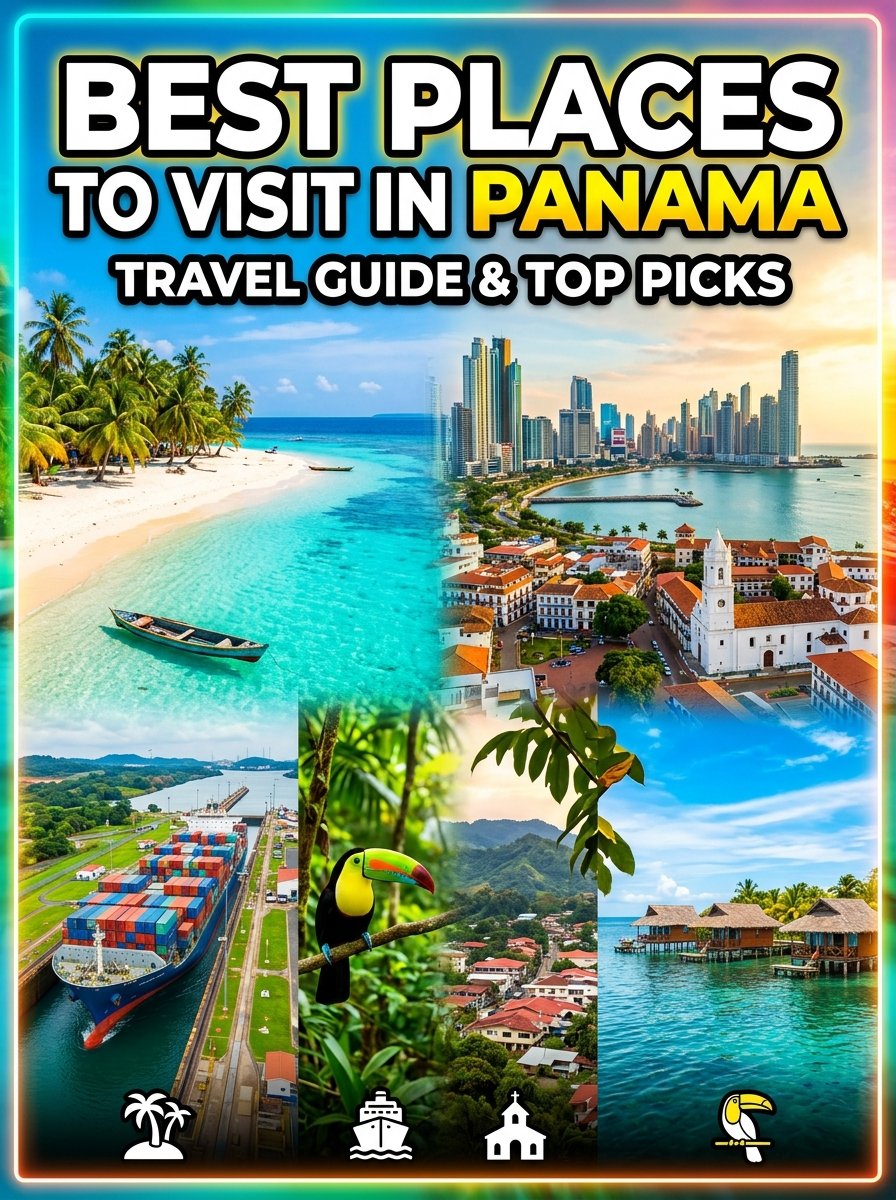
This guide covers the best places to visit in Panama in order of what most travellers should actually prioritise, with honest practical advice that the tour operator websites leave out.
Quick Answer: Best Places to Visit in Panama
For a first visit with two weeks, the most rewarding route is Panama City (including Casco Viejo and the Canal), the San Blas Islands, Santa Catalina for Coiba, Boquete for cloud forest and coffee, and Bocas del Toro. That circuit covers the country’s Pacific coast, Caribbean coast, highlands, and two major marine ecosystems.
One Critical Thing About Panama’s Two Seasons
Panama has a paradox that most travel articles either miss or explain badly, and it genuinely affects your trip planning.
The country has two distinct climate zones separated by the continental divide, and they have opposite rainy seasons.
Pacific side (Panama City, Santa Catalina, the Azuero Peninsula): Dry season runs December through April. Rainy season is May through November.
Caribbean side (Bocas del Toro, the San Blas Islands): This side is wetter overall year-round, but the Caribbean’s driest periods are roughly February through March and September through October, which do not align with the Pacific dry season.
The practical result: there is no single “best season” for all of Panama. If you want the Pacific and the Caribbean on the same trip, you are always in wet season somewhere. For most visitors from December through April, the Pacific is excellent and the Caribbean is manageable. For budget travellers in June through September, the Caribbean can be perfectly fine while the Pacific highlands are green and lush.
Panama City: Your Hub and a Destination in Itself
Panama City is where almost every visit begins, and it deserves more time than most itineraries give it.
The city is the financial capital of Central America, with a skyline of glass towers that genuinely resembles a small Miami, and immediately adjacent to it, the colonial ruins and restoration of Casco Viejo, one of the finest surviving examples of Spanish colonial architecture in the Americas.
Casco Viejo
Casco Viejo (the old quarter) sits on a peninsula at the edge of the bay and has been undergoing one of the most dramatic urban restoration projects in Central America. The colonial churches, plazas, balconied buildings, and rooftop bars with views of the modern skyline and the Pacific entrance to the Canal create a layering of time that is distinctive to this city in a way nothing else in Central America replicates.
Plaza de la Independencia and Plaza Bolívar are the neighbourhood’s two main squares. The Iglesia de San José holds the famous Golden Altar, smuggled and hidden from the pirate Henry Morgan when he sacked the original Panama City in 1671.
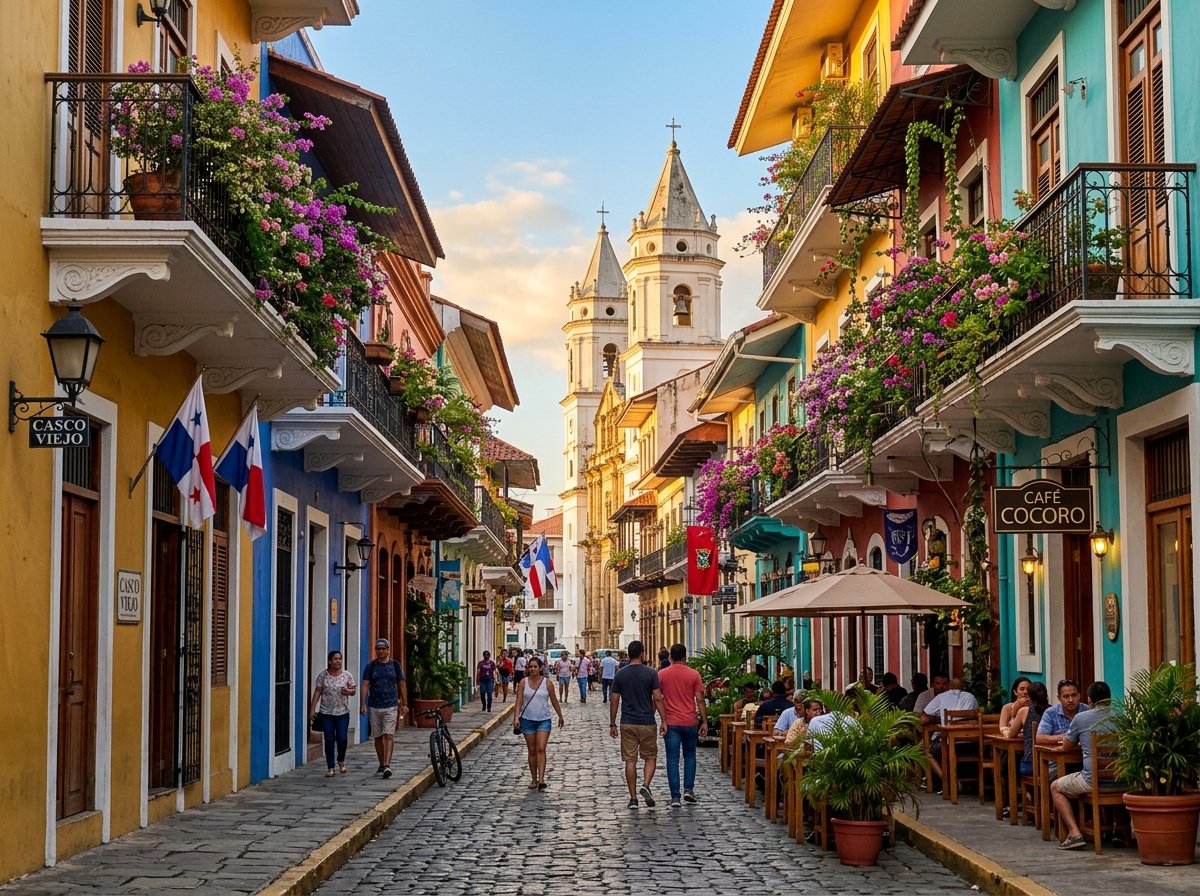
If the colonial architecture of places like Casco Viejo and the historic neighbourhood culture of Casco remind you of the ambiance found in the best places to visit in Mexico City’s historic centre, that comparison is apt. Both are Spanish colonial districts being lovingly restored while remaining living, functioning neighbourhoods.
The Panama Canal
The Miraflores Locks, 20 minutes from Panama City by taxi or Uber, is where most visitors experience the Canal. The observation deck at the Visitor Centre gives you a direct view of ships transiting the locks, and the scale of the operation, post-Panamax container ships barely fitting through engineered chambers of water, is genuinely staggering. The museum inside covers the Canal’s construction history in excellent detail.
Practical note: Ships transit the Canal around the clock but the observation deck has regular schedules. Morning visits (arriving by 9am) typically catch more ship traffic than afternoon visits. Admission is around $20 for adults.
Gatún Lake, created during Canal construction and now the largest artificial lake in Central America, offers kayaking and boat trips where crocodiles, howler monkeys, and hundreds of bird species are visible from the water. Parque Nacional Soberanía adjacent to the Canal has the Pipeline Road, one of the best single birding locations in the Americas with over 500 recorded species.
San Blas Islands (Guna Yala): The Most Unique Caribbean Experience
The San Blas archipelago is 365 islands spread along Panama’s Caribbean coast, and it is administered not by Panama but by the Guna people, an indigenous group that successfully negotiated semi-autonomous sovereignty over their territory after a 1925 revolution.
This matters to understanding the experience. Visiting San Blas is visiting Guna Yala, a self-governing territory within Panama. The revenue from tourism goes directly to the Guna communities. The infrastructure is basic by design. Electricity is limited, running water is scarce on some islands, and the experience is deliberately kept at a human scale.
What you get in exchange: some of the most extraordinary Caribbean scenery in the world. White sand islands barely above sea level, surrounded by turquoise water and coral reef, with palm trees and no development beyond simple wooden structures. The snorkelling on the outer reef is exceptional.
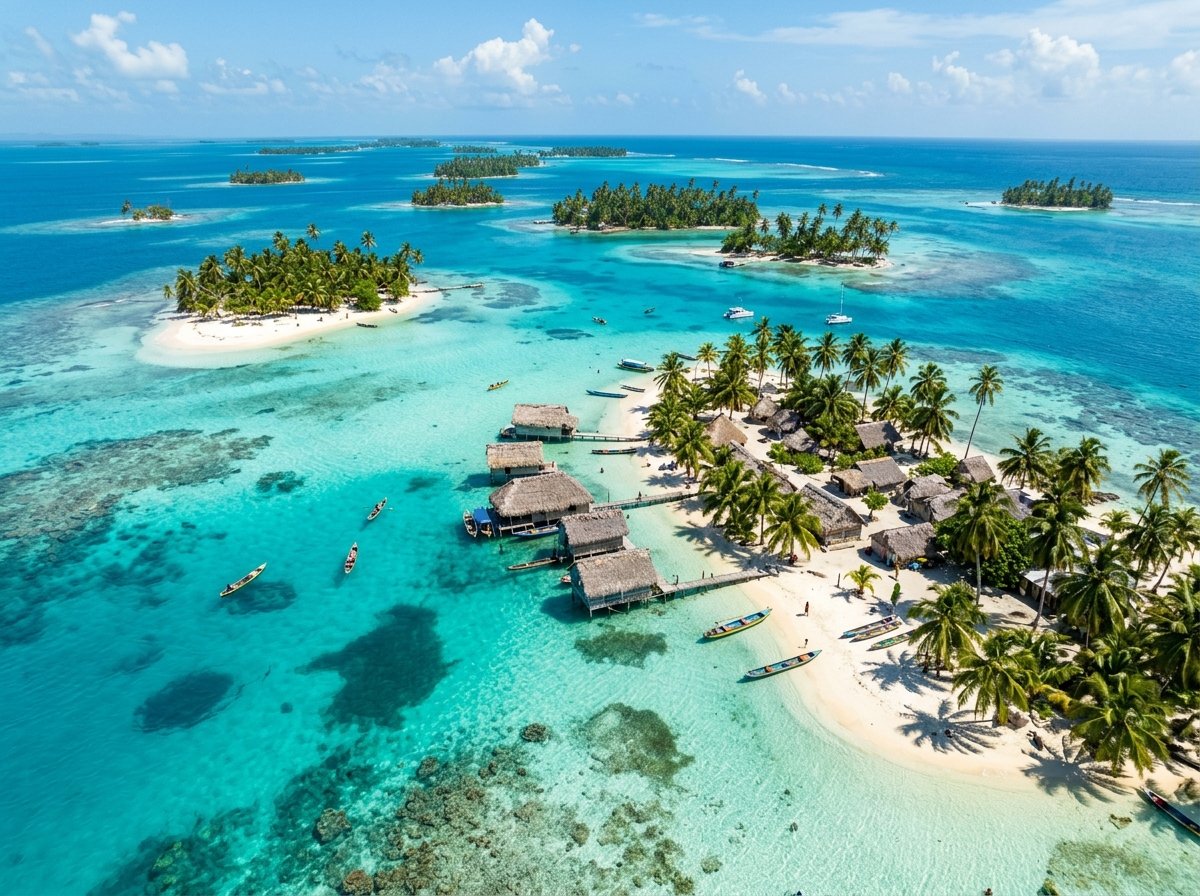
How to visit: The San Blas Islands are reached from Panama City either by a 4WD journey on rough mountain roads (3 to 4 hours from the city) and then boat transfer, or by charter flight (25 minutes). Most visitors join organised tours that include accommodation in island guesthouses or camping, meals, and boat transfers between islands. Independent travel is possible but more complicated.
What to book: Several Guna-run guesthouses on different islands offer basic accommodation with meals included. Prices are very affordable at around $60 to $80 per person per night including meals and boat excursions. The experience is a universe away from a Caribbean resort.
Honest trade-off: Facilities are basic. Running water can be saltwater. Electricity may be a generator for evening hours only. Mosquitoes in the evening. If these conditions concern you, the experience may not match your expectations. If the trade-off for that combination of Caribbean beauty and authenticity sounds right, this is one of the genuinely extraordinary travel experiences in the Americas.
For any San Blas trip involving island hopping on small boats, reef snorkelling, and basic accommodation, a lightweight dry bag that protects electronics from sea spray and the boat wakes between islands is essential. The Earth Pak Waterproof Dry Bag 10L (available on Amazon) is the right size for a day’s essentials: phone, wallet, camera, and a change of clothes, packs flat when not in use, and floats if it goes overboard, which is genuinely useful when boarding and exiting small boats in the islands.

Earth Pak Waterproof Dry Bag
Bocas del Toro: Panama’s Caribbean Party Hub
Bocas del Toro is an archipelago on Panama’s northwestern Caribbean coast, close to the Costa Rica border, and it is the most visited tourist destination in Panama.
The main hub is Bocas Town on Isla Colón, a small town of colourful wooden buildings on stilts over the water that manages to be simultaneously a backpacker party hub, a Caribbean beach retreat, and an expat enclave, all at once. The energy is different from any other part of Panama.
What Bocas delivers:
Starfish Beach (Playa Estrella) on Isla Colón is the most visited attraction, a calm, shallow beach where enormous orange and red starfish are visible in the water. The ecosystem here is fragile and visitors are asked not to remove or pick up the starfish. Seeing them in their natural habitat rather than as photo props is the right approach.
Red Frog Beach on Isla Bastimentos has the red and blue poison dart frogs that give it its name, excellent snorkelling, and a genuinely beautiful beach backed by jungle. Bastimentos is quieter and more jungle-focused than Isla Colón.
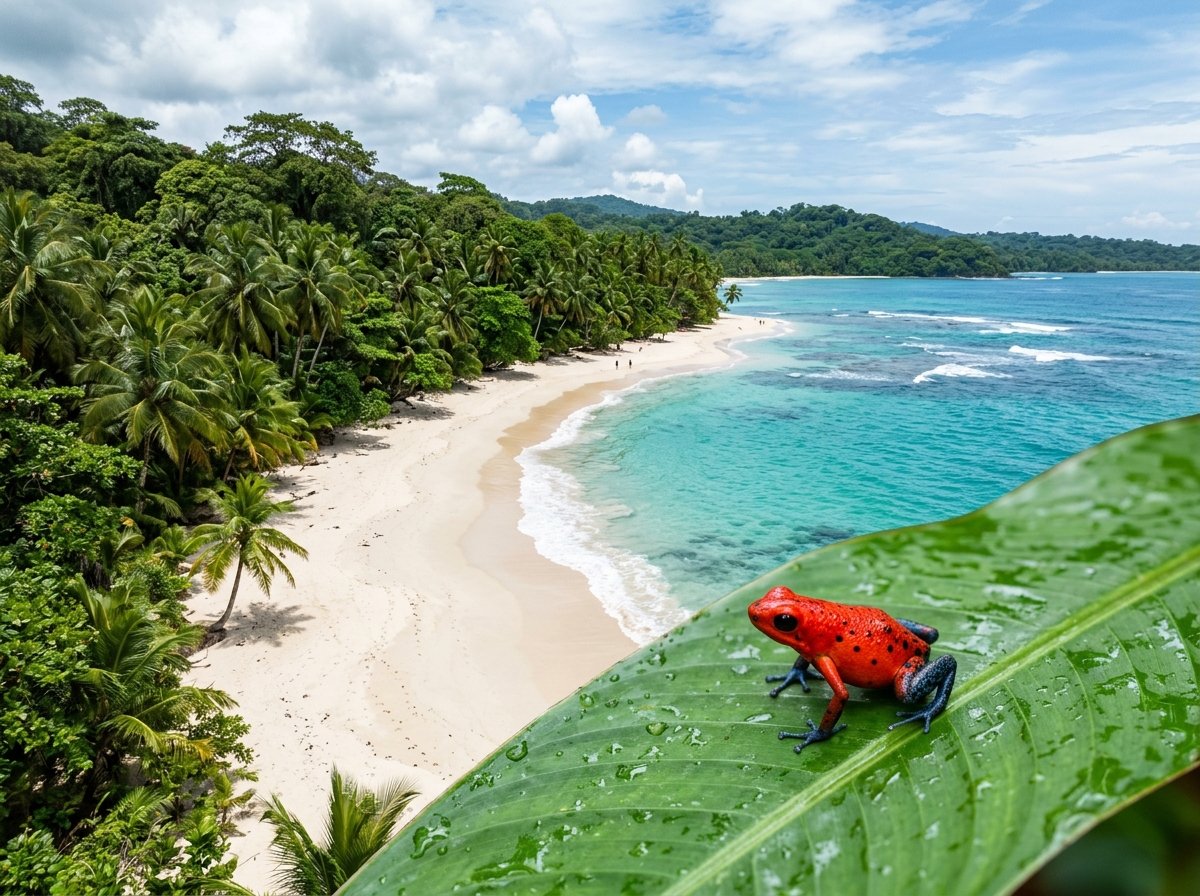
Bocas del Drago on the northern tip of Isla Colón is the calmest, shallowest water in the archipelago and one of the best places for beginner snorkelling and kayaking.
The nightlife in Bocas Town is the most active in any small Caribbean town in Central America. Aqua Lounge, a bar built on its own small island with a pool over the water, is the most famous venue. Barco Hundido, a bar literally built over a submerged boat with lights illuminating the wreck below, is one of the most unusual bar settings anywhere. The social culture in Bocas revolves around water entirely.
Honest assessment: Bocas del Toro is genuinely fun and genuinely beautiful, but it can feel less authentically Panamanian than the other major destinations. The backpacker and expat culture is dominant in Bocas Town. Those who want a more local Caribbean experience should spend time on the outer islands and with Ngobe-Buglé indigenous communities, which chocolate tours can facilitate.
Getting there: Bocas del Toro is reached by internal flight from Panama City (1 hour, around $120 to $150 one way) or by bus to Almirante on the mainland (8 to 9 hours from the city) and then water taxi to Bocas Town. The flight is strongly recommended for anyone with more than a weekend. The bus is an option for genuine budget travellers.
Boquete: Cloud Forests, Coffee, and Volcano Barú
Boquete is a small highland town in the Chiriquí province, three hours by bus from David (western Panama’s main city) and about six hours by road from Panama City. The town sits at around 1,200 metres above sea level in a mountain valley surrounded by the cloud forests of the Volcán Barú National Park.
The temperature here is a revelation for anyone arriving from the tropical lowlands. While the coast sits at 30 degrees Celsius, Boquete evenings drop to around 15 degrees Celsius, and the forest is perpetually draped in mist and green.
Geisha Coffee
Boquete is the birthplace of Geisha coffee, the world’s most expensive coffee variety. The Hacienda La Esmeralda farm in Boquete produces beans that have sold at auction for over $600 per pound, and a single cup sells for $30 to $50 in Tokyo, New York, and London. In Boquete, you can drink it at the source for a fraction of that price.
Several coffee farms around Boquete run visitor tours that cover the full process from cherry to cup, including the wet milling, fermentation, drying, and roasting stages. The coffee grown in this volcanic soil at this elevation has a floral, fruit-forward character that is genuinely unlike anything from the commodity coffee world.
Volcán Barú
Volcán Barú is the highest point in Panama at 3,474 metres and the only place in the world where you can see both the Pacific and Atlantic Oceans simultaneously on a clear day. The summit hike begins at midnight to reach the top at sunrise, when visibility is greatest before afternoon clouds build.
The hike takes 6 to 8 hours up and 4 to 5 hours down on a rocky volcanic trail. A guide is strongly recommended. The views from the summit, if clouds cooperate, are extraordinary. If clouds do not cooperate, the hike is still a serious and rewarding mountain experience.
The Lost Waterfalls (Las Tres Cascadas)
The Los Quetzales trail and the Lost Waterfalls trail are both excellent day hikes from Boquete accessible without a guide. The Lost Waterfalls trail passes three cascading falls in cloud forest and takes 2 to 3 hours for the full loop. It is one of the best short hikes in Panama.
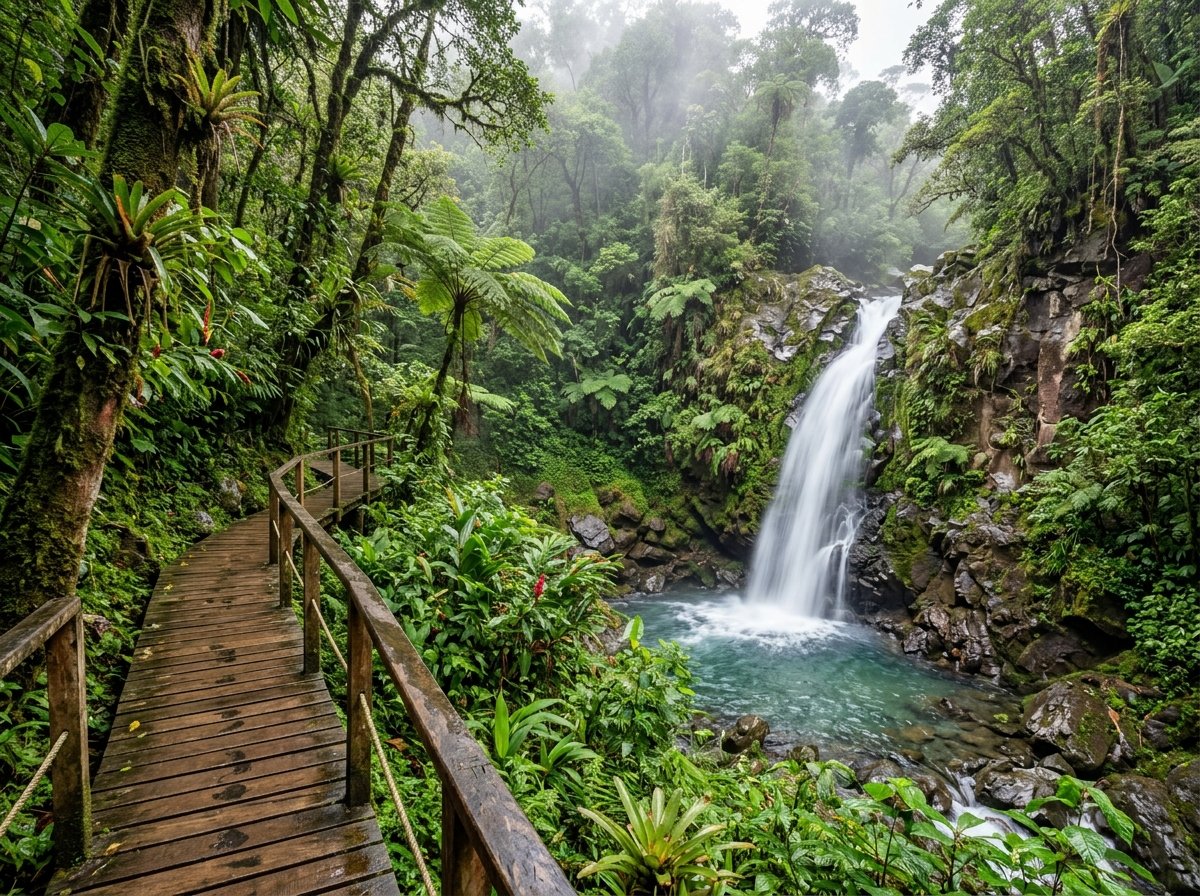
Wildlife: The quetzal, one of Central America’s most spectacular birds with its iridescent green plumage and long tail feathers, is regularly spotted in the cloud forest around Boquete from December through April when they come to lower elevations.
Santa Catalina and Coiba National Park
Santa Catalina is a small Pacific surf village on Panama’s southwestern coast that deserves significant more attention than it typically receives in travel guides. It is the gateway to Coiba National Park, and that is worth explaining properly.
Coiba National Park
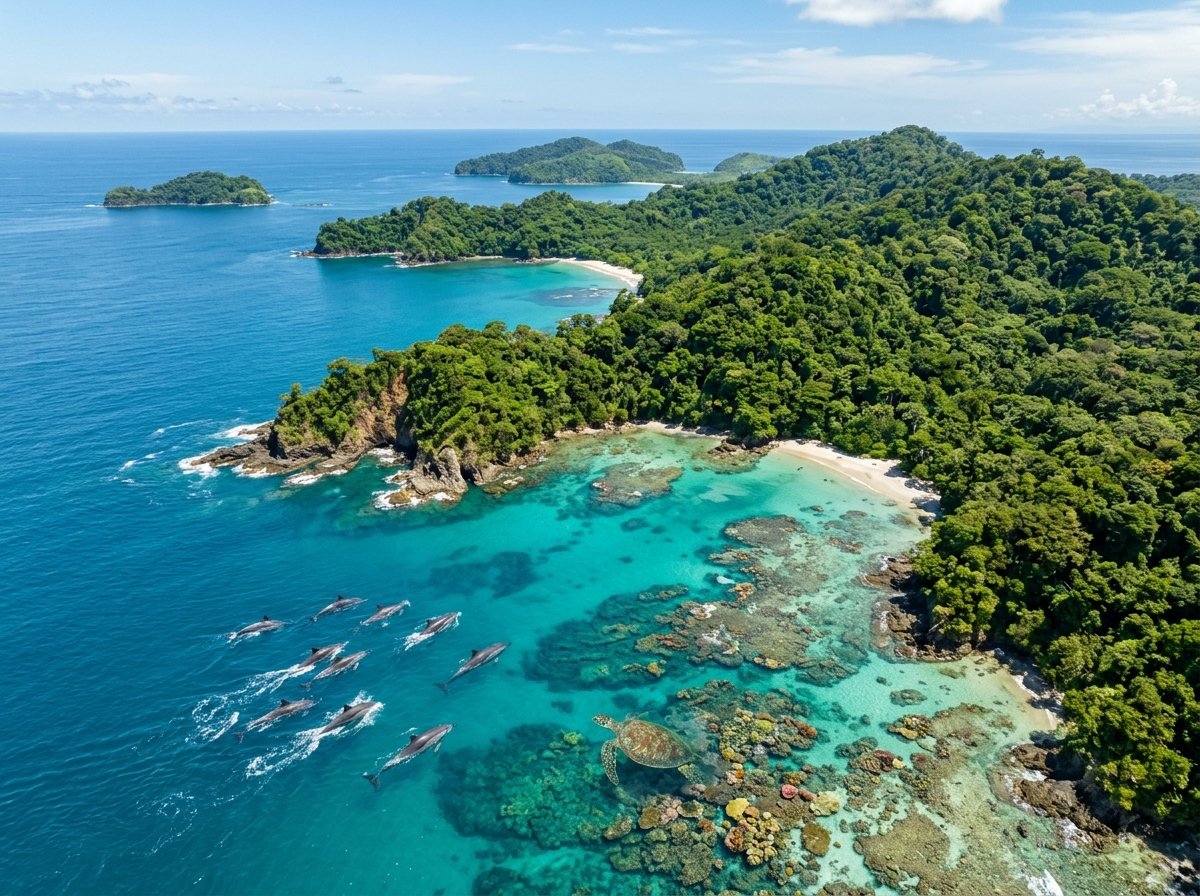
Coiba Island and the surrounding marine park constitute a UNESCO World Heritage Site frequently described as the Galápagos of Central America. The comparison is apt. During Panama’s military dictatorship, Coiba Island served as a penal colony and the surrounding waters were off-limits to fishing and development for decades. The result was one of the most pristine marine ecosystems in the eastern Pacific.
The statistics are extraordinary. Coiba has one of the largest Pacific coral reefs in the region. Whale sharks, humpback whales (June through November), hammerhead sharks, reef sharks, manta rays, sea turtles, and dolphins are all regularly encountered. The land surface holds the rare scarlet macaw in one of its largest remaining Pacific coast populations.
Access is by boat from Santa Catalina, typically a 1 to 1.5 hour journey depending on sea conditions. Day trips cost around $60 to $80 per person and include snorkelling stops at different reef sites within the park.
Santa Catalina as a Destination
Santa Catalina itself is a small village that has stayed genuinely low-key despite its growing reputation among serious surfers and divers. The surf break at the main Santa Catalina point is considered one of the best in Central America for experienced surfers, particularly from December through March.
For non-surfers, the village has simple restaurants, a handful of good guesthouses, and the kind of unhurried pace that Pacific beach villages in Central America deliver when they have not yet been overwhelmed by development. For those who have experienced similar undiscovered surf villages, Santa Catalina feels at a similar early stage.
El Valle de Antón: The Volcano Crater Town
El Valle de Antón sits inside the crater of an extinct volcano two hours west of Panama City, and most visitors to Panama never discover it.
The crater walls, covered in forest, rise above a town of gardens and weekend houses where residents of Panama City escape the heat. The Sunday market is the best in Panama for indigenous crafts, painted tagua nut carvings, and locally grown flowers and orchids.
The spa culture in El Valle, fed by natural hot springs in the volcanic landscape, has developed around several hotels and day spas. Soaking in natural thermal pools after hiking the crater rim trails is one of the more unexpected pleasures Panama offers.
Golden Frogs: El Valle is one of the last habitats of the Panamanian golden frog, the national symbol of Panama. The species is critically endangered from chytrid fungus and exists in captivity and in protected areas around El Valle. The El Níspero Zoo and Plant Nursery has a captive breeding programme.
Hidden Gems Most Panama Guides Skip
Portobelo
Portobelo is a small Caribbean town on the coast east of Colón, easily missed because it is not on the tourist circuit and requires a deliberate effort to reach. The town’s Spanish colonial fortifications, built in the 17th century to defend the Atlantic terminus of the Trans-Isthmus gold route, are some of the best-preserved Spanish colonial fortresses in the Americas.
The Black Christ of Portobelo, a dark wooden statue of Christ in the local church, is the centre of one of the most significant religious festivals in Panama every October 21st, when tens of thousands of pilgrims arrive from across the country in a procession that takes over the entire town.
Camino de Cruces
The Camino de Cruces is the original cobblestone route that Spanish conquistadors and mule trains used to carry gold and silver from the Pacific to the Atlantic across the Isthmus of Panama in the 16th and 17th century. Sections of the original stone path survive in Soberanía National Park adjacent to the Canal and can be hiked today.
Walking on the same stones that carried the wealth of the Spanish Empire is one of those genuinely remarkable historical experiences that Panama offers without ceremony.
For hiking in Panama’s cloud forests around Boquete and the Volcán Barú trails, where temperature drops are significant and trails can be muddy and slippery, lightweight waterproof hiking boots are essential. The Merrell Moab 3 Waterproof Hiking Boot (available on Amazon) is the most recommended boot for Central American hiking conditions: waterproof, with a Vibram sole that handles both rocky volcanic terrain and the slick, wet cloud forest paths that characterise the Boquete highlands.

Merrell Women’s Moab 3 Mid Waterproof Hiking Boots
Practical Tips for Visiting Panama
The US dollar is Panama’s currency. Panama uses the Balboa as its official currency but the Balboa is fixed 1:1 with the US dollar and the dollar is used throughout the country. This makes Panama uniquely convenient for American visitors and straightforward for others familiar with USD.
Panama City as a hub: Panama City’s Tocumen International Airport is one of the most connected hubs in the Americas, with direct flights from most major US cities, Canada, and Europe. Copa Airlines, based in Panama City, connects the city to most of Latin America. This makes Panama an unusually easy country to fly in and out of compared to other Central American destinations.
Getting around: Internal flights (Copa/Air Panama) are the most practical way to cover the distances between Panama City, Bocas del Toro, and David (gateway to Boquete). Bus travel is inexpensive and reliable between Panama City and other Pacific-side destinations. The San Blas Islands require either a 4WD taxi and boat transfer or a charter flight.
Safety: Panama City is safer than most Central American capitals, particularly in the tourist areas of Casco Viejo, Marbella, and the Cinta Costera. Colón city (different from Isla Colón in Bocas) near the Canal’s Atlantic entrance is consistently noted as requiring more caution. Tourist areas throughout the country are considered safe, and Panama has a strong tourism infrastructure.
Best time to visit: December through April is dry season on the Pacific side and the most popular time to visit. For those primarily visiting Bocas del Toro or San Blas, September and October are often drier on the Caribbean side. Budget travellers visiting in the rainy season (May through November on the Pacific) will find lower prices, lush landscapes, and fewer tourists.
For a Panama trip combining cities, jungle hiking, island hopping, and surf villages, a durable, lightweight travel backpack that handles both checked luggage restrictions and day hike use without needing two bags is genuinely useful. The Osprey Farpoint 40 Travel Pack (available on Amazon) meets most airline carry-on size limits, converts between a travel bag and a hiking pack, and is the most recommended multi-purpose pack for Central American travel among travellers who want to move efficiently between destinations.
Best Places in Panama by Traveller Type
First-time visitors: Panama City (2 to 3 days) for Casco Viejo and the Canal, then one of the major natural destinations. Bocas del Toro and Boquete are both strong choices for a week-long first visit.
Wildlife and nature: Coiba National Park for marine life (from Santa Catalina), Soberanía National Park near the Canal for birds, Boquete for cloud forest and quetzals, El Valle for the volcanic crater ecosystem.
Divers and snorkelers: Coiba National Park is the finest diving in Central America. Bocas del Toro for accessible reef snorkelling. San Blas outer reefs for Caribbean snorkelling.
Culture seekers: San Blas for Guna indigenous culture. Bocas del Toro for Ngobe-Buglé chocolate culture. Casco Viejo for colonial history. Portobelo for Spanish fortress heritage.
Surfers: Santa Catalina for the best Pacific surf in Panama. Bocas del Toro for Caribbean surf (Red Frog Beach and Bluff Beach on Bastimentos).
Coffee and food: Boquete for Geisha coffee at origin. El Valle Sunday market for indigenous crafts and local produce. Panama City’s Casco Viejo for the most complete restaurant scene in the country.
Quick Reference Table
| Destination | Region | Best For | How Long |
|---|---|---|---|
| Panama City (Casco Viejo) | Pacific/Central | History, food, Canal access | 2 to 3 days |
| Panama Canal | Central | Engineering, history | Half day |
| San Blas Islands | Caribbean | Indigenous culture, pristine Caribbean | 2 to 4 days |
| Bocas del Toro | Caribbean | Beaches, snorkelling, nightlife | 3 to 5 days |
| Boquete | Highlands | Coffee, hiking, wildlife | 2 to 3 days |
| Santa Catalina | Pacific | Surf, Coiba access | 2 to 3 days |
| Coiba National Park | Pacific (island) | World-class marine life | Day trip from Santa Catalina |
| El Valle de Antón | Central (crater) | Nature, hot springs, market | 1 to 2 days |
| Portobelo | Caribbean | Colonial fortresses, Black Christ festival | Day trip |
Frequently Asked Questions
What is Panama most known for?
The Panama Canal is the most famous feature, connecting the Pacific and Atlantic Oceans through one of humanity’s greatest engineering achievements. Beyond the Canal, Panama is known for the San Blas Islands and Kuna indigenous culture, Bocas del Toro’s Caribbean beach scene, Boquete’s world-famous Geisha coffee, and Coiba National Park’s extraordinary marine life.
How many days do you need in Panama?
Two weeks is the standard for seeing the main highlights comfortably. Ten days is possible if flights between regions are used. A week only allows for Panama City and one other destination. The country is compact but transport between regions takes time.
Is Panama safe to visit?
Tourist areas throughout Panama are considered safe. Panama City is safer than most Central American capitals, particularly in Casco Viejo, Marbella, and the Cinta Costera waterfront. Colón city near the Canal’s Atlantic entrance requires more caution. Standard urban and travel precautions apply throughout.
What currency does Panama use?
Panama uses the US dollar as its primary currency, called the Balboa locally but identical in value and use to USD. ATMs dispense dollars. Credit cards are widely accepted in cities and tourist areas. Cash is needed in the San Blas Islands and more remote villages.
When is the best time to visit Panama?
December through April is the dry season on the Pacific side and the most popular time overall. The Caribbean side (Bocas del Toro, San Blas) has its own climate with drier periods in September and October and in February through March. There is no single ideal time for the whole country.
What is Coiba National Park?
Coiba is a UNESCO World Heritage Site on the Pacific coast of Panama, often called the Galápagos of Central America. The island served as a penal colony for most of the 20th century, which inadvertently protected the surrounding waters from fishing. The result is one of the most pristine marine ecosystems in the eastern Pacific, with whale sharks, humpback whales, hammerhead sharks, manta rays, and the largest Pacific coral reef in the region. Access is by boat from Santa Catalina.
What is Geisha coffee?
Geisha (or Gesha) is a coffee variety cultivated in the highlands around Boquete, Panama. It has a distinctive floral and fruit-forward character that has won the world’s top coffee competitions and made it the most expensive coffee sold by weight at auction. A single cup can cost $30 to $50 at specialty coffee shops in major world cities. In Boquete, farm tours allow visitors to taste it at origin at significantly lower prices.
Final Thoughts
Panama is one of the most underrated travel destinations in the Americas, largely because the Canal overshadows everything else in most people’s mental image of the country.
The reality is a country of extraordinary variety compressed into a small space. In a single trip you can eat world-famous coffee in a cloud forest at 1,200 metres elevation, snorkel with hammerhead sharks in a marine reserve that rivals anything in the Pacific, sleep on a private island with an indigenous Kuna community, and sit in the ruins of a 17th-century Spanish colonial town at dusk.
The country is affordable, accessible, safe by regional standards, and uses the US dollar, which removes one of the most common logistical concerns of international travel. Give it more than a Canal visit. Panama earns the extra days.