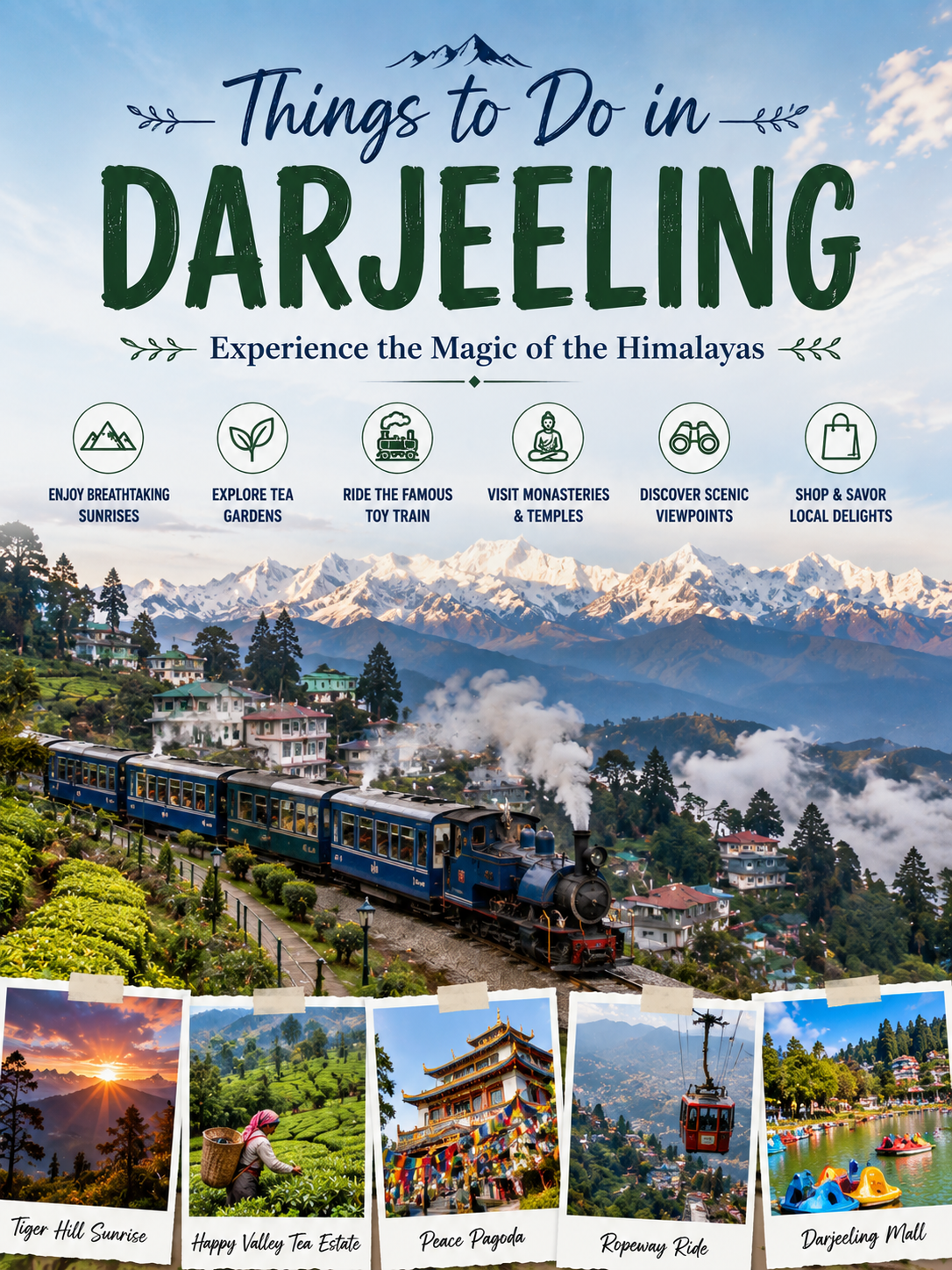
Darjeeling sits in the foothills of the Eastern Himalayas at roughly 2,042 meters above sea level. The town has drawn travelers for over a century with its rolling tea gardens, views of Kanchenjunga, and the sound of the steam toy train echoing through the hills. But Darjeeling is not a museum piece. It is a living town with a mixed culture of Nepali, Tibetan, Bengali, and Gorkha communities. That mix shows up in the food, the festivals, the architecture, and the daily rhythm of life.
This guide covers what you should do, how to actually do it, and what other articles leave out.
Watch the Sunrise at Tiger Hill (But Do It the Smart Way)
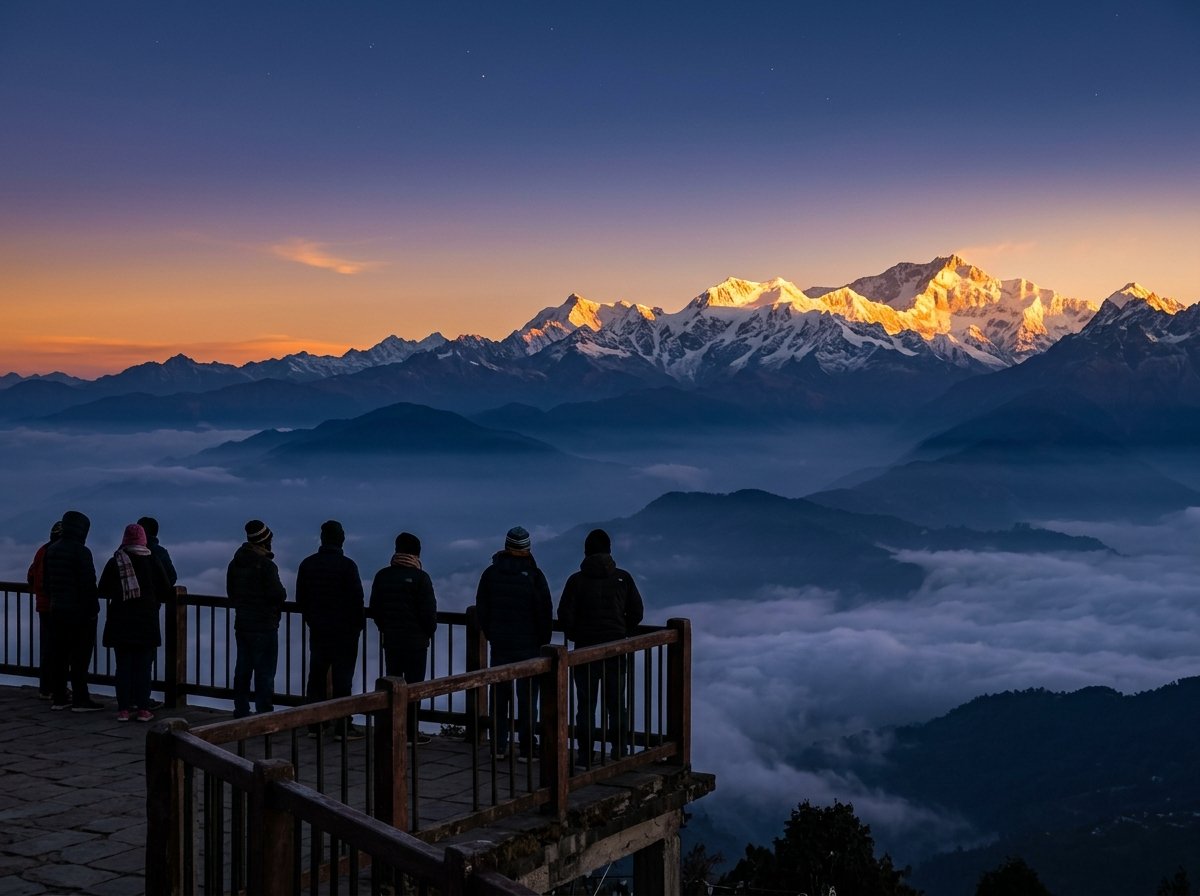
Tiger Hill remains the most famous thing to do in Darjeeling. On a clear morning, you see Kanchenjunga turn from shadow to gold as the sun rises. If visibility is exceptional, you can even spot Mount Everest far in the distance.
What competitors get wrong: Most articles simply say go to Tiger Hill. They do not explain that the viewpoint gets packed with tour buses, or that standing in the wrong spot means staring at someone’s phone screen instead of the mountain.
How to do it right: Leave your hotel by 4:00 AM in winter and 4:15 AM in summer. Do not book the standard hotel taxi package unless you want to pay double. Instead, walk to the jeep stand near Chowrasta the evening before and book a shared jeep seat. It costs a fraction of a private cab.
When you arrive, skip the lower viewing platform and head straight to the upper observation tower. Bring a flashlight. The upper deck fills fast, but the side facing Kanchenjunga offers the best angle. Carry a thermos of hot tea. The morning air is freezing even in April.
Best months for clear views: October through March offer the highest chance of unobstructed skies. April can work but haze builds as temperatures rise. June through September is monsoon season. You might get lucky with a sudden clear morning, but fog is the norm.
Ride the Darjeeling Himalayan Railway (And Pick the Right Ticket)
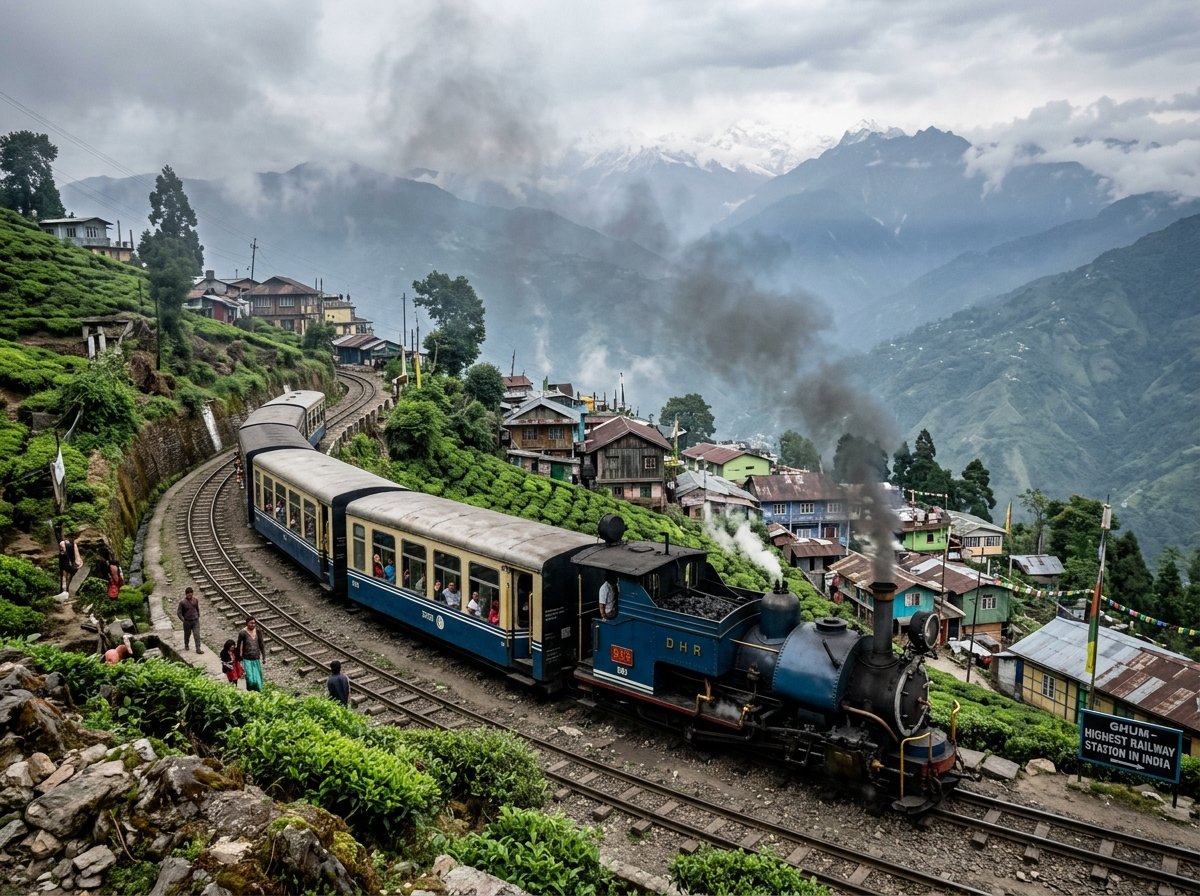
The Toy Train is a UNESCO World Heritage Site. The narrow gauge railway has chugged through these hills since 1881. Mark Twain rode it in 1895 and wrote that it mixed deadly fright with unimaginable joy. That description still fits.
Joy Ride versus Regular Service: Most tourists book the two hour Joy Ride from Darjeeling to Ghum and back. It stops at Batasia Loop for photos. This is the easiest option and runs at 10:15 AM and 1:00 PM daily. However, the regular diesel service from Darjeeling to Kurseong offers a longer, more authentic experience with fewer tourists and better valley views. It takes about three hours one way.
Booking tips: Book Joy Ride tickets at least two days in advance through the Indian Railways website or at Darjeeling station. During peak season, seats sell out by noon for the next day. If you want the steam engine experience, confirm when booking. Some Joy Rides use diesel locomotives without warning passengers.
Walk Through Tea Estates the Tour Buses Skip
Darjeeling tea is not just a drink. It is a product of altitude, soil, and mist that cannot be replicated elsewhere. The tea grown here is often called the Champagne of Teas. Competitor articles mention Happy Valley Tea Estate and stop there. Happy Valley is beautiful and worth visiting, but it is also the most crowded.
Go beyond Happy Valley: Glenburn Tea Estate sits about an hour from town and offers guided walks through active fields with factory tours. Singtom Tea Estate provides a quieter experience with mountain views that rival any viewpoint. If you want to stay overnight, several estates offer restored colonial planter bungalows where you wake up surrounded by rows of tea bushes.
What to expect on a tour: A good estate tour lasts about 90 minutes. You walk through the plucking fields, enter the withering and drying rooms, and end with a tasting session. First flush tea, picked in March and April, is light and floral. Second flush, from May to June, has the famous muscatel flavor. Autumn flush, picked in October and November, is bolder and darker.
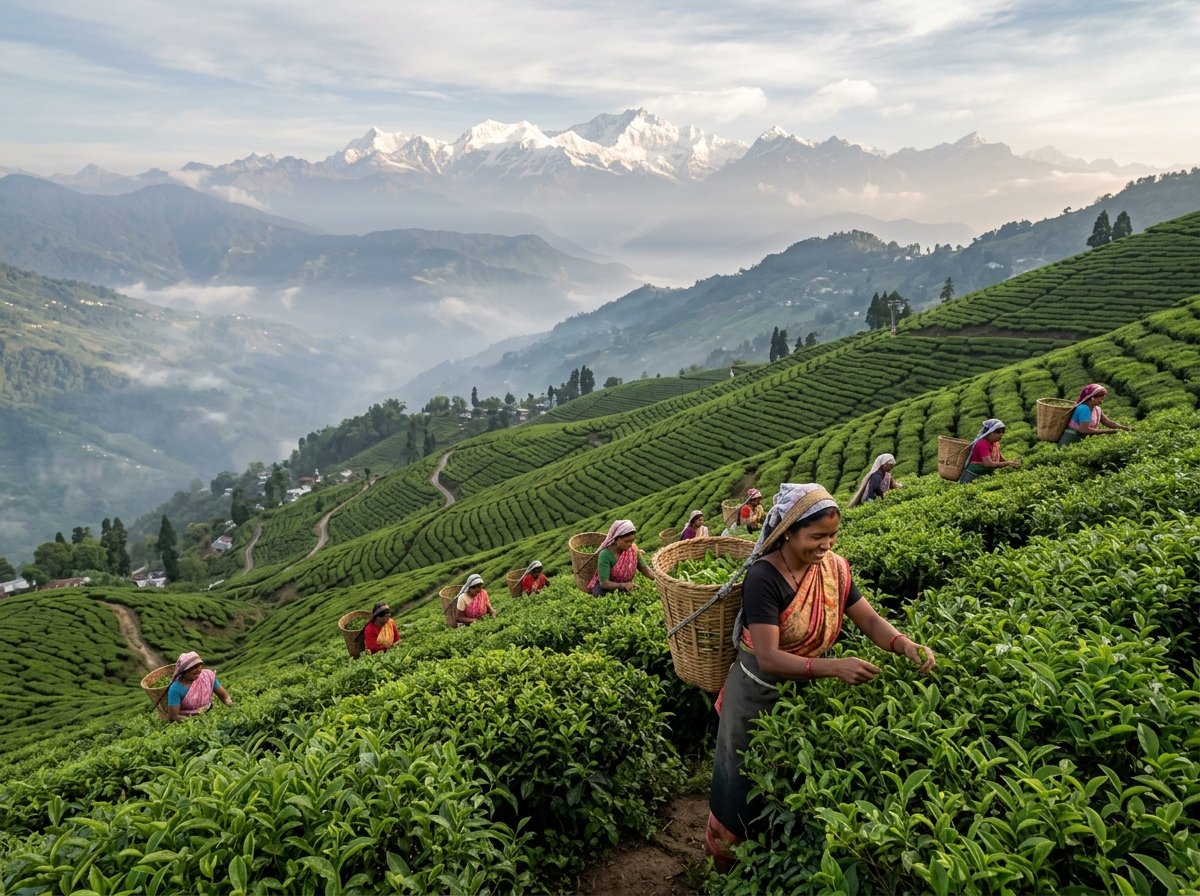
When you buy tea directly from an estate, you know it is authentic. Many shops in town sell blended tea labeled as Darjeeling. Real estate tea costs more but tastes completely different.
Travel tip: Carry a reliable thermos if you plan to spend a full morning walking estates. The weather shifts quickly and hot tea on a misty path is one of the simple pleasures of Darjeeling.
Explore Monasteries Beyond the Usual Ghum Stop
Ghum Monastery is the one every taxi driver takes you to. It houses a large Maitreya Buddha statue and dates back to 1850. It is worth seeing, but it is also where every tour group stops for twenty minutes.
Bhutia Busty Monastery: Located near the zoo, this monastery offers a more intimate experience. It belongs to the Nyingma sect of Tibetan Buddhism. The prayer room is small but richly decorated. You can sit quietly while monks chant. Photography inside is generally not allowed. Always walk clockwise around prayer wheels and remove your shoes before entering any shrine room.
Dali Monastery: About four kilometers from town center, Dali is one of the largest monasteries in the region. It belongs to the Kagyu tradition. The complex sits on a hillside with views of the valley below. Morning prayers happen around 6:00 AM. If you visit then, you hear the drums and horns echo across the hills with almost no other tourists present.
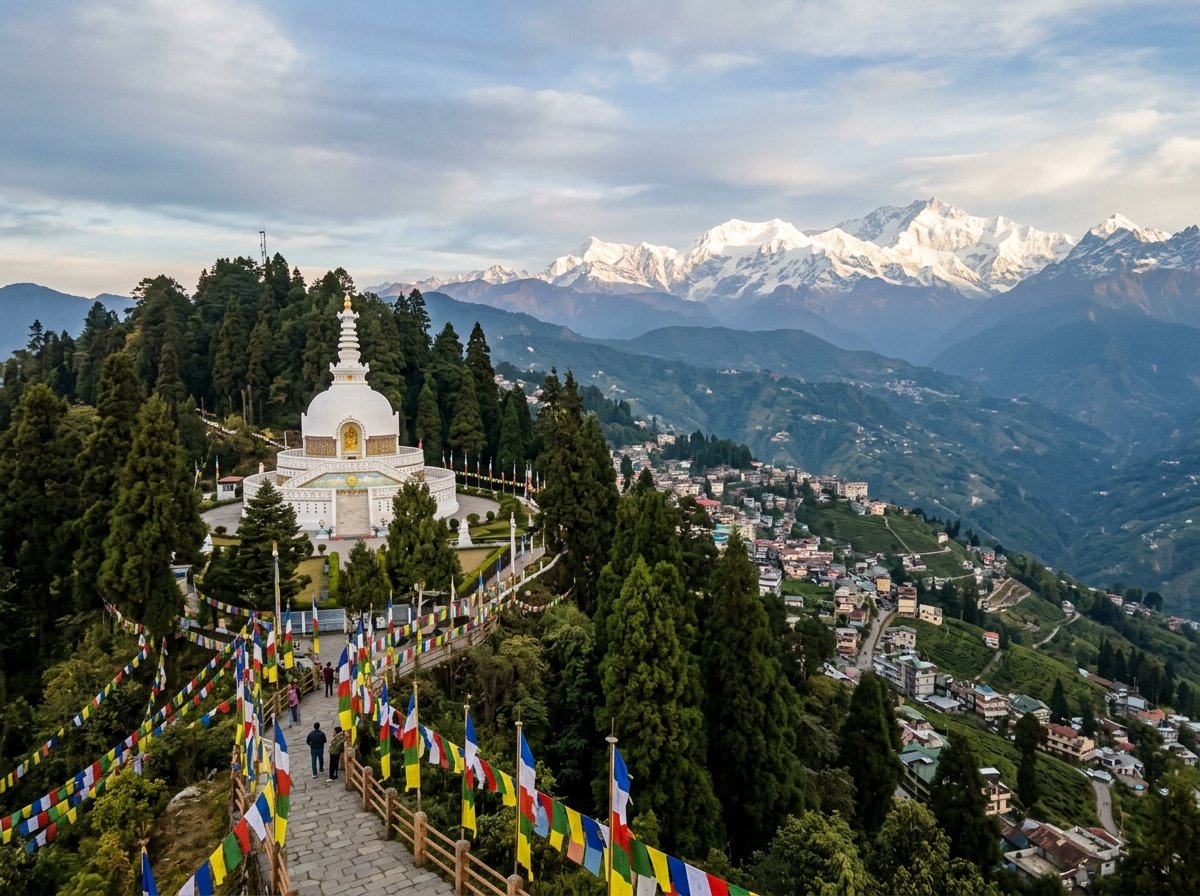
Japanese Peace Pagoda: Built by Japanese monk Nichidatsu Fujii, this white stupa sits on Jalaphar Hill. It represents peace and unity. The pagoda is open to all faiths. The walk up through pine forest is part of the experience. From the top, you see Darjeeling town spread below and Kanchenjunga rising behind it.
Visit the Zoo and Mountaineering Institute (Go Early)
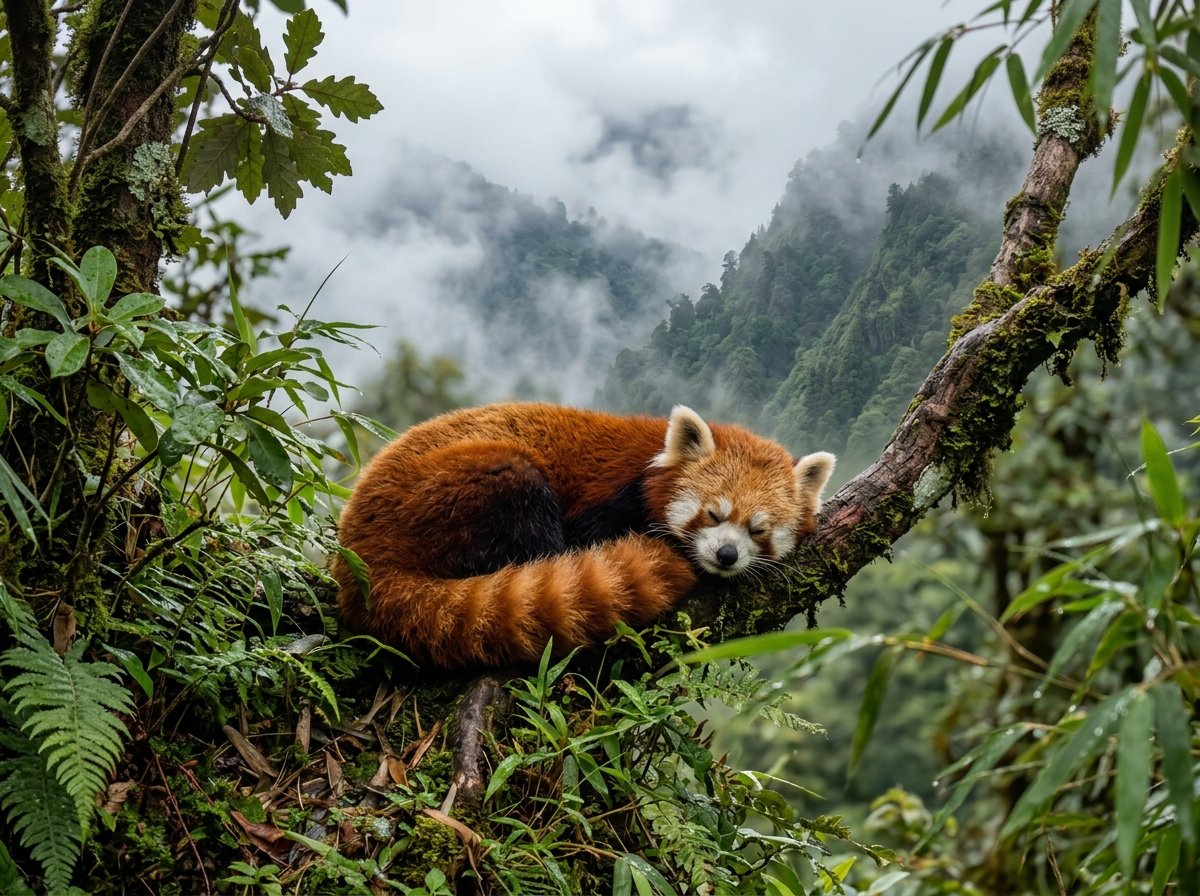
Padmaja Naidu Himalayan Zoological Park is the largest high altitude zoo in India. It specializes in animals you will not see in plains zoos. Snow leopards, red pandas, Himalayan wolves, Tibetan wolves, and clouded leopards live here in enclosures designed to mimic natural terrain.
The Himalayan Mountaineering Institute shares the same campus. Established in 1954 after Tenzing Norgay and Edmund Hillary summited Everest, the museum displays historical climbing gear, expedition photos, and equipment from major Himalayan ascents.
Why timing matters: The zoo opens at 8:30 AM. By 10:00 AM, the crowds arrive and the animals retreat into shaded corners. By noon, you will see mostly empty enclosures. Arrive at opening time. The snow leopards are most active in cold morning air. Wear comfortable walking shoes. The campus is built on steep terrain and involves significant uphill walking.
Stroll Chowrasta and Mall Road Like a Local
Chowrasta is the heart of Darjeeling. It is a flat pedestrian square surrounded by shops, bakeries, and cafes. In the evening, the space fills with families, musicians, and travelers watching the mist roll in.
What to do here: Sit on a bench with a cup of tea. Watch the clouds move across the valley. Browse the bookshops for Himalayan literature. Try a horse ride along the upper ridge if you want a slow, old fashioned way to see the views.
Shopping that matters: Avoid generic souvenir shops selling mass produced trinkets. Instead, visit the Tibetan Refugee Self Help Centre on Lebong Cart Road. Established in 1959, this center supports Tibetan artisans who weave carpets, carve wood, and craft jewelry. Prices are fair and your purchase directly supports the community. For tea, buy only from certified sellers or directly from estates. For woolens, the shops near Chowrasta sell genuine Himalayan shawls and caps.
A foldable reusable bag is useful here. Darjeeling has strict plastic waste rules and many shops charge for plastic bags. A sturdy cloth bag makes shopping easier and aligns with local efforts to keep the hills clean.

Nanobag Standard 19L Tote Foldable Packable
Take the Ropeway for a Different Perspective
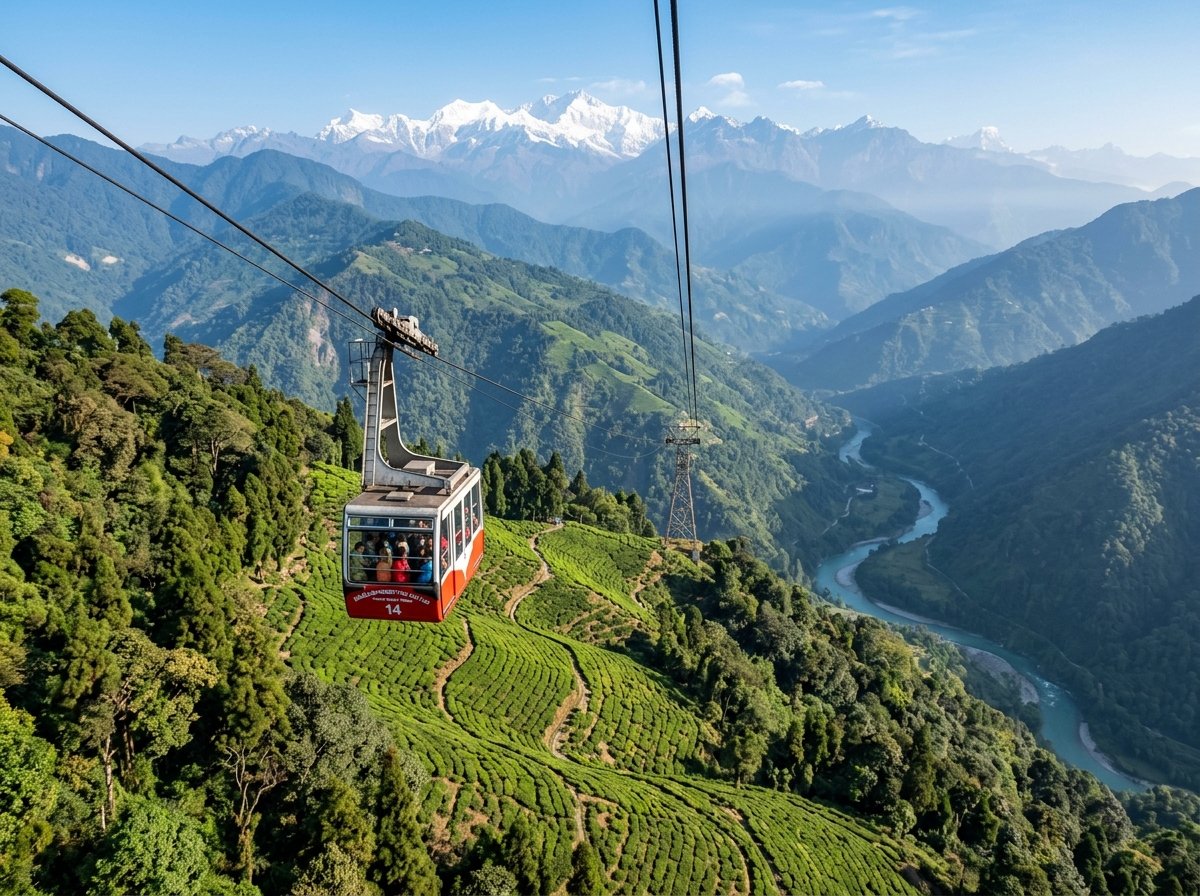
The Darjeeling Ropeway, also called the Rangeet Valley Passenger Cable Car, runs from Singamari to the Rangeet Valley below. The ride covers about five kilometers each way and takes roughly 45 minutes round trip.
You float above dense forest, tea gardens, and the Rangeet River. The views of the Singalila Range are unmatched from any road. The return station has a small tea stall where you can drink while looking up at the cable cars crossing the valley.
Practical note: The ropeway stops operating during high winds. Reach the ticket counter by 9:30 AM for the first rides. Afternoon clouds often obscure the view by 2:00 PM.
Discover Hidden Gems That Competitor Articles Ignore
This is where this guide diverges from every standard list. Darjeeling has experiences that do not appear on typical itineraries.
Lepchajagat: About 19 kilometers from Darjeeling, this small village sits inside an oak and rhododendron forest. It offers Kanchenjunga sunrise views without the Tiger Hill crowds. A few homestays operate here with basic but clean rooms. The silence is total. You hear only birds and wind. If you want to write, think, or simply breathe, this is where you come.
Lamahatta: An ecotourism village about 23 kilometers from town. The government developed it with community involvement. A sacred lake sits at the center, surrounded by prayer flags and pine forest. Walking trails lead to viewpoints where you see the Teesta River far below. It works as a half day trip or an overnight escape.
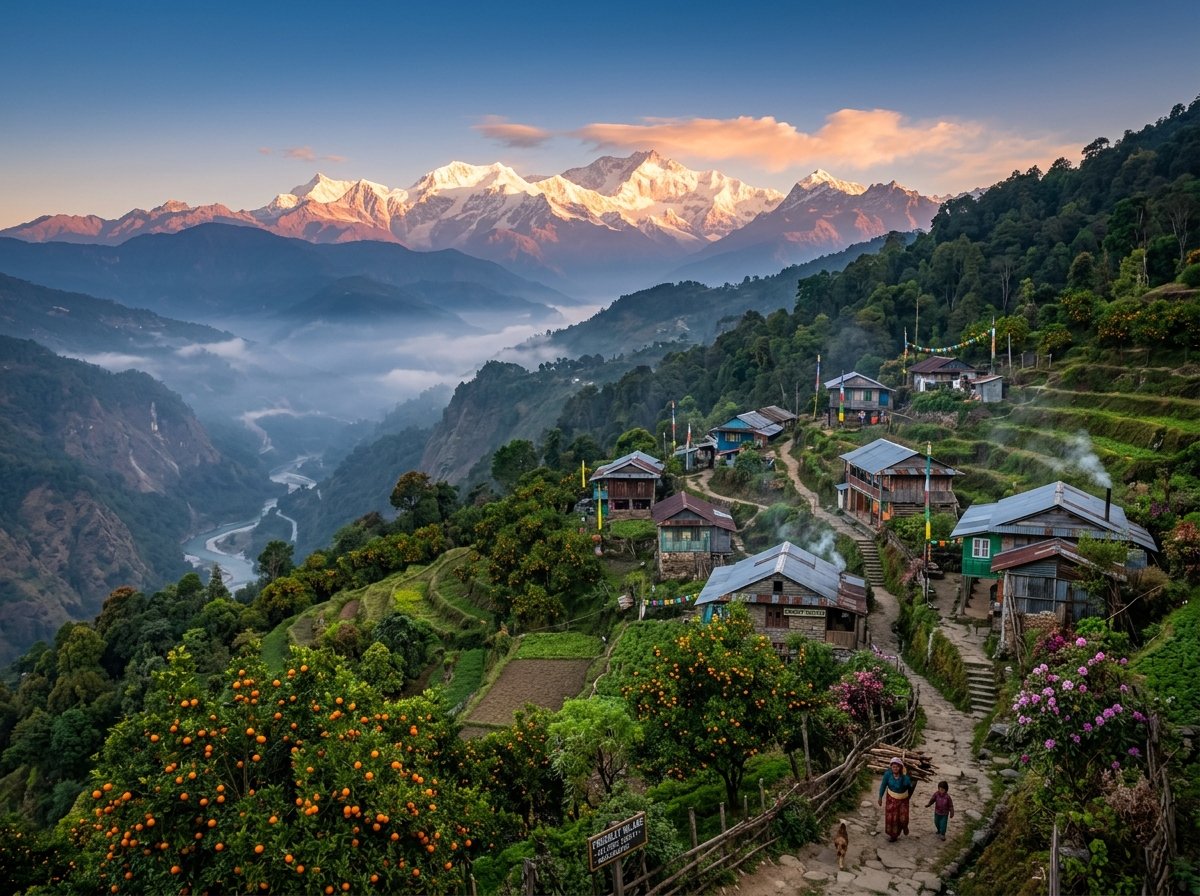
Tinchuley and Chota Mangwa: These two villages sit close to each other near the Teesta River. Orange orchards cover the hillsides. Homestays here serve food grown in village gardens. The sunrise view includes Kanchenjunga and the river valley together. Very few international tourists reach these villages. You need to arrange a private jeep from Darjeeling or Siliguri.
Heritage Walk Through the Old Town: Darjeeling has architecture from the British colonial period that most visitors miss. Walk past St. Andrew’s Church, the old Planters Club building, and the Windamere Hotel. Read the plaques. Notice how the town was built specifically as a sanatorium and tea trading post. The history explains why the town feels different from other Indian hill stations.
Tenzing and Gombu Rocks: These natural rock formations serve as outdoor climbing practice walls. Tenzing Rock is named after Tenzing Norgay, who reportedly trained here. For about one hundred rupees, local instructors let beginners try a short climb. It is safe, fun, and gives you a physical connection to the town’s mountaineering history.
Eat Where Locals Eat (Not Just Momos and Thukpa)
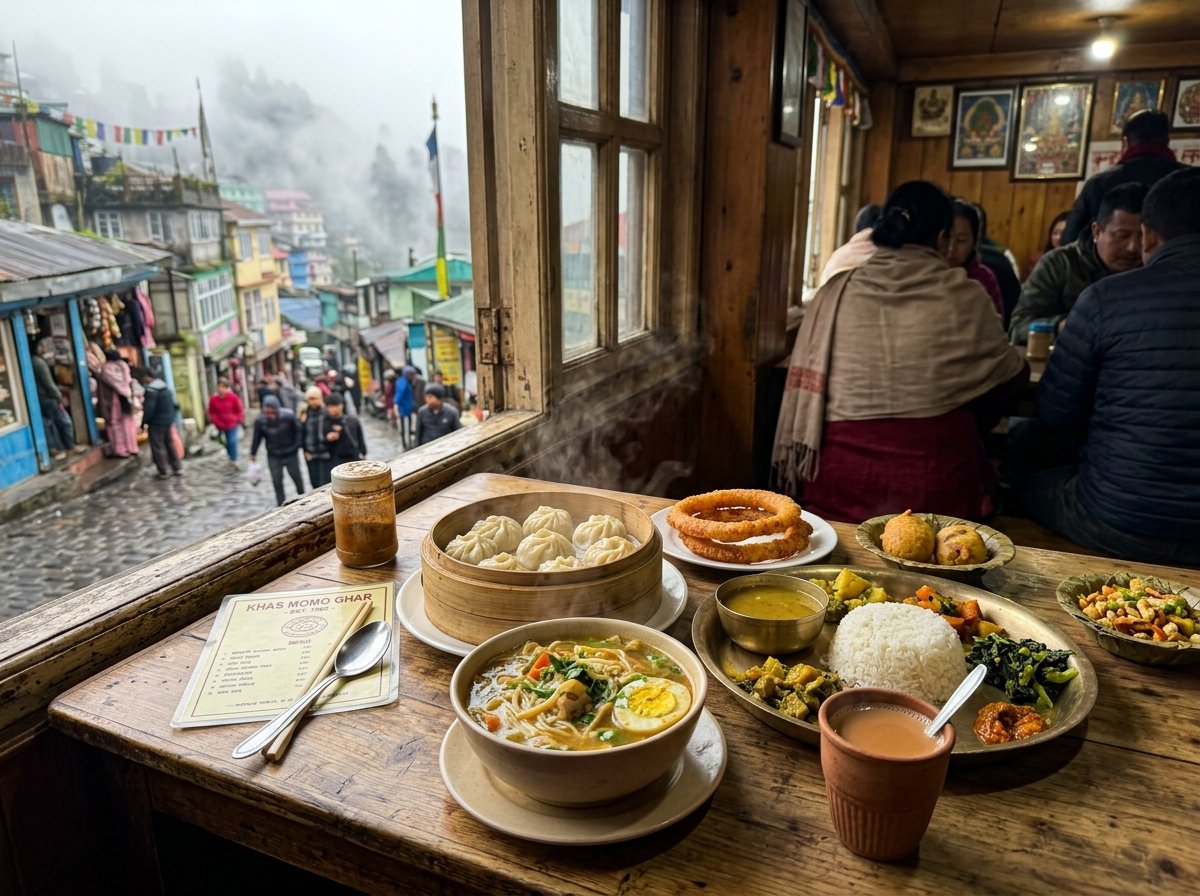
Yes, you should eat momos. Yes, you should eat thukpa. But Darjeeling’s food scene goes deeper.
Keventers: This old restaurant on Mall Road serves breakfast with a view. The English breakfast options are popular, but the local pork sausages and fresh baked bread are the real draws. Sit on the open terrace when the sky is clear.
Glenary’s Bakery: A Darjeeling institution. The bakery section on the ground floor sells fresh pastries, cakes, and bread. The cafe upstairs serves coffee and light meals. The chocolate eclairs and fruit cakes have been made using the same recipes for decades.
Local Butter Tea: Tibetan butter tea, called po cha, is an acquired taste. It is salty, rich, and warming. You find it in small Tibetan-run cafes near the monastery areas. It helps with altitude adjustment and provides calories in cold weather.
Thali Meals: Several small Nepali restaurants near the motor stand serve dal bhat with local vegetable curries, pickles, and meat options. These are filling, inexpensive, and give you the same meal local workers eat daily.
Street Food: Chowrasta has stalls selling aloo dum, pakoras, and local sweets in the evening. The quality varies, so eat where you see locals queuing.
Day Trips That Make Sense
If you have three or more days, consider leaving town for a day.
Mirik: About 60 kilometers away, Mirik centers on Sumendu Lake. You can boat on the lake, walk through tea gardens, and visit Bokar Monastery. The drive from Darjeeling passes through beautiful forest and tea estate scenery.
Kalimpong: About 50 kilometers from Darjeeling, Kalimpong offers a different hill station experience. It is less crowded, with flower nurseries, colonial architecture, and the impressive Zang Dhok Palri Phodang monastery. The road connecting the two towns is one of the most scenic in West Bengal.
Kurseong: This town lies midway between Siliguri and Darjeeling. It has tea estates, the Eagle’s Crag viewpoint, and a quieter atmosphere. The Toy Train stops here if you take the regular service.
Practical Tips No One Tells You
Altitude and health: Darjeeling sits high enough that some visitors feel mild altitude symptoms on day one. Headaches, shortness of breath while climbing stairs, and disturbed sleep are common. Drink water, avoid heavy alcohol consumption on arrival, and take it slow for the first 24 hours.
Cash and ATMs: Darjeeling has ATMs, but they run out of cash during peak season. Many small shops and jeep operators take cash only. Carry enough Indian rupees in small denominations. Digital payments work at hotels and larger restaurants, but not everywhere.
Getting around: Shared jeeps are the local transport system. They run on fixed routes and leave when full. They are cheap and efficient. Private taxis cost significantly more. For short distances within town, walking is often faster than driving because of traffic jams on the narrow roads.
Mobile networks: Jio and Airtel work reasonably well in town. BSNL has the widest coverage in remote areas. Vodafone Idea can be patchy. Data speeds vary. Do not rely on constant connectivity if you travel to villages outside town.
Permits for foreign nationals: Indian nationals do not need special permits for Darjeeling town. Foreign tourists need a Protected Area Permit to visit certain areas near the Indo China border, including parts of Singalila National Park and Sandakphu. Arrange this through a registered tour operator in Darjeeling or Siliguri. Do not wait until the last day.
Responsible travel: Darjeeling faces water shortages in peak season. Keep showers short. Do not buy plastic bottled water if you can use filtered water at your accommodation. Do not litter on trails. The hills have limited waste management infrastructure. What you carry in, carry out.
A high-capacity power bank is worth carrying. Cold weather drains phone batteries faster than normal. Between photography at Tiger Hill, navigation, and booking confirmations, you will need backup power before you return to your hotel.

EPICKA Universal Travel Adapter
What to Pack for Darjeeling
March to May: Light layers for daytime, a warm jacket for evenings, sunscreen, sunglasses, and comfortable walking shoes. A light rain jacket is useful for sudden afternoon showers.
June to September: Heavy rain gear, waterproof shoes, quick dry clothing, and insect repellent. Roads can be slippery. Landslides sometimes block routes for hours.
October to February: Thermal innerwear, a heavy jacket, woolen caps, gloves, and warm socks. Morning temperatures at Tiger Hill drop below freezing in December and January. Lip balm and moisturizer help with dry mountain air.
Frequently Asked Questions
How many days do I need in Darjeeling? Three to four days covers the main attractions comfortably. Add two more days if you want to include offbeat villages like Lepchajagat or Tinchuley.
Is Darjeeling safe for solo travelers? Yes. Solo travelers, including women, generally report feeling safe. The town is compact and locals are helpful. Standard precautions apply. Avoid isolated areas after dark and inform your hotel if you take long day trips.
Does Darjeeling town get snow? Rarely. The town itself sits at an altitude where snowfall is uncommon. However, surrounding areas like Tiger Hill and Sandakphu receive snow during winter months. You might see a light dusting in Darjeeling during a cold wave, but it melts quickly.
Can I visit Darjeeling during monsoon? You can, but be prepared for heavy rain, fog, and possible road delays. The landscape is lush and green, and crowds are thin. If you do not mind getting wet and have flexible travel plans, monsoon has a moody beauty. Just confirm road conditions before leaving Siliguri.
What is the best way to reach Darjeeling? Fly to Bagdogra Airport or take a train to New Jalpaiguri Station. From either point, hire a private cab or take a shared jeep. The drive takes three to four hours depending on traffic and road conditions.
Is the Toy Train worth it if I am not interested in trains? Yes. It is not just a train ride. It is a moving viewpoint through tea gardens, villages, and mountain scenery. The slow pace lets you absorb the landscape in a way no car ride can match.
Where should I buy authentic Darjeeling tea? Buy directly from estate factories or from certified shops like Nathmulls or Golden Tips near Chowrasta. Avoid generic packets sold at random souvenir shops. Real Darjeeling tea has a Geographical Indication tag.
Are there trekking options for beginners? Yes. The Sandakphu trek is popular but challenging. For easier options, ask local operators about day hikes to nearby viewpoints or village walks through tea estates. These require no special gear.
Conclusion
Darjeeling rewards travelers who look closer. The famous sunrise at Tiger Hill is worth waking up for. The Toy Train is worth booking in advance. But the real magic often happens in the spaces between the standard itinerary. It happens when you sit in a monastery while monks chant, when you walk through a tea estate as mist clears, when you eat a meal cooked by a family in a village no tour bus reaches.
This guide gives you the foundation to plan a smart trip. It also gives you the gaps other guides miss. Use both. Darjeeling has been welcoming travelers for over a century. It still has secrets left for those willing to seek them.