
Glacier National Park is the kind of place that ruins other mountains for you. One look at those jagged peaks reflected in an alpine lake, and suddenly the hills back home feel a little flat.
But here is the truth most travel guides gloss over. Glacier is massive. It spans over a million acres. The famous spots are stunning, yet the crowds can suck the magic right out of them if you do not know what you are doing. You need a plan that goes deeper than “drive Going-to-the-Sun Road and call it a day.”
This guide covers the best places to visit in Glacier National Park, including the spots everyone talks about and the ones the crowds miss. You will get practical timing tips, exact trail details, and honest advice on what each location actually requires. No fluff. No recycled lists. Just the information you need to build a trip worth remembering.
Why Glacier National Park Deserves More Than a Quick Stop
Most visitors spend two or three days here. That is a mistake. The park has four distinct regions, each with its own personality. The west side around Lake McDonald feels lush and forested. The Going to the Sun Road climbs to raw alpine tundra. The Many Glacier area looks like someone dropped a piece of the Swiss Alps in Montana. And the Two Medicine valley offers a quieter, older version of the park that few travelers fully explore.
If you only hit the top five attractions on TripAdvisor, you will leave thinking you saw Glacier. You did not. You saw the highlights reel. The real park hides in the timing of your visit, the trail you choose at dawn, and the willingness to walk ten minutes past where everyone else turns around.
The Going to the Sun Road: How to Do It Right
Let us get this one out of the way. Going to the Sun Road is the most famous scenic drive in the park, and for good reason. It cuts fifty miles across the Continental Divide, climbing to 6,646 feet at Logan Pass. The engineering alone is worth the trip.
But here is what the glossy photos do not show you. In July and August, this road is a parking nightmare. Traffic crawls. The pullouts fill by 9 AM. And if you show up at Logan Pass at noon expecting a peaceful mountain experience, you will find a full parking lot and a line of people waiting for the bathroom.
Do this instead. Start at the St. Mary entrance on the east side before 7 AM. Drive west. The morning light hits the mountains perfectly, and you will beat the tour buses that start rolling from West Glacier around 8:30. Stop at Wild Goose Island overlook for that iconic St. Mary Lake photo. Then continue to Logan Pass before the lot fills.
If the Logan Pass lot is full, do not circle like a shark. Take the free park shuttle. It runs from the Apgar Transit Center and the St. Mary Visitor Center. Yes, it takes longer. But you will keep your sanity, and you will not waste an hour of prime hiking time hunting for a parking spot.
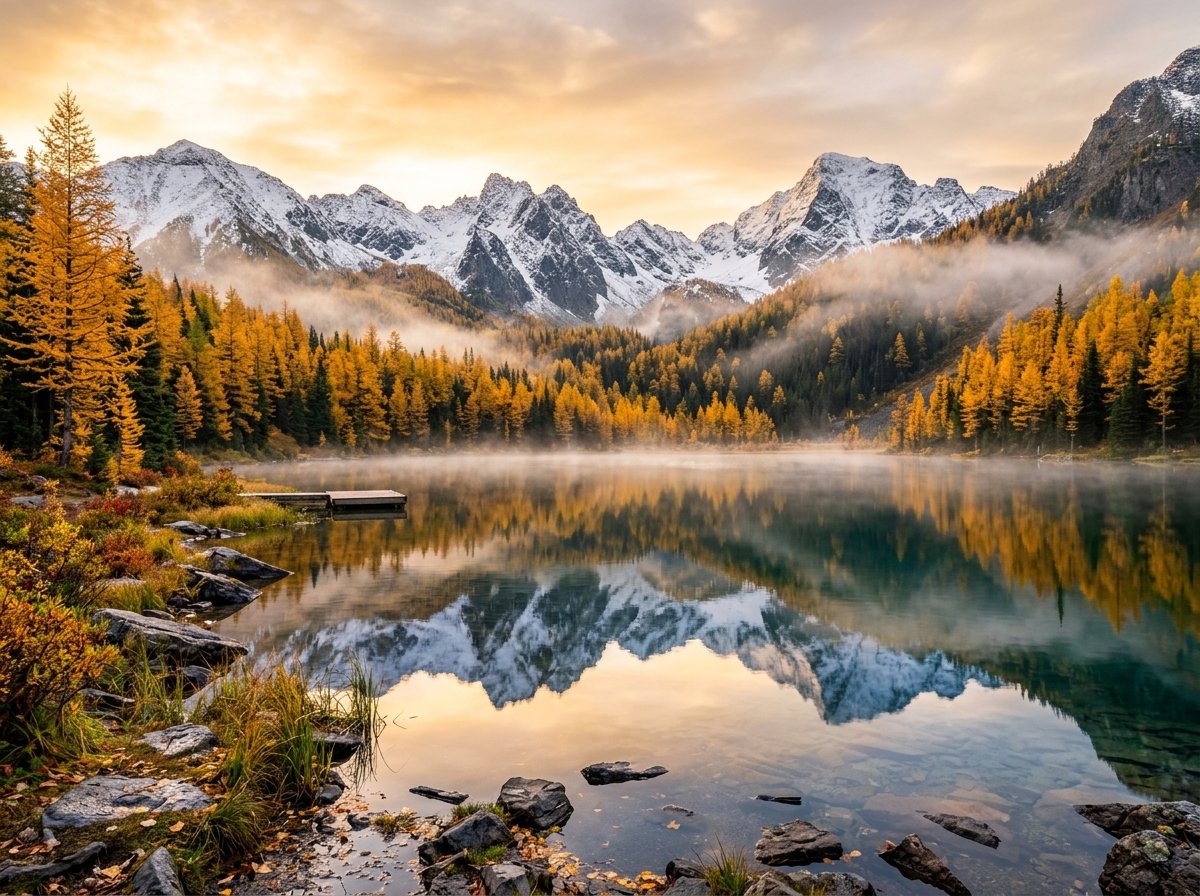
Key stops along the road:
- Jackson Glacier Overlook: One of the few places you can still see a named glacier without hiking for hours. The interpretive sign shows how much the ice has retreated. It is sobering.
- Oberlin Bend: A quick pullout with a view that most people drive right past.
- The Loop: A sharp switchback with views down into the McDonald Creek valley.
If you want to capture the road itself, the best light is in late afternoon from the west side looking east. The sun drops behind the peaks and paints them gold. Bring a polarizing filter for your camera to cut through the haze.
Logan Pass: The Heart of the Park
Logan Pass sits at the top of the Continental Divide. Reynolds Mountain and Clements Mountain rise straight up from the meadows. In summer, the wildflowers here are absurd. Paintbrush, beargrass, and lupine carpet the ground.
This is the trailhead for two of the most popular hikes in Glacier. The Hidden Lake Overlook trail is a 2.7 mile round trip on a boardwalk and gravel path. It is manageable for most fitness levels. Mountain goats frequent this trail, especially near sunset. Keep your distance. They are wild animals, not photo props.
The Highline Trail starts here too. This is the big one. It runs 11.8 miles one way to The Loop. Most people hike out four or five miles and turn back. Even that shorter out and back gives you some of the best views in the entire park. The trail clings to the Garden Wall, a sheer cliff face that drops off to the west. If you are afraid of heights, the first quarter mile might test you. The trail is wide enough, but the exposure is real.
Pro tip: The visitor center at Logan Pass has bathrooms and water, but no food. Fill your pack before you arrive. And if you want to see the pass without the crowds, visit in late September. The road usually stays open until mid October, and the autumn larch trees turn brilliant gold.
Lake McDonald: More Than a Pretty Shoreline
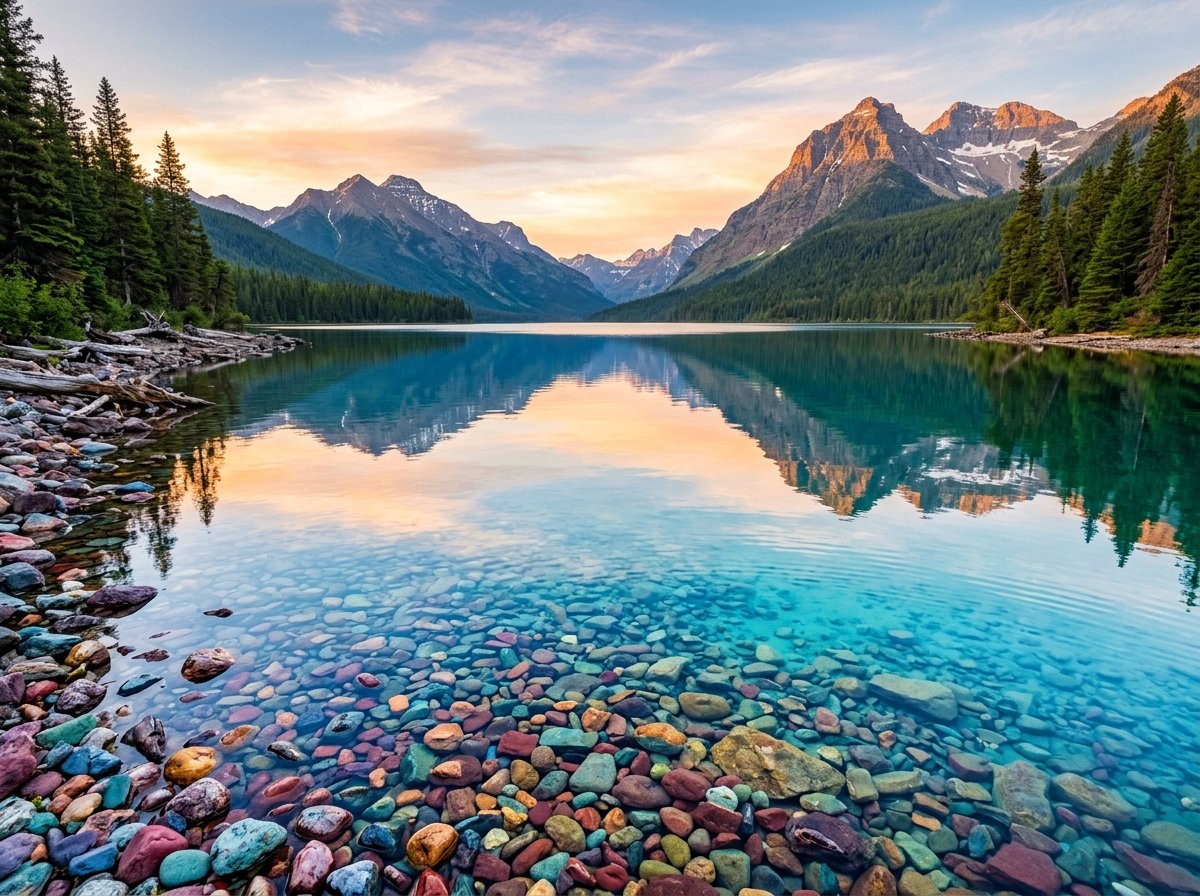
Lake McDonald is the postcard image of Glacier. Ten miles long, crystal clear water, colorful rocks on the shoreline. Everyone drives to Apgar Village, takes a photo, and leaves.
That is the shallow version of this lake. The real magic happens when you get on the water. Kayaking here is peaceful because motorized boats are limited. The water is cold, even in August, but a quick swim at one of the pebble beaches will wake you up better than any coffee.
For the best shoreline without the crowds, skip Apgar. Drive north on Going to the Sun Road past the lake and look for the small pullouts. The north end near the campground has better rock skipping and fewer people. Sunrise here is underrated. The morning light comes from the east and lights up the peaks behind the lake.
If you want to stay near Lake McDonald, the historic Lake McDonald Lodge sits right on the shore. It was built in 1913 and still feels like a step back in time. You do not need to be a guest to walk through the lobby or sit on the porch.
Avalanche Lake: The Best Bang for Your Buck
If you want one hike that delivers maximum reward for moderate effort, Avalanche Lake is it. The trail is 4.5 miles round trip with just 730 feet of elevation gain. It starts on the Trail of the Cedars, a wheelchair-accessible boardwalk through an ancient western red cedar forest. Then it climbs gently alongside Avalanche Creek before opening up at the lake.
The lake sits in a natural amphitheater. Waterfalls pour down from the surrounding cliffs into the turquoise water. It looks fake. I have seen experienced hikers who have trekked all over the world stop at the shore and just stare.
The catch? This trail is popular. Arrive at the Avalanche Creek parking area by 8 AM, or take the shuttle. If you get there at 10 AM in July, you will circle the lot for twenty minutes.
What to bring: Good hiking shoes with grip. The rocks near the creek can be slippery. A reliable pair of trail runners with aggressive tread makes the creek crossings and rooty sections feel secure without the weight of heavy boots.

Saucony Men’s Excursion TR15
Grinnell Glacier: The Hike That Shows You What Is at Stake
Grinnell Glacier is the most famous hike in the Many Glacier area. It is also the most important. The trail is 10.6 miles round trip if you hike the whole way. You can shave off 3.4 miles by taking the boat across Swiftcurrent Lake and Lake Josephine. The boat option is worth it. Not because the walking is bad, but because the boat ride itself is beautiful, and you save energy for the climb.
The trail climbs 1,600 feet to the glacier overlook. You pass Grinnell Lake, which is that impossible turquoise color caused by rock flour suspended in the meltwater. Then you climb through alpine meadows where bighorn sheep and grizzlies are both active. Make noise. Carry bear spray. I cannot stress this enough. This is prime grizzly habitat.
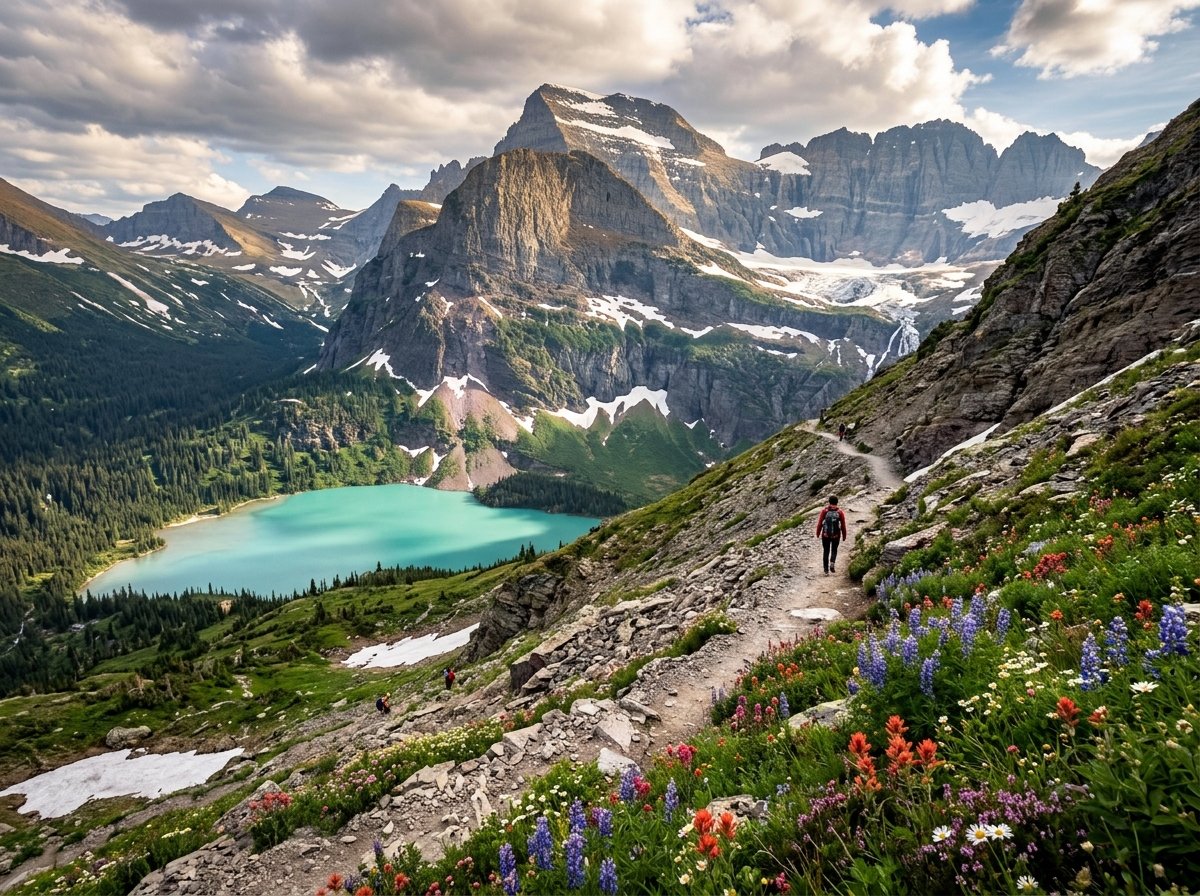
When you reach the top, you look down at what remains of Grinnell Glacier. It is a fraction of what it was a century ago. The park had over 150 glaciers in 1850. Now it has around 25, and those are shrinking fast. Scientists predict they could be gone by 2030. This hike is not just beautiful. It is a front row seat to climate change.
Bear safety note: Do not hike this trail in a group smaller than four. The park recommends it, and the trail is closed sometimes due to bear activity. Carry Counter Assault bear spray and know how to use it. Practice pulling it from the holster before you hit the trail. In a surprise encounter, you will not have time to fumble.
Many Glacier: The Area That Feels Like Another Country
Many Glacier is on the east side of the park, about an hour north of St. Mary. You reach it by a separate entrance road, not by Going to the Sun Road. This area has its own reservation system for entry during peak season, so check the park website before you go.
The valley holds Swiftcurrent Lake, the historic Many Glacier Hotel, and some of the best wildlife viewing in the park. Moose feed at Fishercap Lake at dawn and dusk. The trail to Fishercap is short, flat, and buggy. Bring insect repellent. The flies here do not care how much DEET you are wearing.
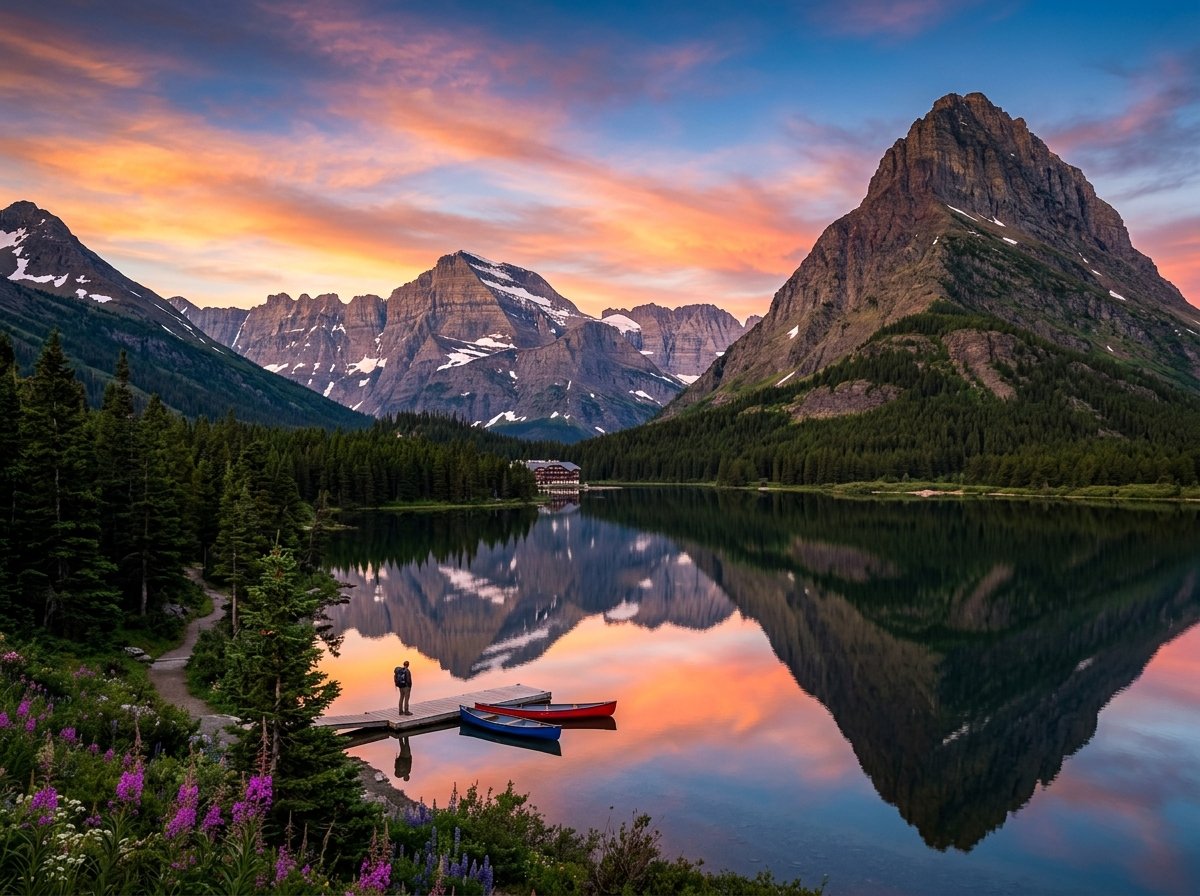
The hotel itself is worth a visit. Built in 1914 by the Great Northern Railway, it has a Swiss chalet design that looks perfectly at home against the peaks. Take the ranger led tour at 4 PM if you are interested in the history. Sit on the back deck and watch the light change on Mount Wilbur.
For a moderate hike with huge payoff, try the Iceberg Lake trail. It is 9.7 miles round trip and climbs through open meadows to a cirque where icebergs float in the lake well into August. The trail is less crowded than Grinnell, and the wildflowers in July are the best in the park.
Two Medicine: The Overlooked East Side Treasure
Everyone talks about Many Glacier and Logan Pass. Almost no one gives Two Medicine the time it deserves. That is a shame, because this area has a quieter, more rugged feel than the rest of the park.
Two Medicine Lake sits at the end of a paved road that branches off Highway 2 on the southeast side. The mountains here feel closer. The water is darker and more mysterious. And the crowds are a fraction of what you find on Going to the Sun Road.
The boat shuttle across Two Medicine Lake cuts miles off the hike to Upper Two Medicine Lake and Twin Falls. Even without the boat, the lakeshore trail is flat and peaceful. Keep an eye out for moose along the creek. The trail to Dawson Pass and Pitamakan Pass starts here too. These are serious backcountry routes with some of the best views in the entire park system.
If you only have time for one easy activity in Two Medicine, walk to Running Eagle Falls. It is a half mile from the road. The falls plunge from a hole in the rock wall, which is unusual and beautiful.
Hidden Lake: Goats, Wildflowers, and a Boardwalk Start
The Hidden Lake Overlook trail from Logan Pass is the most accessible alpine hike in the park. The first 1.4 miles are on a raised boardwalk that crosses sensitive meadows. This keeps your boots out of the vegetation and gives you a clean path even when snow lingers into July.
At the overlook, you look down on Hidden Lake, a small jewel set in a bowl below the pass. Mountain goats and bighorn sheep are common here. They are habituated to people, which makes them seem tame. They are not. Give them at least 25 yards of space.
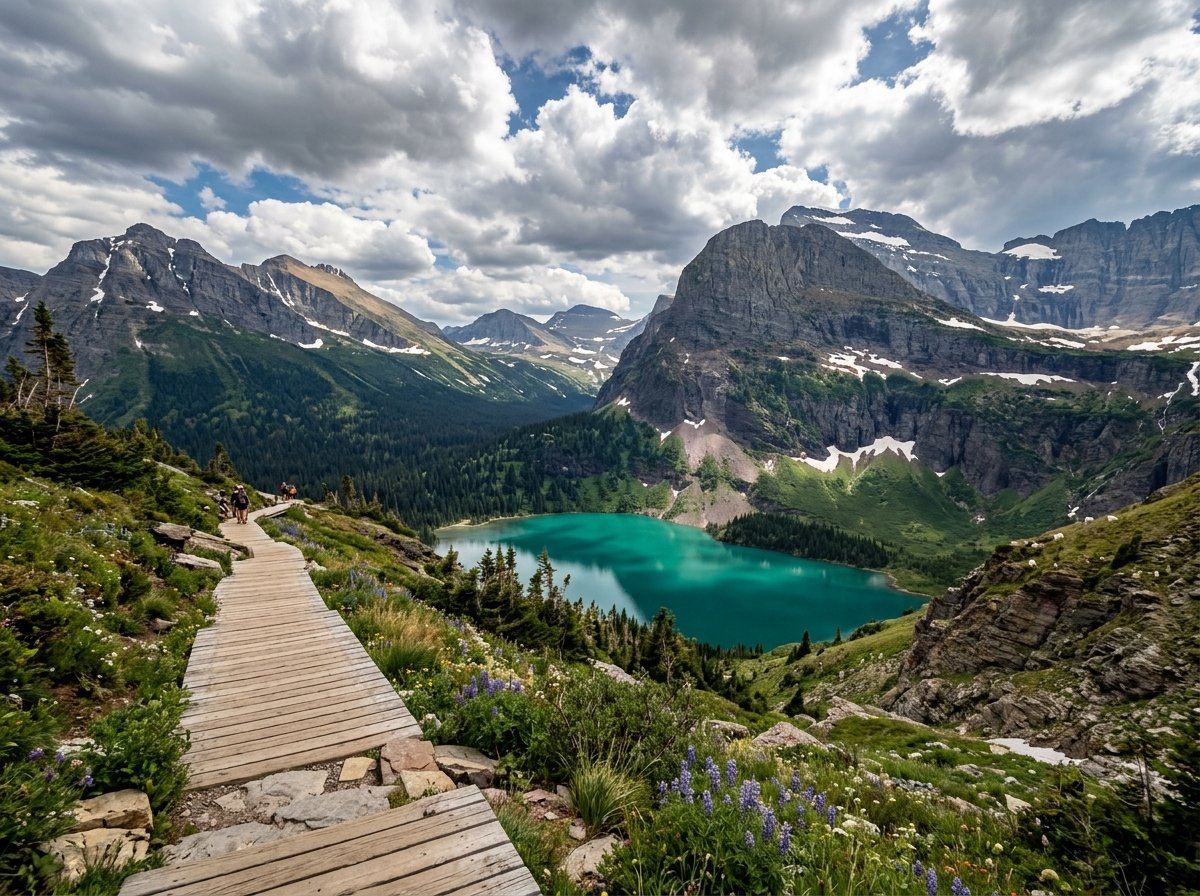
If you want to hike all the way down to the lake, the trail continues another 1.5 miles one way. It is steeper and less maintained. Most people stop at the overlook, which is fine. The view from above is actually better for photography.
Best time: Late afternoon. The light comes from the west and lights up the lake. Morning light is flat from this angle.
St. Mary Lake and Wild Goose Island
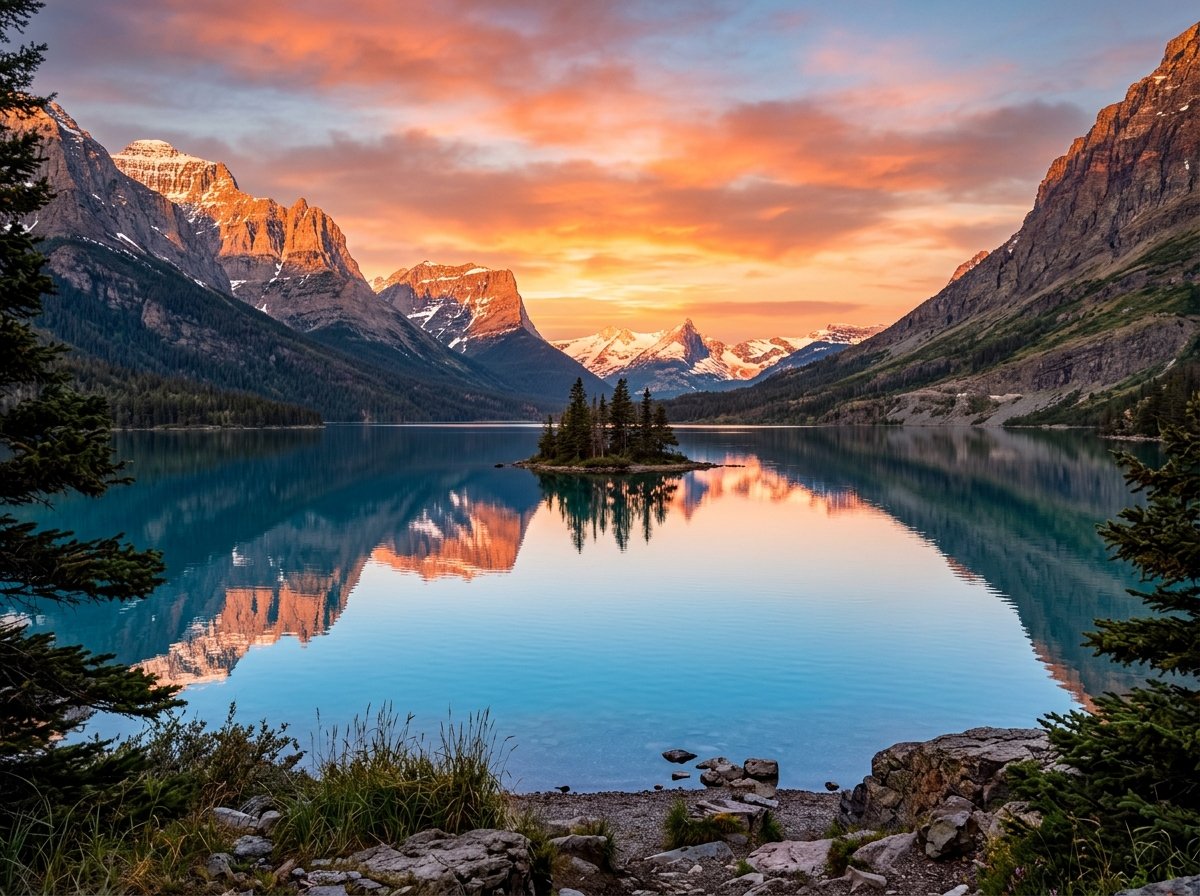
St. Mary Lake is the second largest lake in the park, and in my opinion, the most photogenic. Wild Goose Island sits near the middle, tiny and perfect against the mountain backdrop. The opening shot of The Shining was filmed here, and it is easy to see why Kubrick chose it.
The best viewpoint is the Wild Goose Island overlook on Going to the Sun Road. For sunset, drive to the St. Mary Lake shore near the campground. The sun drops behind the peaks and throws long shadows across the water. Bring a jacket. The wind picks up in the evening, and temperatures drop fast even in summer.
If you want to stretch your legs, the St. Mary Falls trail is a short 1.7 mile hike to a powerful waterfall. It is easy enough for kids and rewarding enough for adults.
Polebridge and the North Fork
Polebridge is not technically inside the park, but it is essential to a complete Glacier experience. This tiny settlement sits on a dirt road about 35 miles from the West Glacier entrance. The road is rough. A regular car can make it in dry weather, but take it slow.
The Polebridge Mercantile is the main attraction. It is a historic general store that bakes huckleberry bear claws and cinnamon rolls in a wood fired oven. They sell out by mid morning. Get there early.
From Polebridge, you can enter the park at the Bowman Lake or Kintla Lake entrances. These are the least visited parts of Glacier. Bowman Lake is 7 miles of gravel road past Polebridge. The lake is long, narrow, and surrounded by thick forest. The campground is primitive and quiet. If you want to feel like you have the park to yourself, spend a night here.
The Trail of the Cedars
This is the easiest worthwhile walk in the park. It is a 0.7 mile loop on a boardwalk through an ancient western red cedar and western hemlock forest. Some of these trees are hundreds of years old. The forest floor is lush with ferns and moss. Avalanche Creek rushes through a narrow gorge at the midpoint.
Because it is easy, it gets crowded. But the boardwalk is wide, and the loop is short. Even if you are not a hiker, do this one. It gives you a sense of the inland rainforest ecosystem that exists on the west side of the park, where Pacific moisture reaches the mountains.
Swiftcurrent Lake at Sunrise
If you stay in or near Many Glacier, set your alarm for 5:30 AM. Walk down to the shore of Swiftcurrent Lake before the sun hits the peaks. The water is usually glass calm. The reflection of Mount Wilbur and Mount Grinnell is perfect.
This is also the best time to spot moose along the shoreline. They feed in the shallow water and are less skittish in the low light. Bring a good pair of binoculars to watch from a respectful distance. You do not need to approach wildlife to appreciate it. In fact, the best encounters happen when you stay back and let the animal behave naturally.

Binoculars for Adults High Powered with Phone Adapter & Tripod
Virginia Falls and St. Mary Falls
Most visitors to the east side stop at St. Mary Lake and turn around. Keep going. The Virginia Falls trail is 3.6 miles round trip and passes St. Mary Falls along the way. St. Mary Falls is beautiful, with turquoise water plunging through red rocks. Virginia Falls is bigger and more powerful.
The trail is mostly flat and shaded. It is a good option for a hot afternoon when the alpine trails feel exposed. There are swimming holes near St. Mary Falls, but the water is bone chilling even in August. Jump in if you want a jolt of adrenaline.
Waterton Lakes: The Canadian Extension
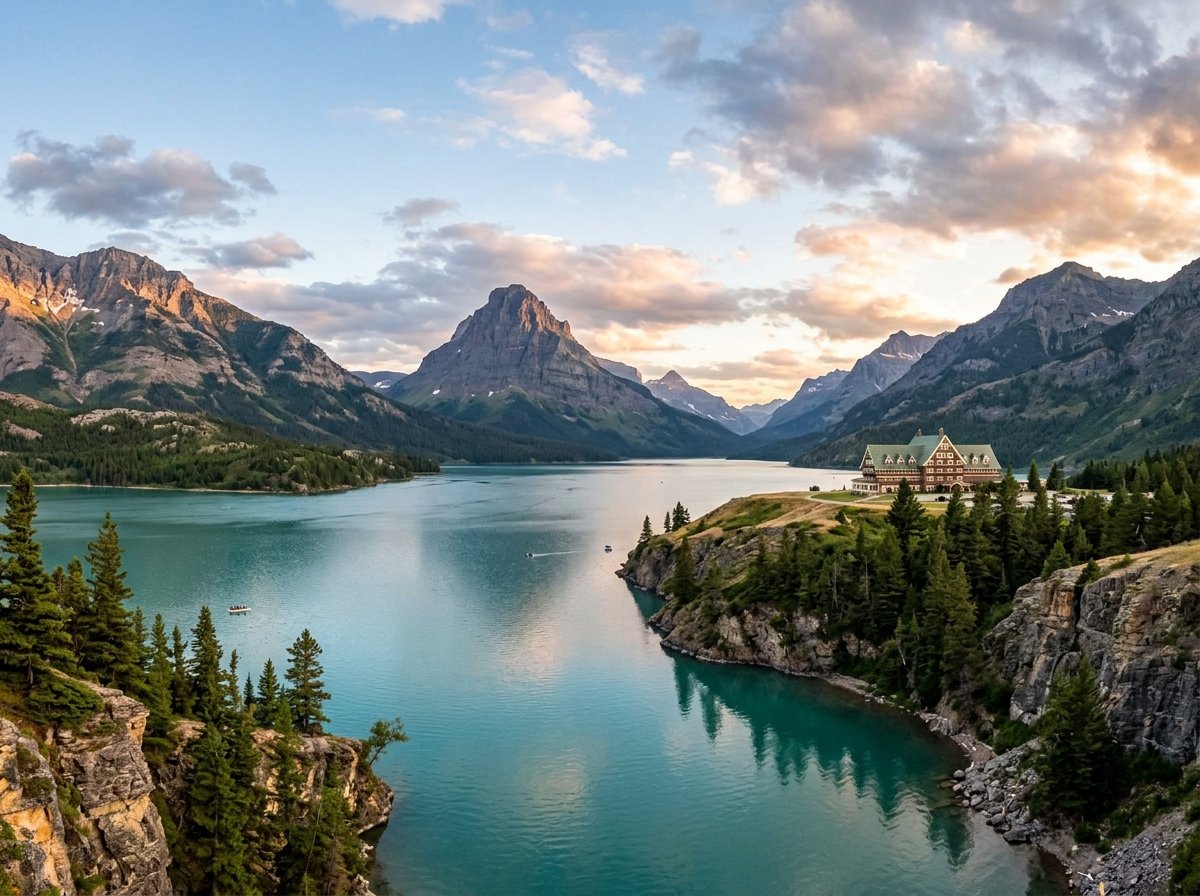
If you have a passport, drive north from Many Glacier into Canada. Waterton Lakes National Park is the Canadian side of the International Peace Park. The Prince of Wales Hotel sits on a bluff overlooking Upper Waterton Lake. The view from the lounge is one of the best in either park.
Hiking here is less crowded. The Crypt Lake trail is famous among hardcore hikers. For something easier, walk the Bear’s Hump for a panoramic view. The town of Waterton has restaurants and shops, which is a nice change after the limited amenities inside Glacier.
Border crossing hours vary by season. Check current times before you go.
Practical Tips That Competitor Articles Skip
Parking strategy: The park shuttle is your friend. Parking at Logan Pass, Avalanche Lake, and Many Glacier fills by 8:30 AM in summer. The shuttle runs every 15 to 30 minutes and is free. Download the shuttle schedule before you go. Cell service is spotty.
Weather reality: Glacier sits on the Continental Divide. Weather changes in minutes. A sunny morning can turn into a thunderstorm by 2 PM. Start hikes early. Carry a rain jacket even if the sky is blue. Hypothermia is a real risk at elevation.
Reservation system: As of 2026, you need a timed entry vehicle reservation for Going to the Sun Road and the Many Glacier area during peak season. These sell out months in advance. If you miss the window, you can enter before 6 AM or after 4 PM without a reservation. Plan accordingly.
Food and fuel: There are no gas stations inside the park. Fill up in West Glacier, St. Mary, or Babb. Food options are limited to lodges and snack bars. Pack a lunch every day. The general stores sell basic supplies at inflated prices.
Trail etiquette: Yield to horses. Stay on the trail. The alpine vegetation is fragile and takes decades to recover from a single shortcut. If you see a bear, back away slowly. Do not run. Running triggers a chase response.
Frequently Asked Questions
What is the number one must see in Glacier National Park?
Going to the Sun Road is the most iconic experience. But if you want the single best view, hike the Highline Trail. The section near the Granite Park Chalet looks like another planet.
How many days do I need in Glacier National Park?
Four days is the minimum to see the main regions without rushing. Five to seven days lets you add backcountry trails or a relaxed day at Two Medicine. Less than three days means you will miss at least one major area.
Do I really need bear spray?
Yes. This is grizzly country. The park recommends carrying it on all trails. Buy it before you arrive. Rentals are available outside the park, but owning a canister and practicing with it is better.
When is the best time to visit Glacier National Park?
Late June through mid September is when all facilities and roads are open. July and August have the best weather but the biggest crowds. Late September has fall colors, fewer people, and active wildlife preparing for winter.
Is Glacier National Park crowded?
Yes, in the summer. Over three million people visit each year. But the crowds concentrate on five or six trails and viewpoints. Walk twenty minutes past the main overlook, and the number of people drops by 80 percent.
Can I see glaciers without hiking?
Jackson Glacier Overlook on Going to the Sun Road is the best option. You can see it from the parking area. For the others, you need to hike.
What should I pack for a day hike?
Water, snacks, rain jacket, bear spray, sunscreen, hat, and layers. Temperatures at Logan Pass can be 30 degrees cooler than at Lake McDonald.
Final Thoughts
Glacier National Park is not a place you check off a list. It is a place that demands patience, early mornings, and a willingness to walk farther than the average visitor. The best places to visit in Glacier National Park are not secrets. They are well marked on every map. The difference between a good trip and a great one comes down to timing, preparation, and the decision to explore beyond the parking lot.
Get up early. Stay out late. Carry the bear spray. And when you find yourself alone on a trail with nothing but mountain goats and wildflowers for company, you will understand why this park earned its name. The ice may be leaving, but the grandeur is not going anywhere.