Bora Bora does not really have a bad time to visit. It has a more expensive time and a cheaper time, a busier time and a quieter time, and a handful of weeks in between that genuinely deliver the best of both.
The honest answer most guides skip is that the difference between the dry season and the wet season in Bora Bora is smaller than people expect, and the financial difference is enormous. Understanding both sides of that trade-off, not just “go in the dry season,” is what actually helps you plan a trip that fits your budget and what you came here for.

This guide breaks the year down properly, with the booking timelines, whale season specifics, and honest cyclone context that most articles either oversimplify or skip.
Quick Answer: Best Time to Visit Bora Bora
The best overall time to visit Bora Bora is May, June, or September. These months sit inside the dry season with excellent weather and lagoon visibility, but outside the peak July and August crowds, which means better pricing and more availability at the resorts everyone actually wants to stay at.
For the absolute best weather with no compromise, June through August is peak dry season, but expect the highest prices of the year and book overwater bungalows 10 to 12 months ahead. For the best value, November and April offer a genuine middle ground: lower prices with generally manageable weather. For the lowest prices of the year, December through March is wet season, with real savings but real rain and a small but non-zero cyclone risk.
Bora Bora’s Two Seasons, Explained Honestly
Bora Bora sits close enough to the equator that temperature barely changes across the year. The real seasonal difference is humidity, rainfall, and how that rainfall arrives.
Dry season (May to October): Lower humidity, more consistent sunshine, the famous “Bora Bora blue” lagoon at its clearest, and calm seas. This is high season, and it is high season because the weather genuinely is at its best.
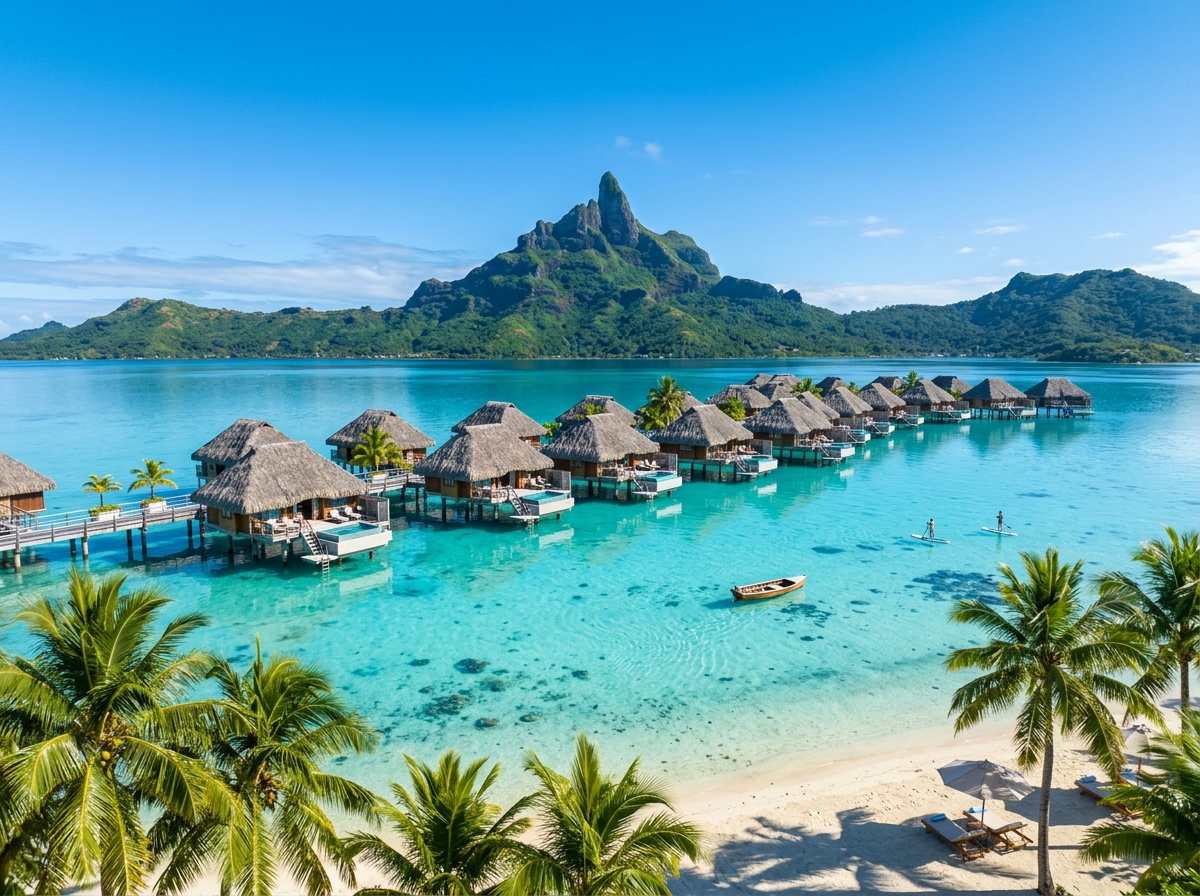
Wet season (November to April): Higher humidity and more frequent rain, but the rain in Bora Bora rarely means a washed-out day. It typically arrives as a heavy 20 to 40 minute downpour followed by bright sun, rather than constant all-day drizzle. The landscape turns lush and green, the lagoon stays warm, and prices drop significantly.
Neither season is objectively wrong for a trip. The decision comes down to whether you are optimizing for guaranteed sunshine or for value and quiet.
Bora Bora Month by Month
May
May is one of the most quietly recommended months by people who have actually been multiple times. The wet season has just ended, so the island is still lush and green from the rains, but the humidity has dropped and the rain has largely stopped. Lagoon visibility is excellent. Prices have not yet hit the July and August peak.
Temperature: 79 to 86F (26 to 30C)
June
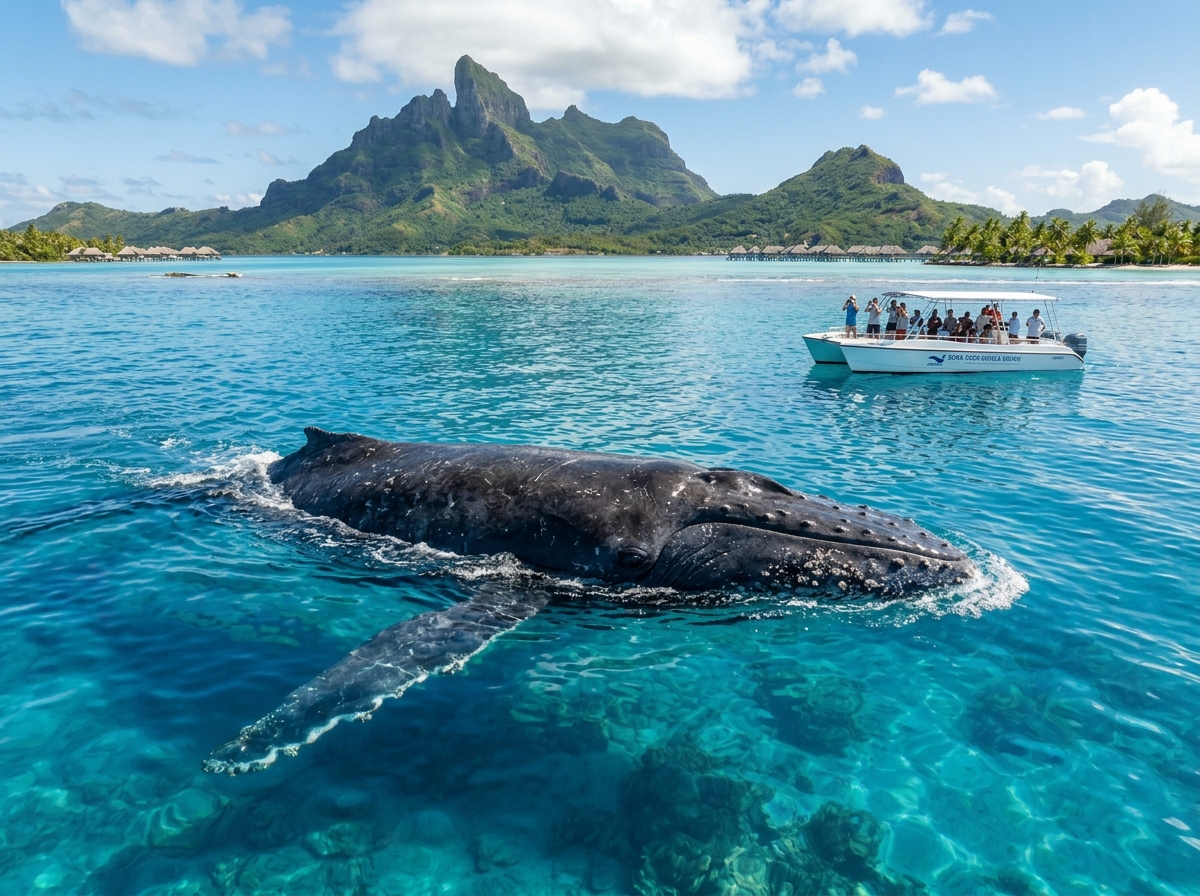
June marks the true start of peak season. Humpback whales begin arriving in Bora Bora’s waters, and this is one of the best months of the year for whale encounters. Weather is reliably dry and sunny. Resort prices start climbing toward summer peak. Book overwater bungalows well ahead if your dates fall in June.
Temperature: 77 to 84F (25 to 29C)
July and August
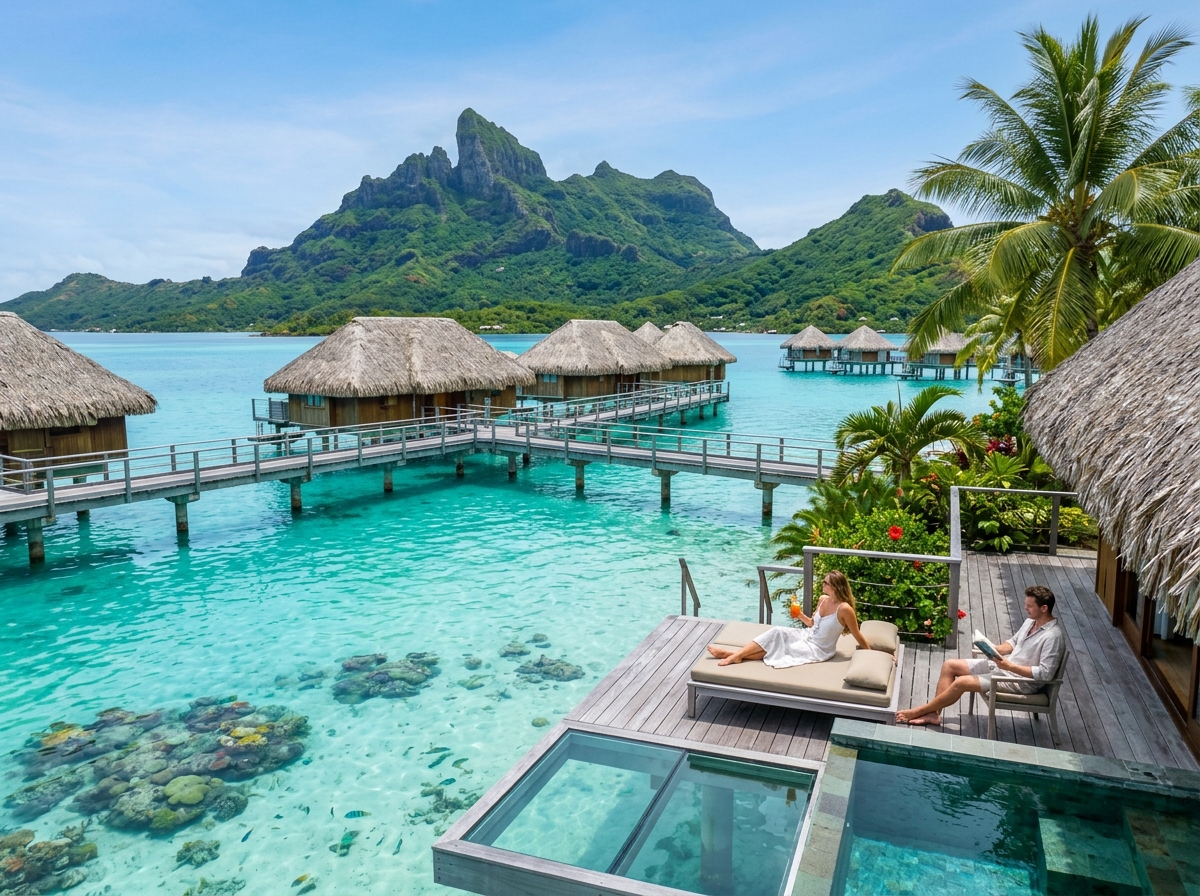
These are the busiest and most expensive months of the year, driven almost entirely by European and North American summer school holidays. The weather is genuinely excellent: low humidity, consistent sunshine, calm lagoon conditions. Whale watching continues through this window. The trade-off is real: the most in-demand overwater bungalows, particularly at the Four Seasons, St. Regis, and Conrad, are often booked a full year in advance for these two months.
Temperature: 75 to 82F (24 to 28C)
September
September is widely cited as one of the best value months in the dry season calendar. The summer holiday crowds have left, prices begin easing down from the August peak, and the weather is still excellent. Whale watching wraps up around this time. If June feels too early to book and August feels too expensive, September is the answer.
Temperature: 77 to 84F (25 to 29C)
October
October is the final month of reliable dry season weather. Light showers can start appearing later in the month as the wet season approaches, but they tend to pass quickly. This is a good choice for travelers who want dry season conditions without having committed to a booking eight or nine months in advance.
Temperature: 79 to 86F (26 to 30C)
November
November is the wet season’s gentle opening. Rainfall increases but is still moderate, the island’s greenery becomes noticeably more vivid, and prices drop meaningfully from October levels. This is genuinely one of the better wet season months for travelers who want a price break without a major weather compromise. The Hawaiki Nui Va’a outrigger canoe race, one of the most significant cultural events in French Polynesia, takes place in late October and into November and brings a burst of local energy to the islands.
Temperature: 80 to 87F (27 to 31C)
December
December splits into two very different experiences. Early December is quiet, lush, and notably affordable. The back half of the month, particularly the week of Christmas and New Year, sees prices spike sharply as international visitors arrive for the holidays. If a December trip is the plan, book the holiday window many months ahead, or aim for the first two weeks instead.
Temperature: 79 to 86F (26 to 30C)
January and February
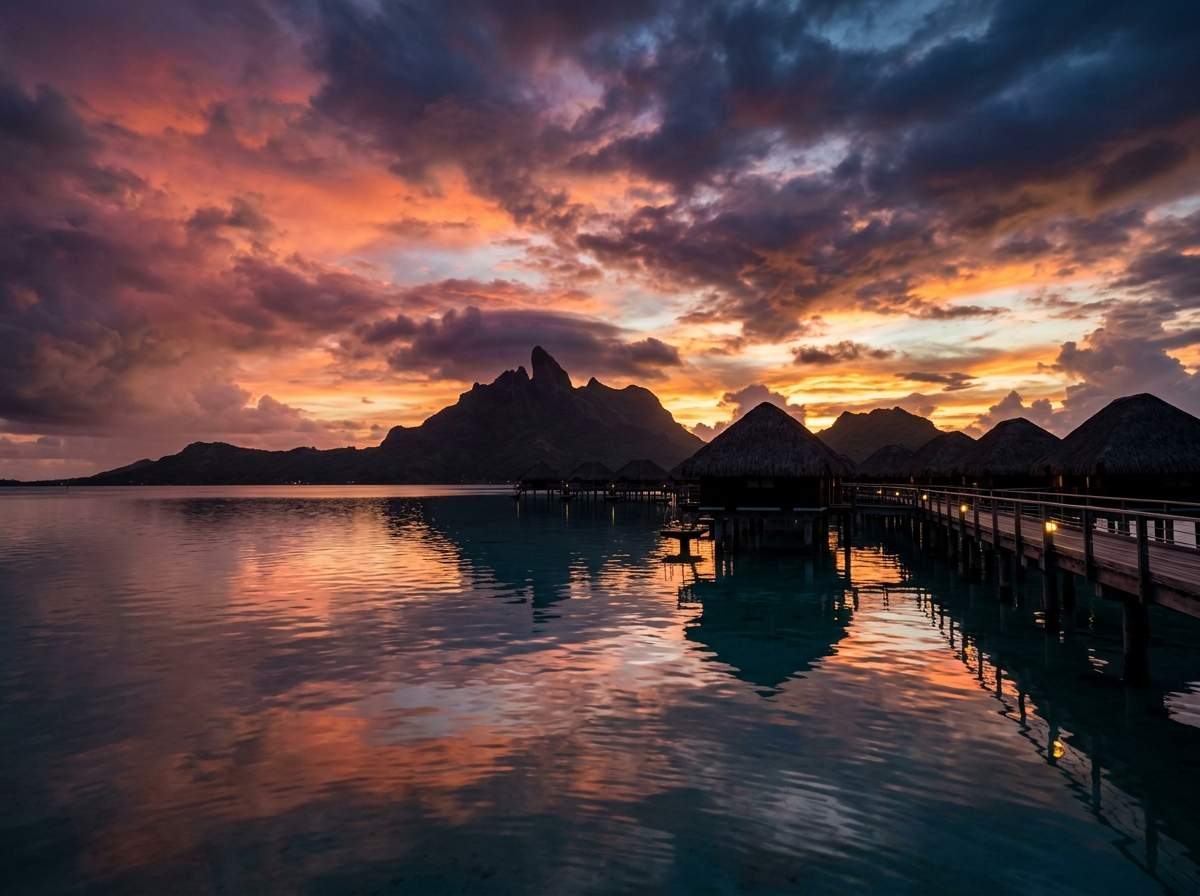
January is statistically the wettest month of the year, and February carries the highest chance of a cyclone, though actual cyclones remain rare. This is also the cheapest period to book a luxury overwater bungalow, with discounts of up to 50 percent off peak season rates at some resorts. Rain typically arrives as dramatic, heavy downpours rather than constant drizzle, often followed by some of the most striking sunsets of the year due to the storm clouds.
Temperature: 79 to 86F (26 to 30C), feeling more humid than the dry season equivalent
March and April
March sees rainfall decreasing steadily as the wet season winds down. April is the transition back toward dry season, with the lagoon clearing and underwater visibility improving week by week. Both months tend to be the hottest of the year in terms of how the heat actually feels, with high humidity layered on top of warm temperatures. April in particular is increasingly recognized as a strong shoulder month: meaningfully cheaper than peak season with generally manageable weather.
Temperature: 80 to 88F (27 to 31C)
What Most Bora Bora Guides Get Wrong or Skip
The Cyclone Risk is Real But Genuinely Rare
The South Pacific cyclone season technically runs from November through April, overlapping with Bora Bora’s wet season. Most guides either overstate this into a reason to avoid the wet season entirely, or barely mention it. The honest picture: French Polynesia sits outside the main cyclone belt, and severe cyclones are uncommon. The last major cyclone to affect the region was in 2010. In most wet season years, what travelers actually encounter is heavy tropical rain and occasional tropical storms, not a hurricane-level event. If you are booking during this window, the only sensible precaution is travel insurance that explicitly covers tropical weather disruption, and flexible cancellation terms on your resort booking.
Resort Booking Lead Times Are Not Optional in Peak Season
This is the gap almost every competitor leaves out entirely. For dry season travel, particularly July and August, the standard lead time for the most sought-after resorts (Four Seasons Bora Bora, St. Regis Bora Bora, Conrad Bora Bora Nui, InterContinental Thalasso) is 10 to 12 months in advance. Waiting until three or four months out for a peak season trip often means settling for a lower category room, a less desirable resort, or no availability at all. Wet season bookings are far more flexible, with genuine last-minute deals sometimes appearing just two to three months out.
Whale Watching Has a Specific Window
Humpback whales migrate through Bora Bora’s waters roughly from July through October, with activity often beginning as early as June and tapering by October. This is not guaranteed wildlife viewing; sightings depend on the animals and are subject to strict local regulations on how close boats and swimmers can approach. If swimming with or watching humpback whales is a priority for your trip, build your dates around this window specifically rather than the dry season more broadly.
Lagoon Visibility Changes More Than People Expect
The “impossibly clear water” image associated with Bora Bora is most reliably true during the dry season, particularly June through September, when low rainfall keeps runoff and sediment to a minimum. During the wet season, particularly January and February, heavier rain can reduce underwater visibility for snorkeling and diving, especially closer to the main island where runoff enters the lagoon. If snorkeling and diving visibility is a top priority, this genuinely should influence your season choice more than general weather alone.
Sunrise vs Sunset Bungalow Positioning is a Real Decision
Almost no competitor article connects bungalow positioning to timing. When booking an overwater bungalow, ask specifically whether your unit faces toward Mount Otemanu (typically the premium “mountain view” position, ideal for sunset) or toward the open lagoon and reef (often better for morning light and marine life visibility through a glass floor panel). This decision matters regardless of season, but it is worth raising at the time of booking rather than discovering on arrival.
For overwater bungalow stays, a proper underwater camera makes the lagoon and reef snorkeling genuinely shareable rather than just a memory. The GoPro HERO13 Black (available on Amazon) is waterproof to 33 feet without a separate housing, handles the strong reflected light off the lagoon well, and is the most commonly recommended camera for this exact kind of trip, from glass floor panel shots to reef snorkeling footage.

GoPro HERO13 Black
Best Time to Visit Bora Bora by Traveller Type
Honeymooners: June or September for the best combination of dry season weather and slightly more manageable pricing than July or August. Book the resort 10 to 12 months ahead regardless of which dry season month you choose.
Budget-conscious travellers: Late November or April. Both sit just outside the deepest wet season months, offering real savings without the heaviest rain. January carries the lowest prices of the year if rain genuinely does not bother you.
Whale watchers: July through September gives the most reliable sighting window, with June and October as the wider edges of the season.
Divers and snorkelers: June through September for the clearest lagoon visibility and calmest conditions.
Photographers: Either the dry season for reliably blue skies and turquoise water, or January and February specifically for the dramatic storm-light sunsets that the wet season produces.
Last-minute planners: Wet season, particularly December (excluding the holiday weeks) through March, offers far more realistic availability without booking a year in advance.
Practical Tips for Timing Your Trip
Decide your non-negotiable first. If guaranteed sunshine matters more than price, commit to June through September and book early. If budget matters more than guaranteed sun, the wet season delivers real value with manageable weather risk.
Avoid the absolute peak unless you book a year out. July and August are the most expensive and most fully booked months at the marquee resorts. If you are planning less than six months ahead, May, June, or September are far more realistic for getting the resort and room category you actually want.
Consider the ferry as well as the flight. The Apetahi Express ferry connects Tahiti, Huahine, Raiatea, and Bora Bora and has become an increasingly popular alternative to the short domestic flight, particularly for travelers visiting multiple islands. It takes longer than flying but adds a scenic, lower-impact leg to a multi-island itinerary.
Pack reef-safe sun protection regardless of season. Bora Bora’s lagoon is a protected marine environment, and reef-safe sunscreen is both an environmental consideration and, at several resorts, a house requirement. The Raw Elements Reef Safe Sunscreen SPF 30 (available on Amazon) is mineral-based, free of the chemical filters known to harm coral, and water-resistant enough for a full day of lagoon swimming and snorkeling.
Travel insurance is genuinely worth it for wet season trips. Given the small but real cyclone window from November through April, insurance that explicitly covers tropical weather disruption and trip interruption is a sensible add-on rather than an unnecessary expense for this specific window.
For long-haul flights to French Polynesia, which typically involve a transpacific leg plus a connecting domestic flight, comfort accessories make a genuine difference. The Trtl Travel Pillow (available on Amazon) supports the neck without the bulk of a traditional travel pillow and packs flat into a daypack, which matters on a journey that can easily run 15 hours or more door to door from North America or Europe.

BCOZZY Travel Neck Pillow for Airplane
Quick Reference Table
| Month | Temp (F) | Rainfall | Crowds | Whale Watching | Best For |
|---|---|---|---|---|---|
| January | 79-86 | Highest | Low | No | Lowest prices |
| February | 79-86 | High | Low | No | Cheap rates, dramatic sunsets |
| March | 80-88 | Decreasing | Low | No | Improving visibility |
| April | 80-88 | Light | Low-moderate | No | Best value shoulder month |
| May | 79-86 | Minimal | Moderate | No | Lush scenery, good prices |
| June | 77-84 | Minimal | High | Begins | Dry season starts, whales arrive |
| July | 75-82 | Minimal | Very high | Yes | Peak weather, peak price |
| August | 75-82 | Minimal | Very high | Yes | Peak weather, peak price |
| September | 77-84 | Minimal | Moderate-high | Tapering | Best overall value in dry season |
| October | 79-86 | Increasing | Moderate | Tapering | Last reliable dry month |
| November | 80-87 | Moderate | Low-moderate | No | Good value, greener island |
| December | 79-86 | Moderate-high | High (holidays) | No | Quiet early month, costly late month |
Frequently Asked Questions
What is the best month to visit Bora Bora? September is frequently cited as the best overall month. It offers dry season weather and excellent lagoon visibility, while sitting just after the peak July and August crowds, which means better pricing and availability at top resorts.
Is Bora Bora cheaper in the rainy season? Yes, significantly. Overwater bungalow rates during the wet season, particularly January through March, can be 20 to 50 percent lower than July and August peak pricing. The trade-off is more frequent rain and slightly reduced lagoon visibility for snorkeling.
How far in advance should I book a Bora Bora overwater bungalow? For dry season travel, especially July and August, 10 to 12 months ahead is the standard recommendation for the most sought-after resorts. For wet season travel, two to three months ahead is often sufficient, and last-minute deals do appear.
Is Bora Bora at risk of cyclones? The South Pacific cyclone season runs November through April, overlapping with the wet season. French Polynesia sits outside the main cyclone belt, and severe cyclones are rare; the last major one was in 2010. Most wet season weather amounts to heavy rain and occasional tropical storms rather than a major cyclone event. Travel insurance covering tropical weather is a sensible precaution for bookings in this window.
When can you see whales in Bora Bora? Humpback whales are typically present from around June through October, with the most reliable sighting window being July through September. Sightings are never guaranteed and are governed by strict local regulations on approach distance.
Is Bora Bora hot all year round? Yes. Temperatures stay within a narrow range of roughly 75 to 88F (24 to 31C) throughout the year. The real seasonal difference is humidity and rainfall rather than temperature, with the wet season feeling noticeably more humid even though the thermometer reading is similar to the dry season.
What is the cheapest time to visit Bora Bora? January through March, excluding any school holiday periods, offers the lowest resort rates of the year, with some properties discounting overwater bungalow rates by up to half compared to July and August peak pricing.
Final Thoughts
The honest version of “best time to visit Bora Bora” is not a single answer. It is a trade-off between guaranteed blue skies and genuine savings, and both sides of that trade-off deliver a real version of the trip people come here for.
June, September, and the first half of December split the difference well: solid weather without the absolute peak in price or crowding. If your dates are flexible and budget matters, November and April offer real value without the heaviest rain of the wet season.
Whatever month you land in, the lagoon will still be that improbable shade of blue, Mount Otemanu will still anchor every sunset, and the overwater bungalow will still deliver exactly what you have been picturing. Timing changes the price and the crowd. It does not change the island.