Banff is one of those places that looks extraordinary in every season. Snow-covered peaks in January. Turquoise glacial lakes in July. Golden larch trees in September. Frozen waterfalls in February.
The question is not whether Banff is worth visiting in any given month. It is which version of Banff matches what you actually want from the trip, because summer Banff and winter Banff are almost entirely different experiences.
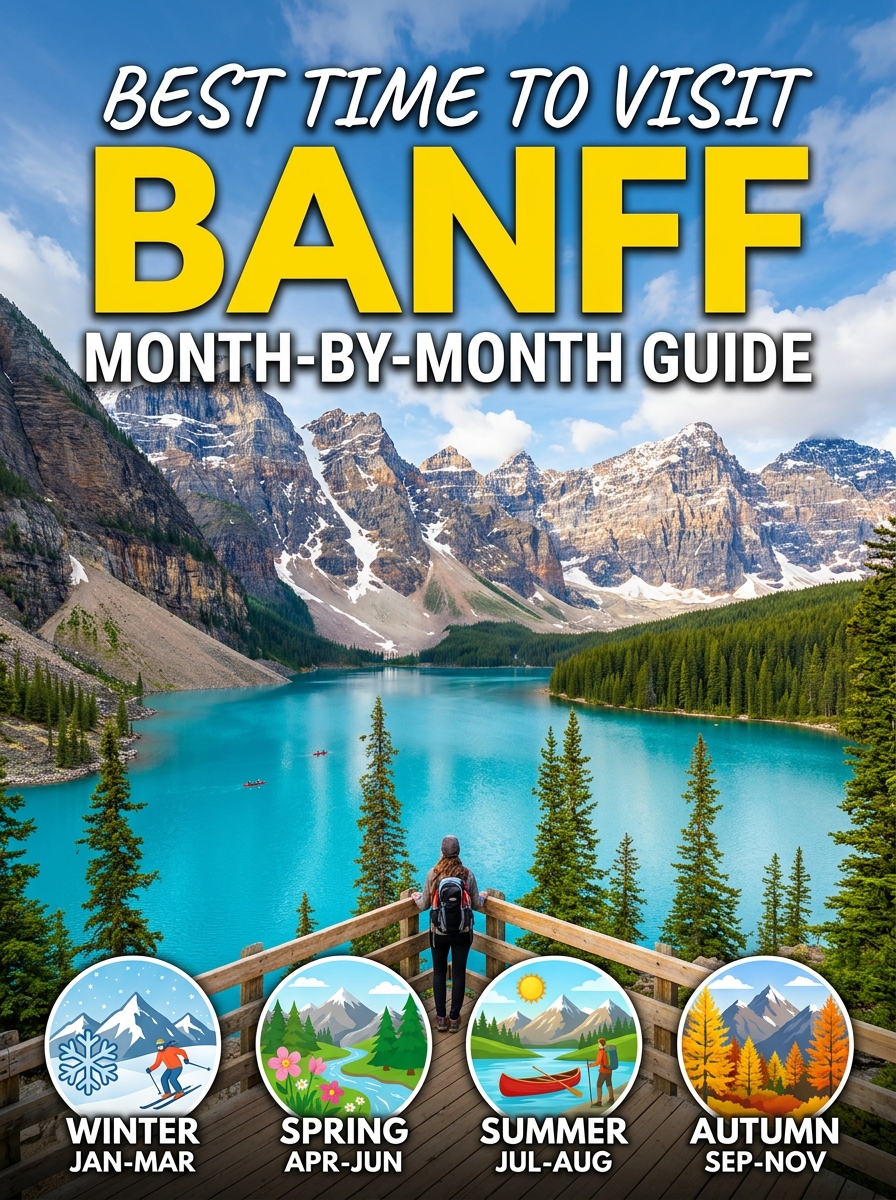
This guide breaks down every season honestly, with real temperatures, crowd levels, what actually opens and closes, and the practical details most articles leave out.
Quick Answer: Best Time to Visit Banff
The best overall time to visit Banff is late June through early September for hiking, lake access, and reliable weather. For the single most spectacular week, go in late September for the larch trees turning gold. For skiing and winter scenery, January through March delivers world-class conditions. For budget travel, November and April offer the lowest prices in the entire year.
Banff by Season
Summer (June, July, August)
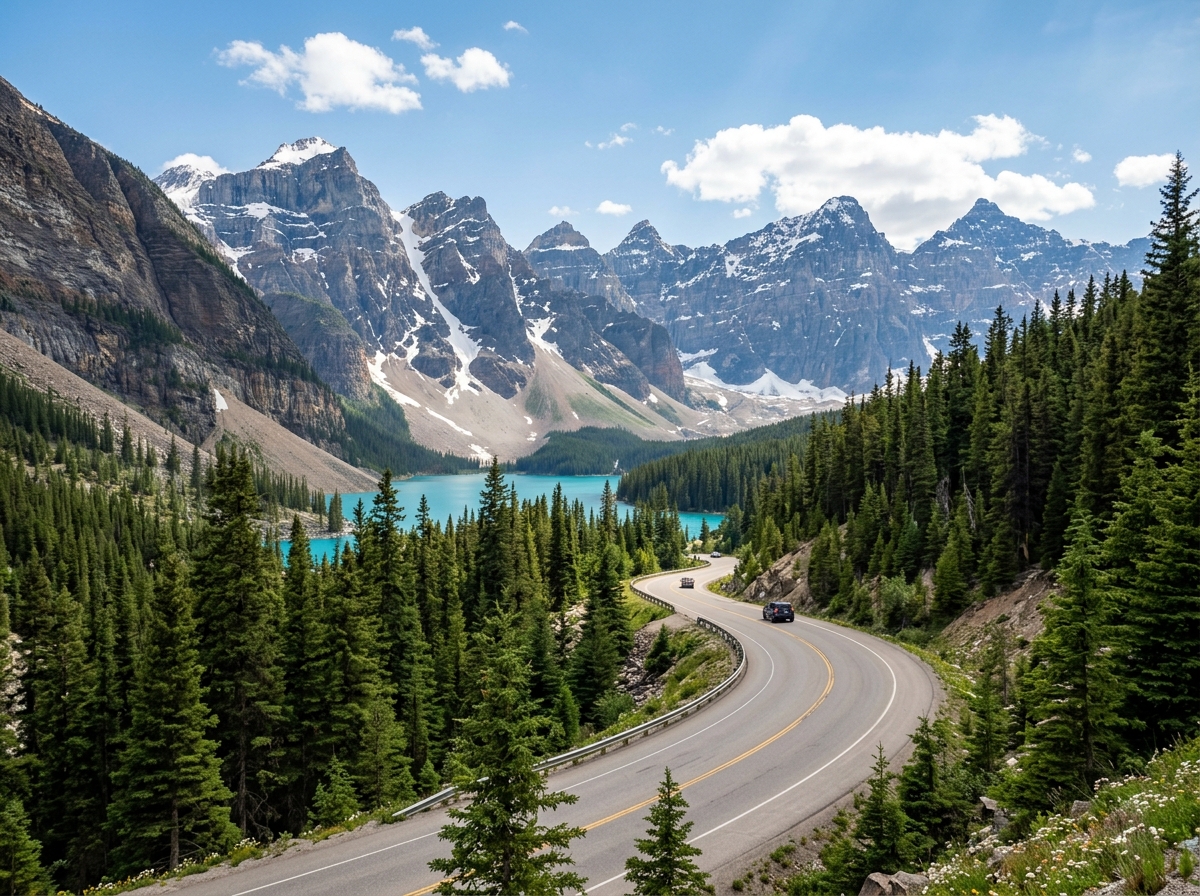
Summer is when Banff becomes fully itself. The lakes are their most vivid turquoise, every major trail is open, wildflowers cover the alpine meadows, and the days stretch past 10pm.
June is the transition month. Early June is still unpredictable, with snow possible on higher trails and some alpine routes still closed. By mid to late June, conditions stabilise and Lake Louise and Moraine Lake are usually fully accessible. Temperatures reach 18 to 23 degrees Celsius in town with cold nights around 5 to 8 degrees.
July is peak season. Temperatures sit at 20 to 25 degrees Celsius. Every trail is open. Every lake is accessible. The Icefields Parkway between Banff and Jasper is at its most drivable and dramatic. The downside is that July is also Banff’s busiest and most expensive month. Hotels in town hit peak pricing. Parking at Lake Louise and Moraine Lake fills by 6am on weekends.
August is almost identical to July in weather and slightly less crowded in the first two weeks. By the third week of August, crowds begin to thin. Temperatures stay warm but the evenings start to cool noticeably.
The Moraine Lake road situation: Moraine Lake is one of the most photographed places in Canada. The access road is managed by Parks Canada with a mandatory shuttle system from the Lake Louise Ski Area. Private vehicles are not permitted on the Moraine Lake Road during peak season. You must book a Parks Canada shuttle reservation in advance at reservation.pc.gc.ca. These sell out within minutes of release in spring. Check the Parks Canada website in March for the exact release date of summer reservations and set a reminder.
Summer summary:
- Weather: Warm and sunny, afternoon thunderstorms possible
- Crowds: Very high in July, high in June and August
- Prices: Peak season, highest of the year
- Best for: Hiking, lakes, Icefields Parkway, wildlife viewing, long days
Autumn (September, October, November)
Autumn in Banff is spectacular, and September in particular is one of the best months in the entire calendar.
September starts warm with temperatures around 15 to 20 degrees Celsius in early September, dropping to 5 to 12 degrees by month’s end. Summer crowds begin leaving after Labour Day weekend in early September. Hotel prices drop. Parking becomes manageable again.
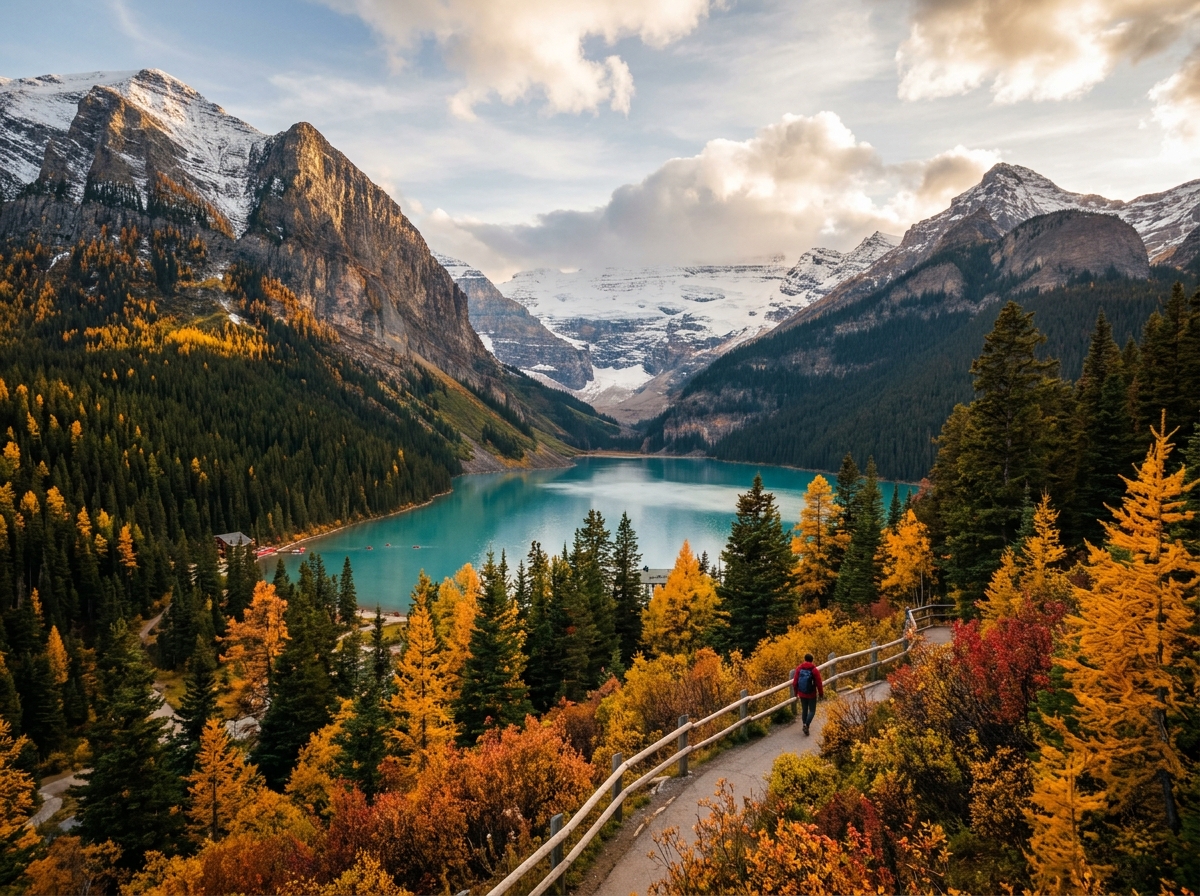
The larch trees are the reason serious Banff visitors mark late September on their calendars. The larch is the only deciduous conifer in the Canadian Rockies. In a roughly two-week window between mid and late September, the larch forests at Larch Valley near Moraine Lake, at Healy Pass, and around the Plain of Six Glaciers trail turn brilliant gold. The contrast of golden larches against the blue lakes and snow-dusted peaks is extraordinary.
Larch season is unpredictable by a week or two each year. It typically peaks between September 20th and October 5th. Check recent social media or local trail reports the week before you visit.
October brings cold mornings around 0 to 5 degrees Celsius and afternoon highs of 10 to 15 degrees in early October, dropping further as the month progresses. Early October can still catch the tail end of larch season. Mid and late October see the first significant snowfalls. The lakes begin to freeze. Wildlife is highly active preparing for winter and bear sightings are common. Crowds are minimal and hotel prices are among the lowest of the year.
November is the cheapest month to visit Banff, full stop. The ski season at Norquay, Sunshine Village, and Lake Louise opens in mid to late November. Before the slopes open, there is a brief window where Banff town has low prices and light crowds but nothing specific to draw visitors. Snow is reliable in the mountains but town can be patchy early in the month. For budget travellers who ski, arriving in early November before ski season peaks gives you some of the best hotel rates of the year.
Autumn summary:
- Weather: Cooling through September and October, cold and snowy by November
- Crowds: Low from mid-September onward
- Prices: Moderate in September, low in October and November
- Best for: Larch season (late September), fall colours, budget travel, early skiing
Winter (December, January, February, March)
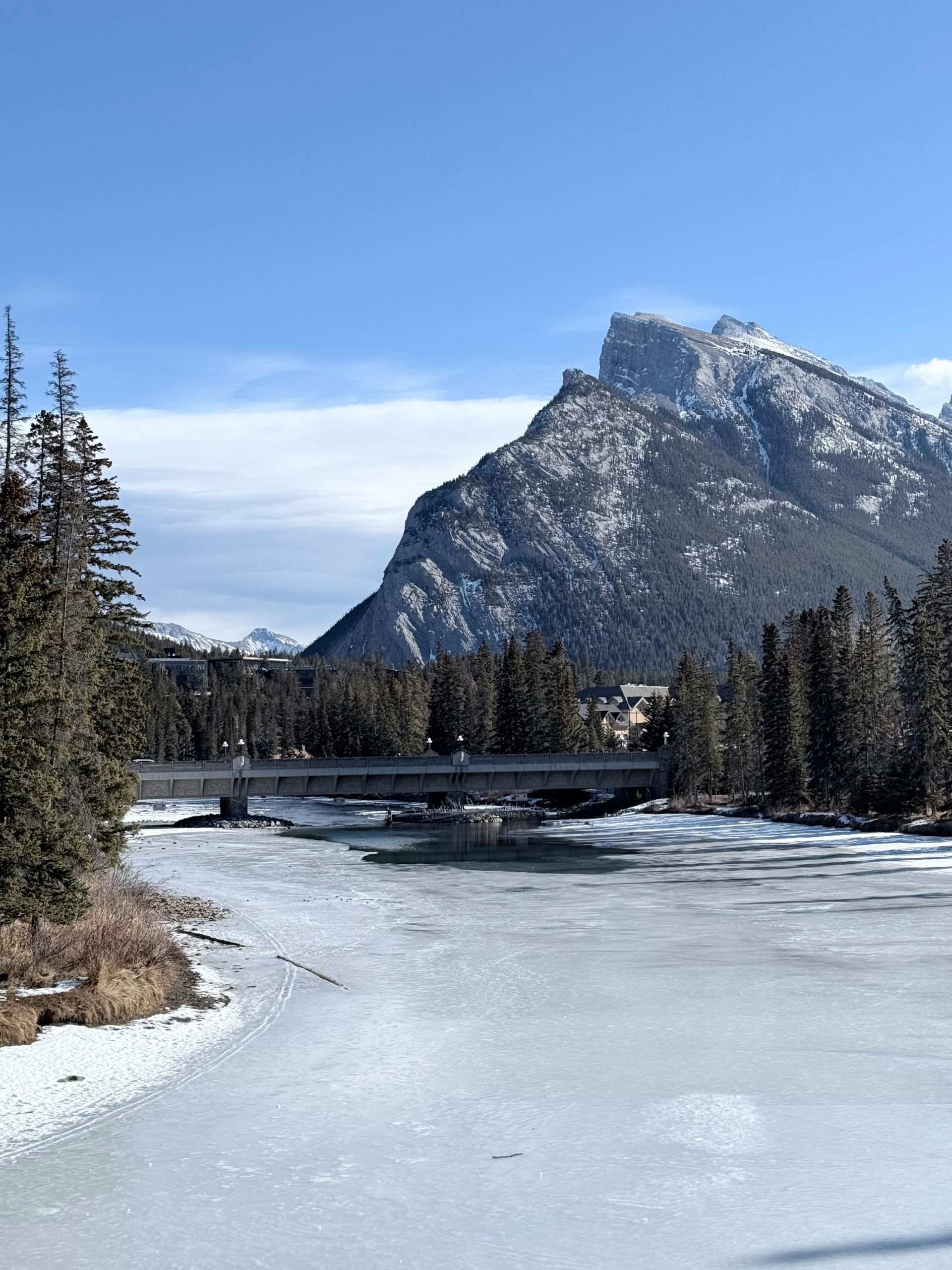
Winter in Banff is a completely different destination. The lakes freeze and turn white. Icefields Parkway becomes one of the most dramatic winter drives in the world. And the three ski areas around Banff deliver some of the best skiing in North America.
December is busy and expensive around Christmas and New Year. The Banff Christmas Market in early December is popular. The Ice Magic Festival at the Fairmont Chateau Lake Louise draws ice sculptors from around the world. Hotel prices spike over the holiday period but drop sharply in the second week of January.
January and February are the coldest months. Temperatures in town average minus 10 to minus 15 degrees Celsius with extreme cold snaps reaching minus 25 or lower. The ski conditions at Sunshine Village and Lake Louise are generally excellent in February, with deep snowpack and reliable cold temperatures. Crowds at ski areas are manageable compared to peak Christmas week.
Johnston Canyon is one of the most popular winter hikes in the Canadian Rockies. The frozen waterfall at the Upper Falls is accessible via a trail along an icy canyon, and the blue ice formations are remarkable. Wear microspikes or crampons. The trail is genuinely icy and they are not optional.
March is the best winter sports month. Days are getting longer, temperatures moderate slightly to minus 5 to minus 10 degrees, and snow quality remains excellent. Spring skiing conditions start to arrive toward the end of March.
Winter summary:
- Weather: Cold, snowy, short days in December and January, improving in March
- Crowds: High at Christmas and New Year, low in January and February
- Prices: High at Christmas, low in January and February, moderate in March
- Best for: Skiing, snowshoeing, ice walks, winter photography
Spring (April, May, Early June)
Spring is the shoulder season that most guides rush past. It deserves more attention for the right type of visitor.
April is Banff at its quietest and cheapest. Temperatures swing wildly, from plus 10 on a good day to minus 5 in a cold snap. Snow is still present on most trails above 1,800 metres. The lower valley trails are accessible. Ski areas are still running until mid to late April. Hotel prices are among the lowest of the year. Waterfalls fed by snowmelt are at their most powerful.
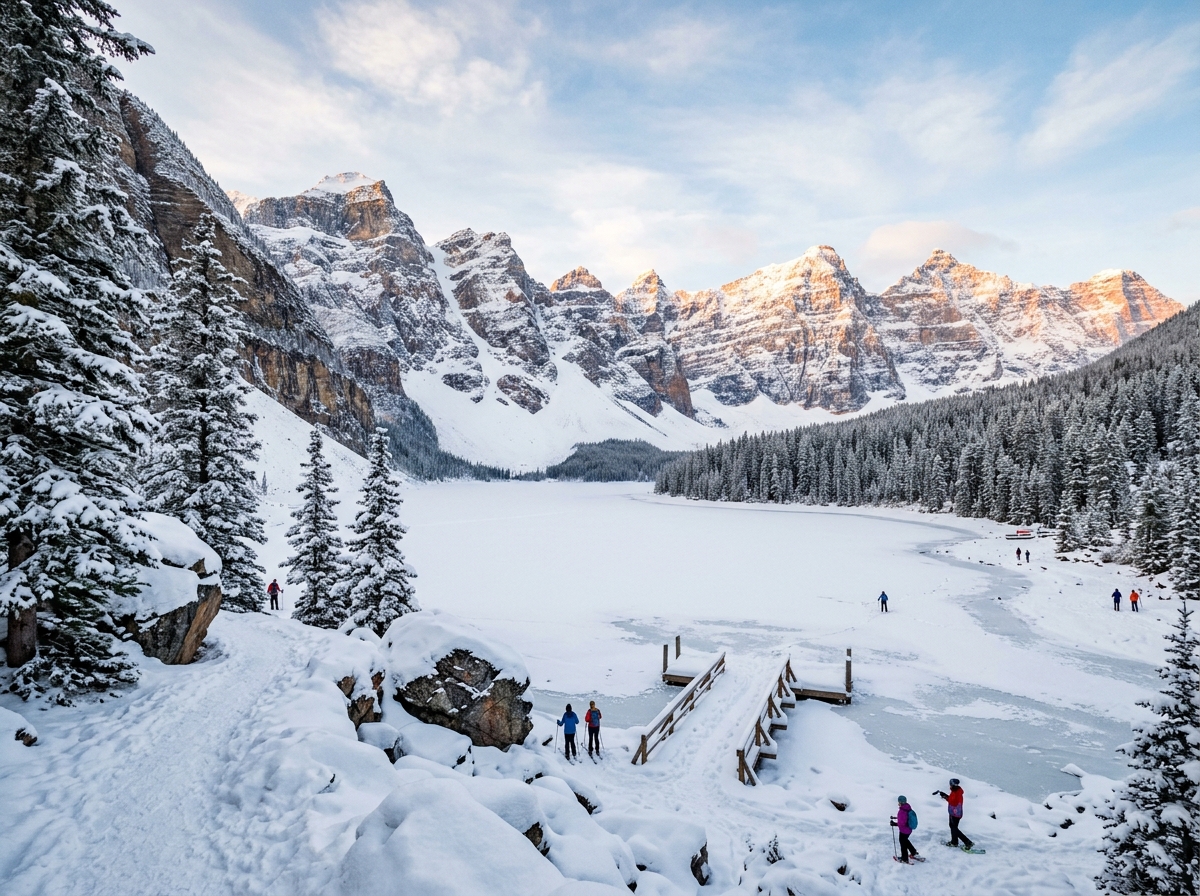
May is genuinely beautiful but unpredictable. Temperatures climb to 10 to 15 degrees Celsius in town. Ice is leaving the lakes, and the colour of the water in May before full glacial melt is a distinctive, deep teal rather than the vivid turquoise of summer. Trails at lower elevations are excellent. Higher alpine routes are still snowy. Bear activity picks up significantly in May as bears emerge from hibernation. Carry bear spray.
Early June is the transition into summer. Waterfalls are running at full force from snowmelt. Crowds are building but have not yet peaked. Some higher trails are still restricted. The lake shuttle systems typically begin in mid to late June.
Spring summary:
- Weather: Unpredictable, cold to mild, significant snowmelt
- Crowds: Very low in April, building through May and June
- Prices: Lowest of the year in April, moderate in May
- Best for: Waterfalls, budget travel, quiet trails, late skiing
Month by Month Quick Reference
| Month | Avg Temp | Crowds | Cost | Best For |
|---|---|---|---|---|
| January | -15 to -5C | Low | Low | Skiing, ice walks |
| February | -13 to -4C | Low-moderate | Low-moderate | Skiing, winter photography |
| March | -8 to 3C | Moderate | Moderate | Spring skiing, longer days |
| April | -3 to 10C | Very low | Lowest | Budget, waterfalls |
| May | 3 to 15C | Low | Low-moderate | Snowmelt, quiet trails |
| June | 8 to 22C | Moderate-high | Moderate-high | Start of hiking season |
| July | 12 to 25C | Very high | Highest | Peak hiking, lakes |
| August | 11 to 24C | Very high | Highest | Hiking, wildlife |
| September | 3 to 20C | Moderate | Moderate | Larch season, shoulder |
| October | -2 to 14C | Low | Low | Fall colours, wildlife |
| November | -8 to 5C | Very low | Lowest | Budget, early skiing |
| December | -12 to 0C | High at Christmas | High at Christmas | Ice magic, holiday events |
What Most Banff Guides Do Not Tell You
The parking situation is a genuine crisis in summer. Banff and Lake Louise have completely inadequate parking for summer visitor numbers. Moraine Lake Road is closed to private vehicles entirely. Lake Louise lot fills by 5:30 to 6am on summer weekends. The Parks Canada shuttle system covers some trailheads but not all. Plan to use shuttles, arrive before 7am, or visit on weekdays for the most popular sites.
The Parks Canada reservation system moves fast. Moraine Lake shuttle passes and some campsite reservations release in March or April for the following summer. They sell out within minutes. Check the Parks Canada website in late winter for release dates.
Bear spray is not optional from May through October. Banff National Park has one of the highest concentrations of grizzly and black bears in North America. Carrying bear spray and knowing how to use it is strongly recommended by Parks Canada for any trail. Most outdoor shops in Banff town rent bear spray by the day.
The Icefields Parkway can close without warning in winter. The 230-kilometre highway between Banff and Jasper is one of the most spectacular drives in the world but is closed periodically in winter due to avalanche control or extreme weather. If a Parkway drive is central to your winter trip, build flexibility into your schedule.
Larch season has a two-week window and is worth planning your entire trip around. No other sight in Banff, including the summer lakes, generates the same emotional response in experienced visitors. It is genuinely extraordinary. And because it is in late September when summer crowds have left, you experience it in relative peace.
For any Banff trip involving hiking, a good set of trekking poles is worth bringing, especially for trails with significant elevation gain or descent. The Black Diamond Trail Ergo Cork Trekking Poles (available on Amazon) are lightweight, have comfortable cork grips that manage sweat well on warm summer hikes, and collapse compact for travel. The cork grip is especially valued for the long uphill sections on trails like Plain of Six Glaciers and Sentinel Pass.
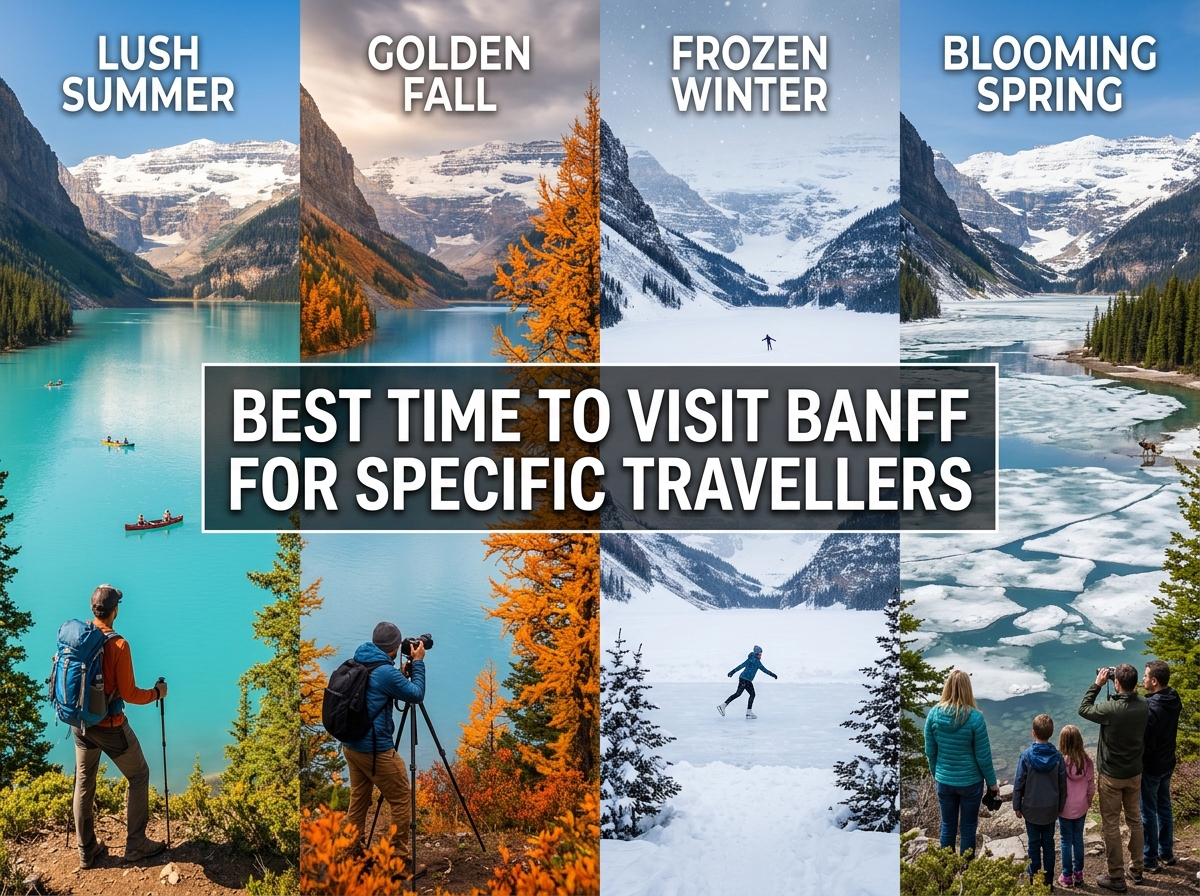
Best Time to Visit Banff for Specific Travellers
For hikers: Late June through mid-September. Every trail is open, lakes are accessible, and the days are long. July and August have the best conditions and the most competition for parking.
For skiers and snowboarders: January through March. February offers the best combination of snow quality, manageable crowds, and reasonable prices outside of Christmas peak.
For photographers: Late September for larch season. February for frozen lakes and blue ice at Johnston Canyon. Sunrise in July at Moraine Lake if you can get a shuttle reservation.
For budget travellers: November before ski season peaks, April before hiking season starts, or January and February outside holiday periods. Hotel prices in these months can be 40 to 60 percent lower than summer peak.
For families: Late June or early September. School holiday crowds have not peaked or have just left. Weather is reliable. Wildlife viewing is excellent in September as animals prepare for winter.
For wildlife viewing: May and June for bears emerging from hibernation. September and October for elk rut, when bull elk bugle and herd females through the Bow Valley. November for wolves occasionally visible in the valley.
For first-time visitors: Late August or early September. The weather is still excellent, summer crowds are beginning to thin, and you experience the best of Banff without the extreme July peak pressure on parking and accommodation.
Practical Tips for Every Season
Book accommodation early for summer. Hotels and Airbnbs in Banff town and the Lake Louise area fill up months in advance for July and August. For a summer visit, six months ahead is not excessive for peak dates.
Pack layers in every season. Banff sits at 1,383 metres elevation. Weather in the mountains changes rapidly. An afternoon that starts at 22 degrees can become cold and rainy within an hour. A packable waterproof jacket is essential in summer. Down layers are essential in autumn and winter.
Get a Parks Canada Discovery Pass. If you are spending more than a few days in the park, the Parks Canada annual Discovery Pass covers park entry fees at all national parks across Canada. For a week in Banff it pays for itself on day two.
The Bow Valley Parkway is the better alternative to the Trans-Canada. The 48-kilometre Bow Valley Parkway between Banff town and Lake Louise runs parallel to the Trans-Canada Highway but at lower speed through denser wildlife habitat. It is frequently closed for 2 hours in early morning and early evening in summer to protect wildlife. When open, it is one of the most scenic drives in the park and wildlife sightings are more common here than on the main highway.
For winter visits to Banff, having proper cold-weather handwear makes the difference between genuinely enjoying the experience and wanting to cut your day short. The Outdoor Research Alti Mitts (available on Amazon) are rated to extreme cold, have a waterproof shell, and are widely used by skiers and winter hikers in the Canadian Rockies for days when temperatures drop below minus 15 degrees.
Use the Roam Transit bus. The Roam Transit bus system connects Banff town, Lake Louise, and the Banff Springs Hotel area and runs year-round. For visitors without a car, it covers the main destinations reliably and cheaply. Day passes are good value.
For a Banff trip covering multiple days of outdoor activity across seasons, a weather-resistant daypack with enough space for layers, snacks, water, and bear spray without becoming cumbersome is essential. The Gregory Targhee 26L Daypack (available on Amazon) is purpose-built for mountain day hikes, has an integrated rain cover, and fits comfortably for full-day hikes with proper weight distribution.
Frequently Asked Questions
What is the best month to visit Banff?
For most visitors, September is the best single month. The summer crowds have thinned, hotel prices drop, larch season peaks in late September, wildlife is very active, and the weather is still comfortable for hiking. July is the best month if reliable warm weather and all trails being open is the priority.
When is Banff cheapest to visit?
November and April are the cheapest months. Hotel prices drop significantly in these shoulder periods. January and February outside of Christmas week are also notably cheaper than summer rates.
Is Banff worth visiting in winter?
Absolutely. The three ski areas, Sunshine Village, Lake Louise Ski Resort, and Mount Norquay, are world-class. Johnston Canyon’s frozen waterfalls are extraordinary. The town of Banff is charming and well-equipped in winter. It is a completely different experience from summer but fully rewarding on its own terms.
When do the Banff lakes look most turquoise?
The lakes are at peak turquoise colour from late June through August when glacial meltwater is flowing at maximum volume. The glacial rock flour suspended in the water is what creates the colour. Lake Louise typically reaches peak colour in July. Moraine Lake is most vivid in late June and July.
What is larch season in Banff?
Larch season is the two-week period in late September when the larch trees in the alpine zones of Banff turn from green to gold. Larch Valley near Moraine Lake, Healy Pass, and the Plain of Six Glaciers area are the best locations. It is considered by many experienced visitors to be the single most beautiful thing to see in Banff National Park.
Do I need bear spray in Banff?
Parks Canada strongly recommends carrying bear spray on any trail in the park from May through October. Banff has high grizzly and black bear populations. Bear spray is available to rent or buy from outdoor shops in town. Know how to use it before you head out.
How far is Banff from Calgary?
Banff town is approximately 128 kilometres west of Calgary on the Trans-Canada Highway. The drive takes approximately 90 minutes in good conditions. Calgary International Airport is the main gateway for most international visitors.
Final Thoughts
Banff does not have a bad season. It has four completely different seasons, each worth experiencing.
The summer gives you the full turquoise lake experience and the full hiking season. Autumn gives you the larch trees and the quietest, most atmospheric version of the park. Winter gives you world-class skiing and a landscape of extraordinary stillness. Spring gives you powerful waterfalls, low prices, and the sense of a place just waking up.
Pick the version that matches what you came for. And if you can only go once, late September puts you in Banff at the exact moment when it is most beautiful and least crowded at the same time. That combination does not come around often.