Tokyo is the largest city on Earth. It has more Michelin-starred restaurants than any other city in the world. Its subway system is so precise that delays of more than a minute trigger formal apologies. And it somehow manages to feel both overwhelming and completely safe at the same time.
Most first-time visitors arrive with a list of famous places and leave wishing they had planned differently. Not because they chose badly, but because Tokyo is 23 distinct wards, each with its own personality, and the best experiences are spread across all of them.
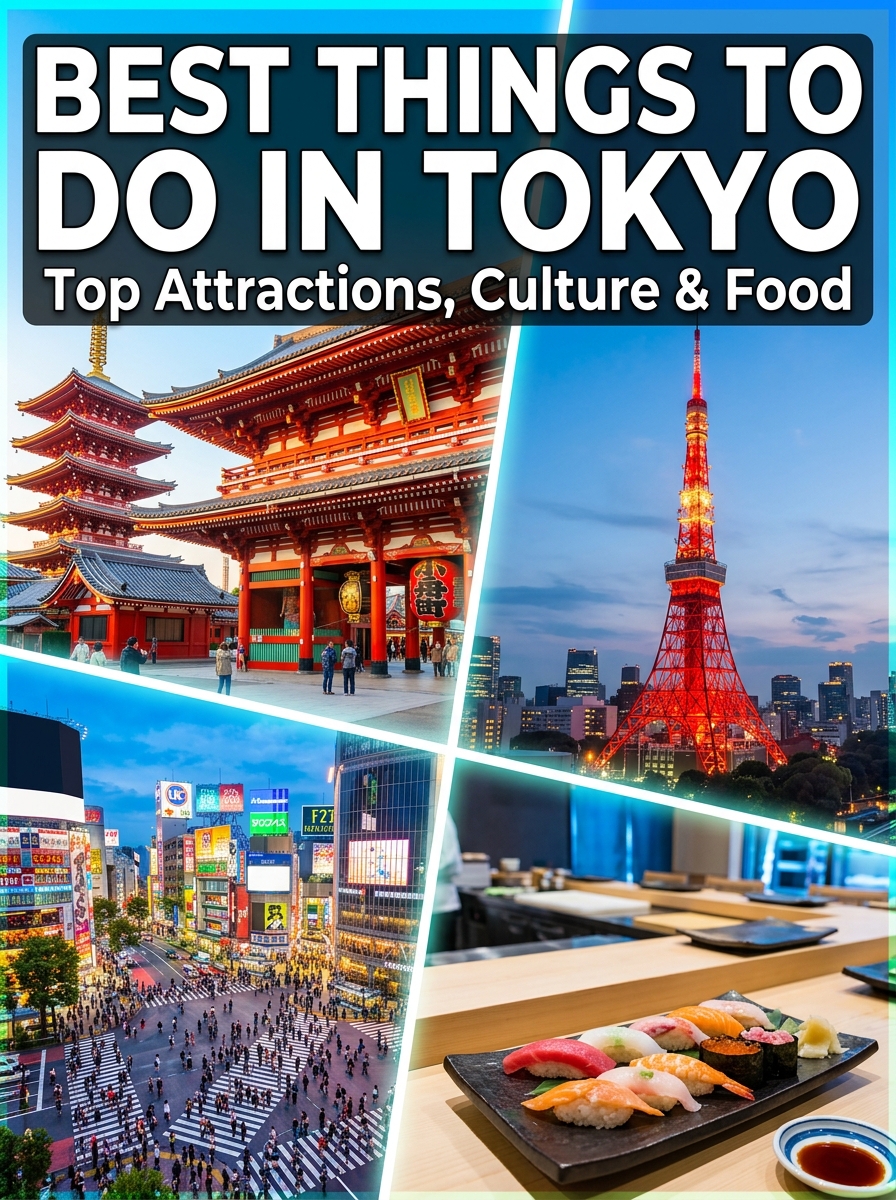
This guide covers the best things to do in Tokyo with honest practical advice, neighbourhood context, and the things most travel articles never mention.
Quick Answer: Best Things to Do in Tokyo
For a first visit, start with Senso-ji temple in Asakusa, Shibuya Crossing and Shibuya Sky, Shinjuku at night, and Akihabara for tech and pop culture. Add Harajuku and Meiji Shrine for contrast, and at least one proper ramen or sushi meal away from tourist areas.
For deeper Tokyo, explore Yanaka for old-city atmosphere, Shimokitazawa for vintage culture, and Nakameguro canal in the evening.
Iconic Tokyo Experiences You Should Not Skip
Senso-ji Temple and Asakusa
Senso-ji is Tokyo’s oldest temple, built in 628 AD, and it is one of the most visited spiritual sites in the world. The approach along Nakamise shopping street, through the giant Kaminarimon gate with its enormous red lantern, is genuinely spectacular even with the crowds.
Go early. Before 8am, Senso-ji belongs to locals, monks, and a handful of early risers. The incense smoke rises through quiet air. After 10am, the crowds are substantial. Both versions of the temple are worth experiencing but they are completely different.
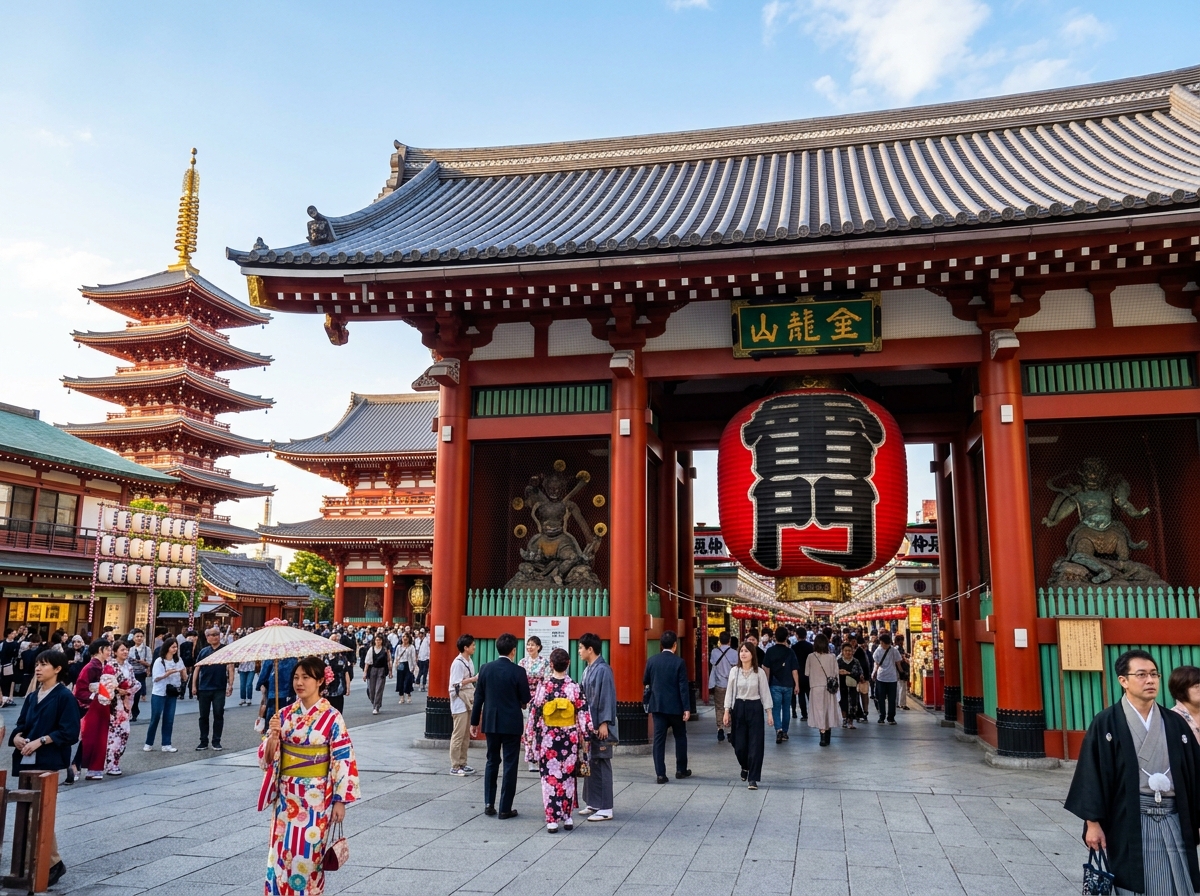
The Asakusa neighbourhood around the temple rewards an extra hour of wandering. Traditional craft shops, senbei rice cracker vendors, and the Nakamise arcade selling genuinely good local snacks are all here. Hoppy Street behind the temple area has old-school yakitori bars that have barely changed in 60 years.
Best time to visit: Weekday mornings before 9am Getting there: Asakusa Station on the Ginza or Toei Asakusa line
Shibuya Crossing and Shibuya Sky
Shibuya Crossing is the most famous pedestrian intersection in the world. Up to 3,000 people cross simultaneously from all directions when the lights change. Standing in the middle of it is a genuinely surreal, uniquely Tokyo experience. Walking it multiple times is completely normal.
But the view from above is even better. Shibuya Sky, the rooftop observation deck of Shibuya Scramble Square, puts you 230 metres above the crossing with a 360-degree view of Tokyo that stretches to Mount Fuji on clear days.
Shibuya Sky ticket warning: Tickets are released two weeks in advance at midnight Japan time and sunset slots sell out within 15 minutes. This is not an exaggeration. Set a reminder for exactly two weeks before your preferred sunset date and buy immediately when they go live at the official Shibuya Sky website.
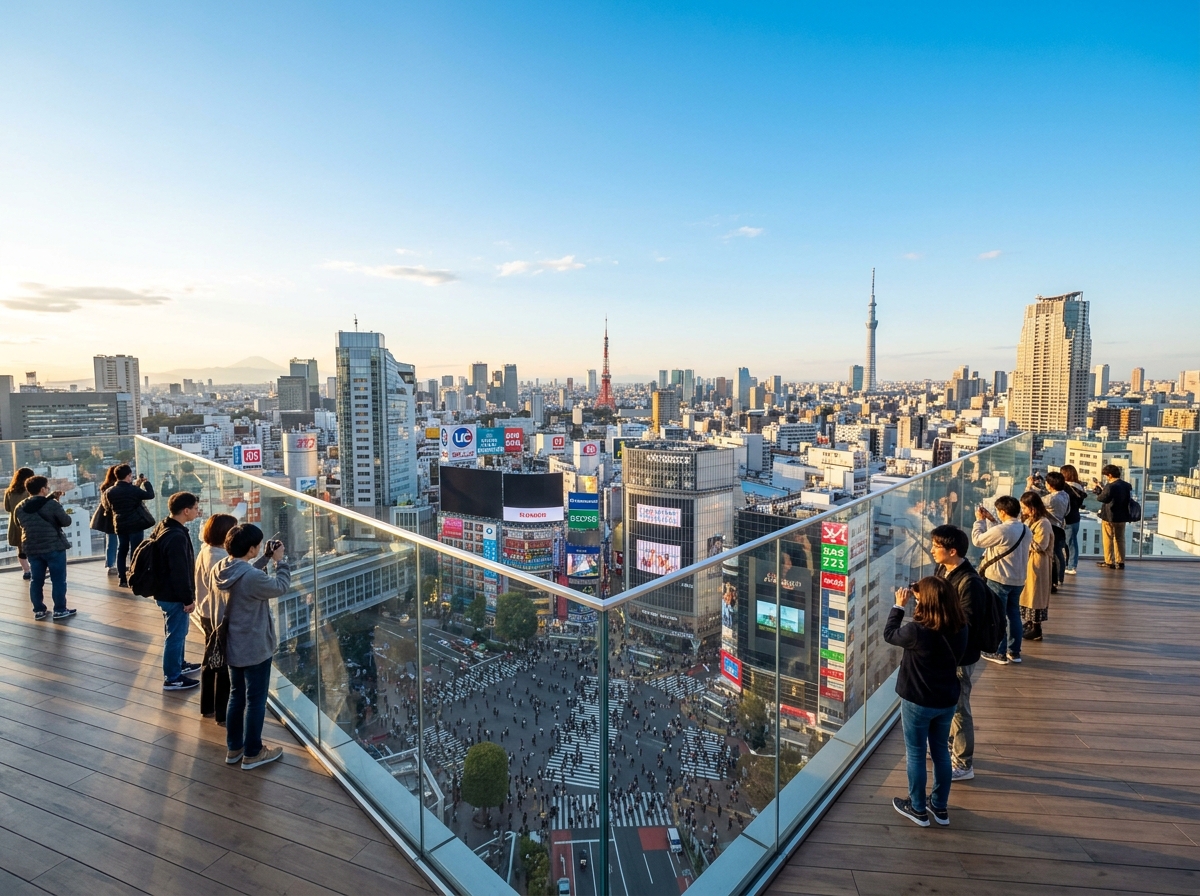
Best for: Photography, iconic Tokyo experience, views Getting there: Shibuya Station, multiple lines
Meiji Shrine and Harajuku
Meiji Shrine sits inside a 70-hectare forested area in the middle of one of the world’s most built-up cities. The walk through the towering torii gate and along the wide gravel path through the forest creates a sense of stillness that feels impossible given Tokyo’s density around it.
Immediately beside the shrine, Harajuku’s Takeshita Street is the exact opposite: narrow, loud, colourful, and packed with teenagers in elaborate fashion. Crepe stands, vintage shops, and every subculture Tokyo has ever produced exist within a few hundred metres. The contrast between the shrine’s forest and Takeshita Street is one of those only-in-Tokyo moments.
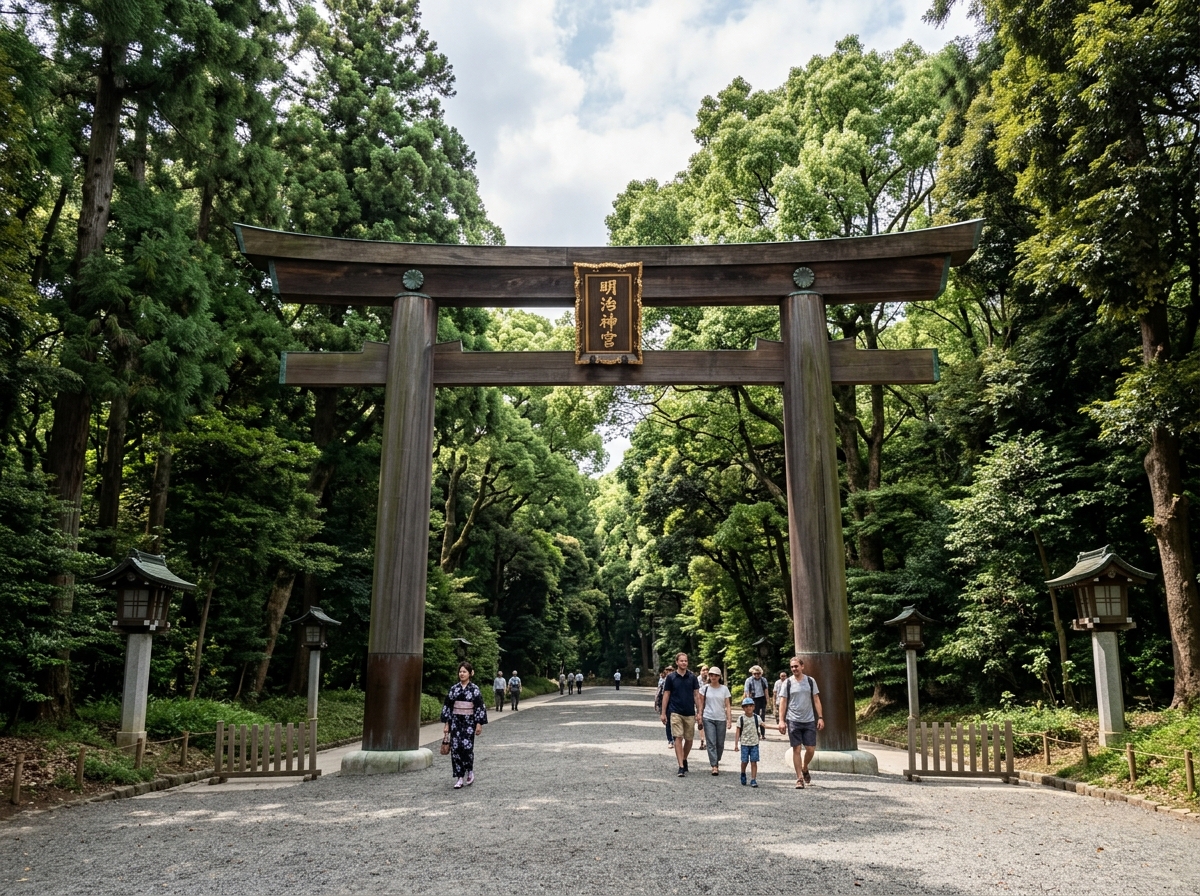
Omotesando, the wide boulevard a short walk from Harajuku Station, is Tokyo’s most architecturally interesting shopping street. Herzog and de Meuron’s Prada building, Tadao Ando’s Omotesando Hills complex, and a series of flagship buildings by major international architects line both sides.
Best for: Culture, architecture, fashion, contrast Getting there: Harajuku Station on the Yamanote line
Best Neighbourhoods to Explore
Shinjuku
Shinjuku is where Tokyo’s scale becomes undeniable. Shinjuku Station is the busiest train station in the world, handling over three million passengers per day. The east side has Kabukicho, Japan’s largest entertainment and nightlife district. The west side has skyscrapers, including the Tokyo Metropolitan Government Building with a free observation deck.
Golden Gai, a network of tiny alleyways in east Shinjuku packed with roughly 200 bars, each seating between 5 and 8 people, is one of the most atmospheric drinking experiences in Asia. Many bars have a cover charge (otoshi or seating charge) of around 500 to 1,000 yen per person. Most welcome tourists, especially bars with English signage outside. Walk in, ask if there is room, and settle into a conversation with whoever else is there.
Omoide Yokocho (Memory Lane), a few minutes from the station near the west exit, is a narrow alley of yakitori stalls where grilled chicken skewers cook over charcoal and smoke fills the air. It dates back to the post-war period and feels genuinely unchanged.
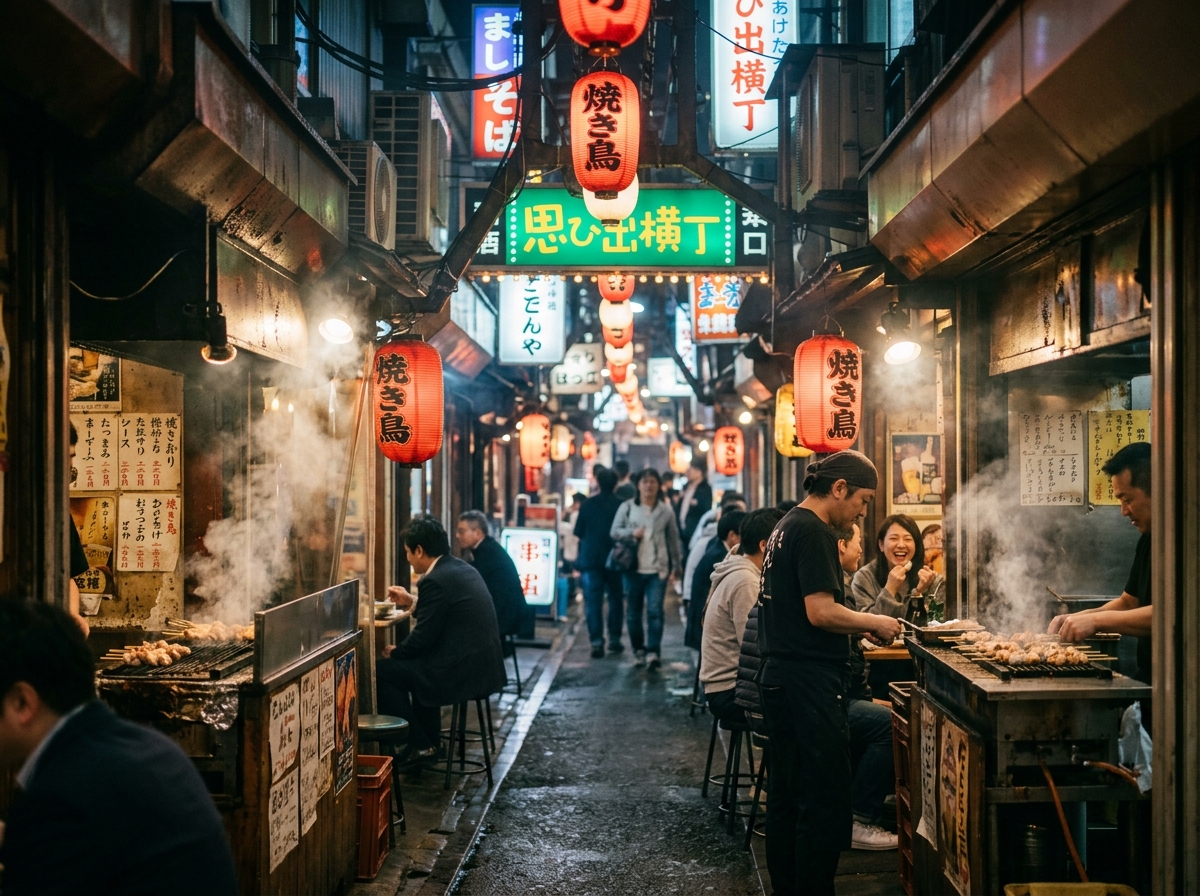
Best time to visit: Evening and night. Shinjuku comes alive after 8pm.
Akihabara
Akihabara is Tokyo’s electronics and pop culture district and it is completely unlike anywhere else in the world. Multi-storey buildings sell everything from vintage electronics components to the latest gaming hardware to an entire floor of anime merchandise.
Yodobashi Camera and BIC Camera are the main electronics megastores with competitive prices. The floors dedicated to retro games and consoles in the side streets are extraordinary for anyone who grew up gaming. Maid cafes, where staff in maid uniforms serve food and drinks with theatrical enthusiasm, are a genuinely unique Tokyo institution if you approach them with curiosity rather than embarrassment.
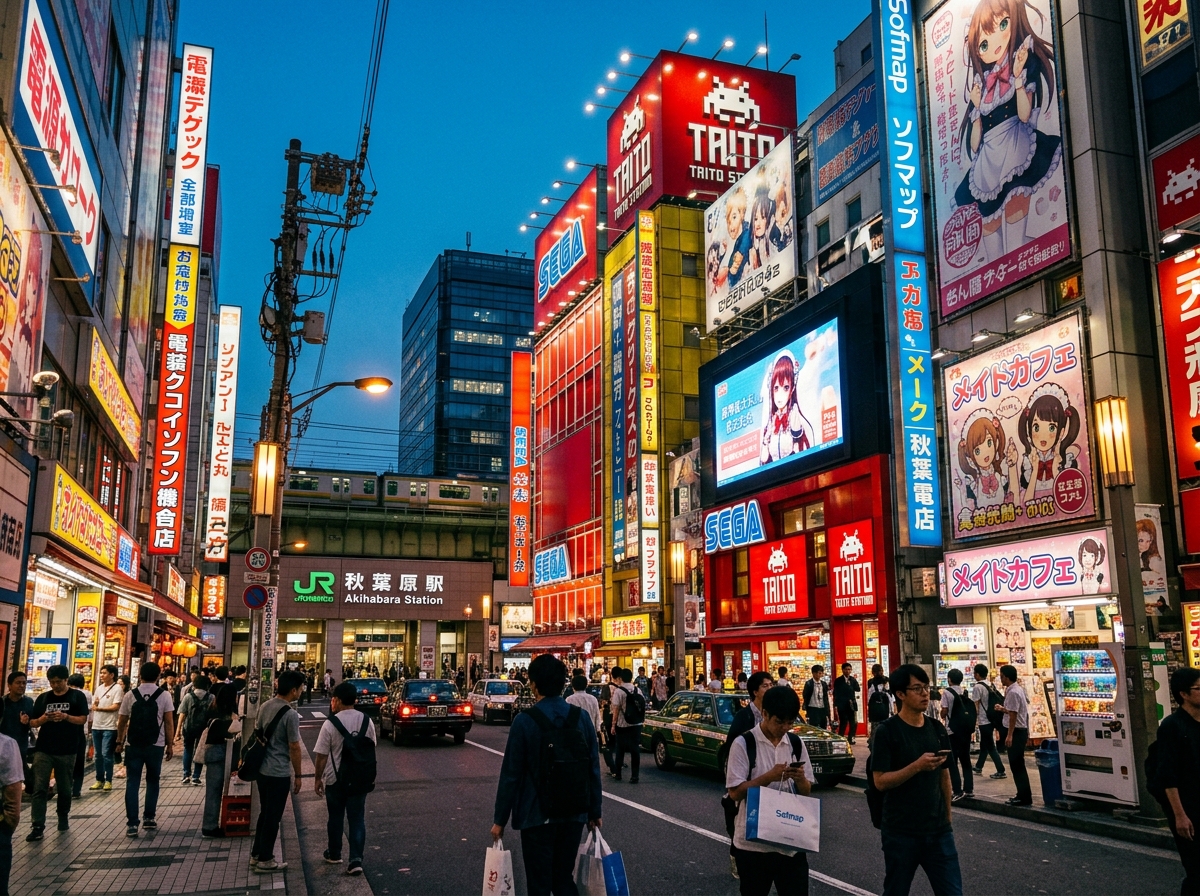
Best for: Technology, gaming, anime culture, electronics shopping Getting there: Akihabara Station on the Yamanote or Sobu line
Yanaka
Yanaka survived the 1923 Great Kanto Earthquake and the Second World War bombing largely intact. It is one of the few areas of Tokyo that still looks and feels like old shitamachi (downtown) Tokyo.
The Yanaka Ginza shopping street, a narrow covered arcade of small independent shops, is a window into neighbourhood life that most tourist areas cannot replicate. The cemetery behind it is famous for its cherry blossoms in spring and is a genuinely peaceful place to walk. Cat cafes, traditional craft workshops, and tiny family-run restaurants fill the surrounding streets.
Best for: Old Tokyo atmosphere, photography, slow exploration, history
Shimokitazawa
Shimokitazawa is Tokyo’s bohemian neighbourhood. Vintage clothing shops, independent theatres, jazz bars, and small live music venues fill streets that are too narrow for most cars. It is where Tokyo’s artists, musicians, and students congregate.
If you want to understand a different side of Tokyo from the skyscrapers and neon, an afternoon in Shimokitazawa is the most efficient way to find it.
Getting there: Shimokitazawa Station on the Odakyu or Keio Inokashira line
Best Food Experiences in Tokyo
Tokyo has more Michelin stars than Paris, Lyon, and New York combined. But some of the best meals in the city cost under 1,000 yen.
Ramen
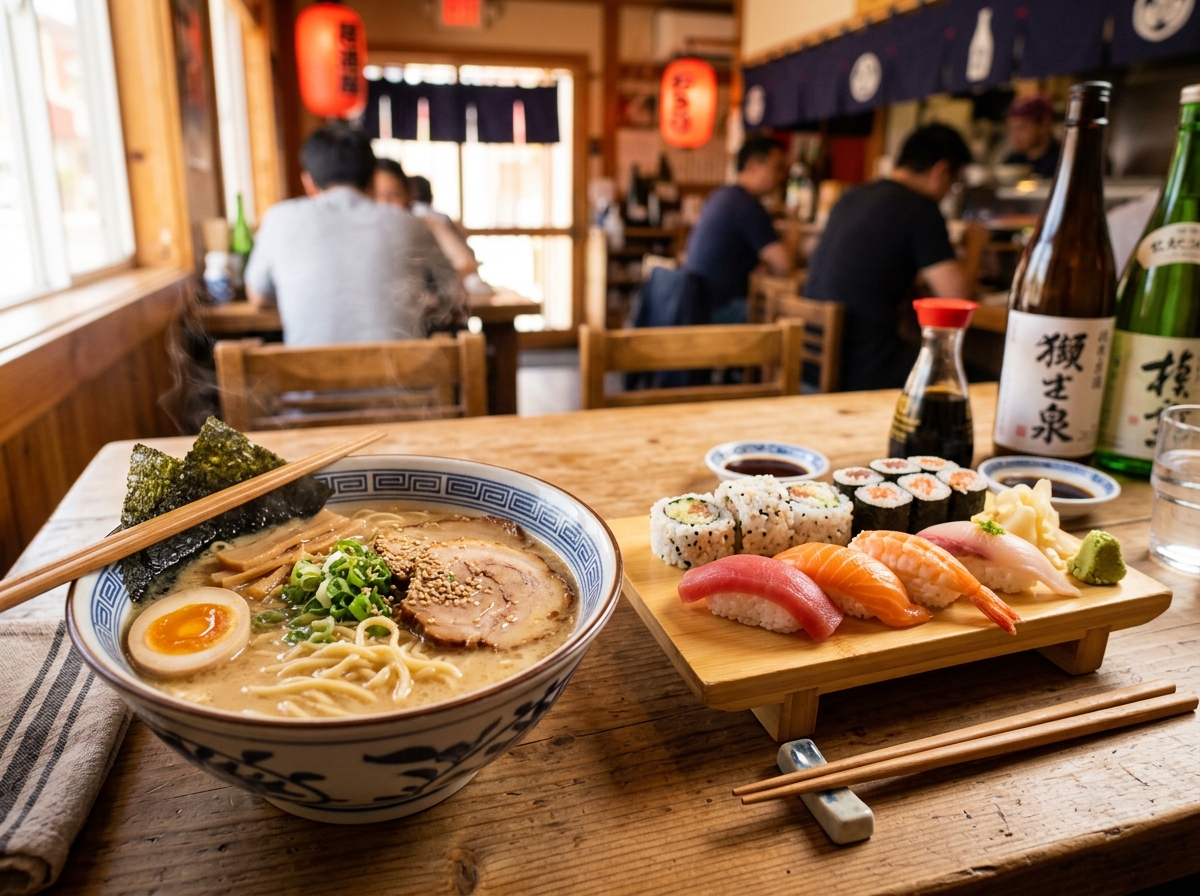
Tokyo-style ramen uses a clear soy-based broth called shoyu ramen. It is lighter and more precise than the tonkotsu (pork bone) ramen popular in the south. Fuunji in Shinjuku is one of the best tsukemen (dipping ramen) restaurants in the city with a line that forms before opening. Ichiran, a chain with individual booths for solo dining, is a good introduction if you are overwhelmed by choice.
Sushi
Tsukiji Outer Market, the area around the former fish market that remains active for street food and small restaurants, is still the best place for morning sushi in Tokyo. A set of tuna, salmon, and sea urchin nigiri at a small standing counter costs around 1,500 to 2,000 yen and is extraordinary.
For a sit-down experience, conveyor belt (kaiten) sushi restaurants like Sushiro and Kura Sushi deliver genuinely good quality at 120 to 220 yen per plate.
Izakaya Culture
An izakaya is a Japanese pub, somewhere between a bar and a restaurant where food and drinks arrive continuously throughout the evening. Ordering drinks first and then selecting small plates of yakitori, edamame, karaage (fried chicken), and sashimi over two to three hours is the most authentic way to eat in Tokyo with a group.
Yurakucho, the area under the train tracks near Yurakucho Station, has rows of izakayas in the brick arches beneath the Yamanote line. Atmospheric, affordable, and genuinely local.
Convenience Store Food
This sounds like a tip for budget emergencies. It is not. Japanese convenience stores, 7-Eleven, FamilyMart, and Lawson, are a food culture in themselves. Fresh onigiri (rice triangles), hot oden (braised vegetables and fish cakes), and surprisingly good sandwiches made fresh daily are available at every one of them, 24 hours a day. Many visitors eat convenience store breakfast every morning not because of cost but because the quality genuinely earns it.
For anyone who loves Japanese food culture and wants to understand it before arriving, the Japan: The Cookbook by Nancy Singleton Hachisu (available on Amazon) is the most comprehensive English-language guide to Japanese cooking and food culture, written by someone who has lived in rural Japan for decades. Reading it before the trip makes every meal in Tokyo more meaningful.
Best Views in Tokyo
Tokyo Skytree
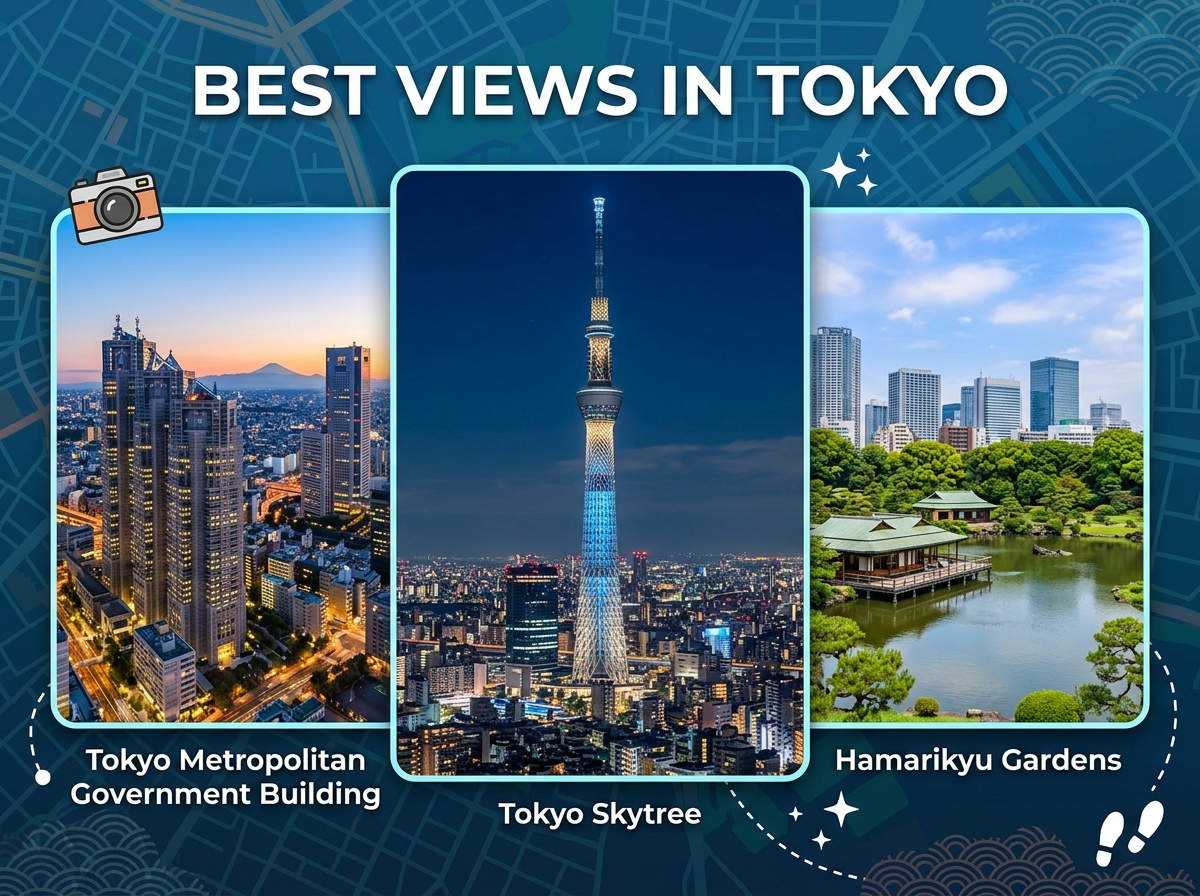
At 634 metres, Tokyo Skytree is the tallest tower in the world. The observation decks at 350 and 450 metres offer extraordinary views over the city in all directions. On clear winter days, Mount Fuji is visible to the southwest.
Tickets can be bought on the day but queues are long on weekends. Book online in advance to skip the queue. The Skytree Town at the base has a surprisingly good aquarium and shopping complex worth exploring.
Address: 1 Chome-1-2 Oshiage, Sumida City
Tokyo Metropolitan Government Building (Free)
The west side of Shinjuku has a free observation deck at 202 metres in the Tokyo Metropolitan Government Building. It opens until 10:30pm most nights. The view is not as dramatic as Skytree or Shibuya Sky but it costs nothing and the night view of Shinjuku from above is genuinely impressive.
Hamarikyu Gardens
Hamarikyu is a traditional tidal garden built on the edge of Tokyo Bay. The view from the garden path looks across the water to the Sumitomo and Dentsu skyscrapers in the Shiodome district with a teahouse in the foreground. It is one of the most photographed contrasts in Tokyo.
The garden also connects to the Sumida River boat service that runs up to Asakusa, making it a scenic way to combine two attractions.
Things Most Tokyo Guides Do Not Tell You
Tokyo is a night city. Many shops, cafes, and restaurants do not open until 11am or noon. Planning early morning sightseeing followed by immediate shopping does not work. Start at temples and shrines (which open at dawn), then move to commercial areas after midday.
Do not tip. Tipping is not part of Japanese culture and can cause confusion or embarrassment. At restaurants, hotels, and taxis, simply pay the bill. In some cases, attempting to tip is politely declined.
Get an IC card immediately. The Suica or Pasmo IC cards are rechargeable transport cards that work on every subway, JR train, bus, and even many convenience stores and vending machines in Tokyo. Buy one at any major station arrival hall with 2,000 yen (1,500 yen card credit plus 500 yen deposit). It removes the need to buy individual tickets for every journey.
Cash still matters. Tokyo is more card-friendly than it was but many smaller restaurants, temple entry points, and traditional shops are cash only. Always carry at least 3,000 to 5,000 yen in cash. ATMs at 7-Eleven convenience stores accept foreign cards reliably.
The subway map is less complicated than it looks. Tokyo has 13 metro lines and multiple additional JR lines. It looks terrifying on a map. In practice, Google Maps gives you exact line, platform, and transfer instructions. Follow it exactly and the system becomes easy within one day.
Plan by neighbourhood, not by list. Trying to visit Senso-ji in the morning, Shibuya at noon, and Akihabara in the afternoon means spending two hours on the subway. Cluster activities by area. Asakusa and Ueno are neighbours. Shibuya, Harajuku, and Omotesando are walkable from each other. Shinjuku is its own full day.
Best Day Trips from Tokyo
Nikko: A UNESCO World Heritage site two hours north of Tokyo with elaborately decorated shrines and temples set in mountain cedar forest. The Tosho-gu Shrine is one of the most ornate buildings in Japan.
Kamakura: One hour south by train. The Great Buddha (Kotoku-in) is 13 metres tall and has sat in the open air since the 14th century when its hall was washed away by a tsunami. The hiking trail between Kamakura’s temples is one of the best half-day walks near Tokyo.
Hakone: 90 minutes from Shinjuku. An open-air sculpture museum, hot spring ryokan (traditional inn) stays, and the clearest views of Mount Fuji available from Tokyo’s accessible day-trip range. The Hakone Free Pass covers all transport within the area.
Kyoto: Shinkansen from Tokyo Station takes two hours and 15 minutes. If you have four days or more in Japan, a night in Kyoto is absolutely worth the journey.
Practical Tips for Visiting Tokyo
Pocket WiFi or SIM card: Japan’s mobile network does not work with many foreign SIM cards on older plans. Rent a pocket WiFi device at the airport on arrival (available from counters in the arrivals hall at both Narita and Haneda) or buy a data SIM from a convenience store. Staying connected matters in Tokyo because navigation is everything.
Luggage forwarding (takkyubin): If you are travelling between cities in Japan, takkyubin luggage forwarding services let you send your suitcase ahead to your next hotel for around 1,500 to 2,500 yen. You travel light on the Shinkansen and your bag arrives the next morning. It is one of the most civilised travel services in the world.
Learn two phrases: “Sumimasen” (excuse me or sorry) and “Arigatou gozaimasu” (thank you very much). Using them correctly and genuinely will improve every interaction with locals.
Shoes you can remove easily: Many traditional restaurants, ryokan, and some temples require removing shoes at the entrance. Slip-on shoes or shoes without complex lacing save significant time and awkwardness.
For any serious Tokyo trip involving multiple days of walking, the right footwear makes a measurable difference. The Skechers Men’s or Women’s Go Walk Max sneakers (available on Amazon) are the most recommended everyday walking shoe for Japan trips: lightweight, extremely cushioned for hours of city walking, and slip-on for easy removal at restaurants and shrines.
Respecting quiet culture: Tokyo’s trains and public spaces operate on a code of quiet. Phone calls on the subway are avoided. Loud conversations draw attention. Eating while walking is generally considered impolite outside festival settings. Observing and matching local behaviour is one of the fastest ways to feel comfortable in the city.
Best Things to Do in Tokyo by Traveller Type
First-time visitors: Senso-ji, Shibuya Crossing, Shibuya Sky, Meiji Shrine, Shinjuku at night, Akihabara, one good ramen meal, and a conveyor belt sushi lunch.
Food lovers: Tsukiji Outer Market for breakfast sushi, izakaya evening in Yurakucho, ramen at Fuunji, conveyor belt sushi at Sushiro, depachika (department store basement food halls) at Isetan in Shinjuku or Mitsukoshi in Ginza.
History and culture: Senso-ji, Meiji Shrine, the Tokyo National Museum in Ueno, Yanaka neighbourhood, a tea ceremony experience in Asakusa or Omotesando.
Pop culture and technology: Akihabara for gaming and anime, TeamLab Planets or teamLab Borderless for digital art, Harajuku Takeshita Street, Shibuya 109 department store, Nintendo Tokyo in Shibuya.
Families: Tokyo Disneyland or DisneySea (book tickets online in advance), Ueno Zoo, the National Museum of Nature and Science, Tokyo Skytree, Odaiba waterfront.
Night owls: Golden Gai in Shinjuku, Omoide Yokocho yakitori, Roppongi for late-night bars, Kabukicho entertainment district, and any 24-hour ramen shop when the night winds down.
Quick Reference Table
| Activity | Neighbourhood | Book Ahead? | Cost |
|---|---|---|---|
| Senso-ji Temple | Asakusa | No | Free |
| Shibuya Crossing | Shibuya | No | Free |
| Shibuya Sky | Shibuya | Yes (2 weeks out) | 2,000 yen |
| Meiji Shrine | Harajuku | No | Free |
| Tokyo Skytree | Oshiage | Recommended | 2,100 to 3,100 yen |
| Tokyo Met. Govt Building | Shinjuku | No | Free |
| Golden Gai bars | Shinjuku | No | 500 to 3,000 yen per bar |
| Tsukiji Outer Market | Tsukiji | No | Varies |
| TeamLab Planets | Toyosu | Yes | 3,200 yen |
| Hamarikyu Gardens | Shiodome | No | 300 yen |
Frequently Asked Questions
How many days do you need in Tokyo?
Four to five days covers the main highlights without rushing. A week lets you add day trips and explore deeper neighbourhoods. Tokyo genuinely rewards extra time. Most visitors wish they had stayed longer.
Is Tokyo expensive?
Less than most people expect. Street food and convenience store meals cost 400 to 1,000 yen. A bowl of ramen at a good restaurant is around 900 to 1,500 yen. The subway costs 170 to 300 yen per journey. Hotels range from 4,000 yen per night at capsule hotels to 30,000 yen and above at mid-range Western hotels. Fine dining can cost significantly more but is optional.
Is Tokyo safe for solo travellers?
Extremely. Tokyo consistently ranks as one of the safest major cities in the world. Solo female travellers report feeling comfortable in ways unusual for any city of this size. Late-night walking, using public transport alone, and exploring unfamiliar neighbourhoods are all considered safe by local and visitor standards.
Do people in Tokyo speak English?
In tourist areas, restaurants, and hotels, English signage and basic English communication are common. Outside those areas, English is less reliable. Google Translate’s camera function, which translates text in real time through your phone camera, is genuinely useful for menus and signage in smaller establishments.
What should I eat in Tokyo?
Ramen, sushi, tempura, yakitori, tonkatsu (breaded pork cutlet), gyoza, and takoyaki (octopus balls from street stalls) are all excellent entry points. Convenience store onigiri for breakfast. A standing sushi counter at Tsukiji at 7am. An izakaya dinner in Yurakucho in the evening. These three alone would make a Tokyo trip worthwhile.
What is the best way to get around Tokyo?
The subway. It is cheap, fast, clean, and goes everywhere. Get a Suica or Pasmo IC card at the airport on arrival and tap in and out of every journey. Google Maps gives exact directions, including line names, platform numbers, and transfer times. Walking between nearby stations is often faster and more interesting than transferring.
What should I not do in Tokyo?
Do not tip. Do not eat or make phone calls on the subway. Do not stick chopsticks upright in a bowl of rice (a funeral custom). Do not miss Shibuya Sky because you did not book tickets in time. And do not try to see the whole city in three days. Choose fewer things and experience them properly.
Final Thoughts
Tokyo is one of those cities that keeps changing the longer you stay. The first day is overwhelming. The second day starts to make sense. By the fourth day you have a favorite ramen shop, a subway line you understand instinctively, and a neighborhood you keep returning to without fully knowing why.
Give it time. Plan loosely. Eat constantly. And go back one more day than you originally planned. Tokyo almost always earns it.