Ireland is smaller than you think and more varied than most people expect.
You can drive from Dublin to Galway in under two and a half hours. The entire island is roughly the size of Indiana. But within that compact geography you have some of the most dramatic Atlantic coastline in Europe, medieval cities that have barely changed in centuries, bogland landscapes unlike anything in the world, and a pub culture that is genuinely one of the best social institutions on Earth.
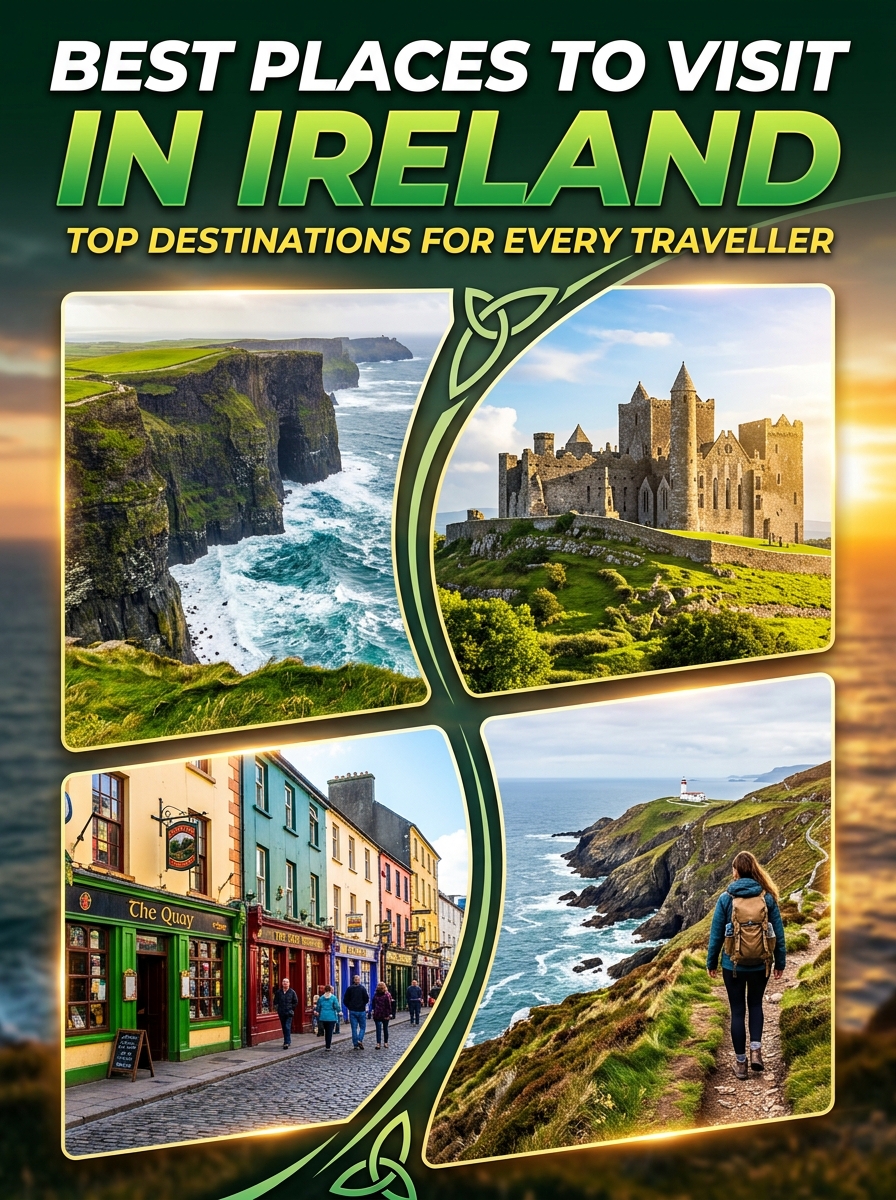
This guide covers the best places to visit in Ireland for every type of traveller, with honest practical advice that most guides leave out.
Quick Answer: Best Places to Visit in Ireland
For a first visit, Dublin for arrival and two days, then west to Galway as your base for Connemara and the Cliffs of Moher, then south through Killarney and the Ring of Kerry, and a night or two in Kilkenny on the way back.
For more time, add Dingle Peninsula, Donegal for Slieve League, and Belfast with the Causeway Coast in Northern Ireland.
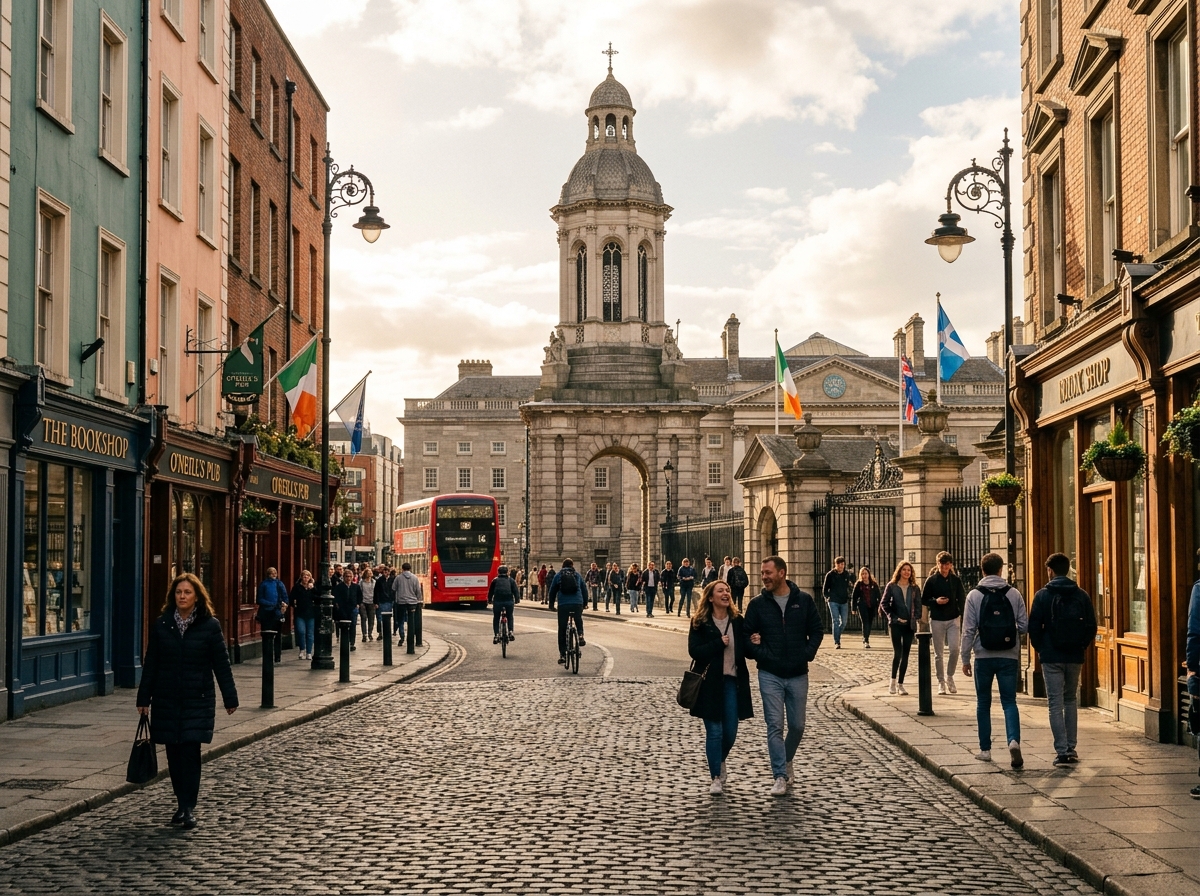
Dublin: The Right Amount of Time
Two full days is the right amount for a first visit. Three days if you love museums.
Trinity College and the Book of Kells is the single most important cultural experience in Dublin. The illuminated manuscript from 800 AD is one of the most beautiful books ever made. The Long Room library above it is extraordinary. Book tickets online to skip the queue.
Guinness Storehouse is the most visited attraction in Ireland and earns it. The tour ends with a complimentary pint at the Gravity Bar with a 360-degree city view. Book online for the best entry time.
The National Museum of Ireland has three sites, all free. The Archaeology branch holds the Bog Bodies and the finest collection of prehistoric Irish gold in existence.
The real Dublin: The Cobblestones in Smithfield has traditional music sessions most nights. Mulligan’s on Poolbeg Street has been serving Guinness since 1782. These are where Dublin actually lives, not Temple Bar.
Honest note: Temple Bar is fine to walk through once. Do not eat or drink there. Walk five minutes in any direction and find better food at half the price.
Best for: History, literature, food, nightlife, first-time visitors
Galway: The Most Alive Small City in Ireland
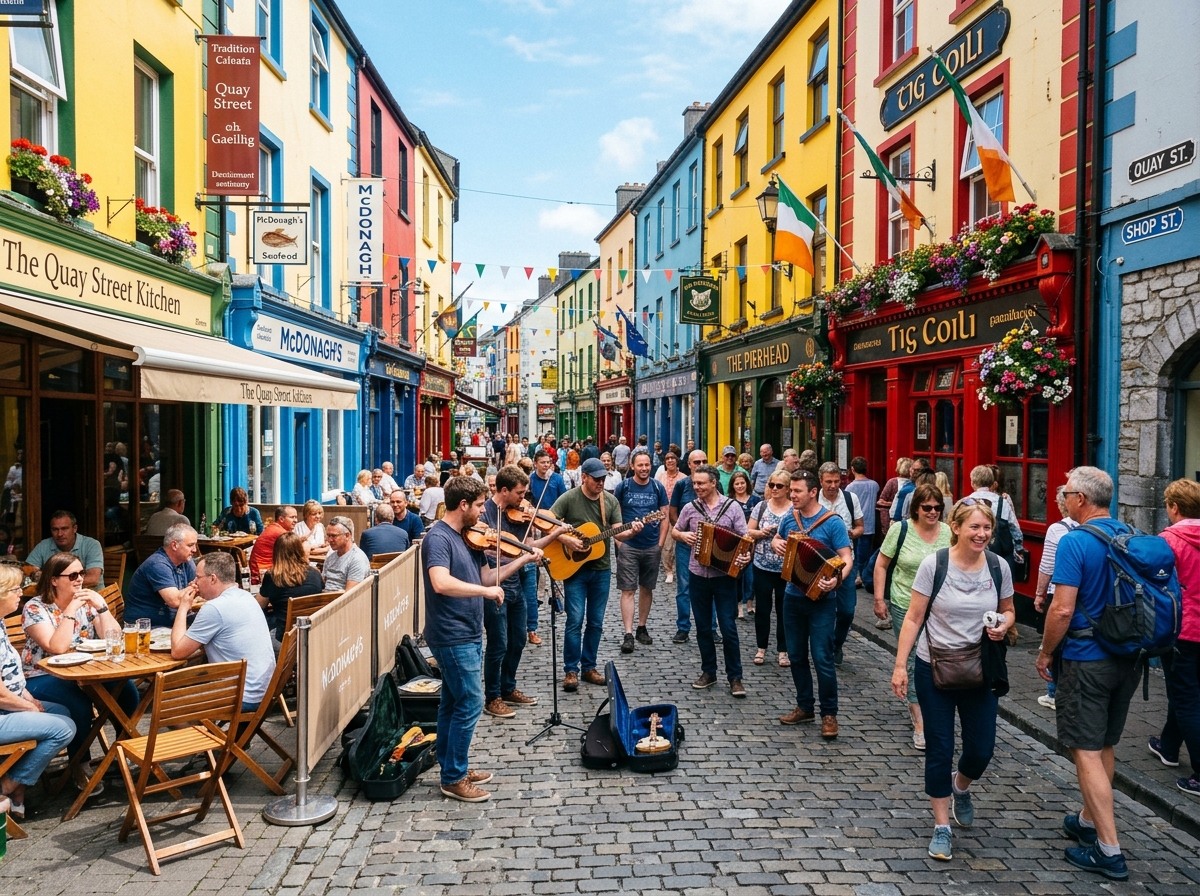
Galway is small enough to cover on foot in an afternoon but has a concentration of independent music, street performers, excellent restaurants, and genuine atmosphere that larger cities often lose. Shop Street and Quay Street are full of musicians, independent traders, and pubs spilling onto the pavement.
Galway Market runs Saturdays beside the Spanish Arch with local cheese, smoked salmon, and craft goods. The Claddagh area across the river, once a separate fishing village, gives its name to the famous Claddagh ring.
As a base: Connemara is 30 minutes north. The Aran Islands are accessible by ferry 40 minutes west. The Cliffs of Moher are 65 kilometres south.
Best for: Atmosphere, food, trad music, western Ireland base Best time: May through September. The Galway International Arts Festival in July is one of the best events in the country.
The Wild Atlantic Way: Ireland’s Greatest Road Trip
The Wild Atlantic Way is a 2,500-kilometre coastal route from Donegal in the northwest to West Cork in the south. You do not need to drive all of it. Pick the sections that match your interests and build your trip around them.
Cliffs of Moher, County Clare
The Cliffs of Moher rise 214 metres above the Atlantic along an 8-kilometre stretch of coast in County Clare. They are the most visited natural attraction in Ireland and they earn it. Standing on the cliff edge with the Atlantic far below and seabirds circling in the wind is one of the most dramatic natural experiences in the country.
The visitor centre is well-run and the entry fee of around EUR 8 covers parking and facilities. Go in the morning on a weekday to avoid the worst of the summer crowds. The walk south along the cliff from the main visitor area gives you better views and fewer people than the main viewpoint platform.
Connemara, County Galway
Connemara is flat, boggy, wind-shaped, and quietly extraordinary in a way that is very different from dramatic cliff scenery. Kylemore Abbey, a Victorian castle set against a dark mountain lake, is the region’s focal point. The hike up Diamond Hill in Connemara National Park gives you one of the best views in the west. The village of Roundstone, with its small harbour and craft workshops, looks exactly as you imagined Ireland would.
Dingle Peninsula, County Kerry
The Slea Head Drive, a circular route around the tip of the Dingle Peninsula, passes beehive huts built by early Christian monks, Iron Age forts, and beaches that look more like Canada than most people expect from Ireland. Dingle town has some of the best seafood restaurants in Ireland and a lively pub scene centred around Dick Mack’s.
Ring of Kerry, County Kerry
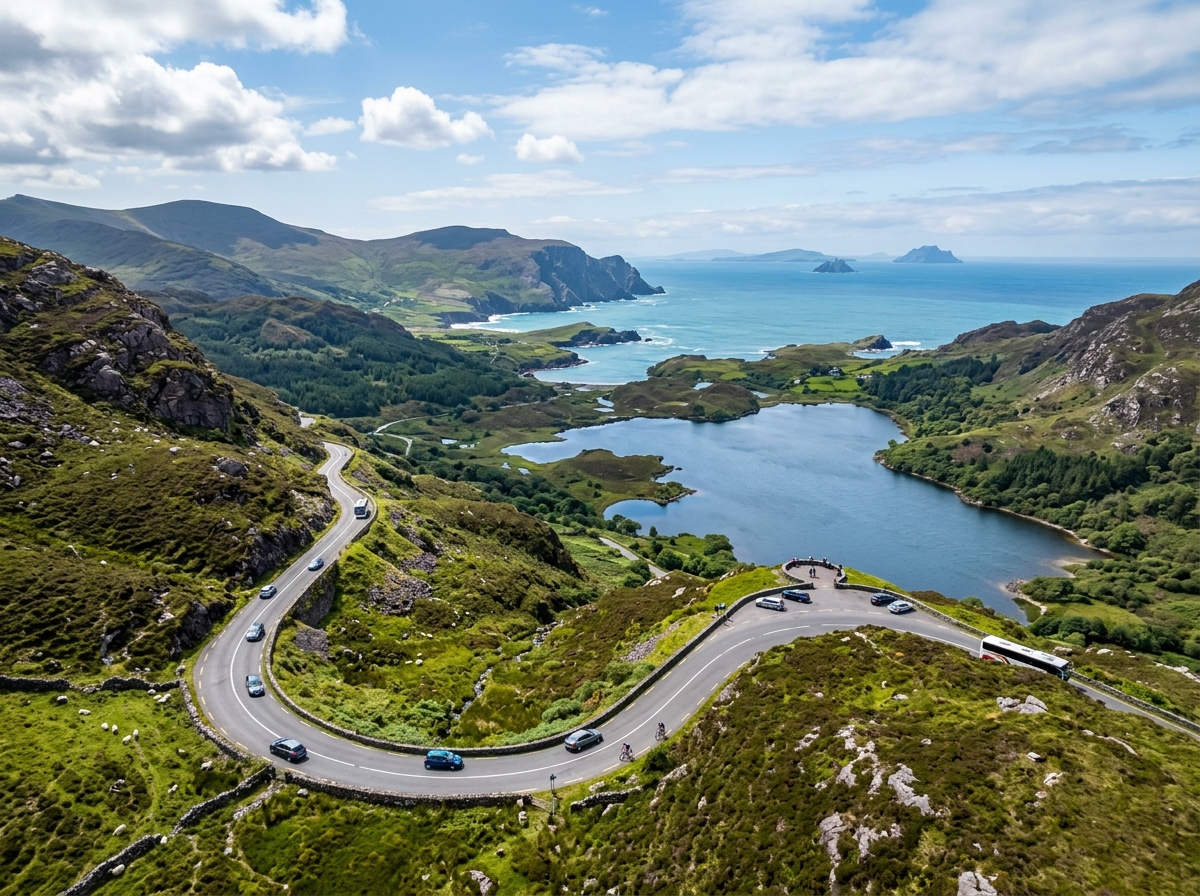
The Ring of Kerry is the most famous scenic drive in Ireland. The 179-kilometre circuit around the Iveragh Peninsula passes beaches, mountain passes, castle ruins, and lake views that justify the reputation.
The honest reality check: the Ring of Kerry is very crowded in summer. Tour buses follow the route clockwise. Travelling it anticlockwise on a weekday gives you a better experience. The Skellig Ring, a smaller circuit off the main route near the tip of the peninsula, is significantly less crowded and equally beautiful.
Skellig Michael: The island monastery of Skellig Michael, 12 kilometres offshore in the Atlantic, is one of the most extraordinary places in Ireland. Early Christian monks built a monastery of dry-stone beehive huts on a rock 218 metres above the sea between the 6th and 8th centuries. It is a UNESCO World Heritage Site and the boat trips from Portmagee are genuinely unforgettable. Tickets sell out months in advance. Book at skelligexperience.com as soon as your travel dates are confirmed. The island is only open from May to October and weather can cancel trips with no notice.
For any day on Ireland’s Atlantic coast where sea spray, sudden rain, and wind are all likely, a waterproof jacket that packs into its own pocket is the most used item in any sensible Ireland packing list. The Columbia Watertight II Rain Jacket (available on Amazon) is lightweight, fully waterproof, packs down small, and is the kind of jacket you put on 10 times a day in Irish Atlantic weather without noticing the weight.
Kilkenny: Ireland’s Best Medieval City
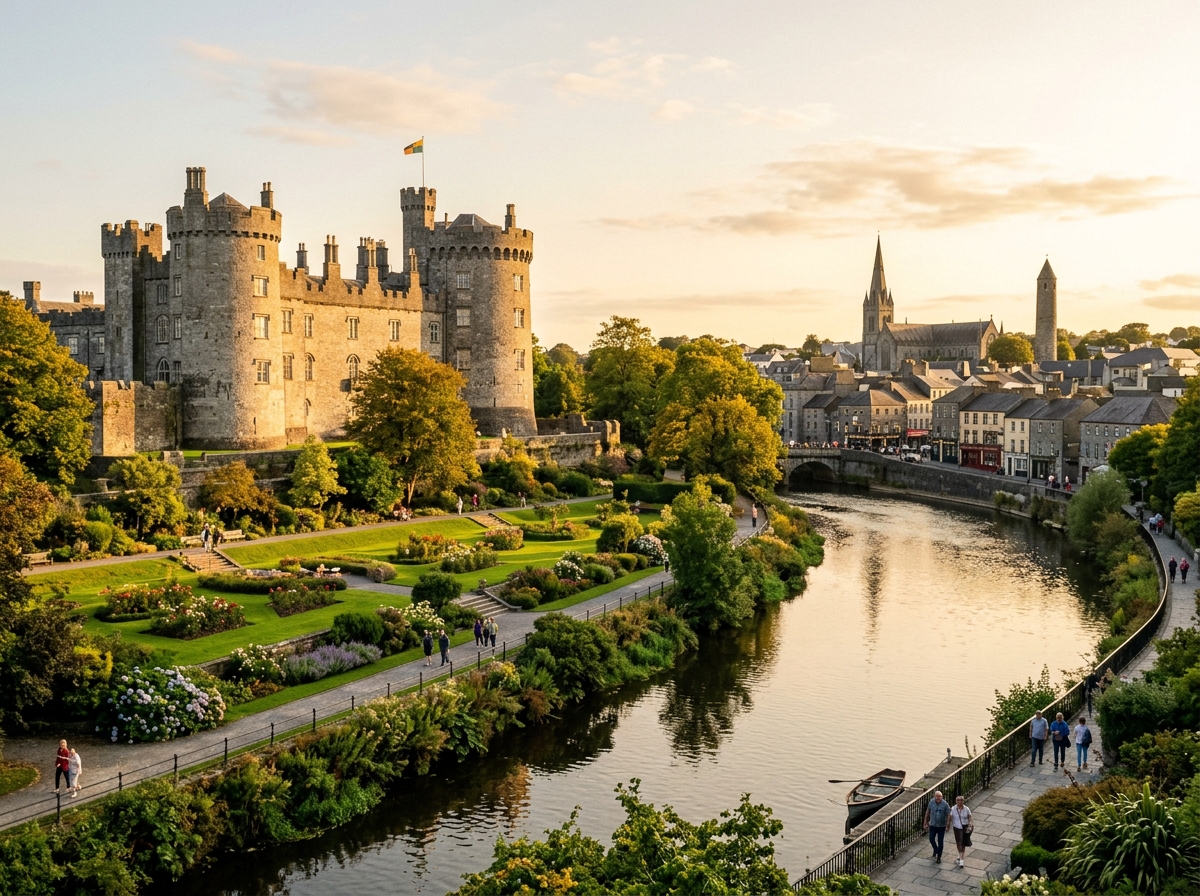
Kilkenny is the best-preserved medieval city in Ireland. Kilkenny Castle, a 12th-century fortress above the River Nore, is open daily with free parkland behind it. The medieval quarter around St. Canice’s Cathedral has craft shops, galleries, and independent restaurants that give the city a creative energy unusual for its size. The Medieval Mile Museum covers the city’s history from Viking settlement through the Norman period.
Best for: History, medieval architecture, food, arts, couples, families Location: 90 kilometres south of Dublin. Easy day trip or perfect overnight stop on a circular route.
Donegal: The Wild North
Donegal is the county most visitors never reach and the one experienced Ireland travellers cite most often as their favourite.
Slieve League sea cliffs rise 601 metres above the Atlantic and are among the highest accessible sea cliffs in Europe. They receive a fraction of the visitors that go to the Cliffs of Moher and the scale is significantly larger.
Glenveagh National Park has a Victorian castle on a lough surrounded by mountains, Ireland’s best formal gardens, and red deer roaming the estate. The park is peaceful in a way the more tourist-heavy parks are not.
Getting there: Three hours from Dublin or two from Galway by car. It rewards the effort significantly.
Northern Ireland: A Different Country, Extraordinary Places
Northern Ireland is part of the United Kingdom but shares the island and deserves a place in any Ireland trip.
Belfast
Belfast was transformed by the peace process and is now one of the most interesting mid-sized cities in the British Isles. The political murals of the Falls Road and Shankill Road document the Troubles with raw honesty. Black taxi tours run by drivers with direct experience of the period are the best way to understand them. The Titanic Museum at the original shipyard is genuinely extraordinary and worth coming to Belfast for alone.
The Causeway Coast
Giant’s Causeway: 40,000 interlocking basalt columns formed by volcanic activity 60 million years ago. UNESCO World Heritage Site. Free to access, book parking for summer weekends.
Carrick-a-Rede Rope Bridge crosses a 30-metre chasm 100 feet above the sea. National Trust tickets required. Book in advance for peak season.
Dunluce Castle, a medieval ruin perched on a cliff above the sea, is one of the most dramatically sited buildings in Ireland.
For a driving trip around Ireland’s coastal roads and rural lanes, a compact foldable map of Ireland is genuinely useful when mobile signal drops in remote areas. The Collins Road Atlas of Ireland (available on Amazon) covers both the Republic and Northern Ireland with detailed road maps, town plans, and distance charts. It sits flat in a car door pocket and is the most reliable backup when Google Maps loses signal on a Donegal back road.

Road Atlas Ireland
Hidden Gems Most Visitors Miss
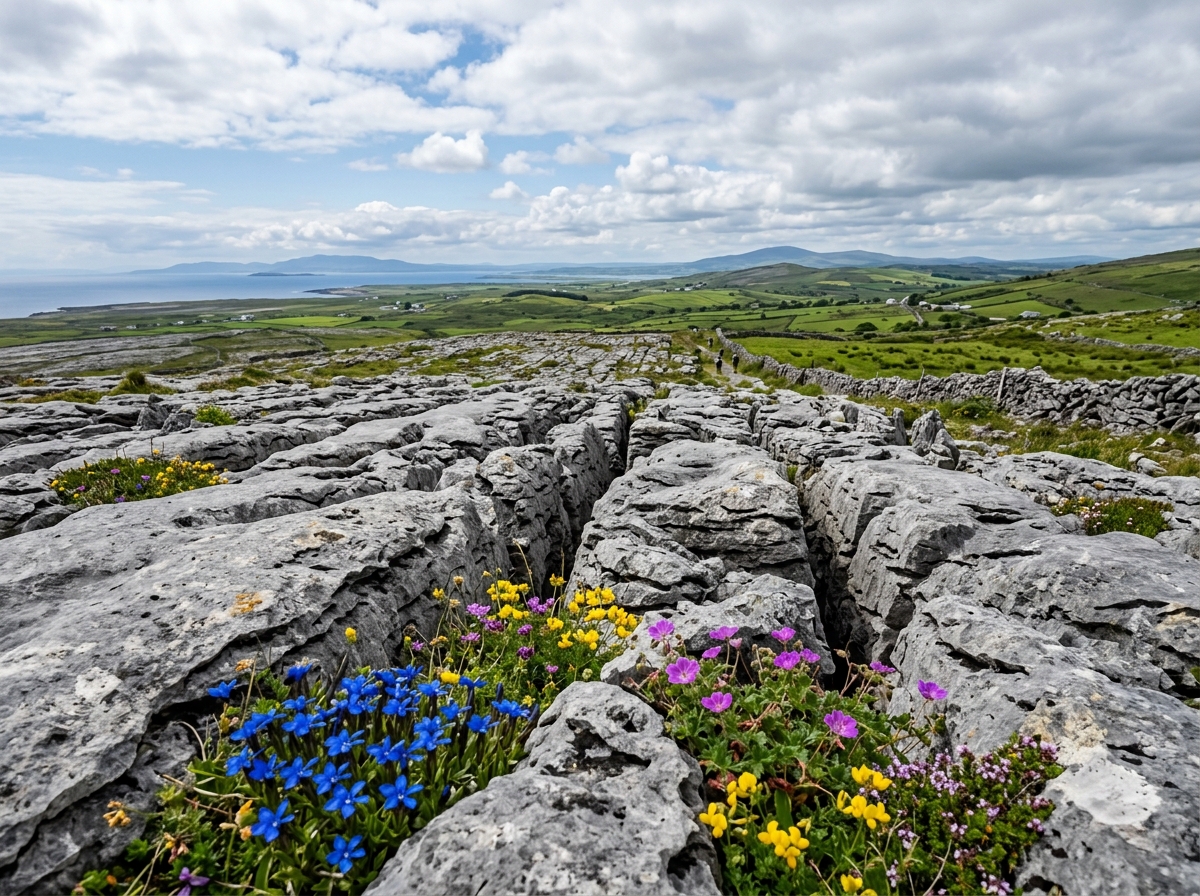
The Burren, County Clare: A 250-square-kilometre limestone plateau where Arctic, Mediterranean, and Alpine plants grow side by side in the rock cracks. Poulnabrone Dolmen, a 5,800-year-old portal tomb, sits in the open landscape. Free to explore and immediately north of the Cliffs of Moher.
Rock of Cashel, County Tipperary: A limestone outcrop rising from the Tipperary plain topped with a 12th-century cathedral, round tower, and Romanesque chapel. Seat of the Kings of Munster for centuries. On the main Dublin to Cork road and most tourists drive past it without stopping.
Kinsale, County Cork: A small harbour town with a concentration of excellent restaurants and a well-preserved historic centre. One of the most pleasant places in southern Ireland for an overnight stop.
Practical Tips for Visiting Ireland
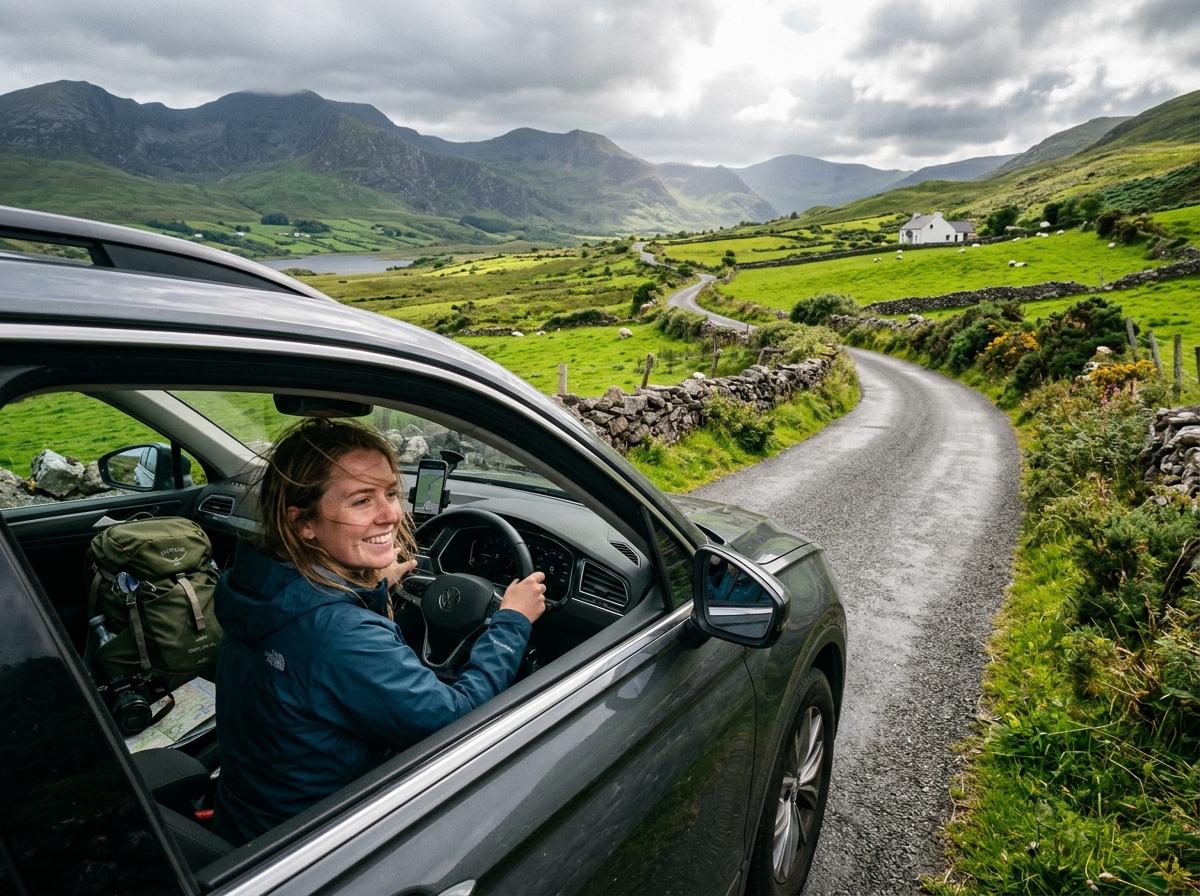
Driving: You drive on the left. Rural roads range from good motorways to single-track lanes where one car reverses to let the other pass. This is normal. Renting a car from Dublin Airport and returning it there is the standard approach.
Weather: Ireland is wet and changeable year-round. The west receives significantly more rain than the east. Pack a waterproof jacket and assume rain at some point every day. Activities continue regardless.
Best time: May through September. June and July are warmest. August is most crowded. May and September offer the best balance.
Budget: Dublin is comparable to London for hotel prices. Outside Dublin, mid-range accommodation costs EUR 80 to 150 per night. A pub meal runs EUR 15 to 25. A pint of Guinness is EUR 5 to 7.
Pub culture: An Irish pub is the community centre, music venue, and social institution. Sitting at the bar and talking to whoever is next to you is completely normal. Finding a traditional music session is one of the most genuinely Irish experiences available anywhere.

Deuter Speed Lite 21L Hiking Lightweight Backpack – Black
For a multi-day Ireland road trip with regular outdoor stops in Atlantic weather, a comfortable and waterproof daypack that holds layers, lunch, and camera gear without becoming heavy is exactly what you need. The Deuter Speed Lite 20L Daypack (available on Amazon) is a lightweight technical daypack widely used by walkers in wet-weather countries. It has a built-in rain cover, comfortable shoulder straps for full days of walking, and packs down small enough to go in a car boot between stops.
Best Places in Ireland by Traveller Type
First-time visitors: Dublin (2 nights), Galway (2 nights), Ring of Kerry, Kilkenny on the way back. A 7 to 9-day circular route from Dublin.
Nature and scenery: Connemara, Donegal and Slieve League, Dingle Peninsula, the Burren. These reward the traveller who goes beyond the standard tourist circuit.
History and culture: Kilkenny, Rock of Cashel, Newgrange in County Meath (Neolithic passage tomb older than Stonehenge), Belfast Titanic Museum, Trinity College Dublin.
Food and drink: Kinsale for Cork County food culture, Dingle for seafood, Galway for market food, Dublin for the full range from Michelin-starred restaurants to traditional coddle in a city pub.
Couples: Dingle Peninsula, Kinsale, a night in a country house hotel in the midlands or southwest, Killarney National Park.
Families: Kilkenny (compact, manageable, medieval), the Giant’s Causeway in Northern Ireland, Killarney National Park with its jaunting cars, Dublin’s interactive museums.
Adventure and hiking: Slieve League sea cliffs, Carrauntoohil (Ireland’s highest mountain) in Kerry, the Wicklow Way walking route, the Connemara National Park trails.
Quick Reference Table
| Destination | Region | Best For | Crowds | Drive from Dublin |
|---|---|---|---|---|
| Dublin | East | History, nightlife, museums | Very high | Base |
| Galway | West | Atmosphere, food, trad music | High | 2.5 hrs |
| Cliffs of Moher | Clare | Coastal drama, photography | Very high | 3.5 hrs |
| Connemara | Galway | Landscape, hiking, Kylemore | Moderate | 3 hrs |
| Dingle Peninsula | Kerry | Scenery, seafood, archaeology | Moderate-high | 4.5 hrs |
| Ring of Kerry | Kerry | Scenic drive, Skellig Michael | High | 4 hrs |
| Kilkenny | Southeast | Medieval history, food, arts | Moderate | 1.5 hrs |
| Slieve League | Donegal | Sea cliffs, wild north | Low | 4 hrs |
| Belfast | Northern Ireland | Murals, Titanic, history | Moderate | 1.5 hrs |
| Giant’s Causeway | Northern Ireland | Geology, coastal drama | High | 2.5 hrs |
Frequently Asked Questions
What is the most beautiful place in Ireland? Most experienced visitors point to the west coast. Connemara, the Dingle Peninsula, and Donegal’s Slieve League each deliver scenery that is hard to match anywhere in Europe. The Cliffs of Moher are the most famous. Slieve League is arguably more dramatic and sees far fewer visitors.
How many days do you need in Ireland? Seven to ten days covers Dublin, the west coast, and one or two other regions properly. Two weeks allows a more complete circuit including Donegal and Northern Ireland. Most visitors wish they had more time.
Is Ireland expensive? Yes, particularly Dublin and the main tourist towns. Accommodation and food are comparable to major UK cities. Outside the tourist trail, costs reduce significantly. Ireland rewards those who eat in local pubs rather than tourist restaurants and stay in family-run B and Bs rather than chain hotels.
Do I need a car in Ireland? For anywhere beyond Dublin and Galway city centres, yes. Public transport connects major cities but the best places in Ireland require a car. Renting from Dublin Airport is straightforward and driving on the left becomes comfortable within a day or two for most visitors.
What is the Wild Atlantic Way? The Wild Atlantic Way is a 2,500-kilometre marked coastal route along Ireland’s entire Atlantic coast from Donegal to West Cork. It is not necessary to drive all of it. Most visitors choose a section, either the northwest (Donegal, Sligo), the west (Galway, Clare), or the southwest (Kerry, Cork), and spend three to five days on it.
When is the best time to visit Ireland? May through September for reliable enough weather and full access to all sites. June and July are warmest. August is the most crowded. May and September offer the best balance. Skellig Michael is only accessible May to October.
Is Northern Ireland worth visiting on an Ireland trip? Absolutely. Belfast has transformed into one of the most interesting cities in the British Isles and the Causeway Coast is extraordinary. If you have 10 days or more, adding two to three nights in Northern Ireland significantly enriches an Ireland trip.
Final Thoughts
Ireland rewards the traveller who looks beyond the obvious.
Dublin is worth two days. The Ring of Kerry is worth a day. The Cliffs of Moher are worth the early morning start. But the places that people carry home with them from Ireland are usually the unexpected ones: a traditional music session that started at 10pm in a Dingle pub. Standing at Slieve League in October with the Atlantic 600 metres below and nobody else in sight. A conversation with the person next to you at a Kilkenny bar that lasted until closing.
Give yourself enough time to get off the tourist circuit for at least two or three days. That is where Ireland actually lives.