Scotland does not have a bad time to visit. What it has is four completely different versions of itself across the year, and the right choice depends entirely on what you want from the trip.
Go in August and you get the Edinburgh Festival, long evenings, and the Highlands at their most green. You also get midges, peak prices, and accommodation that needs booking months ahead. Go in May and you get midge-free mornings, Highland Games beginning, and bluebells in the glens. Go in January and you get Northern Lights, a Hogmanay atmosphere, empty castles, and some of the most dramatic winter landscapes in Europe.
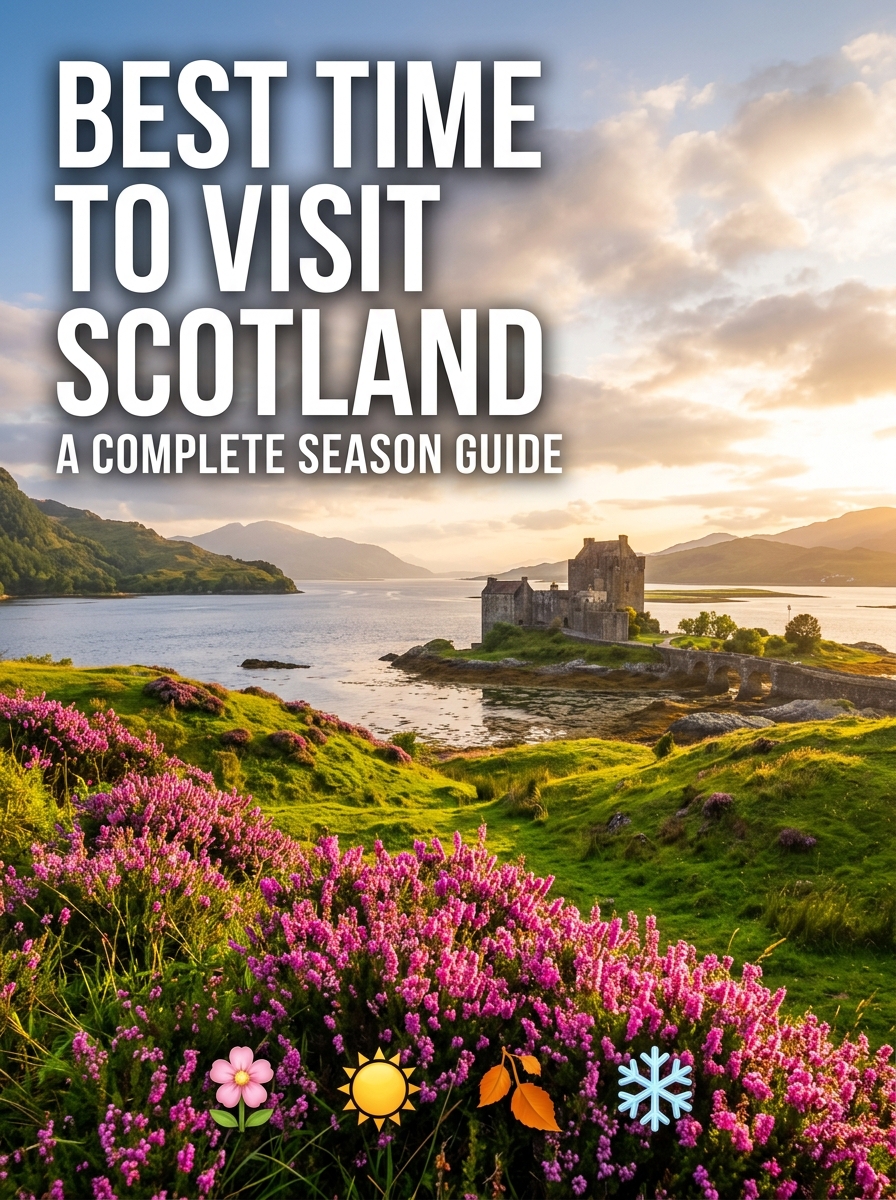
This guide breaks down every season honestly so you can match Scotland to exactly what you want.
Quick Answer: Best Time to Visit Scotland
The best overall time is May or September. Both offer good weather, manageable midges, lower prices, and the country at its most beautiful without peak crowds. May is best for the NC500. September has golden autumn light.
For the Edinburgh Festival, go in August. For Northern Lights, go November through February. For budget travel, January and February offer the lowest prices of the year.
Scotland by Season
Spring (March, April, May)
March still feels like winter’s end. Temperatures average 7 to 9 degrees Celsius. Snow can linger on higher peaks. Midges are dormant, crowds are minimal, and hotel prices are at their lowest.
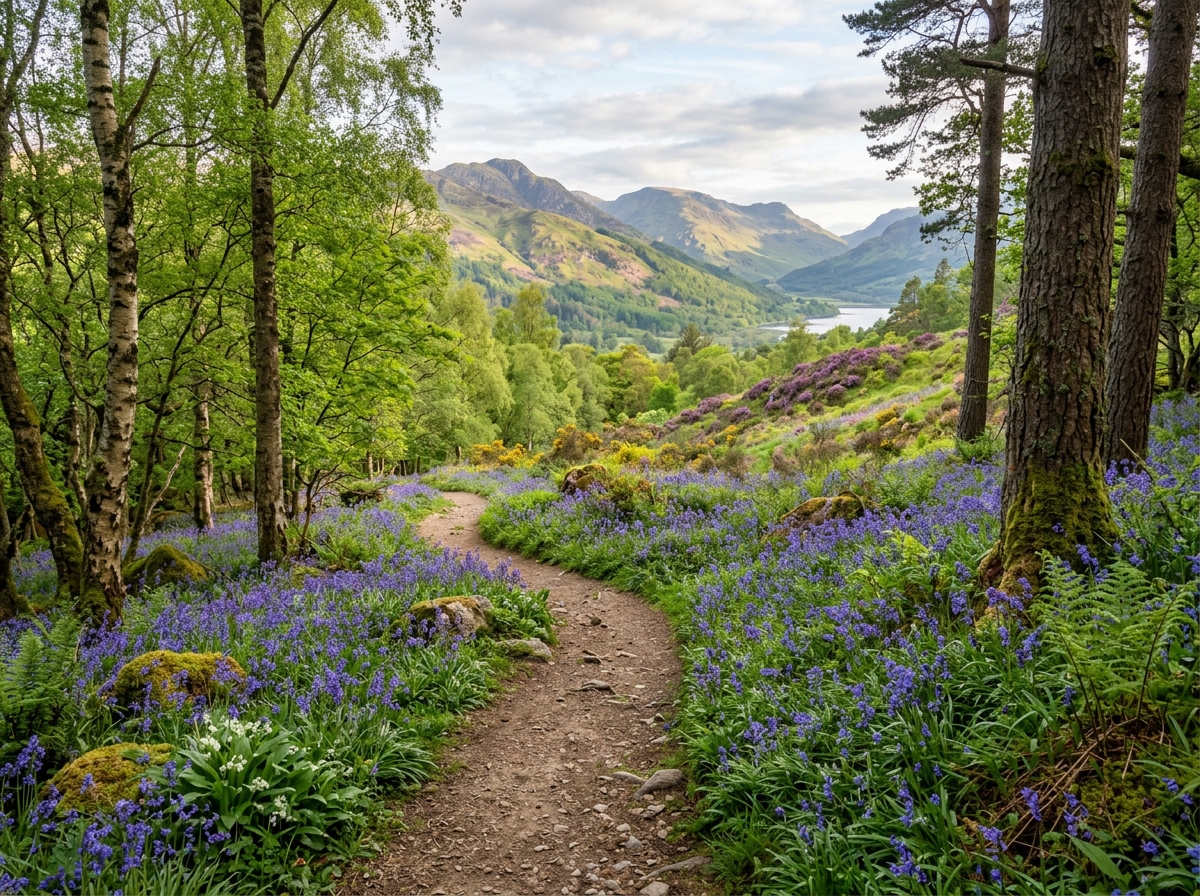
April is when Scotland wakes up properly. Temperatures reach 10 to 13 degrees Celsius. Bluebells carpet the woodland floors of Glen Affric and Perthshire. Ospreys return from Africa to Loch Garten. Roads are quiet and castles are yours.
May is the single best month for the NC500 and most Highland road trips. Temperatures reach 13 to 16 degrees Celsius. Midges are mostly dormant until late May. Highland Games begin. Accommodation is available and cheaper than summer.
Spring summary:
- Weather: Cool to mild, changeable, snow possible in March
- Midges: Dormant until late May
- Crowds: Low in March and April, building in May
- Prices: Low to moderate
- Best for: NC500, hiking, wildflowers, wildlife, quiet castles
Summer (June, July, August)
Scottish summer is extraordinary and comes with two things every visitor should know.
The Simmer Dim: In the far north, the summer solstice brings near-continuous daylight. You can walk the cliffs at 11pm in full visibility. Drive the NC500 at 10:30pm and still see clearly. Days stretch to over 17 hours of daylight in Inverness in June.
The Midges: The Scottish midge is a tiny biting insect in enormous numbers across the western Highlands and islands from June through August. Not dangerous but genuinely irritating in calm, damp conditions at dawn and dusk. Check the Scottish Midge Forecast at smidge.co.uk before any west coast activity. It works exactly like a weather forecast.
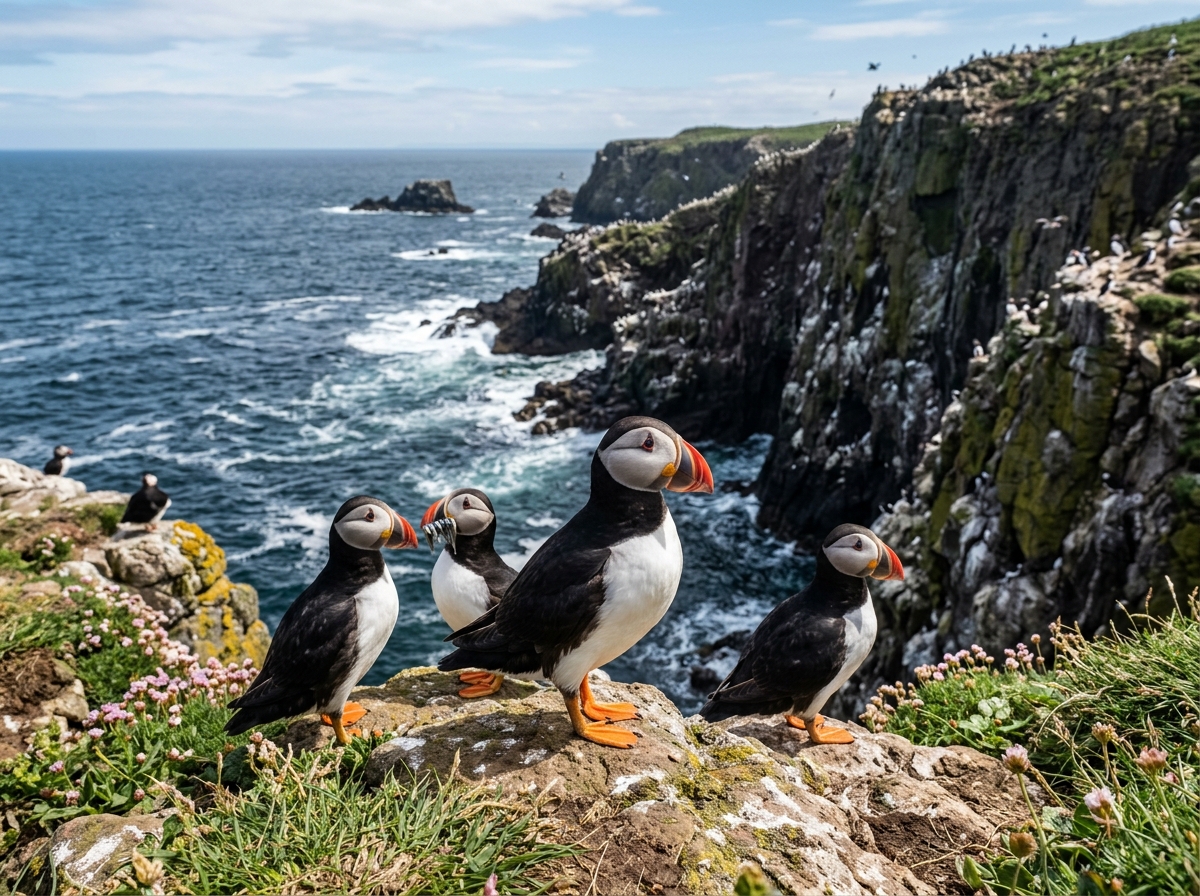
June is the best summer month. Temperatures average 16 to 19 degrees Celsius. Puffin colonies are active. Whale watching season begins. Highland Games are well underway. Midges are present but less intense than July.
July and August are peak season. Edinburgh in August is transformed by the Festival Fringe, the world’s largest arts festival, alongside the Royal Edinburgh Military Tattoo. If you want the Fringe, this is your month. If you want the Highlands without crowds and midges, choose a different time.
Summer summary:
- Weather: Warmest of the year, rain still possible
- Midges: High from June, peak in July and August in the west
- Crowds: Very high
- Prices: Peak season
- Best for: Edinburgh Festival, long evenings, puffins, whale watching, Highland Games
Autumn (September, October, November)
September is when summer crowds leave and the country exhales. Temperatures stay 13 to 17 degrees Celsius in the first half. Midges drop sharply after mid-September. Hotel prices fall noticeably. It is genuinely excellent for most Scotland experiences.
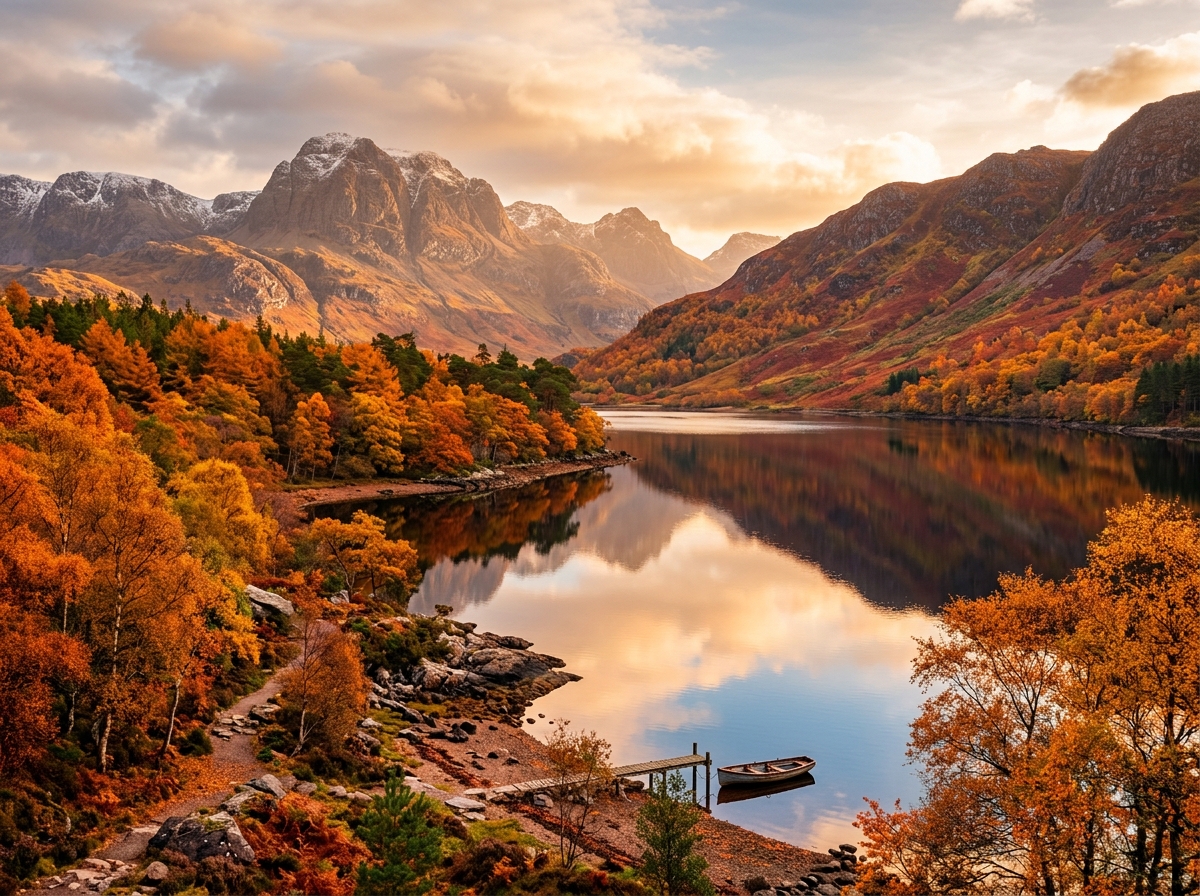
October brings the full force of Scottish autumn. Temperatures drop to 9 to 13 degrees Celsius. Birch and larch forests in Perthshire and Speyside turn gold, amber, and rust. Loch Tummel and the Pass of Killiecrankie are among the best autumn colour spots in Britain. Midges are essentially gone by mid-October.
November is quiet and cold, with temperatures dropping to 5 to 9 degrees Celsius. Northern Lights become possible again as darkness returns. Some rural accommodation closes for winter. Cities remain vibrant.
Autumn summary:
- Weather: Cooling, wet by November
- Midges: Fading in September, gone by mid-October
- Crowds: Low from mid-September
- Prices: Moderate in September, low in October and November
- Best for: Autumn colours, whisky distilleries, NC500, photography, budget travel
Winter (December, January, February)
December brings Hogmanay, arguably the best New Year’s Eve event in the world. Edinburgh’s festival attracts over 80,000 people with processions, concerts, and fireworks. Hotel prices spike over the holiday but drop sharply in early January. Edinburgh’s Christmas market on the Mound is one of the better ones outside Germany.
January and February are the cheapest months in Scotland. The Highlands are at their most dramatic with snow on the peaks and frost in the glens. Burns Night on January 25th is celebrated everywhere with haggis and whisky. These months also offer the best chance of seeing the Aurora Borealis. The Northern Lights are visible from Caithness, Sutherland, Orkney, and Shetland on clear nights with sufficient solar activity. Download the SpaceWeatherLive app for real-time aurora alerts.
Winter summary:
- Weather: Cold, short days, snow in the Highlands
- Midges: None
- Crowds: Very low except Edinburgh at Hogmanay
- Prices: Lowest of the year
- Best for: Northern Lights, Hogmanay, budget travel, dramatic winter landscapes
Month by Month Quick Reference
| Month | Avg Temp | Midges | Crowds | Prices | Best For |
|---|---|---|---|---|---|
| January | 2 to 7C | None | Very low | Lowest | Northern Lights, budget, Burns Night |
| February | 3 to 8C | None | Very low | Low | Northern Lights, skiing |
| March | 5 to 10C | None | Low | Low | Quiet castles, early spring |
| April | 8 to 13C | Minimal | Low | Low-moderate | Bluebells, wildlife |
| May | 11 to 16C | Low until late May | Moderate | Moderate | Best month, NC500, Highland Games |
| June | 14 to 19C | Building | Moderate-high | Moderate-high | Long evenings, puffins |
| July | 16 to 21C | High | Very high | Peak | Edinburgh Fringe, outdoor activities |
| August | 16 to 21C | High | Very high | Peak | Edinburgh Fringe, Highland Games |
| September | 12 to 17C | Fading | Moderate | Moderate | Autumn colours, whisky |
| October | 8 to 13C | Gone | Low | Low | Peak autumn colours, distilleries |
| November | 5 to 9C | None | Very low | Low | Aurora possible, quiet landscapes |
| December | 3 to 7C | None | High in Edinburgh | High in Edinburgh | Hogmanay, Christmas markets |
The Midge Problem: What No One Tells You Properly
Every guide mentions midges. Very few give you the tools to deal with them.
Midges are most active in calm, damp, overcast conditions at dawn and dusk. A breeze disperses them completely. Bright sunshine reduces them significantly. DEET repellents work. Smidge is a Scottish-developed brand many locals prefer over standard products. A midge head net is the most effective physical protection and fits in a jacket pocket.
Check smidge.co.uk before any outdoor activity in the west Highlands from June to September.
For any Scotland trip involving outdoor activity, a midweight packable waterproof jacket is the single most important item you will bring. The Berghaus Paclite 2.0 Waterproof Jacket (available on Amazon) is a Gore-Tex shell weighing under 300 grams that handles Atlantic rain and Highland wind perfectly. It compresses into its own pocket and comes out the moment the sky changes.
Best Time for Specific Scotland Experiences
North Coast 500
Best: May or September. Midge-free or low-midge, quieter roads, and available accommodation. May gives spring greens. September gives early autumn colour. For July and August, book accommodation 6 to 12 months ahead. That is not an exaggeration.
Highland Games
Highland Games run May through September with over 100 events. Key ones: Braemar Gathering (first Saturday of September, Royal Family attendance), Cowal Highland Gathering in Dunoon (August, the world’s largest), and Inveraray Games (July).
Edinburgh Festival
The Fringe runs three weeks in August alongside the Royal Edinburgh Military Tattoo. Both require advance booking. For the atmosphere without peak prices, the first or last few days of the Fringe offer significantly cheaper accommodation than the middle two weeks.
Northern Lights
Viewing season runs October through March from northern Scotland. January and February are peak months. Download SpaceWeatherLive for real-time Kp index alerts. A Kp level of 3 or above is typically visible from northern Scotland on a clear night.
Whisky Distilleries
Open year-round. The Spirit of Speyside Whisky Festival runs in early May. October through April is active distillation season, which adds atmosphere to any tour. For island distilleries on Islay, book CalMac ferry crossings well in advance for summer visits.
What Most Guides Do Not Tell You
The west is far wetter than the east. Fort William averages 2,000mm of annual rainfall. Edinburgh averages 650mm. Plan accordingly, especially on the NC500.
Island ferry bookings fill up months ahead. Skye is accessible by bridge. For the Outer Hebrides, Islay, or Arran in summer, book CalMac early.
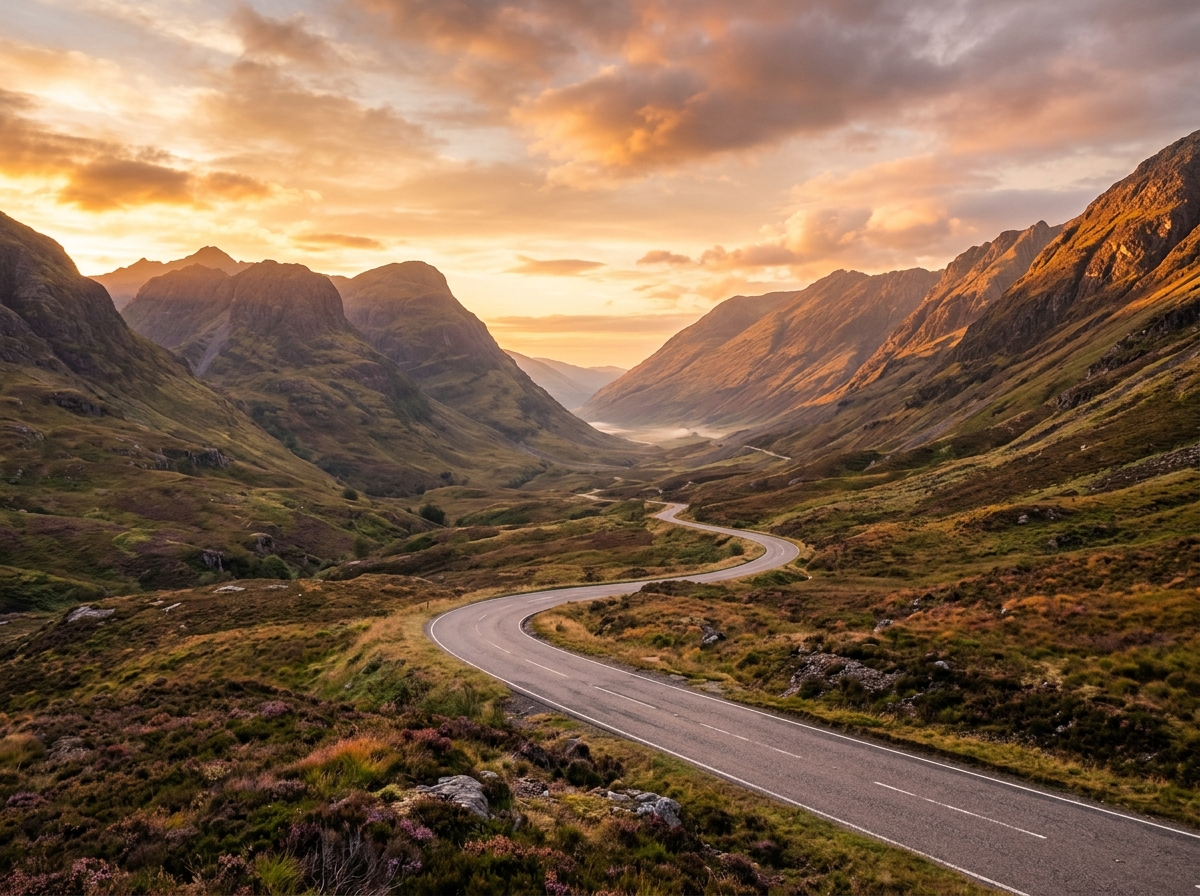
Single-track road etiquette matters. Pull into passing places on the left for oncoming vehicles. Wave to thank other drivers. Ignoring this causes genuine frustration to locals.
The weather changes multiple times a day. Layers and a waterproof are not optional in any season, including July.
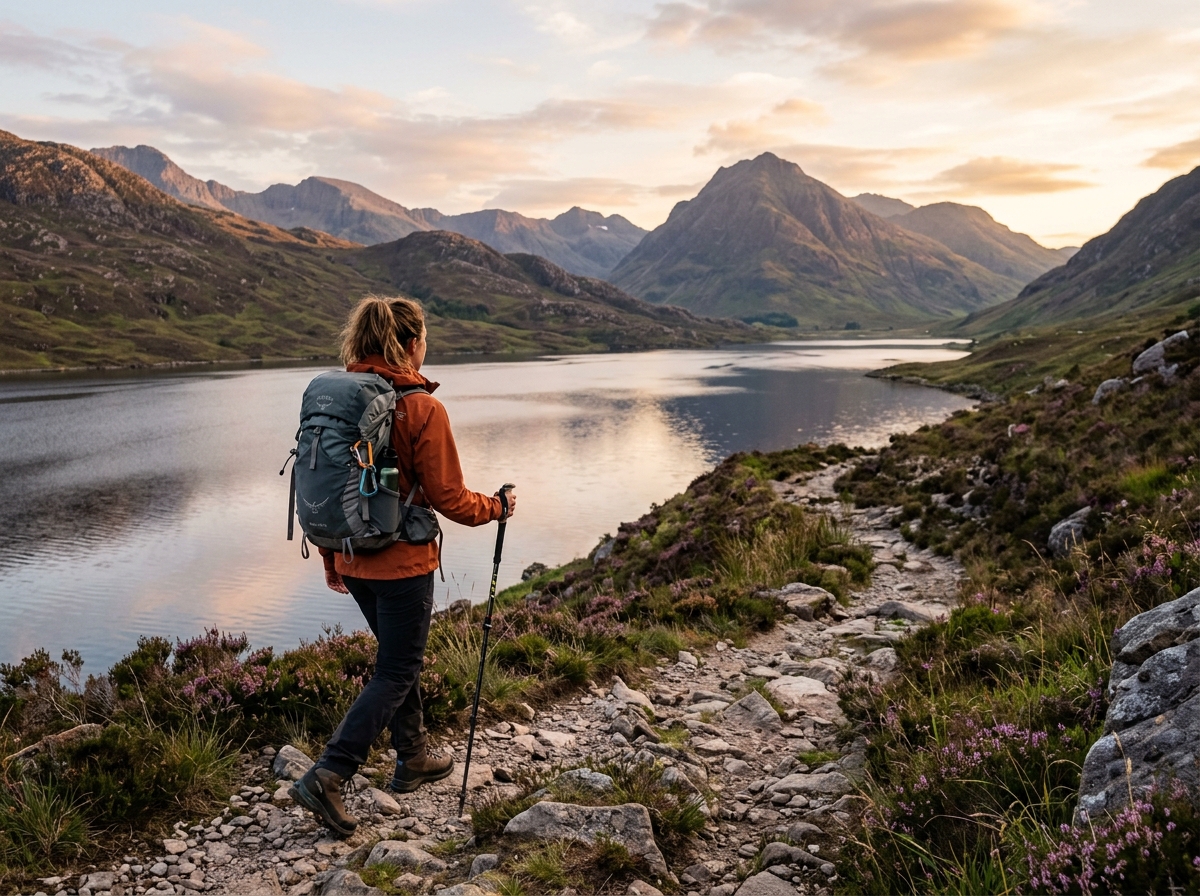
For Highland hiking or any NC500 road trip, a compact daypack that holds layers, a packed lunch, and a camera comfortably is worth having. The Osprey Talon 22 Daypack (available on Amazon) has an integrated rain cover, fits full-day Highland walks, and is the most recommended hiking pack for Scottish conditions.
Practical Tips for Every Season
Book Edinburgh Tattoo tickets from February when released. Popular Fringe shows sell out weeks ahead.
Check trafficscotland.org for live road conditions in winter. Highland passes like the Cairnwell can close in severe conditions.
Carry some cash in rural areas. Some farmshops, rural pubs, and small accommodations still do not accept cards.
For camping or outdoor evenings in midge season, a proper head net is the difference between a miserable and an extraordinary experience. The Sea to Summit Mosquito Head Net (available on Amazon) is ultra-lightweight, packs into a tiny pouch, and provides complete protection on those still July evenings at a Highland loch.
Best Time by Traveller Type
First-time visitors: May or September for good weather, manageable midges, and available accommodation.
Hikers: May for midge-free mornings. September for autumn colours. Avoid Ben Nevis in July and August when it is extremely crowded.
Edinburgh visitors: August for the Fringe. December and Hogmanay for festive atmosphere. The city is excellent year-round.
NC500 road trippers: May is the optimum month. September is close behind.
Northern Lights chasers: January and February in the far north. Monitor aurora forecasts closely.
Budget travellers: January, February, March, and October all offer significantly lower prices than summer.
Wildlife: June for puffins, July for whale watching, April for ospreys and bluebells, October for red deer rut.
Whisky enthusiasts: Year-round for distilleries. May for the Spirit of Speyside Festival.
Frequently Asked Questions
What is the best month to visit Scotland?
May. Midge-free, good temperatures, Highland Games beginning, wildflowers out, and significantly lower prices than July and August. September is the second-best choice.
When are midges worst in Scotland?
July and August in the west Highlands, Loch Lomond, Isle of Skye, and along the NC500. Most active at dawn and dusk in calm, overcast conditions. Check smidge.co.uk before outdoor activities.
Is Scotland worth visiting in winter?
Yes, Hogmanay in Edinburgh, Northern Lights from the far north, dramatic empty landscapes, and the lowest accommodation prices in Europe. Cold and dark but genuinely extraordinary for prepared visitors.
When is the best time to drive the North Coast 500?
May or September. Both offer manageable crowds, lower prices, good conditions, and minimal midges.
Does it rain a lot in Scotland?
Yes, particularly on the west coast. The east coast is considerably drier. Always pack waterproof layers regardless of the forecast or the month.
When is the Edinburgh Festival?
Three weeks in August starting in the first week. The Royal Edinburgh Military Tattoo runs at the same time. Both require advance booking. August hotel prices in Edinburgh are the highest in Scotland year-round.
Can you see the Northern Lights in Scotland?
Yes, from Caithness, Sutherland, Orkney, and Shetland on clear, dark nights with sufficient solar activity. Best chance from October through March. January and February are peak months.
Final Thoughts
Scotland asks something of you regardless of when you visit. In summer, patience with the crowds and preparation for the midges. In winter, warmth and a willingness to embrace the dark. In spring and autumn, there is a reward for showing up when most people do not.
The right time is the time that matches what you want most. The Fringe in August. Empty Highland roads in October. Northern Lights in January. Bluebells in April. Long June evenings on the NC500.
None of them disappoint. They just require knowing what you are getting. Pack a waterproof. Take the midge forecast seriously. Give Scotland more than a long weekend.