Kauai is not like the other Hawaiian islands. There are no massive resorts swallowing the coastline. No bumper-to-bumper traffic on a highway to Waikiki. What you get instead is 110 miles of coastline, one of the wettest spots on Earth, sea cliffs that drop straight into the Pacific, and a jungle so thick it hides entire valleys.
That combination makes Kauai the most visually stunning island in Hawaii and the one most people leave wishing they had more time on.
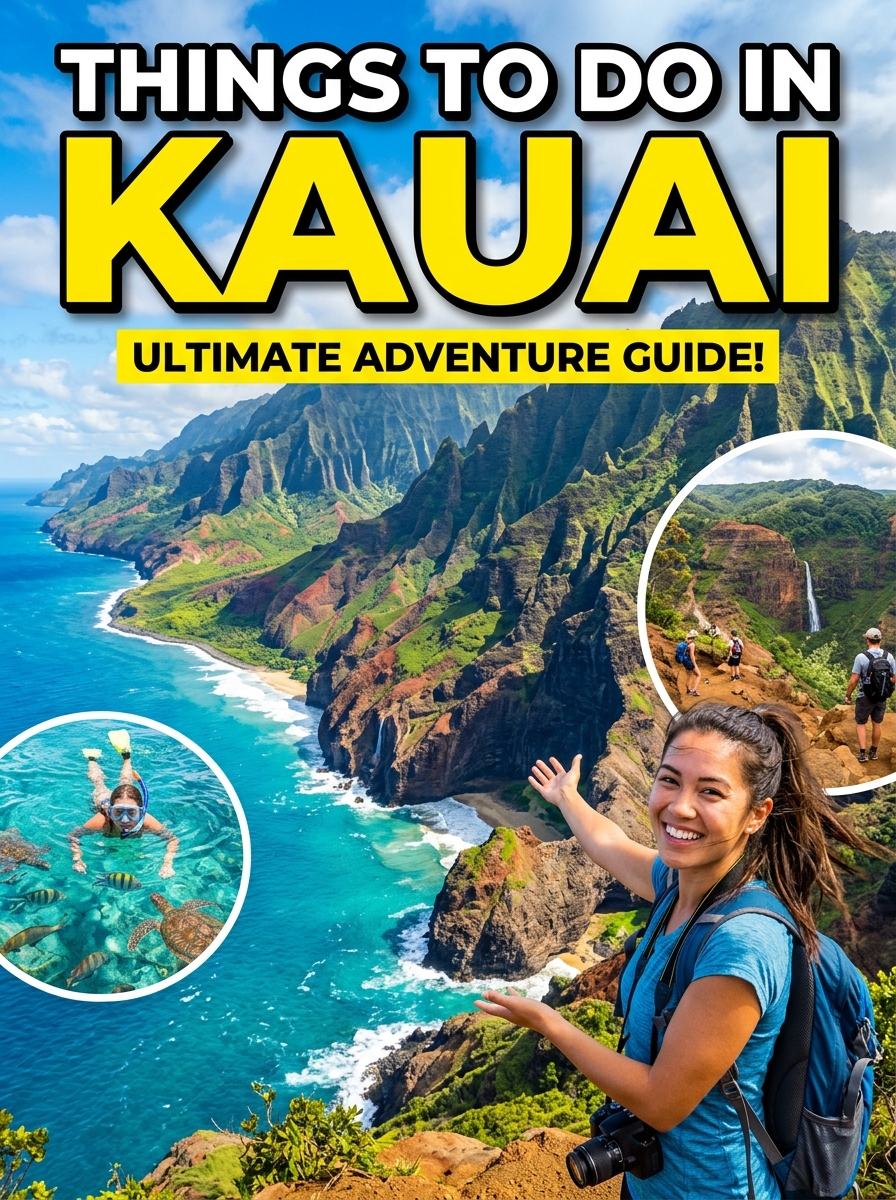
This guide covers every part of the island: the beaches, the hikes, the drives, the food, the rainy day fallbacks, and the practical stuff most travel blogs skip over. Whether you have four days or two weeks, you’ll find something useful here.
Quick Overview: Kauai by Region
Kauai has four main areas, and each one feels like a different island. Understanding the geography before you go saves a lot of wasted driving.
- North Shore (Hanalei, Princeville, Haena): The most dramatic scenery. Home to Hanalei Bay, the start of the Nā Pali Coast, and the famous Kalalau Trail. The road ends at Ke’e Beach; there is literally nowhere else to go from there.
- South Shore (Poipu, Koloa): Sunniest side of the island. Best for families, snorkeling, and beach days. Less rain than the north.
- West Side (Waimea Canyon, Kokee State Park): The inland adventure zone. The “Grand Canyon of the Pacific” is here, along with the best hiking trails on the island and sweeping views you won’t forget.
- East Side (Lihue, Kapaa, Wailua): Where the airport is. Good for waterfalls, the Wailua River, and getting your bearings on day one.
Most visitors stay on the North or South Shore. To see the whole island properly, plan at least 7 days.
Top Things to Do in Kauai
1. Hike (or Drive) the Waimea Canyon Overlooks
Waimea Canyon is the first thing you should do if you have never been to Kauai. Mark Twain reportedly called it the “Grand Canyon of the Pacific,” and the name fits. The canyon is 10 miles long, a mile wide, and drops 3,600 feet. The colors — rust red, deep green, and ochre — shift with the light throughout the day.
You can drive up Waimea Canyon Drive (Route 550) and stop at multiple overlooks without hiking at all. The Waimea Canyon Lookout and the Puu Hinahina Lookout are the two best ones and require zero physical effort.
If you want to hike, the Canyon Trail leads to Waipoo Falls and is one of the best moderately easy hikes on the island — about 3.4 miles round trip with around 500 feet of elevation gain.
Continue driving past the canyon and you’ll reach Kokee State Park, where the Kalalau Lookout gives you a jaw-dropping aerial view of the Nā Pali Coast from above. This is one of those views that doesn’t fully compute in real life. Bring a jacket — it is cold up there, often 60°F or below even in summer.
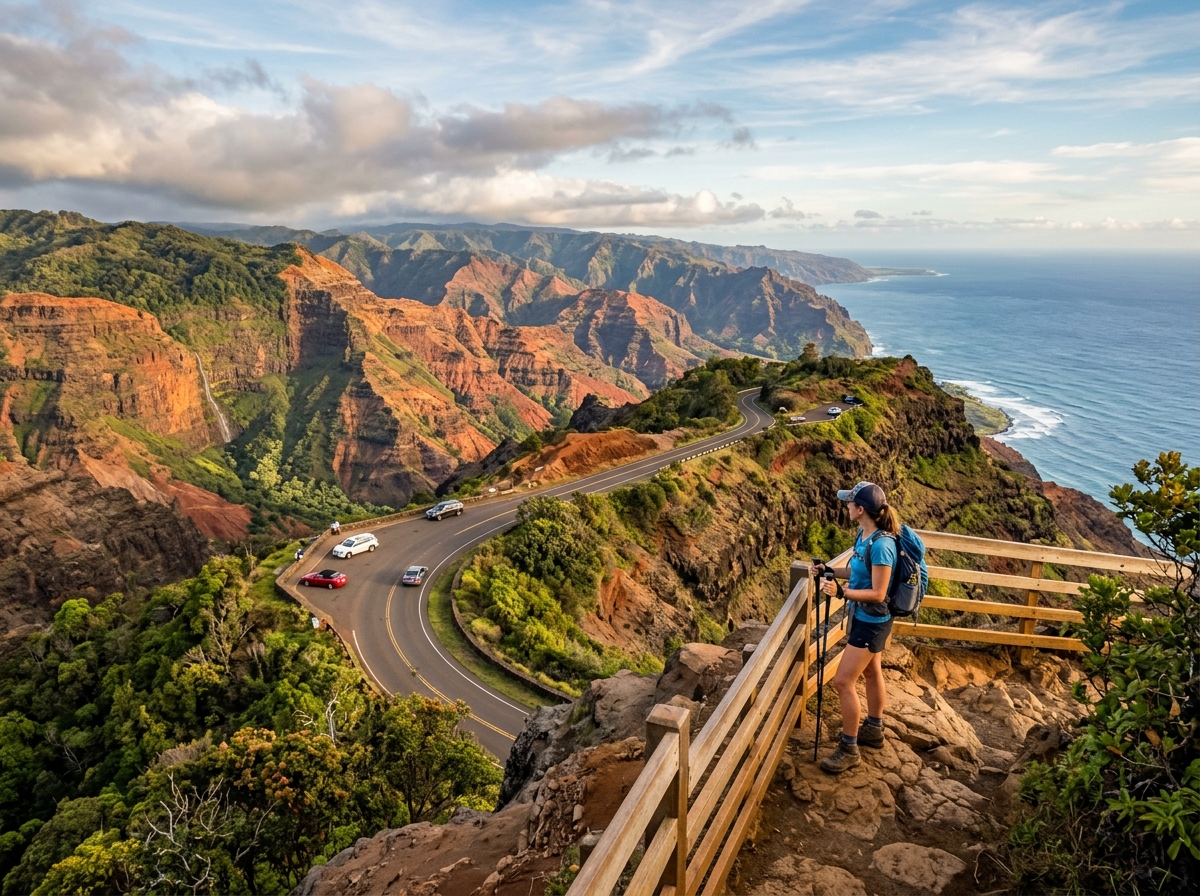
Practical tip: Start early. Clouds roll in by mid-morning and can completely obscure the view. If you arrive at the Kalalau Lookout after noon, you may see nothing but white.
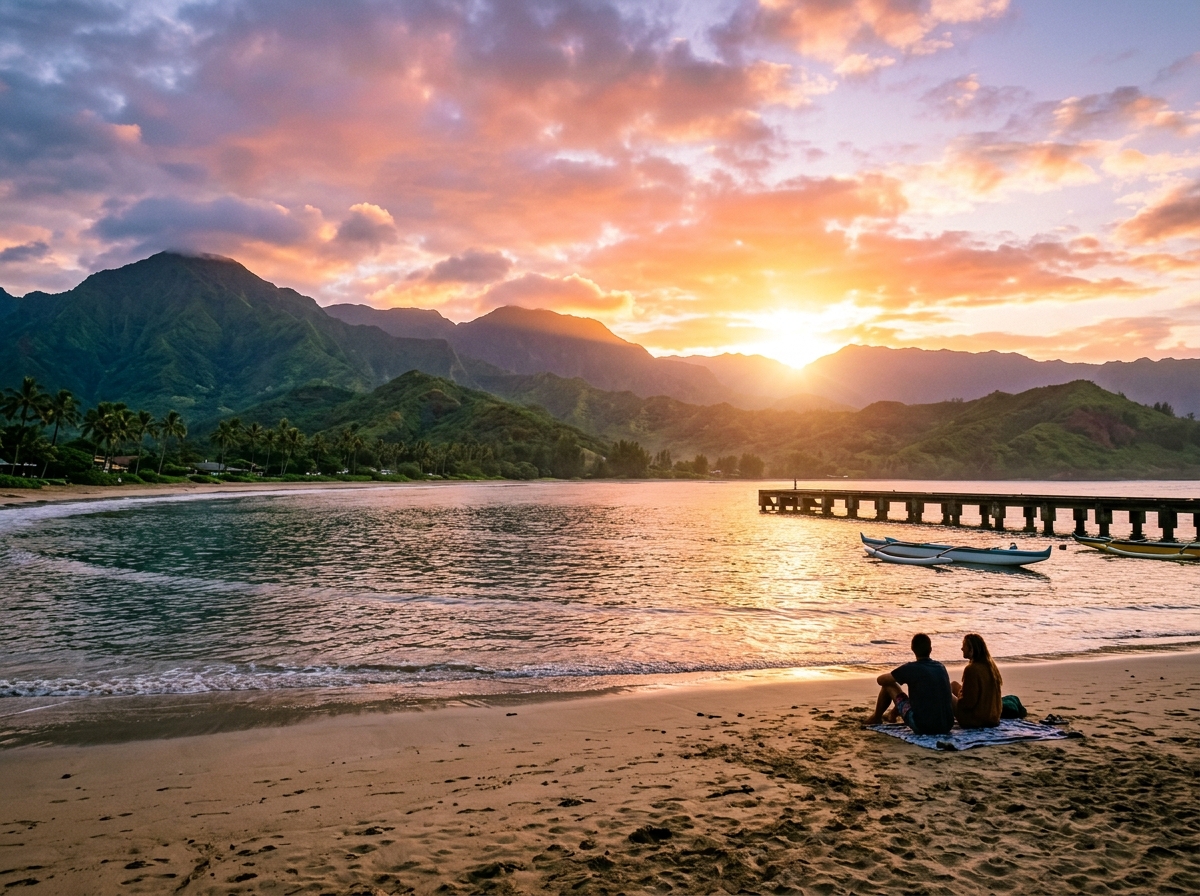
2. Watch the Sunrise at Hanalei Bay
Hanalei Bay is a two-mile crescent of white sand backed by mountains with near-constant waterfalls running down them. It is probably the most photographed scene on the island, and it earns every photo.
The bay is calm and swimmable in summer. In winter, the north swells bring big waves and it becomes a surfing bay. Either way, it is worth sitting on the beach and doing nothing for a while.
In town, the main street (Aku Road and Hanalei Road) has a handful of good coffee shops, lunch spots, and surf stores. Grab a plate lunch from one of the food trucks near the beach, walk through some of the small galleries, and take your time. Hanalei is not a place to rush.
3. Drive to the End of the Road (Ke’e Beach)
The road on Kauai’s North Shore ends at Ke’e Beach. You cannot go any further by car. From the parking lot, the Kalalau Trail begins — the most famous hike in all of Hawaii.
Ke’e Beach itself has a small reef that makes it one of the better snorkeling spots on the North Shore. Visibility is best in summer when the water is calmer.
Important note about permits: You now need a parking reservation to drive to Ke’e Beach. The Ha’ena State Park permits system requires you to book online in advance at gohaena.com. Day use parking fills up fast, especially in summer. Book as soon as you know your dates.
4. Hike the Kalalau Trail (At Least the First Two Miles)
The full Kalalau Trail is 11 miles one way and requires a multi-day backpacking permit. Most people do not do the full thing — and that is completely fine.
The first two miles to Hanakapi’ai Beach are what most visitors tackle as a day hike. It is strenuous, muddy, and exposed in places, but the views of the Nā Pali Coast from the trail are unreal. You are walking above sea cliffs, watching waves crash hundreds of feet below you.
Hanakapi’ai Beach itself has no safe swimming (strong rip currents and shore break), but it is worth the two-mile walk just to stand there and look at it.
From Hanakapi’ai Beach, you can extend the hike another two miles inland to Hanakapi’ai Falls, a 300-foot waterfall at the end of a valley. This makes the total day hike 8 miles round trip with significant elevation and river crossings. Do not attempt it in rainy conditions — the stream can flash flood with very little warning.
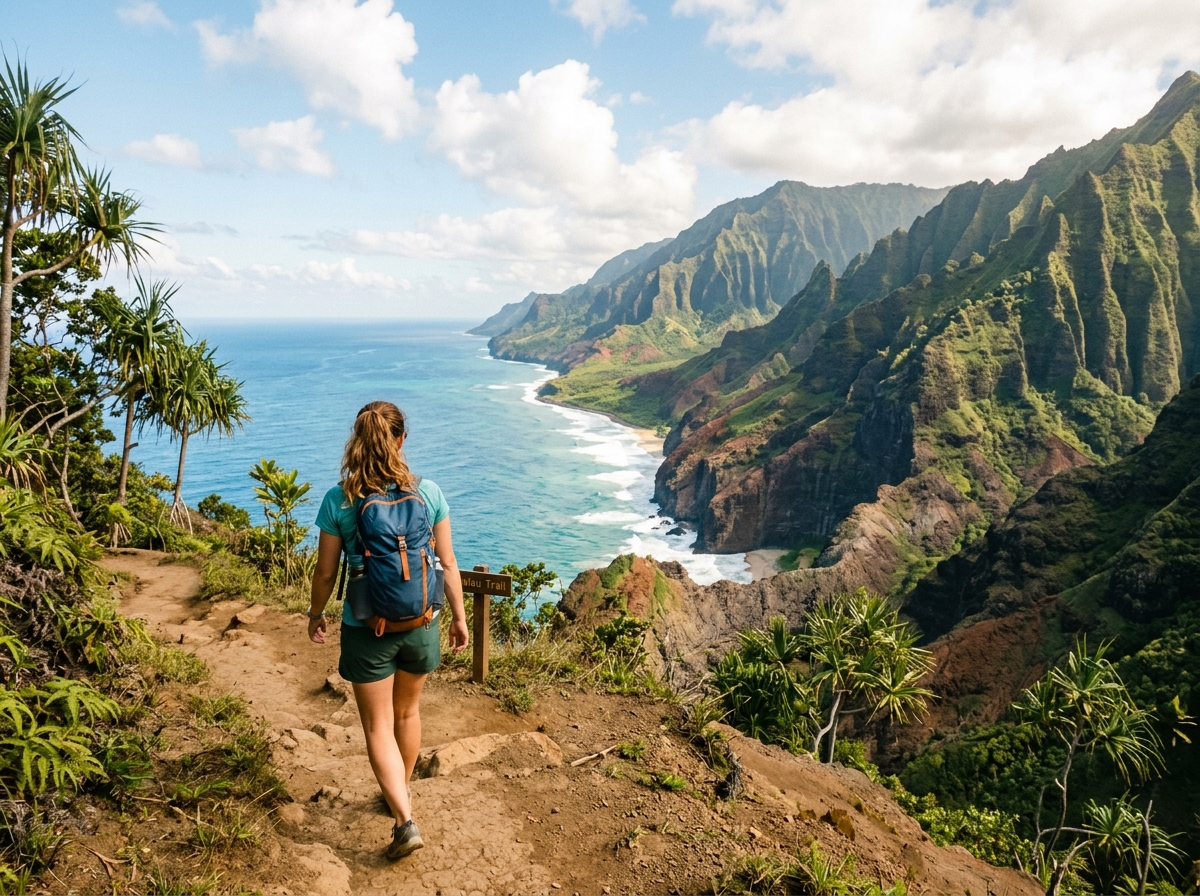
A permit is required for the trail beyond Hanakapi’ai Beach. Get it from the Hawaii DLNR website.
5. Take a Helicopter Tour
About 70% of Kauai is accessible only by air. No roads, no trails — just raw wilderness. That is why helicopter tours are not just a tourist gimmick here. They are genuinely the only way to see a huge portion of the island.
The highlights you see from the air include the full Nā Pali Coast (including the Kalalau Valley), the 5,148-foot Waialeale Crater (one of the wettest places on Earth, receiving around 450 inches of rain per year), remote waterfalls inside the crater, and the entire scope of Waimea Canyon.
The tours typically run 50 to 65 minutes. Blue Hawaiian Helicopters and Jack Harter Helicopters are the two most well-reviewed operators on the island. Doors-off tours exist if you want the full open-air experience (and better photos).
Book well in advance. The good time slots sell out weeks ahead, especially in summer.
6. Kayak the Wailua River
The Wailua River is the only navigable river in Hawaii, and it is a great half-day activity. You can rent kayaks in Kapaa and paddle about two miles upstream to reach the Uluwehi Falls (also called Secret Falls), a 100-foot waterfall that drops into a quiet pool.
The trail from the kayak landing to the falls is about a mile each way through jungle. It is a little muddy, very green, and feels completely removed from anywhere else on the island.
Several outfitters in Kapaa run guided tours that include kayak rental and a guided hike to the falls. If you would rather go independently, you can rent kayaks from Kayak Wailua or Wailua Kayak Adventures.
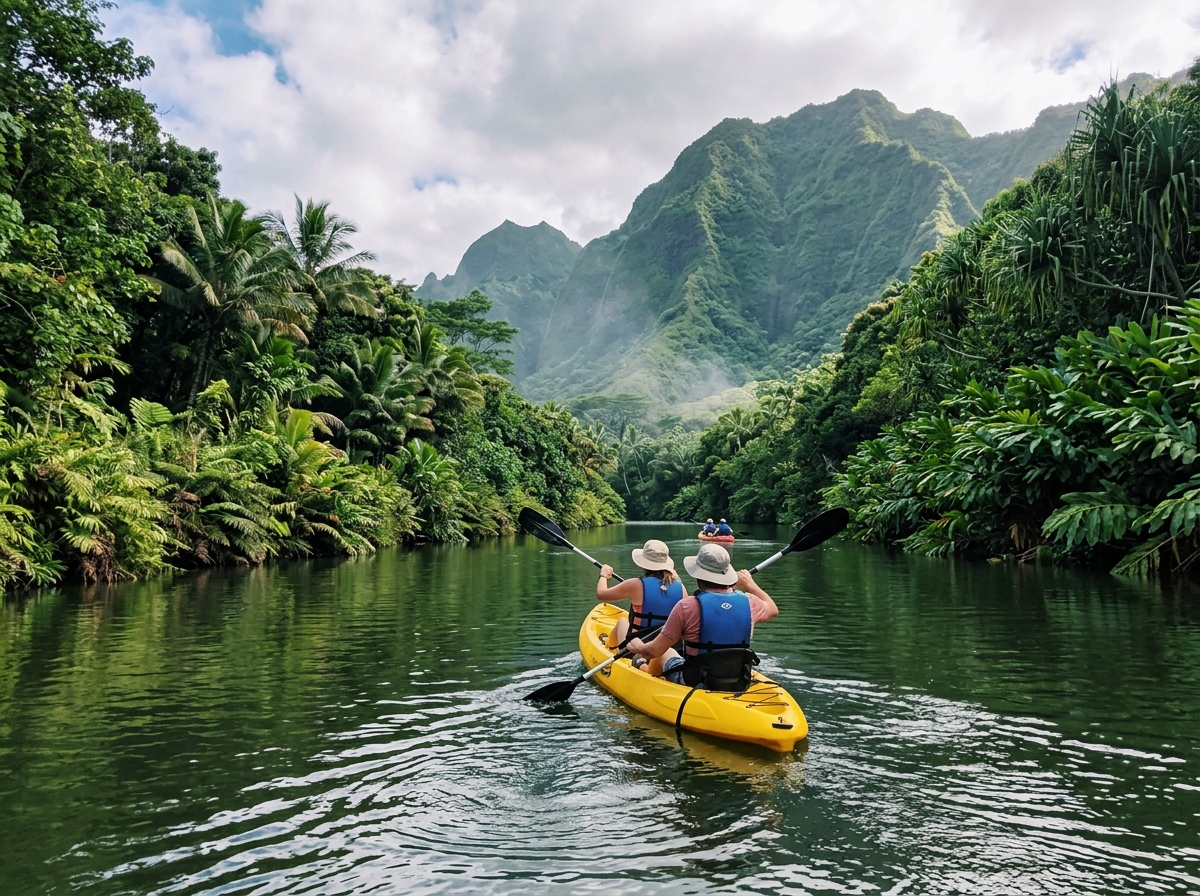
Tip: The river is tidal in its lower section. Paddle up in the morning when you have a current helping you, and float back down easily in the afternoon.
7. Snorkel at Tunnels Beach (Makua Beach)
Tunnels Beach is widely considered the best snorkeling spot on Kauai. The reef system here is extensive, the water is clear, and the marine life is diverse. You will see sea turtles, parrotfish, and if you are lucky, spinner dolphins in the bay.
The beach sits a couple of miles from Hanalei on the North Shore. Parking is extremely limited — a few roadside spots on Haena Road. Get there by 7am if you want to park. The beach itself fills up later in the morning.
Snorkeling conditions are best in summer (May through September) when the north swell calms down. In winter, this beach can have a dangerous shore break and currents. Check the surf report before you go.
8. Explore Poipu Beach
Poipu Beach is the most reliably sunny beach on Kauai. While the North Shore sometimes gets rain, Poipu sits in a drier rain shadow and gets consistent sunshine most of the year.
The beach has a natural half-moon shape with a tombolo (a sandbar) that creates a protected cove on one side. This makes it great for families with kids — the cove has calm, shallow water while the other side has waves for boogie boarding.
Hawaiian monk seals occasionally haul out and nap on the sand here. If you see one, keep your distance. Getting too close is a federal violation. The ropes they put up around the seal are there for a reason.
Nearby, the Spouting Horn blowhole is worth a five-minute stop. Ocean swells push through a lava tube and shoot water 50 feet into the air with a loud whooshing sound. It is impressive and free to see.
9. Visit Wailua Falls
If you need one waterfall and you are not up for a long hike, Wailua Falls is it. This 80-foot double waterfall is visible directly from the road — no hiking required. It was used in the opening credits of the original Fantasy Island TV show and is one of the most photographed spots on the island.
Turn onto Ma’alo Road (Route 583) from Kuhio Highway near Lihue and drive about four miles up the road. The viewpoint is right there.
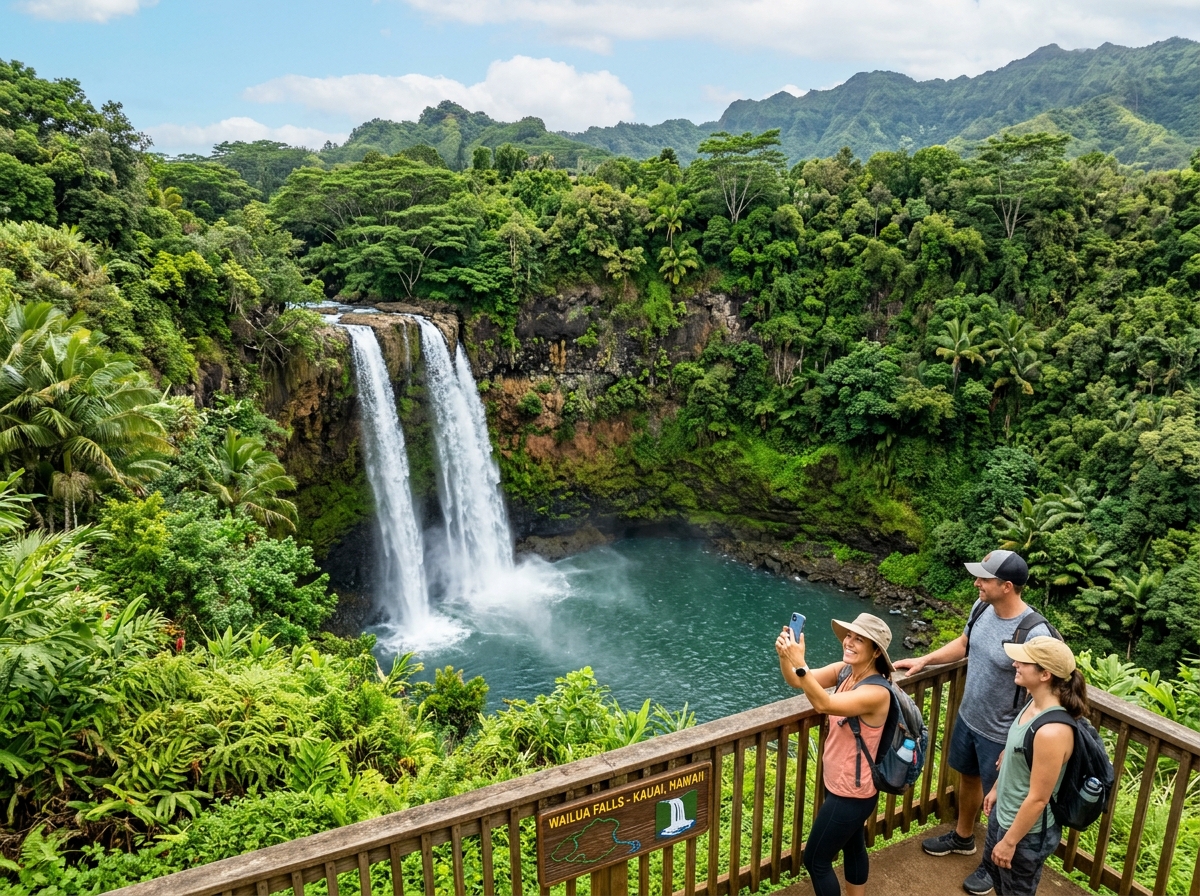
The falls are most dramatic after rain, so if it has been raining on the east side, this is the perfect spot to visit.
10. Hike the Awaawapuhi Trail
Most visitors skip the Awaawapuhi Trail because it is in Kokee State Park and takes more effort to reach. That is a mistake.
The 6.6-mile out-and-back trail ends on a narrow ridge with views straight down 2,500 feet to the Nā Pali Coast. It is a vertiginous, knee-buckle moment that rivals anything you will see from the helicopter. The hike is all downhill on the way out (meaning all uphill on the way back, which is hard) and takes about 4 to 5 hours round trip.
Go for sunset. The light on the Na Pali ridges in the last hour of the day is extraordinary. Bring a headlamp for the walk back.
11. Watch the Sunset from the Koke’e State Park Lookouts
The Kalalau Lookout in Kokee State Park sits at 4,000 feet. On clear days, you can see the full sweep of the Kalalau Valley and the ocean 4,000 feet below. In the late afternoon, the valleys fill with shadows while the ridgelines stay lit in gold.
The Puu O Kila Lookout is a short drive further and is considered the better of the two for sunset — fewer people know about it. Get there 45 minutes before sunset and wait.
12. See the Na Pali Coast by Boat
The Nā Pali Coast can be seen from the trail (if you hike in), from the air (helicopter), or from the water. The boat tour is the third option, and it is spectacular.
From a boat, you get to see the full 17 miles of sea cliffs from sea level. You pass sea caves, pods of dolphins, humpback whales (in winter), and waterfalls that fall directly into the ocean. Most tours include snorkeling stops.
Tours depart from either Port Allen on the South Shore or Hanalei Bay on the North Shore. South Shore departures are generally more stable (calmer seas) and run year-round. North Shore departures operate only in summer.
Captain Andy’s and Blue Dolphin Charters are two well-reviewed operators. Book a raft (Zodiac) tour if you want a more thrilling ride and closer views. Book a catamaran if you want comfort and less bouncing.
13. Swim at Lydgate Beach Park
Lydgate is the best beach for families with young children, snorkeling beginners, and anyone who wants to swim without worrying about currents. The beach has two lava-rock enclosures that create natural protected pools where you can snorkel safely even when the ocean is rough outside.
It is on the East Side near Lihue, which makes it a great first or last day stop. The park also has a large playground, picnic tables, and free parking.
14. Explore the Kilauea Lighthouse and Wildlife Refuge
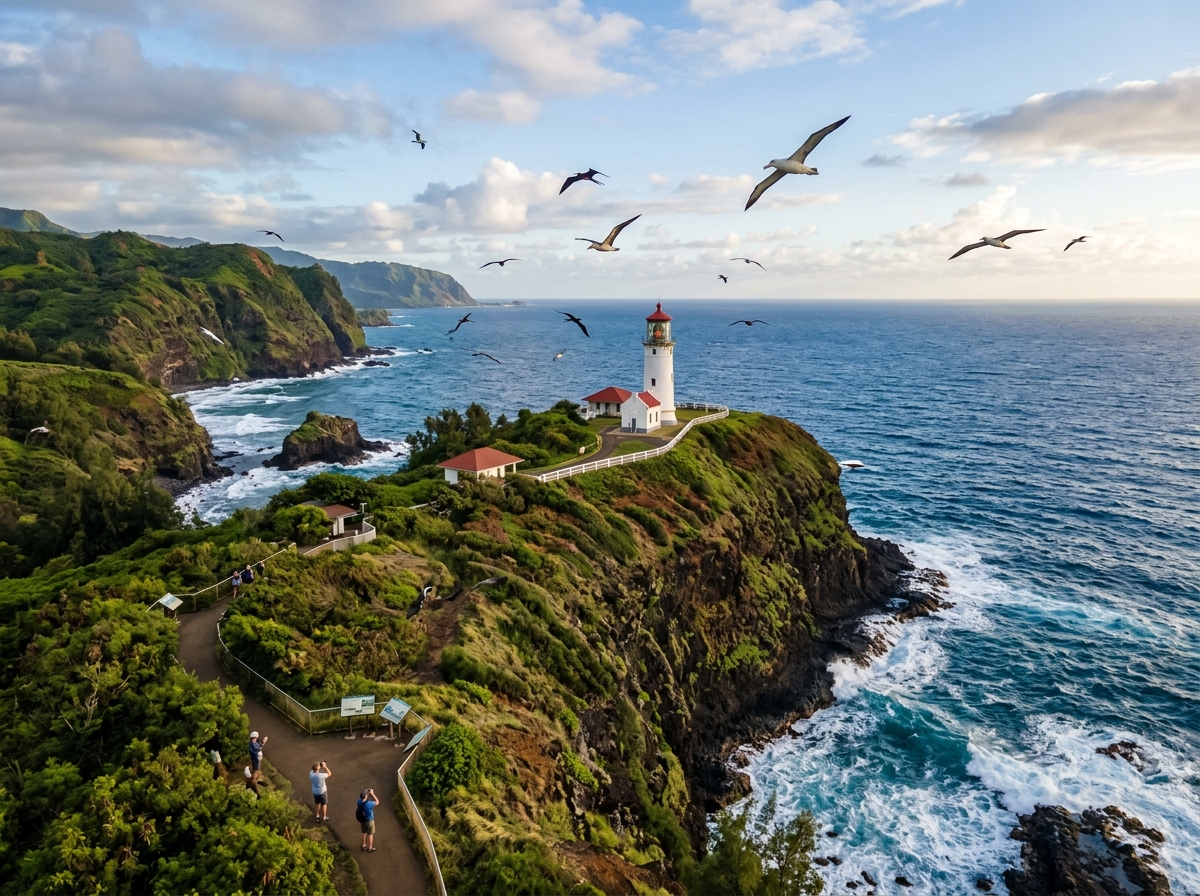
The Kilauea Point National Wildlife Refuge sits on the northernmost point of the main Hawaiian Islands. The lighthouse itself dates back to 1913 and is one of the most photographed in Hawaii.
More importantly, the refuge is a seabird nesting site. You can see red-footed boobies, nēnē (Hawaiian geese), frigatebirds, and wedge-tailed shearwaters without hiking anywhere. The viewpoint from the cliff also gives you a clear look at humpback whales (in season) and spinner dolphins.
Entry costs $10 per adult. It is worth it. Open Tuesday through Saturday.
Rainy Day Activities in Kauai (What Competitors Skip)
Kauai is the wettest island in Hawaii. The North Shore can see rain for days at a stretch in winter. Every travel guide tells you what to do in sunshine. Here is what to actually do when it pours.
Visit the Kauai Museum in Lihue. Small but well-curated, with a strong focus on the island’s history, geology, and the plantation era. It fills a couple of hours and costs under $15.
Explore Old Koloa Town. The first sugar plantation in Hawaii was here. The restored storefronts along Koloa Road have good food, local shops, and a historical marker that explains the plantation history of the island. It is easy to wander without getting too wet.
Take a coffee plantation tour. Kauai Coffee Company in Eleele is the largest coffee estate in the United States. Free self-guided tours, tasting samples, and a farm walk that is manageable even in light rain.
Shop the Kauai Nut Roasters in Lihue. Hawaiian macadamia nut products, honey, and local snacks. Good rainy afternoon stop.
Drive the Waimea Canyon anyway. Clouds and mist in the canyon create a completely different atmosphere — eerie, moody, and worth photographing. Not every rainy day ruins the view.
Best Beaches in Kauai by Type
Not all beaches are created equal. Here is a quick breakdown:
Best for swimming: Poipu Beach (South), Lydgate Beach Park (East), Anini Beach (North, very calm)
Best for snorkeling: Tunnels Beach (North, summer only), Poipu Beach, Lydgate (for beginners)
Best for surfing: Hanalei Bay (North, winter), Pakala Beach or “Infinities” (West, long lefts)
Best for scenery and walks: Hanalei Bay, Ke’e Beach, Mahaulepu Beach (South, wild and undeveloped)
Most secluded: Hideaways Beach (North, steep access trail), Polihale Beach (West, long drive on dirt road, very remote)
Kid-friendly: Poipu Beach, Lydgate Beach Park, Anini Beach
Best Hikes in Kauai (Quick Reference)
| Trail | Distance | Difficulty | Highlight |
| Waimea Canyon Trail to Waipoo Falls | 3.4 mi RT | Moderate | Canyon views, waterfall |
| Kalalau Trail to Hanakapi’ai Beach | 4 mi RT | Hard | Nā Pali Coast views |
| Kalalau Trail to Hanakapi’ai Falls | 8 mi RT | Very Hard | Remote 300-ft waterfall |
| Awaawapuhi Trail | 6.6 mi RT | Hard | Cliffside Na Pali panorama |
| Sleeping Giant (Nounou Mountain) | 4 mi RT | Moderate | 360-degree island views |
| Maha’ulepu Heritage Trail | 5 mi RT | Easy-Moderate | Wild south coast scenery |
| Pihea Trail | 7.5 mi RT | Moderate | Alaka’i Swamp boardwalk, birds |
Practical Tips Most Guides Don’t Cover
Renting a Car
You need a car on Kauai. Full stop. There is no meaningful public transit, and rideshares are limited outside of Lihue.
Book your rental car before you leave home, not at the airport. Car availability on Kauai is genuinely limited, and prices spike dramatically if you wait. Compact cars and SUVs go fast. Some west side roads (like the road to Polihale Beach) require 4WD after rain.
Driving Tips for the North Shore
The one road to Hanalei and points north has a series of one-lane bridges. You yield to oncoming traffic based on whose turn it is. Wait your turn, be patient, and do not honk. Locals will not react well, and you are on their island.
The Permit System
Several key areas now require advance permits or reservations:
- Ke’e Beach / Ha’ena State Park: Parking reservations required. Book at gohaena.com.
- Kalalau Trail beyond Hanakapi’ai Beach: Permit required. Book at dlnr.hawaii.gov.
- Waimea Canyon / Kokee State Park: No permit for day use, but camping requires one.
Book permits 30 days out when the booking window opens. Popular dates sell out in minutes.
Car Break-Ins
This is the one “what NOT to do” tip that could save your trip. Car break-ins are common at trailheads and beach parking lots across Kauai. This is not an exaggeration — it happens frequently, even in broad daylight.
Leave nothing in your car. No bags in the trunk, no sunscreen in the cupholder, no phone charger cable visible. If a thief has to break a window to check, they often will. Use a waterproof bag or pack everything with you.
When to Go
April to June is widely considered the best time to visit. Crowds are thinner than summer, prices are reasonable, trade winds keep temperatures comfortable, and the North Shore has calmed down from winter swells enough for safe swimming.
July and August are peak season — great weather but crowded and expensive.
December through February brings rain on the North Shore and large waves, but the South and West Sides are often still pleasant. Whale watching is excellent from January through March.
September and October are shoulder season and often excellent — slightly lower prices, thinner crowds, and warm water.
What to Eat in Kauai
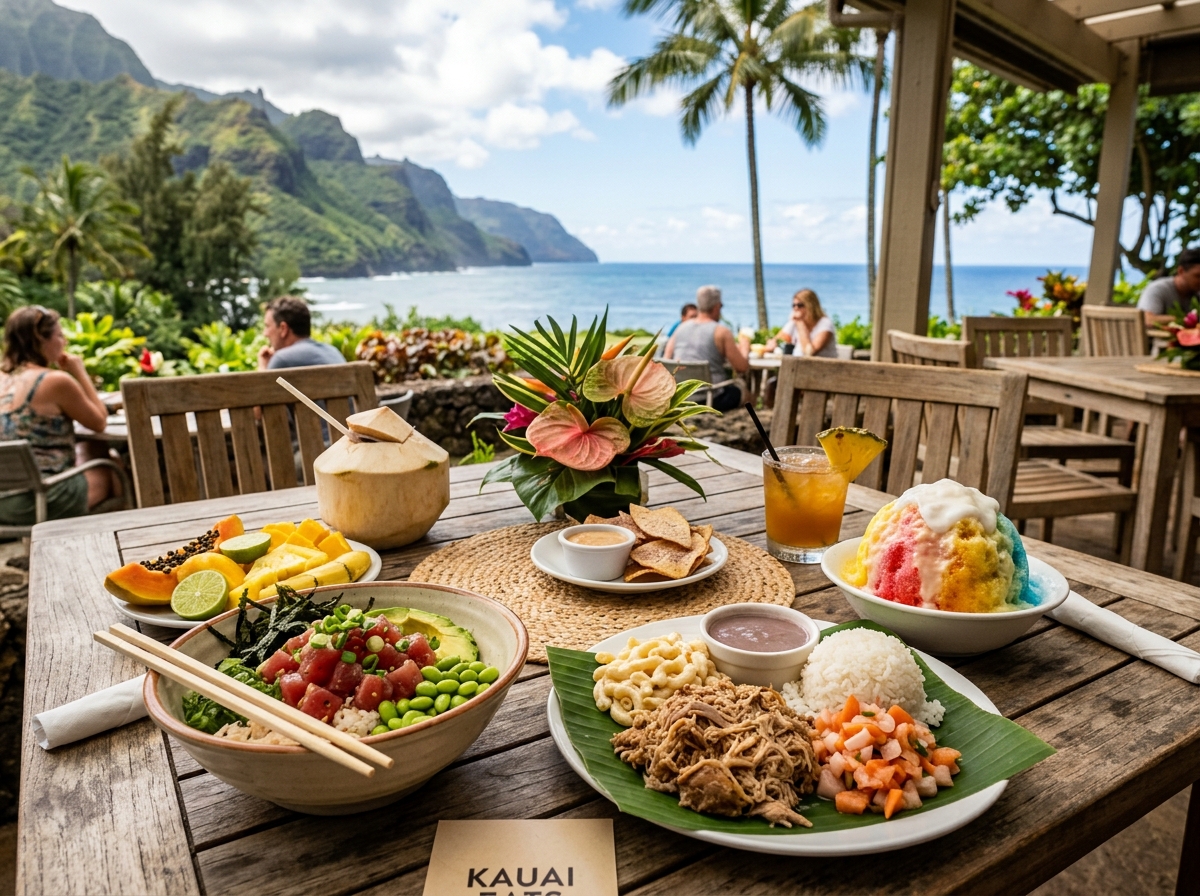
Kauai’s food scene is better than most visitors expect. Here are the spots worth knowing:
Kalaheo Cafe (Kalaheo): Breakfast institution. Local eggs, homemade pastries, strong coffee. Get there early on weekends.
Poke Shack (Lihue and Kapaa): Fresh poke bowls built to order. Some of the best poke on the island and very reasonably priced.
Shrimp Station (Waimea): A little shack on the side of the road serving garlic shrimp plates. Simple, cheap, and outstanding.
Hanalei Taro and Juice Co. (Hanalei): Taro burgers, smoothies, and local produce. Very much a local favorite and easy on the wallet.
Koloa Fish Market (Koloa): Plate lunches, fresh poke, and katsu. Order at the counter, sit outside, done.
Postcards Cafe (Hanalei): Nicer sit-down spot with a focus on local and fresh ingredients. Good for a splurge dinner on the North Shore.
Kauai with Kids: What Works Best
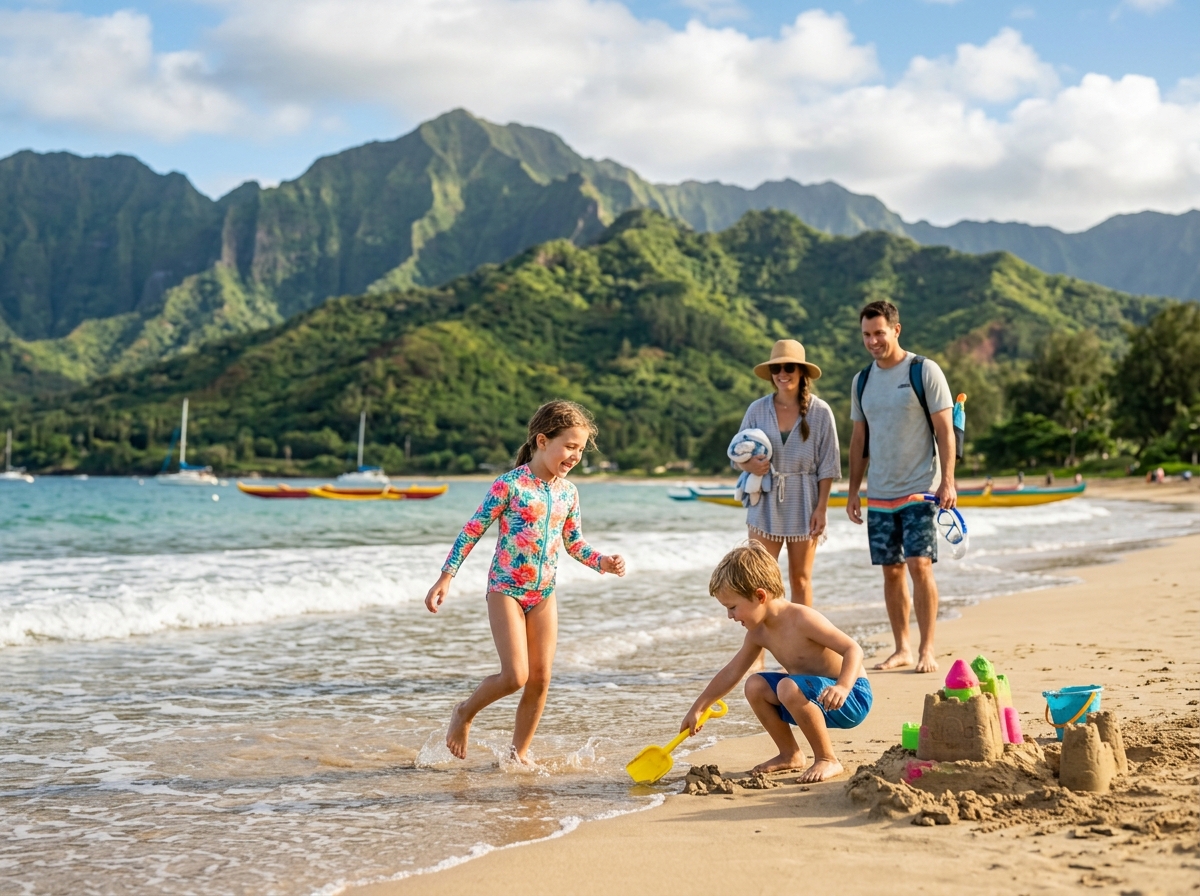
Most competitor guides cover beach activities for families. Here are the ones that actually hold up with children:
Lydgate Beach Park is the safest swimming beach on the island for young kids. The lava-protected pools mean no unexpected waves pulling anyone over.
The Kilauea Lighthouse works well with kids because there is something to point at (birds, lighthouse, ocean view) without any hiking involved.
The Kauai Plantation Railway in Lihue runs a small train through a working fruit and vegetable plantation. Kids enjoy the ride and it teaches them about Hawaiian agriculture.
Limahuli Garden (North Shore): One of the most beautiful botanical gardens in the United States. Easy walking paths through native Hawaiian plants with mountain views behind. Older kids appreciate it. Younger kids will enjoy the stream.
Spouting Horn in Poipu is always a hit with children. Loud, impressive, free, and close to good ice cream at Lappert’s.
Amazon Products to Pack for Your Kauai Trip
These three items come up again and again when visiting Kauai, and having them makes the trip noticeably better.
1. Dry Bag / Waterproof Backpack
Kauai involves water. You will kayak, you will get caught in rain, and you will wade across streams if you hike the Kalalau Trail. A good dry bag keeps your phone, wallet, and camera safe through all of it.
The MARCHWAY Floating Waterproof Dry Bag (available on Amazon) comes in 5L to 40L sizes, has a roll-top seal, and floats if dropped in water. It is exactly what you need for kayaking the Wailua River or hiking to Hanakapi’ai Falls.
Search “MARCHWAY Floating Waterproof Dry Bag” on Amazon
2. Reef-Safe Mineral Sunscreen
Hawaii state law bans sunscreens containing oxybenzone and octinoxate, the chemicals that damage coral reefs. Using non-reef-safe sunscreen is not just bad for the ocean — it is against the law.
The Thinksport SPF 50+ Mineral Sunscreen (Amazon) uses zinc oxide only, leaves minimal white cast, and holds up well in salt water. It is one of the top-rated reef-safe sunscreens and is specifically formulated for outdoor athletes.
Search “Thinksport SPF 50 Sunscreen” on Amazon
3. Waterproof Hiking Sandals
Half the trails on Kauai will get your feet wet. Stream crossings, muddy paths, and unexpected rain are the norm rather than the exception. Standard hiking boots become ankle-weight mud bricks fast.
The KEEN Newport H2 Sandal (Amazon) has a closed-toe design, excellent grip, dries quickly, and handles both trail and water. They are the most commonly recommended footwear by experienced Kauai hikers and work for both adults and kids.
Search “KEEN Newport H2 Sandal” on Amazon
Suggested Itineraries
4 Days in Kauai
Day 1 (East Side): Land in Lihue. Wailua Falls. Lydgate Beach. Kapaa dinner. Day 2 (North Shore): Hanalei Bay. Tunnels Beach snorkeling. Ke’e Beach sunset. Day 3 (Hike Day): Kalalau Trail to Hanakapi’ai Beach. Afternoon in Hanalei Town. Day 4 (West Side): Waimea Canyon. Kokee State Park lookouts. Shrimp Station lunch.
7 Days in Kauai
Follow the 4-day plan above, plus: Day 5: Helicopter tour. Afternoon at Poipu Beach. Day 6: Kayak the Wailua River. Kilauea Lighthouse. Anini Beach. Day 7: Awaawapuhi Trail or Sleeping Giant. Koloa Town. Final sunset at Hanalei Bay.
Frequently Asked Questions
How many days do you need in Kauai? Seven days is the sweet spot for seeing all four sides of the island without rushing. Four days is the minimum if you are focused on one or two regions. Ten days or more gives you time to slow down and really settle in.
Is Kauai better than Maui? It depends on what you want. Kauai is wilder, quieter, and more rugged. Maui has more developed infrastructure, more resort options, and a broader food and nightlife scene. If you love nature and outdoor adventure, Kauai is better. If you want more amenities and beach variety, Maui competes.
What is the best area to stay in Kauai? North Shore (Hanalei/Princeville) for dramatic scenery and access to the Nā Pali Coast. South Shore (Poipu) for reliable sunshine, snorkeling, and family-friendly beaches. East Side (Kapaa) for central access to both sides of the island at a lower price point.
Do you need a car in Kauai? Yes. Absolutely. Kauai has no meaningful public transit. A rental car is not optional.
Is Kauai safe for solo travelers? Yes. Kauai is a very safe destination. The main concerns are physical safety on trails (flash flooding, unstable terrain) and car break-ins at trailheads. Both are manageable with common sense.
What should I avoid in Kauai? Leaving anything visible in your rental car. Swimming at beaches with no lifeguards when surf is up. Hiking to Hanakapi’ai Falls in rainy conditions. Getting too close to Hawaiian monk seals on the beach. Skipping the west side entirely — Waimea Canyon is not optional.
What is Kauai most famous for? Kauai is most famous for the Nā Pali Coast, Waimea Canyon, and its role as a filming location (Jurassic Park, Pirates of the Caribbean, Raiders of the Lost Ark, and others were filmed here). The island’s lush, untouched landscape is what filmmakers keep returning for — and it is equally stunning in person.
Is Kauai expensive? Yes, relatively. Accommodation, food, and activities cost more than on the US mainland. You can reduce costs significantly by staying in a condo with a kitchen rather than a hotel, cooking some meals, and focusing on the many free activities (hikes, beaches, overlooks) rather than booking every tour available.
Final Thoughts
Kauai rewards the visitors who slow down. You could rush through a highlight reel in four days — helicopter tour, Waimea Canyon, Hanalei Bay, done. Or you could spend a week on the North Shore, learn the rhythm of the one-lane bridges, watch the mountains every morning while the mist clears, and leave feeling like you actually knew a place.
The island does not compete with itself. There is no nightlife hub, no strip mall commercial center trying to distract you. The activity is outside on the trails, in the water, watching the light change on the sea cliffs at dusk.
Go. Take your time. Leave your rental car empty every night.
Disclosure: This article contains Amazon affiliate links. If you purchase through these links, we may earn a small commission at no extra cost to you. We only recommend products we would actually use and that are genuinely useful for a Kauai trip.