Key West sits 90 miles from the US mainland and about the same distance from Cuba. It is technically the end of the road. After the last traffic light on US-1, there is nothing but ocean.
That geography shapes everything about the place. Key West has always attracted people who want to be a little removed from the ordinary. Writers, fishermen, sailors, artists, and people who came for a weekend and never left. The town has a loose, sun-bleached, unapologetically itself personality that is hard to find anywhere else in Florida.
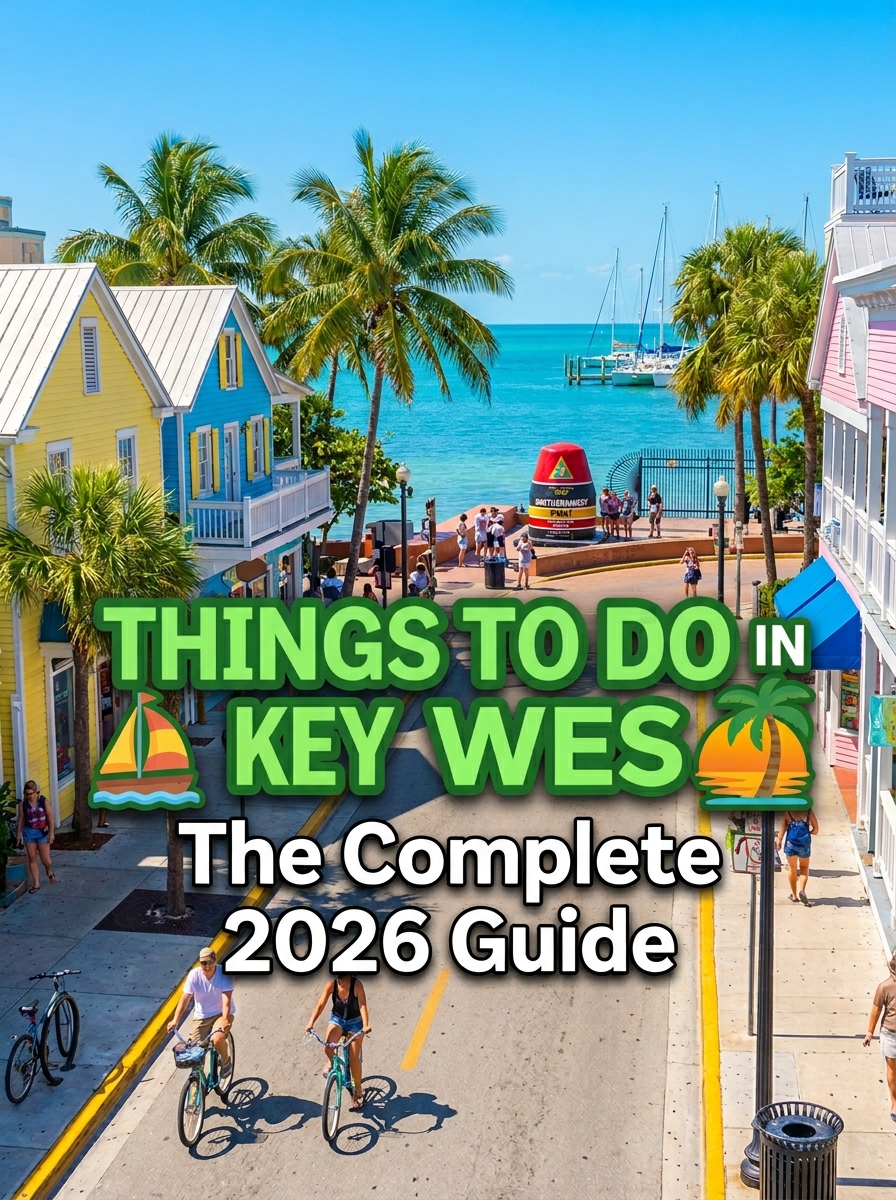
There is genuinely a lot to do here. Landmark history, great snorkeling, wild nightlife, a serious food scene, and some of the best sunsets you will ever see. This guide covers all of it, including the parts most guides skip over.
First: Understanding Key West Before You Go
Key West is a small island. You can walk from one side to the other in about 20 minutes. But it packs a lot in.
Most visitors spend almost all their time in Old Town, the western end of the island that holds most of the historic sites, bars, restaurants, and hotels. Duval Street is the main artery. It runs straight from the Gulf to the Atlantic and is one of the most famous bar streets in America.
New Town is the eastern part of the island, where locals mostly live, the airport sits, and the big box stores are. Not much reason to spend time there unless you need groceries.
One thing to understand upfront: Key West is expensive. It is one of the priciest destinations in Florida. Budgeting realistically before you go saves a lot of frustration once you arrive.
Getting There: The Overseas Highway
Do not fly into Key West and skip the drive entirely. That is the wrong call.
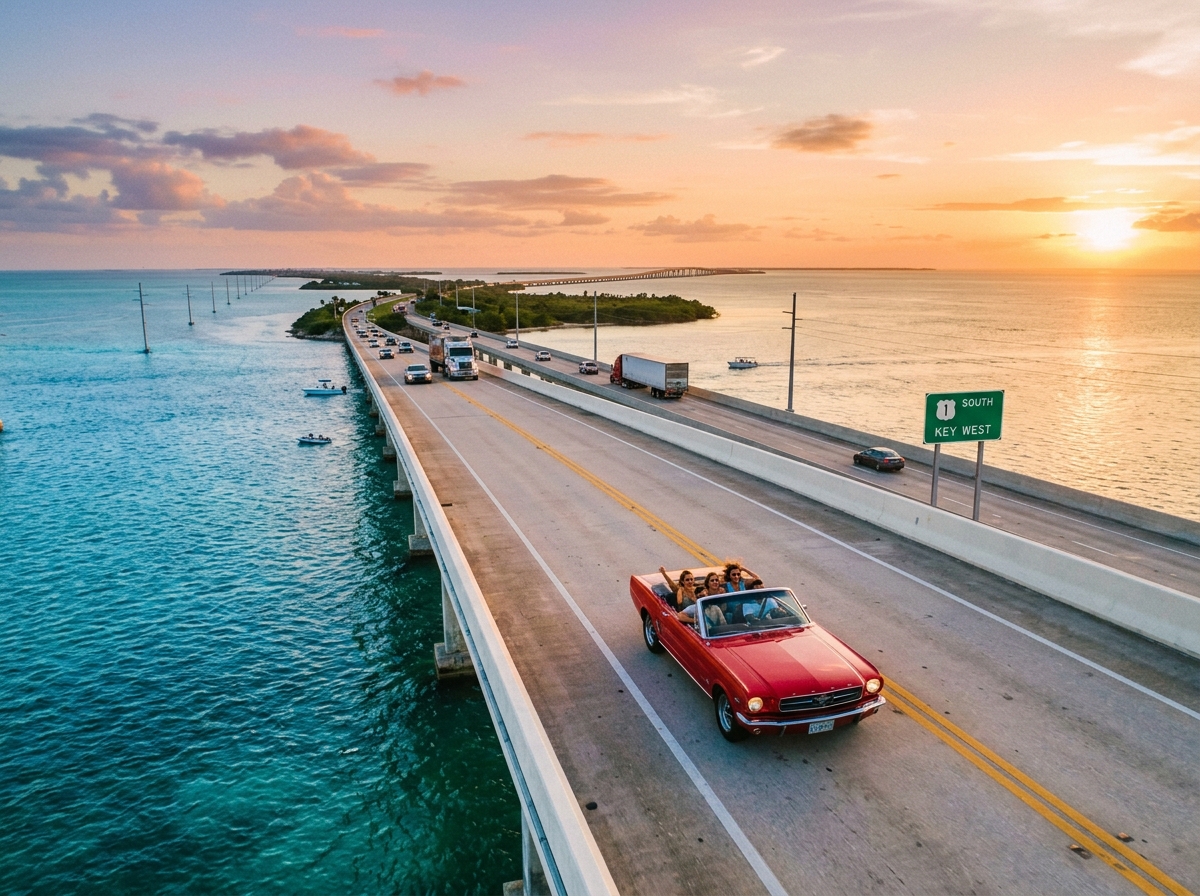
The Overseas Highway (US-1 from Miami or the Florida Turnpike from the north) is one of the great American road trips. You drive through 42 bridges over open water. At points, the ocean is on both sides of your car and the road feels more like a causeway than a highway.
The drive from Miami takes about three and a half hours without stops. From Fort Lauderdale, add 30 more minutes. The drive from the mainland through the Keys passes through Key Largo, Islamorada, Marathon, and Big Pine Key before reaching Key West.
Two stops worth making on the way down:
Robbie’s Marina in Islamorada is a genuine institution. You can buy a bucket of fish and hand-feed tarpon from the dock. Massive silver fish the size of your leg surge up to the platform. It costs a few dollars for the fish bucket and is completely worth it.
Bahia Honda State Park (around Mile Marker 37) has arguably the best beaches in the entire Florida Keys. Wide, soft sand, clear water, and old bridge ruins to photograph. If you have time to stop for two hours, stop here.
Top Things to Do in Key West
1. Watch the Sunset at Mallory Square
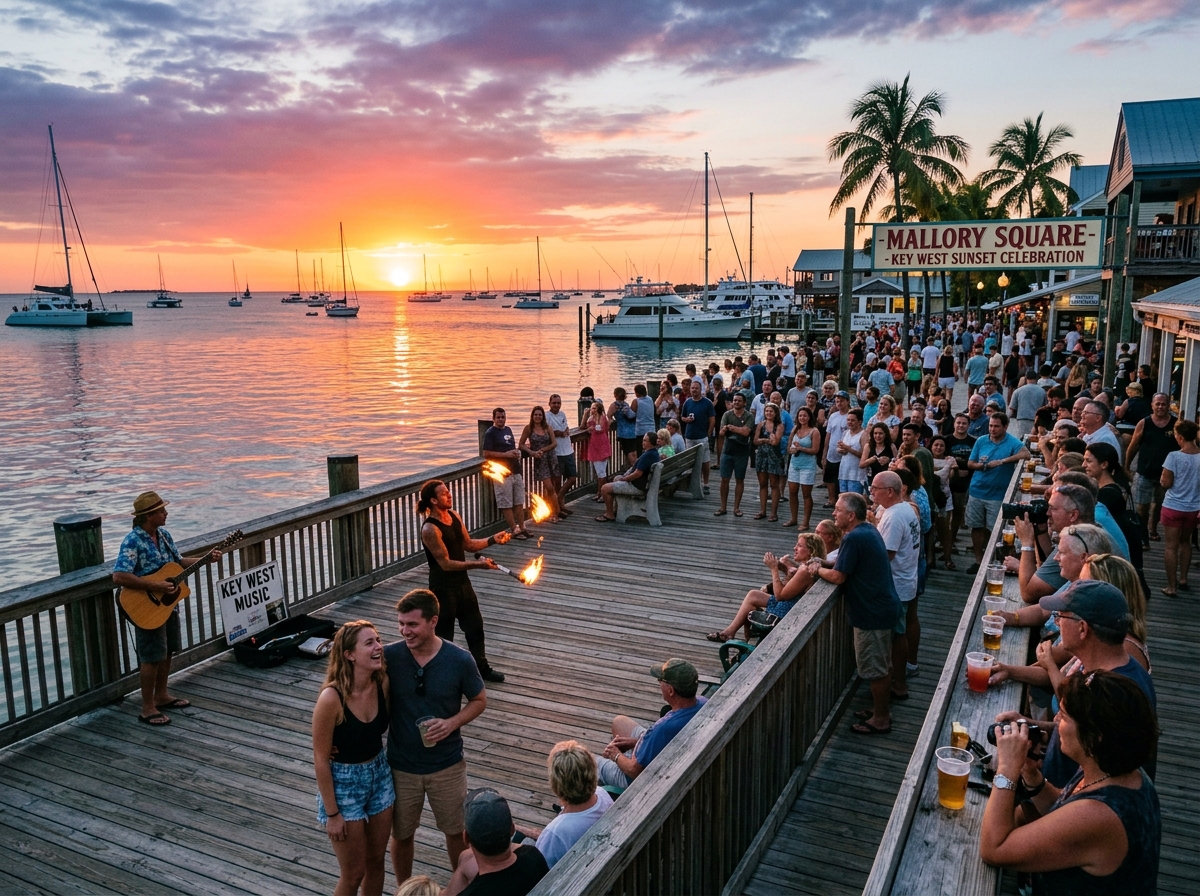
Mallory Square Sunset Celebration is not just a sunset. It is a nightly street performance that has been happening for decades. Performers, jugglers, musicians, food vendors, and about a thousand people show up every single evening to watch the sun drop into the Gulf of Mexico.
The atmosphere is genuinely festive and completely free. Get there about 45 minutes before sunset to find a good spot along the waterfront. The whole thing wraps up about 20 minutes after the sun goes down.
This is the one touristy thing in Key West that completely earns its reputation.
Practical tip: Arrive earlier than you think you need to. The waterfront fills up fast during peak season. If you want a spot on the railing with an unobstructed view, get there an hour before sunset.
2. Visit the Hemingway Home and Museum
Ernest Hemingway lived in Key West from 1931 to 1940. He wrote some of his most important work here, including A Farewell to Arms and For Whom the Bell Tolls. The house at 907 Whitehead Street is now a museum, and it is one of the better literary historic sites in the country.
The Spanish Colonial home is well-preserved. Tours run every day starting at 9am and cost around $18 per adult. The tour itself takes about 20 minutes, but you are welcome to stay and wander the grounds for as long as you like.
The cats are a big part of the draw. About 60 polydactyl (six-toed) cats live on the property, descended from a cat Hemingway owned. They have names, they are everywhere, and they are completely comfortable with visitors. The guides know all of them.
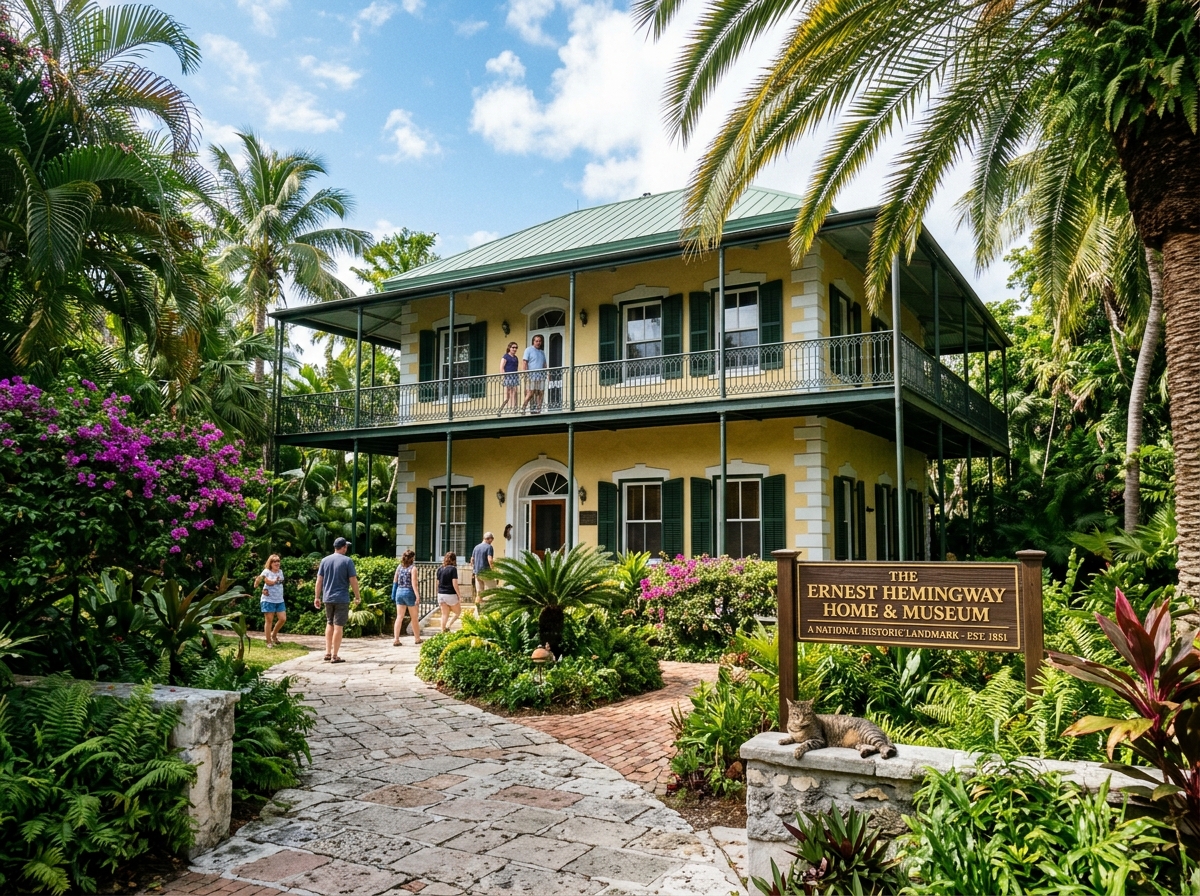
Worth noting: The cats sleep on the antique furniture, which drives certain museum purists crazy. Most visitors find it charming.
3. Climb the Key West Lighthouse
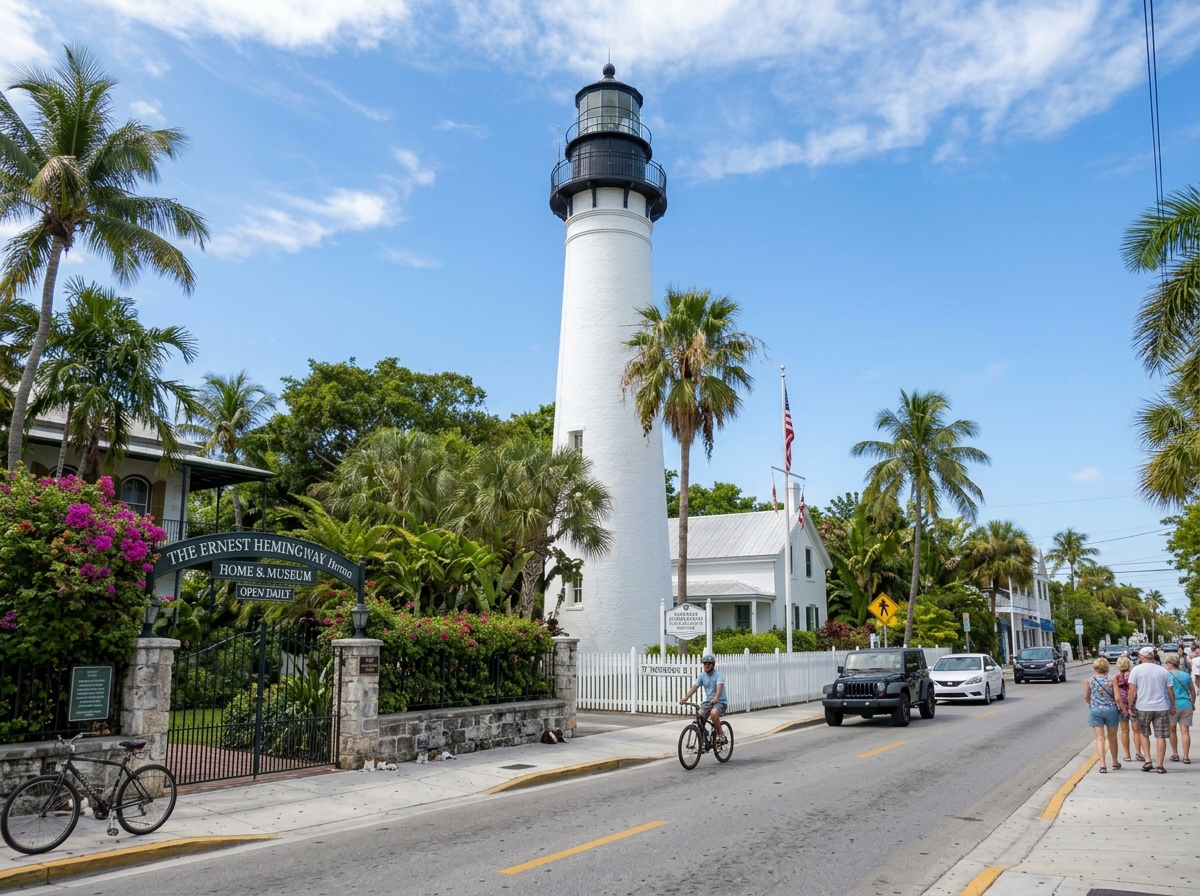
The Key West Lighthouse at 938 Whitehead Street (right across from the Hemingway House) is one of the oldest lighthouses in Florida. It was built in 1848 after a storm destroyed the original.
Climbing the 88 steps to the top gives you a panoramic view of the island that is hard to get any other way. You can see the historic district, the harbor, the ocean on both sides, and on clear days, the reef line offshore.
Admission is around $12 and includes the small keeper’s cottage museum at the base. It takes about an hour. The combination ticket with the Hemingway House saves you a few dollars if you plan to do both, which you should since they are literally across the street from each other.
4. See the Southernmost Point Buoy
The Southernmost Point buoy at the corner of South and Whitehead Streets marks the southernmost point in the continental United States. It is 90 miles from Cuba. The buoy itself is a large painted concrete marker that has become one of the most photographed spots in Key West.
It is free and takes about five minutes. The line for photos can be surprisingly long in the middle of the day. Go early in the morning, around 7 or 8am, and you will often have it nearly to yourself. The light at that hour is also better for photos.
5. Snorkel or Dive the Florida Reef
The Florida Reef is the only living coral barrier reef in the continental United States. It runs about 4 miles offshore from Key West and is part of the Florida Keys National Marine Sanctuary.
You can reach it on a half-day snorkel tour, and the experience is genuinely outstanding. Coral formations, tropical fish, sea turtles, and nurse sharks are common sights. The water is warm, clear, and comfortable most of the year.
Several operators run daily snorkel tours from the Historic Seaport. Fury Water Adventures and Sebago Watersports are among the most established. Expect to pay $45 to $65 per person for a half-day tour including gear.
For certified divers, Key West has world-class wreck diving. The USNS Vandenberg is an 522-foot ship sunk in 2009 specifically as an artificial reef and is one of the largest artificial reef dives in the world.
6. Take a Day Trip to Dry Tortugas National Park
Dry Tortugas is the single best day trip from Key West. The park sits 70 miles west of Key West and is accessible only by boat or seaplane. No road leads there.
The centerpiece is Fort Jefferson, a massive 19th-century brick fort built on a tiny island surrounded by turquoise water. The fort was never finished, never fired a shot in battle, and was later used as a military prison (Dr. Samuel Mudd, convicted in connection with Lincoln’s assassination, was imprisoned here). It is one of the most surreal and beautiful places in Florida.
The water around the fort is extraordinarily clear. The snorkeling right off the beach, without even going far out, is some of the best you will find anywhere in the Keys. Sea turtles nest on the islands in summer.
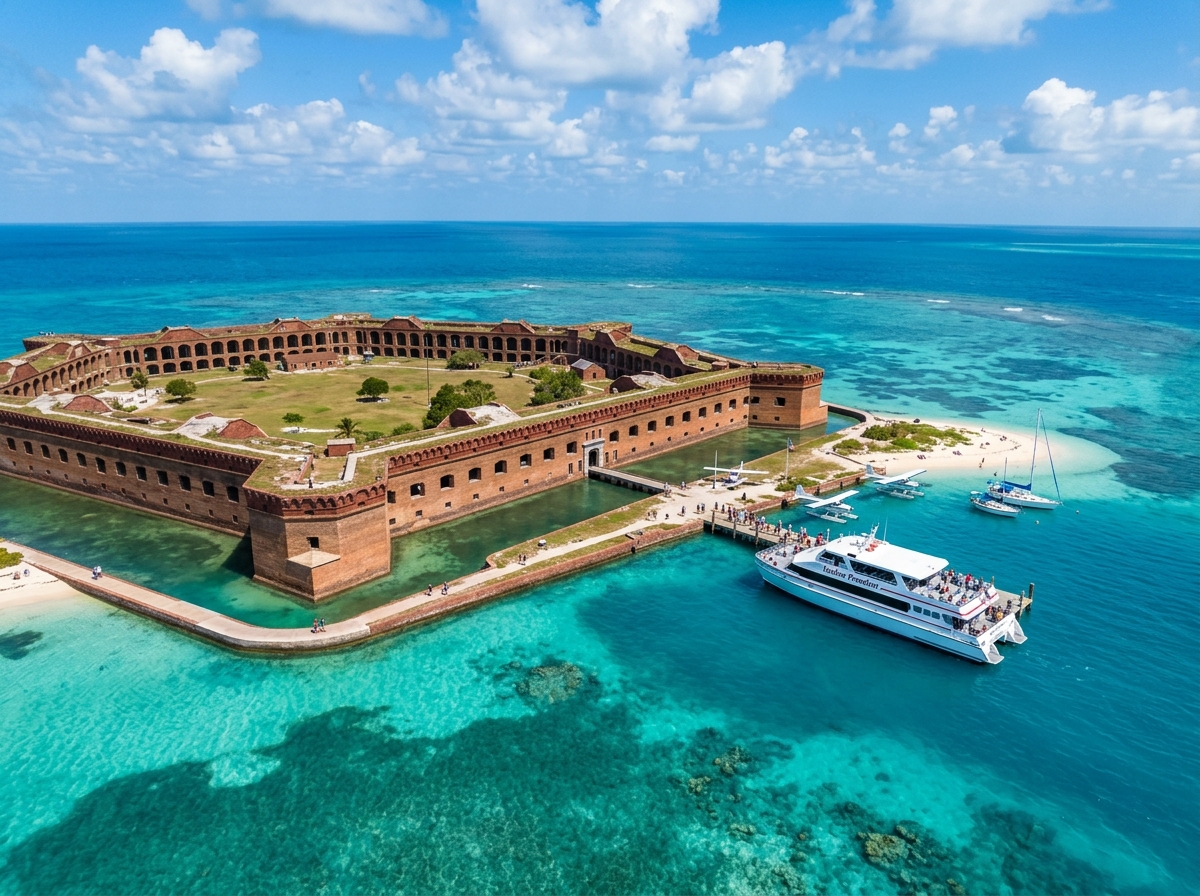
How to get there: The Yankee Freedom Ferry departs from the Key West Historic Seaport and makes the trip in about two and a quarter hours each way. The boat includes breakfast, lunch, snorkel gear, and a guided tour of the fort. Cost is around $200 per adult and the trip takes a full day.
The seaplane option (Key West Seaplane Adventures) is faster and gives you an aerial view of the reef system, but costs significantly more.
Book well in advance. The ferry sells out weeks ahead, especially in winter and spring.
7. Explore the Key West Historic Seaport
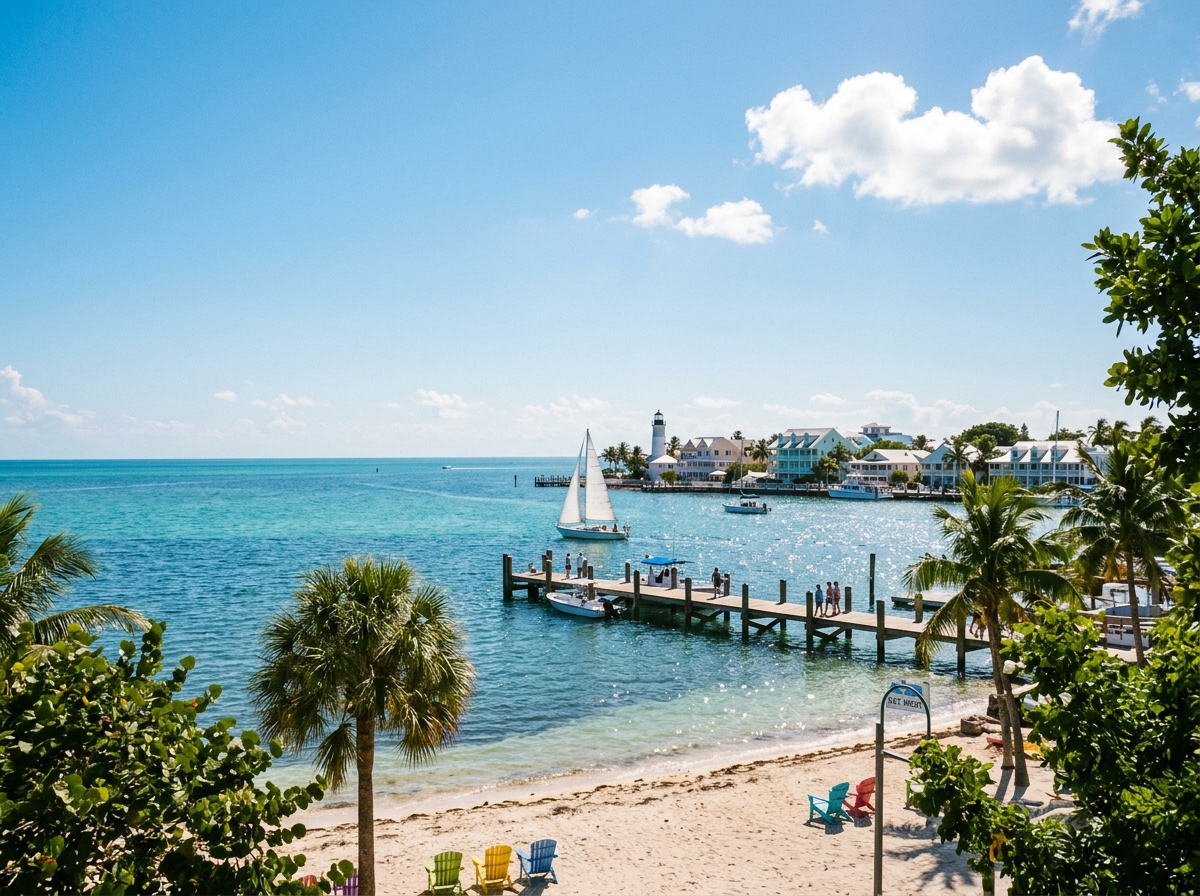
The Historic Seaport (also called Lands End Village) on the north side of Old Town is where Key West’s fishing and maritime history lives. Charter boats, sailing vessels, fishing boats, and a handful of bars and restaurants line the docks.
It is a great morning walk before the crowds build up. The smell of coffee, diesel, and salt water all at once is pretty much the Key West experience in three senses.
A & B Lobster House on the seaport is one of the better seafood restaurants on the island. If you want to splurge on one meal, this is a good candidate.
The nightly sunset cruises depart from the seaport. A sailing catamaran sunset cruise is a popular and slightly more relaxed alternative to Mallory Square if you want a drink in your hand and open water under you for the show.
8. Walk Through the Key West Cemetery
The Key West Cemetery sits in the middle of the island and is one of the more unusual and genuinely interesting places to visit. Most visitors walk right past it without realizing what is there.
The cemetery was established in 1847 after a hurricane washed out the original burial grounds. Because Key West sits on coral rock (not soil), many graves are above-ground vaults, which gives the cemetery a New Orleans-style appearance. About 100,000 people are buried here in a 20-acre space.
The headstone inscriptions are memorable. One famous epitaph reads “I told you I was sick.” Another section is dedicated to victims of the USS Maine explosion. A mausoleum holds the remains of 22 Cuban refugees.
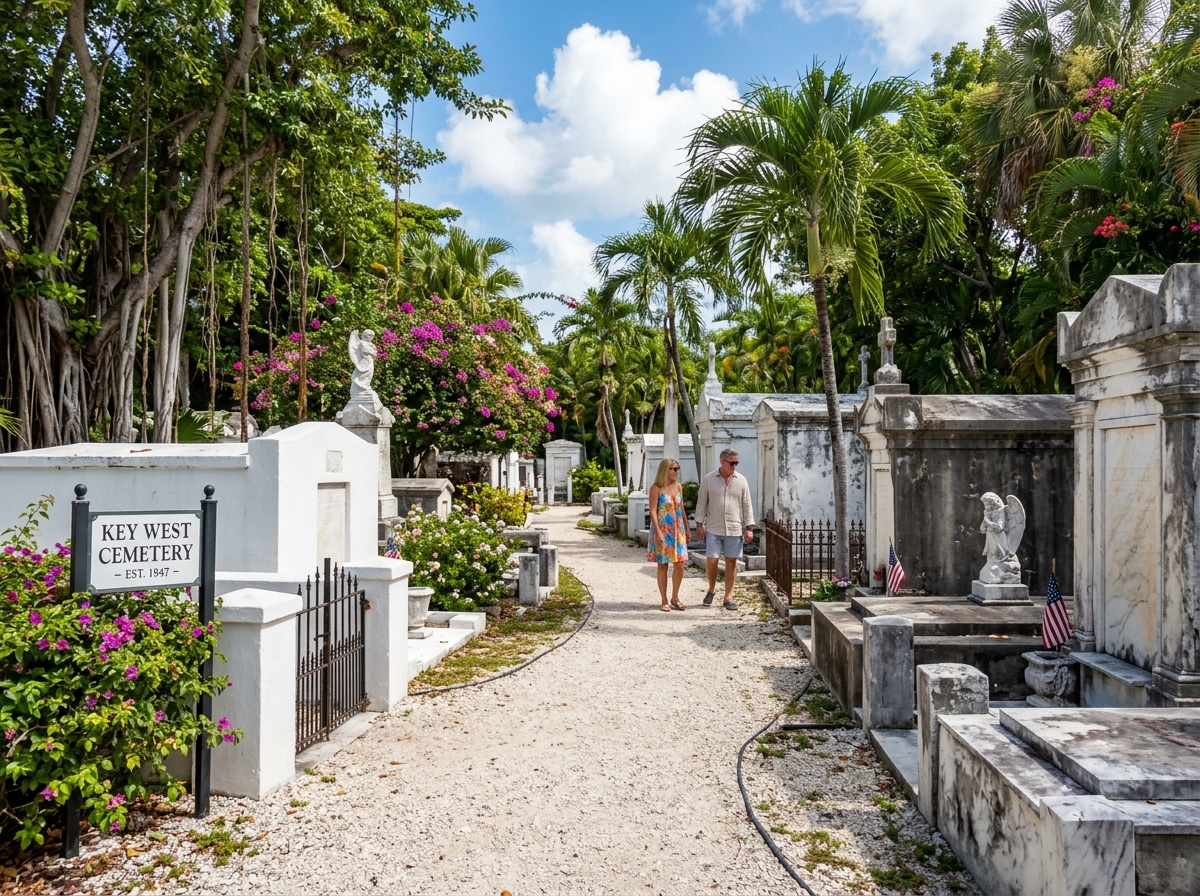
Free self-guided walking tours use the Historic Florida Keys Foundation map, available at the cemetery entrance. Guided tours also run several times a week from the Historic Tours office on Duval Street.
9. Visit the Little White House
The Truman Little White House at 111 Front Street was President Harry Truman’s personal vacation retreat. He spent 175 days of his presidency here and the house remains exactly as it was during his visits.
Guided tours run every 20 minutes throughout the day and cost around $24. The tour lasts 45 minutes and is genuinely informative, covering both the house’s history as a naval station and its role as a working presidential retreat. Several other presidents, including Eisenhower and Kennedy, also used the property.
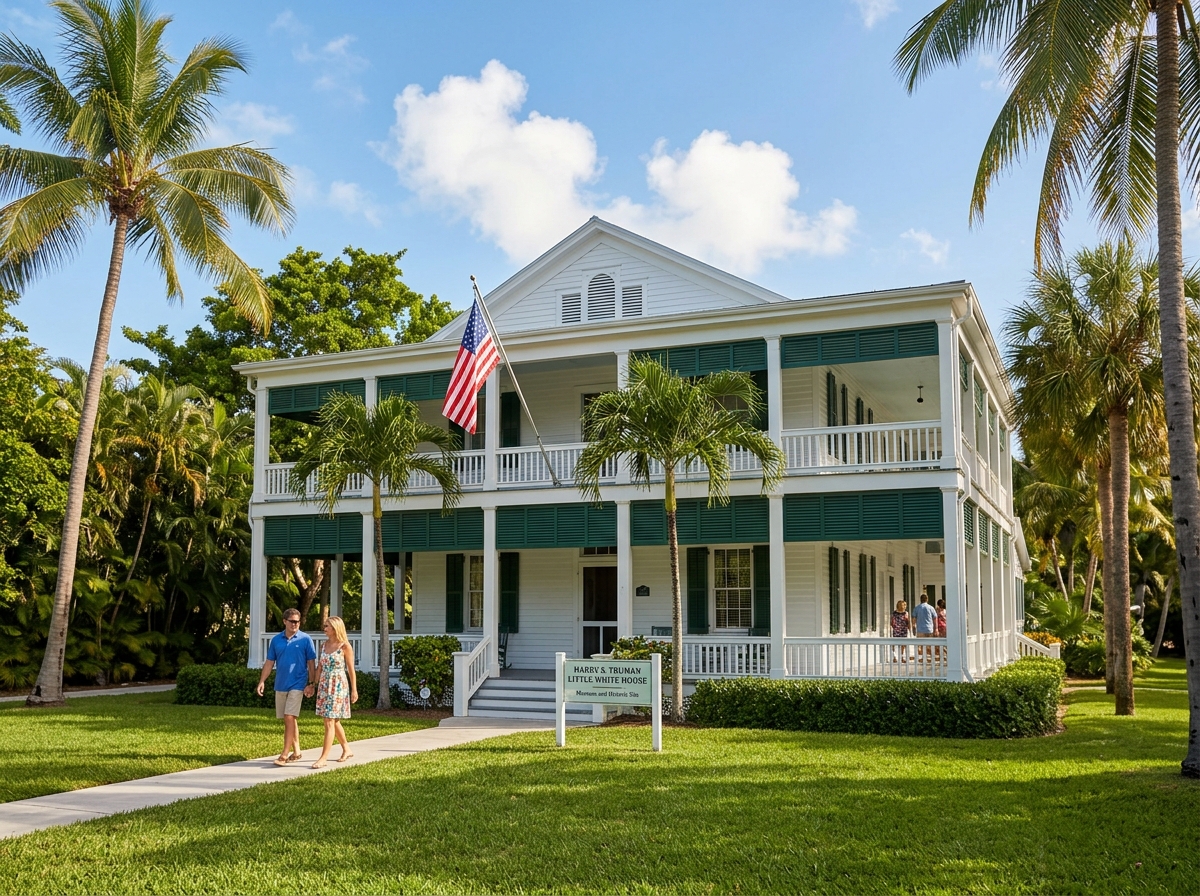
This is one of the more underrated historic sites in Key West. The crowds are lighter than the Hemingway House and the tour quality is high.
10. Walk Duval Street (On Your Own Terms)
Duval Street is unavoidable. It is a mile-long stretch of bars, restaurants, shops, and attractions running from the Gulf to the Atlantic. It is loud, colorful, crowded on weekends, and entirely worth a walk.
The bar crawl culture here is well-established. Sloppy Joe’s (where Hemingway actually drank), Captain Tony’s Saloon (the original Sloppy Joe’s location), the Green Parrot, and the Bull and Whistle are all landmark Key West bars with real history.
But Duval Street is also manageable in the morning before things open up. Walking it at 8am when the bars are dark and the roosters are the only things making noise is a completely different experience from walking it at midnight.
If the party scene is not your thing, you can walk the entire street, pop into the interesting shops and food spots, and duck off onto the side streets toward the Hemingway House or the cemetery. Duval is a thoroughfare, not a requirement.
11. See Robert the Doll at the Fort East Martello Museum
Robert the Doll is probably the most unsettling thing in Key West, which is saying something. The doll belongs to the East Martello Museum and is famous enough that people write it letters asking for forgiveness after mocking it (seriously).
The doll is a roughly century-old straw doll dressed in a sailor suit, sitting in a glass case, and reportedly haunted. The story behind it involves the Key West artist Robert Eugene Otto, who received the doll as a child. Local legend holds that the doll could move on its own, rearrange objects, and giggle at night.
The Fort East Martello Museum itself is worth visiting on its own merits. It is a Civil War-era fort with an excellent local history collection and Key West folk art. Robert just happens to be the most famous resident.
Admission is around $10. The fort is on the east end of the island near the airport.
12. Kayak or Paddleboard in the Backcountry
The shallow, warm backcountry waters on the Gulf side of Key West are ideal for kayaking and stand-up paddleboarding. The water is often only two or three feet deep, flat calm, and full of sea grass where you can spot rays, sea turtles, and small sharks gliding below you.
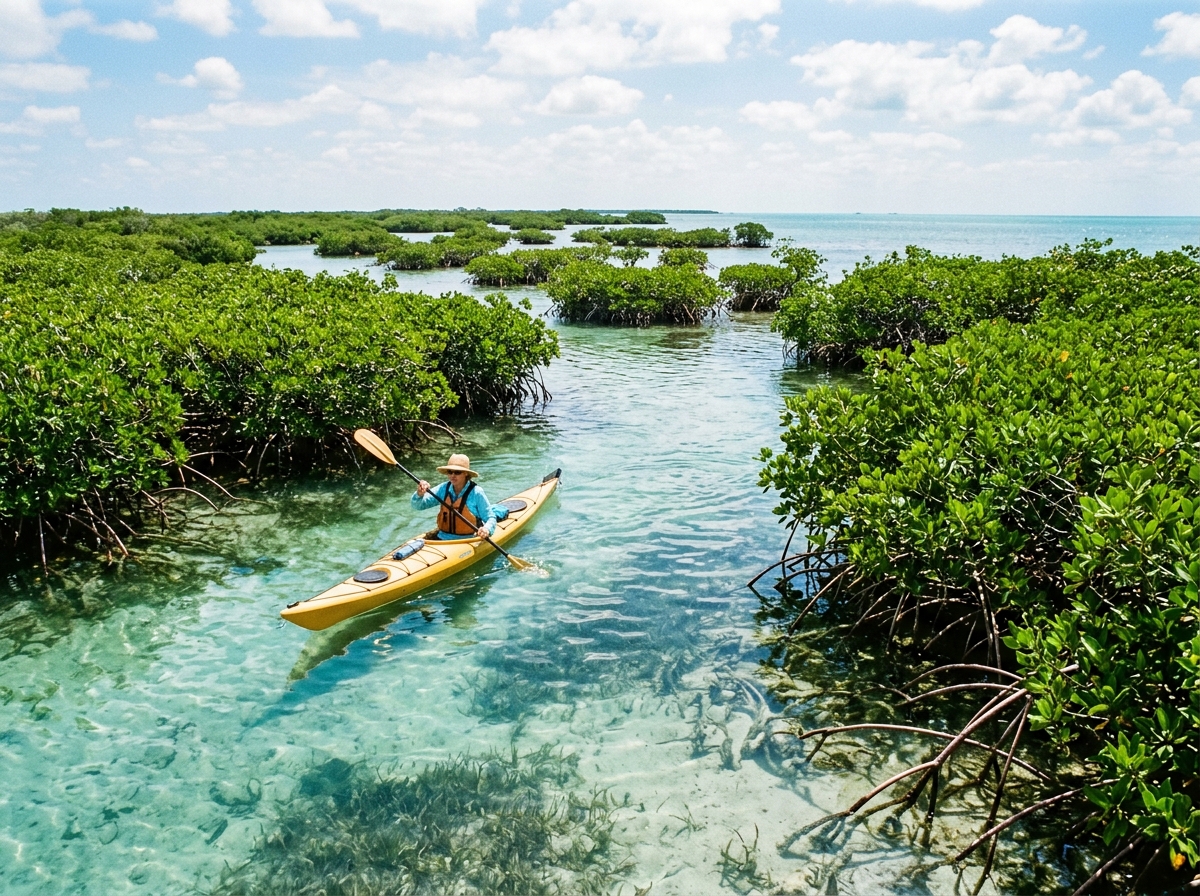
Several outfitters in Key West rent kayaks and paddleboards by the hour. Lazy Dog Adventures on Stock Island runs popular guided backcountry kayak tours through the mangrove channels and tidal flats. It is a peaceful, completely different experience from the reef snorkeling or the Duval Street scene.
13. Take the Conch Tour Train or Old Town Trolley
The Conch Tour Train is a Key West institution. It has been running since 1958 and is the most efficient way to see the whole island quickly, especially if you are short on time.
The 90-minute narrated tour covers about 14 miles, passes most of the major historic sites, and gives you a solid overview before you go explore on foot. The Old Town Trolley is a similar concept but operates as a hop-on, hop-off system with multiple stops.
Both are tourist activities in the most literal sense, but both work. If you have children or older travelers with limited walking, they are genuinely practical. Tickets run around $35 per adult.
14. Parasail Over the Ocean
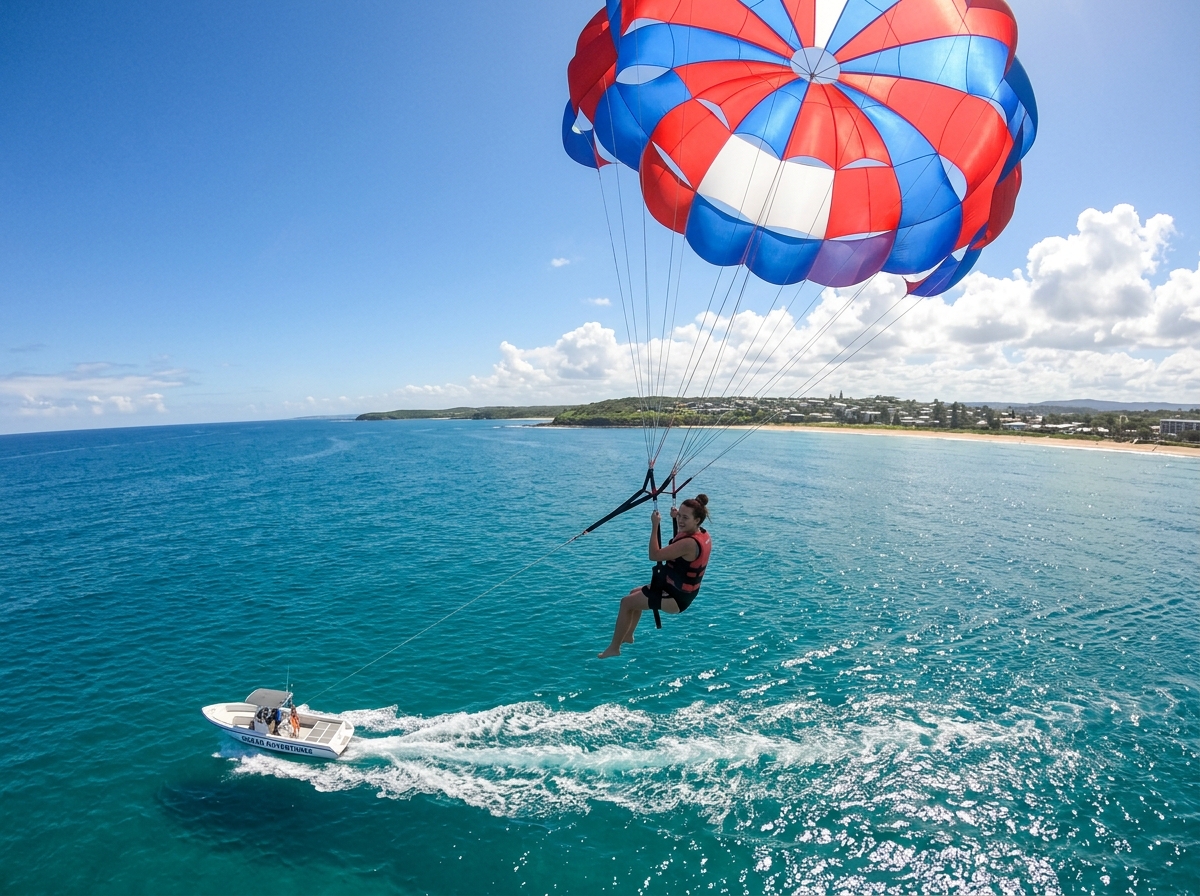
Key West has a good collection of water sports operators and parasailing is one of the most popular. You go up about 400 to 800 feet, see the island from above, the reef line in the water below, and the open Atlantic in every direction.
Parasailing operators run trips from the Smathers Beach area and from the Historic Seaport. The experience lasts about 10 minutes in the air and costs around $45 to $60 per person. Morning departures tend to have calmer conditions.
Key West Beaches: What to Expect
This comes up constantly, and most visitors are surprised: Key West does not have great beaches.
The island sits in shallow water and does not have the wide, sandy shores you find on Florida’s Gulf Coast or even in the lower Keys. The beaches here are narrow, the sand is coarse, and some spots have seagrass and rocks.
That said, here is what you have:
Smathers Beach is the longest beach on the island, about a mile of sandy shore on the Atlantic side. It has concession stands, volleyball nets, and a water sports rental area. It is the best option for an actual beach day in Key West.
Higgs Beach near White Street Pier is a local favorite. Calmer, more residential, with a dog park nearby. The White Street Pier itself is a good spot for a walk and watching boats.
Fort Zachary Taylor Historic State Park has the best swimming beach in Key West. The beach is small but the water is cleaner than at Smathers, there are coral rocks good for snorkeling, and the state park setting means the crowds are slightly more managed. Entry costs a few dollars per person.
If beautiful beaches are the main reason you are visiting Florida, consider adding Bahia Honda State Park (an hour north on US-1) to your trip. It genuinely has the best beaches in the Keys.
Food in Key West: Where to Actually Eat
You Must Try Key Lime Pie
Florida law (not actual law, but widely enforced by locals) requires that you eat key lime pie while in Key West. The real thing is made with key lime juice, not regular lime juice. It is tarter, more fragrant, and genuinely different.

Kermit’s Key West Key Lime Shoppe is the most popular dedicated key lime spot on the island. They make the pie, key lime pie on a stick dipped in chocolate, key lime cookies, and about 40 other key lime products. The pie is legitimately excellent.
Blue Heaven in Bahama Village is the most beloved restaurant in Key West. It is an outdoor courtyard restaurant in the historic Bahama Village neighborhood. The menu is eclectic, the setting is beautiful, and roosters wander through the dining area. Plan on a wait for weekend brunch — it can be an hour or more. It is worth it.
Camille’s Restaurant is a locals’ breakfast and brunch spot on Simonton Street. Excellent eggs Benedict, good prices, and far fewer tourists than Blue Heaven.
Garbo’s Grill is a taco truck near the Historic Seaport serving Korean-influenced tacos. The lines get long for a reason.
Pepe’s Cafe on Caroline Street is the oldest restaurant in Key West, operating since 1909. Straightforward food, excellent seafood, good for a low-key lunch with character.
Free and Cheap Things to Do in Key West
Key West is expensive. These cost nothing or nearly nothing.
- Mallory Square Sunset Celebration: Free.
- Walk the Key West Cemetery: Free (guided tours cost money, self-guided is free).
- The Southernmost Point Buoy: Free.
- White Street Pier: Free walk to the end of the pier over the water.
- Watching the roosters: Free and unavoidable. Key West has hundreds of feral roosters that wander everywhere. They are protected under local ordinance.
- Bahama Village: Free to walk through and explore. The historic neighborhood has great architecture and street art.
- Fort Zachary Taylor Beach (partial): Hiking the fort grounds is included with beach admission, which is a few dollars per person.
Key West for Non-Drinkers
Most travel guides about Key West imply that not drinking makes the place less interesting. That is not true.
Key West’s appeal is largely built on its history, its water, its architecture, and its distinctly strange personality. None of that requires alcohol.
The Hemingway House, the Dry Tortugas, the reef snorkeling, the lighthouse, the Little White House, the cemetery, the Conch Tour Train, the sunset from Mallory Square, the backcountry kayaking — all of these are excellent experiences with no bar tab attached.
The food scene is good enough to anchor a full trip around. Blue Heaven, Camille’s, the seafood at the Historic Seaport, fresh conch fritters from a market stall — there is a real culinary city here beyond the bar food on Duval Street.
Key West Neighborhoods Worth Knowing
Old Town: Where almost everything is. Historic buildings, most restaurants, Duval Street, the Hemingway House, the lighthouse, and most hotels.
Bahama Village: The historic Afro-Caribbean neighborhood in the western part of Old Town. Colorful cottages, excellent street art, Blue Heaven restaurant. Undervisited by tourists and worth exploring on foot.
Truman Annex: A quiet, residential area near the Little White House and Fort Zachary Taylor. Gated, well-maintained, and a contrast to the Duval Street chaos.
Stock Island: Technically the next key over from Key West. It has been gentrifying in recent years and has a handful of good restaurants and the Hogfish Bar and Grill, which is outstanding for fresh local seafood.
Getting Around Key West
Once you are on the island, you do not need a car. In fact, a car in Key West is mostly a hassle. Parking is expensive and limited, and the island is genuinely walkable.
Walking is the best way to see Old Town. Most things are within a 15-minute walk of each other.
Bike rental is widely available and practical. Key West is flat, small, and has reasonable bike infrastructure. A rental costs around $15 to $25 per day. Riding to Fort Zachary Taylor or Smathers Beach is easy and pleasant.
The Key West Transit bus (the Ditto bus) runs routes around the island for a very low flat fare. Useful for getting to Smathers Beach or Fort East Martello from Old Town.
Electric scooters and golf cart rentals are popular and fun for a few hours. Golf cart rental is a Key West tradition, costs around $50 to $80 for a few hours, and is genuinely a good way to cover more of the island.
What to Skip in Key West
Not everything is worth your time or money.
The Ghost Tours: Several companies run nightly ghost tours of Key West. They are marketed heavily. The history parts are real and interesting. The ghost parts are not. If you want Key West history, the regular walking tours are better.
The chain restaurants on Duval Street: Margaritaville (the restaurant, not the concept of Key West) exists here and several other national chains. The local alternatives are better and more interesting in every way.
Shopping on Duval Street midday: The t-shirt shops are wall to wall and the prices are high. If you want local goods, Besame Mucho on Petronia Street and smaller shops in Bahama Village are a far better use of time and money.
Best Time to Visit Key West
December through April is peak season. The weather is near perfect, with temperatures in the 70s and low humidity. This is also when the most tourists arrive, prices are highest, and the Dry Tortugas ferry sells out weeks in advance. Book everything well ahead.
May through June is an excellent window. Temperatures are warm but not brutally hot, humidity is building but manageable, and the spring break crowds have cleared out. Prices drop significantly.
July and August are hot and humid. Temperatures regularly hit the low 90s with high humidity. It is also hurricane season. That said, afternoons with brief intense rain are typical, and mornings can be beautiful. Prices are lower, and the beaches are less crowded.
September and October are the heart of hurricane season and the slowest months. If no storms are threatening, the island is quieter and cheaper than any other time of year. Check the National Hurricane Center forecasts carefully.
October brings Fantasy Fest, Key West’s famous 10-day art and costume festival held the last week of October. It is one of the most colorful and eccentric festivals in Florida, draws large crowds, and is not family-oriented. If that sounds like your scene, book months in advance. If it does not, avoid Key West that week entirely.
Suggested Itineraries
One Day in Key West
Morning: Southernmost Point (before crowds), Hemingway House and Lighthouse back to back, lunch at Camille’s or Garbo’s Grill. Afternoon: Historic Seaport walk, kayak or paddleboard rental, or half-day snorkel trip. Evening: Mallory Square Sunset Celebration, dinner at Blue Heaven or A & B Lobster House, walk along Duval Street.
Three Days in Key West
Day 1: Old Town on foot. Hemingway House, Key West Lighthouse, Little White House, Key West Cemetery, Mallory Square sunset. Day 2: Dry Tortugas full day trip. Book in advance. This takes the whole day and is the best use of a full day in the area. Day 3: Fort Zachary Taylor Beach morning. Afternoon snorkel tour on the reef. Sunset sailing cruise in the evening.
Five Days in Key West
Follow the three-day plan and add: Day 4: Bahama Village neighborhood explore, Kermit’s key lime pie, Stock Island lunch at Hogfish Bar, backcountry kayak afternoon. Day 5: Drive up the Keys at least as far as Bahia Honda State Park. Stop at Robbie’s Marina in Islamorada. Return to Key West for a final sunset.
Amazon Products to Pack for Key West
These three items make a real difference on a Key West trip.
1. Reef-Safe Sunscreen (SPF 50+)
Florida has joined Hawaii in banning certain chemical sunscreens that harm coral reefs. When you snorkel the Florida Reef, using a reef-safe mineral sunscreen is important both legally and ecologically.
The Sun Bum Mineral SPF 50 Sunscreen Lotion (available on Amazon) uses zinc oxide, goes on smoothly, and holds up reasonably well in salt water. It is one of the best-reviewed reef-safe options at a price that does not require a second mortgage.
Search “Sun Bum Mineral SPF 50” on Amazon
2. Dry Bag for Water Activities
Between the snorkel tours, kayaking, the ferry to Dry Tortugas, and the afternoon thunderstorms that appear without warning, keeping your phone and wallet dry in Key West is a genuine concern.
The Earth Pak Waterproof Dry Bag (Amazon) is a roll-top bag that comes in multiple sizes, floats if dropped in water, and fits comfortably in a daypack. The 10-liter size is right for a day trip. The 20-liter fits a full day’s gear for the Dry Tortugas ferry.
Search “Earth Pak Waterproof Dry Bag” on Amazon
3. Lightweight Reef Water Shoes
Fort Zachary Taylor beach has rocks and coral near the water. The snorkel sites have reef surfaces. And the Dry Tortugas ferry dock requires walking across slippery wet surfaces. Reef shoes solve all of these problems.
The Speedo Surfwalker Water Shoes (Amazon) are lightweight, drain quickly, grip slippery surfaces, and pack flat in a bag. They are not stylish, but they are exactly right for Key West water activities and cost under $25.
Search “Speedo Surfwalker Water Shoes” on Amazon
Frequently Asked Questions
How many days do you need in Key West? Three days is the sweet spot for most visitors. You can hit the major historic sites, take a snorkel trip, do the Dry Tortugas day trip, and see Mallory Square without rushing. Two days works if you skip Dry Tortugas. Five days lets you really settle in.
Is Key West worth visiting? Yes, genuinely. Key West has a personality and a history that is distinct from anywhere else in Florida. It is not just another beach town. The combination of literary history, maritime culture, Caribbean architecture, outstanding water access, and a genuinely eccentric local culture makes it worth the trip.
Is Key West safe? Key West is a safe tourist destination. The main things to be aware of are petty theft around crowded areas (keep valuables secured) and water safety (rip currents at unguarded beaches, afternoon lightning storms that come up quickly). Use common sense and you will be fine.
What is the best time of year to go to Key West? December through April for perfect weather, but expect crowds and higher prices. May and June are excellent and underrated. July through September is cheaper but hot and technically hurricane season.
Do you need a car in Key West? Not once you are on the island. You need a car to drive the Overseas Highway, but once you arrive in Key West, walking, biking, and golf cart rentals cover everything. Parking is expensive and the streets are narrow.
What is Key West known for? Key West is known for its Hemingway connection, the Dry Tortugas, Mallory Square sunsets, world-class snorkeling and diving, the Florida Reef, Fantasy Fest, the Conch Republic (Key West’s tongue-in-cheek independent republic declaration), and its reputation as one of the most laid-back and eccentric towns in America.
What should I not miss in Key West? The Mallory Square Sunset Celebration, the Hemingway House, and the Dry Tortugas day trip are the three things that define Key West. If you do only three things, do those.
Is Key West good for families with kids? Yes, with some planning. Fort Zachary Taylor, the butterfly conservatory, the Conch Tour Train, snorkel trips, Smathers Beach, and the Dry Tortugas all work very well for families. Duval Street at night is an adult scene. Keep the timing in mind and families do just fine here.
What is the Conch Republic? In 1982, the US Border Patrol set up a roadblock at the top of the Keys to check for illegal immigrants and drugs. Key West residents were furious and, partly in protest and partly in jest, declared independence from the United States, dubbed themselves the Conch Republic, and immediately surrendered to demand foreign aid. The whole thing lasted a minute and became one of the most Key West things that ever happened. The spirit lives on as a point of local pride.
Final Thoughts
Key West rewards visitors who slow down and look past Duval Street. The history here is real and layered. The water is genuinely extraordinary. The food is better than most people expect. And the sunset at Mallory Square, surrounded by strangers who all chose to be somewhere genuinely unusual, is one of those experiences that is hard to explain but easy to remember.
Go to Dry Tortugas. Walk through the cemetery. Eat at Blue Heaven. Watch the sunset. Let Key West be what it is.
Disclosure: This article contains Amazon affiliate links. If you purchase through these links, we may earn a small commission at no additional cost to you. We only recommend products that are genuinely useful for travel to Key West.