Rome does not ease you in gently. You step out of the taxi and there is a 2,000-year-old ruin across the road. You turn a corner looking for a cafe and walk straight into a Baroque fountain that would be the centerpiece of any other city in the world.
The sheer density of history, art, and beauty in Rome is genuinely overwhelming. The challenge is not finding things to do. It is knowing how to prioritize, what to skip, and how to actually experience it rather than just photograph it.
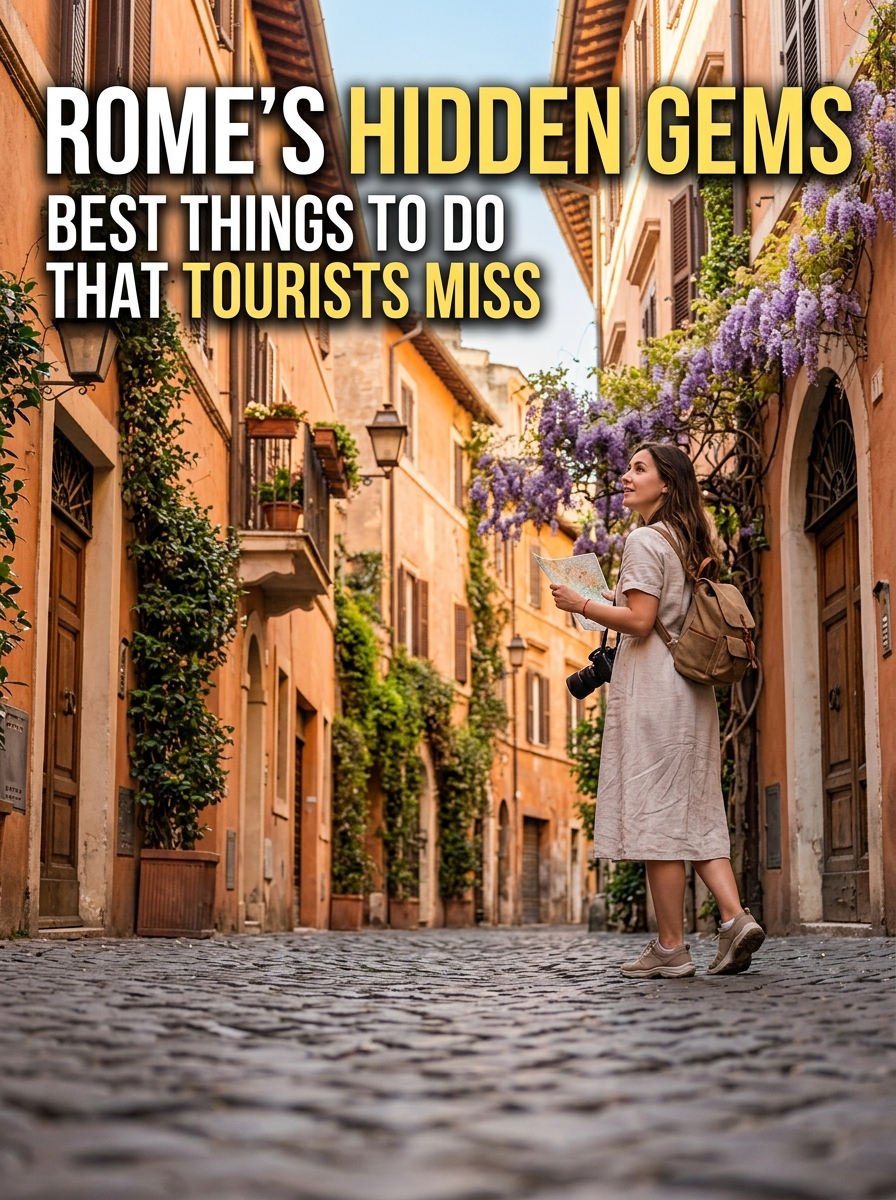
This guide covers the best things to do in Rome with honest practical advice, neighbourhood context, and the information most travel articles leave out.
Quick Answer: Best Things to Do in Rome
For a first visit, the non-negotiables are the Colosseum and Roman Forum, the Pantheon, the Vatican Museums and Sistine Chapel, the Trevi Fountain, and at least one long evening in Trastevere. Add the Borghese Gallery if you book ahead, and Piazza Navona for an evening aperitivo.
For a deeper Rome, explore Testaccio for real Roman food, the Aventine Hill for one of the city’s great secrets, and Basilica di San Clemente for the most extraordinary underground experience in the city.
The Ancient City: What You Cannot Miss
The Colosseum and Roman Forum
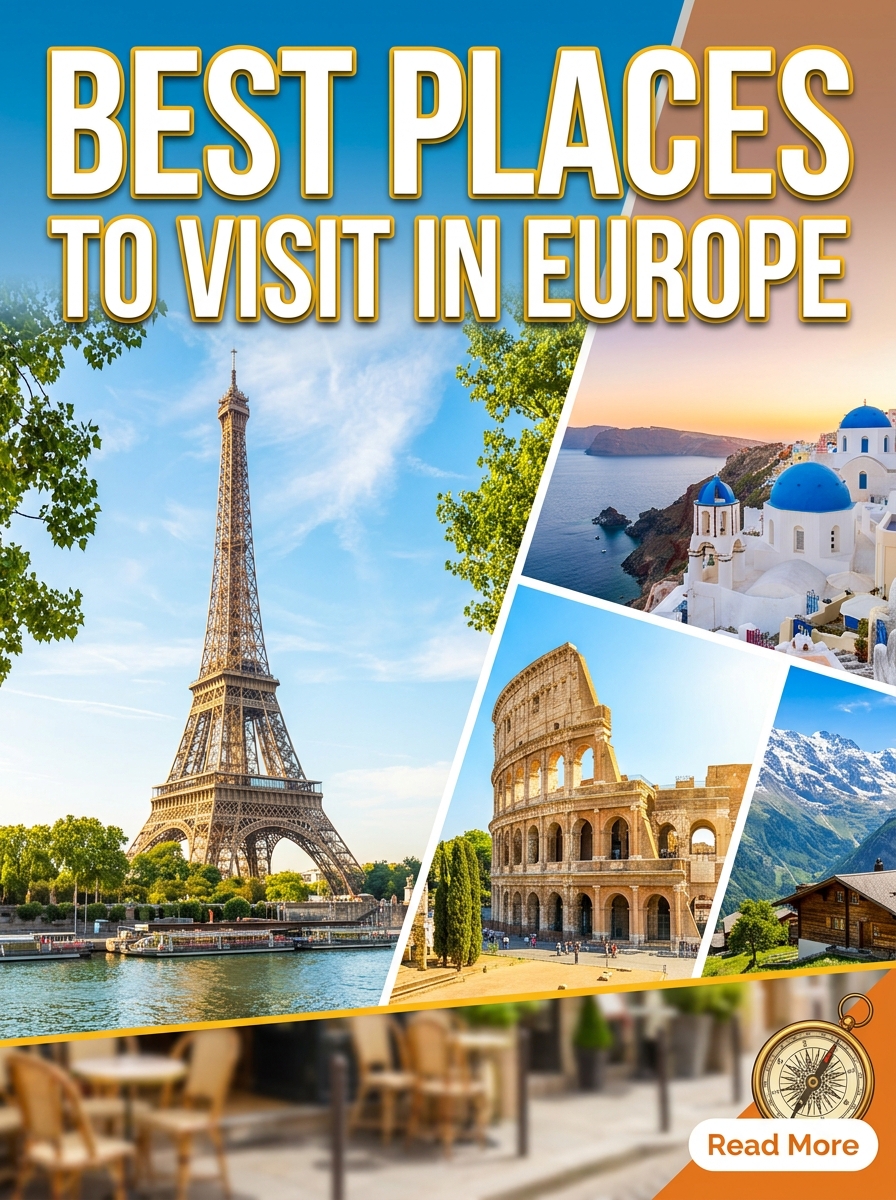
The Colosseum is one of the most recognizable buildings on Earth, and it earns every bit of that status in person. Standing inside the arena floor and looking up at the tiered seating that once held 50,000 spectators, built nearly 2,000 years ago, is a genuinely remarkable moment.
A standard ticket covers the Colosseum, the Roman Forum, and Palatine Hill and is valid for 24 hours across all three sites. The Forum and Palatine are walkable from the Colosseum and together they give you the physical space of ancient Rome’s political and religious center.
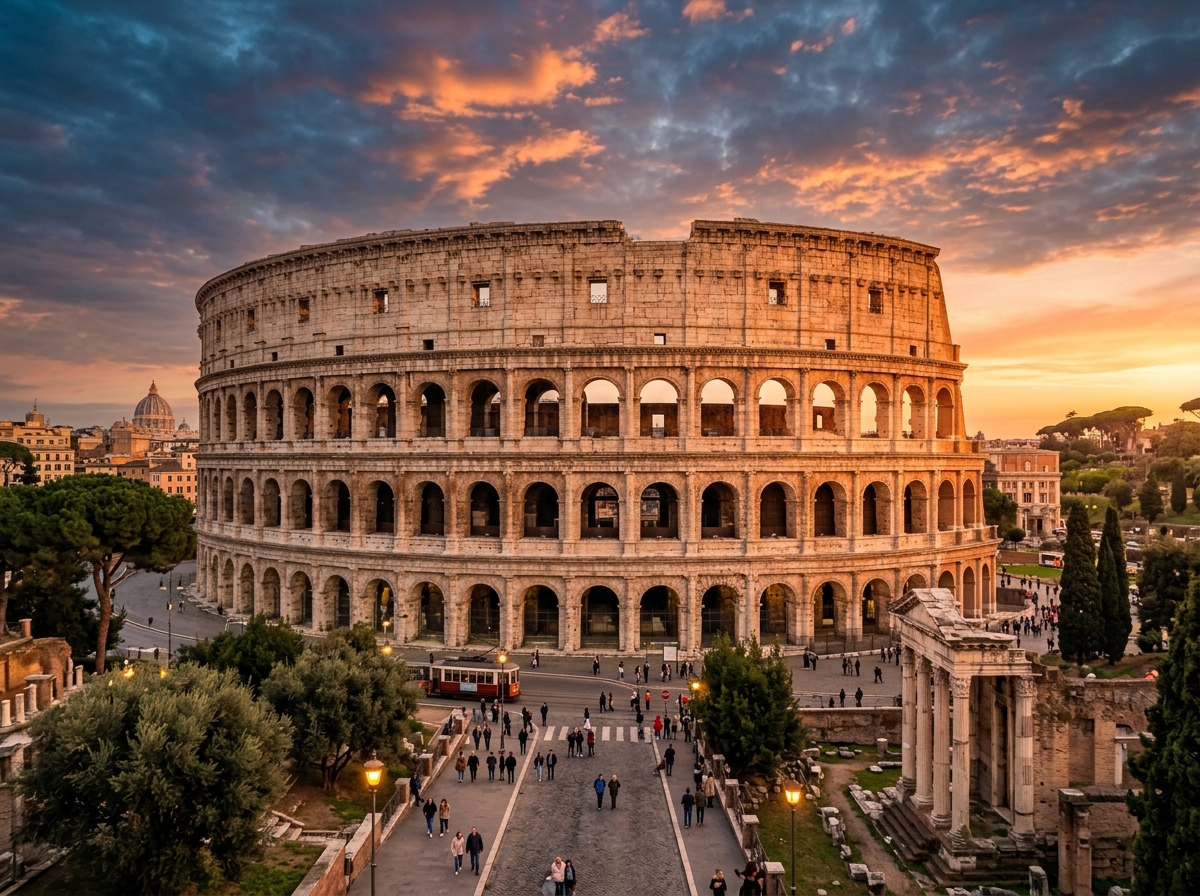
Book tickets in advance. This is not optional. The Colosseum sells out, especially in summer and over public holidays. Book through the official Colosseum website at least a week ahead and further in advance during peak season. Third-party sellers charge significant markups.
The underground tunnels beneath the arena floor, where gladiators and animals were held before events, require a separate guided tour ticket. If this is something you want to do, book it separately when purchasing your main ticket.
Best time to visit: Open from 9am. Arrive at opening time on a weekday for the shortest queues. Getting there: Colosseo station on Metro Line B, a two-minute walk to the entrance
The Pantheon
The Pantheon is the best-preserved ancient building in Rome, and arguably the most extraordinary. It was built in 125 AD, consecrated as a church in 609 AD, and has been in continuous use ever since. That unbroken history is what saved it from being quarried for stone like most of Rome’s ancient structures.
The dome is 43.3 metres in diameter. Its height from the floor to the oculus at the top is exactly 43.3 metres. The proportions create a perfect sphere of space. The oculus, the circular opening at the dome’s peak, lets in a column of light that moves across the interior throughout the day. When it rains, the light becomes a column of falling water, draining through holes in the floor that have been there for 1,900 years.
Entry now requires a timed ticket booked in advance. The Pantheon is also an active church, so there are moments throughout the day when tourist access is restricted.
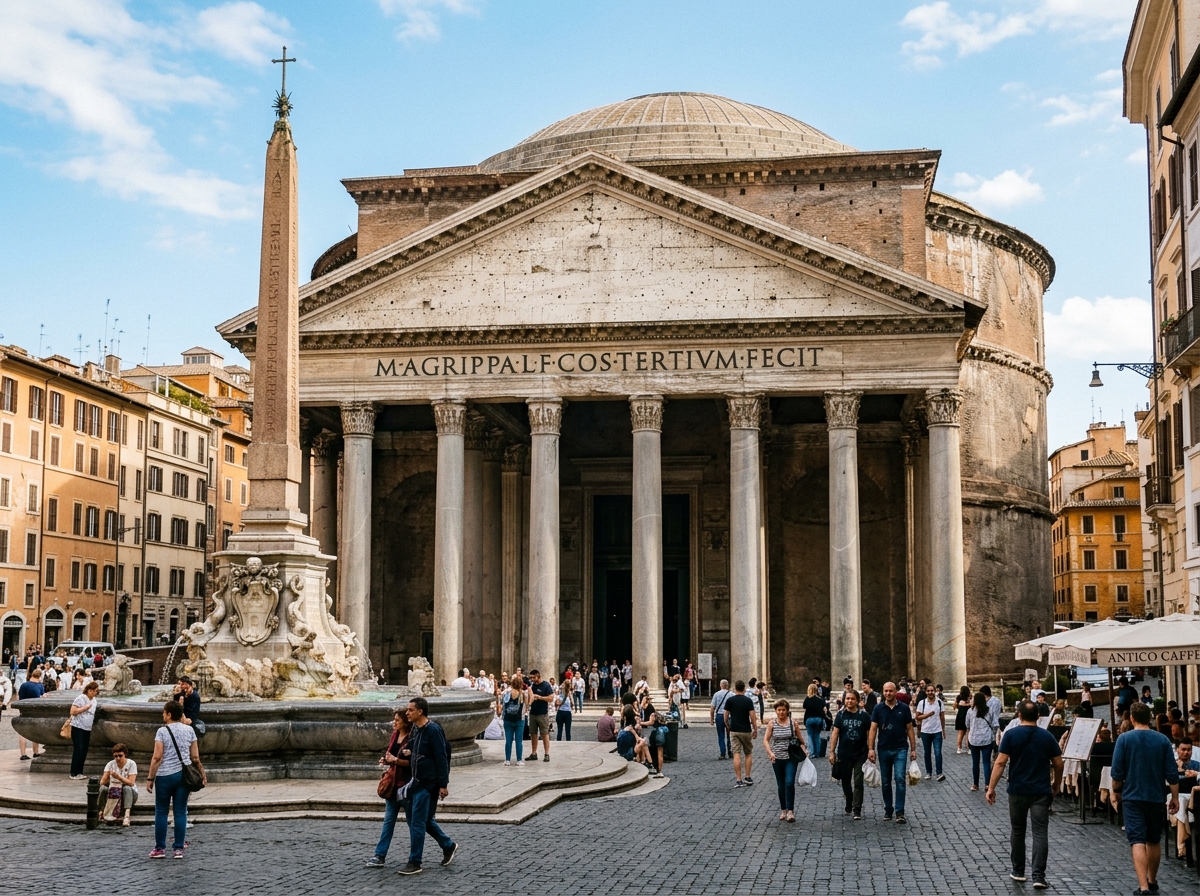
Tip: Stand directly under the oculus and look up. Let your eyes adjust. This is what 2,000 years of engineering looks like from the inside.
Roman Forum and Palatine Hill
Most people do a quick walk through the Forum and head back to the Colosseum. That is a mistake. The Forum was the beating heart of the Roman Republic and Empire for centuries. The Temple of Saturn, the Arch of Titus, the Via Sacra, and the Senate House are all here.
Palatine Hill above the Forum is where Rome’s emperors built their palaces and where, according to legend, Romulus founded the city. The views from the hill over the Forum below and toward the Colosseum are among the best in Rome. Very few visitors make it up to the hill, which means you often have it largely to yourself.
The Vatican: Planning It Properly
Vatican Museums and Sistine Chapel
The Vatican Museums contain one of the greatest art collections in the world accumulated over 500 years of papal patronage. The Sistine Chapel, where Michelangelo painted the ceiling between 1508 and 1512, is at the end of a long route through the museums.
Most people know what the ceiling looks like from photographs. Nothing prepares you for the scale and intricacy of it in person.
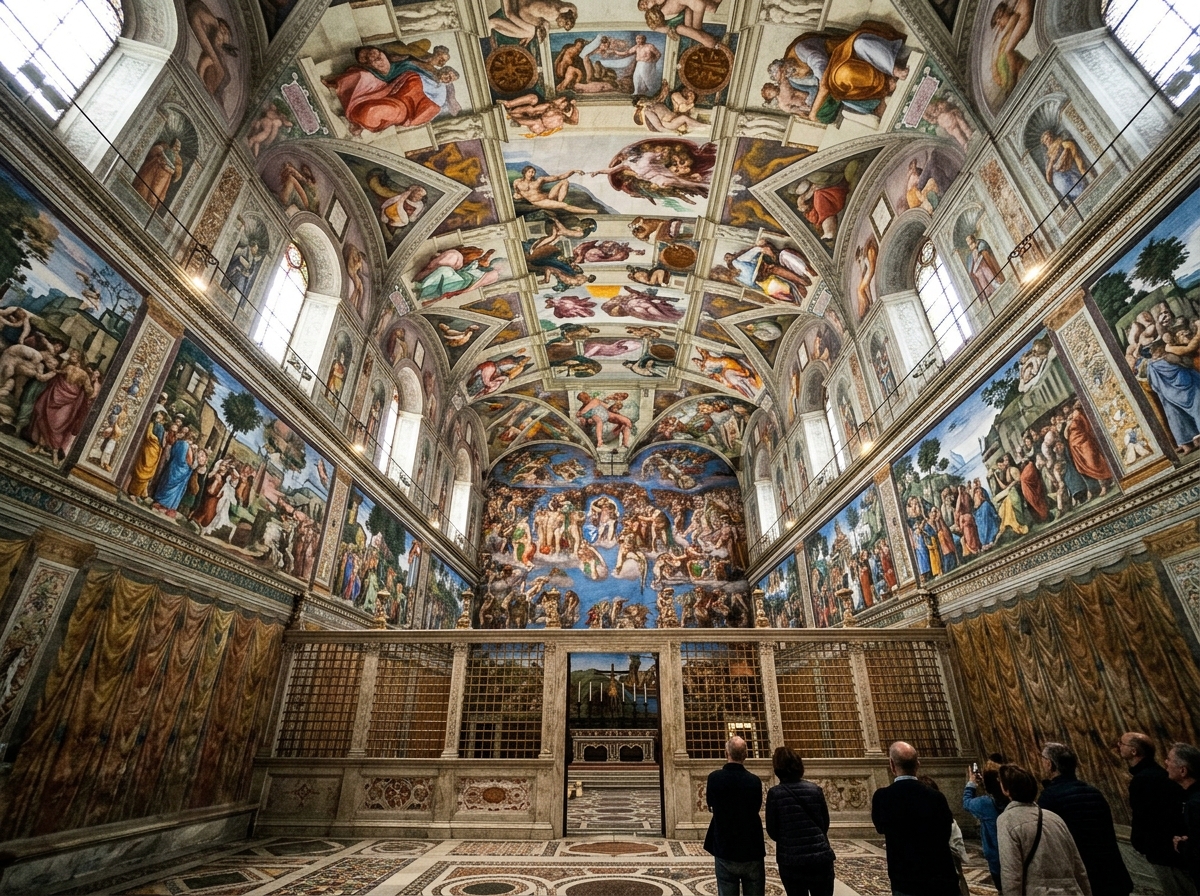
The Vatican booking situation: Vatican Museums tickets sell out days and weeks in advance during peak season. Book through the official Vatican Museums website. Arrive 15 minutes before your timed entry slot.
The museums take two to three hours minimum to cover properly. The route is mostly one-directional. The Sistine Chapel comes at the end, which means you cannot start there.
Tip: The Raphael Rooms, a sequence of papal apartments painted entirely by Raphael and his workshop, are on the route to the Sistine Chapel and are extraordinary. Most people walk through quickly trying to get to Michelangelo. Slow down here.
St. Peter’s Basilica and Square
St. Peter’s Basilica is the largest church in the world, and entry is free. It holds Michelangelo’s Pieta, a marble sculpture of such delicacy and emotional precision that it is worth the visit alone.
Climbing to the dome provides one of the best views in Rome, looking out over St. Peter’s Square and across the city to the Colosseum in the distance. There are 551 steps or a partial lift option.
Timing note: St. Peter’s Basilica closes for official ceremonies and Papal audiences, typically on Wednesday mornings. Check the Vatican website for the schedule before planning your visit.
The square itself, designed by Bernini in the 17th century, is one of the great urban spaces in the world. The colonnades on either side create an embrace effect that Bernini described as the church reaching out to welcome all of humanity.
For anyone planning to walk Rome seriously, the city’s cobblestones (sampietrini) are beautiful and genuinely hard on feet after a full day. A quality insole makes a significant difference. The Superfeet Green Insoles (available on Amazon) are used by serious walkers and hikers worldwide and fit standard shoes and trainers. Adding them before your Rome trip means the fourth hour of cobblestone walking feels like the first.
Best Neighbourhoods to Explore
Trastevere
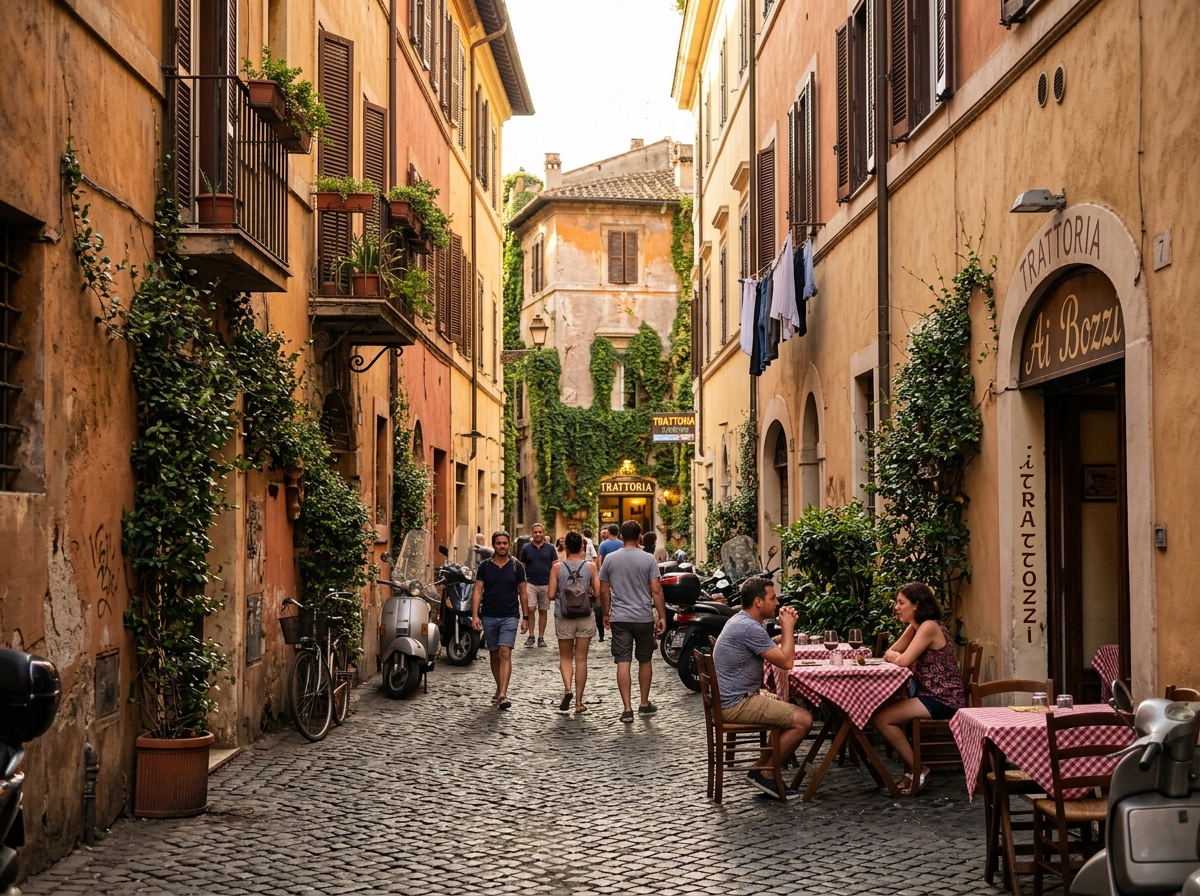
Trastevere is the neighbourhood that most visitors name as their favourite part of Rome. It sits on the west bank of the Tiber, south of the Vatican, and has preserved an atmosphere of medieval village life that the tourist areas near the Colosseum cannot match.
The streets are narrow and randomly laid out. Ivy grows over the orange and ochre buildings. Small trattorias with outdoor tables fill the piazzas in the evening. The Basilica di Santa Maria in Trastevere, dating from the 3rd century, has the most beautiful golden mosaic interior of any church in Rome that is not the Vatican.
Go in the evening. Trastevere after 8pm, with the restaurants filling up and the local families gathering in Piazza di Santa Maria, is the best version of the neighbourhood. During the day in summer it is touristy. At night it belongs to the people who live there.
Testaccio
Testaccio is Rome’s food neighbourhood and one of the most underrated areas in the city. It was historically the working-class district near the old slaughterhouse, which is why its food culture is built around offal and nose-to-tail cooking.
The Testaccio Market is one of the best food markets in Rome, completely local and almost entirely free of tourists. Supplì al telefono (fried rice balls with mozzarella that stretches like a telephone wire when you pull them apart) are the Testaccio specialty. Mordi e Vai, a stall inside the market, serves braised beef tripe sandwiches and offal rolls that have been written up in every serious food publication in the world. You do not need to like offal to eat well here. The market has excellent fresh pasta, cheese, and produce vendors too.
The Pyramid of Cestius, a 2,000-year-old Egyptian-style pyramid built as a tomb for a Roman magistrate, sits at the edge of the neighbourhood. Almost nobody visits it. The Protestant Cemetery immediately beside it is one of the most peaceful and beautiful cemeteries in Europe, where Keats and Shelley are both buried.
Monti
Monti is the neighbourhood immediately west of the Colosseum and one of the most pleasant areas to wander in Rome. It was historically a working-class district and still has an independent, non-touristy feel despite its central location.
Via del Boschetto and Via Urbana are both lined with independent wine bars, ceramic workshops, and small restaurants. Mercato Monti, a weekly design and vintage market held in a hotel ballroom on weekends, is excellent for picking up interesting Italian pieces that are not mass-produced souvenirs.
Prati
Prati sits immediately north of the Vatican and is where Romans who work in the area actually live and eat. It is almost entirely free of tourist restaurants. A lunch on Via Cola di Rienzo or Via Candia at a local trattoria costs half of what the same meal costs near the Colosseum and tastes significantly better.
Hidden Gems Most Visitors Miss
The Aventine Keyhole
On the Aventine Hill, inside the walled garden of the Knights of Malta headquarters on Piazza dei Cavalieri di Malta, there is a small keyhole in an iron gate. Looking through it reveals a perfectly framed view of St. Peter’s dome at the end of a long avenue of trees, as if by design. It was by design. The architect who created the garden deliberately aligned the keyhole with the dome in the distance.
There is usually a small queue. It takes about 30 seconds per person. The view is extraordinary. It is completely free and almost always open.
Getting there: Take a short walk up from the Circus Maximus toward the Aventine Hill. Piazza dei Cavalieri di Malta is easily findable by phone navigation.
Basilica di San Clemente
San Clemente is the most layered building in Rome. The current church dates from the 12th century. Below it is a 4th-century basilica that was one of Rome’s earliest Christian churches. Below that is a 1st-century Roman house and a Mithraic temple, an ancient mystery religion that predated Christianity in Rome.
You descend three floors through 2,000 years of history in a single building, and you can hear the Cloaca Maxima, Rome’s ancient sewer system, running beneath your feet in the deepest level. The temperature drops noticeably with each floor.
This is one of the best experiences in Rome. Entry costs around 10 euros. The queues are never as long as the Colosseum. Most visitors walk past it entirely.
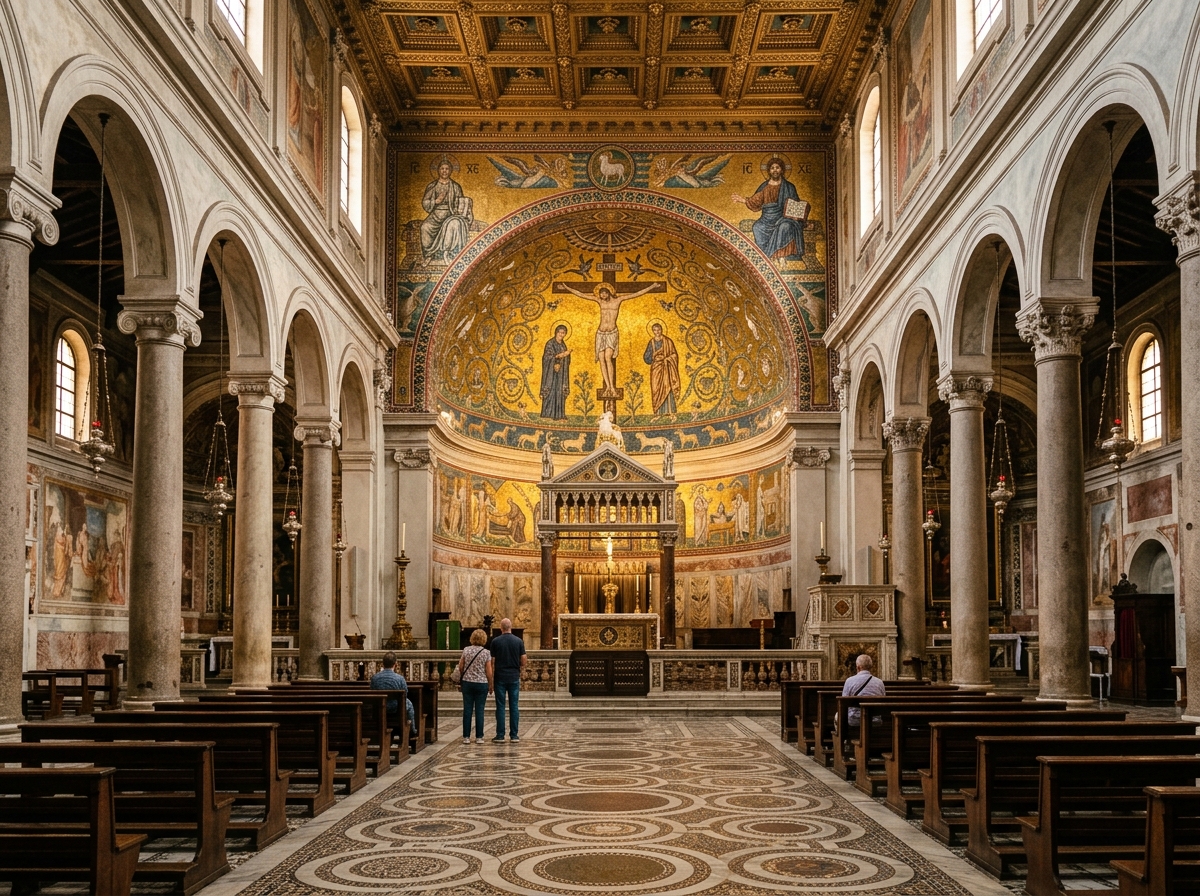
Address: Via Labicana 95, a short walk from the Colosseum
Palazzo Doria Pamphilj
The Palazzo Doria Pamphilj is a private palace on Via del Corso whose art collection rivals state museums and whose audio guide is narrated by a member of the Doria Pamphilj family currently living in the palazzo. The Velazquez portrait of Pope Innocent X inside is considered one of the greatest portraits ever painted.
Very few first-time visitors to Rome know this place exists. There is almost never a queue.
Borghese Gallery
The Borghese Gallery is not exactly a hidden gem but it operates differently from most major museums. Entry is strictly timed to two-hour slots with a maximum of 360 visitors at once. The result is one of the most pleasurable museum experiences in Rome: intimate rooms, no pushing, and Bernini sculptures of such dynamism that they seem to move.
Book tickets as far in advance as possible through the official Borghese Gallery website. This one sells out weeks ahead.
Food and Drink in Rome
Roman food has its own identity, distinct from the rest of Italy. Understanding what to order makes every meal better.
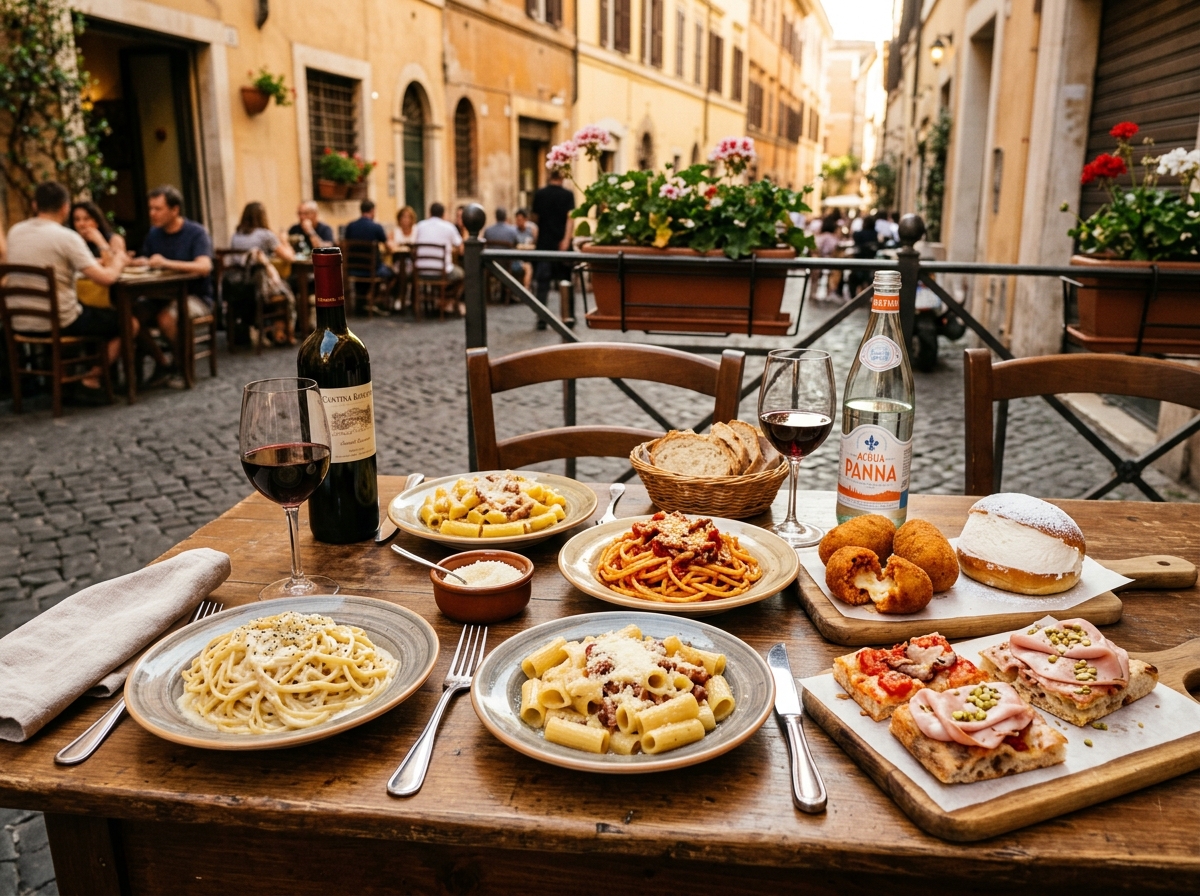
The four Roman pasta dishes: Cacio e pepe (pecorino cheese and black pepper), carbonara (guanciale, egg, pecorino, black pepper), amatriciana (guanciale, tomato, pecorino), and gricia (guanciale, pecorino, black pepper without tomato). None of these should have cream in them. If a menu shows carbonara with cream, leave the restaurant.
Supplì: Fried rice balls with tomato sauce and mozzarella. The Roman street food that locals eat, not a tourist creation. Get them at a bakery (forno) or food market.
Pizza al taglio: Pizza sold by weight, cut from large rectangular trays and eaten standing up or folded. This is how Romans eat pizza for lunch. It costs around 3 to 6 euros for a generous portion. Every neighbourhood has multiple excellent versions.
Maritozzo: A sweet cream-filled bun, a Roman breakfast classic. Get one at a traditional bar (coffee shop) with a cappuccino before 10am when locals eat breakfast.
Gelato: The real thing uses natural colours (pistachio gelato is pale green, not bright green) and is stored in metal tins with lids rather than piled high in pyramids for display. The pyramid display style is a tourist trap indicator. Seek out gelato at places where the gelato is kept flat behind glass with lids on.
Aperitivo: Between 6pm and 9pm, Rome’s bars fill with locals for a pre-dinner drink. An Aperol Spritz or Campari Soda with some snacks is the right order. Ai Tre Scalini in Monti is a classic neighbourhood wine bar. The aperitivo hour is not about getting drunk. It is about transitioning from the working day to the evening meal.
Avoiding tourist trap restaurants: Any restaurant with a laminated menu in six languages, a person standing outside to entice you in, or photographs of every dish on the menu is not the place to eat in Rome. Walk one street further away from any major attraction and the quality improves and the price drops immediately.
Practical Tips for Visiting Rome
The cobblestones are everywhere. Rome’s sampietrini stone pavement covers most of the historic centre. It is beautiful and hard on feet, ankles, and luggage wheels. Bring proper walking shoes. Suitcases with spinner wheels are a nightmare on this surface. A bag that you carry rather than roll will save significant frustration.
Dress codes for churches. Shoulders and knees must be covered to enter any church in Rome, including St. Peter’s Basilica. Many churches provide disposable covering wraps at the entrance but these are often flimsy. A light scarf or shirt in your bag solves the problem for the whole trip.
Water fountains are everywhere. Rome has hundreds of nasoni, small iron drinking fountains scattered across the city, fed by the same ancient aqueduct system that has supplied the city for 2,000 years. The water is excellent, cold, and free. A refillable bottle means you never need to buy plastic water in Rome.
Validate your metro ticket. The Rome Metro runs on two main lines (A and B) and is useful for reaching the Vatican (Ottaviano station on Line A) and the Colosseum (Colosseo on Line B). Validate your ticket at the turnstile before boarding. Inspectors do board trains and the fine for unvalidated tickets is significant.
The best time to see the Trevi Fountain: At 6am. The fountain is lit, the piazza is empty, and you can stand directly in front of it without being photographed into the crowd. It is worth setting an early alarm on one morning of your visit.
Rome in summer is very hot. July and August temperatures regularly exceed 35 degrees Celsius in the streets. Churches and museums are air-conditioned. Plan sightseeing for early morning and late afternoon, and rest during the hottest midday hours.
For a Rome trip, a compact daypack that fits comfortably under a restaurant chair and holds water, a jacket, and a camera without looking bulky is exactly what you need. The Osprey Daylite Plus 20L Backpack (available on Amazon) is one of the most popular travel daypacks in the world: lightweight, well-organised, and the right size for a full day of Roman sightseeing without carrying more than you need.
Best Things to Do in Rome by Traveller Type
First-time visitors: Colosseum and Forum, Pantheon, Vatican Museums, Trevi Fountain, Trastevere evening, at least one good carbonara.
History lovers: Roman Forum and Palatine Hill slowly, Basilica di San Clemente underground, Ostia Antica (Rome’s ancient port city, an hour by train and largely uncrowded), Baths of Caracalla, Trajan’s Market.
Art lovers: Borghese Gallery (book ahead), Vatican Museums with time in the Raphael Rooms, Palazzo Doria Pamphilj for the Velazquez, the Capitoline Museums for the original Marcus Aurelius equestrian statue.
Food lovers: Testaccio Market, pizza al taglio at Roscioli or Forno Campo de’ Fiori, a long lunch in Prati, aperitivo in Monti, a carbonara at Da Enzo al 29 in Trastevere.
Families: Borghese Gardens for a relaxed afternoon with bikes and rowing boats on the lake, Castel Sant’Angelo with its ramparts and river views, the Gladiator School experience near the Colosseum for older children.
Repeat visitors: The Aventine Keyhole, Palazzo Spada’s trompe-l’oeil gallery, the Protestant Cemetery in Testaccio, the Catacombs on the Via Appia Antica, the Villa Torlonia park.
Quick Reference Table
| Attraction | Neighbourhood | Book Ahead? | Cost |
|---|---|---|---|
| Colosseum and Forum | Celio | Yes, essential | EUR 18 |
| Vatican Museums | Prati/Vatican | Yes, essential | EUR 20 |
| Pantheon | Historic Centre | Yes | EUR 5 |
| Borghese Gallery | Villa Borghese | Yes, weeks ahead | EUR 15 |
| Basilica di San Clemente | Celio | No | EUR 10 |
| Palazzo Doria Pamphilj | Historic Centre | No | EUR 15 |
| Aventine Keyhole | Aventine | No | Free |
| St. Peter’s Basilica | Vatican | No | Free |
| Trastevere evening walk | Trastevere | No | Free |
| Testaccio Market | Testaccio | No | Free to enter |
Frequently Asked Questions
How many days do you need in Rome?
Three days covers the main highlights well. Four to five days lets you explore neighbourhoods, eat properly, and add the Borghese Gallery and a hidden gem or two. Most visitors wish they had stayed one more day.
Is Rome safe for tourists?
Yes. Rome is generally safe for tourists. Pickpocketing is the main concern, particularly around the Colosseum, on public transport, and at busy tourist sites. Keep bags closed in front of you and use inside pockets for valuables. Organised scams near major attractions are common. Anyone approaching you offering something for free near the Colosseum is running a scam.
What is the best time of year to visit Rome?
April, May, September, and October are the best months. The weather is warm but not extreme, crowds are manageable, and the city is at its most pleasant. July and August are very hot and extremely crowded. December is quiet and atmospheric, though some outdoor sites are less enjoyable in cold weather.
Is the Vatican worth it?
Yes, genuinely. The Sistine Chapel ceiling is one of the greatest artistic achievements in human history. Allow two to three hours minimum and book tickets well in advance.
What food should I eat in Rome?
Cacio e pepe, carbonara, and amatriciana for pasta. Supplì and pizza al taglio for street food. Maritozzo for breakfast. Gelato from a place that stores it in lidded metal containers. Avoid any restaurant near a major tourist site that shows photographs of dishes on the menu.
Is Rome expensive?
Mid-range and up for accommodation, which is comparable to most major European capitals. Food can be very affordable if you eat like a local: pizza al taglio, market lunches, and neighbourhood trattorias away from tourist areas. Avoid restaurants immediately adjacent to the Colosseum, Trevi Fountain, and the Vatican, where prices are significantly inflated.
Can I visit Rome in one day?
You can see several major attractions in one day but you cannot experience Rome properly in one day. A rushed one-day visit covers the Colosseum, the Pantheon, and the Trevi Fountain. Two additional days is what the city actually deserves.
Final Thoughts
Rome takes more than one visit to understand. The first time, you are mostly processing the scale of what you are looking at. The second time, the layers start to make sense. The third time, you stop planning and just walk.
Give yourself more days than you think you need. Eat in neighborhoods that are not next to the Colosseum. Spend one evening in Trastevere doing absolutely nothing except sitting in a piazza with a glass of wine. Look down the Aventine keyhole. Go into the churches that do not have queues outside. Rome rewards the visitor who slows down. It always has.