Spain is one of the most diverse countries in Europe, and most people only see a fraction of it.
Barcelona and Madrid get most of the attention. Both deserve it. But Spain also has Andalusia’s whitewashed villages and Moorish palaces, the Basque Country’s world-class food culture, Valencia’s rice fields and futuristic architecture, and island escapes in the Balearics and Canaries that feel nothing like mainland Spain.
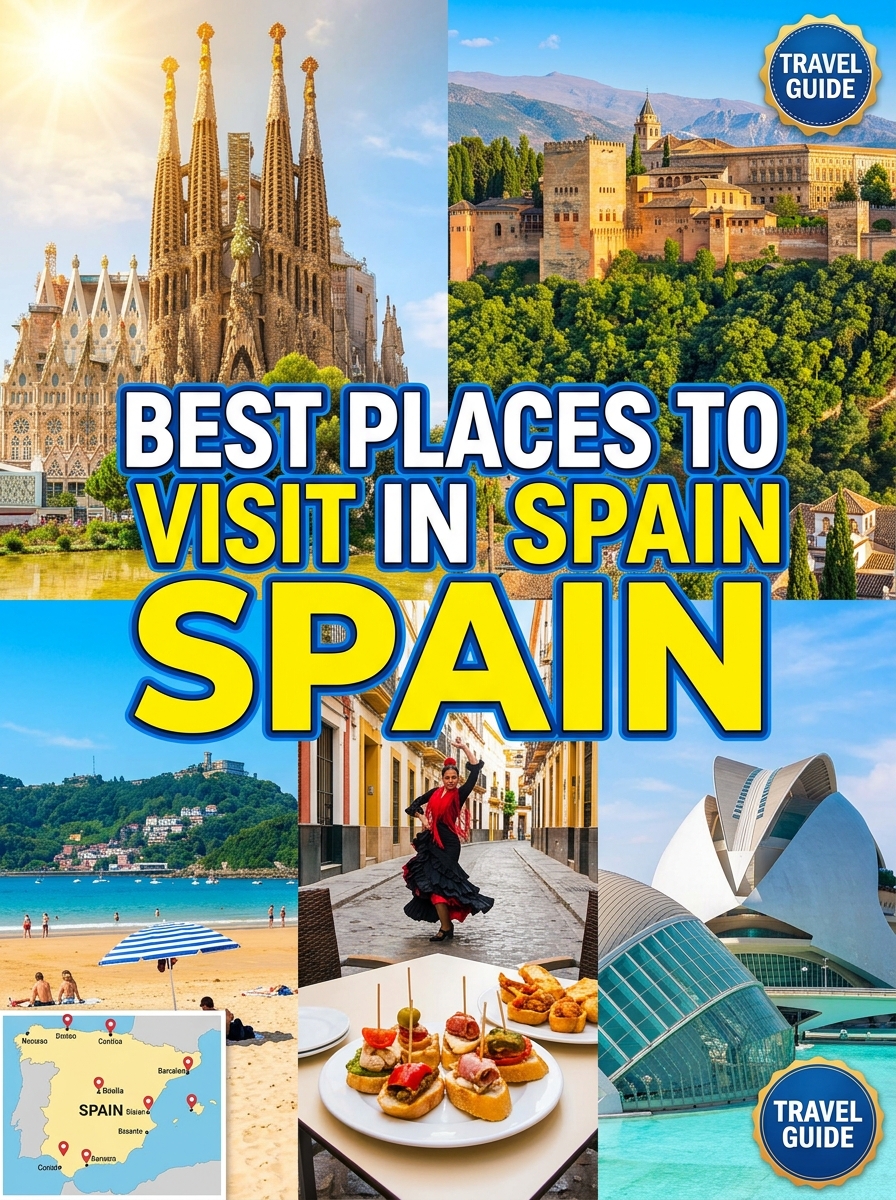
The country rewards the traveller who goes beyond the first itinerary. This guide covers the best places to visit in Spain for every type of trip, with honest practical advice that most travel articles leave out.
Quick Answer: Best Places to Visit in Spain
For a first visit, combine Madrid, one Andalusian city (Seville or Granada), and Barcelona. This triangle covers the country’s cultural highlights in a logical route.
For a food-focused trip, add San Sebastian and Valencia. For beaches, the Balearic Islands or the Canary Islands. For history and architecture without the crowds, Toledo, Cordoba, and Salamanca are extraordinary.
Major Cities Worth Your Time
Madrid
Madrid is Spain’s capital and its most underrated major city. Visitors often favour Barcelona, but Spaniards themselves consistently prefer Madrid, and after one visit it is easy to understand why.
The Prado Museum holds one of the greatest collections of European art anywhere in the world, including major works by Velazquez, Goya, and El Greco. The Reina Sofia houses Picasso’s Guernica, arguably the most powerful antiwar painting ever made. The Thyssen-Bornemisza fills in the gaps with Impressionist and modern works. Together, these three museums form what locals call the Golden Triangle of Art. You could spend three days in this triangle alone and still not see everything.
Beyond the museums, Madrid rewards street-level exploration. The Malasana neighbourhood has excellent independent cafes, vintage shops, and bars. Chueca is the city’s most vibrant neighbourhood for food and nightlife. Retiro Park, a 142-hectare green space in the city centre, is one of the best urban parks in Europe.
Madrid also eats late and lives late. Dinner before 9pm marks you as a tourist. The city does not quieten down until well after midnight, and the Sunday Rastro flea market in La Latina neighbourhood is a genuine Madrid institution worth experiencing.
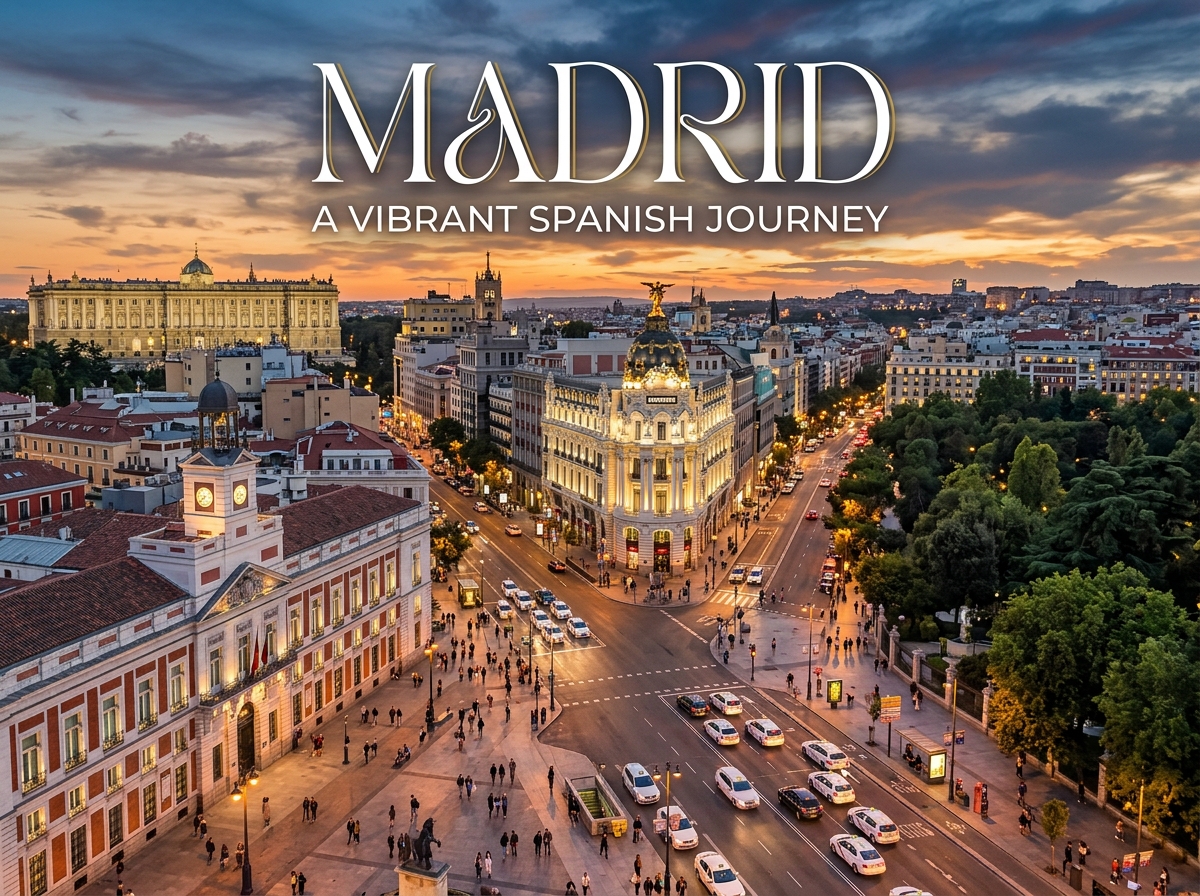
Best for: Art lovers, museum enthusiasts, nightlife, culture, urban exploration Best time to visit: March to May or September to November Day trips: Toledo (30 minutes by high-speed train), Segovia (45 minutes), Avila (90 minutes)
Barcelona
Barcelona is where Gaudi’s surreal architecture meets Gothic medieval streets meets beach culture. The Sagrada Familia, Park Guell, Casa Batllo, and La Pedrera are all within the city. So is one of the best food markets in Europe, a working port beach, and the Gothic Quarter, which dates back to Roman times.
Book Sagrada Familia tickets weeks in advance. In peak season they sell out completely and there is no reliable walk-up option.
The city has a proud Catalan identity distinct from the rest of Spain. Street signs are in Catalan, not Castilian Spanish. Locals appreciate visitors who acknowledge this.
Best for: First-time visitors to Spain, architecture, food, beach, nightlife Best time to visit: May, June, September, October Honest tip: La Rambla is worth walking once. Do not eat there. The restaurants are overpriced and the food is poor. Head to El Born or Gracia for genuine meals.
Seville (Sevilla)
Seville is the capital of Andalusia and one of the most atmospheric cities in Spain. The Real Alcazar, a royal palace built by Moorish craftsmen for a Christian king in the 14th century, is one of the most beautiful buildings in the world. It is still an active royal residence, which makes it UNESCO-listed and genuinely extraordinary.
The Cathedral of Seville is the largest Gothic cathedral on Earth. The Giralda tower beside it, originally a minaret from the mosque the cathedral replaced, offers the best views in the city.
Seville is also considered the birthplace of flamenco. Watching a live performance in a small tablao is one of those genuinely irreplaceable Spanish experiences. Go to a small, intimate venue rather than a large tourist show. The difference in quality and atmosphere is significant.
The city hosts the Semana Santa (Holy Week) procession before Easter and the Feria de Abril two weeks after. Both are among the most extraordinary public events in Spain. Plan around them if you can, but book accommodation far in advance for those weeks.
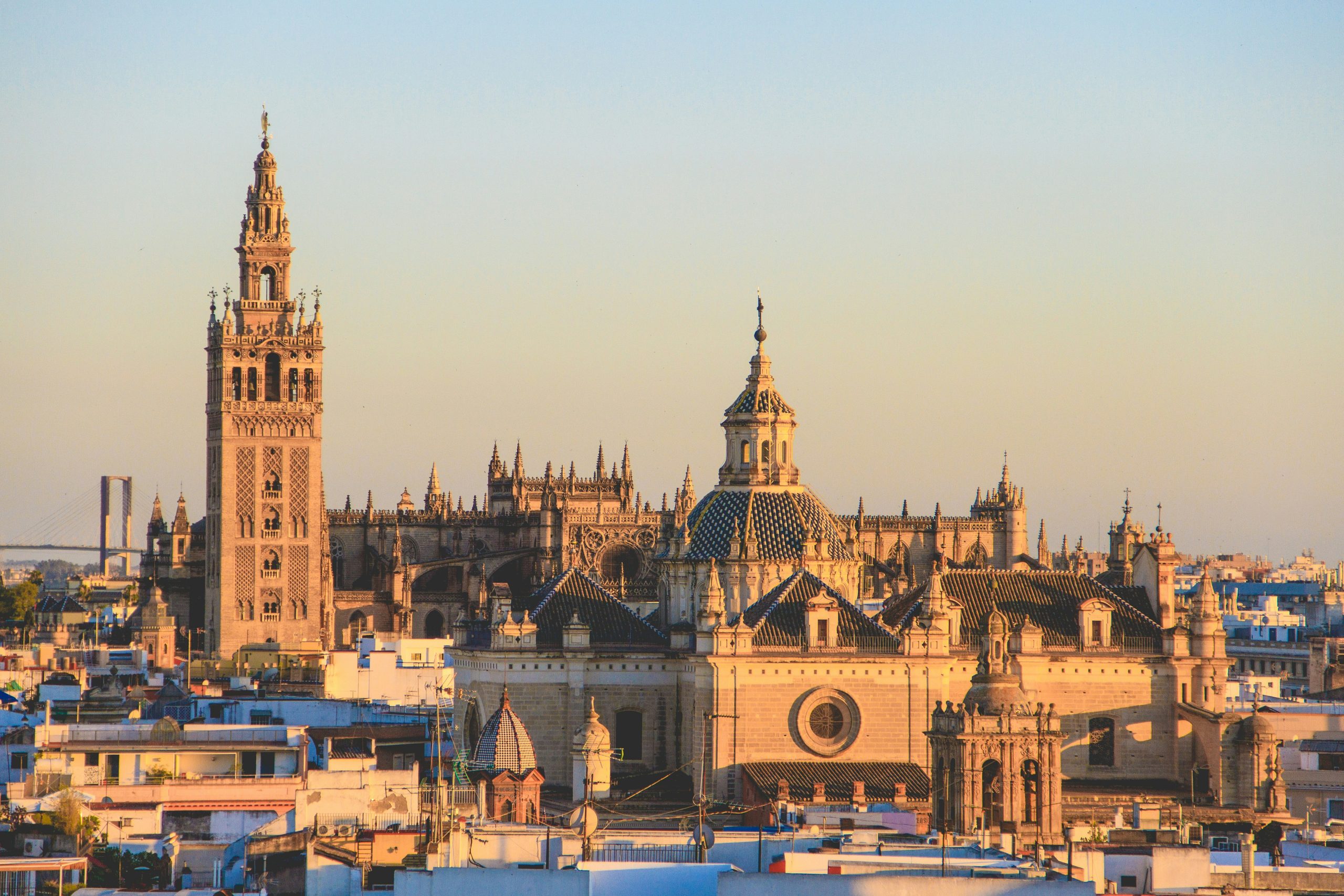
Best for: History, architecture, flamenco culture, Moorish heritage, festivals Best time to visit: March to May, September to October. Summer in Seville is brutally hot, regularly exceeding 40 degrees Celsius. Honest tip: Tapas in Seville are still free with drinks in many traditional bars. Order a caña (small beer) and food arrives automatically. This tradition has largely disappeared elsewhere in Spain but survives here.
Granada
Granada is home to the Alhambra, one of the most extraordinary palaces ever built. The Nasrid Palaces inside the Alhambra complex are the peak of Moorish architecture: intricate stucco carvings, geometric tile work, and carved wooden ceilings of such complexity that craftsmen are still studying how they were built 600 years ago.
Book Alhambra tickets well in advance. This is the single most important piece of advice for visiting Granada. Tickets, especially for the Nasrid Palaces, sell out weeks and sometimes months ahead during peak season. Buy through the official Alhambra website. Third-party sellers charge significant markups.
The Albaicin neighbourhood, a UNESCO World Heritage Site of Moorish-era streets, climbs the hillside opposite the Alhambra. The views back across the valley to the palace at sunset are among the most photographed in Spain. El Banuelo, a preserved 11th-century Arab bath house near the Darro river, is extraordinary and almost always uncrowded.
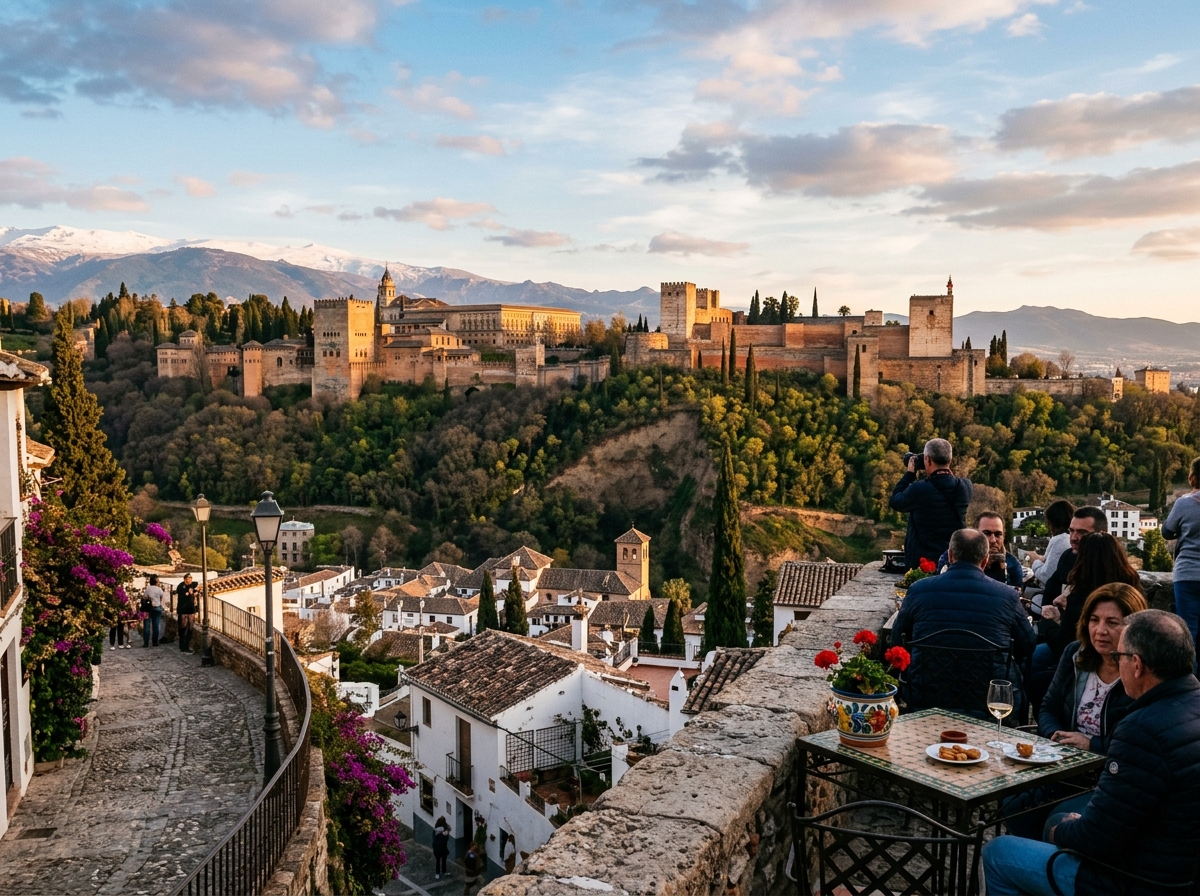
Best for: History, Islamic architecture, UNESCO heritage, photography Best time to visit: March to May, September to October Budget tip: Granada still maintains the free tapas tradition. Many bars serve generous tapas with every drink order.
Spain’s Best Food Destinations
San Sebastian (Donostia)
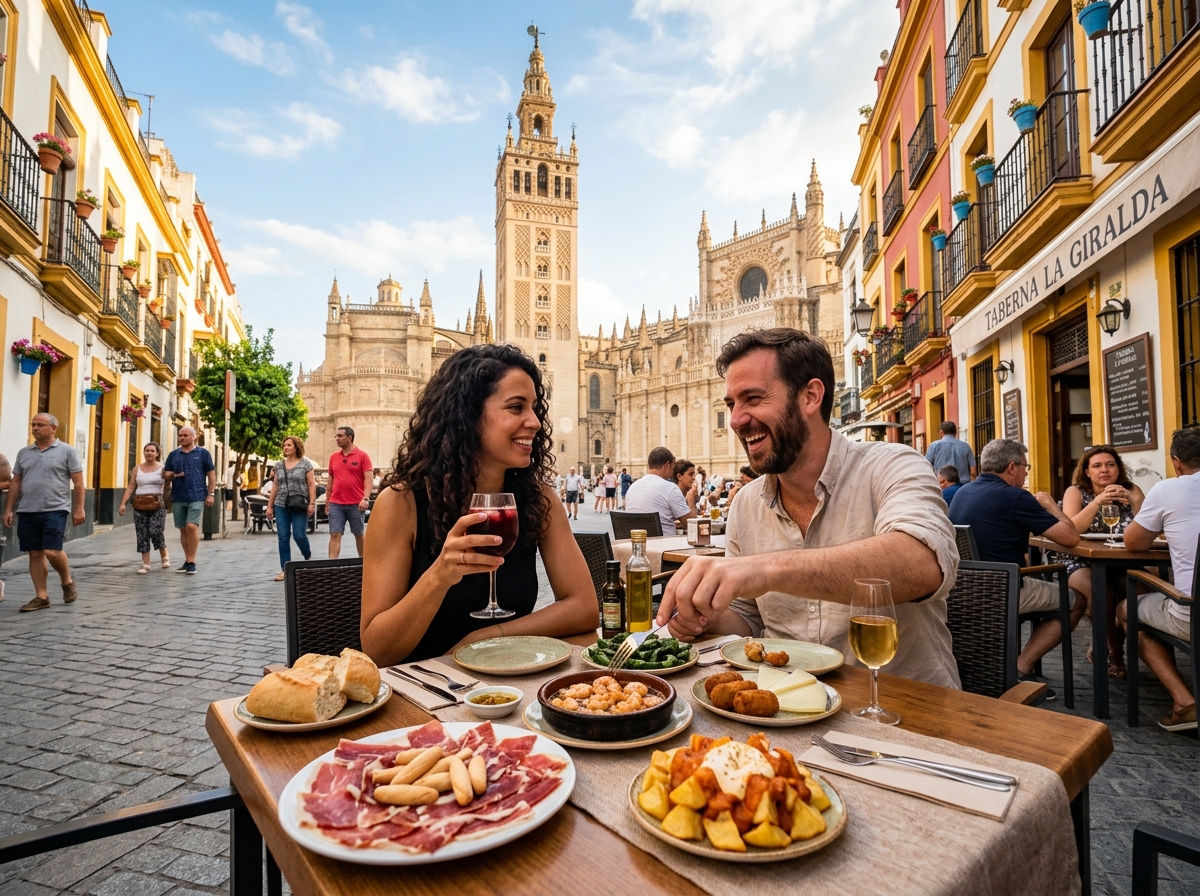
San Sebastian is the culinary capital of Spain, and many argue of the world. The city has more Michelin stars per capita than anywhere else on Earth. But the real magic is the pintxos culture in the old town (Parte Vieja).
Pintxos are Basque-style small bites, usually served on bread, displayed along the bar top. You point to what you want, order a glass of txakoli (local sparkling white wine), and eat standing up. A full evening of pintxos and wine in three or four bars costs around 20 to 30 euros per person and delivers better food than most sit-down restaurants anywhere in Europe.
The best streets for pintxos bars are Calle 31 de Agosto and Calle Fermín Calbetón in the old quarter.
La Concha beach, a curved bay in the city centre, is one of the most beautiful urban beaches in the world. The combination of extraordinary food, a stunning beach, and mountains visible from the waterfront makes San Sebastian one of the most complete cities in Spain.
Best for: Foodies, beach lovers, architecture, Basque culture Best time to visit: June to September for beach weather, though pintxos season never ends
Valencia
Valencia is the third largest city in Spain and consistently underestimated. This is where paella was invented, and eating it here next to the rice fields where the ingredients come from is a completely different experience from eating it elsewhere.
The City of Arts and Sciences is a complex of futuristic buildings by architect Santiago Calatrava that looks like it belongs in a science fiction film. The Oceanografic aquarium within the complex is one of the best in Europe. The Valencia Central Market, an Art Nouveau building from 1928, is among the most beautiful food markets in the world.
The Turia Gardens, a 9.8 kilometre park built in the dry riverbed of the Turia river after it was diverted following a devastating flood in 1957, runs through the centre of the city. Cycling or walking it from end to end is one of the best things you can do in Valencia.
The city also hosts Las Fallas in March, when hundreds of enormous sculptural figures are built across the city over several months and then burned to the ground in one spectacular night. It is one of the most extraordinary festivals in Europe. UNESCO added it to their list of Intangible Cultural Heritage.
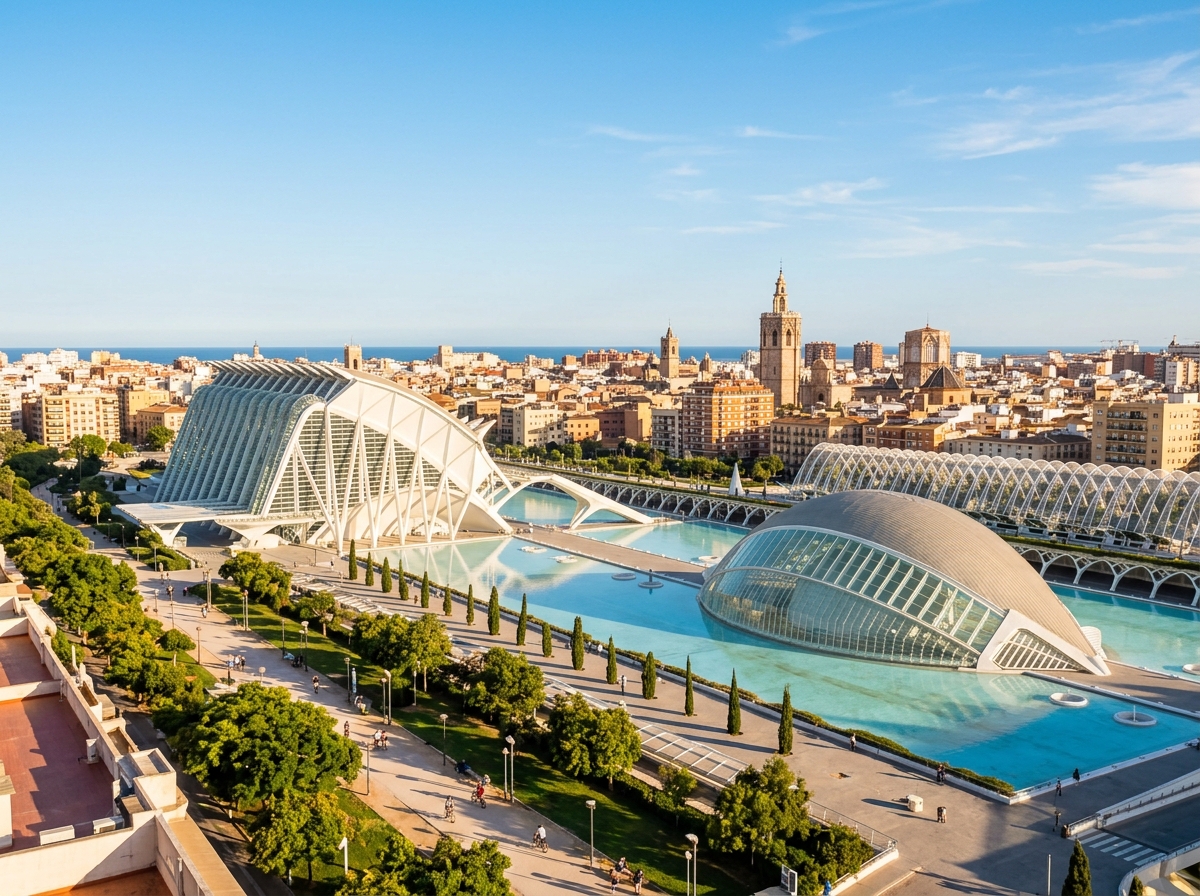
Best for: Foodies, families, architecture, festivals, beach Best time to visit: March for Las Fallas, May to October for beach weather
Andalusia’s Hidden Gems
Cordoba
Cordoba’s Mezquita is one of the most remarkable buildings in existence. It was built as a mosque in the 8th century and expanded over the following centuries into a forest of 856 columns topped with distinctive red and white striped arches. When Christian forces retook the city in the 13th century, they built a cathedral directly in the centre of the mosque rather than demolishing it.
The result is a building that is simultaneously a mosque and a cathedral, creating one of the most visually complex and philosophically interesting spaces in the world.
The Jewish Quarter surrounding the Mezquita is beautiful. The narrow white streets, flower-filled patios, and small squares are perfectly preserved.
Best for: History, Islamic architecture, day trips from Seville or Granada Tip: Cordoba is very doable as a day trip. It sits between Seville (45 minutes by fast train) and Granada (two hours). A full day gives you the Mezquita, the Jewish Quarter, and lunch.
Ronda
Ronda sits on top of a dramatic gorge in the mountains of Malaga province. The Puente Nuevo bridge, which spans 120 metres across the gorge with a 98-metre drop to the river below, is one of the most spectacular engineering feats in Spain.
The old town on the far side of the bridge is genuinely beautiful. Ronda has strong associations with Ernest Hemingway and Orson Welles, both of whom spent time here and were captivated by the bullring, one of the oldest and most elegant in Spain.
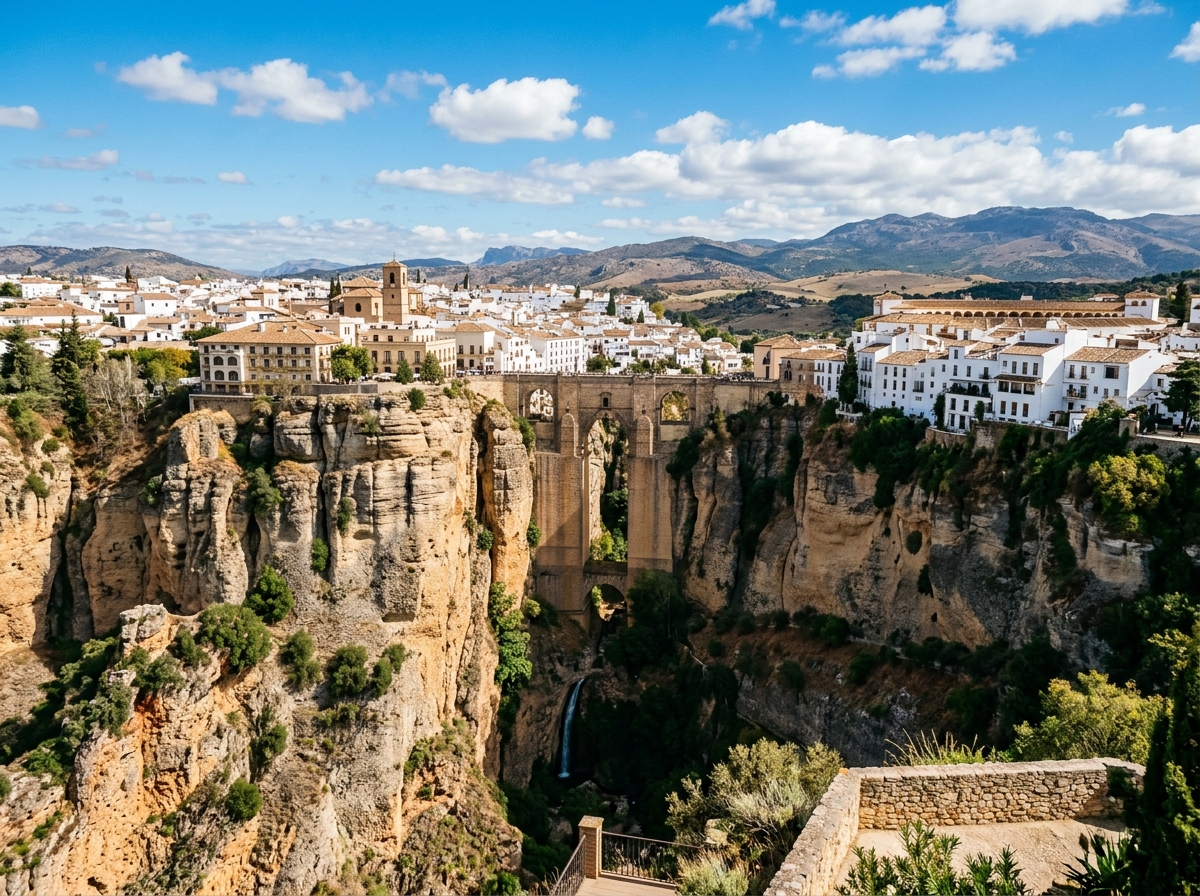
Best for: Photography, day trips from Malaga or Seville, dramatic landscapes Best time to visit: Spring or autumn. Summer heat in the mountains is intense.
Northern Spain: The Road Less Travelled
Bilbao and the Basque Country
The Guggenheim Museum Bilbao, designed by Frank Gehry, is one of the most important works of contemporary architecture in the world. The titanium curves of the building change appearance completely depending on the light and angle. The surrounding riverside regeneration of what was once a heavily industrial city is one of the great urban transformation stories in Europe.
Beyond the Guggenheim, the Basque Country has a distinct culture and language entirely unlike anywhere else in Spain. Basque (Euskara) is one of the few language isolates in Europe, unrelated to any other known language. The food culture, the green landscape of the coast, and the fierce local identity make this region feel like a country within a country.
Santiago de Compostela
Santiago de Compostela is the end point of the Camino de Santiago, the ancient pilgrimage route that has drawn walkers from across the world for over a thousand years. The city’s cathedral, where pilgrims traditionally end their journey, is one of the most significant Christian pilgrimage sites in the world.
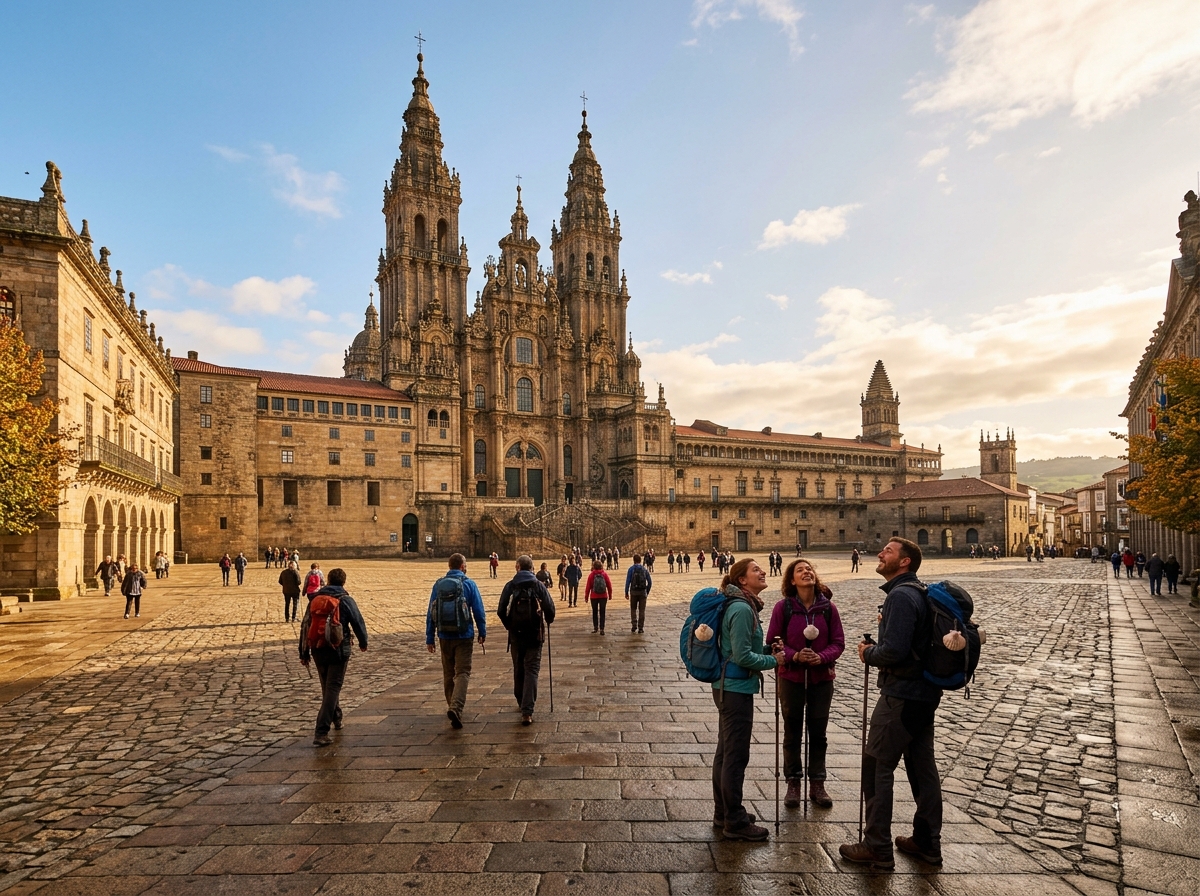
Even for non-pilgrims and non-religious visitors, the city is extraordinary. The old town is UNESCO-listed, the Cathedral square is stunning, and the atmosphere of arrival and completion that fills the city, particularly in the evenings when pilgrims finish their walks, is unlike anything else in Spain.
Best Islands in Spain
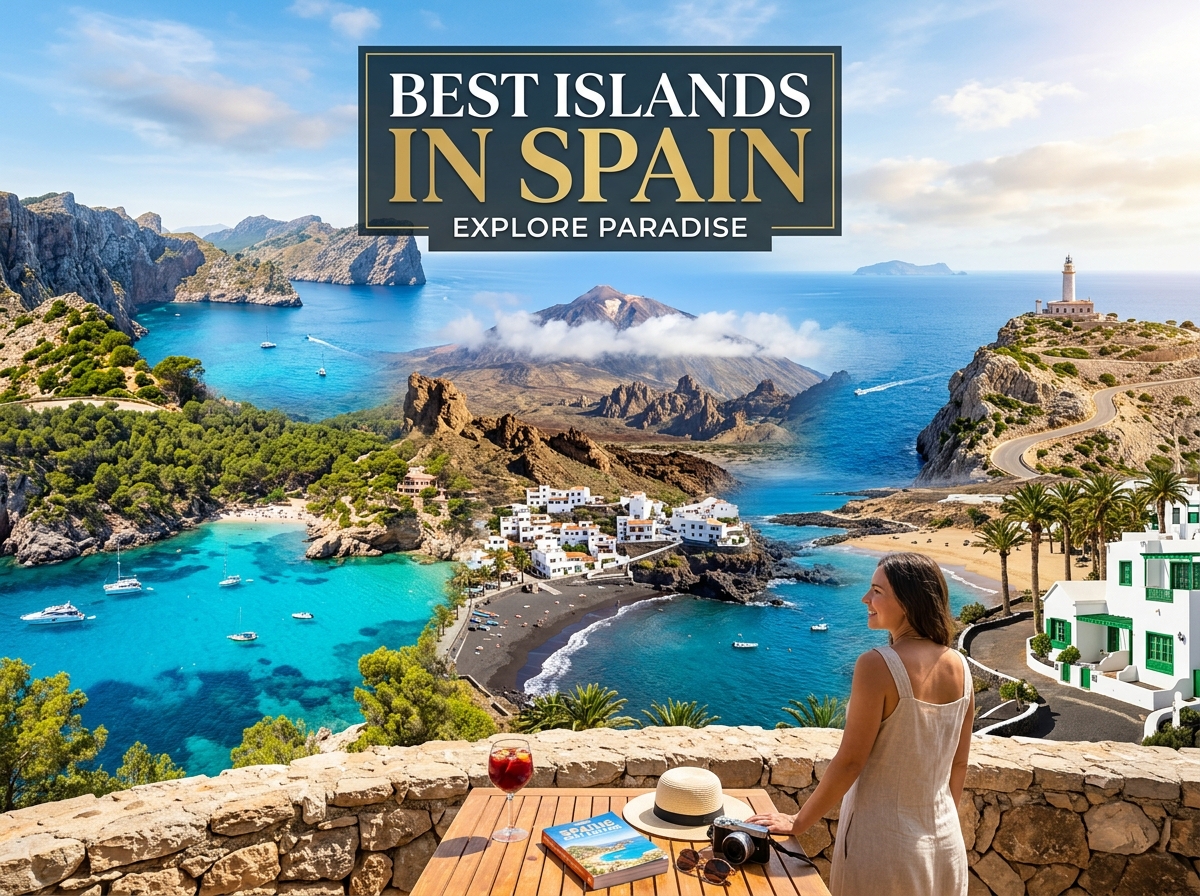
Mallorca (Balearic Islands)
Mallorca is the largest of the Balearic Islands and has a range that goes well beyond the beach resorts of Magaluf. The Tramuntana mountain range in the northwest is dramatic and beautiful, with charming villages like Deia and Soller that attract artists and writers. Palma, the island’s capital, has a Gothic cathedral, excellent restaurants, and a genuine city feel.
Best for: Beach holidays, hiking, cycling, food, families Best time to visit: May to June or September to October for warm weather without summer crowds
The Canary Islands
The Canary Islands sit off the northwest coast of Africa and have a completely different climate and landscape from mainland Spain. Tenerife, Lanzarote, Gran Canaria, and La Palma are the most popular. Lanzarote, shaped by volcanic eruptions, looks like no other place on Earth. The Teide volcano on Tenerife is the highest point in Spain at 3,718 metres.
The islands are warm year-round, which makes them Spain’s best winter sun destination. January temperatures average around 20 degrees Celsius.
Best for: Winter sun, hiking, volcanic landscapes, beach holidays, families Best time to visit: Year-round; winter is particularly good value
Practical Tips for Visiting Spain
Spain is large. The distance from San Sebastian in the north to Seville in the south is over 900 kilometres. Plan around regions rather than trying to cross the whole country. Spain’s high-speed rail network (AVE) connects Madrid to Barcelona in two and a half hours, Madrid to Seville in two and a half hours, and Madrid to Valencia in one hour forty minutes. Book trains early for the best fares.
Meal times are different. Lunch is the main meal of the day and is served from 2pm to 4pm. Dinner starts at 9pm and many restaurants do not fill up until 10pm. Eating outside these windows often means tourist-trap restaurants with lower quality food. The menu del dia (set lunch menu) at a local restaurant typically costs 10 to 15 euros for three courses with wine and is often the best value meal in any Spanish city.
Regional food identity matters. Paella in Valencia, pintxos in San Sebastian, tapas in Seville, cocido madrileño (a rich chickpea stew) in Madrid. Eating regional dishes in the places they come from is one of the genuine pleasures of travelling Spain.
Book the Alhambra early. The Nasrid Palaces at the Alhambra in Granada are the single most in-demand attraction in Spain. Buy tickets directly from the official website well in advance, especially for summer and Easter visits.
Spain’s summer sun is intense, particularly in Andalusia where temperatures regularly exceed 40 degrees Celsius in July and August. A mineral sunscreen that does not leave a white cast is essential for city days and beach days alike. The EltaMD UV Clear Broad Spectrum SPF 46 (available on Amazon) is lightweight, dermatologist-recommended, and works well in high-heat climates without clogging pores or feeling heavy.
For anyone planning to walk Spanish cities extensively, particularly in places like Seville, Granada, and Toledo where cobblestone streets are everywhere, supportive footwear makes an enormous difference. The Birkenstock Arizona Soft Footbed sandals (available on Amazon) are the go-to choice for serious walkers across European cities. They look good, support correctly, and last for years.
If you are taking the AVE high-speed trains between cities, a lightweight cabin bag that fits overhead is all you need. The Osprey Farpoint 40 Travel Pack (available on Amazon) meets carry-on restrictions, distributes weight well for city walking, and is the most recommended travel pack for European rail trips.
Best Places in Spain by Traveller Type
First-time visitors: Madrid, Seville, Barcelona. Classic for good reason.
History and architecture lovers: Granada (Alhambra), Toledo, Cordoba (Mezquita), Salamanca.
Food lovers: San Sebastian (pintxos), Valencia (paella), Seville (tapas and sherry culture), Madrid (market culture and restaurant density).
Beach and sun seekers: Mallorca, Ibiza, Costa Brava near Barcelona, San Sebastian’s La Concha beach, the Canary Islands for year-round warmth.
Off the beaten path: Salamanca (golden sandstone university city almost unknown to non-European visitors), Cadaques (whitewashed coastal village where Dali lived), Cuenca (a city built on cliffs with houses hanging over the gorge), Lugo (the only city in the world with a completely intact Roman wall).
Families: Valencia (City of Arts and Sciences, beach, Bioparc zoo), Mallorca, the Canary Islands, Seville (manageable size, outdoor culture).
Quick Reference Table
| Destination | Best For | Best Season | Crowd Level |
|---|---|---|---|
| Madrid | Museums, culture, nightlife | Mar to May, Sep to Nov | Moderate |
| Barcelona | Architecture, beach, food | May, Jun, Sep, Oct | High |
| Seville | Flamenco, Moorish heritage | Mar to May, Sep to Oct | Moderate |
| Granada | Alhambra, Moorish history | Mar to May, Sep to Oct | High at Alhambra |
| San Sebastian | Food, beach, Basque culture | Jun to Sep | Moderate |
| Valencia | Paella, architecture, festivals | Mar, May to Oct | Low to moderate |
| Cordoba | Mezquita, day trips | Mar to May, Sep to Oct | Low |
| Mallorca | Beaches, hiking, cycling | May to Jun, Sep to Oct | High in summer |
| Canary Islands | Winter sun, volcanos, hiking | Year round | Moderate |
Frequently Asked Questions
What is the most visited place in Spain?
Barcelona is Spain’s most visited city by international tourists. The Alhambra in Granada is the most visited monument, receiving around 2.7 million visitors per year.
What is the best city in Spain to visit for the first time?
Madrid or Seville. Madrid gives you world-class museums, a great food scene, and excellent day trips. Seville gives you the best of Andalusia, flamenco culture, and stunning Moorish architecture in a compact, walkable city.
When is the best time to visit Spain?
April to June and September to October are the best months overall. July and August are the hottest and most crowded months, especially in Andalusia. Northern Spain (Basque Country, Galicia, Asturias) is better in summer when the south is overwhelmed with heat.
Is Spain expensive to visit?
Spain is one of the more affordable Western European countries. Budget travellers can manage on 60 to 80 euros per day. Mid-range travel costs 100 to 180 euros per day. The menu del dia lunch deal at local restaurants is excellent value across the country.
Do I need to book attractions in advance in Spain?
The Alhambra in Granada must be booked well in advance, especially for the Nasrid Palaces. The Sagrada Familia in Barcelona should be booked two to three weeks ahead in summer. Most other attractions can be booked a few days ahead or on arrival.
What food should I try in Spain?
Jamón ibérico (Iberian cured ham), pintxos in San Sebastian, paella in Valencia, tapas in Seville, churros with chocolate in Madrid, crema catalana in Barcelona, and fino sherry in Jerez. Each region has its own food identity. Eat regionally.
How many days do you need in Spain?
Two weeks gives you enough time to cover two or three regions properly. A week is enough for one region. Trying to cover Madrid, Andalusia, and Barcelona in five days means you see everything and experience nothing. Spain rewards slower travel.
Is Spain safe for tourists?
Yes. Spain is one of the safest countries in Europe. The main concern in tourist areas, particularly Barcelona and Madrid, is pickpocketing. Keep bags closed and in front of you in crowded areas and on public transport.
Final Thoughts
Spain is a country that keeps surprising you the more of it you see. The cities are extraordinary. But the whitewashed villages of Andalusia, the green coast of the Basque Country, the volcanic landscapes of the Canaries, and the golden university city of Salamanca all offer something the main tourist circuit misses.
Pick a region you are genuinely curious about, give yourself enough time to settle in, eat lunch at 2pm like a local, and walk without an agenda for at least one afternoon. That is when Spain starts to show you what it actually is.