Washington DC surprises most first-time visitors.
They arrive expecting a city of suits and security barriers and find something completely different. Free world-class museums on every block. Cherry blossoms turning the Mall pink in spring. Neighborhoods with the best Ethiopian food in America. A jazz and blues history concentrated in a few city blocks that shaped American music.
The monuments are extraordinary. But the city beyond them is what makes people come back.
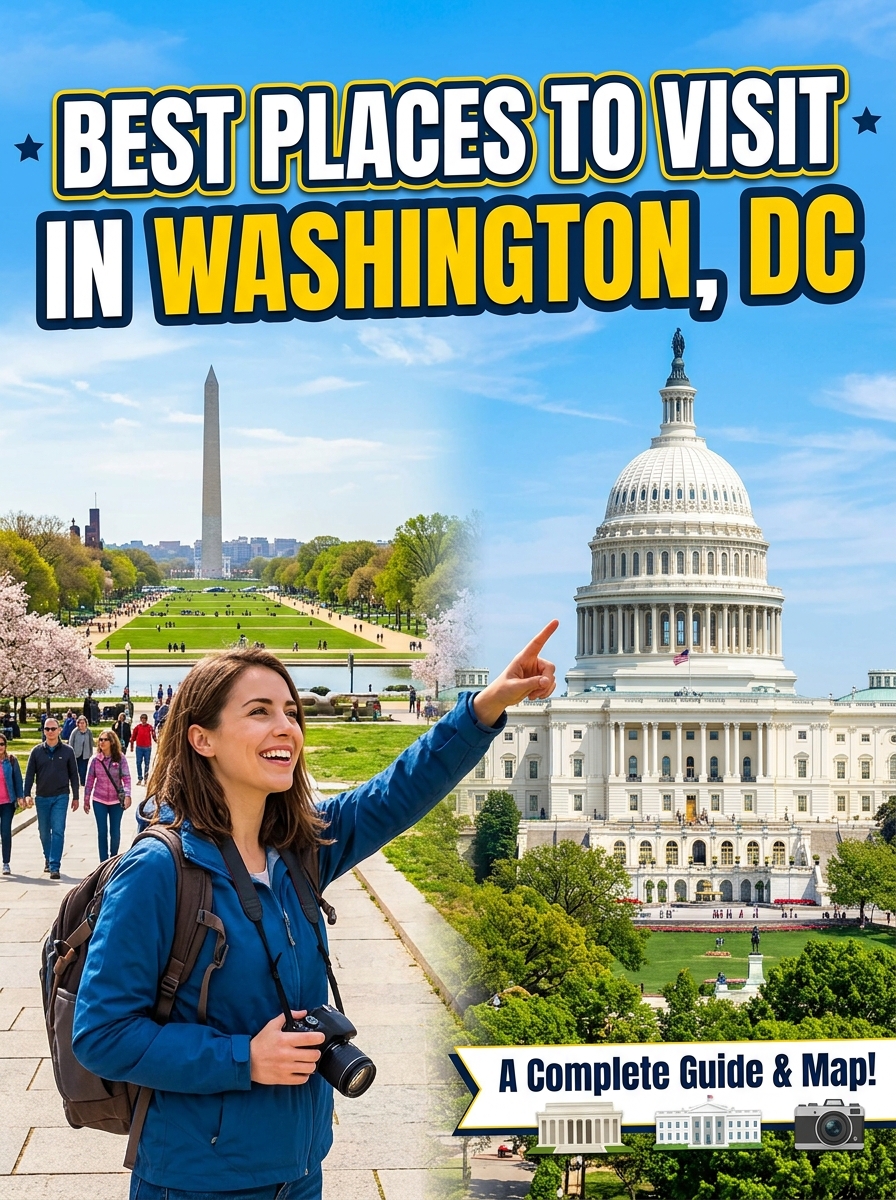
This guide covers the best places to visit in Washington DC with honest practical advice, neighbourhood depth, and the things most travel guides overlook.
Quick Answer: Best Places to Visit in Washington, DC
For a first visit, walk the National Mall from the Lincoln Memorial to the Capitol, visit two or three Smithsonian museums, see the monuments lit at night, and spend one evening in Georgetown or U Street. That covers essential Washington DC in two days.
For a deeper visit, add Eastern Market on a weekend morning, the Renwick Gallery, the Library of Congress, and a day trip to Old Town Alexandria across the Potomac.
The National Mall and Monuments
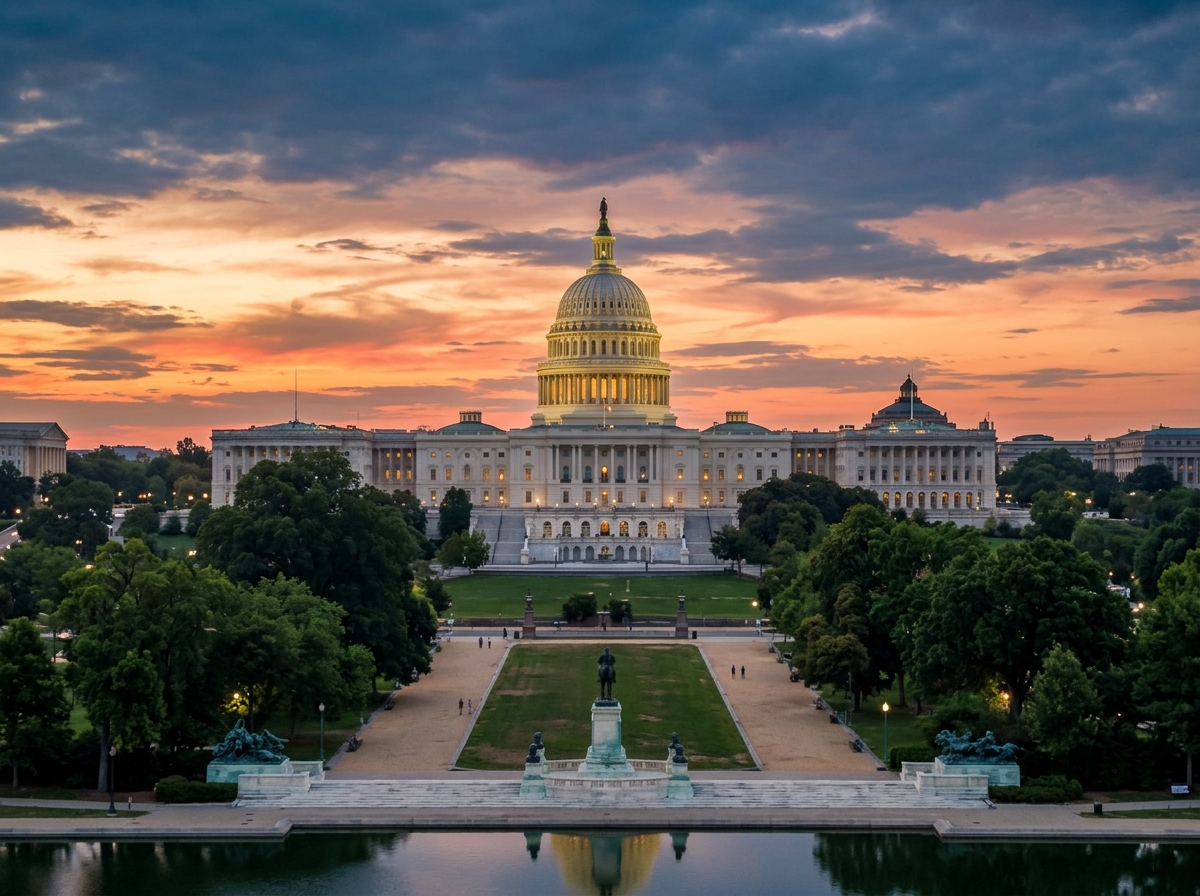
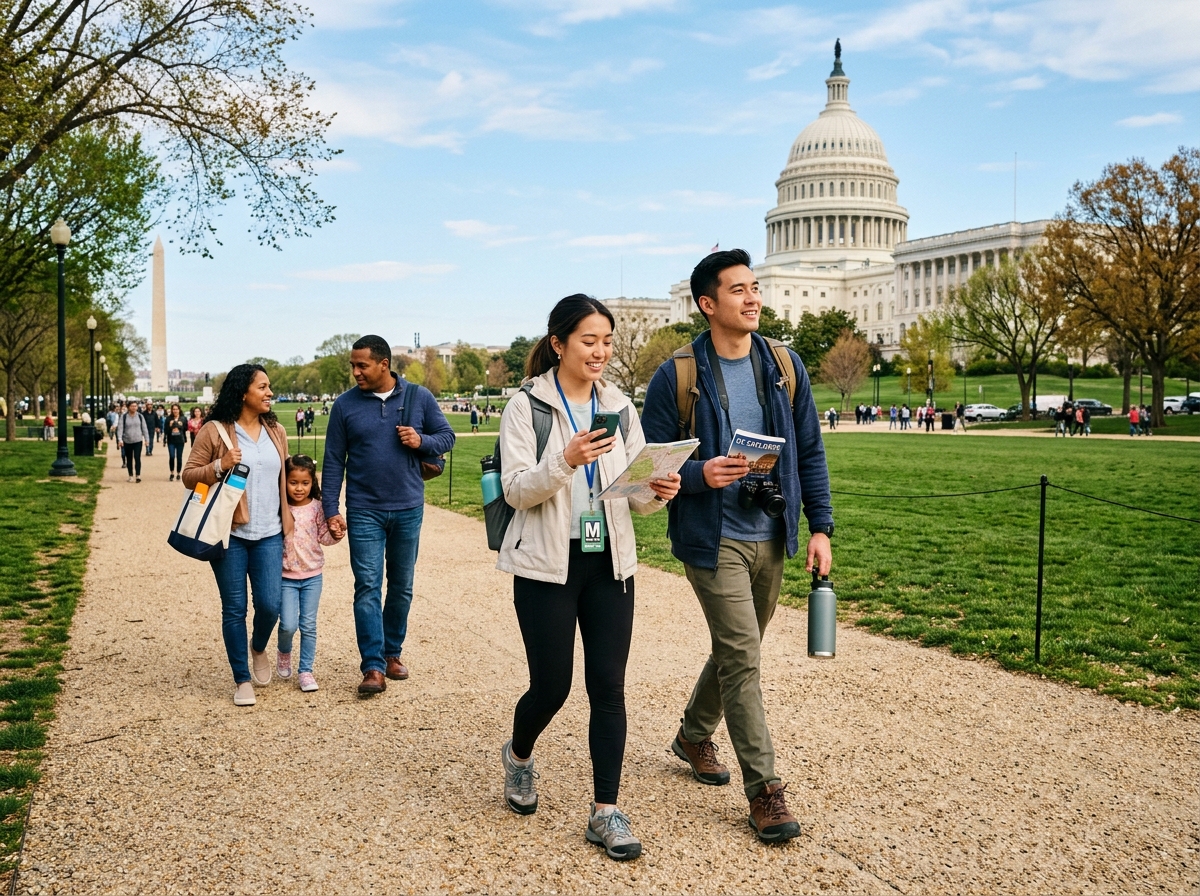
The National Mall is the spine of Washington DC. A two-mile green corridor from the Lincoln Memorial to the Capitol Building, lined with monuments, memorials, and the greatest collection of free museums on Earth.
Lincoln Memorial
The Lincoln Memorial is one of the most powerful public spaces in America. Daniel Chester French’s seated Lincoln is 19 feet tall and the inscriptions of the Gettysburg Address and Lincoln’s Second Inaugural Address are carved into the walls on either side.
The view from the top of the steps looking east down the reflecting pool toward the Washington Monument and the Capitol is the defining image of DC. Martin Luther King Jr. delivered his “I Have a Dream” speech on these steps in 1963. A small marker on the step where he stood is still there.
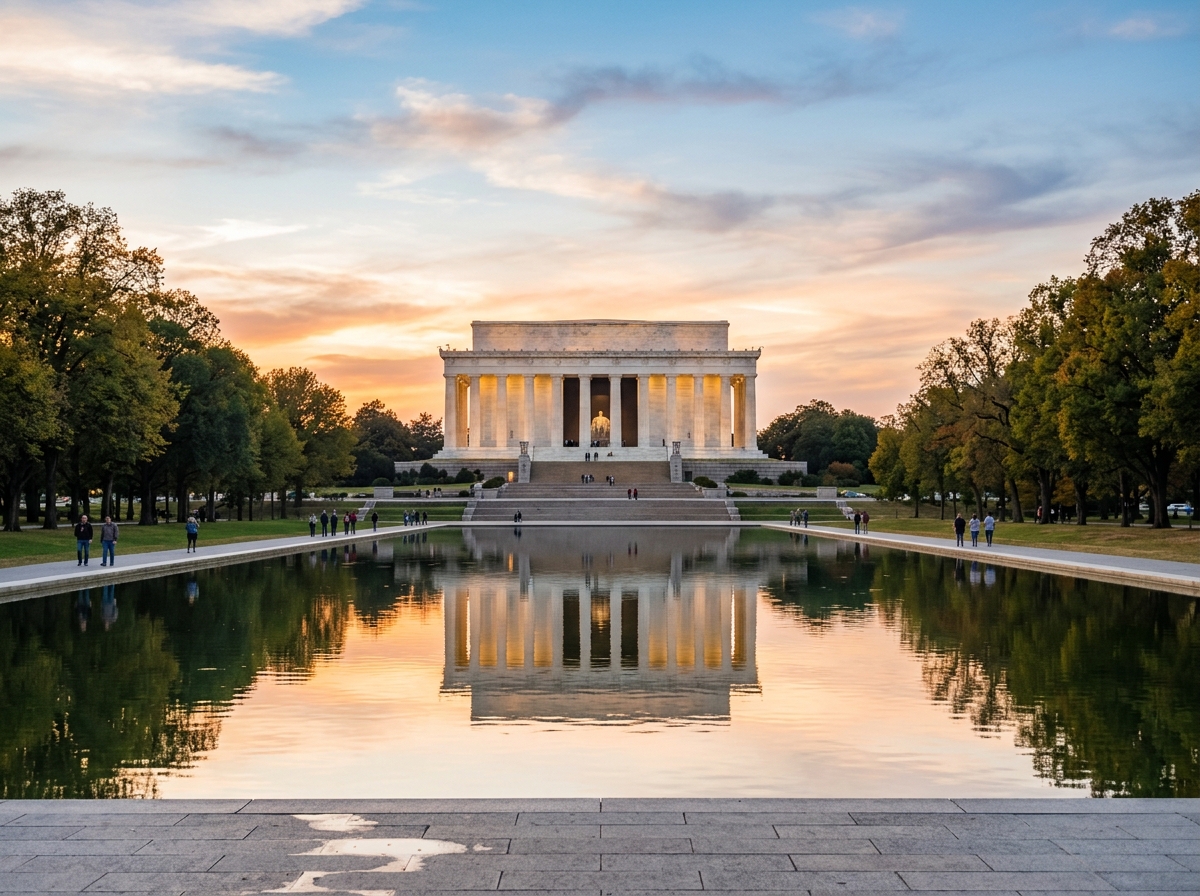
Best time to visit: Evening or early morning. The memorial is open 24 hours and crowds thin significantly after 8pm. The monument is beautifully lit at night.
Vietnam Veterans Memorial
The Vietnam Veterans Memorial sits in the trees near the Lincoln Memorial and has a completely different atmosphere from the open grandeur around it. Maya Lin’s polished black granite wall lists the names of 58,318 Americans killed in the war. Visitors find specific names using directories at either end and leave photographs, flowers, and notes at the base.
It is one of the most genuinely moving memorial experiences in the world, and almost always quiet regardless of how busy the surrounding Mall is.
Washington Monument
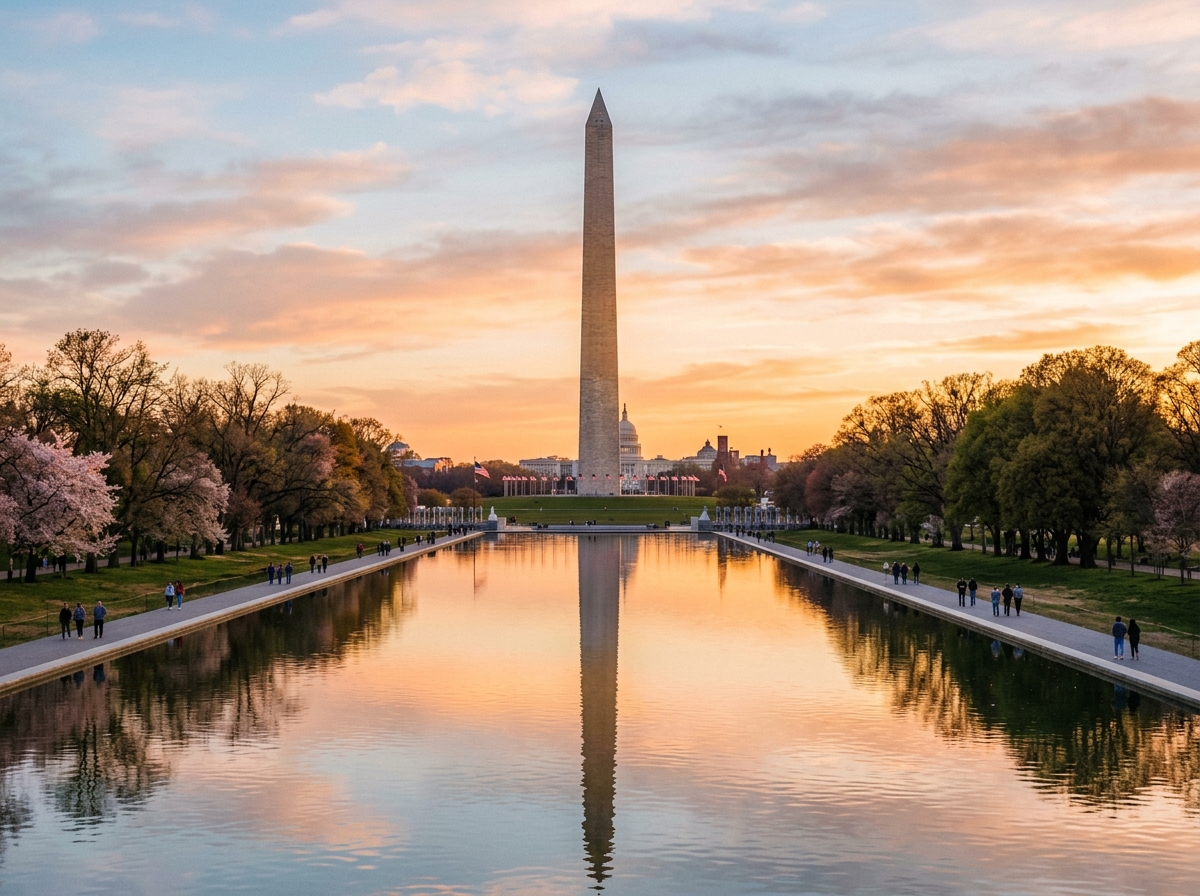
The Washington Monument is the world’s tallest stone structure at 555 feet. Free timed-entry passes are required for elevator access to the observation level. Passes are released at recreation.gov and disappear quickly. Book at least a week or two ahead for weekend visits.
World War II Memorial
The World War II Memorial sits between the Lincoln Memorial reflecting pool and the Washington Monument. The open plaza ringed with 56 pillars representing each state and territory feels genuinely solemn. The freedom wall with 4,048 gold stars, each representing 100 American deaths, is one of the most striking elements.
The Capitol Building
The Capitol is one of the most recognisable buildings in the world. Tours of the interior are free but require advance booking through your Congressional representative’s office or at visitthecapitol.gov. Tours go through the Rotunda, National Statuary Hall, and the Crypt. Book as far in advance as possible for summer visits.
The Capitol Visitor Center below the East Plaza has a free exhibition that is excellent and requires no prior booking.
Best Smithsonian Museums in Washington, DC
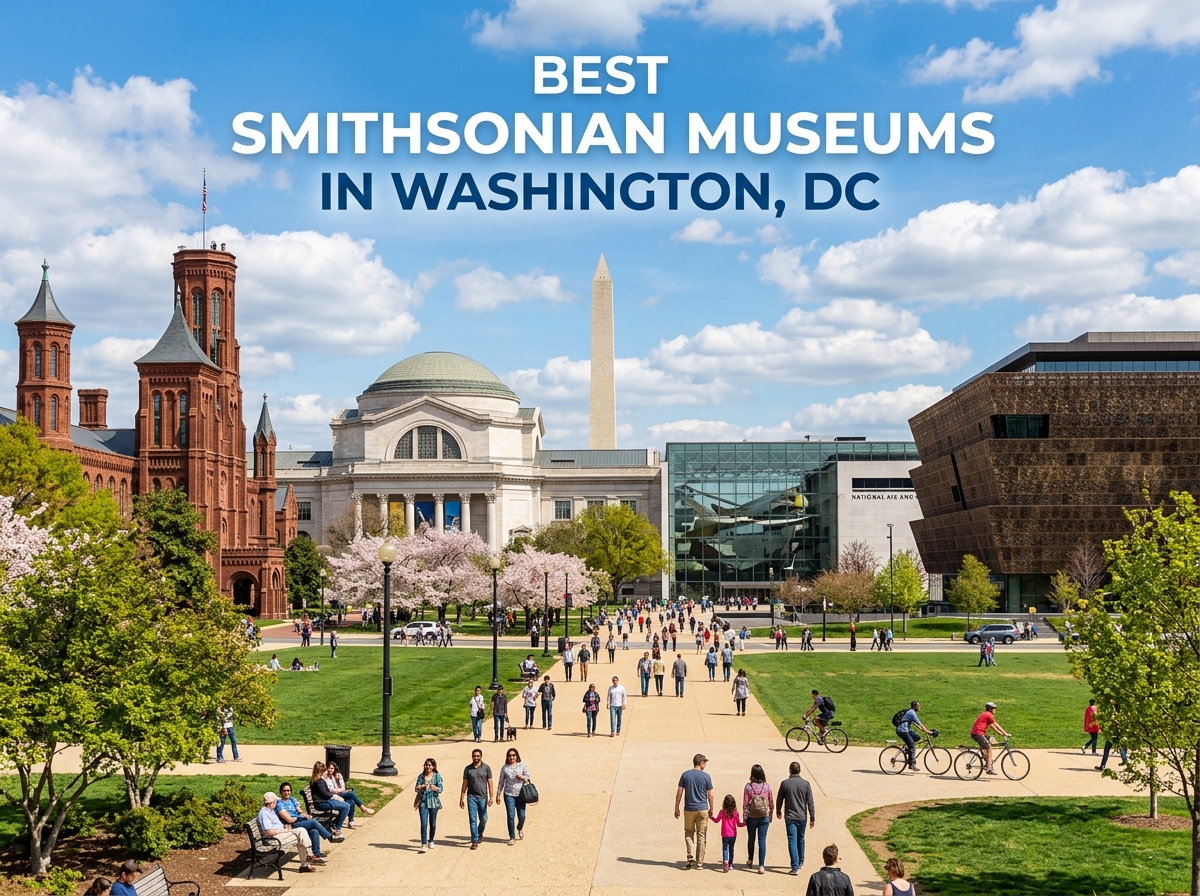
The Smithsonian Institution is the largest museum complex in the world with 19 museums and galleries, almost all free. The challenge is not the cost. It is choosing which ones to prioritize.
National Museum of Natural History
The Hope Diamond, a 45.52-carat blue diamond with a history stretching back to 17th century India, is in the Janet Annenberg Hooker Hall. The Ocean Hall and the Human Origins exhibit are both extraordinary. Plan at least two hours.
Hours: Open daily. Free entry. No timed ticket required.
National Museum of American History
The Star-Spangled Banner that inspired the national anthem, Julia Child’s kitchen moved here intact from her Cambridge home, and the original Kermit the Frog muppet are all here. It is warm, specific, and full of objects that make history feel immediate.
National Air and Space Museum
The Wright Brothers’ Flyer, Charles Lindbergh’s Spirit of St. Louis, and a genuine moon rock you can touch. One of the most visited museums in the world for good reason. Particularly excellent for families.
National Museum of African American History and Culture
Opened in 2016 and immediately became one of the most important museums in America. The collection traces Black American history from slavery through the civil rights movement and into contemporary culture.
Timed-entry passes are required and released at recreation.gov 30 days in advance. They are free but disappear within hours of release. This is the one Smithsonian museum where you cannot just show up.
The Renwick Gallery
The Smithsonian’s gallery for American craft and decorative arts, housed in a stunning Second Empire building directly across from the White House. Free, almost always uncrowded, and has rotating installations that are among the most visually striking in the city. One of the best hidden gems in DC.
For anyone doing a serious museum day across DC, a comfortable lightweight daypack that holds a water bottle, snacks, and a light jacket without slowing you down makes a full day significantly more enjoyable. The Osprey Daylite 13L Backpack (available on Amazon) is compact, well-organised, and genuinely comfortable for hours of walking between museums along the Mall.
Best Neighbourhoods Beyond the Mall
Georgetown
Georgetown is the oldest neighbourhood in DC, predating the capital city itself. Brick townhouses, cobblestone streets, and the C and O Canal towpath create an atmosphere unlike anywhere else in the city.
Dumbarton Oaks, a mansion with a Byzantine art collection and extraordinary formal gardens, sits at the top of Georgetown and is one of the most beautiful properties in the city.
The Georgetown waterfront along the Potomac has excellent restaurants and connects to a water taxi service running to the Wharf neighbourhood and Alexandria.
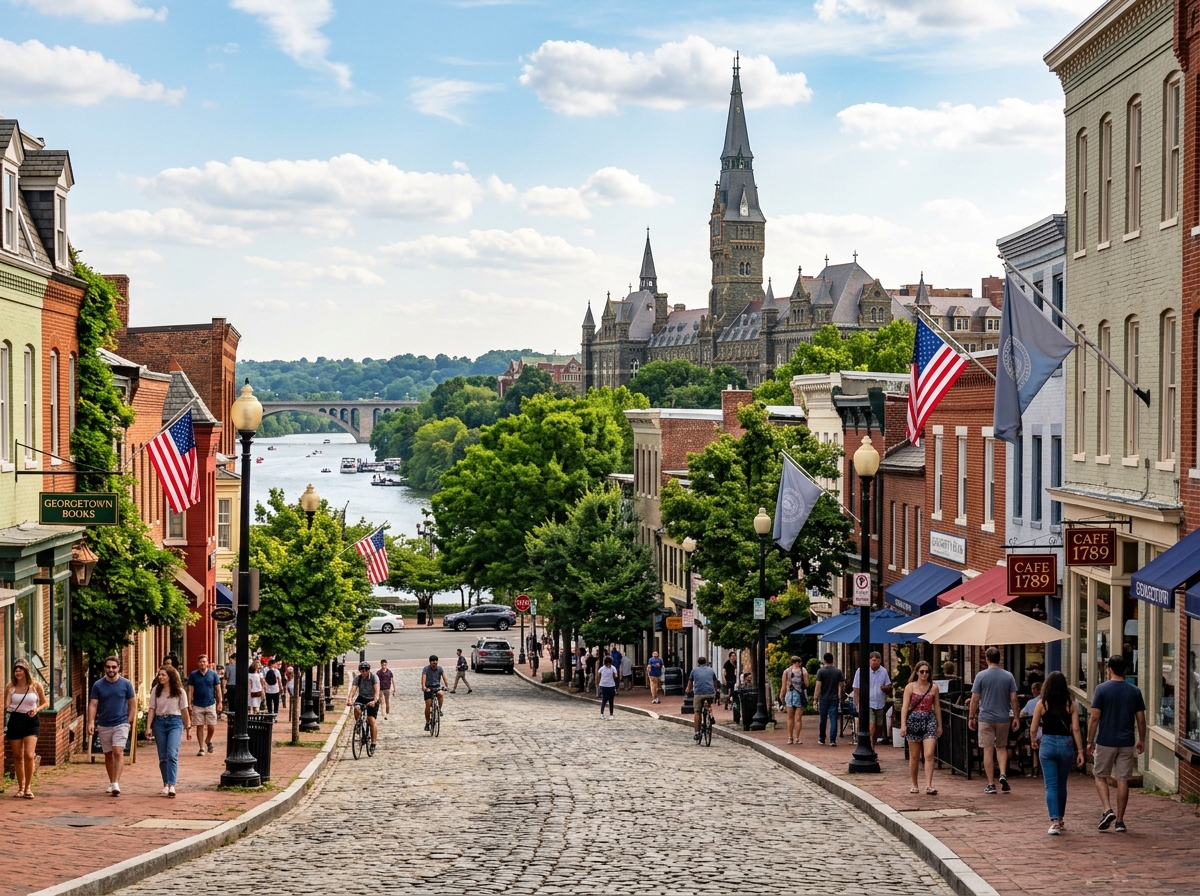
Best for: Architecture, upscale dining, historic streets, waterfront
U Street and Shaw
U Street was once called Black Broadway. In the early 20th century, this stretch of DC was the cultural centre of Black America, home to Duke Ellington (born two blocks away), jazz clubs, theatres, and the institutions of Black professional and social life in a segregated city.
Virginia Ali and her husband Ben Ali opened Ben’s Chili Bowl in Washington DC’s U Street neighborhood in 1958 when she was 24. The diner serving homemade chili and its signature half-smokes became a fixture on Black Broadway, the epicenter of Black society and the Civil Rights Movement in the nation’s capital from the 1920s through the 1950s. The half-smoke, a half-pork half-beef sausage served with chilli, is the thing to order.
The neighbourhood now has one of the best restaurant and bar scenes in the city, with particular strength in Ethiopian cuisine. DC has the largest Ethiopian population in America outside Addis Ababa, and U Street and Shaw have the best concentration of Ethiopian restaurants in the country.
Best for: Cultural history, food, nightlife, live music
Capitol Hill and Eastern Market
Capitol Hill is more than the government buildings at its centre. The residential streets around the Capitol are full of Victorian row houses, independent restaurants, and genuine neighbourhood life.
Eastern Market on 7th Street SE has been a neighbourhood anchor since 1873. On Tuesday through Sunday, the South Hall market sells fresh produce, meat, seafood, and local products. On weekends, outdoor stalls spread across the surrounding streets with art, crafts, and antiques. The weekend flea market is one of the best in the Mid-Atlantic region.
Best for: Weekend markets, neighbourhood restaurants, local life
Adams Morgan
Adams Morgan is DC’s most international neighbourhood, with restaurants spanning Ethiopian, Salvadoran, Caribbean, Vietnamese, and dozens of other cuisines within a few blocks. 18th Street is the main corridor and one of the city’s best nightlife destinations.
Best for: International food, nightlife, diverse neighbourhood atmosphere
Hidden Gems Most DC Guides Miss
Library of Congress
The Library of Congress is the largest library in the world and one of the most beautiful buildings in DC. The Great Hall of the Jefferson Building, decorated with marble mosaics, gilded columns, and a stunning painted dome, is extraordinary. Most visitors never go inside because they assume it is restricted. It is not. Public galleries are free and open without advance booking.
The Gutenberg Bible on display is one of only three perfect vellum copies in the world.
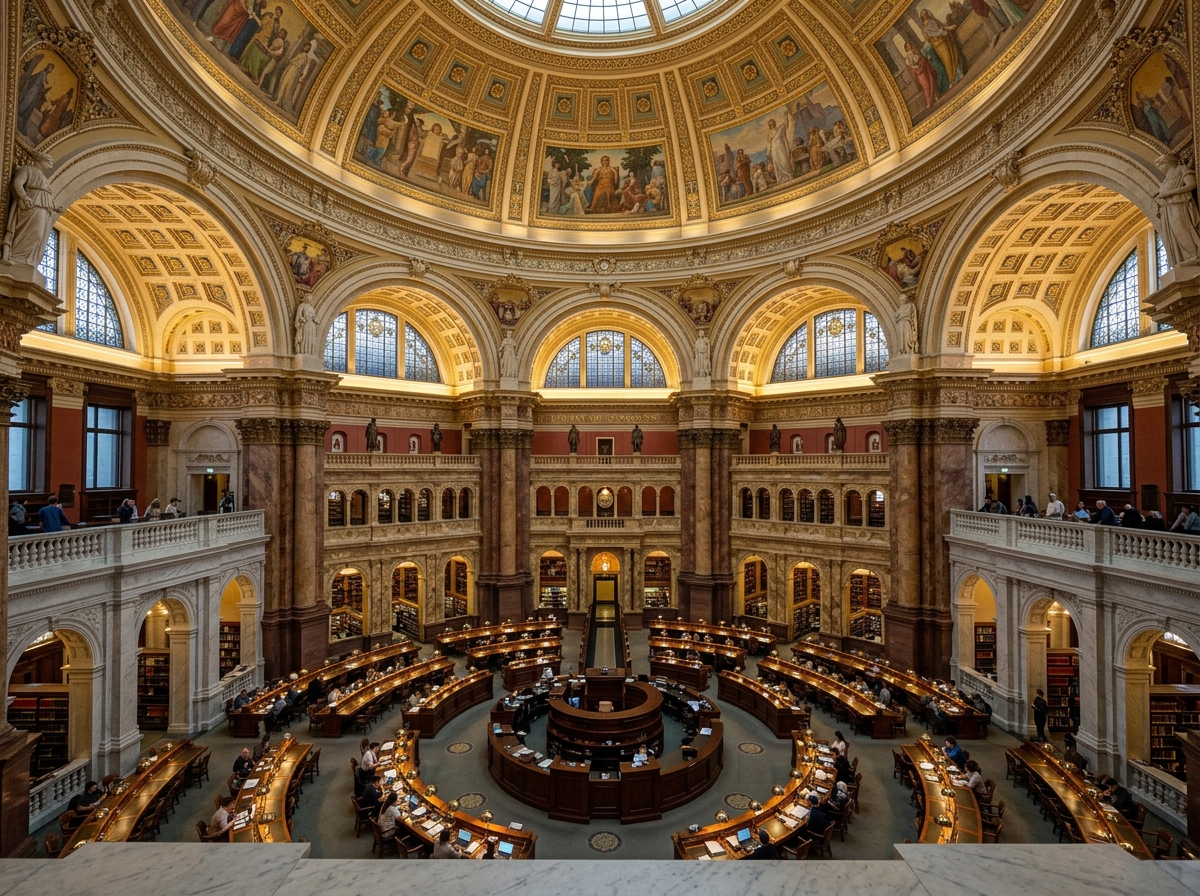
Address: 10 First Street SE, directly behind the Capitol
The Phillips Collection
The Phillips Collection in Dupont Circle is America’s first modern art museum, tucked away in a historic home. Renoir’s Luncheon of the Boating Party is here. The collection spans Impressionism through contemporary art in a genuinely intimate setting.
Cost: Admission charged. Free on the first Sunday of each month. Address: 1600 21st Street NW
Kenilworth Aquatic Gardens
The only national park dedicated to aquatic plants, with lotus flowers and water lilies blooming from June through August. Most DC visitors never know this place exists. Free, genuinely beautiful in summer, and completely uncrowded.
Best time: Early morning in July and August when the lotus flowers are open.
National Archives
The Constitution, the Bill of Rights, and the Declaration of Independence are all on permanent display in the National Archives Rotunda on Constitution Avenue. These are the actual documents, not reproductions. Free entry but timed passes are recommended for busy periods.
Best Food Experiences in Washington, D.C
DC has one of the best and most underrated food scenes in America.
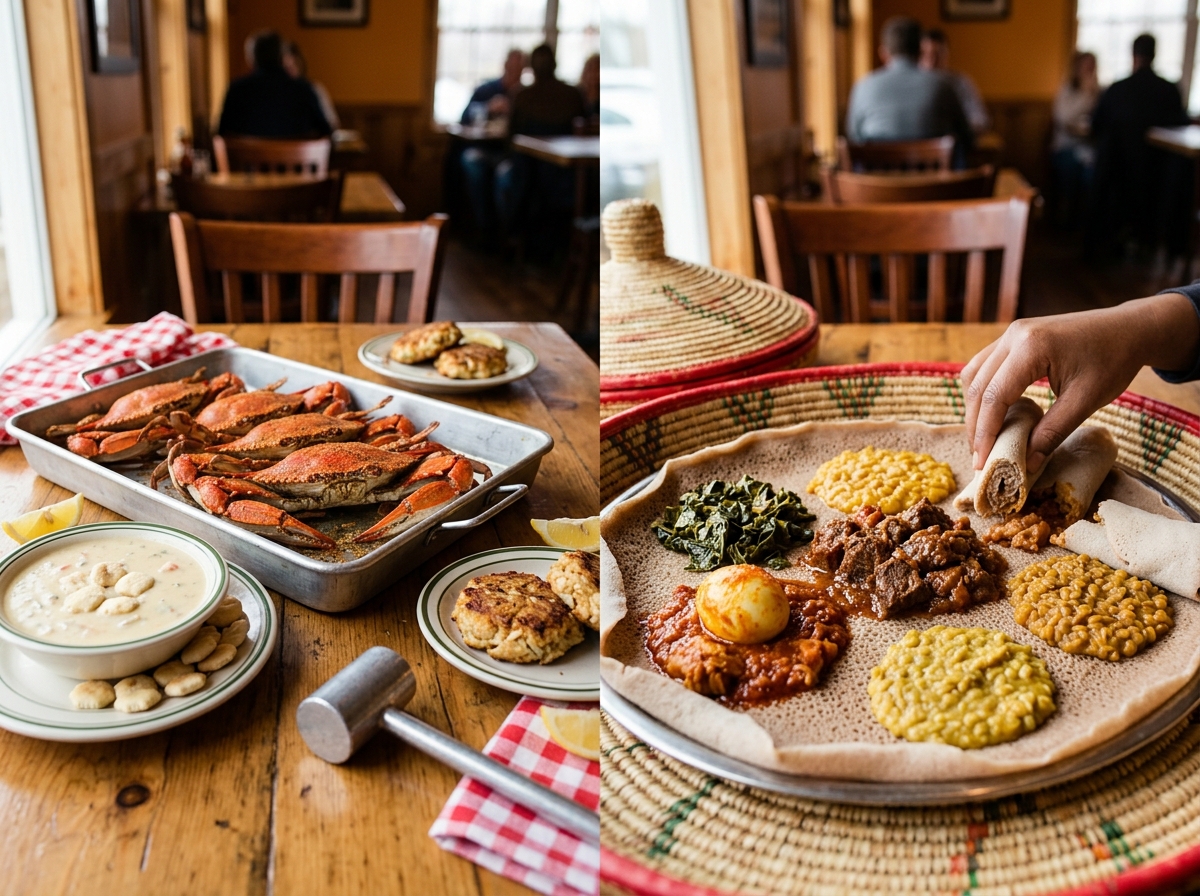
Chesapeake Bay seafood: Blue crabs, oysters, and rockfish from the bay define the regional cuisine. The Wharf neighbourhood on the Southwest waterfront has excellent seafood restaurants with outdoor seating along the Potomac.
Ethiopian food: For the best injera, tibs, and kitfo in America, walk the U Street corridor. Dukem, Chercher, and Ethiopic are all excellent. Ethiopian food is eaten communally with hands from a shared platter, making it an ideal group meal.
Half-smokes: The DC original. Order it with chilli and mustard at Ben’s Chili Bowl. Open since 1958 and still worth the queue.
Union Market: A food hall in the Northeast neighbourhood with excellent vendors spanning Korean fried chicken to artisan cheese. The surrounding NoMa area has grown into one of the most interesting dining areas in the city.
Sunday brunch: DC takes Sunday brunch seriously. Shaw, 14th Street, and Georgetown all have excellent brunch spots with queues to match. Arriving before noon avoids the worst waits.
For a trip that involves multiple days of walking DC’s substantial distances between monuments, museums, and neighbourhoods, comfortable and supportive shoes matter more than most visitors anticipate. The Allbirds Tree Runner Go sneakers (available on Amazon) are lightweight, breathable, and built for long walking days without the look of athletic trainers. The wool upper works well in DC’s weather from warm spring days through cool autumn evenings.
Practical Tips for Visiting Washington, DC
The Metro system is excellent. DC’s Metro covers the city well with six colour-coded lines. A SmarTrip card loaded with credit covers all journeys. Peak fares apply from 5am to 9:30am and 3pm to 7pm on weekdays. Travelling outside peak hours saves money on every journey.
Book timed tickets in advance. The African American History Museum, the Washington Monument, and several popular attractions release free timed tickets at recreation.gov. For a spring Cherry Blossom visit, book these before you book your accommodation.
Cherry Blossom Festival timing. The National Cherry Blossom Festival runs from late March to mid-April. Peak bloom is the two to three day period when 70 percent of blossoms are open, usually in late March or early April. The National Park Service tracks bloom predictions at nps.gov/cherry. Hotels fill weeks in advance for peak bloom weekend.
Monuments at night. All major monuments on the Mall are open 24 hours and lit at night. Walking from the Lincoln Memorial to the World War II Memorial to the Washington Monument in the evening, when crowds are minimal and the light is dramatic, is one of the best free experiences in DC.
Day trip to Alexandria. Old Town Alexandria, Virginia is 30 minutes from central DC by Metro (Blue or Yellow line to King Street). The cobblestoned streets, independent restaurants, and views back toward DC across the Potomac make it an excellent half-day addition.
The National Archives is often overlooked. Seeing the actual Constitution and Declaration of Independence in person, not reproductions, is a more moving experience than most visitors expect. Free entry with timed passes recommended.
For a DC trip in spring or autumn when weather changes throughout the day, a packable, lightweight windbreaker that folds into a bag pocket by afternoon is the most practical single item to bring. The Patagonia Houdini Windbreaker (available on Amazon) packs into its own pocket, weighs almost nothing, and cuts the wind on the Mall without adding any bulk to your day bag.
Best Places in DC by Traveller Type
First-time visitors: National Mall monuments, Natural History Museum, American History Museum, Lincoln Memorial at night, one evening in Georgetown.
History lovers: Library of Congress, National Museum of African American History, Vietnam Veterans Memorial, the Capitol tour, the National Archives.
Art lovers: National Gallery of Art (free, from Leonardo to Picasso), The Phillips Collection, the Renwick Gallery, the Hirshhorn Museum for contemporary art.
Families: Air and Space Museum, Natural History Museum (touch the moon rock), National Zoo (free, Smithsonian), the National Building Museum for interactive exhibits.
Foodies: Eastern Market on weekends, Ben’s Chili Bowl on U Street, the Wharf for Chesapeake seafood, Union Market, Ethiopian food on U Street.
Budget travellers: Almost everything on the National Mall is free. DC is one of the best value capital cities in the world for cultural experiences.
Quick Reference Table
| Place | Neighbourhood | Cost | Book Ahead? |
|---|---|---|---|
| Lincoln Memorial | National Mall | Free | No |
| Natural History Museum | National Mall | Free | No |
| African American History Museum | National Mall | Free | Yes, recreation.gov |
| Washington Monument | National Mall | Free | Yes, recreation.gov |
| Capitol Building tour | Capitol Hill | Free | Yes, weeks ahead |
| Library of Congress | Capitol Hill | Free | No |
| The Renwick Gallery | Near White House | Free | No |
| National Archives | Downtown | Free | Recommended |
| Eastern Market | Capitol Hill | Free to enter | No |
| The Phillips Collection | Dupont Circle | Paid | No |
Frequently Asked Questions
Is Washington DC free to visit?
Most major attractions are genuinely free. All Smithsonian museums, the monuments, the National Gallery of Art, the Library of Congress, and the National Zoo have no entry charge. A full day of world-class cultural experiences costs nothing except food and transport.
How many days do you need in Washington DC?
Three days covers the main monuments and two or three museums without rushing. Four to five days lets you go deeper into neighbourhoods, visit the Library of Congress, and do a day trip to Alexandria.
When is the best time to visit Washington DC?
March through May is the most popular period, peaking during Cherry Blossom Festival in late March and early April. September and October offer excellent weather with fewer crowds. July and August are the hottest months and most crowded. December and January are cold but quiet, with low hotel prices outside the holiday period.
Is Washington DC safe for tourists?
The main tourist areas including the National Mall, Georgetown, Capitol Hill, Dupont Circle, and U Street are all safe. Normal city awareness applies in less familiar areas. The Metro system is safe and reliable throughout the day.
What food is Washington DC known for?
Chesapeake Bay blue crabs and oysters, half-smokes from Ben’s Chili Bowl, Ethiopian cuisine on U Street, and a genuinely excellent modern American restaurant scene in Shaw, Penn Quarter, and the 14th Street corridor.
How do I get around Washington DC?
The Metro system is the best option for most journeys. A SmarTrip card covers all lines. Walking is excellent between monuments on the Mall. The city also has a Capital Bikeshare network of over 700 stations for cycling between neighbourhoods.
Can you visit the White House?
Public tours must be requested through your Congressional representative or Embassy and require at least 21 days notice and security clearance. Most visitors see the exterior from Pennsylvania Avenue and the South Lawn view from the Ellipse.
Final Thoughts
Washington DC is one of the great free cities in the world for cultural travel. The monuments deliver exactly what they promise. But the city that stays with you is found in the Library of Congress reading room, an early morning at Eastern Market, a half-smoke at Ben’s Chili Bowl, and the Vietnam Veterans Wall in the quiet of a weekday evening.
Give yourself more than a weekend. Walk beyond the Mall. Eat somewhere that has nothing to do with politics. That is when DC shows you what it actually is.