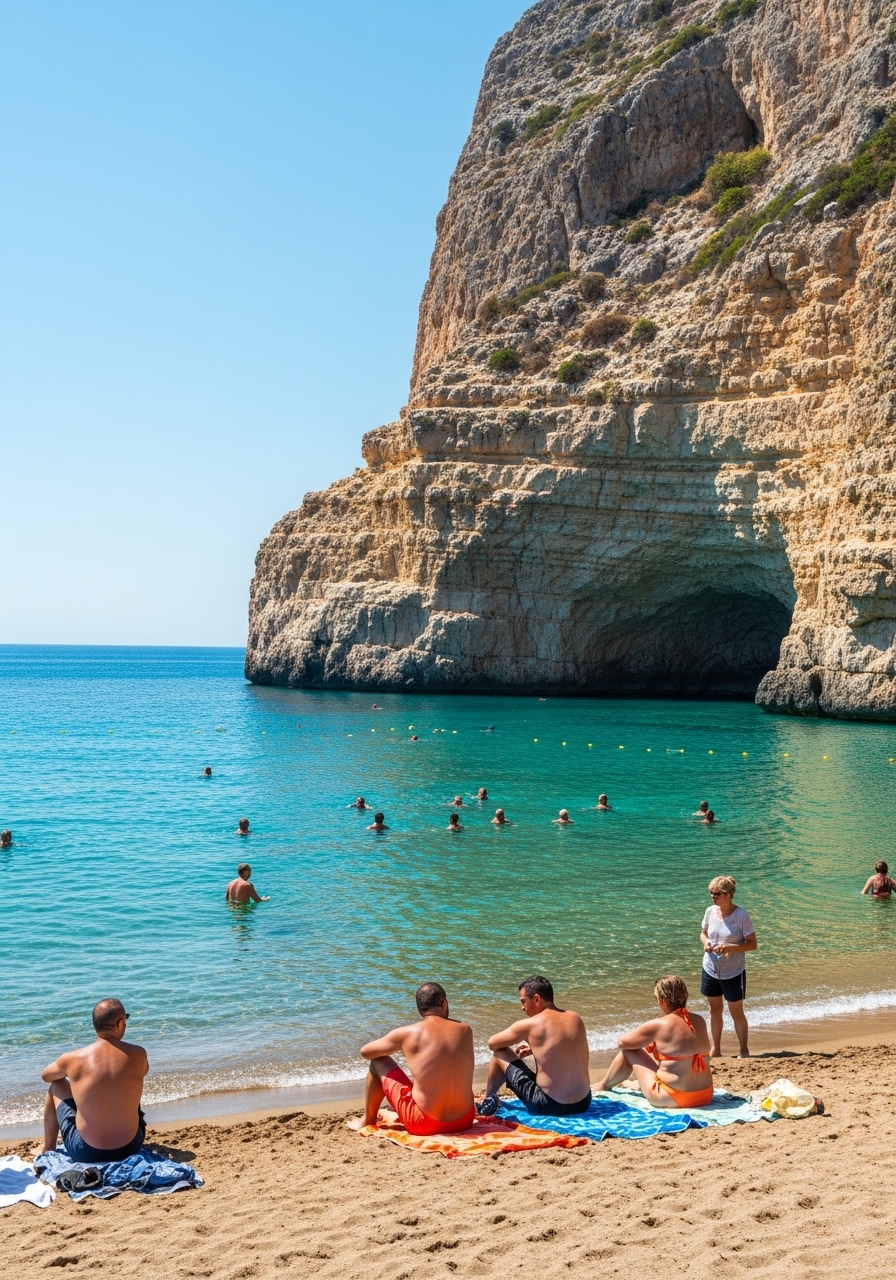
Winter is not the obvious season for a road trip, but it is one of the best. Roads are quieter, hotel rates are lower, and the landscapes look completely different: snow-covered mountains, frozen lakes, red rock dusted with snow, and ocean cliffs under a clear winter sky.
The key is choosing the right route for winter. Some roads are magical in winter. Others close for months, or become dangerous in a storm. This guide covers the best winter road trips in the USA, split into warm escapes and snowy scenic drives, with the distances, the best stops, and the winter warnings you need before you go.
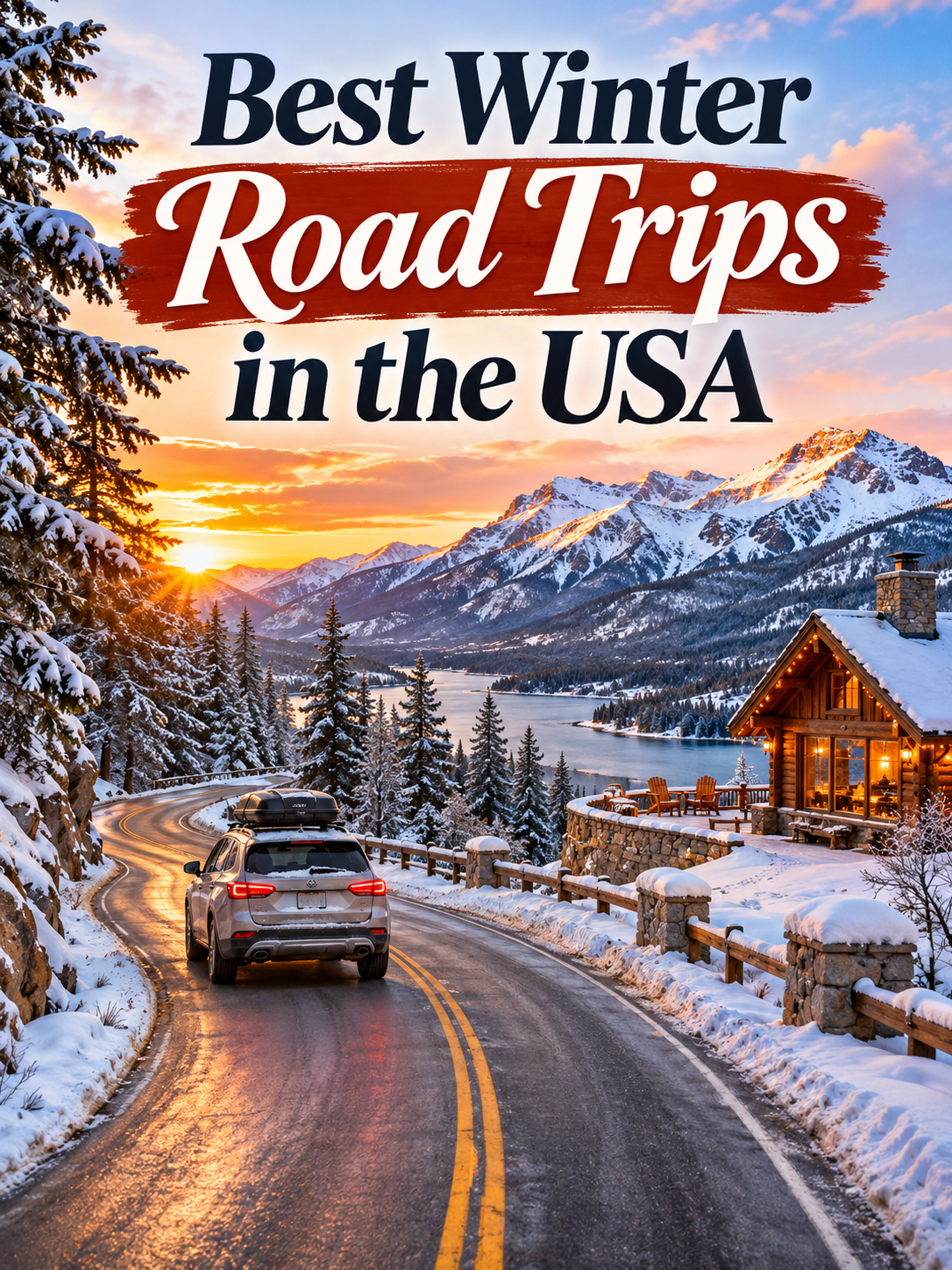
Quick picks: which winter road trip fits you?
| If you want… | Take… |
|---|---|
| Warm weather, ocean, and no snow at all | Florida Keys Overseas Highway |
| Ocean views and fewer crowds | Pacific Coast Highway, California |
| Red rock, national parks, and empty trails | Utah Mighty Five Loop |
| Desert, canyons, and slot canyons | Phoenix to Page, Arizona |
| Ski towns and a snowy canyon | Denver to Glenwood Springs, Colorado |
| A classic New England winter | Vermont Route 100 |
| A wild, stormy coast | Oregon Coast, Highway 101 |
| High desert and Route 66 history | Albuquerque to Flagstaff, Route 66 |
Warm winter road trips
1. Florida Keys Overseas Highway — Miami to Key West
This is the best winter road trip in the USA if you want to escape winter entirely. The drive from Miami to Key West along US-1 and the Overseas Highway is 113 miles across 42 bridges, including the Seven Mile Bridge, with water on both sides for long stretches.
The whole drive takes less than three hours without stops, but plan two to three days. Stop in Key Largo for snorkelling and diving, in Islamorada for fishing and food, and in Marathon for the Turtle Hospital and the Dolphin Research Center. In Key West, visit the Ernest Hemingway Home, eat Key lime pie, and take a day trip to Dry Tortugas National Park.
Winter is the most comfortable season here, with warm days, low humidity, and no hurricane season. It is also the busiest season, so book lodging in advance, especially around Christmas and New Year’s.
Distance: about 165 miles from Miami to Key West.
Ideal length: 3 to 5 days.
Best for: winter travellers, snorkellers, and anyone who wants sun in January.
2. Pacific Coast Highway — San Francisco to San Diego
The Pacific Coast Highway, California State Route 1, runs roughly 650 miles from north to south, though most travellers focus on the 400-mile stretch between San Francisco and Los Angeles, or the full drive to San Diego.
Winter is a good time for this drive: cool weather, fewer crowds, and lower hotel rates than in summer. Notable stops include Monterey, Carmel-by-the-Sea, Big Sur, Hearst Castle, Malibu, and Santa Monica.
Big Sur has a long history of closures. Highway 1 at Regent’s Slide reopened on January 14, 2026, restoring through traffic between Carmel and Cambria for the first time in almost three years. The road closed again in stages in summer 2026 because of fires, then fully reopened on September 14, 2026. Winter storms can close it again at short notice, so check Caltrans road conditions and the status of Big Sur state parks the week you travel, and have a backup route via US-101.
Distance: about 650 miles for the full state route, about 400 miles San Francisco to Los Angeles.
Ideal length: 5 to 10 days.
Best for: ocean views, coastal towns, and a long, slow drive.
3. Utah Mighty Five Loop — Zion to Arches and Canyonlands
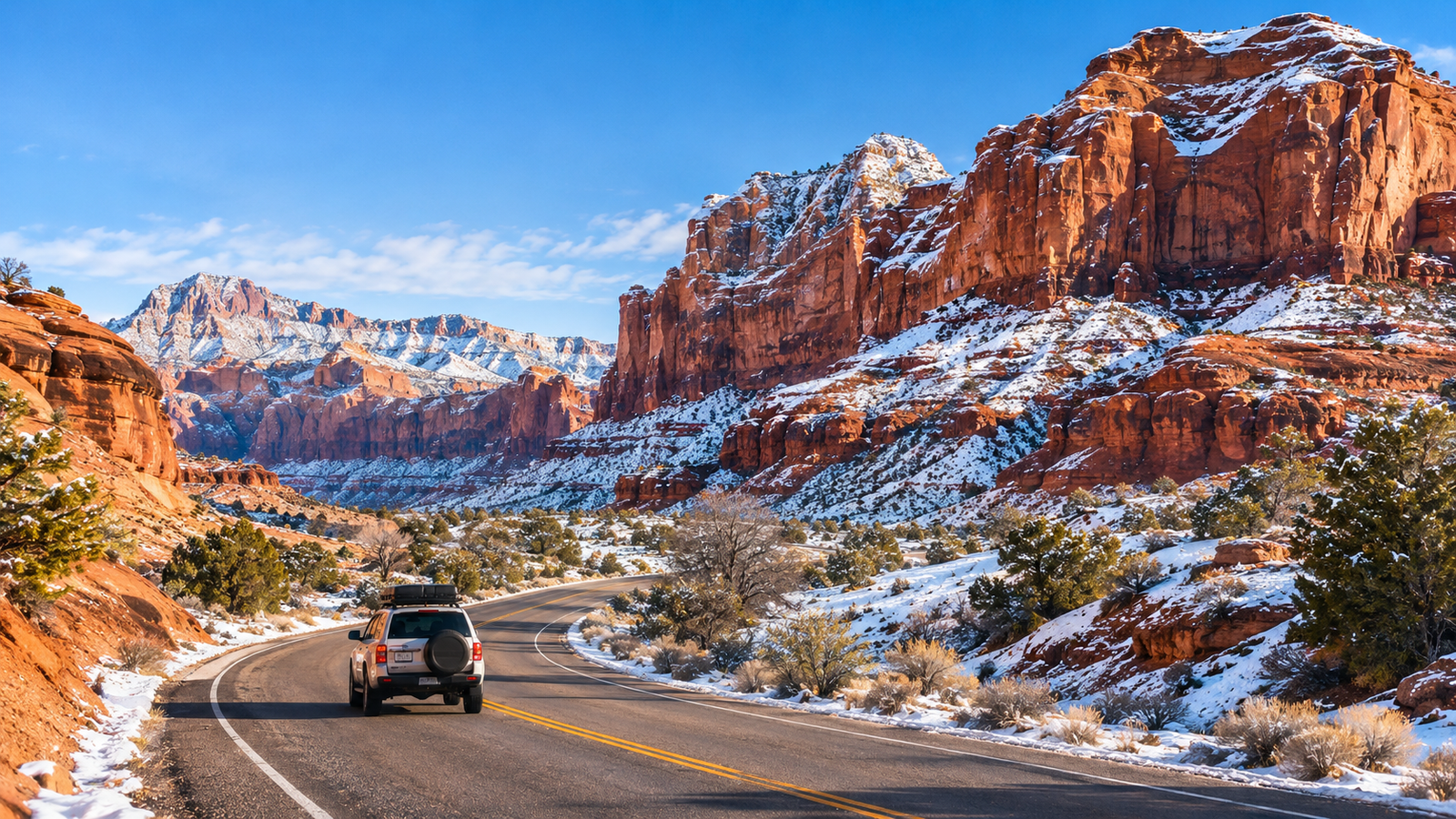
Southern Utah and northern Arizona contain landscapes that look computer-generated: arches, canyon walls striped in red and orange, mesas rising from desert floors, and night skies with more stars than many travellers have ever seen.
A 10 to 14 day loop starting in Salt Lake City or Las Vegas covers the Mighty Five national parks: Zion, Bryce Canyon, Capitol Reef, Arches, and Canyonlands, with optional add-ons at Monument Valley and Page. The standout drive is Utah’s Scenic Byway 12, a designated All-American Road that runs 124 miles and links Bryce Canyon, Grand Staircase-Escalante National Monument, and Capitol Reef.
Winter is a good time for this loop. The parks are much less crowded than in summer, the desert light is beautiful, and daytime temperatures are cool enough for hiking. Snow is possible at Bryce Canyon, which sits at high elevation, and some park roads and trails can close in a storm, so check park conditions before you go. Arches and several other parks may require timed-entry reservations during peak periods, so check in advance.
Distance: a full loop is 800 to 1,000 miles, depending on your start point.
Ideal length: 7 to 14 days.
Best for: national parks, hiking, and photography.
4. Phoenix to Page, Arizona — desert, canyons, and slot canyons
Phoenix to Page is less than 300 miles, but there are a few great stops between them, so plan two to three days.
Start in Phoenix, drive north through Sedona, with its red rock formations and hiking trails, then through Flagstaff, where winter temperatures are often in the 30s and 40s Fahrenheit. In Page, the two must-see sights are Antelope Canyon, a slot canyon famous for its light beams, and Horseshoe Bend, a bend in the Colorado River with a viewpoint a short walk from the parking lot.
Winter is a good time for this drive because summer in the Arizona desert is extremely hot. In winter, the desert is cool, the light is soft, and the crowds are smaller. Book Antelope Canyon tours in advance, as they sell out, and check road conditions in Flagstaff, where snow is common.
Distance: less than 300 miles.
Ideal length: 2 to 3 days.
Best for: desert landscapes, slot canyons, and a short winter road trip.
Snowy winter road trips
5. Denver to Glenwood Springs, Colorado — I-70 and Glenwood Canyon
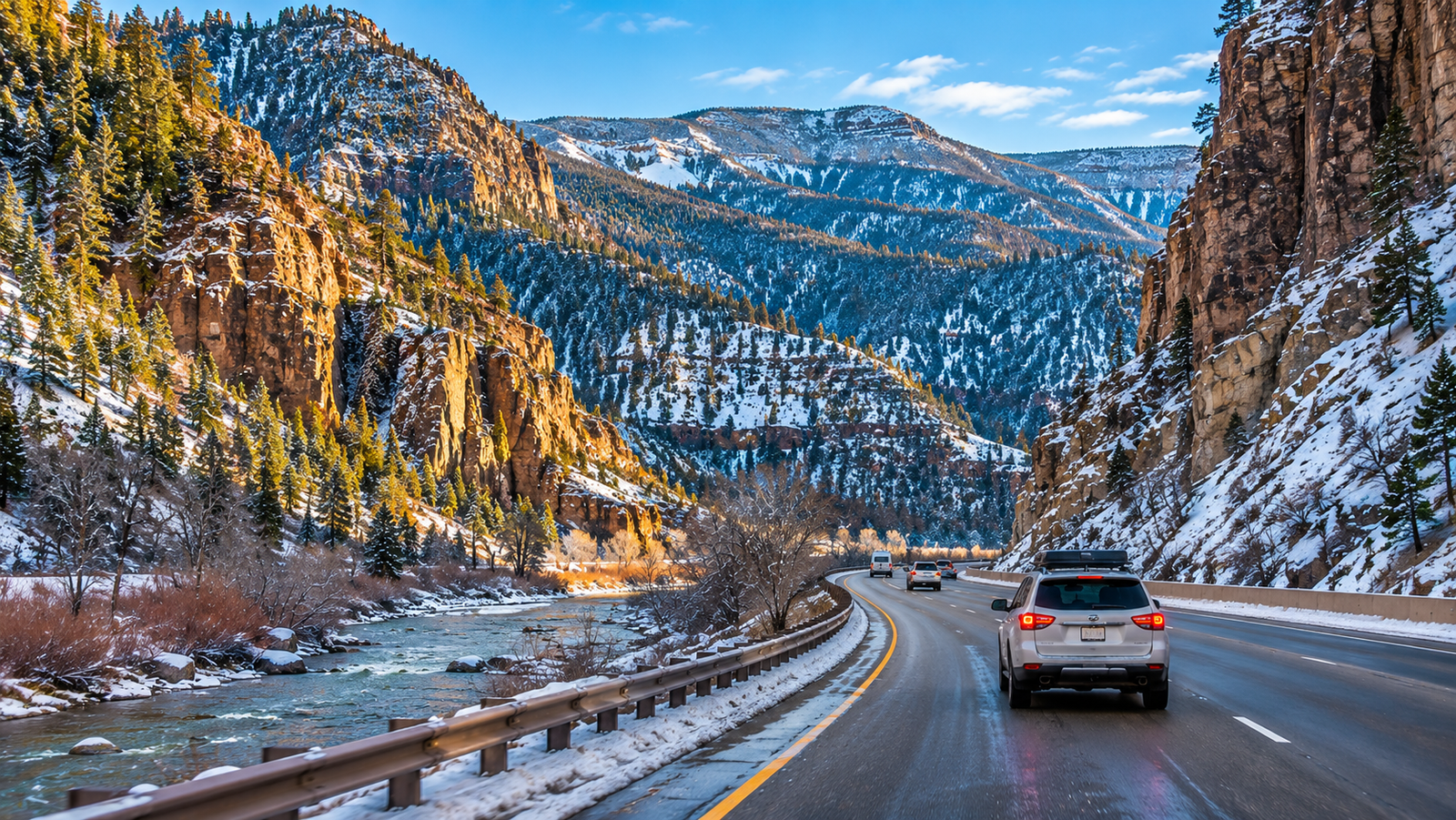
In the heart of the Rocky Mountains, you will find one of the most gorgeous road trips in winter in the US. The popular route connecting Denver to Glenwood Springs takes travellers on a magical journey on I-70, passing through mountain towns, ski resorts, and jaw-dropping scenery.
The 100-mile drive from Denver to Vail passes through Idaho Springs, Silverthorne, and Frisco, with ski resorts including Keystone, Breckenridge, Vail, and Beaver Creek along the way. The highlight is Glenwood Canyon, a 12.5-mile stretch of road that weaves through a canyon following the Colorado River.
During the winter months, this drive turns into a winter wonderland, which means it can also become very dangerous. Having the proper equipment and tires for your car is important, and the road is sometimes closed due to weather. Be flexible with your plans, check road conditions before you leave, and do not drive this route in a snowstorm.
In Glenwood Springs, visit the hot springs pools, which are especially good after a cold day on the road.
Distance: about 160 miles from Denver to Glenwood Springs.
Ideal length: 2 to 3 days.
Best for: skiing, hot springs, and a snowy mountain drive.
6. Vermont Route 100 — Stowe to Woodstock
Vermont’s Route 100 is a quintessential New England winter escape. This scenic byway takes you through rolling hills, covered bridges, and quaint towns that feel like a holiday postcard.
The 130-mile, three-day route from Stowe to Woodstock covers some of Vermont’s prettiest towns, mountain ranges, and iconic skiing destinations. Stop in Stowe for skiing and a village walk, in Warren and Waitsfield for small-town charm, and in Woodstock for a classic New England town centre.
Winter driving in Vermont requires care: roads can be icy, snow is common, and daylight is short. Drive slowly, keep your fuel tank full, and plan to be off the road by dark.
Distance: about 130 miles.
Ideal length: 3 days.
Best for: a classic New England Christmas, covered bridges, and small towns.
7. Oregon Coast, Highway 101 — Astoria to Brookings
The entire Oregon Coast route is on Highway 101, 364 miles from Astoria to Brookings, Oregon. Winter is the quiet season here, with storm watching, empty beaches, and dramatic waves.
This is an underrated winter road trip because most people think of the Oregon Coast in summer. In winter, you get the coast to yourself, with lower hotel rates and a wilder ocean. The trade-off is rain and wind, so pack waterproof clothing and plan for indoor stops, including lighthouses, aquariums, and coastal towns like Cannon Beach, Newport, and Bandon.
Distance: 364 miles.
Ideal length: 3 to 5 days.
Best for: storm watching, empty beaches, and a wild coast.
8. Route 66 — Albuquerque to Flagstaff
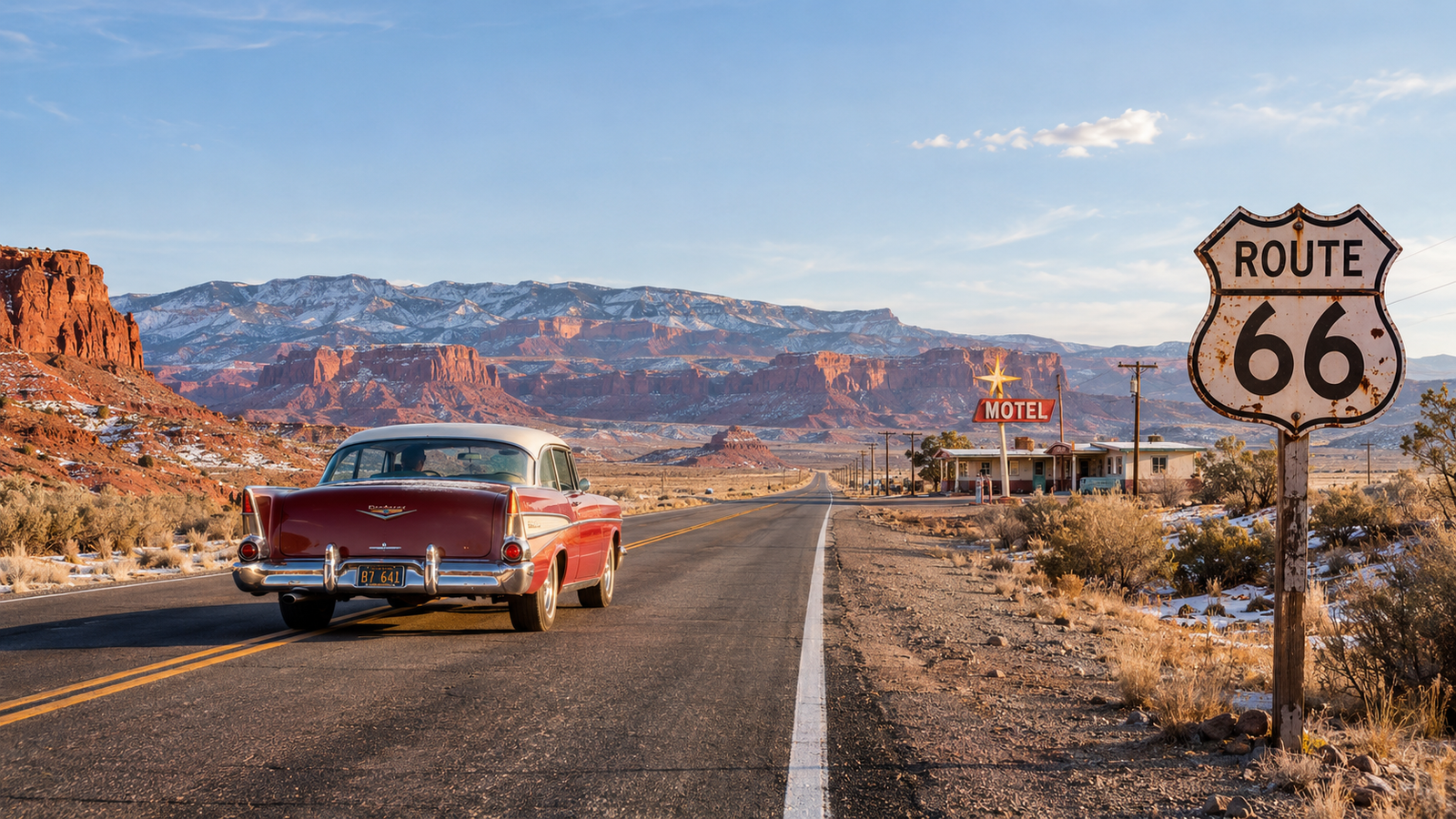
You could spend weeks driving the entire 2,400-mile Route 66 from Chicago to Los Angeles, but the section of high desert from Albuquerque, New Mexico, to Flagstaff, Arizona, is the part most people picture when they dream of the Mother Road.
In Albuquerque, stay in a historic motor lodge and explore the Old Town. Then drive west through Gallup and Winslow, Arizona, where you can visit the Meteor Crater, one of the best-preserved meteorite impact sites in the world. In Flagstaff, enjoy views of the Grand Canyon, and in winter, you can even ski at Arizona Snowbowl.
Winter in the high desert is cold, with snow possible in Flagstaff, so check conditions and pack warm layers. The desert light in winter is beautiful, and the crowds are much smaller than in summer.
Distance: about 320 miles from Albuquerque to Flagstaff.
Ideal length: 3 to 4 days.
Best for: Route 66 history, high desert, and the Grand Canyon.
Winter road trip planning: what to check before you go
Winter road trips work beautifully in the Deep South, Florida, Southern California, and the desert Southwest. They are genuinely dangerous on mountain passes, in the northern Rockies, and anywhere above 6,000 feet.
Before you commit to a route, check:
- Seasonal road closures: Going-to-the-Sun Road in Glacier National Park, Tioga Pass in Yosemite, and sections of the Blue Ridge Parkway are all closed for months each winter. Hurricane Helene damaged large parts of the North Carolina section of the Blue Ridge Parkway in September 2024. By September 2026 most of the Parkway had reopened, including the area around Blowing Rock, but sections between Linville Falls and the Mount Mitchell area were still closed for landslide repairs, with park officials targeting a full North Carolina reopening by the end of 2026. Check the National Park Service closure map before you commit to a through-drive.
- Weather and road conditions: check the state department of transportation website the morning you drive, and again at each stop. A road that was open in the morning can close by afternoon in a storm.
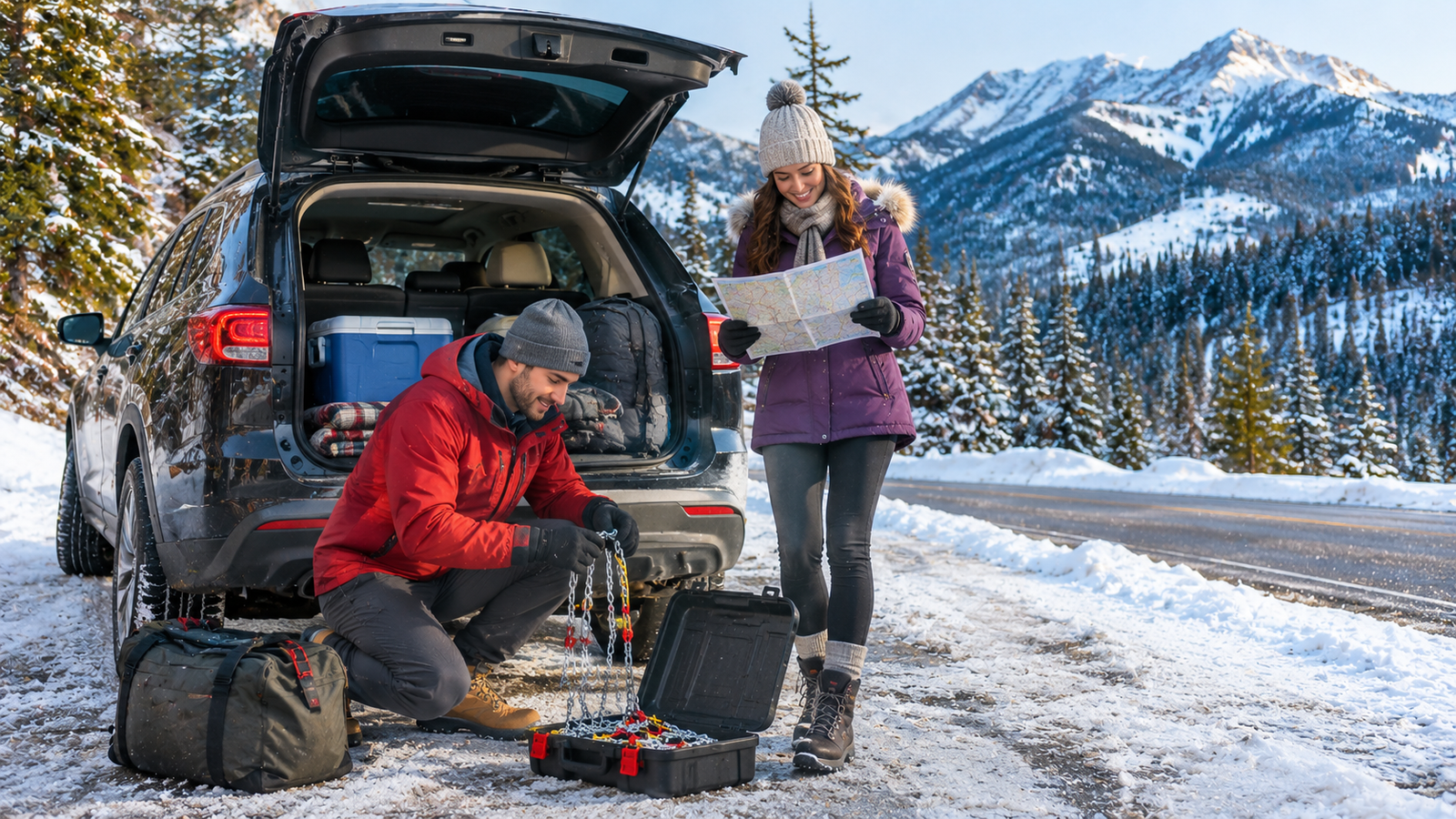
- Your car: winter tires or chains are often required on mountain roads in Colorado, California, and Oregon. Make sure your rental car allows winter driving, and that you know how to fit chains if you need them.
- Fuel and food: in remote areas, including Utah and the Oregon Coast, gas stations and restaurants can be far apart. Keep your fuel tank at least half full, and carry snacks and water.
- Daylight: winter days are short. Plan to arrive at your overnight stop before dark, especially on mountain roads.
What to pack for a winter road trip
Pack a winter survival kit, as recommended by the National Highway Traffic Safety Administration, and keep it in the car, not in the trunk under your luggage:
- Warm blankets, extra gloves, hats, and a winter coat for each person.
- A flashlight, extra batteries, and a portable phone charger.
- Food, water, and any medication you need.
- A small shovel, an ice scraper, and sand or cat litter for traction if you get stuck.
- Jumper cables and a first-aid kit.
- A paper map, in case you lose cell signal in a remote area.

Super Soft Cozy Luxury Bed Blanket
For the trip itself, pack layers, waterproof boots, sunscreen, and sunglasses. The sun is strong at altitude and on snow, even on a cloudy day.
How much does a winter road trip cost?
Costs vary widely by route, but a rough planning guide is:
- Rental car: $50 to $100 a day, more for an SUV or 4WD in winter.
- Gas: the national average in spring 2026 was about $3.50 to $3.90 per gallon, and prices vary by state. California and the Pacific Coast are more expensive than Arizona and New Mexico.
- Lodging: $100 to $200 a night for a mid-range hotel or motel, less in winter outside holiday weeks, more in ski towns and the Florida Keys at Christmas.
- Food: $50 to $100 a day for two people, depending on whether you cook or eat out.
- National park entry: $30 per vehicle for most parks, or $80 for an annual America the Beautiful pass, which covers all national parks for a year.
For a three-day Florida Keys trip for two people, plan on $1,000 to $1,500, excluding flights. For a week-long Utah loop, plan on $2,000 to $3,000, excluding flights. These are planning estimates, not guarantees, so check current prices before you book.
Frequently asked questions
What is the best winter road trip in the USA?
The Florida Keys Overseas Highway is the best winter road trip if you want warm weather and no snow. The Pacific Coast Highway is the best for ocean views, and the Utah Mighty Five Loop is the best for national parks.
Can I drive the Pacific Coast Highway in winter?
Yes, but check conditions before you go. Highway 1 through Big Sur has a history of closures, and winter storms can close it at short notice. Have a backup route via US-101, and check Caltrans the week you travel.
What is the best winter road trip for families?
The Florida Keys and the Pacific Coast Highway are the easiest for families, with warm weather, short drives between stops, and plenty of things to do. The Denver to Glenwood Springs drive is good for families who want skiing and hot springs.
Do I need a 4WD car for a winter road trip?
For warm routes like the Florida Keys and the Pacific Coast Highway, no. For snowy routes like Colorado, Vermont, and Utah in winter, a 4WD or AWD car with winter tires is strongly recommended, and chains may be required.
What roads are closed in winter in the USA?
Going-to-the-Sun Road in Glacier, Tioga Pass in Yosemite, and sections of the Blue Ridge Parkway are closed for months each winter. Many high mountain passes in Colorado, Wyoming, and Montana also close. Always check the official closure map for your route before you go.
Final thoughts
A winter road trip is not about covering the most miles. It is about choosing a route that fits the season, and giving yourself time to actually enjoy it.
If you want sun, drive the Florida Keys or the Pacific Coast Highway. If you want national parks without the crowds, drive the Utah Mighty Five Loop or Phoenix to Page. If you want snow, drive Denver to Glenwood Springs or Vermont Route 100, and be ready to slow down and wait out a storm.
Check the road before you go, pack a winter kit, and plan to arrive before dark. That is how a winter road trip becomes a great story, not a rescue story.