Mexico City is one of the great metropolises of the world and one of the most underestimated.
Visitors expecting a chaotic, difficult city usually arrive and find something completely different. Wide tree-lined boulevards in Condesa. World-class museums are free on Sundays. Street tacos that rival anything on a Michelin-starred menu. Aztec ruins sitting beneath a colonial-era cathedral in the historic center. A food scene that earned its first Michelin stars in 2024.
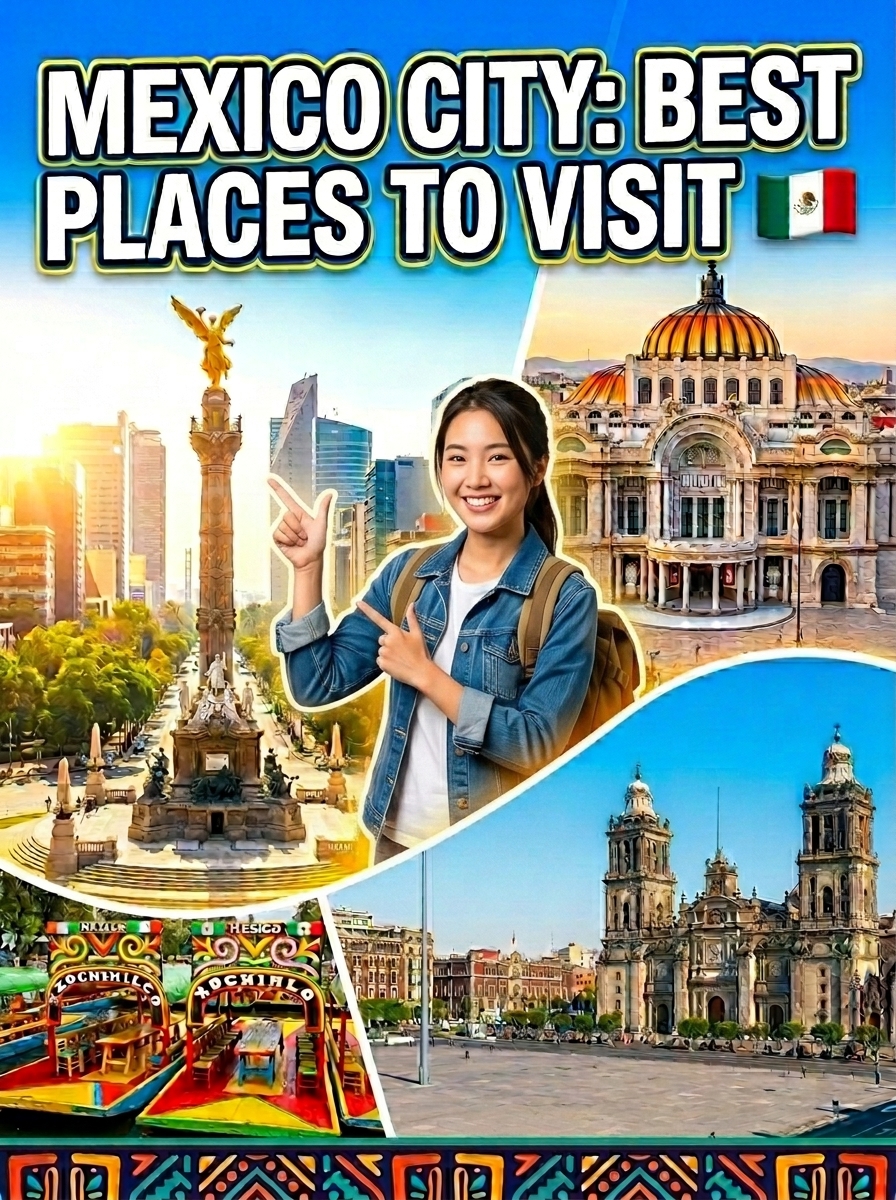
CDMX, as locals call it, rewards every type of traveller. This guide covers the best places to visit in Mexico City by neighbourhood and attraction, with honest practical advice that most guides leave out.
Quick Answer: Best Places to Visit in Mexico City
For a first visit, cover the Historic Centre (Zocalo and Templo Mayor), Chapultepec Park and the National Museum of Anthropology, Coyoacan for the Frida Kahlo Museum and local market, and spend time in Roma Norte or Condesa for food, cafes, and neighbourhood life.
Add Polanco for world-class dining and the free Soumaya Museum, and Xochimilco for the canal experience on a Saturday or Sunday.
One Thing to Know Before You Arrive
Mexico City sits at 2,240 metres above sea level. That is higher than most visitors realise.
The altitude affects many people in the first 24 to 48 hours. You may feel short of breath walking up stairs, get a headache sooner than expected, or feel more tired than the activity warrants. Drinking extra water from the moment you arrive helps significantly. Avoid alcohol on the first evening if you are sensitive to altitude. Take the first day a little slower than planned.
Once you acclimatise, usually within two days, you will barely notice it.
A good reusable water bottle makes staying hydrated easy across a full day of exploring. The Hydro Flask 32oz Wide Mouth Water Bottle (available on Amazon) keeps water cold all day in Mexico City’s warm climate, fits in any bag, and means you never need to buy single-use plastic bottles on the go.
Best Neighbourhoods to Explore
Roma Norte and Roma Sur
Roma Norte is the neighbourhood that most captures what makes Mexico City so exciting right now.
The streets are lined with Art Nouveau and Art Deco buildings, many converted into cafes, restaurants, natural wine bars, and independent bookshops. Parque Mexico and Parque Espana are both beautiful urban parks surrounded by restaurant terraces that fill up on weekend mornings with locals.
The food in Roma is extraordinary and priced fairly. Contramar, a seafood restaurant that has been open since 1998, is one of the most celebrated restaurants in the city. The tuna tostadas there are as good as the reputation suggests. Book in advance.
Roma is also where Condesa begins, and the two neighbourhoods blend into each other in a way that makes wandering between them one of the genuine pleasures of visiting CDMX.
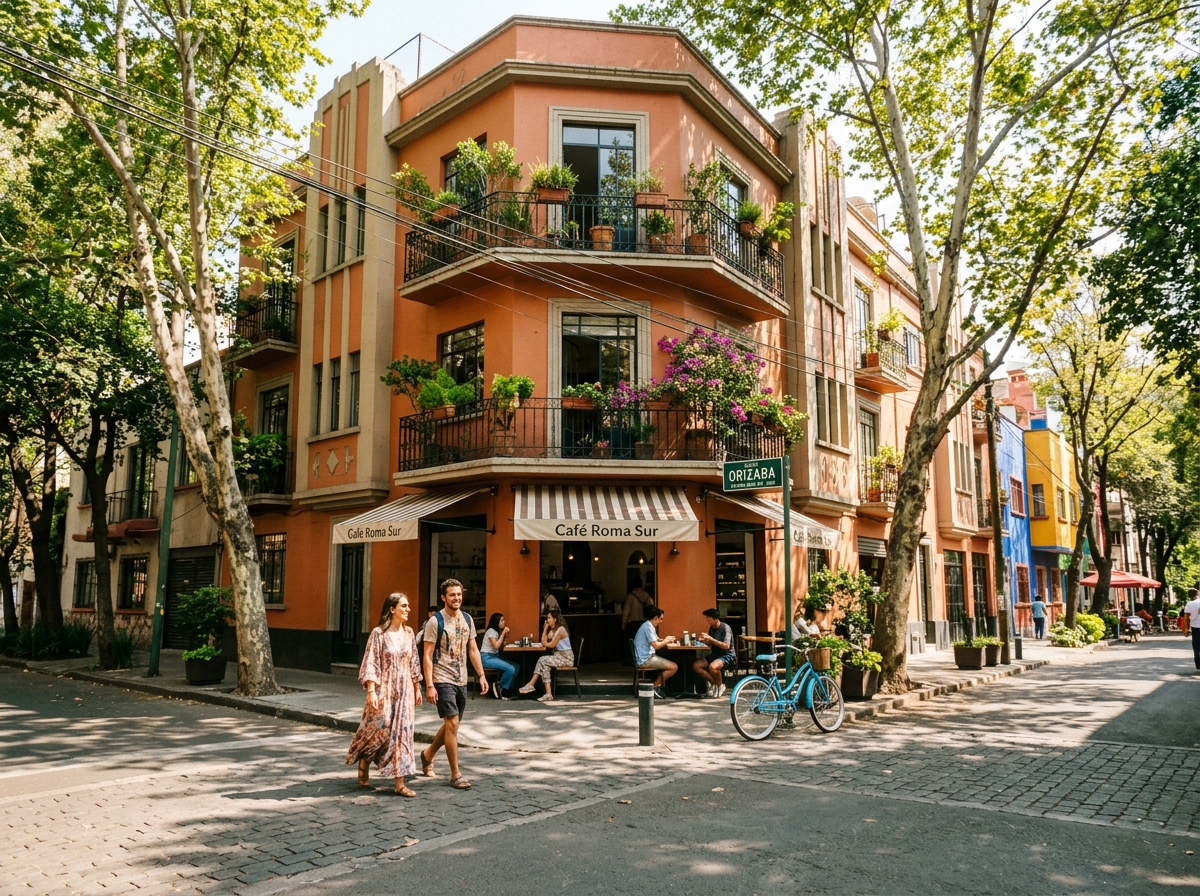
Best for: Foodies, cafe culture, independent travellers, couples, first-time visitors who want neighbourhood life alongside the major sights Stay here if: You want excellent restaurants, walkable streets, and a safe, lively base close to Chapultepec
Condesa
Condesa feels like a Mexico City village. The streets around Parque Mexico are shaded by enormous trees whose roots have pushed the pavement into gentle waves underfoot. Sidewalk cafes, independent restaurants, and brunch spots fill the streets on weekend mornings.
It is one of the safest neighbourhoods in the city and one of the most popular bases for visitors, particularly those staying for a week or more. The Uber ride to Polanco, Coyoacan, or the Historic Centre is cheap and straightforward.
Best for: Longer stays, families, those wanting a relaxed base with great food access Local tip: Pulqueria Los Insurgentes on Calle Insurgentes is one of the best pulque bars in the city. Pulque is a fermented agave drink that predates tequila by centuries. Try the natural or a flavoured version.
Polanco
Polanco is Mexico City’s most upscale neighbourhood. The streets around Presidente Masaryk Avenue have flagship restaurants, designer stores, and the kind of polished calm that only money can buy. It is home to two of the best restaurants in Latin America, Quintonil and Pujol, both of which require reservations made weeks or months in advance.
But Polanco is not only for luxury spenders. The Soumaya Museum, housed in a striking silver cloud-shaped building designed by Fernando Romero, has free entry and holds 66,000 pieces of art spanning centuries. It is one of the most significant private collections in the Americas.
Chapultepec Park borders Polanco to the south, making the two easy to combine in a single morning.
Best for: Fine dining, museum lovers, upscale shopping, anyone wanting to see a different face of Mexico City Reservation note: For Pujol or Quintonil, book the moment you know your travel dates. These restaurants are booked out weeks ahead.
Coyoacan
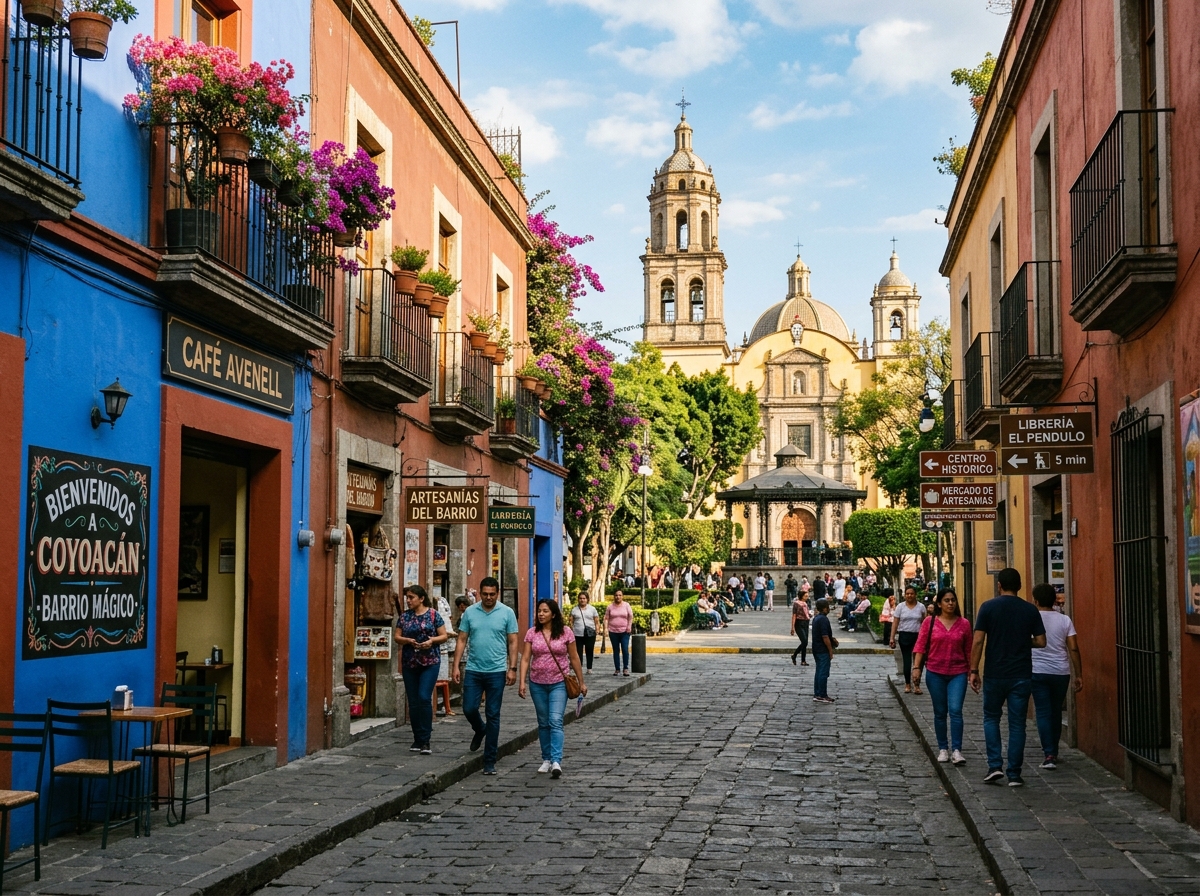
Coyoacán is the neighbourhood most visitors put at the top of their list, and for good reason.
It is quieter and more residential than Roma or Condesa, with colonial streets, beautiful plazas, and a market that has been running for generations. The Jardin Centenario and Jardin Hidalgo are lovely squares for an afternoon coffee or ice cream. On weekends, the surrounding streets fill with artisan stalls, live music, and food vendors.
The Frida Kahlo Museum, La Casa Azul, is in Coyoacan and is the most visited museum in Mexico City. The house where Kahlo was born, lived most of her life, and died is extraordinarily intimate. Her personal belongings, wheelchair, and art materials are still in place.
Book Frida Kahlo Museum tickets well in advance. This is not optional. Tickets sell out days and sometimes weeks ahead, especially on weekends and during school holidays. Buy directly from the official website. GypsySols, one of the competitor articles, admits in their own text that they arrived without tickets and found it sold out. Do not make the same mistake.
Best for: History, culture, markets, street food, the Frida Kahlo Museum Getting there: Uber from Roma or Condesa takes around 20 minutes. Metro Line 3 to Coyoacan station is a cheap alternative.
The Historic Centre (Centro Historico)
The Historic Centre is built on the ruins of Tenochtitlan, the Aztec capital that Spanish conquistadors demolished and rebuilt as Mexico City in the 16th century. Walking through the Zocalo, one of the largest public squares in the world, while knowing that Aztec temples lie beneath the cobblestones, is one of those genuinely extraordinary travel moments.
Templo Mayor is the excavated remains of the main Aztec temple complex, discovered in 1978 when workers laying electrical cables broke through the roof of a buried chamber. The on-site museum holds the extraordinary finds including the massive Coyolxauhqui Stone. Entry costs around 90 pesos.
The Metropolitan Cathedral next to the Zocalo is the largest cathedral in the Americas and has been sinking slowly into the soft lakebed under the city since it was built in the 16th century. The interior is layered with baroque altars, chapels, and colonial art.
Best for: History, architecture, Aztec heritage, street food Safety note: The Historic Centre is safe during daylight hours in the main tourist areas. Like any major city centre globally, awareness of your surroundings and avoiding poorly-lit side streets at night is sensible.
Best Museums in Mexico City
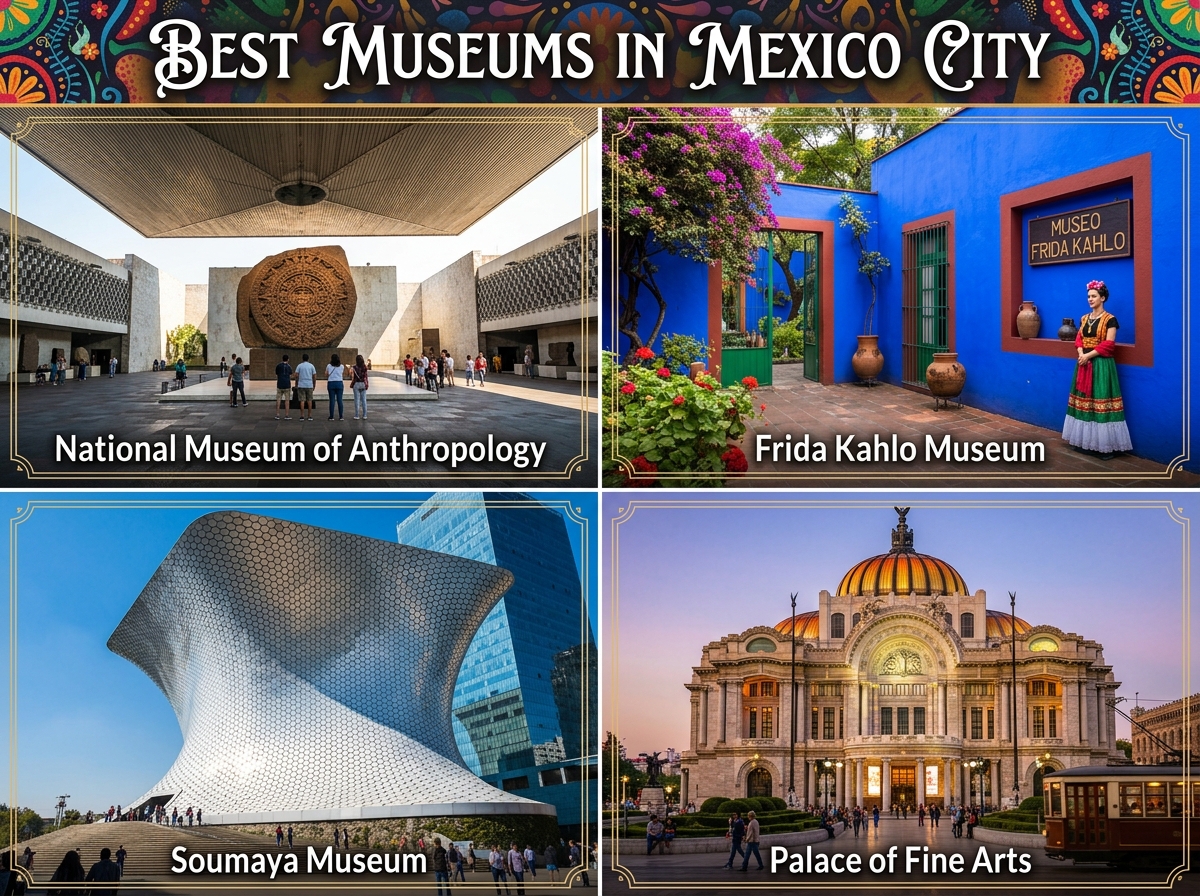
National Museum of Anthropology (Museo Nacional de Antropologia)
This is one of the greatest museums in the world. Not in Latin America. In the world.
The collection covers Mexico’s pre-Hispanic cultures in extraordinary depth, from the Olmec civilisation through the Maya, Zapotec, Toltec, and Aztec periods. The centrepiece of the Aztec hall is the Sunstone, often called the Aztec Calendar, a 24-tonne carved basalt disc that is one of the most iconic objects in Mexican history.
The museum sits inside Chapultepec Park and takes a full morning or afternoon to do properly. Entry is free for Mexican citizens on Sundays and costs around 90 pesos for international visitors.
Do not try to rush this museum. Pick two or three halls that interest you most and spend real time with them. Trying to see everything in two hours means seeing nothing properly.
Frida Kahlo Museum (La Casa Azul)
Already mentioned under Coyoacan, but worth emphasising: this is not just a museum about an artist. It is one of the most intimate museum experiences anywhere. You walk through the rooms where she painted, ate, and argued with Diego Rivera. Her corsets, decorated with her own painted motifs, are in glass cases. The gardens are extraordinary.
Book tickets online well in advance at museofridakahlo.org.mx.
Soumaya Museum
Free entry. A 66,000-piece collection in a visually extraordinary building. Works by Rivera, Tamayo, Matisse, Rodin, and Dali are all here. There is no reason to skip this museum.
The building itself, covered in 16,000 aluminium hexagonal tiles, is one of the most photographed structures in the city.
Location: Polanco. Miguel de Cervantes Saavedra 303.
Palace of Fine Arts (Palacio de Bellas Artes)
The Palacio de Bellas Artes is a marble and tile Art Nouveau building housing murals by Diego Rivera, Jose Clemente Orozco, and David Alfaro Siqueiros on its upper floors. The murals include Rivera’s famous Man at the Crossroads, a recreation of the Rockefeller Center mural that Nelson Rockefeller had destroyed in 1934.
The building is also Mexico’s premier venue for dance, opera, and classical music. If a Ballet Folklorico de Mexico performance is running during your visit, it is worth attending.
Location: Historic Centre. Eje Central Lazaro Cardenas, facing the Alameda Central park.
For a full day of museum-hopping across different neighbourhoods, a lightweight anti-theft crossbody bag keeps your belongings secure on public transport and in crowded museum spaces. The Pacsafe Metrosafe LS100 Anti-Theft Crossbody Bag (available on Amazon) has slash-resistant straps, locking zips, and RFID-blocking pockets. It is compact enough for a full day out and sits flat against the body.
Best Day Trip from Mexico City: Teotihuacan
Teotihuacan is 50 kilometres northeast of Mexico City and is one of the most significant archaeological sites in the Americas. The Pyramid of the Sun is the third-largest pyramid in the world. The Pyramid of the Moon sits at the northern end of the Avenue of the Dead. The site covers 83 square kilometres and the scale only becomes clear once you are standing on top of the pyramids looking down.
Getting there: Tours from Mexico City typically take 3 to 4 hours round trip plus time on site. Direct buses from Terminal Central del Norte also run regularly and cost around 50 pesos each way.
Practical tips: Arrive as early as possible, ideally by 9am. The midday heat is intense and there is almost no shade on the main pyramids. Bring at least 2 litres of water per person. Entry costs around 90 pesos. The small site museum is excellent and most visitors skip it.
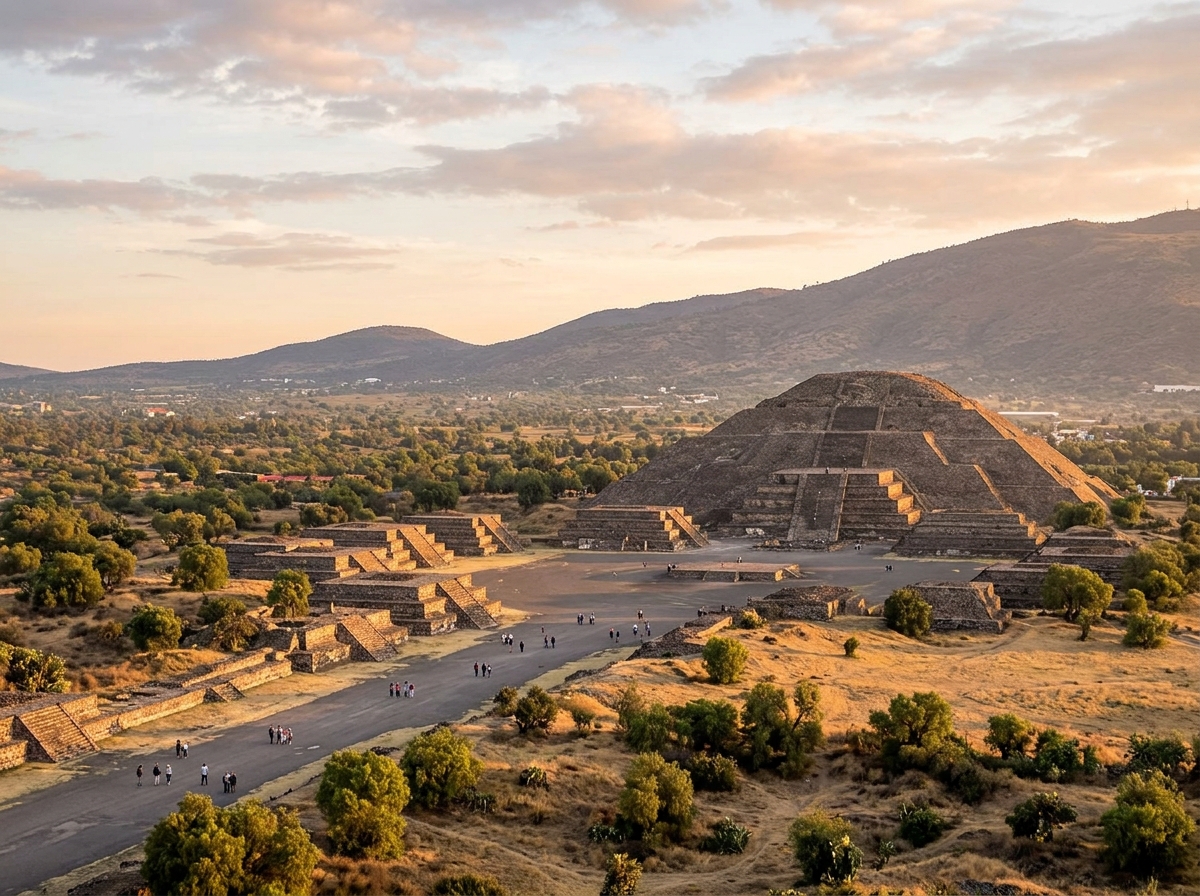
The hot air balloon rides over Teotihuacan at sunrise, operated by several companies from the nearby town of San Juan Teotihuacan, are one of the most extraordinary experiences available from Mexico City. Book at least a week ahead for weekends.
Xochimilco: The Floating Gardens
Xochimilco is the canal system built by the Aztecs as a network of agricultural islands and waterways, most of which survived the draining of the valley’s lakes by Spanish colonisers. Taking a trajinera (a flat-bottomed colourful wooden boat) through the canals on a Saturday or Sunday afternoon is one of the most distinctly Mexican City experiences you can have.
Mariachi boats pull alongside. Food and drink vendors paddle up to sell elotes (grilled corn), tacos, and beer from their boats. Families, friend groups, and tourists all mix in a genuinely festive atmosphere that has nothing performative about it.
Practical tip: Go on a weekend when the atmosphere is at its most alive. Weekdays are much quieter. Hire the whole boat (costs around 500 to 600 pesos per hour) rather than sharing with strangers. The Nativitas and Fernando Celada embarcaderos are the main departure points.
Getting there: Metro Line 2 to Tasquena, then Tren Ligero (light rail) to Xochimilco station.
Food in Mexico City: What to Eat and Where
Mexico City earned its first Michelin recommendations in 2024, with 12 stars awarded across the city including two stars each for Quintonil and Pujol. But the best meals in CDMX are not all at starred restaurants.
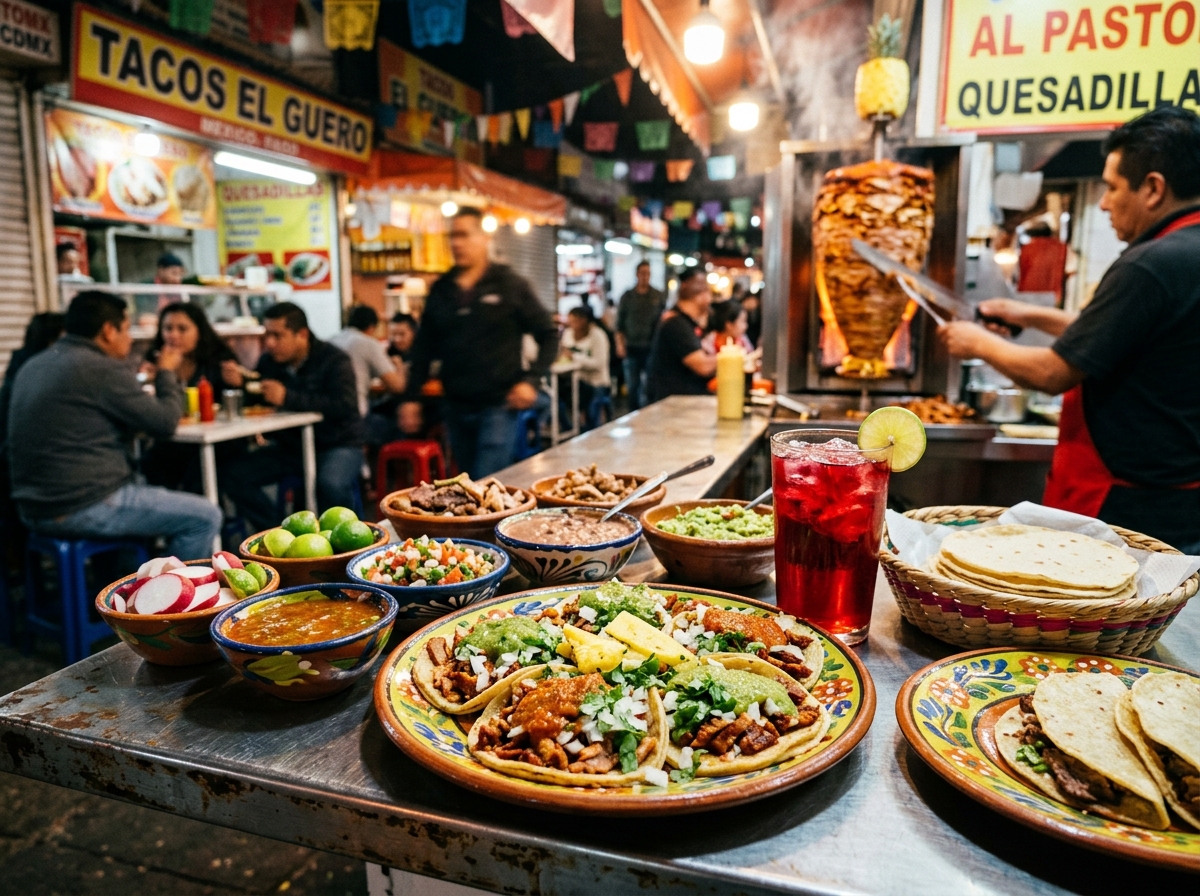
Street tacos: The best tacos in Mexico City are served from small stands, especially taco de canasta (basket tacos) and tacos al pastor carved from a vertical spit. El Huequito in the Historic Centre has been operating since 1959 and is one of the best al pastor tacos in the city.
Mercado de Medellín: A covered market in Roma Sur with excellent food stalls, fresh produce, and a genuine local atmosphere. The seafood tostadas and pozole (a hominy soup with meat) are both excellent here.
Sunday brunch culture: Mexico City takes Sunday brunch seriously. Restaurants in Roma, Condesa, and Polanco fill up by noon with locals. Arriving before 12:30pm avoids the main queue.
Mezcal: Mexico City’s bar scene has embraced mezcal, the smoky agave spirit of which tequila is a subset. La Clandestina in Condesa and Bósforo in the Historic Centre are both excellent mezcalerias with knowledgeable staff.
What not to eat: Avoid eating raw vegetables or fruit that has been washed in tap water. The general rule for visitors is fruit you peel yourself, bottled water always, and cooked food from clean-looking stalls over raw preparations from unknown sources.
Practical Tips for Visiting Mexico City
Getting around: Uber is cheap, reliable, and the easiest option for most trips between neighbourhoods. The metro is extremely affordable (5 pesos per journey) and covers the city well but can be very crowded during rush hours. Walking is excellent in Roma, Condesa, and Polanco. Avoid walking with visible jewellery or expensive electronics in less tourist-dense areas.
Safety: Mexico City has a reputation that does not match the reality for visitors who stick to the main tourist neighbourhoods. Roma, Condesa, Polanco, Coyoacan, and the Historic Centre tourist areas are all considered safe by residents and long-term visitors. Use Uber rather than hailing taxis from the street. Keep bags in front of you in crowded areas.
Currency: The Mexican peso is the currency. ATMs at banks (Banamex, BBVA, Santander) are reliable. Avoid standalone ATMs on the street. Most restaurants and shops in Roma and Polanco accept cards. Markets and street food are cash only.
Best time to visit: October through May is dry season and generally the best time to visit. June through September brings afternoon rain showers, usually brief but heavy. November through February is cool at night (around 8 to 14 degrees Celsius) and warm in the day (22 to 25 degrees Celsius). March and April are warm and dry but can be hazy.
Language: Spanish is the language of Mexico City. English is widely spoken in hotels, upscale restaurants, and tourist areas. A few basic Spanish phrases go a long way in markets and local restaurants.
For anyone spending multiple days across Mexico City’s different neighbourhoods, a compact, comfortable daypack that handles museum visits, market browsing, and Uber rides without bulk is the right choice. The Osprey Daylite 13L Backpack (available on Amazon) is one of the lightest and most popular travel daypacks available, holds exactly what you need for a full day out, and packs flat when not in use.
Best Places in Mexico City by Traveller Type
First-time visitors: Historic Centre, National Museum of Anthropology, Frida Kahlo Museum in Coyoacan, dinner in Roma Norte, afternoon in Condesa.
Food lovers: Contramar in Roma, Quintonil or Pujol in Polanco (book ahead), tacos al pastor at El Huequito, Mercado de Medellín, mezcal at La Clandestina.
History and culture: Templo Mayor, National Museum of Anthropology, Palace of Fine Arts murals, Teotihuacan day trip.
Art lovers: Soumaya Museum (free), Frida Kahlo Museum, Palace of Fine Arts, Museo Jumex in Polanco.
Families: Chapultepec Park (zoo, lakes, Anthropology Museum), Xochimilco boat ride on weekends, Papalote Children’s Museum.
Budget travellers: Free museum Sundays, street tacos, the metro for transport, Coyoacan market, Parque Mexico for an afternoon.
Quick Reference Table
| Place | Neighbourhood | Cost | Book Ahead? |
|---|---|---|---|
| Frida Kahlo Museum | Coyoacan | 270 pesos | Yes, essential |
| National Museum of Anthropology | Chapultepec | 90 pesos | No |
| Soumaya Museum | Polanco | Free | No |
| Templo Mayor | Historic Centre | 90 pesos | No |
| Palace of Fine Arts | Historic Centre | 90 pesos | No |
| Teotihuacan | Day trip | 90 pesos entry | Tour recommended |
| Xochimilco | South CDMX | 500 to 600 pesos/boat/hr | No |
| Pujol/Quintonil | Polanco | MXN 2,000 to 3,500 pp | Yes, weeks ahead |
Frequently Asked Questions
Is Mexico City safe for tourists?
Yes, in the main tourist neighbourhoods. Roma, Condesa, Polanco, Coyoacan, and the Historic Centre tourist areas are all considered safe. Use Uber rather than street taxis, keep bags in front of you in crowded spaces, and avoid displaying expensive items in less tourist-dense areas. These are normal big-city precautions.
How many days do you need in Mexico City?
Four to five days covers the major highlights without rushing. A week gives you time to do a day trip to Teotihuacan, explore Xochimilco, and eat your way through multiple neighbourhoods. Most visitors wish they had stayed longer.
What is the best neighbourhood to stay in Mexico City?
Roma Norte or Condesa for most visitors. Both are safe, walkable, have excellent restaurants, and are well-connected by Uber to the rest of the city. Polanco is the right choice for luxury stays.
When is the best time to visit Mexico City?
October through May is dry season and the most reliable weather. November through February is cool and comfortable. March and April are warm. June through September brings afternoon rain but is still a good time to visit.
Do I need to tip in Mexico City?
Yes. Tipping is standard in Mexico City. The norm is 10 to 15 percent at sit-down restaurants. Tipping hotel staff, tour guides, and Uber drivers for good service is appreciated.
What should I eat in Mexico City?
Tacos al pastor, tamales, tlayudas, pozole, churros with chocolate, elotes, and fresh fruit with chilli and lime from street vendors. For a sit-down meal, Contramar for seafood, El Huequito for al pastor, and any busy-looking local restaurant in Roma or Condesa for an honest menu del dia lunch.
Is altitude sickness a problem in Mexico City?
For some visitors, yes. The city sits at 2,240 metres above sea level. Drink extra water, take the first day slowly, and avoid heavy alcohol on the first evening. Most people feel fine within 48 hours.
Final Thoughts
Mexico City changes people’s expectations about what a city can be. It is genuinely one of the most culturally rich, gastronomically exciting, and visually fascinating cities in the world. The combination of Aztec history, Spanish colonial architecture, mid-century design, and contemporary food culture exists nowhere else on Earth in quite the same way.
Give it more days than you think you need. Eat street tacos before you eat at a restaurant. Walk the neighborhood streets in the early morning before the day heats up. And book the Frida Kahlo Museum before you book your flights.