The Eiffel Tower is not just a monument. It is the symbol of Paris. It draws over six million visitors every year. For many travelers, it is the first thing they picture when they dream of France.
But dreaming about the tower and actually visiting it are two different experiences. Without planning, your visit can mean long lines, pushy scammers, and a rushed photo at the top. With planning, it becomes one of the best memories of your trip.
This guide covers everything. It tells you which ticket to buy. It walks you through security. It shows you where to stand for photos. It warns you about scams. And it helps you enjoy the area around the tower like a local.
Should You Go Up or Just Admire From Below
This is the first question to answer. Not everyone needs to go up.
Go up if: It is your first time in Paris. You want to see the city from above. You are traveling with children who will remember it. You have a timed ticket booked in advance.
Skip the climb if: You are afraid of heights. You have very limited time in Paris. You prefer seeing the tower in photos and skyline views. You are visiting during peak summer without a ticket.
You can have a wonderful Eiffel Tower experience without going up. The Champ de Mars gardens are free. The Trocadero views are free. The tower looks more beautiful from across the river than it does from inside.
If you do go up, you need to choose your ticket type.
Tickets: Which Type to Buy
The Eiffel Tower has three public levels. The first floor sits at 57 meters. The second floor sits at 116 meters. The summit sits at 276 meters.
Stairs to the second floor: This is the cheapest option. It costs less than the elevator. The line is usually shorter. You climb 674 steps. The climb takes about 15 to 20 minutes for most people. You see the iron structure up close. You can take the elevator from the second floor to the summit if you buy that add on.
Elevator to the second floor: This is the standard option. It costs more than the stairs. The line is longer. But you avoid the climb. The view from the second floor is spectacular. You can see all the major landmarks clearly.
Elevator to the summit: This ticket takes you all the way to the top. It includes the second floor stop. The summit has Gustave Eiffel’s private apartment, a champagne bar, and the highest views. It costs the most. The elevator from the second floor to the summit can have long waits.
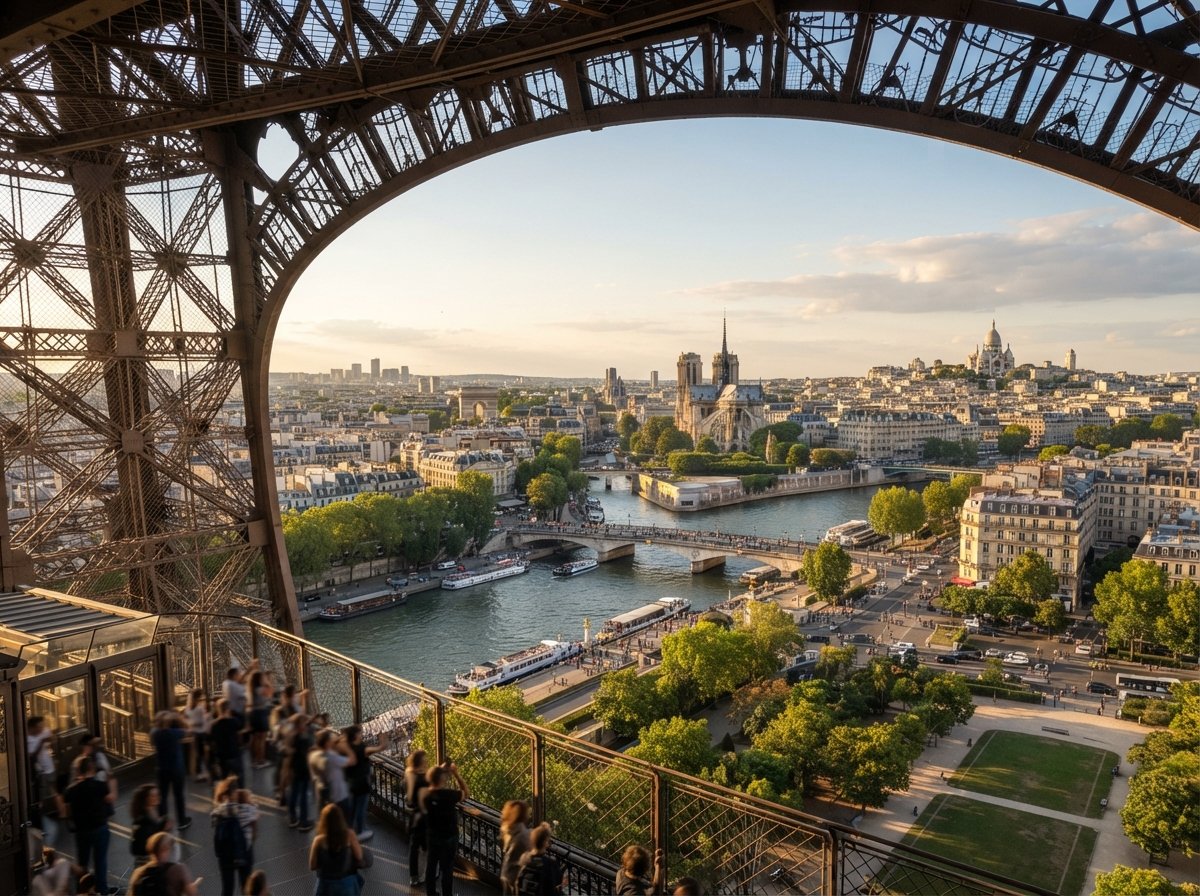
My advice: If you are fit and want to save money, take the stairs to the second floor. The view from the second floor is actually better for photography than the summit because you are closer to the buildings. If you want to say you reached the top, buy the summit ticket. But know that the summit is crowded and windy, and the extra cost is mostly for the bragging rights.
Book tickets on the official Eiffel Tower website. They go on sale 60 days in advance for elevators and 30 days in advance for stairs. Summer tickets sell out fast. Book as soon as possible.
The Security Process: What Actually Happens
Every visitor goes through two security checks. This surprises first-timers who think they just walk up to the tower.
First check: This happens at the edge of the site, near the corners of the Champ de Mars. You will see metal detectors and bag scanners. This line can be long. If you have a ticket, look for the green kiosks marked visitors with tickets. This line moves faster than the line for people buying tickets on site.
Second check: This happens before you enter the pillar to take the elevator or stairs. It is a quicker check. Staff scan your ticket and do a brief bag inspection.
What you cannot bring: Large luggage, non folding strollers, scooters, bicycles, weapons, glass bottles, and alcohol. There are no luggage lockers at the tower. Store your bags at your hotel or at a train station locker before you come.
What to expect: The process feels like airport security but outdoors. Have your ticket ready on your phone. Increase your screen brightness. The scanners sometimes have trouble reading phones in bright sunlight. Wear shoes that are easy to walk in. You will stand in line for 15 to 30 minutes even with a ticket.
Best Times to Visit
By season: January, February, November, and early December are the quietest months. You can often find tickets closer to your visit date. The weather is cold but the lines are short.
March, April, May, September, and October are medium crowd months. The weather is pleasant. Book two to four weeks ahead.
June, July, and August are maximum crowds. The tower feels packed. Book two months ahead. If you visit in summer, go at opening time or after 5 PM.
By day: Tuesdays, Wednesdays, and Thursdays are usually less busy than weekends. Saturdays are the busiest day of the week.
By hour: The best times are 9:00 AM at opening or after 7:00 PM in the evening. The light is better for photos in the morning. The city lights are beautiful after dark. Midday from 11:00 AM to 4:00 PM is the most crowded and has the harshest sunlight.
The sunset strategy: Book a ticket about 90 minutes before sunset. You get daylight views, golden hour light, and the city turning on its lights. In winter, this means booking around 4:00 PM. In summer, around 8:00 PM or 9:00 PM.
The Three Levels: What to Expect
First floor: Many visitors skip this floor. That is a mistake. The first floor has a glass floor section that lets you look straight down to the ground. It has exhibits about the tower history. It has Madame Brasserie restaurant. It has gift shops. The views are good and the crowds are smaller than upstairs.
Second floor: This is the sweet spot. The view is clear. You can spot Notre Dame, Sacre Coeur, the Arc de Triomphe, and the Seine. There are snack bars and a macaron shop. The outdoor deck wraps around the tower. This is where most people spend the most time.
Summit: The top is small. It gets crowded quickly. The views stretch farther but the landmarks look smaller. The champagne bar serves glasses for about 15 euros. Gustave Eiffel office is recreated here. The outdoor deck is fenced in tightly. If you are afraid of heights, this level feels intense.
The Stairs: Who Should Climb
Climbing the stairs is an experience in itself. You are inside the iron lattice. You feel the tower breathe. You see the rivets and beams up close.
The climb from the ground to the first floor is about 347 steps. From the first floor to the second floor is another 327 steps. The total is 674 steps.
Most people take 15 to 25 minutes to reach the second floor. Young children can do it. Older adults in good health can do it. People with knee problems or heart conditions should not.
The stairwell is narrow but safe. It is not open to the sky. You cannot fall out. But you can see through the gaps in the structure. If you have vertigo, the stairs might bother you more than the elevator.
On the way down, taking the stairs is often faster than waiting for the elevator. The descent is easier on your legs than you expect.
Photo Spots: Inside, Outside, and Secret Angles
Everyone wants the perfect Eiffel Tower photo. Here is where to get it.
From the tower itself: The second floor offers the best photography. You are close enough to landmarks that they show up clearly in phone photos. The summit is too high for detail shots.
Trocadero: This is the classic viewpoint. Cross the Pont d’Iena bridge to the Esplanade du Trocadero. The terrace gives you a straight on view with the tower centered. Arrive at 8:00 AM for empty terraces. The light faces the tower in the morning.
Champ de Mars: The long gardens leading up to the tower offer great perspective shots. Lie on the grass and shoot upward. The gardens are free and open to the public.
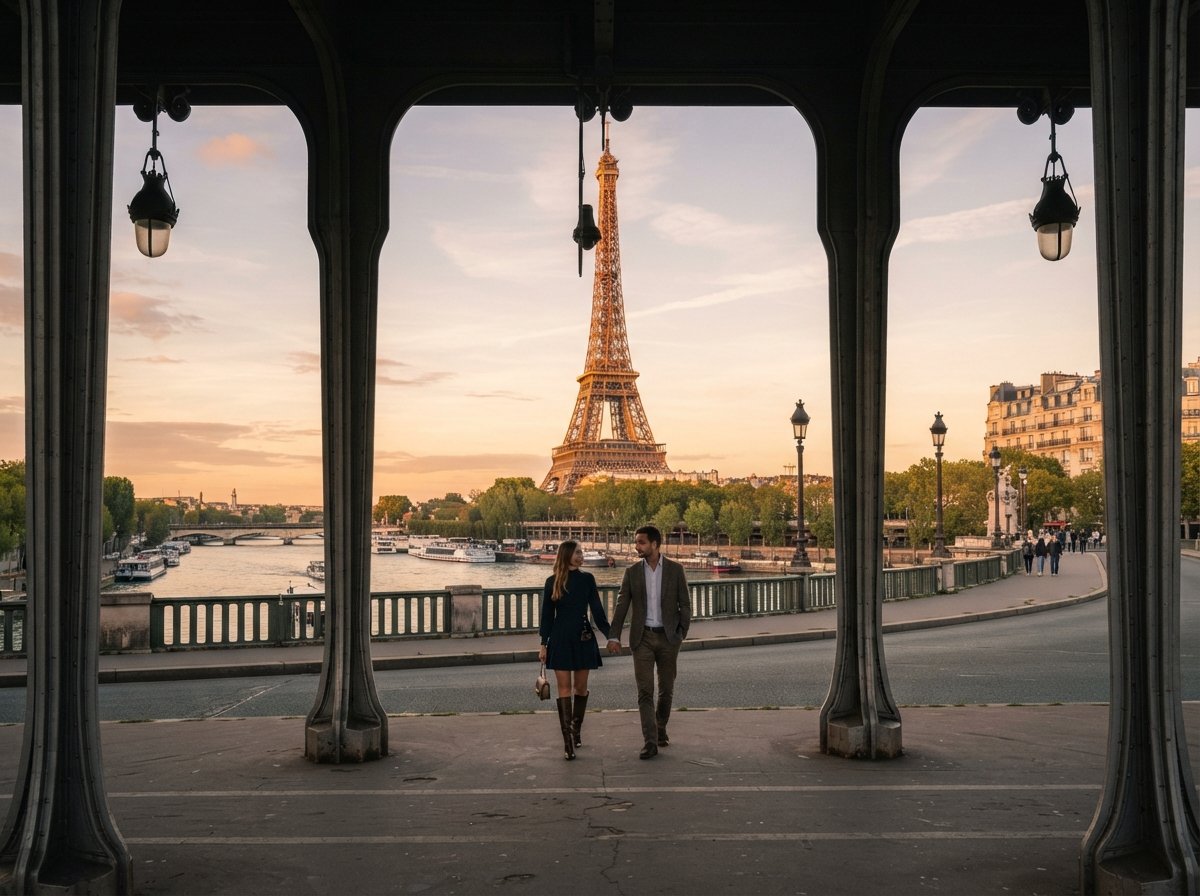
Bir-Hakeim Bridge: This art deco bridge offers a unique angle with the Seine in the foreground. It is a five-minute walk from the tower. It is popular with photographers but less crowded than Trocadero.
Rue de l’Universite: This street ends with the tower framed between Parisian buildings. It is a five minute walk from the tower. It offers that classic Parisian street photo with the iron lady peeking through.
The carousel at the bottom: The vintage carousel near the Pont d’Iena has the tower rising behind it. It is charming and playful. It works well for family photos.
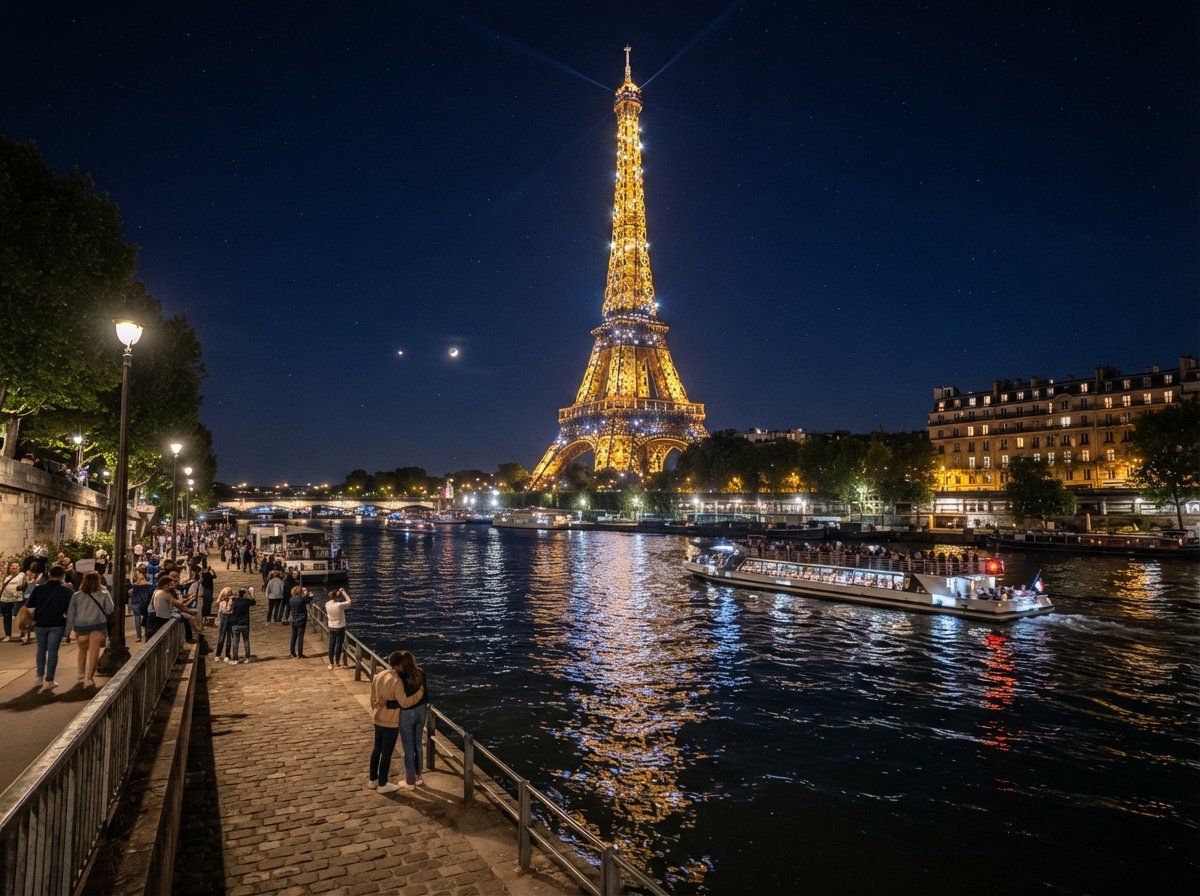
At night: The tower lights up at sunset. Every hour after dark, it sparkles for five minutes. The sparkle show happens at 8:00 PM, 9:00 PM, 10:00 PM, 11:00 PM, and midnight. The 1:00 AM show is longer and more spectacular. The best place to watch the sparkle is from the Champ de Mars or Trocadero. Bring a small phone tripod for steady night shots. The UBeesize flexible phone tripod wraps around railings and fits in a pocket. It keeps your phone steady for sharp sparkle photos.

UBeesize Phone Tripod
The Eiffel Tower at Night
The tower changes personality after dark. The golden lighting makes it glow against the Paris sky.
The sparkle show is the main event. It lasts exactly five minutes. It uses 20,000 light bulbs. It is visible from 80 kilometers away on a clear night.
If you are on the tower during the sparkle, you cannot see it. The lights are on the outside. You only see the glow. To experience the sparkle, you need to be on the ground.
The tower closes at 11:45 PM most of the year. In summer, it stays open until 12:45 AM. The last entry is one hour before closing.
Night visits are magical but colder than you expect. Even in August, the wind at the second floor can feel chilly. Bring a light jacket or wrap.
Where to Eat: From Picnics to Fine Dining
At the tower: Madame Brasserie on the first floor serves lunch and dinner with views. Le Jules Verne on the second floor is a Michelin starred restaurant. Both require advance reservations. Prices are high. The food is good but you pay for the view.
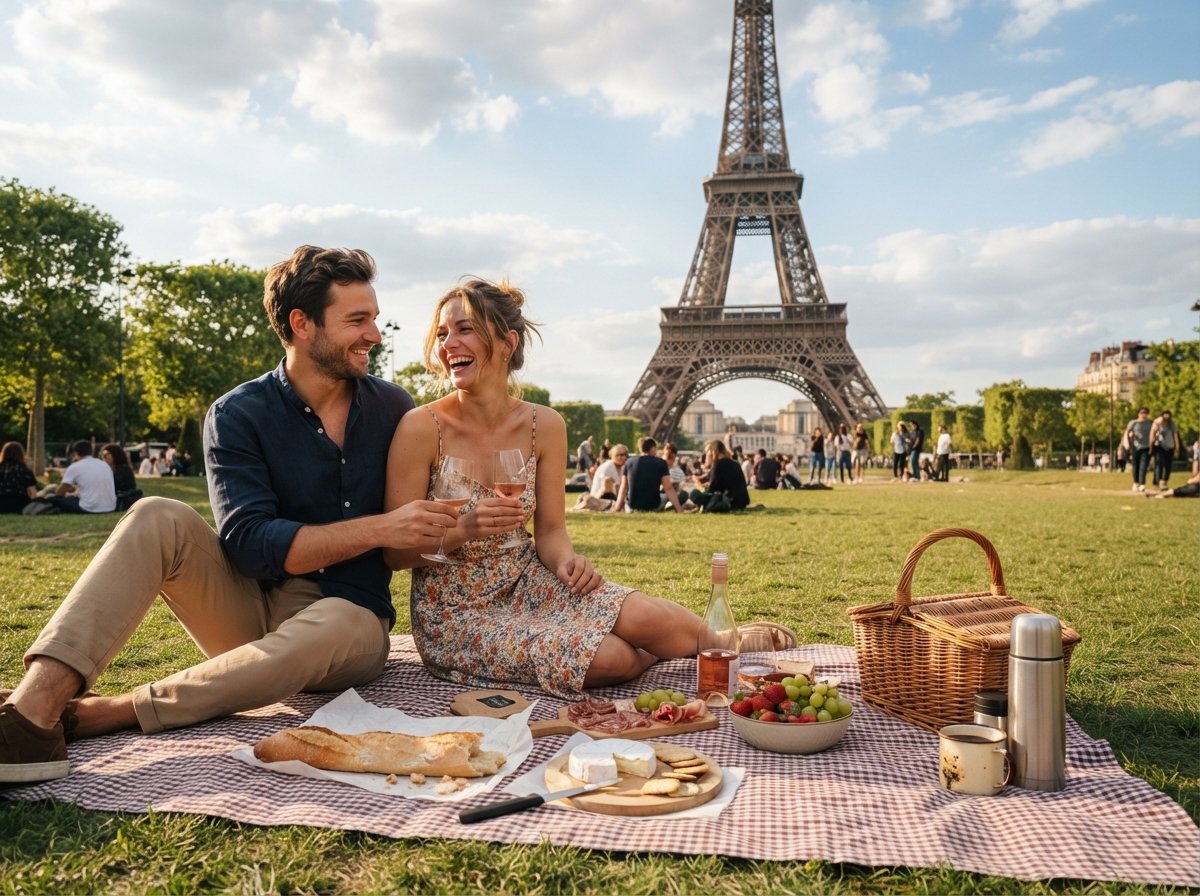
Near the tower: Rue Cler is a five minute walk away. It is a market street with bakeries, cheese shops, and cafes. Buy a baguette, some cheese, and a bottle of wine. Have a picnic on the Champ de Mars. This is the best food experience near the tower. It costs a fraction of the restaurant prices and feels more Parisian.
Avoid: The tourist trap cafes directly across from the tower on Quai Branly. They charge high prices for average food. Walk five minutes in any direction and you will find better options.
Scams, Pickpockets, and Safety
The area around the Eiffel Tower has scams. Knowing how they work protects you.
The bracelet scam: Someone approaches you and asks if you speak English. They try to tie a string bracelet on your wrist. Once it is on, they demand money. They may have friends nearby who pressure you. Do not make eye contact. Keep your hands in your pockets. Say no firmly and walk away.
The petition scam: Young people with clipboards ask you to sign a petition for deaf children. While you are distracted, an accomplice picks your pocket. Do not sign anything. Do not stop walking.
The gold ring scam: Someone pretends to find a gold ring on the ground. They ask if it is yours. Then they try to sell it to you. It is worthless. Walk away.
Pickpockets: They work in the ticket lines and on the elevators. Keep your wallet in your front pocket. Use a theft resistant bag that zips closed and hangs across your body. The Travelon Classic Messenger Bag has locking zippers and slash resistant straps. It looks normal but keeps your belongings secure. This matters more than you think in crowded elevator queues where people press against you.

Travelon Anti-Theft Classic Messenger Bag
Street sellers: People sell cheap souvenirs, water, and beer on the Champ de Mars. They are not dangerous, but the products are low quality. Buy souvenirs from official shops instead.
What to Bring and What to Wear
Your bag: Bring a small bag. Large bags are not allowed. Include your phone, portable charger, ID, tickets, a light jacket, and a water bottle.
A portable charger is essential. You will use your phone for tickets, photos, maps, and translation. The cold wind at the top drains batteries fast. The Anker PowerCore 10000mAh portable charger fits in a pocket and charges most phones two to three times. You do not want your phone dying before you get your sunset photo.

10,000mAh 30W Power Bank
Shoes: Wear comfortable walking shoes. You will stand in lines. You will climb stairs. You will walk across the Champ de Mars. Paris cobblestones are hard on feet. Leave the fashionable but painful shoes for dinner later.
Clothing: Dress in layers. The top is windier and colder than the ground. A light scarf or cardigan helps even in summer.
Sun protection: The metal structure reflects sunlight. The open decks have no shade. Sunglasses and sunscreen help on bright days.
Exploring the 7th Arrondissement Around the Tower
Do not treat the Eiffel Tower as a standalone stop. The neighborhood around it is one of the most beautiful in Paris.
Rue Cler: This pedestrian market street has flower stalls, cheese shops, patisseries, and wine stores. It is where locals shop. It is five minutes from the tower.
Les Invalides: The golden dome is visible from the tower. It houses Napoleon tomb and a military museum. It is a 15 minute walk away.
The Seine riverbanks: Walk along the quay. Watch the boats. The Batobus water taxi stops near the tower. It is a relaxing way to travel to Notre Dame or the Louvre.
Musee du Quai Branly: This museum showcases indigenous art from Africa, Asia, and the Americas. The vertical garden on the exterior wall is worth seeing even if you do not go inside.
Pont Alexandre III: This is the most ornate bridge in Paris. It connects the 7th arrondissement to the Champs Elysees. The gold statues and lamp posts make it a photo destination on its own.
Frequently Asked Questions
How far in advance should I book Eiffel Tower tickets?
Book elevator tickets 60 days in advance for summer visits. Book stair tickets 30 days ahead. For quiet months like January or November, one to two weeks is usually enough.
Is the summit worth the extra cost?
If it is your first visit and you want the full experience, yes. If you care most about photography and views, the second floor is actually better. The summit is crowded and the landmarks look smaller from higher up.
Can I buy tickets at the tower on the same day?
Yes, but only if they are not sold out. Summit tickets often sell out by midday in peak season. Stair tickets are easier to buy on site. The ticket lines add 30 to 90 minutes to your visit.
How long does a visit take?
Plan for two to three hours. This includes security checks, elevator waits, time on the floors, and the descent. Add another hour if you eat at the tower.
Is the Eiffel Tower accessible for wheelchairs and strollers?
Wheelchairs can access the first and second floors by elevator. The summit is not wheelchair accessible. Only folding strollers are allowed. Non folding strollers must be left in the parking area on the esplanade.
What happens if it rains?
The tower stays open in light rain. The top closes in high winds or storms for safety. There is no refund for weather. Bring a small umbrella or rain jacket.
Can I bring food and drink?
Yes, for a picnic on the Champ de Mars. You cannot bring glass bottles or alcohol into the tower itself. Plastic water bottles are fine.
What is the best age for children to visit?
Children of all ages enjoy the tower. Kids under four enter free. The stairs are manageable for most children over five. The glass floor on the first floor fascinates young visitors.
Is it safe to visit at night?
Yes. The tower and surrounding areas are well lit and patrolled. The scams are less aggressive at night. The main risk is pickpockets in the evening crowds.
What is the best alternative if tickets are sold out?
Visit the Montparnasse Tower observation deck. It offers views of Paris that include the Eiffel Tower itself. The Arc de Triomphe rooftop also offers great skyline views. Both are less crowded.
Conclusion
The Eiffel Tower deserves its fame. It is beautiful from every angle. It offers views that define Paris. But it is also a busy, commercial, and sometimes stressful attraction.
The key to a great visit is planning. Book your ticket early. Choose the second floor if you want the best view. Choose the summit if you want the highest point. Climb the stairs if you want to save money and avoid lines. Watch the sparkle from the ground. Eat a picnic on the Champ de Mars. Walk through Rue Cler. Protect yourself from scams.
The Eiffel Tower is not just something to check off a list. It is an experience to savor. Stand on the second floor as the sun sets. Watch the city turn gold. See the Seine wind through the streets. That is the moment you came for.
Plan well. Stay aware. And let the Iron Lady do what she has done for over 130 years. Take your breath away.