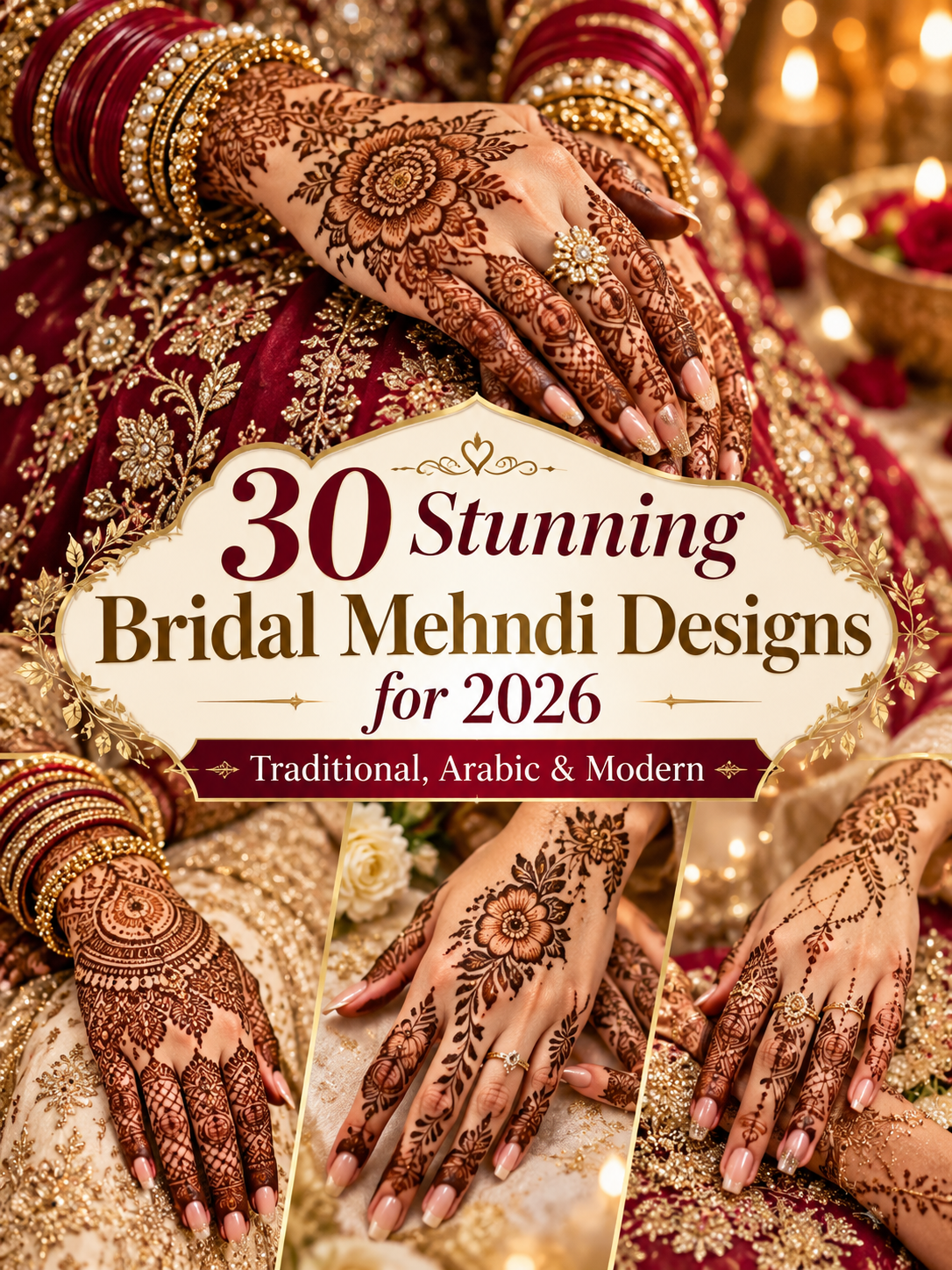
For many brides, mehndi is one of the most special parts of the wedding. The mehndi night is full of music, laughter, and family, and the intricate designs on the bride’s hands and feet become a beautiful part of her bridal look and her wedding photos.
Whether you dream of a full-hand traditional design, a bold Arabic pattern, or something modern and minimal, this guide has 30 bridal mehndi designs to inspire you, along with practical tips for choosing your design and getting the darkest possible color on your big day.
Quick answer: The most popular bridal mehndi designs are full-hand traditional designs, Pakistani jaal patterns, bride-and-groom portrait mehndi, Indo-Arabic designs, and elbow-length mehndi. Modern brides are also choosing minimal and negative-space designs for a lighter look.
Some links in this post are affiliate links. If you buy through them, I may earn a small commission at no extra cost to you.
Traditional Bridal Mehndi Designs
These classic designs are rich, detailed, and full of meaning. They are perfect for brides who want the timeless dulhan look.
- Full-Hand Traditional Bridal Mehndi
The classic bridal design covers the entire palm and fingers, from fingertips to wrist or beyond, with paisleys, flowers, and fine fill-in patterns. It looks especially striking once the color deepens.
- Pakistani Jaal Mehndi
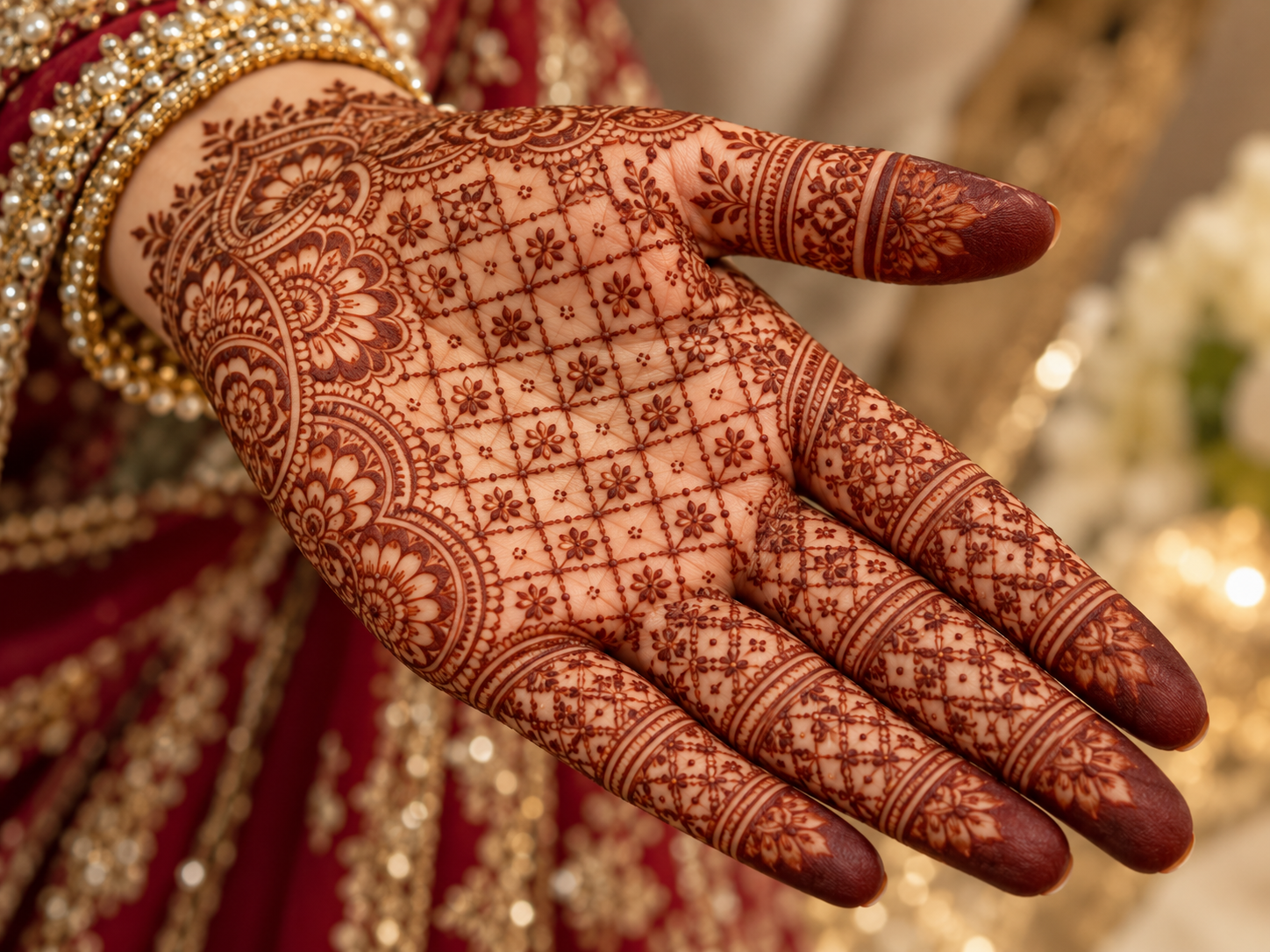
Pakistani bridal mehndi is known for very fine, dense detail. A jaal (net) pattern of tiny boxes, dots, and flowers covers the hand with almost no empty space, creating a rich, lace-like effect.
- Rajasthani Bridal Mehndi
Rajasthani mehndi features traditional figures such as the bride and groom, elephants, palanquins (dolis), and musicians, all surrounded by intricate patterns. It tells a story on the hands.
- Peacock Bridal Mehndi
The peacock symbolizes beauty and grace. A large peacock on the palm, with its detailed tail sweeping toward the fingers, is one of the most loved bridal motifs.
- Lotus Bridal Mehndi
Lotus flowers are linked with purity and new beginnings, which makes them meaningful for a bride. They work beautifully as the center of a full-hand design.
- Elephant and Doli Motifs
Elephants represent good luck and prosperity, while the doli represents the bride leaving her parents’ home. Together, they create a traditional and emotional design.
- Jharokha (Arch) Design
Inspired by the decorative windows of Mughal and Rajasthani architecture, jharokha arches frame the palm in layers. They look regal and elegant.
- Mandala Palm Design
A large, detailed mandala in the center of each palm, with intricate fingers and wrists, creates a perfectly balanced bridal look.
Portrait and Storytelling Bridal Mehndi
These designs are personal and meaningful, and they make for beautiful close-up photos.
- Bride and Groom Portrait Mehndi
One of the most popular bridal trends: the bride is drawn on one palm and the groom on the other. When the hands are placed together, the couple faces each other.
- Love Story Mehndi
Some brides ask their artist to illustrate their love story, such as where they met, their proposal, or a favorite place they visited together, using small scenes and symbols.
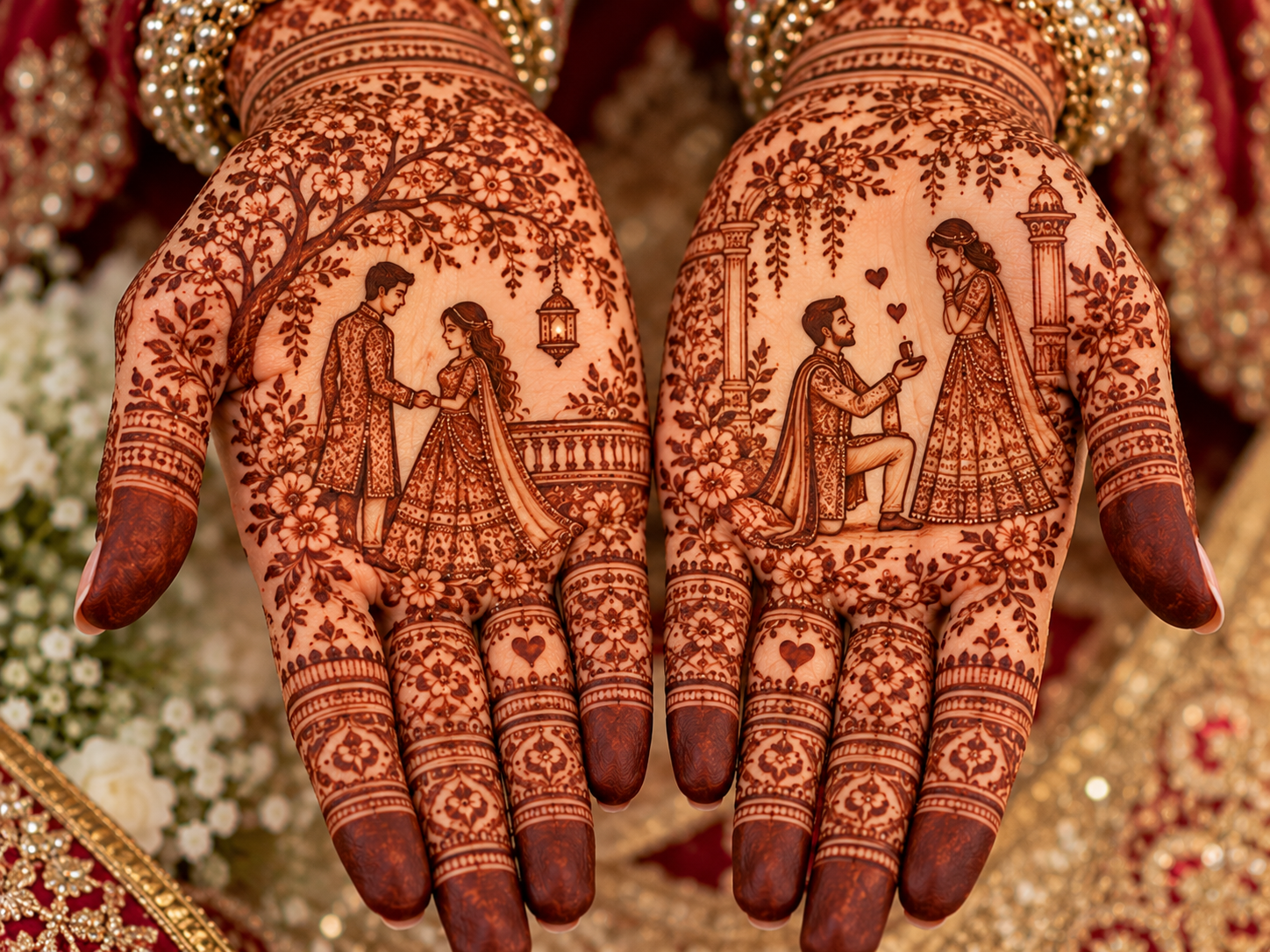
- Baraat and Doli Scene
A full scene of the groom’s wedding procession on one hand and the bride’s doli on the other is a beautiful choice for traditional weddings.
- Hidden Groom’s Name or Initials
This fun tradition never goes out of style. The groom’s name or initials are hidden somewhere in the design, and he has to find them during the wedding celebrations.
- Wedding Date Mehndi
Adding your wedding date in a small, decorative frame on the wrist or palm is a sweet modern touch that looks great in photos.
Arabic and Indo-Arabic Bridal Mehndi
Arabic designs use bold outlines, shaded flowers, and open space. They are quicker to apply and look dramatic.
- Bold Arabic Bridal Mehndi
Big flowers and leaves flow diagonally across the hand, with thick outlines and plenty of skin showing through. It’s elegant and very photogenic.
- Shaded Floral Mehndi
Shading inside the petals gives flowers a three-dimensional look. It’s a great choice for the back of the hand.
- Indo-Arabic Fusion
This style combines a detailed Indian-style palm with flowing Arabic trails on the fingers and wrist. It’s perfect if you love both styles.
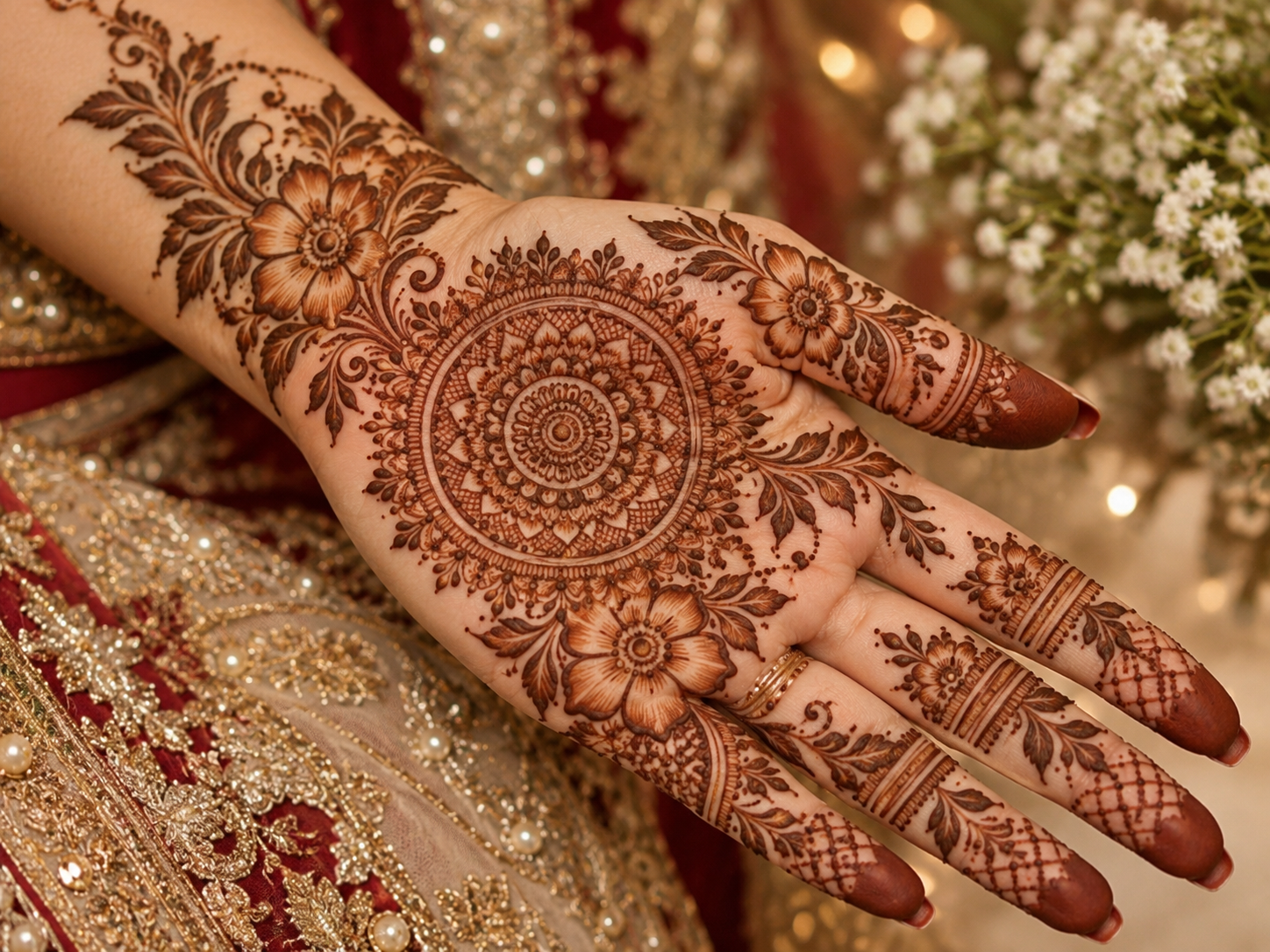
- Moroccan Geometric Mehndi
Inspired by Moroccan tiles, this style uses symmetrical shapes, diamonds, and lattice patterns for a striking, structured look.
- Khaleeji Mehndi
Popular in the Gulf region, Khaleeji mehndi uses bold, thick lines and large floral motifs, often with a few fully filled-in areas.
Modern and Minimal Bridal Mehndi
Not every bride wants a full, heavy design. These modern options are elegant and perfect for intimate weddings, engagements, or a nikkah ceremony.
- Minimal Bridal Mehndi
Delicate patterns on the fingers and a small motif on the palm keep the look soft and modern while still feeling bridal.
- Negative Space Mehndi
Here, empty skin forms part of the pattern. The result is clean, contemporary, and lets every detail stand out.
- Bracelet and Cuff Mehndi
Decorated bands around the wrist look like bangles, connected to finger rings with thin lines. It pairs beautifully with bridal jewelry.
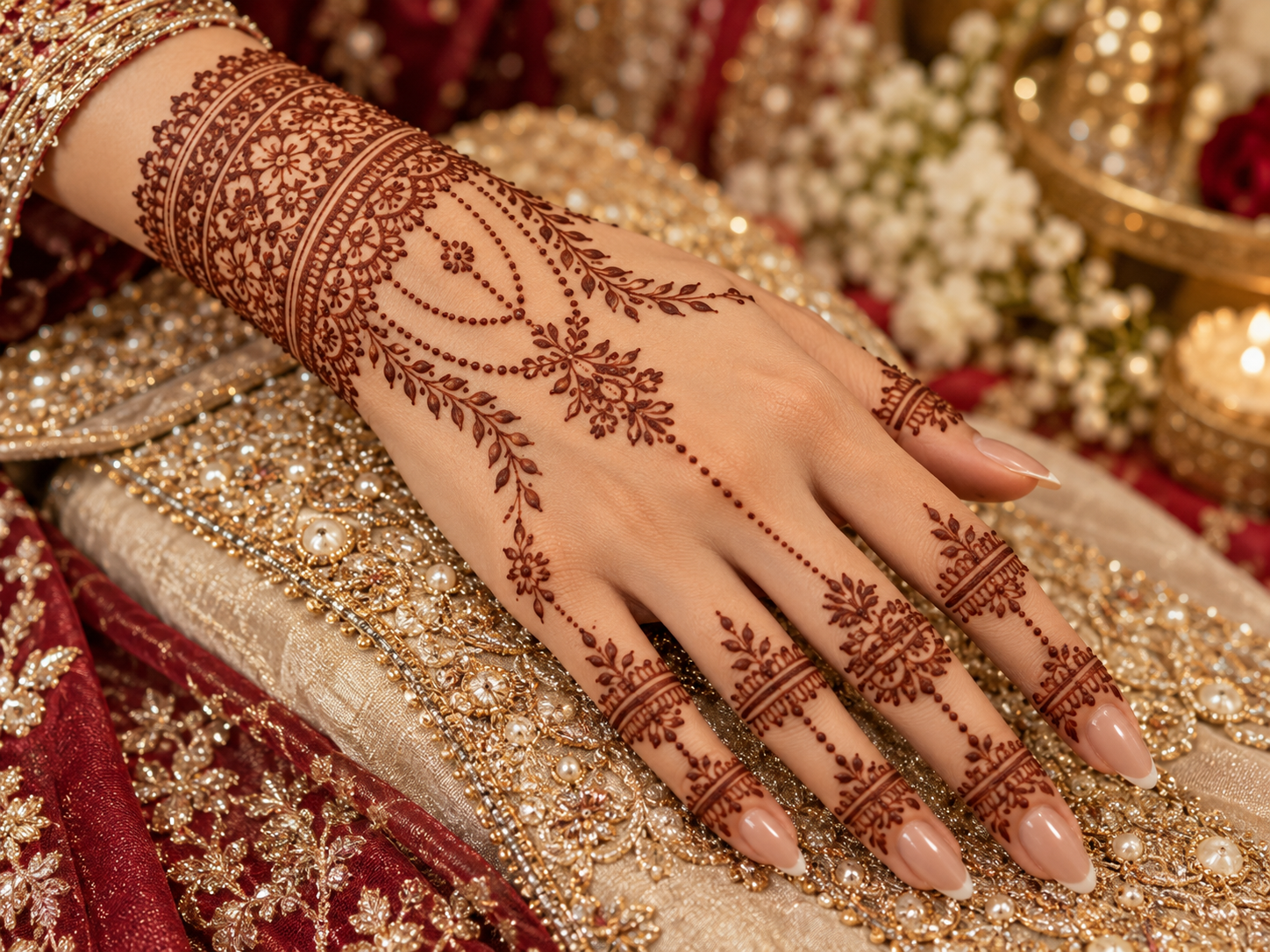
- Heavy Finger Mehndi
Intricately filled fingers with a lighter palm give a striking contrast. It’s ideal if you want a detailed look without a fully covered hand.
- Geometric Line Mehndi
Clean lines, dots, and triangles create a modern, fashion-forward look that suits fusion and western outfits.
- Half-Hand Bridal Mehndi
The design covers one side of the hand diagonally, leaving the other side mostly bare. It’s quicker to apply and looks modern.
Back Hand and Arm Bridal Mehndi
25. Back Hand Bridal Mehndi
The back of the hand is the part that shows most in photos, especially with rings and bangles. Detailed floral and mandala patterns look especially beautiful here. For more ideas, see my back hand mehndi design ideas.
- Elbow-Length Bridal Mehndi
For a true dulhan look, many brides extend their mehndi all the way to the elbow. It creates a dramatic, royal effect, especially with heavy bridal outfits.
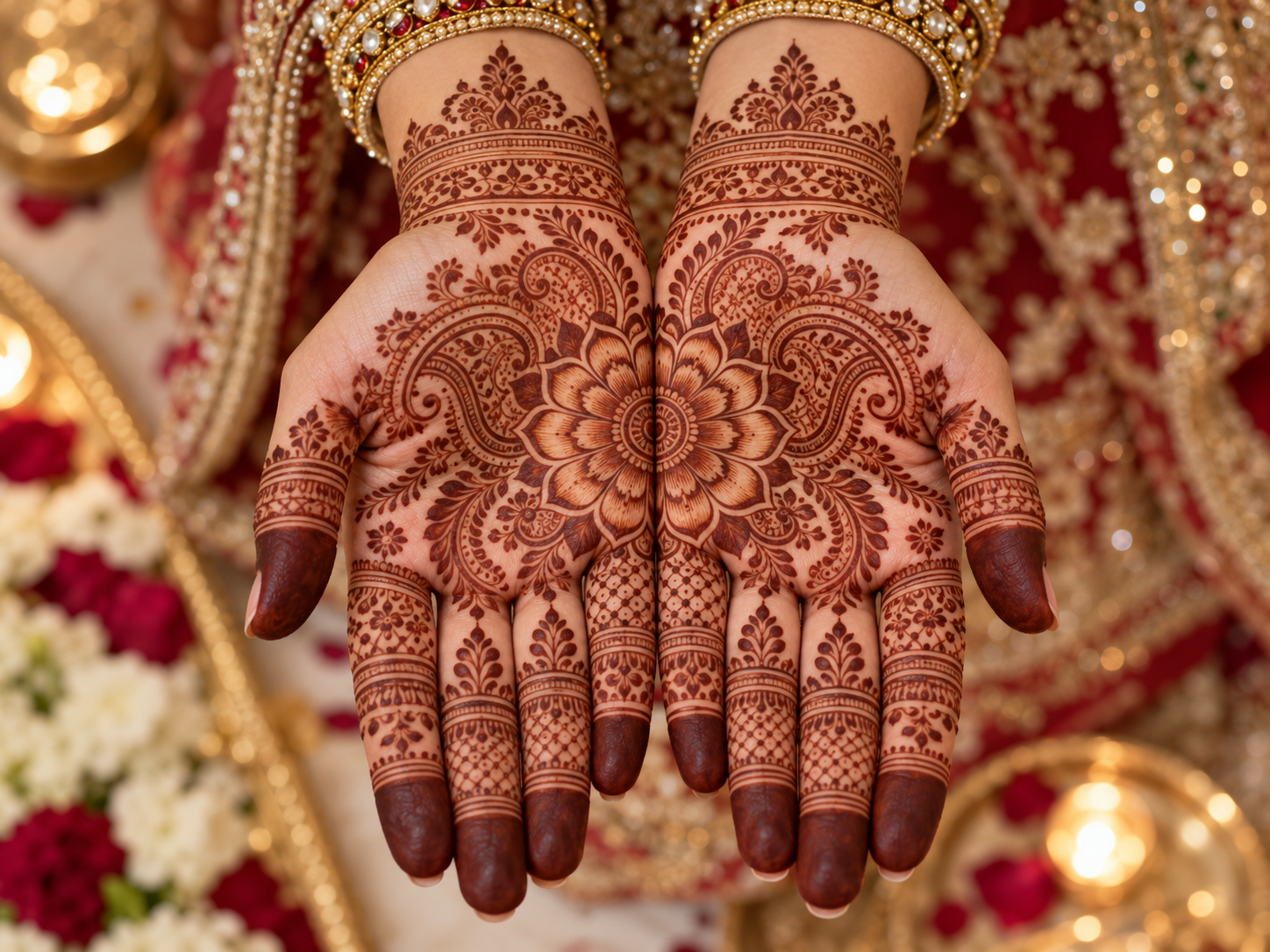
- Mirror-Image Mehndi
Both hands are designed as exact mirror images. When placed side by side, they form one complete pattern, which looks stunning in bridal photos.
Bridal Mehndi for Feet
Don’t forget your feet! Feet mehndi completes the bridal look and often shows in photos with your outfit.
- Full Feet Bridal Mehndi
Traditional bridal feet mehndi covers the top of the foot up to the ankle or calf, often matching the patterns on the hands.
- Anklet-Style Feet Mehndi
A decorative band around the ankle, connected to the toes with fine lines, looks like jewelry and is lovely with payal (anklets).
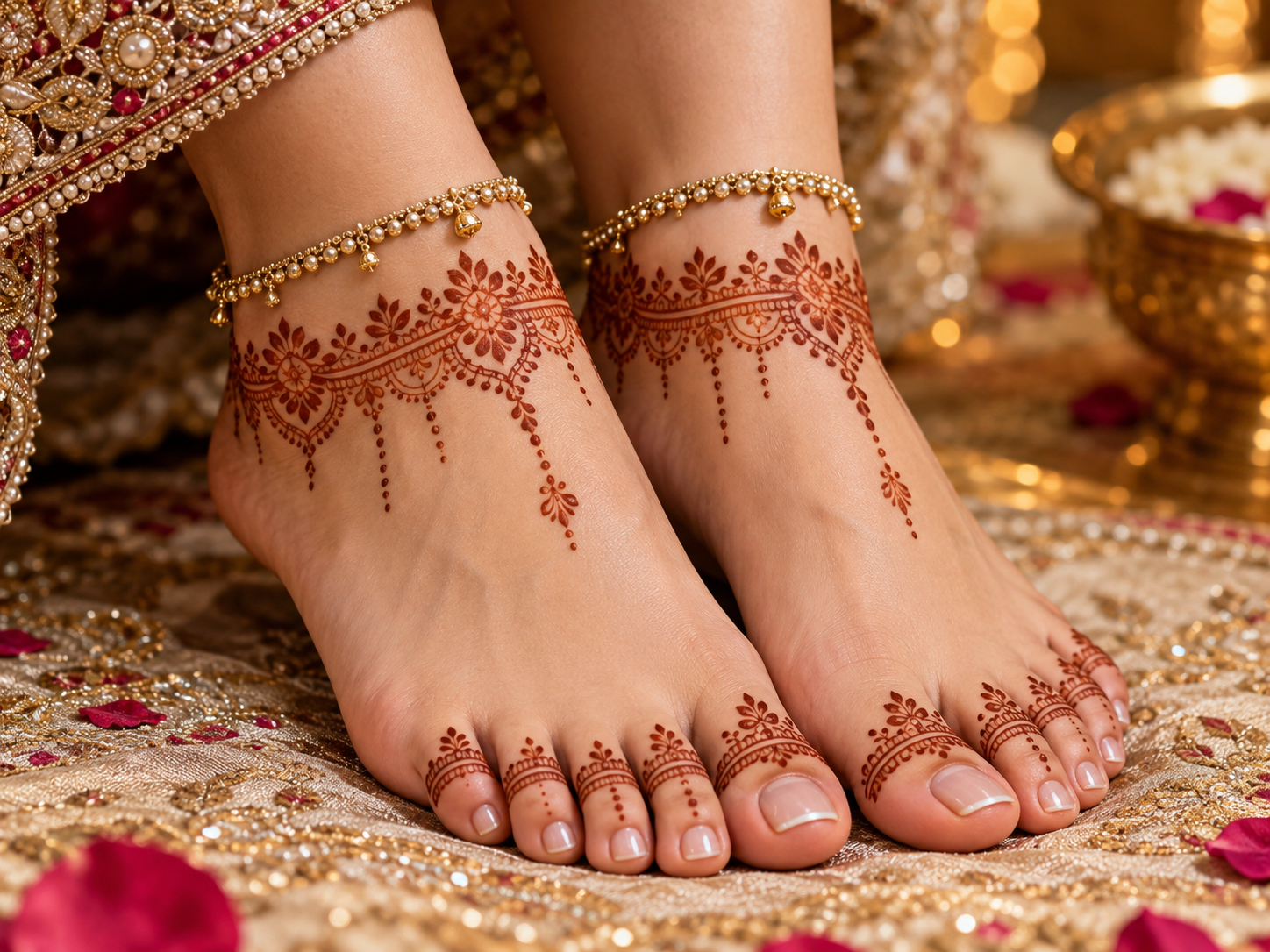
- Minimal Feet Mehndi
A simple design on the toes and the side of the foot is perfect for brides who prefer a lighter look.
How to Choose Your Bridal Mehndi Design
- Match your outfit. Heavy traditional outfits suit full-hand and elbow-length designs, while lighter or fusion outfits look great with minimal or Arabic mehndi.
- Think about your jewelry. If you’ll wear lots of bangles and rings, choose a design that works around them, such as cuff-style or heavy finger mehndi.
- Consider your time. Full bridal mehndi for hands and feet can take several hours to apply, so plan your schedule accordingly.
- Collect references. Save photos of designs you love and share them with your artist so they understand your style.
- Book a trial. A trial session helps you test the artist’s work and see how dark the henna stains on your skin.
When Should You Apply Bridal Mehndi?
Apply your bridal mehndi one to two days before the wedding. Henna starts light orange and darkens over 24 to 48 hours, so applying it early means your color will be at its richest on your wedding day. This is why the mehndi ceremony usually takes place a day or two before the wedding.
How to Get the Darkest Bridal Mehndi Color
Use aftercare oil. Applying a little mehndi aftercare oil after removing the paste helps deepen the color and keep it looking fresh.
Use fresh, natural henna. Ask your artist to use fresh, chemical-free paste, or buy good-quality natural henna cones if a family member is applying it.

Plant-Based Henna Cones Dark Reddish Brown Mehndi
Start with clean, dry skin. Avoid lotions, oils, and waxing on the day of application.
Leave it on for as long as possible. Keep the paste on for at least 8 hours, or overnight if you can.
Seal it with lemon and sugar. Dab a mix of lemon juice and sugar on the dried paste to keep it moist and in contact with your skin.
Scrape it off, don’t wash it. Remove the dry paste gently with a blunt edge instead of water.
Avoid water for 12 to 24 hours. Water too early can stop the color from developing.
For more tips on dark color, see my guide to Diwali mehndi designs.
Safety tip: Never use “black henna.” It often contains PPD, a chemical that can cause serious skin reactions. Natural henna stains in shades of orange, red, and deep brown.
How Long Does Bridal Mehndi Last?
Bridal mehndi usually lasts one to three weeks, depending on your skin, the quality of the henna, and how often you wash your hands. The color is darkest for the first few days and then slowly fades.
Tip: Avoid scrubbing, chlorine, and harsh soaps to make your mehndi last longer.
Completing Your Bridal Look
Your mehndi and jewelry should work together. A matching bridal bangles set in gold or kundan looks beautiful against deep mehndi color and adds the final touch to your wedding photos.
Frequently Asked Questions
Which mehndi design is best for a bride?
Full-hand traditional designs, Pakistani jaal patterns, and bride-and-groom portrait mehndi are the most popular choices for brides. Modern brides also love Indo-Arabic and minimal designs.
How many days before the wedding should a bride apply mehndi?
A bride should apply mehndi one to two days before the wedding so the color reaches its darkest shade on the wedding day.
How long does it take to apply bridal mehndi?
Full bridal mehndi on hands and feet can take anywhere from three to six hours or more, depending on the design’s detail and length.
What is the difference between Pakistani and Indian bridal mehndi?
Pakistani bridal mehndi is known for very fine, dense detail and jaal patterns, while Indian bridal mehndi often includes figures and storytelling motifs such as the bride, groom, and doli. Many brides mix both styles.
How can I make my bridal mehndi darker?
Use fresh natural henna, keep it on for at least 8 hours, seal it with lemon and sugar, scrape it off instead of washing, and avoid water for 12 to 24 hours.
Can I get minimal mehndi for my wedding?
Yes. Minimal bridal mehndi is very popular, especially for nikkah ceremonies, engagements, and intimate weddings. Delicate finger designs and small palm motifs look elegant and modern.
Final Thoughts
Your bridal mehndi is more than a design. It’s part of your wedding story. Whether you choose a full traditional pattern, a portrait of you and your partner, or a simple modern style, pick something that feels like you. Save your favorite designs, book your artist early, and enjoy every moment of your mehndi celebration.