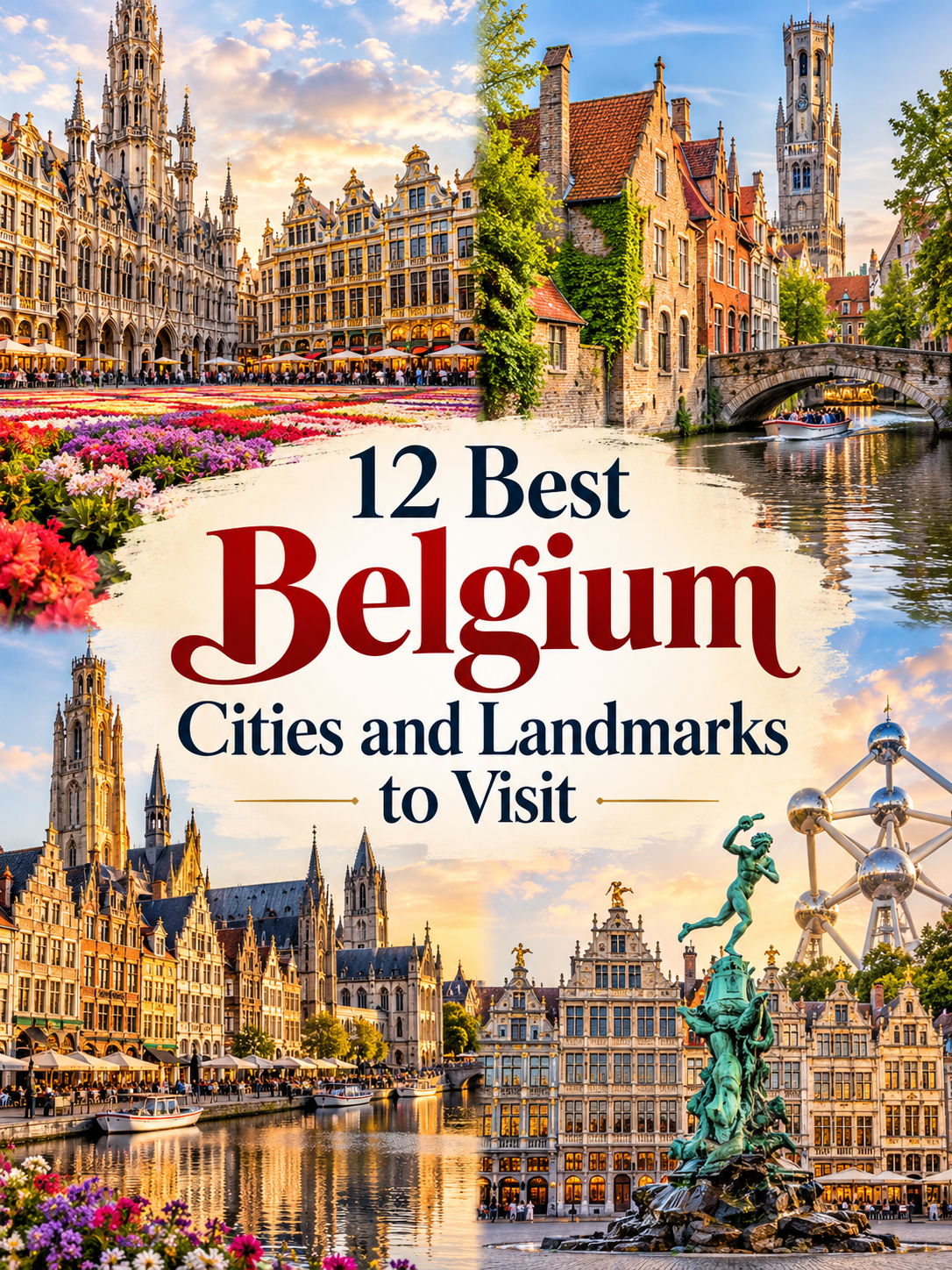
Belgium might be small, but it’s packed with things to see. In just a few hours by train, you can go from the grand squares of Brussels to the fairytale canals of Bruges, the medieval castle of Ghent, and the dramatic cliffs of the Meuse valley. Along the way, you’ll find some of the best chocolate, waffles, fries, and beer in the world.
In this guide, I’ll walk you through the best cities in Belgium and the famous landmarks you shouldn’t miss in each one, plus easy itinerary ideas and travel tips for your trip.
Quick answer: The best cities to visit in Belgium are Brussels, Bruges, Ghent, and Antwerp. The most famous Belgian landmarks include the Grand Place and the Atomium in Brussels, the Belfry of Bruges, Gravensteen Castle in Ghent, and Antwerp Central Station.
Some links in this post are affiliate links. If you buy through them, I may earn a small commission at no extra cost to you.
Belgium Cities at a Glance
| City | Best known for | Approx. train time from Brussels |
|---|---|---|
| Brussels | Grand-Place, Atomium, chocolate | Capital city |
| Bruges | Canals and medieval old town | About 1 hour |
| Ghent | Castle, cathedral, lively waterfront | About 30–40 minutes |
| Antwerp | Grand station, Rubens, fashion, diamonds | About 40–50 minutes |
| Leuven | University town and Gothic town hall | About 20–30 minutes |
| Mechelen | St. Rumbold’s Tower, relaxed old town | About 20–30 minutes |
| Namur | Hilltop citadel above two rivers | About 1 hour |
| Dinant | Cliffside church and citadel | About 1.5 hours |
| Liège | Famous station and stairway views | About 1 hour |
| Ypres (Ieper) | World War I history | About 2 hours |
| Durbuy | Tiny medieval town in the Ardennes | Best by car |
| Waterloo | Historic battlefield | About 30 minutes |
Train times are approximate and depend on the type of train and connection.
1. Brussels
Belgium’s capital is a mix of grand history, quirky art, and modern Europe. It’s also the headquarters of the European Union, and the easiest place to start your trip.
Top landmarks in Brussels:
- Grand-Place: One of the most beautiful squares in Europe and a UNESCO World Heritage Site. It’s surrounded by ornate guildhalls and the Gothic Town Hall. Visit both during the day and lit up at night.
- Manneken Pis: The famous little bronze statue of a boy is much smaller than most people expect, but he’s a must-see. He’s often dressed in one of his hundreds of costumes.
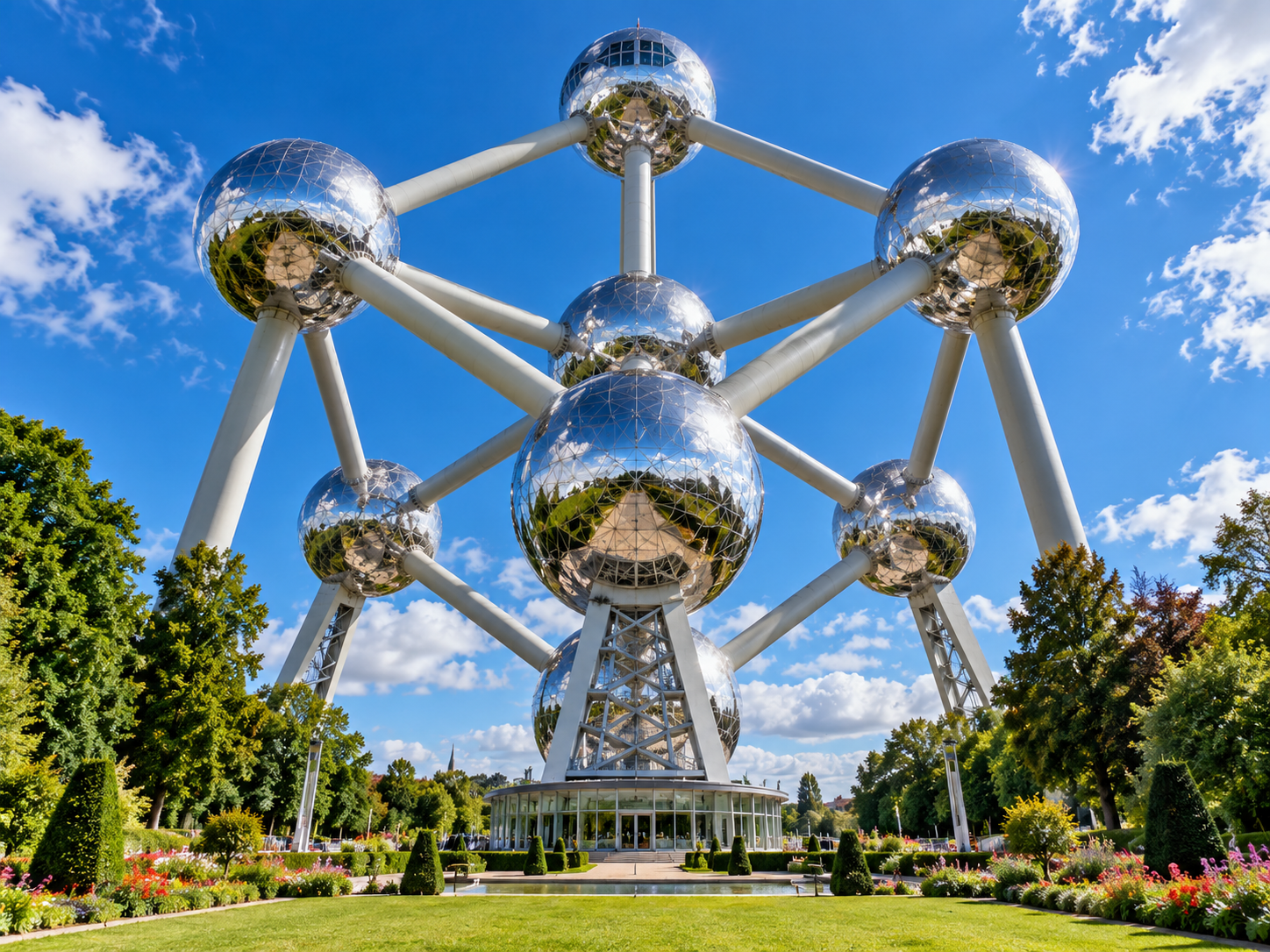
- Atomium: Built for the 1958 World’s Fair, this giant model of an iron crystal is Belgium’s most futuristic landmark. You can go inside and ride up to the top sphere for views.
- Galeries Royales Saint-Hubert: Elegant 19th-century glass-roofed shopping arcades, filled with chocolate shops, cafés, and boutiques.
- Royal Palace and Mont des Arts: Walk from the palace through the gardens of Mont des Arts for one of the best views of the city.
- Cathedral of St. Michael and St. Gudula: A stunning Gothic cathedral with beautiful stained glass windows.
What to eat: Belgian waffles, fries from a street stand, and pralines from one of the city’s famous chocolatiers.
2. Bruges
If you only visit one place outside Brussels, make it Bruges. Its entire historic center is a UNESCO World Heritage Site, with cobbled streets, medieval buildings, and peaceful canals. It looks like something out of a storybook.
Top landmarks in Bruges:
- The Belfry (Belfort): The 13th-century bell tower rising above the Markt square. Climb its 366 steps for a beautiful view over the rooftops.
- The Markt: The main square, lined with colorful gabled houses and cafés.
- Basilica of the Holy Blood: A small but beautiful chapel on the Burg square.
- Church of Our Lady: Home to Michelangelo’s Madonna and Child, one of the few works by the artist outside Italy.
- The canals: Take a boat tour for a completely different view of the city.
- Begijnhof and Minnewater: A quiet, whitewashed courtyard and the romantic “Lake of Love” nearby.
Tip: Bruges is very busy with day-trippers. Stay overnight so you can enjoy the city in the early morning and evening, when it’s at its most magical.
3. Ghent
Ghent has all the medieval beauty of Bruges, but with fewer crowds and the energy of a busy university city. It’s one of the most underrated cities in Europe.
Top landmarks in Ghent:
- Gravensteen (Castle of the Counts): A real medieval castle with a moat, right in the middle of the city.
- St. Bavo’s Cathedral: Home to the Ghent Altarpiece (The Adoration of the Mystic Lamb) by the van Eyck brothers, one of the most important paintings in European history.
- Graslei and Korenlei: Two waterfront streets lined with beautiful historic guild houses. This is the heart of Ghent, especially at sunset.
- St. Michael’s Bridge: Stand here for the famous view of Ghent’s three towers in a row.
- Belfry of Ghent: Another UNESCO-listed bell tower with great views over the city.
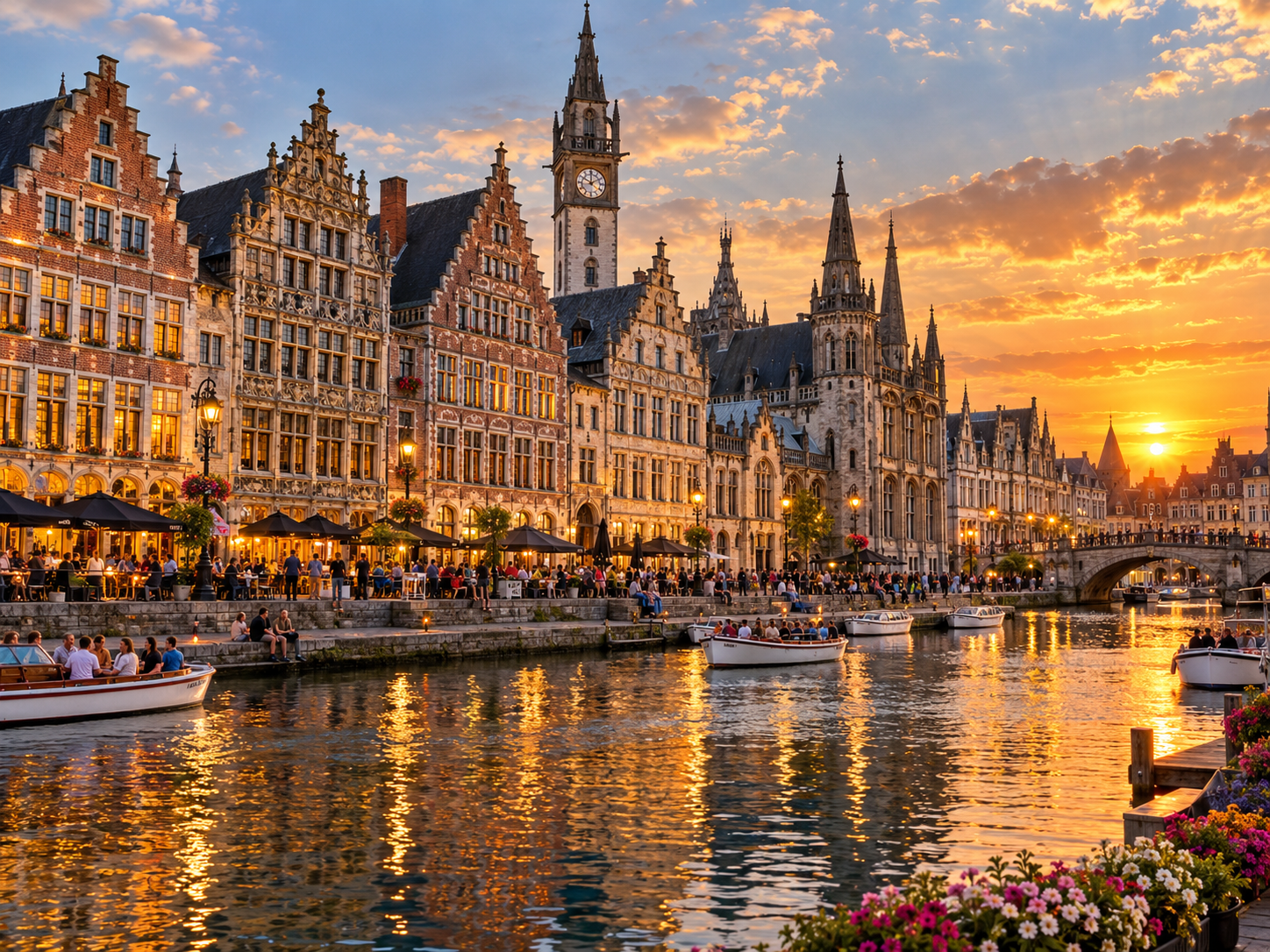
Tip: Ghent is beautifully lit at night, so plan an evening walk along the river.
4. Antwerp
Antwerp is Belgium’s second-largest city, known for fashion, art, and diamonds. It feels stylish and modern, with plenty of history too.
Top landmarks in Antwerp:
- Antwerp Central Station: Often called one of the most beautiful train stations in the world, with a grand dome and marble interiors.
- Cathedral of Our Lady: The tallest church in Belgium, with masterpieces by Peter Paul Rubens inside.
- Grote Markt and the Brabo Fountain: A lovely main square surrounded by guildhalls and the Renaissance city hall.
- Plantin-Moretus Museum: A UNESCO-listed printing house and museum with some of the oldest printing presses in the world.
- MAS Museum: A modern museum with a free rooftop viewpoint over the city and the port.
- Het Steen: A small medieval fortress on the river.
Tip: Antwerp is a great city for shopping, especially for Belgian designer fashion.
5. Leuven
Leuven is a lively university town just a short train ride from Brussels. Its university was founded in 1425, making it one of the oldest in Europe.
Top landmarks in Leuven:
- Leuven Town Hall: One of the most ornate Gothic buildings in Belgium, covered in hundreds of carved statues.
- University Library: Climb the library tower for views over the city.
- Oude Markt: A square lined almost entirely with bars and cafés, often called “the longest bar in Europe.”
- Groot Begijnhof: A peaceful, UNESCO-listed historic neighborhood.
6. Mechelen
Mechelen sits between Brussels and Antwerp and is often skipped by tourists, which makes it a lovely, relaxed stop.
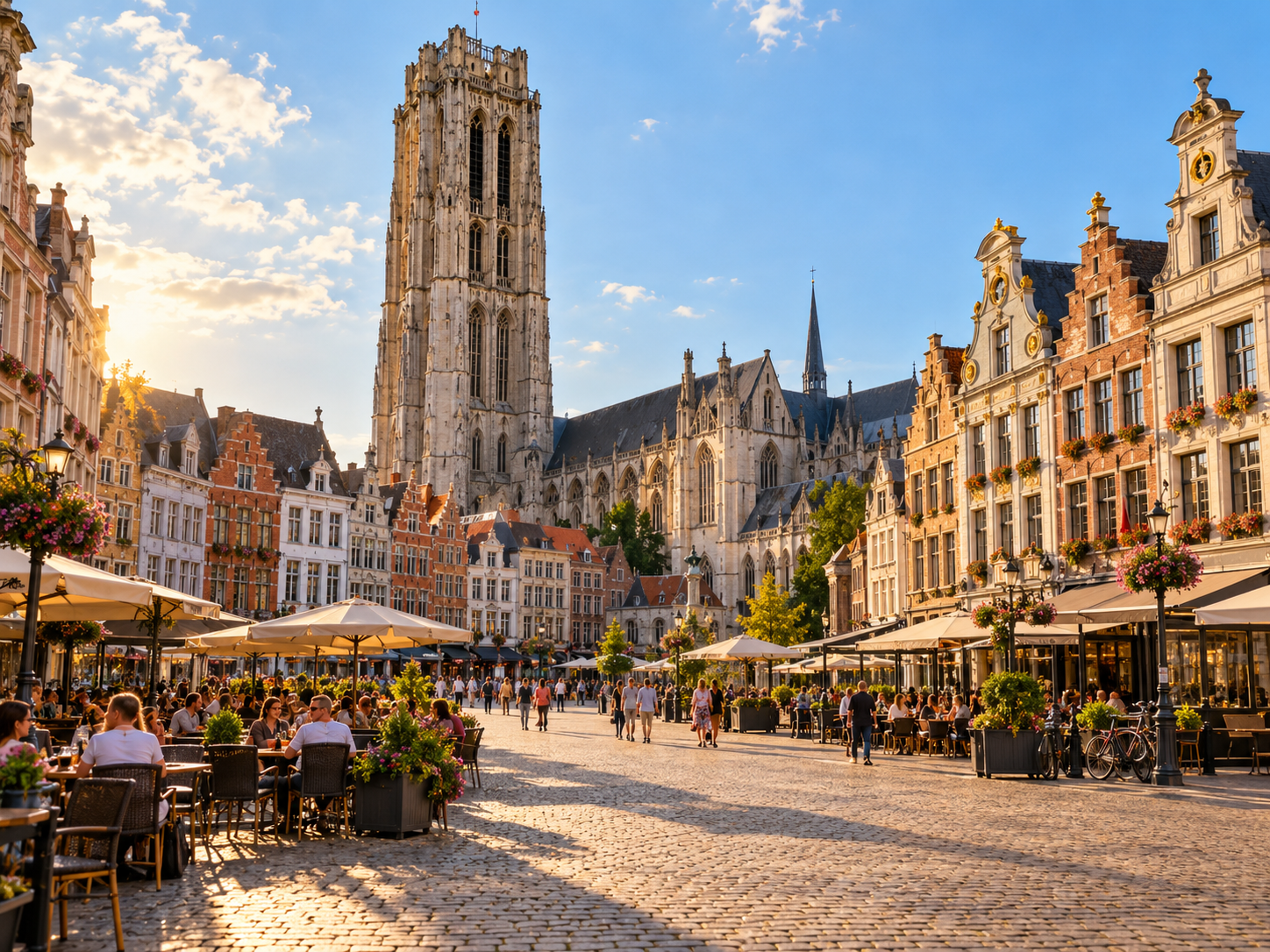
Top landmark: St. Rumbold’s Tower, the cathedral’s huge bell tower. Climb to the top for a skywalk with views as far as Brussels and Antwerp on a clear day.
7. Namur
Namur is the capital of Wallonia, the French-speaking region of Belgium. It sits where the Meuse and Sambre rivers meet.
Top landmark: The Citadel of Namur, one of the largest fortresses in Europe, perched above the city. Take the cable car up for wonderful views of the rivers and old town.
8. Dinant
Dinant is one of the most photogenic places in Belgium. Its onion-domed church sits right against a dramatic cliff, with the Meuse River in front.
Top landmarks in Dinant:
- Collegiate Church of Notre-Dame: The church with the famous onion dome below the cliffs.
- Citadel of Dinant: Reach it by cable car or by climbing hundreds of steps for a sweeping river view.
- Saxophone town: Dinant is the birthplace of Adolphe Sax, inventor of the saxophone, and you’ll see colorful saxophone sculptures on the bridge.
9. Liège
Liège is a lively city in eastern Belgium, known for its food and its striking architecture.
Top landmarks in Liège:
- Liège-Guillemins Station: A spectacular modern station with a sweeping white glass-and-steel roof.
- Montagne de Bueren: A steep stairway of 374 steps leading up to a great viewpoint over the city.
What to eat: Try the original Liège waffle, which is dense, chewy, and caramelized with pearl sugar.
10. Ypres (Ieper)
Ypres is one of the most important places in Belgium for World War I history.
Top landmarks in Ypres:
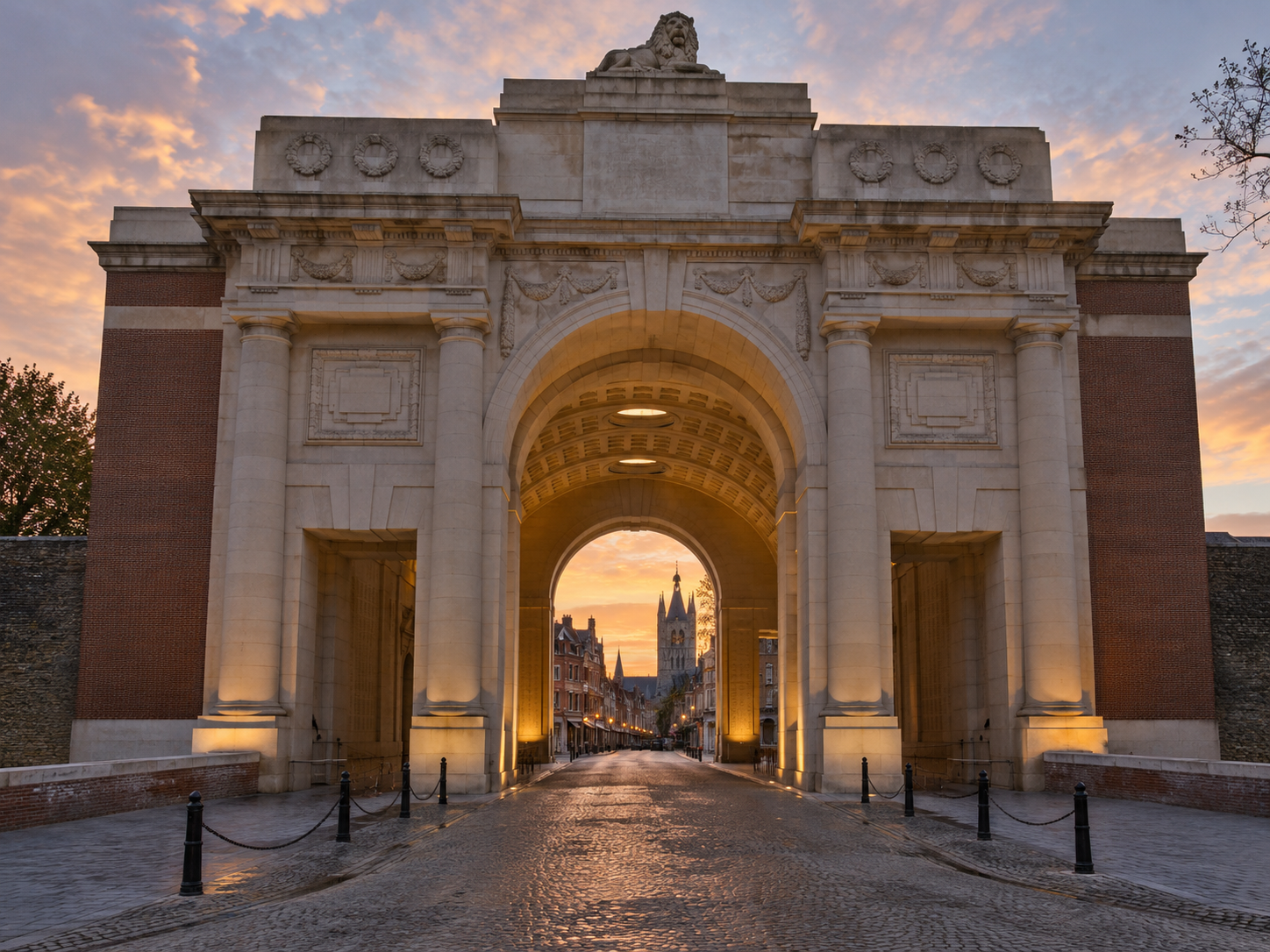
- Menin Gate: A memorial engraved with the names of tens of thousands of soldiers. Every evening at 8 p.m., the Last Post ceremony is held here, a deeply moving tradition.
- In Flanders Fields Museum: Located in the rebuilt Cloth Hall, it tells the story of the war in the region.
11. Durbuy
Tucked into the Ardennes forest, Durbuy is a tiny medieval town with cobbled lanes, stone houses, and a castle. It’s often described as one of the smallest cities in the world.
Top landmark: The Topiary Park, with hundreds of shaped hedges and sculptures.
Tip: Durbuy is best reached by car, and it pairs well with a road trip through the Ardennes.
12. Waterloo
Just south of Brussels, Waterloo is where Napoleon was defeated in 1815.
Top landmark: The Lion’s Mound, a huge hill topped with a lion statue. Climb it for a view over the battlefield, and visit the memorial museum below.
Easy Belgium Itinerary Ideas
Belgium is small and has a great rail network, so it’s easy to see several cities on one trip.
- 3 days: Brussels (1 day) → Bruges (1 day) → Ghent (1 day)
- 5 days: Brussels → Bruges → Ghent → Antwerp, with a half-day in Leuven or Mechelen
- 7 days: Add Namur and Dinant in the south, or Ypres for World War I history
Tip: Brussels or Ghent make a great base. Many trips can be done as day trips by train.
For more help planning, read my guide on how to actually plan a trip to Europe.
Best Time to Visit Belgium
- Spring (April to June): Mild weather and blooming flowers. In April and early May, the Hallerbos forest near Brussels is carpeted with bluebells.
- Summer (July and August): The warmest months, with long days and lots of festivals, but also the biggest crowds.
- Fall (September and October): Fewer tourists and pleasant weather for walking.
- Winter (December): Cold and often gray, but the Christmas markets in Brussels, Bruges, and Ghent make it magical.
Travel Tips for Belgium
- Get ready for rain. Belgium’s weather changes quickly, and rain is common in every season. A compact travel umbrella is one of the most useful things you can pack.
- Wear comfortable shoes. Most old towns are cobbled and best explored on foot, so a pair of comfortable walking shoes is essential.
- Bring the right adapter. Belgium uses Type C and Type E plugs, so visitors from the US will need a European travel adapter.
- Know the languages. Dutch is spoken in the north (Flanders), French in the south (Wallonia), and German in a small area in the east. English is widely spoken in tourist areas.
- Use the trains. Belgian trains are frequent, affordable, and the easiest way to travel between cities.
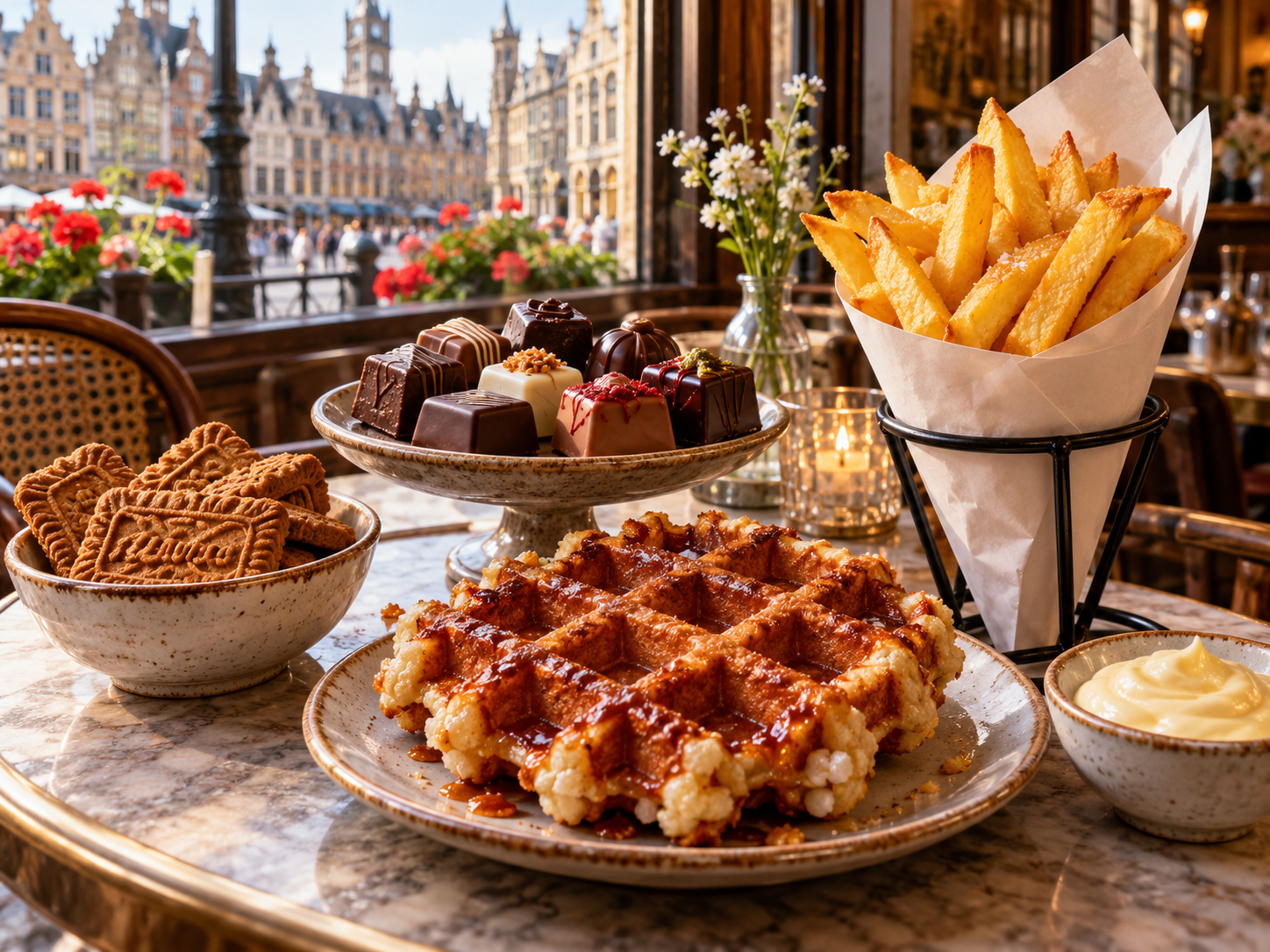
- Try the food everywhere. Fries with mayonnaise, mussels, waffles, speculoos cookies, and chocolate are all must-tries.
Frequently Asked Questions
What is the most famous landmark in Belgium?
The Grand-Place in Brussels is Belgium’s most famous landmark, along with the Atomium and the Manneken Pis statue.
What is the most beautiful city in Belgium?
Bruges is usually considered the most beautiful city in Belgium, thanks to its canals and medieval old town. Ghent is a close second and is often less crowded.
How many days do you need in Belgium?
Three days is enough to see Brussels, Bruges, and Ghent. With five to seven days, you can add Antwerp, Leuven, and the Meuse valley towns of Namur and Dinant.
Is Bruges or Ghent better to visit?
Bruges is more fairytale-like and compact, while Ghent is livelier, larger, and less touristy. If you have time, visit both. They’re only about 30 minutes apart by train.
What is Belgium known for?
Belgium is known for chocolate, waffles, fries, beer, medieval cities, comic strips, and being home to the headquarters of the European Union.
Is it easy to travel around Belgium by train?
Yes. Belgium has one of the densest rail networks in Europe, and most major cities are less than an hour from Brussels.
Final Thoughts
Belgium proves that a small country can be full of big experiences. Whether you’re admiring the Grand-Place, climbing the Belfry of Bruges, exploring a medieval castle in Ghent, or standing beneath the cliffs of Dinant, you’ll find beauty, history, and delicious food around every corner.
Planning a bigger trip across the continent? Check out my complete guide to the best places to visit in Europe.