I missed my flight to Rome because I didn’t know about Schengen exit stamps.
Spent six hours in Frankfurt airport detention. Missed a non-refundable hotel night. Cried in a Starbucks. All because I assumed “Europe is easy” and skipped the boring research.
Europe is easy once you understand the systems. But those systems are different from everywhere else. The trains run on time (mostly), but the visa rules are Byzantine. The food is incredible, but the restaurant scams are sophisticated.
I’ve planned 40+ Europe trips. Some were flawless. Some were disasters that taught me everything. Here’s the real process, including the unsexy details that actually matter.
Phase 1: The Reality Check (6-12 Months Out)
Europe is not one place.
Scandinavia costs 3x what Portugal costs. Switzerland will bankrupt you. Eastern Europe delivers 80% of the experience for 40% of the price. Your budget determines your geography more than your wishlist does.

The honest budget breakdown (per person, per day):
- Budget: $75-100 (hostels, grocery stores, public transport)
- Mid-range: $150-200 (Airbnbs, restaurants, occasional taxis)
- Comfortable: $250-350 (boutique hotels, nice dinners, private transfers)
- Luxury: $500+ (doesn’t matter, you’ll have a great time regardless)
My rule: Pick two countries max for a two-week trip. Three if they’re tiny and close (Belgium/Netherlands/Luxembourg). “Doing Europe” in 10 days is how you spend $4,000 to see highways and airport lounges.
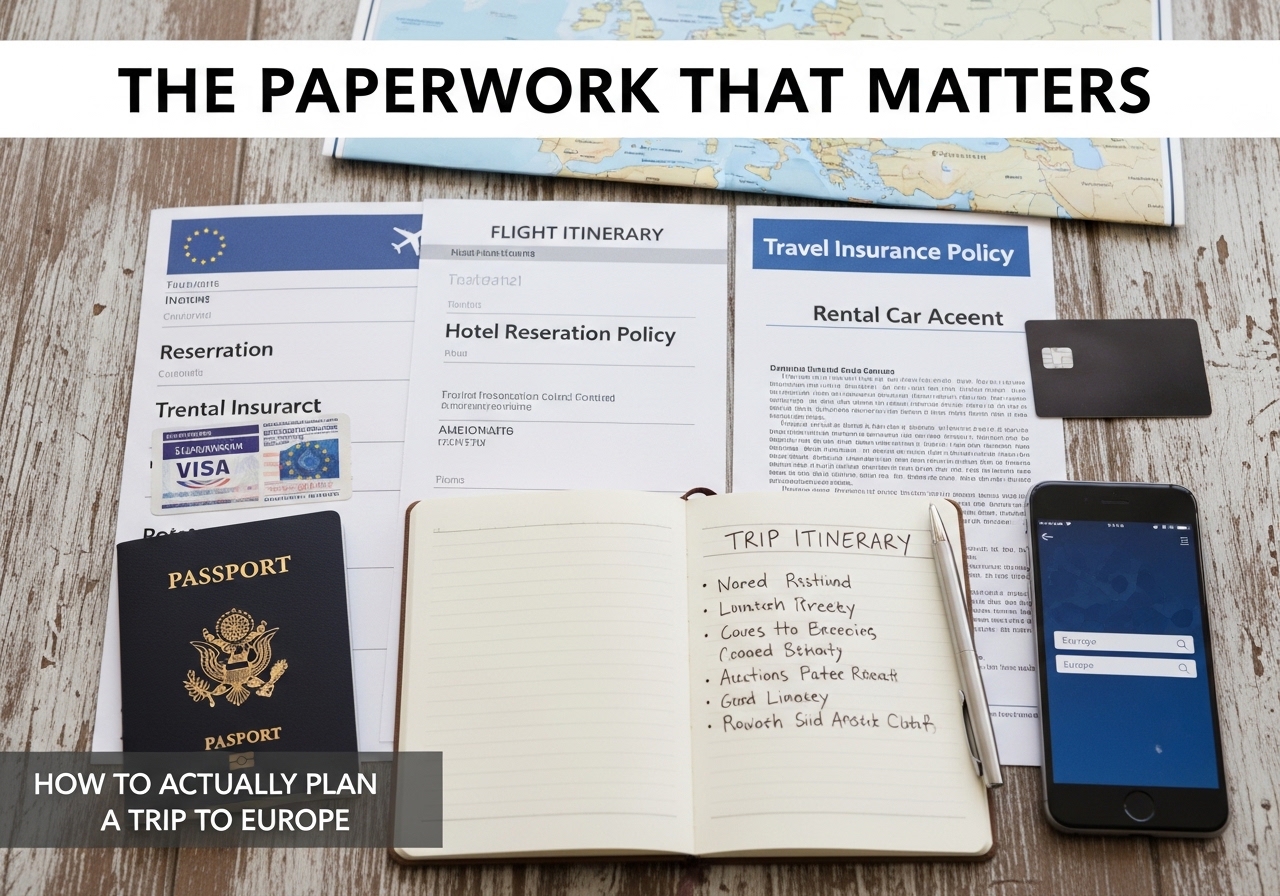
Phase 2: The Paperwork That Matters
Your passport needs 6 months validity.
Not 3 months. Not until expiration. Six months beyond your planned departure, or airlines won’t let you board. Check this now. Renew if needed passport processing takes 8-11 weeks (or 5-7 weeks for expedited).
The ETIAS situation (starting 2025):
US citizens currently don’t need visas for Schengen countries (most of Europe). Starting mid-2025, you’ll need ETIAS authorization €7, valid for 3 years, apply online 96 hours before travel. It’s not a visa, but you can’t board without it.
Travel insurance is non-negotiable.
Not the cheap stuff airlines offer. Real medical coverage. European healthcare is excellent but not free for tourists. A broken ankle in Switzerland costs $20,000+. Emergency evacuation from Greece costs $50,000+.
I use World Nomads for adventure coverage or SafetyWing for long-term trips. Both cover COVID, hiking injuries, and gear theft. Read the fine print on pre-existing conditions and alcohol exclusions.
The document backup strategy:
Before leaving, I email myself:
- Passport photo page
- Visa/ETIAS confirmation
- Travel insurance policy
- Vaccination records
- Prescription lists (generic names, not brand names)
I also carry a Travel Wallet with RFID Blocking the Zero Grid Neck Wallet. Passport, backup credit card, €200 cash, insurance card. Worn under clothing, not in pockets. Pickpockets in Barcelona and Prague are artists. This stays on me even in hotel rooms (cleaning staff steal too).
Phase 3: Booking Flights Like a Pro
The incognito myth is half-true.
Airlines don’t track your searches with cookies (that’s paranoid). But they do use dynamic pricing based on demand. Tuesday afternoons often have lower fares because business travelers aren’t booking then.
The real tactics:
- Google Flights for price tracking (set alerts 3 months out)
- Skiplagged for hidden city fares (risky but legal don’t check bags)
- Error fare sites (Secret Flying, Scott’s Cheap Flights) for 50%+ off mistakes
- Hub strategy: Fly into major hubs (London, Paris, Amsterdam) then budget airline or train to final destination. Often saves $300+ even with the extra leg.
Open-jaw tickets save time and money. Fly into Rome, out of Paris. No backtracking. Often costs the same as round-trip to one city.
My booking timeline:
- 3-4 months out: International flights (sweet spot for price)
- 2 months out: Inter-Europe flights/trains
- 1 month out: Accommodations (earlier for high season, later for flexibility)
Phase 4: Where to Sleep (Real Talk)
Hotels vs. Airbnb vs. Hostels by city:
Paris/London/Rome: Hotels. Regulations killed Airbnb quality in major cities. You’re getting illegal sublets with bad locations. Boutique hotels offer better value, locations, and service.
Berlin/Lisbon/Prague: Airbnb. Still legal, still excellent. You get space, kitchens, local neighborhoods. Check for “entire apartment” and read reviews about noise European buildings have thin walls.
Interlaken/Amalfi/Santorini: Book 6 months out or don’t go. Limited supply, insane demand. I’ve seen $80 hostels become $400 during peak season.
The location priority: Stay within 10 minutes walk of a metro station. European public transport is excellent but exhausting if you’re hauling luggage up hills or transferring three times.
My accommodation checklist:
- Air conditioning (non-negotiable in July/August, rare in Northern Europe)
- Elevator or ground floor ( hauling suitcases up 4 flights of narrow stairs is medieval torture)
- Blackout curtains (sun sets at 10 PM in summer, rises at 5 AM)
- Washer (packing light requires laundry, European laundromats are inconvenient)
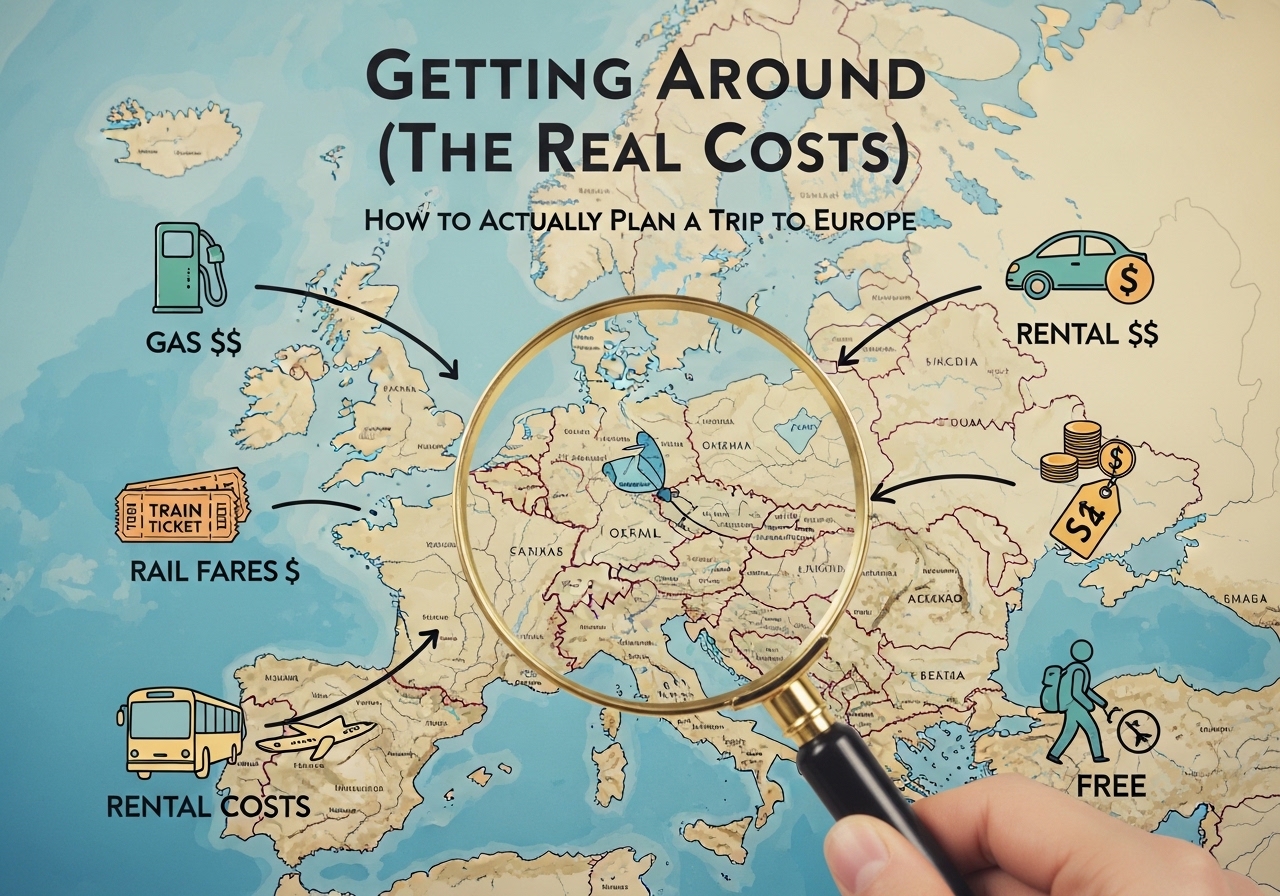
Phase 5: Getting Around (The Real Costs)
Trains vs. budget airlines the math:
Under 4 hours? Take the train. City center to city center, no security lines, no baggage fees, scenery, space to work.
Over 6 hours? Fly if the price difference is significant. But factor in:
- Airport transfer costs (€15-30 each way)
- Time to airport (1-2 hours)
- Baggage fees (€25-50 for budget airlines)
- Early check-in requirements (2 hours for international)
The Eurail pass decision:
Don’t buy blindly. Calculate individual ticket prices on Trainline or Omio first. Eurail makes sense if:
- You’re under 28 (youth discounts)
- Traveling in high season (reservations required, pass guarantees seat)
- Taking 3+ long-distance trains in 2 weeks
Otherwise, point-to-point tickets are cheaper. Book 2-3 months ahead for early-bird fares (50-70% off).
Car rental reality:
Manual transmission is standard. Automatic costs 40% more. Narrow streets in old towns will destroy your nerves and your mirrors. Parking costs €30-50/day in cities. Only rent for rural regions (Tuscany, Provence, Scottish Highlands).
Phase 6: The Tech Setup That Saves Trips
Your phone is your lifeline. Set it up before departure.
Data plan: Don’t roam. Don’t buy airport SIMs (overpriced). Use Airalo eSIMs you install before landing. €20 for 10GB across Europe. Works immediately. No physical SIM swap. I’ve used this in 15 countries without issue.
Essential apps (download before you go):
- Maps.me (offline maps, works without data, better for walking than Google)
- Google Translate (download offline language packs, camera feature reads menus)
- Citymapper (public transport in major cities, real-time updates)
- XE Currency (quick conversion so you know what you’re spending)
- Splitwise (if traveling with friends, tracks shared expenses)
The power situation: Europe uses Type C (two round pins) and Type F (two round pins with grounding clips). The UK uses Type G (three rectangular pins). I carry the EPICKA Universal Travel Adapter covers 150+ countries, has 4 USB ports, surge protection. One adapter for entire trips, not country-specific dongles.
Backup power: European trains and cafes don’t always have outlets. The Anker PowerCore 10000 charges my phone 3 times. Fits in a pocket. Essential for long train days or when you’re navigating unfamiliar cities and can’t afford a dead battery.
Phase 7: Packing for Reality, Not Pinterest
The carry-on only rule:
European budget airlines (Ryanair, EasyJet, Wizz Air) charge €25-60 for checked bags. They measure carry-ons obsessively. I travel with a Osprey Farpoint 40 maximum legal carry-on size, fits in any overhead bin, comfortable enough for hiking, professional enough for cities.
The packing list that actually works:
Clothing (capsule wardrobe):
- 3 merino wool t-shirts (odor-resistant, quick-dry, wear 3-4 times between washes)
- 1 button-down shirt (dresses up, sun protection)
- 1 lightweight sweater or cardigan
- 1 packable down jacket (even summer evenings get cold)
- 2 pairs pants (one technical, one nice)
- 1 dress or nice outfit (European restaurants have dress codes)
- 3 pairs underwear (quick-dry, wash in sink)
- 3 pairs socks (merino wool, no cotton)
- 1 pair comfortable walking shoes (broken in, waterproofed)
- 1 pair sandals or nicer shoes
Toiletries:
- Solid shampoo/conditioner (no liquid limits, TSA-friendly)
- Sunscreen (expensive in Europe, bring your preferred brand)
- Basic medications (ibuprofen, antihistamines, anti-diarrheal pharmacies require prescriptions for basics)
- Prescriptions in original bottles with doctor’s note
The “nice to have” that becomes essential: A packable daypack. The Sea to Summit Ultra-Sil Day Pack stuffs to the size of an egg, weighs 2.4 ounces, carries 20 liters. Perfect for grocery runs, beach days, or when your main bag is too heavy for sightseeing.
Phase 8: Eating Without Getting Scammed
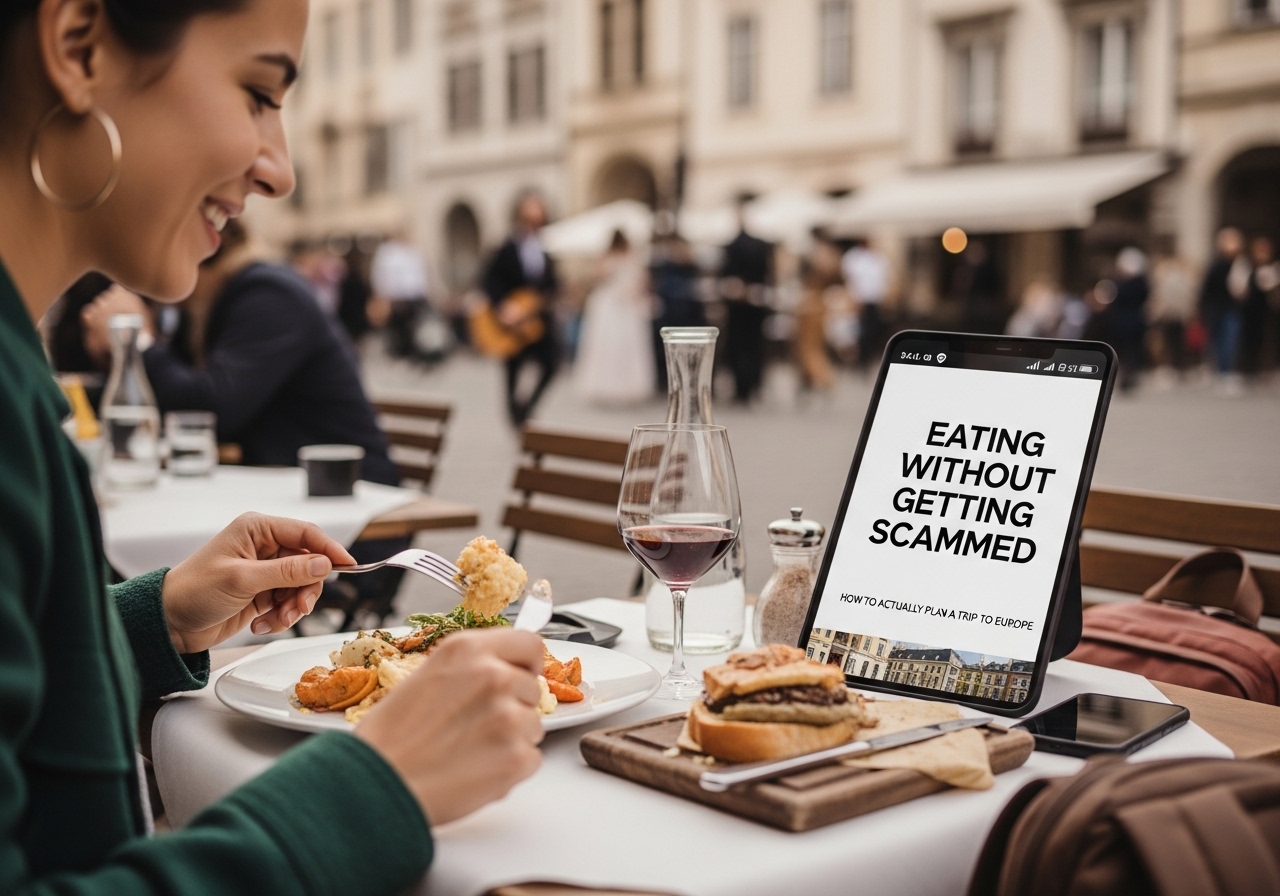
The tourist trap indicators:
- Menu in 5 languages
- Photos of food
- “Tourist menu” specials
- Location within 2 blocks of major attractions
The local restaurant rules:
- Menu in local language only (Google Translate camera feature reads it)
- Full of locals at 8 PM (Europeans eat late)
- Handwritten specials
- No English spoken (ironically, this signals authenticity)
The budget hack: Lunch is the deal. “Menu del dia” in Spain, “plat du jour” in France, “pranzo fisso” in Italy 3-course meals for €10-15. Same kitchen as dinner, half the price.
Grocery stores are your friend. Even in expensive Switzerland, a €4 supermarket sandwich beats a €25 tourist trap meal. Look for: Coop (Switzerland), Carrefour (France), REWE (Germany), Mercadona (Spain), Conad (Italy).
Phase 9: The Daily Rhythm That Works
European time is different.
Shops close 1-5 PM for siesta in Southern Europe. Dinner starts at 9 PM in Spain. Museums are closed Mondays. Grocery stores close Sundays (all day in Germany, half-day elsewhere).
My sample day structure:
- 8:00 AM: Breakfast (hotel or café €3-5 for coffee and pastry)
- 9:00 AM: Major attraction (beat crowds, morning light for photos)
- 12:00 PM: Lunch (the big meal, sit-down, local spot)
- 2:00 PM: Walk/explore neighborhoods (museums are crowded, streets are lively)
- 4:00 PM: Coffee break (espresso standing at bar €1, not €4 at tourist cafés)
- 6:00 PM: Rest/shower at hotel (European hotels often lack afternoon check-in flexibility)
- 8:00 PM: Dinner reservation (book ahead for popular spots)
- 10:00 PM: Evening stroll (cities are safest and most beautiful at night)
The pacing rule: One major activity per day. Two if they’re small and close. Three is how you become exhausted and start hating cathedrals.
Phase 10: Handling the Inevitable Problems
Lost passport:
- File police report immediately (required for replacement)
- Contact US embassy (appointment required, 24-hour emergency line for after-hours)
- Carry passport photos and photocopies (speeds replacement)
- Travel insurance covers emergency passport costs
Medical emergency:
- Call 112 (EU-wide emergency number)
- Show insurance card
- Keep receipts for reimbursement
- Pharmacies can handle minor issues without doctor visits
Missed train/flight:
- Don’t panic. European transport is frequent.
- Train tickets: Usually valid on next train in same class (check terms)
- Flights: Budget airlines require new ticket; full-service airlines rebook for fee
Theft:
- Cancel cards immediately (apps make this instant)
- File police report (required for insurance claims)
- Use backup cards/cash kept separate from main wallet
- Never carry all payment methods together
The Final Checklist (2 Weeks Before)
Booked:
- [ ] Flights (international and intra-Europe)
- [ ] First 2 nights accommodation (book rest as you go for flexibility)
- [ ] Travel insurance
- [ ] Train reservations for high-speed routes
- [ ] Restaurant reservations for special dinners
Prepared:
- [ ] Passport valid 6+ months
- [ ] ETIAS authorization (starting 2025)
- [ ] Phone unlocked for international SIMs
- [ ] Credit cards with no foreign transaction fees (Chase Sapphire, Capital One Venture)
- [ ] Notified bank of travel dates (prevents card blocks)
- [ ] Downloaded offline maps and translation packs
- [ ] Packed medications in carry-on (never check prescriptions)
Planned:
- [ ] Rough itinerary with backup options
- [ ] List of “must-sees” vs. “nice-to-sees”
- [ ] Rest days (every 3-4 days of intense sightseeing)
- [ ] Budget tracking method (app or notebook)
The Bottom Line
Planning a Europe trip is administrative work disguised as adventure. The research is boring. The spreadsheet is unsexy. But the payoff is walking into a train station knowing exactly which platform, which ticket, and which seat while other tourists panic at the kiosks.
Start early. Read the fine print. Pack light. And remember: the plan is a framework, not a prison. The best moments conversations with strangers, unexpected discoveries, perfect meals happen in the margins of the itinerary.
Now book that flight. Europe is waiting. Just remember the exit stamps.
This post contains affiliate links. If you purchase through these links, I earn a small commission at no extra cost to you. I only recommend products I’ve personally tested across 40+ Europe trips.