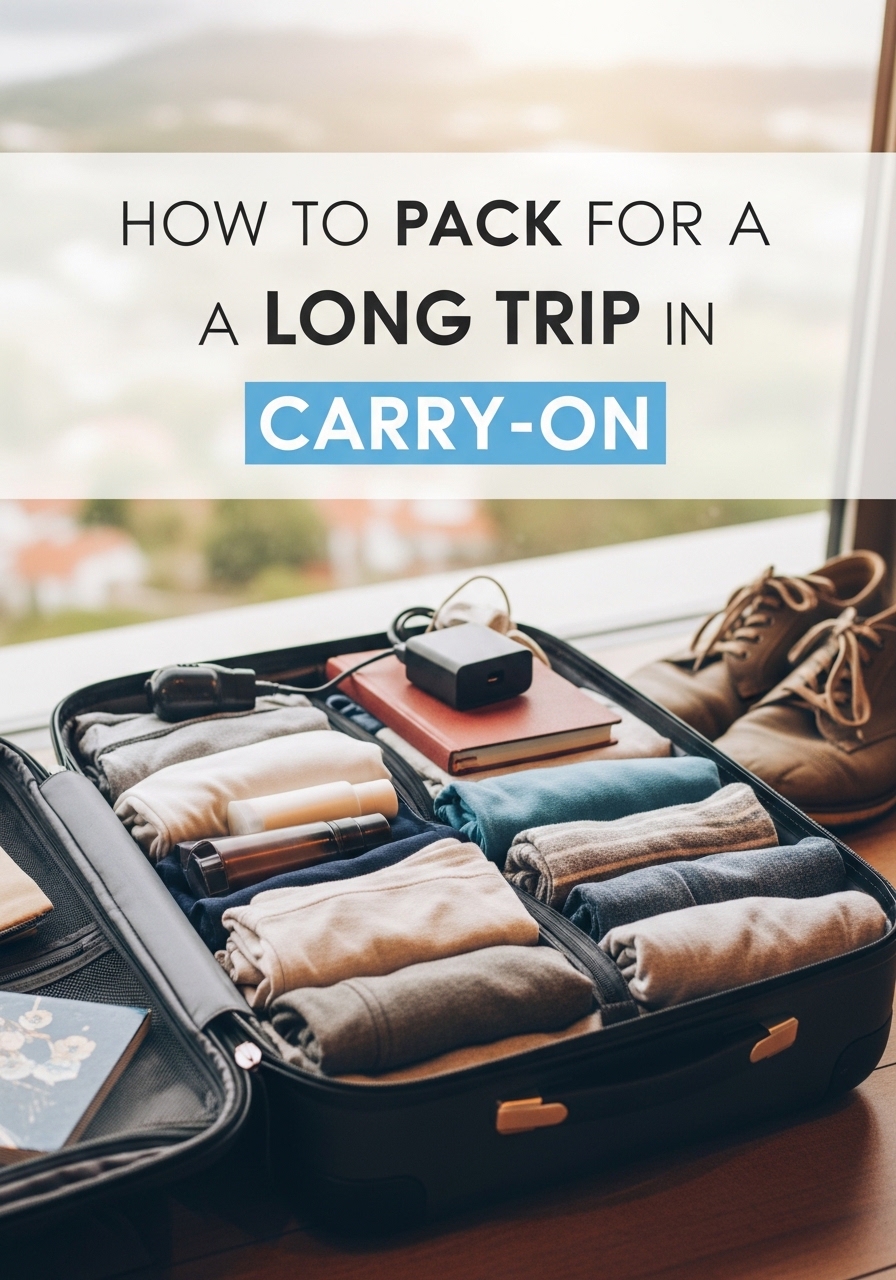
Packing for Europe in winter can feel harder than planning the trip itself. You need enough clothing to stay warm outside, but you also need to carry your suitcase through airports, stations, hotel stairs, and cobbled streets. The answer is not packing more. It is packing the right layers.
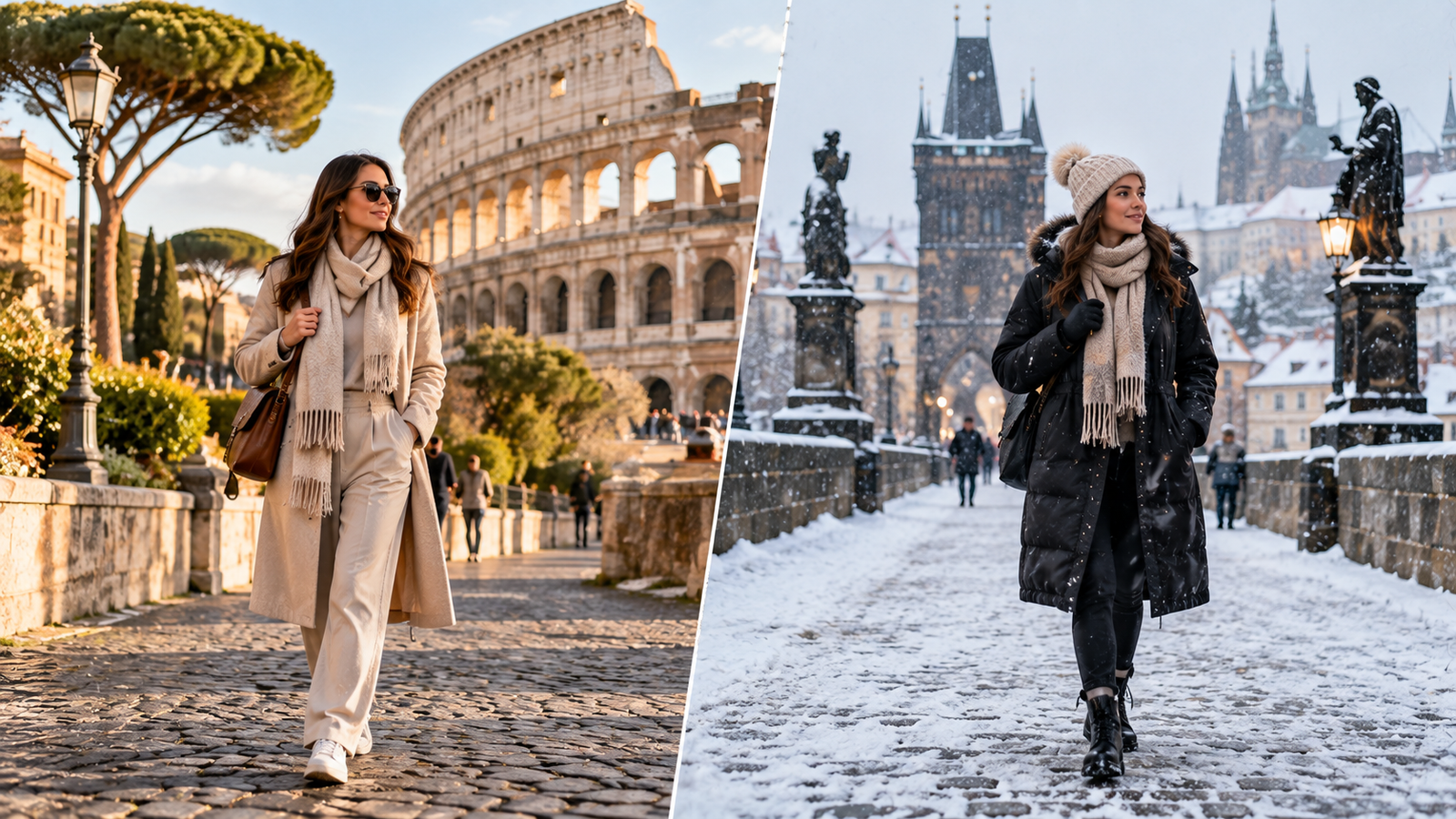
A winter trip to Lisbon is very different from January in Stockholm. London may be cold and wet. Prague can bring freezing mornings and icy streets. Rome can feel mild in the afternoon and chilly after sunset. That is why a good Winter Europe Packing List needs more than one heavy coat and several sweaters.
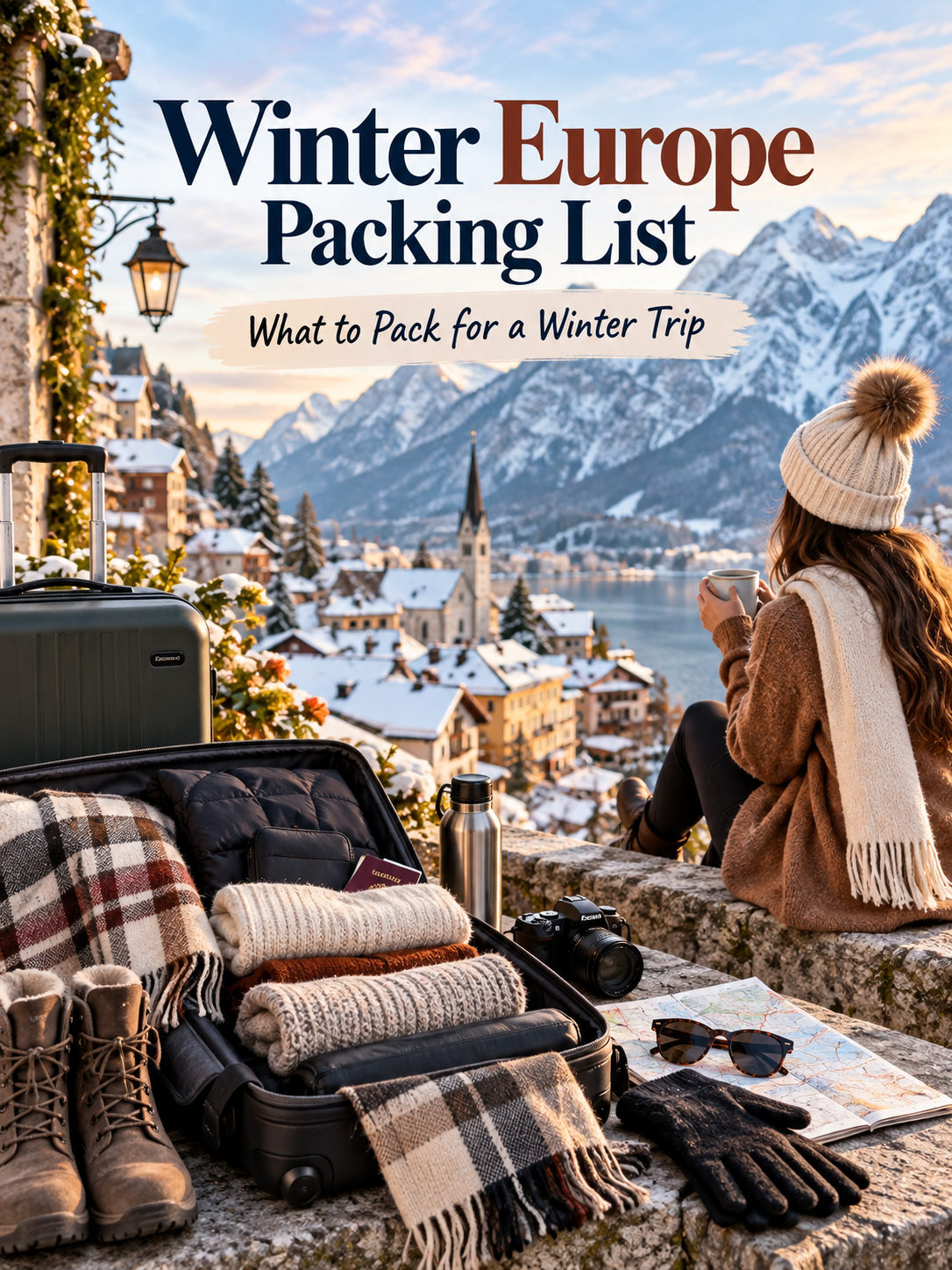
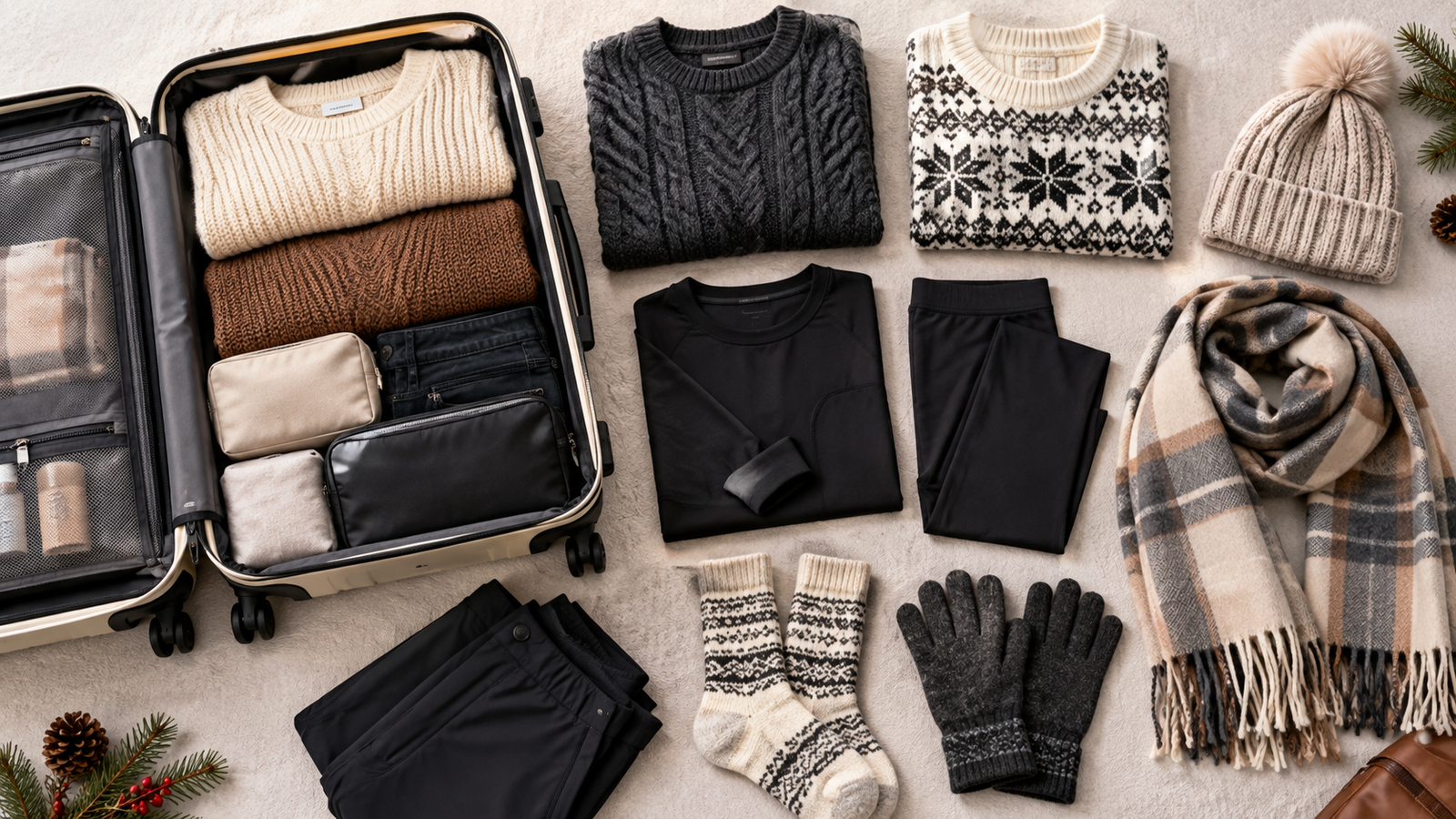
For most winter city trips, start with thermal base layers, comfortable tops, one or two warm mid layers, weather appropriate outerwear, waterproof walking shoes, warm socks, gloves, a scarf, and a hat. Then adjust the warmth according to the coldest place on your itinerary.
Quick Winter Europe Packing List
For a one week city trip, this is a practical starting point.
Clothing
• 2 thermal tops
• 1 or 2 thermal leggings
• 3 long sleeve tops
• 2 warm sweaters
• 2 pairs of trousers or jeans
• 1 optional dress or nicer outfit
• 1 warm coat
• 1 waterproof outer layer if your main coat is not waterproof
• 7 pairs of underwear
• 5 to 7 pairs of socks
• 2 warm wool socks
• 1 set of sleepwear
Shoes and accessories
• 1 pair of waterproof walking boots
• 1 optional pair of comfortable sneakers
• Warm scarf
• Gloves
• Knit hat
• Compact umbrella
• Sunglasses
Travel essentials
• Power bank
• Travel adapter
• Reusable water bottle
• Crossbody bag or small day backpack
• Packing cubes
• Lip balm
• Hand cream
• Medicines
• Passport and travel documents
You can use almost the same list for a ten day or two week trip if you plan to do laundry.
Start With the Climate, Not the Calendar
One of the biggest winter packing mistakes is assuming that December means the same weather everywhere in Europe. It does not. Before you pack, look at every destination on your itinerary.
Southern Europe
Think Portugal, southern Spain, Greece, southern Italy, and parts of the Mediterranean. You still need a proper jacket, long trousers, closed shoes, and warm layers. Rain and wind can make mild temperatures feel much colder. A huge insulated coat may be unnecessary unless your trip also includes colder destinations.
Western Europe
London, Paris, Amsterdam, Brussels, and nearby cities can feel damp and cold. Waterproof outerwear matters here. Rain, wind, wet streets, and long periods outside often matter more than dramatic snowfall.
Central and Eastern Europe
Vienna, Prague, Budapest, Berlin, Kraków, and similar winter destinations call for warmer layers. Snow and freezing conditions are possible. You may spend hours outside at Christmas markets, monuments, and old town squares. Thermals, gloves, a warm hat, and proper footwear become much more important.
Northern Europe and Alpine Areas
Scandinavia, Iceland, and mountain areas require serious winter clothing. A city sightseeing wardrobe may also need stronger insulation, warm boots, thermal bottoms, thicker gloves, and a coat built for real cold. If you are skiing, hiking in snow, or joining winter outdoor activities, you will need specialist clothing beyond this general city packing list.
1. Thermal Base Layers
Thermals are one of the most useful things you can pack for a European winter. They add warmth without taking up as much suitcase space as several bulky sweaters.
Pack two thermal tops for a one week trip. Add one or two thermal leggings if you are visiting genuinely cold destinations. Wear them beneath your normal clothes rather than treating them as your visible outfit.
Merino wool is especially useful because it helps regulate temperature and manage moisture. A Smartwool Classic Thermal Merino Base Layer is a practical Amazon product to consider if you need a proper winter base layer.
You do not need the thickest option for every destination. Southern Europe may only require a lightweight thermal on colder days.

Smartwool Men’s Classic Thermal Merino Base Layer Crew
2. Long Sleeve Tops
Pack about three long sleeve tops. Choose pieces thin enough to sit comfortably beneath a sweater.
Your winter outfit might look like this: thermal top, long sleeve shirt, sweater, coat. On a milder day, remove the thermal or sweater.
This flexibility matters because European museums, restaurants, trains, shops, and hotels can feel much warmer than the streets outside. If all your clothing is extremely thick, you may overheat as soon as you step indoors.
Choose colors that work together so every top matches every pair of trousers.
3. Warm Sweaters
Two sweaters are usually enough for one week. You will be wearing a coat outside, so there is little reason to pack six different bulky knits.
Choose sweaters you can wear more than once. Merino wool, wool blends, and other warm fabrics can provide insulation without requiring huge amounts of suitcase space.
One sweater can be casual. The second can look slightly more polished for restaurants, evenings, or city photos. The goal is versatility, not creating a completely different outfit every day.
4. Trousers and Jeans
Two main bottoms are enough for most one week trips. Dark jeans are practical because they work for sightseeing, cafes, museums, trains, and casual dinners.
A second pair of trousers adds variety. If temperatures are very low, wear thermal leggings beneath them. This is often more efficient than packing extremely thick trousers that only work on the coldest day.
Avoid bringing several pairs of heavy denim. Jeans take up a surprising amount of suitcase space and can take a long time to dry if they become soaked.
5. The Right Winter Coat
Your coat is the most important visible piece of clothing in the suitcase. Choose it based on the coldest destination you will visit.
For Central, Eastern, Northern, and alpine Europe, look for a properly insulated winter coat with protection from wind and moisture. For milder parts of Southern Europe, a medium weight waterproof jacket with warm layers underneath may be enough.
A hood is useful. You will appreciate it when rain begins unexpectedly or strong wind makes an umbrella annoying.
If you are visiting several climates, avoid bringing three coats. Pack for the coldest destination and change the layers underneath as conditions become milder.
6. Waterproof Walking Boots
Winter Europe often involves walking on wet stone, cobbles, slush, snow, and slippery pavement. Your shoes need to do more than look good.
Choose footwear with grip, water protection, and enough space for warm socks. Most importantly, wear the shoes before the trip.
Brand new boots can turn a beautiful first day in Paris or Prague into several painful days of blisters.
For a cold northern itinerary, insulated waterproof boots make sense. For Rome, Lisbon, Barcelona, or Athens, waterproof leather walking shoes or ankle boots may be enough.
Comfort should win over fashion if you expect to walk several miles each day.
7. Warm Socks
Bring enough everyday socks for the trip or until your next laundry day. Then add two pairs of warmer wool socks.
Wool socks are especially useful for Christmas markets, cold evening walks, snow, and long periods outside.
Do not automatically wear extremely thick socks inside fitted shoes. If your boots become too tight, circulation and comfort can suffer.
Test the full combination at home. Boots, socks, and thermal leggings should all work together comfortably.
8. Gloves, Scarf, and Hat
Small winter accessories provide a lot of warmth for very little suitcase space. Bring all three if you are traveling into cold parts of Europe.
Choose gloves that allow you to use your phone if you expect to check maps, train tickets, and camera settings outside.
A scarf helps block wind around your neck and can make the same coat feel warmer. A knit hat is particularly important when you will be outdoors for several hours.
These items also let you change your appearance in photos without packing another coat.
9. Rain Protection
Do not prepare only for snow. Rain can be the bigger problem in many European cities.
Your outer layer should ideally handle wet weather. A compact umbrella is useful in cities, although a proper hood can be more practical when wind becomes strong.
Pack your umbrella somewhere easy to reach. If it sits beneath everything in your suitcase, it is not helping when rain starts while you are leaving a train station.
A small reusable bag is also helpful for separating wet accessories from dry belongings.
10. A Comfortable Day Bag
You do not need a huge backpack for normal city sightseeing.
A small crossbody bag works well for a phone, wallet, passport when necessary, tissues, lip balm, and small personal items.
A compact day backpack is better when you also need a water bottle, camera, scarf, umbrella, and extra layer.
Choose something comfortable enough to carry for several hours. Secure closures are useful in crowded stations, markets, and tourist areas.
Do not carry your passport loosely in an outside pocket.
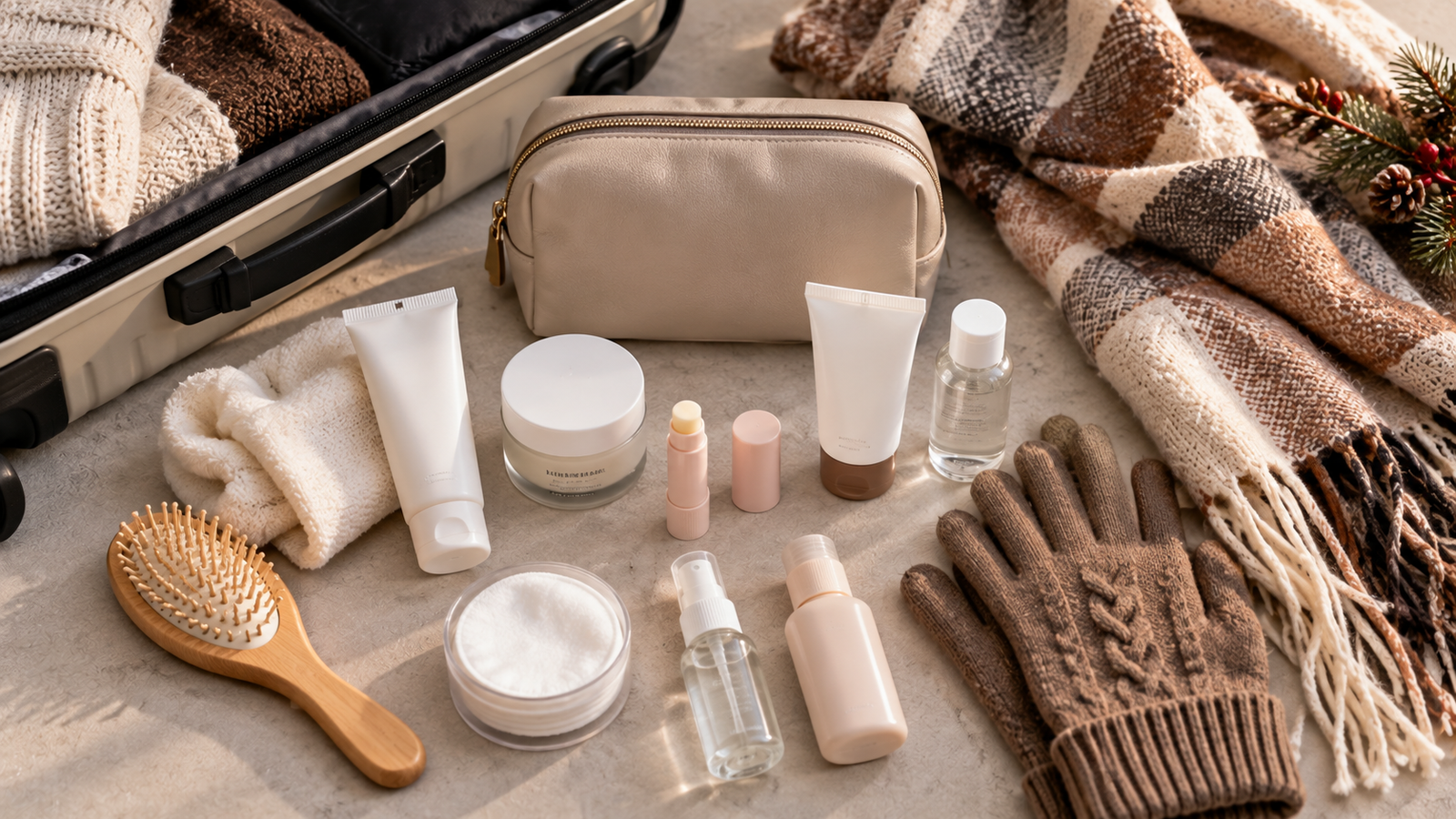
11. Winter Skincare
Cold air, wind, indoor heating, and frequent hand washing can leave skin feeling much drier than expected.
Pack a simple moisturizer, lip balm, and hand cream. You do not need a large beauty collection. Travel sizes are enough for shorter trips.
Sunscreen is still useful in winter, particularly if you will spend extended periods outdoors or visit snowy mountain areas.
Pack any personal skincare product you know works for you instead of experimenting with several new products during your trip.
12. Power Bank and Phone Essentials
Your phone may handle boarding passes, maps, translation, attraction tickets, photography, hotel directions, and train information. That makes battery life important.
An Anker Nano Power Bank 10K 45W is a useful travel option. It can reduce the number of loose cables you need to carry and works well for long sightseeing days.
Keep the power bank in your day bag rather than buried in your main luggage.
Download important tickets and maps before leaving your accommodation so you are not completely dependent on mobile data.
13. Travel Adapter
Check the plug type for every country on your itinerary before departure.
A universal model such as the EPICKA Universal Travel Adapter can be convenient for a multi country European trip.
Remember that a plug adapter changes how your plug fits into the socket. It does not automatically make every appliance compatible with local voltage.
Check the voltage information on hair tools and other electrical devices before connecting them.
Your phone charger, camera charger, watch charger, and power bank may all need charging on the same night, so think about how many ports you actually use.
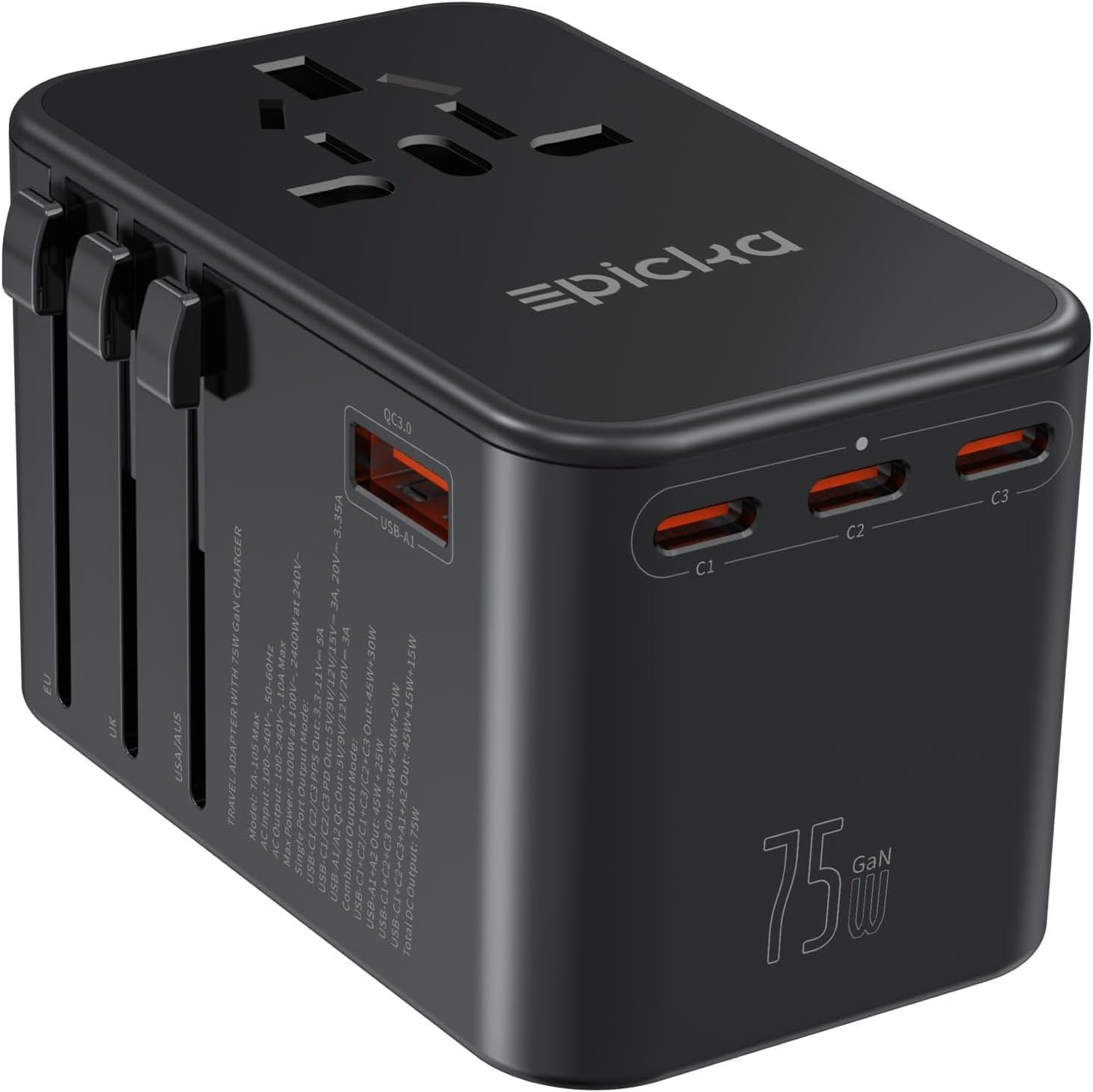
EPICKA Universal Travel Adapter
14. Toiletries and Medicines
Keep toiletries simple. Pack toothpaste, toothbrush, deodorant, moisturizer, lip balm, hair care products, and personal hygiene items.
Add any prescription medicines you need. Carry enough medication for the trip and keep important medicine in your hand luggage rather than placing everything in checked baggage.
You can buy common toiletries in European cities. There is no need to carry large bottles of products that are easy to replace.
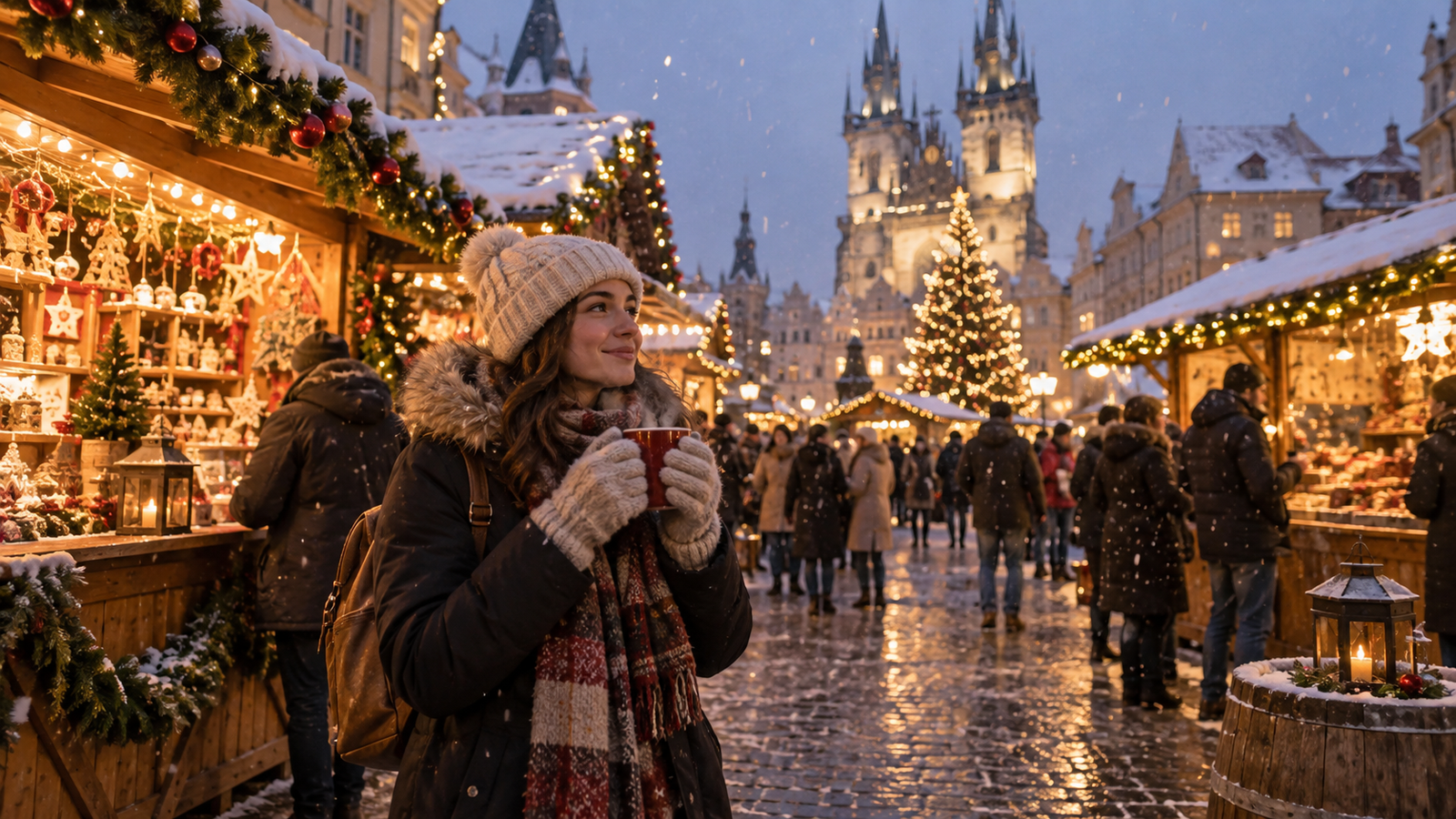
15. What to Wear to European Christmas Markets
Christmas market trips require slightly different planning because you may stand outside for much longer than on a normal museum day.
The most useful combination is a thermal base, warm sweater, insulated coat, comfortable trousers with an optional thermal layer underneath, wool socks, waterproof boots, gloves, scarf, and hat.
Warm footwear matters more than packing another fashionable sweater. Your feet can become cold quickly when you stand in the same place drinking mulled wine, browsing stalls, or waiting for an evening event.
16. Packing for Rain Versus Snow
Rain requires waterproofing. Snow requires waterproofing plus warmth and traction.
For a rainy winter city trip, focus on a waterproof jacket, umbrella, leather or waterproof footwear, and clothing that dries reasonably quickly.
For snow, add warmer socks, stronger boots, thermal bottoms, a warmer coat, gloves, and a hat.
Ice creates another problem. Shoes with smooth soles may become difficult on slippery streets.
Check the forecast shortly before departure and adjust your shoes and outerwear instead of trying to predict winter conditions months in advance.
17. How to Pack Light for Europe in Winter
Winter clothes are bulky, so the suitcase needs a system.
Wear your largest coat and heaviest footwear during the flight. Pack only two sweaters. Use thermal layers to increase warmth instead of filling your bag with thick clothing.
Choose a simple color palette so all tops, bottoms, and outerwear work together.
For trips longer than a week, do laundry rather than doubling every quantity.
Packing cubes can help organize the suitcase, although they do not magically reduce the weight of what you bring.
Always check airline weight limits as well as suitcase dimensions.
18. What Not to Pack for Winter in Europe
You can save a surprising amount of space by leaving unnecessary items at home.
• Skip several giant sweaters
• Avoid packing three heavy coats
• Do not bring uncomfortable shoes only because they look good in photographs
• You probably do not need a different outfit for every dinner
• Large bottles of basic toiletries are rarely necessary
• Leave valuable jewelry at home unless you have a specific reason to bring it
• Do not bring snow equipment for a normal city trip unless your planned activities actually require it
The best winter suitcase contains items that get used repeatedly.
A Practical One Week Winter Outfit Formula
You can create a full week of outfits from a surprisingly small wardrobe.
Start with three long sleeve tops and two sweaters. Combine them with two pairs of trousers. Add thermal layers underneath when needed.
Wear one warm coat throughout the trip. Use your scarf, hat, and other accessories to change the look.
Bring one slightly nicer top or outfit for evenings if your plans call for it.
This gives you enough variety without requiring a large suitcase. The formula works particularly well for city trips because the coat will cover much of your clothing while you are outdoors.
Common Winter Europe Packing Mistakes
The most common mistake is bringing bulky clothing instead of building layers.
Another mistake is packing for the warmest city on the itinerary. Pack for the coldest destination instead.
Do not underestimate wet weather. Cold rain can make a poorly chosen outfit uncomfortable very quickly.
Avoid relying on a single pair of shoes if your itinerary is long and wet. Shoes can take time to dry.
Do not forget indoor temperatures either. You need to be able to remove layers comfortably inside restaurants, museums, shops, and trains.
Finally, do not fill every inch of your suitcase before leaving home. Winter trips often involve Christmas markets and seasonal shopping, so a little free luggage space is useful.
Conclusion
A good Winter Europe Packing List is less about bringing more clothing and more about building a flexible layering system.
Start with thermal base layers. Add simple long sleeve tops and warm sweaters. Choose one coat that suits the coldest destination on your route. Then protect your feet with comfortable waterproof shoes and warm socks.
Gloves, a scarf, and a hat take very little space but make long days outside much easier.
Your destination matters too. Lisbon and Rome require different winter packing from Prague, Vienna, Stockholm, or the Alps. Check the forecast before you leave and adjust the insulation rather than rebuilding the entire suitcase.
For most one week trips, two thermals, three tops, two sweaters, two bottoms, one coat, one main pair of boots, and a few smart accessories are enough.
Pack for comfort first. Europe is much more enjoyable when you can walk through an old town, explore a Christmas market, or wait for a train without thinking about how cold and wet your feet are.
FAQs About Packing for Europe in Winter
What should I pack for Europe in winter?
Pack thermal base layers, long sleeve tops, warm sweaters, trousers, a weather appropriate coat, waterproof walking shoes, warm socks, gloves, a scarf, and a hat. Add rain protection, travel documents, toiletries, a power bank, and a travel adapter.
How many sweaters should I pack for a week in Europe?
Two sweaters are usually enough. Wear them with different tops and thermal layers rather than packing a new sweater for every day.
Do I need thermal clothing in Europe during winter?
Thermals are very useful in Central, Eastern, and Northern Europe. They may be optional for milder destinations in Southern Europe, depending on the forecast and your tolerance for cold.
What shoes should I wear in Europe in winter?
Choose comfortable waterproof boots or walking shoes with good grip. European trips often involve long days on cobbles and wet pavement, so comfort matters as much as warmth.
Can I pack for winter Europe in a carry on?
Yes. A carry on can work if you rely on thermal layers, limit bulky sweaters, wear your coat and largest shoes during travel, and do laundry on longer trips.