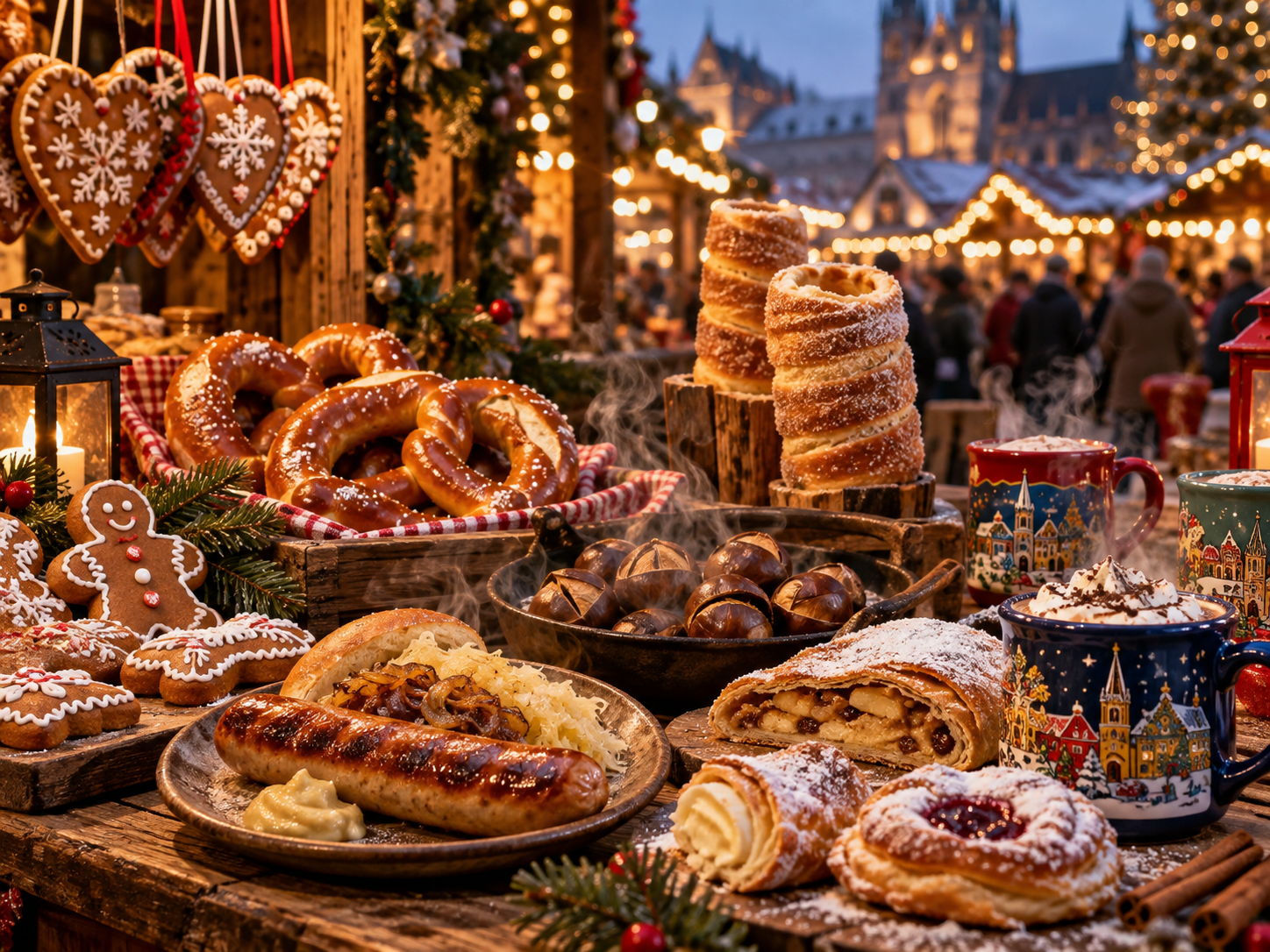
There is nothing quite like Europe in December. Medieval squares glow with thousands of lights, the air smells like cinnamon and roasted almonds, and every corner has a wooden stall selling something warm to eat or drink.
If you’re dreaming of a festive trip this year, this guide covers the best Christmas markets in Europe, including 2026 dates, what to eat, what not to miss, and how to combine several markets into one easy trip by train.
Quick answer: The best Christmas markets in Europe are Strasbourg, Nuremberg, Dresden, Vienna, and Prague. For fairytale charm, add Colmar and Rothenburg ob der Tauber. For fewer crowds and lower prices, look at Tallinn, Zagreb, and Budapest.
Some links in this post are affiliate links. If you buy through them, I may earn a small commission at no extra cost to you.
Christmas Markets in Europe at a Glance (2026 Dates)
| Market | Country | Best for | 2026 dates |
|---|---|---|---|
| Strasbourg | France | Classic “Capital of Christmas” | Nov 26 – Dec 24 (expected) |
| Colmar | France | Fairytale old town | Late Nov – Dec 29 |
| Nuremberg | Germany | Tradition and gingerbread | Nov 27 – Dec 24 |
| Dresden | Germany | Germany’s oldest market | Nov 25 – Dec 24 |
| Cologne | Germany | Multiple markets in one city | Late Nov – Dec 23 |
| Munich | Germany | Big-city Bavarian Christmas | Late Nov – Dec 24 |
| Rothenburg ob der Tauber | Germany | Medieval storybook setting | Late Nov – Dec 23 |
| Vienna | Austria | Elegant, imperial backdrops | Nov 13 – Dec 26 |
| Salzburg | Austria | Alpine charm and music | Mid/late Nov – Jan 1 |
| Prague | Czech Republic | Stunning setting, open late | Nov 28 – Jan 6 |
| Budapest | Hungary | Food and light shows | Mid-Nov – Jan 1 (expected) |
| Tallinn | Estonia | Snowy, medieval, uncrowded | Late Nov – early Jan (expected) |
| Zagreb | Croatia | City-wide Advent festival | Late Nov – early Jan |
| Copenhagen | Denmark | Tivoli Gardens lights | Mid-Nov – Jan 3 (expected) |
| Brussels | Belgium | Light shows and chocolate | Nov 27 – Jan 3 |
Important: Dates can change. Always check each city’s official tourism website before booking flights and hotels.
1. Strasbourg, France
Strasbourg calls itself the “Capital of Christmas,” and it earns the title. Its Christkindelsmärik dates back to 1570, making it one of the oldest Christmas markets in Europe. Today, hundreds of wooden chalets are spread across the historic center, with the cathedral towering above them.
- Don’t miss: The giant Christmas tree in Place Kléber and the market in front of the cathedral.
- What to eat: Bredele (small Alsatian Christmas cookies), tarte flambée, and vin chaud (hot mulled wine).
- 2026 dates: Expected November 26 to December 24.
- Tip: Hotels in the old town sell out early. Book as soon as you know your dates.
2. Colmar, France
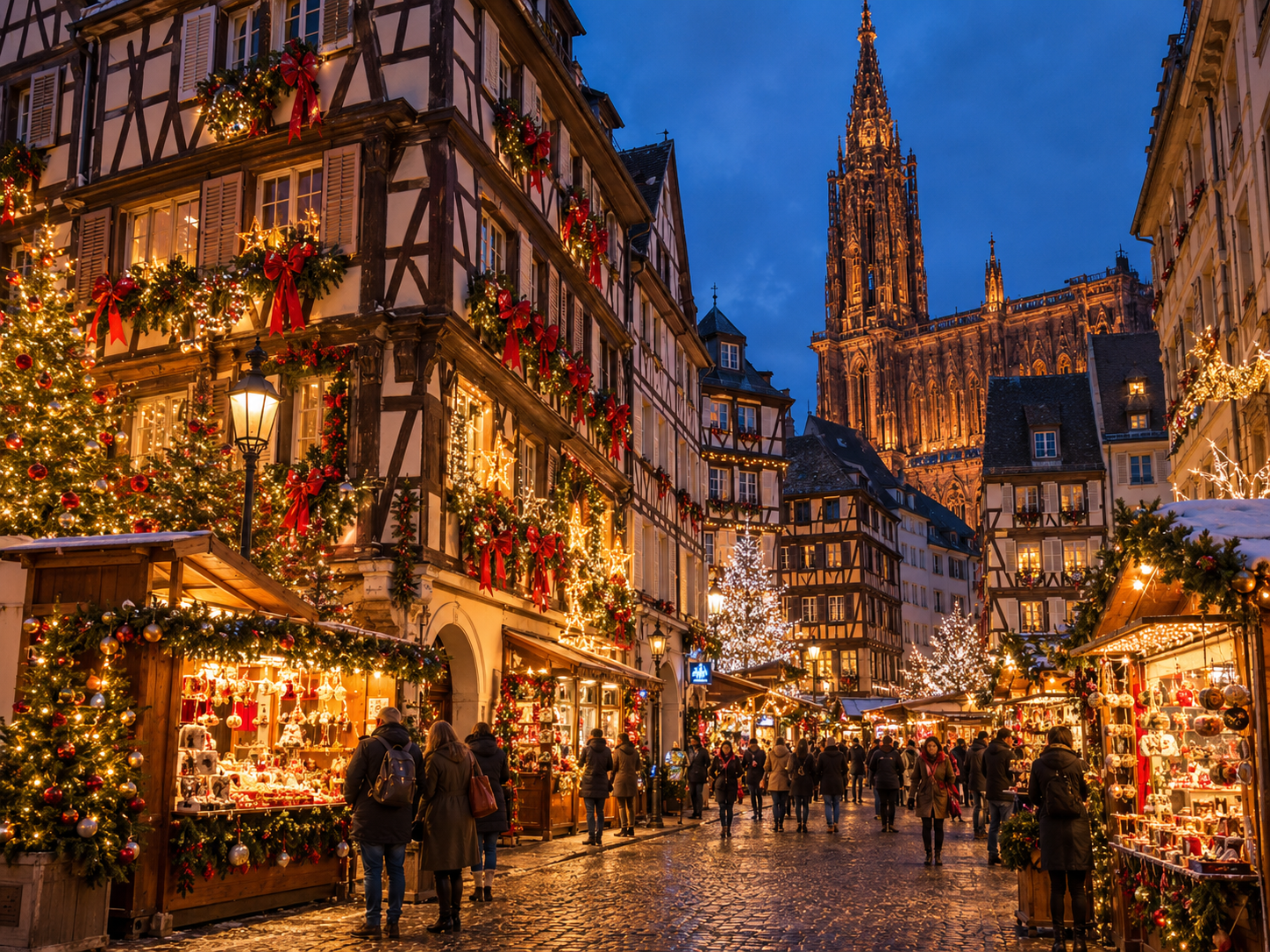
Just 30 minutes by train from Strasbourg, Colmar looks like it was built for Christmas. Colorful half-timbered houses, canals in the “Little Venice” quarter, and several small markets scattered around the old town make it one of the prettiest festive destinations in Europe.
- Don’t miss: The decorated houses of Little Venice after dark.
- What to eat: Pretzels, gingerbread, and Alsatian mulled white wine.
- 2026 dates: Late November to December 29.
- Tip: Colmar is small. Visit on a weekday if you can, because weekend crowds get heavy.
3. Nuremberg, Germany
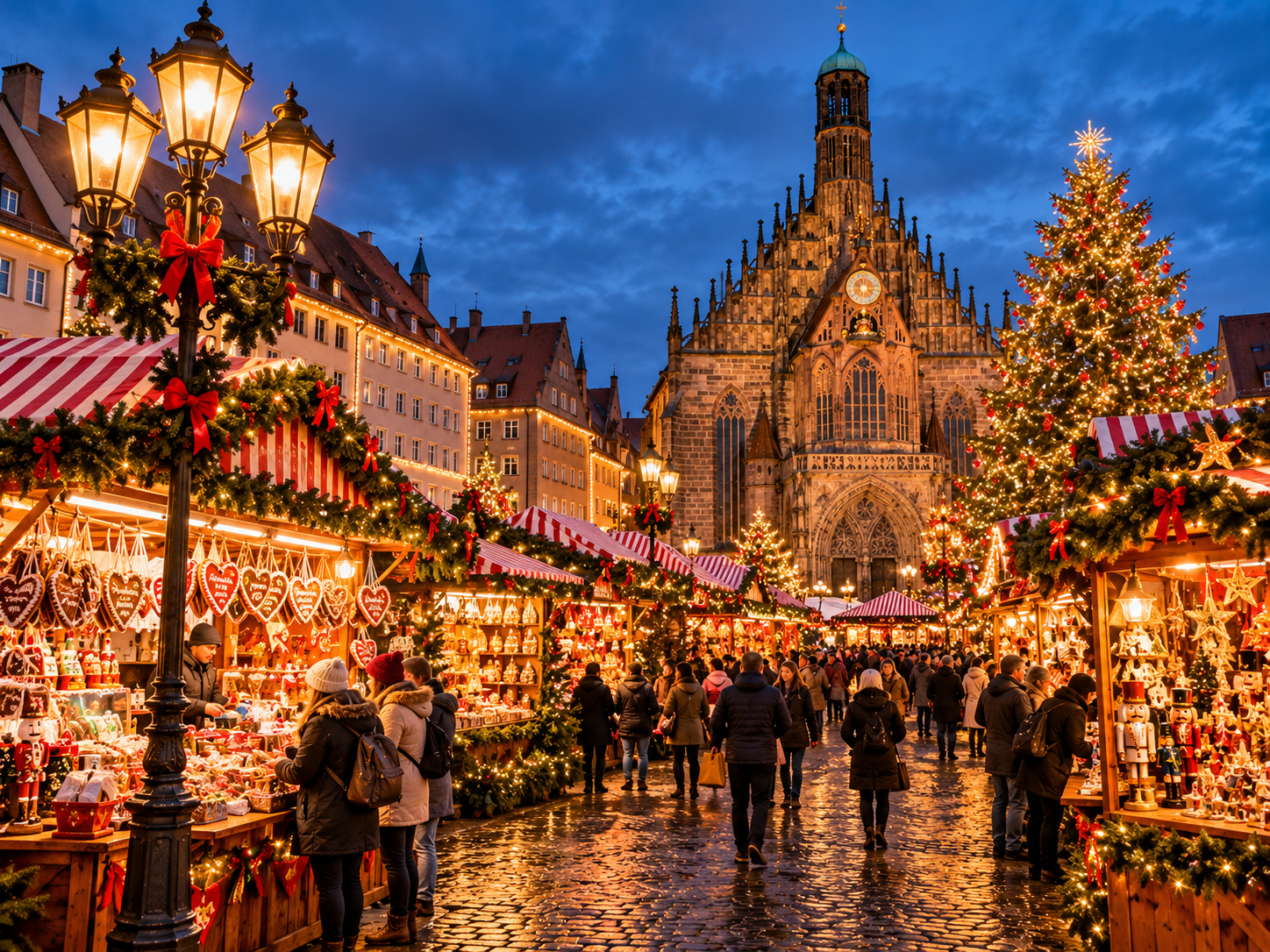
The Nuremberg Christkindlesmarkt is probably the most famous Christmas market in Germany. It opens with a ceremony in which the “Christkind,” a local young woman dressed as a golden angel, recites a prologue from the balcony of the Church of Our Lady.
- Don’t miss: The opening ceremony on the first evening and the children’s market nearby.
- What to eat: Nuremberg lebkuchen (gingerbread) and “Drei im Weckla,” three small Nuremberg sausages in a bread roll.
- 2026 dates: November 27 to December 24.
- Souvenir idea: “Zwetschgenmännle,” small figures made from dried prunes, are a local tradition.
4. Dresden, Germany
Dresden’s Striezelmarkt was first held in 1434 and is considered Germany’s oldest Christmas market. It is known for traditional wooden crafts from the nearby Ore Mountains, a towering Christmas pyramid, and a huge candle arch at the entrance.
- Don’t miss: The Stollen Festival, where a giant Christmas stollen is paraded through the city and sliced for visitors.
- What to eat: Dresdner Christstollen, a rich fruit bread dusted with powdered sugar.
- 2026 dates: November 25 to December 24.
- Tip: Dresden has several markets. Walk from the Striezelmarkt to the market by the Frauenkirche for a more intimate feel.
5. Cologne, Germany
Cologne is perfect if you want variety. The city hosts several themed markets within walking distance of each other, including the famous one at the foot of Cologne Cathedral, the gnome-themed market in the old town with its ice rink, and the Angels’ Market at Neumarkt.
- Don’t miss: The cathedral market under its canopy of lights.
- What to eat: Reibekuchen (crispy potato pancakes with apple sauce) and glühwein.
- 2026 dates: Late November to December 23.
- Tip: Each market has its own collectible mug. You pay a small deposit and can keep the mug as a souvenir or return it for a refund.
6. Munich, Germany
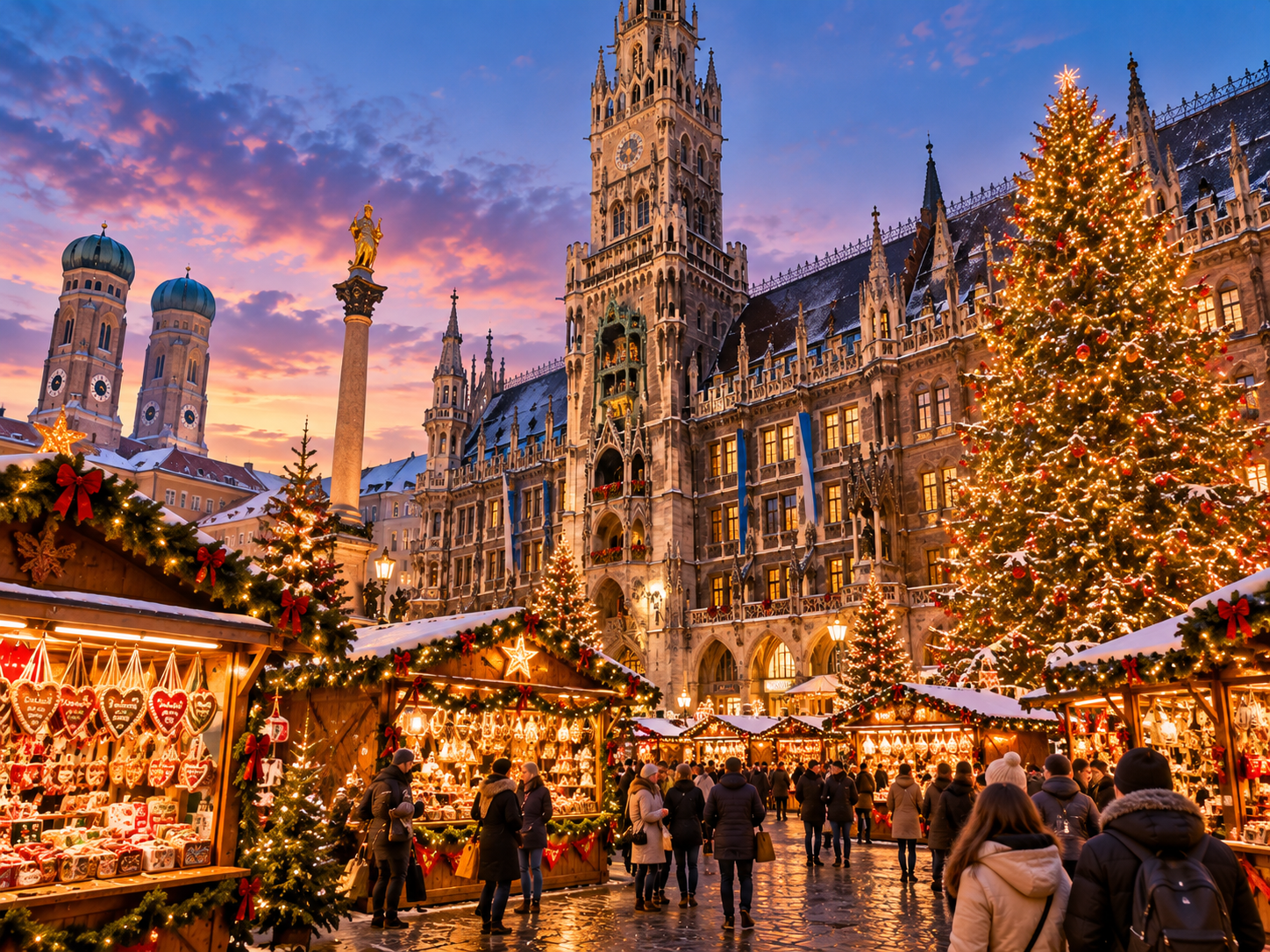
Munich’s main Christkindlmarkt fills Marienplatz, right in front of the neo-Gothic town hall. Around the city you will also find a nativity market, a medieval market, and the alternative Tollwood Winter Festival.
- Don’t miss: Live Advent music from the town hall balcony in the early evening.
- What to eat: Roasted almonds, bratwurst, and feuerzangenbowle (mulled wine with a flaming, rum-soaked sugarloaf).
- 2026 dates: Late November to December 24.
- Tip: Munich is a great base for a day trip to Salzburg or Nuremberg by train.
7. Rothenburg ob der Tauber, Germany
If you want a Christmas market inside a real medieval walled town, this is it. Rothenburg’s Reiterlesmarkt is small, but the setting is unbeatable. The town is also home to a famous Christmas shop that is open all year.
- Don’t miss: A walk along the medieval town walls at dusk.
- What to eat: Schneeballen (“snowballs”), a fried pastry ball covered in sugar or chocolate.
- 2026 dates: Late November to December 23.
- Tip: Stay overnight. Once the day-trippers leave, the town is quiet and magical.
8. Vienna, Austria
Vienna does Christmas with elegance. The main market on Rathausplatz, in front of the City Hall, has an ice skating path winding through the park. More markets sit in front of Schönbrunn Palace, Belvedere Palace, and in the charming lanes of Spittelberg.
- Don’t miss: Schönbrunn Palace market for the grand backdrop, and Spittelberg for a cozier atmosphere.
- What to eat: Punsch (Austrian fruit punch), kaiserschmarrn (shredded pancake), and roasted chestnuts.
- 2026 dates: Rathausplatz runs November 13 to December 26. Schönbrunn opens earlier in November and stays open into early January.
- Tip: Vienna opens early, so it is ideal if you can only travel in mid-November.
9. Salzburg, Austria
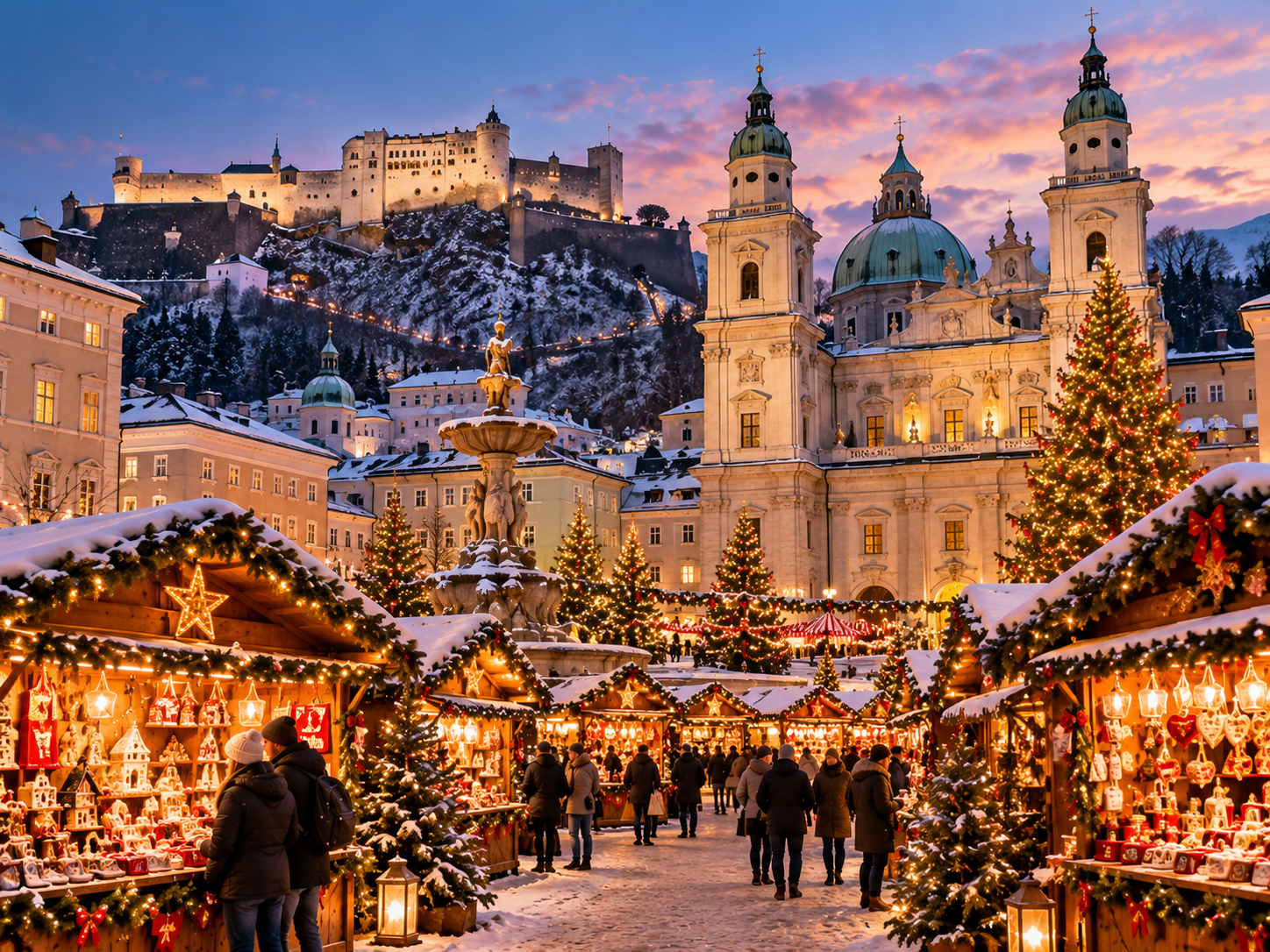
Salzburg’s Christkindlmarkt sits around the cathedral, with Hohensalzburg Fortress lit up on the hill above. It feels smaller and more intimate than Vienna, with choirs and brass music throughout the season.
- Don’t miss: The view over the market and the old town from the fortress.
- What to eat: Warm pretzels, bosna (a spiced sausage sandwich), and glühwein.
- 2026 dates: Mid/late November to January 1.
- Tip: The carol “Silent Night” was first performed in nearby Oberndorf, an easy half-day trip.
10. Prague, Czech Republic
Prague’s Old Town Square is one of the most beautiful market settings in Europe, with Gothic church spires rising behind a huge Christmas tree. A second market runs along Wenceslas Square, a short walk away.
- Don’t miss: The tree lighting, which repeats several times each evening.
- What to eat: Trdelník (a sweet chimney-shaped pastry), klobása (grilled sausage), and svařák (Czech mulled wine).
- 2026 dates: November 28 to January 6.
- Tip: Prague’s markets stay open through Christmas and New Year, which makes it a great choice for late-December trips.
11. Budapest, Hungary
Budapest has two standout markets. Vörösmarty Square is the traditional one, with craft stalls and hearty food. A few minutes away, the market in front of St. Stephen’s Basilica has a light show projected onto the church and a small ice rink.
- Don’t miss: The light projections on St. Stephen’s Basilica after dark.
- What to eat: Kürtőskalács (chimney cake), lángos (fried dough with sour cream and cheese), and goulash.
- 2026 dates: Expected mid-November to January 1.
- Tip: After the markets, warm up in one of Budapest’s thermal baths.
12. Tallinn, Estonia
Tallinn’s market fills the Town Hall Square in the medieval old town, and it often comes with real snow. The city claims one of the first public Christmas trees in Europe, displayed on the square back in 1441.
- Don’t miss: The old town walls and towers dusted in snow.
- What to eat: Black pudding with sauerkraut, gingerbread, and hot glögi.
- 2026 dates: Expected late November to early January.
- Tip: Tallinn is much less crowded than the big German markets, and it stays open well after Christmas.
13. Zagreb, Croatia
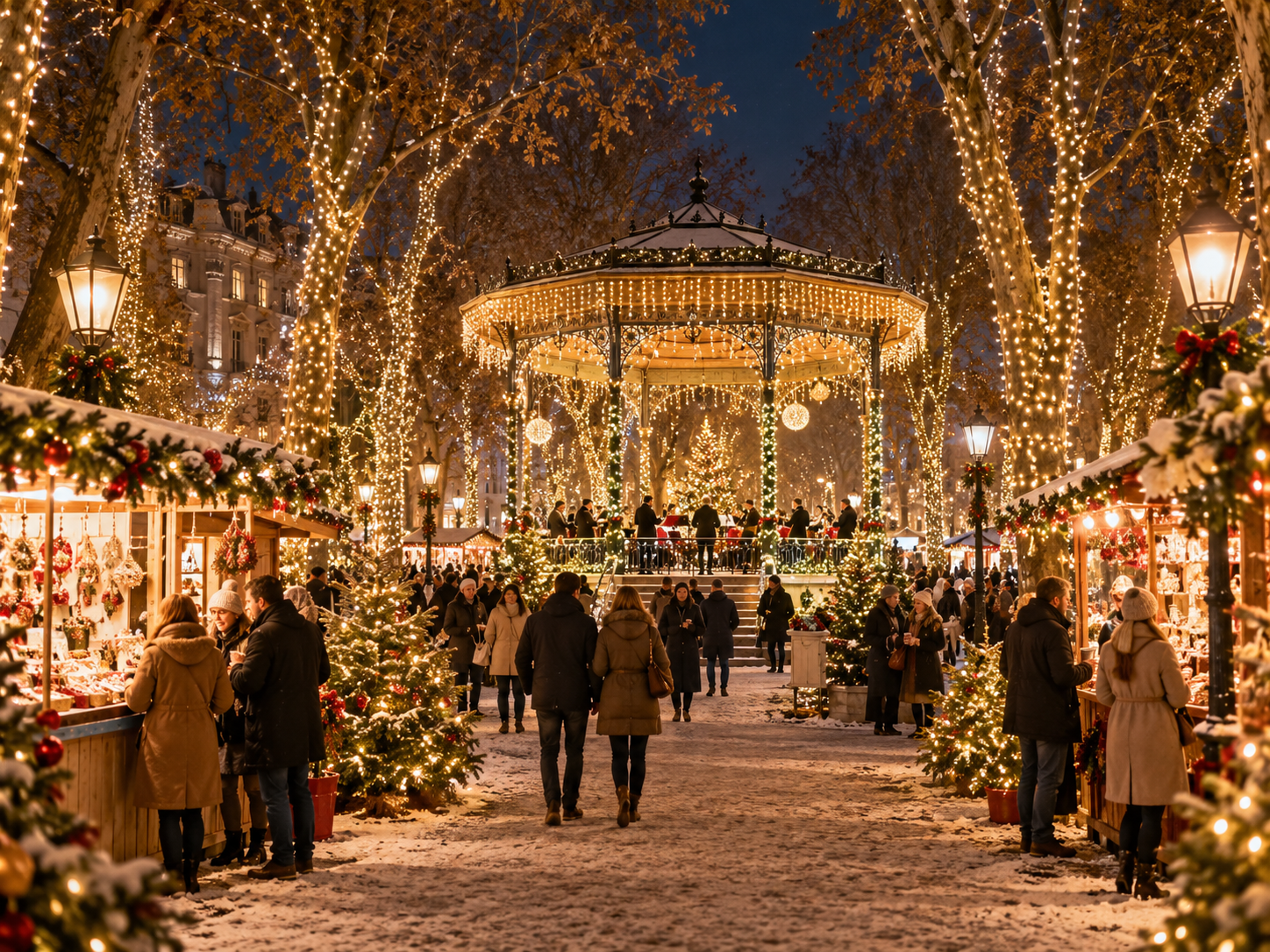
Advent in Zagreb is less of a single market and more of a city-wide festival, with lights, music, food stalls, and an ice park spread across squares and parks. It was voted Best Christmas Market in Europe three years in a row by European Best Destinations.
- Don’t miss: Zrinjevac Park under the lights and the ice park at King Tomislav Square.
- What to eat: Fritule (small Croatian doughnuts) and grilled sausages.
- 2026 dates: Late November to early January.
- Tip: Zagreb is one of the most affordable Christmas market destinations on this list.
14. Copenhagen, Denmark
In Copenhagen, the star of the season is Tivoli Gardens, the historic amusement park in the city center. It transforms into a winter wonderland with lights, decorated trees, rides, and festive stalls.
- Don’t miss: Tivoli after dark, and the colorful harbor at Nyhavn.
- What to eat: Æbleskiver (round Danish pancake balls with jam) and gløgg (Scandinavian mulled wine).
- 2026 dates: Tivoli’s Christmas season is expected mid-November to January 3.
- Tip: Tivoli has an entry fee, and Copenhagen is pricey, so budget a little more here.
15. Brussels, Belgium
Brussels’ “Winter Wonders” stretches through the city center with hundreds of chalets, a Ferris wheel, an ice rink, and a sound and light show on the Grand-Place, one of the most beautiful squares in Europe.
- Don’t miss: The Grand-Place light show and Christmas tree.
- What to eat: Belgian waffles, hot chocolate, and fries with mayonnaise.
- 2026 dates: November 27 to January 3.
- Tip: Brussels is easy to combine with Bruges and Ghent by train for more festive charm.
More Christmas markets worth visiting
- Basel, Switzerland: One of Switzerland’s largest and prettiest markets, and easy to combine with Colmar and Strasbourg.
- Kraków, Poland: A lovely, affordable market on the main square, known for pierogi and grilled smoked cheese with cranberry.
- Edinburgh, Scotland: A lively market in Princes Street Gardens with castle views.
Easy Christmas Market Itineraries by Train
One of the best things about European Christmas markets is how close they are to each other. Here are four simple routes:
- Alsace and Switzerland (4–5 days): Strasbourg → Colmar → Basel
- Bavaria and Austria (7 days): Nuremberg → Rothenburg ob der Tauber → Munich → Salzburg → Vienna
- Central Europe classics (6–7 days): Prague → Vienna → Budapest
- Eastern Germany and Czechia (4–5 days): Dresden → Prague
When Is the Best Time to Visit Christmas Markets in Europe?
- Mid to late November: Fewer crowds and lower hotel prices. Vienna, Budapest, and Copenhagen usually open earliest.
- Early December: The sweet spot. Everything is open, the atmosphere is festive, and crowds are still manageable on weekdays.
- Mid-December to December 23: Peak season. Expect the biggest crowds and highest prices, especially on weekends.
- After Christmas: Most German markets close by December 23 or 24. For a late-December or New Year trip, choose Prague, Tallinn, Zagreb, Brussels, Budapest, or Copenhagen.
Tips for Visiting Christmas Markets in Europe
- Go on weekdays and arrive before sunset to enjoy the stalls before the evening rush.
- Carry some cash. Many stalls take cards now, but smaller ones often don’t.
- Understand the mug deposit. Hot drinks come in a real mug with a deposit of a few euros. Return it for a refund, or keep it as a souvenir.
- Check the currency. The Czech Republic, Hungary, and Denmark don’t use the euro.
- Book hotels early, especially in small towns like Colmar and Rothenburg.
- Watch your belongings. Crowded markets attract pickpockets, so keep your bag zipped and in front of you.
- Not a wine drinker? Every market sells alcohol-free punch (often called “kinderpunsch”) and hot chocolate.
What to Pack for Christmas Markets
You’ll spend hours outdoors in near-freezing temperatures, so warm layers matter more than anything else. These are the items I’d never go without:
- Thermal base layers: A thin thermal top and leggings under your clothes make the biggest difference.
- Waterproof insulated boots: Cobblestones get wet, icy, and cold. Warm, grippy boots are essential.
- Rechargeable hand warmers: Small, reusable, and wonderful to hold in your pockets.
- Portable power bank: Cold weather drains phone batteries fast, especially when you’re taking photos all evening.

IAPOS 60000mAh 22.5W Fast Charge Portable Charger, for 5-Devices Power Bank
For full outfit ideas, read what to wear for Christmas in Europe and my complete winter Europe packing list.
Frequently Asked Questions
Which is the best Christmas market in Europe?
There’s no single winner, but Strasbourg, Nuremberg, Dresden, Vienna, and Prague are consistently ranked among the best Christmas markets in Europe for their history, setting, and atmosphere.
When do Christmas markets start in Europe?
Most Christmas markets in Europe open in mid to late November and run until December 23 or 24. Some, such as Prague, Tallinn, Brussels, and Zagreb, stay open until early January.
Which country has the best Christmas markets?
Germany is the home of the traditional Christmas market, with famous ones in Nuremberg, Dresden, Cologne, and Munich. Austria and the Alsace region of France are close behind.
Which Christmas markets are open after Christmas?
Prague, Tallinn, Zagreb, Brussels, Budapest, Colmar, and Copenhagen’s Tivoli Gardens typically stay open after December 25. Most German markets close by Christmas Eve.
What are the cheapest Christmas markets in Europe?
Zagreb, Kraków, Budapest, Prague, and Tallinn are generally more affordable than markets in Germany, Austria, Switzerland, and Scandinavia.
How many days do you need for a Christmas market trip?
A long weekend is enough for one city. With 5 to 7 days, you can comfortably visit three or four markets by train.
Is it free to enter Christmas markets in Europe?
Most Christmas markets are free to enter. A few attractions, such as Tivoli Gardens in Copenhagen, charge an entry fee.
Final Thoughts
Whether you choose the historic stalls of Nuremberg, the fairytale streets of Colmar, or the snowy old town of Tallinn, a Christmas market trip is one of the most magical ways to experience Europe. Pick two or three cities, connect them by train, pack warm layers, and leave plenty of time to simply wander with a hot drink in your hands.
Looking for more festive inspiration? Check out the best winter destinations in Europe next.