
Kids love mehndi because it makes celebrations feel more exciting. A tiny flower, butterfly, heart, moon, or finger pattern can make a child just as happy as a detailed full hand design.
The best kids mehndi design is usually not the biggest one. Small hands need simple shapes, clear spacing, and quick application. Children also get bored more quickly than adults, so a design that looks complete in a few minutes is often a better choice than a complicated pattern.
Flowers, butterflies, hearts, stars, little vines, finger bands, Arabic trails, and small mandalas all work beautifully on children’s hands. For Eid, crescent moons and floral designs are especially popular. For weddings and family events, simple Arabic and bracelet patterns look festive without covering the whole hand.
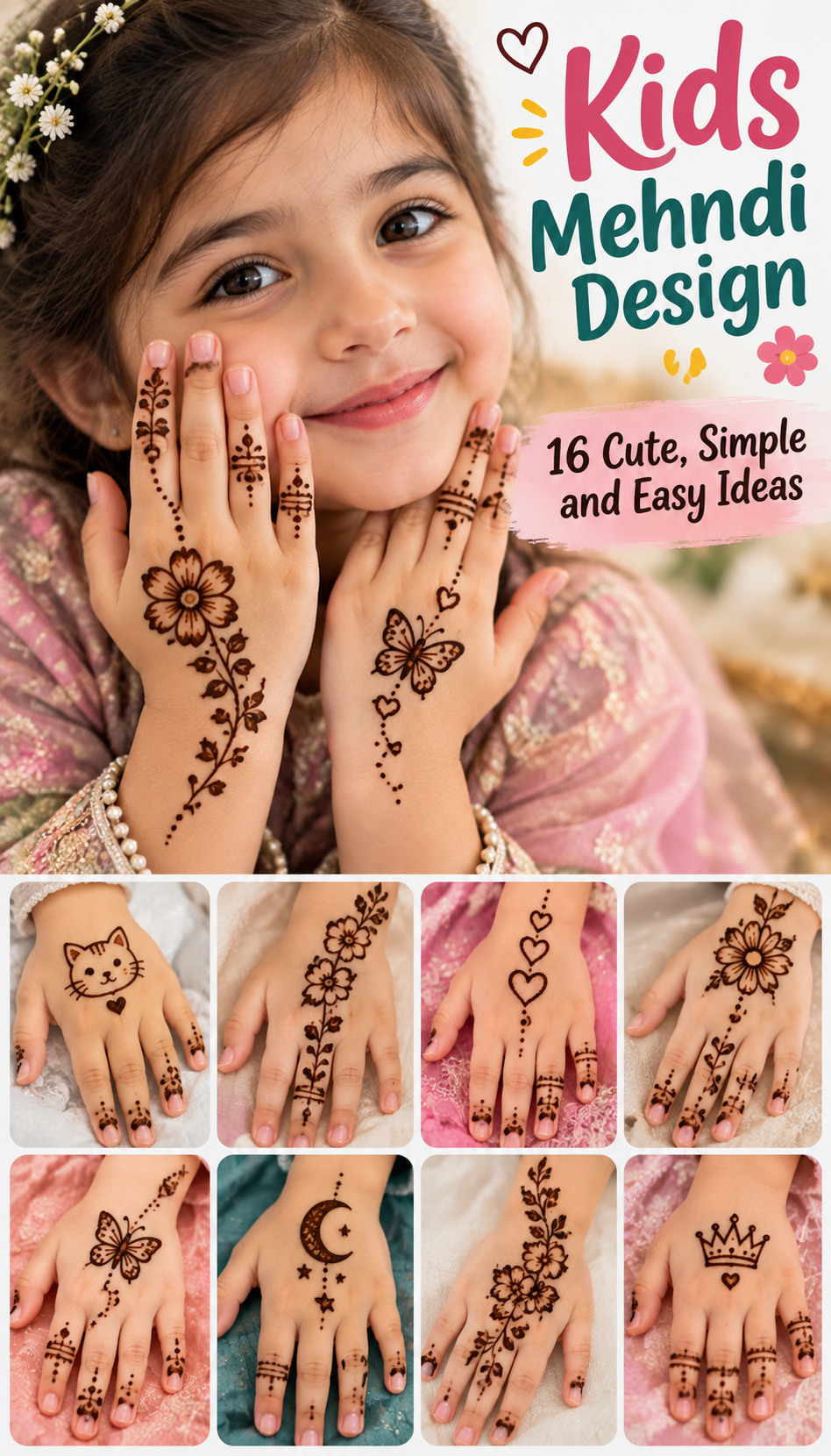
The goal is to choose something cute, comfortable, and suitable for the child’s hand size and patience.
What Is the Best Mehndi Design for Kids?
The best mehndi designs for kids use one clear main shape rather than lots of tiny details. A small flower, butterfly, heart, moon, or simple leafy vine is usually enough.
For younger children, choose a design that can be finished quickly. The back of the hand is often easier because the child can relax the hand on a table while the design is applied.
Older children may enjoy finger details, small Arabic trails, bracelet designs, or a light palm pattern.
A good kids mehndi design should have:
• Simple shapes
• Plenty of open space
• Short application time
• Clear lines
• Light finger decoration
• A design the child actually likes
Let the child choose between two or three ideas before you begin. This can save time and make the experience more enjoyable.
1. Simple Kids Mehndi Design
A simple kids mehndi design works best when it focuses on one main motif.
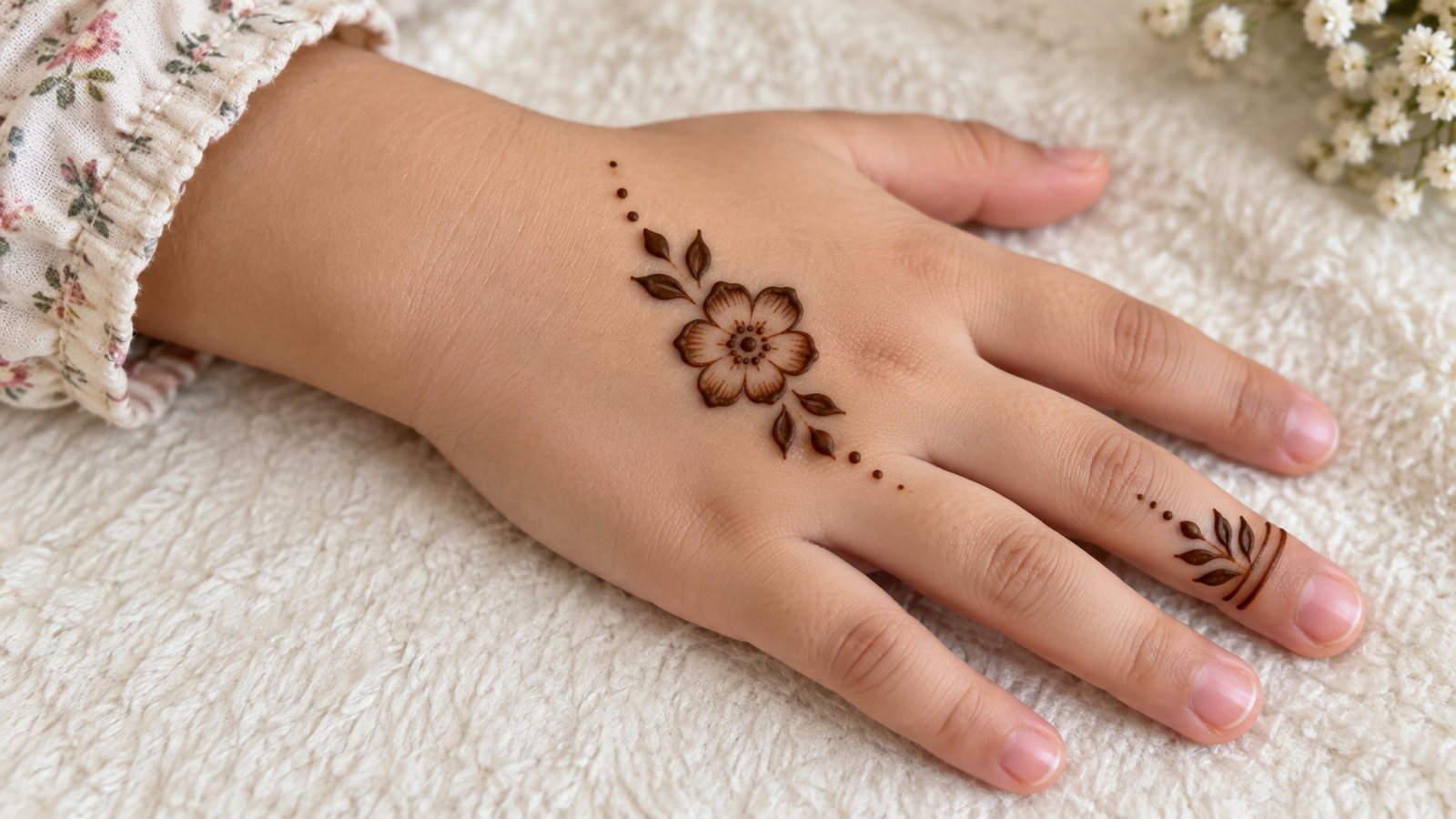
Try placing a small flower in the center of the back hand. Add three or four leaves and a few dots around it. Finish one finger with a tiny band or leafy line.
You can also draw a small circular tikki on the palm and surround it with tiny petals.
Simple patterns look clean on small hands because they do not hide the natural shape of the fingers.
They are ideal for school celebrations, family gatherings, weddings, birthdays, Eid, and other festive occasions.
If a child has never worn mehndi before, this is a good style to start with.
2. Easy Mehndi Designs for Kids
Easy mehndi designs for kids are perfect for parents or beginners who are still learning how to control a mehndi cone.
Use shapes you can repeat easily.
Dots are the simplest element. Leaves, hearts, petals, curved lines, circles, and small stars are also beginner friendly.
One easy layout starts with a curved vine from the wrist toward the index finger. Add small leaves to both sides. Finish with three dots near the end.
Another option is a flower in the middle of the hand with a small line leading toward one finger.
Do not worry about making every leaf exactly the same. A slightly playful pattern often looks better on a child’s hand.
3. Kids Mehndi Design Simple for Small Hands
Small hands can become crowded very quickly.
Instead of shrinking an adult design, create a pattern especially for the available space.
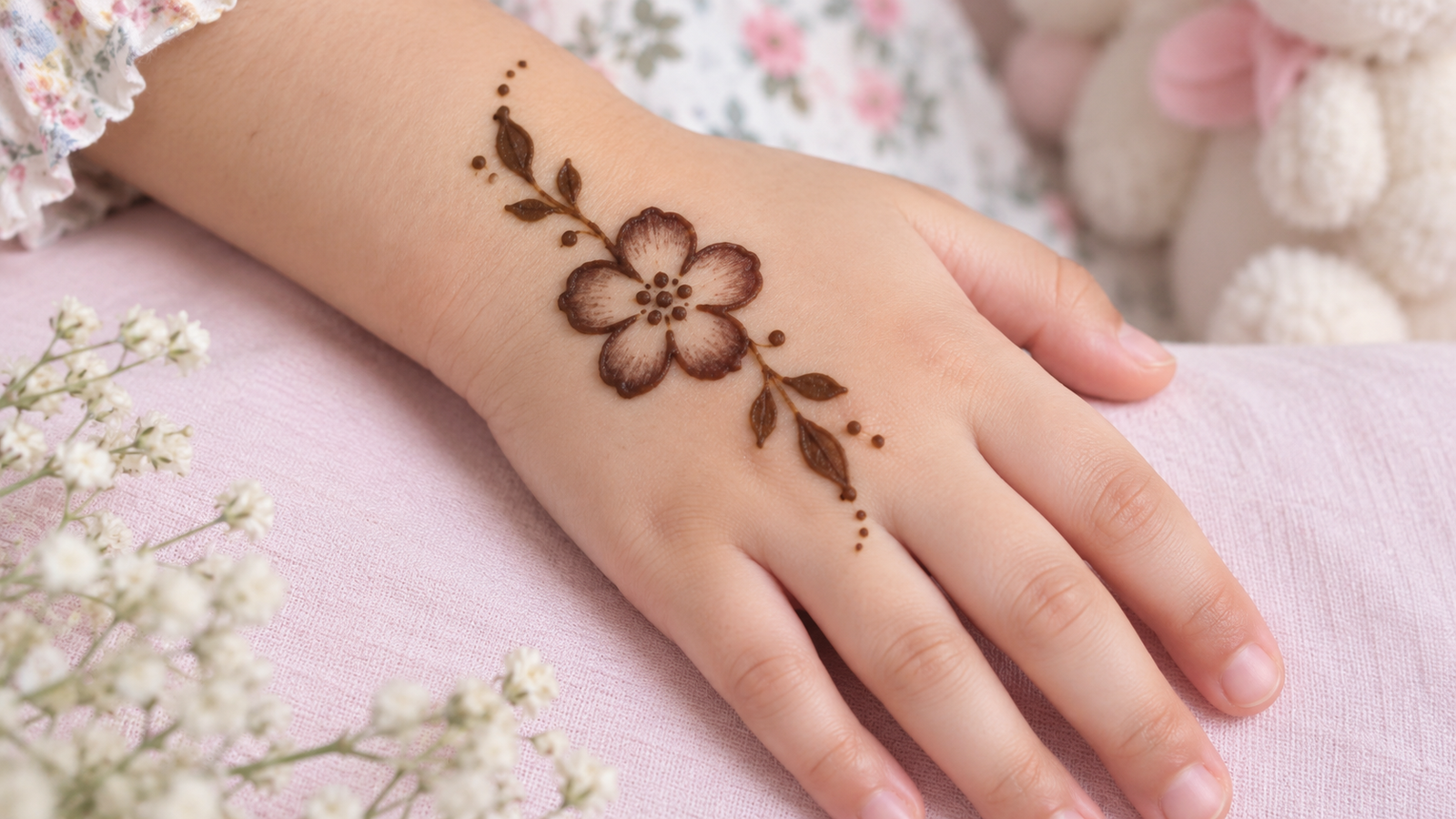
Use one flower instead of three. Use one decorated finger instead of five. Keep leaves slightly larger so they remain visible after the stain develops.
A simple back hand layout can include a flower near the wrist and a curved trail toward the middle finger.
For the palm, a small circle, heart, butterfly, or moon can work well.
The design should still look clear when you view the whole hand from a distance.
4. Cute Mehndi Designs for Kids
Cute designs usually use shapes children already recognize.
Butterflies, hearts, flowers, stars, bows, moons, clouds, small animals, and simple cartoon inspired shapes can make mehndi feel more fun.
You can place one cute motif in the center of the palm and add dots around it.
Another idea is to draw two small hearts near the wrist and connect them with a thin leafy trail.
Avoid adding too many different shapes in the same design. One theme usually looks cleaner.
For example, if you choose butterflies, use tiny flowers and dots as supporting details instead of adding hearts, stars, and many other motifs.
5. Small Mehndi Designs for Kids
Small mehndi designs are one of the smartest choices for younger children.
A tiny design takes less time to apply and is easier to keep neat while the paste dries.
Try one of these ideas:
• A tiny flower near the thumb
• A small heart on the back hand
• A crescent moon with three dots
• A little butterfly on the palm
• A leafy branch along one finger
• A bracelet around the wrist
• A small mandala in the center
Small does not mean boring. Clean placement can make a tiny motif look very polished.
6. Kids Hand Mehndi Design
The design should change depending on where you place it.
The palm is good for circles, hearts, butterflies, flowers, and simple cartoon shapes. Children can easily see the design and enjoy showing it to others.
The back hand is better for vines, flowers, finger designs, Arabic trails, and bracelet patterns.
For very active children, the back hand can be easier because they do not need to keep the palm open while waiting.
If you want mehndi on both hands, keep one hand slightly lighter. Two heavy designs can take too long for a young child to sit through.
7. Flower Mehndi Design for Kids
Flowers are one of the easiest and most reliable choices.
Start with a small circle. Add five or six rounded petals. Place a few leaves on one side and finish with dots.
You can create a flower bracelet by drawing a thin curved band around the wrist and placing a flower in the middle.
Another pretty option is a small flower near the index finger with a vine moving toward the wrist.
For younger children, use bigger petals rather than very tiny detailed petals. Larger shapes are easier to apply and remain clear on small hands.
Flower designs work well for Eid, weddings, birthdays, and almost every family celebration.
8. Arabic Mehndi Design for Kids
Arabic mehndi can be adapted beautifully for children’s hands.
Traditional Arabic styles often use flowing flowers, vines, leaves, and open spaces. For kids, simply reduce the amount of coverage.
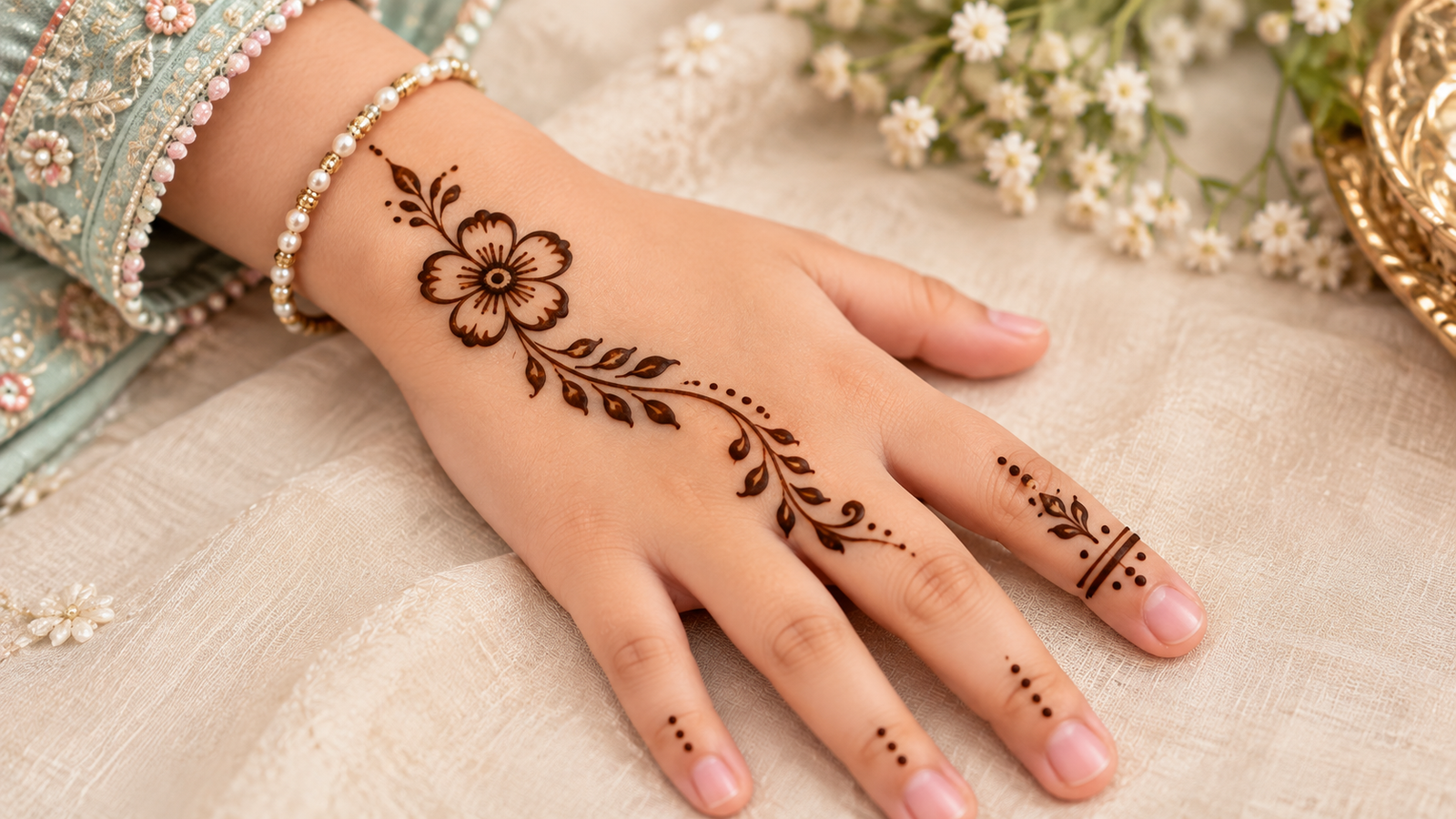
Draw one small flower near the wrist. Add a curved leafy vine that moves diagonally toward the index finger.
Keep the other fingers almost empty or decorate only one with a few leaves.
This gives the hand an Arabic inspired look without making the pattern heavy.
Older children may enjoy a slightly richer Arabic design with two flowers and finger details.
For younger children, one flower and one vine are enough.
9. Finger Mehndi Design for Kids
Finger mehndi is useful when a child does not want a design across the entire hand.
You can decorate one, two, or all five fingers with very small patterns.
Good finger ideas include:
• Tiny leaf trails
• Small ring shapes
• Dots
• Hearts
• Flower bands
• Simple lines
• Small moon shapes
• Little curved vines
Keep the bands narrow. Thick patterns can look too heavy on short fingers.
You can also decorate only the index and middle fingers while leaving the rest clean.
This looks modern and takes very little time.

10. Kids Mehndi Design for Eid
Mehndi is often one of the most exciting parts of Eid preparation for children.
A good kids mehndi design for Eid should look festive but still be quick.
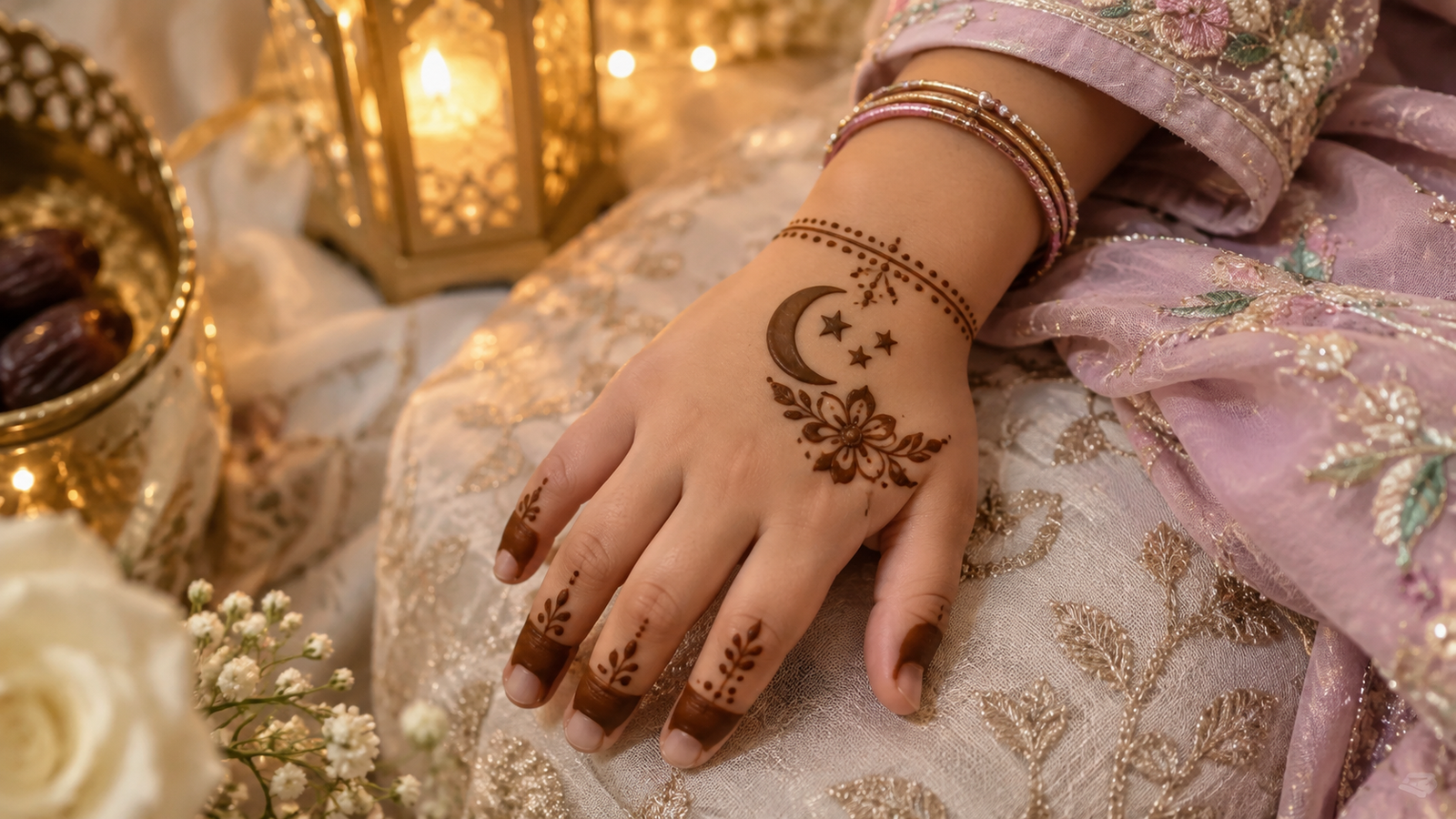
A crescent moon with stars is an obvious favorite. Place the moon in the center of the palm and add three small stars around it.
Flowers and Arabic vines also work beautifully with Eid clothes.
Another easy Eid idea is a bracelet design around the wrist with tiny drops hanging from it.
For a slightly more traditional look, draw a small tikki in the center of the hand and add simple finger bands.
Choose the design before Chand Raat becomes busy. Having a reference ready makes application much easier.
11. Easy Eid Mehndi for Kids
If several children are waiting for mehndi, speed matters.
Use designs that can be completed with a few basic strokes.
A small moon can be paired with dots. A flower can be paired with two leaves. A heart can be finished with a dotted border.
For sisters or cousins, matching designs can save time.
Give each child the same main motif but change one small detail. One child can have a flower with leaves while another has a flower with dots.
The designs will look connected without being completely identical.
This works especially well for family Eid photos.
12. Cartoon Mehndi Designs for Kids
Cartoon mehndi can make the experience much more exciting for children.
Instead of trying to copy a detailed cartoon character exactly, simplify it into an easy outline.
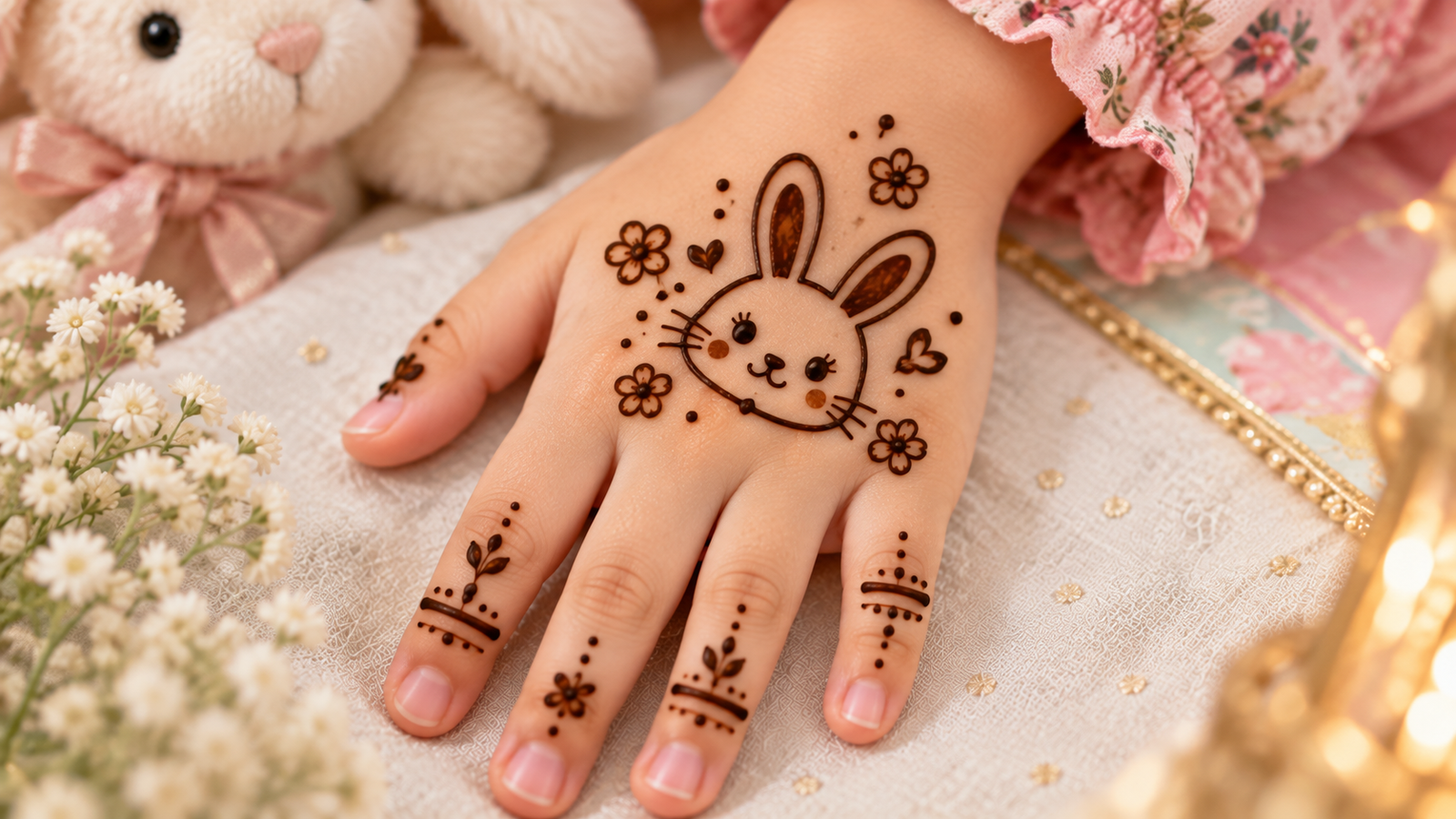
A cat face can use a circle, two ears, eyes, and whiskers. A bunny can use a rounded face and two long ears. A simple crown, bow, smiling face, or little animal outline also works well.
Complicated characters are harder to recognize when drawn very small.
Choose bold and simple outlines.
Keep the surrounding decoration light so the cartoon remains the main feature.
Cartoon inspired designs are especially fun for birthdays and casual celebrations.
13. Heart Mehndi Design for Kids
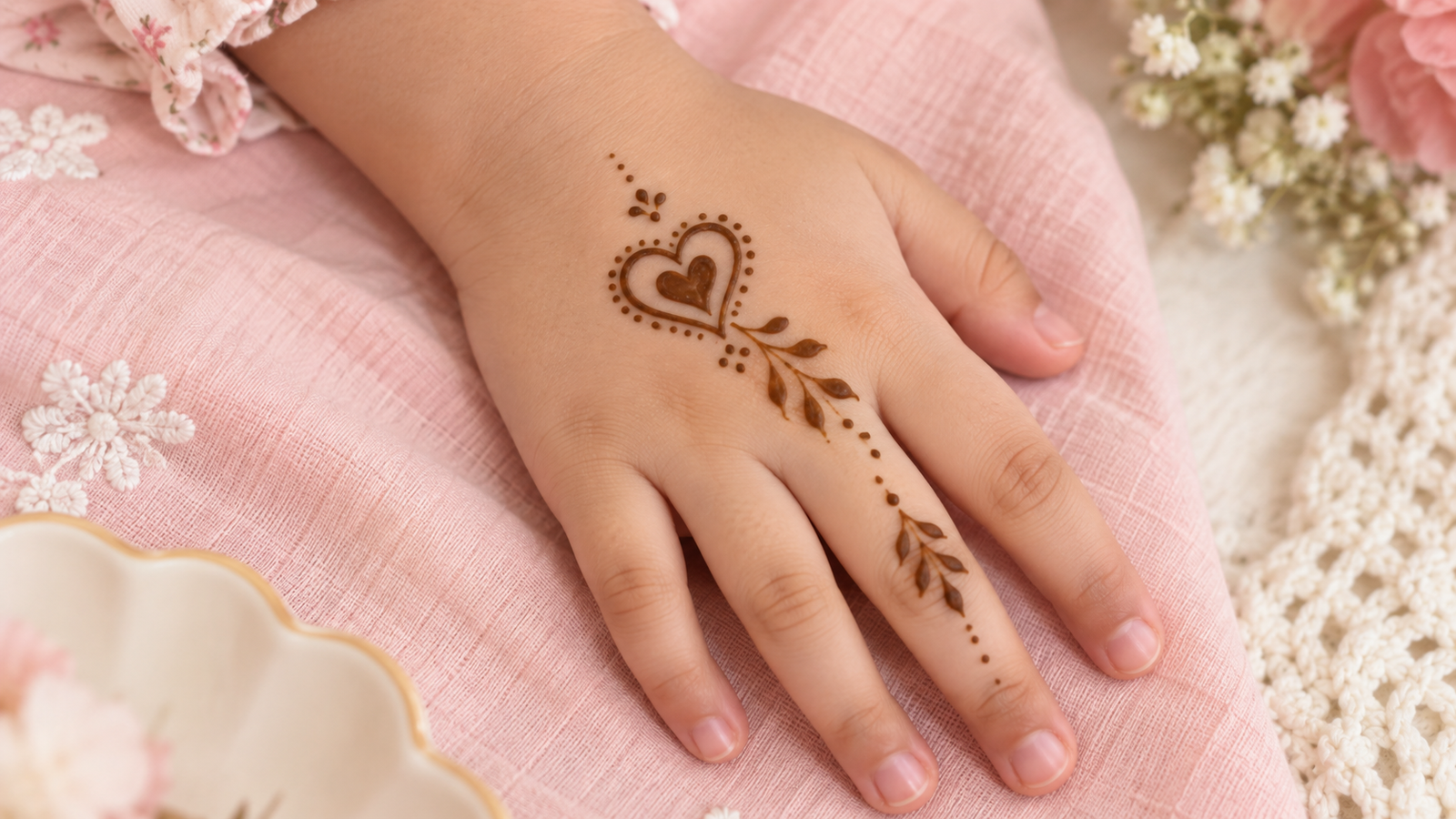
A heart is one of the easiest shapes to turn into a cute kids mehndi pattern.
Place a heart in the center of the palm and surround it with tiny dots.
For the back hand, create a small heart near the wrist and connect it to one finger with a leafy vine.
You can also make a heart bracelet around the wrist.
Two small hearts connected by a curved line make a pretty design for sisters or friends.
Keep the heart outline clear rather than filling the entire shape with lots of details.
This helps the motif remain easy to recognize after the color develops.
14. Butterfly Mehndi Design for Kids
Butterflies are playful and work perfectly on small hands.
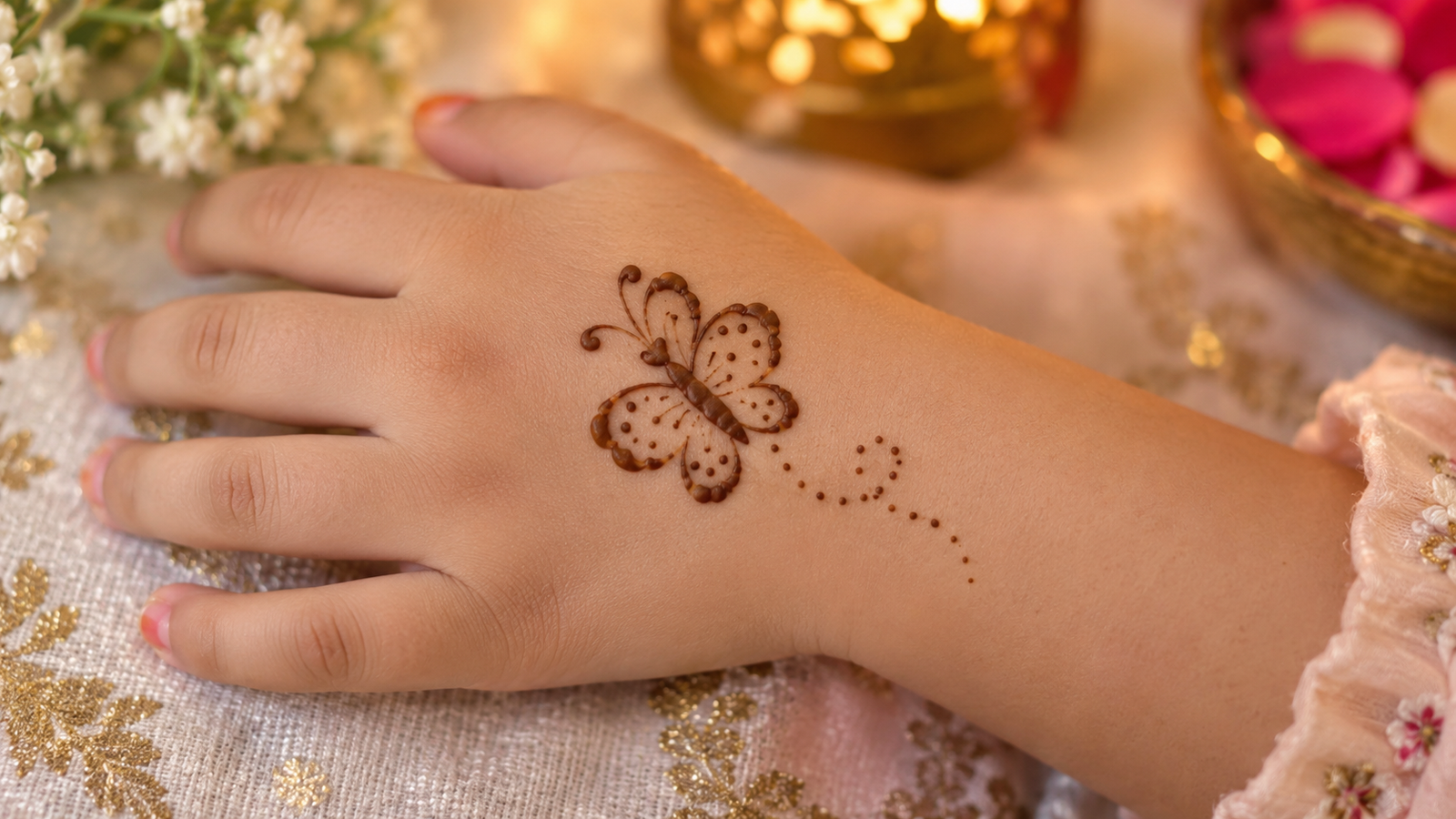
Draw a small body first. Add two rounded wings on each side. Decorate the wings with dots, curved lines, or simple flower shapes.
A butterfly looks especially cute in the center of the back hand.
You can add a dotted trail behind it to create the feeling of movement.
For an even easier design, keep the wings empty and decorate only their edges.
Butterfly mehndi is ideal for young children because the design looks complete without needing lots of additional details.
15. Minimal Mehndi Design for Kids
Minimal mehndi is useful for children who want something pretty but do not want to sit for a long application.
Try a single flower, tiny leaf branch, small heart, or one wrist band.
You can also place three small stars near the thumb or create a tiny moon on one finger.
Minimal designs leave most of the skin visible.
This makes them particularly good for small hands.
They are also easier to keep neat because there is less paste that can accidentally smear.
16. Beginner Mehndi Designs for Children
Children who want to learn mehndi themselves should begin on paper rather than directly on another person’s hand.
Practice five shapes first:
• Straight lines
• Curved lines
• Dots
• Leaves
• Petals
Once those feel comfortable, combine them into a small flower or vine.
A practice sheet can help children understand spacing without worrying about making a mistake.
Adult supervision is sensible when children are using applicators or cosmetic products.
The goal should be enjoying the art rather than creating a perfect pattern.
Palm or Back Hand: Which Is Better for Kids?
Both can work, but the back hand is often easier for younger children.
A child can place the hand comfortably on a table while the artist works. The fingers can remain relaxed.
A palm design requires the child to keep the hand open. Closing the fist before the paste has dried can quickly smudge the pattern.
The palm still works well when the child specifically wants to see the design.
For younger or restless children, choose the back hand.
For older children who can sit comfortably for longer, either side works.
How to Choose a Design by Age and Patience
Age alone does not tell you how long a child will sit still. Some young children are very patient, while older children may want the design finished immediately.
For a child who has little patience, choose one small motif.
For a child who enjoys sitting for art activities, try a floral trail or light Arabic pattern.
School age children may also enjoy choosing their own finger details.
Teenagers often prefer modern, minimal, Arabic, or jewelry inspired designs rather than cartoon motifs.
Always design for the individual child rather than forcing a complicated pattern because it looks impressive in a photograph.
Useful Mehndi Accessories You Can Find on Amazon
You do not need to buy a complicated kit for kids mehndi.
Henna stencil sheets can be useful when you want simple hearts, flowers, butterflies, moons, and other clear shapes. They can also help beginners understand where a design should sit on the hand.
Fine tip applicator bottles are another useful Amazon option for people who prefer a bottle instead of a traditional cone. Fine tips give better control when drawing small leaves and dots.
A henna practice book or reusable hand practice sheet can also help beginners. Children can trace flowers, lines, and vines before anyone applies a design to skin.
For children, I would focus product purchases on practice and application accessories rather than choosing a henna paste simply because it promises very dark or instant color.
Important Mehndi Safety Tips for Parents
Parents should pay attention to what is being placed on a child’s skin.
Products sold as black henna deserve particular caution. The United States Food and Drug Administration warns that some black henna products may contain PPD. This ingredient can cause dangerous skin reactions in some people.
The American Academy of Dermatology also notes that reactions to temporary tattoos containing black dye may include itching, redness, swelling, and bumps.
Read ingredient information where available and avoid unknown products that promise instant black color.
Do not apply mehndi over irritated, broken, infected, or actively inflamed skin.
Children with eczema or very sensitive skin may need extra caution because their skin barrier can already be more sensitive. Parents with concerns should ask their child’s healthcare professional before applying a new skin product.
If the child develops significant redness, swelling, pain, blistering, or another concerning reaction, remove the product and seek appropriate medical advice.
How to Keep Kids Mehndi Neat
Preparation can make a big difference.
Choose the design before the child sits down. Do not spend ten minutes scrolling through photos while the child is already waiting.
Keep tissues nearby so the applicator tip can stay clean.
Start with the main shape. If the child becomes restless, the design will still look finished even if you skip the extra details.
Work from the area that is easiest for the child to keep still.
Do not add extra dots simply because there is empty space. Open skin helps cute designs remain clear.
Once the design is finished, remind the child not to touch clothing, furniture, or the other hand while the paste is still wet.
Common Mistakes to Avoid
Kids mehndi should be designed differently from bridal mehndi.
• Do not copy a large adult pattern onto a tiny hand
• Do not cover every finger unless the child wants it
• Do not make every motif extremely small
• Do not choose a design that takes too long
• Do not begin without showing the child the idea
• Do not use unknown black henna products
• Do not apply products to irritated skin
• Do not expect a young child to sit perfectly still for a complicated pattern
The best children’s mehndi usually looks simple on purpose.
How to Make Kids Mehndi Look Better in Photos
Keep the design clean and allow enough open skin around the main motif.
If the child is wearing bangles, place the main design slightly higher on the hand so it remains visible.
For Eid photos, floral and moon designs pair nicely with traditional clothes.
For weddings, small Arabic trails and bracelet patterns look more formal.
Avoid holding lots of objects immediately after application. Give the design time to settle before taking close photographs.
Natural hand poses usually look better than forcing every finger completely straight.
Conclusion
Kids mehndi design should be simple, cute, quick, and suited to small hands.
Flowers are perfect for almost every occasion. Butterflies and hearts add a playful look. Arabic trails feel more traditional, while finger designs and minimal patterns work well for children who want something light.
For Eid, crescent moons, stars, floral vines, bracelets, and simple tikki designs are easy choices.
Parents should also think about comfort and product safety, not just appearance. A small design applied carefully is often better than a detailed pattern that takes too long.
Let children be part of the decision. When they choose a flower, butterfly, heart, or moon they genuinely like, mehndi becomes part of the celebration rather than something they simply have to sit through.
FAQs About Kids Mehndi Design
What is the easiest mehndi design for kids?
A small flower, heart, leafy vine, or circle is one of the easiest options. These shapes are quick to draw and fit comfortably on small hands.
Which mehndi design is best for kids on Eid?
Crescent moons, stars, small flowers, Arabic vines, wrist bracelets, and simple tikki designs are all good Eid choices.
Is back hand mehndi better for young kids?
It can be easier because the child can rest the hand naturally on a table. Palm designs may smudge if the child closes the hand before the paste has dried.
What are cute mehndi designs for kids?
Butterflies, flowers, hearts, moons, stars, bows, small animals, and simple cartoon inspired shapes are popular cute options.
Can kids wear Arabic mehndi designs?
Yes. Arabic designs can be simplified for small hands by using one flower, a leafy vine, and plenty of open space.