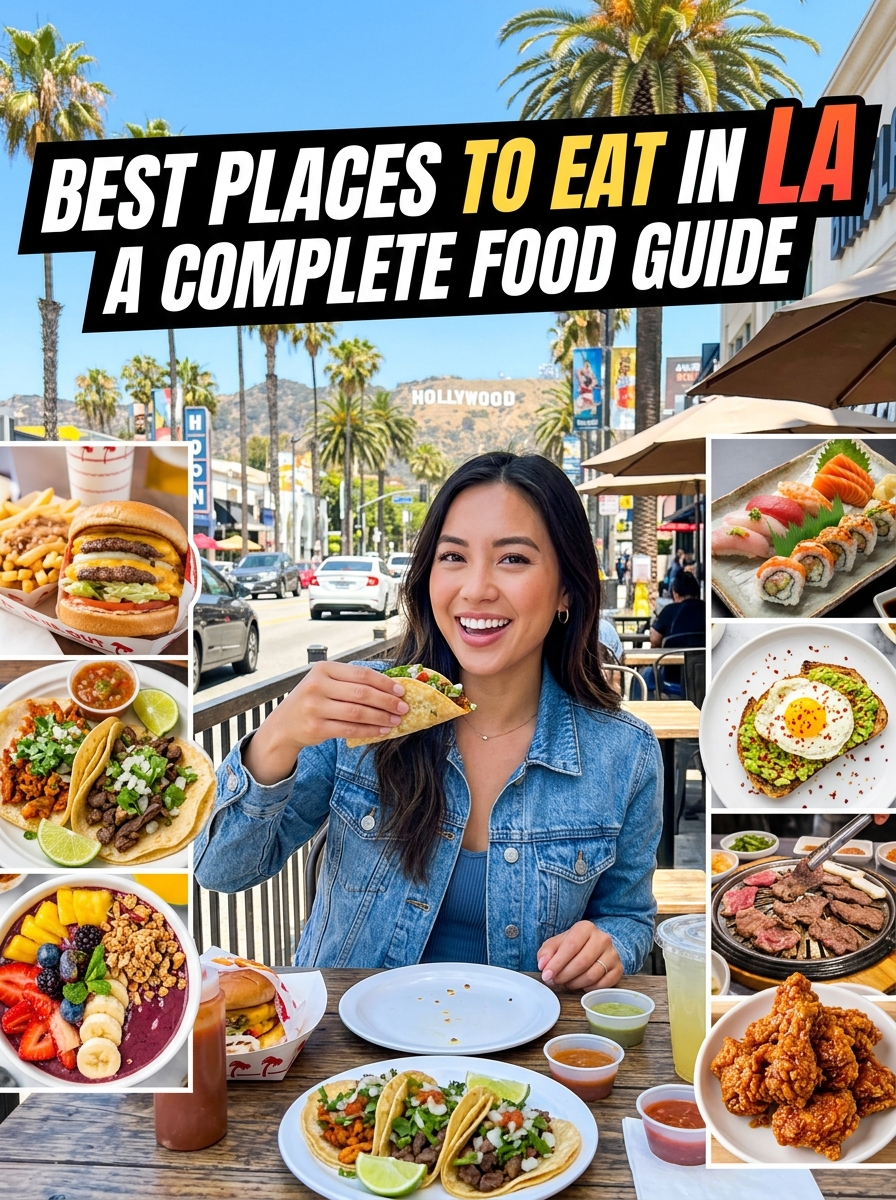
Los Angeles is the most diverse food city in the United States. That statement is not promotional copy. It is a geographic and demographic fact.
Thai Town rivals Bangkok. Koreatown is denser with Korean restaurants than most neighbourhoods in Seoul. Little Tokyo has Michelin-starred sushi next to $12 ramen. The taco trucks in Boyle Heights and East LA compete seriously with anything served in Mexico City. Glendale has the largest Armenian community outside of Armenia. Monterey Park is the centre of the San Gabriel Valley’s extraordinary Chinese food corridor.
Most visitors arrive in LA expecting celebrity chef restaurants and leave realising the best meals happened at a strip mall in Koreatown at midnight or from a truck with a line that started forming at 10am.
This guide tells you where to eat in LA by neighbourhood, by category, and by budget, with the honest practical advice that most guides skip.
Quick Answer: Best Places to Eat in LA
For tacos: Mariscos Jalisco in Boyle Heights for shrimp tacos, Villa’s Tacos in Highland Park for the birria, and any midnight taco truck operating in East LA on a weekend.
For Korean BBQ: Park’s BBQ in Koreatown, hands down.
For Japanese: n/naka in Palms for the finest omakase, Shunji in West LA for exceptional sushi at the counter, or any ramen spot in Little Tokyo where a line has formed before noon.
For the complete LA experience: one morning at Gjusta in Venice, one late night in Koreatown, one taco truck visit in Boyle Heights, and one dinner at Guelaguetza for the most important Oaxacan restaurant in the city.
The Strip Mall Rule
Before getting into specific restaurants, the single most important thing to understand about eating in LA is this: the best food is almost always in a strip mall.
Unlike New York or Chicago, where fine dining and serious food occupy distinguished buildings and prominent street corners, LA’s food culture does not care about appearances. The best Korean BBQ, the most extraordinary ramen, the most mind-bending sushi, and some of the finest Michelin-starred restaurants in the country all operate from strip mall units with parking lots and fluorescent-lit signs.
This is not a flaw. It is a feature. When a restaurant does not spend money on the room, it spends it on the food. Strip malls in Koreatown, the San Gabriel Valley, and along the Westside Vietnamese corridors hold some of the most serious cooking in the United States.
Walk past the exterior and look for lines, crowded parking lots, and menus that have been reprinted so many times the laminate is peeling. Those are the signals.
Koreatown: The Best Late-Night Food in America
Koreatown sits just west of downtown and runs roughly from Western Avenue to Vermont. It is the densest food neighbourhood in Los Angeles, operates 24 hours, and has a late-night culture that most American cities cannot approximate.
Korean BBQ
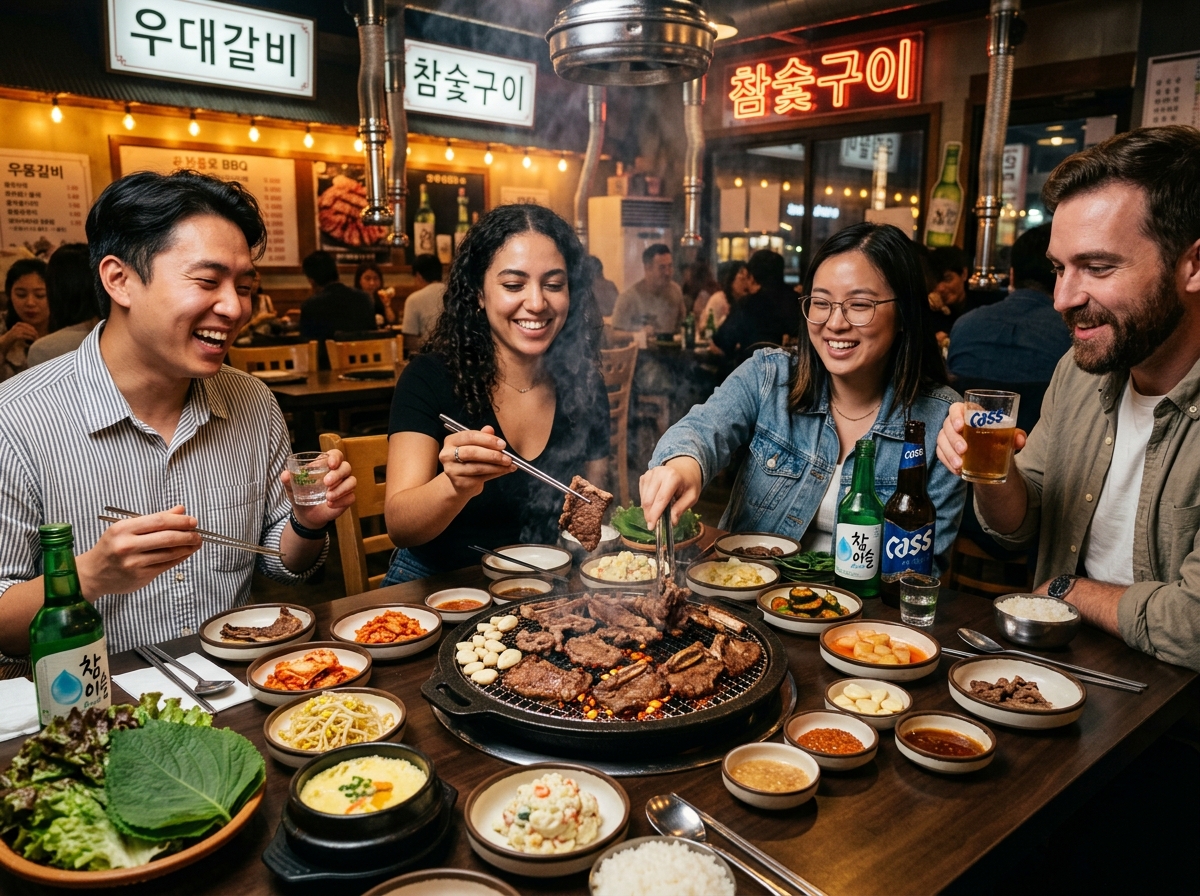
Park’s BBQ on South Western Avenue is widely considered the finest Korean BBQ restaurant in the country. The beef quality is exceptional, the service is attentive without being intrusive, and the banchan (small side dishes) that arrive without ordering are better than the main courses at many restaurants. Reservations are strongly recommended.
Yangminjeong and Quarters are both excellent if Park’s is fully booked. The Korean BBQ experience here involves grilling premium cuts of beef, short rib, brisket, and tongue, at a tabletop charcoal grill while soju arrives continuously. Allow three hours minimum. This is not a quick dinner.
Korean Fried Chicken, Sundubu, and Everything Else
Koreatown is not just BBQ. Sun Nong Dan, a 24-hour spot on 8th Street, serves a galbi jjim (braised short rib) that is considered one of the best single dishes in the city by people who eat seriously. The galbi jjim is served on a bed of udon and topped with more galbi than seems physically possible.
BCD Tofu House operates until 2am and is the place for sundubu jjigae, the spicy soft tofu stew that is one of the most restorative things available in the city at midnight.
For Korean fried chicken, BonChon Chicken and many smaller operations along 6th Street and Western deliver double-fried, soy-garlic-glazed chicken that has become one of LA’s most replicated food trends.
Practical note: Koreatown restaurants often do not take reservations for parties under four. Arrive early or expect to wait. The wait is worth it at every place mentioned here.
Tacos: East LA and Boyle Heights
The taco conversation in LA is not about which restaurant is best. It is about which truck, which neighborhood, and what time.
The Truck Culture
Mariscos Jalisco operates multiple trucks and one brick-and-mortar location in Boyle Heights. The dorado taco, a shrimp-filled taco fried hard and topped with avocado and house salsa roja, has a cult following that stretches across the city. Chefs who work at serious restaurants drive to Boyle Heights specifically for this taco. The original truck on Olympic Boulevard is the most iconic, though any location delivers the same result.
Villa’s Tacos in Highland Park, run by Victor Villa, has become one of the defining taco experiences in the city. The birria is the star, slow-cooked and served with consommé for dipping. The quesabirria taco, the cheese-sealed iteration that became a national trend, originated in iterations like this across East LA and the San Gabriel Valley.
Tacos Los Cholos in South LA and Brothers Cousins Tacos on the Westside are both regularly cited by LA chefs as personal favourites.
Midnight taco trucks operating around East LA on weekends are a genuine LA institution. The trucks that appear after midnight around Cesar Chavez Avenue and in Boyle Heights serve adobada (spit-roasted pork shaved from a vertical trompo), cabeza, and lengua to the post-bar crowd. These trucks rarely have names online. They are found by knowing someone local or by following the cars pulling over.
Sit-Down Tacos and Mexican Food
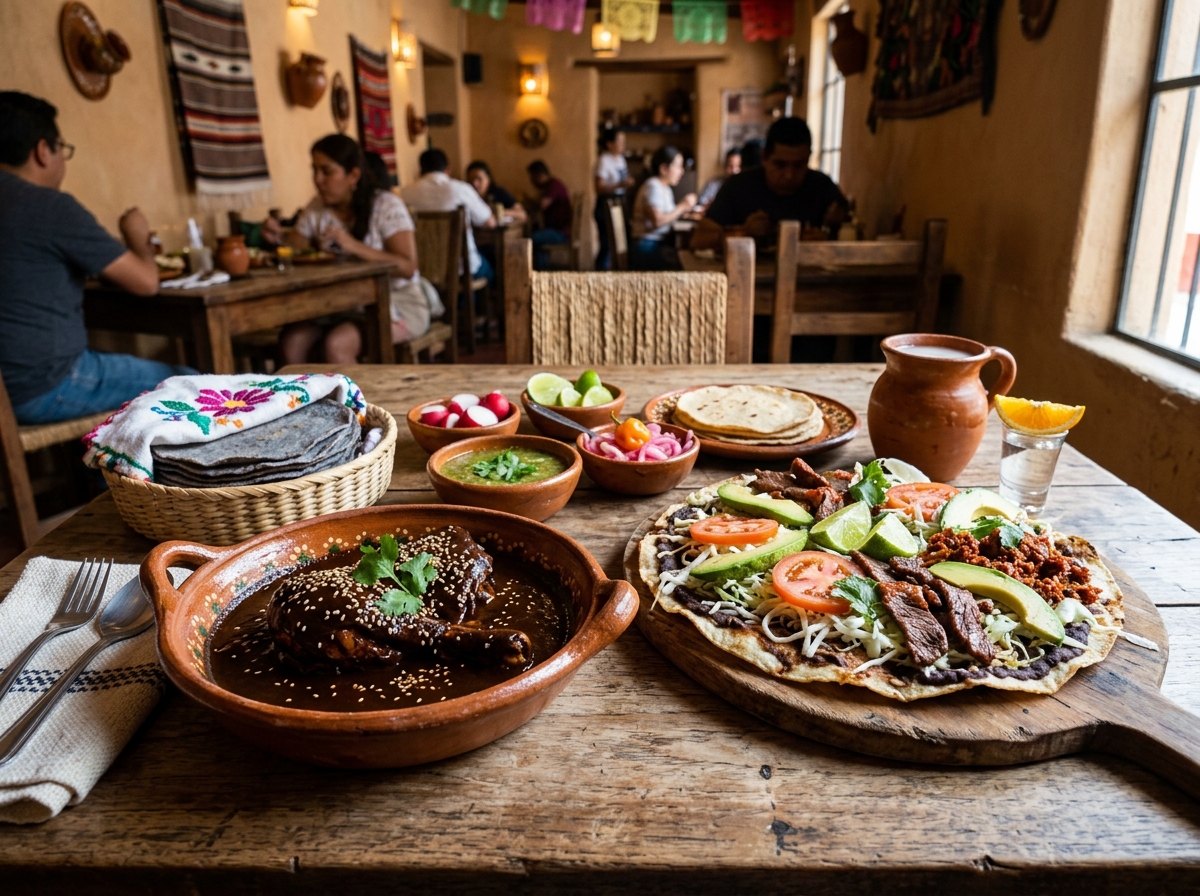
Guelaguetza on Olympic Boulevard is the most important Mexican restaurant in Los Angeles and serves Oaxacan cuisine, the most complex and least understood major Mexican regional tradition. The tlayuda, a large crisped tortilla covered with black bean paste, Oaxacan string cheese, and various meats, is the signature. The mole negro, one of seven classic Oaxacan moles, is extraordinary. This is not tex-mex. It is genuine regional Mexican cooking at a high level.
Damian in the Arts District is Enrique Olvera’s Los Angeles restaurant. Olvera runs Pujol in Mexico City, one of the best restaurants in the world. Damian focuses on wood-fired seafood and seasonal Mexican preparations, and is one of the most acclaimed fine-dining Mexican restaurants in the US.
Japanese Food: Sushi and Beyond
LA’s Japanese food culture is the most serious outside Japan. The California roll was invented here in the 1960s, and the city has been building on that foundation ever since.
Omakase and Counter Sushi
n/naka in Palms is Niki Nakayama’s kaiseki restaurant, a formal Japanese multi-course meal built around seasonal California ingredients interpreted through Japanese technique. It has two Michelin stars. It is one of the most significant restaurants in the United States. Reservations open 30 days ahead through Tock and are gone within minutes.
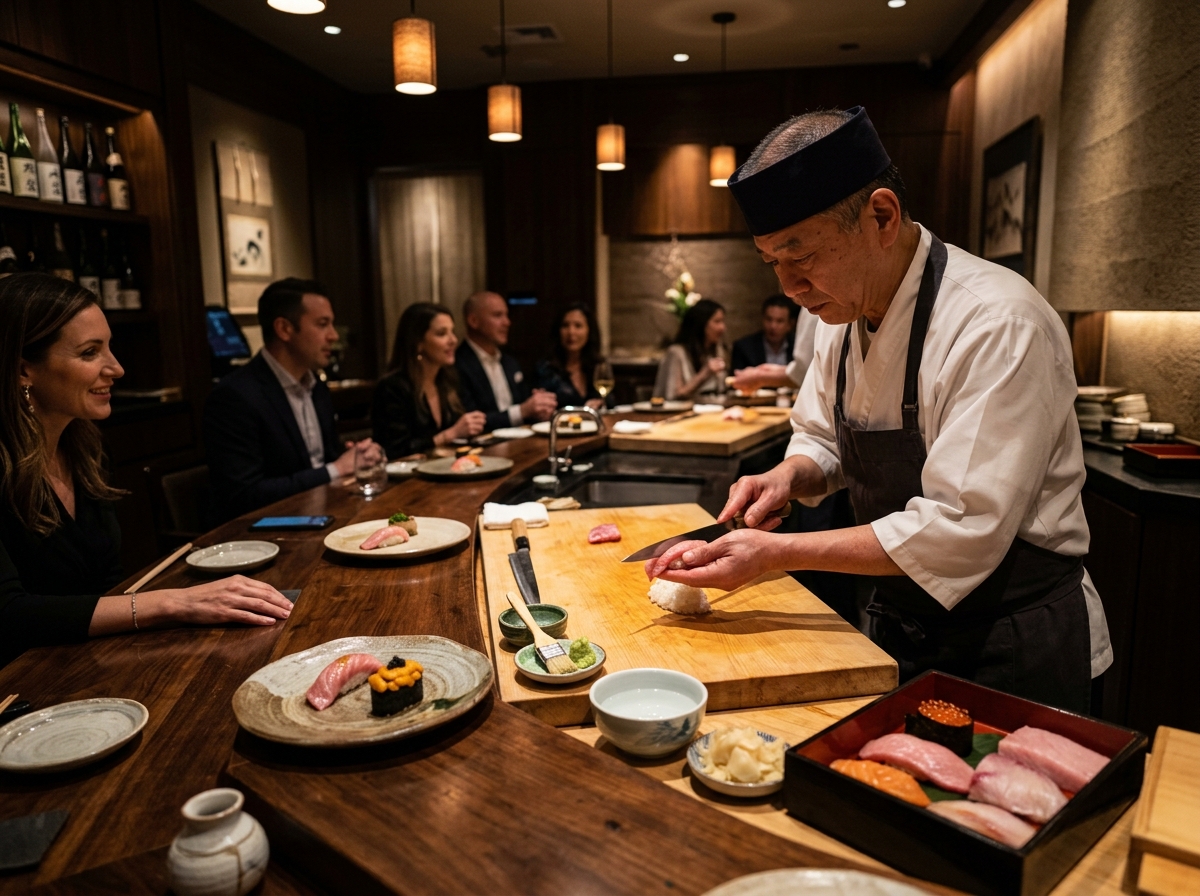
Shunji in West LA is a smaller, less formal sushi counter where chef Shunji Nakao runs an omakase that is considered by many serious sushi eaters to be among the best in the city. Fewer people know about Shunji than about n/naka, which means reservations are slightly more obtainable.
Sushi Noz, Mori Sushi, and Yamakase are all counters where serious omakase happens without the extreme difficulty of securing a seat at the most famous spots.
Ramen
Daikokuya in Little Tokyo is the ramen shop that introduced serious tonkotsu ramen to a generation of LA eaters. The wait can be long, but the bowl, a rich pork bone broth with firm noodles and chashu pork, remains one of the best in the city.
Tatsu Ramen allows mobile ordering to minimise wait time and delivers consistently excellent bowls across multiple LA locations. For a first ramen experience in LA, Tatsu is the most practical option.
Little Tokyo more broadly is worth a full afternoon. The Japanese Village Plaza, Weller Court, and the surrounding streets have excellent Japanese bakeries, izakayas, and smaller ramen and udon shops that reward walking and browsing.
Silver Lake and Los Feliz: The Most Complete Neighbourhood for Eating
Silver Lake and its adjacent neighbourhood Los Feliz have developed into the most consistently excellent eating areas for independent restaurants in LA, balancing quality, variety, and atmosphere.
Sqirl on Virgil Avenue is one of the most influential breakfast and lunch restaurants in California. Jessica Koslow’s spot began as a jam operation and became a full-service restaurant known for sorrel pesto rice bowls, seasonal grain dishes, and ricotta toast with jam that became one of the most copied dishes in the country. Go early. The line is genuine.
Lassens Natural Foods nearby and the Silver Lake Farmers Market on Tuesday evenings give the neighbourhood a farm-to-table food culture that extends beyond restaurants.
Bar Covell is a natural wine bar on Vermont Avenue with an extraordinary selection of small producers and food that matches the wine rather than serving as an afterthought. This is the kind of place where you sit for three hours without noticing.
Osteria Mozza is Mario Batali and Nancy Silverton’s Italian restaurant in the Melrose area adjacent to Silver Lake. The mozzarella bar at the front serves fresh mozzarella in preparations that are genuinely worth visiting for independently of the main dining room. The pasta here is among the best in the city.
The Arts District: Where LA’s Newest Food Scene Lives
The Arts District, just east of downtown, has become the most dynamic eating neighbourhood in LA over the past decade, converting former industrial spaces into restaurants that balance design, craft, and serious cooking.
Gjusta in Venice is technically not in the Arts District but shares its DNA. The bakery and deli run by the team behind Gjelina is one of the best single food destinations in the city, with exceptional bread, pastries, grain bowls, and smoked fish that draw a line starting before it opens. It is worth the line.
Damian (mentioned above in the taco section) sits in the Arts District and is the anchor of its fine-dining offerings.
Bavel from the Bestia team is a Middle Eastern restaurant in the Arts District that has become one of the most celebrated in the city since opening. The hummus, the wood-fired whole fish, and the lamb neck are all dishes that regulars return for specifically.
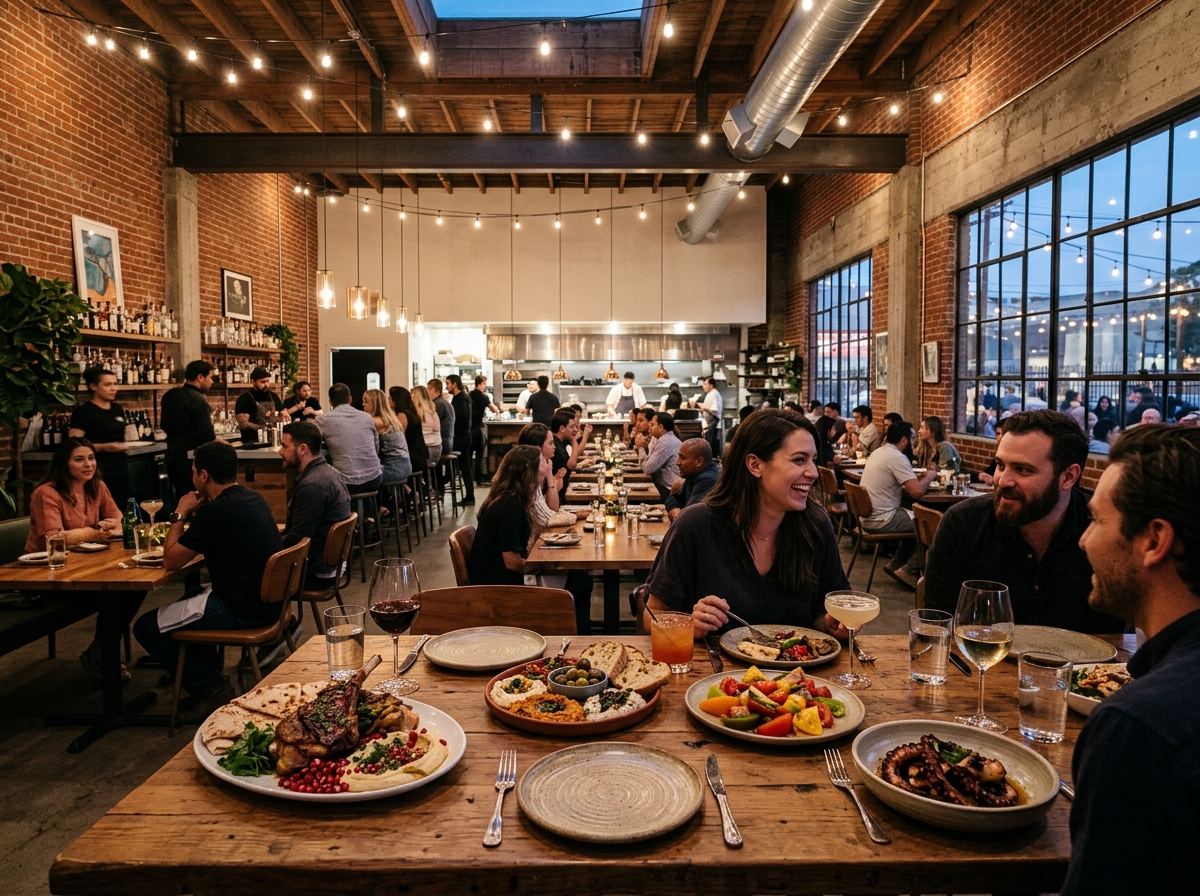
Bestia itself, from chefs Ori Menashe and Genevieve Gergis, remains one of the essential restaurant experiences in LA despite being a decade old. The charcuterie programme and the pasta are both extraordinary. Reservations are notoriously difficult and open 30 days ahead on Resy.
Fairfax and the Mid-City: Jewish Delis, Korean, and Unexpected Finds
The Fairfax corridor and surrounding Mid-City area hold some of LA’s most historically important food institutions alongside newer arrivals.
Canter’s Deli on Fairfax Avenue has been open since 1948 and is one of the last great Jewish delis in the country. The pastrami sandwich and the matzo ball soup are both the genuine article. The deli is open 24 hours and has a particular energy at 2am that is completely distinct from any other hour.
The Fairfax District as a whole, particularly the Melrose Avenue stretch, has become one of the most exciting stretches for street food and casual restaurants, with a concentration of pop-ups and newer concepts that rotate faster than any guide can reliably capture. Walking the area and following what has a line is the best strategy.
For a full day of eating across LA’s diverse food neighbourhoods, a compact, well-insulated bag for transporting pastries from Gjusta, fresh produce from a farmers market, and takeaway food for later without spills is genuinely useful. The Caraway Insulated Grocery Tote (available on Amazon) is leak-proof, holds temperature for several hours, and is designed exactly for the kind of multi-stop food errand that defines eating seriously in a sprawling city like LA.
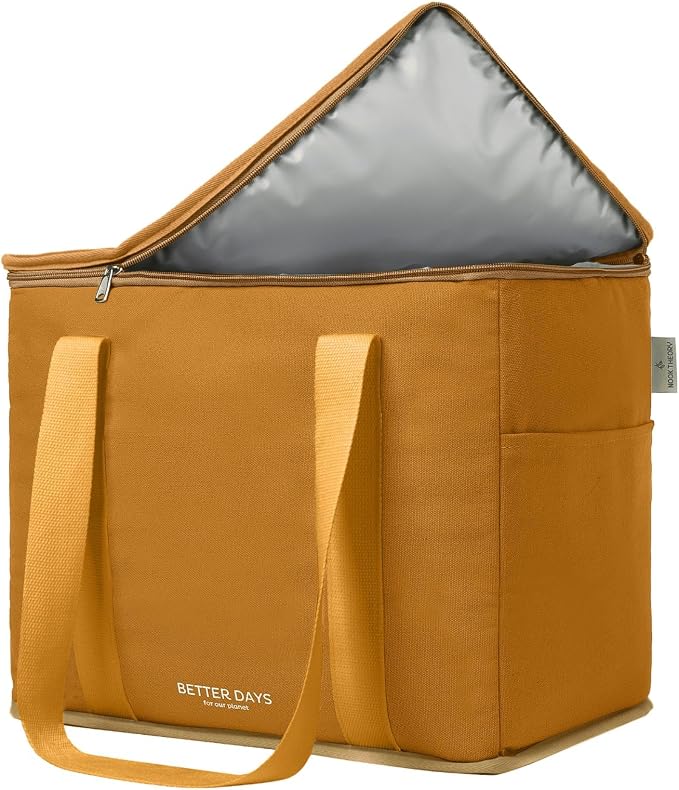
Reusable Insulated Grocery Bag
Westside: Santa Monica, Venice, and Brentwood
The Westside gets less credit for serious eating than it deserves, partly because the famous spots here tend toward the wellness-forward, farm-to-table side of LA food culture rather than the more technically ambitious cooking found in Koreatown or the Arts District.
Gjusta in Venice (covered above) is the anchor of serious Westside eating. The combination of house-baked bread, expertly smoked fish, and farm-sourced ingredients operated with care is the highest expression of California food culture.
Santa Monica Farmers Market on Wednesday mornings, operating since 1981, is one of the best farmers markets in the United States and the market where most serious restaurant chefs in LA shop. Walking it on a Wednesday morning, buying whatever is at peak, and eating it for breakfast is one of the most LA things you can do.
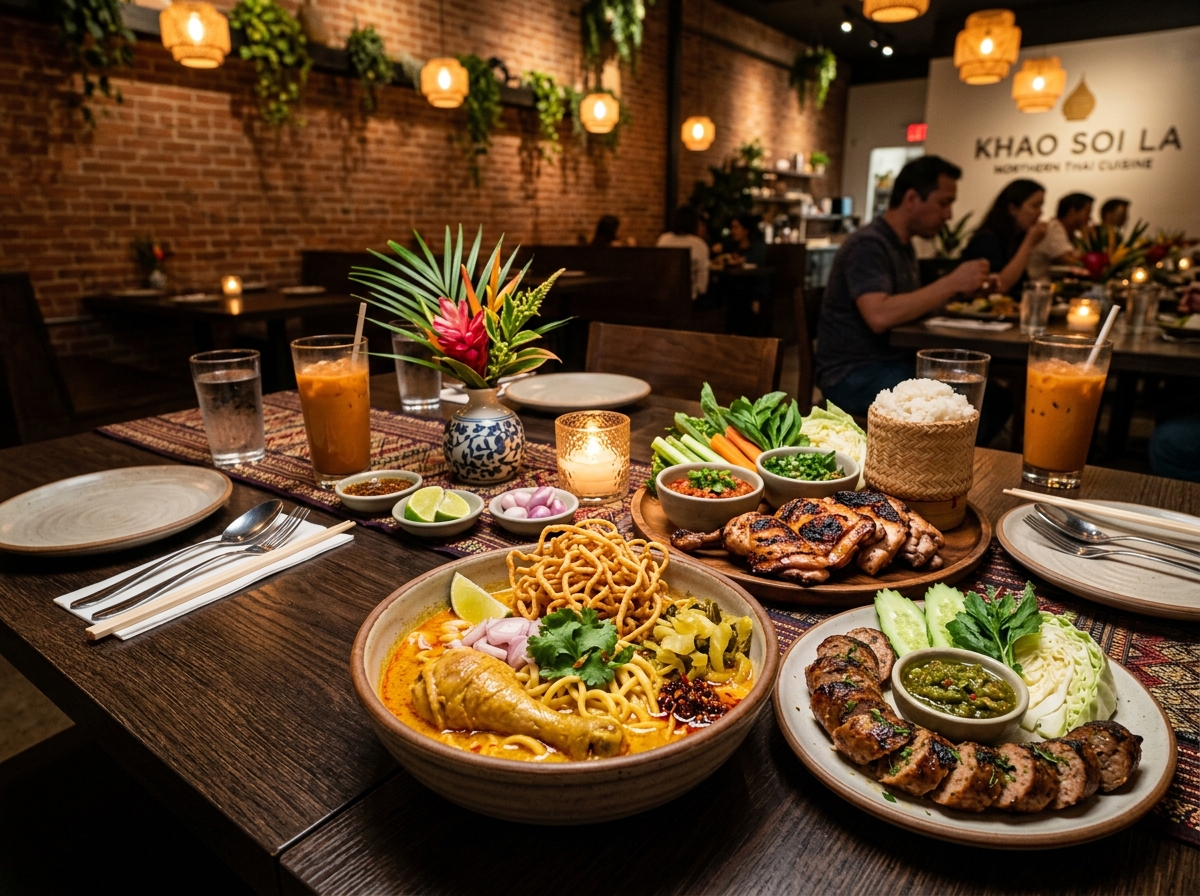
Night + Market in West Hollywood is Andy Ricker-influenced Thai cooking by Kris Yenbamroong, serving Northern Thai dishes that are not available at most LA Thai restaurants. The khao soi, a coconut-curry noodle soup from Chiang Mai, is one of the best versions available outside Thailand.
San Gabriel Valley: The Best Chinese Food Outside China
The San Gabriel Valley, stretching east from the city along the 10 freeway through Alhambra, San Gabriel, Monterey Park, and Arcadia, contains what many serious food writers consider the best Chinese food available in the United States outside of a handful of New York spots.
Sea Harbour in Rosemead is widely considered the best dim sum restaurant in the country. The har gow and siu mai are the standard, but the specialty items change by season and the kitchen produces preparations not available anywhere in the western US outside of this room.
Chengdu Taste in Alhambra serves Sichuan food at a level that has made it one of the most discussed Chinese restaurants in the country among serious eaters. The dishes, particularly the wontons in chilli oil and the sliced fish in hot sauce, are available nowhere else in LA at this quality.
The SGV restaurant world is so vast and so consistently excellent that it functions as its own food ecosystem. Visiting it as a destination rather than a detour on a larger LA trip is how serious food travellers approach it.
What Competitors Get Wrong: The Hidden LA Food Truths
The tourist strip does not represent LA food. The restaurants on Hollywood Boulevard, the Sunset Strip, and around the major tourist hotels are, with rare exceptions, not the places where serious eating happens. They exist for convenience. The best food in LA requires going to Koreatown, Boyle Heights, Silver Lake, the Arts District, or the SGV.
Reservations have two tiers. Some of the most talked-about restaurants (n/naka, Bestia, Republique) require booking 30 days ahead the moment reservations open. Others operate walk-in only, particularly Korean BBQ in Koreatown and most taco trucks. Knowing which tier you are dealing with before you arrive saves significant frustration.
Late night is a genuine category in LA. The city’s food culture runs later than most American cities. Koreatown’s 24-hour operations, the midnight taco trucks of East LA, and the late-night ramen available in Little Tokyo are all worth planning around rather than treating as a fallback option.
The comparison to Las Vegas celebrity chef dining is worth making. Unlike the best places to eat in Las Vegas, where celebrity chefs run high-concept flagships backed by casino budgets, LA’s best food comes from chefs who have built something specific to this city’s ingredients and culture. The two cities’ restaurant scenes are structurally different, and LA’s rewards more curiosity and less planning.
Best Places to Eat in LA by Budget
Under $15 per person: Mariscos Jalisco (taco truck), any Korean tofu soup in Koreatown, ramen at Daikokuya bar seating, morning pastry at Gjusta bakery counter, tacos at Villa’s, dim sum at any of the smaller SGV operations.
$15 to $40 per person: Guelaguetza for Oaxacan dinner, Night + Market for Thai, most Korean BBQ for lunch (cheaper than dinner), ramen at Tatsu, Japanese curry at several Little Tokyo spots.
$40 to $100 per person: Bavel in the Arts District, Republique on La Brea for brunch or dinner, Bestia if you manage a reservation.
$100 and above: n/naka for kaiseki omakase, Shunji for counter sushi, Damian for modern Mexican fine dining.
Practical Tips for Eating in LA
Traffic is a real planning constraint. LA is notorious for traffic, and the food you want to eat may be 25 miles from where you are staying. Driving from Santa Monica to the San Gabriel Valley for dim sum on a Saturday morning can take 45 minutes to an hour each way. Plan food destinations around your accommodation or planned activities rather than trying to cross the city multiple times in a day.
Use Resy and Tock for reservations. Most serious LA restaurants use one of these two platforms. Set up accounts before your trip and check availability as soon as your dates are confirmed for any restaurant in the fine-dining category.
The farmers markets are worth treating as a destination. Wednesday at Santa Monica Farmers Market and Sunday at the Hollywood Farmers Market (in the parking lot of Ivar Avenue) are both genuine food experiences, not tourist attractions. The produce, prepared food stands, and the combination of both in one visit is quintessentially LA.
Order more than you think you need at Korean BBQ. The bill arrives lower than expected at most Koreatown BBQ spots because the side dishes are included and substantial. The cultural norm is to order multiple cuts of meat and share them across the table rather than ordering individual portions.
For travelling between LA food destinations with leftovers from restaurants, taco truck surplus, or Gjusta pastries that need to stay fresh until the next day, a compact food-safe container set is genuinely useful. The Caraway Non-Toxic Food Storage Set (available on Amazon) is dishwasher-safe, airtight, and designed for the kind of daily food transport that any serious eating trip to a city like LA generates.
Quick Reference Table
| Restaurant | Neighbourhood | Category | Budget | Book Ahead? |
|---|---|---|---|---|
| Park’s BBQ | Koreatown | Korean BBQ | $$ | Strongly recommended |
| Mariscos Jalisco | Boyle Heights | Tacos (truck) | $ | No (walk up) |
| n/naka | Palms | Japanese kaiseki | $$$$ | 30 days ahead on Tock |
| Guelaguetza | Mid-City | Oaxacan Mexican | $$ | Recommended weekends |
| Gjusta | Venice | Bakery/deli | $$ | No (walk up, early) |
| Bestia | Arts District | Italian | $$$ | 30 days ahead on Resy |
| Sea Harbour | Rosemead | Dim sum | $$ | Weekend reservations |
| Bavel | Arts District | Middle Eastern | $$$ | Recommended |
| Daikokuya | Little Tokyo | Ramen | $ | No (walk up) |
| Night + Market | West Hollywood | Thai | $$ | Recommended |
Frequently Asked Questions
What is LA’s best neighbourhood for food?
For sheer density and consistency across all hours and price points, Koreatown. For the most diverse mix of cuisines in one walkable area, Silver Lake and the Arts District. For the best Chinese food, the San Gabriel Valley.
What should I eat in LA that I cannot get anywhere else?
A Mariscos Jalisco shrimp taco dorado. A Guelaguetza tlayuda with mole negro. Dim sum at Sea Harbour. Late-night Korean BBQ at Park’s. An n/naka kaiseki menu. These experiences are specific to LA and to the chefs and communities that built them here.
Is LA a good city for vegetarians?
Exceptionally good. LA’s health and wellness culture combined with its diverse immigrant food traditions means vegetarian options are genuinely excellent across most cuisines and neighbourhoods. Sqirl in Silver Lake, Gjusta in Venice, and most of the SGV’s vegetable-forward dim sum offerings are all excellent for plant-based eaters.
How do I get a reservation at Bestia or n/naka?
Both open reservations exactly 30 days in advance. For n/naka, reservations open through Tock at midnight 30 days before. For Bestia, Resy is the platform. Set an alarm and be ready at the moment they open. Cancellation waitlists on both platforms regularly produce spots closer to the date.
Are tacos trucks safe to eat from in LA?
Entirely safe. LA County’s health department inspects food trucks on the same standards as brick-and-mortar restaurants. The trucks with the longest lines are, in most cases, the safest and best because they have the highest volume and the freshest ingredients. The best food in LA is often from trucks.
What is the best time to visit LA for eating?
LA’s food culture operates year-round without seasonal degradation. Wednesday mornings at the Santa Monica Farmers Market are one of the best food experiences in the city regardless of season. The only timing consideration is avoiding peak weekend nights for the hardest-to-book restaurants, when walk-in options are most limited.
What is LA’s most iconic dish?
There is no single answer because LA’s food identity is built on multiple simultaneous traditions. The Mariscos Jalisco shrimp taco. The Park’s BBQ galbi. The n/naka kaiseki. The Gjusta morning pastry. The Guelaguetza mole negro. These are all equally “LA” in that they exist at this level nowhere else in the country.
Final Thoughts
The best meal you have in Los Angeles will almost certainly not be at a restaurant you read about in a celebrity chef profile.
It will be at a strip mall Korean BBQ at 10pm when your table is covered in banchan and you are halfway through a bottle of soju. Or from a Boyle Heights taco truck at midnight when the adobada has just come off the trompo. Or at a Silver Lake wine bar where a natural bottle from a producer you have never heard of turns out to be the best thing you have drunk all year.
LA rewards the visitor who goes looking for it rather than waiting for it to come to them. The food is here, in every neighbourhood, at every price point, and at genuinely every hour.
Give yourself more meals than you have days. It will not be enough, and that is exactly the point.
For a long day of eating across LA’s neighbourhoods, comfortable footwear that handles the walking between restaurants, parking lots, farmers markets, and taco trucks without complaint is the one piece of gear that changes how much you can actually cover. The Allbirds Tree Runner Go Shoes (available on Amazon) are lightweight, machine washable, and the default choice of LA food industry workers who spend full days on their feet across the city’s varied surfaces.