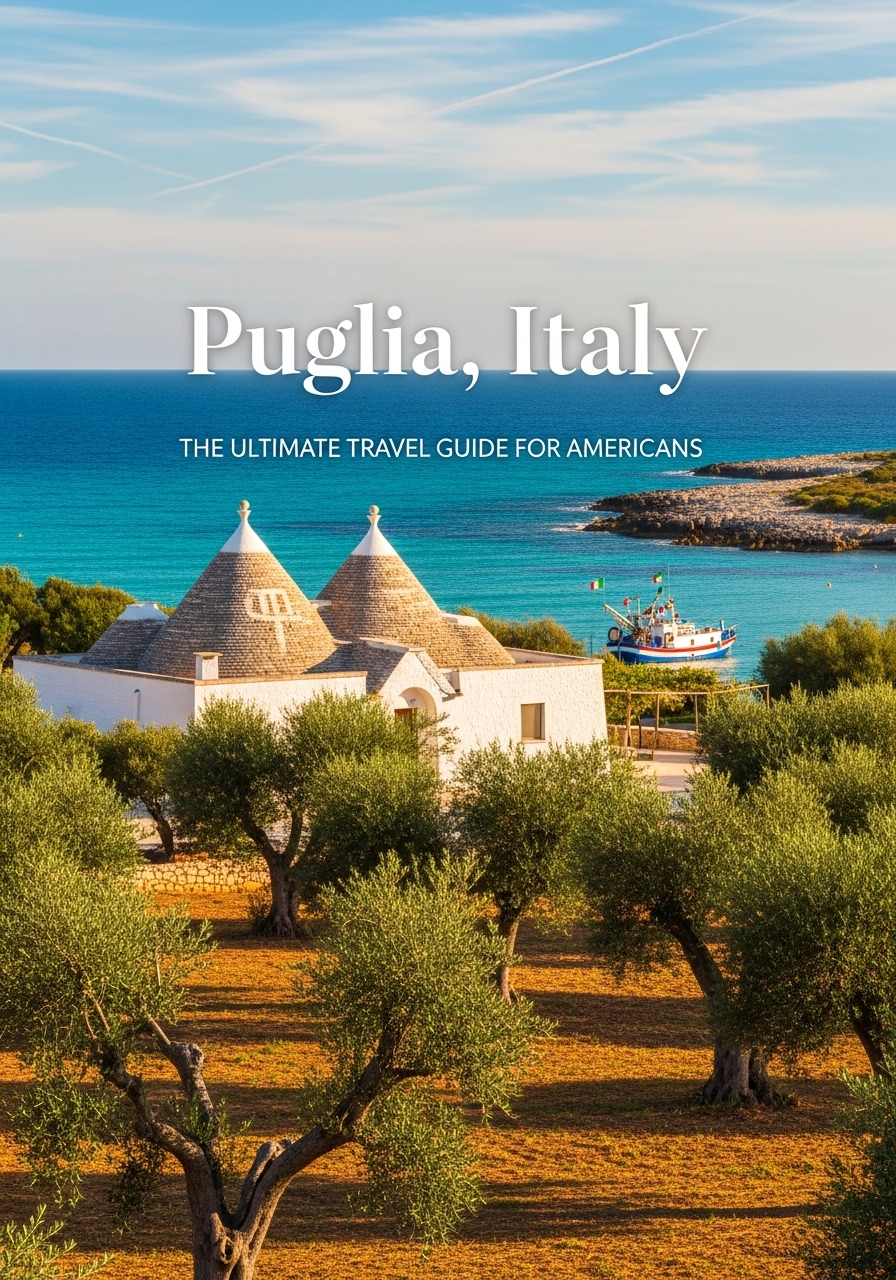
Puglia sits at the heel of Italy’s boot. It gives you real Italian life without the massive crowds you find in Tuscany or Rome. Picture whitewashed hill towns, rows of olive trees stretching to the sea, clear turquoise water, and fresh pasta made the old way.
For Americans, it’s an easy European escape. Flights are getting better, prices stay reasonable, and the vibe feels relaxed and welcoming. You can swim in the Adriatic one day, wander ancient streets the next, and end with a glass of local wine under the stars. If you want authentic Italy that still feels like a discovery, this is it.
How to Get to Puglia from the United States
Fly into Bari (BRI) or Brindisi (BDS). These two airports put you right in the region.
In 2026, United launched a new direct flight from Newark to Bari the first one from the US East Coast. That cuts your travel time a lot. From the West Coast or other cities, you’ll usually connect through Rome, Milan, or a major European hub. Round-trip fares often land between $400 and $650 if you book a few months ahead.
Once you land, grab your rental car at the airport. Taxis and trains exist, but a car opens up the whole region. Skip trying to rely on buses if you want to hit beaches and small villages without stress.
Best Time to Visit Puglia
Go in May, June, September, or October. The weather stays warm (70-80°F), the sea is perfect for swimming, and crowds stay light. Olive harvest kicks off in fall, so you’ll see locals picking fruit and pressing fresh oil.
July and August bring heat (often over 90°F) and more tourists. Winters are mild but many beach spots close and some restaurants slow down. Spring and fall give you the sweet spot: lower prices, easy parking, and that golden light Italians love.
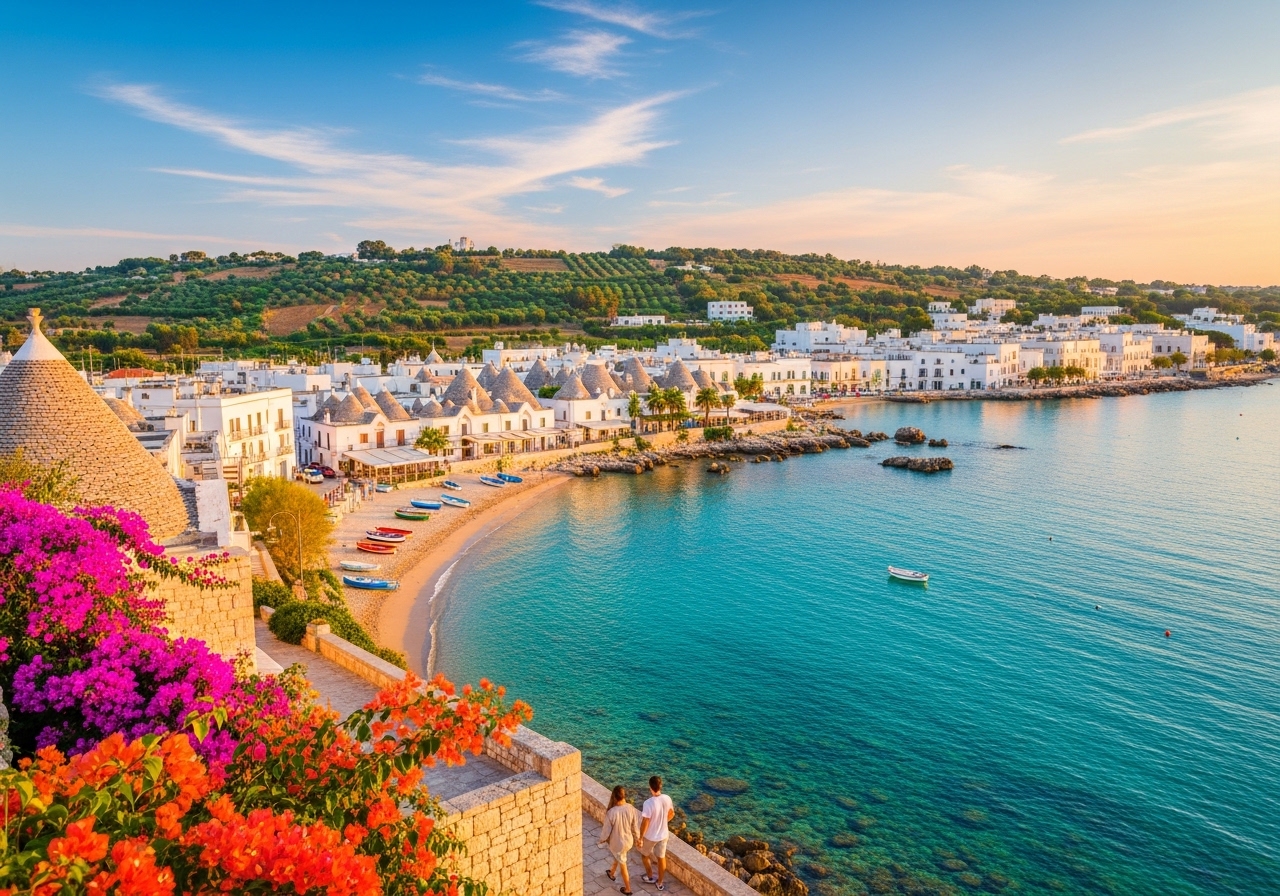
Getting Around Puglia
Rent a car. No question. Most beautiful spots sit off the main train lines, and buses run slowly.
Pick an automatic transmission many Americans find stick shifts tricky on narrow hills. Get full insurance and check for “ZTL” signs (restricted traffic zones) to avoid big fines. Driving feels straightforward once you adjust to Italian style: locals drive fast but stay polite. Parking is easy and cheap outside town centers. Gas runs higher than in the US, but distances stay short.
Top Places to Visit in Puglia
Start with these standouts. You can easily hit several in a week.
Alberobello The trulli houses look like something from a fairy tale conical stone roofs built without mortar. Walk the quiet side streets early in the morning before day-trippers arrive. Stay overnight in one if you can; evenings feel magical.
Polignano a Mare Cliff-top town with dramatic views. The main beach (Lama Monachile) sits tucked between rocks great for a swim, not for lounging all day. Grab gelato and watch locals dive from the cliffs.
Ostuni Called the “White City” for its bright buildings. Climb the hill for sea views over olive groves. Narrow lanes hide cute shops and rooftop bars. Perfect base for day trips.
Lecce The “Florence of the South.” Baroque churches and golden stone everywhere. Wander the main square at night when lights make everything glow. Great restaurants and a relaxed pace.
Otranto and Gallipoli Otranto has a castle, clear shallow water, and a harbor full of boats. Gallipoli sits on a tiny island connected by a bridge fresh seafood and sunset walks. Both feel like classic Italian seaside towns.
Don’t miss Bari for a taste of city life. The old town has winding alleys and fresh seafood markets. Altamura is worth a stop for the famous bread baked in wood ovens.
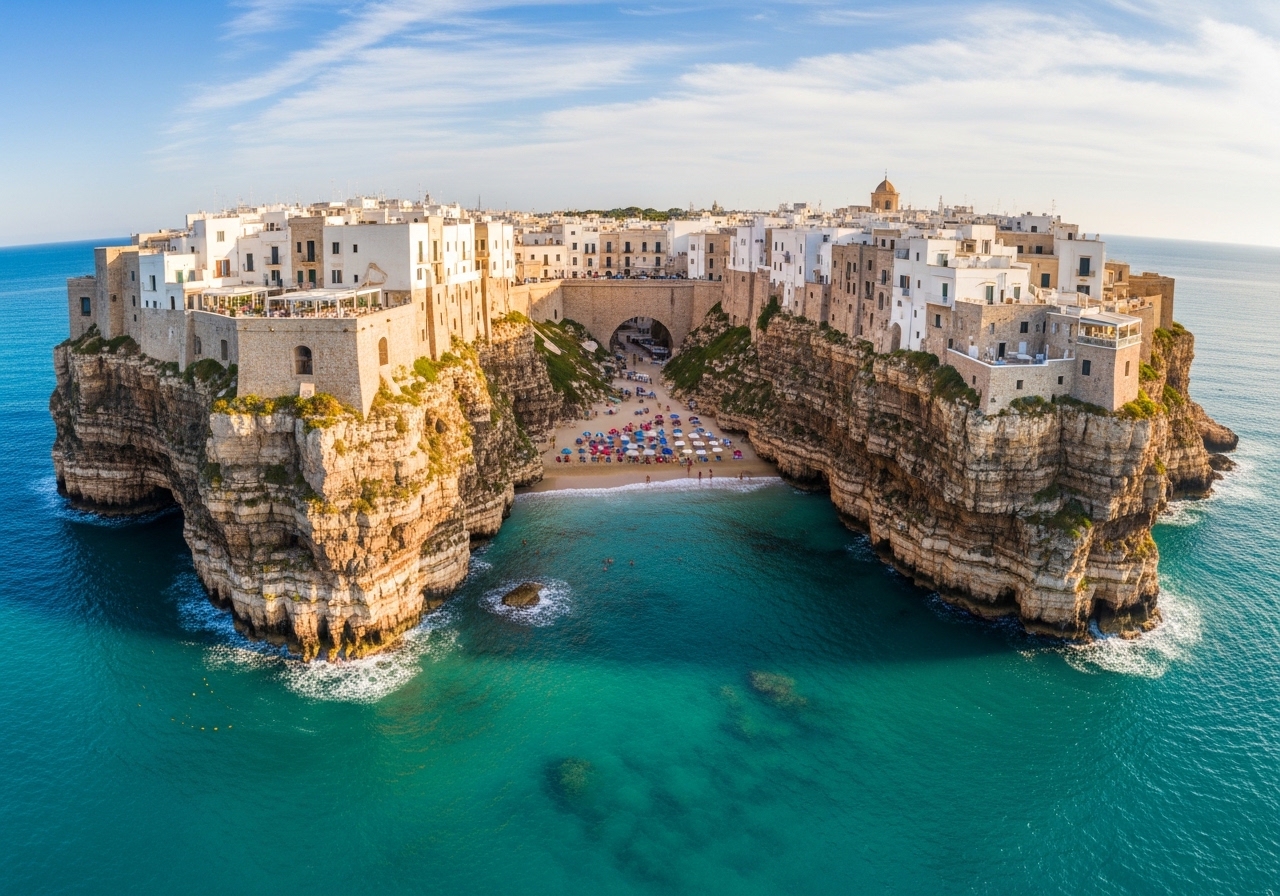
The Best Beaches in Puglia
Puglia’s coast beats many famous Italian spots. Water stays clear and calm.
- Marina di Pescoluse: Nicknamed the “Maldives of Italy.” White sand, turquoise water, and shallow entry.
- Punta Prosciutto: Long stretch of soft sand with beach bars. Feels tropical.
- Torre Sant’Andrea: Dramatic rock formations and swimming coves. Bring water shoes for the rocks.
- Otranto area: Shallow waters perfect for kids and long swims.
Most beaches offer free sections plus paid loungers if you want shade. Go early or late to avoid the small afternoon rush.
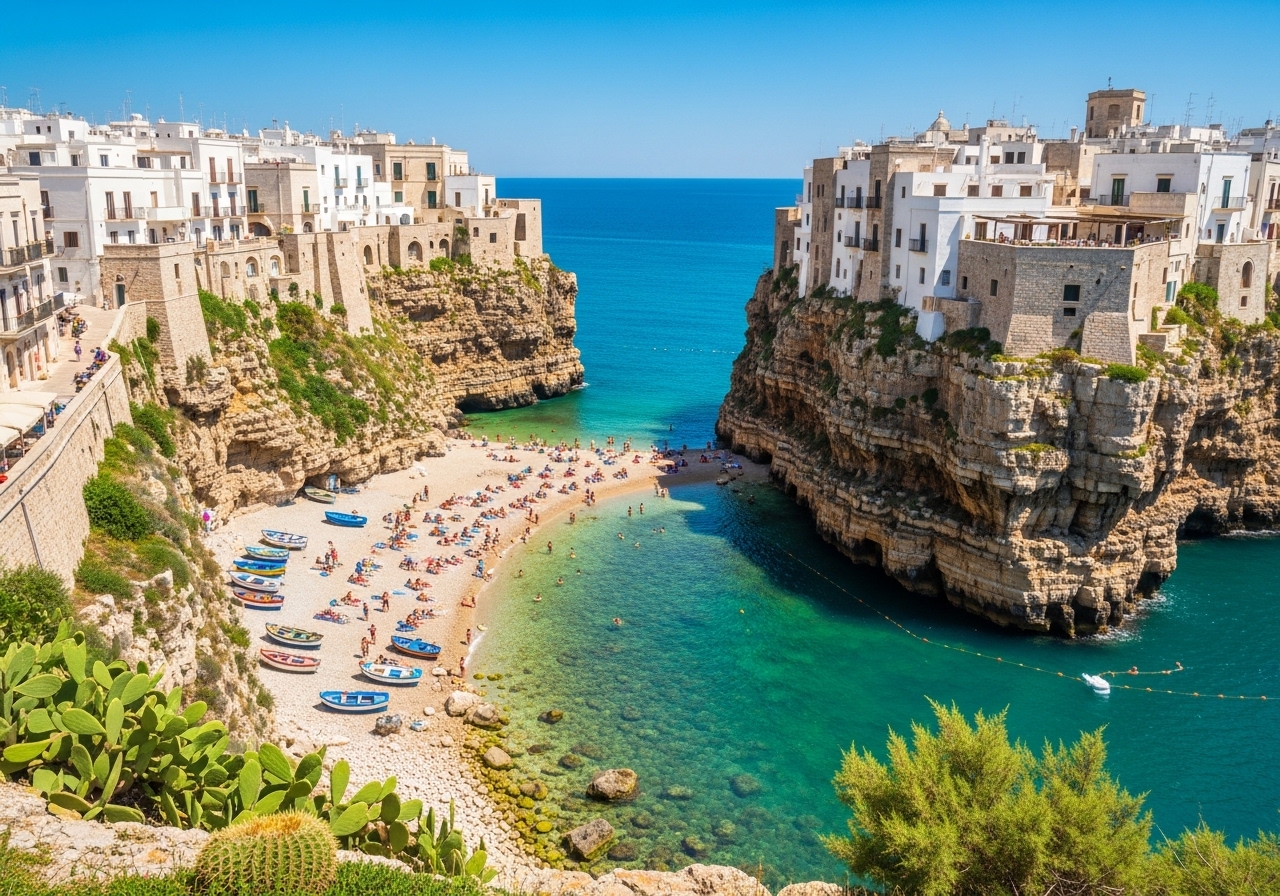
What to Eat and Drink in Puglia
Food here comes straight from the land and sea.
Must-tries:
- Fresh orecchiette pasta (little ear shapes) with tomato sauce or broccoli rabe.
- Burrata cheese creamy inside, best with tomatoes and olive oil.
- Bombette meat rolls grilled at butcher counters in Cisternino.
- Local wines like Primitivo (bold red) and Negroamaro.
- Altamura bread and extra-virgin olive oil you can buy at farms.
Eat at simple trattorias or markets. Many places still close for a long lunch break that’s just how it works. Try a cooking class or olive oil tasting; you’ll take home recipes and new favorites.
Where to Stay in Puglia
Split your nights between two or three bases so you don’t drive too much every day.
- Valle d’Itria area (Locorotondo or Martina Franca): Central for trulli towns and easy drives.
- Monopoli: Great coastal base with beaches nearby.
- Lecce or Otranto: Perfect for the southern heel and Salento beaches.
Stay in a masseria at least one night these old farmhouses turned hotels feel like stepping into Italian countryside life. Pools, gardens, and home-cooked dinners come standard. Trulli stays in Alberobello or boutique hotels in white towns also work great. Prices range from $80-$200 a night depending on season and style.
Sample 7-Day Puglia Itinerary for First-Timers
Day 1: Land in Bari, pick up your car, drive to Monopoli. Settle in and stroll the harbor. Day 2: Polignano a Mare in the morning, then relax on a nearby beach. Day 3: Head inland to Alberobello and Locorotondo. Stay in a trullo. Day 4: Explore Ostuni and nearby olive groves. Day 5: Drive south to Lecce for Baroque beauty and great food. Day 6: Otranto or Gallipoli for beach time and castle views. Day 7: One last swim or market stop before heading back to Bari for your flight.
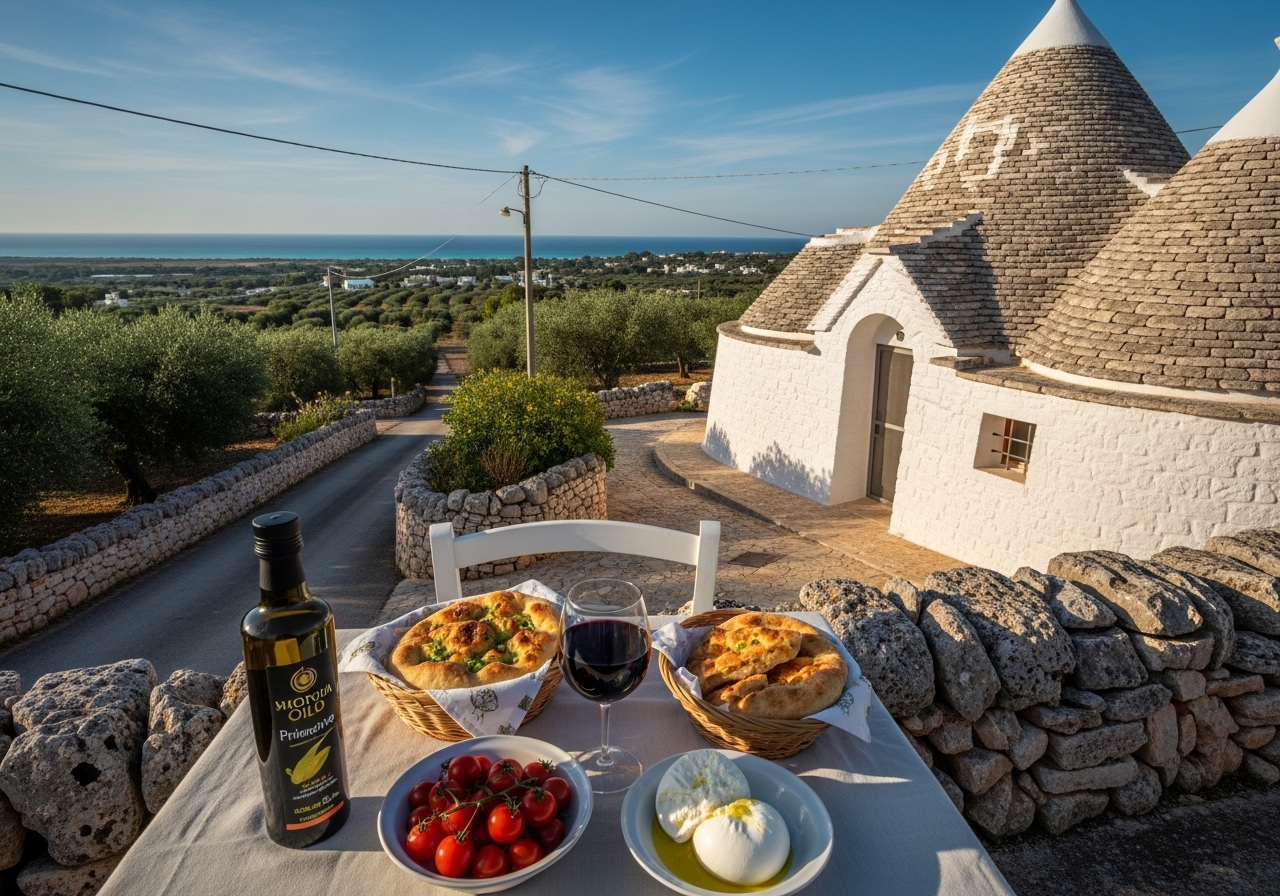
Adjust based on your pace. Ten days lets you add Matera (just across the border) or more beach days.
Practical Tips for American Travelers
Puglia stays safe and welcoming. Petty theft happens in busy spots like any city, so use normal caution. English works fine in tourist areas, but a few Italian phrases go a long way.
Daily costs for a couple run about $150-$250 total (mid-range hotels, meals out, car, gas). That covers everything comfortably.
Pack light layers, good walking shoes for cobblestones, and a swimsuit. Italy uses Type L plugs, so bring an adapter.
Essential items to grab before you go:
- A universal travel adapter with USB ports the compact ones sold on Amazon handle Italy’s outlets plus your phone and laptop perfectly.
- Sturdy walking shoes built for uneven streets and light hikes something like Merrell Moab or similar styles available on Amazon make a huge difference after long days exploring.
- A simple Puglia cookbook (or Italian regional one) pick one up on Amazon so you can recreate orecchiette and olive oil dishes when you get home.
These small things save headaches and make the trip smoother.
Conclusion
Puglia gives you the Italy you dream about: fresh food, stunning views, kind locals, and room to breathe. Come for the trulli, stay for the beaches and pasta. You’ll leave planning your next trip back.
Book your flights, rent that car, and go. The heel of the boot is waiting.
FAQs
Is Puglia worth visiting for Americans? Yes. It feels more authentic than busier regions, costs less, and delivers incredible food and beaches.
Do I need a car in Puglia? Absolutely for the best experience. Public transport works for big towns but misses the magic spots.
What are the best beaches in Puglia? Marina di Pescoluse and Punta Prosciutto top the list for sand and clear water. Torre Sant’Andrea shines for dramatic swims.
How many days do you need in Puglia? Seven days covers the highlights. Ten days feels more relaxed.
Is Puglia safe? Very. Standard travel sense keeps you fine.
Puglia rewards everyone who shows up with open eyes and an empty stomach. Safe travels!