Aruba has one of the most genuinely unusual climates in the Caribbean: 365 days of sunshine, virtually no rain, consistent trade winds, and no hurricane risk. It sits 17 miles north of Venezuela, well below the hurricane belt that affects most Caribbean islands.
That combination makes it one of the safest weather bets for a Caribbean holiday at any time of year. But the island is small, only 20 miles long and 6 miles wide, which means knowing which parts of it to spend your time in genuinely matters.
This guide covers every significant destination on the island, from the world-class beaches to the rugged national park interior, with honest practical advice that the official tourism sites skip.
Quick Answer: Best Places to Visit in Aruba
Eagle Beach for the finest beach on the island. Palm Beach for resort energy and water sports. Arikok National Park for the natural landscape and the Natural Pool (Conchi). Baby Beach for the calmest water on the island. Oranjestad for Dutch-Caribbean architecture, shopping, and local culture. Mangel Halto and Tres Trapi for snorkeling. San Nicolas for street art and local Aruban culture away from the resort strip.
The One Thing That Shapes Everything: Aruba’s Two Coasts
Aruba’s geography creates two completely different experiences depending on which coast you are on.
The West Coast (Calm Side): The sheltered Caribbean-facing coast runs from Malmok in the north through Palm Beach, Eagle Beach, and down to Oranjestad. This is where the resort hotels are, where the beaches are calm and swimmable, and where the water is that vivid turquoise blue that fills every Aruba photograph.
The East Coast (Wild Side): The windward Atlantic-facing coast is dramatic, rugged, and almost completely undeveloped. Crashing waves, volcanic rock formations, and the terrain of Arikok National Park define this side. The Natural Pool sits here. Baby Beach sits at the southeast tip where the Atlantic and the Caribbean meet.
Virtually every visitor spends most of their time on the west coast. A day trip to the east coast, whether on a Jeep tour, an ATV, or a rented 4WD, is one of the most rewarding things you can do in Aruba.
Eagle Beach: The Best Beach on the Island
Eagle Beach is consistently rated one of the best beaches in the Caribbean and one of the finest in the world. It earns that recognition.
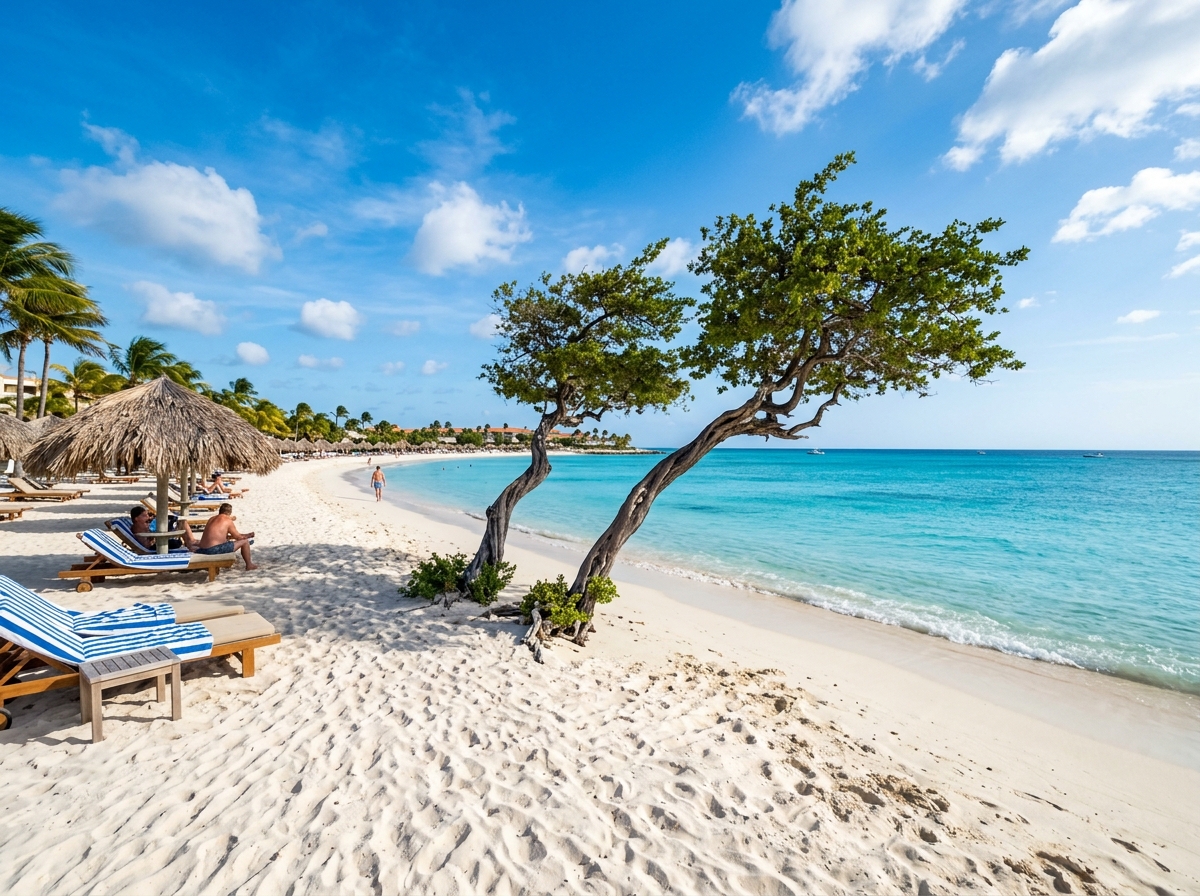
The beach is wider and longer than Palm Beach, with fewer crowds, softer sand, and the iconic fofoti trees leaning over the water at the southern end. The water is calm, clear, and shallow enough near shore for easy wading before deepening to excellent swimming conditions further out.
Eagle Beach does not have the resort hotel density that Palm Beach has. The hotels here are smaller and set further back from the sand in many cases. That is exactly why the beach itself feels so open. You can lay your towel down with space around you even on a busy day.
Loggerhead sea turtles nest on Eagle Beach from March through August, making it one of the few active sea turtle nesting sites you can witness from a public beach in the Caribbean. The Aruba Phoenix Hotel manages a turtle monitoring programme, and volunteers track nests along the beach during nesting season.
Best for: Sunbathing, swimming, photography, turtle watching in season Practical note: Arrive early to get one of the limited beach chairs and umbrellas available for rent. Bring your own or arrive before 8am for the best spots.
For any Aruba beach day involving hours of direct Caribbean sun, a reef-safe sunscreen that protects without damaging the marine ecosystem is both practical and responsible. Aruba’s coral reefs are actively managed and chemical sunscreen filters are known to harm coral. The Badger Clear Zinc Sunscreen SPF 40 (available on Amazon) is mineral-based, reef-safe certified, water-resistant, and works through repeated swimming without needing reapplication every 20 minutes in the Caribbean heat.

Badger Sport Mineral Sunscreen, Reef Safe, SPF 40
Palm Beach: Resort Energy and Water Sports
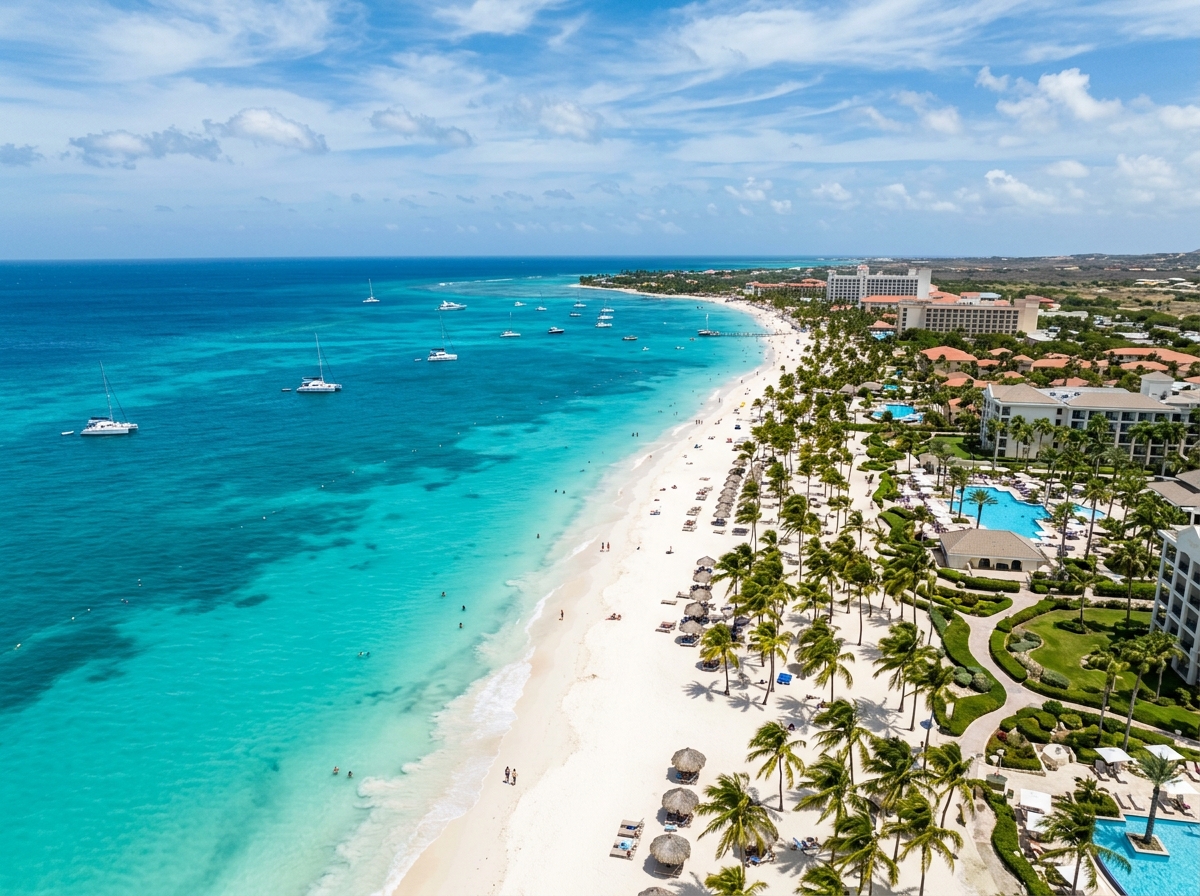
Palm Beach is where the resort hotels concentrate, where the jet skis and parasailing operators launch, where the beach bars start serving at 10am, and where the nightlife runs until late. It is the most tourist-facing beach on the island and the most social.
The beach itself is excellent. The water is warm and calm, the sand is white, and the strip of hotels, restaurants, and beach clubs along the waterfront creates an atmosphere that some visitors love and others find exhausting.
Water sports are the strongest reason to spend time on Palm Beach. Windsurfing, kitesurfing, parasailing, jet skiing, paddleboarding, and kayaking are all available from multiple operators along the beach. Aruba is globally recognised as one of the best windsurfing and kitesurfing destinations in the world due to the constant 19 to 23 mph trade winds that blow year-round. Experienced riders come specifically for this. Beginners have good lessons available.
Palm Beach vs Eagle Beach: Palm Beach has more going on, more choices, and more people. Eagle Beach is quieter, wider, and has better sand. If you want a beach that feels like a resort holiday with everything at hand, Palm Beach. If you want the finest beach experience on the island without the noise, Eagle Beach.
Arikok National Park: The Island’s Wild Interior
Arikok National Park covers nearly 20 percent of the entire island, protecting the rugged eastern and central interior from development. It is the landscape that existed before the hotels arrived, and it is extraordinary in ways that the western resort coast is not.
The park contains desert terrain, towering cacti, volcanic rock formations, ancient Arawak cave drawings, and the Atlantic coastline at its most dramatic. Entry costs $12 per person and is well worth it.
What to see within the park:
The Natural Pool (Conchi)
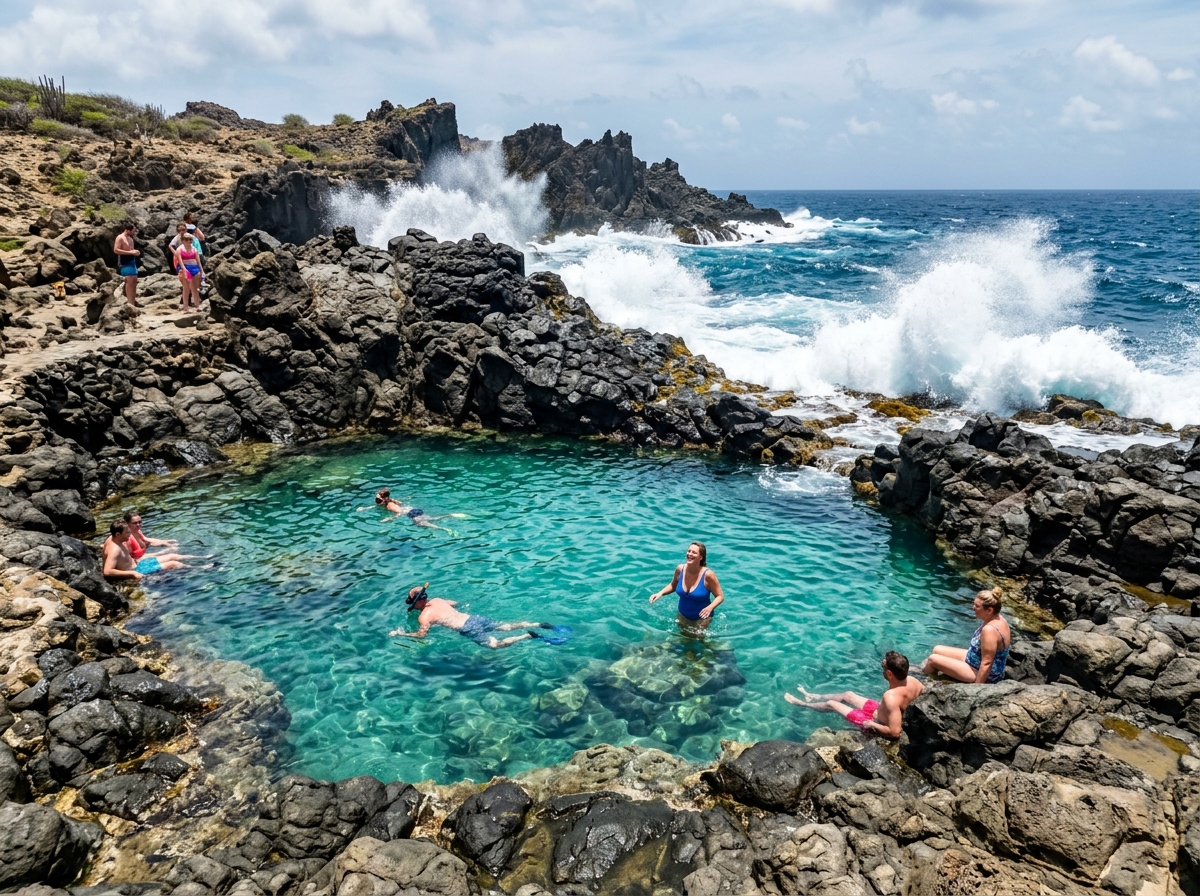
The Natural Pool is Aruba’s most dramatic attraction. A perfectly circular basin formed by volcanic rock sits on the eastern coastline, surrounded on the outside by churning Atlantic waves that crash against the rock barrier, while inside the pool the water is completely calm and clear for swimming.
The contrast between the fury of the open Atlantic outside the rocks and the stillness inside the pool is surreal in person. Colourful fish and coral are visible through the clear water.
Getting there requires either a 4WD vehicle, a guided ATV or UTV tour, or a challenging hike. The roads inside the park to reach Conchi are unpaved rock surfaces that standard cars cannot handle. Most visitors join one of the island’s many guided Jeep or ATV tours that include the Natural Pool as a highlight. If driving yourself, rent a 4WD and confirm current road conditions at the park entrance.
Bring a waterproof bag for your phone and camera. The pool is genuinely splashy and the approach path is over wet volcanic rock.
Fontein Cave and Guadirikiri Cave
Fontein Cave holds Arawak Indian drawings on the walls dating back centuries, including depictions of animals and symbols from the pre-Columbian inhabitants of the island. The cave is well-preserved and the drawings are remarkably clear. A park guide at the entrance provides context.
Guadirikiri Cave has two chambers open to natural light from holes in the ceiling, giving it a cathedral quality that Fontein does not have. Thousands of bats live in the third chamber, which is closed to visitors.
Dos Playa and Boca Prins
Dos Playa is a twin-cove beach on the eastern coast within the park. Swimming is not safe here due to the strong Atlantic currents, but the scenery of waves crashing into the cove between rocky cliffs is among the most dramatic on the island. It is one of the best photography spots in Aruba.
Boca Prins is a similar dramatic Atlantic beach nearby. The sand dunes behind the beach are among the few dune formations on the island.
Baby Beach: Aruba’s Best Family Beach
Baby Beach sits at the southeastern tip of the island, near the San Nicolas area, and is genuinely one of the best family beach discoveries in the Caribbean.
The beach is formed around a protected semicircular bay where the water is so shallow and so calm that it creates a natural wading pool effect across a large area. The water rarely exceeds waist height for most of the swimming zone, making it exceptionally safe for young children and non-swimmers.
The sand is fine and the water is crystal clear, protected from both the trade winds and the Atlantic swells by the bay’s natural geography. There is a small beach bar and some facilities, but the atmosphere is genuinely low-key compared to Palm Beach.
Baby Beach vs Caribbean snorkeling destinations: While the snorkeling at Baby Beach is decent, those seeking dedicated reef diving should look to the western coast and sites like Boca Catalina, Mangel Halto, and the Antilla shipwreck. Much like the best time to visit Belize is driven by marine visibility conditions, choosing your Aruba snorkeling spot depends on what you want to encounter and how you are getting there.
Best for: Families with young children, non-swimmers, calm water swimming, a break from the resort strip atmosphere
Oranjestad: The Capital City
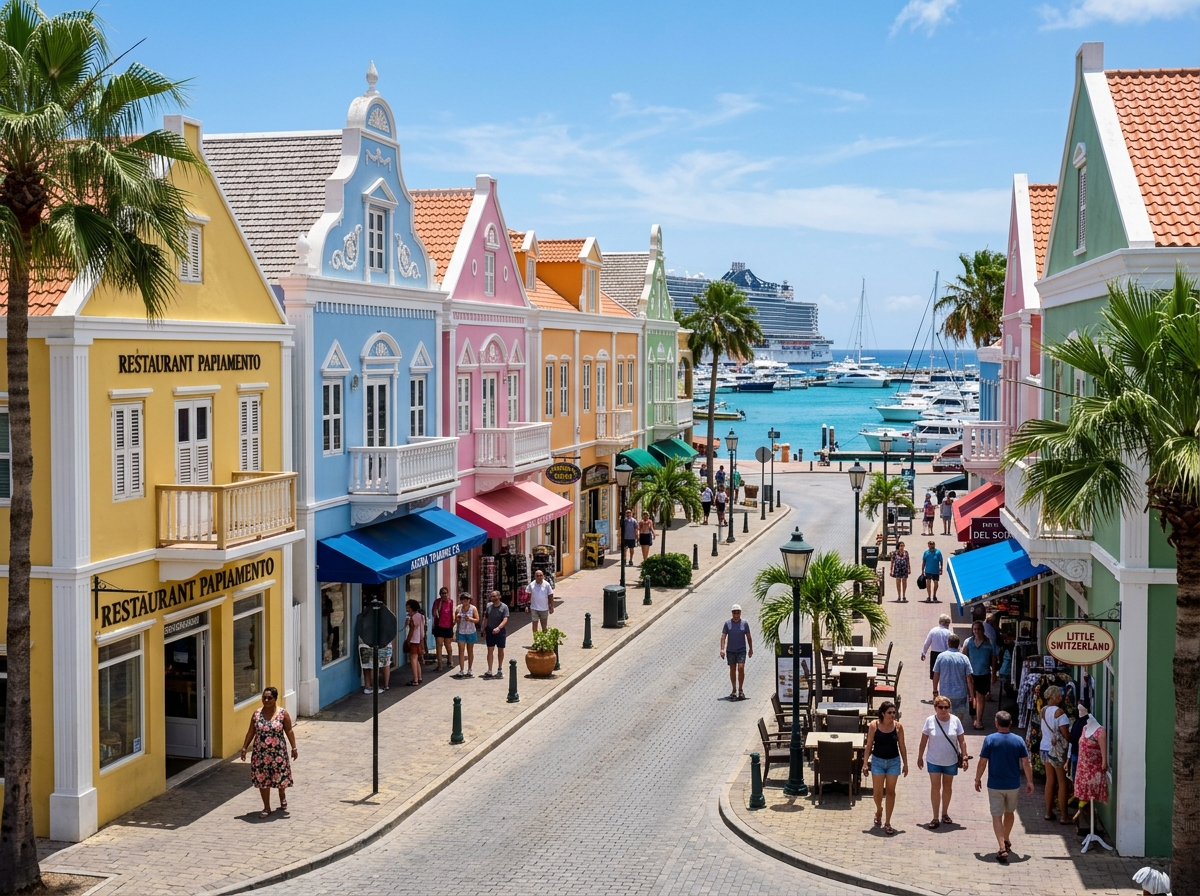
Oranjestad is Aruba’s capital and sits on the western coast between Palm Beach and the southern tip of the island. It has a genuine town character that the resort area further north does not, with Dutch-Caribbean colonial architecture in vivid pastels, a working harbour, local markets, and a museum that tells Aruba’s history from the Arawak period through Dutch colonisation to the present.
What to do in Oranjestad:
Fort Zoutman and the Historical Museum is the oldest building in Aruba, dating from 1796. The fort was built to defend the island’s freshwater well, and the museum inside covers the full arc of Aruban history in a compact and well-curated space.
The Renaissance Marina area and the adjacent boardwalk have good restaurants and the departure point for the Renaissance Island ferry, which connects to a private island with a flamingo beach (more on that below).
Local shopping and markets: Oranjestad has a better shopping scene than Palm Beach for anything other than resort basics. The Main Street area has local jewellery, Aruban aloe products, and stores with genuinely local goods alongside the standard tourist shops.
Local food: The best local Aruban food in Oranjestad is found at the small local restaurants serving keshi yena (a stuffed cheese dish with seasoned meat), pastechis (fried dough pockets filled with meat or cheese), and pan bati (a cornmeal flatbread). These are genuinely different from anything in the resort hotel restaurants.
Renaissance Island: Flamingos on the Beach
Renaissance Island is a private island owned by the Renaissance Aruba Resort in Oranjestad Harbour. Guests of the Renaissance can access it via free ferry service. Day visitors can access it by purchasing a day pass from the resort.
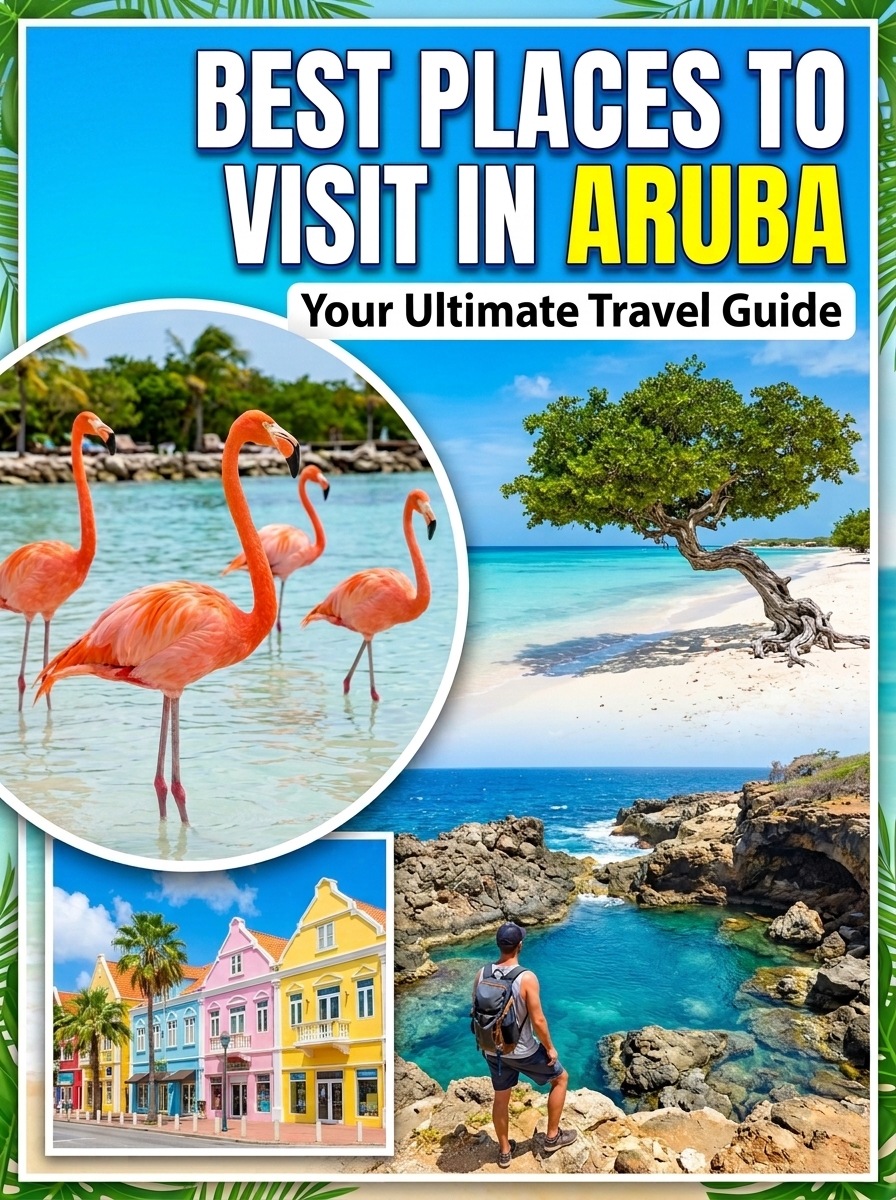
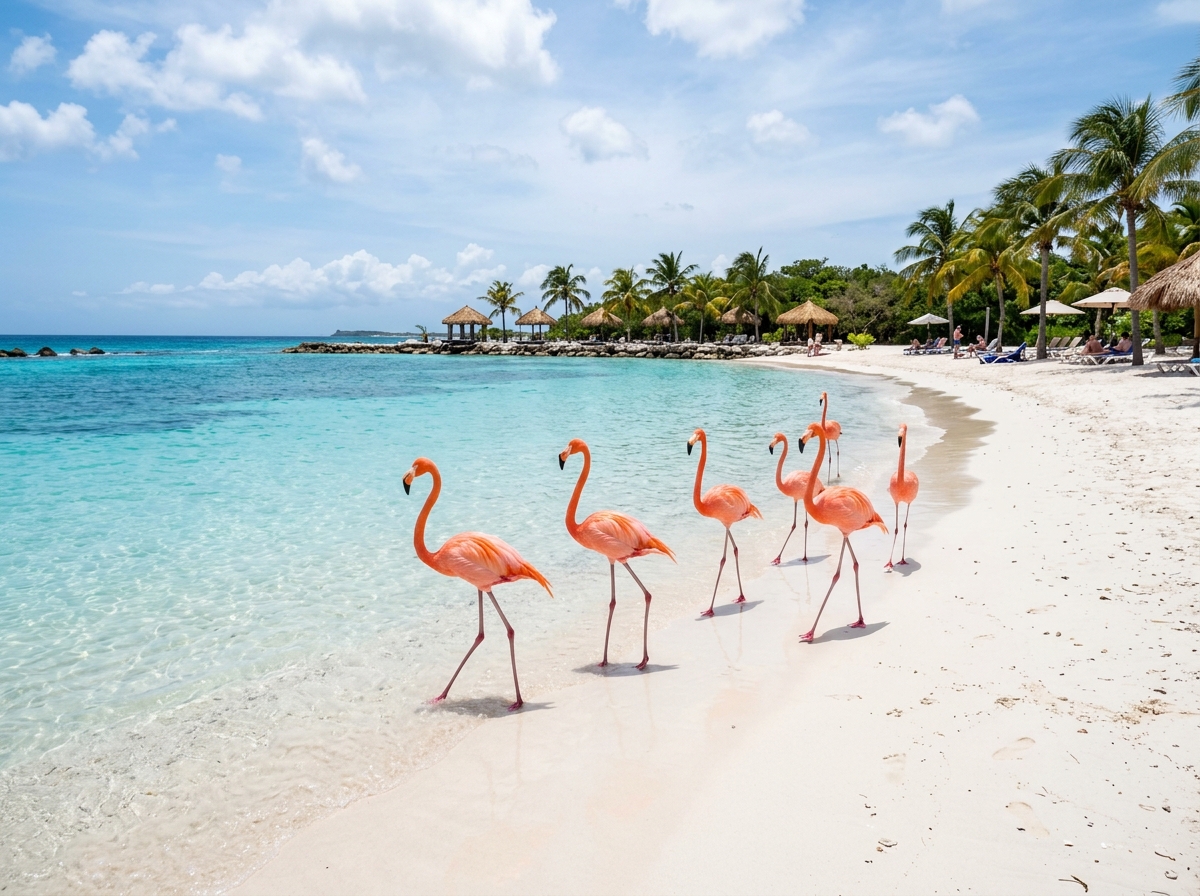
The island has a flamingo beach where actual pink flamingos walk freely among guests. This is not a zoo exhibit. The flamingos are free-ranging birds that have been habituated to human presence. They wade in the shallow water and stand on the sand alongside visitors, which makes for genuinely extraordinary photographs.
Practical note: Day passes for non-guests must be purchased at the Renaissance lobby and have limited availability. They sell out, particularly on weekends. Call or check availability online before arriving expecting to purchase at the door.
Best Snorkeling Spots in Aruba
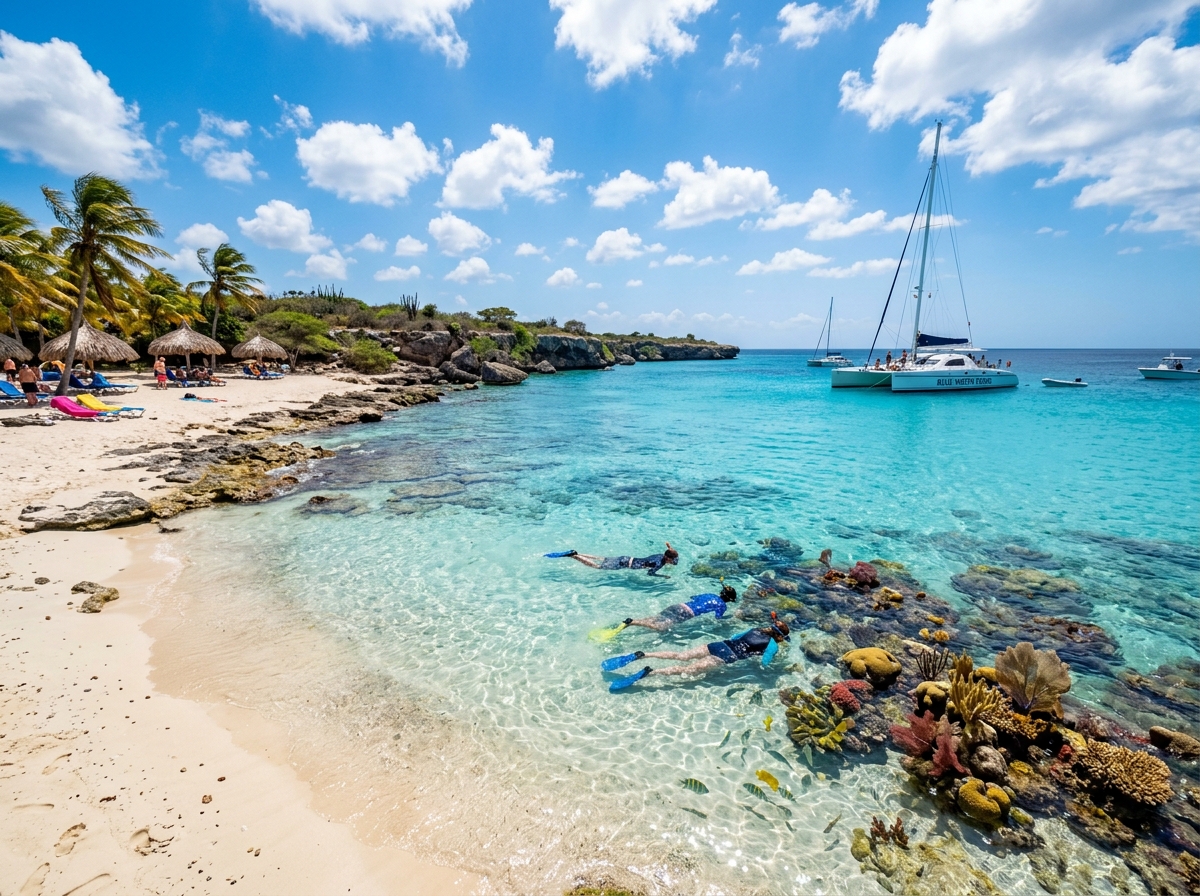
Aruba’s western coast has consistently clear water and a healthy reef system. Unlike the eastern Atlantic coast where surf and currents make snorkeling impractical, the Caribbean-side calm water allows for excellent snorkeling from shore at several locations.
Mangel Halto
Mangel Halto is one of the most consistent snorkeling recommendations from experienced Aruba visitors and one of the least marketed by the major tour operators. The bay is bordered by mangroves and the snorkeling begins almost immediately from shore, with coral formations, tropical fish, and frequent sea turtle encounters within swimming distance of the beach.
The beach itself is small and the facilities are minimal, which is exactly why it has fewer crowds than the more accessible spots near Palm Beach. A car or rideshare is needed to reach it.
Tres Trapi (Three Steps)
Tres Trapi, named for the three concrete steps that descend into the water at the entry point, is one of the most consistently recommended snorkeling spots on the island for sea turtle encounters. Early morning visits have the best conditions. The entry is not from a beach but directly from a rocky shoreline, which requires reef shoes or water shoes for comfort.
Boca Catalina
Boca Catalina is a sheltered cove north of Palm Beach with calm, clear water and a sandy bottom that makes it accessible for less confident snorkelers. Catamaran and boat tour operators frequently stop here, so it can be busy during midday when tours arrive. Go early or late afternoon for the quietest conditions.
The Antilla Shipwreck
The Antilla is a 400-foot German cargo ship sunk in 1940 during World War II and now sitting in 60 feet of water off the northwestern coast. It is the largest shipwreck in the Caribbean and one of the most famous dive sites in the western hemisphere.
Snorkelers can see the upper sections of the ship in shallower water. Divers with PADI Open Water or higher certification can explore the full wreck, which is encrusted with coral, populated by enormous shoals of fish, and genuinely extraordinary.
For any Aruba snorkeling trip, a quality snorkel set that includes a dry top snorkel (which prevents water from entering the tube in choppy conditions), a comfortable mask seal, and fins that fit securely makes a significant difference to how much you actually see. The Cressi Palau Short Fin Snorkel Set (available on Amazon) is the most recommended entry-to-mid level snorkel set for Caribbean reef snorkeling, with a dry-top snorkel valve, adjustable tempered glass mask, and open-heel fins that work for multiple foot sizes.

Cressi Palau SAF Set
San Nicolas: Aruba’s Creative District
San Nicolas is a town on the southern end of the island that existed primarily as a refinery town for most of the 20th century. Since the refinery closed, the town has been reinventing itself as Aruba’s creative and cultural district, with an annual street art festival (Aruba Art Fair) that has covered buildings across the town with murals.
Most visitors never make it to San Nicolas because it is at the opposite end of the island from the resort strip. That is their loss. The murals are genuinely excellent, the local restaurants serve the most authentic Aruban food on the island, and the Charlie’s Bar, a legendary Aruban institution open since 1941, is worth the drive alone.
Charlie’s Bar in San Nicolas is one of the most unique bars in the Caribbean. The ceiling and walls are covered with decades of donations from visitors: ship pennants, license plates, baseball caps, signed photographs, and hundreds of pieces of memorabilia that create an atmosphere no designed bar can replicate. The food is excellent.
California Lighthouse and the Northern Tip
The California Lighthouse at Aruba’s northwestern tip was built in 1916 and named after a passenger ship that sank offshore. It sits on a high point above Malmok Beach and provides one of the best panoramic views on the island, looking south toward Palm Beach and the resort hotels, west toward the open Caribbean, and north toward the uninhabited coast.
The area around the lighthouse has some of the best kitesurfing conditions on the island, and watching professional riders launch and perform on the water below the lighthouse is an attraction in itself.
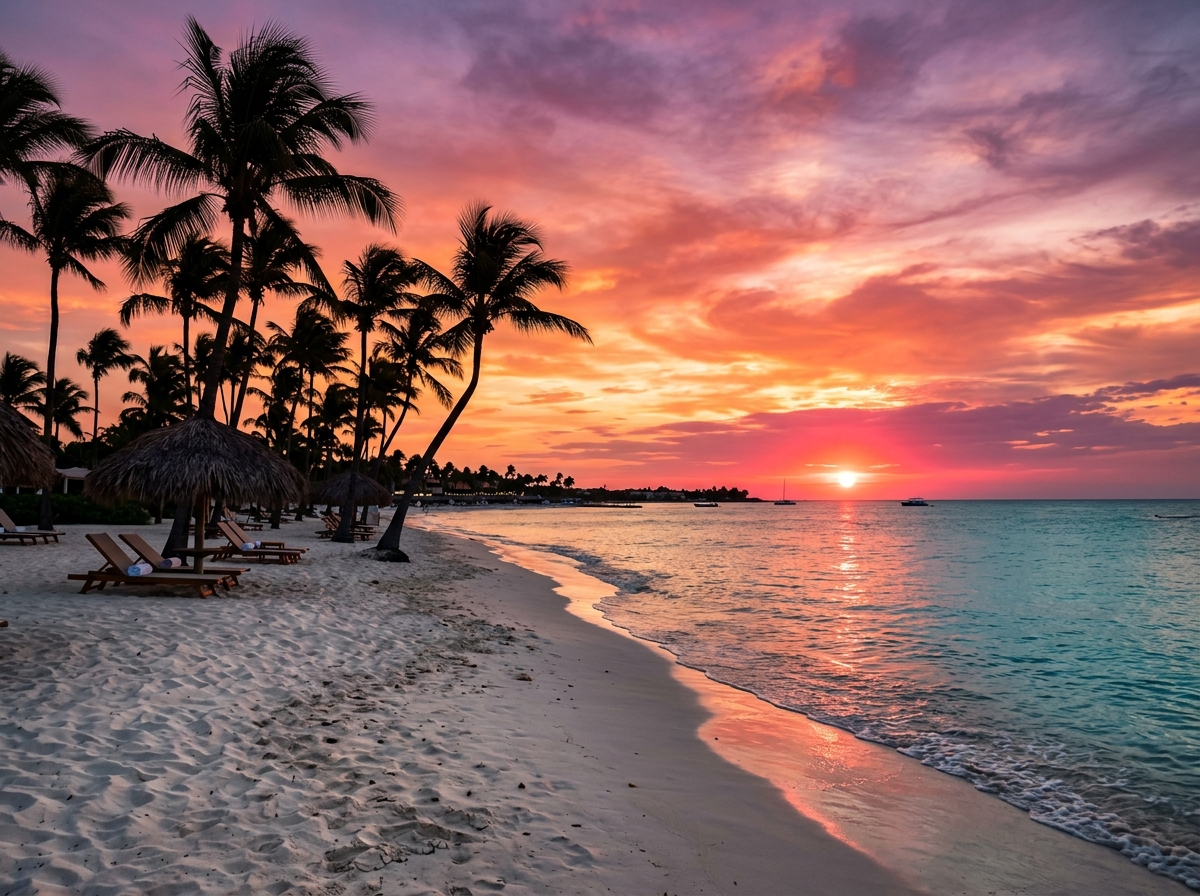
Sunset at the California Lighthouse is one of the most popular activities in Aruba, and for good reason. The western exposure, elevated position, and clear horizon over open water make it one of the better sunset viewpoints in the Caribbean. The restaurant at the lighthouse base gets busy at sunset; arrive 30 to 40 minutes before for a table.
Practical Tips for Visiting Aruba
Aruba has no hurricane season. Unlike most Caribbean islands, Aruba sits below the hurricane belt and has not taken a direct hurricane hit in recorded history. This makes it one of the only Caribbean destinations that is equally safe to visit from June through November, the period when the rest of the Caribbean carries real hurricane risk.
The trade winds make it feel cooler than it is. Aruba’s constant 19 to 23 mph trade winds mean that the 28 to 30 degrees Celsius temperature feels noticeably cooler than the same temperature in still air. Sunburn happens faster than you expect because the wind masks the intensity. Apply sunscreen more frequently than you think you need to.
The eastern coast is not for swimming. The Atlantic-facing eastern coast has powerful currents and breaking waves that make it unsafe for recreational swimming at almost every point. Dos Playa and Boca Prins in the national park are stunning to look at and genuinely dangerous to enter. Baby Beach at the southeastern tip is the exception, protected by its bay geography.
Renting a car or scooter opens the island up significantly. The western resort strip and Oranjestad are served by the Arubus public bus system (inexpensive, air-conditioned, reliable). But Baby Beach, Arikok National Park, San Nicolas, and Mangel Halto all require a car, rideshare, or organised tour. A 4WD rental is necessary for the Natural Pool visit.
The best time to visit Aruba is genuinely year-round. No bad months, no rainy season worth noting, no hurricane risk. January through April is peak season (higher prices, more visitors). May through December offers the same weather and beaches with lower prices and quieter conditions.
For Arikok National Park hiking and the walk to the Natural Pool over volcanic rock, proper footwear with grip that you do not mind getting wet is essential. The Keen Newport H2 Water Sandal (available on Amazon) has a closed toe for rock protection, a grippy rubber sole designed for wet rock, and drains quickly after wading through the Natural Pool entry. It works equally well for the cave visits in the park where floors are uneven, and doubles as a beach sandal for the western coast.

KEEN Women’s Newport H2 Closed Toe Water Sandals
Best Places in Aruba by Traveller Type
Families: Baby Beach for the safest swimming on the island. Eagle Beach for the finest sand and turtle nesting. The California Lighthouse area for views. Arikok National Park Fontein Cave for accessible history.
Couples and honeymooners: Eagle Beach at sunset. A catamaran sunset cruise along the western coast. The Natural Pool via guided Jeep tour for something genuinely dramatic. Dinner in Oranjestad at a waterfront restaurant.
Snorkelers and divers: Mangel Halto for sea turtles and reef fish from shore. Tres Trapi for consistent sea turtle encounters. The Antilla Shipwreck for the most dramatic dive experience in the Caribbean.
Adventure seekers: Jeep or ATV tour to the Natural Pool and eastern coast. Kitesurfing lessons on Palm Beach or near the California Lighthouse. Windsurfing at Aruba Boardsailing Productions near Fisherman’s Huts.
Those wanting local culture: San Nicolas for street art and Charlie’s Bar. Oranjestad for Fort Zoutman and local food. The weekly Cultural Sunday street market in Oranjestad.
Budget travellers: Baby Beach (free), Arikok National Park ($12 entry), the Arubus public bus for getting around, the local fish trucks in Oranjestad for inexpensive fresh fish, the natural beaches of the northern coast.
Quick Reference Table
| Place | Type | Best For | Practical Note |
|---|---|---|---|
| Eagle Beach | Beach | Best overall beach, sea turtles | Arrive early for chairs |
| Palm Beach | Beach | Resorts, water sports, nightlife | Busier, more commercial |
| Natural Pool (Conchi) | Natural attraction | Swimming, photography, adventure | 4WD or guided tour required |
| Baby Beach | Beach | Families, calm water, non-swimmers | 30 min from resorts, car needed |
| Arikok National Park | National park | Hiking, caves, eastern coastline | $12 entry, 20% of the island |
| Oranjestad | Capital city | History, shopping, local food | Best by local bus or car |
| Mangel Halto | Snorkeling | Sea turtles, reef fish from shore | Hidden gem, car needed |
| Tres Trapi | Snorkeling | Sea turtle encounters | Early morning best |
| Antilla Shipwreck | Dive/Snorkel | Largest wreck in Caribbean | Dive boat required |
| San Nicolas | Cultural | Street art, Charlie’s Bar, local food | Opposite end from resorts |
| California Lighthouse | Viewpoint | Panoramic views, sunsets | Busy at sunset, arrive early |
| Renaissance Island | Private island | Flamingo beach, resort guests/day pass | Day pass sells out, book ahead |
Frequently Asked Questions
What is the most beautiful beach in Aruba?
Eagle Beach is consistently rated the finest beach in Aruba and among the best in the Caribbean. It has the widest sand, the calmest water, the least crowds relative to Palm Beach, and the iconic fofoti trees at its southern end. For family-specific swimming, Baby Beach at the southeastern tip is the safest and most tranquil option on the island.
Is the Natural Pool in Aruba worth it?
Yes, genuinely. The Natural Pool (Conchi) is the single most distinctive attraction on the island. The contrast between the churning Atlantic waves outside the volcanic rock barrier and the calm swimming water inside is extraordinary. The journey to reach it, whether by guided Jeep tour, ATV, or hiking, is itself part of the experience. Allow a full half-day and bring a waterproof bag for electronics.
How do you get to Baby Beach from Palm Beach?
Baby Beach is approximately 30 to 40 minutes from the Palm Beach resort area by car. There is no direct bus service from Palm Beach to Baby Beach. A rental car, scooter, or rideshare is required. Guided island tours also include Baby Beach as a stop.
Does Aruba have a hurricane season?
No. Aruba sits below the hurricane belt, approximately 17 degrees north latitude, which keeps it out of the storm track that affects most Caribbean islands. It has not experienced a direct hurricane hit in recorded history. This makes it one of the only Caribbean destinations equally safe to visit from June through November, the peak hurricane season for the rest of the region.
What is the best snorkeling in Aruba?
Mangel Halto for consistent sea turtle encounters and healthy reef close to shore. Tres Trapi for early morning sea turtle sightings. Boca Catalina for accessible, calm, family-friendly snorkeling. The Antilla Shipwreck for the most dramatic snorkeling and diving experience, reached by boat.
Is Aruba expensive?
Aruba is more expensive than most Caribbean islands and significantly more expensive than nearby destinations like Curaçao. It is a premium Caribbean destination. Accommodation, dining, and activities are all priced at the higher end of the Caribbean spectrum. Budget options exist: the Arubus public bus is inexpensive, Baby Beach and Arikok National Park are low-cost, and local food in Oranjestad and San Nicolas costs far less than resort restaurants.
What should I eat in Aruba?
Keshi yena is the most distinctive Aruban dish: a Gouda cheese shell stuffed with seasoned meat, olives, and raisins and baked until the cheese melts into a crust. Pastechis are the local street food: fried dough pockets filled with meat or tuna, sold from bakeries and roadside stands across the island. Pan bati is a cornmeal flatbread served alongside most local meals. Local fish, particularly fresh mahi-mahi and wahoo, is excellent from the fish trucks in Oranjestad and at beachside restaurants near the southern coast.
Final Thoughts
Aruba is small enough to explore completely in a week and varied enough to fill two weeks without running out of things to discover.
The western resort beaches are genuinely world-class, particularly Eagle Beach. The Natural Pool and Arikok National Park are genuinely dramatic and worth the effort to reach. San Nicolas and Oranjestad give you an Aruba that exists apart from the hotel strip in a way that most visitors never look for and always remember finding.
The island’s year-round sunshine and absence of hurricane risk make it more forgiving of any travel date than most Caribbean destinations. Whenever you arrive, the trade winds will be blowing, the water will be warm, and the beach will look exactly like it did in the photograph that made you want to go in the first place.
Go to Eagle Beach in the morning. Take a Jeep to Conchi in the afternoon. Eat pastechis from a bakery in Oranjestad. And if someone offers you a day pass to the flamingo beach, take it without hesitation.