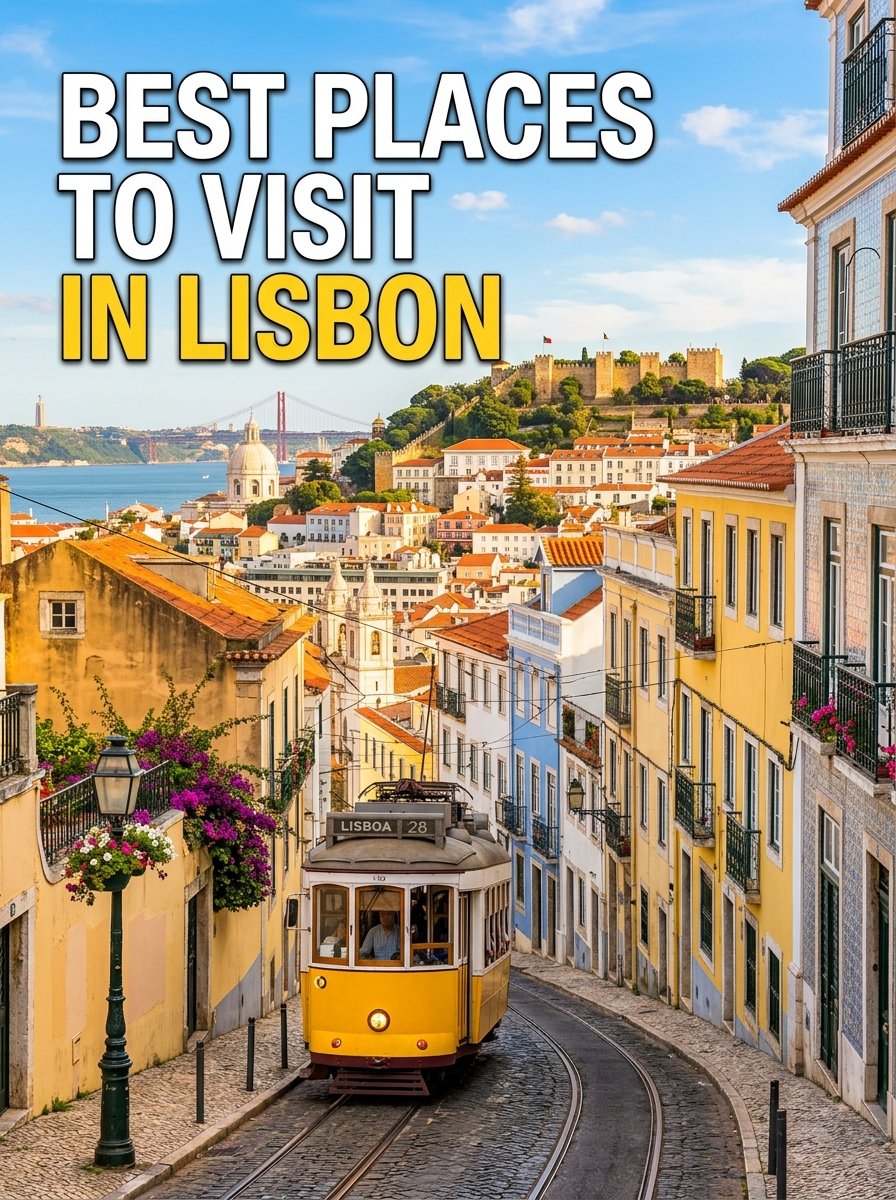
Lisbon does not reveal herself all at once. You will climb hills that leave your calves burning. You will get lost in alleyways that dead end into walls covered in cracked blue tiles. You will sit in a tiny tasca and wonder why every other European capital feels so sterile.
Most articles give you the same list. Belém Tower. Jerónimos Monastery. Tram 28. They are not wrong. But they are incomplete. They tell you where to go. They do not tell you how to go, when to go, or what to skip when your feet hurt. This guide covers the best places to visit in Lisbon with the details others leave out.
What Makes Lisbon Different
Lisbon was once the center of the world. Portuguese explorers sailed from this river to Africa, India, Brazil, and beyond. Then came the 1755 earthquake. One of the deadliest in history. Tens of thousands died. The city center collapsed.
When Lisbon rebuilt, she did so with wide boulevards that look nothing like the medieval tangle of Alfama. This is why Lisbon feels like two cities. The Baixa district is orderly and grand. Alfama and Mouraria are a maze of stairs and laundry hanging from balconies. Both are essential. Both tell different stories.
The city is poorer than Paris or Rome. You will see graffiti and boarded up windows. Do not mistake this for neglect. Lisbon is alive in a way that polished capitals are not. People talk to strangers. Neighbors shout across streets. Old men play cards in parks at midday.
The Icons: How to Do Them Right
Belém and Jerónimos Monastery
Jerónimos Monastery is the most beautiful building in Lisbon. Built in the 1500s in the Manueline style, it is a stone lace of maritime carvings, ropes, and sea monsters. The cloisters are the highlight. Light falls through arched windows onto patterned floors.
The ticket line can stretch the length of the building. Buy online in advance. Go at opening time, which is 10 AM. The monastery shares a ticket system with the archaeology museum in the west wing, so if the main line is long, try that entrance first.
Belém Tower sits about a fifteen minute walk along the river. It is a defensive fortress from 1514, white limestone, studded with cannons. The inside is cramped. Admire it from the outside. The real magic is the setting. Stand on the grass nearby and imagine ships leaving for unknown continents.
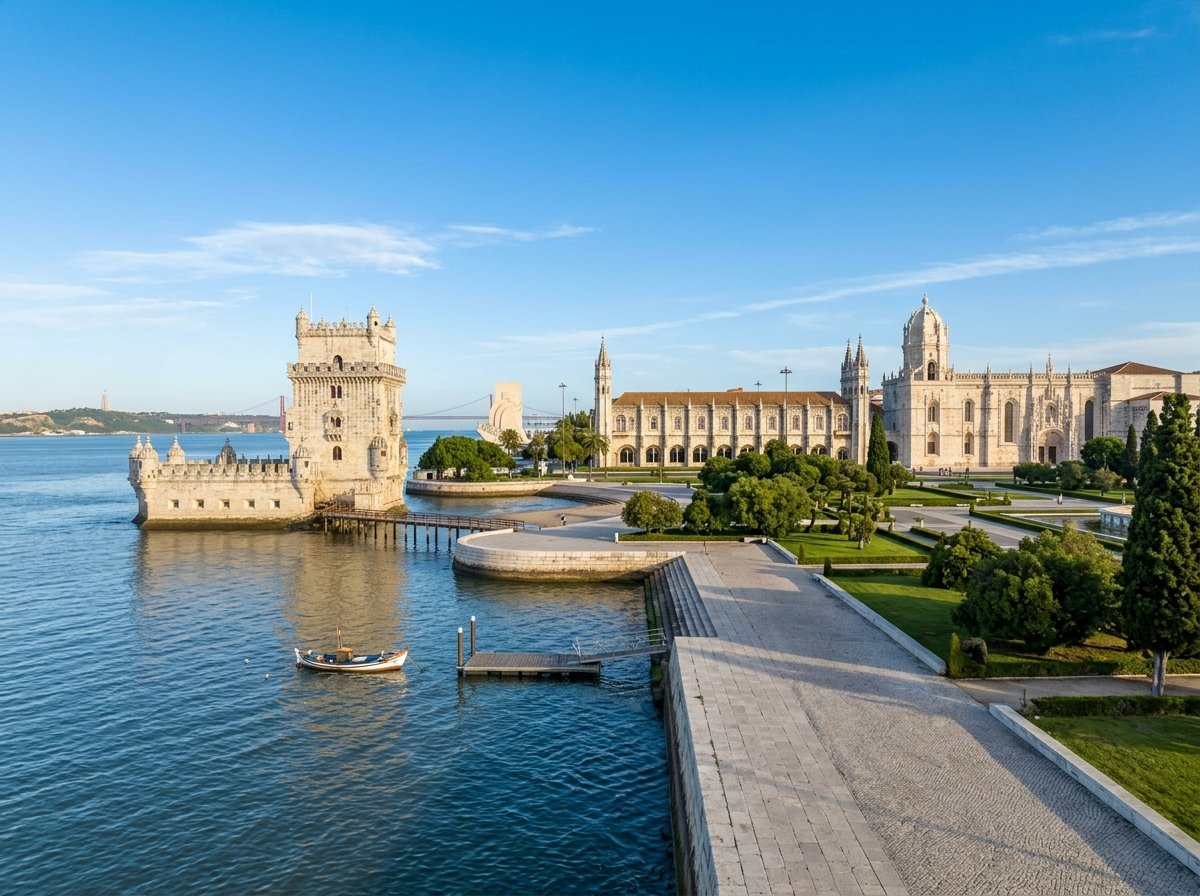
Combine these with Pastéis de Belém, the bakery that invented the pastel de nata in 1837. Order at the counter, eat standing up like locals do. The custard is warmer, the pastry flakier, and the experience is over in five minutes.
São Jorge Castle
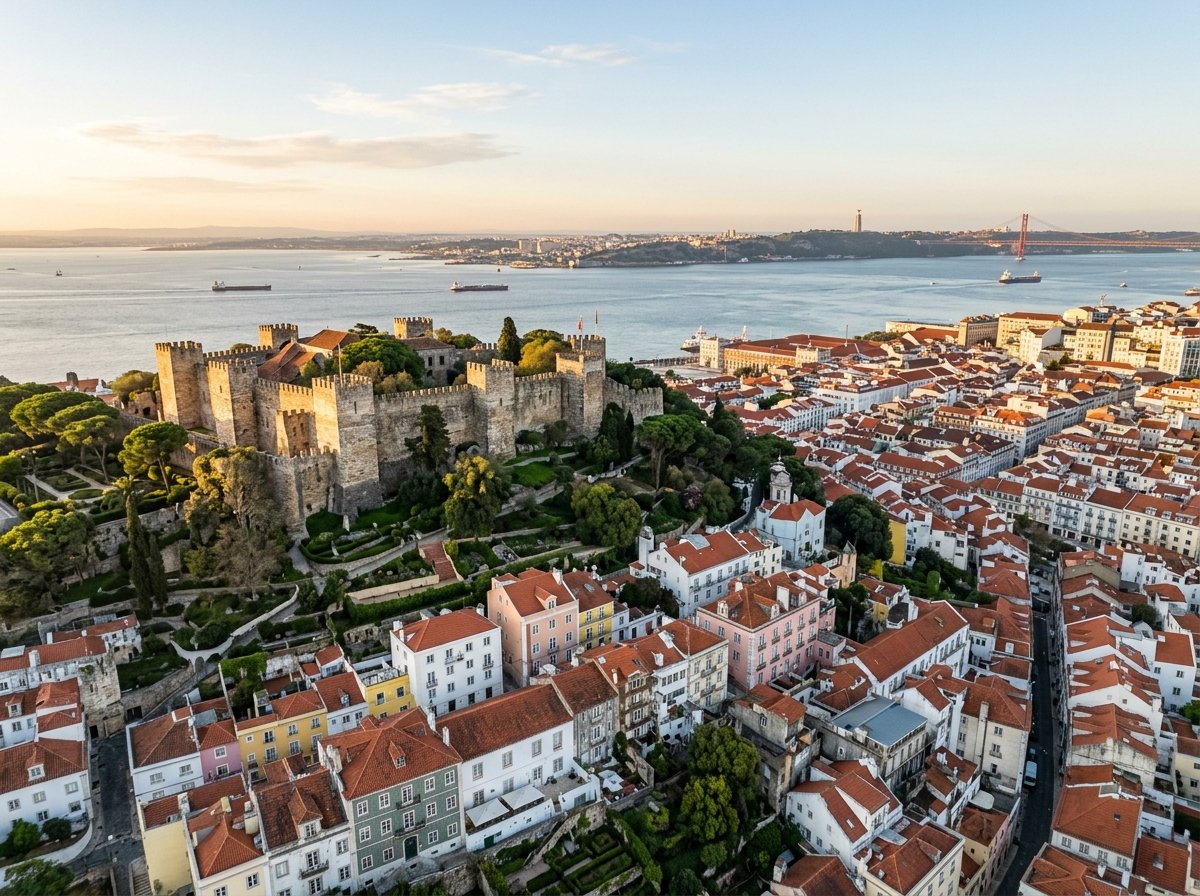
The castle crowns the highest hill in Lisbon. Built by the Moors in the 11th century, it offers views that justify every step of the climb. Peacocks wander the gardens. The walls are walkable. You can see the red roofs of Alfama spreading below like a map.
Go early. By 11 AM the tour buses arrive. The morning light is also better for photos. The east facing walls glow gold at sunrise.
The castle is not a museum. There are no furnished rooms or crown jewels. It is a ruin with gardens and viewpoints. Manage your expectations and you will love it. Bring water. The climb from Baixa is steep.
Alfama
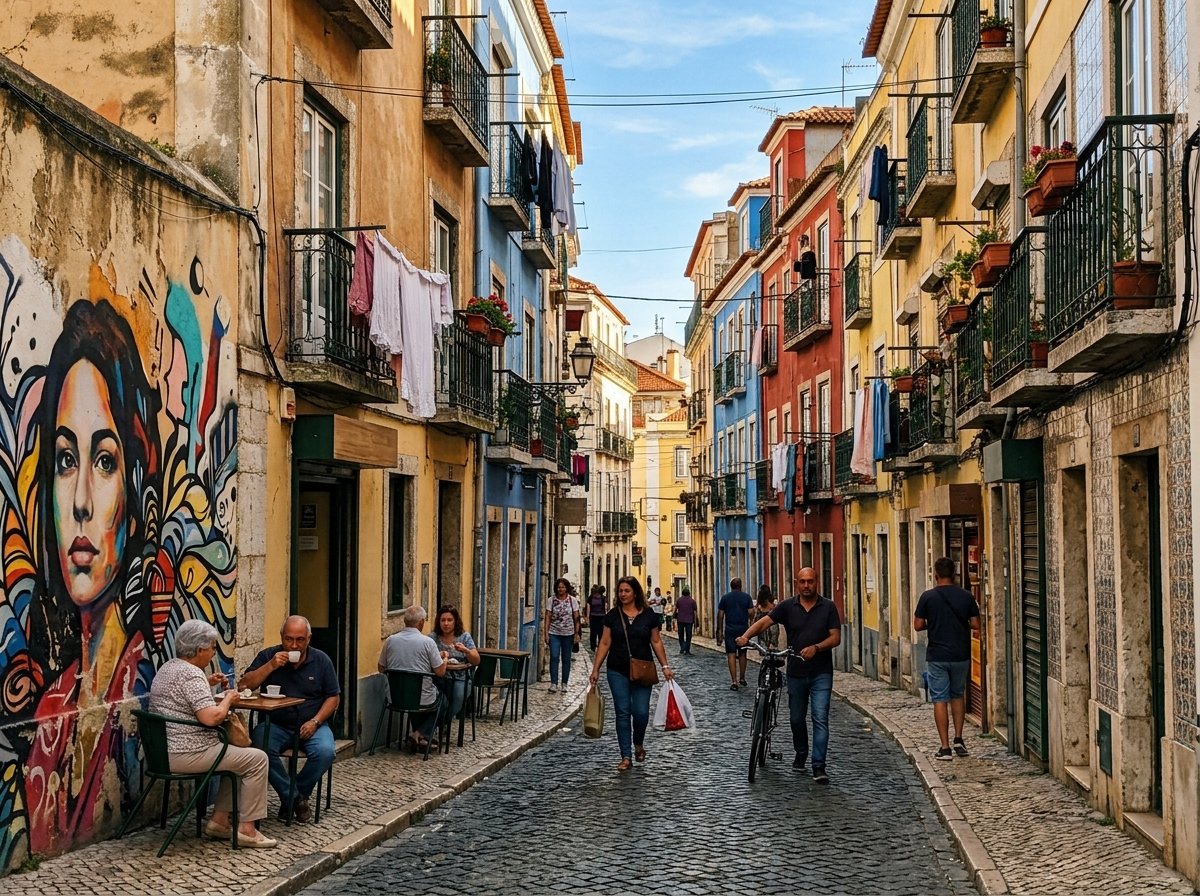
Alfama is the oldest neighborhood in Lisbon. It survived the 1755 earthquake because it sits on bedrock. The streets are too narrow for cars. Laundry hangs overhead. Cats sleep in doorways. Fado music drifts from open windows at night.
Most guides tell you to ride Tram 28 through Alfama. Do not do this. The tram is packed, slow, and a pickpocket risk. Walk instead. Start at the cathedral, the Sé, and climb. Get lost on purpose. The best moments in Alfama happen when you have no idea where you are.
Portas do Sol is the main viewpoint. It is beautiful but crowded. For a better experience, walk ten more minutes uphill to Miradouro da Senhora do Monte. It is the highest viewpoint in the city. The view includes the castle, the bridge, and the river in one sweep. Locals bring wine and guitars on Sunday evenings.
Praça do Comércio and the Riverfront
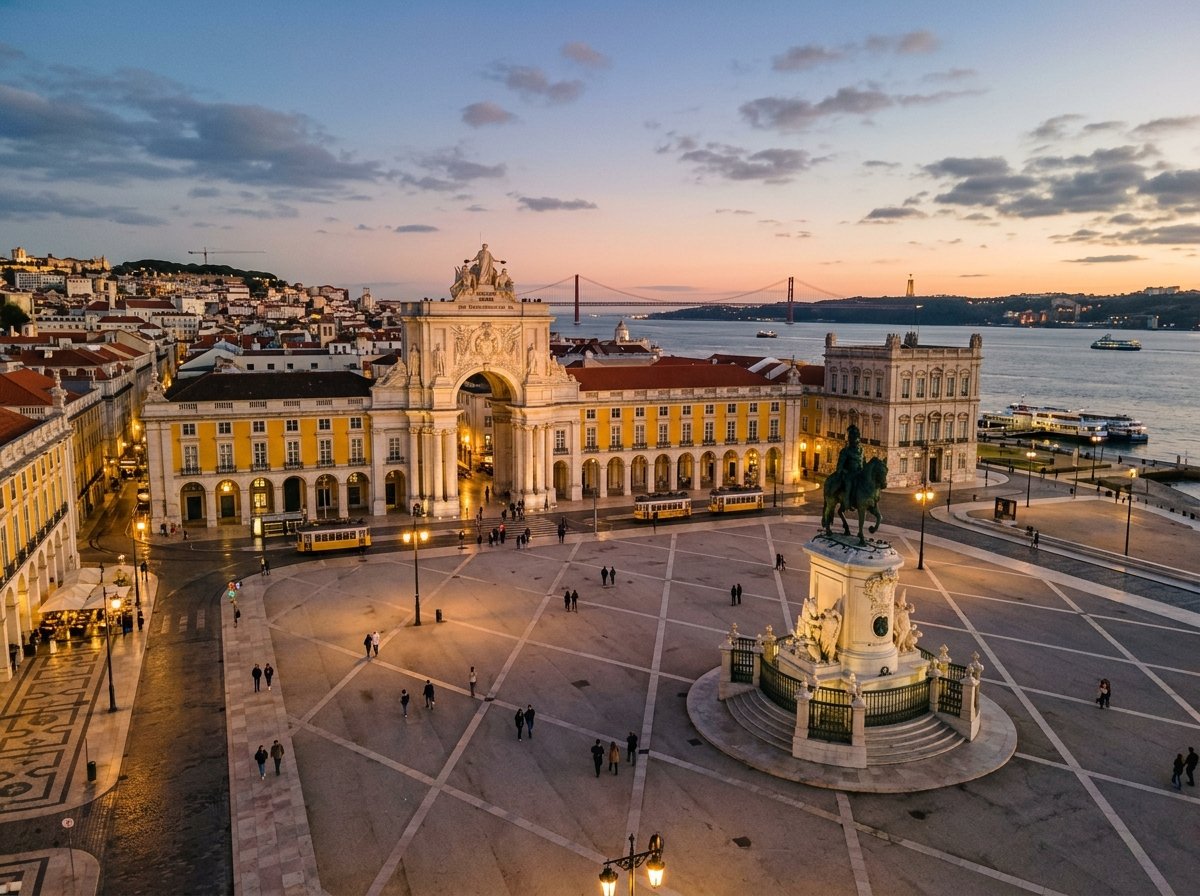
This is the grand square facing the river. Arched buildings on three sides. An equestrian statue in the center. It was the royal palace until the earthquake destroyed it. Now it is where Lisbon gathers for concerts, protests, and evening strolls.
Walk through the arch onto Rua Augusta. This pedestrian street leads to Rossio Square. It is touristy but pleasant. The real reward is the riverfront walk. Head west from the square along Ribeira das Naus. This strip has lawns, kiosks, and steps leading to the water. Locals sunbathe here. It is Lisbon’s urban beach without sand.
The Viewpoints: Timing Is Everything
Lisbon’s hills give it some of the best views in Europe. But not all viewpoints are equal, and not all times of day work.
Miradouro da Senhora do Monte is best at sunset. Face west. The sun drops behind the bridge. The city turns pink. Bring a beer from a nearby store. There are no cafes up there, which keeps crowds smaller.
Miradouro de São Pedro de Alcântara faces east. This means sunrise, not sunset. Get there twenty minutes before dawn. The light hits the castle walls first. The whole Alfama district glows red. It is one of the best sunrises in Europe and almost no one sees it.
Miradouro do Adamastor in Santa Catarina is the social viewpoint. Street musicians play. People share bottles of wine. Go on a weekday evening.
Miradouro das Portas do Sol is the postcard shot. Go at 8 AM before the tour groups arrive.
Neighborhoods Worth Your Time
Mouraria
Everyone talks about Alfama. Few talk about Mouraria, the neighborhood next door. This is where the Moors lived after the Christian reconquest. Later it became home to immigrants from Africa, Asia, and Brazil. Today it is the most multicultural part of Lisbon.
The food is the reason to come. Indian curry shops. Cape Verdean taverns. Chinese grocery stores where no one speaks Portuguese. Street art covers the walls, much of it political. It is steeper than Alfama and has fewer tourists. Wear good shoes. The hills are relentless.
Bairro Alto and Bica
By day, Bairro Alto is quiet. Laundry dries on lines. Old women sweep their steps. Photographers shoot the yellow funicular, Elevador da Bica, as it climbs between pastel houses.
By night, the bars open. Hundreds of them, packed into a few blocks. People stand in the street with drinks in hand. Music spills from doorways. If you want sleep, do not stay in a hotel here. If you want to experience Lisbon nightlife, there is nowhere better.
Príncipe Real
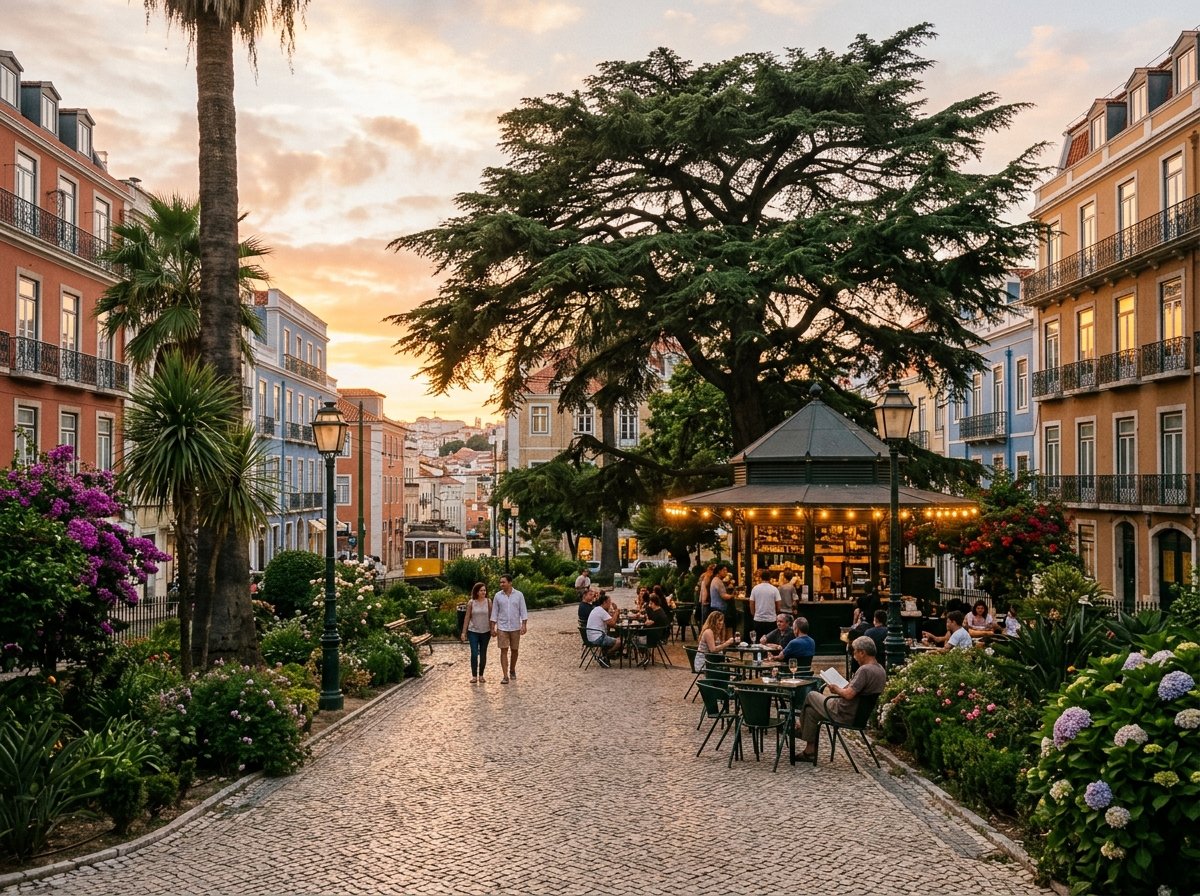
This is where Lisbon’s creative class lives. Design shops. Vintage boutiques. A garden with a massive cedar tree whose branches are held up by metal poles. Saturday mornings bring a small farmers market. The Embaixada building, a former palace, now holds Portuguese design stores. It is calmer than downtown. Good for an afternoon of slow browsing.
Chiado
Chiado is the cultural heart. The statue of Fernando Pessoa sits outside Café A Brasileira, where he once wrote. The Carmo Convent, its roof collapsed in the 1755 earthquake, stands as a haunting open air ruin. It is worth the entry fee just to stand under the Gothic arches and imagine the sky falling in.
The Food: How to Eat Like You Belong Here
Lisbon’s food scene is not about Michelin stars. It is about grandmothers, market vendors, and corner cafés where regulars do not need menus.
Pastel de nata is the obvious starting point. The original comes from Pastéis de Belém. Manteigaria makes excellent ones throughout the day. But the best pastel de nata is the one that just came out of the oven, wherever you happen to be. Eat it at the counter with a bica, Portuguese espresso. Sprinkle cinnamon and powdered sugar. Standing at the counter is faster, cheaper, and more authentic.
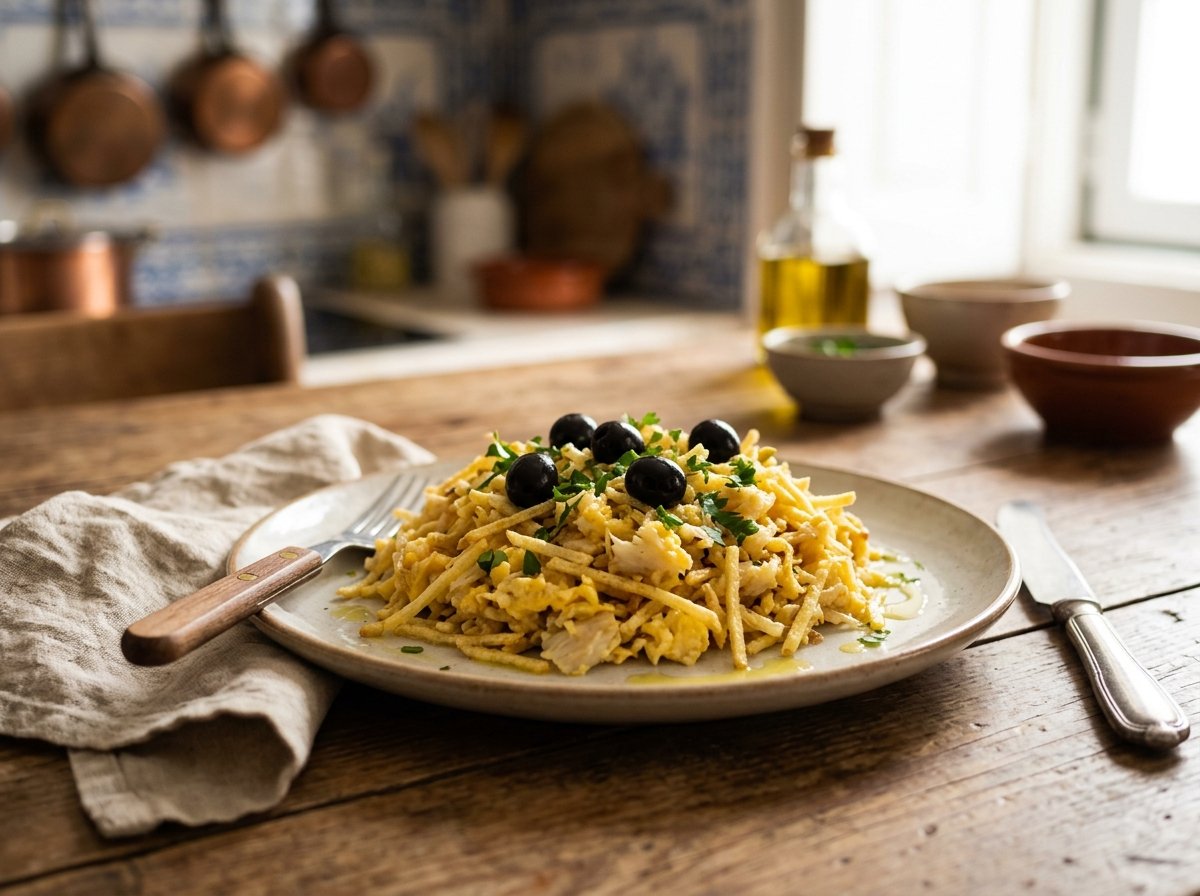
Bacalhau, salted cod, appears in hundreds of forms. Bacalhau à Brás, shredded with fried potatoes and egg, is the most common. Try it at a local tasca, not a restaurant with an English menu and photos of food.
Bifanas are thin pork cutlets marinated in garlic and white wine, stuffed into a soft roll. As Bifanas do Afonso near the Santa Justa Elevator has made them the same way for decades. Costs a few euros. Eat two.
Ginjinha is sour cherry liqueur. The most famous spot is A Ginjinha, a tiny shop near Rossio that has served it since 1840. Order it com elas, with the cherry. If they offer a chocolate cup, take it. Drink the liqueur. Eat the cup. The whole experience takes ninety seconds.
Seafood is nonnegotiable. Lisbon sits on the Atlantic. Go to Cervejaria Ramiro for prawns, clams, and crab. It is loud and chaotic. Everything tastes like it was swimming that morning. Arrive before opening or expect a long wait.
Mercado da Ribeira, also called Time Out Market, is a food hall with dozens of stalls. It is touristy but good quality. The traditional market side still sells produce and fish to locals. Go for lunch. Try a bit of everything.
For a deeper food experience, pick up a copy of Lisbon: An Eater’s Guide to the City. It lists tascas most tourists never find and explains the history behind dishes like caldo verde.
The Culture Beyond Checklists
Fado
Fado is Lisbon’s soul music. It is mournful, beautiful, and deeply tied to the Portuguese concept of saudade, a longing for something lost. Most tourists see fado at a dinner theater in Bairro Alto. The performers are talented. The food is mediocre. The prices are high.
For real fado, go to a small tasca in Alfama or Mouraria on a weeknight. Order dinner. Wait. Eventually someone starts singing. The room goes quiet. No one checks their phone. This is not entertainment. It is emotion shared between strangers. Mesa de Frades in an 18th century palace is a step up but still intimate.
Azulejos
Those blue and white tiles are not decoration. They are history. The Moors brought tile making to Portugal. The Portuguese perfected it. Azulejos tell stories of saints, ships, and daily life. They cover churches, train stations, and ordinary houses.
The National Tile Museum, Museu Nacional do Azulejo, is in a convent across the river from the main tourist zone. It traces the art from Moorish patterns to modern abstraction. The church inside is covered floor to ceiling in gold and tile. It is stunning and half-empty most days.
Look for azulejos as you walk. The São Bento train station has scenes of rural life. Ordinary buildings in Campo de Ourique have panels from the 1920s. Once you start looking, you see them everywhere.
Street Art
Lisbon has one of Europe’s best street art scenes. It grew out of the Carnation Revolution in 1974, when dictatorship fell and artists covered walls with political messages. Today the city commissions murals rather than fighting them.
The tourist pieces are in Bairro Alto and LX Factory. The real work is in Marvila and Beato, former industrial zones now covered in massive murals. Take the metro to Marvila and walk. You will pass abandoned factories turned into galleries. The art is raw, political, and enormous. Go during daylight. The area is safe but it is a working neighborhood, not a tourist zone.
Hidden Spots Most Guides Miss
Palácio dos Marqueses de Fronteira
This 17th century palace sits in the Benfica neighborhood, far from downtown. It is covered in azulejo tiles depicting battles and hunting scenes. The gardens are formal and quiet. You must book a guided tour in advance. The entrance fee keeps crowds away. If you care about Portuguese art, this is essential.
Casa do Alentejo
Push through an unassuming doorway on Rua das Portas de Santo Antão and you enter a Moorish palace. Arched courtyards. Tiled walls. A painted ballroom ceiling that looks like a summer sky. It is a cultural association that serves lunch and dinner to non members. The food is heavy on pork and lamb. The setting is unforgettable. Go on a weekday afternoon when it is nearly empty.
Museu da Água
A 19th-century pumping station near Praça de Espanha. Massive iron machinery. Pipes and meters. It sounds boring. It is not. The space is cathedral-like in its scale and silence. Tuesday mornings you might be alone. The small entry fee includes a lesson in how Lisbon supplied water to seven hills before modern plumbing.
Jardim da Estrela
While tourists crowd Alfama viewpoints, locals spend Sunday mornings here. A 19th century park with a lake, duck ponds, a wrought iron bandstand, and peacocks that wander freely. The café serves proper breakfast. Families spread on the grass. Old men play cards. It is four and a half hectares of calm.
LX Factory
A former industrial complex turned creative hub. Shops, cafes, restaurants, and street art. It is mentioned in every guide now and has lost some of its underground feel. But Ler Devagar, the bookstore in a converted printing factory, is still worth the trip. Floor-to-ceiling books. A flying bicycle hangs from the ceiling. There is a café where you can sit for hours.
Day Trips Worth Taking
Sintra
Thirty minutes by train. A mountain town of palaces and gardens. Pena Palace is the famous one, red and yellow, looking like a toy castle. The Moorish Castle is older and has better views. Quinta da Regaleira has underground tunnels and initiation wells.
Sintra is beautiful and completely overwhelmed. Go on a Tuesday or Wednesday. Arrive by 9 AM. Buy palace tickets online. If you only have time for one, choose Quinta da Regaleira. It is stranger and more memorable than Pena.

Cascais
A seaside town forty minutes by train from Cais do Sodré. A harbor, beaches, and a 15th-century citadel. Boca do Inferno, a coastal rock formation where waves crash through arches, is a short walk away. Go at sunset. There is an outdoor bar called The The where you can watch the show with a drink in hand.
Queluz Palace
Often skipped because Sintra gets all the attention. This 18th-century Rococo palace has opulent rooms and formal gardens with fountains and azulejos. It gets a fraction of Sintra’s crowds. You can have entire rooms to yourself.
What the Other Guides Got Wrong
Skip the inside of Belém Tower. The exterior is the point. The interior is cramped stairs and small rooms. Save your money and your knees.
Skip the Santa Justa Elevator. The line is long. The view from the top is no better than several free viewpoints nearby. Walk to Miradouro de São Pedro de Alcântara instead. It is free and the view is wider.
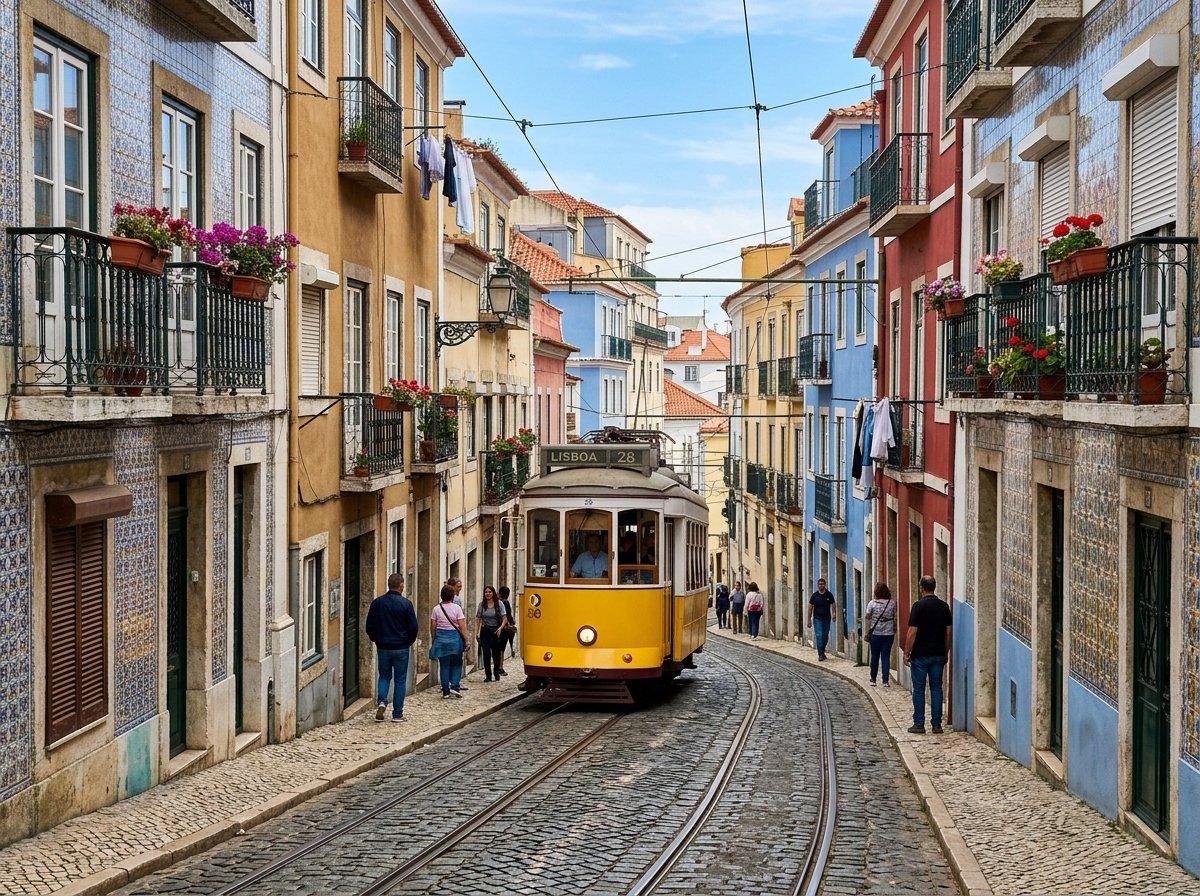
Do not ride Tram 28 as a tour. It is a public tram, not a sightseeing bus. Locals use it to get to work. It is packed, slow, and a known pickpocket spot. If you must ride it, take it early morning as actual transportation, not as entertainment.
Do not eat dinner before 8 PM. Restaurants open late. Kitchens are not ready. You will be eating in an empty room. Adapt to local time.
Do not assume Lisbon is cheap. It used to be. Tourism has changed that. Restaurants near major sights charge Paris prices. Walk two streets away and prices drop by half.
Practical Tips No One Shares
Shoes matter. Lisbon’s sidewalks are mosaic cobblestones. They are beautiful and treacherous. They are slippery when wet. They destroy thin soles. Bring shoes with thick, grippy soles. A pair of Merrell Moab hiking shoes works well. They have the traction and support you need for full days on these streets.
The hills are real. Seven major hills. Constant climbing. There is no flat route between most attractions. Plan your day by neighborhood, not by a map. Do not try to walk from Belém to Alfama in one morning. You will suffer.
The Lisboa Card is worth it if you plan to enter multiple paid attractions. It covers transit and gives free entry to Jerónimos, Belém Tower, and many museums. Do the math before you buy. If you only want to see the outside of monuments, skip it.
Pickpockets work the trams and crowded viewpoints. Keep your phone in a front pocket. Do not hang bags on chair backs at outdoor cafes. It is not dangerous. It is opportunistic.
Learn three words. Obrigado, thank you. Por favor, please. Saúde, cheers. Use them. Effort is appreciated.
Bring a portable charger. Your phone will die faster than you expect. GPS, photos, translation apps, and transit tickets all drain battery. An Anker PowerCore 10000 fits in a pocket and gives two full charges. It is worth having on long walking days.
If you want to capture the city properly, a Sony RX100 VII compact camera fits in a jacket pocket but shoots photos that rival larger cameras. Lisbon’s light changes fast. Having a real camera ready means you catch the golden hour at a miradouro without fumbling with phone settings.

Sony RX100 VII Premium Compact Camera 1.0-Type CMOS Sensor Black
FAQs
What is the best time of year to visit Lisbon?
Spring, from March to May, and fall, from September to November. The weather is mild, the crowds are thinner, and the light is golden. Summer is hot and packed. Winter is quiet and rainy but still pleasant.
How many days do I need?
Three full days for the city itself. Add a fourth for Sintra. Add a fifth if you want to see Cascais or slow down.
Is Lisbon safe?
Yes. Violent crime is rare. Petty theft happens in tourist areas. Keep your bag closed and your phone secure. Do not leave valuables on cafe tables.
Do I need to speak Portuguese?
No. Most people in tourism speak English. But learning obrigado and a few basics goes a long way.
What is the best way to get around?
Walking within neighborhoods. The metro for longer distances. Trams for experience, not speed. Uber and Bolt are cheap and reliable when your legs give out.
Where should I stay?
Baixa and Chiado are central and flat. Alfama is atmospheric but hilly and noisy. Príncipe Real is calmer and more local. Bairro Alto is fun but loud at night. Santos has good restaurants and a younger vibe.
What should I pack?
Comfortable walking shoes with thick soles. Layers. Lisbon can be warm in sun and cool in shade. A light jacket for evenings. Sunscreen. The sun here is strong even in spring.
Conclusion
Lisbon is not a city you conquer. It is a city you wander. You will climb until your legs shake. You will eat sardines with your fingers. You will hear fado in a dark room and understand something about longing that you cannot translate.
The best places to visit in Lisbon are not just the monuments. They are the moments between them. The beer at a miradouro as the sun goes down. The pastel de nata eaten hot at a counter. The alleyway that leads nowhere and everywhere.
Come with good shoes and an open schedule. Lisbon will do the rest.