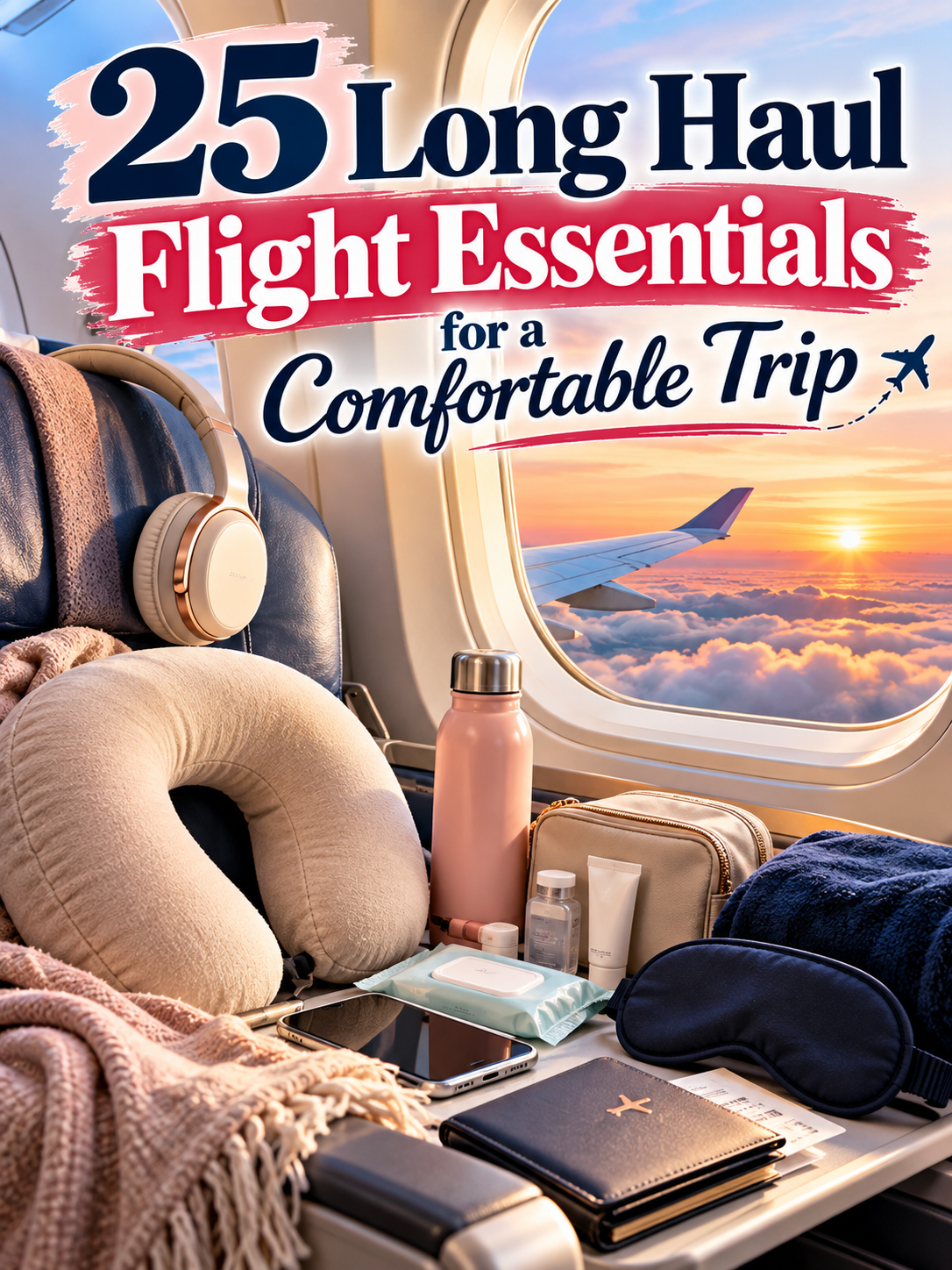
The best long haul flight essentials include a travel pillow, noise-canceling headphones, comfortable clothes, compression socks, a refillable water bottle, snacks, skincare basics, and a small sleep kit. These simple items can make a big difference when you spend 8, 12, or even 16 hours on a plane.
You do not need to fill your carry on with expensive travel gadgets. The secret is packing things that help you sleep, stay fresh, avoid boredom, and feel comfortable throughout the journey. Whether you are flying internationally for the first time or planning another long trip, this long haul flight packing list covers 25 useful items worth keeping close to your seat.
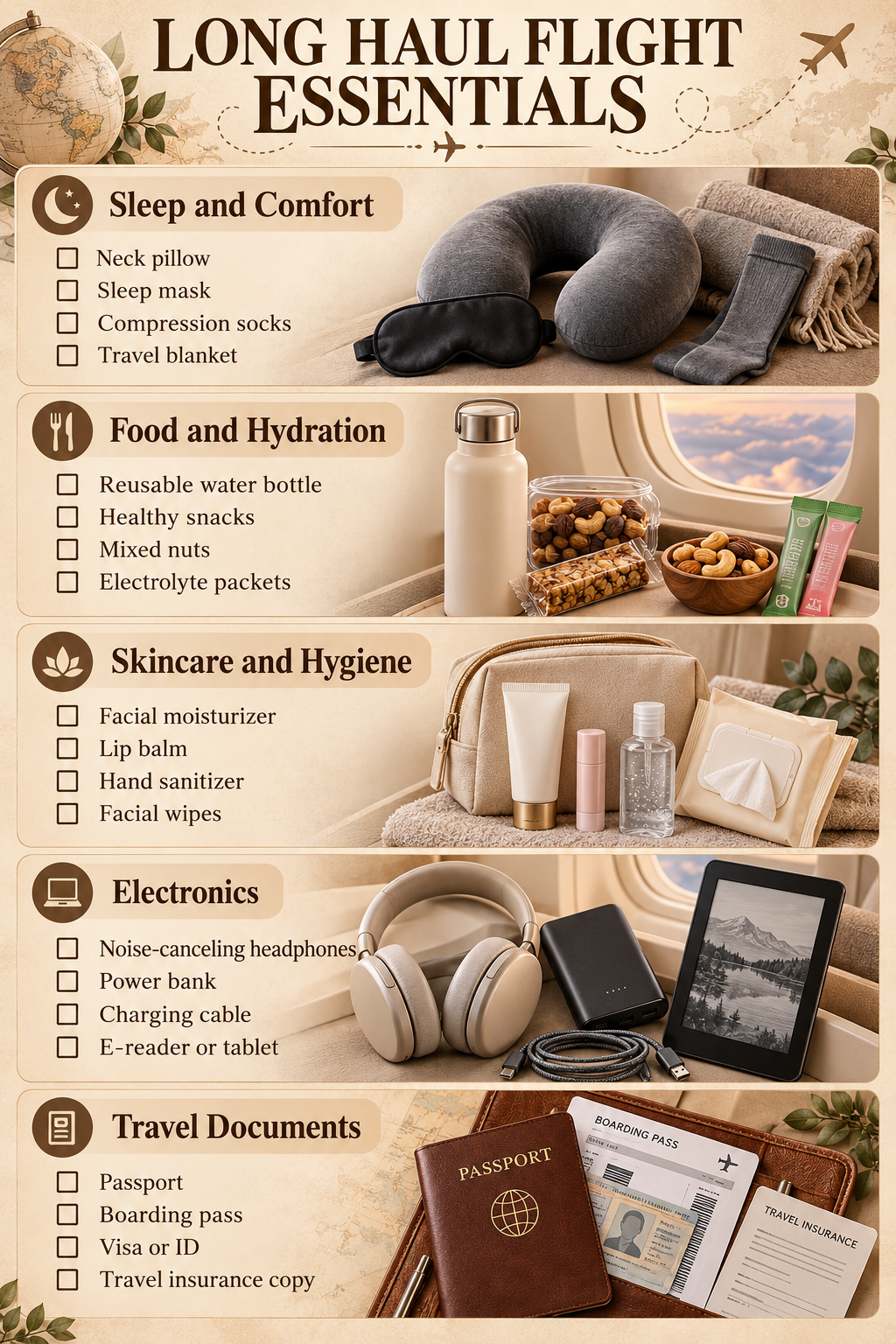
Quick Long-Haul Flight Essentials Checklist
If you are packing in a hurry, start with this checklist. It covers the most important items for a comfortable international flight.
| Category | What to Pack |
|---|---|
| Sleep | Travel pillow, eye mask, earplugs |
| Comfort | Hoodie, compression socks, comfortable shoes |
| Entertainment | Headphones, downloaded movies, book |
| Hydration | Empty refillable water bottle |
| Food | Healthy snacks |
| Skincare | Lip balm, moisturizer, hand cream |
| Hygiene | Toothbrush, toothpaste, wipes, sanitizer |
| Health | Personal medication, basic first aid |
| Electronics | Phone charger, power bank, charging cable |
| Travel documents | Passport, boarding pass, travel insurance details |
| Organization | Small pouch, packing cubes |
Quick tip: Keep your most used items in a small personal bag under the seat. You will not want to open the overhead compartment every time you need lip balm, headphones, or a snack.
How to Pack Your Carry On for a Long Haul Flight
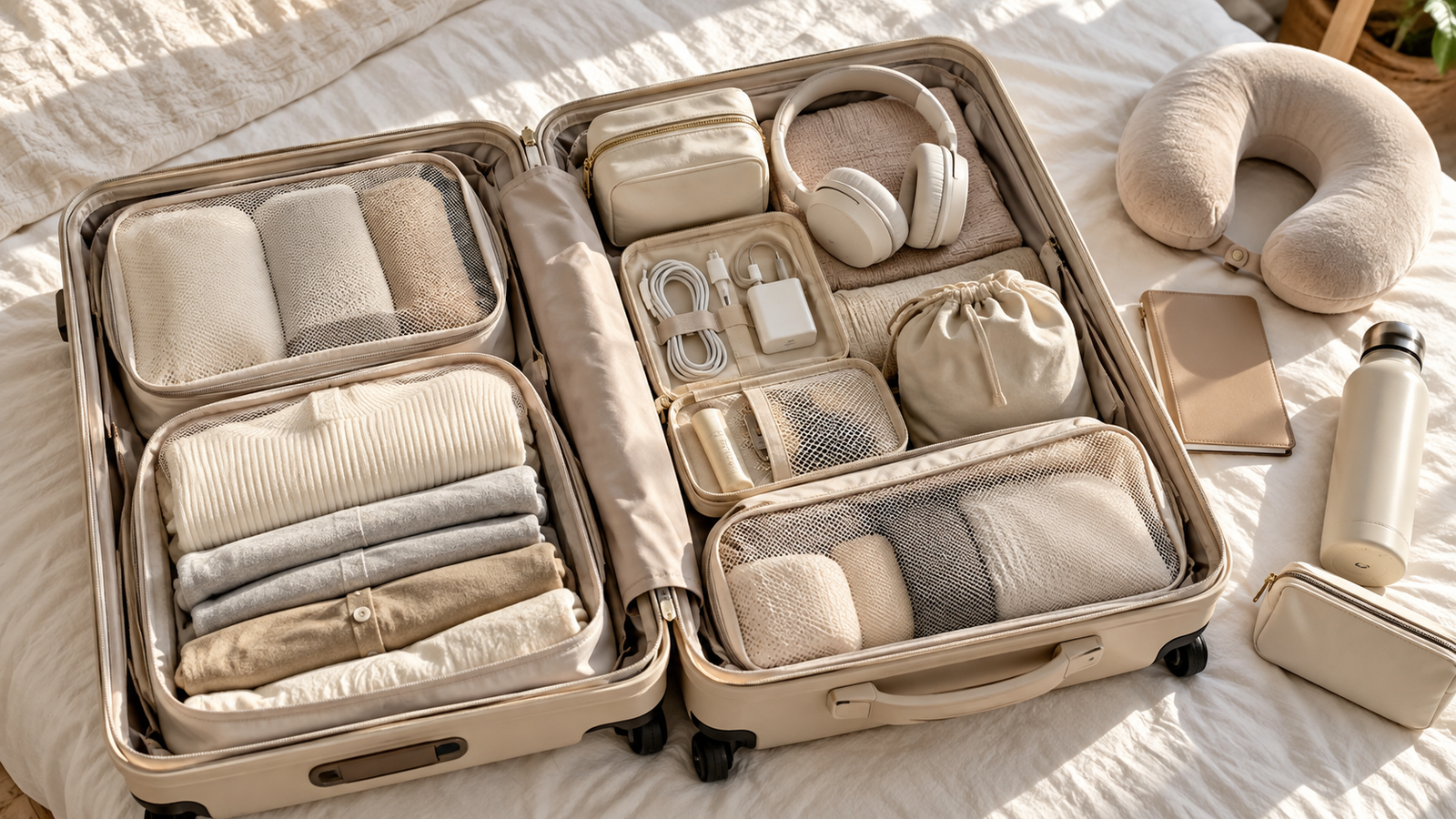
Before choosing what to bring, think about how you will use your bag during the flight. A well packed carry on makes everything easier, especially when you are sitting in a middle or window seat.
1. Choose the Right Carry On Bag
Pick a lightweight backpack or cabin bag with separate compartments. A bag that opens wide is easier to organize than one large space where everything gets mixed together.
Check your airline’s cabin baggage size and weight limits before leaving home. Some airlines also have separate rules for personal items.
2. Prepare a Small In Flight Essentials Pouch
Instead of keeping everything inside your main bag, make a small pouch with the items you will need during the journey.
Include your lip balm, eye mask, tissues, medication, hand sanitizer, charging cable, and earplugs. Place it in the seat pocket or under your seat when allowed.
A simple water resistant travel organizer pouch is a useful Amazon option if you want to keep these smaller items together.
3. Follow Airport Liquid Rules
Pack liquids, creams, and gels in travel size containers that meet the security rules for your departure and connecting airports.
Many airports still use a 100 ml limit per container, although some airports have different screening rules. Always check before traveling.
4. Keep Important Items in Your Cabin Bag
Never place your passport, essential medication, valuable electronics, or important travel documents in checked luggage.
Checked bags can arrive late, and you may need these items before reaching your destination.
25 Long Haul Flight Essentials You Should Pack
These travel essentials are organized by purpose, making it easier to decide what deserves space in your bag.
Comfort and Sleep Essentials for Long Flights
Getting proper rest on a plane is not always easy. Limited legroom, cabin noise, and bright lights can make even a short nap difficult.
These items help create a more comfortable space without taking up too much room.
1. A Supportive Travel Neck Pillow
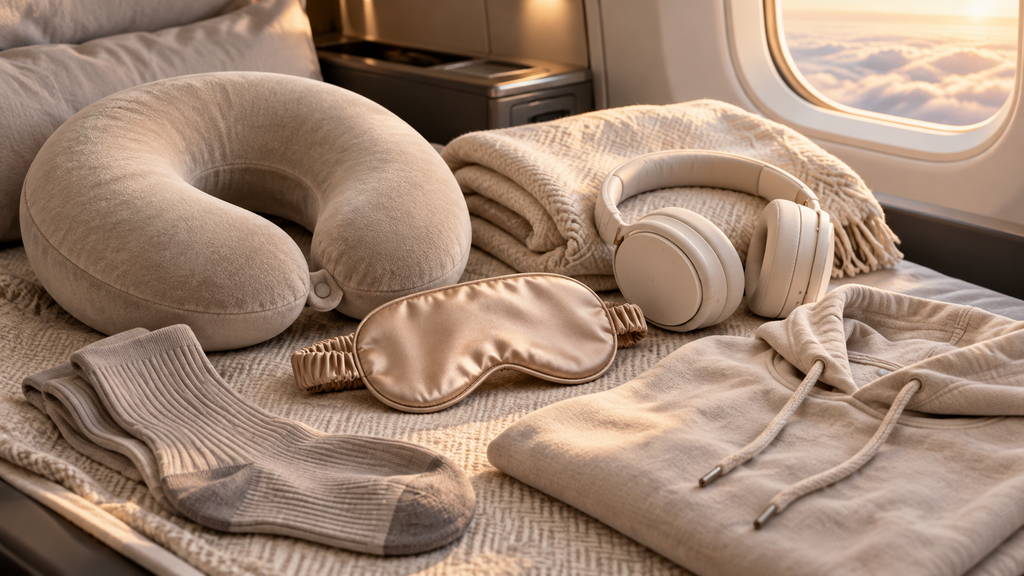
A good neck pillow is one of the most useful long haul flight essentials, especially if you plan to sleep while sitting upright.
Choose a pillow that supports the sides of your neck and keeps your head from falling forward. Memory foam pillows offer a firm feel, while inflatable designs are easier to pack.
If you often wake up with neck discomfort, consider an adjustable memory foam travel neck pillow from Amazon. Look for a washable cover and a design that fits your sleeping position.
Avoid buying a pillow just because it looks soft. Support and fit matter more than appearance.
2. Noise Canceling Headphones
Airplane engines, nearby conversations, and crying babies can make it hard to relax.
Noise canceling headphones reduce steady background sounds and make music, movies, and podcasts easier to enjoy.
Over ear headphones are often comfortable for long listening sessions, but compact earbuds take up less space.
Charge them fully before leaving home. It is also helpful to carry a compatible wired adapter or cable if you plan to use the seatback entertainment screen.

Soundcore by Anker Q20i Hybrid Active Noise Cancelling Headphones
3. A Soft Sleep Eye Mask
Cabin lights do not always match your sleep schedule. Someone may also open a window shade just when you are trying to rest.
A soft eye mask blocks unwanted light and helps create a darker sleeping space.
Choose a breathable fabric with an adjustable strap. A contoured mask can be a good choice if you dislike pressure around your eyes.
4. Comfortable Compression Socks
Sitting for several hours can leave your feet and ankles feeling swollen.
Graduated compression socks may help reduce swelling during long periods of sitting. However, they are not a substitute for movement or medical advice about blood clot prevention.
Choose a comfortable size that does not dig into your skin. Ask a healthcare professional whether compression socks are suitable for you, especially if you have circulation problems or other medical concerns.
It is also important to stand, stretch, and move your ankles regularly during the flight.
5. A Lightweight Hoodie or Travel Blanket
Airplane cabins can feel cold, even when the weather outside is warm.
A soft hoodie is useful because it provides warmth without taking up as much room as a thick jacket. It can also double as an extra layer when you arrive at your destination.
If you prefer a blanket, choose a lightweight travel version that folds into a small pouch.
Neutral colors such as beige, black, gray, and navy are practical because they work with almost any travel outfit.
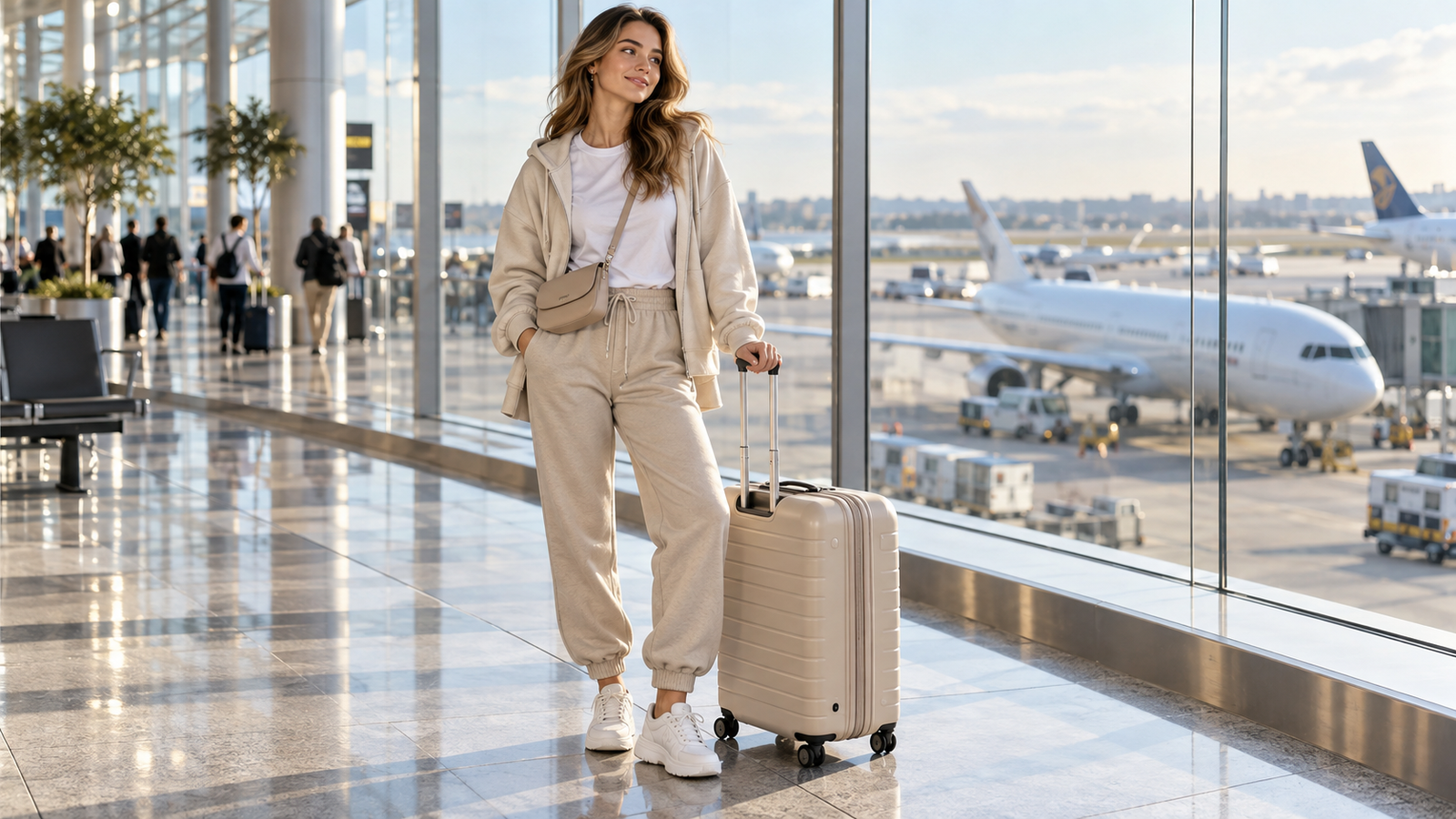
6. Comfortable Travel Clothes
What you wear can affect how you feel during a long journey.
Choose loose trousers, leggings, joggers, or soft cotton clothing that allows you to sit comfortably for several hours.
Avoid tight waistbands, stiff denim, and fabrics that make you feel too warm.
A simple long flight outfit could include:
- Soft joggers or relaxed trousers
- A breathable cotton T shirt
- A lightweight cardigan or hoodie
- Comfortable socks
- Easy to remove sneakers
Layering is helpful because cabin temperatures can change during the journey.
7. Easy to Remove Shoes
Your feet may feel slightly swollen after sitting for hours, so choose shoes with enough room.
Slip on sneakers or lightweight walking shoes are practical for airport security, boarding, and walking between terminals.
If you remove your shoes during the flight, keep your socks on. Wear shoes whenever you visit the airplane bathroom.
Avoid packing bulky slippers unless you have enough space in your carry on.
Food and Hydration Essentials
Long flights can leave you feeling thirsty, tired, or hungry between meal services.
Even when your airline provides food and drinks, bringing a few personal essentials is a smart idea.
8. An Empty Refillable Water Bottle
A refillable water bottle is one of the simplest items to bring on a long international flight.
Carry it empty through airport security, then fill it at a drinking water station once you reach the departure area, where permitted.
A leakproof bottle with a secure lid is ideal for keeping inside your backpack.
Drink regularly throughout the flight. You do not need to force yourself to drink excessive amounts of water, but having your own bottle makes it easier to stay hydrated.
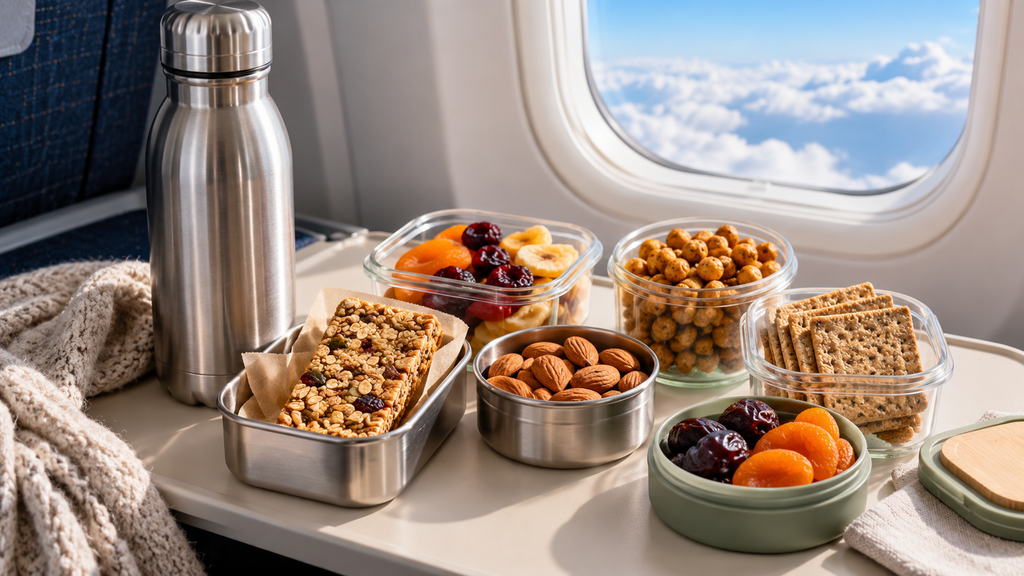
9. Healthy Travel Snacks
Airline meals may arrive later than expected, and the available food might not suit your taste.
Pack a few easy snacks that do not create a mess.
Good options include granola bars, crackers, roasted chickpeas, nuts, dried fruit, and plain biscuits.
Choose foods that are easy to eat in a small space. Avoid strong smelling meals or snacks that need refrigeration.
If you are flying internationally, check the food import rules for your destination. Fresh fruit, meat, and some dairy products may be restricted.
10. Electrolyte Sachets
Electrolyte powder is an optional item for travelers who prefer flavored drinks or have a specific need to replace lost fluids and salts.
Individual sachets take up very little room and are easy to mix with water.
However, most healthy travelers do not need electrolyte supplements simply because they are flying. Regular water and normal meals are usually enough.
If you have a medical condition that requires limiting sodium or certain minerals, check the ingredients before using them.
Skincare and Personal Hygiene Essentials
Airplane cabin air often has low humidity. This can make your lips, hands, and face feel dry during a long flight.
A small hygiene kit also helps you feel refreshed before landing.
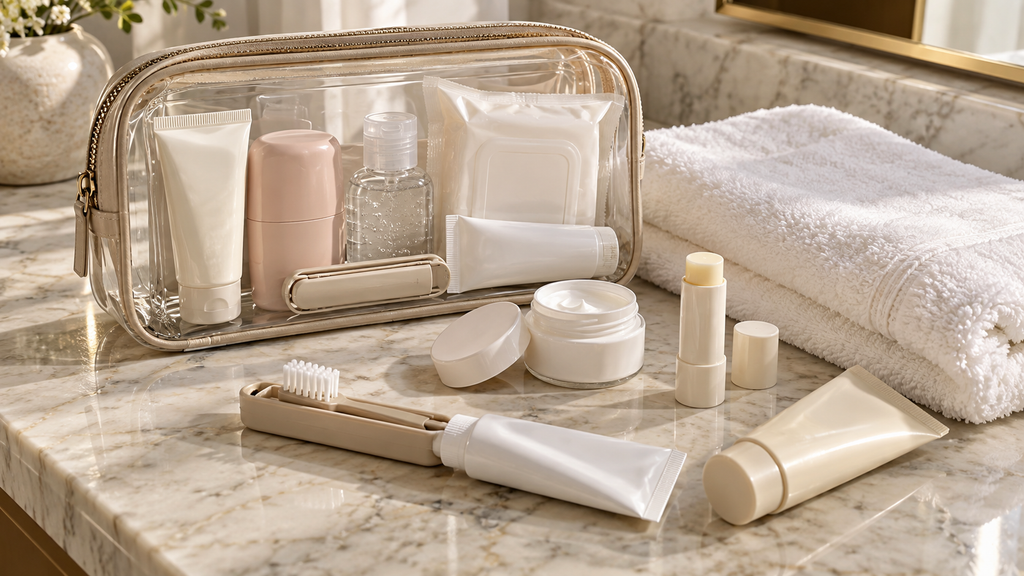
11. Moisturizing Lip Balm
Dry lips can become uncomfortable after several hours in the cabin.
Pack a simple moisturizing lip balm and apply it whenever needed.
A fragrance free formula with ingredients such as petrolatum or shea butter is a practical choice.
Keep it in your personal pouch rather than your overhead bag so you can reach it easily.
12. Travel Size Face Moisturizer
You do not need a complicated skincare routine during a flight.
A gentle moisturizer is enough for most travelers who want to prevent their skin from feeling tight or dry.
Apply it before boarding and reapply when needed.
Choose a product you have already used at home. Trying new skincare products during a long journey can lead to unwanted irritation.
13. Hand Cream
Frequent handwashing and dry cabin air can leave your hands feeling rough.
A small tube of hand cream is easy to carry and takes only a few seconds to use.
Look for a lightweight, fragrance free formula that absorbs quickly without leaving your hands greasy.
You can keep it alongside your lip balm and face moisturizer.
14. Toothbrush and Travel Toothpaste
Brushing your teeth during a long flight can make you feel much fresher, especially after sleeping or eating.
Pack a compact toothbrush and a small tube of toothpaste that meets airport liquid restrictions.
A folding toothbrush or one with a protective cap is useful for keeping the bristles clean.
Brush before landing if possible, and use bottled or otherwise safe drinking water if you are unsure about the lavatory tap water.
15. Facial Wipes and Hand Sanitizer
A small pack of gentle facial wipes can help you freshen up without needing a full skincare routine.
Hand sanitizer is useful when soap and water are not readily available. Choose one containing at least 60 percent alcohol and follow airport liquid rules.
Unscented products are a considerate choice in a shared cabin.
Do not use facial wipes as a replacement for proper handwashing, especially before eating or after using the bathroom.
16. Deodorant and a Fresh Pair of Socks
After 10 or more hours of travel, changing into fresh socks and applying deodorant can make you feel more comfortable.
A mini deodorant stick is often easier to pack than a large spray bottle.
Keep a clean pair of socks in a separate pouch so they stay fresh until you need them.
This small habit is especially helpful if you have another flight or a long airport transfer ahead.
Electronics and Entertainment Essentials
Not every flight has reliable WiFi or a good entertainment selection. Preparing your own entertainment before leaving home helps you avoid hours of boredom.
17. A Fully Charged Power Bank
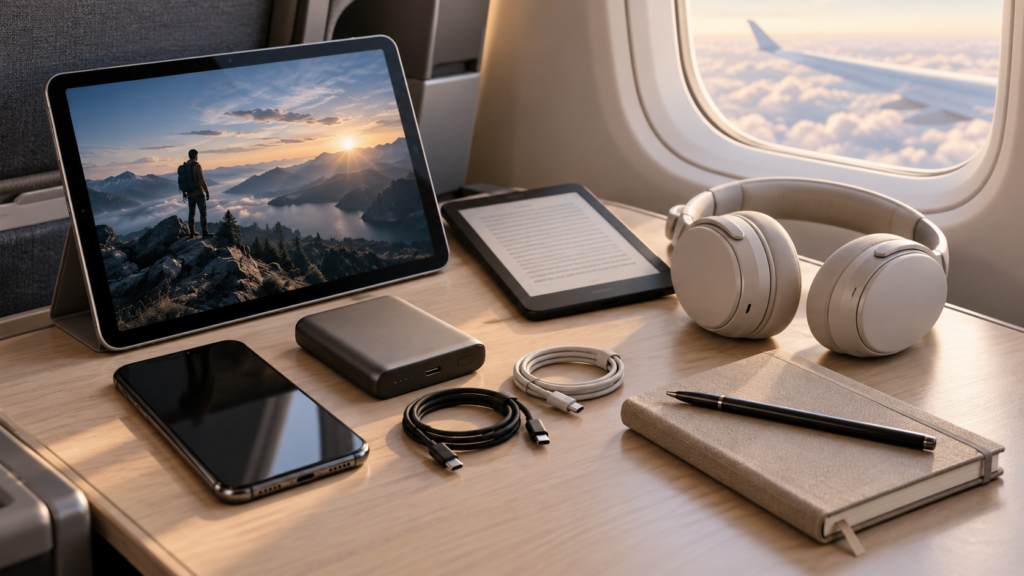
A power bank is useful when your phone battery starts running low and the airplane charging port is unavailable.
Choose a compact model that provides enough power for your phone or other small devices.
A 10,000 mAh USB C portable power bank is a practical Amazon product to consider for everyday travel.
Remember that spare lithium batteries and power banks generally belong in cabin baggage, not checked luggage. Airline restrictions on capacity, carriage, and onboard use can vary, so check your carrier’s current policy before departure.
18. Charging Cables and a Travel Adapter
A power bank is not helpful if you forget the correct charging cable.
Pack the cables you need for your phone, tablet, headphones, and other electronics.
A short USB C cable is useful for keeping your seat area tidy. If your devices use different ports, carry the correct cable for each one.
A universal travel adapter is also worth packing for your hotel or accommodation, although it may not work with every airplane outlet.
19. Downloaded Movies, Music, and Podcasts
Do not rely completely on airplane WiFi.
Download your favorite movies, television episodes, playlists, and podcasts before leaving home.
If you enjoy relaxing sounds, save a few hours of rain sounds, white noise, or calm music.
Remember to check that your streaming downloads are available offline and will not expire during the trip.
20. An E Reader or Paperback Book
Reading is a great way to pass time without staring at another movie.
An e reader is especially useful because it can hold several books without adding much weight to your bag.
If you prefer traditional books, choose one lightweight paperback instead of carrying a large hardcover.
Download books before boarding and adjust the screen brightness to a comfortable level.
21. A Small Notebook and Pen
A notebook might seem old fashioned, but it is surprisingly useful during travel.
You can write down your itinerary, important addresses, travel ideas, or anything you want to remember.
A pen also comes in handy if you need to complete a paper arrival or customs form.
Choose a slim notebook that fits inside your personal bag without taking up much room.
Health, Safety, and Important Travel Essentials
These items may not seem exciting, but they deserve a permanent place in your long haul flight packing list.
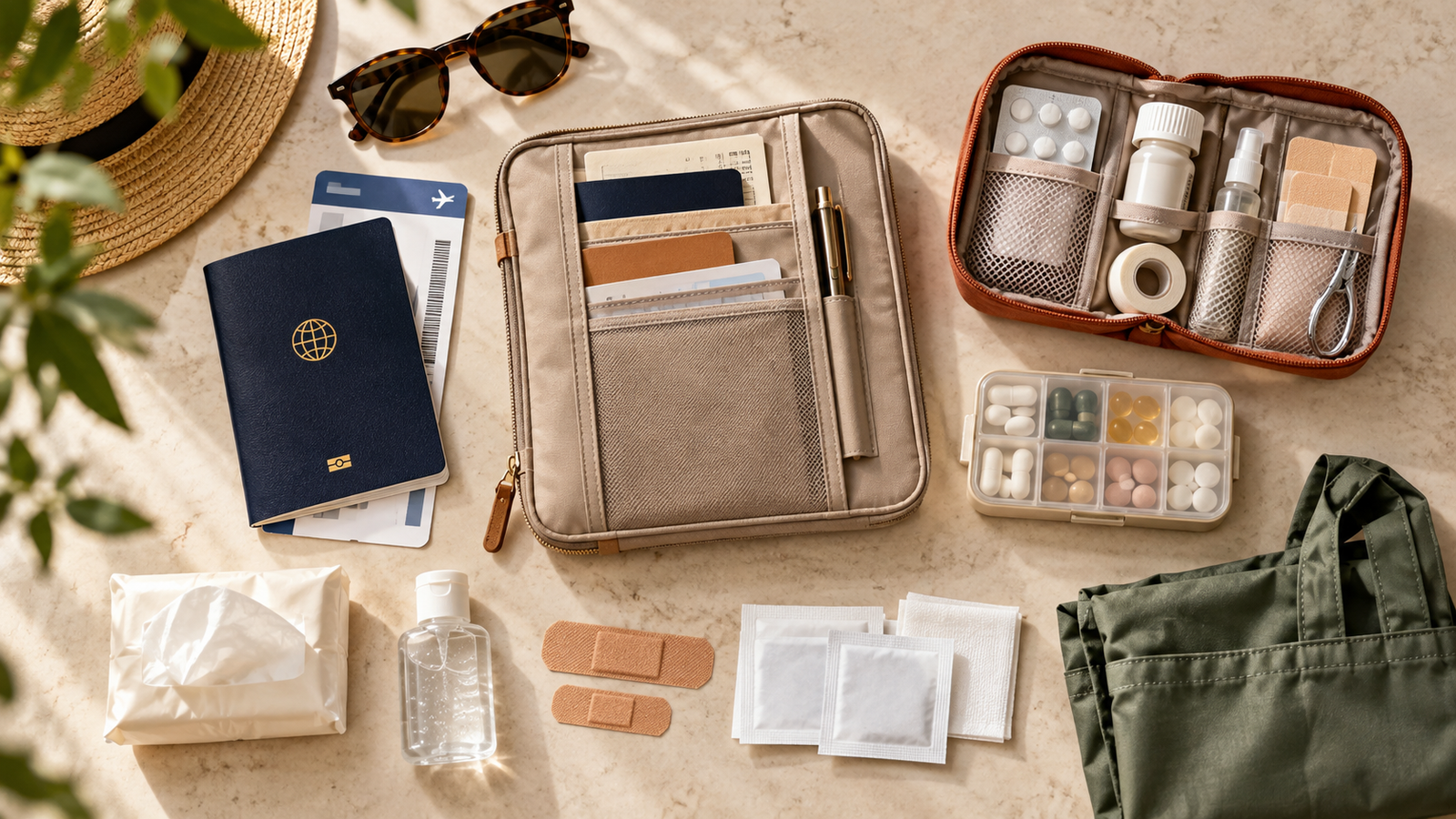
22. Personal Medication
Always keep essential medication in your cabin bag.
Bring enough for the journey, including reasonable extra supplies in case of delays, where permitted.
Keep prescription medication in its original labeled packaging when possible. Check the rules of your destination and any transit countries, as some medicines require special approval or documents.
If you take medication at fixed times, ask your pharmacist or healthcare professional how to adjust your schedule when crossing time zones.
23. A Small First Aid Kit
You do not need a large medical kit for a flight.
A few basic items can be helpful for minor problems during travel.
Consider packing adhesive bandages, blister plasters, tissues, and any suitable over the counter medication you normally use.
Avoid bringing unfamiliar medication just in case you might need it. Follow the recommended dosage and check travel restrictions.
24. Passport and Travel Document Organizer
Keep your passport, boarding pass, visa information, travel insurance details, and accommodation address together.
A slim document organizer makes it easier to find everything during check in, boarding, and immigration.
Save digital copies of important documents in a secure location that you can access offline.
It is also useful to keep a printed copy of your accommodation details and emergency contact information.
25. A Foldable Tote Bag
A lightweight foldable tote is useful for keeping smaller belongings together during your journey.
You can use it to organize your hoodie, snacks, reading material, or other items while waiting at the airport.
It also comes in handy after landing if you need a small bag for everyday sightseeing.
Choose a washable design that folds into its own pocket.
Remember that an extra tote may count toward your airline’s cabin baggage allowance, so keep it packed inside your permitted bag when necessary.
Extra Long Haul Flight Tips for a More Comfortable Journey
Packing the right items is only part of preparing for a long flight. A few simple habits can also help you feel better when you arrive.
Move Around During the Flight
Try not to stay in the same position for the entire journey.
When it is safe and the seat belt sign is off, get up and walk around the cabin every one to two hours. You can also move your ankles, raise your heels, and stretch your calf muscles while seated.
The CDC recommends regular leg movement during long journeys to support circulation. Travelers with additional blood clot risk factors should speak with their doctor before flying.
Adjust Your Sleep Schedule
If you are crossing several time zones, try to match your sleep with the nighttime hours at your destination.
Change your phone clock to the destination time after boarding. This can help you decide when to eat, sleep, and stay awake.
Avoid putting too much pressure on yourself to sleep for the entire flight. Even a few hours of rest can make the journey feel easier.
Choose Your Seat Carefully
Your seat choice can affect your comfort.
| Seat Type | Best For |
|---|---|
| Window seat | Sleeping with fewer interruptions |
| Aisle seat | Easy bathroom access and movement |
| Extra legroom seat | Travelers who need more space |
| Seat near the front | Leaving the aircraft sooner |
If you often need to stand or stretch, an aisle seat may be more practical than a window seat.
Prepare Before Landing
About an hour before landing, start organizing your belongings.
Put away your headphones, gather your charging cables, brush your teeth if possible, and check that your passport is easy to reach.
This prevents the last minute rush when everyone begins preparing to leave the aircraft.
Long Haul Flight Essentials for Different Travelers
Not everyone needs the same packing list. Your travel style, destination, and personal needs can change what you should bring.
For First Time International Travelers
If this is your first long haul flight, focus on comfort and organization rather than packing every travel gadget available.
Start with a neck pillow, headphones, water bottle, snacks, travel documents, and basic toiletries.
Keep your bag light enough to carry comfortably through large airports.
For Overnight Flights
Sleeping should be your main priority if you are taking an overnight flight.
Pack an eye mask, supportive pillow, warm hoodie, earplugs, and comfortable clothing.
Try to finish important tasks before boarding so you can relax once the cabin lights are dimmed.
For Long Haul Flights With Kids
Children may need more entertainment and snacks than adults.
Bring familiar comfort items, downloaded cartoons, coloring books, and a spare outfit. For babies, keep feeding supplies, diapers, and wipes within easy reach.
Avoid packing noisy toys that may disturb nearby passengers.
For Budget Travelers
You do not need expensive accessories to enjoy a comfortable flight.
A regular hoodie can replace a travel blanket, a small cosmetic pouch can work as an organizer, and your existing earbuds may be enough for entertainment.
Spend money on items you will use again rather than buying something for one journey.
Common Long Haul Flight Packing Mistakes to Avoid
Even experienced travelers sometimes pack the wrong things.
Overpacking your personal bag: Bringing too many accessories makes it harder to find the items you actually need. Choose useful products that serve more than one purpose.
Forgetting offline entertainment: Airport and airplane WiFi may be slow, expensive, or unavailable. Download everything before leaving home.
Wearing uncomfortable clothing: Tight jeans, heavy jackets, and difficult shoes can become frustrating after several hours.
Packing medication in checked luggage: Always keep essential medication accessible in your cabin bag.
Forgetting airline battery rules: Power banks must be packed correctly. For example, FAA guidance generally allows lithium power banks up to 100 Wh in carry on baggage, while larger approved capacities have additional restrictions. International airlines may apply stricter rules.
Bringing too many liquids: Check security rules for every airport on your route, especially if you have a connecting flight.
Frequently Asked Questions
1. What are the most important things to pack for a long haul flight?
The most important items are your passport, medication, comfortable clothes, travel pillow, headphones, water bottle, snacks, charging cable, and basic toiletries. Keep everything you may need during the flight in your cabin bag.
2. What should I pack for a 12 hour flight?
For a 12 hour flight, pack enough essentials for sleeping, eating, staying hydrated, and entertainment. Include a neck pillow, eye mask, headphones, snacks, water bottle, moisturizer, toothbrush, fresh socks, and downloaded movies.
3. How can I survive a long haul flight in economy?
Choose comfortable clothing, bring a supportive neck pillow, drink water regularly, and move your legs throughout the journey. Prepare your own entertainment and organize your personal bag so you can easily reach important items.
4. Are compression socks necessary for long flights?
Not everyone needs compression socks. They may be useful for some travelers, particularly those with additional risk factors for blood clots. Ask a healthcare professional whether they are appropriate for you. Regular movement is also important.
5. What toiletries should I take on a long flight?
Pack lip balm, face moisturizer, hand cream, toothbrush, travel toothpaste, deodorant, tissues, and hand sanitizer. Choose small containers that meet the security requirements for your route.
6. Can I bring my own food on a long haul flight?
Yes, many solid snacks are allowed in cabin baggage. Granola bars, crackers, nuts, and biscuits are convenient options. Liquid and gel foods may face security limits. You should also check customs rules before carrying food into another country.
7. How do I sleep comfortably on a long flight?
Use an eye mask, neck pillow, and noise canceling headphones or earplugs. Wear loose clothing and keep a warm layer nearby. If possible, adjust your sleeping hours to match the time at your destination.
8. What should I avoid bringing on a long haul flight?
Avoid bulky accessories, strong smelling food, unnecessary valuables, oversized liquid containers, and items restricted by your airline. Do not pack power banks in checked luggage, and avoid bringing more than you can comfortably carry.
Final Thoughts
A comfortable long flight starts with smart packing. You do not need every travel accessory on the market, but a few carefully chosen essentials can make hours in the air much easier.
Start with the basics: comfortable clothing, sleep accessories, hydration, personal hygiene, and entertainment. Then add a few extras based on your flight length and travel needs.
Most importantly, keep your essential items organized and easy to reach. That way, you can spend less time searching through your bag and more time enjoying the journey.