
If you have ever walked through Singapore or Malaysia in the early morning, you have probably noticed something special. Old men sit at marble tables. Steam rises from small white cups. The smell of roasted coffee mixes with toasted bread and coconut jam. This is the kopitiam. And it is much more than a place to grab coffee.
A kopitiam is a traditional coffee shop found across Singapore, Malaysia, Indonesia, Brunei, and Southern Thailand. The word itself tells you exactly what it is. “Kopi” means “coffee” in Malay. “Tiam” means “shop” in Hokkien Chinese. Put them together and you get a coffee shop. But calling it just a coffee shop misses the point entirely.
Kopitiams are community centers. They are breakfast institutions. And for many locals, they are simply home.
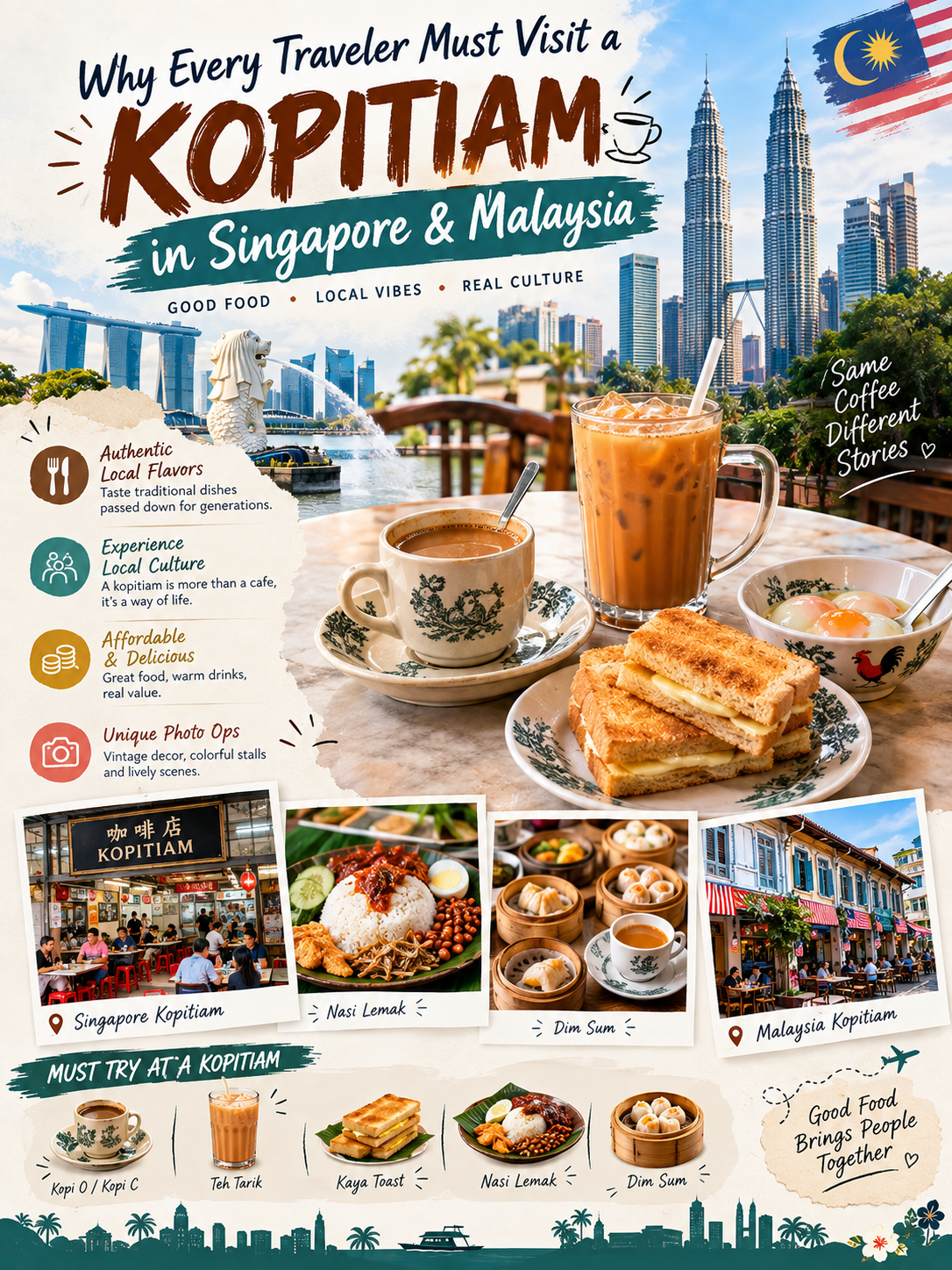
Key Takeaway: Kopitiams are traditional Southeast Asian coffee shops that serve as community gathering spaces, offering authentic local coffee and food in a casual, nostalgic setting.
History of Kopitiams: From 19th Century Origins to Modern Day
The 19th Century Origins
Kopitiams were born in the late 1800s. Chinese immigrants from Hainan and Fujian provinces arrived in Singapore and Malaya looking for work. Many ended up as cooks and domestic helpers for British colonial families. They adapted British coffee traditions to local tastes.
These immigrants opened small roadside stalls. They served strong, affordable coffee to dock workers, laborers, and rickshaw pullers who needed fuel at dawn. The coffee had to be cheap, strong, and fast. Those three needs shaped everything about kopitiam culture.
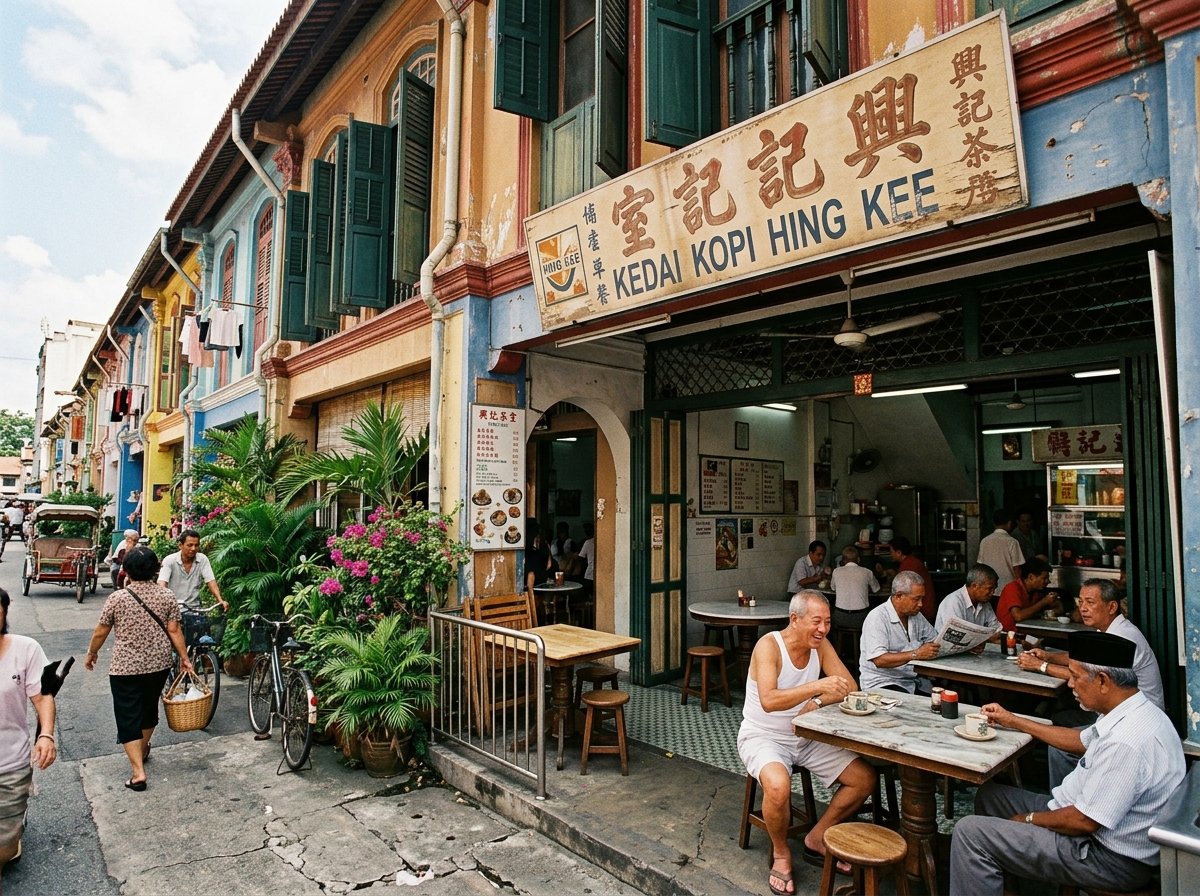
Over time, these stalls grew into permanent shops inside shophouses with tiled floors, wooden shutters, and marble topped tables. The Hainanese became especially known for running these shops. Today, many of the oldest kopitiams still carry that Hainanese influence.
Why Robusta Beans Became the Standard
European colonists in Singapore preferred Arabica coffee. It was smoother and more expensive. But the working class could not afford it. So kopitiam owners turned to Robusta beans imported from Indonesia. Robusta was cheaper. It had nearly double the caffeine. And it had a bolder, more bitter flavor.
To make these beans taste better, kopitiam roasters developed a unique technique. They roasted the beans with sugar, butter, or margarine. This caramelized the exterior and gave the coffee a rich, slightly sweet depth. The result was a dark, oily brew that became the signature taste of kopi.
What Makes a Kopitiam Different from Cafés and Hawker Centers?
Not a Café and Not a Hawker Centre
This is where many visitors get confused. A kopitiam is not a Western style café. You will not find latte art, WiFi passwords, or quiet corners for laptop work. The chairs are often plastic stools. The tables are round and marble. Fans spin overhead. People talk loudly. They laugh. The atmosphere is chaotic and warm.
A kopitiam is also different from a hawker centre. Hawker centres are government built food courts with dozens of stalls under one roof. Kopitiams are privately owned. They usually have one drinks stall run by the owner, plus a few food stalls rented out to independent vendors.
The Architecture of Nostalgia
Walk into a traditional kopitiam and you will notice the details:
- Mosaic floor tiles in geometric patterns
- Wooden shutters that fold open to the street
- Ceiling fans with brass accents
- Marble tables with round stools
- Vintage mirrors with faded gold frames
These elements are not decoration. They are the original fixtures from the 1950s and 1960s. Many kopitiams have never been renovated. That worn wooden counter. That chipped tile. They all tell a story.
Pro Tip: Photographers and heritage lovers hunt down old kopitiams because they are living museums of Southeast Asian history.
Best Kopitiam Food: What to Eat and Drink
Kaya Toast and Soft Boiled Eggs
This is the holy trinity of kopitiam breakfast:
| Item | Description |
|---|---|
| Kaya Toast | Two slices of bread, grilled until crispy, spread with kaya jam and a thick slab of cold butter |
| Kaya Jam | Sweet, creamy jam made from coconut milk, eggs, sugar, and pandan leaves |
| Soft Boiled Eggs | Cooked until just set, served with white pepper and dark soy sauce |
How to eat: Crack the eggs into a small saucer, add white pepper, and drizzle dark soy sauce. Then dip your toast into the yolk.
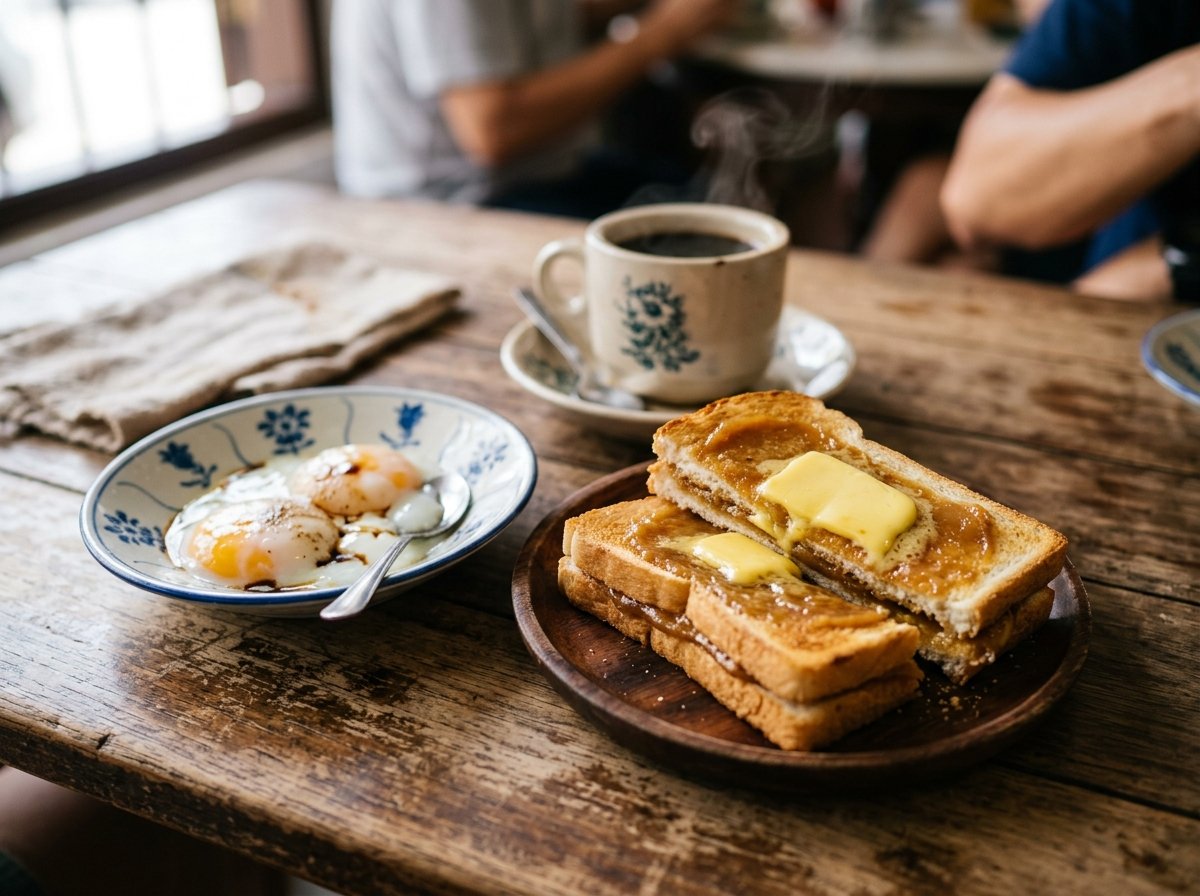
Authenticity Tip: Some kopitiams still make their own kaya from scratch. It takes hours of slow stirring over low heat. The homemade version has a rougher texture and a deeper egg flavor.
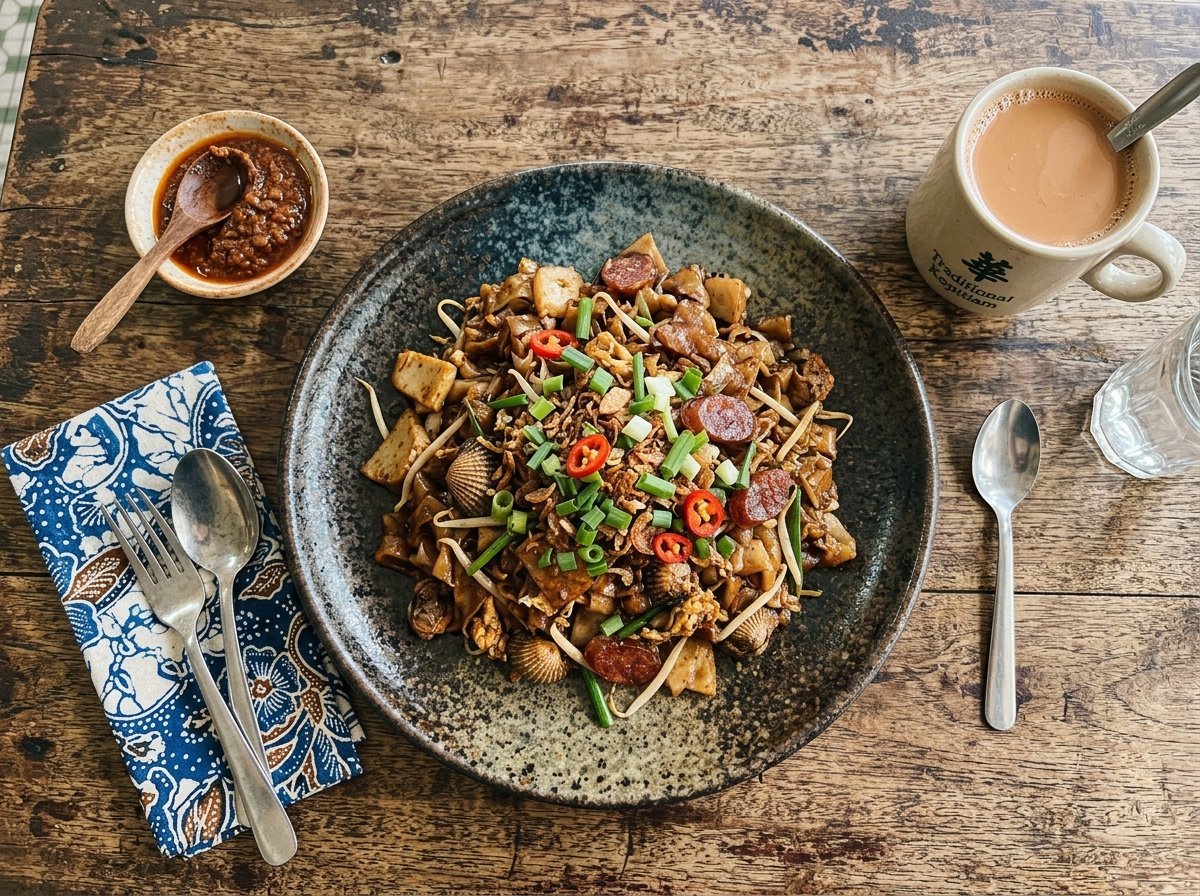
Noodle Dishes and Rice Plates
Beyond breakfast, kopitiams serve full meals:
- Char kway teow – Flat rice noodles stir fried with eggs, cockles, and dark soy sauce
- Hokkien mee – Yellow wheat noodles with seafood, pork, and spicy chili paste
- Chicken rice – The iconic Hainanese dish
- Nasi lemak – Coconut rice with sambal, peanuts, fried anchovies, and egg
Cultural Highlight: One table might have four people eating four completely different cuisines. Chinese noodles. Malay rice. Indian roti. This multicultural mix is exactly what makes kopitiams special.
How to Order Kopi Like a Local: The Complete Guide
This is the part most tourists miss. Ordering kopi in a kopitiam is not like ordering at Starbucks. There is no menu to read. There is a language. And locals speak it fluently.
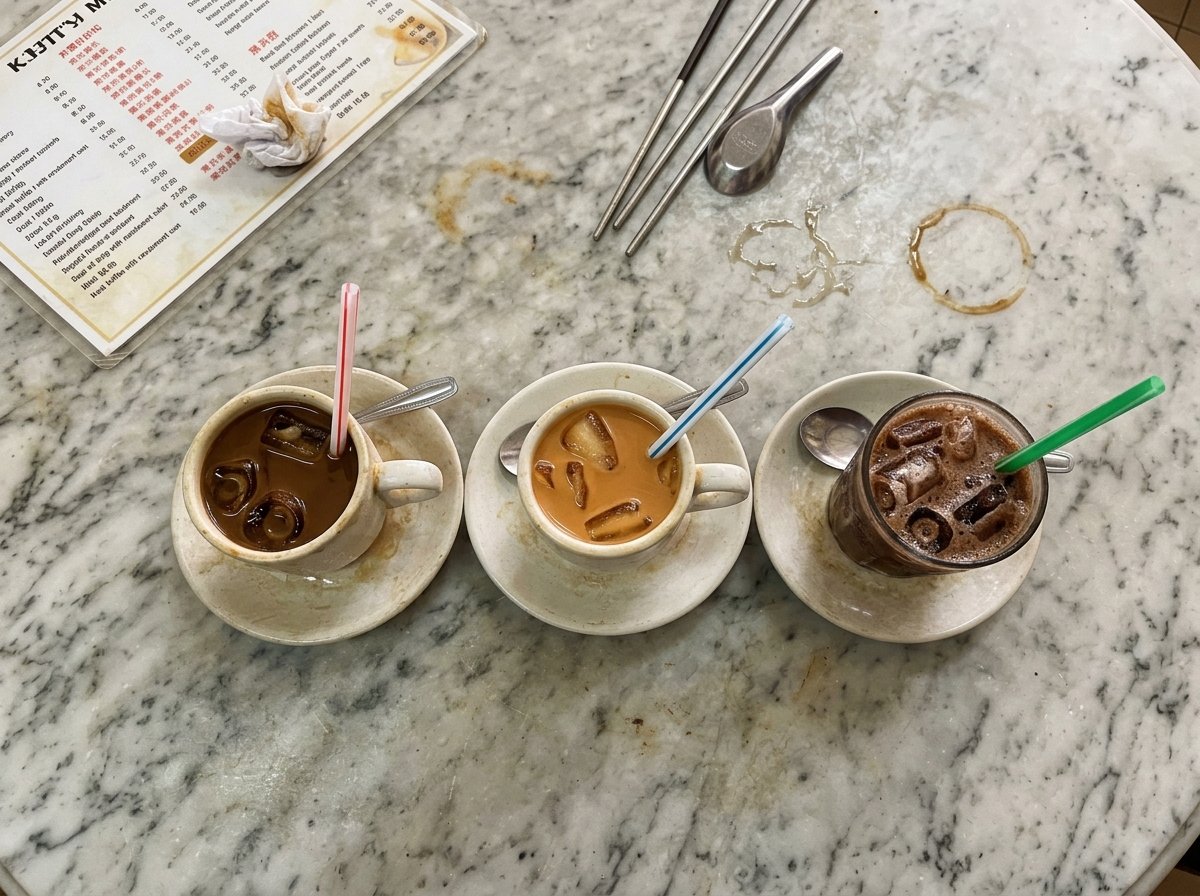
The base is always the same: Strong Robusta coffee brewed through a long cloth sock that looks like a fishing net. From there, you customize.
Kopitiam Ordering Guide
| Order | Meaning |
|---|---|
| Kopi | Coffee with condensed milk and sugar |
| Kopi O | Black coffee with sugar |
| Kopi O Kosong | Black coffee with no sugar |
| Kopi C | Coffee with evaporated milk and sugar |
| Kopi C Kosong | Coffee with evaporated milk and no sugar |
| Kopi Peng | Iced coffee with condensed milk |
| Kopi Gu You | Coffee with a slab of butter dropped inside |
| Teh | Tea with condensed milk and sugar |
| Teh O | Tea with sugar only |
| Teh C | Tea with evaporated milk and sugar |
| Milo | Chocolate malt drink |
Pro Tip: When you step up to the counter and say “kopi o kosong” without hesitation, you earn respect. The uncle behind the counter knows you understand the culture.
The Social Fabric of Kopitiam Life
Coffee Shop Talk
In Singapore and Malaysia, people use the phrase “coffee shop talk” the same way English speakers use “water cooler talk.” It means gossip. Casual conversation. The latest news. But in a kopitiam, this talk happens for hours.
Morning Scene: Retired men gather at 6 in the morning. They read newspapers. They discuss politics. They play checkers or Chinese chess. Younger people stop by for a quick breakfast before work. Families come on weekends.
This social function is why kopitiams matter. In a world of isolated apartment living and digital screens, the kopitiam is a third place. Not home. Not work. But somewhere you belong.
The Decline of Traditional Kopitiams
Here is the sad truth. Traditional kopitiams are disappearing. Rising rent, aging owners, and competition from modern cafés have pushed many out of business. Young people often prefer air-conditioned coffee chains with Instagram-worthy interiors.
Survival Stories:
- Some owners have adapted with modern kopitiam chains like Ya Kun Kaya Toast and Killiney Kopitiam
- Others have become tourist attractions, like Heap Seng Leong in Singapore
- But these survivors are rare
How to Visit a Kopitiam as a Tourist: Essential Tips
What to Expect
No table service. Find a table. Sit down. Remember your table number. Walk to the drinks stall and order your kopi. Pay there. Then walk to the food stalls and order your food. Tell them your table number. They will bring the food to you. The drinks usually come first.
Payment: Cash is still king at many old kopitiams. Some newer ones accept digital payments but carry small bills just in case.
Price Guide:
- Full breakfast: Under 5 Singapore dollars
- Individual kopi: Around 1-2 SGD
- Kaya toast with eggs: 3-4 SGD
Etiquette Tips
- Share tables—If there is an empty chair at a table, ask if it is taken. Usually it is not
- Don’t linger during peak breakfast time if the place is packed
- Don’t photograph people without asking. Some regulars have been eating at the same kopitiam for decades. They are not museum exhibits
Bringing Kopitiam Culture Home: DIY Guide
You do not need to live in Singapore to enjoy a kopitiam-style breakfast. You can recreate much of it in your own kitchen.
How to Make Kopitiam Coffee at Home
- Start with the coffee: Buy a dark roasted Robusta blend. Look for beans roasted with butter and sugar for authenticity
- Brew it strong: A traditional cloth sock filter gives the most authentic result, but a French press works fine
- Add condensed milk for kopi
- Add evaporated milk for kopi
- Skip both for kopi
How to Make Kaya Toast at Home
- Use thick-sliced white bread
- Grill until the edges char slightly
- Spread with kaya jam and a thick slice of cold butter
- The butter should be so cold it does not melt immediately
Secret: That contrast between hot toast and cold butter is the magic.
Perfect Soft Boiled Eggs
- Boil eggs for exactly six minutes
- Whites should be set
- Yolks should be custardy
- Crack into a small bowl, add white pepper and dark soy sauce
Recommended Equipment:
- Traditional coffee sock filter
- Kopitiam-style porcelain cups and saucers
2026 Event: Malaysia Coffee Week
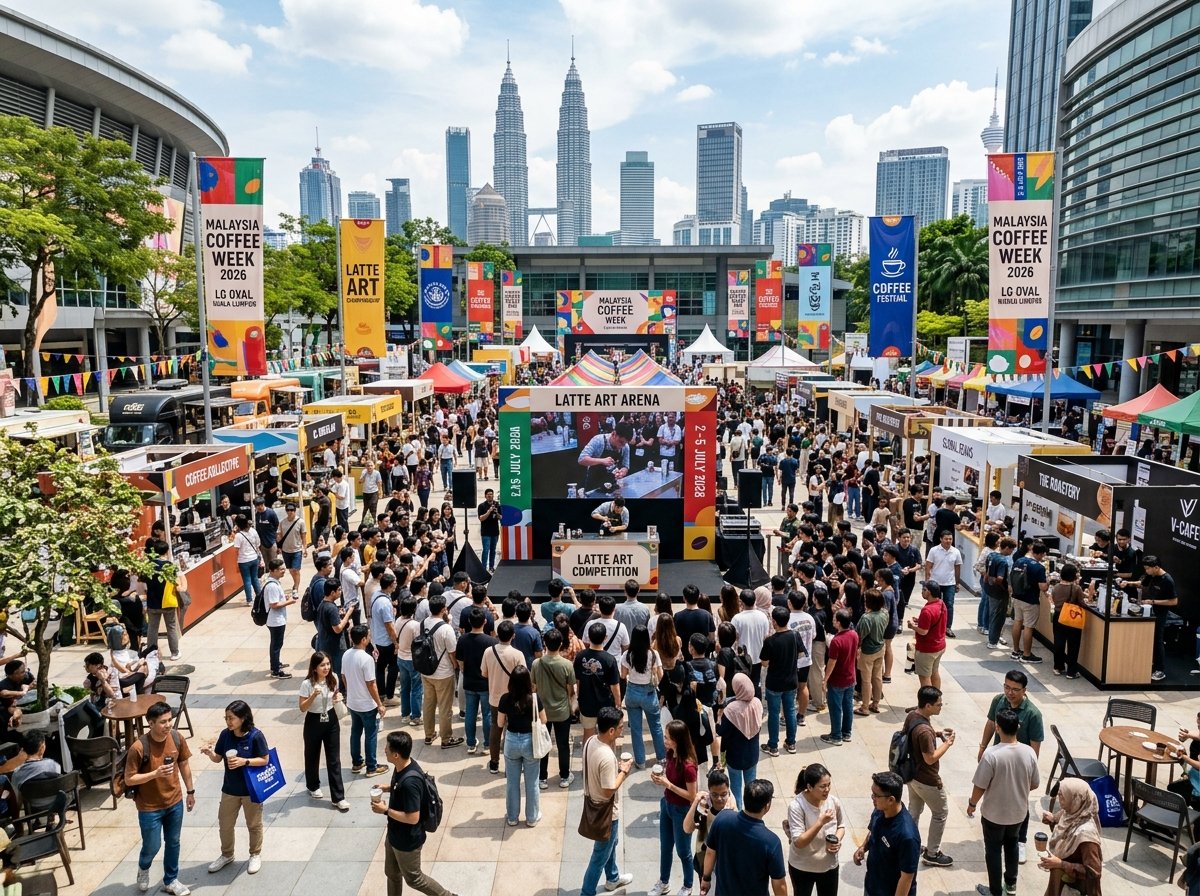
If you want to dive deep into coffee culture, mark your calendar for Malaysia Coffee Week 2026.
| Detail | Information |
|---|---|
| Dates | October 3-4, 2026 |
| Location | LG Oval, Kuala Lumpur |
| Entry | Free |
| Hours | 10 AM – 10 PM (10:30 PM on Friday and Saturday) |
What to Expect:
- Taste beans from local Malaysian farms
- Watch latte art competitions
- Attend brewing workshops
- Discover the full spectrum of Southeast Asian coffee culture
Frequently Asked Questions
What is the difference between a kopitiam and a café?
A kopitiam is a traditional coffee shop serving local breakfast and meals in a casual, open setting. A café usually serves Western-style espresso drinks and pastries and often has air conditioning, WiFi, and a quieter atmosphere.
Why is kopitiam coffee so strong?
Kopitiam coffee uses Robusta beans, which contain nearly twice the caffeine of Arabica beans. The beans are also roasted with sugar and butter, then brewed very strong through a cloth filter.
What does kaya taste like?
Kaya tastes sweet, creamy, and slightly caramelized. It has a strong coconut flavor with hints of pandan and egg. The texture ranges from smooth to slightly grainy depending on how it is made.
Are kopitiams only found in Singapore?
No. Kopitiams exist in Malaysia, Indonesia, Brunei, and Southern Thailand. Each country has its own variations, but the core concept remains the same.
How much does a kopitiam breakfast cost?
A traditional breakfast typically costs between three and six Singapore dollars. Prices in Malaysia are often even lower.
Can I find vegetarian food at a kopitiam?
Yes, but options vary. Kaya toast and eggs are vegetarian. Some noodle dishes can be ordered without meat. Indian stalls within kopitiams often serve vegetarian options like roti prata.
Is kopitiam coffee healthy?
Kopitiam coffee is high in caffeine and often contains condensed milk and sugar. Order kopi o kosong for the healthiest option (black coffee with no sugar).
Final Thoughts: Why Kopitiams Matter
Kopitiams are more than places to eat. They are the heartbeat of Southeast Asian morning culture. They represent a time when food was simple, coffee was strong, and community mattered more than convenience.
Travel Tip: If you ever find yourself in Singapore or Malaysia, skip the hotel breakfast. Walk to the nearest kopitiam. Order a kopi o. Eat kaya toast. Watch the uncles read their newspapers. Listen to the clatter of cups and the hum of conversation. You will not just be having breakfast. You will be experiencing a piece of living history.
Home Version: If you cannot travel there, bring the kopitiam home. Brew the coffee. Make the toast. Create the ritual. Because the best thing about kopitiam culture is that it does not need a fancy building. It just needs good coffee, good food, and good company.