
Most guides tell you Arizona is best from October through April. That answer is not wrong, but it is incomplete in a way that genuinely matters.
Arizona is not one climate. Phoenix sits at 1,086 feet and regularly hits 115F in July. Flagstaff sits at 6,910 feet, 145 miles away, and rarely breaks 85F in the same month. The Grand Canyon’s South Rim and the canyon floor a mile below it can differ by 25 degrees on the same afternoon.
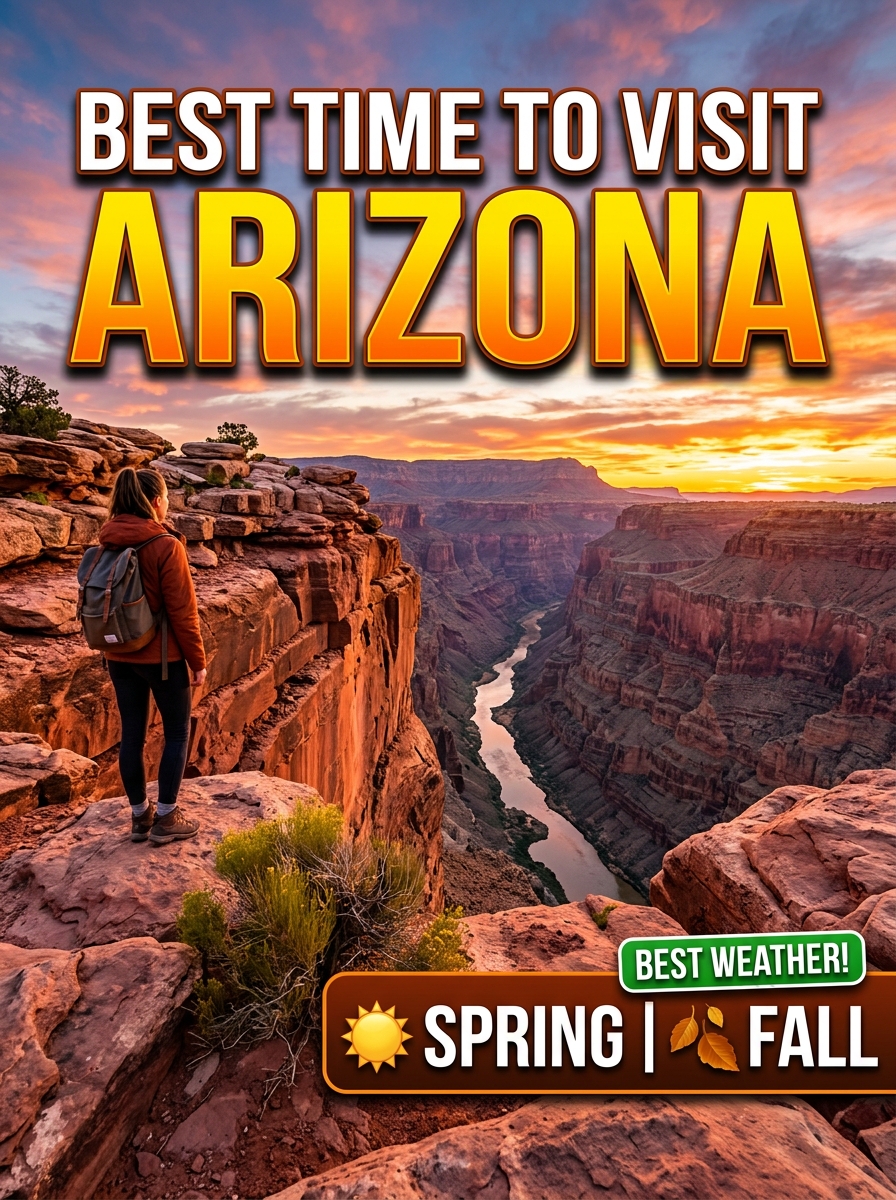
This guide breaks down the best time to visit Arizona properly, by elevation and by region, with the safety information and seasonal nuance that most articles skip entirely.
Quick Answer: Best Time to Visit Arizona
The best overall time to visit Arizona is March through May or October through November. Temperatures across the low desert (Phoenix, Scottsdale, Tucson) are warm and pleasant, the high country (Flagstaff, Sedona, Grand Canyon) is comfortable for hiking, and crowds and prices sit below the winter peak.
For winter sun in the desert cities, December through February is excellent, though nights can be cold. For the Grand Canyon’s North Rim, only mid-May through mid-October works, since the road closes for winter. Avoid the low desert entirely in July and August unless you are specifically prepared for extreme heat.
The One Rule That Changes Everything: Arizona’s Elevation Climate
This is the single most useful piece of planning information for an Arizona trip, and almost no guide states it clearly.
Temperature in Arizona drops roughly 3 to 5 degrees Fahrenheit for every 1,000 feet of elevation gained. That means:
- Phoenix and the low desert (1,000 to 1,500 feet): Scorching summers, mild winters
- Tucson (2,400 feet): Slightly cooler than Phoenix but still desert heat in summer
- Sedona (4,500 feet): Noticeably milder, four distinct seasons
- Flagstaff (6,910 feet): Genuinely cold winters with snow, mild 70s and 80s in summer
- Grand Canyon South Rim (7,000 feet): Cool even in summer, cold and snowy in winter
- Grand Canyon floor / Phantom Ranch (2,400 feet): Can be 20 to 25 degrees hotter than the rim above it
Once you understand this, the entire “best time to visit Arizona” question becomes a different question depending on where in the state you are actually going. A trip built around Phoenix in July is a bad idea. A trip built around Flagstaff or the Grand Canyon’s South Rim in July is genuinely pleasant.
Arizona by Season
Spring (March, April, May)
Spring is widely considered the best overall season in Arizona, and the reasons hold up.
March brings warm days and cool nights to the low desert, with highs around 75 to 80F. Cactus League spring training baseball is in full swing across the Phoenix metro, drawing fans from across the country. Wildflowers begin blooming in Saguaro National Park and across the desert floor. Sedona’s hiking trails are at their best before the summer crowds arrive.
April is excellent almost everywhere in the state. Low desert highs reach 85 to 90F, still comfortable for hiking if you start early. Sedona’s red rocks are spectacular at sunrise and sunset. The high country around Flagstaff is still cool, with lingering snow possible at the very top of the San Francisco Peaks.
May is the transition month. Low desert temperatures climb into the 90s and occasionally hit 100F by month’s end, which is the signal that summer is approaching. Wildflower season peaks in early May. This is also when the Grand Canyon’s North Rim opens for the season, typically around May 15th.
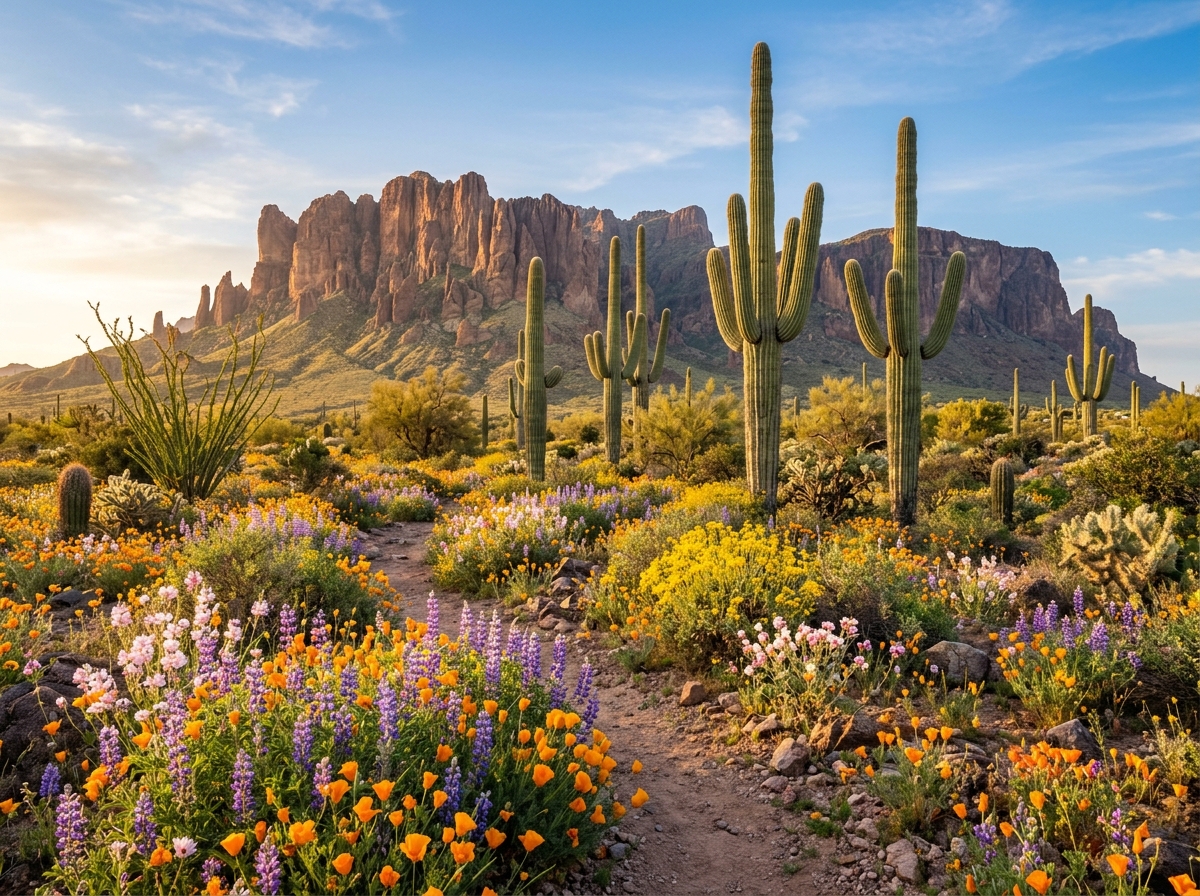
Spring summary:
- Low desert: Warm to hot by late May, ideal March and April
- High country: Mild and pleasant throughout
- Crowds: Building, especially around spring break in March
- Best for: Hiking, wildflowers, spring training baseball, Grand Canyon South Rim
Summer (June, July, August)
Summer in Arizona is genuinely two different trips depending on elevation, and treating it as one season is where most guides go wrong.
The low desert (Phoenix, Scottsdale, Tucson, Yuma): This is when Arizona earns its reputation. June through August routinely brings highs of 105 to 115F in Phoenix, with Yuma sometimes running even hotter. The National Weather Service issues Excessive Heat Warnings when temperatures are expected to pose a significant health risk, and Phoenix sees dozens of these warnings every summer. Pavement and metal surfaces can reach temperatures that cause skin burns within seconds. Hiking deaths in the Phoenix area rise sharply in summer, and several popular trails, including Camelback Mountain and Piestewa Peak, are closed during the hottest midday hours from roughly May through September.
The high country (Flagstaff, Grand Canyon South Rim, White Mountains): Summer here is what most people imagine when they picture a pleasant mountain summer. Flagstaff highs typically stay in the mid-70s to low 80s, with cool nights in the 40s and 50s. This is when northern Arizona becomes a genuine heat refuge, and many Phoenix residents make the two-hour drive north specifically to escape the desert heat.
Monsoon season runs roughly from late June through September across the state. Afternoon and evening thunderstorms can build quickly, bringing dramatic lightning, sudden downpours, and significant flash flood risk, particularly in slot canyons, washes, and low-lying desert areas. Flash floods in Arizona are not a minor inconvenience; they are a leading cause of weather-related death in the state. Never enter a narrow canyon or dry wash if storms are forecast anywhere in the watershed above you, even if the sky above you looks clear.
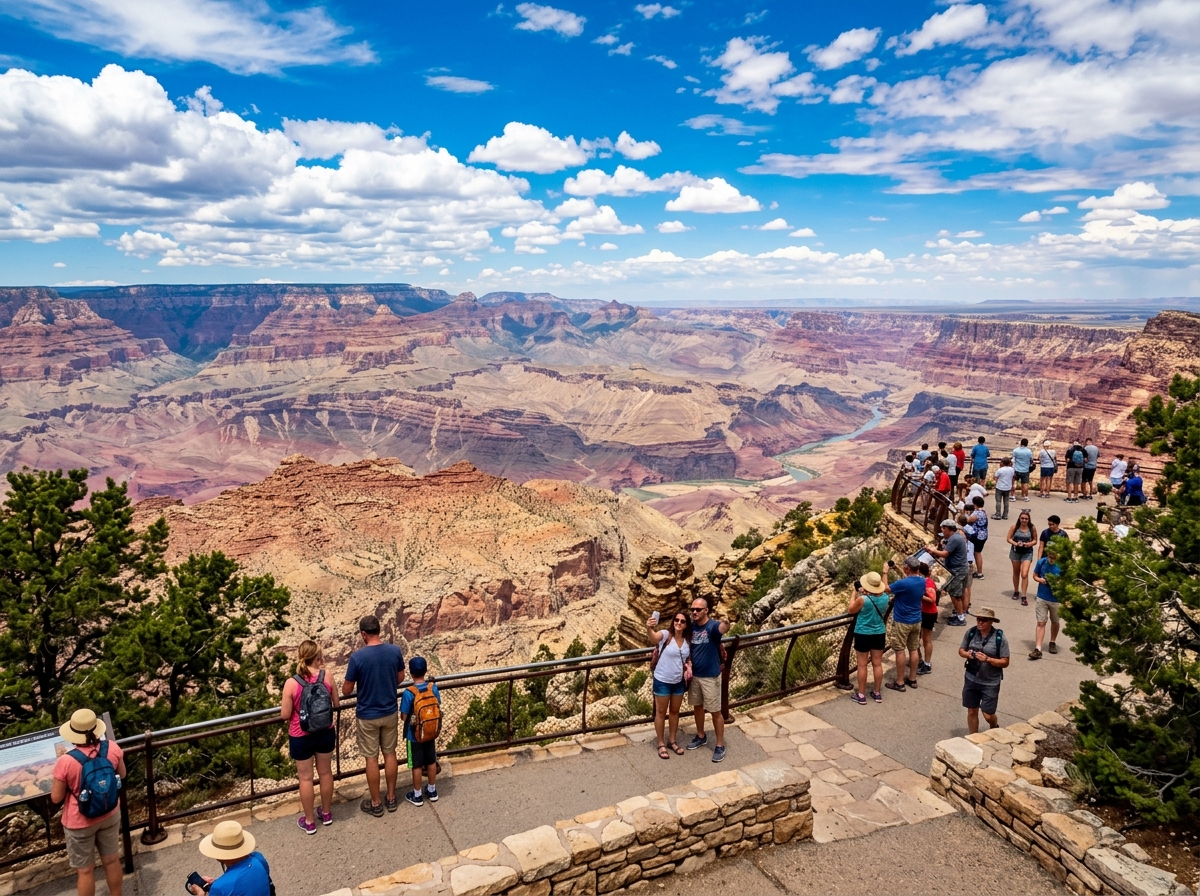
Summer summary:
- Low desert: Dangerously hot, 105 to 118F, trail closures common
- High country: Pleasant, 70s to 80s, genuine relief from the heat
- Monsoon: Late June through September, flash flood risk
- Best for: Flagstaff, Grand Canyon (both rims), White Mountains, avoiding Phoenix entirely
Autumn (September, October, November)
Autumn is the second-best season in Arizona and arguably underrated compared to spring.
September still carries summer heat in the low desert, with highs often in the 100s through mid-month, but the worst of the season is clearly past. Monsoon storms continue into September. The high country cools rapidly, with Flagstaff highs dropping into the 70s.
October is one of the best months anywhere in the state. Low desert highs settle into the comfortable 85 to 90F range. The Grand Canyon South Rim is crisp and clear, ideal for hiking. Aspen color in the high country, particularly around Flagstaff and the San Francisco Peaks, peaks in early to mid-October and is one of Arizona’s most overlooked seasonal events.
November brings the first real chill to the high country, with Flagstaff highs dropping into the 50s and occasional early snow at higher elevations. The low desert remains very pleasant, with highs around 75F, which is exactly why Phoenix and Scottsdale begin filling up with winter visitors this month.
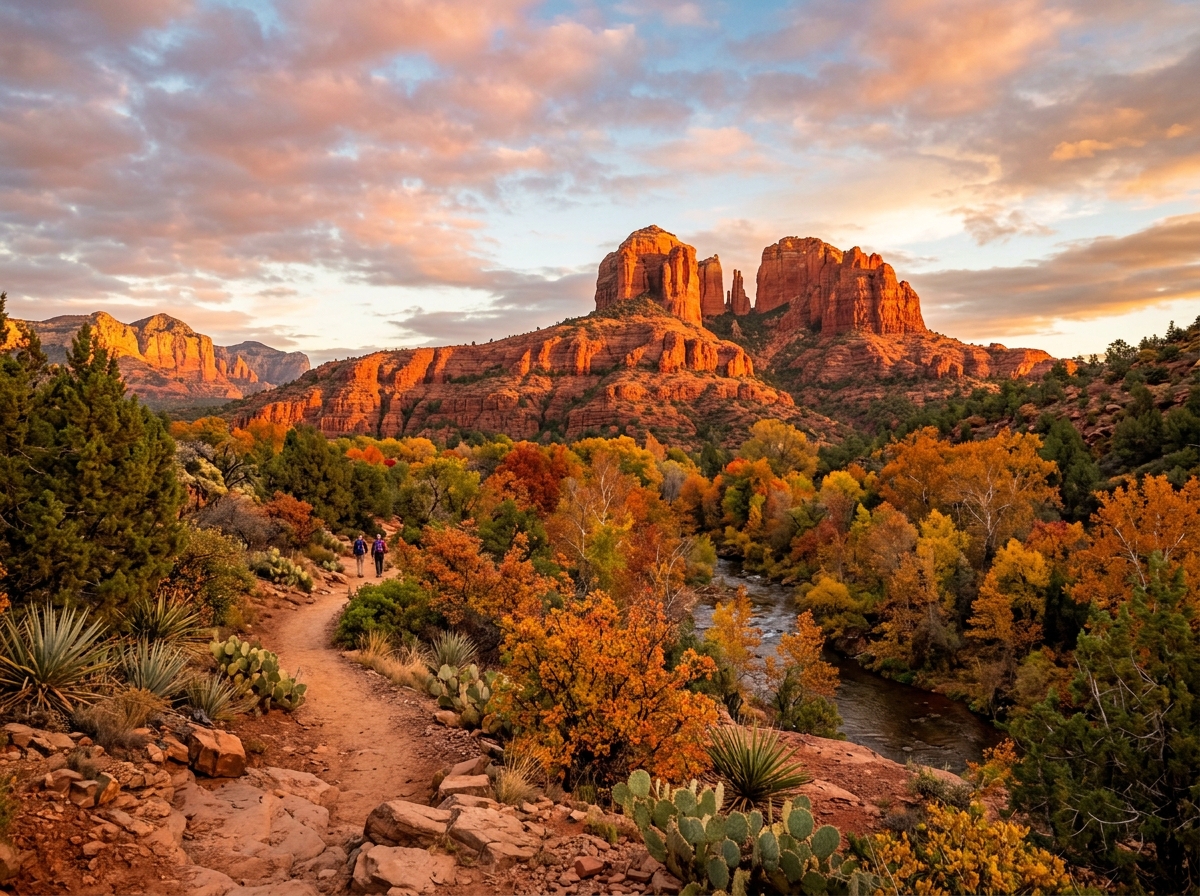
Autumn summary:
- Low desert: Comfortable from October onward
- High country: Aspen colour in October, first snow possible by November
- Crowds: Building through November as snowbird season begins
- Best for: Hiking everywhere, Grand Canyon, fall colour in the high country
Winter (December, January, February)
Winter is when Arizona splits most dramatically into two completely different destinations.
The low desert becomes one of the most popular winter escapes in the country. Phoenix and Scottsdale highs average 65 to 70F with sunny skies most days, which is exactly why hundreds of thousands of “snowbirds” relocate here for the winter months. Nights can be genuinely cold, dropping into the 40s, so pack layers even for a desert winter trip.
The high country experiences real winter. Flagstaff averages around 100 inches of snow per year and regularly sees freezing temperatures and significant snowfall from December through February. The Arizona Snowbowl ski resort near Flagstaff operates a full ski season, typically running from December through early April depending on snowpack.
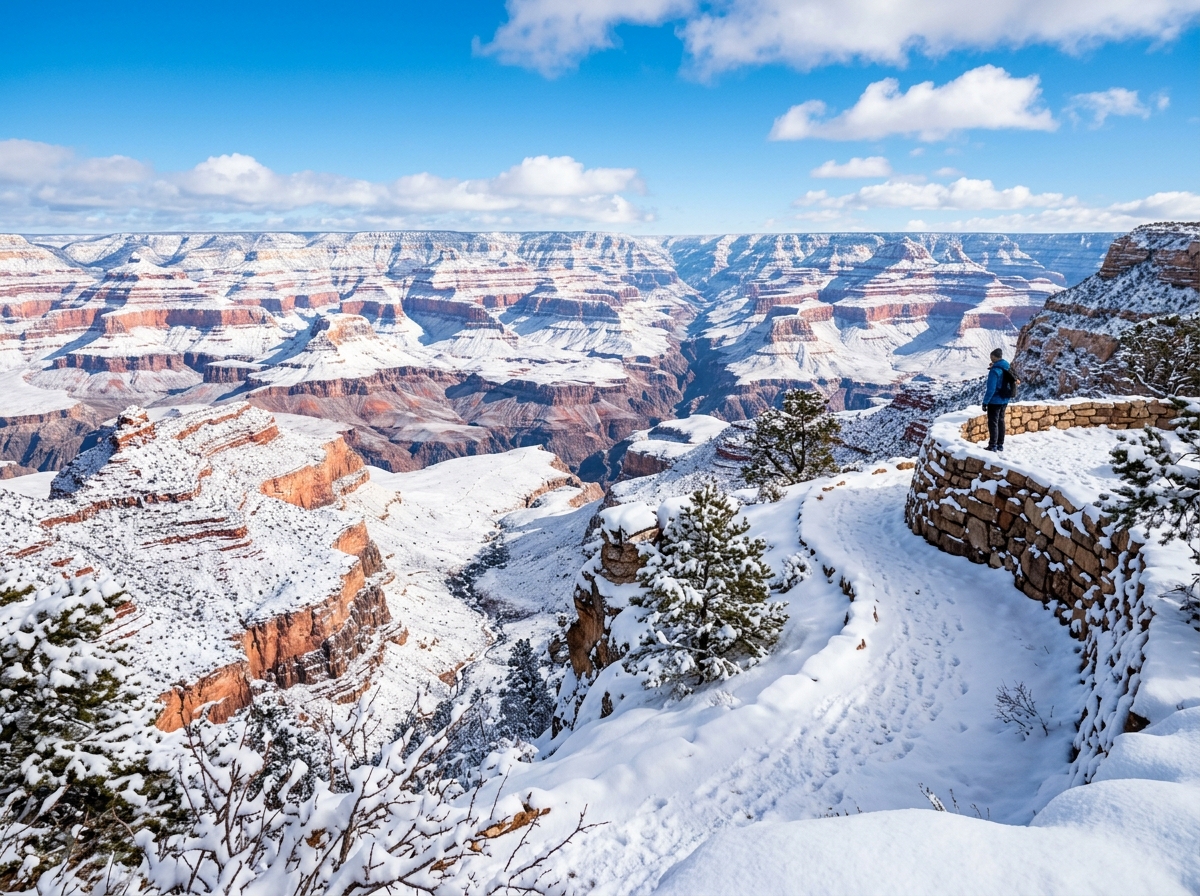
The Grand Canyon South Rim stays open year-round but experiences cold temperatures and occasional snow, which can be spectacular for photography but requires proper winter clothing and tire chains may be needed during storms. The North Rim closes completely for the season, typically from mid-October through mid-May, due to heavy snow that makes the access road impassable.
Winter summary:
- Low desert: Mild and sunny days, cold nights, peak snowbird season
- High country: True winter, snow, skiing at Arizona Snowbowl
- Grand Canyon: South Rim open with winter conditions, North Rim closed
- Best for: Desert sun, skiing near Flagstaff, lower prices outside the desert cities
Month by Month Quick Reference
| Month | Phoenix High | Flagstaff High | Crowds | Best For |
|---|---|---|---|---|
| January | 67F | 45F | High (snowbirds) | Desert sun, skiing |
| February | 70F | 47F | High | Desert sun, hiking |
| March | 76F | 53F | Very high (spring training) | Baseball, wildflowers |
| April | 85F | 60F | High | Hiking, Sedona |
| May | 95F | 70F | Moderate | Early summer high country |
| June | 104F | 80F | Low in desert | Flagstaff, Grand Canyon |
| July | 106F | 82F | Very low in desert | High country only |
| August | 104F | 80F | Very low in desert | High country only |
| September | 100F | 75F | Moderate | Transition month |
| October | 88F | 65F | High | Best overall month |
| November | 76F | 53F | High | Fall colour, desert sun |
| December | 67F | 43F | Very high (holidays) | Desert sun, Christmas |
What Most Arizona Guides Do Not Tell You
Heat danger is not exaggerated. Phoenix recorded 54 consecutive days of 110F or higher temperatures during one recent summer. Heat-related deaths in Maricopa County, where Phoenix sits, number in the hundreds most years, with the majority occurring outdoors during daytime hours in summer. If you visit the low desert between June and September, treat the heat as a genuine safety issue, not an inconvenience. Hike before 7am, carry far more water than feels necessary, and know that symptoms of heat exhaustion can progress to heat stroke quickly.
The Grand Canyon has its own microclimate, and it is not what you expect. The South Rim sits at 7,000 feet and is genuinely cool, even in summer. The canyon floor, a vertical mile below, can be 20 to 25 degrees hotter. Hikers regularly underestimate this and descend into temperatures far more dangerous than what they experienced at the rim. The National Park Service strongly discourages hiking to the river and back in one day, especially in summer.
The North Rim is only open about five months a year. This catches visitors off guard constantly. The North Rim access road and facilities close for the season around mid-October and do not reopen until mid-May. If a North Rim visit is part of your plan, check the current opening dates before booking anything.
Monsoon season is not just rain. Arizona’s monsoon, running late June through September, can produce dust storms (locally called haboobs) that reduce visibility to near zero within minutes, particularly around Phoenix and Tucson. These are a genuine driving hazard. If you encounter one while driving, the official guidance is to pull off the road, turn off your lights, and wait it out.
Trail closures are real and enforced. Several popular Phoenix-area hikes, including Camelback Mountain and Piestewa Peak, close during the hottest hours of summer days, generally from around 11am to 6pm from May through September. Check current closure times before planning a summer hike in the Phoenix metro.
For any Arizona trip involving hiking at altitude or in desert heat, proper hydration management is genuinely a safety issue, not just a comfort one. The CamelBak Crux 3L Hydration Reservoir (available on Amazon) fits into most daypacks and makes continuous sipping far more realistic than relying on stopping to drink from a bottle, which matters significantly when hiking in either Arizona’s desert heat or its high-altitude dryness.

CamelBak Crux Water Reservoir Hydration Bladder
Best Time to Visit Arizona for Specific Experiences
Grand Canyon
South Rim: Open year-round. Best weather for hiking is April, May, September, and October. Summer is busy but the rim itself stays cool due to elevation. Winter brings snow and fewer crowds.
North Rim: Open mid-May through mid-October only. June through early September offers the most reliable weather, though it is also when crowds and monsoon storm risk both peak.
Rim-to-river hikes: Spring and fall are far safer than summer. The National Park Service actively discourages summer descents to the Colorado River and back in a single day due to extreme heat at the lower elevations.
Sedona
Sedona sits at a comfortable mid-elevation, which makes it more forgiving than Phoenix in summer and milder than Flagstaff in winter. March through May and September through November are ideal for the famous red rock hikes. Summer is hot but manageable with an early start. Winter occasionally brings light snow that dusts the red rocks, which photographers specifically chase for the contrast.
Skiing Near Flagstaff
Arizona Snowbowl typically operates from December through early April, depending on snowpack. Snow quality and season length vary considerably year to year, so check current conditions before planning a ski trip around a specific date.
Desert Wildflowers
Peak bloom in Saguaro National Park and across the low desert generally falls in late February through April, with timing shifting year to year based on winter rainfall. A wet winter produces a significantly better bloom than a dry one.
Spring Training Baseball
The Cactus League runs MLB spring training across the Phoenix metro area through March, drawing significant crowds and pushing hotel prices up across Scottsdale and the East Valley during this window.
Practical Tips for Visiting Arizona
Pack for two climates if your trip spans regions. A single Arizona itinerary covering Phoenix and Flagstaff, or Phoenix and the Grand Canyon, can mean a 30 degree temperature swing in the same day. Layers are not optional.
Book accommodation around the calendar, not just the season. Spring training in March and the winter snowbird season from January through March both drive Phoenix-area hotel prices and availability significantly. Booking two to three months ahead during these windows is sensible.
Sun protection matters at every elevation. Arizona’s high elevation areas, including Flagstaff and the Grand Canyon, actually have more intense UV exposure than the lower desert, since UV radiation increases with altitude. Sunscreen is necessary year-round, not just in summer. A broad-spectrum, high-SPF mineral sunscreen is the right choice for both the dry desert heat and the thinner air at elevation. The Blue Lizard Sensitive Mineral Sunscreen SPF 50+ (available on Amazon) is reef-safe, fragrance-free, and widely recommended for sensitive skin in intense sun conditions, which matters whether you are at the bottom of the Grand Canyon or on top of a Flagstaff trail.
Check road conditions for high-elevation winter trips. Snow and ice are realistic concerns on routes to Flagstaff, the Grand Canyon South Rim, and the White Mountains from November through March. AZ511.gov provides current road condition information for the state.
Carry more water than feels necessary. This applies in every season but is critical in summer. The general guidance for desert hiking is about one litre per hour of activity in hot conditions, more if you are exerting heavily.
For Arizona’s intense desert and high-altitude sun, eye protection is frequently overlooked. The bright reflected light off red rock and desert sand causes genuine eye strain over a full day outdoors. The Goodr OG Polarized Sunglasses (available on Amazon) are lightweight, affordable, and provide proper UV protection without the bulk of heavier sport sunglasses, which makes them practical for everything from a Sedona hike to a day at the Grand Canyon rim.

goodr Polarized Sunglasses
Best Time to Visit Arizona by Traveller Type
First-time visitors: March through May or October for comfortable weather across both the desert and the high country in a single trip.
Hikers: Spring and fall for the low desert and Sedona. Summer for Flagstaff and the Grand Canyon South Rim specifically, while avoiding Phoenix-area trails entirely.
Winter sun seekers: December through February in Phoenix, Scottsdale, or Tucson, with awareness that nights are cold enough to require layers.
Skiers: December through March at Arizona Snowbowl near Flagstaff, checking current snowpack conditions before booking.
Grand Canyon visitors: April, May, September, and October for the South Rim. June through September for the North Rim, since it is only open during this window.
Budget travellers: Summer in the low desert offers the lowest prices of the year, provided you treat the heat seriously and plan activities around early mornings, indoor attractions, and air-conditioned spaces during peak afternoon hours.
Photographers: Winter for snow-dusted red rocks in Sedona, October for aspen colour near Flagstaff, and any season at sunrise or sunset at the Grand Canyon for the dramatic shifting light on the canyon walls.
Frequently Asked Questions
What is the best month to visit Arizona? October is widely considered the best single month. Low desert temperatures cool into the comfortable 80s, the high country has crisp clear days with peak aspen colour, and the extreme heat danger of summer has passed.
Is it safe to visit Arizona in summer? The high country, including Flagstaff and the Grand Canyon’s South Rim, is genuinely pleasant in summer due to elevation. The low desert, including Phoenix, Scottsdale, and Tucson, experiences dangerous heat from June through August, with temperatures regularly exceeding 110F and real risk of heat-related illness. If visiting the low desert in summer, take the heat seriously: hike early, hydrate constantly, and use air conditioning during peak afternoon hours.
When is the Grand Canyon North Rim open? The North Rim is open from approximately mid-May through mid-October. It closes completely for the winter season due to snow that makes the access road impassable. The South Rim remains open year-round.
What is the coolest place to visit in Arizona during summer? Flagstaff, at nearly 7,000 feet elevation, stays in the comfortable 70s and 80s through summer, roughly 30 degrees cooler than Phoenix on the same day. The Grand Canyon South Rim and the White Mountains offer similar relief due to their elevation.
When do Arizona’s wildflowers bloom? Desert wildflower season typically peaks from late February through April, depending on winter rainfall. A particularly wet winter produces a noticeably better bloom (sometimes called a superbloom) than a dry one.
Is Arizona expensive to visit in winter? Winter, particularly January through March, is peak season for the low desert cities due to snowbird visitors and spring training baseball, which pushes hotel prices and crowds upward. Booking two to three months ahead is sensible for this period.
What is monsoon season in Arizona? Monsoon season runs roughly from late June through September, bringing afternoon and evening thunderstorms, dramatic lightning, sudden heavy rain, and significant flash flood risk in canyons and washes. Dust storms, known locally as haboobs, are also a feature of this season and can reduce driving visibility to near zero with little warning.
Final Thoughts
The best time to visit Arizona depends entirely on where in Arizona you are actually going.
Phoenix in July is a genuinely different proposition from Flagstaff in July, even though they are only two hours apart by car. Understanding the state’s elevation-driven climate, rather than treating “Arizona weather” as one single thing, is what separates a trip that goes smoothly from one that gets derailed by heat you were not prepared for.
Spring and fall work everywhere in the state. Summer works beautifully in the high country and dangerously in the low desert. Winter splits the state into a sunny desert escape and a genuine snow season within a two-hour drive of each other.
Pick your elevation, match it to your season, and Arizona delivers one of the most varied and rewarding landscapes in the country.