
A beautiful back hand mehndi design can change the entire look of your hands. It stays visible when you hold a clutch, wear bangles, take photos, or simply move your hands. That is why the back of the hand deserves just as much attention as the palm.
The best design does not have to be the most detailed one. A small flower with clean finger work can look more elegant than a crowded pattern. A bridal design, on the other hand, may need richer coverage and finer details.
Some people love Arabic flowers and flowing vines. Others prefer mandalas, jewelry inspired patterns, or traditional Pakistani mehndi. Minimal designs are also becoming popular because they look fresh and work well with modern outfits.
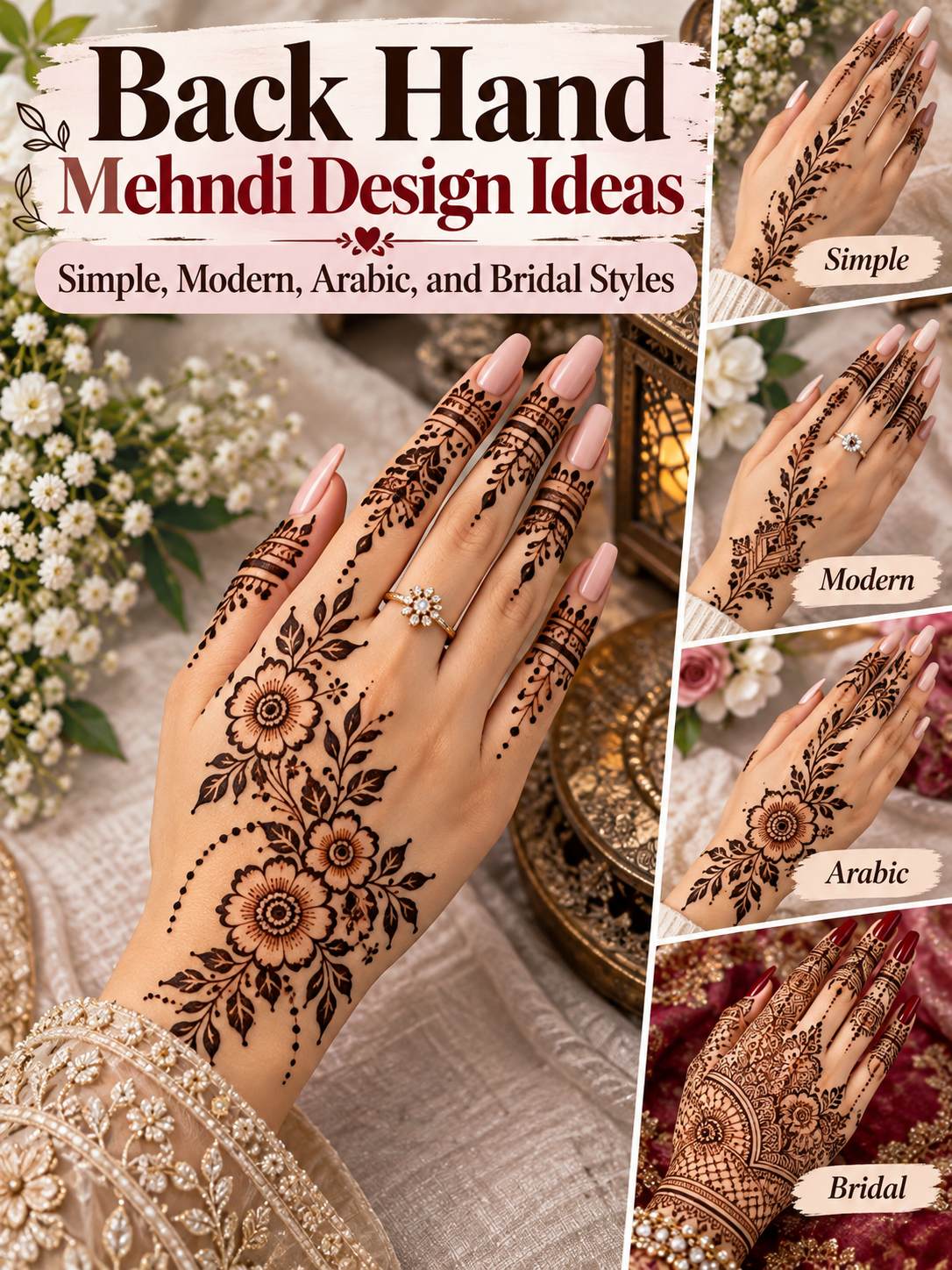
The best back hand mehndi design is one that matches your occasion, outfit, available time, and preferred level of detail.
What Is the Best Back Hand Mehndi Design?
There is no single design that works for everyone. For a clean everyday look, choose a floral vine, small mandala, or decorated fingers. For Eid, Arabic flowers and bracelet patterns are beautiful choices. Brides usually look better with fuller patterns that connect the fingers, hand, wrist, and forearm.
If you are applying mehndi yourself, start with larger shapes. Small leaves, flowers, dots, lines, and finger bands are easier to control than extremely fine bridal work.
Here are the most useful styles to consider.
1. Simple Back Hand Mehndi Design
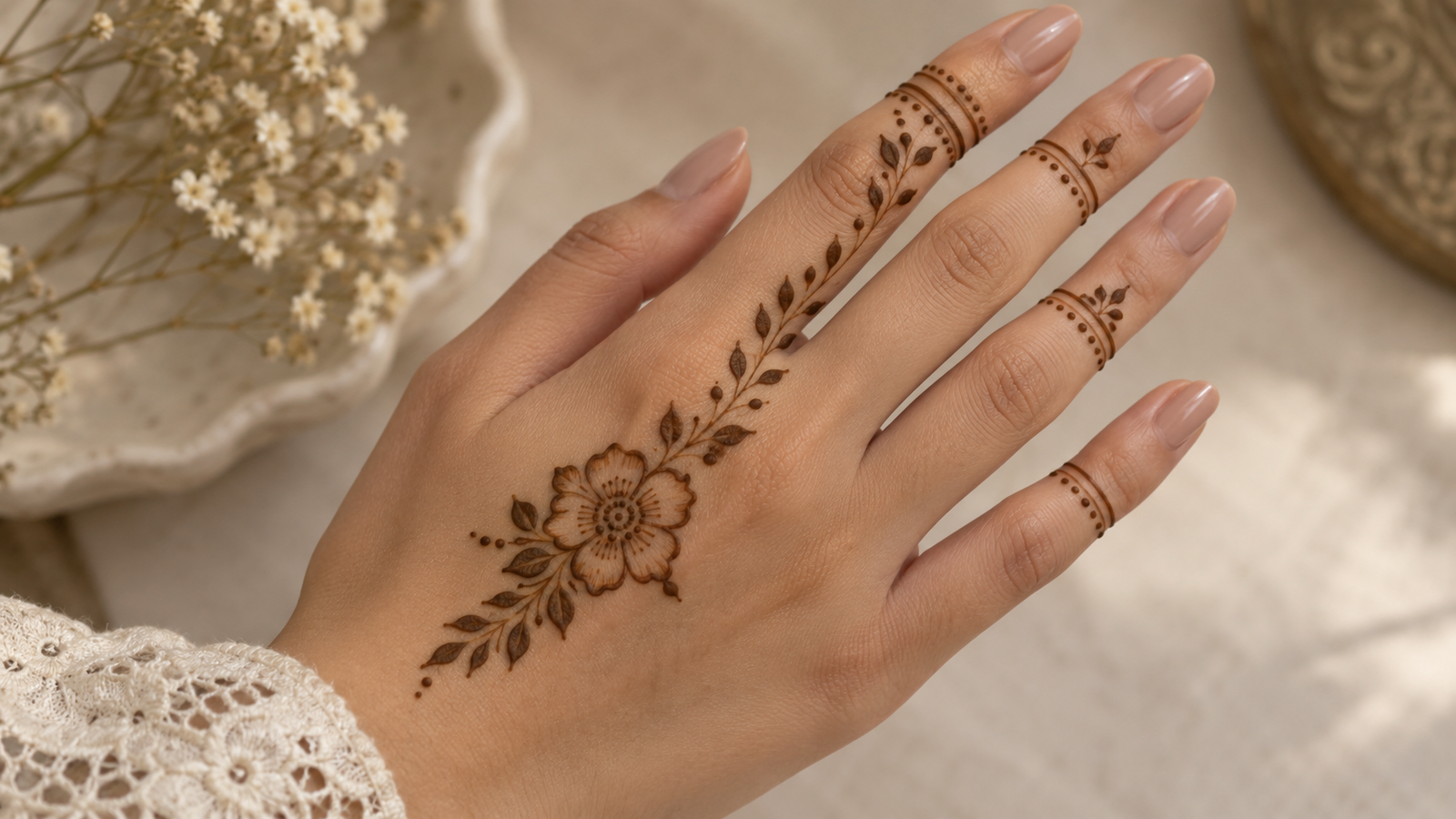
A simple back hand mehndi design is ideal when you want your hands to look decorated without covering every inch of skin.
Start with one main element. It could be a small flower, leafy vine, paisley, or circular motif. Connect it to one finger or the wrist with dots and thin lines.
Leave plenty of empty space around the design. This keeps the pattern clean and helps the darker stained areas stand out.
Simple designs work especially well for family dinners, small celebrations, university events, casual Eid gatherings, and wedding guests who do not want heavy mehndi.
For an elegant result, decorate only one or two fingers and keep the others light.
2. Easy Back Hand Mehndi Design
An easy back hand mehndi design should use shapes that can be repeated without requiring perfect control.
Leaves are one of the easiest elements. Draw a curved line from the wrist toward the middle or index finger. Add small leaves to both sides. Finish with dots around the vine.
Another easy option is a flower in the center of the hand with simple bands around the fingers.
Beginners should avoid starting with a large symmetrical pattern. If one side becomes uneven, the difference is immediately visible.
A flowing design is more forgiving. Small variations can actually make it look natural.
3. Modern Back Hand Mehndi Design
Modern back hand mehndi designs use more empty skin and fewer traditional fillers.
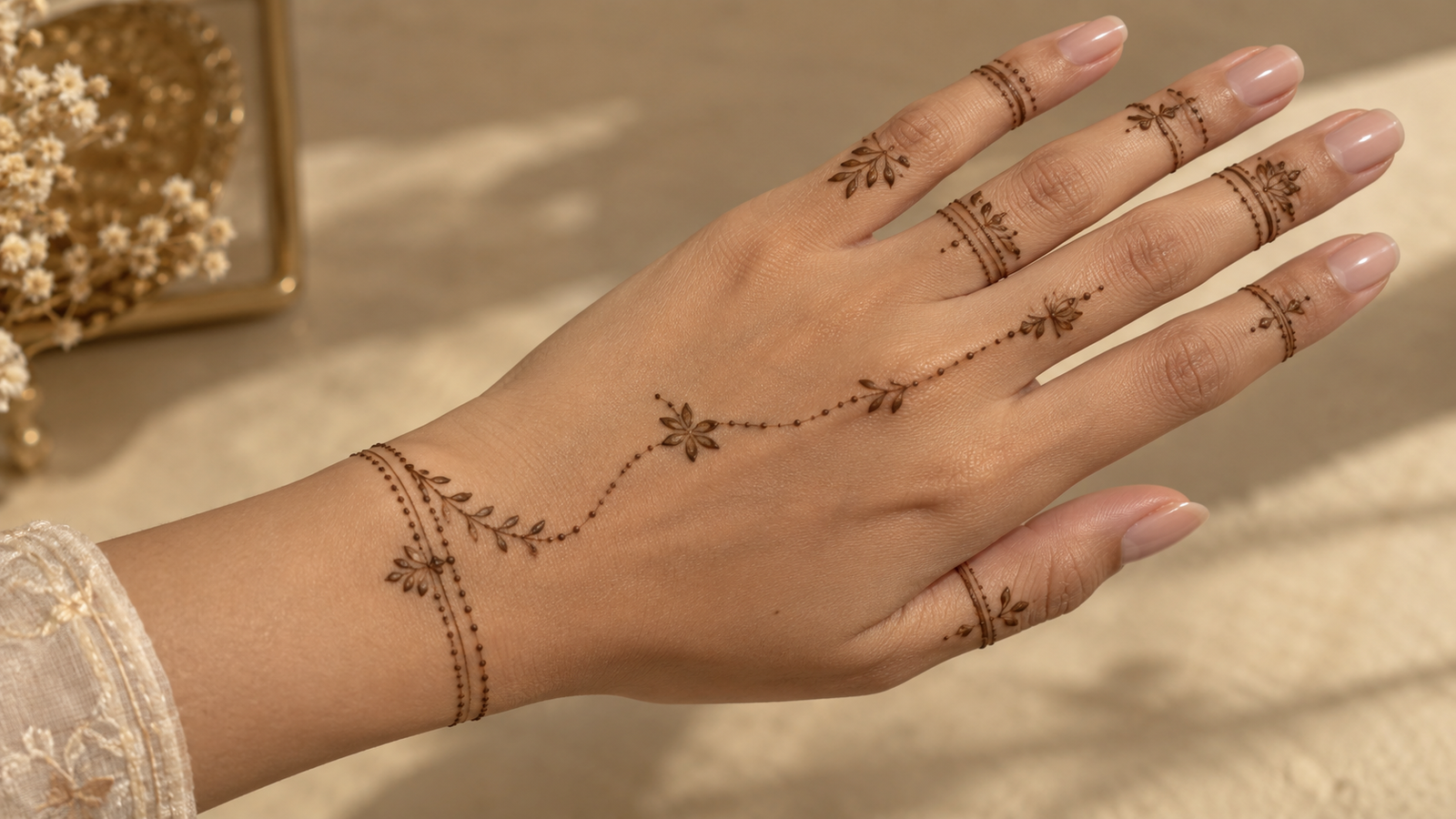
Think thin chains, tiny leaves, ring patterns, geometric lines, small flowers, and bracelet style wrist details. These designs often resemble hand jewelry.
One modern layout starts with a thin wrist band. A dotted chain moves from the wrist toward a small flower in the center of the hand. Another line connects that flower to the middle finger.
You can finish the fingers with fine bands instead of completely filling them.
This style works beautifully with pastel dresses, formal gowns, simple shalwar kameez outfits, and contemporary Eid looks.
4. Arabic Back Hand Mehndi Design
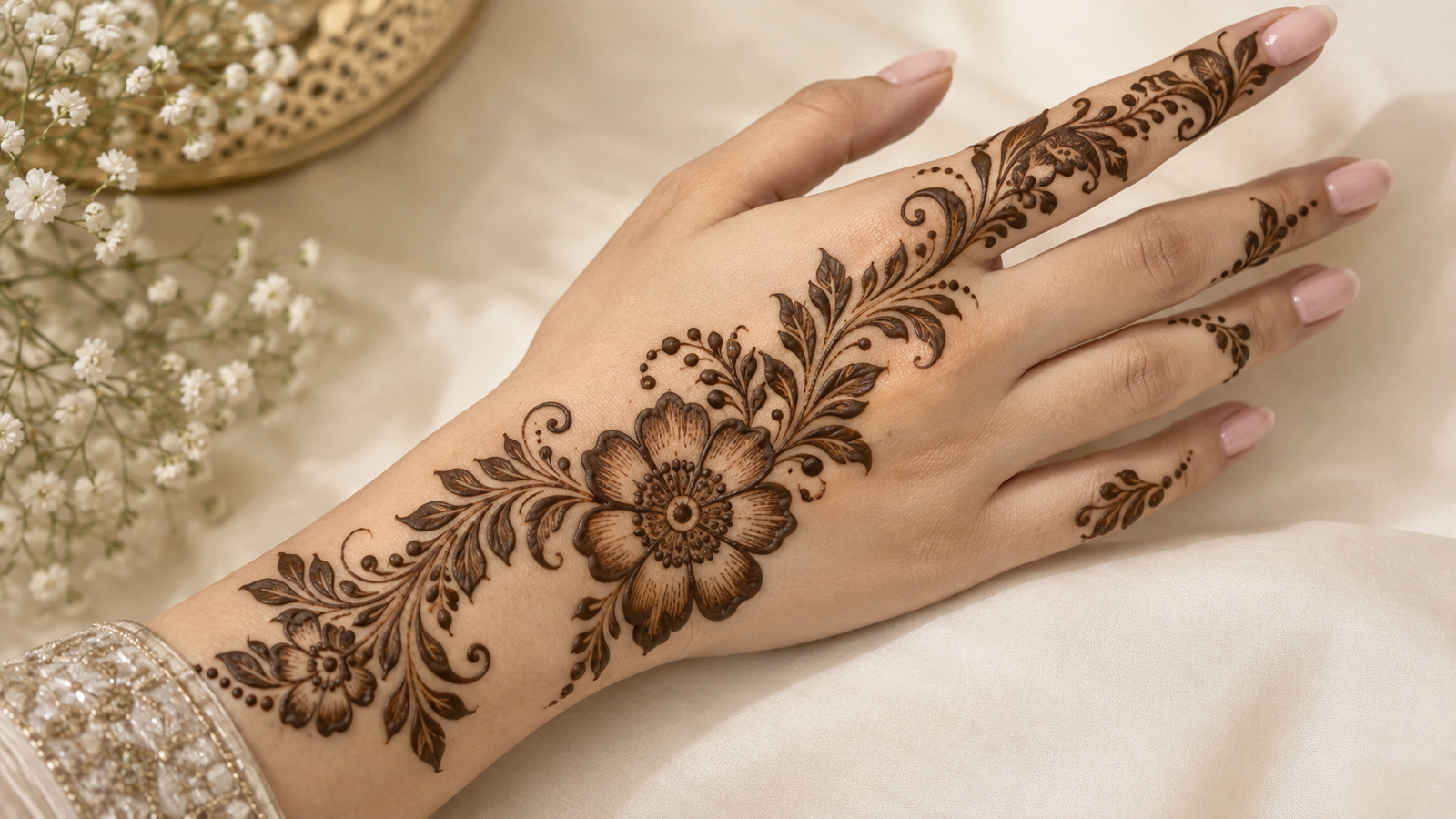
Arabic back hand mehndi design is one of the most popular choices for the back of the hand.
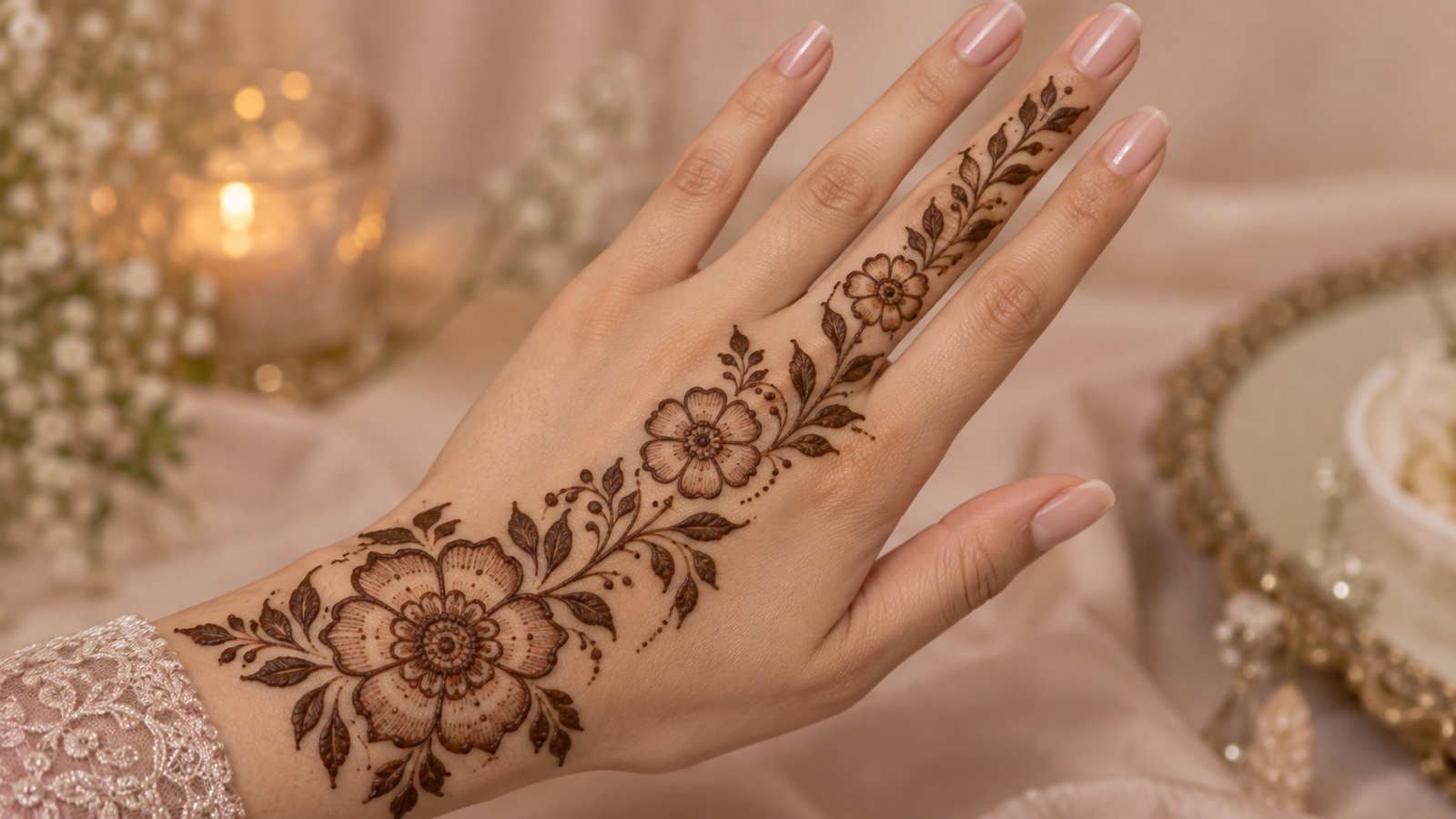
The style usually uses large flowers, leaves, curved vines, bold outlines, and open spaces. A common layout travels diagonally from the wrist toward the index or middle finger.
The diagonal direction makes the hand look longer and gives the design natural movement.
Try placing a large flower near the wrist. Add two smaller flowers across the hand. Connect them with leafy vines and finish the pattern on one finger.
Do not fill every empty area with dots. Arabic mehndi looks best when the main shapes have room to stand out.
It is an excellent choice for Eid, engagement parties, wedding guests, and family celebrations.
5. Stylish Back Hand Mehndi Design
A stylish design should look intentional from the wrist to the fingertips.
Jewelry inspired mehndi works particularly well.
Create a bracelet around the wrist, then connect it to a central flower or diamond using dotted chains. From the central motif, extend fine lines toward two fingers. Add ring style bands around the fingers.
The finished pattern can look like a hand chain made entirely from henna.
Another option is a diagonal leafy trail with a detailed wrist cuff.
Keep the main design bold and the connecting lines delicate. This contrast prevents the hand from looking too busy.
6. Bridal Back Hand Mehndi Design
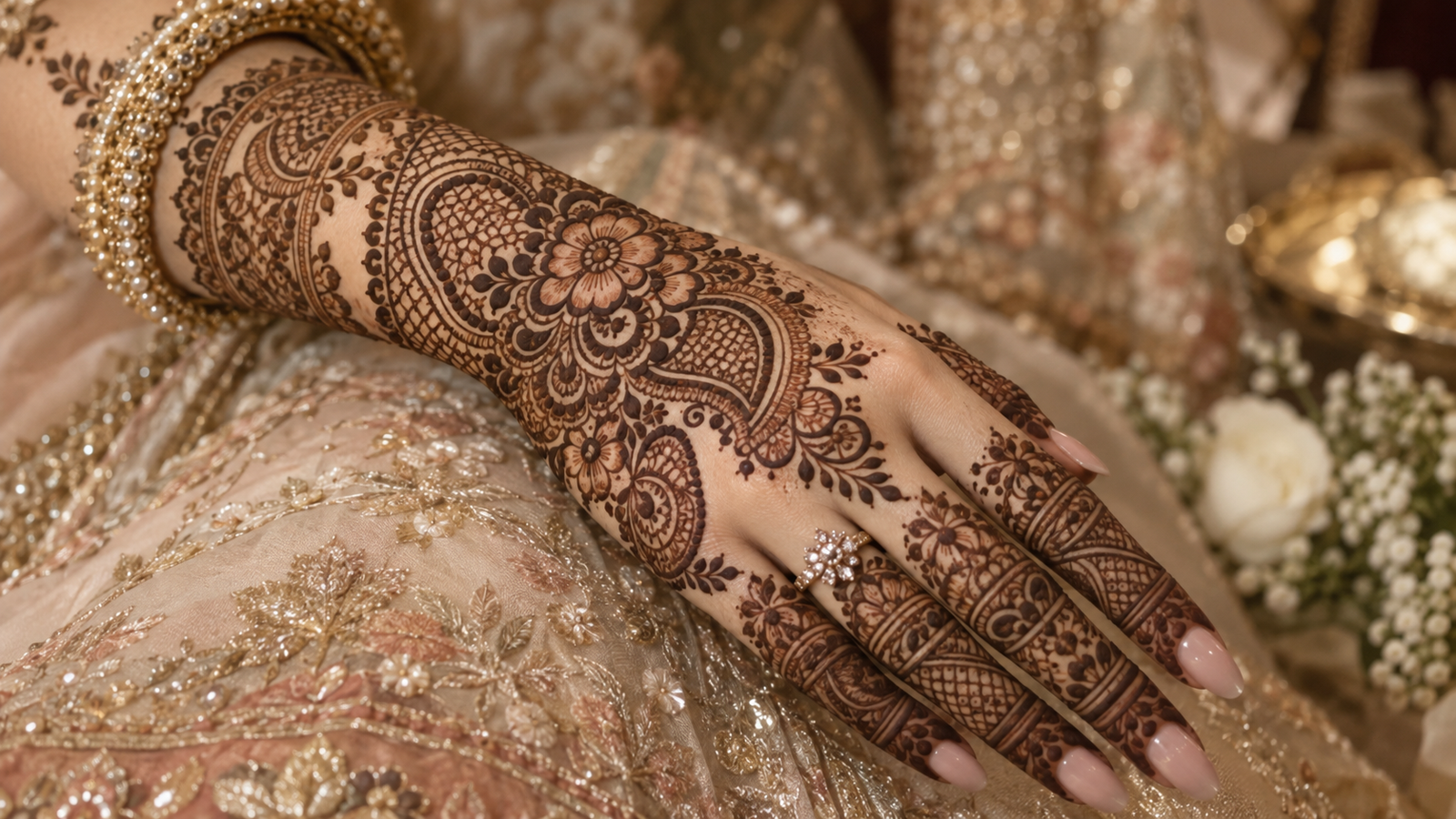
A bridal backhand mehndi design usually needs more coverage than a casual pattern.
The fingers may contain detailed bands, leaves, jaali patterns, paisleys, flowers, and shaded sections. The main hand can connect to a rich wrist design before continuing toward the forearm.
The important part is balance.
A full bridal design should still have clear main motifs. If every space contains the same level of detail, the pattern can lose definition in photographs.
A bride can also include meaningful elements such as initials, wedding symbols, lotus motifs, peacocks, architectural details, or shapes that match the bridal outfit.
Ask your artist to keep finger spacing consistent. Hands appear in many wedding photographs, so uneven finger work can become surprisingly noticeable.
7. Minimal Back Hand Mehndi Design
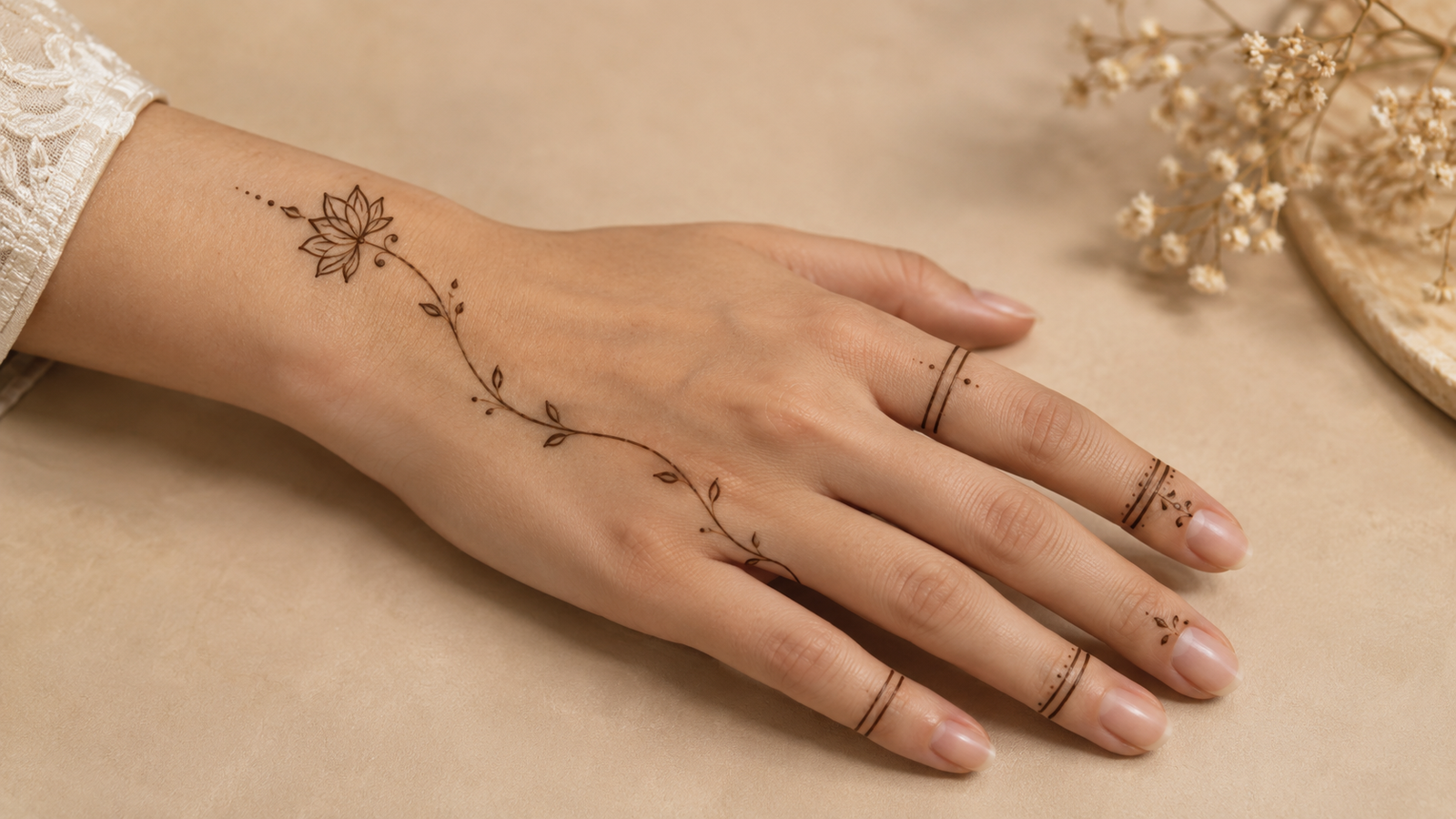
Minimal mehndi proves that a beautiful design does not need full coverage.
One small lotus near the wrist can be enough. Add a thin vine that travels toward one finger. Another option is a tiny mandala in the center with dots around it.
You can also decorate only the fingers.
For example, place two thin bands on each finger and add a tiny leaf between them.
Minimal back hand mehndi design works well for people who want something elegant but do not like the feeling of heavy paste covering the whole hand.
It also takes less time to apply and is easier to coordinate with rings and bracelets.
8. Aesthetic Back Hand Mehndi Design
An aesthetic back hand mehndi design focuses on spacing, balance, and a clear visual theme.
Instead of combining every motif you like, choose one idea.
A botanical design can use small flowers, vines, and leaves. A jewelry design can use chains, circles, and finger rings. A geometric style can use diamonds, lines, and structured wrist bands.
Repeating the same shapes creates a more polished result.
For photographs, keep the center of the hand relatively clear if you plan to wear statement rings. If your jewelry is minimal, a central mandala or flower can become the main focus.
9. Flower Back Hand Mehndi Design
Flowers are among the most flexible mehndi motifs because they can be simple, bold, modern, or bridal.
For an easy flower back hand mehndi design, place one medium flower slightly away from the center. Draw a curved vine toward the wrist and another toward the index finger.
Add leaves along both lines.
For a fuller version, use three flowers in different sizes. Keep the largest flower near the wrist or center and use smaller flowers as the design moves toward the fingers.
Roses give a romantic look. Lotus motifs feel more structured. Rounded flowers are easiest for beginners because small imperfections are less obvious.
10. Mandala Back Hand Mehndi Design
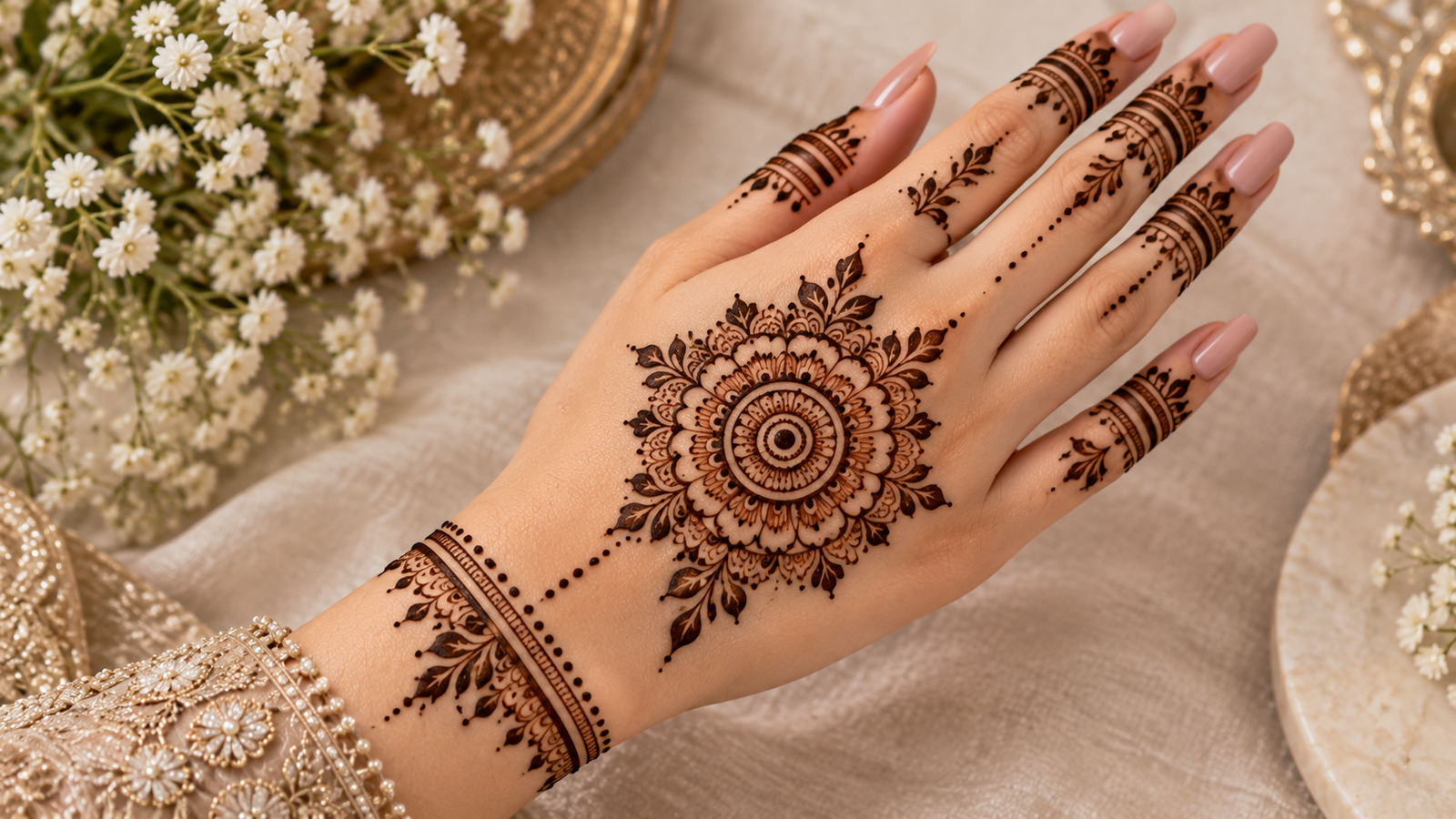
A mandala back hand mehndi design places a circular motif in the center of the hand.
The simplest version begins with a small circle. Add petals around it, then another layer of lines, dots, or scalloped shapes.
The fingers can stay almost bare or include matching bands.
Mandala designs work best when the center placement is accurate. Look at the entire hand before starting. Do not automatically use the visible center of the skin as your guide. Consider where the fingers, wrist, and jewelry will sit.
For Eid or weddings, extend a few dotted chains from the mandala toward the fingers.
11. Back Hand Finger Mehndi Design
Finger details can make or break a back hand design.
You do not have to decorate all five fingers in the same way.
A modern arrangement may use detailed work on the index and middle fingers while keeping the ring and little fingers lighter.
Popular finger elements include:
• Thin horizontal bands
• Small leaves
• Tiny flowers
• Dotted chains
• Jaali patterns
• Filled fingertips
• Curved vines
• Ring inspired motifs
If the main hand design is heavy, keep the fingers slightly simpler. If the hand is mostly empty, detailed fingers can provide the visual interest.
12. Full Back Hand Mehndi Design
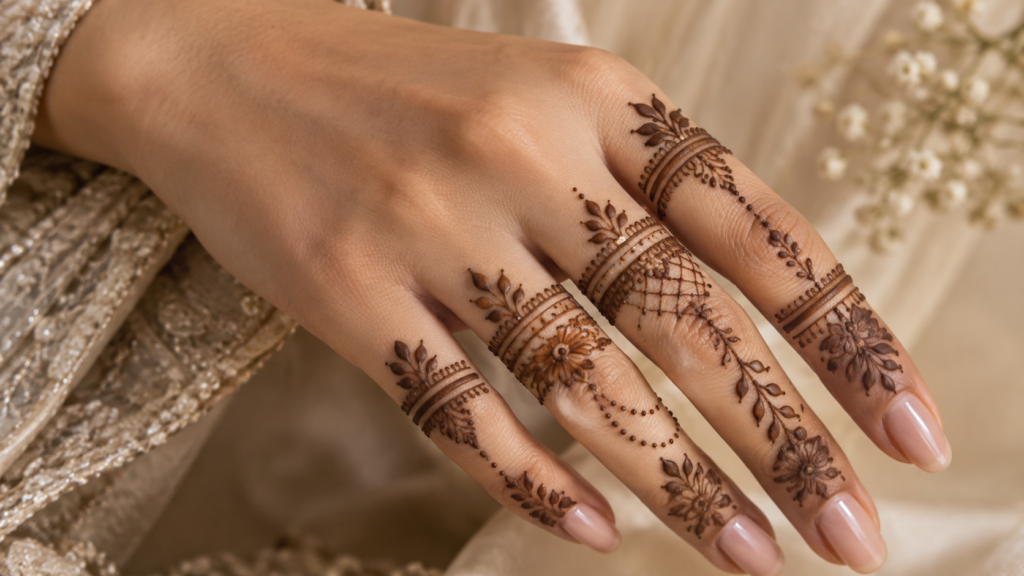
A full back hand mehndi design covers most of the visible skin from the fingertips to the wrist and may continue onto the forearm.
This style suits brides, close family members, and anyone who loves traditional mehndi.
A good full design still needs structure.
Start with larger anchor motifs such as flowers, paisleys, or mandalas. Use smaller leaves, dots, curves, and jaali to connect them.
Avoid using tiny details everywhere. Leave narrow areas of clean skin between important motifs.
These gaps help each section remain visible once the henna develops into a darker stain.
13. Back Hand Mehndi Design for Eid
Eid mehndi should feel festive without necessarily taking hours to apply.
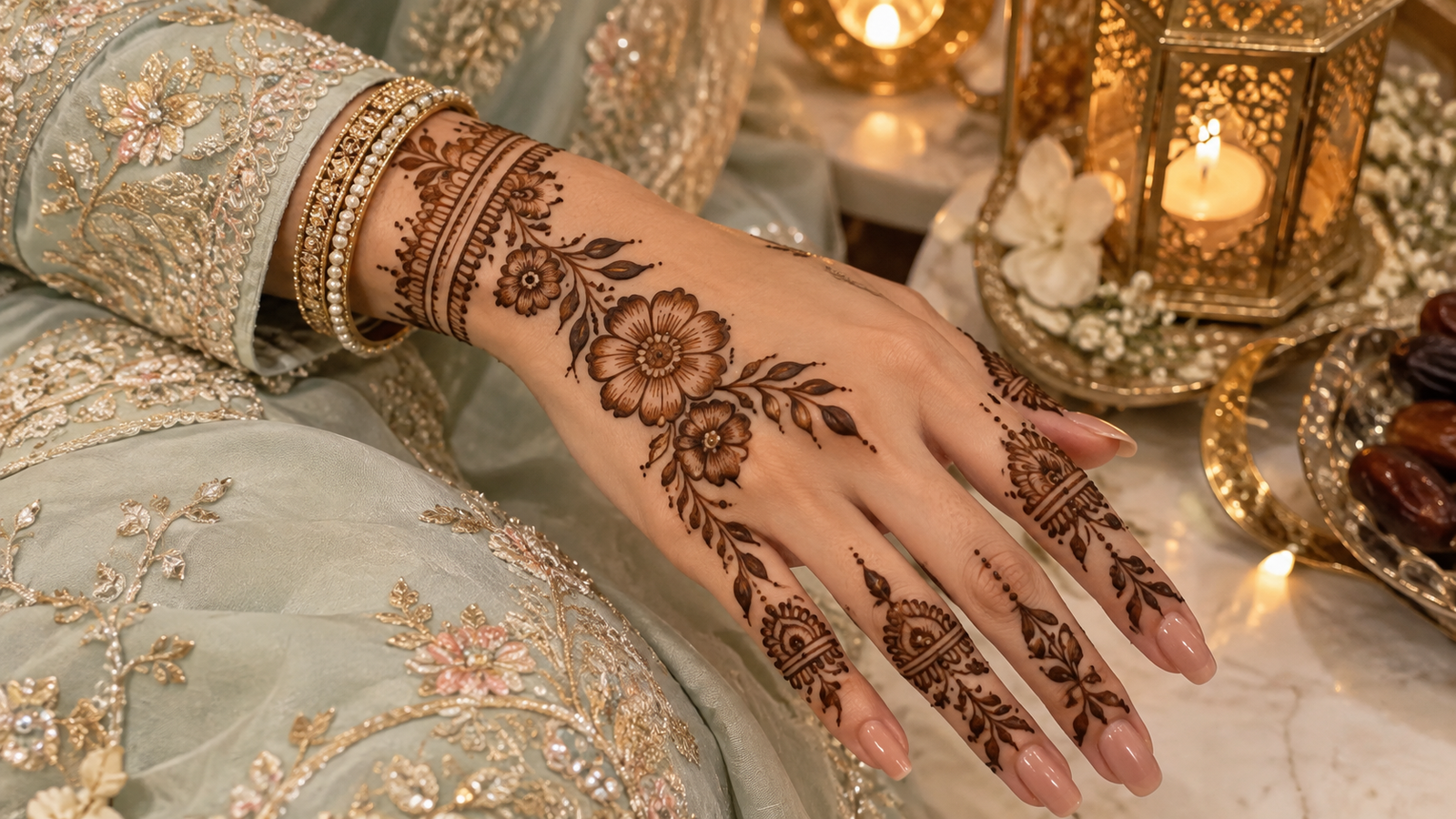
Arabic floral trails are a natural choice because they provide strong visual impact with open spacing. Bracelet designs are also beautiful with bangles and festive sleeves.
For a lighter Eid look, try a flower at the wrist with a leafy trail extending toward one finger.
For something richer, combine a wrist cuff with a mandala and decorated fingertips.
Choose the design after selecting your Eid outfit. A very detailed dress may look better with simpler mehndi, while a plain outfit gives you more freedom to choose a heavy pattern.
14. Back Hand Mehndi Design for Beginners
Beginners often make the mistake of choosing a beautiful design that is too difficult to copy.
Start with five basic shapes: dots, lines, leaves, petals, and circles.
Practice each shape on paper first. Then combine them.
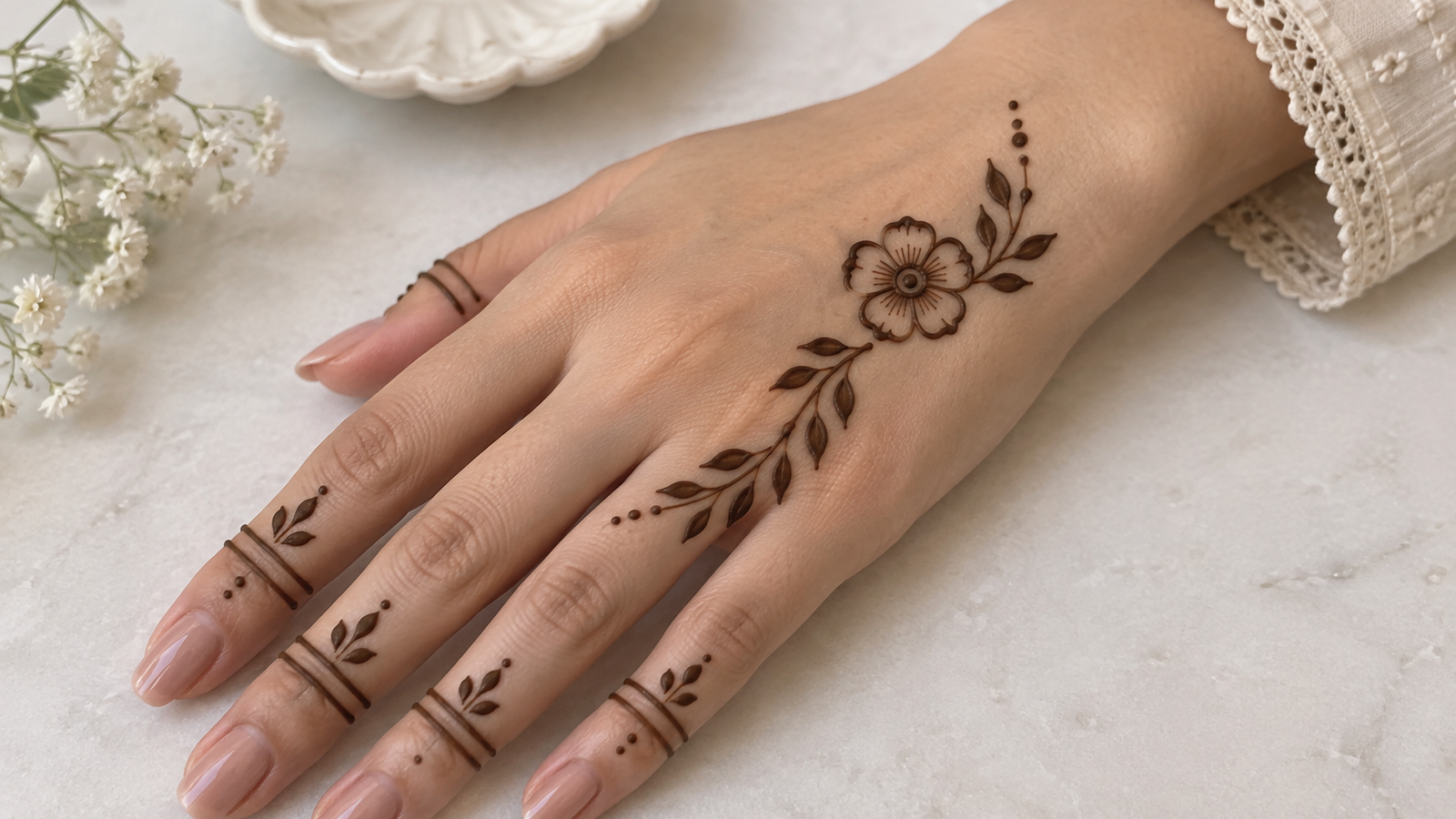
One of the easiest beginner layouts is a vine from the wrist to the index finger. Add leaves on alternating sides. Place one flower near the wrist and another near the finger.
Another beginner option is a small central mandala with finger bands.
Keep a tissue nearby to clean the cone tip. A blocked or messy tip can make even a simple design look uneven.
15. Latest Back Hand Mehndi Design Ideas
The latest back hand mehndi design trend is moving toward cleaner compositions rather than filling every part of the hand.
Popular looks include jewelry inspired chains, fine finger rings, small botanical trails, bold Arabic flowers, wrist cuffs, and mandalas surrounded by open space.
Mixed layouts are also useful.
You might combine an Arabic flower with minimal fingers or pair a traditional mandala with a modern bracelet pattern.
The goal is not to follow every trend at once. Choose one strong feature and build the rest of the design around it.
That usually creates a more timeless result.
16. Pakistani Back Hand Mehndi Design
Pakistani back hand mehndi design often blends several influences rather than following one fixed format.
You may see floral patterns, paisleys, jaali work, mandalas, leafy trails, fine finger details, and bracelet shapes used together.
For weddings, Pakistani designs can become rich and detailed. For Eid, the same visual language can be simplified into a graceful flower trail or wrist pattern.
A popular approach is to decorate the fingers with fine repeating bands and connect them to a floral or paisley arrangement on the hand.
If your clothes already contain heavy embroidery, leave slightly more open space in the mehndi so both details can be appreciated.
How to Choose a Back Hand Mehndi Design
Do not choose a pattern only because it looks beautiful in someone else’s photograph.
Consider your own hands and occasion.
For shorter fingers, vertical vines and narrow patterns can create a longer appearance. For long fingers, detailed finger bands and wider motifs can work beautifully.
For a wedding guest, Arabic or floral mehndi is usually enough. For the bride, fuller coverage may feel more appropriate.
If you have only twenty minutes, choose a vine or small mandala. If you have an hour or more, you can add a wrist cuff, detailed fingers, and additional fillers.
The amount of time available should influence your design before application begins.
How to Make Back Hand Mehndi Look Cleaner
Clean mehndi depends on control more than complexity.
Sit at a table where your hand can remain steady. Begin with the largest motif and check its position before adding details.
Keep the cone opening small for fine lines. Use slightly more pressure when creating bold flowers or filled areas.
Do not place two heavy motifs directly beside each other. Leave enough space for both to remain visible.
When drawing finger bands, follow the natural direction of the finger instead of forcing perfectly straight lines from an awkward angle.
Most importantly, stop when the design looks complete. Extra dots and fillers can quickly turn an elegant pattern into a crowded one.
Useful Mehndi Tools You Can Find on Amazon
You do not need a large kit to practice back hand mehndi.
A reusable Orthoplast henna applicator bottle set with fine tips can help people who prefer bottles instead of traditional cones. Different tip sizes make it easier to switch between fine lines and thicker details. A similar applicator set is sold through Amazon listings.
Beginners may also find henna stencil sheets useful for practicing mandalas, flowers, and finger motifs. They are especially helpful when learning spacing.
A mehndi practice book or henna design workbook can also be useful. Instead of practising directly on the hand, repeat basic petals, leaves, lines, and circles until your movements become more consistent.
For henna itself, always read the ingredient information carefully rather than choosing a product simply because it promises an unusually dark or instant stain.
One Mehndi Safety Tip That Should Not Be Ignored
Be careful with products marketed as black henna.
Natural henna normally creates brown, orange brown, or reddish brown tones. The United States Food and Drug Administration warns that some products sold as black henna may contain PPD, an ingredient associated with serious skin reactions.
Check product ingredients before application. Avoid any product that causes burning, itching, swelling, or unusual irritation.
A beautiful design is never worth risking your skin.
Common Back Hand Mehndi Mistakes
Several small mistakes can affect an otherwise beautiful design.
• Making every finger equally heavy
• Starting the main motif too close to the knuckles
• Filling every empty area
• Using too many different flower styles
• Making wrist bands uneven
• Choosing very fine bridal work as a beginner
• Forgetting to plan how the wrist and finger patterns connect
• Copying a design without adjusting it to your own hand
Take a few seconds to look at the whole pattern after each major section. It is easier to correct the direction early than after the entire hand has been filled.
Conclusion
The best back hand mehndi design is not always the most complicated one. Good placement, clean lines, balanced finger work, and the right amount of empty space matter much more.
Choose a simple floral vine if you want something quick. Try Arabic mehndi for bold flowers and flowing lines. Pick a mandala for symmetry. Jewelry inspired patterns suit modern outfits, while full Pakistani and bridal styles are ideal for bigger celebrations.
Beginners should start small and focus on clean shapes before attempting heavy details.
Once you understand spacing and flow, even a few flowers, leaves, and dots can create a back hand design that looks polished and beautiful.
FAQs
Which mehndi design is best for the back hand?
Arabic floral trails, mandalas, leafy vines, bracelet patterns, and jewelry inspired designs all work well on the back hand. The best option depends on how much coverage you want.
Which back hand mehndi design is easiest for beginners?
A simple leafy vine from the wrist to one finger is one of the easiest choices. You can add one or two flowers without making the design difficult.
What is a simple back hand mehndi design for Eid?
Try a small flower near the wrist with a curved vine reaching the index finger. Add light finger bands and a few dots for a festive finish.
What is the difference between Arabic and Pakistani back hand mehndi?
Arabic designs often feature bold flowers, flowing vines, and larger areas of open skin. Pakistani designs can combine florals, paisleys, jaali, mandalas, finger detailing, and traditional patterns in one composition.
Are mandala mehndi designs good for the back hand?
Yes. The relatively flat center of the back hand makes it a good place for a circular mandala. Keep the placement balanced and use simple finger details around it.
How can I make back hand mehndi look modern?
Use more empty space, thin finger rings, dotted chains, small botanical motifs, and bracelet inspired wrist details. Avoid filling every section of the hand.
Should all fingers have the same mehndi design?
No. Different finger patterns can make the design look more interesting. Keep the line thickness and overall style consistent so the fingers still feel connected.
Is full back hand mehndi only for brides?
No. Anyone can wear a full design. Brides often choose it because rich coverage suits wedding looks, but full mehndi also works for Eid, engagements, and other celebrations.
Which flower looks best in back hand mehndi?
Roses, lotus motifs, rounded flowers, and small five petal flowers all work well. Large flowers suit Arabic designs, while smaller flowers are easier for beginners.
How do I choose between minimal and full mehndi?
Choose minimal mehndi when you want faster application, visible skin, and a modern look. Choose full mehndi when you want a richer traditional appearance or are preparing for a major celebration.