
Every parent who has tried to apply mehndi on a child knows the truth. It is not about the design. It is about the negotiation. Will they sit still? Will they smudge it on the sofa? Will they cry when the paste starts to flake? Kids love the idea of mehndi. They see the adults with beautiful hands and they want to join. But the reality is messier than the Instagram photos suggest.
This guide is for parents who want to say yes to their children without regretting it. You will learn which designs work for which ages. You will know how to keep a toddler still for ten minutes. You will understand what safe henna actually looks like. And you will be ready for Navratri 2026 with a plan that keeps everyone happy.
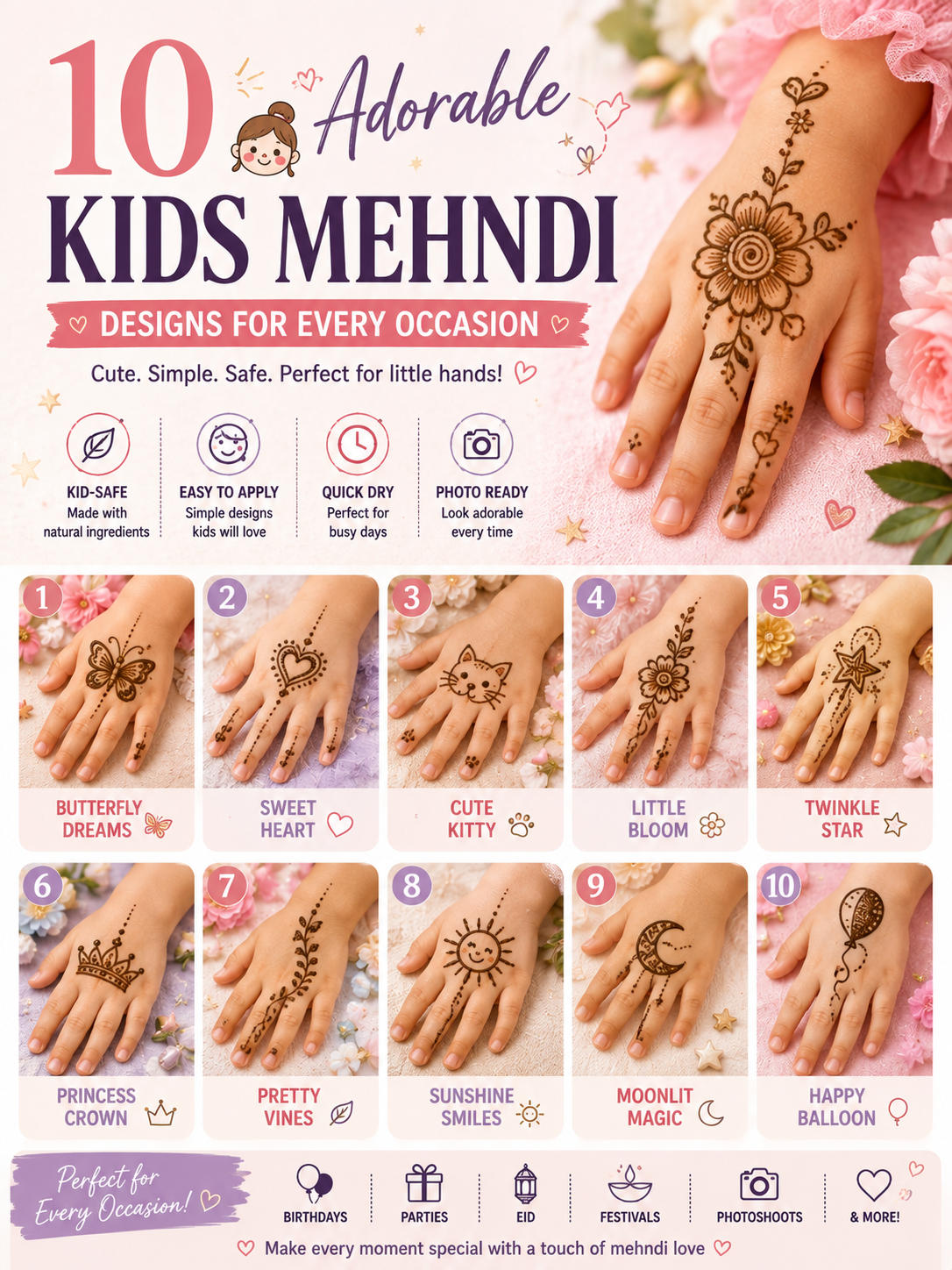
What Makes a Mehndi Design Perfect for Kids
Before you choose a pattern, understand what “kid-friendly” actually means. It is not just about looking cute.
Quick application. A five-year-old will not sit for forty-five minutes. The best kids’ designs take five to fifteen minutes from start to finish.
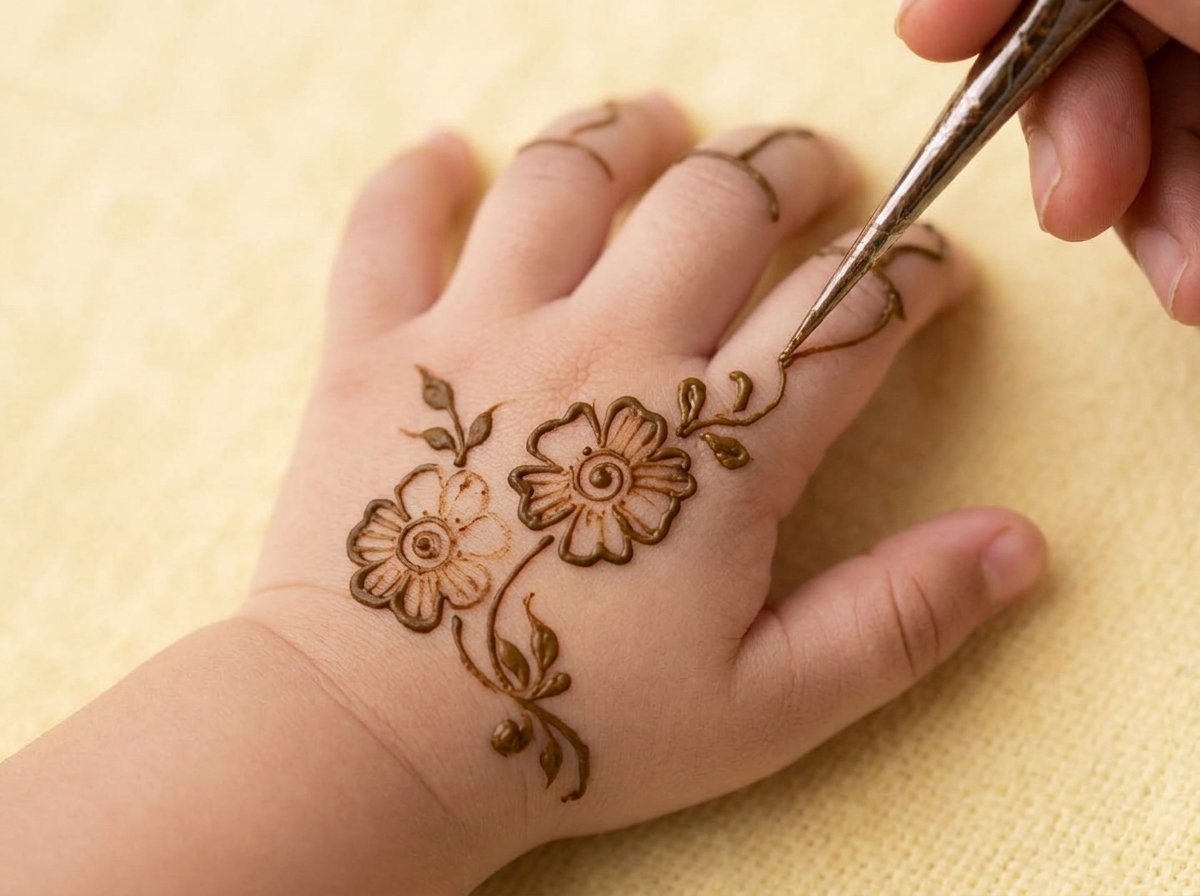
Bold lines over tiny details. Thin lines smudge the moment a child touches their face or grabs a juice box. Thick lines survive real childhood.
Open spaces. Dense bridal patterns trap paste and take forever to dry. Open designs let air reach the skin. They dry faster. They flake off cleaner.
Low placement risk. Wrists survive better than full palms. Ankles survive better than feet soles. Fingertips are the highest risk area of all.
Fun shapes. Flowers, butterflies, stars, and cartoon outlines excite children. Traditional paisleys bore them. Excited kids sit stiller.
Best Designs by Age Group
Not every child can handle the same level of detail. Match the design to the age and you will both enjoy the process more.
Toddlers Ages One to Three
At this age, mehndi is really for the parents. The child does not care about the design. They care about the strange cold paste on their skin. Keep it tiny. A single dot on the back of the hand. A tiny flower on the wrist. A small star on the ankle. These take under two minutes. If the child protests, you are done before the tears start. Avoid palms entirely. Toddlers put their hands in their mouths constantly.
Little Kids Ages Four to Seven
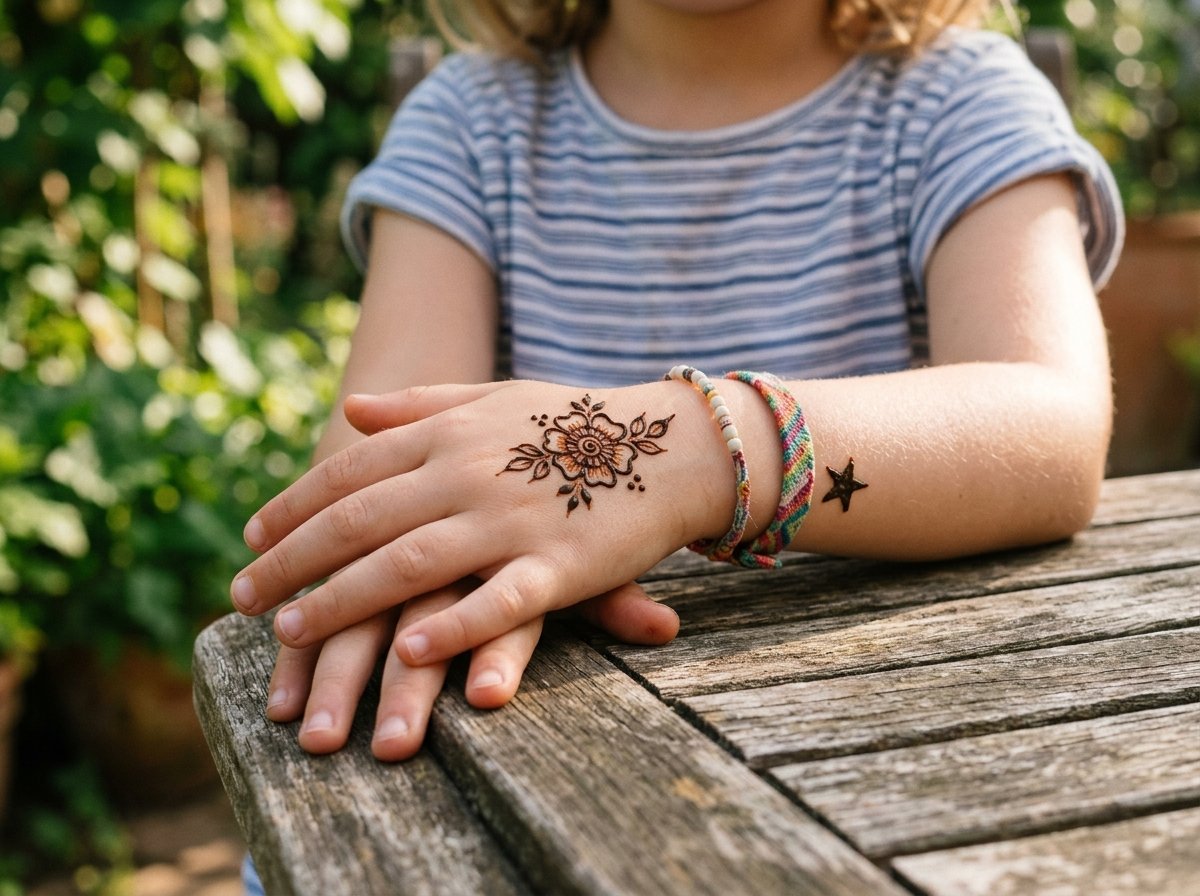
This group can handle slightly more, but their attention span is still short. Go for shapes they recognize. A butterfly on the back of the hand. A heart on the wrist. A simple flower chain across the fingers. These take five to eight minutes. Let them choose between two options. Giving a choice creates buy-in. They feel in control. They sit better.
Big Kids Ages Eight to Twelve
Older children can manage detailed work. They might even enjoy the process. A small mandala on the palm. An Arabic trail from wrist to finger. A bracelet-style band around the ankle. These take ten to twenty minutes. At this age, kids understand the value of patience. They want the dark stain. They will cooperate for it.
Ten Easy Kids Mehndi Designs Parents Can Actually Do
You do not need to be a professional artist. These designs are simple enough for any parent with a steady hand and a good cone.
1. The Single Dot Flower
Five dots arranged in a circle make a flower. Add two small leaves. That is it. This works on toddlers and takes under one minute. Place it on the back of the hand where they cannot rub it against their mouth.
2. The Wrist Star
Draw one medium star on the outer wrist. Surround it with six tiny dots. This takes two minutes. It looks intentional and festive. It stays away from the palm, which means less smudging when they eat.
3. The Butterfly Outline
A simple butterfly shape with a round body and two wing loops. No internal filling. Just the outline. Kids love butterflies. They will show it to everyone. This takes five minutes and works on any child over four.
4. The Heart Chain
Three small hearts connected by a thin line across the back of the hand. This looks like a bracelet. It takes four minutes. It is perfect for Raksha Bandhan or a family wedding.
5. The Finger Band
A thick line around the base of one finger. Add three dots above it. This takes two minutes. It is surprisingly stylish. Older kids love it because it looks like a ring. It also avoids the palm completely.
6. The Anklet Vine
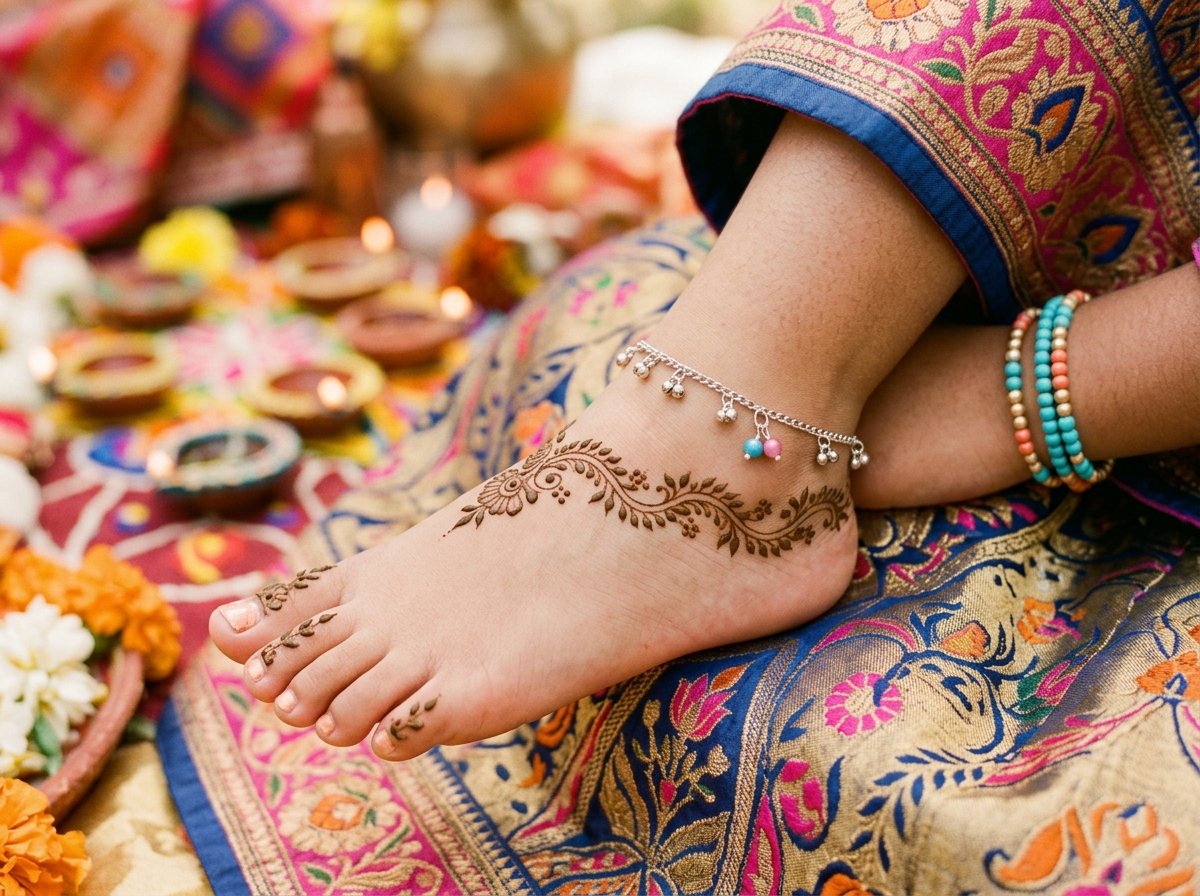
A curved line with five small leaves that wraps around the ankle. This takes six minutes. It is ideal for kids who cannot stop touching their hands. Ankle designs stay safe inside socks and shoes.
7. The Cartoon Face
If your child has a favorite character, draw a simple round face with two dot eyes and a smile. Add ears if it is a bear or a mouse. This takes eight to ten minutes. Only attempt this if your child is over six and can sit still.
8. The Floral Mandala
A small circle with eight petals around it. Place it in the center of the back of the hand. This takes seven minutes. It looks more complex than it is. Big kids appreciate the grown-up feel.
9. The Sun and Moon
A small sun on one hand and a small moon on the other. Each is just a circle with rays or curves around it. This takes five minutes per hand. Kids love the matching set concept.
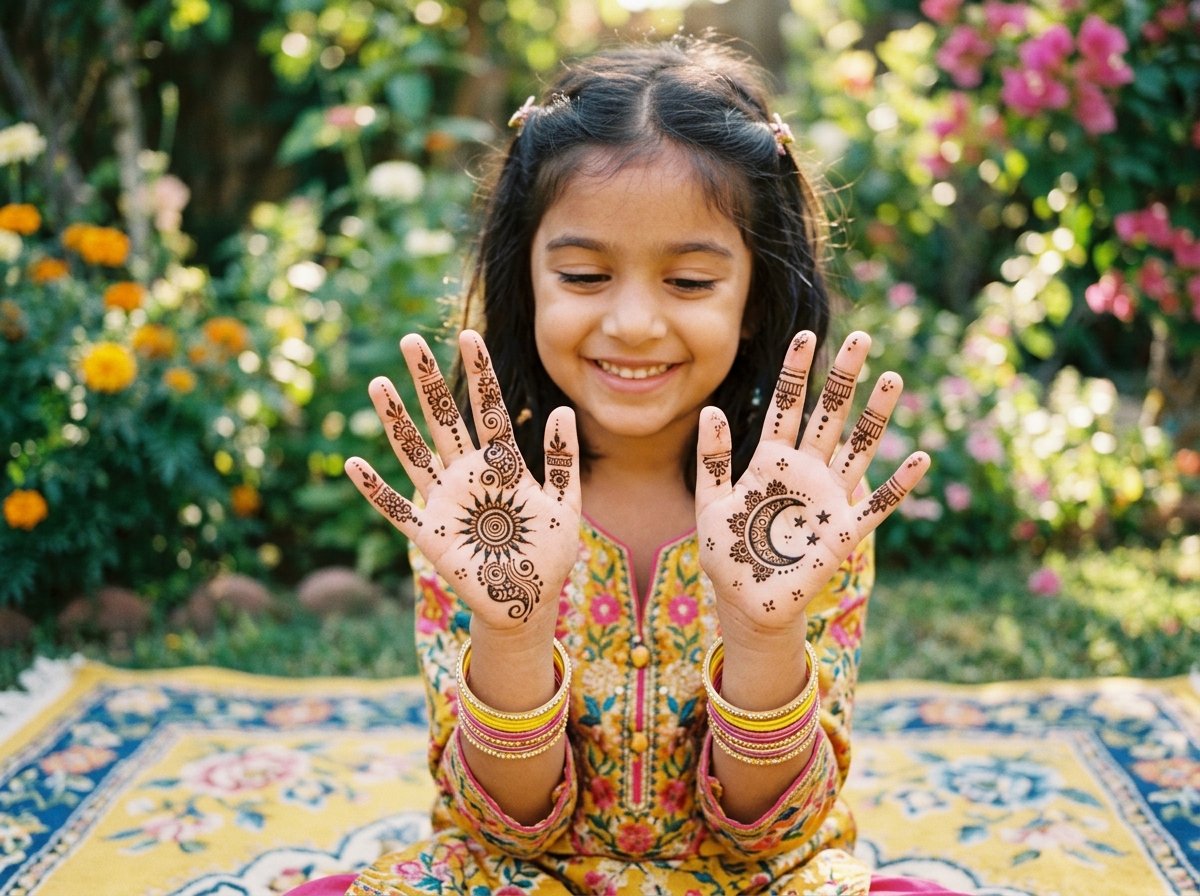
10. The Name Initial
The first letter of your child’s name surrounded by four tiny dots. This takes three minutes. It feels personal. It makes the child feel special. Use this for birthdays or first-day-of-school celebrations.
Safety First: What Parents Must Know
This section matters more than the designs. A pretty pattern is not worth a trip to the doctor.
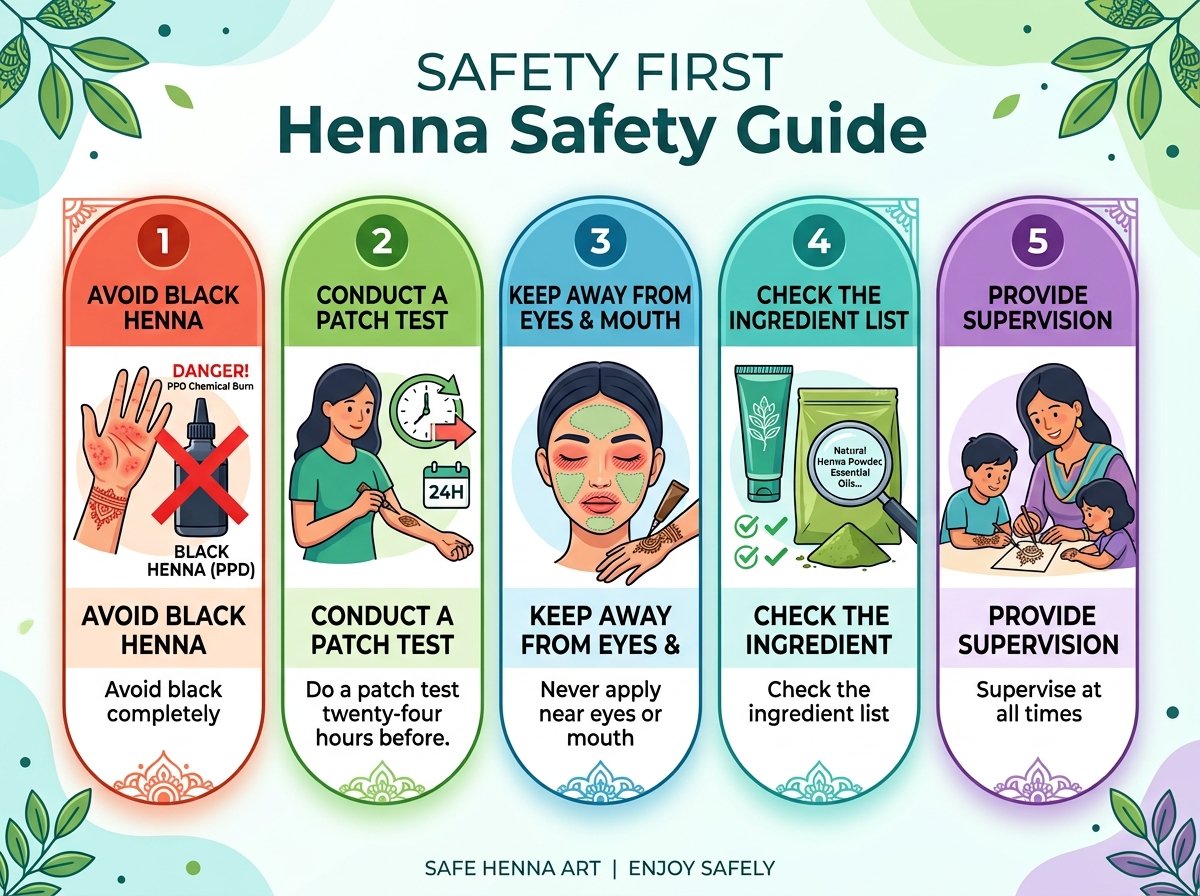
Use natural henna only. Real henna comes from the Lawsonia inermis plant. The paste is brown or greenish brown. It smells earthy. It takes hours to darken. Natural henna is generally safe for children aged five and up.
Avoid black henna completely. Black henna contains PPD, a chemical used in hair dye. It can cause chemical burns, blistering, and permanent scarring. Children have sensitive skin. The risk is higher for them. If a cone promises instant black color, throw it away.
Do a patch test twenty-four hours before. Apply a tiny dot of paste on the inner wrist. Wait a full day. Check for redness, itching, or swelling. If the skin looks normal, proceed. If anything seems off, skip the mehndi.
Never apply near eyes or mouth. Kids rub their faces constantly. Keep all henna below the wrist and below the ankle. Avoid broken skin, cuts, or eczema patches.
Check the ingredient list. Safe cones list simple items. Henna powder. Lemon juice. Sugar. Essential oils. If the label says “fast drying,” “chemical enhanced,” or “black stain,” do not use it on a child.
Supervise at all times. Henna paste is not food. Young children might taste it. Keep cones out of reach when not in use. Wipe hands immediately if paste gets somewhere unintended.
How to Keep Your Child Still During Mehndi Time
This is the part no competitor talks about. Here is how to win the battle against wiggles.
Pick the right moment. After a meal is better than before. A full child is calmer. Avoid nap times and hunger times. Late evening when they are naturally slower works well for older kids.
Create a distraction. Put on their favorite cartoon. Give them a new sticker book. Hand them a popsicle to lick with the other hand. The goal is to occupy their brain while their hand stays still.
Let them see the mirror. Kids love watching the design appear. Hold a small mirror where they can watch without moving the target hand. This works especially well for big kids.
Promise a reward. Not a bribe. A plan. Tell them before you start. If you sit nicely until the flower is done, we will do a dance party after. Make the reward immediate. Not tomorrow. Today.
Start with the non-dominant hand. Most kids want to touch the wet paste. If you start with the hand they use less, they have one free hand to scratch an itch or hold a toy.
Keep a damp cloth nearby. If paste gets on the wrong spot, wipe it fast. Dried paste is much harder to remove. Quick cleanup keeps the design neat and reduces parent stress.
Aftercare That Works for Active Kids
Standard aftercare advice assumes the person will sit quietly for six hours. Children do not do this. Here is what actually works.
Let the paste dry for at least thirty minutes. In humid weather, it takes longer. Do not let them touch anything until the surface is no longer shiny. Blow gently on the design to speed drying.
Scrape, do not wash. Use an old credit card or a butter knife edge to gently scrape off the dried paste. Washing with water too early stops the staining process.
Apply natural oil immediately after scraping. Coconut oil is perfect. It smells good. Kids do not mind it. It creates a barrier against water and dirt. Reapply before meals and before bed.
Cover hands during sleep. Soft cotton gloves or loose socks work for hand designs. Clean cotton socks work for feet. This prevents the stain from rubbing off on bedding and keeps little fingers from picking at the flakes.
Avoid hand washing for twelve hours. This is the hardest part with kids. Use wet wipes for everything else. If they must wash, apply oil first and wash quickly.
Skip messy foods for one day. Curry, chocolate, and ketchup will stain the fresh design. Stick to dry foods and spoons for the first twenty-four hours if possible.
Kids’ Mehndi and Navratri 2026
If you want mehndi to be part of a real celebration, plan around Shardiya Navratri 2026. This festival runs from October 11 to October 20, 2026. It is one of the biggest Hindu festivals across India. Families gather. Kids wear new clothes. Music and dancing fill the evenings.
Navratri is perfect for kids’ mehndi because the atmosphere is joyful. Children see everyone dressed up. They want to participate. A small wrist star or a hand flower fits the festive mood without being overwhelming.
Plan your application for October 9 or 10. This gives the stain two full days to darken before the festival begins. By October 11, the color will be rich and ready for photos. By October 20, it will have faded naturally just as school resumes.
If your child is attending a dandiya event, avoid full palm designs. The sticks rub against the palms and smudge the pattern. Wrist designs and back of hand designs work better for active dancers.
Products That Make Kids Mehndi Easier
You do not need a professional kit. Three smart products keep things simple and safe at home.
Natural Henna Cones for Kids. Choose premixed cones made with only henna powder, lemon juice, sugar, and essential oils. No PPD. No synthetic dyes. These cones are ready to use. They save you from mixing powder and making a mess in the kitchen. Look for cones that mention “child-safe” or “gentle formula” on the packaging.

Plant-Based Henna Cones Dark Reddish Brown Mehndi
Reusable Mehndi Stencil Kit for Kids. Stencils take the pressure off parents who cannot draw. They stick to the skin. Your child picks a shape. You fill it in with paste. Peel off the stencil. The result looks clean and professional. Look for kits with butterflies, flowers, stars, and cartoon shapes. Wash the stencils after use and save them for the next festival.

20 Sheets Henna Tattoo Stencil Kit
Natural Aftercare Balm. A small tin of balm made with coconut oil and shea butter keeps the stain dark on busy kids. Apply it morning and night. It also soothes the skin if your child finds the drying paste itchy. Choose a balm with no artificial fragrance. Kids with sensitive skin react badly to strong perfumes.

Hustle Butter Fragrance Free Tattoo Aftercare 5oz Tattoo Balm
When to Apply Mehndi Before a Festival or School Event
Timing is everything with kids. Apply too late and the stain is still orange. Apply too early and it fades before the big day.
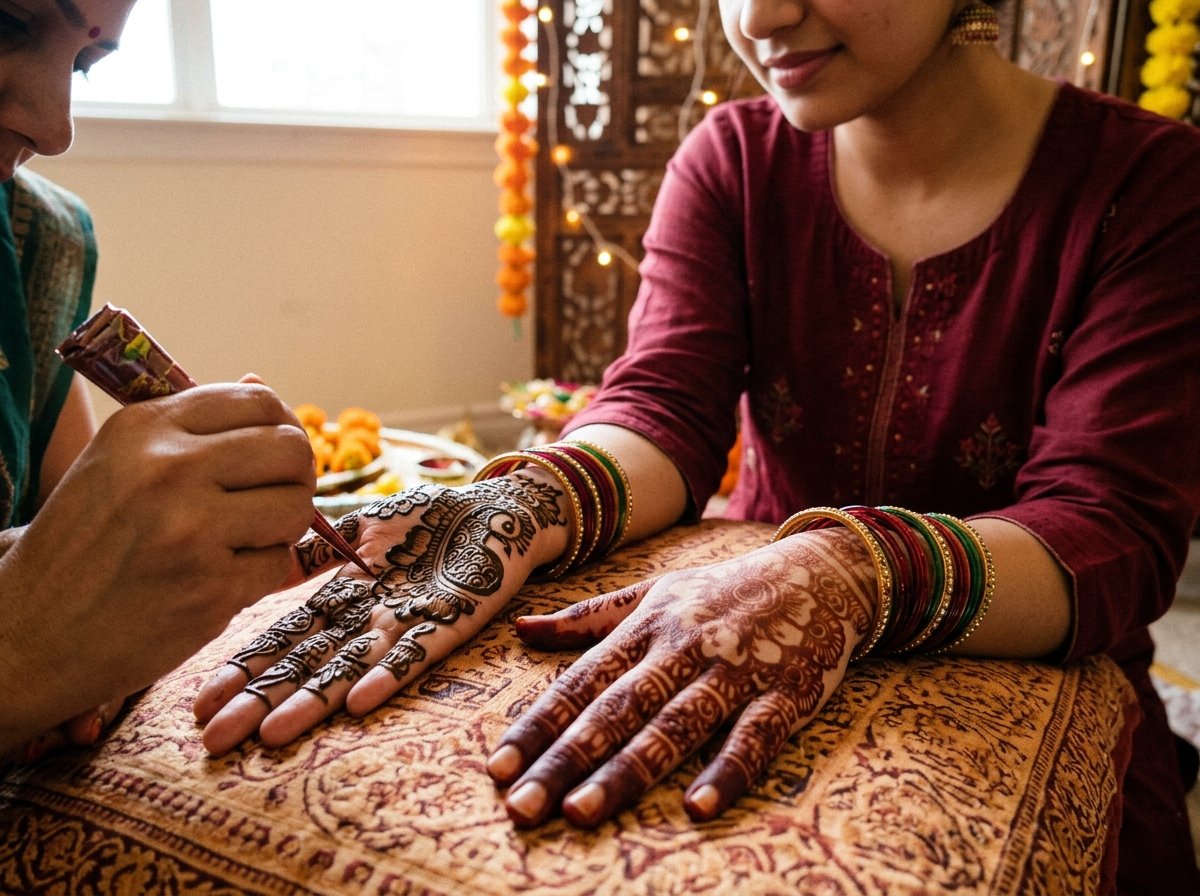
For festivals. Apply two nights before the event. This gives the stain forty-eight hours to reach its darkest shade. It also means you are not rushing on the eve of a busy celebration.
For weddings. Apply the night before the main function if the child is only attending one day. If the wedding spans multiple days, apply on day one so the stain lasts through all the events.
For school events. Apply on Friday evening if the event is Monday morning. This gives the weekend for the stain to deepen. By Monday, it looks rich but not too dark for school rules.
For birthdays. Apply the night before the party. The child wakes up excited to see the color. They show it off to friends. The stain is fresh and vibrant for cake-cutting photos.
What to Do If Your Child Smudges the Design
It will happen. Accept it now. Here is how to fix it.
If the paste is still wet. Use a cotton swab dipped in lemon juice to gently wipe away the smudge. Redraw the line if needed. Let it dry again.
If the paste has dried. You cannot fix the shape. But you can turn the smudge into art. Add extra dots around the error. Extend a line to make it look intentional. Call it a custom design.
If the stain is already set. Lemon juice and baking soda paste can lighten a small area. Rub gently for two minutes. Rinse. The stain will fade faster in that spot. This works for minor fixes before a photo.
If the whole hand is ruined. Wash it gently with soap and water. Apply moisturizer. Wait two days. The skin recovers. Try again with a simpler design.
Removing Mehndi Safely from Kids’ Skin
Sometimes school starts. Sometimes the stain is too dark. Sometimes your child simply wants it gone. Here is how to speed up fading without hurting their skin.
Soak in warm water. Let them play in the bath longer than usual. Warm water softens the skin and lifts the stain. Add a little salt to the water for faster results.
Rub with olive oil. Massage the area with oil for five minutes. Wipe away. The oil breaks down the stain gradually. Do this twice daily.
Use a gentle scrub. Mix sugar with coconut oil. Rub in circles for two minutes. Rinse. This removes dead skin cells that hold the color. Do not scrub hard. Kids’ skin is delicate.
Swim in a pool. Chlorine fades mehndi quickly. If your child has swimming lessons, the stain will lighten after a few sessions.
Be patient. Natural henna fades on its own in one to two weeks. Forcing it off with harsh chemicals damages young skin. Let time do the work.
Frequently Asked Questions
At what age is mehndi safe for kids?
Natural henna is generally safe for children aged five and older. For toddlers, keep designs tiny and always do a patch test first. Avoid mehndi completely on babies under one year.
How long should kids keep the paste on?
Aim for at least four hours. Overnight is best. Younger children may not tolerate this. If they must remove it sooner, keep it on for a minimum of two hours.
Can I use black henna on my child for a darker stain?
No. Black henna often contains PPD, which can cause serious allergic reactions and burns. Only use natural brown henna on children.
What if my child is allergic to henna?
Remove the paste immediately. Wash with mild soap and water. Apply a cold compress. If swelling, blistering, or severe itching occurs, see a doctor right away.
How do I stop my child from picking at the dried paste?
Cover the design with soft cotton gloves or a loose sock. Distract them with a new toy or show. Explain that picking makes the color lighter.
Can my child eat with mehndi on their hands?
Yes, but be careful for the first twelve hours. Fresh stains can transfer to food. Use utensils instead of fingers when possible. Apply oil before eating to create a barrier.
Will mehndi stain my furniture?
Fresh paste can stain fabric and wood. Lay down old towels. Keep wet hands away from sofas and carpets. Cover the work area with newspaper.
How dark will the stain get on a child?
Children often get lighter stains than adults. Their skin is thinner and newer. Do not expect bridal-level darkness. A warm orange to reddish brown is normal and beautiful.
Final Thoughts
Kids’ mehndi is not about perfection. It is about participation. Your child wants to feel included in the celebration. They want to look at their hand and feel proud. A slightly crooked flower or a smudged butterfly is still a memory you both made together.
Choose designs that match their age. Use natural cones only. Time the application so the stain is ready when it matters. Keep them distracted while you work. Protect the design while they sleep. And if it all goes wrong, laugh about it and try again.
Navratri 2026 is coming. Diwali will follow. Wedding season never really ends. With the right approach, mehndi can become a tradition your child looks forward to instead of a battle you dread. Start small. Stay safe. And enjoy the smile on their face when they see the finished art.






One Comment
Comments are closed.