San Francisco is one of the most distinctive cities in America and one of the most misunderstood.
Most first-time visitors arrive imagining warm California sunshine and leave having experienced four different types of weather in one afternoon. They find a city of rolling hills, bay fog, world-class food across 50 microclimates worth of neighbourhoods, and a cultural history unlike any other city in the country.
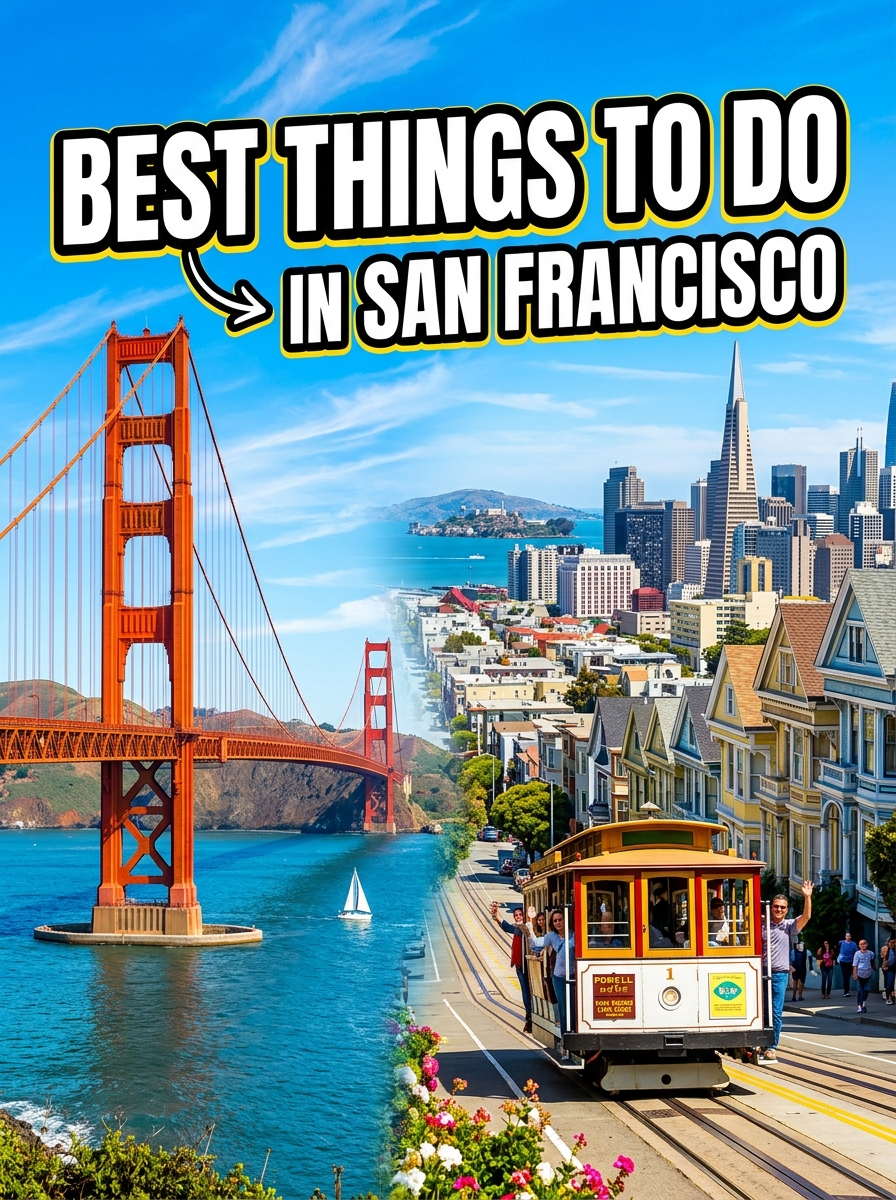
This guide covers the best things to do in San Francisco with honest practical advice, real neighbourhood depth, and the things most travel guides leave out.
Quick Answer: Best Things to Do in San Francisco
For a first visit, walk or cycle the Golden Gate Bridge, take the ferry to Alcatraz, spend a morning at the Ferry Building Farmers Market, explore the Mission District for food, and walk through Golden Gate Park. Add Chinatown, North Beach, and the Painted Ladies at Alamo Square to complete a strong three to four day visit.
One Thing to Know Before You Arrive
San Francisco’s fog is famous and genuinely relevant to trip planning.
Karl the Fog, as locals have affectionately named it, rolls in from the Pacific and can cover the city’s western neighborhoods and Golden Gate Bridge in thick cloud while the Mission District and the Castro are in full sun. This is not unusual weather. It is San Francisco’s normal operating condition.
The city has dozens of micro-climates. The Sunset District on the ocean side of the city is consistently 5 to 8 degrees Fahrenheit cooler than the Mission District two miles east. July and August, which most visitors assume will be the warmest months, are actually the foggiest because the Pacific temperature differential drives marine layer into the city. September and October are often the warmest and sunniest months.
Pack layers regardless of season. The classic tourist mistake is arriving with summer clothes in July and spending the week cold.
A lightweight layering piece you can throw on when the fog rolls in makes the whole trip more comfortable. The Patagonia Better Sweater Fleece Jacket (available on Amazon) is the quintessential San Francisco layer: warm enough for foggy evenings on the bay, light enough for sunny Mission District afternoons, and genuinely excellent quality that earns its price.
Iconic San Francisco Experiences
Golden Gate Bridge
The Golden Gate Bridge is one of the most beautiful pieces of engineering in the world. Walking or cycling across it is a completely different experience from viewing it from the shore, and it is free.
The walk from the south anchorage on the San Francisco side to the north side and back is about 3.4 miles and takes 1.5 to 2 hours. Cycling is faster and gives you more flexibility to stop for photos. Bike rental shops in the Marina and Fisherman’s Wharf rent bikes for the bridge crossing.
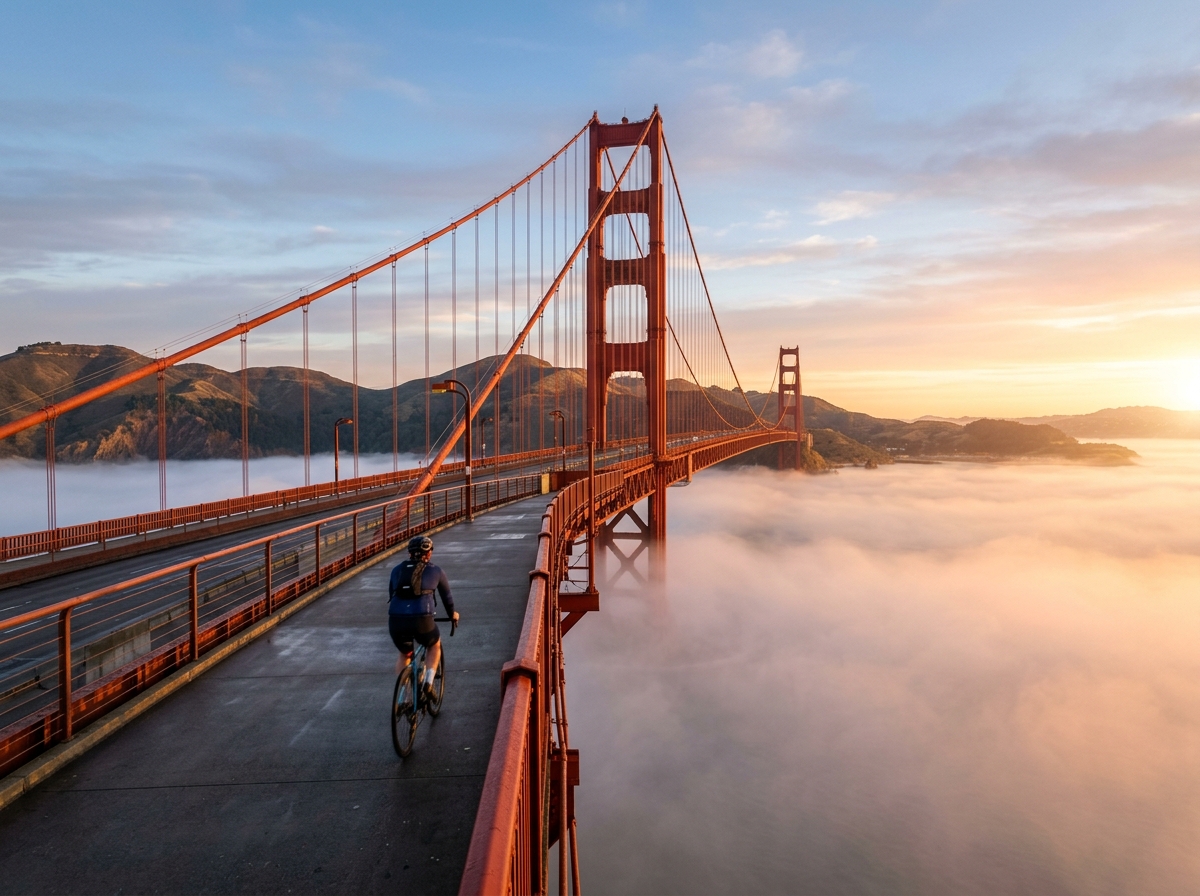
Best viewpoints: Battery Spencer, on the Marin Headlands side of the bridge, gives you the classic looking-back-toward-SF view with the bridge in the foreground. It requires crossing the bridge or driving around through Sausalito. For the south-side view, Fort Point directly below the south anchorage is extraordinary on clear days, and Baker Beach gives you the full bridge profile from the SF shore.
Fog timing: The bridge is most likely to be fog-free in the afternoon, particularly in late afternoon when the marine layer sometimes lifts. Morning fog is common year-round. Check the Golden Gate Bridge webcam before heading out.
Alcatraz
Alcatraz is the most visited national park site in California and one of the most popular in the country. The audio tour narrated by former inmates and guards is genuinely one of the best museum audio experiences in America.
Book Alcatraz tickets well in advance. This is not optional. Tickets often sell out two to three weeks ahead during summer and weekends. Book directly at alcatrazcruises.com. The day tour is excellent but the evening tour, which runs Thursday through Monday, is extraordinary. The island is atmospheric after dark in a way the day tour cannot match.
The ferry departs from Pier 33 on the Embarcadero. The round trip including island time takes about three hours.
Ferry Building and Farmers Market
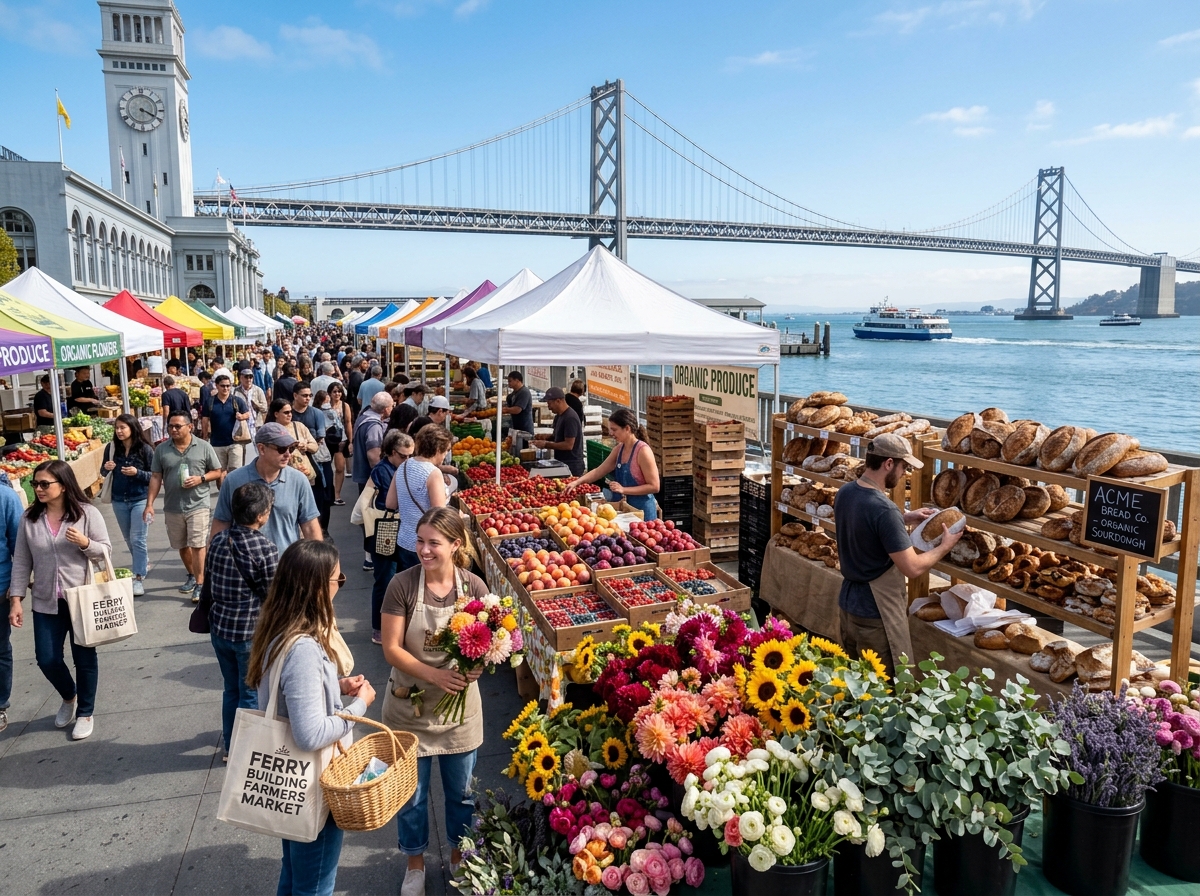
The Ferry Building on the Embarcadero is one of the great food destinations in America, not just in San Francisco.
The permanent tenants include Acme Bread, Cowgirl Creamery (one of the best artisan cheese operations in California), Blue Bottle Coffee, Slanted Door (a landmark Vietnamese restaurant), and a clutch of excellent oyster, wine, and produce vendors.
The Farmers Market transforms the Embarcadero plaza outside the building every Tuesday and Thursday from 10am to 2pm, and Saturday from 8am to 2pm. Saturday is the main event. Vendors from across Northern California bring fresh produce, prepared foods, specialty items, and flowers. A Saturday morning at the Ferry Building Farmers Market, with coffee and a pastry watching the bay traffic, is one of the most pleasantly San Francisco things you can do.
Cable Cars
San Francisco’s cable cars are the only mobile National Historic Landmark in the world and one of the most recognisable images of the city. They are also the slowest and most crowded way to get around, and genuinely worth it as an experience.
The Powell-Hyde line is the most scenic, running from Powell and Market up over Nob Hill and down to Ghirardelli Square near Fisherman’s Wharf. Ride it in both directions at least once.
A single ride costs $8 per person. The queues at the Powell Street terminus can be long in summer. The Fisherman’s Wharf end typically has shorter queues in the morning.
Best Neighbourhoods to Explore
The Mission District
The Mission is the cultural heart of San Francisco’s Latino community and one of the best food neighbourhoods on the West Coast.
Mission burritos are not Tex-Mex. They are a San Francisco original: enormous, foil-wrapped, rice-and-bean heavy burritos that have been feeding the city since the 1960s. La Taqueria on Mission Street won America’s Best Burrito in multiple national competitions and the queue justifies itself. El Farolito is the late-night local favourite.
Beyond burritos, the Mission has exceptional taquerias, bakeries, coffee shops, and some of the best street art in California. The murals along Clarion Alley and the Balmy Alley off 24th Street are gallery-scale works covering every building surface.
Dolores Park on a warm afternoon is a genuinely San Francisco experience. The park sits on a hillside with views across the city skyline and the bay, and on any sunny weekend it fills with a cross-section of the entire city.
Best for: Food, street art, local culture, tacos, coffee, warm afternoons
Chinatown and North Beach
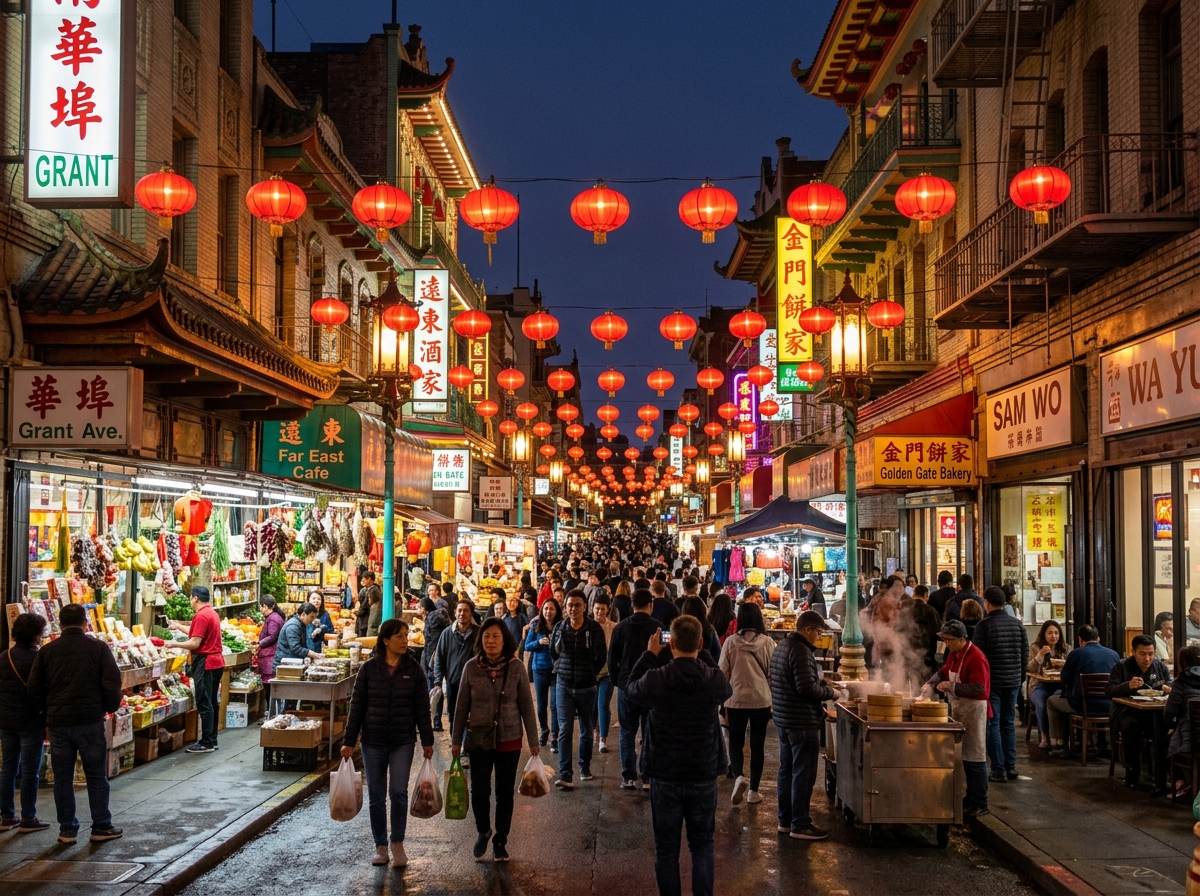
San Francisco’s Chinatown is the oldest in North America, established in 1848. The ten square blocks around Grant Avenue and Stockton Street are the most densely populated neighbourhood in the city and one of the most culturally concentrated in America.
Go on a weekday morning. The Stockton Street market, one block west of the tourist-facing Grant Avenue, is where locals actually shop. Whole roasted ducks hang in restaurant windows. Fresh tofu is made on site. Dim sum restaurants fill for morning service from 9am.
North Beach, immediately north of Chinatown, is San Francisco’s Italian neighbourhood and the birthplace of the Beat Generation. City Lights Bookstore on Columbus Avenue, founded by Lawrence Ferlinghetti in 1953, is still operating as an independent bookstore and published Allen Ginsberg’s Howl. It is one of the most historically significant bookshops in America. Vesuvio Cafe next door, where Jack Kerouac and Ginsberg drank, is still serving as a bar.
Caffe Trieste on Vallejo Street has been serving espresso since 1956 and claims to be the first espresso coffee house on the West Coast.
Best for: Cultural history, dim sum, Italian coffee culture, Beat Generation history
Haight-Ashbury
Haight-Ashbury was the epicenter of the 1967 Summer of Love and the counterculture movement that shaped American music, fashion, and politics. The neighbourhood still carries that energy in its independent record shops, vintage clothing stores, and the general attitude of the streets.
Amoeba Music on Haight Street is one of the last great independent record stores in America. Three floors of vinyl, CDs, and concert memorabilia that covers every genre and era.
The Castro
The Castro is San Francisco’s LGBTQ+ neighbourhood and one of the most historically significant in the world. The GLBT History Museum on 18th Street is excellent and tells the story of the neighbourhood’s role in the fight for equality from the 1960s through Harvey Milk and beyond. Harvey Milk’s original camera shop location is marked on Castro Street.
Bernal Heights
Bernal Heights is the neighbourhood that most visitors never reach and many long-term San Francisco residents consider their favourite part of the city. The small hilltop community has extraordinary views from Bernal Heights Park across the entire city, the bay, and on clear days to the East Bay hills and Mount Tamalpais.
Cortland Avenue, the neighbourhood’s main street, has excellent independent restaurants and coffee shops that cater almost entirely to locals. This is the real San Francisco neighbourhood life that tourist areas cannot replicate.
Getting there: The 24 Muni bus from the Mission. Or walk 20 minutes uphill from the 16th Street BART station.
Golden Gate Park
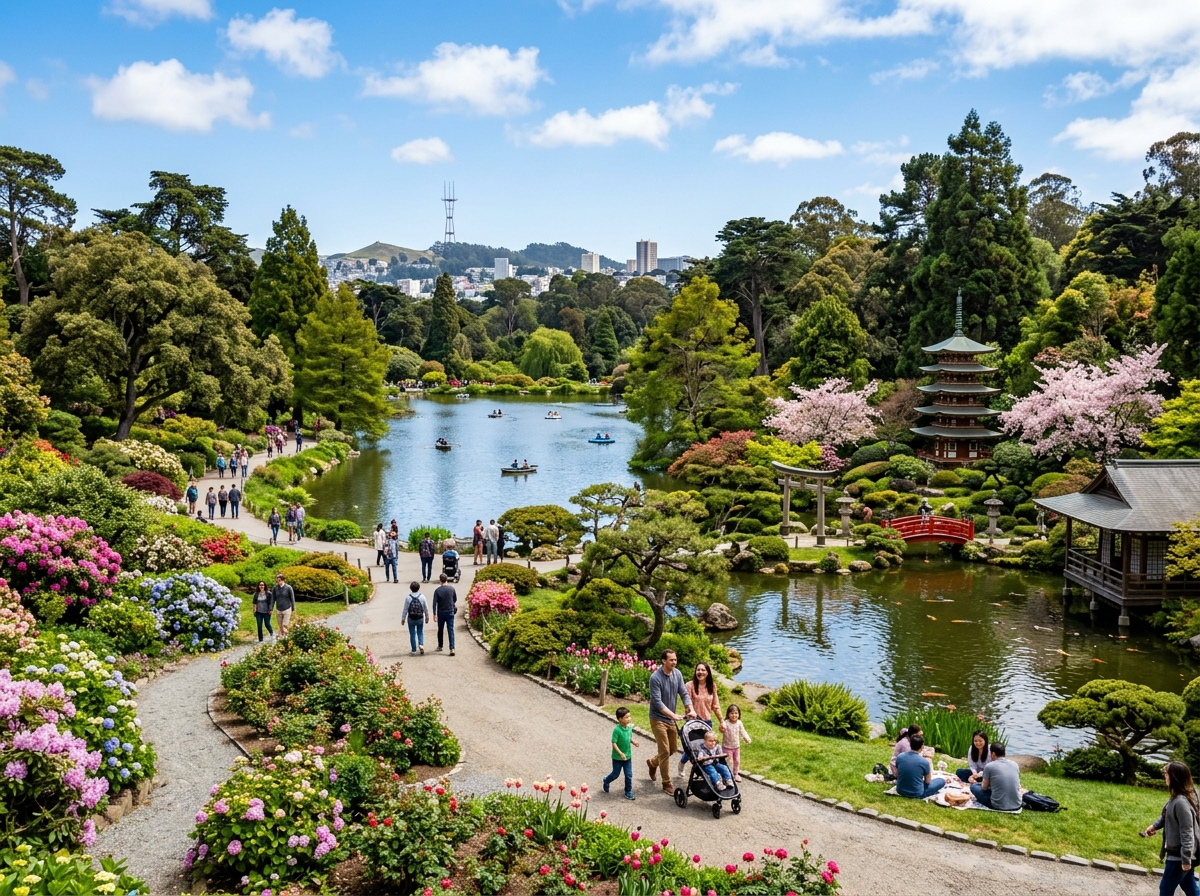
Golden Gate Park is 3 miles long and half a mile wide, making it slightly larger than Central Park in New York. It contains two world-class museums, botanical gardens, a Japanese tea garden, a herd of buffalo, a historic windmill, and a beach at its western end.
The de Young Museum holds the city’s collection of American, African, and Oceanic art. The tower observation deck is free and gives extraordinary views across the park and city.
The California Academy of Sciences directly across from the de Young is one of the best natural history museums in America. The living rainforest dome, the planetarium, and the living roof covered in native plants are all extraordinary. Book tickets in advance for weekends.
The Japanese Tea Garden is the oldest public Japanese garden in the United States. Entry is a few dollars and it is one of the most peaceful places in the city.
Stow Lake in the middle of the park rents rowboats and pedal boats. A 30-minute circuit of the lake is a reliably pleasant afternoon activity.
Best Food Experiences in San Francisco
San Francisco’s food scene is one of the best in America, driven by exceptional local produce from the Bay Area farming community, a deeply multicultural population, and a culture of food obsession that runs across every price point.
Clam chowder in a sourdough bread bowl at Boudin Bakery on Fisherman’s Wharf is a tourist experience that is also genuinely good food. The sourdough uses a starter culture that dates to the Gold Rush era.
Dungeness crab is San Francisco’s signature seafood. Fresh crab is in season from November through June. The crab stands along Fisherman’s Wharf sell cracked, ready-to-eat crab that is excellent when in season.
Mission burritos at La Taqueria or Taqueria Cancun. Non-negotiable for any food-serious visitor.
Bi-Rite Creamery on 18th Street in the Mission is widely considered one of the best ice cream shops in the country. The salted caramel and brown butter pecan flavours regularly appear on national best lists. Expect a queue on weekends.
Dim sum in Chinatown: City View Restaurant and Great Eastern are both reliable choices. Go on a Saturday or Sunday morning between 9am and 11am for the best selection.
Swan Oyster Depot on Polk Street is a counter-service seafood bar that has been operating since 1912. Fresh Dungeness crab, oysters, and clam chowder served to 18 counter seats. Cash only. Opens at 10:30am and regularly has queues by 10am.
For a full day of walking San Francisco’s hills and neighbourhoods, a bag that distributes weight evenly and keeps your hands free is essential. The Herschel Supply Co. Classic Backpack (available on Amazon) is the most popular everyday city pack in San Francisco, with clean styling that works equally for a morning at the Ferry Building Farmers Market and an afternoon hike up to Bernal Heights. It is a genuinely San Francisco-appropriate piece that locals use daily.

Herschel Supply Co. Classic XL Backpack, Navy, XL – 30L
Things Most San Francisco Guides Do Not Tell You
Do not call it San Fran. Locals dislike this nickname. San Francisco, SF, or the City are all fine. San Fran is the tell that you have never been here.
Do not leave anything in your car. Car break-ins in San Francisco are extremely common, particularly in tourist areas like Fisherman’s Wharf, the Richmond, and near Golden Gate Park. Remove everything visible from your car every time you leave it, including bags, sunglasses, and change. A visible bag in an unattended car is an almost guaranteed break-in in some areas.
The Tenderloin. The Tenderloin neighbourhood, immediately west of Union Square, has high rates of drug use and street crime. Most visitors accidentally walk through it on the way from Union Square to City Hall. Be aware of your surroundings and consider your route when navigating between downtown attractions.
The Muni Clipper card. San Francisco’s public transport system runs on the Clipper card, a reloadable transit card covering BART, Muni buses, cable cars (at a discount), and the ferry. Load it at any BART station on arrival and use it for the entire trip. It is significantly cheaper than single fares and works on everything.
September and October are the best months. July and August are the foggiest. September and October bring the warmest and sunniest weather of the entire year. If you have flexibility on when to visit, the fall months are significantly better for outdoor activities and photography than peak summer.
The hills are genuinely steep. Nob Hill, Russian Hill, and the streets around Corona Heights drop at gradients of 25 to 31 percent. Walking up Filbert Street near Coit Tower is a legitimate physical challenge. Plan routes that account for this or use public transport for uphill sections.
Best Views in San Francisco
Twin Peaks: The two hills above the Castro offer 360-degree views of the entire city and bay. Drive or take the 37 Corbett bus. Free and open at all hours. Best at sunset or on a clear morning.
Bernal Heights Park: Views across the city and bay from a quieter hilltop than Twin Peaks. Dog-friendly and popular with locals.
Battery Spencer, Marin Headlands: Across the Golden Gate Bridge on the north side. The classic looking-back-toward-the-city view with the bridge in the foreground. Drive through the Golden Gate Bridge toll plaza and immediately turn right after crossing into Marin.
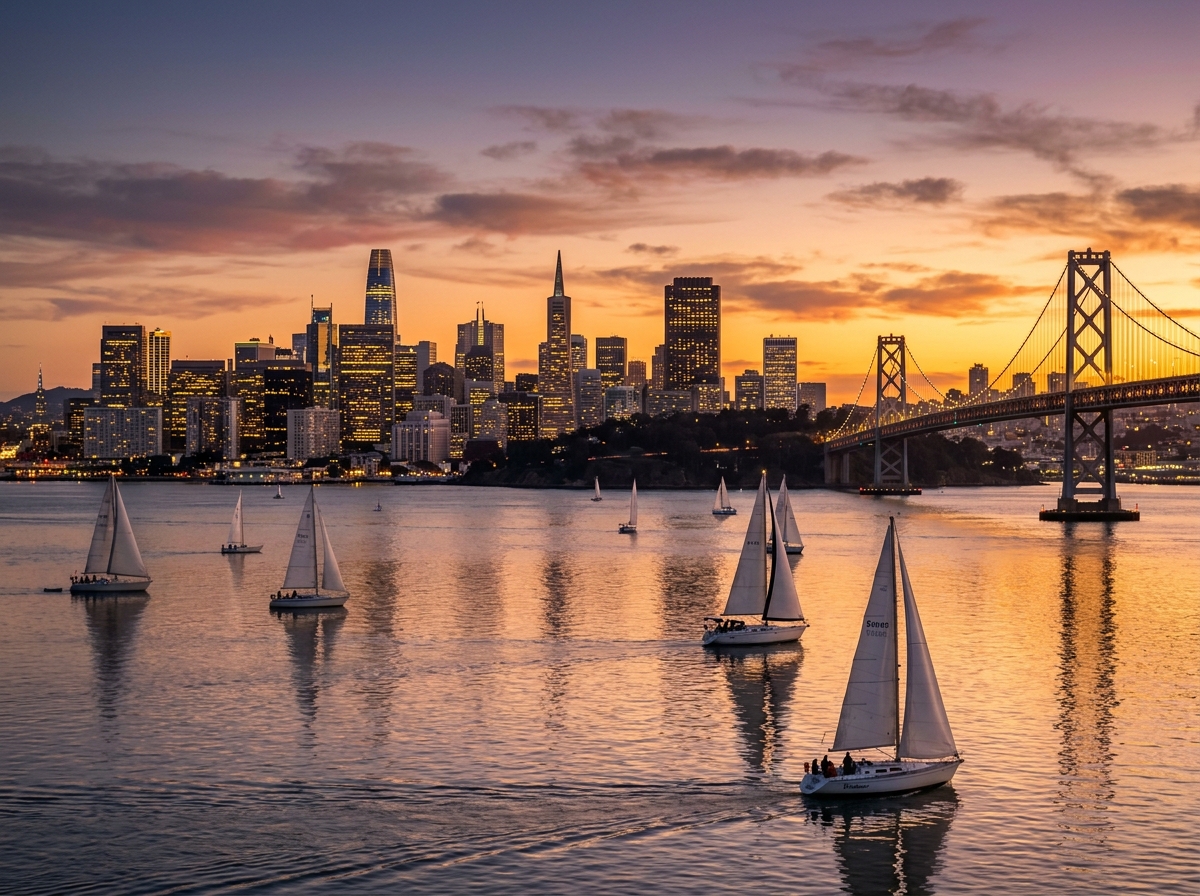
Pier 7: A working pier on the Embarcadero with views back toward the Financial District skyline. Particularly beautiful at golden hour and at night. Free and almost never crowded.
Coit Tower: The art deco tower on Telegraph Hill is worth climbing for the Depression-era murals inside the base and the views from the top. The walk up through Filbert Steps, lined with wild parrots that have lived in the neighbourhood since the 1980s, is one of the most charming urban walks in the city.
Practical Tips for Visiting San Francisco
Getting around: BART from the airport to downtown takes about 30 minutes and costs around $10. Muni covers the city by bus, rail, and historic streetcar. Rideshares work well but parking is expensive and car break-ins are common. Walking is excellent in neighbourhoods like the Mission, North Beach, and the Embarcadero. The hills make cross-city walking challenging.
Best time to visit: September and October for the warmest, sunniest weather. Spring (April and May) is also excellent. Summer is beautiful in the right neighbourhoods but consistently foggy on the western side and often cooler than expected.
Tipping: San Francisco restaurants expect 20 percent tips as standard. Some add a service charge automatically. Check your bill before adding tip.
Day trips: Napa Valley is 1.5 hours north for wine country. Muir Woods, the old-growth redwood forest, is 45 minutes across the Golden Gate Bridge. Sausalito, the waterfront town at the north end of the bridge, is excellent for a half-day. Berkeley across the bay has excellent food (Chez Panisse, the Cheese Board) and a genuine university town atmosphere.
For a San Francisco trip that involves beach visits to Ocean Beach or Baker Beach, the Marin Headlands, or any outdoor time in the city’s parks and hills, a durable beach and outdoor tote that handles sand, fog, and the mix of city and nature that SF delivers is genuinely useful. The Yeti Camino Carryall 35 (available on Amazon) is waterproof, holds a full day’s worth of supplies including a jacket layer, handles the outdoors and city equally well, and is the kind of durable gear that the outdoor-focused SF lifestyle demands.

YETI Camino 35 Carryall with Internal Dividers
Best Things to Do in San Francisco by Traveller Type
First-time visitors: Golden Gate Bridge walk, Alcatraz evening tour, Ferry Building Saturday morning, Mission burrito at La Taqueria, Chinatown dim sum, Painted Ladies at Alamo Square, cable car on Powell-Hyde line.
Food lovers: Ferry Building Farmers Market Saturday, Mission District food crawl, Swan Oyster Depot, Bi-Rite Creamery, North Beach coffee at Caffe Trieste, Dungeness crab at Fisherman’s Wharf in season.
History and culture: GLBT History Museum in the Castro, City Lights Bookstore in North Beach, de Young Museum, California Academy of Sciences, Coit Tower murals, Mission District murals in Clarion Alley.
Outdoor lovers: Cycling across the Golden Gate Bridge to Sausalito, Bernal Heights Park, Golden Gate Park, Baker Beach, Marin Headlands hiking.
Families: California Academy of Sciences, Golden Gate Park (de Young, Japanese Tea Garden, Stow Lake paddleboats), Aquarium of the Bay at Pier 39, the Exploratorium on Pier 15.
Solo travellers: Swan Oyster Depot counter seating, North Beach coffee bars, Dolores Park on a sunny afternoon, Bernal Heights neighbourhood, the 606-equivalent Embarcadero waterfront walk.
Quick Reference Table
| Activity | Neighbourhood | Cost | Book Ahead? |
|---|---|---|---|
| Golden Gate Bridge walk | Presidio | Free | No |
| Alcatraz | Embarcadero | $45 to $50 | Yes, 2 to 3 weeks |
| Ferry Building Farmers Market | Embarcadero | Free to enter | No (Saturdays 8am to 2pm) |
| California Academy of Sciences | Golden Gate Park | $40 adult | Yes for weekends |
| Cable car Powell-Hyde | Downtown | $8 per ride | No |
| de Young Museum | Golden Gate Park | $15 to $30 | No |
| Coit Tower | Telegraph Hill | $10 to $15 | No |
| Swan Oyster Depot | Polk Gulch | Cash only | No (arrive by 10am) |
| Twin Peaks viewpoint | Twin Peaks | Free | No |
| Mission burrito at La Taqueria | Mission | $10 to $14 | No |
Frequently Asked Questions
What is San Francisco most known for? The Golden Gate Bridge, Alcatraz, cable cars, the Golden Gate Park, and its distinctive neighbourhoods including Chinatown, the Mission, Haight-Ashbury, and the Castro. The city is also known for its food scene, its role in the tech industry, the Summer of Love in 1967, and the LGBTQ+ rights movement.
How many days do you need in San Francisco? Three to four days covers the major highlights without rushing. A week lets you go deeper into neighbourhoods, do day trips to Napa or Muir Woods, and eat your way through the city properly. Most visitors wish they had one more day.
What is the best neighbourhood to stay in San Francisco? Union Square for central location and transport access. Fisherman’s Wharf for the waterfront experience. The Mission for food and neighbourhood character at lower hotel prices. North Beach for the best walking location to multiple attractions.
Is San Francisco expensive? Yes. Hotel prices are among the highest in the US. Dining ranges from very affordable (Mission burritos under $15) to expensive (Michelin dining at $150 per person). Tipping culture adds 20 percent to restaurant bills. Public transport is cheap. Many of the best experiences, including the Golden Gate Bridge, Golden Gate Park, and the Ferry Building, cost nothing.
When is the best time to visit San Francisco? September and October are the warmest and clearest months. Spring (April and May) is also excellent. Summer is beautiful but often foggy, particularly on the western side of the city. January and February are the rainiest months but hotel prices are lowest.
Is it safe to walk in San Francisco? The main tourist neighbourhoods are safe to walk during the day. The Tenderloin, immediately west of Union Square, has higher rates of street crime and drug use and is worth being aware of when navigating between downtown attractions. Do not leave anything visible in a parked car anywhere in the city.
What food is San Francisco known for? Mission burritos, Dungeness crab, clam chowder in a sourdough bread bowl, dim sum in Chinatown, and a world-class restaurant scene that includes more Michelin-starred restaurants than almost any other American city. The Ferry Building food market and the Mission District’s taqueria culture are both essential.
Final Thoughts
San Francisco is one of those cities that people visit once and spend years trying to get back to.
The combination of extraordinary natural setting, distinctive neighbourhoods, food culture that punches far above the city’s size, and a history of social movements that changed America makes it genuinely unlike anywhere else.
Pack your layers. Book Alcatraz before you book your flight. Walk across the bridge on a clear afternoon. And eat at least one burrito in the Mission before you leave.
That is the version of San Francisco that stays with you.