Texas is bigger than most people realize until they try to plan a trip around it.
El Paso is closer to Los Angeles than to Houston. Dallas to Big Bend National Park takes about eight hours. The state covers desert, piney forest, Gulf coastline, hill country, and high plains, and no single trip covers all of it.
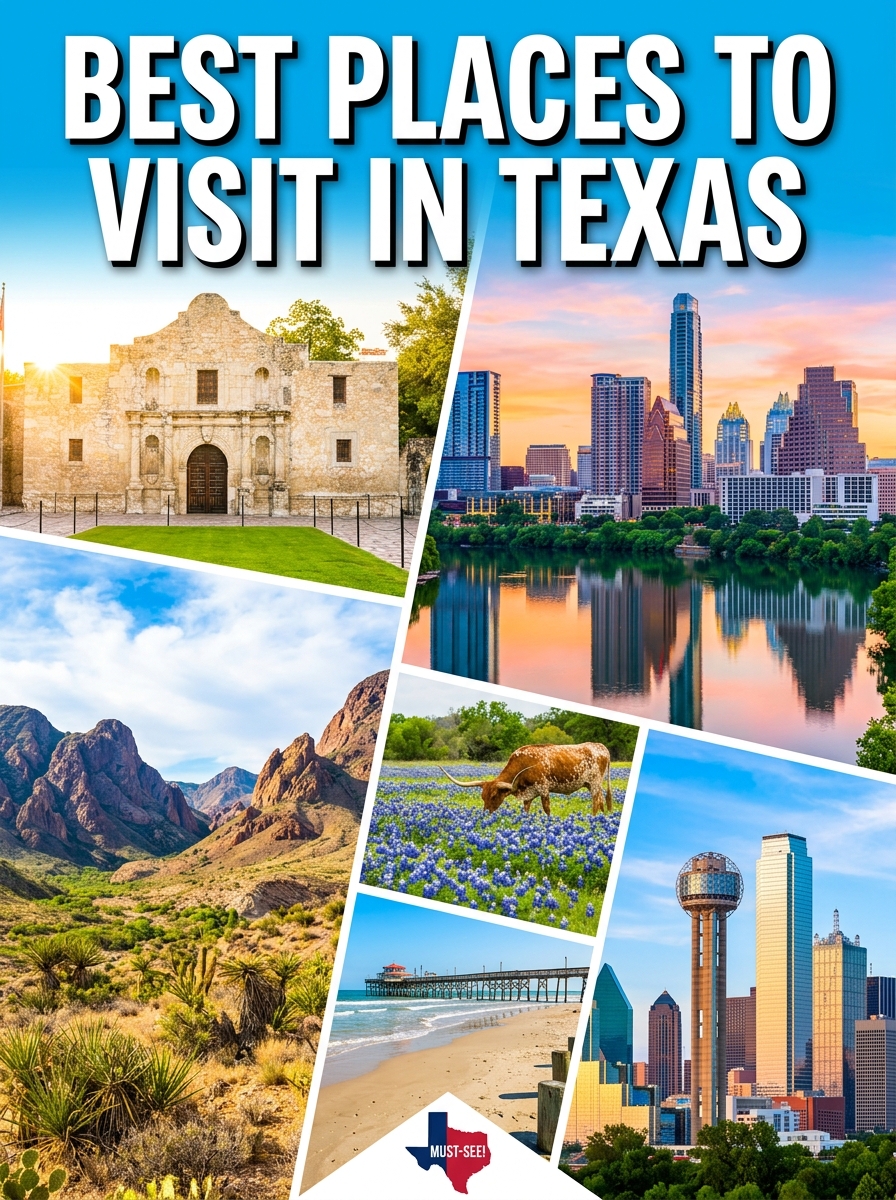
This guide breaks Texas down by region, with honest distances and practical details most travel articles skip.
Quick Answer: Best Places to Visit in Texas
For a first visit, Austin and San Antonio together cover Texas Hill Country, live music, BBQ, and the Alamo within about an hour of each other. For dramatic landscapes and dark skies, Big Bend National Park in far West Texas is unmatched but requires real planning. For bluebonnet season (late March through mid-April), Hill Country towns like Fredericksburg and Burnet are the destination. For Gulf Coast beaches, Galveston and South Padre Island are the main options.
Texas Hill Country: Wildflowers, Wine, and Swimming Holes
Hill Country sits between Austin and San Antonio and is the most accessible region for first-time visitors. Rolling limestone hills, vineyards, German heritage towns, and the best natural swimming in the state.
Fredericksburg
Fredericksburg is a German settlement town founded in 1846 and remains the heart of Texas wine country, with over 50 wineries within a short drive of its historic Main Street.
Enchanted Rock State Natural Area, 18 miles north, is a pink granite dome rising 425 feet above the surrounding terrain. The summit hike takes about 1.5 hours round trip with a 360-degree view at the top. The park limits daily visitors and can sell out on weekends, so book a day pass online in advance.
Bluebonnet Season
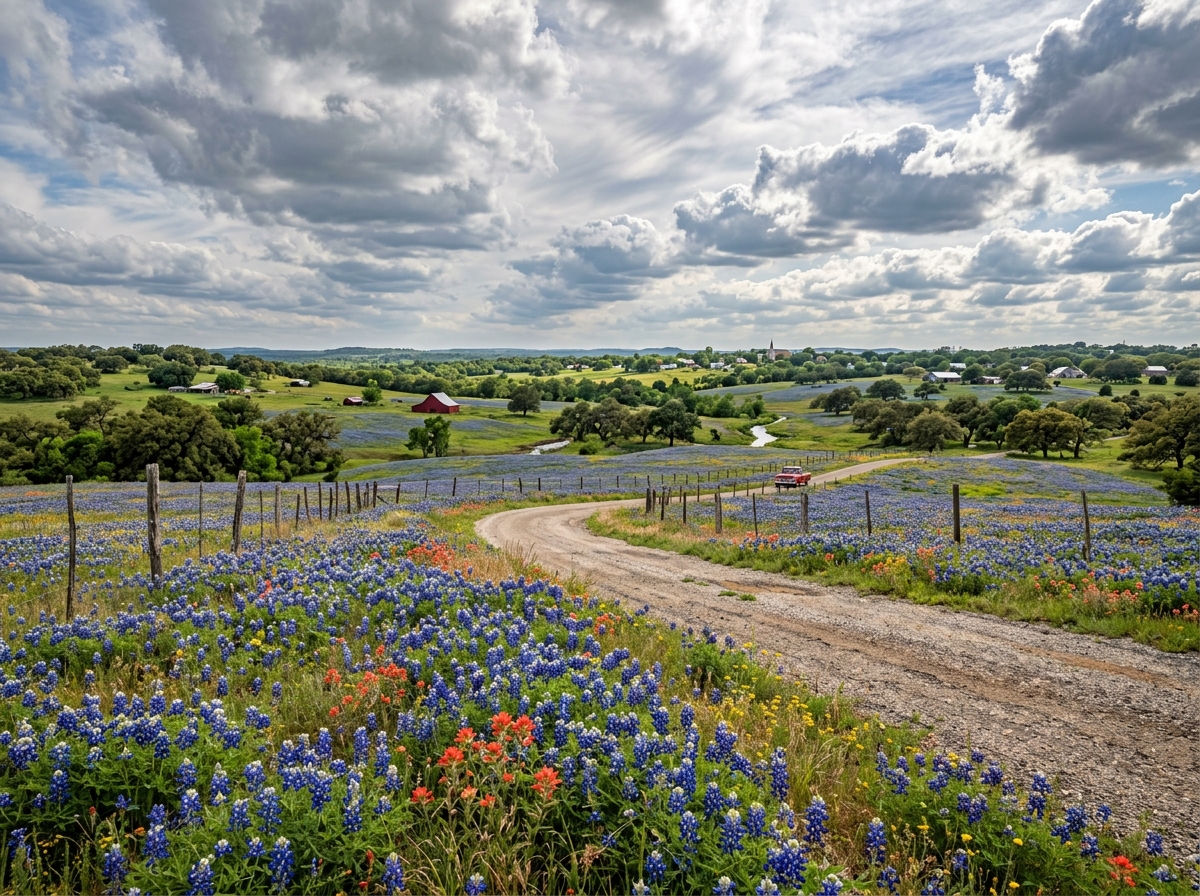
Texas bluebonnets bloom across Hill Country for a roughly three-week window each spring. For 2026, peak bloom is expected late March through mid-April, specifically along Highway 290 between Austin and Fredericksburg. Burnet calls itself the Bluebonnet Capital of Texas and hosts a festival during peak bloom. The Willow City Loop near Fredericksburg is also reliable. Always check whether a field is private property before stepping into it for photos.
Jacob’s Well and Hamilton Pool
Jacob’s Well, near Wimberley, is a deep blue artesian spring that became famous online. The honest update: swimming has been restricted for conservation reasons, and the well does not always match the vivid blue seen in older photos. The surrounding trails and overlook remain open.
Hamilton Pool Preserve, west of Austin, is a collapsed grotto with a 50-foot waterfall feeding a jade-green pool. It requires a reservation through the Travis County Parks website, especially in summer.
Colorado Bend State Park
One of the least crowded state parks with genuinely spectacular scenery. Gorman Falls, a 65-foot waterfall inside the park, requires a guided tour reservation.
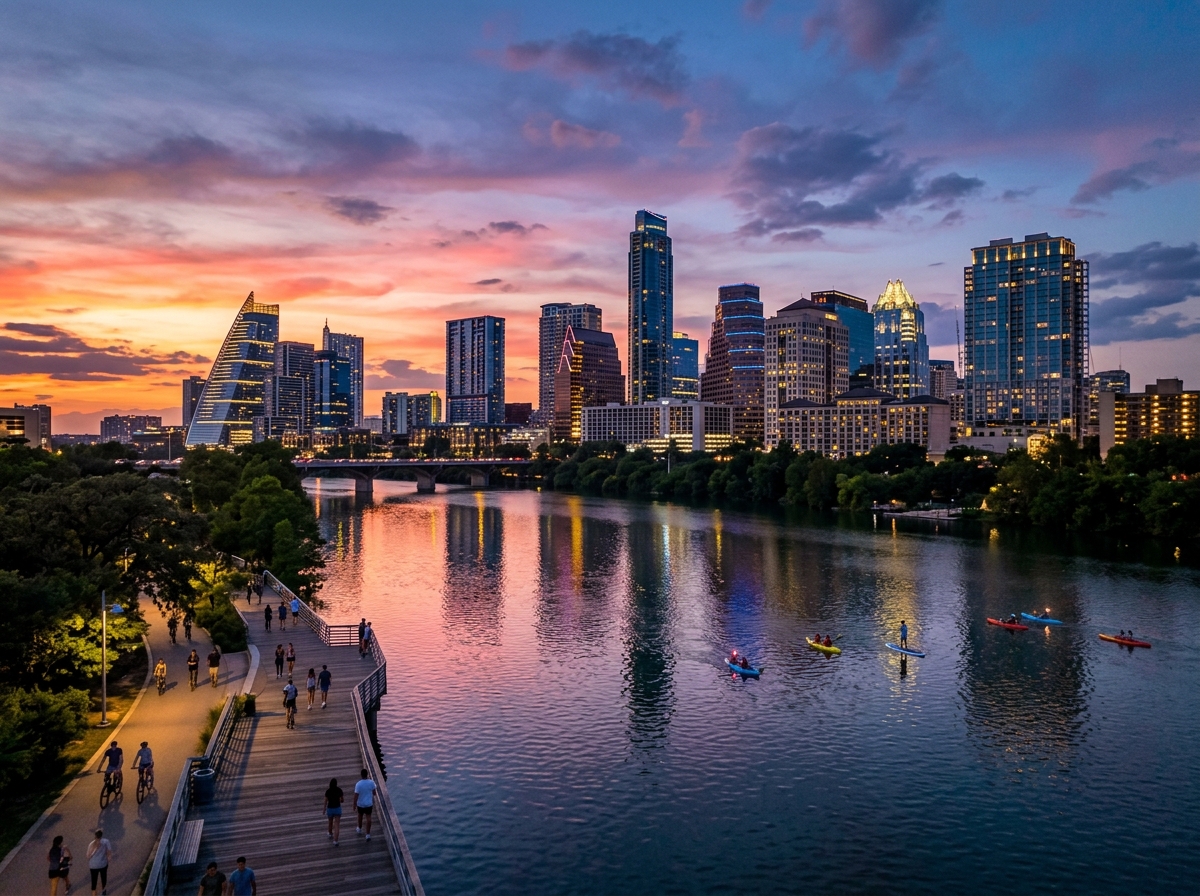
Austin: Music, Food, and the Texas Capitol
Austin is Texas’s capital, known internationally for its live music scene and tech industry growth.
South Congress Avenue (SoCo) is the best single street for a first visit, with boutiques, food trucks, and the famous bat colony beneath the Congress Avenue Bridge. From March through October, up to 1.5 million Mexican free-tailed bats emerge at dusk, one of the largest urban bat colonies in North America. Free to watch from the bridge.
Live music is central to Austin’s identity as the “Live Music Capital of the World.” Sixth Street is the tourist-heavy strip. For a more local experience, the Continental Club on South Congress and East Austin venues offer better music with fewer tourists.
Lady Bird Johnson Wildflower Center is a 284-acre botanical garden of native Texas plants with extraordinary bluebonnet displays in spring.
Best for: Music, food, nightlife, outdoor activity (Barton Springs Pool, Lady Bird Lake)
San Antonio: The Alamo and the River Walk
San Antonio remains the most visited tourist destination in Texas, anchored by two attractions within walking distance of each other.
The Alamo is the site of the 1836 battle that became the defining symbol of Texas independence. The mission complex is smaller than many expect but the historical weight, now part of a UNESCO World Heritage Site, makes it essential. Grounds entry is free.
The San Antonio River Walk is a network of pedestrian paths along the river, lined with restaurants and shops below street level. It connects directly to the Alamo and is one of the most pleasant urban walks in Texas, especially in the evening.
The Pearl District, a former brewery converted into a dining and shopping development, has become one of San Antonio’s best food destinations with a Saturday farmers market.
Best for: History, families, walkable urban experience, Tex-Mex food
For a day combining the Alamo, the River Walk, and Hill Country day trips, comfortable walking shoes that handle both pavement and uneven trails matter. The Brooks Ghost Max Walking Shoe (available on Amazon) provides serious cushioning for long sightseeing days in Texas warmth.

Brooks Women’s Ghost Max
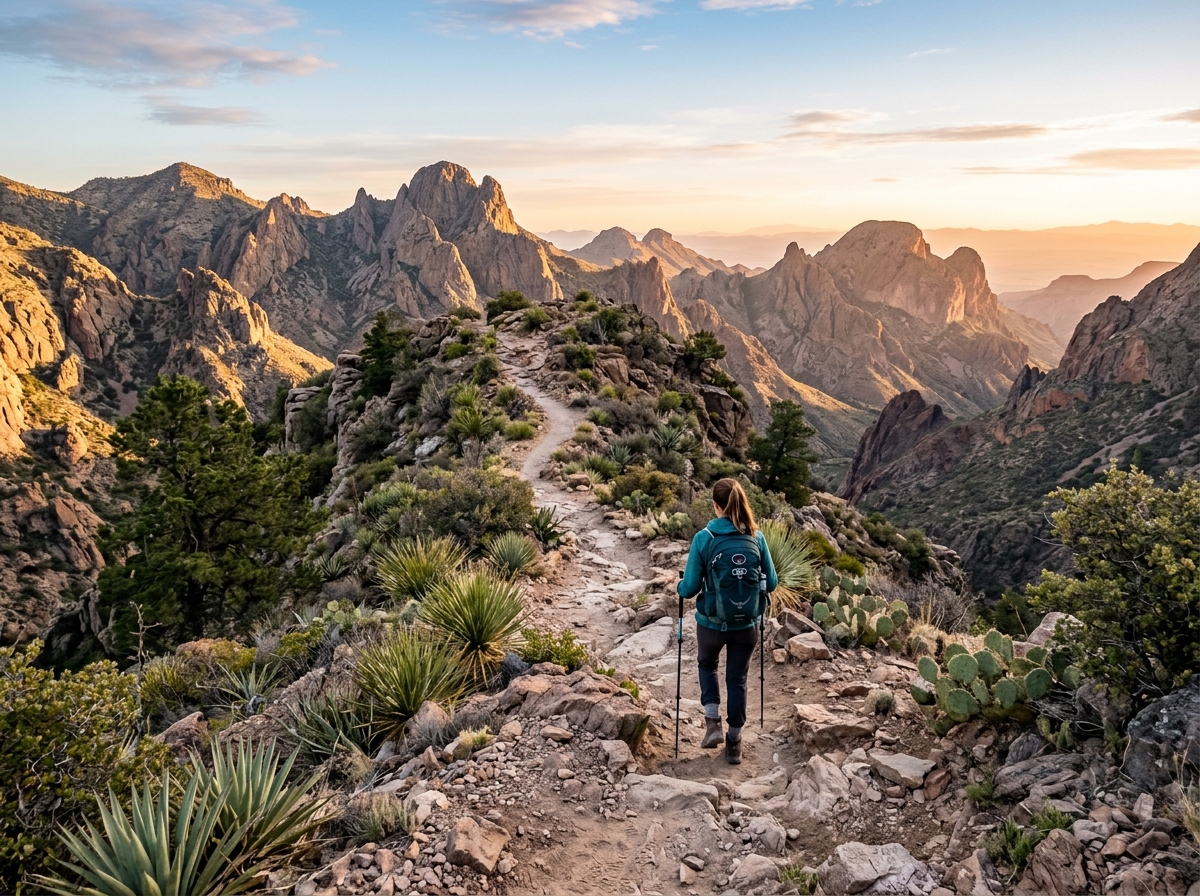
Big Bend National Park: Texas’s Wildest Corner
Big Bend sits in far West Texas along a dramatic bend in the Rio Grande, bordering Mexico. It is one of the least visited national parks in the country, and that is precisely its appeal.
The honest distance reality: Big Bend is genuinely remote. The drive from Austin is around six hours, and over three hours from the nearest airport in Midland. That isolation is part of what makes it extraordinary.
Three ecosystems exist within its borders: Chihuahuan Desert lowlands, the Chisos Mountains rising from the desert floor, and the Rio Grande river corridor. Santa Elena Canyon, where 1,500-foot limestone walls tower over the river, is one of the most photographed spots in the park.
Dark skies: Big Bend is an International Dark Sky Park with some of the darkest night skies in the continental US. On a clear, moonless night, the Milky Way is visible to the naked eye. Plan at least one night specifically for stargazing.
Practical planning: Give Big Bend at least three full days, one for the desert, mountains, and river each. The ghost town of Terlingua and the art town of Marfa (about three hours north) both pair well with a Big Bend trip.
Best time to visit: October through April. Summer desert temperatures regularly exceed 100F (38C) and many trails become dangerous at midday.
For Big Bend’s dark sky stargazing and desert hiking, a headlamp with a red-light mode preserves night vision while providing full brightness for early morning hikes before the heat builds. The Black Diamond Spot 400 Headlamp (available on Amazon) covers both needs and is the most practical single light source for a Big Bend trip.
Palo Duro Canyon and the Panhandle
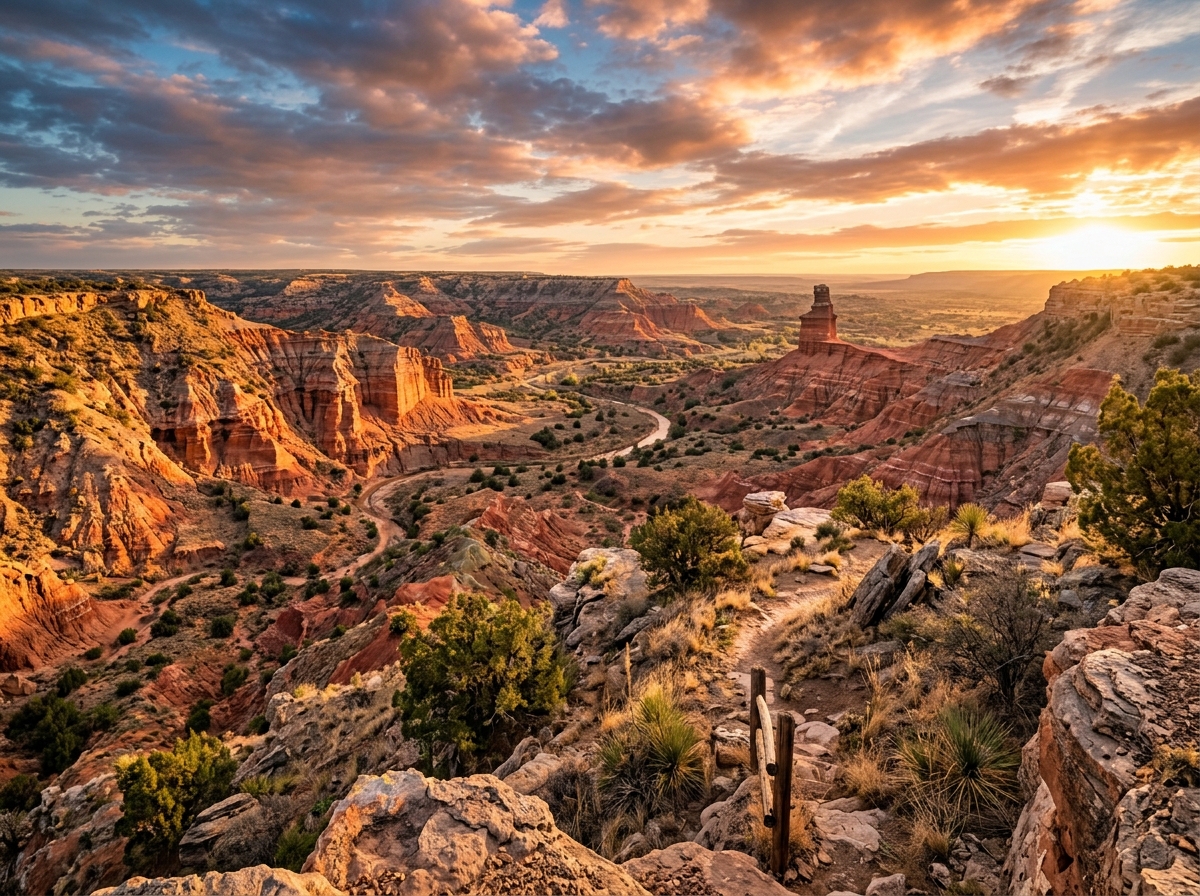
Palo Duro Canyon, near Amarillo, is the second-largest canyon in the United States after the Grand Canyon. Most visitors outside Texas have never heard of it, which makes the first view from the rim genuinely startling.
The canyon stretches 120 miles long and up to 800 feet deep, with red and orange rock layers. Hiking, biking, and horseback trails are extensive, with cabins on the canyon rim. The TEXAS Outdoor Musical, an amphitheater production in the canyon since 1966, is a unique regional tradition.
Getting there: Amarillo is 30 minutes away. The Panhandle is flat and remote, so it works best combined with a Route 66 road trip or a dedicated trip.
Marfa: Art in the Desert
Marfa became internationally known when artist Donald Judd moved there in the 1970s and established the Chinati Foundation, a permanent installation of large-scale minimalist art in former military buildings.
The town now has art galleries, design-conscious hotels, and the famous Marfa Lights, an unexplained light phenomenon visible from a designated viewing area most nights. Prada Marfa, a fake luxury store standing alone on a desert highway 26 miles from town, is one of the most photographed roadside attractions in Texas.
Marfa pairs naturally with a Big Bend trip, sitting about three hours north.
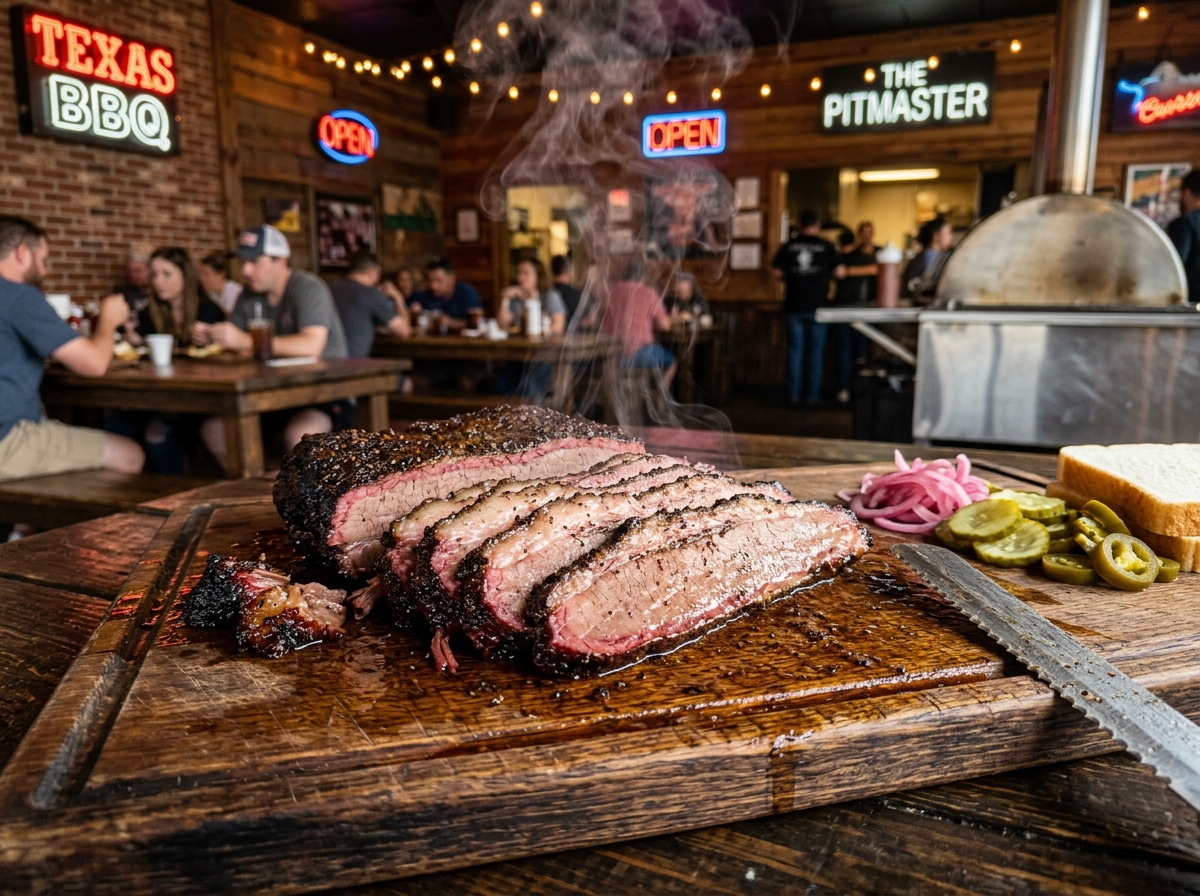
Texas BBQ: A Destination in Itself
For many visitors, Texas BBQ is the primary reason for the trip.
Lockhart, 30 minutes south of Austin, calls itself the BBQ Capital of Texas, home to multi-generational institutions Kreuz Market and Black’s BBQ.
Franklin BBQ in Austin is the most famous BBQ restaurant in Texas, and the wait often exceeds four hours. The brisket regularly sells out. Know what you are signing up for.
On I-35 between Dallas and Austin, The Czech Stop in West, Texas, serves kolaches (Czech pastries) reflecting central Texas’s significant Czech heritage.
Tex-Mex regional differences: San Antonio is known for puffy tacos (a deep-fried shell that puffs when cooked), while Austin has built its identity around breakfast tacos as a daily institution.
Gulf Coast: Galveston and South Padre Island
Texas has over 350 miles of Gulf Coast, and the two main beach destinations serve different purposes.
Galveston, about 50 minutes from Houston, is the closest beach to Texas’s largest cities, combining a historic Victorian downtown with a beachfront amusement pier.
South Padre Island, at the southern tip near the Mexican border, has the best beaches in the state with significant spring break crowds in March. Outside spring break, it is quieter with excellent birdwatching on major migratory routes.
Hurricane season runs June through November, with peak risk in August and September. Travel insurance is worth considering, and checking the National Hurricane Center forecast before any late-summer coastal trip is sensible.
What Most Texas Guides Do Not Tell You
You need a car. There is no alternative. Outside small walkable pockets in downtown Austin and San Antonio’s River Walk, Texas has essentially no functional public transit. A rental car is mandatory for any multi-destination trip.
The Texas State Park Pass is genuinely worth it. For $70 per year, it covers entry to all Texas State Parks, which otherwise charge $5 to $8 per person. Visit three or more (Enchanted Rock, Palo Duro Canyon, Colorado Bend) and it pays for itself quickly.
Regional climates are dramatically different. The Gulf Coast is humid subtropical. Hill Country has a moderate four-season climate. West Texas is high desert with extreme day-night swings. Pack for the specific region, not “Texas” as one climate.
Reservations matter more than expected. Enchanted Rock, Hamilton Pool, and many state parks now require advance reservations, particularly on weekends and in summer.
Distances are the real constraint. Combining Big Bend with the Gulf Coast or Panhandle in one trip means 8 to 10 hours of driving between regions. Pick one region per trip unless you have two weeks or more.
Practical Tips for Visiting Texas
Best time to visit: Spring (March to May) for bluebonnets and mild temperatures. Fall (October to November) is the second-best window, particularly for Big Bend and Hill Country. Summer is genuinely hot statewide, with triple digits common in West Texas and high humidity on the Gulf Coast.
Driving distances from Austin: San Antonio 1.5 hrs, Houston 2.5 hrs, Dallas 3.5 hrs, Big Bend 6 hrs, Palo Duro Canyon 7 hrs, South Padre Island 6 hrs.
Packing: Layers matter even in summer for West Texas, where desert nights can drop 30 to 40F from the daytime high. Sun protection is essential everywhere.
For any Texas road trip covering multiple regions and long highway stretches, a reliable cooler that keeps drinks cold across a full day of driving in heat makes a genuine difference. The YETI Roadie 24 Hard Cooler (available on Amazon) fits between car seats, holds ice for a full day even in 100-degree heat, and is the standard choice for serious Texas road trippers.

YETI Roadie 24 2.0 Hard Cooler
Best Places in Texas by Traveller Type
First-time visitors: Austin and San Antonio together, with a Hill Country day trip to Fredericksburg and Enchanted Rock. A 4 to 5-day trip covers this comfortably.
Nature and adventure: Big Bend National Park (allow at least 3 days), Palo Duro Canyon, Hill Country swimming holes (Hamilton Pool, Colorado Bend).
Food lovers: Lockhart for BBQ, Austin for breakfast tacos and Franklin BBQ, San Antonio for Tex-Mex and puffy tacos, the Czech Stop on I-35.
Art and culture: Marfa for the Chinati Foundation and Marfa Lights, San Antonio Missions for history, Austin’s live music venues.
Families: South Padre Island or Galveston for beaches, Austin’s Lady Bird Johnson Wildflower Center, San Antonio’s River Walk and Alamo.
Couples: Fredericksburg wine country, Hill Country bed and breakfasts, a Big Bend stargazing trip for something genuinely different.
Budget travellers: Texas State Park Pass for $70 covers dozens of parks. Free attractions include the Austin bat colony, the Alamo grounds, and most Hill Country scenic drives.
Quick Reference Table
| Destination | Region | Best For | Drive from Austin |
|---|---|---|---|
| Fredericksburg | Hill Country | Wine, bluebonnets | 1.5 hrs |
| Austin | Central | Music, food, culture | Base |
| San Antonio | South Central | History, River Walk | 1.5 hrs |
| Big Bend National Park | West Texas | Dark skies, desert | 6 hrs |
| Palo Duro Canyon | Panhandle | Canyon scenery | 7 hrs |
| Marfa | West Texas | Art, design | 5.5 hrs |
| Lockhart | Central | BBQ | 45 min |
| Galveston | Gulf Coast | Beaches, history | 3.5 hrs |
| South Padre Island | South Texas | Beaches, birdwatching | 6 hrs |
| Enchanted Rock | Hill Country | Hiking, granite dome | 1.5 hrs |
Frequently Asked Questions
What is the most visited place in Texas?
The San Antonio River Walk and the Alamo, located within walking distance of each other, remain the most visited tourist attractions in Texas, drawing millions of visitors annually.
When is the best time to see bluebonnets in Texas?
For 2026, the peak bloom window is expected to be late March through mid-April, with Highway 290 between Austin and Fredericksburg, along with Burnet and the Willow City Loop, being the most reliable spots.
Is Big Bend National Park worth the drive?
Yes, but only with proper planning. Allow at least three full days, since the drive itself is six hours from Austin and over three hours from the nearest airport in Midland. The dark skies, desert, mountains, and river canyon together make it one of the most rewarding national parks in the country for those who commit the time.
Do I need a car to visit Texas?
Yes. Outside small walkable areas in downtown Austin and San Antonio’s River Walk, Texas has no functional public transit for visitors. A rental car is essential for any multi-destination trip.
What is the BBQ capital of Texas?
Lockhart, about 30 minutes south of Austin, calls itself the BBQ Capital of Texas, home to multi-generational institutions like Kreuz Market and Black’s BBQ. Franklin BBQ in Austin is the most famous single restaurant, though waits commonly exceed four hours.
Can you still swim at Jacob’s Well?
Swimming access at Jacob’s Well has been restricted for conservation reasons in recent years. The surrounding natural area remains open for trails and viewing, but check current rules before planning a swim-focused visit.
How many days do you need for a Texas road trip?
A week covers one region well, such as Hill Country plus Austin and San Antonio. Two weeks allows you to add a second region, such as Big Bend or the Gulf Coast. Trying to cover Big Bend, Hill Country, and the Gulf Coast in under 10 days means excessive driving with little time at each stop.
Final Thoughts
Texas does not reward visitors who try to see everything in one trip. It rewards those who pick a region, give it real time, and accept that the rest of the state will still be there next time.
Hill Country and the cities give you music, food, history, and wildflowers within a manageable radius. Big Bend gives you isolation, desert, and stars in a way that very few places in America can match. The Gulf Coast gives you beaches and birds. The Panhandle gives you a canyon most people have never heard of.
Pick the version of Texas that matches what you came for, and plan around the distances honestly. The state is enormous, and that is exactly what makes it worth coming back to.