Australia is one of those countries that sounds manageable on a map and then completely surprises you with its scale.
It is roughly the same size as the continental United States. Flying from Sydney to Perth takes five hours. Sydney to Cairns is three hours. This matters because the biggest mistake first-time visitors make is trying to cover too much in one trip.
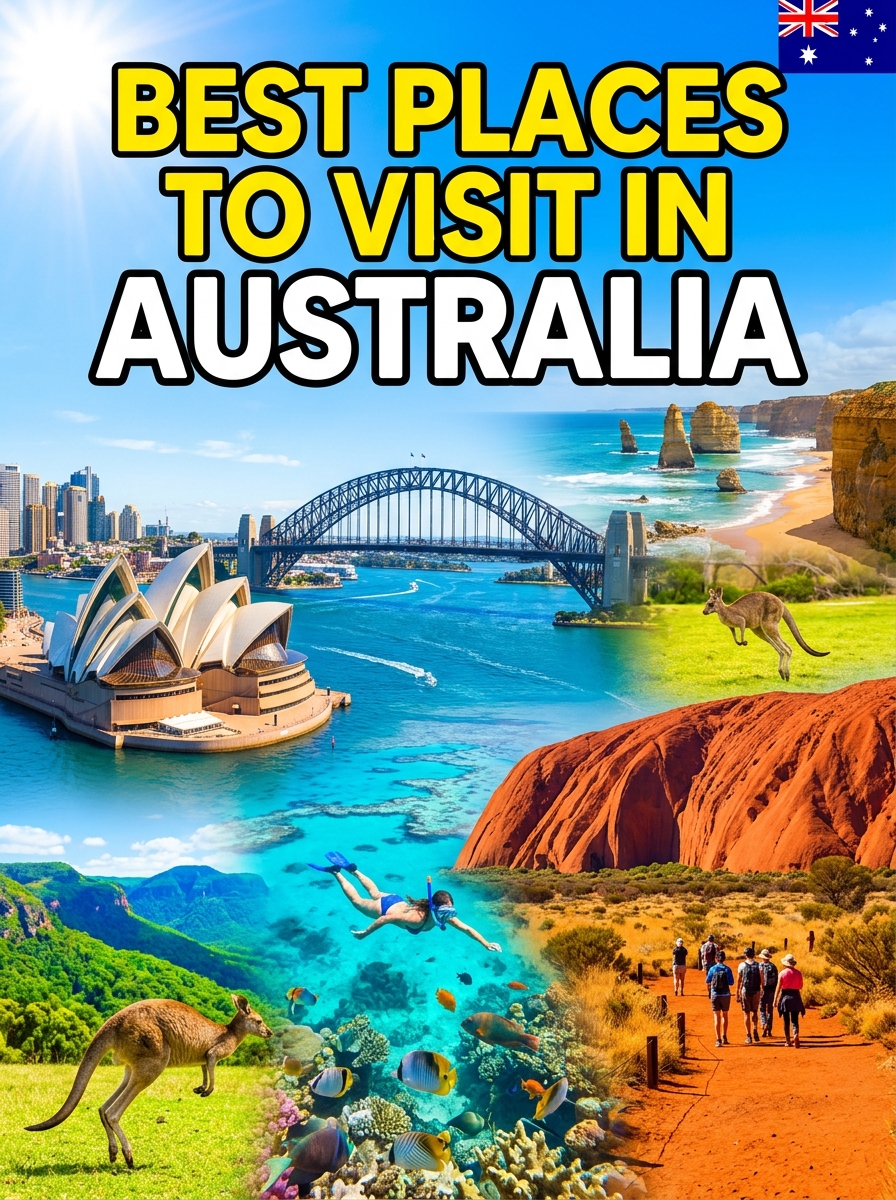
This guide covers the best places to visit in Australia for every type of traveller, with honest advice on what each place is actually like, when to go, and what most travel guides do not tell you.
Quick Answer: Best Places to Visit in Australia
For first-time visitors, the east coast covers the most ground. Sydney, the Great Barrier Reef, and Uluru together give you iconic cities, natural wonders, and Outback culture in a single trip. Add Melbourne or the Whitsundays depending on your interests.
For repeat visitors or adventurous travellers, head west. Ningaloo Reef, the Kimberley, and Margaret River are extraordinary and far less crowded than their east coast equivalents.
Best Cities to Visit in Australia
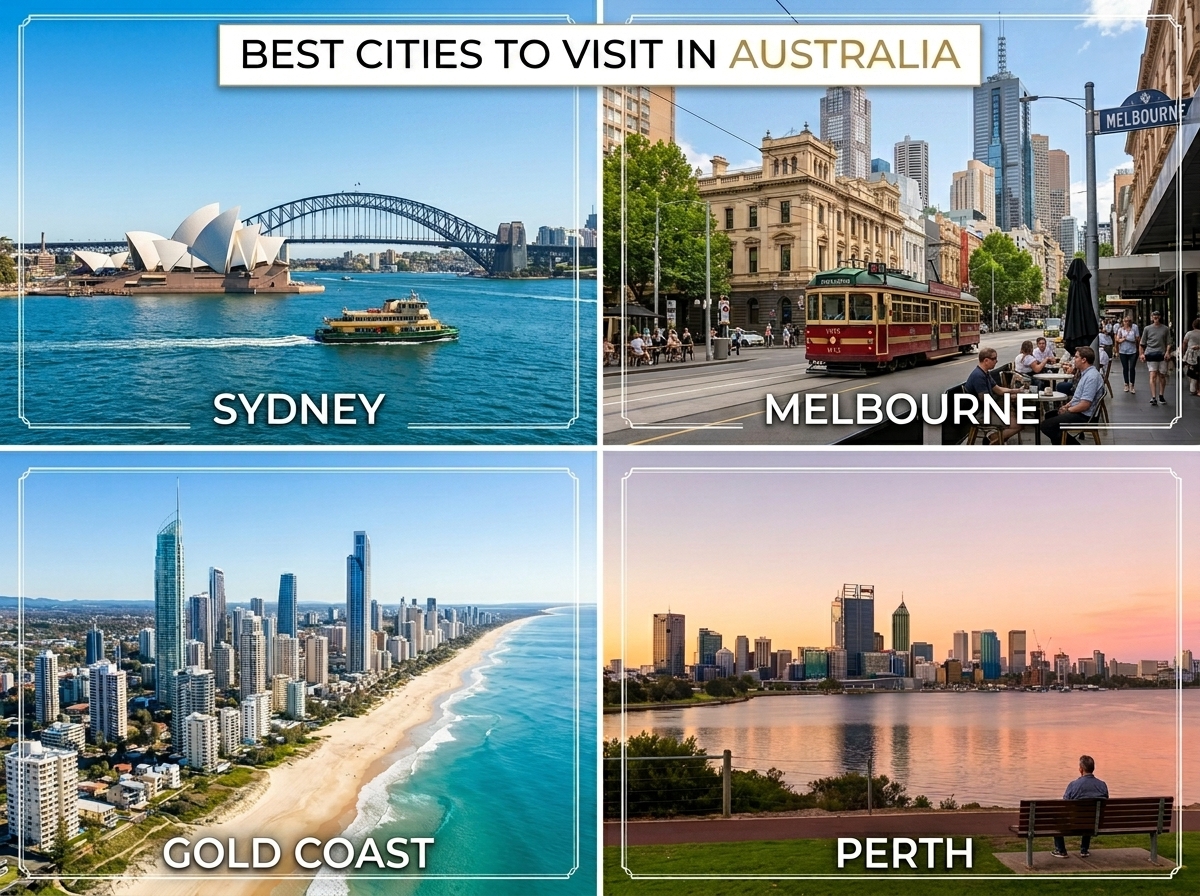
Sydney, New South Wales
Sydney is where most international visitors land, and it delivers immediately. The Opera House, Harbour Bridge, and Bondi Beach are all as impressive in person as they look in photographs.
The Bondi to Coogee coastal walk is one of the best free things you can do in any Australian city. It takes about two hours along cliffside paths, passing six beaches with views that do not get old.
Best for: First-time visitors, city lovers, beach culture, harbour views Best time to visit: October to April for beach weather, though the city is good year-round Honest tip: Sydney is expensive. Budget at least AUD $250 per day including accommodation, food, and activities. Airbnbs in inner suburbs are often better value than central hotels.
Melbourne, Victoria
Melbourne has a reputation as Australia’s cultural capital and it earns it. The laneway cafe scene, street art in Hosier Lane, the weekend Queen Victoria Market, and the rooftop bar culture all add up to a city that rewards slow exploration.
It is also the base for the Great Ocean Road, one of the best coastal drives in the world. The Twelve Apostles limestone stacks are the headline attraction, but the drive itself through towns like Lorne and Apollo Bay is just as good.
Best for: Foodies, coffee lovers, art and culture, road trippers Best time to visit: November to March for warm weather, but Melbourne is a genuine four-season city Honest tip: Melbourne’s weather is infamously unpredictable. Locals say you get four seasons in one day. Always carry a light jacket regardless of the forecast.
Brisbane, Queensland
Brisbane used to be seen as just a stepping stone to the Gold Coast or Sunshine Coast. That reputation has changed. The South Bank precinct, Gallery of Modern Art (QAGOMA), and the New Farm and Fortitude Valley neighbourhoods make Brisbane worth two to three days on its own.
It is also a great base for day trips to Moreton Island for snorkelling with wild dolphins and to the Sunshine Coast hinterland.
Best for: Families, budget travellers, beach day trips, food scene Best time to visit: May to September for mild, dry weather
Perth, Western Australia
Perth is the most isolated major city in the world. That isolation has created something genuinely distinctive. The city has a relaxed, sun-drenched confidence that Sydney and Melbourne do not quite replicate.
Cottesloe Beach is one of the best urban beaches in the country. Fremantle, a short train ride away, has excellent food markets, craft breweries, and one of Australia’s best preserved colonial port districts. And Rottnest Island, a 25-minute ferry from Fremantle, is where you meet quokkas, the small marsupials that are arguably Australia’s most photogenic animal.
Best for: Beach lovers, independent travellers, wildlife encounters, wine enthusiasts (Margaret River is three hours south) Best time to visit: September to November for wildflower season; October for Margaret River wine and food festivals
Best Natural Wonders in Australia
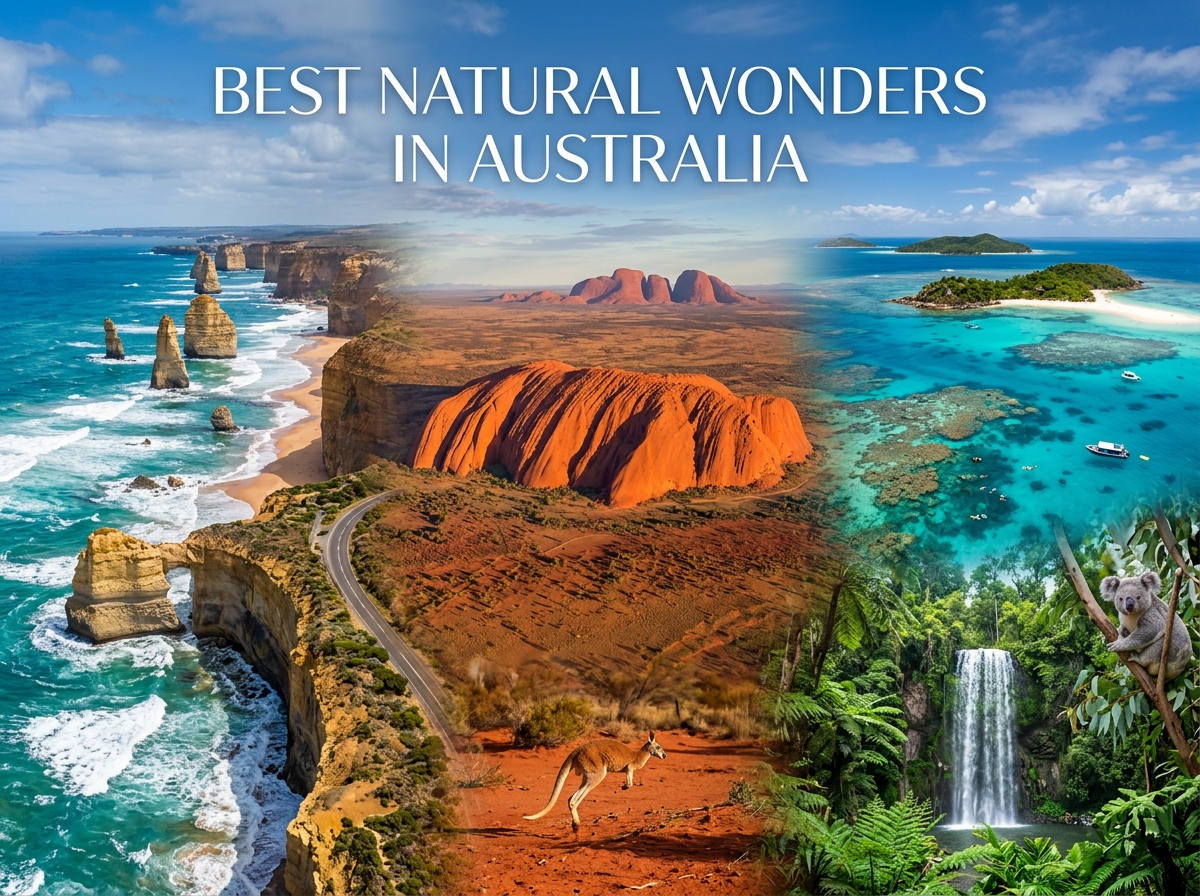
The Great Barrier Reef, Queensland
The Great Barrier Reef stretches 2,300 kilometres along the Queensland coast and is the largest coral reef system on Earth. It is home to 1,500 species of fish, 4,000 types of molluscs, sea turtles, manta rays, and reef sharks.
Cairns is the most popular base, but Port Douglas offers a less crowded experience with access to the Outer Reef where coral health is generally better. Snorkelling day trips run from both towns and cost around AUD $180 to $250 per person including equipment.
Best for: Snorkellers, divers, marine wildlife lovers Best time to visit: June to October for calm seas and good visibility Honest truth: Parts of the reef have experienced coral bleaching due to warming ocean temperatures. The outer reef sections and areas around the Whitsundays still have excellent coral. Choose tour operators that are certified by the Great Barrier Reef Marine Park Authority.
Uluru-Kata Tjuta National Park, Northern Territory
Uluru is one of those places that photographs cannot prepare you for. The sandstone monolith rises 348 metres from the flat red desert and changes colour constantly, burning deep orange at sunset and shifting to purple in the early morning light.
Climbing Uluru is now permanently banned out of respect for the Anangu traditional owners, who consider it a sacred site. The 10.6 kilometre base walk around the rock is the right way to experience it. It takes around three to four hours and interpretive signs along the route share the Tjukurpa, the Anangu creation stories connected to the landscape.
Kata Tjuta (the Olgas), a group of 36 domed rock formations 50 kilometres away, is equally spectacular and often quieter. The Valley of the Winds walk there is one of the best hikes in Australia.
Best for: Cultural experience, photography, spiritual travel, Outback landscapes Best time to visit: May to September. Summer temperatures regularly exceed 45 degrees Celsius and some trails close in extreme heat. Practical tip: Stay at least two nights. Sunrise and sunset at Uluru are different experiences and both are worth seeing.
Ningaloo Reef, Western Australia
Ningaloo gets overlooked because the Great Barrier Reef gets all the attention. That is a mistake.
Ningaloo is one of the few places in the world where you can walk straight off the beach into a living coral reef. No boat required. The snorkelling from the shore at Turquoise Bay is extraordinary.
Between March and July, whale sharks, the world’s largest fish, gather at Ningaloo in the largest aggregation on Earth. Swimming with whale sharks is a genuinely life-changing experience that most visitors to Australia never know is possible.
Best for: Snorkelling, diving, whale shark encounters, uncrowded beaches Best time to visit: March to July for whale sharks; April to September for general snorkelling
The Whitsundays, Queensland
The Whitsundays are 74 islands sitting in the middle of the Great Barrier Reef Marine Park. Whitehaven Beach, on Whitsunday Island, has sand that is 98 percent pure silica. It does not get hot underfoot, it squeaks when you walk on it, and it is blindingly white against the turquoise water.
Most visitors base themselves in Airlie Beach on the mainland and take sailing or catamaran trips out to the islands. A two to three day sailing trip covers the best spots and is the most popular way to experience the region.
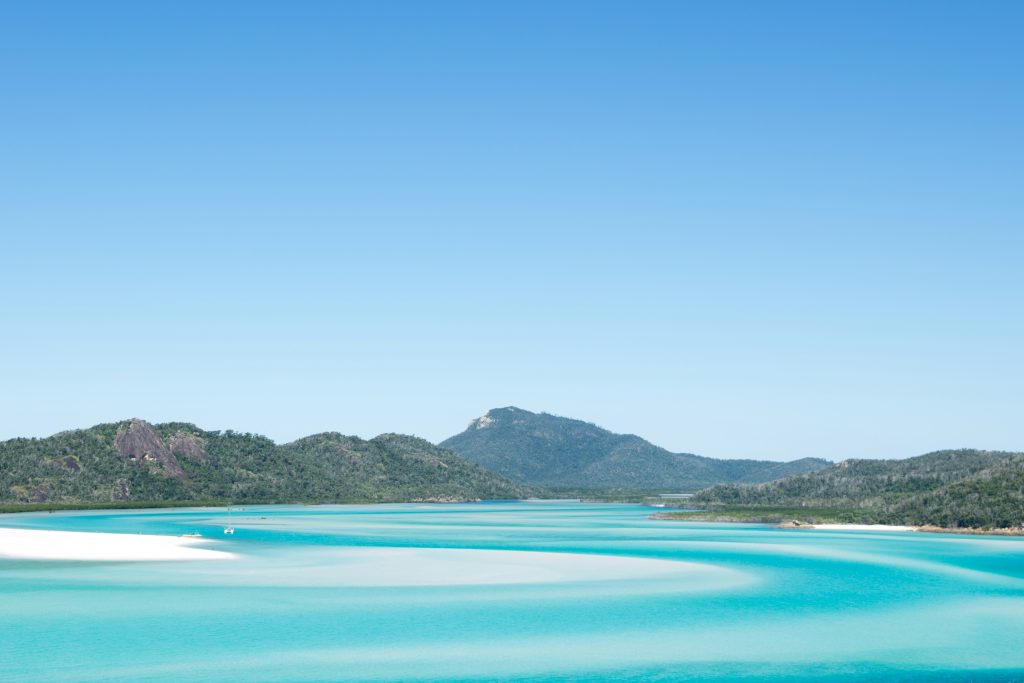
Best for: Beach lovers, sailing, snorkelling, couples, photographers Best time to visit: June to October for dry, mild weather and calm seas
Best Hidden Gems in Australia
Kangaroo Island, South Australia
Kangaroo Island sits off the coast of Adelaide and packs extraordinary wildlife encounters into a compact area. Sea lions laze on beaches at Seal Bay. Little penguins return to their burrows at dusk. Koalas sleep in the gum trees. And the island has excellent local produce, particularly honey, cheese, and seafood.
The 2020 bushfires affected the island significantly but it has recovered well, and wildlife numbers have rebounded.
Best for: Wildlife, slow travel, local food and wine, families Best time to visit: December to February for beach weather; June to August for whale watching
The Kimberley, Western Australia
The Kimberley is one of the last great wilderness areas on Earth. Ancient gorges, tidal waterfalls, red rock country, and a coastline that is almost entirely untouched. Horizontal Falls, where tidal surges force water through narrow gorges creating waterfalls running sideways, is one of the most unusual natural phenomena in Australia.
It is remote, expensive to access, and best suited to adventurous travellers. But there is nothing else quite like it anywhere on the continent.
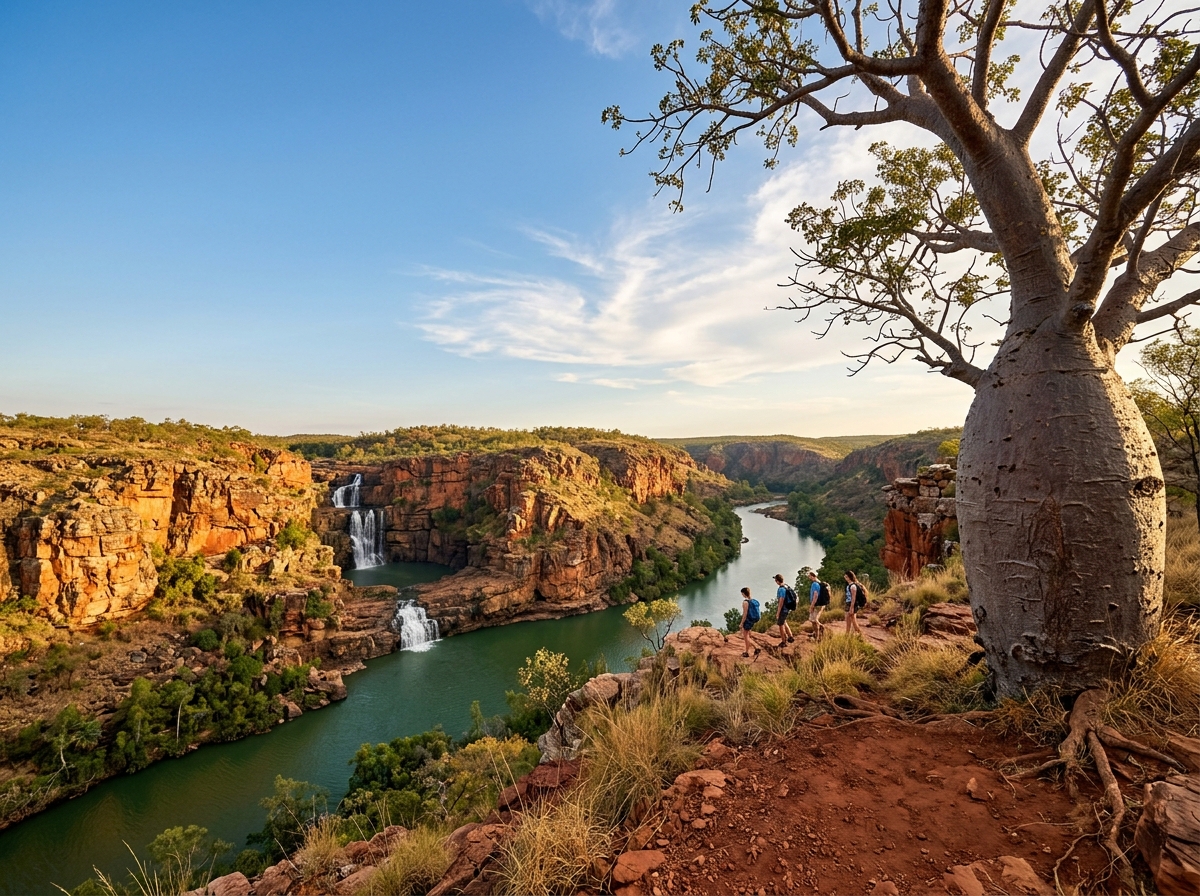
Best for: adventure travelers, photographers, 4WD road trips, remote wilderness Best time to visit: April to September only. The wet season makes most roads impassable.
Hobart and Tasmania
Tasmania consistently surprises visitors who expect it to be a smaller, quieter version of mainland Australia. It is its own thing entirely.
Hobart has MONA, the Museum of Old and New Art, one of the most unusual and compelling art museums anywhere in the world. It sits inside a labyrinthine underground sandstone space and is worth the trip to Tasmania alone. The food scene in Hobart is exceptional, driven by outstanding local produce from the island’s clean, cold waters and fertile farmland.
Beyond Hobart, Freycinet National Park and its Wineglass Bay are genuinely stunning. The hike to the Wineglass Bay lookout takes about 90 minutes return and the view from the top is worth every step.
Best for: Art lovers, foodies, hikers, nature seekers, couples Best time to visit: December to March for warm weather; winter brings the Aurora Australis (Southern Lights)
Practical Tips for Visiting Australia
Book internal flights early. Distances between major destinations are enormous. Flying is almost always necessary for multi-destination trips. Book domestic flights as early as possible since last-minute prices on Qantas and Jetstar between Sydney and Cairns or Perth can be very high.
Understand the wildlife. Australia has some of the world’s most venomous creatures. Box jellyfish and Irukandji jellyfish in tropical Queensland waters are a serious hazard from October to May. Always swim between the flags at patrolled beaches and follow local advice about jellyfish season. Stinger suits, available to hire from tour operators, are worth using.
Respect Indigenous sites. Sites like Uluru have deep spiritual significance for Aboriginal peoples. Follow signage, do not photograph restricted areas, and take time to learn about the traditional owners of the land you are visiting.
Renting a car changes everything. Many of Australia’s best experiences are inaccessible by public transport. The Great Ocean Road, Margaret River, the Barossa Valley, and most of Tasmania require a car. International driving licences are accepted across Australia.
Australia’s sun is among the most intense in the world due to the thin ozone layer. A high-protection reef-safe sunscreen is essential everywhere, not just at the beach. The Neutrogena Sheer Zinc Mineral Sunscreen SPF 50 (available on Amazon) is reef-safe, water-resistant, and widely recommended for extended outdoor days in Australian conditions.
For hiking at places like Uluru, the Whitsundays, or Tasmania’s national parks, a lightweight packable daypack makes all the difference. The Osprey Daylite Backpack (available on Amazon) holds water, snacks, a layer, and camera gear without weight or bulk, and it packs flat when not in use.
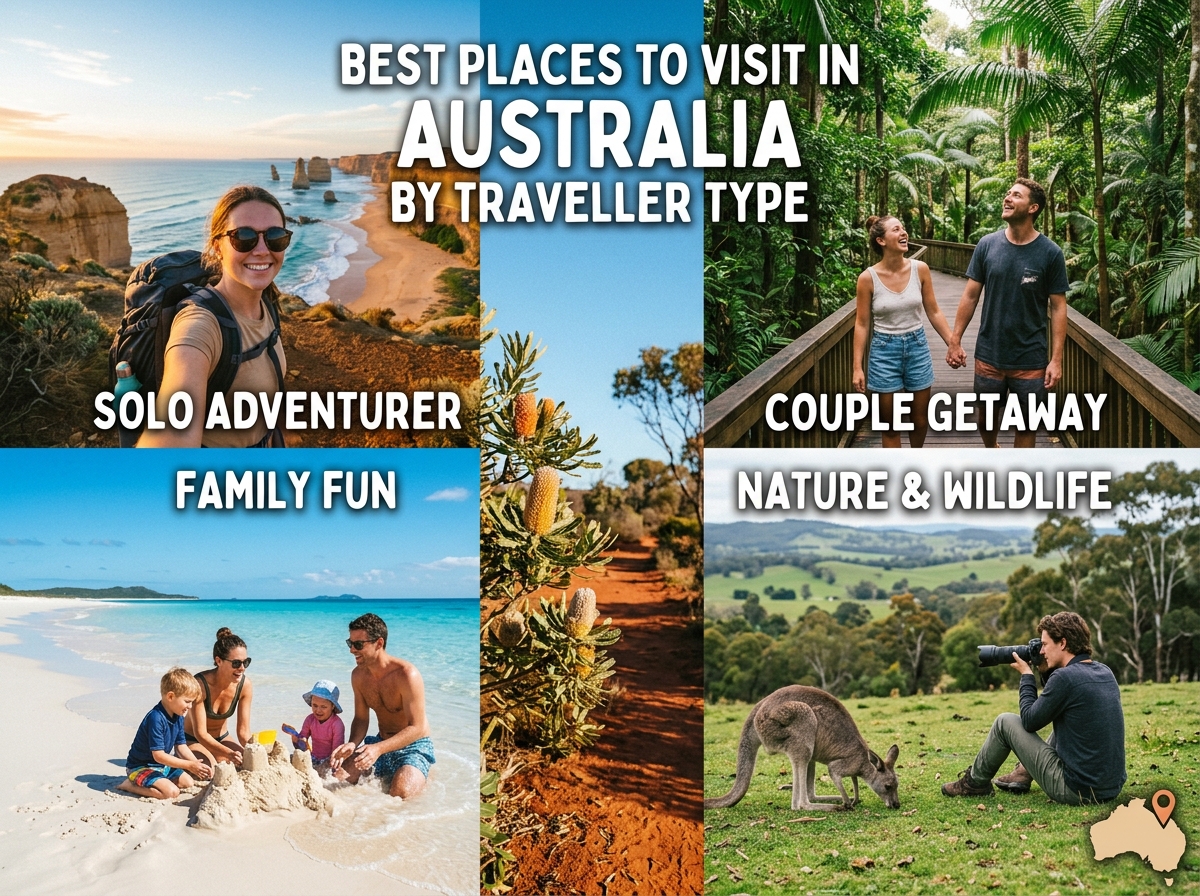
Best Places to Visit in Australia by Traveller Type
First-time visitors: Sydney, Great Barrier Reef, Uluru. This triangle covers iconic city life, the world’s greatest reef, and the spiritual heart of the continent.
Nature and wildlife lovers: Ningaloo Reef, Kangaroo Island, Tasmania. All three offer extraordinary encounters with very little tourist pressure.
Foodies and wine lovers: Melbourne, Adelaide and the Barossa Valley, Margaret River. Australia’s food and wine scene is genuinely world class in these three regions.
Adventure seekers: The Kimberley, Cape York Peninsula, Kakadu National Park. Remote, dramatic, and unlike anywhere else.
Families: Gold Coast, Cairns and the Great Barrier Reef, Brisbane. Good infrastructure, child-friendly activities, and reliable weather for most of the year.
Quick Reference Table
| Destination | Best For | Best Season | Approx Daily Cost |
|---|---|---|---|
| Sydney | City, beaches, landmarks | Oct to Apr | AUD $200 to $300 |
| Melbourne | Culture, food, road trips | Nov to Mar | AUD $180 to $280 |
| Great Barrier Reef | Snorkelling, diving | Jun to Oct | AUD $150 to $250 |
| Uluru | Culture, photography, Outback | May to Sep | AUD $150 to $200 |
| Whitsundays | Sailing, beaches | Jun to Oct | AUD $200 to $350 |
| Ningaloo Reef | Whale sharks, snorkelling | Mar to Jul | AUD $120 to $200 |
| Tasmania | Hiking, art, food | Dec to Mar | AUD $150 to $250 |
| Perth | Beaches, wine, wildlife | Sep to Nov | AUD $150 to $250 |
Frequently Asked Questions
What is the most beautiful place in Australia?
This depends on what you find beautiful. For dramatic natural landscapes, Uluru and the Kimberley. For coastal scenery, the Whitsundays and Ningaloo Reef. For urban beauty, Sydney Harbour is hard to beat anywhere in the world.
How many days do you need in Australia?
At least two to three weeks for a meaningful trip covering more than one region. A month gives you the flexibility to do both the east coast and one western destination without constant rushing.
What is the best part of Australia to visit first?
The east coast. Sydney, the Great Barrier Reef via Cairns, and Uluru give you the most iconic experiences in a logical travel route. This is the right starting point for first-time visitors.
Is Australia expensive to visit?
Yes, compared to Southeast Asia or Eastern Europe. Budget travellers can manage on AUD $100 to $150 per day staying in hostels and self-catering. Mid-range travel costs AUD $200 to $350 per day. Accommodation and internal flights are the biggest expenses.
What is the best time to visit Australia overall?
There is no single answer because Australia’s regions have very different climates. The tropical north (Cairns, Darwin, Kakadu) is best from May to October during the dry season. The south (Sydney, Melbourne, Adelaide) is best from October to April. Uluru is best from April to September to avoid extreme heat.
Is it safe to swim at Australian beaches?
At patrolled beaches, yes. Always swim between the red and yellow flags where lifeguards are on duty. In tropical Queensland waters between October and May, box jellyfish and Irukandji are present and potentially fatal. Check local advice and use stinger nets or suits.
Can you see kangaroos and koalas in the wild?
Yes. Kangaroos are common in rural areas and national parks across the country. Koalas are harder to spot but can be found at Magnetic Island near Townsville, on Kangaroo Island, and in the Otway Ranges along the Great Ocean Road. Many wildlife parks also offer guaranteed encounters for those short on time.
Final Thoughts
Australia rewards the traveller who slows down. It is too big and too varied to rush through.
Pick two or three regions rather than five or six destinations. Go deep rather than wide. The places that stay with you longest in Australia are rarely the ones you visit for a single afternoon.
Whether it is watching the sun set over Uluru, snorkelling next to a whale shark at Ningaloo, or eating oysters with a view of Hobart Harbour, Australia delivers experiences that genuinely do not exist anywhere else on Earth.