Portugal is having a moment. And honestly, it has been for a while. Americans discovered it quietly, told their friends, and now it sits firmly at the top of every European bucket list. The question is not whether to go. The question is what to do once you get there.
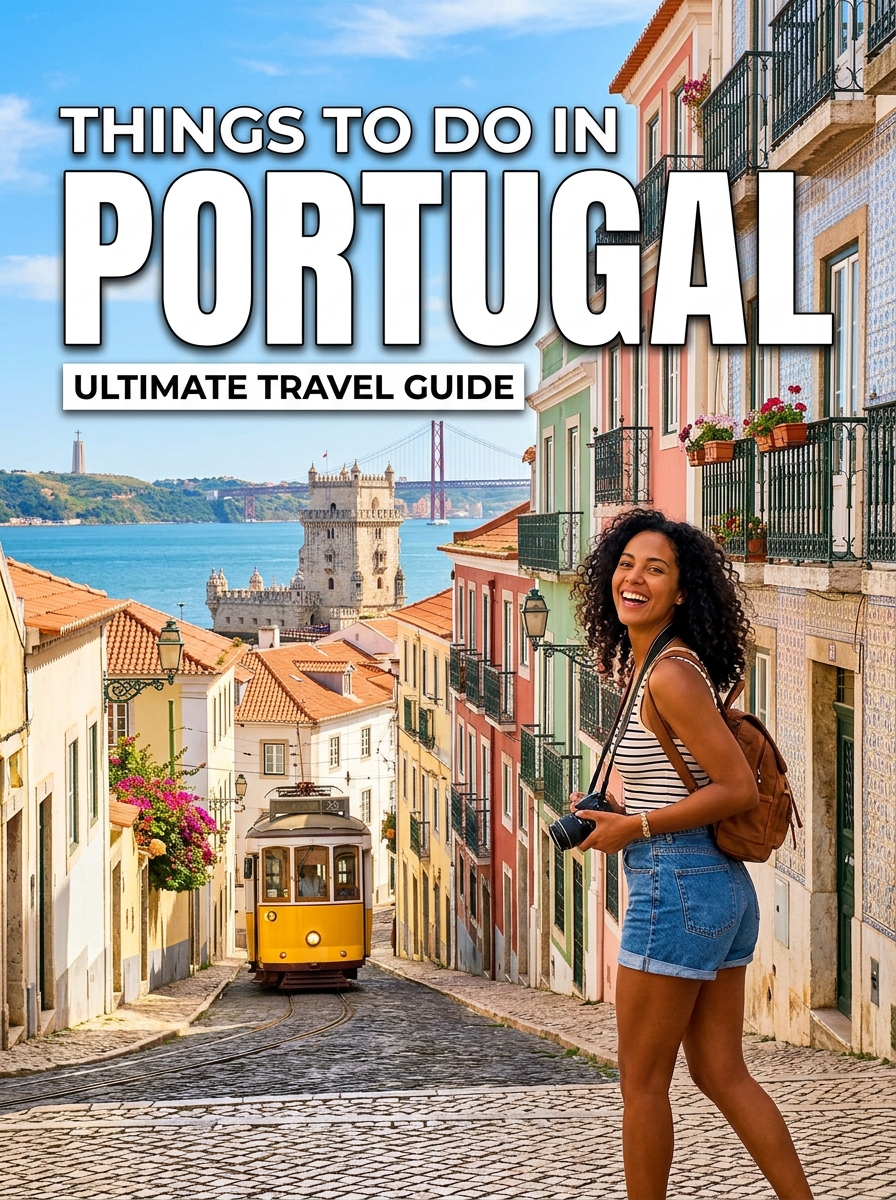
This guide covers the whole country — not just Lisbon and the Algarve. You will find the famous highlights, the overlooked regions, the food you need to eat, the mistakes to avoid, and enough practical information to plan a real trip without stress.
Why Portugal is Worth the Trip (Especially for Americans)
For Americans, Portugal hits a rare combination. The flight from the East Coast is only about six hours — shorter than getting to most of Asia and comparable to a Caribbean cruise in travel time. No visa is needed for stays up to 90 days. English is widely spoken, especially in cities and tourist areas. And compared to France, Italy, or Switzerland, Portugal is still meaningfully affordable.
Add world-class food, dramatic coastline, 800-year-old castles, and a culture that moves at a pace most Americans find genuinely relaxing, and you have a destination that earns repeat visits.
Portugal is also small enough to cover serious ground in two weeks. You can start in Lisbon, drive through the wine country, hit the Atlantic coast, and end in Porto — all without a single flight.
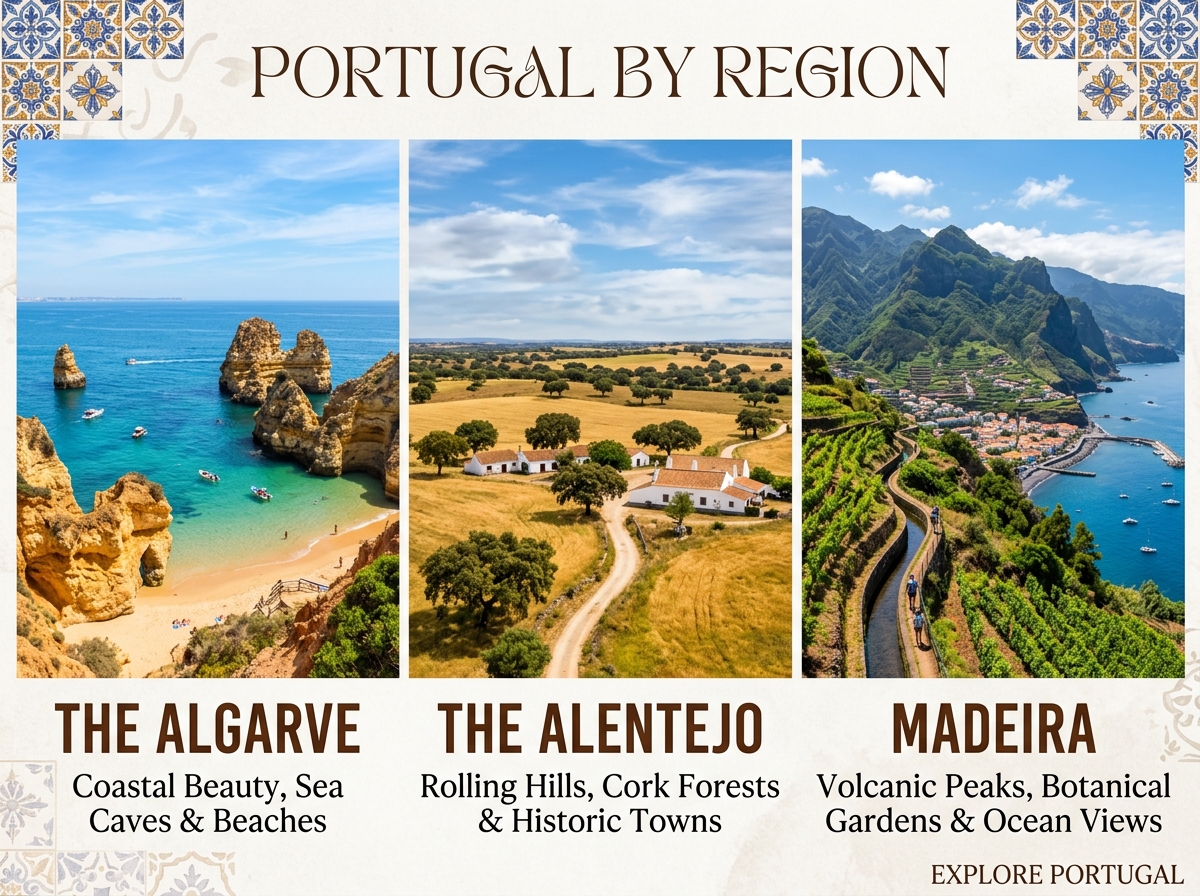
Quick Overview: Portugal by Region
Understanding the geography saves you a lot of frustration when planning.
- Lisbon (Lisboa): The capital. Colorful, hilly, and full of history. Best base for day trips to Sintra, Cascais, and the Setúbal Peninsula.
- The Algarve: The southern coast. Rocky sea cliffs, golden sand beaches, and the warmest weather in the country. Most touristy region but worth it.
- Porto and the Douro Valley: Portugal’s second city and the center of port wine country. Stunning riverfront, tilework, and food scene.
- The Alentejo: The interior plains. Cork oak forests, whitewashed hilltop villages, excellent wine, and almost no tourists. Criminally underrated.
- Sintra and the Silver Coast: Fairytale palaces close to Lisbon, plus wild Atlantic beaches on the coast north of the city.
- The Azores: A Portuguese archipelago in the middle of the Atlantic. Volcanic lakes, whale watching, and some of the best hiking in Europe. Requires a separate domestic flight.
- Madeira: Another Portuguese island, off the coast of Africa. Subtropical gardens, coastal walks (levadas), and dramatic mountain scenery.
Things to Do in Lisbon
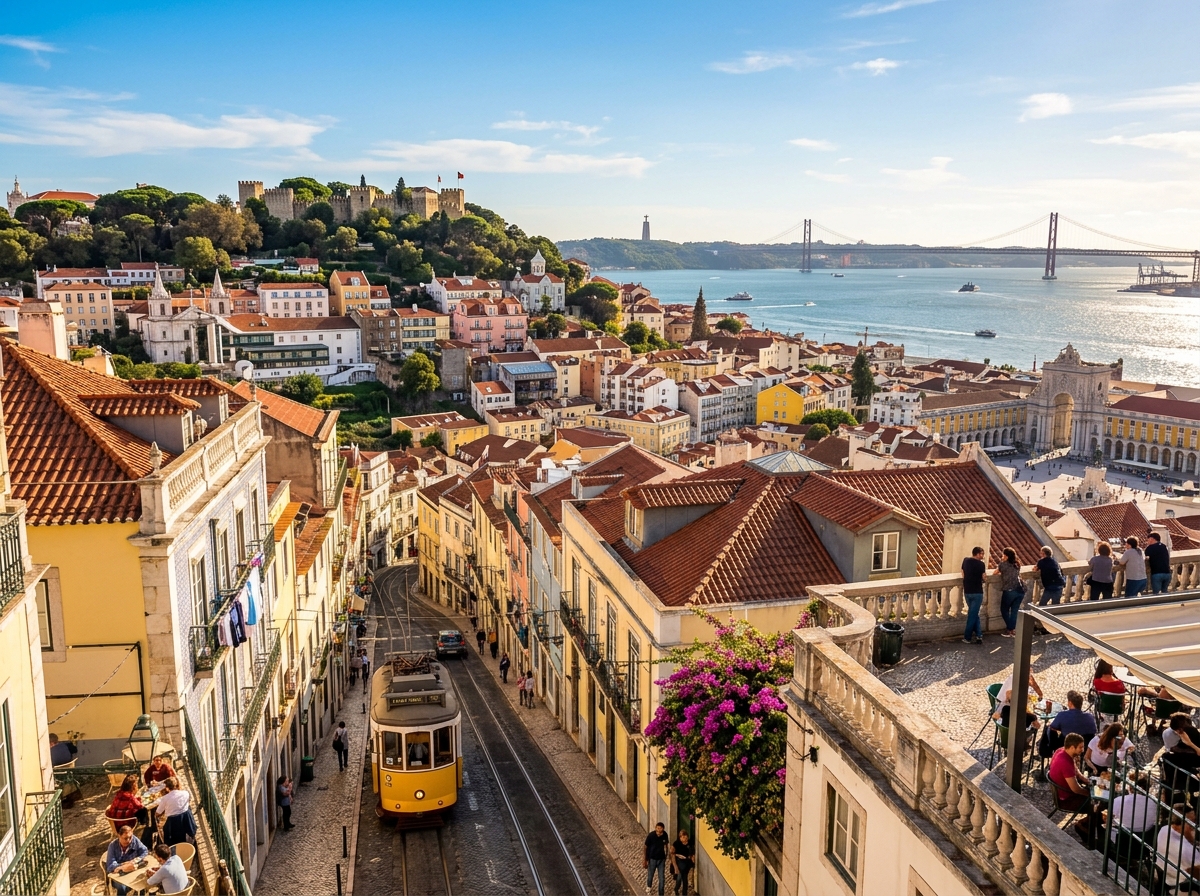
Lisbon is where most people start, and many wish they had stayed longer. It is built on seven hills, crossed by old tram lines, and covered in hand-painted tiles called azulejos. Give it at least three full days.
Explore the Alfama District
Alfama is Lisbon’s oldest neighborhood and the soul of the city. Narrow lanes wind up toward the São Jorge Castle and back down to the river. There is no efficient way to navigate it, and that is the point. Wander until you are lost, then wander more.
Stop at one of the miradouros (viewpoints) scattered through the neighborhood. Portas do Sol and Santa Luzia are the most famous. Go in the morning before the tour groups arrive or in the evening when the light turns golden.
Ride Tram 28 (but Know What You Are Getting Into)
Tram 28 is the famous yellow tram that rattles through Alfama and up to Estrela. It is genuinely scenic and worth riding once. It is also genuinely packed with tourists and a well-known spot for pickpockets. Keep your bag in front of you, your phone in your pocket, and enjoy the ride without filming every second of it.
Alternatively, take Tram 28 very early in the morning when it is nearly empty and you can actually sit down.
Visit the Jerónimos Monastery (and Buy Your Pastel de Nata Next Door)
The Jerónimos Monastery in Belém is one of the finest examples of Manueline architecture in the world. Manueline style was developed in Portugal in the late 1400s and blends Gothic stonework with maritime motifs — ropes, anchors, and armillary spheres carved into every surface. It is extraordinary up close.
Right next door, Pastéis de Belém has been selling the original pastel de nata (Portuguese custard tart) since 1837. The recipe is a closely guarded secret. The tarts are served warm, dusted with cinnamon, and taste noticeably better than every other version you will find in the city. Go early to avoid the longest lines.
Walk the LX Factory on a Sunday
LX Factory is a converted industrial complex in Alcântara with independent restaurants, bookshops, vintage stores, and a farmers market on Sundays. It draws both locals and visitors and is one of the better Sunday morning things to do in Lisbon. The market is best between 10am and 1pm before it gets extremely crowded.
See the Azulejo Tile Panels at the National Tile Museum
The Museu Nacional do Azulejo (National Tile Museum) is easy to skip but should not be. It houses the world’s most comprehensive collection of Portuguese decorative tiles, including a 36-meter-long tile panorama of Lisbon painted before the 1755 earthquake — the most detailed record of what the city looked like before it was destroyed. Entry is around €5 for adults.
Day Trip to Sintra
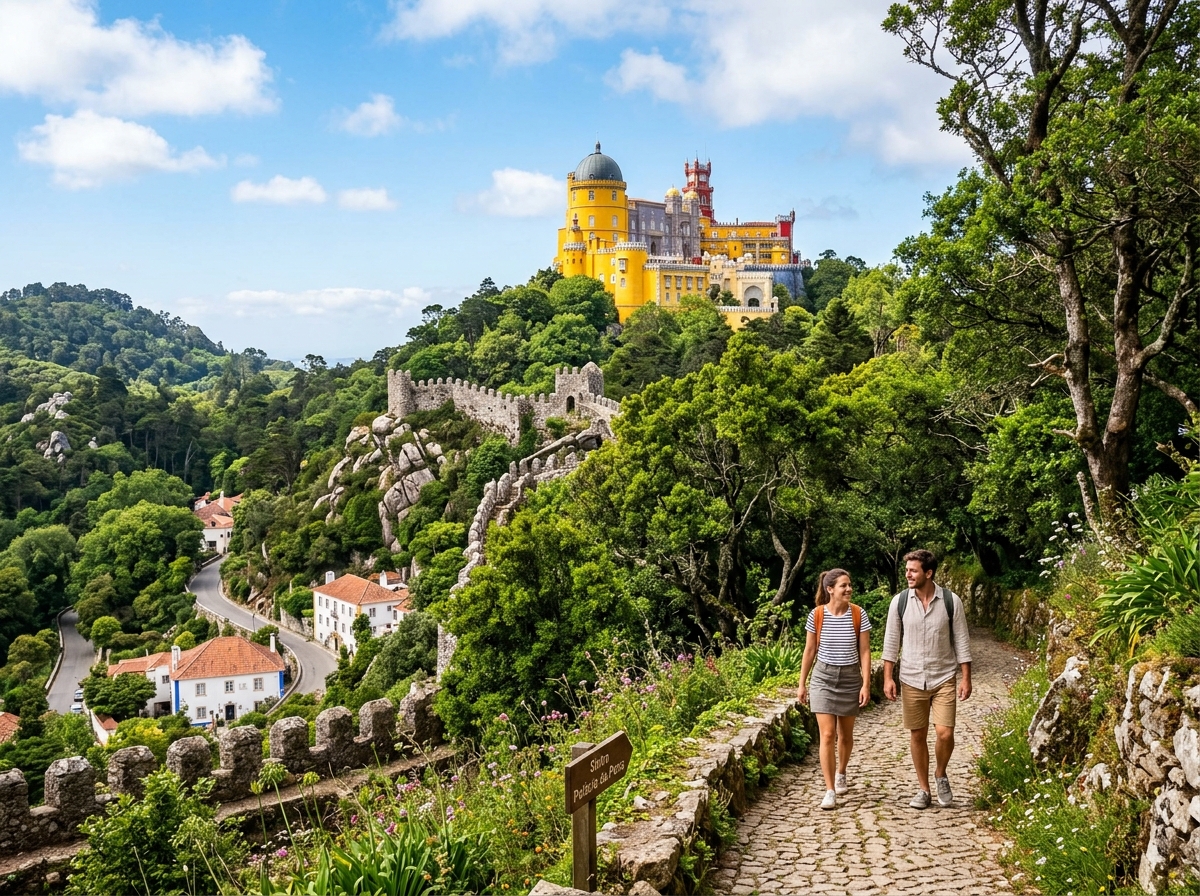
Sintra is 40 minutes from Lisbon by train and contains a concentration of palaces and castles that genuinely looks like a fairy tale set. The Pena Palace sits on a hilltop in a fog, painted yellow and red, with towers and battlements visible for miles. The Quinta da Regaleira is even more atmospheric — a private estate with a gothic tower, underground wells, and secret tunnels through the gardens.
Buy your tickets online at least a few days in advance. Both attractions sell out on weekends, and the town gets very crowded in peak season.
The train from Rossio station in Lisbon runs frequently and costs about €2.35 each way. Do not drive to Sintra on a weekend — parking is a nightmare.
Things to Do in Porto
Porto is smaller than Lisbon but many travelers prefer it. It is more compact, slightly less touristy, and has a food and wine scene that competes with anywhere in Europe.
Walk Across the Dom Luís I Bridge
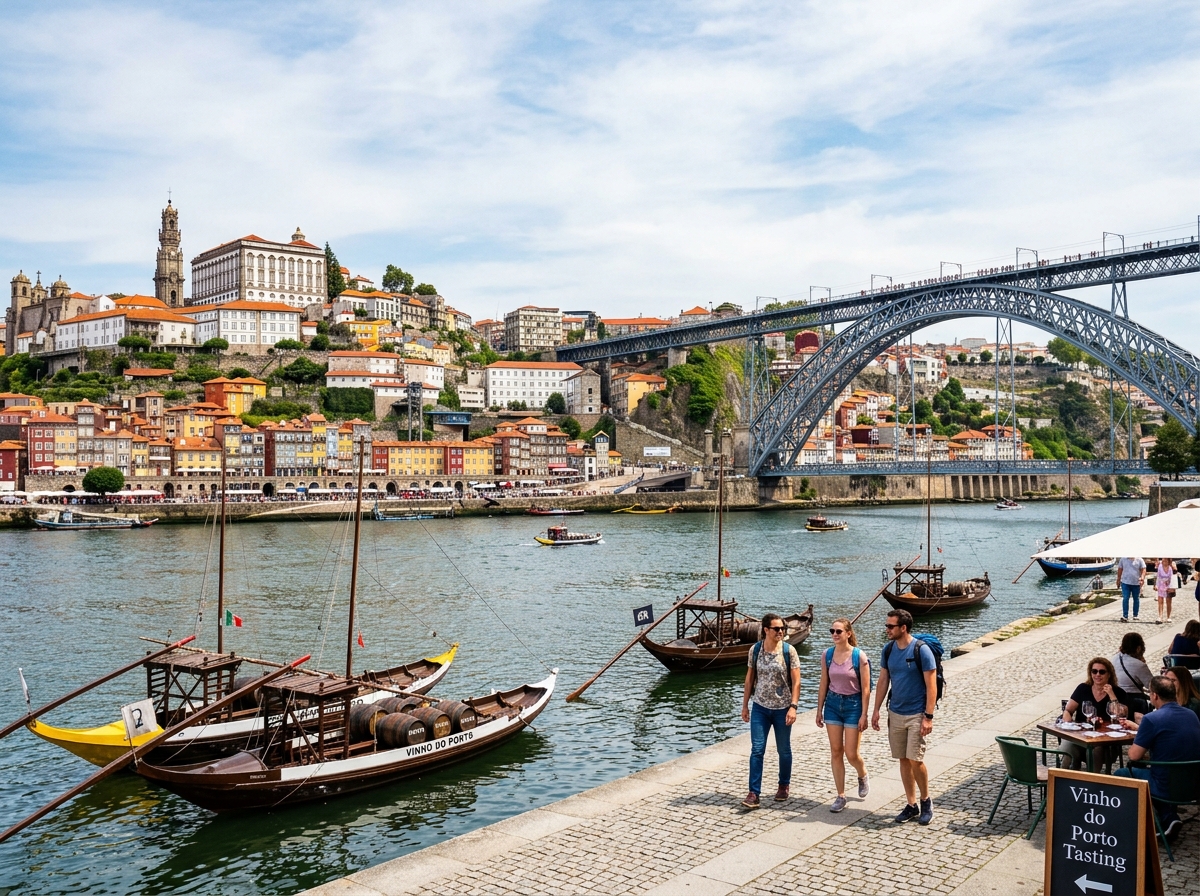
The Dom Luís I Bridge is a double-deck iron arch bridge across the Douro River. Walking across the upper level gives you views back over both Porto and the Vila Nova de Gaia wine lodges on the other side. Cross in both directions — the views change completely.
The neighborhood of Ribeira on the Porto side and the wine lodge district in Gaia sit at the base of the bridge on either bank. Both are worth walking through.
Tour a Port Wine Lodge in Vila Nova de Gaia
Port wine is aged and bottled across the river from Porto in the lodges of Vila Nova de Gaia. Almost all the major port wine houses — Graham’s, Taylor Fladgate, Sandeman — offer tours and tastings. A standard tour costs around €12-18 and includes a guided walk through the cellars plus two or three tastings.
The main styles to know: Tawny port (aged in small barrels, nutty and amber), Ruby port (younger and fruit-forward), and Late Bottled Vintage (a step below single-vintage but excellent value).
If you only have time for one, Graham’s and Taylor Fladgate are consistently the best experiences.
Eat a Francesinha
The francesinha is Porto’s most iconic dish and one of the great sandwiches in the world. It layers ham, sausage, and steak between thick slices of bread, then covers everything in melted cheese and a rich, slightly spicy tomato-and-beer sauce. It is served with French fries underneath it, swimming in the sauce.
Café Santiago on Rua de Passos Manuel is widely considered the definitive version. Expect a wait, especially at lunch.
One francesinha is a meal. Not a starter. A full meal.
Explore the Majestic Café and the Livraria Lello Bookshop
Café Majestic on Rua de Santa Catarina opened in 1921 and looks it. Belle Époque mirrors, carved wood paneling, and waiters in black and white. Coffee and a pastel de nata at a window table on a rainy Porto afternoon is a very good hour.
Livraria Lello bookshop is two blocks away and worth seeing even if you do not buy anything. The Art Nouveau interior — curved staircases, stained glass ceiling, carved wood details — is extraordinary. Entry now requires a €5 ticket (redeemable on book purchases) due to tourist volume. Go in the morning when it opens.
Take the Train to the Douro Valley
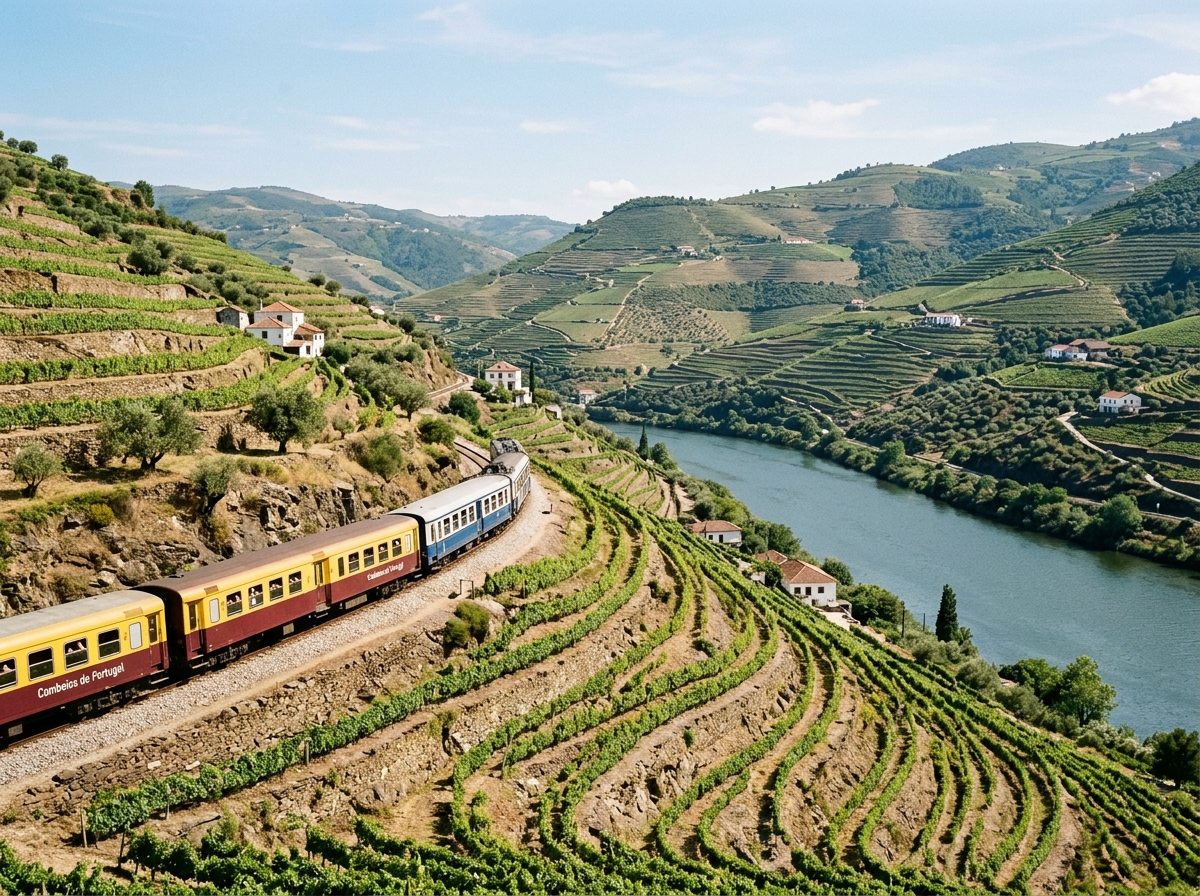
The Douro Valley is one of the most beautiful wine regions on Earth. The terraced vineyards carved into steep granite hillsides along the Douro River look almost too perfect to be real.
The train from Porto’s São Bento station to Pinhão takes about three hours and is considered one of the most scenic rail journeys in Europe. The final section along the river is genuinely spectacular.
In Pinhão, you can walk the town, visit a quinta (wine estate) for a tasting, and take a boat on the river. Quinta do Crasto and Quinta do Vallado both offer excellent tours and are within driving distance of Pinhão.
If you want to stay overnight in the valley, book well in advance. Good accommodation in Pinhão fills up fast in summer.
Things to Do in the Algarve
The Algarve is Portugal’s southern coast and the country’s most famous beach destination. It is also the most crowded in July and August. Go in May, June, or September for the same beaches and dramatically fewer people.
Explore the Sea Caves at Benagil
The Benagil Cave (Algar de Benagil) is an enormous sea cave with a hole in the domed ceiling that lets sunlight fall onto the beach inside. It looks unreal in photographs and holds up completely in person.
You cannot enter the cave by swimming from the shore safely — the current is too strong. Kayak tours and boat tours depart from Benagil Beach and nearby Marinha Beach. Tours run roughly €15-25 per person. Book in advance in peak season.
Walk the Rota Vicentina (or Just a Section of It)
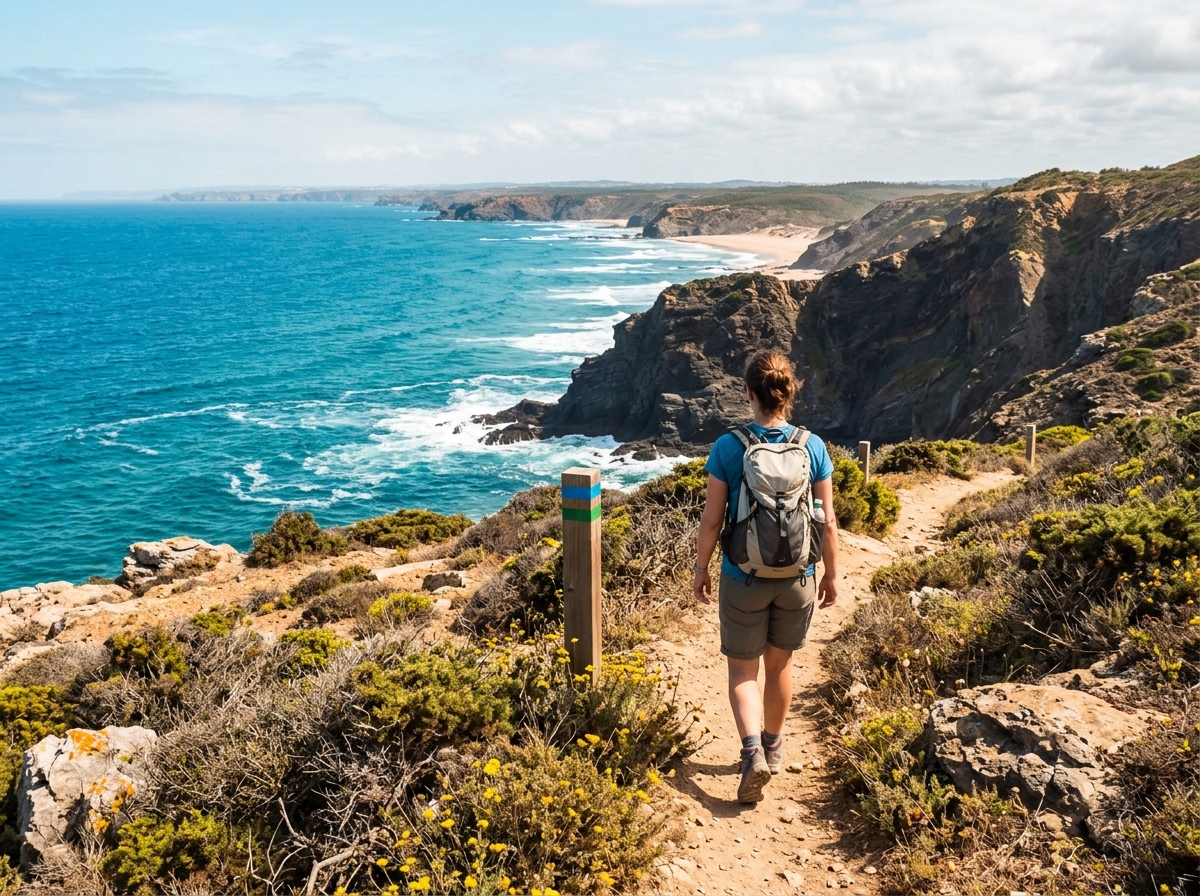
The Rota Vicentina is a long-distance coastal walking trail that runs along the west coast of the Algarve and into the Alentejo. The Fishermen’s Trail section (Trilho dos Pescadores) along the coast is considered one of the best coastal walks in Europe.
You do not need to walk the whole thing. A single day walking a section — cliffs, empty beaches, Atlantic views — is one of the most rewarding things you can do in Portugal.
Visit Cape Sagres
Cape Sagres (Cabo de São Vicente) is the southwestern tip of continental Europe. Standing on the cliffs here, the next land west is North America. It is a genuinely powerful place — windswept, wild, and historically significant as the departure point for Portuguese explorers during the Age of Discovery.
The Sagres Fortress and the Cabo de São Vicente lighthouse are both worth visiting. The drive from Lagos takes about 45 minutes.
Lagos Old Town and the Ponta da Piedade
Lagos is the most popular base in the western Algarve. The old town has good restaurants and bars, and is pleasant to walk in the evening. The main attraction nearby is Ponta da Piedade — a cluster of sea stacks, arches, and grottos in vivid orange limestone south of town.
Walk from Lagos to Ponta da Piedade (about 2 miles one way) or drive and park near the lighthouse. A small set of stairs leads down to the water where you can take kayak tours through the sea caves.
The Alentejo: Portugal’s Most Overlooked Region
Most competitor travel guides barely mention the Alentejo. That is a significant omission. This inland region covers about one third of Portugal and contains some of the country’s most authentic and beautiful experiences.
Évora: the Walled City
Évora is a UNESCO World Heritage city entirely enclosed within Roman walls. The Roman Temple of Évora stands at its center — 14 Corinthian columns from the 1st or 2nd century AD, still intact in the middle of a modern city. It is a startling sight.
Also in Évora: the Chapel of Bones (Igreja dos Ossos), a 16th-century chapel decorated with approximately 5,000 human skulls and bones embedded in the walls. It is sobering and extraordinary. The inscription above the entrance reads: “We bones are here, waiting for yours.”
Évora makes an excellent day trip from Lisbon (about 1.5 hours by train or car) or an overnight stop on a road trip south.
Marvão: the Hilltop Fortress
Marvão is a medieval fortified village at 862 meters above sea level in the Serra de São Mamede mountains, near the Spanish border. The entire village is inside castle walls. The population is around 150 people.
The views from the castle ramparts cover hundreds of miles of Alentejo plains and Spanish hills. Almost no American tourists make it here. Almost everyone who does calls it a highlight of their trip.
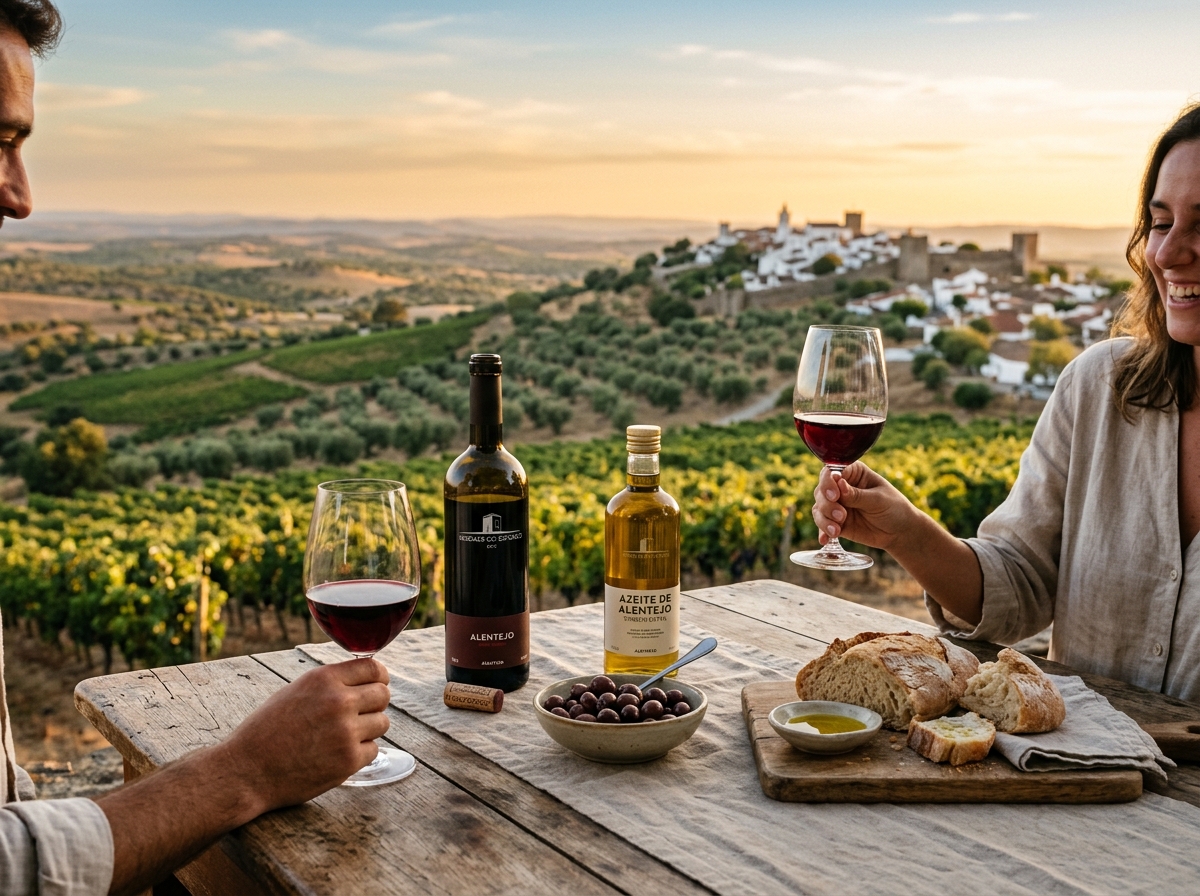
Alentejo Wine and Olive Oil
The Alentejo produces about half of Portugal’s wine by volume and is responsible for some of its best red wines — full-bodied, earthy, and made from indigenous grapes like Aragonez and Trincadeira. A bottle of good Alentejo red costs €8-15 in a restaurant and €5-8 in a shop.
The region also produces extraordinary olive oil. If you are driving through, stop at any quinta or local cooperative and taste before you buy.
The Silver Coast and Nazaré
The Silver Coast (Costa de Prata) runs from Lisbon north to Porto along the Atlantic. It has some of the most dramatic coastline in Portugal and almost no foreign tourists outside peak season.
Watch (or Surf) the Giant Waves at Nazaré
Nazaré holds multiple world records for the largest waves ever surfed. In winter (October through February), the underwater Nazaré Canyon funnels Atlantic swells into waves that reach 80 or even 100 feet. Surfers from around the world come to ride or attempt them.
Even if you are not a surfer, watching a big surf day from the Praia do Norte clifftop is one of the most astonishing natural spectacles in Europe. Check the surf forecast on Magic Seaweed or Surfline before visiting in winter.
The town of Nazaré itself is charming in the off-season, with a strong local fishing culture, women still wearing traditional layered skirts, and dried fish hanging on lines outside houses.
Visit the Walled Town of Óbidos
Óbidos is a small medieval town completely enclosed by castle walls. You can walk the full perimeter on top of the walls in about 20 minutes. The town is famous for ginjinha, a sour cherry liqueur traditionally served in a small chocolate cup.
It is genuinely pretty and easy to combine with a Nazaré day trip. It does get very crowded in summer — go on a weekday morning.
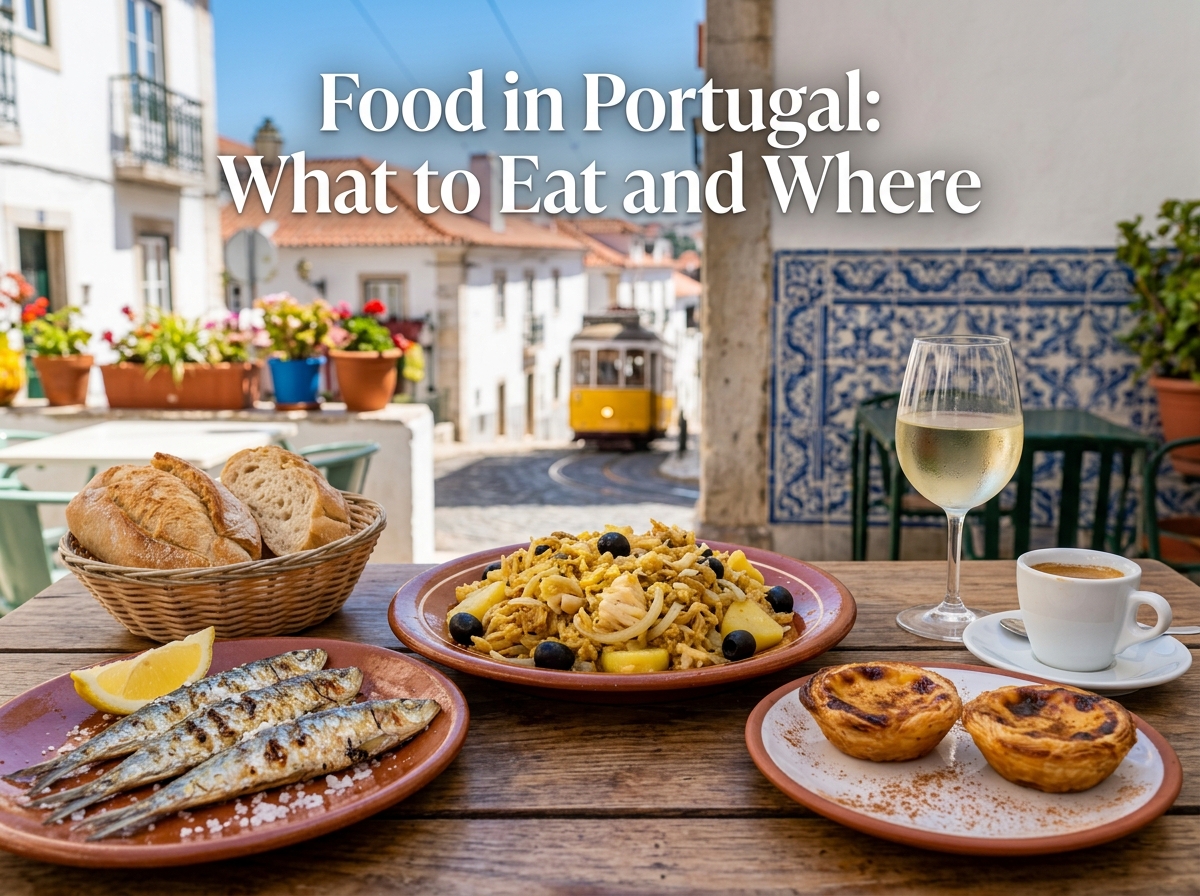
Food in Portugal: What to Eat and Where
Portuguese food is one of the best things about visiting. It is simple, ingredient-driven, and almost always good.
The Dishes You Need to Try
Pastel de Nata: The flaky custard tart. Already mentioned, still worth repeating. Eat one warm every single day you are in Portugal.
Bacalhau (Salt Cod): Portuguese people claim to have 365 recipes for salt cod, one for each day of the year. The most common preparations are Bacalhau à Brás (shredded cod with eggs, onions, and fries), Bacalhau com Natas (with cream), and Bacalhau à Lagareiro (with olive oil and garlic). All are excellent.
Petiscos: Portugal’s answer to tapas. Small plates shared at the table. Order several and eat slowly. Typical petiscos include ameijoas (clams), pica-pau (marinated pork), and bolinhos de bacalhau (salt cod fritters).
Francesinha: Porto-specific. Already described above. Mandatory.
Grilled Fish (Peixe Grelhado): The best simple meal in Portugal. A whole grilled sea bream or sea bass, dressed with olive oil and lemon, with potatoes and salad. Order it at any marisqueira (seafood restaurant) near the coast.
Caldo Verde: A simple potato and kale soup with a slice of chouriço. The national comfort food. Perfect for a cold or rainy day.
Where to Eat in Lisbon
Time Out Market Lisboa is a large food hall in Cais do Sodré with around 35 vendors from some of the city’s best restaurants. It is very popular and sometimes crowded, but the quality is consistently high and it solves the problem of a group that cannot agree on one cuisine.
For a more local experience, find a tasca — a small, family-run Portuguese restaurant with a handwritten menu, no reservations, and paper tablecloths. The food is almost always good and the prices are low.
Where to Eat in Porto
For lunch, the Mercado do Bolhão (recently renovated) has excellent vendors for local cheeses, charcuterie, fresh bread, and petiscos. For dinner, the streets of the Ribeira district and the Bonfim neighborhood have a mix of traditional and modern Portuguese restaurants.
Experiencing Fado
Fado is Portugal’s most distinctive art form. It is a genre of music built around “saudade” a Portuguese word for a melancholic longing that has no direct English translation. A good fado performance is one of the most emotionally powerful things you will encounter in Portugal.
Fado is performed in casas de fado (fado houses), typically in the Alfama and Mouraria districts of Lisbon, and in the historic center of Coimbra (where a different, more formal style of fado is sung by university students).
Authentic fado is performed with a Portuguese guitar (a 12-string instrument with a distinctive pear-shaped body) and a viola baixo (a classical guitar played as accompaniment). The singer performs standing, usually with eyes closed.
In Lisbon, look for smaller, less touristic fado houses like Mesa de Frades (a tiny converted chapel in Alfama) or Sr. Vinho in Lapa. Avoid large dinner shows that seat 200 people — they exist for tourists and the fado is background noise. A real fado house seats 30-50 people, charges an entrance or minimum consumption, and requires you to be quiet during the songs.
The Azores: Portugal’s Hidden Gem
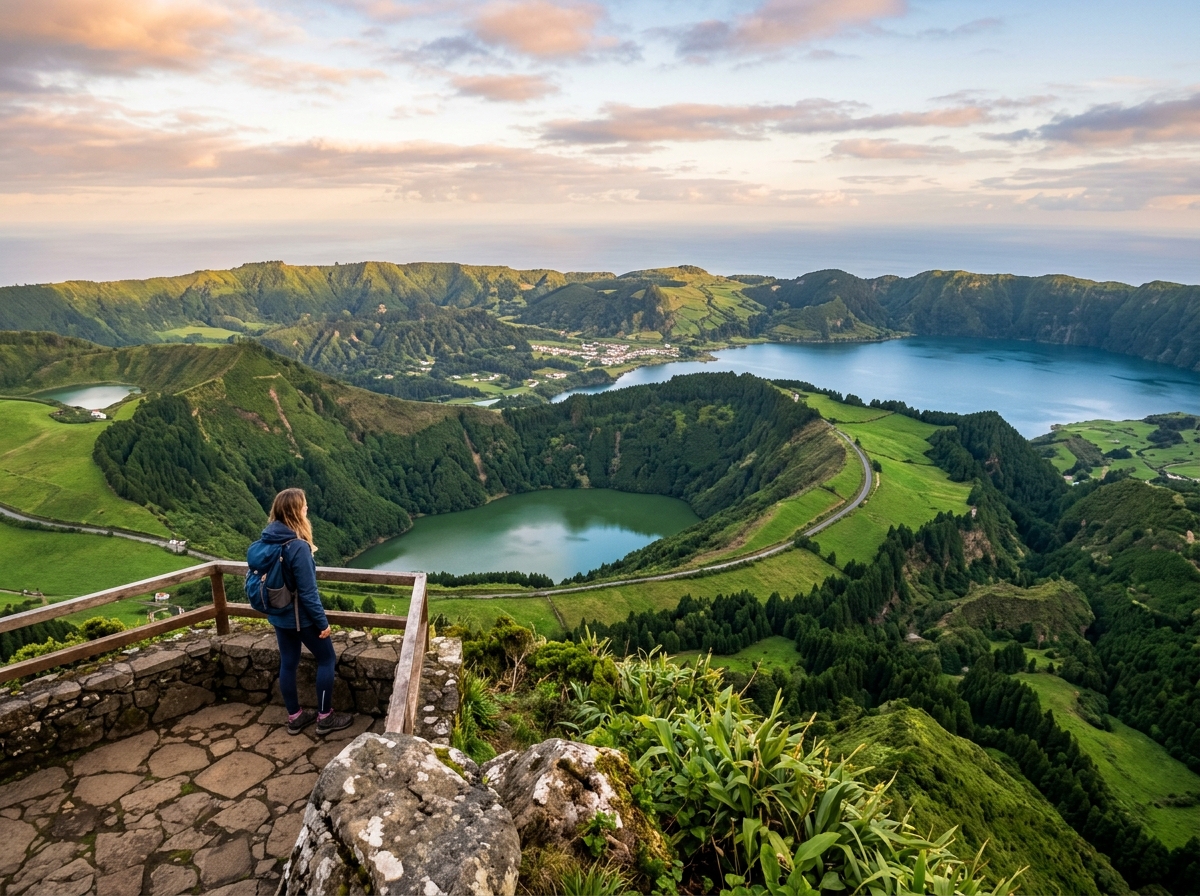
The Azores are nine volcanic islands in the middle of the Atlantic, about 900 miles west of Lisbon. They belong to Portugal but feel like a different world entirely. Direct flights from Boston and New York operate seasonally and some year-round.
São Miguel is the most visited island and the best starting point. The Sete Cidades crater lake — a 12km wide volcanic caldera with two lakes, one green and one blue, visible from the rim — is one of the most dramatic landscapes in the entire Atlantic. Hot springs bubble at Furnas, where you can eat cozido das Furnas, a stew cooked underground by geothermal heat.
Faial and Pico are neighboring islands with a crossing by ferry. Pico Island has the highest mountain in Portugal (Mount Pico, 2,351m) and one of the most unusual wine regions in the world — vineyards in low stone walls called currais, built by hand to shelter vines from Atlantic wind.
Whale watching in the Azores is among the best in the world. Sperm whales are present year-round. Blue whales, fin whales, and humpbacks pass through seasonally.
Madeira: Subtropical Adventure in the Atlantic
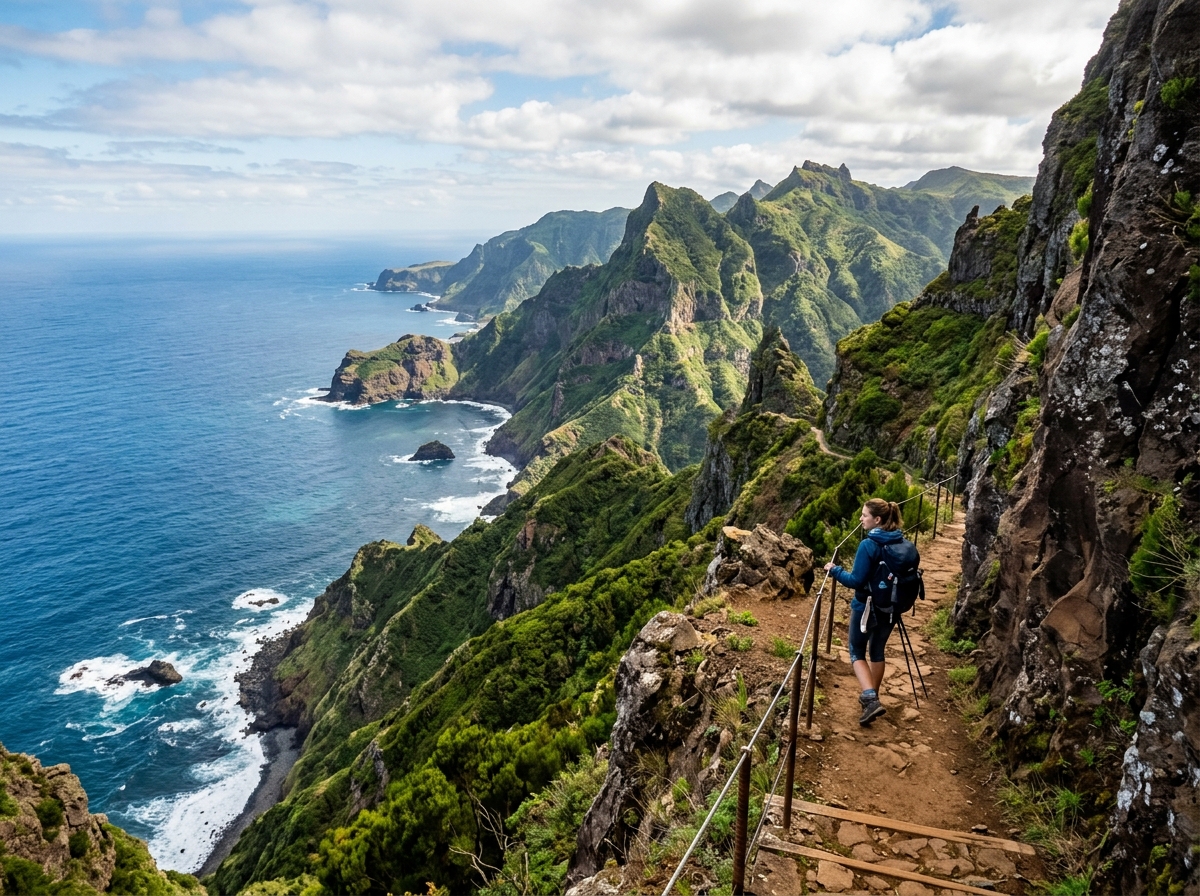
Madeira is a volcanic island about 600 miles off the coast of Morocco, with a climate that stays mild and green year-round. It is not a beach destination (most beaches are pebble or black sand), but it is one of the best places in Europe for hiking, gardens, and dramatic coastal scenery.
Levada walks are the signature activity. Levadas are irrigation channels built over centuries to carry water from the wet north side of the island to the dry south. Footpaths run alongside them for hundreds of miles. Some routes pass through laurel forest UNESCO heritage sites. The Levada do Caldeirão Verde and the PR1 Pico do Arieiro to Pico Ruivo trails are the two most celebrated hikes.
Funchal is the capital and main city, with good restaurants, the famous Mercado dos Lavradores market (for fresh tropical fruit and flowers), and the Monte Palace Tropical Garden.
Flights to Madeira operate from Lisbon in about 90 minutes.
Practical Tips: What Most Portugal Guides Skip
Do You Need a Car in Portugal?
It depends on where you are going. Lisbon and Porto are very walkable and have good public transit — you do not need a car for those cities. For the Algarve, the Alentejo, the Douro Valley, Sintra, and the Silver Coast, a car is either essential or strongly recommended.
Car rental in Portugal is inexpensive compared to the US — often €20-40 per day for a small automatic. Book in advance through a comparison site like AutoEurope or Discover Cars.
Driving tips for Americans:
- Roads in Portugal are generally good but some rural roads are very narrow.
- The A (autoestrada) highways have tolls collected electronically. If you are in a rental car, make sure the rental includes a toll device (Via Verde transponder) or ask about the pre-pay option, otherwise you will get a fine by mail.
- Parking in Lisbon and Porto city centers is very limited. Use public transit in cities.
- Speed cameras are everywhere. Speed limits are strictly enforced.
Getting a SIM Card
Pick up a local SIM card at the airport or any phone shop (MEO, NOS, and Vodafone all have stores in arrivals). A tourist SIM with 10-15GB of data costs around €10-15 and covers the whole trip.
Alternatively, activate an eSIM before you leave home through services like Airalo. This is the easiest option for Americans with newer phones.
Money and Tipping
Portugal uses the Euro. ATMs are everywhere. Credit cards are widely accepted in Lisbon and Porto and most tourist restaurants. In smaller towns and local tascas, carry cash.
Tipping culture is less rigid than in the US. Locals typically round up or leave a few coins. At a sit-down restaurant, 10% is generous and appreciated. You are not expected to tip 20% as you would at home.
Beware of the couvert. In Portuguese restaurants, bread, butter, olives, and cheese are often placed on your table automatically. You will be charged for anything you eat from this spread. If you do not want it, you can ask to have it removed, and you are never obligated to eat it.
Best Time to Visit Portugal
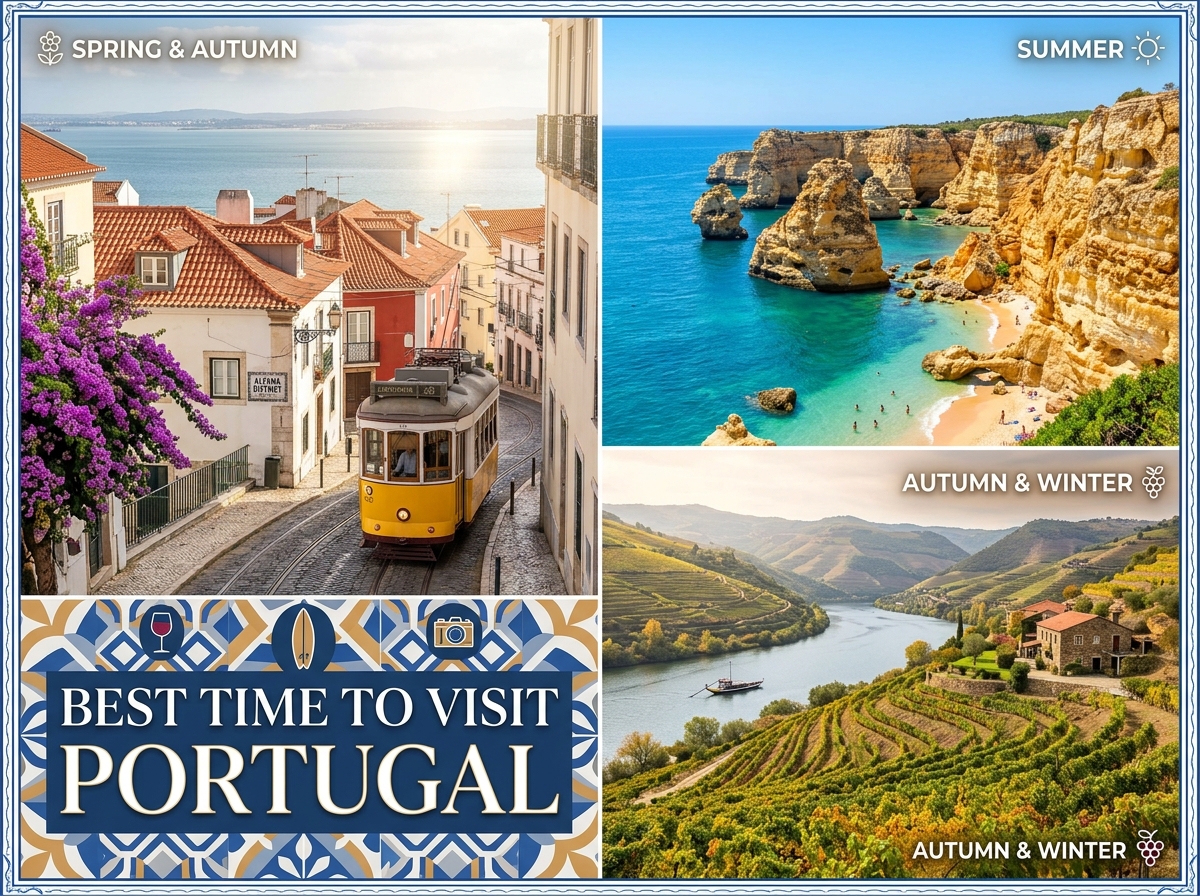
March to May: Excellent. Wildflowers cover the Alentejo, temperatures are pleasant everywhere, tourist crowds are thin, and prices are lower than summer.
June to August: Peak season. Hottest and most expensive, especially the Algarve. Beaches are at their best but very crowded in July-August.
September to October: Arguably the best time of all. Summer heat eases, crowds drop after mid-September, prices fall, and the light in the evenings is extraordinary.
November to February: Low season. Some things close in coastal resorts. But Lisbon and Porto are excellent year-round, and the Azores are accessible. Nazaré’s giant waves happen in winter.
Common Tourist Mistakes to Avoid
Only visiting Lisbon and Porto. These are wonderful cities but Portugal has so much more. At minimum, add one day in the Alentejo and one in Sintra.
Booking Sintra without tickets in advance. The Pena Palace and Quinta da Regaleira sell out. Buy online.
Eating at restaurants right on tourist squares. Praça do Comércio in Lisbon and the Ribeira waterfront in Porto have restaurants with inflated prices and mediocre food. Walk two streets back and the quality doubles and the price halves.
Ignoring the toll road situation. Many rental car companies do not explain the electronic toll system clearly. Understand how your rental handles tolls before driving on the motorways.
Underestimating travel time between regions. Portugal is smaller than the US but driving from Porto to the Algarve takes 4 hours. Plan itineraries based on the map, not wishful thinking.
Skipping the Alentejo entirely. Most visitors do. It is one of the best decisions you can make.
Suggested Itineraries
7 Days in Portugal
Days 1-3: Lisbon (Alfama, Belém, LX Factory, day trip to Sintra) Day 4: Drive south to the Algarve. Stop at Comporta beach on the way. Days 5-6: Algarve (Benagil Cave, Ponta da Piedade, Cape Sagres) Day 7: Drive to Évora for lunch, then return to Lisbon for evening flight.
10 Days in Portugal
Follow the 7-day plan, then add: Day 8: Drive from Algarve to Porto (or fly domestic, 1 hour). Days 9-10: Porto and a half-day in the Douro Valley.
14 Days in Portugal
Follow the 10-day plan, then add: Days 11-12: Nazaré and Óbidos on the Silver Coast. Days 13-14: Slow down in the Alentejo (Évora, Marvão, or a wine quinta).
Amazon Products Worth Packing for Portugal
These three items make Portugal noticeably more comfortable and practical, especially for American travelers.
1. Rick Steves Portugal Travel Guide
Rick Steves has covered Portugal extensively and his guidebook is still the best all-in-one printed reference for American travelers. It includes walking tours of Lisbon and Porto, regional coverage of the Algarve and Alentejo, and honest, practical advice without the fluff. Useful on planes when you have no cell signal.
Search “Rick Steves Portugal” on Amazon
2. Compression Packing Cubes
Portugal is a trip that encourages you to move around — Lisbon to the Algarve to Porto to the Douro Valley. Compression packing cubes let you pack more efficiently in a smaller bag and stay organized when you are checking in and out of multiple hotels. The BAGAIL 8-Set Compression Packing Cubes are consistently well-reviewed and reasonably priced.
Search “BAGAIL compression packing cubes” on Amazon
3. Portable Universal Travel Adapter
Portugal uses Type F (Schuko) plugs, which are the same two-round-pin standard used across most of Europe. American plugs do not work without an adapter. A good universal travel adapter with USB-A and USB-C ports saves you carrying multiple chargers. The EPICKA Universal Travel Adapter is compact, well-built, and handles 150 countries.
Search “EPICKA universal travel adapter” on Amazon
Frequently Asked Questions
Is Portugal safe for American tourists? Yes. Portugal consistently ranks among the safest countries in Europe and the world. The main concern in Lisbon is petty theft — pickpocketing on Tram 28, in Alfama, and in crowded markets. Use a money belt or anti-theft crossbody bag and you will have no problems.
How much does a trip to Portugal cost? Portugal is significantly cheaper than France, Italy, or the UK. A mid-range daily budget for one person (hotel, meals, transport, entrance fees) runs about $100-150. Budget travelers can get by on $60-80. A nice dinner for two with wine costs $40-60 in Lisbon. In the Alentejo and smaller towns, prices drop further.
Do I need to speak Portuguese? No. English is widely spoken in Lisbon, Porto, and tourist areas across the Algarve. In rural areas and smaller towns, you may encounter locals who speak only Portuguese, but basic phrases and Google Translate handle most situations easily.
What is the best city in Portugal to visit? Lisbon for first-timers. Porto for people who have already been to Lisbon. The Alentejo for anyone who wants to experience Portugal without the tourist crowds.
Is Portugal expensive compared to Spain? Portugal is generally 15-25% cheaper than Spain, particularly in accommodation and restaurants. Both are significantly cheaper than France, Germany, or Scandinavia.
How many days do you need in Portugal? Seven days is the minimum to see Lisbon, one other region, and get any real feel for the country. Ten to fourteen days is the sweet spot for a proper trip. A week in Portugal feels longer than a week in many countries because the pace is slower and there is less rushing.
Can you drink the tap water in Portugal? Yes. Tap water in Portugal is safe to drink in all major cities and most of the country. Some people notice a slight mineral taste in certain areas, but it is not a health concern.
What language do people speak in Portugal? Portuguese. Not Spanish. The two languages share roots but are not mutually intelligible, and Portuguese people appreciate the distinction. Learning a few words — obrigado (thank you), por favor (please), and bom dia (good morning) — goes a long way in smaller towns.
Final Thoughts
Portugal is one of those rare places that rewards both the first-time visitor with a week and the seasoned traveler with a month. The famous things are famous for good reasons. The overlooked things — the Alentejo plains, the hilltop villages, a fado house in Alfama at midnight — are the things you will keep telling people about when you get home.
Go in the spring or the fall. Eat everything. Learn the word saudade. And when you leave, you will understand exactly what it means.
Disclosure: This article contains Amazon affiliate links. If you purchase through these links, we may earn a small commission at no extra cost to you. All recommendations are based on genuine usefulness for Portugal travel.