Vancouver is one of those cities that gets under your skin. Snowcapped mountains on one side, the Pacific Ocean on the other, and a downtown core so walkable you could spend days just wandering it. For Americans, it also happens to be one of the easiest international trips you can take. It is just a few hours north of Seattle, has no language barrier, and does not require a visa for stays under 180 days.
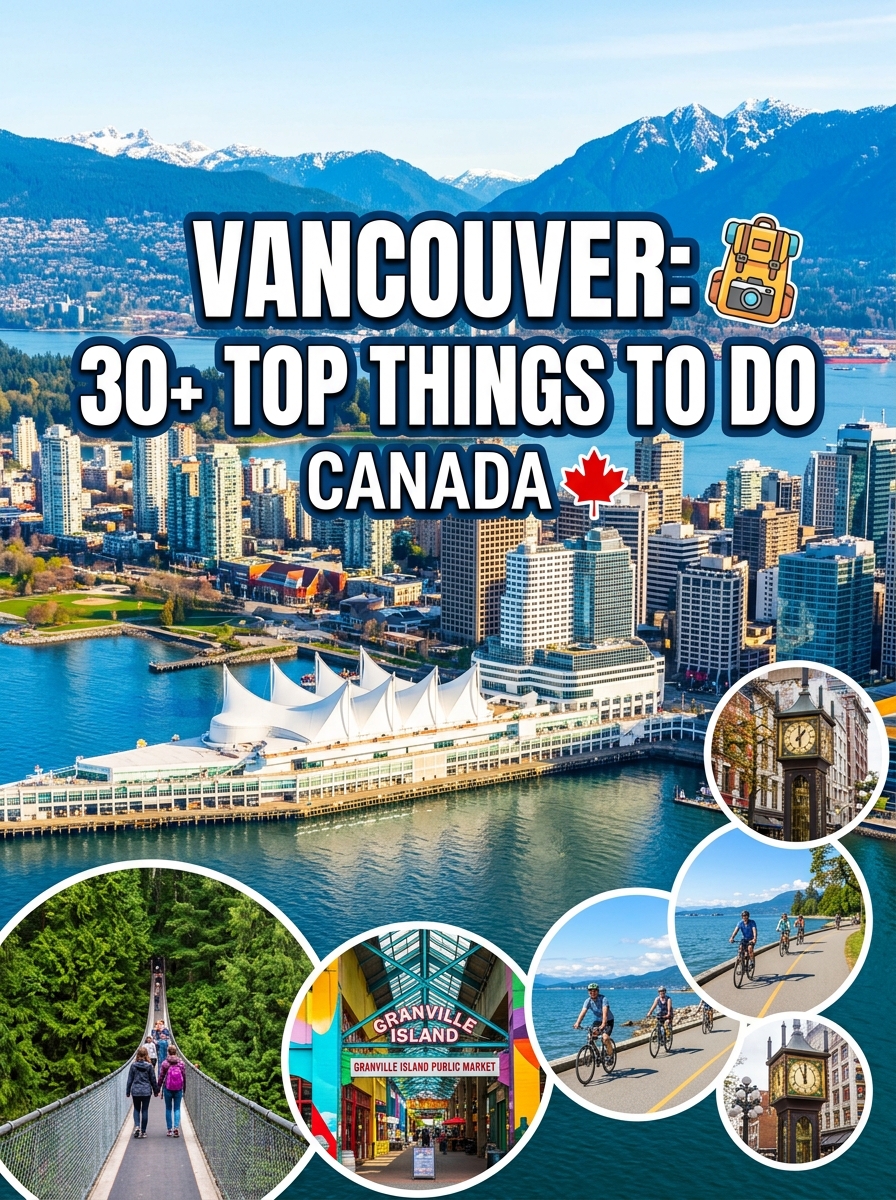
But here is the thing: most travel guides give you the same 10 attractions and call it done. This guide covers 30 plus things to do in Vancouver, Canada, written specifically for US travelers. You will find tips on crossing the border, how to save money, what locals actually do, and some spots most tourists never find.
Before You Go: What US Visitors Need to Know
Do Americans Need a Passport for Vancouver?
Yes. A valid US passport, passport card, or NEXUS card is required to enter Canada. You do not need a visa for stays under 180 days. If you are driving, bring your passport and vehicle registration. If traveling with a child who is not your own, bring a notarized letter from the child’s parent or guardian.
One important note: Canada has strict gun laws. Do not bring firearms across the border. Gun-related arrests at border crossings happen regularly.
Currency and Costs
Canada uses the Canadian dollar (CAD). As of 2026, the exchange rate is favorable for Americans, so your dollars stretch further here. Most places accept US credit cards without issue, but notify your bank before you go to avoid fraud holds.
Getting There from the US
The most common entry points for Americans are:
- By car: The Peace Arch border crossing (Highway 99) and Pacific Highway crossing are the main options near Vancouver. Expect wait times, especially on weekends.
- By train: Amtrak’s Cascades route runs from Seattle to Vancouver’s Pacific Central Station. A scenic, stress-free option.
- By plane: Vancouver International Airport (YVR) is well-connected from major US cities.
Getting Around Vancouver
You do not need a car once you are in the city. Vancouver’s TransLink system covers SkyTrain, buses, and the SeaBus ferry. A reloadable Compass Card makes transit easy and affordable. The city is also one of the most bike-friendly in North America, with extensive protected lanes.
The Top Things To Do in Vancouver, Canada
1. Walk or Bike the Stanley Park Seawall
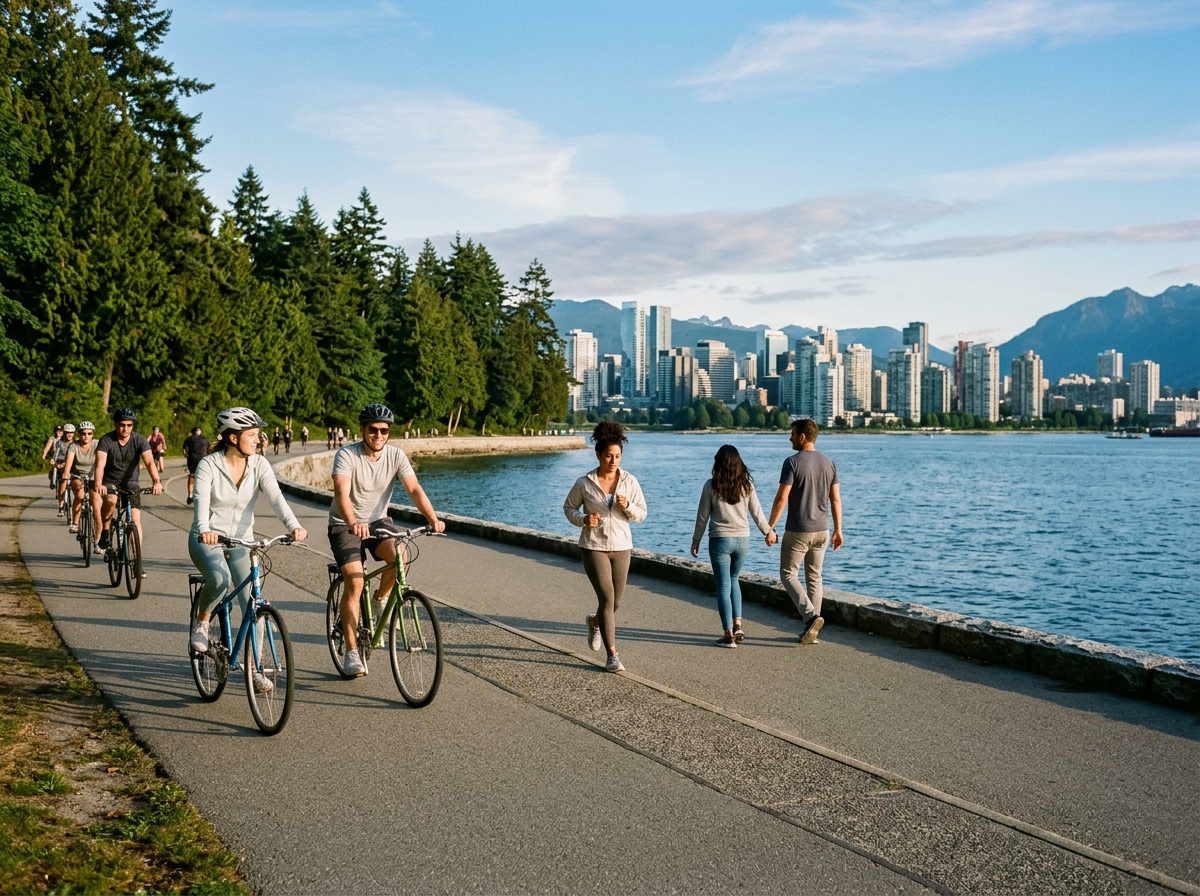
Stanley Park is Vancouver’s crown jewel, and the Seawall is how most people experience it. The paved path runs 10 kilometers around the park’s perimeter, with views of Burrard Inlet, the North Shore Mountains, and the Lion’s Gate Bridge.
You can walk the full loop in about two to three hours or bike it in roughly one hour. Bike rentals are available just outside the park entrance near Denman Street. Go early in the morning to beat the crowds, especially in summer.
Along the way, look for the Girl in a Wetsuit sculpture perched on a rock just offshore. It is Vancouver’s version of Copenhagen’s Little Mermaid and a genuine landmark.
Cost: Free to walk. Bike rentals start around $10 to $15 per hour.
2. Explore Stanley Park Beyond the Seawall
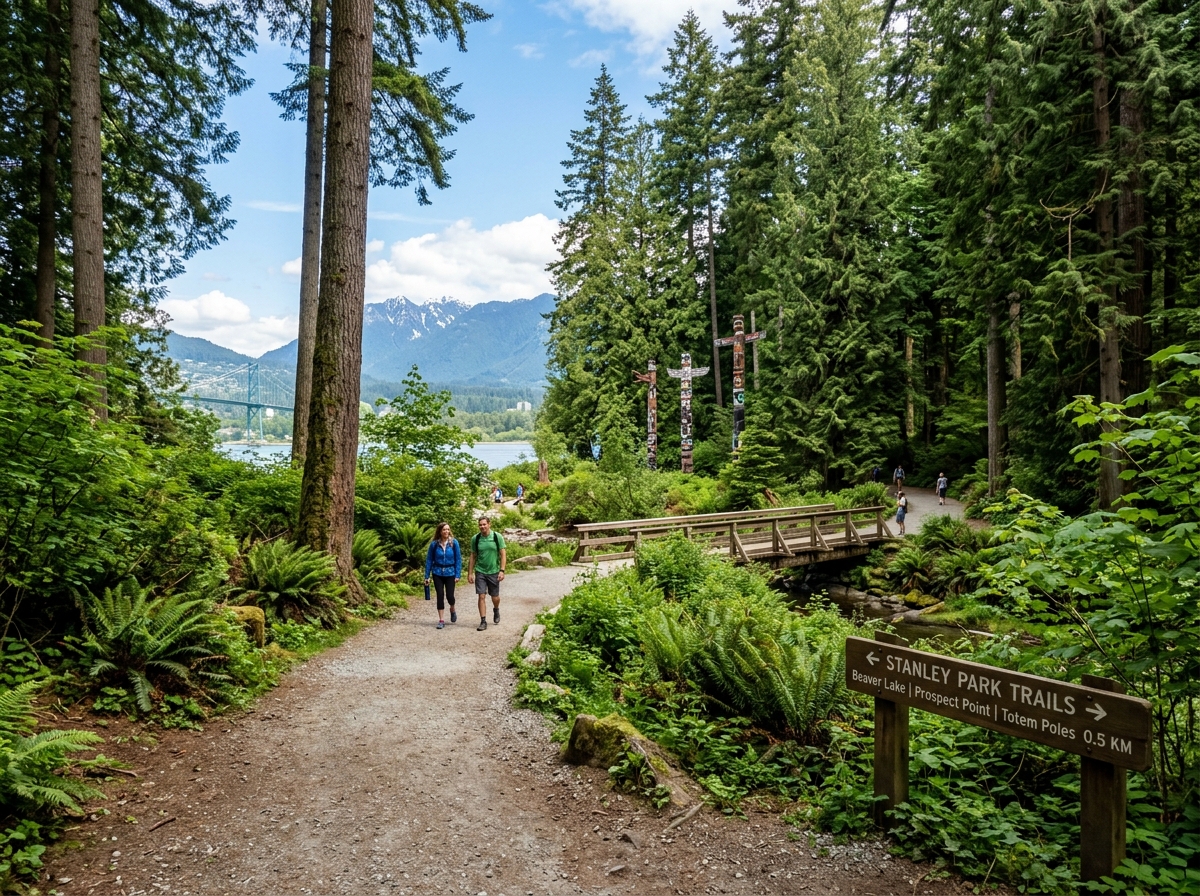
Most visitors stick to the Seawall. The trails inside the park are far less crowded and take you through old-growth forest with trees hundreds of years old. The Rawlings Trail and the trail around Beaver Lake are both excellent.
Lost Lagoon, near the park’s main entrance, is a peaceful freshwater lake home to swans, herons, and other wildlife. It is one of the best spots in the city for a quiet morning walk.
The park also contains the Vancouver Aquarium, the Totem Poles at Brockton Point, Second Beach, Third Beach, and the Rose Garden. You could genuinely spend a full day here.
3. Visit the Capilano Suspension Bridge Park
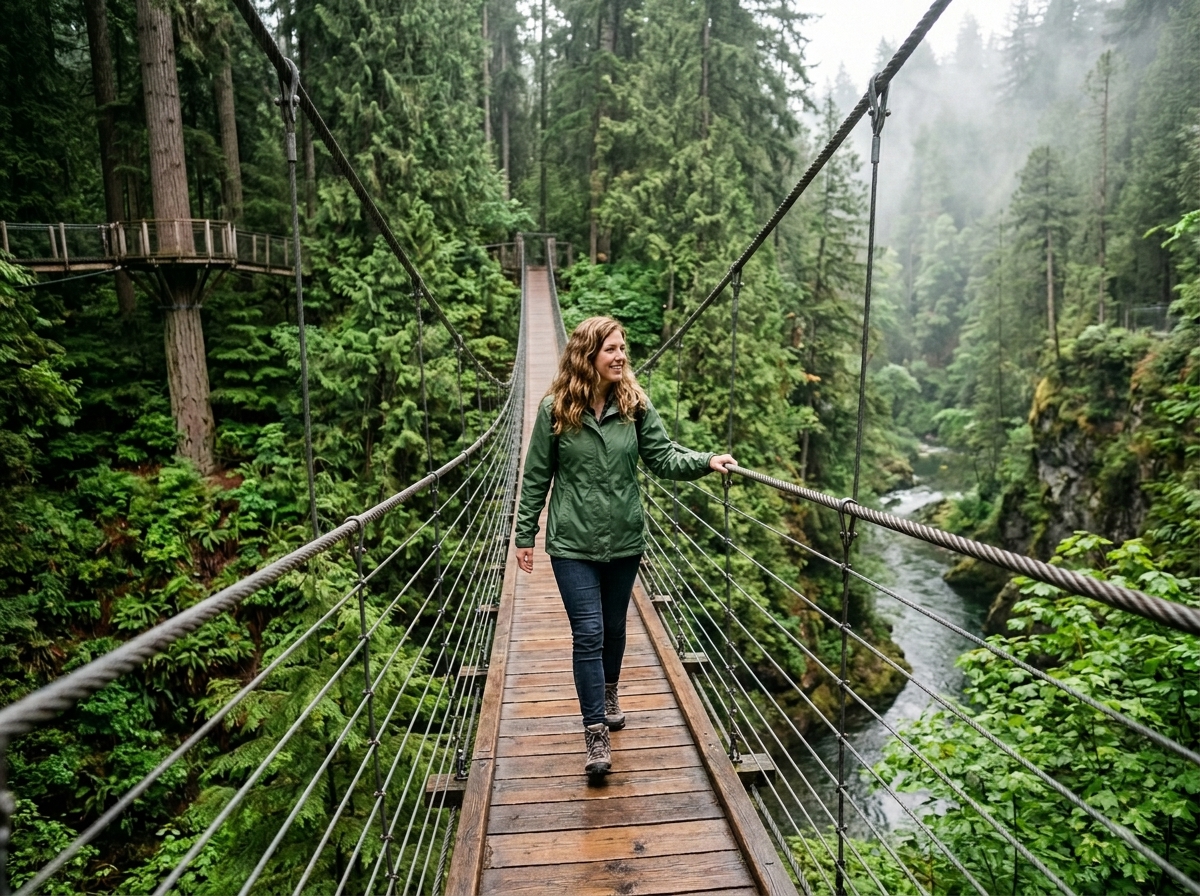
Just 15 minutes north of downtown by car or bus, the Capilano Suspension Bridge is the oldest tourist attraction in Vancouver, dating back to 1889. The bridge is 137 meters long and 70 meters above the Capilano River. Yes, it sways when you walk across it.
Once on the other side, the Treetops Adventure lets you walk across seven suspension bridges set among 250-year-old Douglas fir trees, up to 33 meters above the forest floor. The Cliffwalk hugs the canyon edge with views straight down to the river.
Allow at least two to three hours here. Book tickets in advance to skip the line.
Cost: Around $65 to $70 per adult as of 2026. Worth it if outdoor adventure is your thing.
4. Take a Free Alternative: Lynn Canyon Park
If Capilano feels too pricey, Lynn Canyon is your answer. It has its own suspension bridge, hiking trails through old-growth forest, and swimming holes, all completely free. The bridge is smaller than Capilano’s but the setting is just as beautiful.
The park is in North Vancouver and easily reachable by transit. Many locals prefer it for exactly that reason: fewer crowds, no admission fee, and the same forest atmosphere.
5. Granville Island Public Market
Granville Island sits under the Granville Bridge and was once an industrial district. Today it is one of the best food markets in North America.
The indoor Public Market has stalls selling fresh salmon, Dungeness crab, artisan cheese, baked goods, local produce, and hot food from vendors around the world. It gets crowded on weekend afternoons, so go on a weekday morning if you can.
Beyond the market, the island has art studios, galleries, a brewing company, a sake distillery (Canada’s oldest), live theater venues, and waterfront walkways. The False Creek Ferries and Aquabus both stop here, making it easy to reach from downtown.
Cost: Free to enter. Budget around $15 to $30 for food and snacks.
6. Ride the SeaBus Across Burrard Inlet
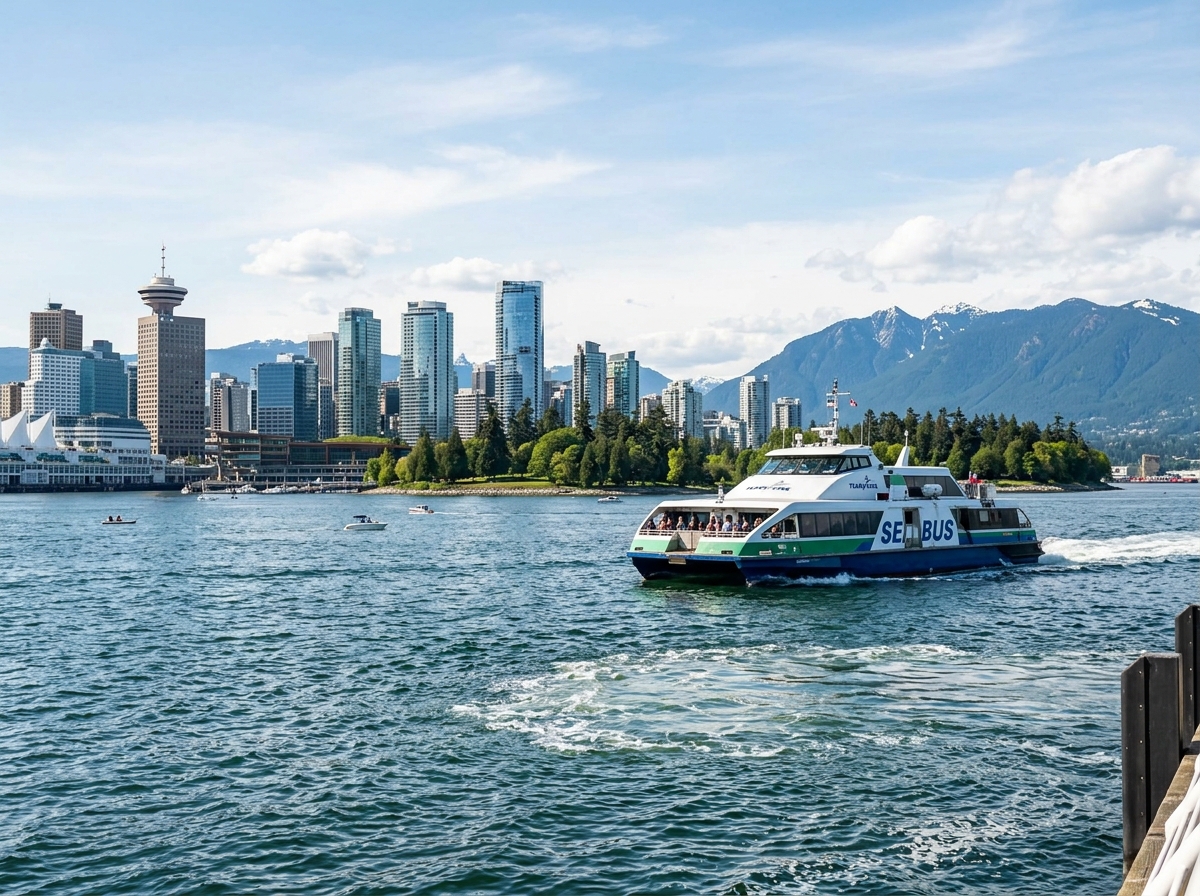
This is one of Vancouver’s best kept secrets for visitors. The SeaBus is a passenger ferry that crosses Burrard Inlet from Waterfront Station to Lonsdale Quay in North Vancouver. The 12-minute crossing gives you panoramic views of the downtown skyline, the port, and the mountains.
It is fully part of the TransLink transit system, so you pay just a regular bus fare. Once in North Vancouver, Lonsdale Quay has its own waterfront market, restaurants, and direct transit connections to Capilano, Lynn Canyon, and Grouse Mountain.
7. Grouse Mountain
On a clear day, Grouse Mountain’s observation deck gives you a 360-degree view of greater Vancouver, the Fraser Valley, and the Salish Sea. It is 15 minutes from downtown by bus and gondola.
In summer, the mountain offers zip lining, a wildlife refuge with grizzly bears, a lumberjack show, hiking, and paragliding. In winter, it has skiing, snowshoeing, and outdoor ice skating with the city lights below.
The Grouse Grind is a famous 2.9-kilometer trail straight up the mountain face. Locals call it “Mother Nature’s Stairmaster.” It is hard but completely doable for anyone reasonably fit. You hike up and take the gondola down.
Cost: Gondola approximately $68 to $75 per adult in 2026. Hiking up the Grind is free, but you pay for the gondola down.
8. Gastown and the Steam Clock
Gastown is Vancouver’s oldest neighborhood, full of cobblestone streets, Victorian architecture, and brick buildings. It sits just east of downtown and makes for a great afternoon of wandering.
The Steam Clock at the corner of Water and Cambie streets is touristy, yes, but genuinely fun. Every 15 minutes it whistles a steam-powered chime. Every hour it gives a full performance. It is worth a few minutes of your time.
Beyond the clock, Gastown has excellent cocktail bars, independent restaurants, and some of the best street food in the city. The area around Blood Alley has some good spots worth exploring.
9. Chinatown and the Dr. Sun Yat-Sen Garden
Vancouver’s Chinatown is one of the largest in North America and one of the oldest. The Chinese Canadian Museum, opened in 2023, tells the history of Chinese immigration to Canada through immersive exhibits and beautiful photography.
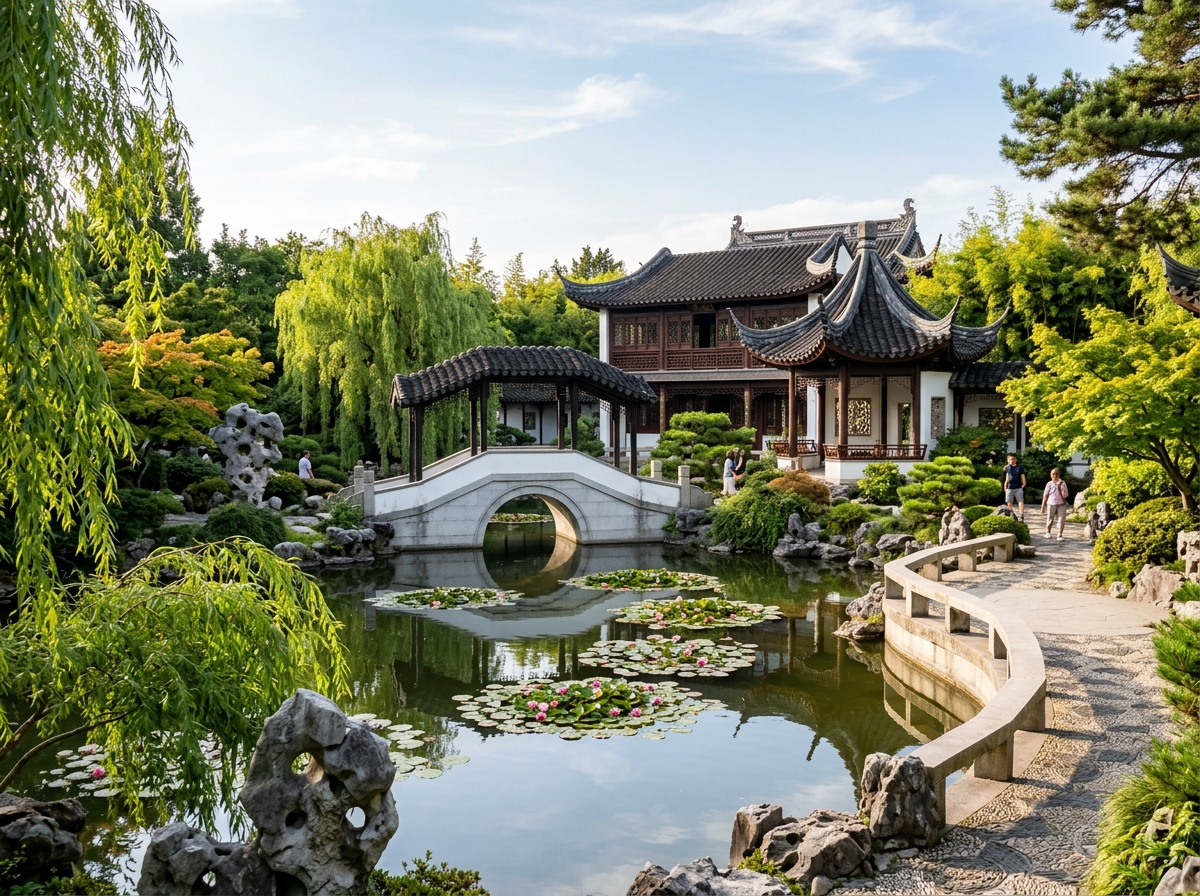
The Dr. Sun Yat-Sen Classical Chinese Garden is a UNESCO-recognized authentic Ming Dynasty-style garden built by artisans from China in 1986. It is a calm, beautiful space that feels completely removed from the city. The adjacent free park is also lovely for a walk.
The neighborhood also has herbal medicine shops, bakeries, and the original Chinatown night market in summer.
10. Kitsilano Beach and the Kits Pool
Kitsilano, or “Kits,” is the neighborhood locals go to on sunny days. Kits Beach has volleyball courts, a grassy hill perfect for picnics, and clear water with views of the downtown skyline and mountains.
The Kitsilano Pool is enormous: three times the length of an Olympic pool, salt water, and with mountain views. It is one of the most unique outdoor swimming experiences in any city. Open in summer only.
The streets behind the beach are full of coffee shops, yoga studios, and casual restaurants. Fourth Avenue is the main commercial strip and worth a stroll.
11. VanDusen Botanical Garden
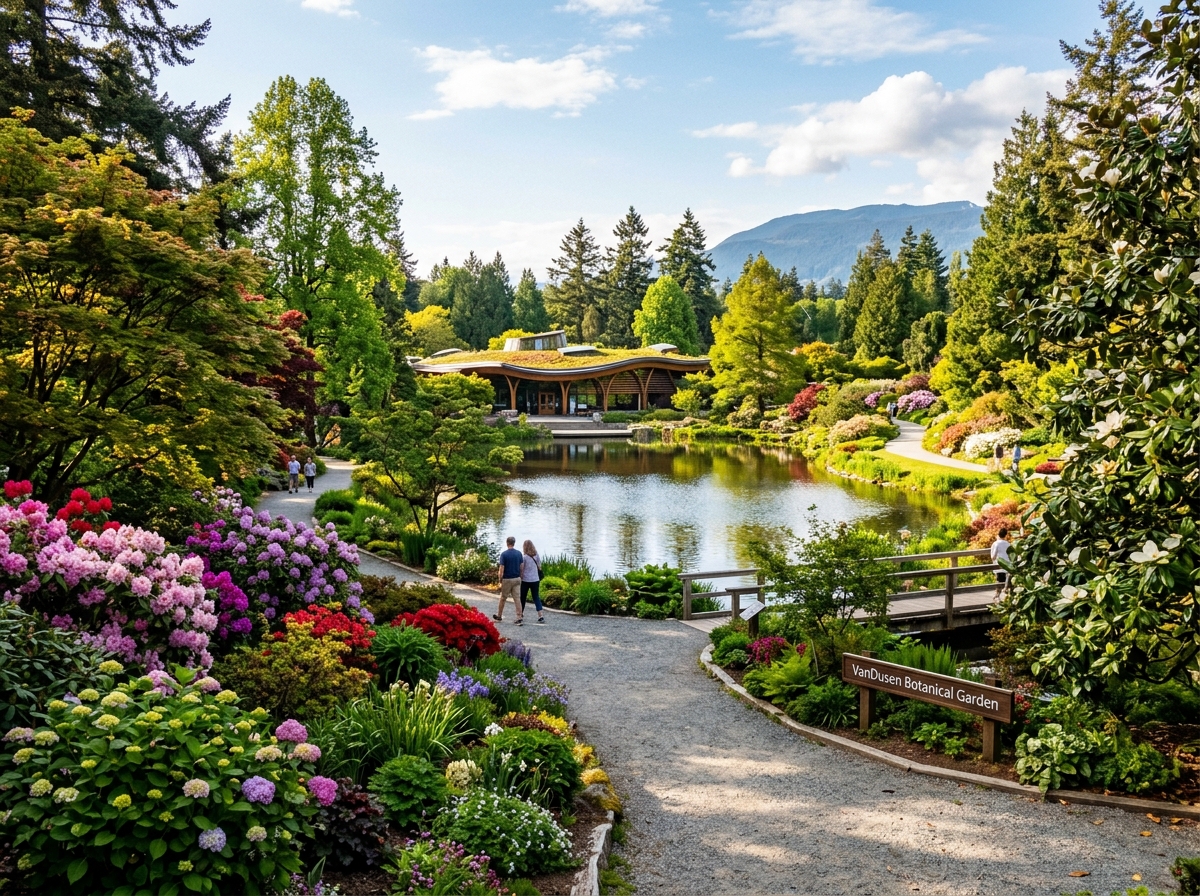
This 55-acre garden in the South Granville neighborhood has over 7,500 plant species from six continents. It is spectacular in spring when the magnolias and cherry blossoms are blooming, but beautiful in every season.
The famous hedge maze is a favorite with families. The garden also hosts the Festival of Lights in December, when it is decorated with more than a million lights. One of the more underrated attractions in the city.
Cost: Around $13 to $15 per adult.
12. The Museum of Anthropology at UBC
The Museum of Anthropology at the University of British Columbia is one of the best museums in Canada. The building itself, designed by Arthur Erickson, is stunning, with floor-to-ceiling glass overlooking the forest and ocean.
Inside, you will find the most significant collection of Northwest Coast First Nations art and artifacts in the world, including monumental totem poles, masks, and ceremonial objects. Bill Reid’s massive sculpture “The Raven and the First Men” is alone worth the visit.
The surrounding UBC campus has beautiful gardens, Pacific Spirit Regional Park with kilometers of hiking trails, and the Wreck Beach clothing-optional beach below the cliffs.
Cost: Around $18 to $22 per adult.
13. FlyOver Canada at Canada Place
Canada Place is the landmark building on the waterfront that looks like a giant ship with white sails. It is home to a cruise ship terminal and convention center, but for tourists, the main draw is FlyOver Canada.
FlyOver is a flight simulation ride that takes you on a sweeping aerial journey over Canada’s most dramatic landscapes, from the Arctic to Niagara Falls to the Rockies. The seats tilt and move, and there is wind, mist, and scents. It is genuinely impressive and appropriate for all ages.
The plaza outside Canada Place, called Jack Poole Plaza, has the Olympic Cauldron from the 2010 Winter Games. On clear days, the views of the mountains from here are excellent.
Cost: Around $30 to $35 per adult.
14. Science World
The geodesic dome on the False Creek waterfront is one of Vancouver’s most recognized buildings. Inside is Science World, a hands-on science museum that works equally well for adults and kids.
The exhibits cover physics, biology, and technology through interactive displays. The OMNIMAX Theatre has a massive dome screen showing documentary films. The outdoor water play area is free in summer.
Cost: Around $30 to $35 per adult.
15. Take an Aquabus Ride on False Creek
The Aquabus fleet of small, colorful ferries is one of the city’s most enjoyable and affordable experiences. The boats run every few minutes and connect Granville Island, Science World, Yaletown, and the downtown waterfront.
A hop-on, hop-off day pass costs around $16 to $20 and gives you unlimited rides. It is a great way to see False Creek and the city skyline from the water, and a practical way to get between neighborhoods.
16. English Bay and the West End
English Bay Beach is the most popular urban beach in Vancouver. The sandy stretch faces west, which means it has some of the best sunset views in the city. In summer, it gets packed, but on a September evening it is perfect.
The surrounding West End neighborhood is one of the most walkable in North America. Denman Street and Davie Street have countless cafes, restaurants, and shops. Sunset Beach runs south toward Granville Bridge and is quieter than English Bay itself.
17. The Vancouver Lookout
The Harbour Centre tower in downtown Vancouver has an observation deck at 167 meters. The 360-degree view from the top is one of the best ways to orient yourself when you first arrive in the city.
The ticket includes multiple visits in the same day, so you can go up in the morning and return at sunset. There is also a revolving restaurant at the top if you want to splurge on a meal with a view.
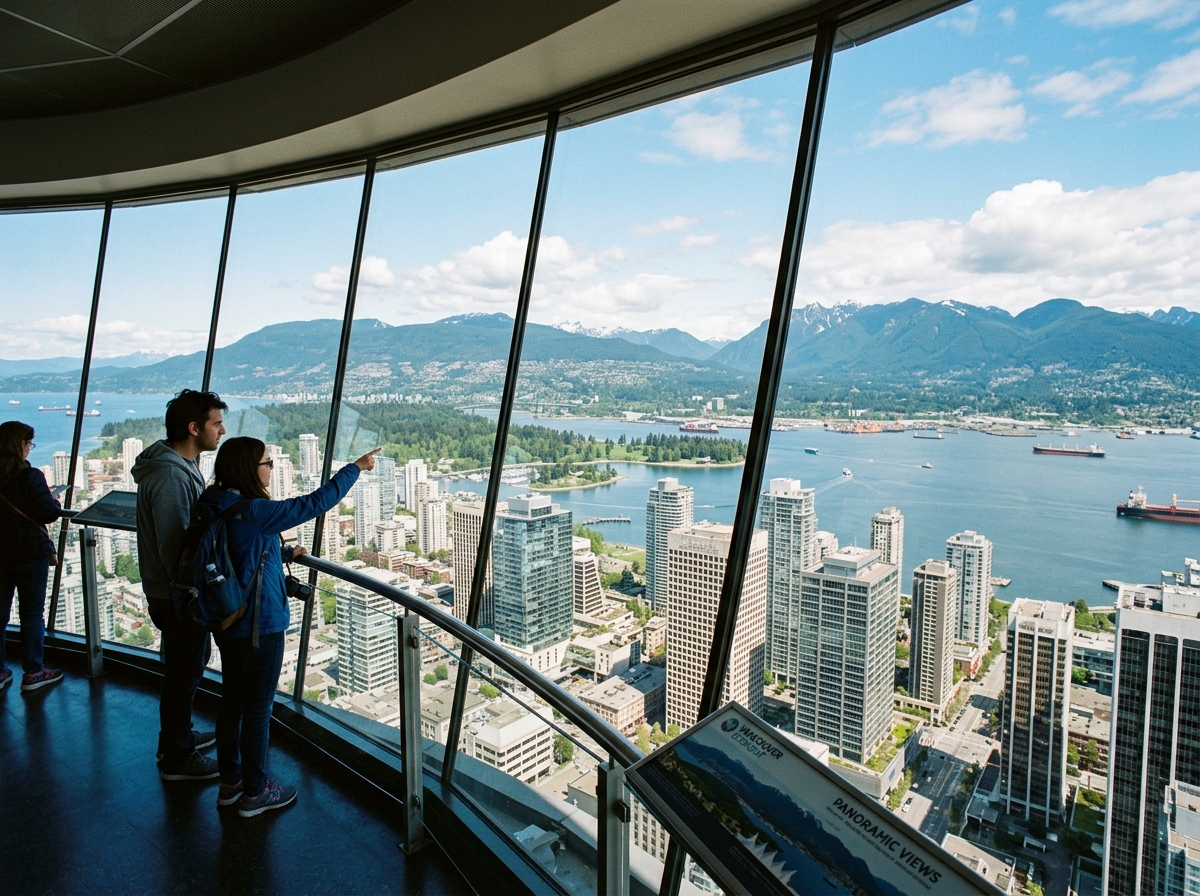
Cost: Around $20 per adult.
18. Bloedel Conservatory
Sitting inside Queen Elizabeth Park, the Bloedel Conservatory is a tropical dome filled with exotic plants, free-flying birds, and a koi pond. Over 500 plants and 120 free-flying birds live inside.
Queen Elizabeth Park itself sits at the highest point in Vancouver and has manicured gardens and one of the best views of the downtown skyline. The park is completely free. The conservatory admission is around $7 to $8.
19. Whale Watching Tours
Orca and humpback whale sightings are common in the waters around Vancouver, particularly between June and October. Several operators run three to four hour tours from the downtown waterfront.
The tours typically head through the Gulf Islands and Juan de Fuca Strait. Dolphins, porpoises, sea lions, and bald eagles are also commonly spotted. Even without whales, the scenery alone is worth it.
Cost: Around $120 to $150 per adult.
20. Deep Cove Kayaking
Deep Cove is a small community on the east side of North Vancouver, right on the edge of Indian Arm. It is one of the most beautiful spots within city limits, and kayaking here is unforgettable.
Indian Arm is a 24-kilometer fjord surrounded by mountains. Rentals are available at Deep Cove Canoe and Kayak. Even if you just go for the drive or the bus trip out, the village has a great donut shop (Honey’s Doughnuts, cash only) and stunning water views.
21. The Seaplane Tour
Taking off from the downtown waterfront in a floatplane is one of those experiences that stays with you. The 20-minute tour passes over Stanley Park, the Lion’s Gate Bridge, and the North Shore Mountains.
Several operators depart from the Vancouver Harbour Flight Centre near Canada Place. It is the fastest way to see the city’s geography all at once and puts everything in perspective.
Cost: Around $150 to $200 per person for a scenic tour.
22. Robson Street and Downtown Shopping
Robson Street is Vancouver’s main shopping corridor. It runs from Denman Street through downtown and has a mix of international brands, local boutiques, and some of the best people-watching in the city.
The nearby Pacific Centre mall connects Robson to Georgia Street underground and includes a wide range of shops. Nearby Alberni Street has luxury brands if that is your scene.
23. The Night Market in Richmond
Richmond’s International Buddhist Temple and the surrounding suburb have a large Chinese Canadian community, and the Richmond Night Market runs from May through October. Over 600 vendors sell street food from across Asia, along with clothing, accessories, and entertainment.
It is a genuinely fun evening out and easy to reach by SkyTrain on the Canada Line to Aberdeen Station.
24. Hike the Baden-Powell Trail or Cypress Mountain
The North Shore Mountains have trails for every fitness level. The Baden-Powell Trail stretches from Deep Cove to Horseshoe Bay and can be done in sections. Cypress Mountain is accessible by car and has easy-to-moderate trails with sweeping views of the city below.
Eagle Bluffs, accessible from the Cypress Mountain parking lot, is considered one of the best short hikes in Metro Vancouver. The trail is about 7 kilometers return with panoramic views on clear days.
25. Harbour Cruise
A narrated boat tour of Vancouver Harbour is a relaxing way to see the city from the water. Harbour Cruises runs tours that circle Burrard Inlet, passing by Canada Place, the North Shore, and Stanley Park.
The sunset dinner cruise is popular and worth booking in advance in summer. The regular sightseeing cruises run about 75 minutes.
Cost: Around $45 to $55 per adult for the sightseeing cruise.
26. Visit Steveston Village
Steveston is a historic fishing village in Richmond, about 30 minutes south of downtown Vancouver by car. It has a working fishing dock where you can buy fresh salmon directly from the boats, a well-preserved cannery museum, and wooden boardwalks along the water.
Gulf of Georgia Cannery National Historic Site tells the story of the BC salmon industry. The area has good seafood restaurants and independent cafes. It is quieter and more local-feeling than most tourist areas.
27. The Vancouver Art Gallery
Located in a stunning neoclassical courthouse building in the heart of downtown, the Vancouver Art Gallery has a strong collection of BC and Canadian art, including the largest collection of works by Emily Carr, the province’s most celebrated artist.
Rotating international exhibitions bring major shows to Vancouver throughout the year. The gallery plaza is a popular gathering spot and host to food markets and outdoor events in summer.
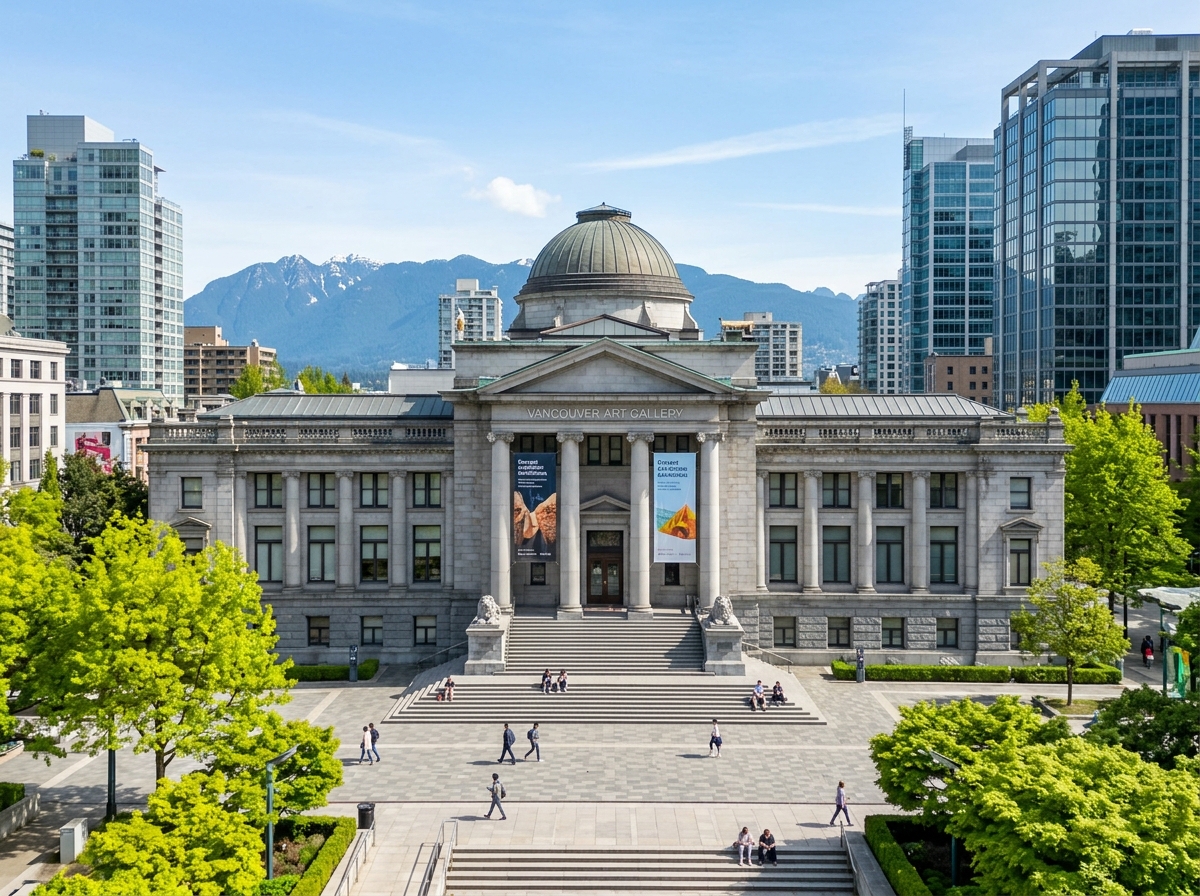
Cost: Around $24 to $26 per adult.
28. Sea to Sky Highway Day Trip to Whistler
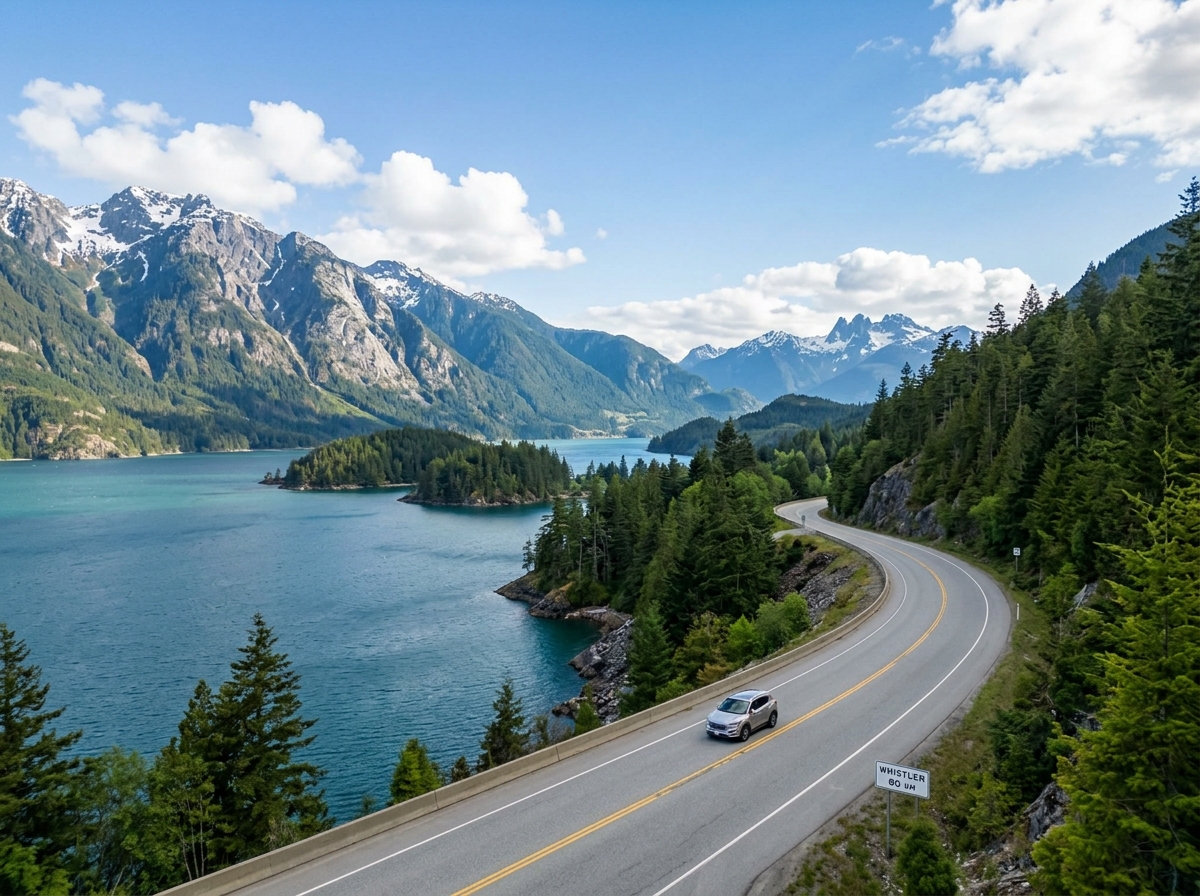
Highway 99 north of Vancouver is one of the most dramatic drives in North America. It runs along Howe Sound past Horseshoe Bay, through Squamish, and up to Whistler. The drive to Whistler takes about 2 hours from downtown.
Whistler itself is a world-class mountain resort with hiking, mountain biking, and sightseeing in summer, and skiing in winter. The PEAK 2 PEAK Gondola connects Whistler and Blackcomb Mountains and offers stunning aerial views.
Squamish, about an hour from Vancouver, is worth a stop for the Sea to Sky Gondola and the views of Shannon Falls, one of the tallest waterfalls in BC.
29. The H.R. MacMillan Space Centre
In Vanier Park on the south side of False Creek, the Space Centre has a planetarium with dome shows, interactive science exhibits, and live science demonstrations. It is one of the better small science museums in the city and works well for all ages.
The surrounding Vanier Park also has the Vancouver Maritime Museum, the Museum of Vancouver, and easy waterfront access.
30. Punjabi Market and Multicultural Food Scene
Vancouver is one of the most diverse cities in North America. The Punjabi Market on Main Street in South Vancouver is lined with South Asian grocery stores, fabric shops, and restaurants serving excellent dhal, butter chicken, and freshly made roti.
Beyond the Punjabi Market, the city has Vietnamese pho on Kingsway, Japanese ramen in the West End, Cantonese dim sum in Richmond, Filipino bakeries in South Vancouver, and some of the best sushi outside Japan. Eating your way through Vancouver’s neighborhoods is a trip in itself.
31. Commercial Drive
Commercial Drive, known locally as “The Drive,” is Vancouver’s most eclectic neighborhood. It has Italian espresso bars that have been there since the 1950s, indie record stores, vintage clothing shops, and restaurants covering Ethiopian, Mexican, Vietnamese, and beyond.
It is the kind of street that feels genuinely local rather than tourist-facing. A weekend morning walk from the Grandview-Woodland area down to the Drive and back gives you a feel for everyday Vancouver life.
32. Spanish Banks Beach
Spanish Banks is a long, flat sandy beach on the western edge of Vancouver near UBC. It is less crowded than Kits Beach or English Bay, and because the tide goes out significantly here, the water warms up nicely in summer.
The beach has volleyball courts, picnic areas, and a concession stand. The views across English Bay to the North Shore Mountains are some of the best anywhere in the city. Parking is available but gets busy on weekends.
33. Vancouver’s Craft Beer Scene
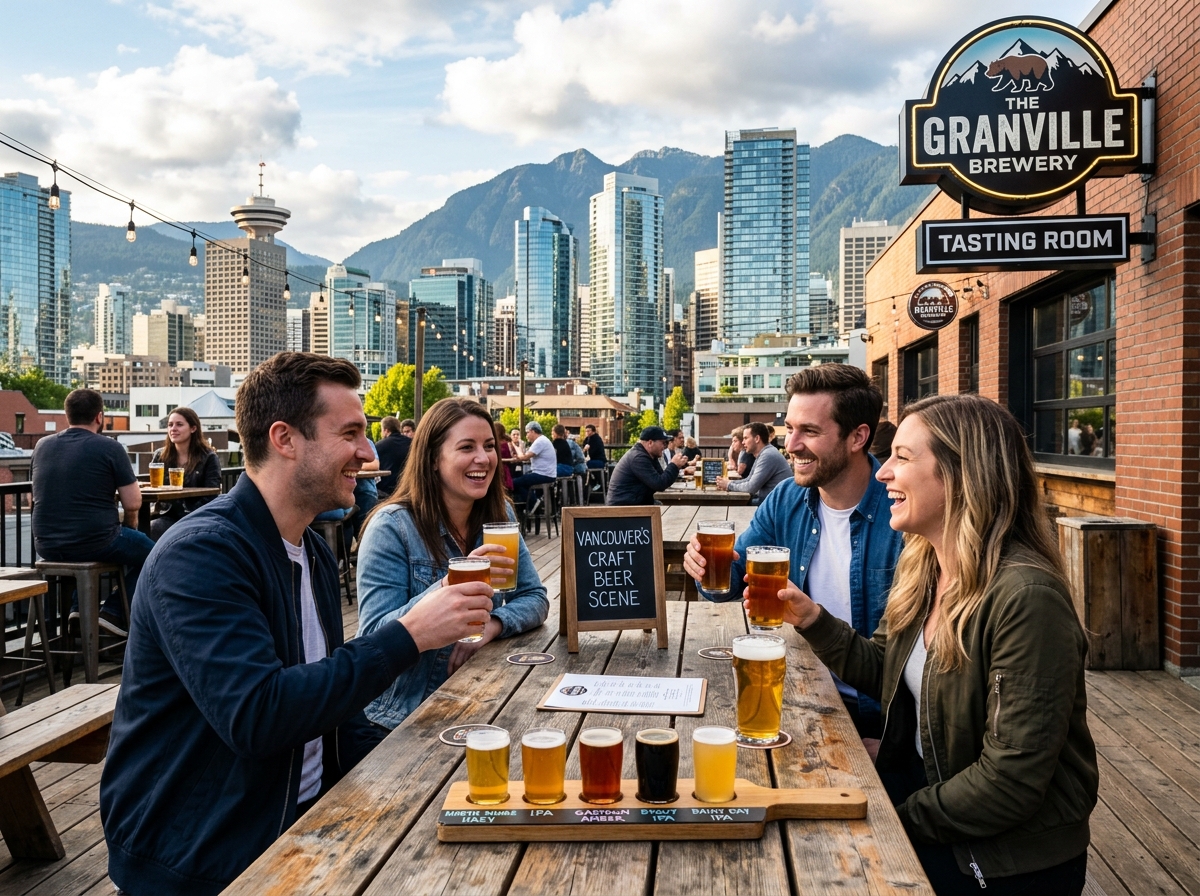
Vancouver has one of the best craft beer scenes in Canada. Brewhall in Mount Pleasant, the neighborhood south of downtown, has over 100 taps and a large communal space. Parallel 49 Brewing, Strange Fellows, and Faculty Brewing are all worth a visit.
The Mount Pleasant area has a cluster of breweries within walking distance of each other, making it ideal for a self-guided brewery tour on a rainy afternoon.
What to Pack for Vancouver
Vancouver’s weather is famously changeable. Even in summer, you should be prepared for rain.
Recommended gear for a Vancouver trip:
- Columbia Men’s Watertight II Jacket A lightweight, packable rain jacket that handles Vancouver’s frequent drizzle without taking up space in your bag.
- Merrell Moab 3 Waterproof Hiking Shoes If you plan to hike Grouse Mountain, Lynn Canyon, or Cypress Mountain, waterproof trail shoes make a real difference on wet roots and rocks.
- Osprey Daylite Daypack A compact 13-liter daypack for carrying snacks, a water bottle, and a layer on day trips. Light enough to forget about, big enough to be useful.
Best Time to Visit Vancouver
May to October is the prime window. Summers are genuinely beautiful, with warm temperatures, long days, and every outdoor attraction fully open. July and August are the busiest and most expensive months.
September and early October may actually be the best time to visit. The crowds drop, prices fall, the weather is still mild, and the city comes alive with food and film festivals.
Winter is rainy but mild, and the mountains get snow while the city stays green. It is a completely different experience, and Grouse Mountain is excellent for skiing.
Practical Tips for US Visitors
- Vancouver is on Pacific Time, the same as Seattle, Los Angeles, and Las Vegas.
- Tipping is expected and similar to the US: 15 to 20% at restaurants.
- Most shops and restaurants are cashless or card-preferred.
- Cannabis is legal in Canada. Consumption rules vary by location.
- The 911 emergency number works the same as in the US.
- US cell phone plans typically work in Canada, but roaming charges can apply. Check with your carrier before you go.
Frequently Asked Questions
Do Americans need a visa to visit Vancouver, Canada? No. US citizens do not need a visa for stays under 180 days. You need a valid US passport, passport card, or NEXUS card.
How far is Vancouver from Seattle? About 140 miles or two and a half hours by car, depending on border wait times. By Amtrak Cascades train, it is roughly four hours.
Is Vancouver safe for tourists? Yes. Vancouver is one of the safer large cities in North America. The Downtown Eastside neighborhood has visible poverty and drug use; it is better to avoid that area at night, but the rest of the city is very tourist-friendly.
Can I use US dollars in Vancouver? Some businesses near border areas and tourist zones accept USD, but you will get a worse exchange rate than a bank. Use a credit card or withdraw Canadian dollars from an ATM.
What language is spoken in Vancouver? English is the primary language. There are also large Mandarin, Cantonese, Punjabi, and Tagalog-speaking communities.
How many days do you need in Vancouver? Three to four days is enough to cover the major highlights comfortably. A week lets you add day trips to Whistler, the Gulf Islands, or Victoria.
Is Vancouver worth visiting from the US? Absolutely. It consistently ranks among the top cities in the world for quality of life, and for Americans, it offers an international experience without a long flight or a language barrier.
Final Thoughts
Vancouver rewards the visitor who does not just stick to the obvious. Yes, Stanley Park and Granville Island deserve the hype. But so does a morning kayak out of Deep Cove, a sunset at Spanish Banks, or a bowl of Vietnamese pho on Kingsway on a rainy Tuesday.
For Americans, it is genuinely one of the best international trips you can take. It is close, affordable given the exchange rate, easy to navigate, and has more good food, outdoor adventure, and natural beauty packed into one metro area than almost anywhere else in North America.
Plan a long weekend at minimum. Come back for longer.