The Scottish Highlands do not care about your plans. They will give you four seasons in one day. They will soak you in horizontal rain while the sun shines ten miles away.
Most articles about the best time to visit the Scottish Highlands give you a table of average temperatures and tell you to go in summer. That is not wrong. But it is not enough. Summer has crowds. Summer has midges. Summer has hotels that triple their prices and still sell out six months ahead.
This guide breaks down every season with the details others skip. What the roads are actually like. When the midges will eat you alive. Which months give you empty trails and which ones trap you behind a caravan on the North Coast 500.
The One Truth About Highland Weather
Before we talk about months, you need to understand something. The Highlands have a reputation for bad weather because people expect sunshine. The locals do not expect sunshine. They expect atmosphere. Mist rolling over a loch is not bad weather. It is the reason you came.
The west coast, including Glencoe, Fort William, and the Isle of Skye, is milder but wetter. The Gulf Stream keeps temperatures from dropping too low, but it also brings Atlantic rain. The east coast, including the Cairngorms and Aviemore, is colder in winter and sunnier in summer. Ben Nevis and the mountain peaks have their own climate. Snow can fall in May. Gales can blow in August.
Billy Connolly said there is no such thing as bad weather, only the wrong clothes. He was right.
Spring: March to May
Spring arrives late in the Highlands. March can still feel like winter. Snow sits on the peaks. Roads ice over at night. Some hotels and attractions remain closed until Easter.
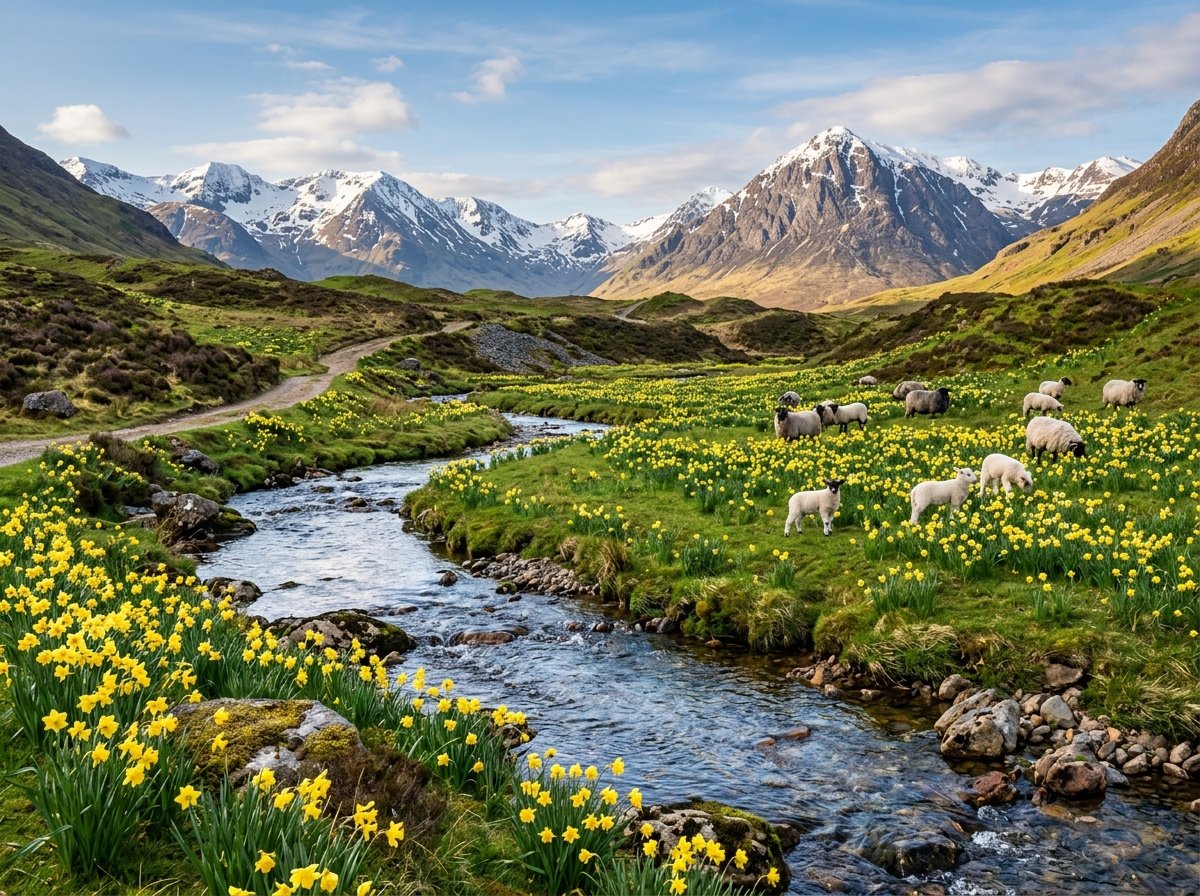
By April, the shift begins. Daffodils appear in the glens. Lambs stumble across fields. The days stretch out, reaching thirteen hours by late April and seventeen by May. Temperatures climb from around six degrees Celsius in March to thirteen or fourteen in May.
May is one of the best months to visit. The midges have not arrived yet. The Highland games begin in late May. The trails are empty. Hotels have availability. You can hike Ben Nevis without sharing the summit with a hundred other people.
The downside is unpredictability. A warm sunny day can turn into sleet by afternoon. Higher mountain paths may still hold snow. You need to pack for winter and hope for spring.
Summer: June to August
Summer is peak season for a reason. Temperatures reach fifteen to nineteen degrees Celsius on average. Days are extraordinarily long. In late June, the sun sets after ten PM in Inverness and barely dips below the horizon in the far north. You can hike at nine in the evening in full daylight.
The landscape is at its most accessible. The ferries to the Outer Hebrides run full schedules. The beaches at Sandwood Bay look tropical with white sand and turquoise water. Festivals fill the calendar, from the Belladrum Tartan Heart Festival to the Edinburgh Fringe just south in the capital.
But summer has problems. July and August bring the worst crowds. The Isle of Skye becomes a parking lot. The roads around Glencoe clog with camper vans. Accommodation in Fort William, Portree, and Aviemore books up months in advance and charges peak rates.
Then there are the midges. These tiny biting insects emerge in early June and swarm through September. They love damp, still, overcast conditions. They hate wind and bright sun. At their worst, around dawn and dusk in sheltered glens near water, they can make outdoor life unbearable. You will see walkers wearing head nets that look like beekeeper gear. They are not being dramatic. They are being sensible.
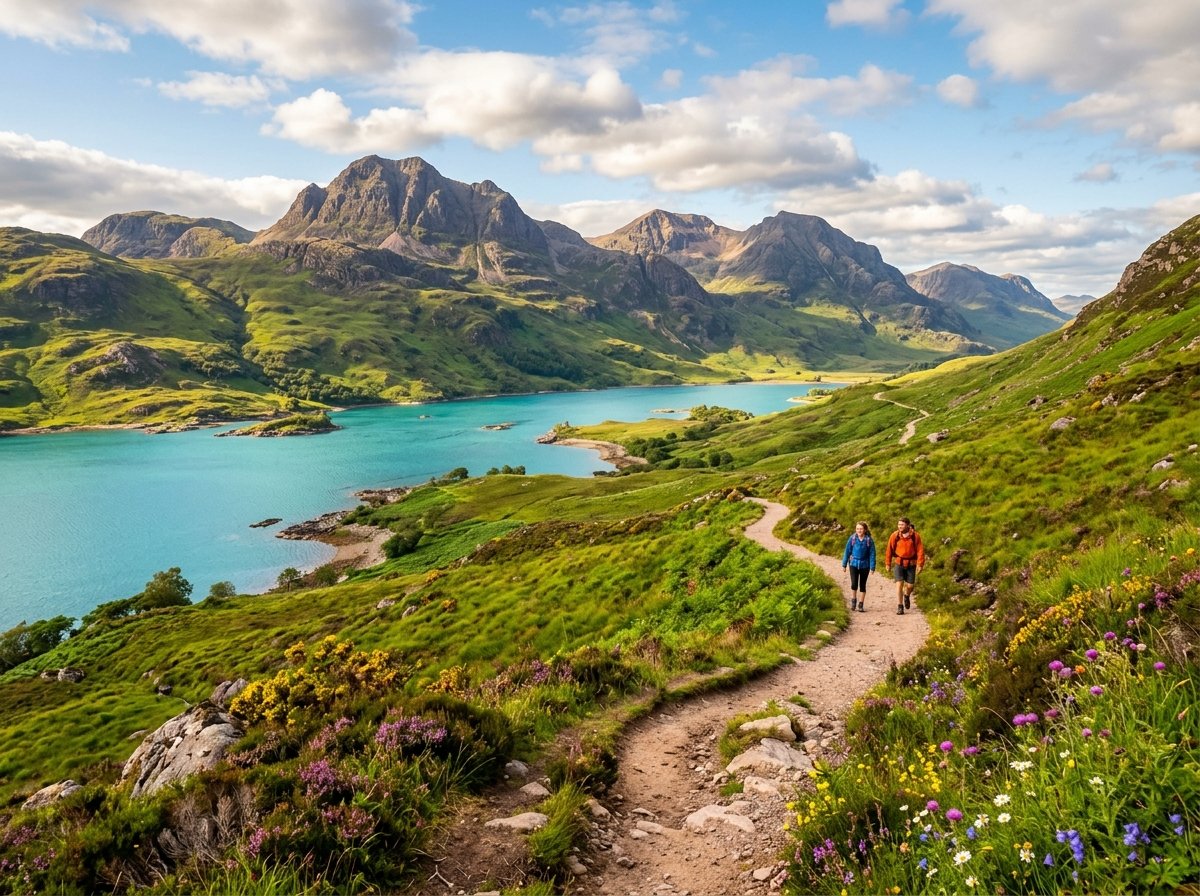
June is actually a sweet spot. The days are almost as long as July. The schools have not broken up yet. The midges are just starting. If you can visit in early June, you get most of summer’s benefits with fewer drawbacks.
Autumn: September to November
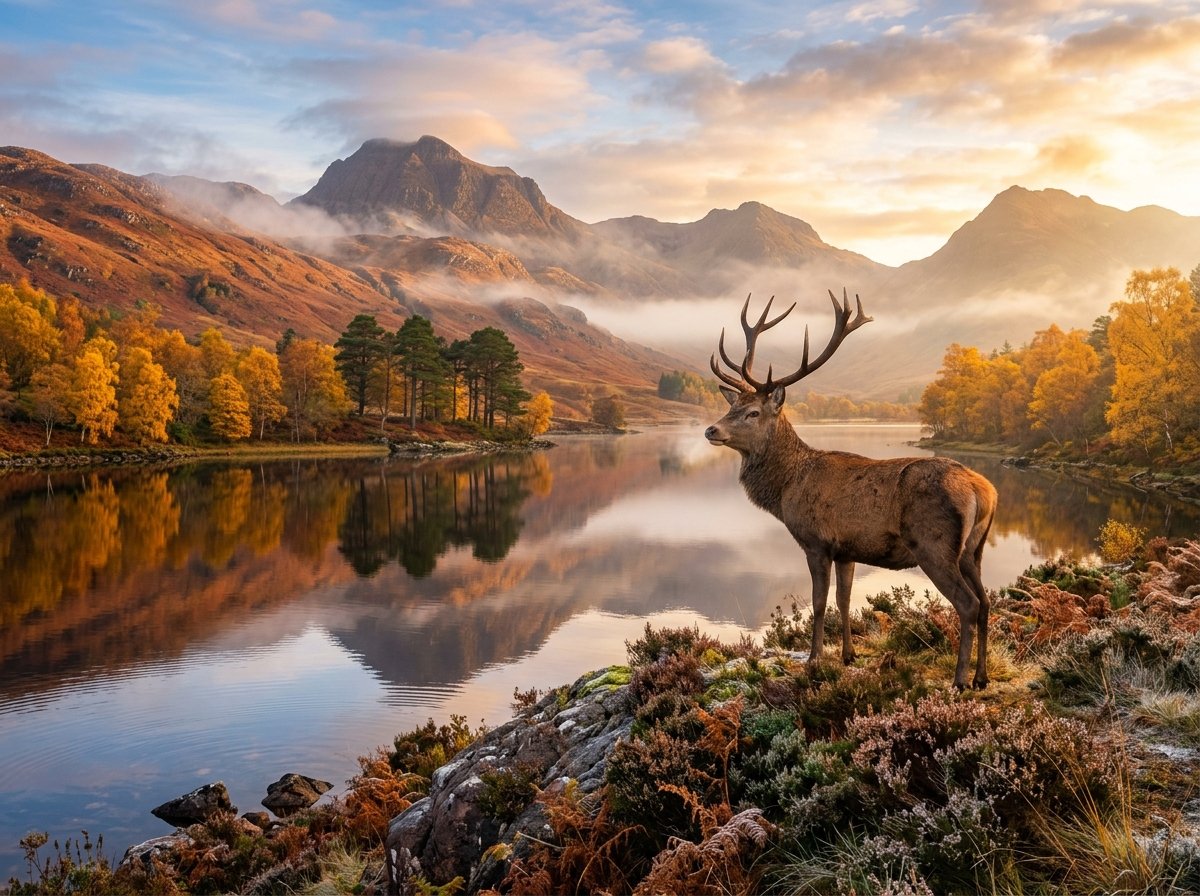
Autumn is when the Highlands become truly beautiful. The birch and rowan trees turn gold and copper. The bracken on the hillsides rusts to a deep red. The light shifts lower and softer, perfect for photography. The red deer stags begin their rut in October, roaring across the glens in one of the most dramatic wildlife spectacles in Britain.
September still has decent temperatures, around fourteen degrees during the day. The midges fade by mid month. The crowds thin out after the schools return. The Highland games continue into early September, including the famous Braemar Gathering.
But September is also the wettest month. Rain falls heavily and often. Some attractions and rural hotels begin closing in mid October. By November, daylight shrinks to under eight hours. Snow returns to the peaks. The Highlands become quiet, moody, and magnificent.
October is the hidden gem. The colors peak. The deer rut is in full swing. The midges are gone. The weather is cooler but often clearer than September. Many walkers say October is their favorite month. Just check that your chosen hotel and restaurant are still open.
Winter: December to February
Winter in the Highlands is not for everyone. Temperatures hover around zero to five degrees Celsius. Daylight lasts barely seven hours in December. Rain turns to snow on the high ground. Roads like the A9 through the Cairngorms can close in bad weather. Some hotels shut completely from November to March.
But winter has a magic that summer cannot touch. The mountains wear snow caps. The lochs freeze at the edges. The pubs glow with firelight and whisky. Hogmanay on New Years Eve brings torchlight processions, ceilidh dancing, and fireworks.
Skiing is available at Cairngorm Mountain, Glencoe Mountain Resort, and Nevis Range. The season usually runs from November to April, though Scottish snow is unpredictable. Some years the slopes are excellent. Some years they are grass.
Wildlife watching improves in winter. With no leaves on the trees, you can spot red deer, mountain hares in their white winter coats, ptarmigan, and golden eagles more easily.
If you visit in winter, you need to be flexible. Storms can cancel ferries. Snow can block mountain passes. But if you embrace the short days and the roaring fires, winter offers the Highlands at their most intimate.
The Midge Problem: What Other Guides Do Not Tell You
Every guide mentions midges. Few explain how bad they really are or what to do about it.
Midges are tiny flying insects that bite. They do not carry disease. But their bites itch for days. They swarm in clouds. They get in your eyes, your ears, your mouth. They can ruin a picnic, a photo shoot, or a peaceful evening by the loch.
They emerge in early June, peak in July and August, and linger into September. They are worst at dawn and dusk. They love damp, sheltered spots near water. A still, humid, overcast evening in July by Loch Ness will be a nightmare. A windy, sunny afternoon on a coastal cliff will be fine.
Here is what actually works. Wear long sleeves and long trousers, even in summer. Light colors attract them less than dark colors. A head net looks ridiculous but saves your sanity. Insect repellent helps, though locals debate which brand works best. Avon Skin So Soft has a cult following. DEET based sprays work for most people. The only sure escape is wind or direct sunlight.
A Sea to Summit Nano Mosquito Head Net weighs almost nothing and fits in your pocket. When the midges descend, you will thank yourself for carrying it. It is the difference between staying outside and fleeing to your car.

Sea to Summit Permethrin-Treated Mosquito Head Net
What the Other Guides Got Wrong
Do not assume summer is always best. If you hate crowds, July and August on Skye are stressful. If you hate midges, July evenings are torture. If you want empty trails and golden light, October beats August.
Do not ignore May. Most guides lump it into spring and move on. May is arguably the best single month. Long days, no midges, blooming wildflowers, and half the crowds of June.
Do not trust average temperature tables. The Highlands are not one place. Fort William and Aviemore can have completely different weather on the same day. The west coast is wetter. The east coast is colder. The mountains have their own rules.
Do not underestimate the rain. It rains in every season. A good waterproof jacket is not optional. It is essential. The Patagonia Torrentshell 3L jacket packs down small, keeps you dry in hours of downpour, and breathes enough for hiking. Scottish weather will test every seam.

MARMOT Women’s PreCip Lightweight Waterproof Rain Jacket
Do not forget about the roads. The North Coast 500 is famous and stunning. It is also narrow, winding, and full of single track sections with passing places. In summer, you will share it with camper vans, cyclists, and coaches. In winter, ice and snow can make it genuinely dangerous. Drive carefully. Pull into passing places to let faster traffic by. Do not park in passing places. This annoys locals and blocks the road.
Practical Tips for Every Season
Book accommodation early if you are visiting between June and September. The best places in Portree, Fort William, and Aviemore sell out by March. Consider staying in smaller towns like Ullapool, Dornoch, or Pitlochry for better availability and lower prices.
Pack layers in every season. A base layer, a fleece, and a waterproof shell covers most situations. In winter, add a down jacket and waterproof trousers. In summer, still bring the fleece. The temperature can drop twenty degrees when the sun goes behind a cloud.
Footwear matters more than almost anything else. Trails in the Highlands are often boggy, rocky, and wet. A pair of waterproof hiking boots gives you ankle support, grip on slick rock, and dry feet when the path turns into a stream. Blisters and wet socks ruin days. Good boots save them.

Saucony Men’s Excursion TR15
Bring a head torch, even in summer. If you are hiking, sunset might be late, but cloud cover can make it dark early. In winter, you need it for any afternoon walk.
Download offline maps. Mobile signal disappears quickly in the Highlands. Google Maps offline or a proper GPS device is essential for remote walks and drives.
Learn the Scottish right to roam. You can walk on most land and inland water as long as you act responsibly. This means no litter, no fires without permission, and keeping dogs under control near livestock. It also means you can find solitude even in busy seasons by walking a mile off the main path.
Check the mountain weather forecast, not just the general forecast. The Met Office and Mountain Weather Information Service provide specific forecasts for Highland peaks. Conditions at sea level and conditions on Ben Nevis can be completely different.
FAQs
What is the best month to visit the Scottish Highlands?
May or early June. May has wildflowers, no midges, and fewer crowds. Early June has the longest days and the best weather before the school holidays begin.
When is the worst time for midges?
July and August, especially at dawn and dusk in damp, sheltered areas near lochs and rivers.
Can you visit the Highlands in winter without a car?
Yes, but plan carefully. Trains run to Inverness, Fort William, and Aviemore. Buses connect some villages. Many rural accommodations close. Guided winter walking tours operate but you need proper gear like crampons and ice axes for mountain terrain.
Is the North Coast 500 worth it?
Yes, but not in peak summer if you hate traffic. The route is stunning. It is also narrow and busy. Spring and autumn offer a better driving experience.
What should I pack for the Highlands?
Waterproof jacket. Waterproof trousers. Warm layers. Good hiking boots. A head net for midges. Insect repellent. A head torch. Offline maps. A camera. And a sense of humor about the weather.
Are the Highland games worth attending?
Absolutely. They run from late May to September. You will see caber tossing, hammer throwing, Highland dancing, and pipe bands. The Braemar Gathering in early September is the most famous.
How cold does it get in winter?
Temperatures usually stay between zero and five degrees Celsius in the valleys. Mountain peaks are much colder. Wind chill can make it feel below freezing even when the thermometer says otherwise.
Can you see the Northern Lights in the Highlands?
Sometimes, in the far north during winter. Caithness, Orkney, and Shetland have the best chances. But Scotland is far south of Iceland or Norway. Do not plan your entire trip around them.
Conclusion
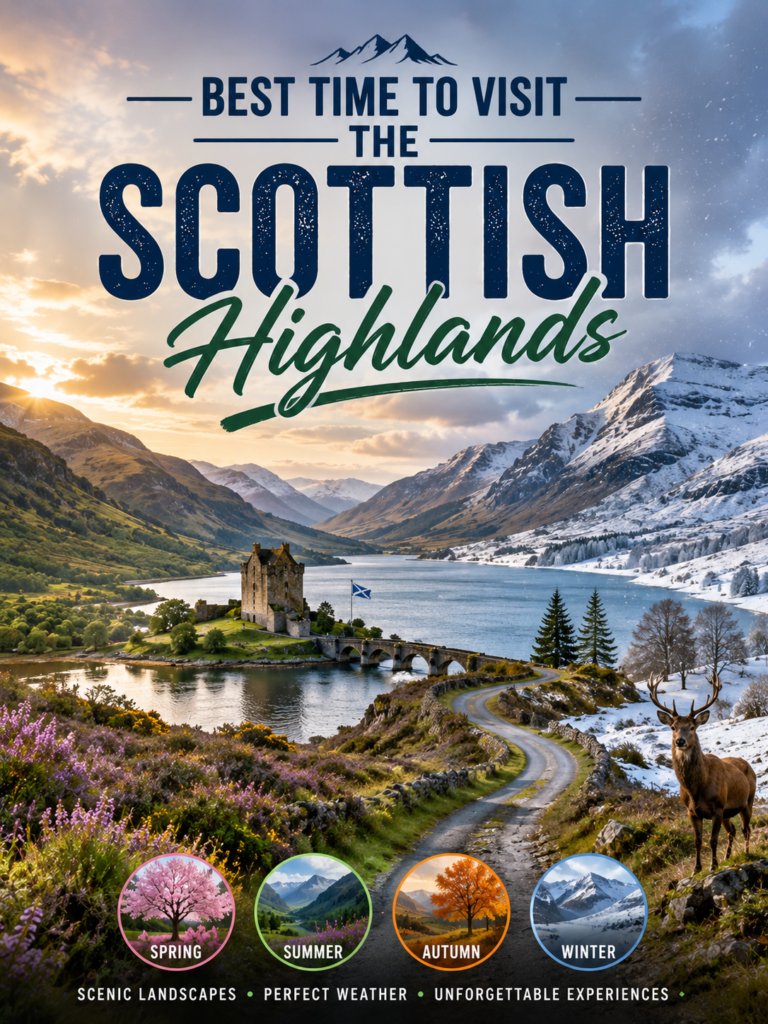
The best time to visit the Scottish Highlands depends on what you want. May and early June give you the best balance of weather, daylight, and emptiness. July and August give you warmth and festivals at the cost of crowds and midges. October gives you colors and silence. Winter gives you snow and solitude.
There is no wrong time. There is only wrong preparation. Bring good boots. Bring a waterproof jacket. Bring a head net if it is summer. And bring an open mind. The Highlands do not perform on demand. They reveal themselves when they choose. Your job is to be there, ready, when they do.