Portugal looks small on a map, but planning a trip here can become surprisingly difficult. Lisbon has tiled streets and yellow trams. Porto has river views and historic wine cellars. The Algarve offers golden cliffs and beaches, while Madeira and the Azores feel like completely different worlds.
That variety is exactly what makes Portugal travel so rewarding.
You can spend the morning inside a centuries old palace, eat fresh seafood beside the Atlantic in the afternoon, and finish the evening listening to fado in a narrow old street. Travel farther and the scenery changes again. Vineyards cover the Douro Valley, volcanic lakes fill the Azores, and dramatic mountain trails cross Madeira.
For first time visitors, Lisbon, Sintra, Porto, the Douro Valley, and the Algarve make an excellent introduction. Travelers with more time should also consider Madeira, the Azores, Évora, Óbidos, Coimbra, Nazaré, and smaller coastal towns.
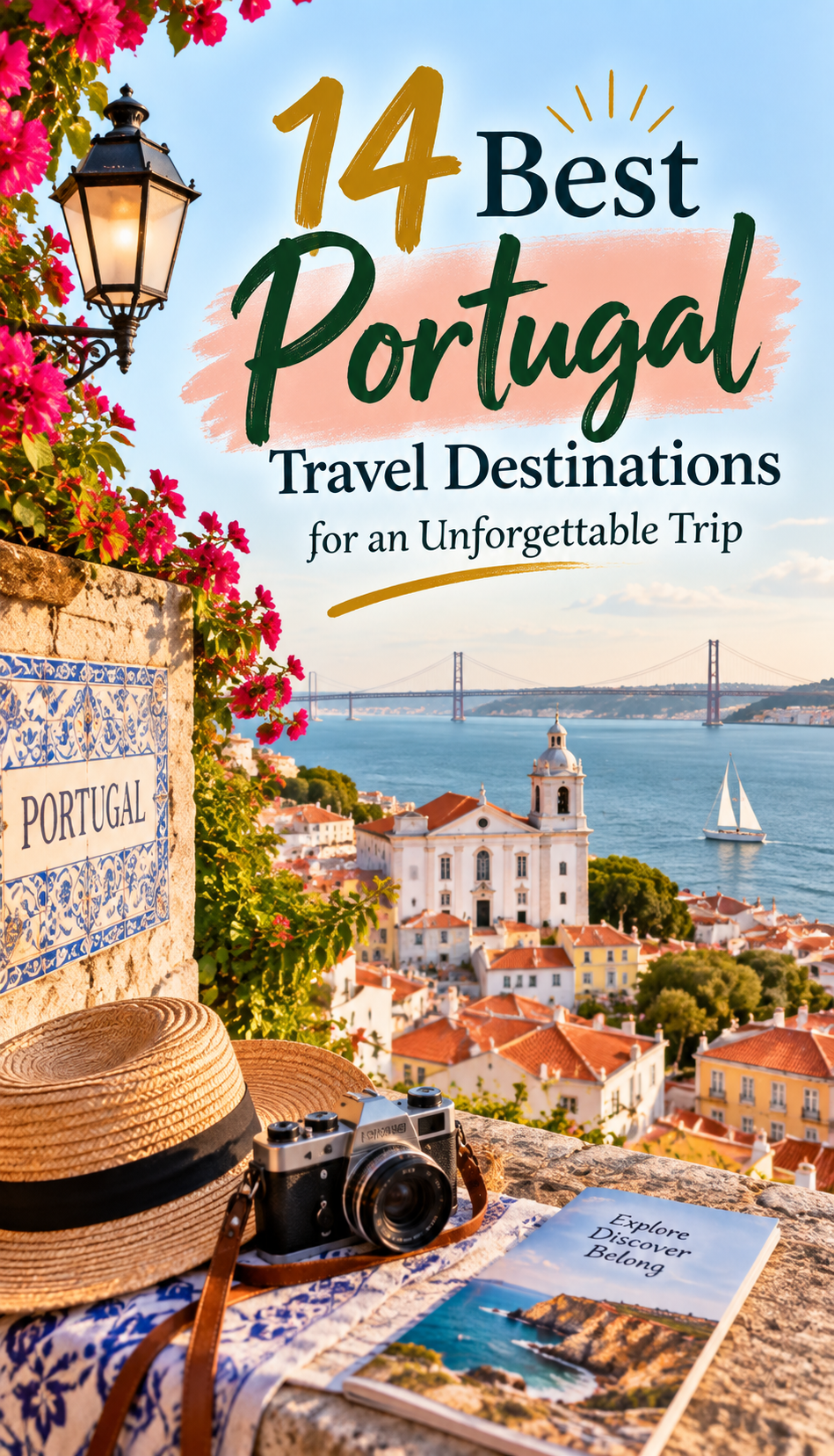
Here are the Portugal travel destinations that deserve a place on your itinerary.
1. Lisbon
Best for: First time visitors, food, history, nightlife, photography
Ideal stay: 3 to 4 days
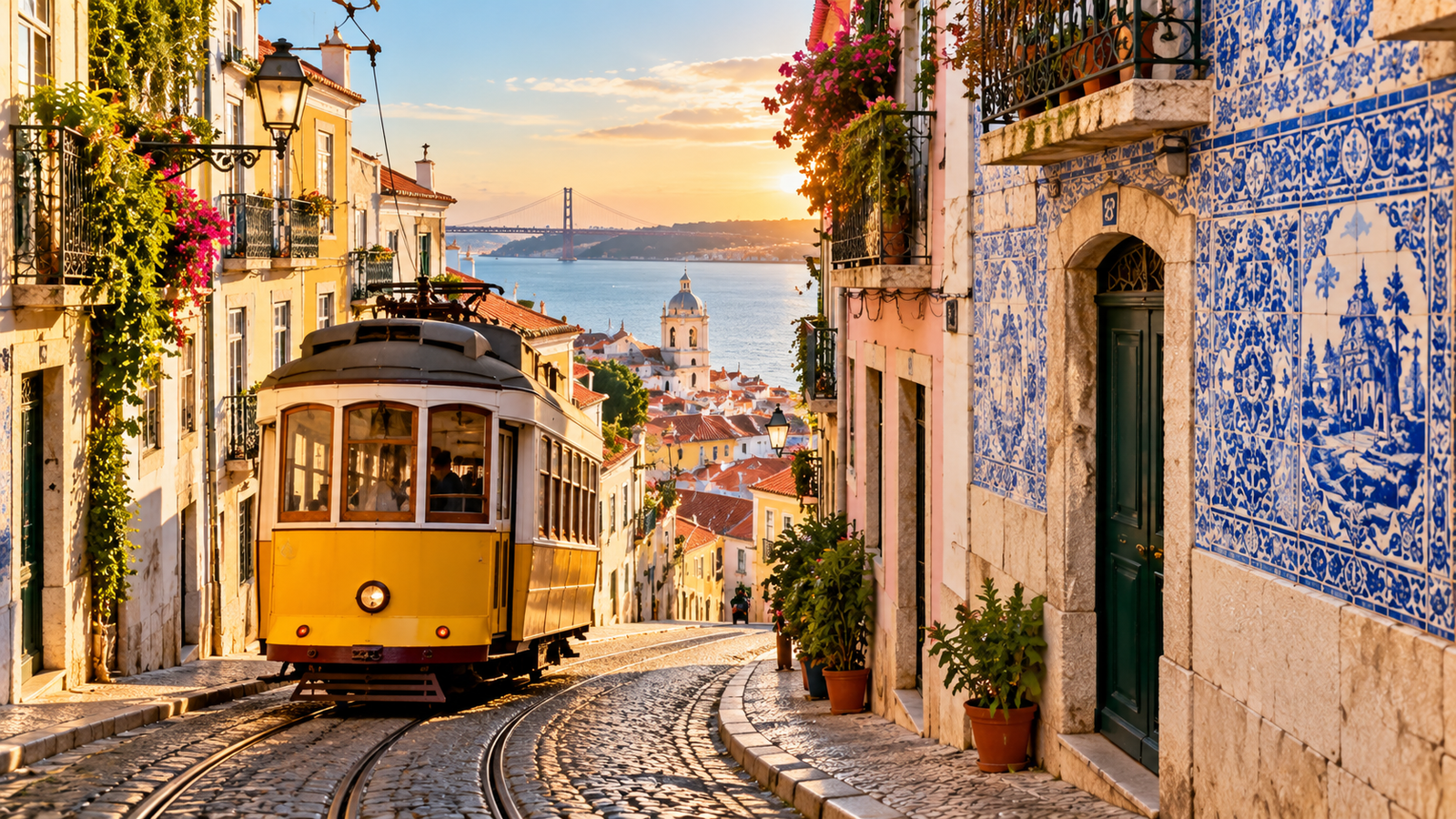
Lisbon is the easiest place to begin a first trip to Portugal. The city gives you historic neighborhoods, river views, restaurants, nightlife, viewpoints, museums, and easy day trips without requiring a car.
Start in Alfama, where narrow lanes climb between old buildings and tiled facades. Visit Castelo de São Jorge, then walk toward one of the nearby viewpoints for broad views over red roofs and the Tagus River.
Belém deserves another half day. This area contains some of Lisbon’s most recognizable historic sights, including Jerónimos Monastery. Portugal’s official tourism site highlights Lisbon for its historic neighborhoods, tiled facades, culture, and relationship with the Tagus.
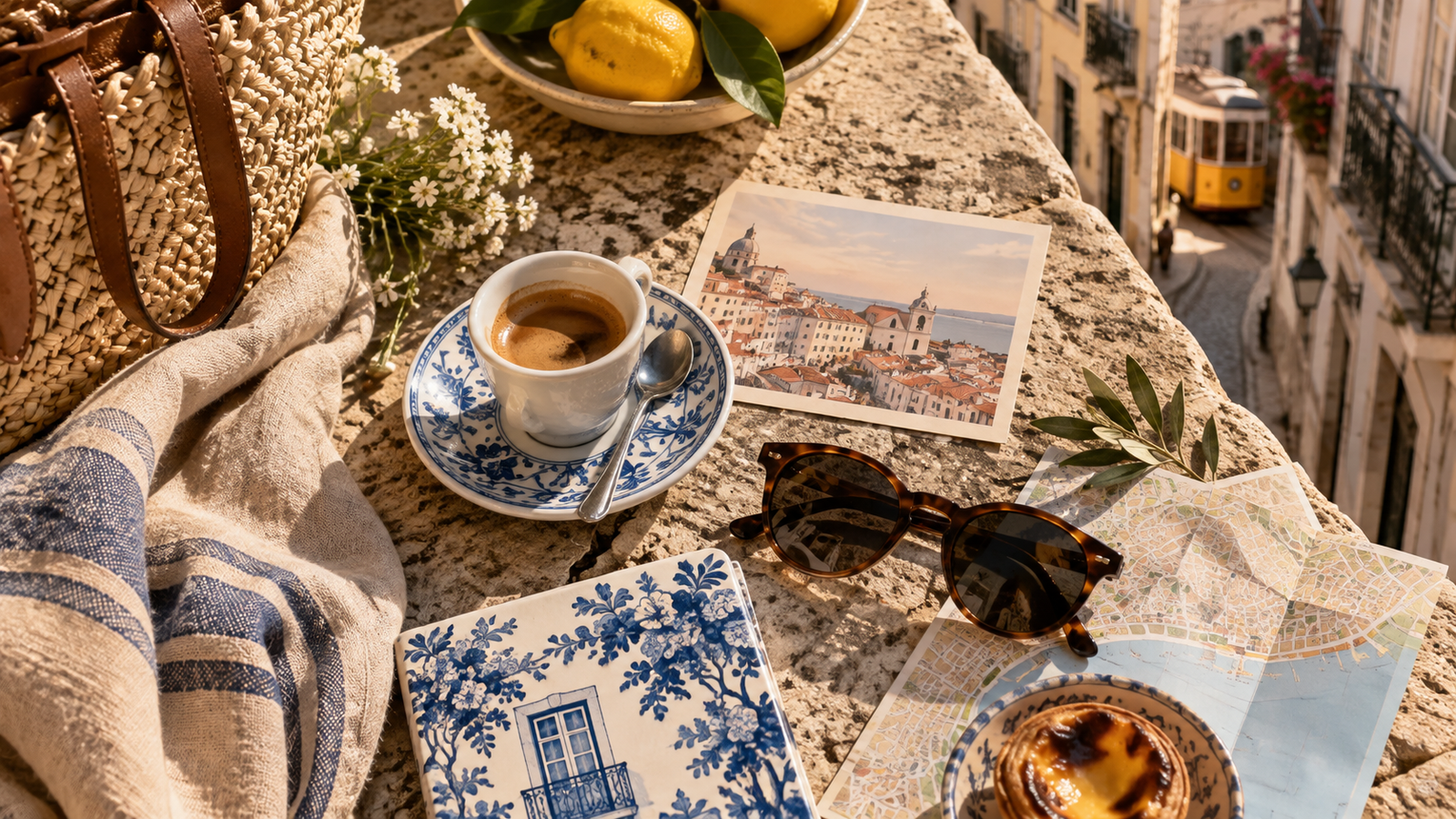
For classic Portugal aesthetic, Lisbon delivers almost everything people imagine before visiting. Think yellow trams, blue tiles, patterned pavements, pastel buildings, tiny cafes, laundry hanging above old streets, and warm evening light.
Do not spend the whole visit rushing between landmarks. Leave time to sit at a cafe, ride a ferry across the river, and wander through neighborhoods without a strict route.
2. Sintra
Best for: Palaces, gardens, romantic scenery, day trips
Ideal stay: 1 full day or 1 night
Sintra feels completely different from Lisbon even though it is close enough for a day trip.
Its forested hills hide colorful palaces, historic estates, stone walls, and elaborate gardens. Pena Palace is the best known attraction, but Quinta da Regaleira is equally memorable for many visitors.
The mistake people make is trying to see everything in a few hours.
Choose two major attractions rather than four. Sintra involves hills, queues, transportation between sites, and plenty of walking.
If you want quieter Portugal vibes, stay overnight. Day visitors leave in the evening, and the town becomes much calmer.
Sintra is especially good for couples, photographers, architecture lovers, and anyone who wants something more atmospheric than a normal city sightseeing day.

3. Porto
Best for: Food, river views, architecture, wine, couples
Ideal stay: 2 to 3 days
Porto feels smaller and moodier than Lisbon.
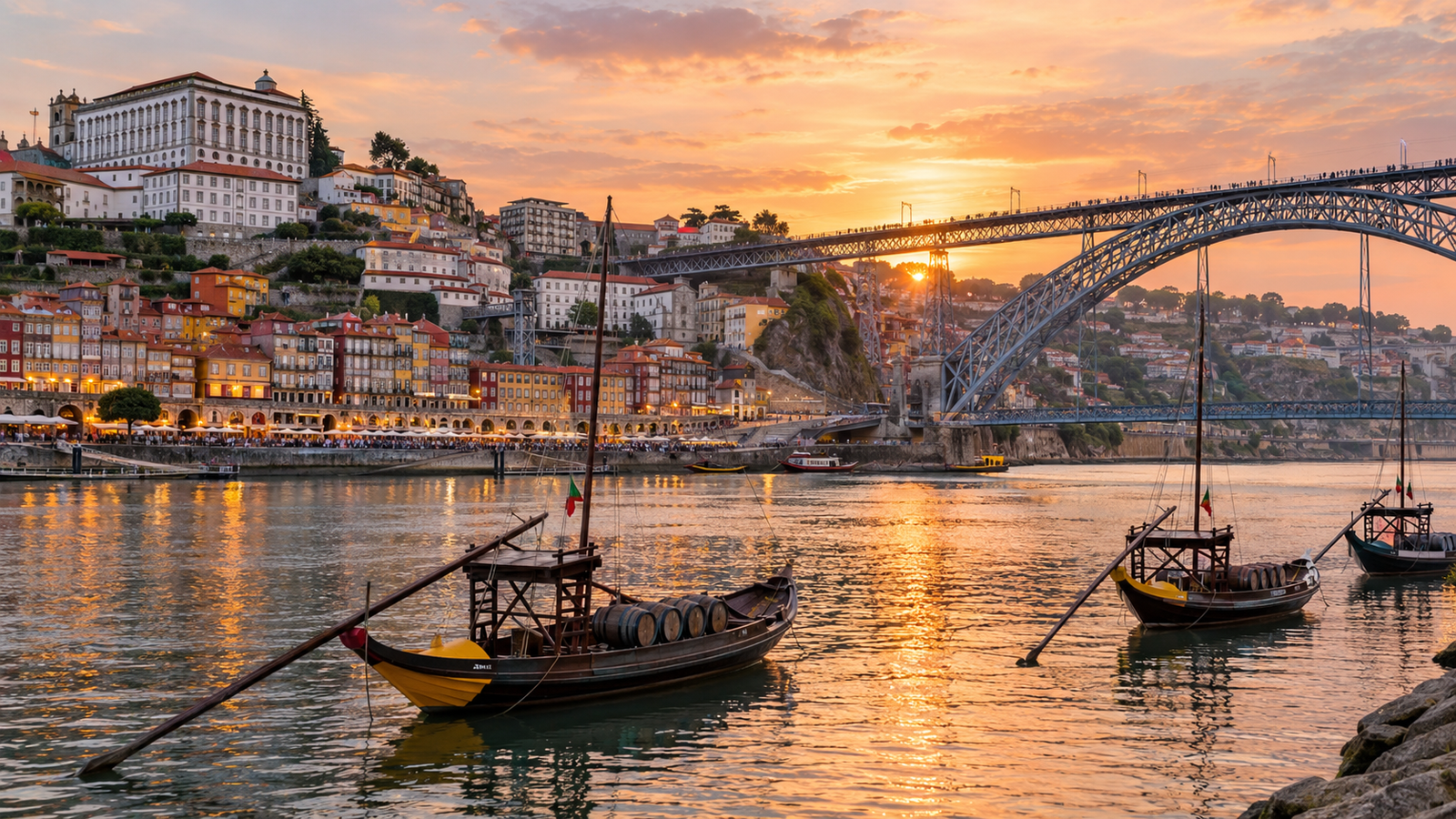
The historic center slopes toward the Douro River, where colorful buildings face the waterfront. Across the water, Vila Nova de Gaia is known for port wine cellars and views back toward Porto.
Walk through Ribeira, cross the Dom Luís I Bridge, visit São Bento Station, and leave enough time to explore smaller streets away from the busiest riverfront.
Porto is also a strong choice for travelers who care about food. Try local dishes, pastries, fresh seafood, and port wine rather than building your days entirely around monuments.
Lonely Planet describes Porto as a city of narrow pedestrian streets, baroque churches, cafe filled squares, river views, and historic wine culture.
If Lisbon feels bright and energetic, Porto often feels more intimate. Both belong on a first Portugal trip if you have enough time.
4. Douro Valley
Best for: Wine, scenery, slow travel, couples
Ideal stay: 1 to 2 days
The Douro Valley is one of the most beautiful landscapes in Portugal.
Vineyards rise in terraces above the river, creating views that change around every bend. You can visit wineries, take a river cruise, travel by train, or drive through small villages.
A day trip from Porto works if your schedule is tight. Staying overnight is better if you want to experience the valley without spending most of the day moving between places.
Spring and early autumn are especially attractive. Harvest season brings additional energy to the wine region.
This destination works best when you slow down. Choose a small number of wineries rather than attempting to visit as many as possible.
The Douro Valley provides some of the strongest rural Portugal aesthetic in the country. Vineyards, stone estates, quiet roads, river bends, and golden evening light replace the tiled streets of Lisbon.
5. Lagos and the Western Algarve
Best for: Beaches, cliffs, boat trips, couples, road trips
Ideal stay: 3 to 4 days
If your Portugal trip needs beaches, put the Algarve on your list.
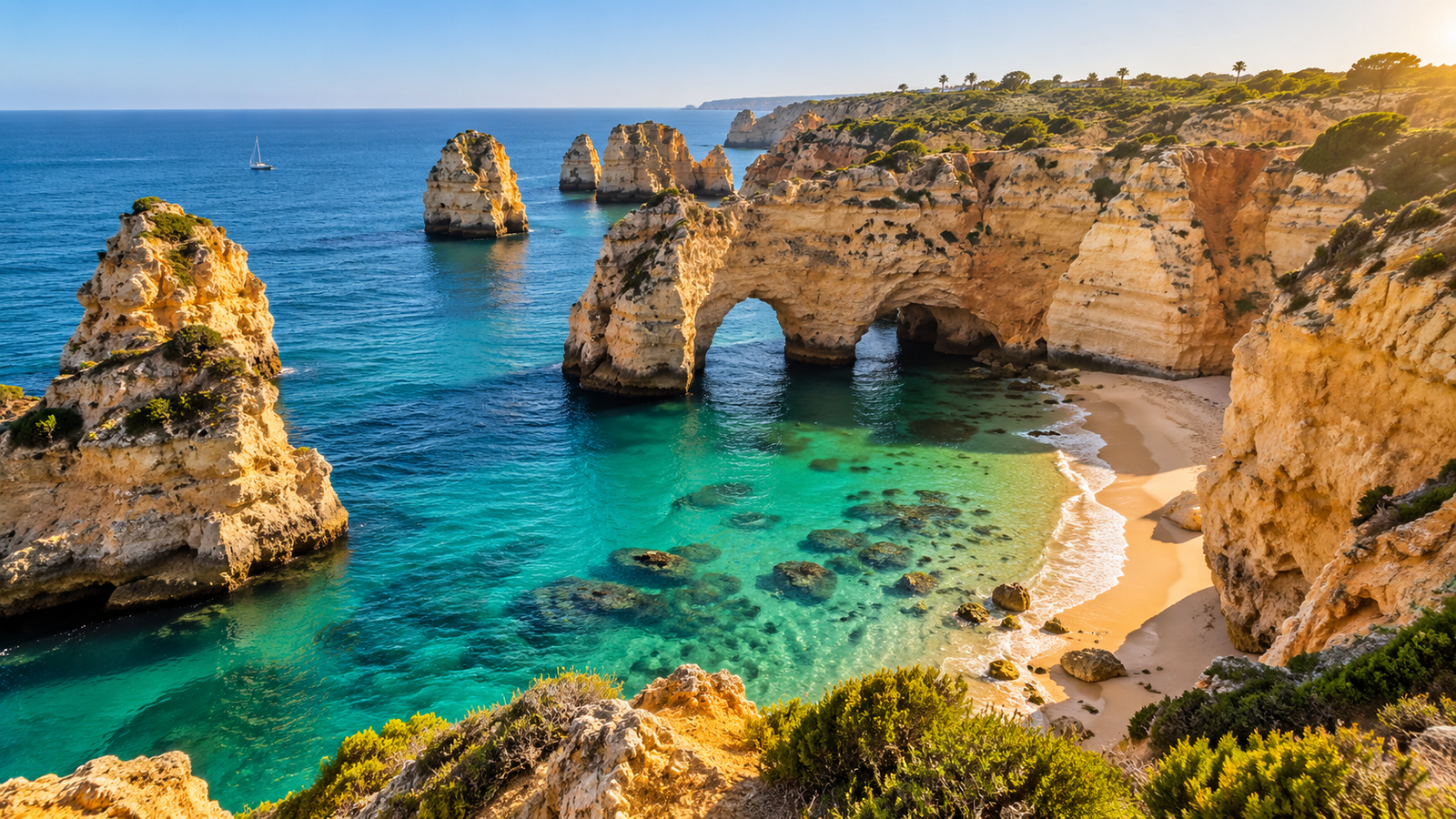
The region is known for golden cliffs, sea caves, coves, long beaches, and Atlantic views. Lonely Planet notes that the Algarve attracts travelers for its cliffs, beaches, sea caves, coastal walks, and surf.
Lagos makes a convenient base for first time visitors.
Visit Ponta da Piedade early in the morning. Walk along the cliffs, then spend part of the day at beaches such as Praia do Camilo or Praia Dona Ana.
Boat and kayak trips reveal the coastline from a different angle.
Summer delivers classic beach weather but also bigger crowds. Late spring and early autumn are often easier for sightseeing and coastal walking.
If nightlife matters, Lagos works well. If you want something quieter, consider Tavira or smaller Algarve towns.
6. Tavira
Best for: Slow travel, couples, traditional atmosphere, quieter Algarve trips
Ideal stay: 2 days
Tavira shows another side of the Algarve.
Instead of making dramatic cliffs the center of your trip, Tavira offers white buildings, tiled streets, river views, churches, cafes, and access to sandy islands.
It feels slower than Lagos and many larger resorts.
Spend time walking through town rather than treating it only as a base for the beach. Cross the Roman style bridge, stop for lunch, then head toward the coast later in the day.
Tavira is a particularly good choice for travelers who want Algarve sunshine without feeling surrounded by nightlife.
The contrast between Lagos and Tavira is useful when planning. Choose Lagos for dramatic scenery and activity. Choose Tavira for a softer and calmer stay.
7. Madeira
Best for: Hiking, mountains, scenery, couples, active trips
Ideal stay: 5 to 7 days
Madeira does not feel like mainland Portugal.
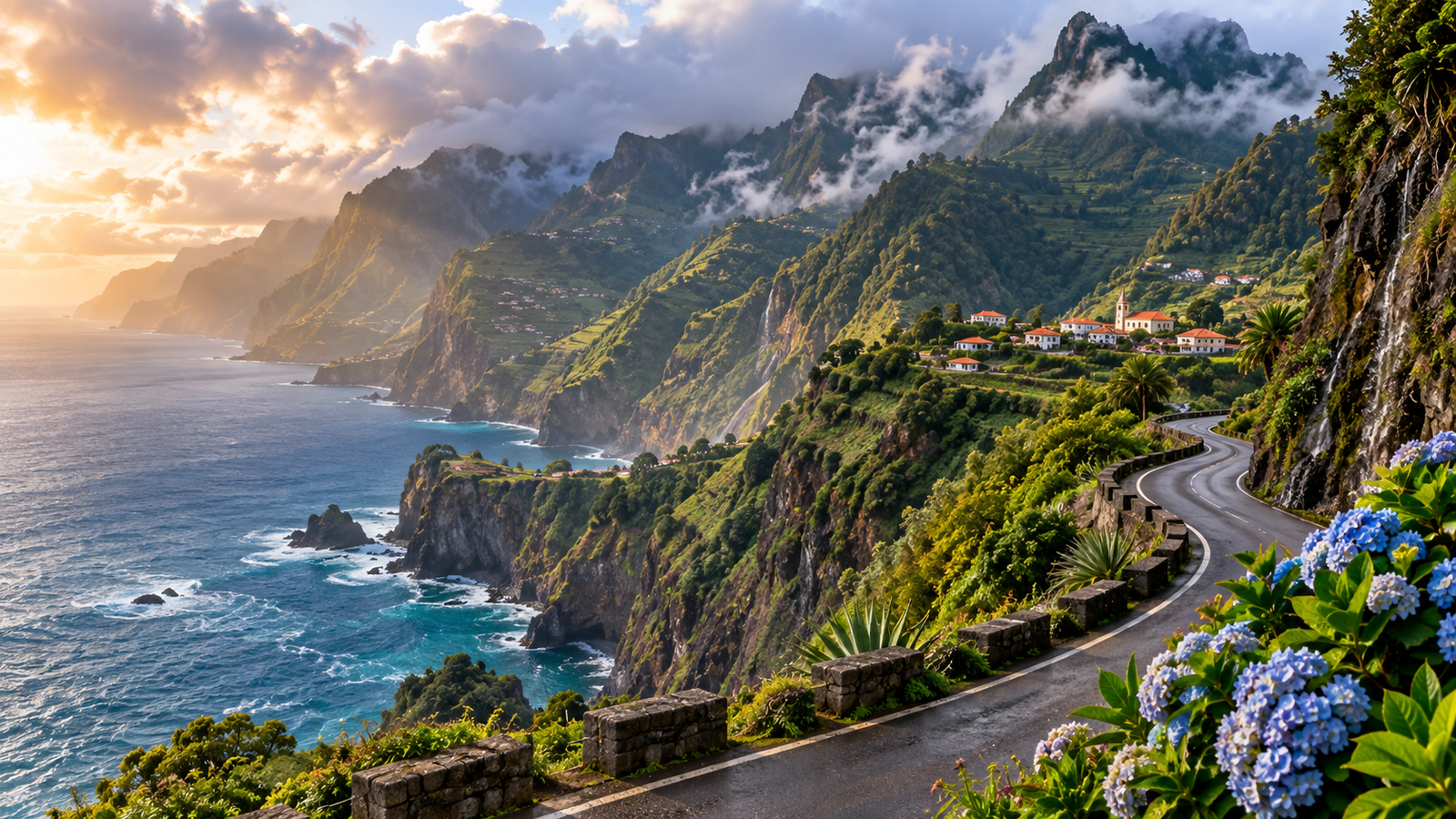
The Atlantic island is defined by steep mountains, green valleys, cliffs, coastal roads, gardens, and walking trails.
Funchal is the main base, but the landscapes outside the city are the biggest reason to come.
Popular experiences include mountain viewpoints, levada walks, coastal villages, botanical gardens, and scenic drives.
Do not treat Madeira as a simple beach holiday. The island is strongest for travelers who enjoy nature, hiking, viewpoints, photography, and road trips.
Weather can vary dramatically between different parts of the island on the same day. Keep some flexibility in your itinerary.
For photographers, Madeira offers a very different version of Portugal vibes. Instead of tiled streets and terracotta roofs, expect misty mountains, green slopes, dramatic ocean cliffs, and narrow roads.
8. São Miguel, Azores
Best for: Volcanic landscapes, nature, hot springs, road trips
Ideal stay: 4 to 6 days
The Azores are one of Portugal’s strongest destinations for travelers who care more about nature than cities.
São Miguel is usually the easiest island for a first visit.
Sete Cidades is famous for its crater lakes. Furnas offers geothermal scenery and hot springs. Around the island you will also find viewpoints, waterfalls, coastal roads, and green fields.
Portugal’s tourism authority highlights the Azores for unusual bathing areas shaped by volcanic landscapes.
A rental car makes exploring far easier.
The weather is also unpredictable, so avoid creating a rigid schedule. If the mountains are covered in cloud, explore the coast and return to the viewpoints another day.
Travelers choosing between Madeira and the Azores should think about the experience they want. Madeira usually suits structured hiking and dramatic mountains. The Azores feel wilder and more volcanic.
9. Évora
Best for: History, architecture, food, slower city trips
Ideal stay: 1 to 2 days
Évora brings you into the Alentejo region, where the pace changes again.
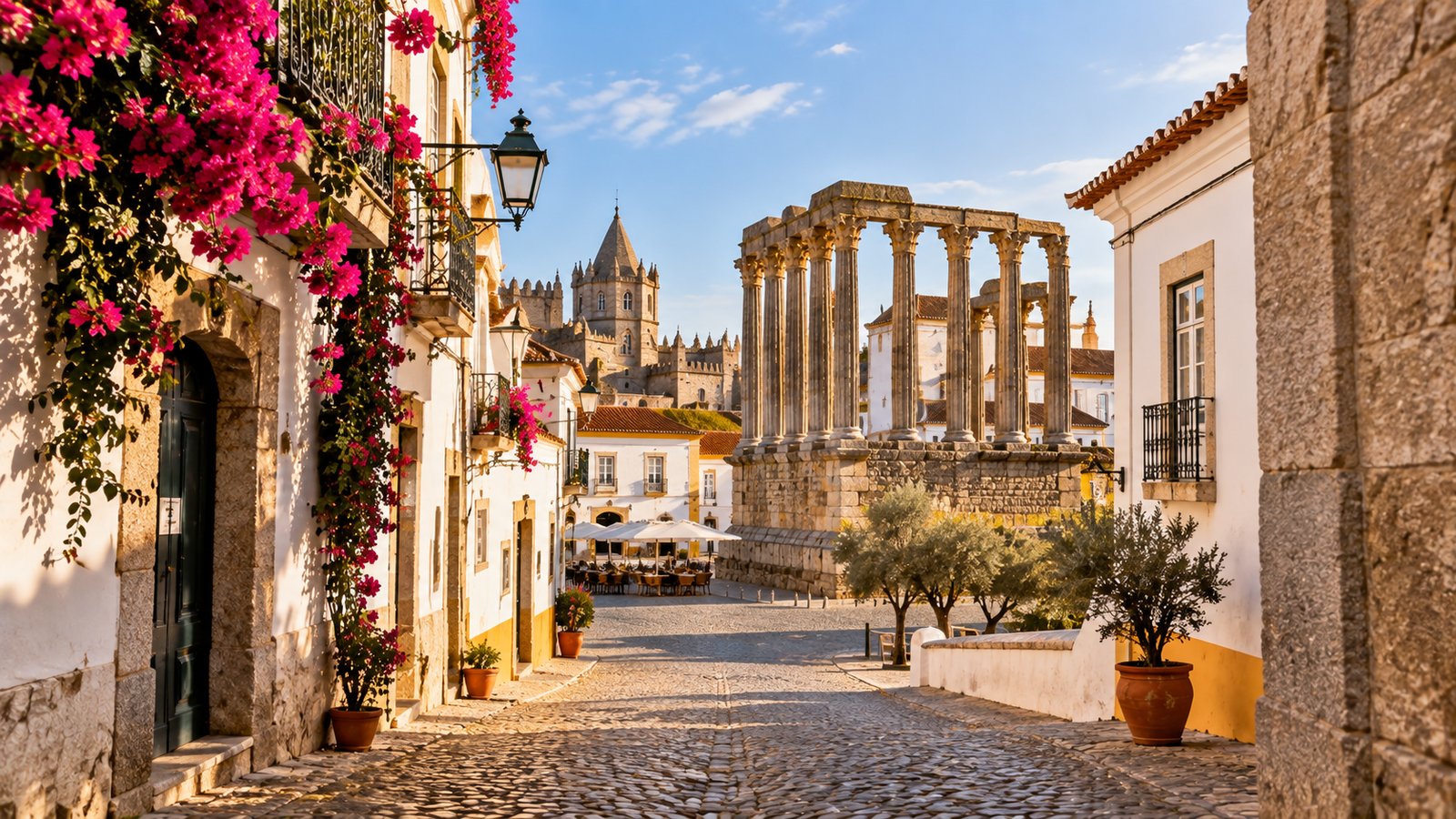
The historic center contains Roman remains, whitewashed buildings, narrow streets, churches, and shaded squares.
The Roman Temple is one of the city’s most recognizable sights, but Évora works best when you wander rather than move quickly between attractions.
Food is an important part of the visit. Alentejo cooking makes generous use of bread, olive oil, pork, herbs, cheese, and regional wine.
Évora can be visited as a long day trip from Lisbon, but one night gives you a better feel for the city after daytime visitors leave.
It is a strong choice if you want history without the scale and crowds of Lisbon.
10. Óbidos
Best for: Medieval atmosphere, photography, short trips
Ideal stay: Half day to 1 night
Óbidos is a small walled town filled with white houses, narrow lanes, flowers, stone walls, and historic details.
Portugal’s official tourism information describes Óbidos as one of the notable whitewashed towns of central Portugal.
You do not need several days here.
Walk through the old streets, explore sections of the walls where access is permitted, browse local shops, and try ginjinha, the local cherry liqueur often associated with the town.
Óbidos becomes especially atmospheric early and late in the day.
If possible, arrive before large tour groups or stay until evening. This small timing change can completely alter the experience.
11. Coimbra
Best for: History, university culture, architecture
Ideal stay: 1 to 2 days
Coimbra sits naturally between Lisbon and Porto, making it useful for travelers moving north or south.
The University of Coimbra dominates the historic center and has helped shape the city for centuries. The official tourism site lists Coimbra University among central Portugal’s UNESCO recognized heritage.
Expect steep streets, historic buildings, student traditions, churches, and river views.
Coimbra works best for travelers interested in culture rather than nightlife or beaches.
One night is enough for the main sights. Two nights work well if you prefer slower travel.
Instead of racing directly between Lisbon and Porto, adding Coimbra can make your itinerary feel more varied.
12. Nazaré
Best for: Ocean scenery, surf culture, seafood
Ideal stay: 1 day or 1 night
Nazaré is a coastal town with two very different personalities.
During calmer periods, you will find a traditional beach town with seafood restaurants and wide ocean views. During major winter swells, the area becomes internationally known for enormous waves.
The upper area of Sítio gives you broad views over the coast.
Nazaré works well as part of a central Portugal road trip with Óbidos, Batalha, or other nearby destinations.
Do not assume huge waves will appear simply because you visit in winter. Conditions depend on Atlantic swells.
Even without them, the town offers a memorable coastal stop.
13. Aveiro
Best for: Short stops, architecture, canals, photography
Ideal stay: Half day to 1 day
Aveiro is sometimes described as Portugal’s Venice, but that comparison can create the wrong expectations.
The city is worth visiting for its own character.
Canals cross parts of the center, colorful moliceiro boats move through the water, and Art Nouveau buildings add another visual style to a Portugal itinerary.
Try ovos moles, a local sweet associated with Aveiro.
If you have limited time, Aveiro works well as a short stop between Porto and central Portugal.
For nearby beach scenery, continue toward Costa Nova, where striped houses provide one of the most recognizable coastal photo locations in the region.
14. Ericeira
Best for: Surfing, coastal cafes, relaxed Portugal vibes
Ideal stay: 2 to 3 days
Ericeira is a good choice when you want to stay beside the Atlantic without traveling all the way to the Algarve.
The town combines whitewashed streets, blue details, seafood restaurants, coastal viewpoints, and a strong surf culture.
It works well for travelers who want mornings near the ocean and evenings in a walkable town.
You do not need to surf to enjoy Ericeira.
Spend time walking along the coast, eating seafood, watching surfers, and exploring the compact old center.
Because it is relatively close to Lisbon, Ericeira can also fit into a longer trip without adding complicated transportation.
Which Portugal Destination Should You Choose?
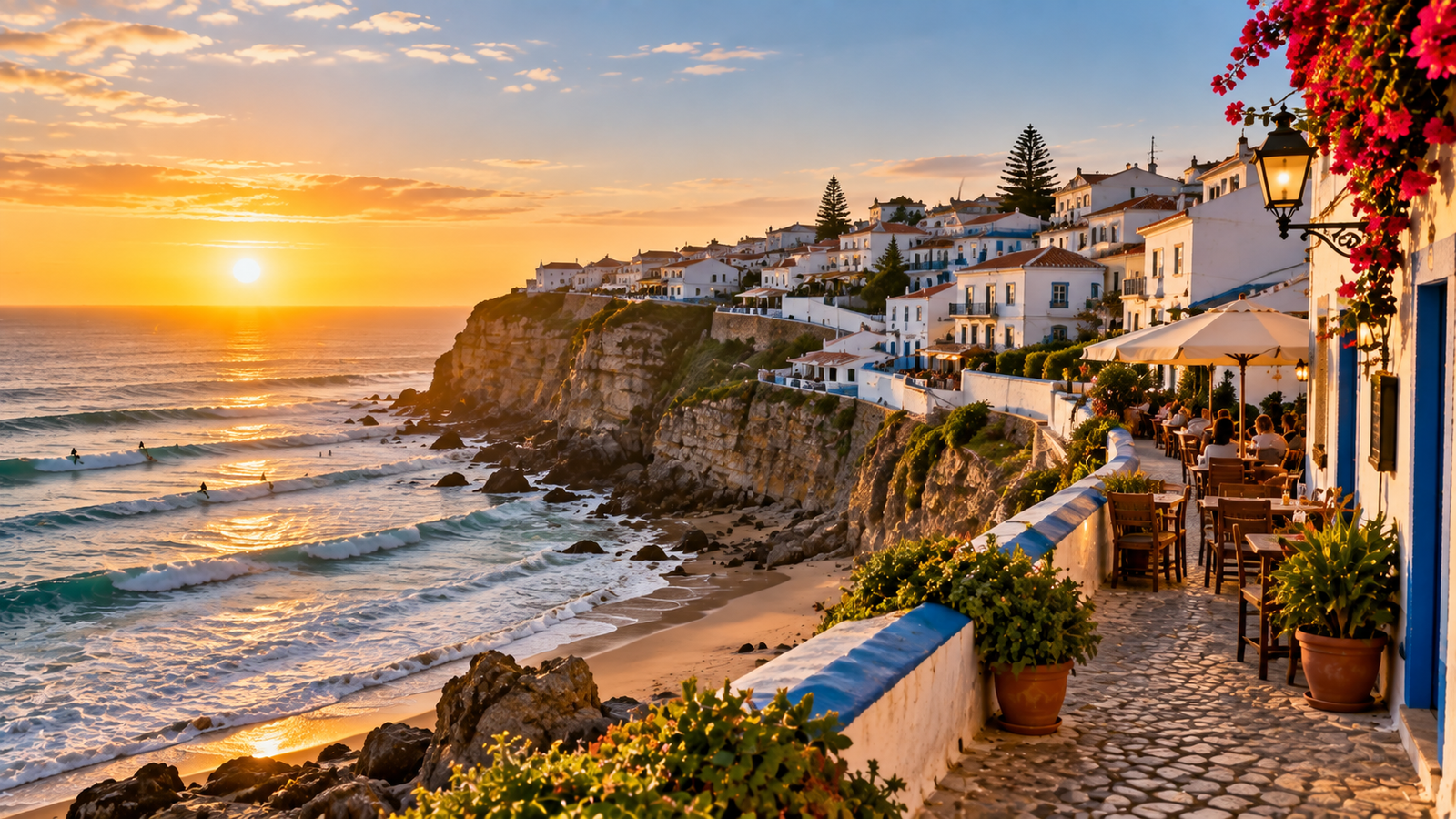
Choosing becomes much easier when you start with the type of trip you want.
• Best for first time visitors: Lisbon
• Best for romantic scenery: Sintra
• Best for food and wine: Porto and the Douro Valley
• Best for beaches: Algarve
• Best for hiking: Madeira
• Best for volcanic landscapes: Azores
• Best for history: Évora and Coimbra
• Best for medieval atmosphere: Óbidos
• Best for surfing: Ericeira and Nazaré
• Best for relaxed Portugal vibes: Tavira
The mistake is trying to include all of them in one short trip.
Best Portugal Itinerary for 7 Days
With one week, keep the route simple.
Spend three days in Lisbon, one day in Sintra, and three days in Porto with a possible Douro Valley day trip.
This gives you two major cities plus palace scenery and wine country without losing too much time in transit.
Best Portugal Itinerary for 10 Days
A first trip can combine Lisbon, Sintra, Porto, and the Algarve.
Earth Trekkers also highlights Lisbon, Porto, the Algarve, and Sintra as a practical combination for a ten day first visit.
Spend three nights in Lisbon, one day in Sintra, three nights around Porto, and three nights in the Algarve.
If beaches are not important, replace the Algarve with Coimbra, Évora, and the Douro Valley.
Best Portugal Itinerary for 14 Days
Two weeks gives you room to slow down.
Try Lisbon, Sintra, Évora, Porto, the Douro Valley, and the Algarve.
Another option is to spend one week on the mainland and one week in Madeira or the Azores.
Do not try to combine Lisbon, Porto, Algarve, Madeira, and the Azores in the same two week trip. Technically it can be done, but too much time will disappear into airports and transfers.
When Is the Best Time for Portugal Travel?
Spring and early autumn are excellent for many travelers because temperatures are comfortable and major destinations are generally easier to explore than during the busiest summer period.
Summer works best if beaches are your main priority. Expect stronger demand in Lisbon, Porto, Sintra, and the Algarve.
Winter can be attractive for city breaks, food, museums, and lower demand in some destinations. The Algarve also receives visitors outside summer, and Lonely Planet notes that winter can bring thinner crowds and better prices.
Madeira and the Azores need more flexible planning because island weather can change quickly.
Train or Rental Car in Portugal?
You do not need a car for Lisbon or Porto.
Trains are useful when traveling between major cities. Portugal’s official tourism site also highlights the country’s main cities and transport connections as practical starting points for exploring.
A rental car becomes more useful in the Algarve, Douro Valley, Alentejo, Madeira, and the Azores.
Do not keep a rental car simply because you think every European trip requires one. Parking inside historic cities can create more work than convenience.
Build the trip around public transport first. Add a car only for the sections where it genuinely saves time.
How to Capture the Portugal Aesthetic Without Spending the Whole Trip Taking Photos
The best Portugal aesthetic often appears outside the famous photo spots.
Walk early in the morning when tiled streets are quiet. Look for small cafes, old doors, balconies, local markets, patterned pavements, fishing boats, and neighborhood viewpoints.
In Porto, photograph the city from across the Douro. In Lisbon, explore Alfama during soft morning or evening light. In the Algarve, take coastal walks rather than stopping only at famous beaches.
Do not turn every stop into a photography assignment.
The strongest Portugal vibes often come from the moments between attractions. A coffee beside a small square, grilled fish near the ocean, a train moving beside the Douro, or music drifting through an old street can become more memorable than another landmark photo.
Useful Amazon Products for a Portugal Trip
Portugal involves more walking than many first time visitors expect. Lisbon and Porto both have hills and uneven streets.
A compact Anker Nano Power Bank can be useful when navigation and photography drain your phone during long sightseeing days.
A Hydro Flask Wide Mouth bottle is practical for city walks, coastal trails, and warm Algarve afternoons.
If you plan to combine cities with Madeira, the Azores, or coastal hiking, an Osprey Daylite backpack is a useful size for water, a light layer, sunscreen, and a camera without carrying a full travel bag.

Osprey Daylite Expandable 26+6 Travel Pack, Black
You do not need much specialist equipment for Portugal. Comfortable shoes matter more than almost anything else.
Portugal Travel Mistakes to Avoid
Do not plan too many destinations. Moving hotels every night makes Portugal feel larger than it is.
Do not schedule Sintra as if the palaces sit beside each other. Travel between attractions takes time.
Do not rent a car for central Lisbon unless you actually need it.
Do not assume Portugal is always hot. Northern Portugal, islands, and winter travel can bring rain, wind, and cooler evenings.
Do not spend your entire Algarve visit on one famous beach. Coastal walks and smaller towns reveal much more of the region.
Finally, do not judge Portugal only through Lisbon. The country includes historic inland towns, wine country, Atlantic islands, fishing communities, mountain landscapes, and very different regional food traditions.
Conclusion
The best Portugal travel destinations depend on the kind of trip you want.
Lisbon and Porto give first time visitors the easiest introduction to Portuguese culture, architecture, food, and city life. Sintra adds palaces and forest scenery. The Douro Valley brings vineyards and slow travel, while the Algarve offers the country’s most famous beach landscapes.
Go farther and Portugal changes again.
Madeira is built for hikers and mountain scenery. The Azores are ideal for volcanic landscapes and nature. Évora, Coimbra, and Óbidos bring history into a slower setting, while Ericeira and Nazaré connect your trip with the Atlantic.
For a first visit, resist the urge to see everything.
Choose three or four areas and experience them properly. Portugal is easy to return to, and each region offers a different reason to come back.
FAQs
What are the best places to visit in Portugal for the first time?
Lisbon, Sintra, Porto, the Douro Valley, and the Algarve make a strong first trip. They combine cities, history, beaches, food, and scenery.
How many days do you need in Portugal?
Seven days works for Lisbon, Sintra, and Porto. Ten days lets you add the Algarve or more northern destinations. Two weeks gives you enough time to travel more slowly and include smaller towns.
Is Lisbon or Porto better?
They offer different experiences. Lisbon is larger and has more major attractions and day trips. Porto feels more compact and is especially appealing for river scenery, food, architecture, and wine.
Is Portugal easy to travel without a car?
Yes, especially if your trip focuses on Lisbon, Sintra, Coimbra, and Porto. A car becomes more useful for rural areas, the Algarve, Madeira, the Azores, and some wine regions.