Costa Rica sits just a quick flight from the US no long-haul jet lag, no visa hassle for Americans, and direct routes from cities like Miami, Houston, Atlanta, and New York. But timing your trip right changes everything. You’ll dodge crowds, stretch your dollars, and see the wildlife, beaches, and rainforests the way you imagined.
Most US travelers chase sunny beach days and easy hikes. Others want lower prices and empty trails. Here’s the straight talk on when to go, based on real weather patterns, traveler feedback, and what actually works for families, couples, and solo adventurers from the States.
Costa Rica’s Two Seasons: Dry vs. Green (What They Really Mean)
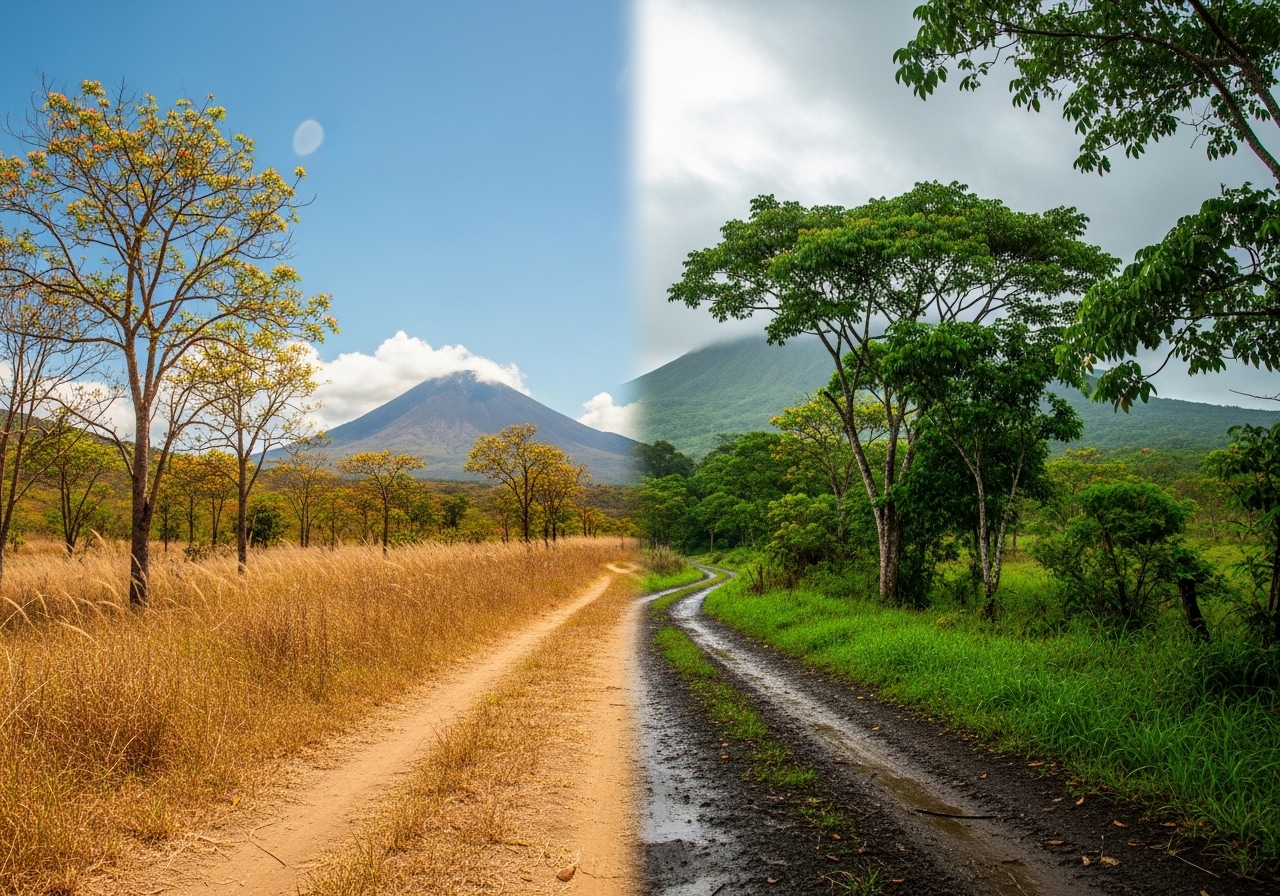
Dry Season (December to April) – High season, peak sunshine.
Expect blue skies, low humidity, and temps in the 80s on the coasts. Mornings and afternoons stay dry. This is when US snowbirds and spring breakers flood in. National parks get busy, hotels jack up prices 30-50%, and you’ll need to book tours and rooms months ahead.
Green Season (May to November) – Also called rainy or low season.
Rain usually hits in the afternoon or overnight mornings often stay sunny. Everything turns lush and green. Waterfalls roar. Wildlife gets easier to spot near water sources. Crowds drop, prices fall 20-40%, and you’ll feel like you have the country to yourself in places like the southern Pacific or Osa Peninsula.
Shoulder months (May, early June, and November) give you the best of both worlds: mostly good weather plus big savings.
Month-by-Month Quick Guide for US Travelers
Here’s what to expect, tied to US holidays and school breaks:
- December: Dry season kicks in mid-month. Early December stays quiet and affordable. Christmas and New Year’s bring US family crowds and higher prices. Festival of Lights in San José lights up the capital with parades and fireworks.
- January: Peak dry, post-holiday rush from the US. Humpback whales migrate along the Pacific. Palmares Fiestas bring rodeos and street parties. Book early.
- February: Still dry and warm. Great whale watching and turtle nesting on Pacific beaches. Fewer crowds mid-month.
- March: Spring break central US families everywhere. Hot and dry, perfect for beaches and Manuel Antonio.
- April: End of dry season. Easter and Juan Santamaría Day (April 11) add local flavor and crowds. Still hot.
- May: Green season starts. Rain is light and brief. Prices drop fast. Shoulder sweet spot.
- June: Lush and quiet. Good surfing swells on the Pacific. Family deals pop up.
- July-August: “Secret summer” on parts of the Pacific sunny mornings, afternoon showers. US summer vacation crowds return but thinner than dry season. Green sea turtles nest in Tortuguero.
- September-October: Wettest months on the Pacific, but the Caribbean often stays drier. Lowest prices, biggest waves for surfers, empty parks. Roads in remote areas can get muddy rent a 4×4.
- November: Rain tapers off. Shoulder magic returns. Coffee harvest festivals in the Central Valley. Great deals before December rush.
Regional Differences: Pacific vs. Caribbean Matters
Weather isn’t the same everywhere.
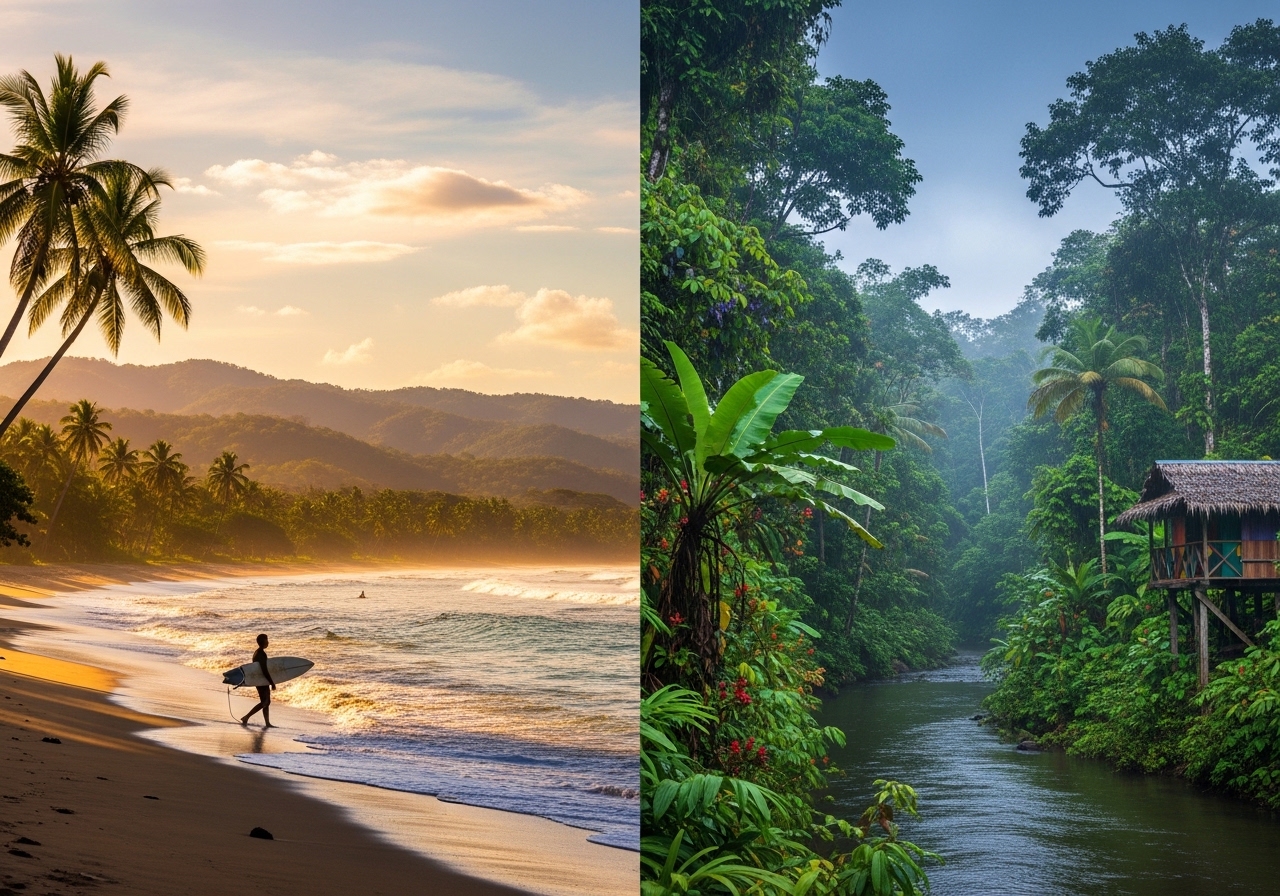
Pacific Coast (Guanacaste, Manuel Antonio, Osa Peninsula): Driest overall. North (Tamarindo, Liberia) gets the least rain. Perfect for beach lovers. Wet season hits harder here September-October.
Caribbean Coast (Tortuguero, Puerto Viejo): Wetter year-round but flips in September-October when it can be sunnier than the Pacific. Great for turtles and Afro-Caribbean culture.
Central Valley & Mountains (San José, Arenal, Monteverde): Cooler and spring-like. Rain feels lighter at higher elevations. Cloud forests stay misty and magical anytime.
Fly into San José (SJO) for central or Caribbean trips, or Liberia (LIR) for quick Pacific beach access.
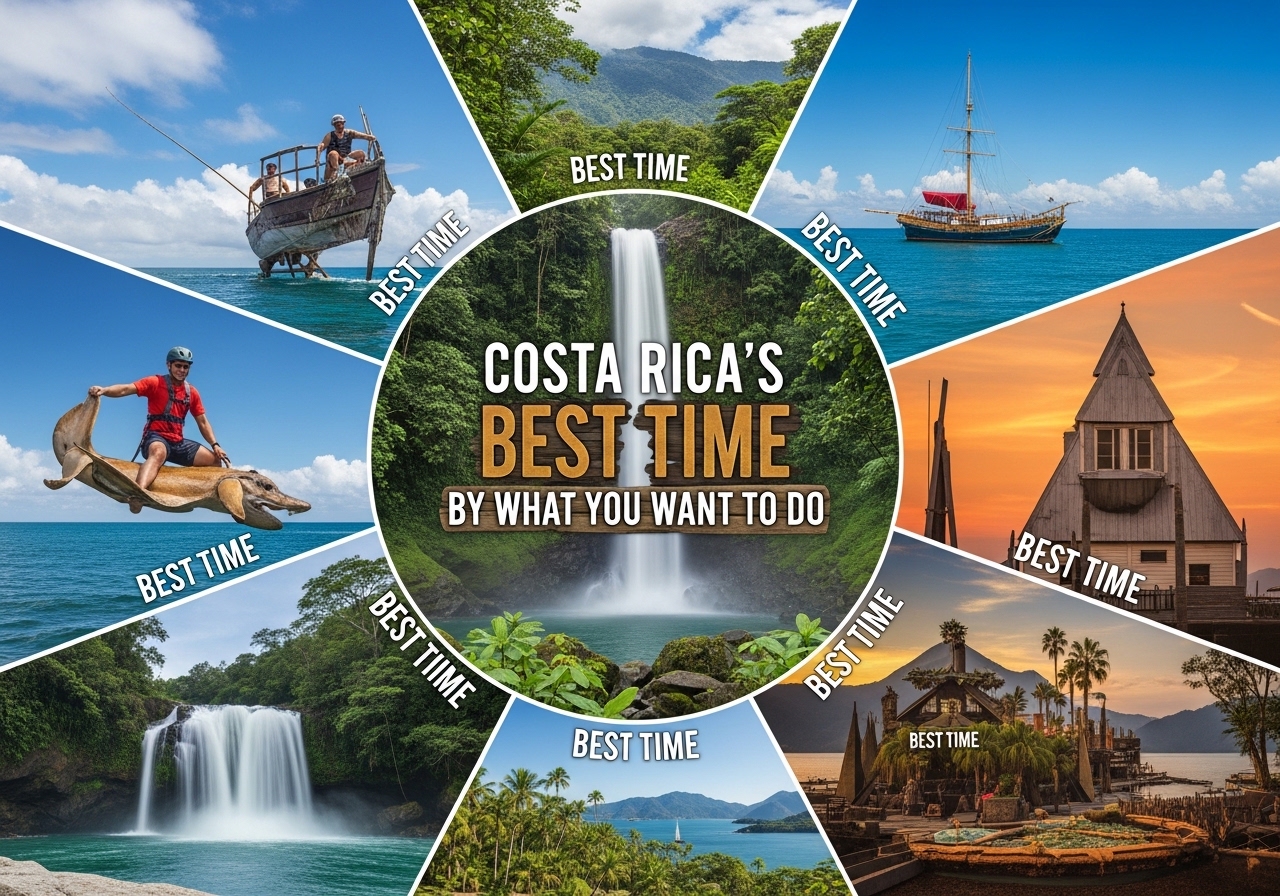
Best Time by What You Want to Do
- Wildlife spotting: Dry season for easy viewing at water holes. Green season for active, breeding animals and fewer people on trails. Turtles nest July-August on the Caribbean; humpback whales show up December-April (and sometimes July).
- Beaches and relaxation: Dry season hands-down.
- Surfing: June-September for the biggest waves.
- Hiking and adventure: Dry season for dry trails. Green season for roaring waterfalls.
- Families from the US: July-August works well kids out of school, some dry spells, and turtle tours kids love. Avoid March-April spring break madness.
- Budget travelers: May, June, or November. You’ll save big on flights, hotels, and tours.
Practical Tips US Travelers Always Ask About (Stuff Competitors Skip)
Direct flights run year-round, but fares drop 20-30% in green season. Book 2-3 months out for dry season; 4-6 weeks for shoulder months.
USD is widely accepted, but carry colones for small vendors. ATMs work fine. No visa needed just a passport valid for your stay.
Climate change has made seasons a bit less predictable: drier dry periods and sharper rains. Pack flexible and check forecasts a week before.
Rent a 4×4 in green season for rural roads. Domestic flights or shuttles beat driving in heavy rain.
What to Pack by Season
Dry season: Light clothes, swimsuit, reef-safe sunscreen, binoculars for wildlife.
Green season: Quick-dry gear, sturdy sandals that drain, and serious rain protection.
Here are three Amazon finds I recommend to every friend heading down:
- A packable rain poncho or lightweight waterproof jacket (like the ones from Columbia or basic no-name brands that fold into a pocket) it saves the day on afternoon showers without weighing down your bag.
- Compact binoculars (8×42 or similar, under $100 range) you’ll thank me when you spot sloths, toucans, and monkeys from the trail.
- A quick-dry travel towel set super useful for beach hops, hot springs, or surprise downpours.
Actionable Steps to Book Your Trip
- Decide your must-haves (beaches? wildlife? budget?).
- Pick dry for guaranteed sun or shoulder/green for value and space.
- Book flights first Google Flights with flexible dates shows the cheapest windows fast.
- Reserve national park tickets and popular tours early if you go December-April.
- Buy travel insurance that covers rain-related changes (most do).
Final Takeaway
There’s no single “best” month only the best one for you. December to April gives classic postcard Costa Rica with sun and ease. May or November often delivers the sweetest mix of good weather, low prices, and real pura vida calm.
Whatever you choose, Costa Rica rewards the prepared traveler. You’ll come home with stories, photos, and that relaxed feeling only “pura vida” delivers.
FAQs
Is the rain really that bad in the green season?
No. Showers usually last an hour or two in the afternoon. Mornings stay sunny, and everything looks incredible afterward.
When is turtle nesting season?
Green sea turtles peak July-August on the Caribbean. Pacific olive ridleys nest year-round but best in dry season.
Should I visit during US spring break?
Only if you don’t mind crowds and higher prices. April can still work if you pick quieter beaches.
Are flights cheaper in the rainy season?
Yes, often hundreds of dollars less round-trip from major US hubs.
Do I need a 4×4?
In dry season, usually not. In green season, especially September-October, yes for anywhere off the main paved roads.
Is Costa Rica safe for solo US travelers?
Very standard precautions apply like anywhere. Stick to well-reviewed areas and tours.
Pack light, stay flexible, and enjoy every minute. Pura vida!